Marriott Bonvoy members invited to chill out during the hottest months of the year and share authentic culinary experiences at a choice of hotels and resorts all across the kingdom
Bangkok, Thailand: Marriott Bonvoy®, Marriott International’s award-winning travel program and marketplace, is helping its members to celebrate the start of summertime in Thailand this April, with a series of promotions that showcase the refreshing flavor of khao chae, a fresh and fragrant dish that lets guests cool off during the hottest months of the year.
Literally meaning “soaked rice”, khao chae features an elegant bowl of chilled jasmine-infused rice accompanied with a selection of sweet, sour, spicy and salty side dishes, to transport the taste buds on a multi-sensory journey. Having originated in the Mon Kingdom, this ancient recipe was adopted and enhanced by the Royal Thai court during the reign of King Rama V (1868-1910) and has now become synonymous with summertime in Thailand.
Diners can enjoy this exquisite, historic recipe at a choice of Marriott Bonvoy’s portfolio of hotels in Bangkok and beyond. At The Siam Tea Room, the highly authentic Thai restaurant overlooking the Chao Phraya at Asiatique The Riverfront, a luxurious khao chae menu evokes the essence of a charming bygone era with an appetizer of grilled pineapple with dried chili, golden beans & dried shrimp, and a welcome lychee drink followed by the full khao chae feast, while The Siam Tea Room’s Sukhumvit branch, located at Bangkok Marriott Marquis Queen’s Park, invites guests to savor a classic set menu, including a cool appetizer of snowy santol shaved ice with dried pork & bitter orange.
Also in the Thai capital, Sukhumvit Park, Bangkok – Marriott Executive Apartments is offering this heritage-rich dish to eat in or takeaway at Bistro M, and Bangkok Marriott Hotel Sukhumvit’s 57th Street restaurant will present a sublime set menu throughout Songkran, Thailand’s vibrant New Year festival. At The House of Smooth Curry, The Athenee Hotel, a Luxury Collection Hotel, this ancient recipe has been crafted using organic rice sourced from local farmers in Amnat Charoen province, and at Flavors, Renaissance Bangkok Ratchaprasong Hotel, a dedicated live station will be available at the popular international seafood buffet. Courtyard by Marriott Bangkok’s MoMo Café and Chon Som All Day Dining at Courtyard by Marriott Bangkok Suvarnabhumi Airport will both present the flavors of khao chae as part of their Songkran celebrations, from April 11-15.
At Bangkok Baking Company, JW Marriott Hotel Bangkok, Chef Tang Tananton Bunnag showcases the artistry of Khao Chae, with jasmine rice delicately infused with floral water and paired with handcrafted condiments. Over at Thara Thong, Royal Orchid Sheraton Riverside Hotel Bangkok, guests can enjoy this royal Thai summer delicacy in an elegant riverside setting, where time-honored recipes and scenic Chao Phraya River views create a truly immersive experience. For another exquisite take on this seasonal delight, visit The Lobby Lounge at Bangkok Marriott Hotel The Surawongse, where cool, fragrant Khao Chae is served with six condiments.
The lush, rolling hills of Northern Thailand set the scene for truly evocative culinary occasions. At Le Méridien Chiang Rai Resort, this iconic Thai dish can be enjoyed at Latest Recipe, which highlights the finest Thai and Lanna flavors. And on the serene Eastern Seaboard, Rayong Marriott Resort & Spa will showcase this timeless recipe overlooking the glistening Gulf of Thailand at C-Salt Café. Finally, khao chae will be perfectly paired with endless Andaman vistas at Takieng, the beachside dining destination at Renaissance Phuket Resort & Spa.
With more than 60 hotels and resorts in Thailand, Marriott Bonvoy invites travelers to experience the essence of summertime in this captivating country. Thailand’s Songkran Thai New Year festival will also take place this April, creating exciting travel opportunities for guests all across the “Land of Smiles”.
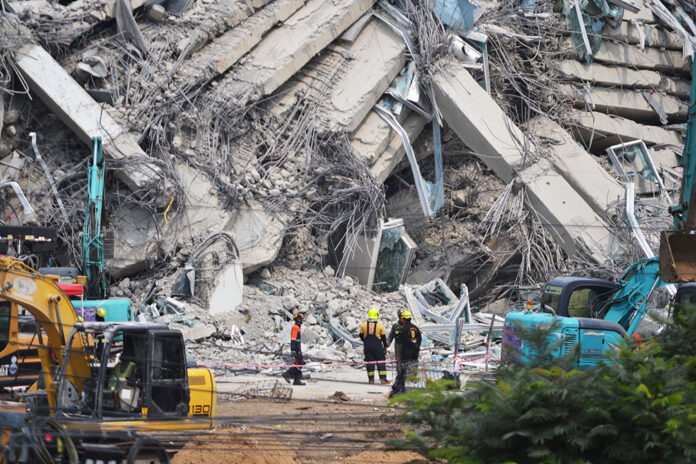
Rescuers work at the site of a collapsed under construction high-rise building in Bangkok on March 30, 2025. (KHAOSOD Photo/Chanpong Bun-Uthit)
BANGKOK — In the aftermath of the Myanmar earthquake that sent tremors as far as Bangkok, over 1,100 kilometers away, the Office of the Auditor General’s building under construction collapsed completely, trapping a hundred of workers when it came down at 1:20 PM on March 28.
The question on everyone’s mind, including Prime Minister Paetongtarn Shinawatra, is how a 33-story, 137-meter-tall building could be the only structure in Bangkok to collapse.
Initial explanations from Suriyachai Rawiwan, Director of the Disaster Prevention and Mitigation Office, that the building’s structure hadn’t fully set and collapsed “like layers of cake” during the tremors, have done little to address these concerns.
The Bangkok Metropolitan Administration could not provide answers, as government buildings are exempt from city construction permits under the law.
With these circumstances, all scrutiny now falls directly on the Office of the Auditor General (OAG).
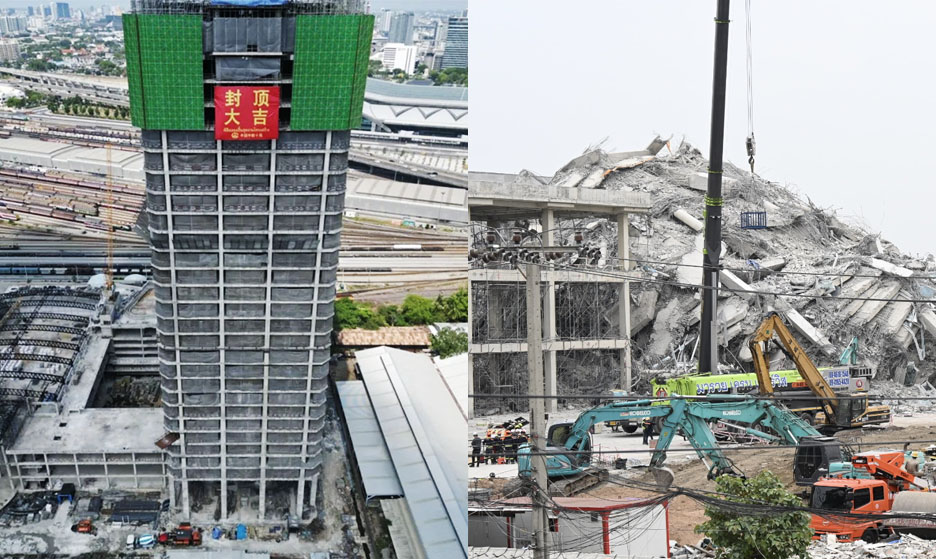
Construction supervisors of the State Audit Office building holding a sign written in Thai and Chinese that reads: ‘Celebration ceremony for the completion of structural work, Construction Project of the (New) Office of the Auditor General,’ CREC, April 3, 2024. (Photo: news.goalfore.cn)
Auditors Now Being Audited
The OAG, normally responsible for auditing other government agencies, now finds itself under investigation.
The Prime Minister has ordered a fact-finding mission to be completed within one week. Deputy Prime Minister and Interior Minister Anutin Charnvirakul signed an order on Sunday, March 30, establishing a committee led by the Chief Engineer from the Department of Public Works and credible experts.
“We expect it will take about seven days to establish the facts. No matter what files may have been removed, construction plans, documents, and contracts still remain at the OAG and cannot be taken away,” he stated.
Chinese Ambassador to Thailand Han Zhiqiang meets with Deputy PM Anutin Charnvirakul on March 30 and pledged to cooperate in the investigation of the collapsed Office of the Auditor General building, which was being constructed by China Railway No. 10 Co., Ltd., a Chinese state enterprise, in partnership with ITD-CREC (Italian-Thai Development Public Company Limited).
Who Bears Responsibility?
Anutin explained that the investigation will focus on three groups: 1) designers, 2) construction supervisors, and 3) contractors.
Initial findings show the contract was between a Thai-Chinese joint venture (ITD-CREC, or Italian-Thai Development Public Company Limited and China Railway No. 10 [Thailand] Co., Ltd.), who must share responsibility. He affirmed that whoever is found at fault, both companies must be held accountable.
“According to building earthquake resistance design laws established in 1997, the investigation must first examine the building’s design. If the design is correct, then the construction process must be scrutinized,” the Interior Minister said.
An architectural visualization of the planned State Audit Office building in Chatuchak area of Bangkok
OAG Releases Project Details
The same day, the OAG issued its first statement since the incident. Besides expressing condolences, it disclosed project details previously reported by several media outlets:
Building Design: Presented by FORUM ARCHITECT Co. Ltd. in 2018 and Meinhardt (Thailand) Ltd. (structural design) with a budget of 73 million baht.
Construction: Budget of 2,560 million baht ($75.4 million), contracted to ITD-CREC (Italian-Thai Development Public Company Limited) joint venture with China Railway for 2,136 million baht ($62.9 million), below the median price. Payments of 966.80 million baht ($28.5 million) have already been disbursed.
Supervision: Contracted to PKW Joint Venture for 74.65 million baht ($2.2 million) to supervise and certify material quality testing.
A comparison image showing the State Audit Office building after structural completion alongside the ruins of the same building that collapsed following the Myanmar earthquake that sent tremors to Bangkok on March 28, 2025. (Left Photo: news.goalfore.cn / Right Photo: KHAOSOD)
Deny Rumors but Allegations remain
The OAG statement emphasized that the organization conducted the project with transparency principles, establishing an integrity pact with the Anti-Corruption Organization and contractors.
It also denied social media rumors about structural design modifications to reduce size, confirming that the columns followed specifications: front columns measuring 1.40×1.40 meters and circular columns of 0.80 meters from the 29th floor to the roof.
However, other allegations remain pending investigation.
Industry Minister Ekanat Promphan, after inspecting steel samples collected from the construction site, refrained from making accusations but commented, “Just seeing it left me stunned.”
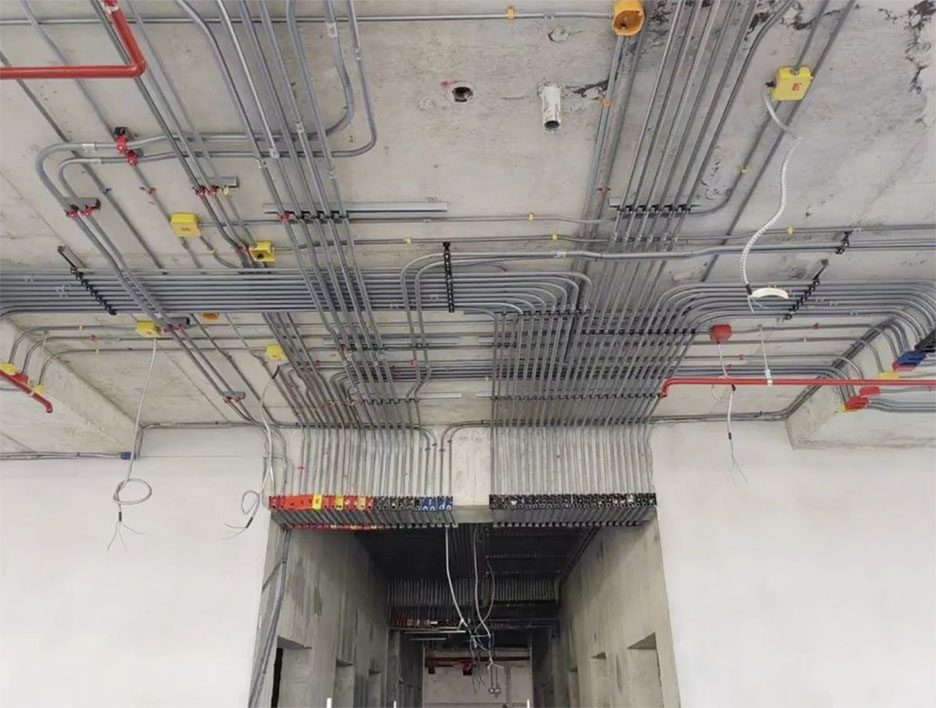
Interior image of the construction of the State Audit Office building after structural completion, published on a Chinese website dedicated to International engineering and overseas investment experts.
CREC’s First Special High-Rise Project
Not only is the OAG under scrutiny, but China Railway No.10 Engineering Group (CREC), a subsidiary of a major Chinese state enterprise, has also come under fire from architectural circles.
Questions arose about why a company specializing in railway construction received a contract for a special high-rise building, which was advertised as “CREC’s first special high-rise construction project abroad.” The company had promoted this project as reflecting China’s engineering competitive capabilities as it makes serious inroads into the Southeast Asian market.
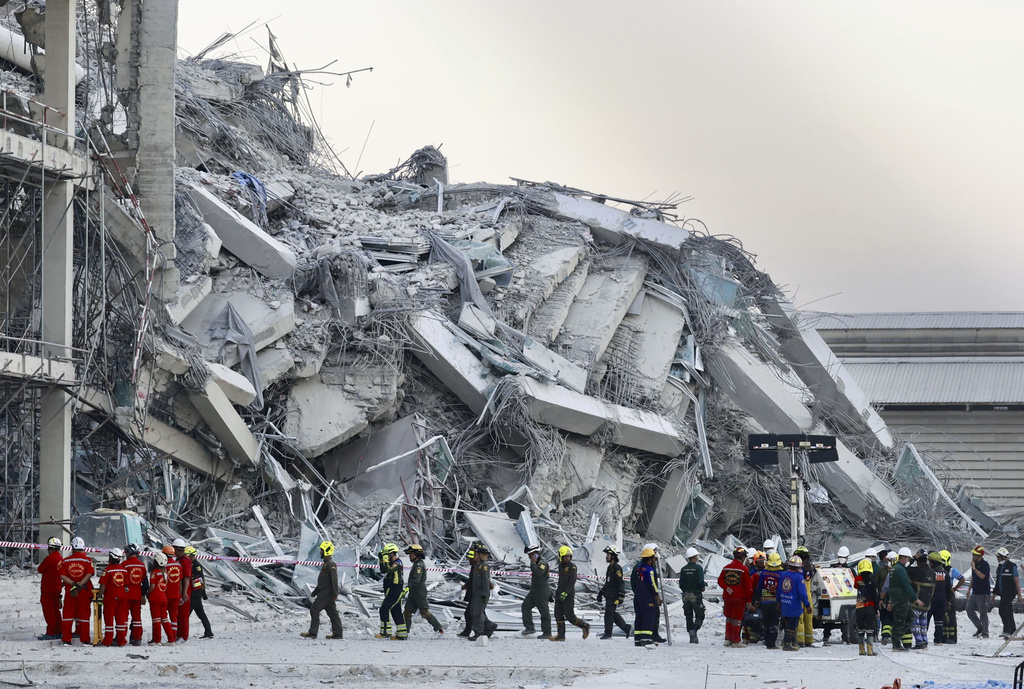
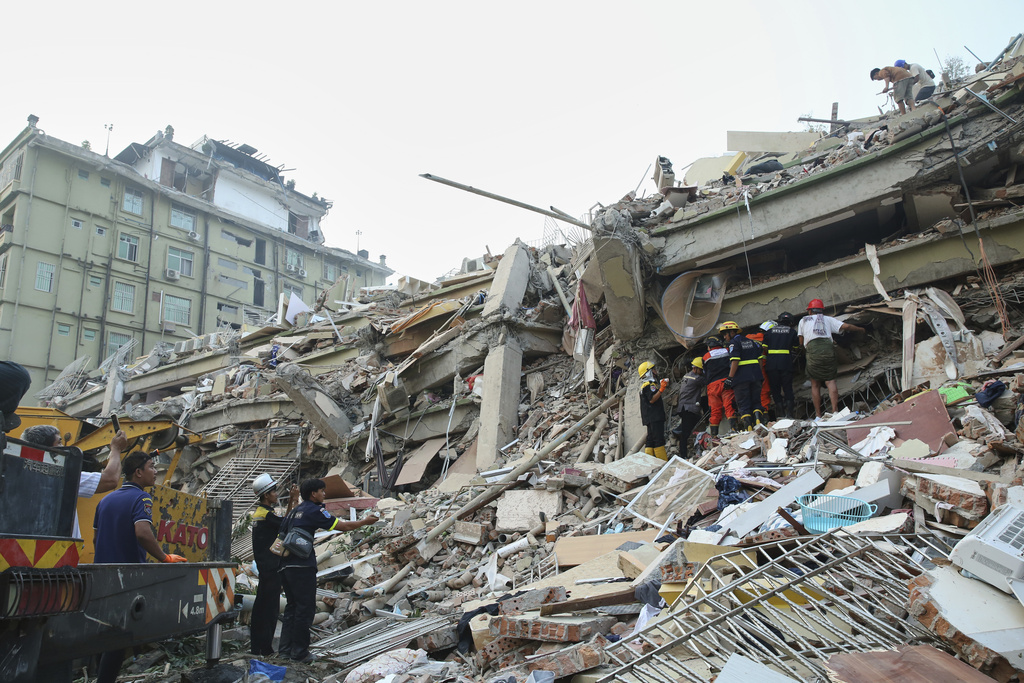
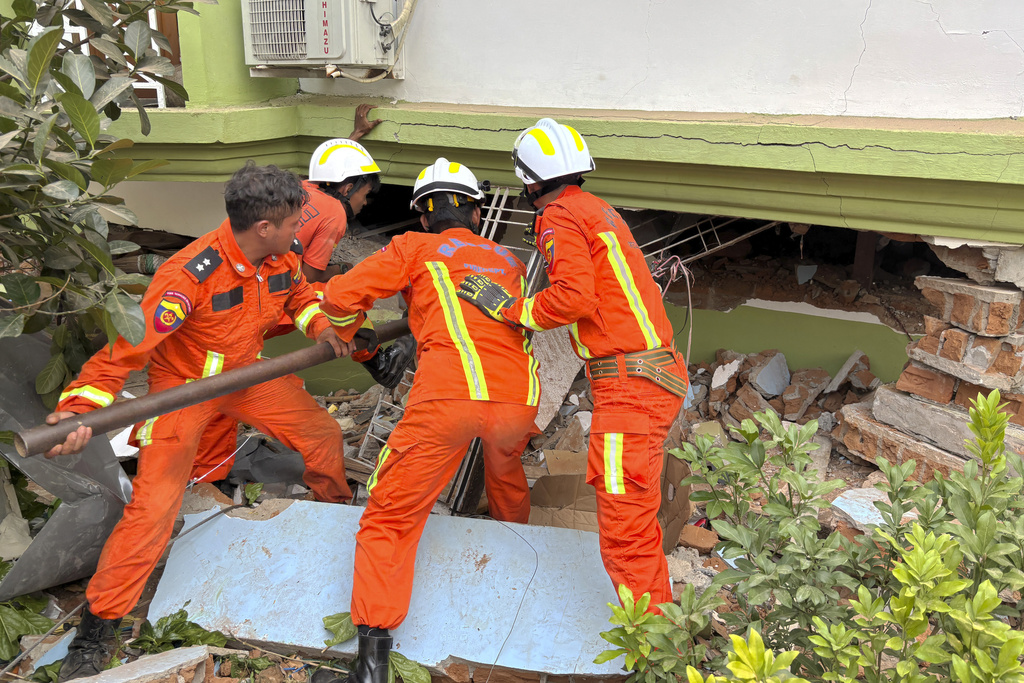
Rescuers work at the site a high-rise building under construction that collapsed after a 7.7 magnitude earthquake in Bangkok, Thailand, Friday, March 28, 2025. (AP Photo/Wason Wanichakorn)
Chinese Officials Promise Cooperation
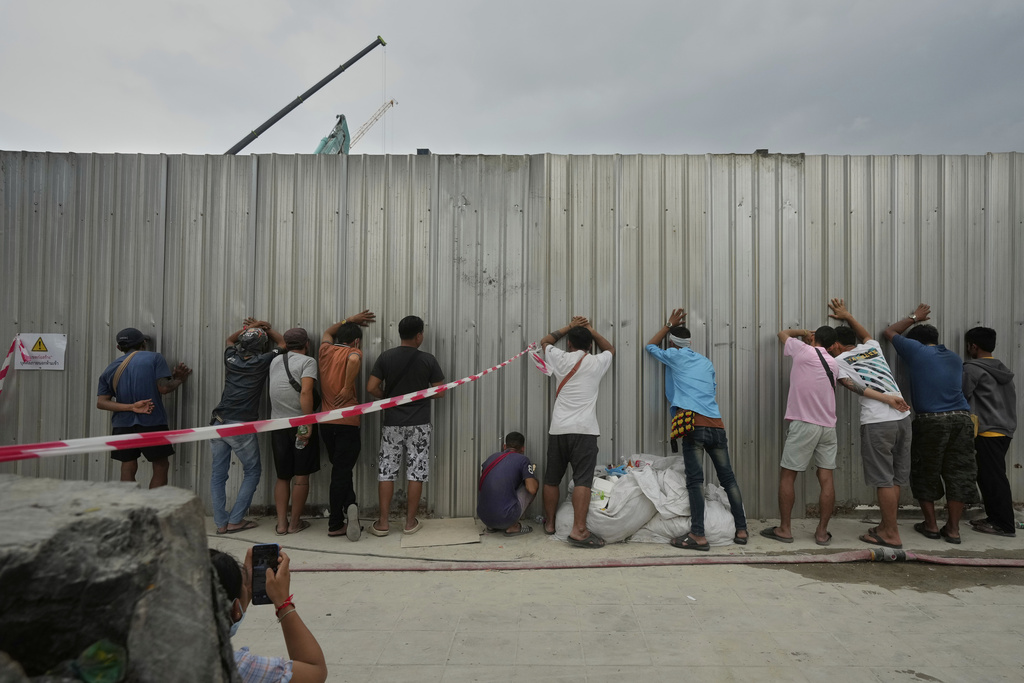
Following the incident, project information disappeared from the internet. On Sunday, March 30, four Chinese nationals were caught sneaking into the collapsed building site and attempting to remove 32 files, prompting the Bangkok Chatuchak District Director to file charges.
Police investigation revealed all four worked for CREC and claimed they needed the documents for insurance claims. Investigators have seized the materials, which included construction contractor documents, RFI copies, subcontractor documents, and electrical and transportation engineering documents.
This incident occurred around the same time Chinese Ambassador to Thailand Han Zhiqiang met with Deputy PM Anutin and pledged cooperation in the investigation of the collapsed building, which was being constructed by CREC.
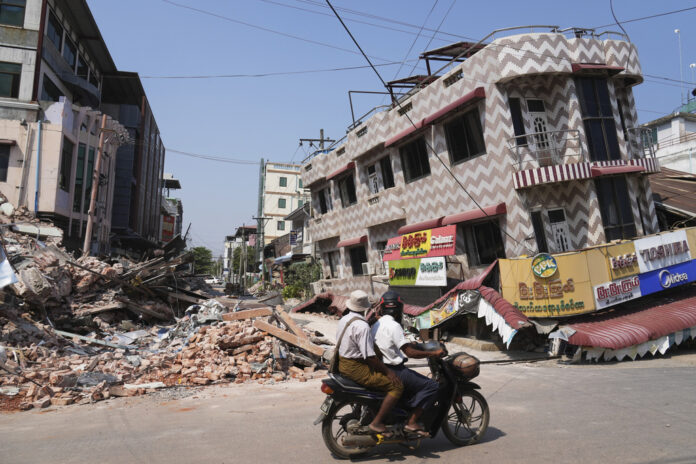
A local man drives a motorbike past damaged buildings in the aftermath of an earthquake in Naypyitaw, Myanmar, Sunday, March 30, 2025. (AP Photo/Aung Shine Oo)
ANGKOK (AP) — The Southeast Asian nation of Myanmar has been plagued by wars and natural disasters since it became independent from Britain in 1948, when it was still called Burma.
Relief efforts from Friday’s devastating 7.7 magnitude earthquake will be especially complicated with the country in embroiled in civil war, which began after the army seized power from the elected government of Aung San Suu Kyi in February 2021.
The main resistance movement against military rule has issued a statement saying it is unilaterally initiating a two-week ceasefire beginning Sunday in areas of the country affected by the quake.
There was no immediate reaction from the military government, which even before the earthquake — in addition to employing massive repression and state violence — heavily restricted much-needed aid to the more than 3 million people displaced by war.
The army’s ability to facilitate or block food and other assistance has been described as a way of weaponizing aid. Critics of the military government have called repeatedly for outside assistance to be delivered directly to areas under control of the resistance.
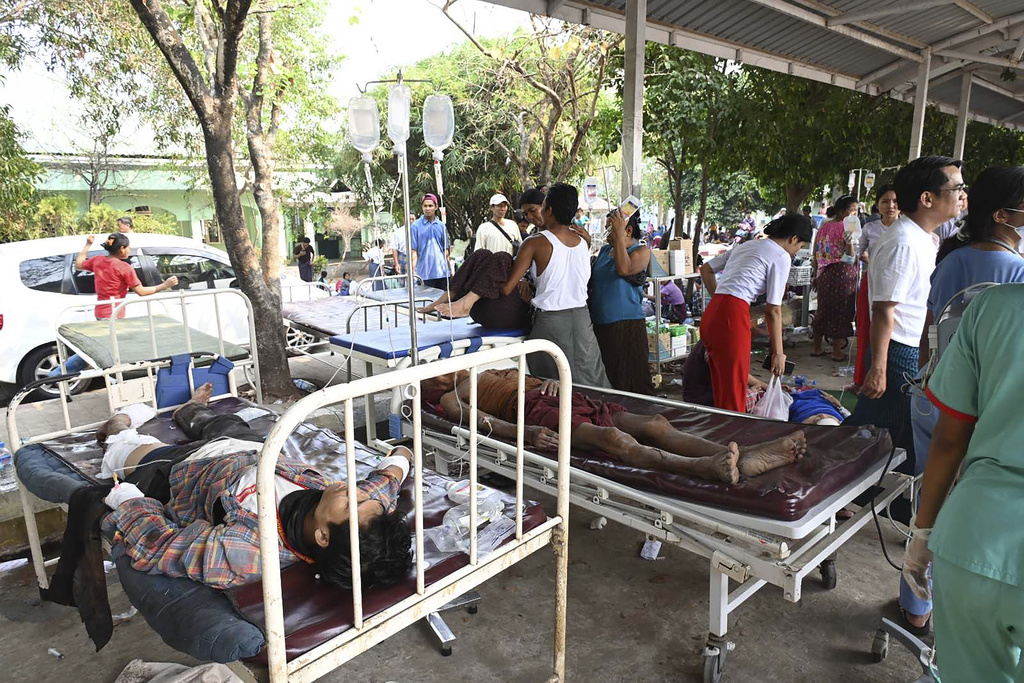
In this image provided by The Myanmar Military True News Information Team, victims caused by an earthquake is seen compound of government hospital Friday, March 28, 2025, in Naypyitaw, Myanmar. (The Myanmar Military True News Information Team via AP)
Who are the protagonists in Myanmar’s armed conflict?
The military, which has directly or indirectly ruled Myanmar most of the time since independence, seized power from Suu Kyi’s government as it was about to begin a second five-year term. She and leaders of her National League for Democracy party were jailed, and security forces put down pro-democracy demonstrations with deadly force, leading to the growth of armed resistance, and the army in turn escalating its violence.
Despite a huge disadvantage in weaponry and manpower, pro-democracy fighters allied with ethnic minority groups seeking greater autonomy have successfully battled back, and analysts believe they control a much greater share of territory.
The resistance is coordinated by the self-styled National Unity Government, whose claim to legitimacy is that it was formed by elected lawmakers. The NUG, which operates underground, has an armed wing called the People’s Defense Force.
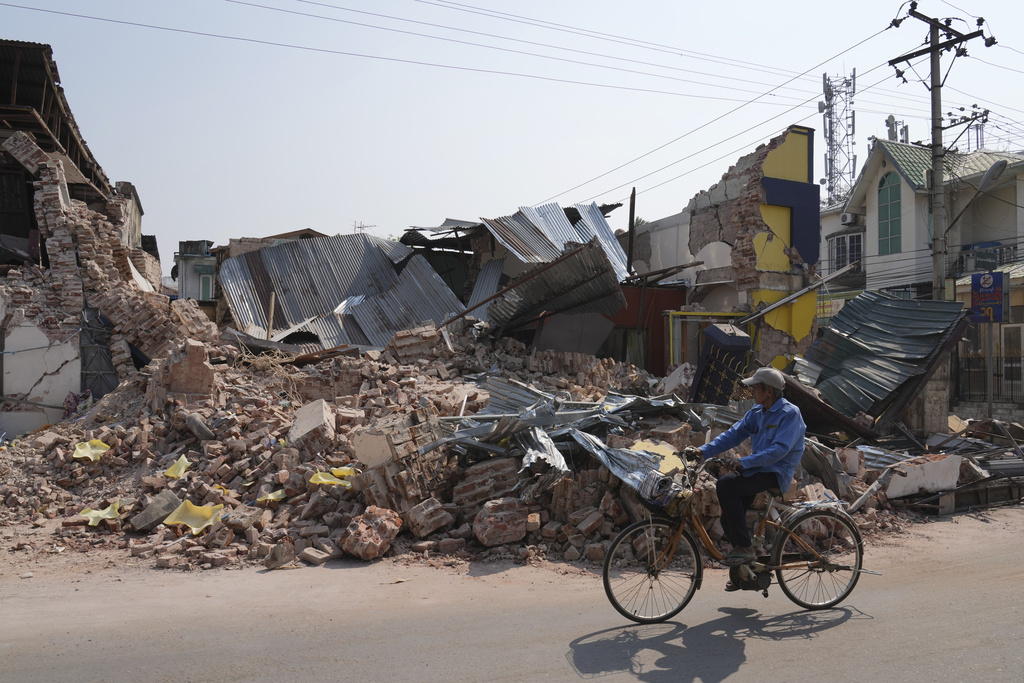
A local man rides a bicycle past a damaged building in the aftermath of an earthquake, in Naypyitaw, Myanmar, Sunday, March 30, 2025. (AP Photo/Aung Shine Oo)
The PDF is largely a conglomeration of locally formed defense groups, poorly armed but usually with the advantage of fighting on home ground. Their ethnic allies are much more experienced and have even managed in some cases to manufacture their own weapons.
What exactly has the resistance proposed?
The National Unity Government said in an announcement Saturday that the PDF will implement a two-week pause in offensive military operations starting Sunday in earthquake-affected areas, while retaining the right to self-defense.
It said it would collaborate with the U.N. and international nongovernmental organizations “to ensure security, transportation, and the establishment of temporary rescue and medical camps,” in the areas it controls. It also offered to provide health care professionals loyal to its resistance movement to work with international humanitarian organizations to deliver emergency rescue and medical services in areas under the military’s control, if provided with safety guarantees.
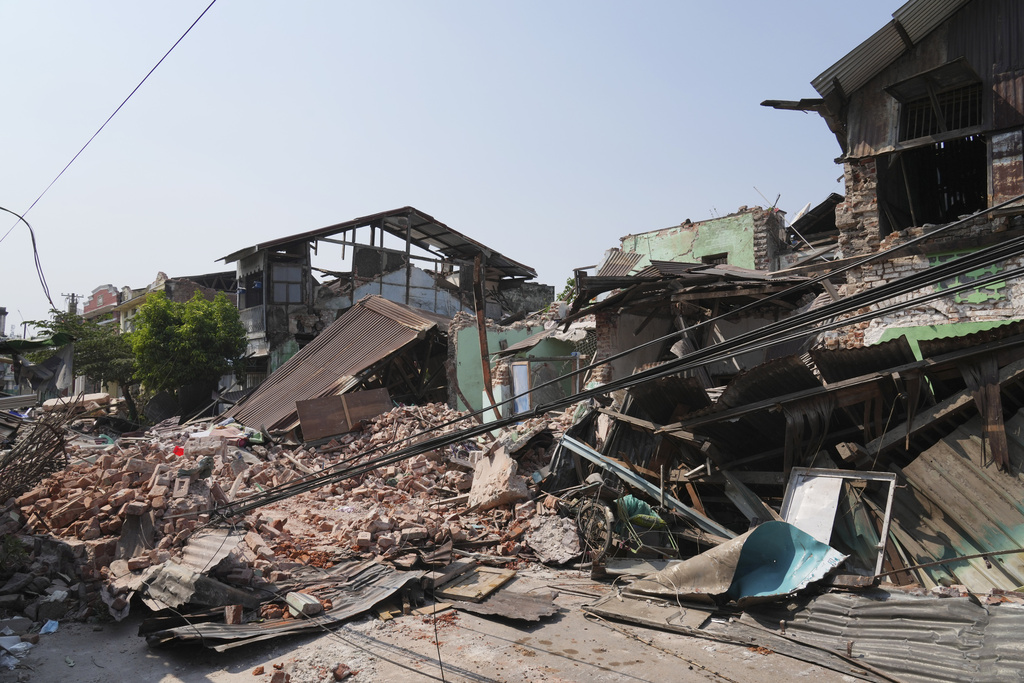
Damaged buildings are seen in the aftermath of an earthquake in Naypyitaw, Myanmar, Sunday, March 30, 2025. (AP Photo/Aung Shine Oo)
What is the significance of the resistance’s announcement?
The PDF fighters rarely mount large-scale offensives, sticking mainly to defense and ambush-style attacks, so its ceasefire would be largely symbolic. By taking the moral high ground, it gives its supporters a stronger argument to push for the unrestricted distribution of aid.
Although the military government has made the rare gesture of soliciting foreign emergency aid, its critics are skeptical that it will deploy it fairly and effectively.
The military’s record is discouraging. For instance, it initially refused to allow in foreign rescue teams or many emergency supplies after Cyclone Nargis in 2008, which resulted in well over 100,000 deaths, and tens of thousands more left unaccounted for. Even after it agreed to accept foreign help, it was with severe restrictions.
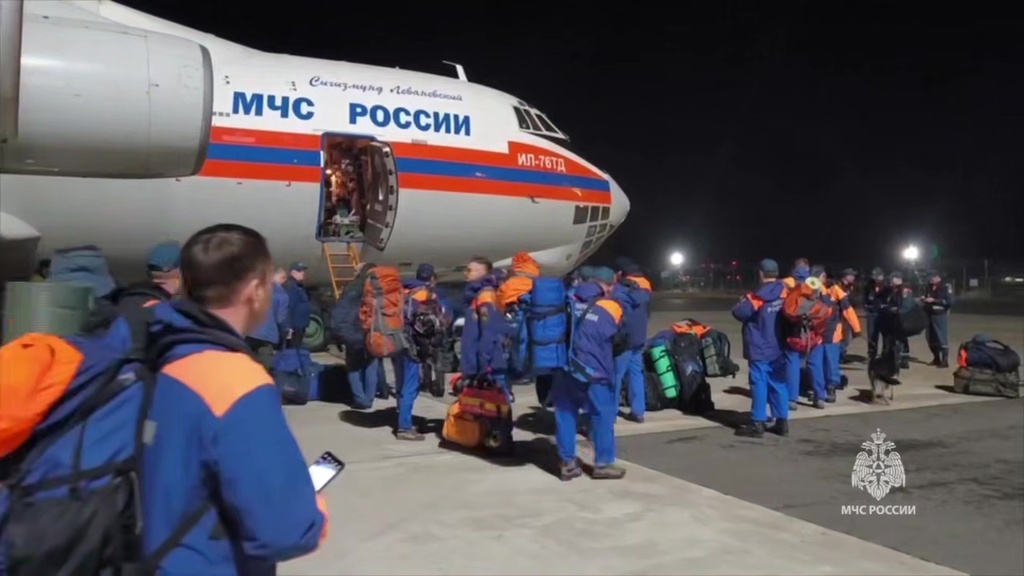
In this photo taken from video released by Russian Emergency Ministry Press Service on Saturday, March 29, 2025, Russian Emergency Ministry employees gather to board one of two planes with rescuers to Myanmar following Friday’s earthquake, from a Moscow airfield, Russia. (Russia Emergency Ministry press service via AP)
When Cyclone Mocha ripped into the coast in May 2023, the military’s relief efforts were again tardy, and as in 2008, private relief missions were discouraged, as was reporting. Property damage was heavy and while 145 deaths were officially acknowledged, independent accounts put the total at over 400.
There are examples in other countries when the effort to rebuild after natural disasters have played a part in helping to restore peace to areas torn by conflict, most notably in Indonesia’s Aceh province after it was devastated by the 2004 Indian Ocean tsunami.
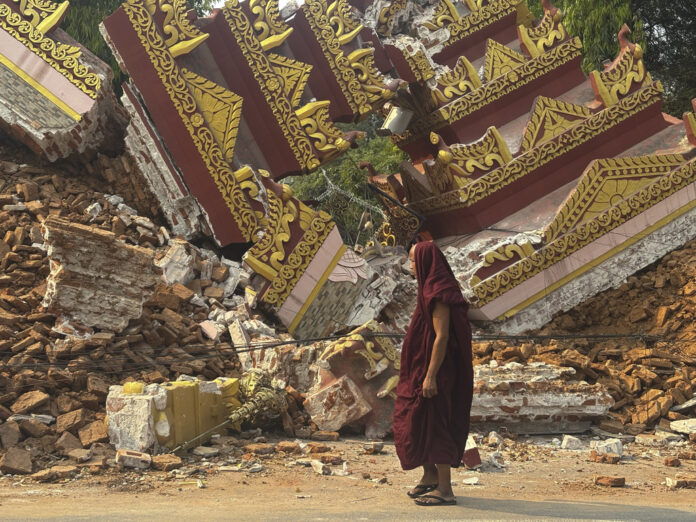
A Buddhist monk walks near a collapsed pagoda after an earthquake in Mandalay, central Myanmar, Sunday, March 30, 2025. (AP Photo/Thein Zaw)
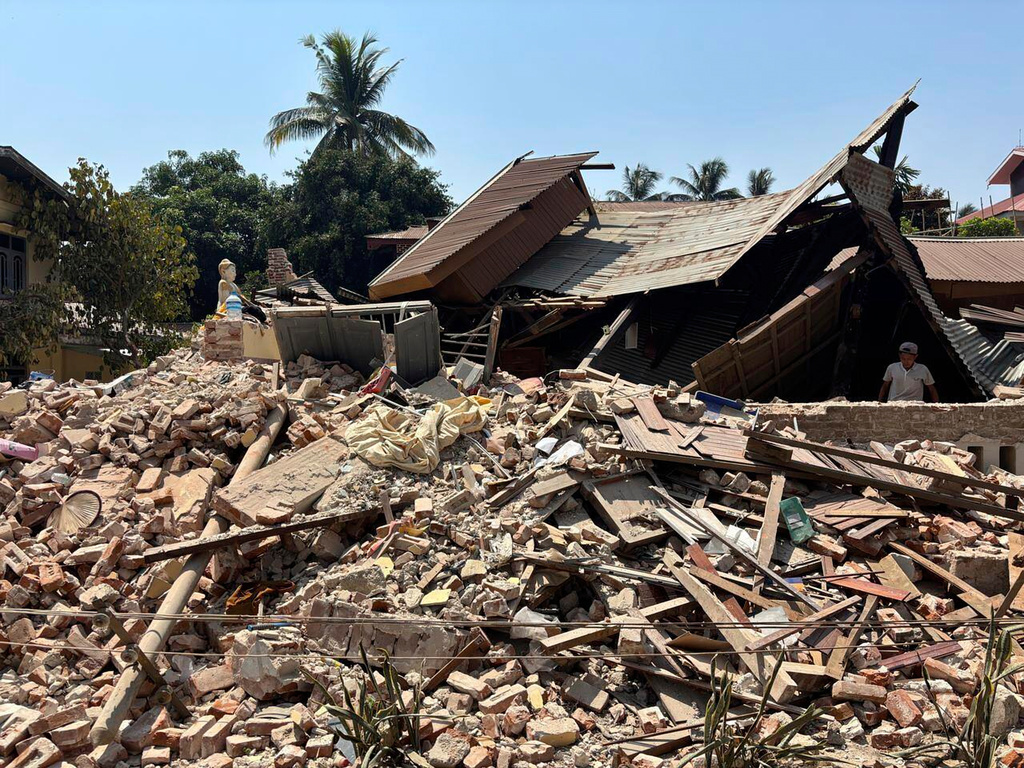
MANDALAY, Myanmar (AP) — The smell of decaying bodies permeated the streets of Myanmar’s second-largest city on Sunday as people worked frantically by hand to clear rubble in the hope of finding someone still alive, two days after a massive earthquake struck that killed more than 1,600 people and left countless others buried.
The 7.7 magnitude quake hit midday Friday with an epicenter near Mandalay, bringing down scores of buildings and damaging other infrastructure like the city’s airport.
Relief efforts have been hampered by buckled roads, downed bridges, spotty communications and the challenges of operating in a country in the midst of a civil war.
The search for survivors has been primarily conducted by the local residents without the aid of heavy equipment, moving rubble by hand and with shovels in 41-degree Celsius (106 Fahrenheit) heat, with only the occasional tracked excavator to be seen.
A 5.1 magnitude aftershock Sunday afternoon prompted screams from those in the streets, and then the work continued.
Many of Mandalay’s 1.5 million people spent the night sleeping on the streets, either left homeless by the quake, which also shook neighboring Thailand and killed at least 18 people there, or worried that the continuing aftershocks might cause structures left unstable to collapse.
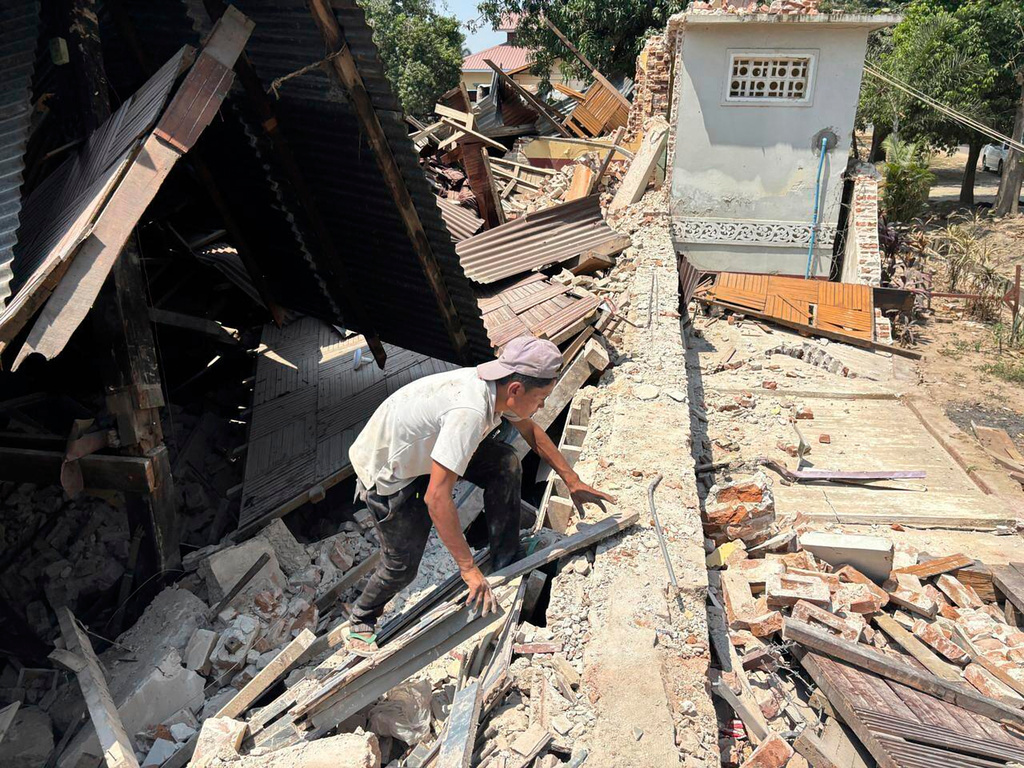
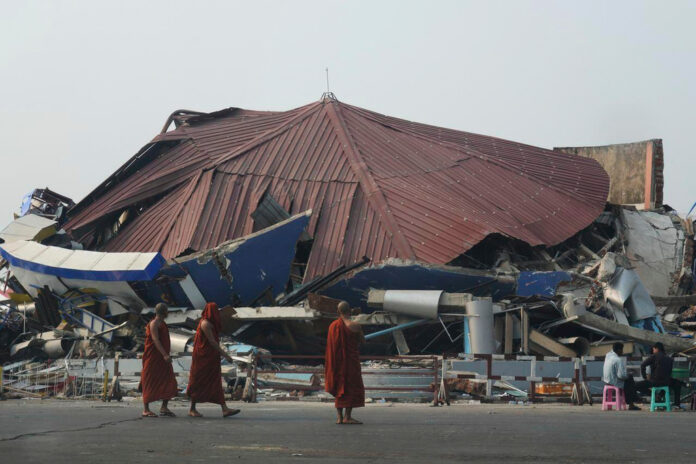
A Buddhist monastery building that has collapsed is seen following an earthquake in Naypyitaw, Myanmar Sunday, March 30, 2025. (AP Photo/Aung Shine Oo)
Many areas still have not been reached
So far 1,644 people have been reported killed in Myanmar and 3,408 injured, but many areas have not yet been reached, and many rescue efforts so far have been undertaken by people working by hand to try and clear rubble, said Cara Bragg, the Yangon-based manager of Catholic Relief Services in Myanmar.
“It’s mainly been local volunteers, local people who are just trying to find their loved ones,” Bragg said after bring briefed by her colleague in Mandalay.
“I’ve also seen reports that now some countries are sending search and rescue teams up to Mandalay to support the efforts, but hospitals are really struggling to cope with the influx of injured people, there’s a shortage of medical supplies, and people are struggling to find food and clean water,” Bragg added.
The organization was sending a team by road on Sunday to assess peoples’ most pressing needs so that it could target its own response.
With the Mandalay airport damaged and the control tower toppled in the capital Naypitaw’s airport, all commercial flights into the cities have been shut down.
Official relief efforts in Naypitaw were prioritizing government offices and staff housing, leaving locals and aid groups to dig through the rubble by hand in residential areas, the hot sun beating down and the smell of death in the air.
A team sent from neighboring China rescued an older man who had been trapped for nearly 40 hours beneath the rubble of a Naypitaw hospital, and many others are believed to still be buried under, the official Xinhua news agency reported.
Myanmar sits on the Sagaing Fault, a major north-south fault that separates the India plate and the Sunda plate.
The earthquake occurred when a 200-kilometer (125-mile) section of the fault ruptured, causing widespread damage along a wide swath of territory down the middle of the country, including Sagaing, Mandalay, Magway and Bago regions and Shan State.
With widespread telecommunication outages, few details have come out so far from areas other than the main urban areas of Mandalay and Naypitaw.
A person goes through rubble at a Buddhist monastery building that has collapsed following an earthquake in Naypyitaw, Myanmar Sunday, March 30, 2025. (AP Photo/Aung Shine Oo)
Foreign aid starts to arrive in Myanmar
Still, two Indian C-17 military transport aircraft were able to land late Saturday at Naypitaw with a field hospital unit and some 120 personnel who were then to travel north to Mandalay to establish a 60-bed emergency treatment center, according to the country’s Foreign Ministry. Other Indian supplies were flown into Yangon, Myanmar’s biggest city, which has been the hub of other foreign relief efforts.
On Sunday, a convoy of 17 Chinese cargo trucks carrying critical shelter and medical supplies was expected to reach Mandalay, after making the arduous journey by road from Yangon.
The 650-kilometer (400-mile) journey has been taking 14 hours or longer, with clogged roads and traffic diverted from the main highway to skirt damage from the earthquake.
At the same time, the window of opportunity to find anyone alive is rapidly closing. Most rescues occur within the first 24 hours after a disaster, and then survival chances drop as each day passes.
An initial report on earthquake relief efforts issued Saturday by the U.N. Office for the Coordination of Humanitarian Affairs noted the severe damage or destruction of many health facilities, and warned that a “severe shortage of medical supplies is hampering response efforts, including trauma kits, blood bags, anesthetics, assistive devices, essential medicines, and tents for health workers.”
In this photo released by Xinhua News Agency, rescuers conduct a search and rescue at a collapsed building in the aftermath of an earthquake in Mandalay, Myanmar, Sunday, March 30, 2025. (Myo Kyaw Soe/Xinhua via AP)
China said it has sent more than 135 rescue personnel and experts along with supplies like medical kits and generators and pledged around $13.8 million in emergency aid. Russia’s Emergencies Ministry said it had flown in 120 rescuers and supplies to Yangon, and the country’s Health Ministry said Moscow had sent a medical team to Myanmar.
Teams from Singapore have been working already in Naypitaw. Malaysia dispatched a team of 50 personnel on Sunday with trucks, search and rescue equipment and medical supplies. Thailand said 55 of its soldiers arrived in Yangon on Sunday to help with search and rescue operations, while Britain announced a $13 million aid package to help its locally-funded partners already in Myanmar respond to the crisis.
18 people reported dead in Thailand
In neighboring Thailand, the quake rocked much of the country, bringing down a high-rise building under construction in Bangkok, some 1,300 kilometers (800 miles) away from the epicenter.
So far, 11 people have been found dead at the construction site near the popular Chatuchak market. A total of 18 people have been reported killed by the quake in Thailand so far.
People watch as rescuers work at the site of an under-construction high-rise building that collapsed on Friday after an earthquake in Bangkok, Thailand, Sunday, March, 30, 2025. (AP Photo/Manish Swarup)
Rescue efforts in Myanmar complicated by civil war
In Myanmar, which is also known as Burma, rescue efforts so far are focused on Mandalay and Naypyitaw, which are thought to have been the hardest hit, but many other areas were also impacted and little is known so far about the damage there.
“We’re hearing reports of hundreds of people trapped in different areas,” said Bragg. “Right now we’re at 1,600 (known fatalities) and we don’t have a lot of data coming out but you’ve got to assume it will be increasing in the thousands based on what the impacts are. This is just anecdotal information at this point.”
Beyond the earthquake damage, rescue efforts are complicated by the bloody civil war roiling much of the country, including in quake-affected areas. In 2001, the military seized power from the elected government of Aung San Suu Kyi, sparking what has since turned into significant armed resistance.
Government forces have lost control of much of Myanmar, and many places are dangerous or impossible for aid groups to reach. More than 3 million people have been displaced by the fighting and nearly 20 million are in need, according to the United Nations.
The government military has been fighting long-established militias and newly formed pro-democracy People’s Defense Forces, and has heavily restricted much-needed aid efforts to the large population already displaced by war even before the earthquake.
Military attacks continued with airstrikes on Friday and reports of mortar and drone attacks on Saturday.
Tom Andrews, a monitor on rights in Myanmar commissioned by the U.N.-backed Human Rights Council, called for the military to immediately call a ceasefire.
“Aid workers should not have to fear arrest and there should be no obstructions to aid getting to where it is most needed,” he said on X. “Every minute counts.”
_____
David Rising and Grant Peck reported from Bangkok while Thein Zaw reported from Madalay. Associated Press writers Jintamas Saksornchai in Bangkok, Simina Mistreanu in Taipei, Taiwan and Eileen Ng in Kuala Lumpur, Malaysia contributed to this report.
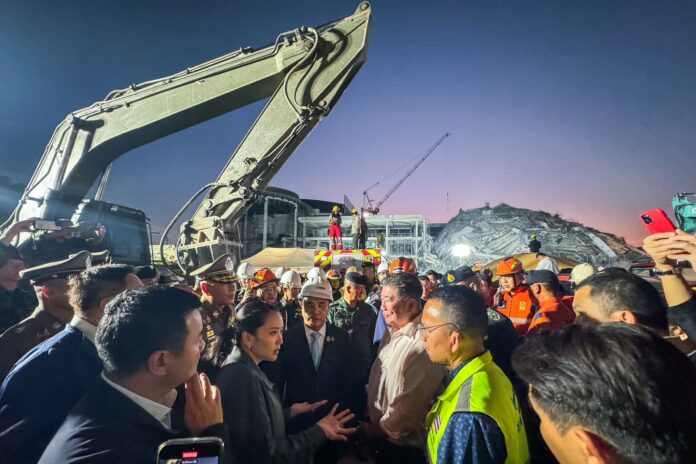
Prime Minister Paetongtarn Shinawatra visits the site of the collapsed Office of the Auditor General building in Chatuchak district, which completely collapsed due to earthquake tremors from Myanmar on March 28, 2025. (KHAOSOD Photo/Chavalit Panyong)
The long-held belief that Bangkok is free from major earthquakes, or dangerous tremors, from neighbouring countries like Myanmar, was literally shattered on Friday afternoon as the 7.7 magnitude quake with the epicentre over 300 kilometres from the Thai border shook Bangkok, central, and northern Thailand.
It sent hundreds of thousands Thais and foreigners in the Thai capital fleeing from shopping malls, high-rise condominiums, office buildings, hospitals and hotels, in a scene resembling the end-of-the-world scenario of a Hollywood film.
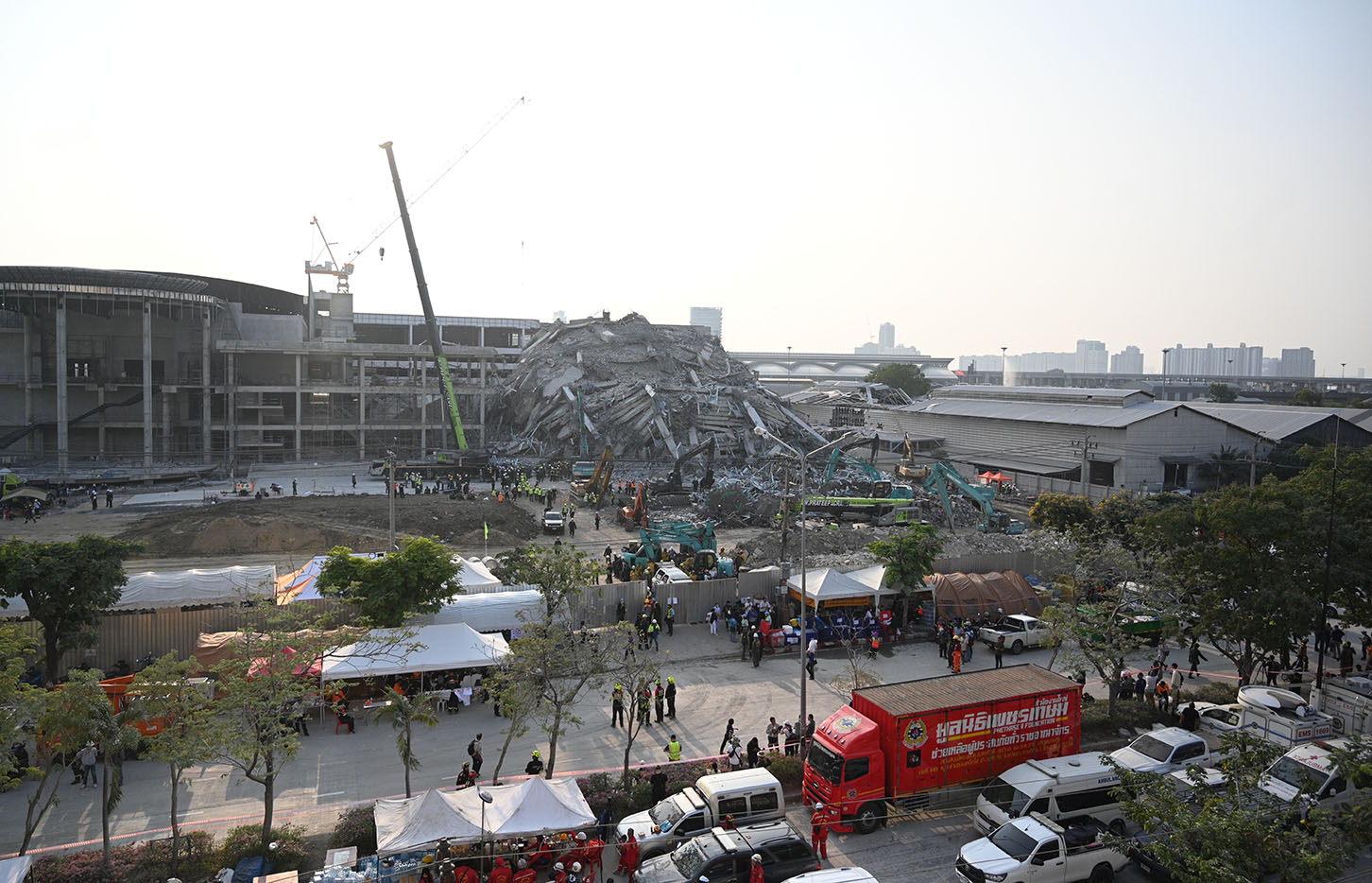
Most tragically is the collapse of the 33-storey State Audit Office building, which was still under construction, in Bangkok’s Chatuchak district. As I type these words on Sunday, March 30, 2025, nearly 48 hours after the building collapsed, some seventy workers, including some Myanmar workers, remained unaccounted for and the hope that there will be any survivor still is dimming by the hour. I was at the site of the rubble yesterday afternoon and the huge pile of rubble itself appears as high as a five or six-storey building – a very sad and daunting sight.
Prime Minister Paetongtarn Shinawatra rightly questioned on Saturday as to why this was the only building which collapsed and demanded an answer within seven days.
It must be noted that there were many hi-rise buildings under various stages of construction in Bangkok and none except this one collapsed.
It’s most ironic that the building was supposed to be the office of state auditor, in which their roles include scrutinising the use of taxpayers’ money by all government agencies. Now they themselves are being scrutinised as to how their 2.1 billion baht was spent and how it ended up as a deadly rubble so disturbingly captured on video and spread by the media around the world.
Another disturbing fact is that the construction of the ill-fated building was awarded to a joint venture between Italian-Thai Develpment Group and China Railway Number 10 Group, a major Chinese state enterprise.
Given that it’s a Chinese state enterprise, we would have sensibly expected that the Chinese government would have said something by now, order a probe, and commit itself to assist the Thai government in its investigation. Disappointedly, the Chinese Embassy in Bangkok on Saturday issued a statement on its Facebook page expressing condolences without mentioning the elephant in the room – China Railway Number 10 Group.
This despite some Chinese netizens expressing disappointment and shame at the result of the construction, which before the incident boasted its hi-tech construction method that would save 10 percent of the construction time. By pretending to be oblivious to the matter, the Chinese government unwittingly gives ammunition to some Thais who are already fanning anti-China sentiment on social media.
Moving on to the issue of text message warnings after the quake on Friday afternoon, it was too clearly too slow and for many. This writer didn’t even receive any post-quake emergency SMS advice from the government as of Sunday noon, nearly two days after. All told, the National Broadcasting and Telecommunication Commission (NBTC) defended itself by saying the cell broadcasting system will only be operational in June.
This is 20 years after the tsunami incident which killed thousands of people in Thailand! This is (almost) unforgivable as many panicked and rumours spread in the hours after the tremors. The PM herself said that even for those who eventually received some message, “it took far too long.” This writer thinks someone deserved, actually should, be fired.
Another major post-tremors challenge, which will linger on for many months, if not years, is how safe are the many hi-rise buildings still standing in Bangkok. As of press time, Bangkok City Hall is trying to examine the structural integrity of some 160 buildings. Bangkok governor Chadchart Sittipunt has just issued an order, requiring all hi-rise building management to commission engineering experts to examine the structural integrity of their buildings.
Two Bangkok condos have been declared too dangerous to inhabit. It’s expected that there will be more dangerous buildings and everyone working, and living in hi-rise buildings in Bangkok, central and northern Thailand, need to be vigilant and observe their habitat and office carefully, for their own safety.
Going forward, Thailand will also need to review its minimum construction criterias, particularly for hi-rise building, in response to the new shattering reality.
Moving on to Myanmar, which has suffered much more than Thailand, with over a thousand officially reported killed, while it stands at 10 in Thailand as of now, it is only appropriate that Thailand joins the international community in assisting Myanmar. The Paetongtarn government, in this regard, acted in a timely fashion and has already dispatched a team of 55 personnel from the Army Operations Department to support Myanmar in Naypyidaw and Mandalay.
*****
Note: After the writer finished the article, Chinese Ambassador to Thailand Han Zhiqiang met with Deputy PM Anutin Charnvirakul on Sunday and pledged to cooperate in the investigation of the collapsed building.
Bo Phut police officers arrest five individuals, one Thai and 4 foreigners, for participating in an illegal poker gambling operation at a residence in Moo 6, Bo Phut sub-district, Koh Samui, Surat Thani province on March 29, 2025.
KOH SAMUI — In an unusual diplomatic gathering of sorts, police in Koh Samui arrested four foreigners—two Russians, one Ukrainian, and one French national—who had set aside geopolitical tensions to enjoy an illegal poker game together at a private residence.
Bo Phut police officers have arrested five individuals for participating in an illegal poker gambling operation at a residence in Moo 6, Bo Phut sub-district, Koh Samui, Surat Thani province.
According to police, the gambling ring was organized through social media, with participants arranging to meet at the house on March 29. Upon investigation, authorities found a 38-year-old Thai man from Narathiwat province who was managing the gambling operation, along with four foreign nationals of three different nationalities.
Bo Phut police officers have arrested five individuals for participating in an illegal poker gambling operation at a residence in Moo 6, Bo Phut sub-district, Koh Samui, Surat Thani province on March 29, 2025.
The foreign participants included a 50-year-old French national identified as Mr. Stanley, a 48-year-old Ukrainian national identified as Mr. Ruslan, and two Russian nationals — Mr. Alexandr, 38, and Mr. Dmitri, 43.
Police seized the gambling table and all poker equipment as evidence. All five suspects will be brought before the court on March 31.
The Thai organizer has been charged with operating an illegal gambling establishment, while the four foreigners face charges of participating in illegal gambling with stakes involving property without proper authorization.
Buddhist monks walk past a collapsed building after a powerful earthquake in Naypyitaw, Myanmar, Saturday, March 29, 2025. (AP Photo/Aung Shine Oo)
BANGKOK (AP) — Myanmar’s ruling military said Saturday on state television that the confirmed death toll from a devastating 7.7 magnitude earthquake rose to 1,644, as more bodies were pulled from the rubble of the scores of buildings that collapsed when it struck near the country’s second-largest city.
The new total is a sharp rise compared to the 1,002 total announced just hours earlier, underlining the difficulty of confirming casualties over a widespread region and the likelihood that the numbers will continue to grow from Friday’s quake. The number of injured increased to 3,408, while the missing figure rose to 139.
Rescue efforts are underway especially in the major stricken cities of Mandalay, the country’s No. 2 city, and Naypyitaw, the capital. But even though teams and equipment have been flown in from other nations, they are hindered by the airports in those cities being damaged and apparently unfit to land planes.
Myanmar rescuers search for survivors of Friday’s earthquake beneath a damaged building in Naypyitaw, Myanmar, Saturday, March 29, 2025. (AP Photo/Aung Shine Oo)
Myanmar, also known as Burma, is in the throes of a prolonged civil war, which is already responsible for a humanitarian crisis. It makes movement around the country both difficult and dangerous, complicating relief efforts and raising fears that the death toll could still rise precipitously.
The earthquake struck midday Friday with an epicenter not far from Mandalay, followed by several aftershocks including one measuring a strong 6.4 magnitude. It sent buildings in many areas toppling to the ground, buckled roads, caused bridges to collapse and burst a dam.
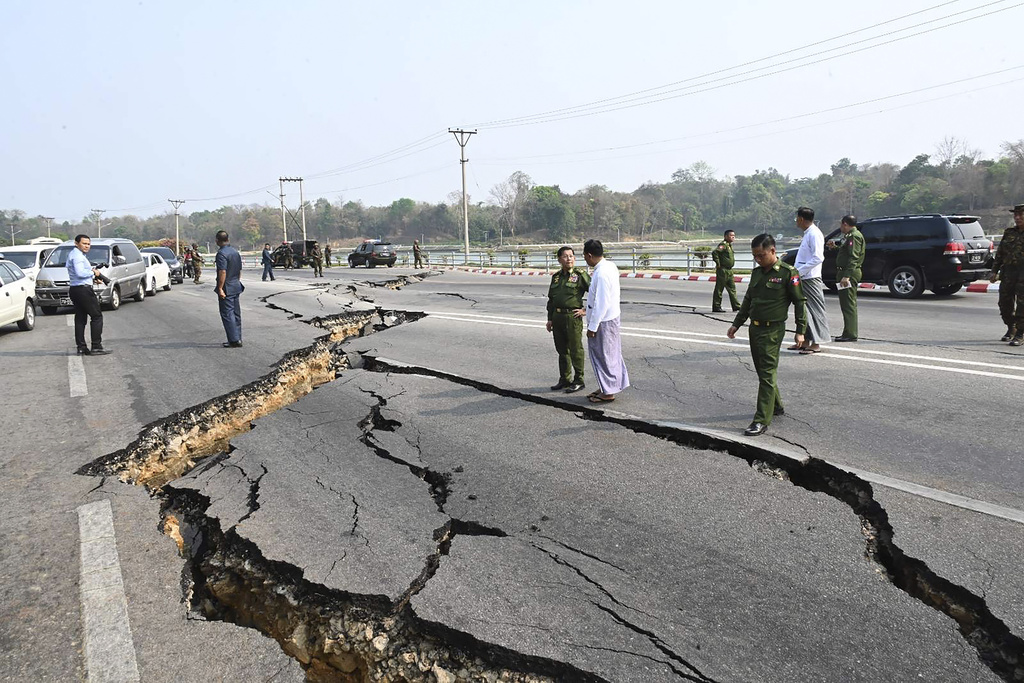
In the capital Naypyidaw, crews worked Saturday to repair damaged roads, while electricity, phone and internet services remained down for most of the city. The earthquake brought down many buildings, including multiple units that housed government civil servants, but that section of the city was blocked off by authorities on Saturday.
In this image provided by The Myanmar Military True News Information Team, Myanmar’s military leader Senior Gen. Min Aung Hlaing, center, inspects damaged road caused by an earthquake Friday, March 28, 2025, in Naypyitaw, Myanmar. (The Myanmar Military True News Information Team via AP)
In neighboring Thailand, the quake rocked the greater Bangkok area, home to some 17 million people — many of whom live in high-rise buildings — and other parts of the country.
Bangkok city authorities said so far six people have been found dead, 26 injured and 47 are still missing, most from a construction site near the capital’s popular Chatuchak market.
When the quake hit, the 33-story high-rise being built by a Chinese firm for the Thai government wobbled, then came crashing to the ground in a massive plume of dust that sent people screaming and fleeing from the scene.
On Saturday, more heavy equipment was brought in to move the tons of rubble, but hope was fading among friends and family members of the missing that they would be found alive.
“I was praying that that they had survived but when I got here and saw the ruin — where could they be? In which corner? Are they still alive? I am still praying that all six are alive,” said 45-year-old Naruemol Thonglek, sobbing as she awaited news about her partner, who is from Myanmar, and five friends who worked at the site.
“I cannot accept this. When I see this I can’t accept this. A close friend of mine is in there, too,” she said.
In this image provided by The Myanmar Military True News Information Team, victims caused by an earthquake is seen compound of government hospital Friday, March 28, 2025, in Naypyitaw, Myanmar. (The Myanmar Military True News Information Team via AP)
Waenphet Panta said she hadn’t heard from her daughter Kanlayanee since a phone call about an hour before the quake. A friend told her Kanlayanee had been working high on the building on Friday.
“I am praying my daughter is safe, that she has survived and that she’s at the hospital,” she said, Kanlayanee’s father sitting beside her.
Myanmar sits on a major fault line
Earthquakes are rare in Bangkok, but relatively common in Myanmar. The country sits on the Sagaing Fault, a major north-south fault that separates the India plate and the Sunda plate.
Brian Baptie, a seismologist with the British Geological Survey, said it appears a 200-kilometer (125-mile) section of the fault ruptured for just over a minute, with a slip of up to 5 meters (16.4 feet) in places, causing intense ground shaking in an area where most of the population lives in buildings constructed of timber and unreinforced brick masonry.
“When you have a large earthquake in an area where there are over a million people, many of them living in vulnerable buildings, the consequences can often be disastrous,” he said in a statement.
“From initial reports, that seems likely to be the case here.”
A natural disaster on top of a civil war
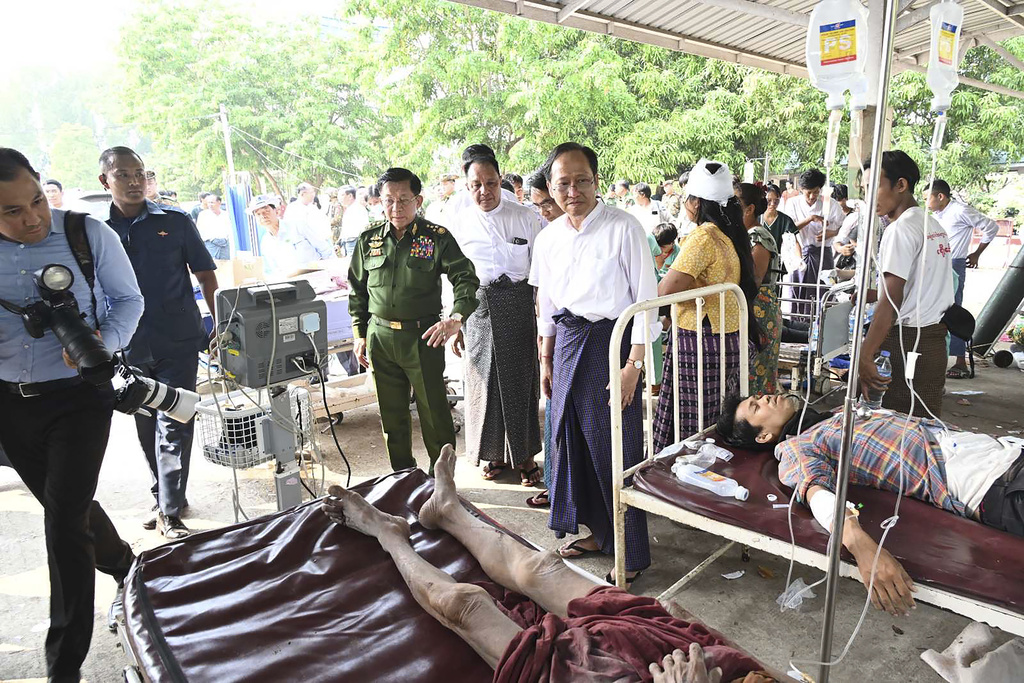
Myanmar’s government said blood was in high demand in the hardest-hit areas. In a country where prior governments sometimes have been slow to accept foreign aid, Min Aung Hlaing said Myanmar was ready to accept outside assistance.
In this image provided by The Myanmar Military True News Information Team, Myanmar’s military leader Senior Gen. Min Aung Hlaing, center, inspects victims caused by an earthquake Friday, March 28, 2025, in Naypyitaw, Myanmar. (The Myanmar Military True News Information Team via AP)
Myanmar’s military seized power from the elected government of Aung San Suu Kyi in February 2021, and is now involved in a bloody civil war with long-established militias and newly formed pro-democracy ones.
Government forces have lost control of much of Myanmar, and many places are incredibly dangerous or simply impossible for aid groups to reach. More than 3 million people have been displaced by the fighting and nearly 20 million are in need, according to the United Nations.
“Although a full picture of the damage is still emerging, most of us have never seen such destruction,” said Haider Yaqub, Myanmar country director for the NGO Plan International, from Yangon.
“Without a doubt, the humanitarian needs will be significant.”
Rescue groups head to Myanmar
China and Russia are the largest suppliers of weapons to Myanmar’s military, and were among the first to step in with humanitarian aid.
A 37-member team from the Chinese province of Yunnan reached the city of Yangon early Saturday with earthquake detectors, drones and other supplies, the official Xinhua news agency reported.
Russia’s emergencies ministry dispatched two planes carrying 120 rescuers and supplies, according to a report from the Russian state news agency Tass.
India sent a search and rescue team and a medical team as well as provisions, while Malaysia’s foreign ministry said the country will send 50 people on Sunday to help identify and provide aid to the worst-hit areas.
South Korea announced it would provide $2 million worth of humanitarian aid to Myanmar through international organizations to support recovery efforts. The Foreign Ministry added that Seoul would closely monitor the situation and consider additional support if needed.
The United Nations allocated $5 million to start relief efforts. President Donald Trump said Friday that the U.S. was going to help with the response, but some experts were concerned about this effort given his administration’s deep cuts in foreign assistance.
The Trump administration’s cuts to the United States Agency for International Development have already forced the United Nations and non-governmental organizations to cut many programs in Myanmar.
___
AP writers Jerry Harmer and Grant Peck in Bangkok and Tong-hyung Kim in Seoul, South Korea, contributed to this report.
Prime Minister Paetongtarn Shinawatra chairs a meeting at the National Disaster Prevention and Mitigation Command Center on March 29, 2025. (KHAOSOD Photo/Pattarayoot Phukpol)
BANGKOK — Prime Minister Paetongtarn Shinawatra has pressed government agencies to improve Thailand’s emergency alert system following criticism of the delayed SMS warnings during the recent Myanmar earthquake that affected Bangkok and other provinces in central and northern Thailand.
During a meeting at the National Disaster Prevention and Mitigation Command Center on March 29, the Prime Minister questioned representatives from the Department of Disaster Prevention and Mitigation (DDPM) and the National Broadcasting and Telecommunications Commission (NBTC) about their response to the earthquake.
The DDPM representative explained that their standard procedure is to receive notifications from the Meteorological Department’s Earthquake Surveillance Division before issuing warnings. Since earthquakes cannot be predicted in advance, alerts are only sent after an event occurs.
Prime Minister Paetongtarn Shinawatra chairs a meeting at the National Disaster Prevention and Mitigation Command Center on March 29, 2025. (KHAOSOD Photo/Pattarayoot Phukpol)
When the earthquake struck at 1:20 PM, the DDPM sent four messages to the NBTC, with the first being sent at 2:42 PM advising that people could enter buildings if necessary. The NBTC representative reported that they began sending SMS alerts at 2:44 PM immediately after receiving the message from DDPM.
However, they acknowledged significant limitations in their system, which can only send messages to 100,000-200,000 phone numbers at a time, with a required 15-minute interval between batches. Mobile network operators are working to increase capacity to 3 million numbers at once, but this process takes 5-6 hours due to queue management constraints. In total, messages were eventually sent to over 10 million phone numbers.
PM Paetongtarn identified two main problems: “Our SMS system is slow and not comprehensive enough. This needs to be fixed as a priority.” While acknowledging that a new Cell Broadcast system expected in June or July will allow instant message distribution to all phones, she urged authorities to find immediate solutions with telecom providers to increase SMS capacity from 100,000-200,000 to 1 million messages rapidly.
Rescuers continue searching for people trapped under the rubble of the State Audit Office building in Chatuchak district, Bangkok on March 29, 2025.
“What citizens still aren’t receiving are SMS alerts, and we need to address whether foreign visitors with Thai SIM cards are included in these warnings,” she stated. “The NBTC and DDPM must coordinate on how to integrate these systems better. You need to answer these questions because I have to answer to the public.”
During the earthquake, PM Paetongtarn was visiting Phuket in the south of Thailand. She then changed her scheduled meeting to address the earthquake response and quickly traveled back to Bangkok.
The Prime Minister admitted her own oversight in not specifying what messages should be sent to citizens during emergencies. She thanked television broadcasters for their quick response in broadcasting emergency information within five minutes of her request.
“I’m like every Thai citizen who doesn’t know how to react in these situations because we don’t live in a country that regularly experiences severe earthquakes,” she added. She noted that during the emergency, people couldn’t access vital information about transportation services, and instructed the Ministry of Transport and the NBTC to improve their coordination to prevent similar problems in future emergencies.
The world of construction reinforcement is undergoing a transformative shift. Traditional lapped rebar splices are giving way to innovative mechanical couplers that promise stronger, more efficient, and more sustainable structures.
For over four decades, Dextra has been at the forefront of this revolution in rebar splicing technology. In this article, we explore how Dextra’s next-generation rebar couplers – notably the Griptec® and Bartec® rebar splicing systems – are pushing the boundaries of structural engineering, delivering dramatic reductions in material usage and carbon footprint, and enabling landmark projects like the Jeddah Tower and Brisbane Airport Link.
A Legacy of Innovation in Mechanical Splicing
Founded in 1983, Dextra has established itself as a global leader in construction reinforcement solutions. With a footprint in over 55 countries and involvement in over 20,000 major infrastructure projects globally, Dextra’s reputation is built on proven engineering and manufacturing excellence.
At the heart of its offering are two key technologies: Bartec®, a parallel-thread rebar coupler system known for its exceptional strength and consistency, and Griptec®, a high-performance solution with full mechanical performance and 100% proof testing on every connection. Both systems are designed to meet and exceed international standards and are widely trusted in high-risk, high-spec projects, including nuclear and seismic applications.
Sustainable Engineering: Cutting Carbon with Confidence
Beyond strength and speed, Dextra’s rebar couplers are helping reshape construction’s environmental footprint. Traditional rebar overlap methods increase the total steel used on-site. By replacing overlaps with end-to-end mechanical splices, Dextra couplers can reduce steel usage and CO₂ emissions by up to 90% per connection.
This isn’t just theoretical: on real-world projects, using couplers allow contractors to eliminate dangerous rebar extrusion, simplify steel logistics, improve rebar continuity and reduce material waste significantly. For developers and engineers committed to sustainable building practices, this creates an immediate and measurable impact — without compromising on safety or performance.
Proven in the World’s Most Ambitious Projects
Dextra’s rebar coupler systems have played key roles in some of the most high-profile construction projects around the globe.
Take the Jeddah Tower in Saudi Arabia, set to become the tallest building in the world. In such a structurally demanding project, mechanical splicing was not just an option—it was a necessity. Dextra’s Bartec couplers ensured seamless load transfer throughout the tower’s vertical rebar systems, supporting extreme height while minimizing congestion and material volume.
Meanwhile, in Australia, the Brisbane Airport Link — the country’s longest road tunnel — relied on over 80,000 Griptec couplers to connect reinforcing bars in a high-pressure, underground environment. These couplers contributed to faster construction timelines and superior seismic performance, proving once again that Dextra systems can thrive in the most demanding conditions.
From the depths of tunneling to the peaks of skyscrapers, Dextra’s solutions are designed to perform wherever excellence is non-negotiable.
Certified Quality, Trusted Worldwide
Dextra places a strong emphasis on quality control, precision, and compliance. Its rebar couplers are manufactured under strict international standards, with all key components produced in ISO19443-certified facilities. In fact, Dextra’s main facility includes an ISO 17025 accredited laboratory to test products against stringent performance benchmarks.
Products like Bartec and Griptec are certified by multiple global bodies for seismic, nuclear, and general construction use. These include Type 2 seismic classifications, which ensure performance under dynamic and reversed cyclic loads — critical in earthquake-prone regions and high-stress structures.
Every standard connection is engineered to meet “bar-break” standards, meaning the steel bar itself will fail before the coupler does. This reliability gives engineers and contractors peace of mind in even the most challenging design and site conditions.
Building Tomorrow’s Landmarks, Today
As cities grow taller, infrastructure stretches farther, and sustainability becomes a universal mandate, reinforcement technologies must evolve in lockstep. Dextra’s Griptec and Bartec systems embody this evolution — enabling the construction of stronger, smarter, and more responsible structures.
These next-generation couplers are not only changing how steel is connected — they’re changing what’s possible. Whether it’s cutting carbon, accelerating timelines, or reinforcing the world’s most iconic buildings, Dextra continues to set the standard for innovation in mechanical splicing.
Ready to reinforce your next project with the future of construction? Discover how Dextra’s rebar couplers can deliver performance, precision, and sustainability — all in one solution.
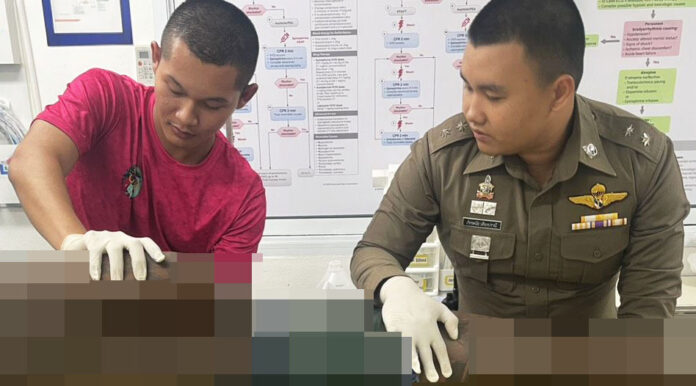
A police officer from Bo Phut Police Station inspects the body of a 30-year-old British man at Thai International Hospital on March 29. The man died following his first Muay Thai fight on Friday night.
KOH SAMUI — A 30-year-old British man died while still wearing Muay Thai shorts on Koh Samui island in Surat Thani province.
Police officers from Bo Phut Police Station investigated the incident at Thai International Hospital shortly after midnight on March 29. The deceased was identified as Mr. Joseph, according to Nantawat Chukaew, the boxing trainer who provided additional details.
On March 28, around 9:30 PM, Joseph participated in his first-ever boxing match at the Inter Samui boxing stadium. During the third round, he was kicked in the right side of his rib cage, prompting the referee to stop the fight.
A 30-year-old British man died while still wearing Muay Thai shorts on Koh Samui island in Surat Thani Province on March 28, 2025.
After the match ended, the deceased walked off the ring on his own and appeared normal, even removing his gloves as usual. However, while unwrapping his hand bandages, he began experiencing muscle tension, labored breathing, and eye rolling, though without seizures.
His trainer brought him to the front of the stage. At that time, Joseph was still conscious, but approximately five minutes later, he collapsed and his heart stopped beating.
While waiting for the rescue foundation ambulance, the boxing trainer performed initial cardiopulmonary resuscitation (CPR). Upon arrival at Thai International Hospital, medical staff continued CPR for about an hour before the hospital doctor pronounced him dead at 11:00 PM.
Doctors at Koh Samui Hospital have conducted an autopsy, while police officers will coordinate with the British Embassy to notify the deceased’s relatives.