





























31.1 C
Bangkok
Tuesday, June 23, 2026
Home Blog Page 52

Bolt Tightens Safety After Thai Student Ride Incident

Bolt Tightens Safety After Thai Student Ride Incident

BANGKOK — 11 May 2026, the popular ride-hailing platform, Bolt, announced stricter safety measures in Thailand, including expanded use of AI technology and more frequent facial recognition checks to prevent driver identity fraud, following a violent incident involving a schoolgirl.

The incident occurred in late April 2026 when the student booked a motorcycle ride through the app to return home in Bangkok’s Nong Khaem district.

According to reports, Arm, the 22-year-old driver, whose motorcycle lacked a license plate, reportedly stopped to drink a substance suspected to be kratom water before bypassing the passenger’s intended destination.

The student recorded a video pleading with the rider to stop. The rider allegedly attempted to seize her mobile phone and refused to stop the vehicle, prompting the student to jump off the motorcycle and suffer injuries. Bystanders later intervened and provided assistance.
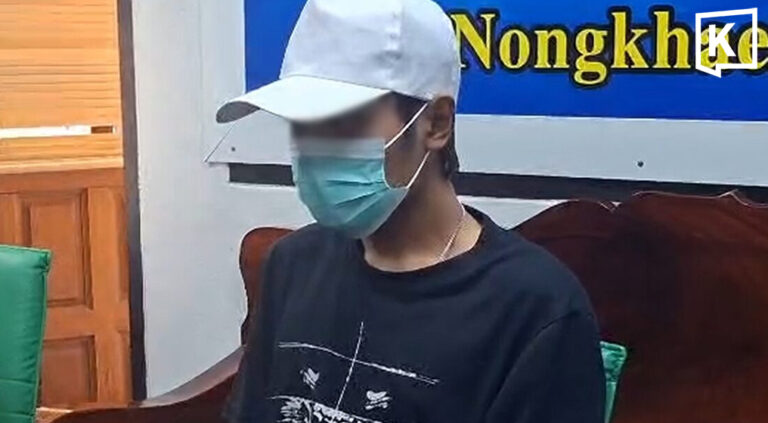
Bolt Tightens Safety After Thai Student Ride Incident 2
Arm, the 22-year-old rider involved in the incident.

Investigations revealed the rider had been using another person’s account to accept jobs on the platform.

In a statement, Bolt Thailand said it had summoned the service provider involved to clarify the facts, suspended the driver account linked to the incident and alerted other ride-hailing platforms to help prevent the individual from operating elsewhere. The company also said it had already suspended more than 40,000 riders for violating platform rules.

On 11 May, Bolt Thailand issued a further statement confirming that its services in Thailand remain operational as usual. While the company coordinates with relevant authorities regarding certification of its electronic systems.

The company said passenger safety and confidence remained its highest priorities and outlined several enhanced measures:

  • Increase the frequency of random facial recognition checks for drivers to prevent account sharing and impersonation.
  • Reiterate a zero-tolerance policy on account misuse; accounts found to be shared or used by unauthorised individuals would be permanently banned.
  • AI-powered monitoring systems capable of detecting irregularities during trips in real time, alongside rapid-response safety reporting systems.
  • Pop-up reminders before each journey for passengers to verify the driver’s face, vehicle registration and trip details shown in the application before boarding.

Advertisement

Thai FM Says Koh Kood Sovereignty Not in Doubt

Thai FM Says Koh Kood Sovereignty Not in Doubt

BANGKOK — 12 May 2026, Thailand’s deputy prime minister and foreign minister said on Tuesday that Koh Kood island remains unquestionably Thai territory, dismissing reports that Cambodia had secretly registered a 2001 bilateral memorandum as evidence in a maritime boundary dispute.

Speaking at Government House at 8:45, Deputy Prime Minister and Foreign Minister Sihasak Phuangketkeow also said Thai authorities were arranging legal assistance for Thai nationals detained by Cambodian soldiers for allegedly crossing the border illegally while gathering forest products.

“The process is under way,” Sihasak said. “Coordination regarding legal assistance has already been completed, and we are monitoring the situation closely.”

Sihasak was responding to questions about reports that Cambodia had registered the 2001 Memorandum of Understanding between Thailand and Cambodia concerning overlapping continental shelf claims, known in Thailand as the “MOU 2544”, before Thailand later revoked it.

He said Cambodia was a signatory to the 1982 United Nations Convention on the Law of the Sea, or UNCLOS, which Thailand also recognises as the framework for future negotiations.

“The MOU 2544 has already been cancelled,” he said. “Negotiations under UNCLOS are a good approach and avoid wasting time, although it is still too early to conclude which mechanism will ultimately be used.”

Asked about reports that Cambodia intended to use the memorandum as evidence relating to a maritime boundary line that allegedly passes through Koh Kood in Trat province, Sihasak rejected the suggestion.

“That is not possible,” he said. “Under UNCLOS, maritime boundaries must be considered according to internationally recognised legal principles.”

“I do not know what Cambodia may have secretly registered,” he added. “What I know is that discussions will take place under UNCLOS.”

When asked whether the issue would affect Thailand’s sovereignty over Koh Kood, Sihasak said any formal demarcation would clearly show that the island belongs to Thailand.

Advertisement

Thailand rushes US trade deal ahead of possible Section 301 review

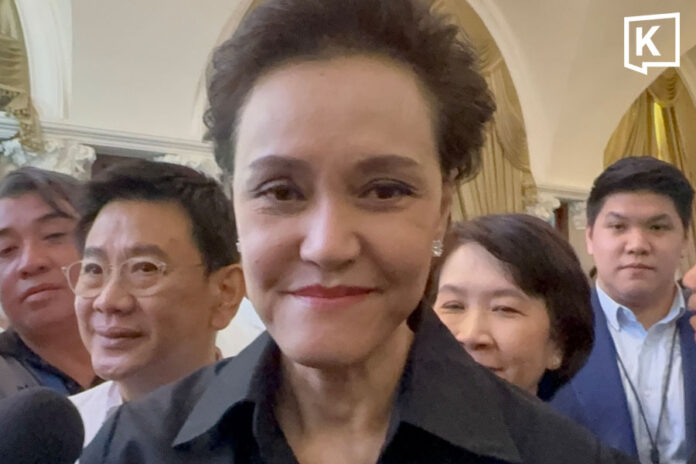
Deputy Prime Minister and Commerce Minister Suphajee Suthumpun speaks to reporters at Government House in Bangkok on 12 May 2026 following her visit to the United States for trade talks with US officials.

BANGKOK — 12 May 2026, Deputy Prime Minister and Commerce Minister Suphajee Suthumpun said Thailand is accelerating negotiations on the Agreement on Reciprocal Trade (ART) with the United States in a bid to reduce tariff risks ahead of a Section 301 review.

Speaking at 08:50 at Santi Maitree Building, Government House, Ms. Suphajee said following her recent visit to the United States, talks were held with Jamieson Greer and Rick Switzer on 4 May to push forward the pending ART negotiations.

She said Thai officials remain in the United States for technical-level discussions on two issues: asset capacity and forced labour.

Ms. Suphajee said her discussions focused on clarifying Thailand’s position after the country submitted its formal response on 15 April, adding that all issues had been clearly explained and no major obstacles had arisen.

She said both sides reaffirmed their intention to maximise trade benefits for both countries.

Thailand is also seeking to conclude ART negotiations, which have remained unresolved since the previous administration, before any investigation under Section 301 — a US trade law concerning unfair trade practices — proceeds.

The talks also addressed Thailand’s trade surplus with the United States. Ms. Suphajee said Thailand’s surplus increased considerably last year compared with the previous year.

She said Thailand had clarified that at least 30% of the additional surplus came from products manufactured by US companies investing in Thailand, while more than 20% came from Thai companies.

Regarding concerns over transshipment and misuse of trade privileges, Ms. Suphajee said Thailand has documentation and data prepared to clarify all relevant facts.

Advertisement

CCTV Footage Exposes Repeat Illegal Waste Dumping

CCTV Footage Exposes Repeat Illegal Waste Dumping

PHETCHABUN — 12 May 2026, A village chief in northern Thailand has installed CCTV cameras after repeated illegal dumping by outsiders along a roadside, with the latest footage clearly capturing a man unloading rubbish from a small farm vehicle.

The village chief warned residents not to copy the behaviour “until it becomes the community’s rubbish dump” and said legal action and fines could follow if the problem continues.

A local Facebook user posted a message online saying: “There are warning signs and cameras installed. You should dispose of your own rubbish properly. Illegal dumping is punishable by law.”

The post included CCTV footage showing a man driving a locally made agricultural vehicle, known as an “e-tan”, before dumping waste by the roadside. The clip sparked criticism on social media.

The account was later identified as belonging to Sombun Phunoi, village chief of Nong O village in tambon Pak Chong, Lom Sak district, Phetchabun province, who has been monitoring illegal dumping in the area for some time.

Speaking to reporters at the site, Sombun said the location was the second hotspot where repeated dumping had been detected. Most offenders were believed to come from outside Pak Chong because local communities already had organised waste collection systems.

He said many cases involved residents from neighbouring areas without rubbish collection services or suitable disposal sites, leading them to dump household waste illegally.

“Once rubbish starts piling up, other people passing through tend to follow, and it becomes a long-term problem,” he said.

The accumulation of waste has caused foul odours, damaged the community’s image and created health risks, particularly from organic waste that can attract flies, rats and disease.

Sombun said village security volunteers, community committee members and residents had previously helped monitor the area before officials decided to use village funds to install CCTV cameras to collect evidence.

He urged the public not to dump rubbish in public areas because it dirties shared spaces and affects the wider community.

If the offences continue, he said village authorities may report offenders to police or coordinate with local public health officials to impose fines under Thai law.

Under Thailand’s Public Health Act of 1992 and local regulations, those caught dumping rubbish in public places can face financial penalties.

Advertisement

Muslim senator says Ramkhamhaeng incident challenged Islam’s principles of peace

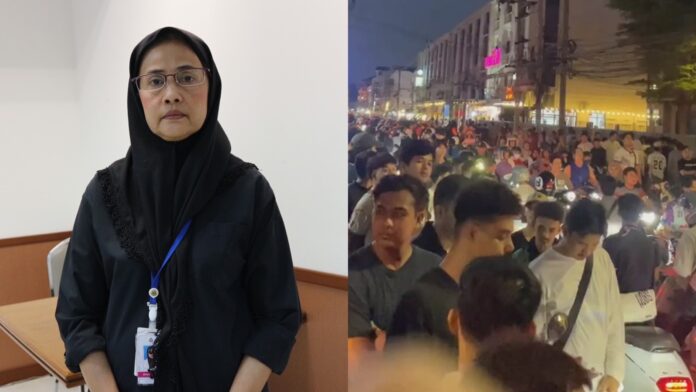
Muslim senator and former human rights commissioner Angkhana Neelaphaijit has raised concerns over what she described as “mob rule” after more than 1,000 Muslims reportedly gathered in Bangkok’s Ramkhamhaeng 53 area to pressure an LGBT Muslim individual accused of insulting Islam.

The incident, which sparked widespread debate on social media, reportedly involved the individual being pressured to apologise, shave their head and slap themselves as an act of repentance. Critics questioned whether the actions were voluntary or carried out under coercion.

In a Facebook post on Monday, Angkhana called on the Culture Ministry, the Office of the Chularatchamontri and the National Human Rights Commission to clarify their positions regarding groups identifying themselves as “defenders of religion” taking action against people accused of insulting religious beliefs.

She said the incident challenged Islam’s principles of peaceful coexistence, justice and compassion, adding that repeated claims during livestreams that the punishment was “voluntary” had raised doubts among viewers.

“If such incidents are allowed to pass without preventive measures, it could create a new norm in which mob rule overrides the law and even the true principles of religion,” she wrote.

Angkhana also warned that religious tensions could escalate into hate crimes or Islamophobia, describing religious conflict as one of the most sensitive and fragile issues in society.

Advertisement

Steven Gerrard and football stars enjoy Pad Thai in Bangkok

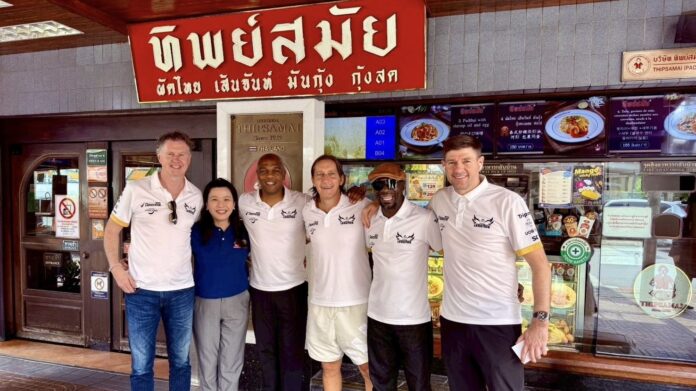
BANGKOK — Several football legends from Liverpool and Manchester United were spotted enjoying pad Thai at the famous Thipsamai Pad Thai Pratu Phi restaurant in Bangkok over the weekend.

Photos shared by the restaurant’s Facebook page showed former stars including Steven Gerrard, Claude Makelele, Michel Salgado, Quinton Fortune and Steve McManaman dining at the iconic eatery.

In the post, Thipsamai said it was honoured to welcome the world-famous football legends and thanked them for visiting and experiencing its “original pad Thai.”

The restaurant also described the former players as friendly and encouraged football fans not to miss the “An Evening with Legends” event.

The visit came during the “Living Legends Football Festival 2026,” held at UOB LIVE in EMSPHERE, where the five football stars met Thai fans during a special appearance event.

Advertisement

Police seize 250 kilograms of ivory in trafficking crackdown

Police seize ivory worth $300,000 in trafficking crackdown

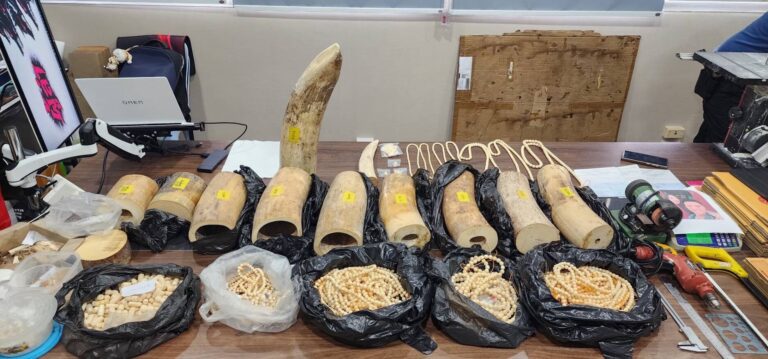
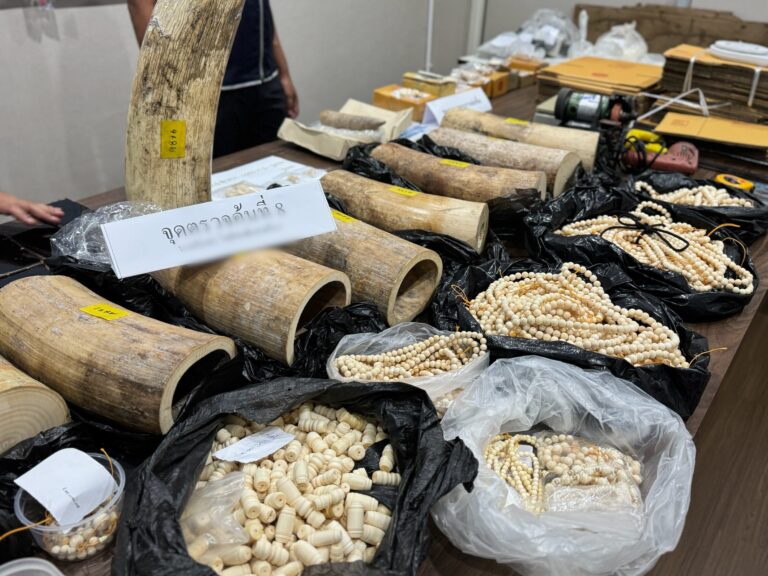
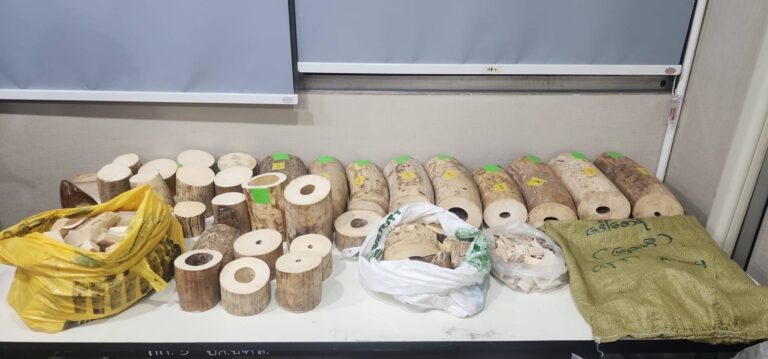
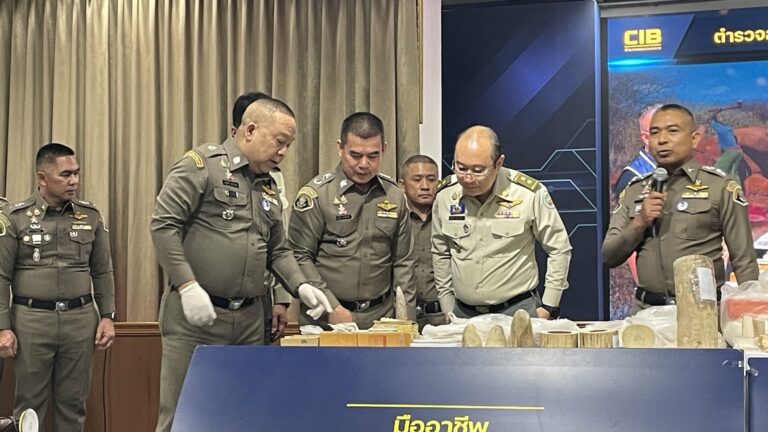
BANGKOK — 11 May 2026, Thai police and wildlife authorities have dismantled a transnational illegal ivory trafficking network, arresting nine suspects and seizing more than 250 kilograms of ivory and wildlife products.

The operation, code-named “Broken Ivory: Operation Elephant Slayer”, was announced on Sunday by the Central Investigation Bureau, the Natural Resources and Environmental Crime Division and the Department of National Parks, Wildlife and Plant Conservation.

CITES 8

Investigators said the crackdown targeted administrators of secret online trading groups allegedly involved in the illegal sale of ivory, dugong tusks and other wildlife remains.

Police launched the investigation after discovering a Facebook group named “Tusks and Animal Amulets”, where wildlife products were allegedly being traded illegally.

CITES 21

Undercover officers posed as buyers and later confirmed through forensic testing that the seized ivory originated from African elephants.

Authorities said the network had been operating for about one year and generated an estimated turnover of around 10 million baht.

CITES 19

Investigators found the ivory was smuggled from Africa by sea to Vietnam before being trafficked into Thailand through natural crossings along the Mekong River with the assistance of Vietnamese contacts working in Thailand.

On 7 May 2026, officers carried out coordinated raids at 11 locations across seven provinces — Samut Sakhon, Uthai Thani, Kamphaeng Phet, Chumphon, Songkhla, Chonburi and Chanthaburi — and arrested nine suspects under court warrants.

CITES 10

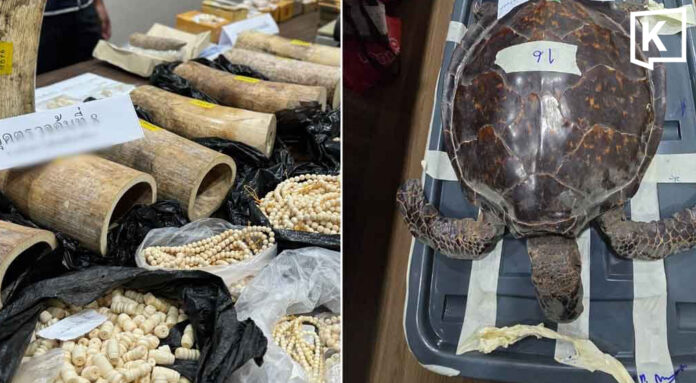
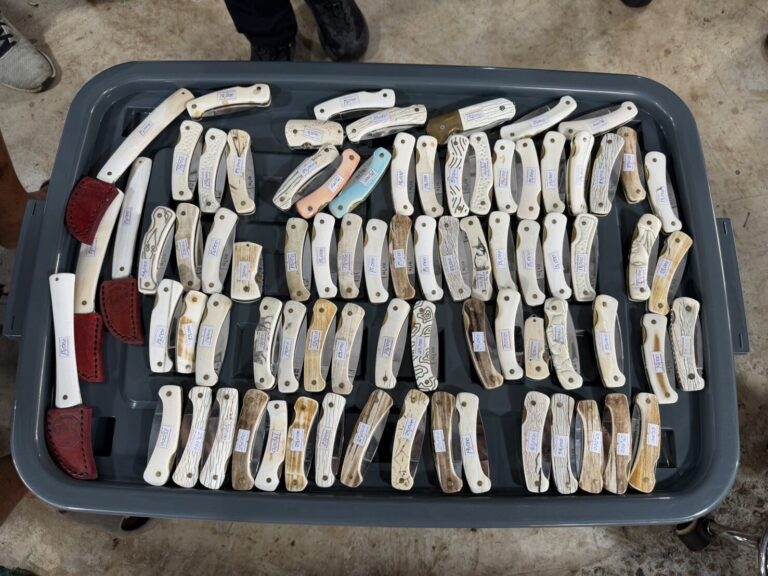
Among the items seized were 140 kilogrammes of raw ivory tusks, 40 kilogrammes of cut ivory pieces, ivory prayer beads, ivory powder, resin-compressed ivory, knives with ivory or antler handles, stingray tail parts, hawksbill turtle remains and equipment used to cut and shape ivory.

Authorities estimated the ivory and related products were worth about 7.5 million baht, while ivory-handled knives were valued at approximately 2.4 million baht.

CITES 17

All nine suspects reportedly confessed during questioning.

Police said further investigations would focus on Vietnamese intermediaries and import routes linked to the smuggling network.

Officials said much of the ivory had been carved into amulets, knives, prayer beads and Buddha statues for Thai buyers who believed ivory carried spiritual significance.

CITES 22

Thailand’s wildlife authorities said the country has never issued permits allowing legal possession of African elephant ivory under domestic law.

Officials said the results of the operation would be reported to the Convention on International Trade in Endangered Species of Wild Fauna and Flora (CITES) in Geneva to demonstrate Thailand’s commitment to suppressing illegal ivory trafficking under the 2015 Ivory Act.

CITES 25

The confiscated items will remain in the custody of the Department of National Parks until legal proceedings are completed, after which the ivory will be destroyed, authorities said.

Advertisement

Thai Cabinet to discuss World Cup 2026 broadcast deal

Thai Cabinet to discuss World Cup 2026 broadcast deal

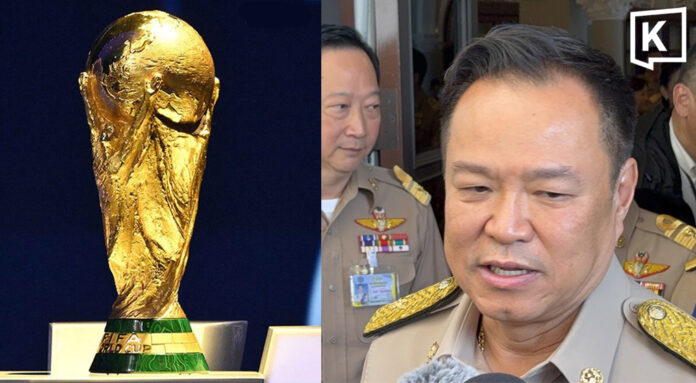
BANGKOK — 11 May 2026, Thailand’s Cabinet is expected to hold urgent discussions on Tuesday over securing broadcasting rights for the 2026 FIFA World Cup, amid hopes that Thai viewers will again be able to watch the tournament free of charge.

A Government House source said the issue would be raised during the Cabinet meeting on 12 May because of tight deadlines surrounding negotiations for rights from world football governing body FIFA.

The 2026 World Cup is scheduled to take place from 11 June to 19 July 2026 across the United States, Canada and Mexico.

According to the source, the government considers the matter urgent as it aims to ensure public access to the global football tournament without subscription costs.

Officials said the policy is intended to provide entertainment for the public while also encouraging young people to take an interest in sport and healthy lifestyles.

Prime Minister and Interior Minister Anutin Charnvirakul previously said the government was trying to achieve the best possible outcome regarding the broadcasts, although the state could not directly purchase the rights itself and would instead seek cooperation with private-sector partners.

Last week, Anutin also discussed the issue with the chairman of Thailand’s National Broadcasting and Telecommunications Commission (NBTC), with further clarity expected after Tuesday’s Cabinet meeting.

Advertisement

Spain’s Navantia offers to build frigates in Thailand

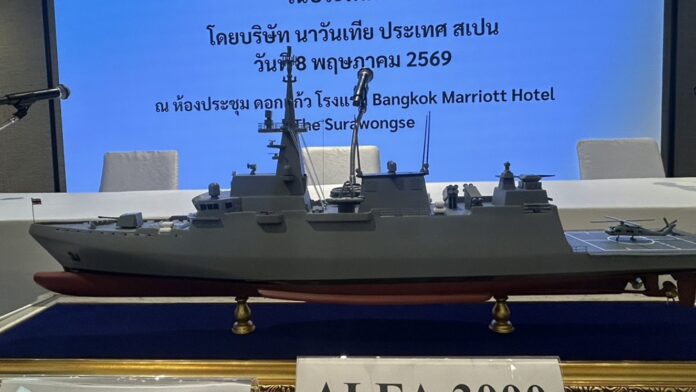
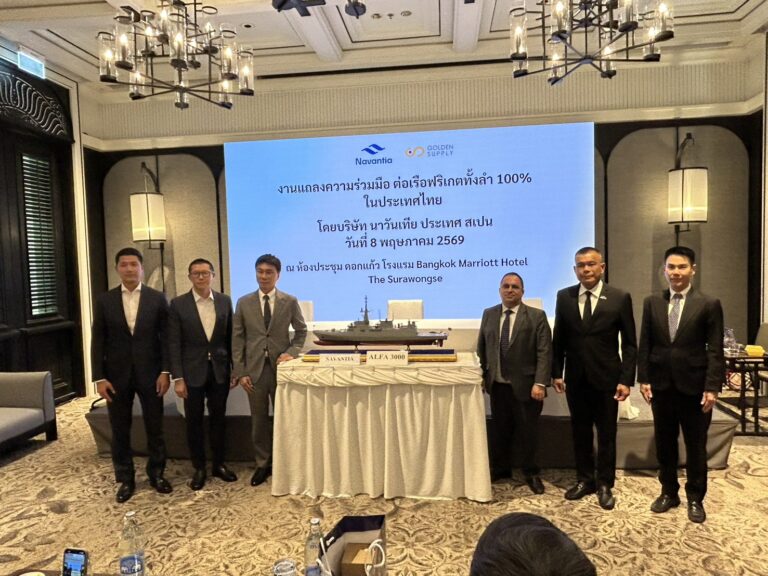
BANGKOK — Spanish defence company Navantia has proposed building a new frigate for the Royal Thai Navy entirely in Thailand, alongside a technology transfer programme aimed at strengthening the country’s shipbuilding industry.

Speaking at a briefing at the Bangkok Marriott Hotel on 8 May, Jose Ignacio Navas Rubio, Navantia’s regional director for Asia in commercial and business development, said the company had submitted a “low-risk” proposal after being approached by the Royal Thai Navy over plans to build a frigate domestically.

Under the proposal, the frigate would be constructed 100% in Thailand through cooperation with local shipyards and Thai companies, while Navantia would provide the design, technical oversight and technology transfer needed for production, integration and testing.

Rubio said the project would maximise participation from local operators and help develop Thailand’s capabilities in advanced naval shipbuilding.

S 44745454 0

Suradet Tanpaiboon, president of the Thai Shipbuilding and Repairing Association, said Thai industry was ready to support the project in areas including engineering adaptation, manufacturing engineering, construction and quality control.

He added that technology transfer, supply chain development and construction experience from the project would benefit Thailand’s future development of warships and other high-technology vessels.

Navantia is one of six companies that submitted proposals for the Royal Thai Navy’s frigate procurement programme. Other bidders include South Korea’s Hyundai Heavy Industries and Hanwha Ocean, Singapore Technologies Engineering, and Turkish firms Askeri Fabrika ve Tersane İşletmeleri and TAIS Gemi İnşa ve Teknoloji.

A navy-appointed committee is currently reviewing the proposals, including technical capabilities, industrial offset packages and pricing. The selection process is expected to take more than one month.

Advertisement

Thailand plans border health fund for migrant patients

Thailand plans border health fund for migrant patients

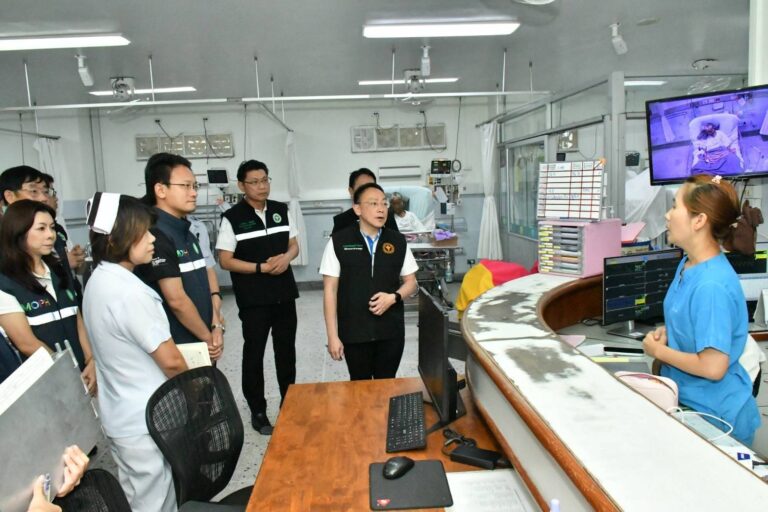
TAK — 11 May 2026, Thailand’s Public Health Ministry plans to establish a border public health fund to support treatment for foreign patients and separate medical expense accounts for Thai and migrant patients, officials said.

Public Health Minister Pattana Promphat chaired an online meeting at Umphang Hospital in Tak province to review healthcare services and public health operations for foreign residents along the Thai-Myanmar border. The meeting was attended by permanent secretary Dr. Somruek Chungsaman, acting regional health inspector Dr. Lertchai Lertwut and senior ministry and regional health administrators.

news131822 vsdS6OfnBo1778482331

Pattana said Prime Minister and Interior Minister Anutin Charnvirakul had expressed concern over the situation facing hospitals along the border and instructed authorities to accelerate long-term structural solutions.

The ministry said it would focus on improving disease control along border areas, managing healthcare personnel according to workload and local conditions, and increasing budget flexibility for border hospitals. Authorities also plan to seek international funding support for patients without healthcare coverage.

Somruek said inspections in Mae Sot, Phop Phra and Umphang districts found healthcare workers operating effectively despite difficult terrain and long travel times. The journey from Umphang to Mae Sot Hospital takes around three hours and 30 minutes by road through mountainous routes.

He said officials had been instructed to closely monitor development in four key areas, including improvements to electricity and information technology systems through solar power installations and upgrades to digital systems for universal healthcare reimbursement claims.

news131822 S0L50RxyNL1778482331

Authorities would also reform financial management by clearly separating expense accounts for Thai nationals and foreign patients, including disease prevention services at local health-promoting hospitals, to improve transparency and maintain public confidence in healthcare services for Thai citizens.

The ministry additionally plans to establish a 50-million-baht support budget in cooperation with regional administrative authorities and create a border public health fund to receive international assistance.

Authorities will work with local administrative and legal agencies to regulate cross-border medical visits and assess the financial capacity of foreign patients in order to collect service fees where applicable.​​​​​​​​​​​​​​​​

Advertisement

Hot News

LATEST NEWS

Bangkok
overcast clouds
31.1 ° C
35 °
31.1 °
74 %
4.8kmh
97 %
Tue
34 °
Wed
37 °
Thu
36 °
Fri
36 °
Sat
37 °