





























28.8 C
Bangkok
Monday, June 29, 2026
Home Blog Page 528

Japan Court Acquits a Former Boxer, the Longest-Serving Death Row Inmate, in a 1966 Murder Retrial

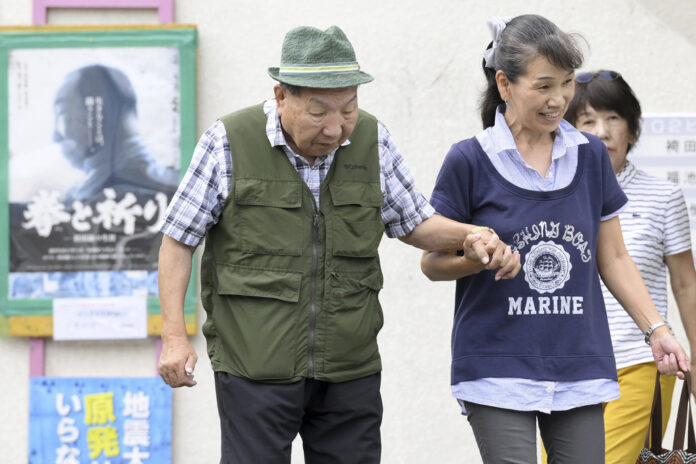
Iwao Hakamada, left, 88-year-old former boxer who has been on death row for nearly six decades after his murder conviction that his lawyers said was based on forced confession and fabricated evidence, is helped by a supporter as he goes for a walk in Hamamatsu, Shizuoka prefecture, central Japan Wednesday, Sept. 25, 2024. (Kyodo News via AP)

TOKYO (AP) — A Japanese court ruled Thursday that an 88-year-old former boxer was not guilty in a retrial for a 1966 quadruple murder, reversing an earlier decision that made him the world’s longest-serving death row inmate.

Iwao Hakamada’s acquittal by the Shizuoka District Court makes him the fifth death-row convict to be found not guilty in a retrial in postwar Japanese criminal justice. The case could rekindle a debate around abolishing the death penalty in Japan.

The court’s presiding judge, Koshi Kunii, said the court acknowledged multiple fabrications of evidence and that Hakamada was not the culprit, Hakamada’s lawyer said.

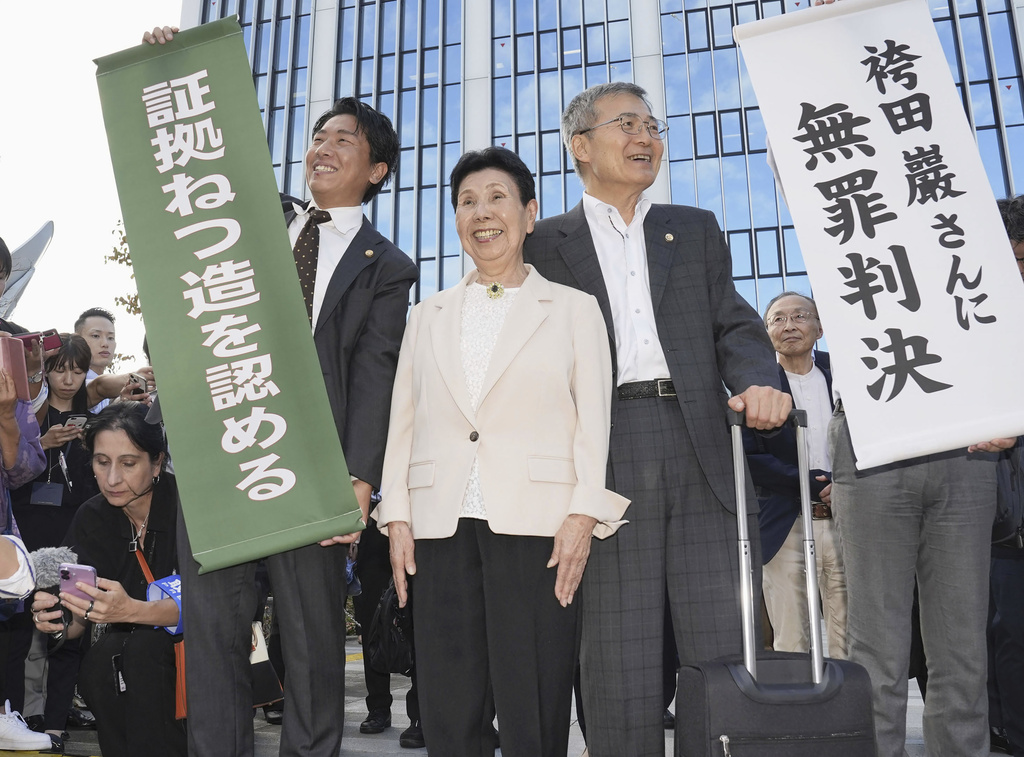
After the two-hour full explanation of the ruling that followed the main sentencing, his 91-year-old sister Hideko Hakamada walked out of the courthouse with a big smile, welcomed by burst of cheers and two big bouquets to celebrate the acquittal of her brother after the 58-year legal battle.

“Thank you everyone, (the victory) is thanks to your support,” she said. “Thank you very much for supporting us for such a long time.”

Hakamada was convicted of murder in the 1966 killing of a company manager and three of his family members, and setting a fire to their central Japan home. He was sentenced to death in 1968, but was not executed due to lengthy appeals and the retrial process in Japan’s notoriously slow-paced criminal justice system where prosecutors have 99% conviction rate.
AP24270297221339
Hideko Hakamada, center, sister of 88-year-old former boxer Iwao Hakamada who has been on death row for nearly six decades after his murder conviction that his lawyers said was based on forced confession and fabricated evidence, reacts after a court ruled that her brother was not guilty in a retrial for a 1966 quadruple murder, in front of the court in Hamamatsu, Shizuoka prefecture, Thursday, Sept. 26, 2024. The signs read “Acquittal to Mr. Iwao Hakamada, ” right, and “Acknowledged fabrications of evidence.” (Kyodo News via AP)

He spent 48 years behind bars — more than 45 of them on death row — making him the world’s longest-serving death row inmate, according to the Amnesty International.

It took 27 years for the top court to deny his first appeal for retrial. His second appeal for a retrial was filed in 2008 by his sister. Hakamada was released from prison in 2014 when a court ordered a retrial based on evidence suggesting his conviction was based on fabricated accusations by investigators, but he was not cleared of the conviction. He was allowed to await retrial at home because his frail health and age made him a low risk for escape. Then, in 2023, the court finally ruled in his favor, paving the way for the latest retrial that began in October.

“I have nothing to do with the case … I am innocent,” he wrote in his letter to his mother while on trial in 1967. He apologized for troubling the family and relatives, but expressed confidence in proving his innocence.

After the death sentence, he expressed fear of death and anger at being falsely accused.

“When I go to sleep in soundless solitary cell every night, I sometimes cannot help cursing God. I have not done anything wrong,” he wrote to his family. “What a cold-blooded act to give me such cruelty. We don’t need such God. I’m tempted to shout this to God,” Hakamada wrote in one of his letters.

Hakamada, whose Christian name is Paulo, was invited to a Mass in Tokyo during Pope Francis’ visit in 2019, five years after his release.

Supporters say Hakamada’s nearly half-century detention took a toll on his mental health. The first two months after Hakamada’s release, he kept pacing around inside the apartment, without even trying to go outside, his sister said. Most of his 48 years behind bars was spent in solitary confinement, in fear of execution.

One day, Hakamada’s sister asked him to help her with groceries to get him to agree to leave the house. Going out for a walk then became his daily routine, though today he is less able and he goes out by car, assisted by his supporters.

At a final hearing at the Shizuoka court in May before Thursday’s decision, prosecutors again demanded the death penalty, triggering criticism from rights groups that prosecutors were trying to prolong the trial.

The extremely high hurdles for retrials have also prompted legal experts to call for a revision to the system.

During the investigation that followed his arrest, Hakamada initially denied the accusations, then confessed. He later said he was forced to confess under violent interrogation by police.

A major point of contention was five pieces of blood-stained clothing that investigators claimed Hakamada wore during the crime and hid in a tank of fermented soybean paste, or miso. The clothes were found more than a year after his arrest.

A Tokyo High Court ruling in 2023 acknowledged scientific experiments that clothing soaked in miso for more than a year turns too dark for bloodstains to be spotted, noting a possible fabrication by investigators.

Defense lawyers and earlier retrial decisions said the blood samples did not match Hakamada’s DNA, and trousers that prosecutors submitted as evidence were too small for Hakamada and did not fit when he tried them on.
AP24270297226842
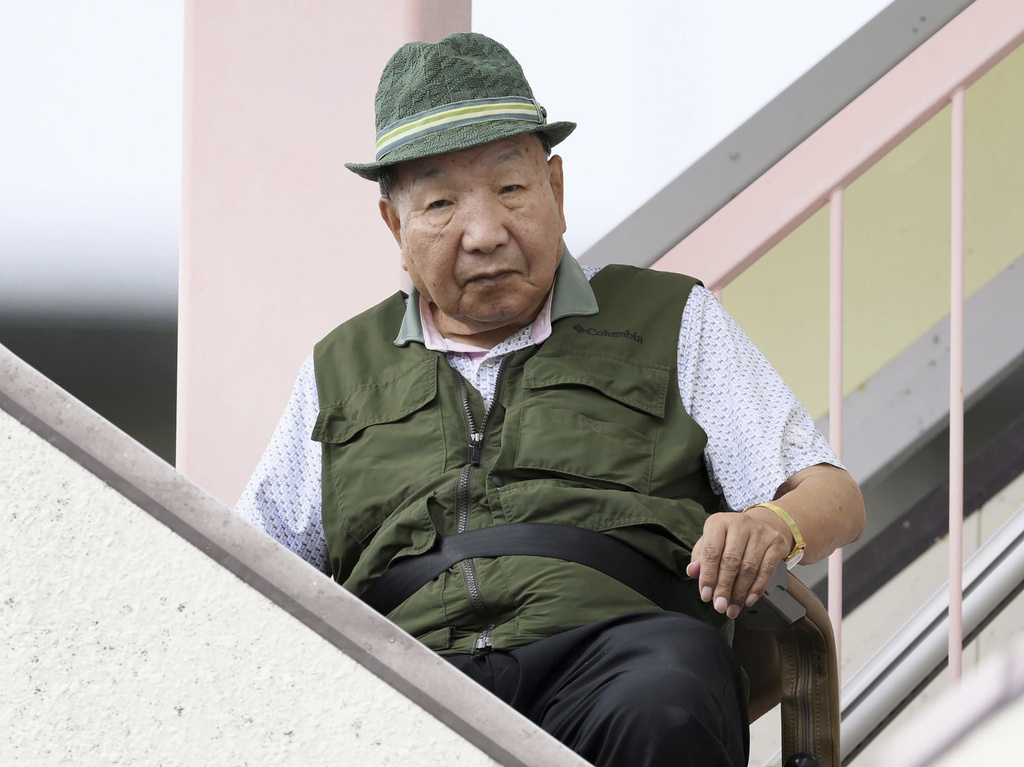
Iwao Hakamada, 88-year-old former boxer who has been on death row for nearly six decades after his murder conviction that his lawyers said was based on forced confession and fabricated evidence, goes for a walk in Hamamatsu, Shizuoka prefecture, central Japan Thrusday, Sept. 26, 2024. (Kyodo News via AP)

On Thursday, the Shizuoka court judge concluded that clothing soaked in miso for more than a year would never show red blood stains, upholding the experiments submitted by the defense lawyers and calling it an “inhumane investigation” that led to forced confessions.

Ogawa, Hakamada’s lawyer, praised the ruling as “groundbreaking” for clearly stating that the prosecution fabricated key evidence at the beginning. “I believe this ruling puts an end to the case. … Now we must prevent prosecutors from appealing no matter what.”

The lawyer said he planned to go to the district prosecutors to demand they not appeal the case, as it is technically possible to do so even though they have nothing left to make the case.

Japan and the United States are the only two countries in the Group of Seven advanced nations that retain capital punishment. A survey by the Japanese government showed an overwhelming majority of the public support executions.

Executions are carried out in secrecy in Japan and prisoners are not informed of their fate until the morning they are hanged. In 2007, Japan began disclosing the names of those executed and some details of their crimes, but disclosures are still limited.

Hideko Hakamada has devoted around half of her life to win her brother’s innocence. Before Thursday’s ruling, she said she was in a never-ending battle.

“It is so difficult to get a retrial started,” She told reporters in Tokyo. “Not just Iwao, but I’m sure there are other people who have been wrongly accused and crying. … I want the criminal law revised so that retrials are more easily available.”

_________

Advertisement

Book Lovers, Get Ready for a Haunting Experience: 29th Book Expo Thailand

Book Expo
PUBAT President, Mr. Suwich Rungwattanapaiboon

BANGKOK — The 29th Book Expo Thailand returns with a spine-tingling theme: “Read to the Next Life.” From October 10-20, 2024, at the Queen Sirikit National Convention Center, this literary extravaganza promises an otherworldly experience for book enthusiasts.

The expo features distinct zones for different book categories and introduces “Krasue Reading a Book” as its mascot. Visitors can explore curated book selections, participate in book swaps, and engage in specialized discussions at the Book Lab.

PUBAT President, Mr. Suwich Rungwattanapaiboon, expects record attendance and sales surpassing 400 million baht. The event aims to be more than a book fair – it’s a celebration of literature, offering skill-enhancing activities and entertainment alongside an extensive book collection.

book

The event will feature distinct book zones to enhance the attendee experience: 1. Fiction and Literature 2. Comics and Teen Books (Book Wonderland) 3. Children’s and Educational Books 4. General Books 5. Old Books 6. Non-Book Items & Board Games.

With over 2 million books showcased from 286 publishers and leading bookstores, the event will span more than 20,000 square meters, offering a comprehensive and immersive literary experience.

“With these statistical figures – the number of book titles, publishing houses, and authors increasing in this event – it emphasizes that books or printed materials are not dying out. They are simply adapting alongside internet media,” said the President of PUBAT.

He invites everyone to attend the 29th Book Expo Thailand 2024, which is set to take place from October 10-20, 2024, at Halls 5-7, LG Floor, Queen Sirikit National Convention Center. If anyone needs additional information and updates about the event, they can follow the Facebook page: Thai Book Fair.

Key Highlights:

  • Over 2 million books from 286 publishers across 855 booths
  • Special focus on horror literature, including legendary ghost stories and 1990s one-baht ghost books
  • Unique installations like “Krasue (Filth-Eating Spirit) Airline” and “Exit to the Next Life”
  • 100+ activities including ghost-themed competitions and cosplay
  • Meet international authors from various genres such as:
    • Jiu Lu Fei Xiang (China): Immortal world novels
    • Zhao Yao (China): Ghost stories and romance
    • Chinen Mikito (Japan): Mystery novels
    • Kim Ho-yeon (South Korea): Supernatural fiction
    • Ratih Kumala (Indonesia): Contemporary fiction
    • Peter A. Jackson (Australia): Non-fiction on Thai culture

book

book expo4 scaled

________

Advertisement

ADB Raises Growth Forecast for Region, But Warns of Risks from Trade Sanctions

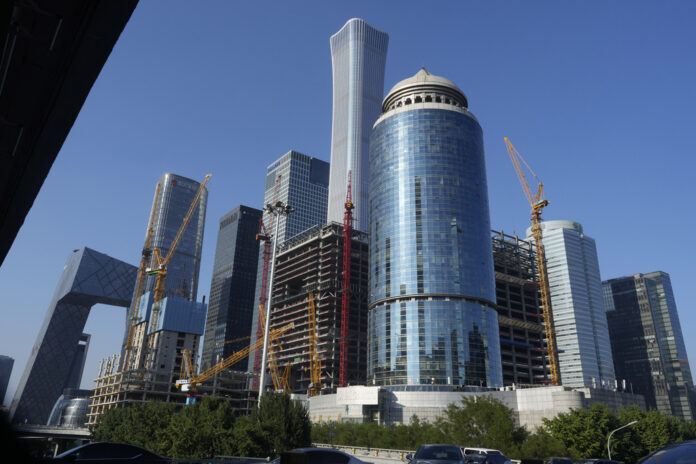
FILE - Construction cranes are seen near the central business district in Beijing, Aug. 8, 2024. (AP Photo/Ng Han Guan, File)

Developing economies in Asia are forecast to grow at a 5.0% annual pace this year, helped by a strong U.S. economy and surging demand for computer chips that power artificial intelligence, the Asian Development Bank said in a report Wednesday.

The forecast was revised upward slightly from the ADB’s April estimate of 4.9% growth.

However, the regional lender warned of the potential threat of more protectionist measures, such as higher tariffs on exports from China, depending on the outcome of the U.S. presidential election.

The report highlighted several positive trends, including a rebound in exports from Asia of computer chips and other advanced electronics this year due to rapid adoption of artificial intelligence. It also noted that energy and food prices are moderating, though inflation remains painfully high in countries such as Pakistan, Laos and Myanmar.

The upturn in global demand for semiconductors and related electronics materials and components has helped drive stronger growth in Taiwan, Hong Kong, Singapore and South Korea, and to a lesser extent, the Philippines and Thailand, and that trend is expected to continue.

The report cited data from World Semiconductor Trade Statistics projecting that spending on memory chips, vital for AI applications, will expand 77% this year.

Other types of exports, especially autos from China and South Korea, also are growing quickly, it said.

AP24268182139293
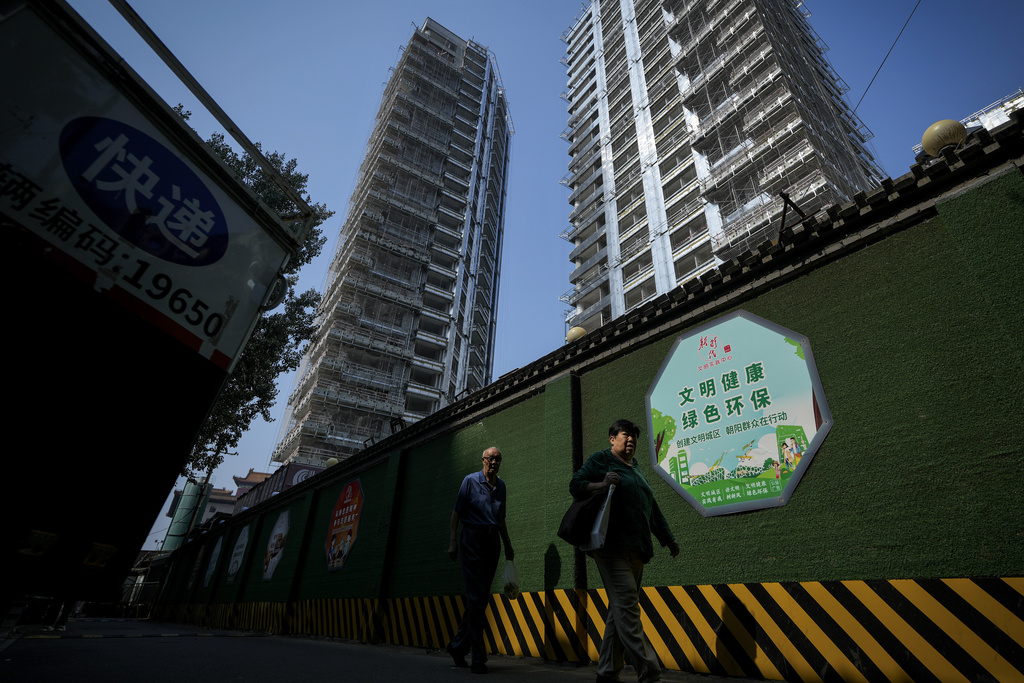
Residents walk by a luxury housing construction site in Beijing, Tuesday, Sept. 24, 2024. (AP Photo/Andy Wong)

The U.S. presidential election is a major source of uncertainty.

“The election could result in higher blanket tariffs by the U.S. on all global imports, and a broad-based and steep increase in tariffs on all U.S. imports from the PRC (China),” the report said. “This would significantly escalate U.S.-PRC trade tensions, with potential negative spillovers to developing Asia through real and financial channels.”

Former President Donald Trump has pledged to stop U.S. businesses from shipping jobs overseas and to take other countries’ jobs and factories away by relying heavily on sweeping tariffs. Vice President Kamala Harris has criticized Trump’s plan to impose large tariffs on most imported goods, which she says would severely raise the cost of goods.

Asia’s developing economies are also vulnerable to other U.S. moves that might affect their currencies or the cost of borrowing on foreign loans, the report said.

China’s ailing property market remains a key risk and the report kept its forecasts for growth for the world’s second-largest economy at 4.8% in 2024 and 4.5% next year. The ADB’s chief economist, Albert Park, welcomed a flurry of fresh measures announced Tuesday by Beijing to cut borrowing costs and encourage more home purchases.

“It’s good to see. Certainly there’s room for monetary policy expansion,” he told reporters in a briefing before the report’s release. “Whether that will work remains to be seen.”

Among other positive developments, the report noted that energy inflation has returned to levels seen before the COVID-19 pandemic began in 2020. That alleviates pressures on some economies that depend heavily on imports of oil and other fuels, such as Sri Lanka, China and Japan.

Food inflation is still slightly higher, but falling. Rice prices fell by 12% to $589 per metric ton in late August after hitting a 16-year peak of $669 per metric ton in late January, the report said.

They are expected to fall further, as rice harvests are projected to hit record levels in the 2024-2025 growing year, and prices for wheat and maize also have declined. Crops are likely to benefit from the La Nina climate phenomenon, which could bring beneficial higher rainfall to some regions though it also could cause destructive flooding in others.

Advertisement

Thai Government Begins 10,000 Baht Handout, Bypasses Digital Wallet

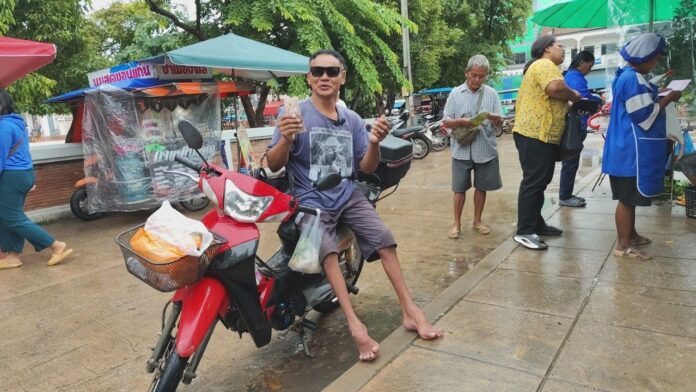
Mr. Prasit Artsai, 58 years old, a resident of Ban Bo Sam, Nikhom Sub-district, Phimai District, Nakhon Ratchasima Province, shows 10,000 baht transferred by the government on September 25. He says he is very happy because he has a disability with an atrophied leg, which makes it difficult for him to work and earn money. With this sum, he plans to buy food, new clothes, and use it for household expenses to help his younger sibling.

BANGKOK — After the government announced that it would focus on boosting the economy and dealing with the flood disaster before debating amendments to the current constitution, the Pheu Thai Party, which leads the government, has backed away from its proposal to amend the constitution article by article.

Previously, the party had proposed amendments to the articles on political ethics to draw clear boundaries and prevent them from being used as a political weapon. However, when other coalition parties, particularly the Bhumjaithai Party, the second largest party in the government led by Anutin Charnvirakul, put up strong resistance, Pheu Thai immediately halted its move.

This coincides with the launch of an economic stimulus program, a detail mentioned by former Prime Minister Thaksin Shinawatra in August.

On September 25, 2024, Prime Minister Paetongtarn Shinawatra presided over the kick-off event for the disbursement of the 2024 stimulus program by welfare card holders and people with disabilities. The event was attended by the Cabinet and relevant authorities.

10000baht 3
Prime Minister Paetongtarn Shinawatra presides over the kick-off event for the disbursement of the 2024 stimulus program at the Government House on September 25, 2024.

This economic stimulus program has shifted its approach from the digital wallet project, which is still not operational, to direct transfers to the bank accounts of needy groups. In the first phase, 14.5 million people will receive money, including 12.40 million welfare card holders and 2.15 million people with disabilities, who will receive 10,000 baht ($305) each.

The government has set the transfer dates for September 25-30, with the funds being transferred by the Comptroller General’s Department through the PromptPay system, which is linked to national ID numbers.

On the first day, funds will be transferred to the accounts of 2.1 million people with disabilities and welfare recipients whose National ID ends in 0 on 26 September. Subsequent transfers will be based on the last digit of the national ID from 1 to 9.

The Prime Minister said that the Thai economy has been sluggish due to both domestic and international factors. The global economy is recovering more slowly than usual, and there are also problems with geopolitical conflicts and environmental crises that have intensified. This can be seen in the severe flooding in Thailand this year, which is one of the worst in the country’s history.

These factors are the main reasons for the sluggish economy and lack of investment. It is obvious that money has been taken out of circulation. Now the money in circulation is scarce, so investment and the establishment of new industries in Thailand are becoming rarer. The most affected groups are vulnerable, low-income populations, including people with disabilities.

10000baht 5
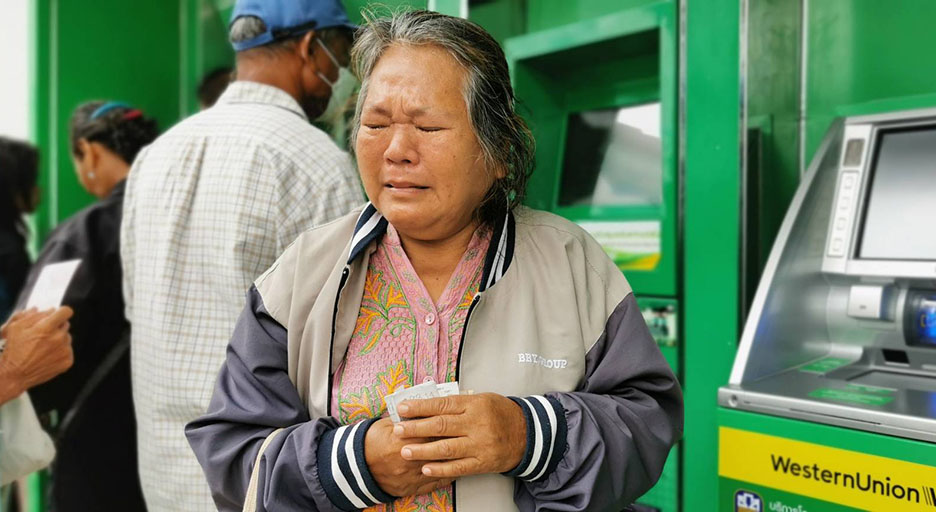
Ms. Noi Yaemprakon, 64 years old, cries with emotion after withdrawing 10,000 baht transferred by the government from an ATM of the Bank for Agriculture and Agricultural Cooperatives (BAAC), Buriram branch, on September 25. She says she hasn’t touched 10,000 baht in over ten years, having been unable to sell conveniently due to health issues.

The policies pursued by Prime Minister Srettha Thavisin’s government over the past year to date have focused heavily on economic issues. However, many policies will take months or even years to implement and require political stability to ensure continuity and ensure that development reaches the people. These are the government’s challenges that need to be turned into opportunities for the people.

Measures that have already been implemented include debt relief for farmers and the promotion of tourism through visa-free travel. Although the number of tourists has increased noticeably, it has not yet boosted the overall economy. A large-scale economic recovery is therefore needed today.

“The economy is now being boosted with over 145.552 billion baht ($4.450 billion), creating a significant economic whirlwind for the first time, creating opportunities in the overall economy and providing relief to struggling small citizens,” the Prime Minister said.

Julapun Amornvivat, Deputy Minister of Finance, added that the first day of money transfers went smoothly. If the first phase of the project is completed within the 450 billion baht ($13.8 billion) budget, he believes that the Thai economy will easily recover to its potential level.

10000baht 2
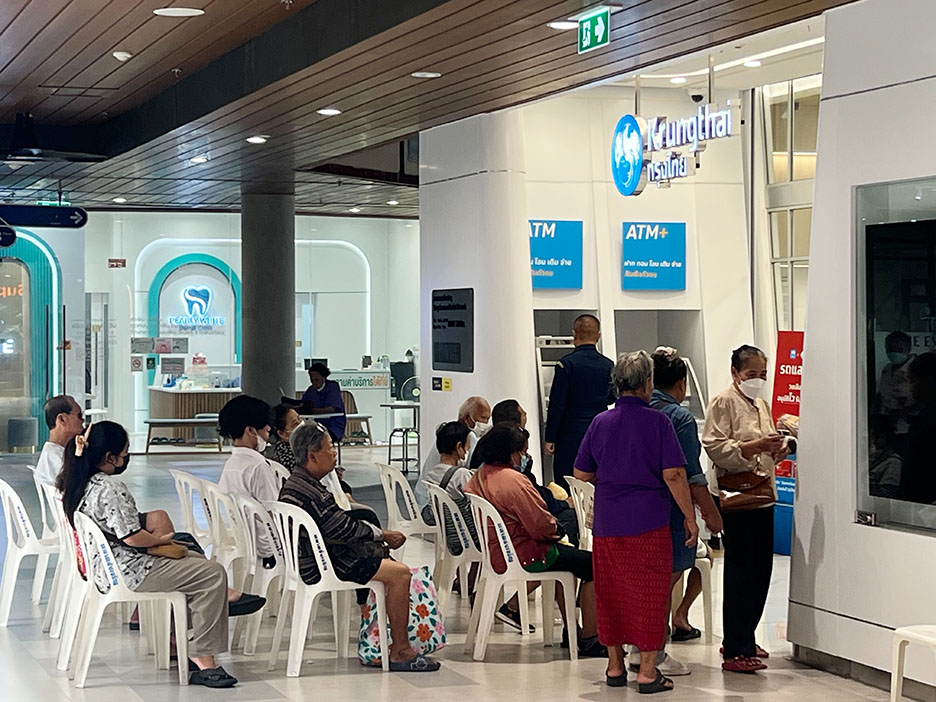
People queue at a Krungthai Bank ATM in Bangkok on the first day the government transferred funds as part of the economic stimulus program, providing 10,000 baht to each vulnerable individual, on September 25ม 2024.

However, he added, “We do not accept that Thailand’s economic potential is only growing at about 2% per year. We want to see the Thai economy grow at its potential rate of 5% per year. We need to expand our potential ceiling through various mechanisms, such as developing labor skills and restructuring industries, which must be done in parallel.”

As for the digital wallet project, the Prime Minister confirmed that the government will continue the scheme to boost the economy and lay the foundation for a digital economy for the Thai people.

The aim is to provide citizens with a digital ID that connects the government and citizens and makes transactions with the authorities more convenient, transparent and verifiable. This system is being developed.

The digital wallet project has been criticized by members of the opposition parties, particularly with regard to the source of funding and execution. During a by-election campaign in Phitsanulok province, Pita Limjaroenrat, former chairman of the Move Forward Party, attacked the government’s digital project, claiming that it had become an analog system.

Sirikanya Tansakul, Deputy Leader of the Thai Sang Thai Party, also expressed doubt about whether the digital wallet project, which has been postponed several times already, will be indefinitely delayed.

_____

Advertisement

Nanyang Launches Moo Deng-Inspired Sandals to Boost Business

Nanyang
A new sandal model of Nanyang called Chang Dao Moo Deng Edition (2024)

BANGKOK —  Nanyang, a leading shoe manufacturer in Thailand, is capitalizing on the popularity of Moo Deng, the baby pygmy hippo celebrity, by collaborating with the Zoological Park Organization of Thailand under the Royal Patronage, owner of Khao Kheow Open Zoo, Moo Deng’s home.

They are producing a new sandal model called Chang Dao Moo Deng Edition (2024), advertised as “ordinary sandals that make you bounce when you wear them.”

These sandals are available for pre-order from Wednesday, September 25, at 11:00 a.m. until Monday, September 30, at 12:00 p.m., priced at 199 baht per pair. Part of the proceeds will contribute to the “Moo Deng Project for Flood Victims and Animal Welfare” by the Zoological Park Organization.

nanyang4
A new sandal model called Chang Dao Moo Deng Edition (2024) are available for pre-order from September 25, 2024.

This isn’t the first time Nanyang, a 70-year-old shoe brand, has used social trends for business promotion. Previously, when elephant pants were trendy, Nanyang, whose logo features an elephant on a star, launched the “Experience Thailand” campaign, promoting the matching of elephant pants with Chang Dao sandals, which received a great response.

“When it started trending, we launched another campaign before Songkran. We used tuk-tuks as Chang Dao ambassadors, giving Chang Dao sandals to tuk-tuk drivers to wear, using the slogan ‘Wear like locals, wear Chang Dao.’ This helped make Chang Dao sandals one of Thailand’s ambassadors,” said Dr. Jakraphol Chanthawimon, Managing Director of Nanyang Marketing Co., Ltd.

He recounted that Nanyang started when a Thai businessman of Chinese descent, Wichai Sosothikul, imported “Nam-Ia” brand canvas shoes from Singapore to sell in Thailand. The name was later changed to “Nan-Yang” in Mandarin Chinese.

In 1953, as Singapore began to change and reduce production, Nanyang started manufacturing shoes themselves. As the business grew, they requested to become manufacturers within Thailand.

nanyang2
Dr. Jakraphol Chanthawimon, Managing Director of Nanyang Marketing Co., Ltd.

From the first day Nanyang shoes entered Thailand until today, everything remains the same, but what has changed is the era, with foreign investors and new technologies. In the past, Nanyang shoes could be worn for sports, school, travel, and work, but as times changed, shoes could no longer be all-around. For example, there’s a need for specialized shoes for running on different terrains.

Competition is another challenge that Nanyang had to adapt to, focusing on the student shoe market. Nanyang canvas shoes have about 80% of their customer base as students. Therefore, to stay in the student market, Nanyang must constantly adapt.

Currently, Nanyang has a 45% market share in 2023, and in 2024, they aim for growth higher than the market average, confident in their unique strategy that not only helps reach new consumers but also builds a continuous customer base for the future.

Nanyang has performed very well financially. Even though the market growth is only average, Nanyang can grow higher than the market and above average. In 2023, their revenue grew by 13.7% with a market share of 45%, up from 43-44%. For 2024, they set a sales growth target of 3-5%.

The Moo Deng trend is expected to be part of what helps Nanyang achieve its goals.

______

Advertisement

Banthat Thong Blazes Fame as Bangkok’s Food and Tourism Hotspot

Banthat Thong
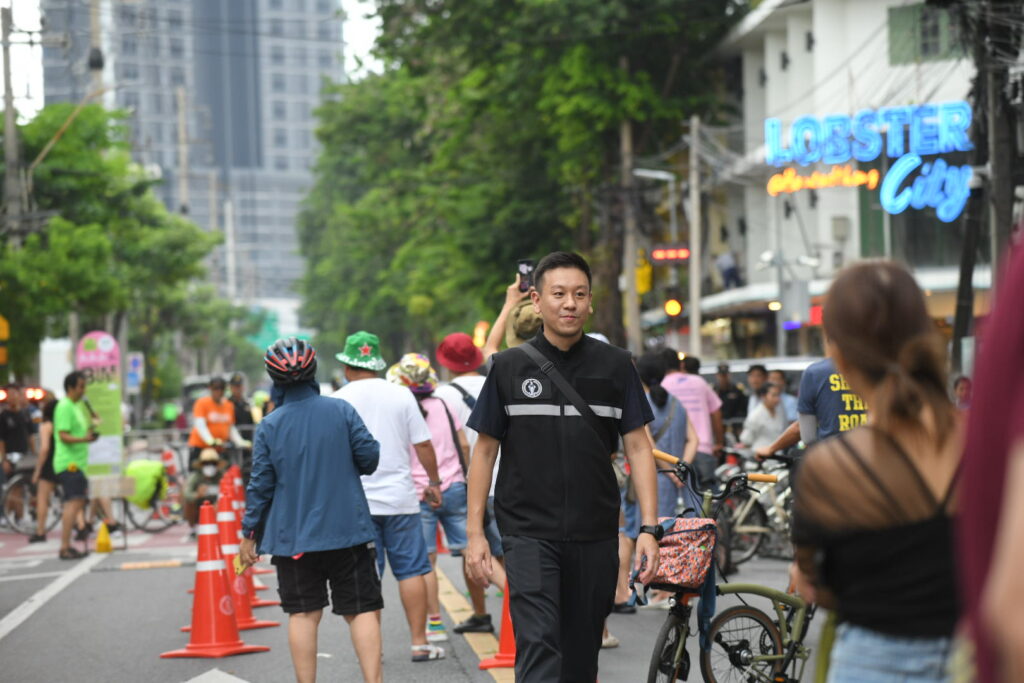
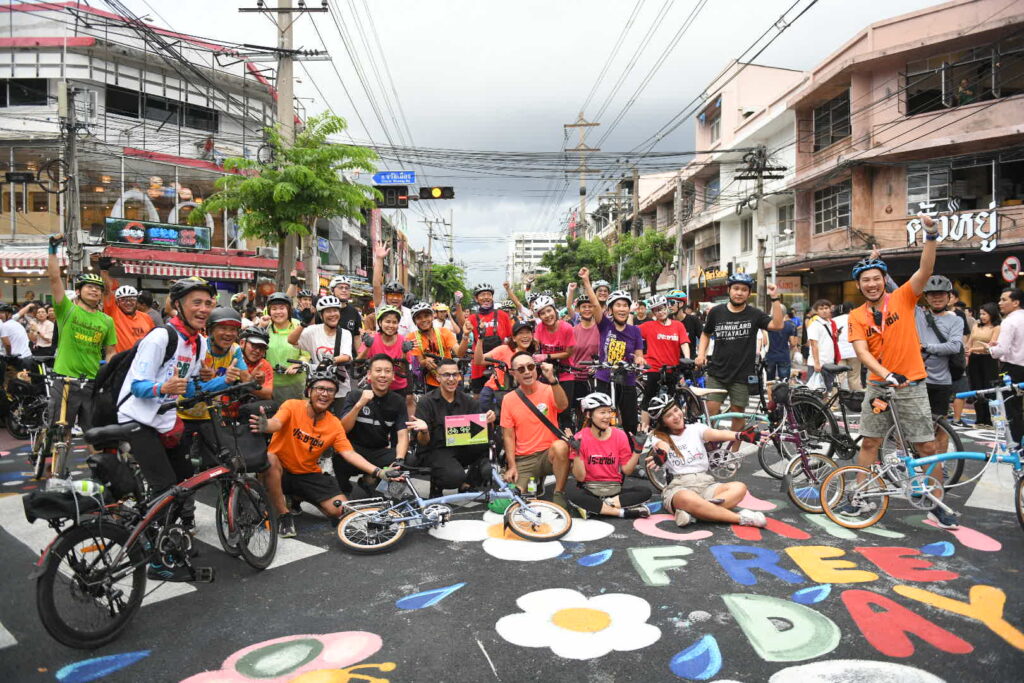
The "Bangkok Car Free 2024: Connecting For Life" event, take place on September 21-22, 2024 on Banthat Thong Road in Pathumwan district, Bangkok.

BANGKOK — Banthat Thong, a street in Bangkok which runs 2.2 kilometres from its junction with Rama IV Road at Saphan Lueang Intersection through Pathum Wan and Ratchathewi districts, has turned into a golden opportunity for business and could become a flourishing pedestrian zone.

The “Bangkok Car Free 2024: Connecting For Life” event, which took place on 21-22 September on Banthat Thong Road in Pathumwan district, was a great success and was well received. Many called for this event to be held every weekend.

During these two days, the Bangkok Metropolitan Administration (BMA) transformed Banthat Thong into a pedestrian zone based on the concept of “organizing footpaths and transforming car-dominated streets into living spaces for people”

banthat5
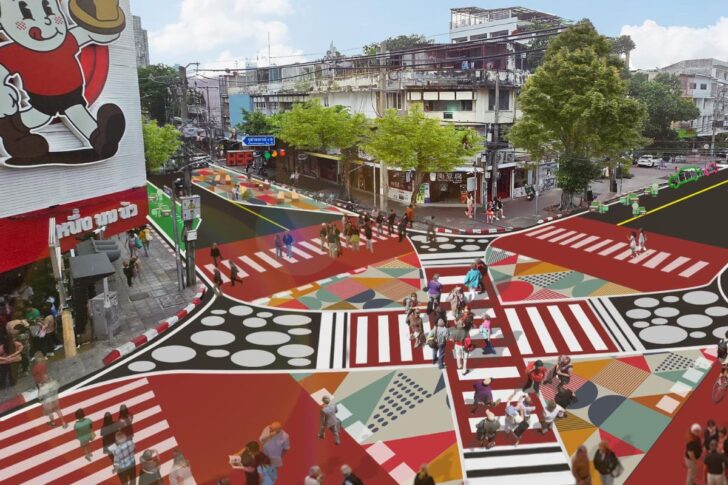
The graphic shows the “Bangkok Car Free 2024: Connecting For Life” event taking place on September 21-22, 2024, on Banthat Thong Road in Pathumwan district, Bangkok.

Deputy Governor of Bangkok, Sanon Wangsrangboon, explained that the event was held as part of World Car Free Day on 22 September, with the aim of reducing the use of private cars and promoting public transportation.

The transformation of Banthat Thong into a pedestrian zone during the two-day event was very well received. People enjoyed walking safely and many suggested that this event should be held regularly. The aim of the BMA was to hear the public’s feedback on this event.

Surveys conducted during the event revealed a positive response, but feedback from all stakeholders, including Chulalongkorn College, local residents and businesses, will also be taken into account to assess the overall impact.

Extending this concept to other areas requires careful consideration to avoid traffic congestion. An earlier trial on Maha Rat Road in Phra Nakhon district showed minimal impact on traffic for a short period. Pedestrian zones have also been implemented in other districts.

“We will see which roads are suitable for car-free Sundays or weekends or even permanent pedestrian zones,” said Deputy Governor Sanon.

Banthat Thong
Deputy Governor of Bangkok, Sanon Wangsrangboon

From Sports to Food Hotspot

Banthat Thong has evolved considerably since the COVID-19 pandemic as returning tourists flock to the check-in spots. The mismatch between supply and demand has led to the emergence of many new businesses. In addition, the Property Management Office (PMCU) of Chulalongkorn College has drawn up a 15-year plan for the development of the area to make Banthat Thong an economic hub.

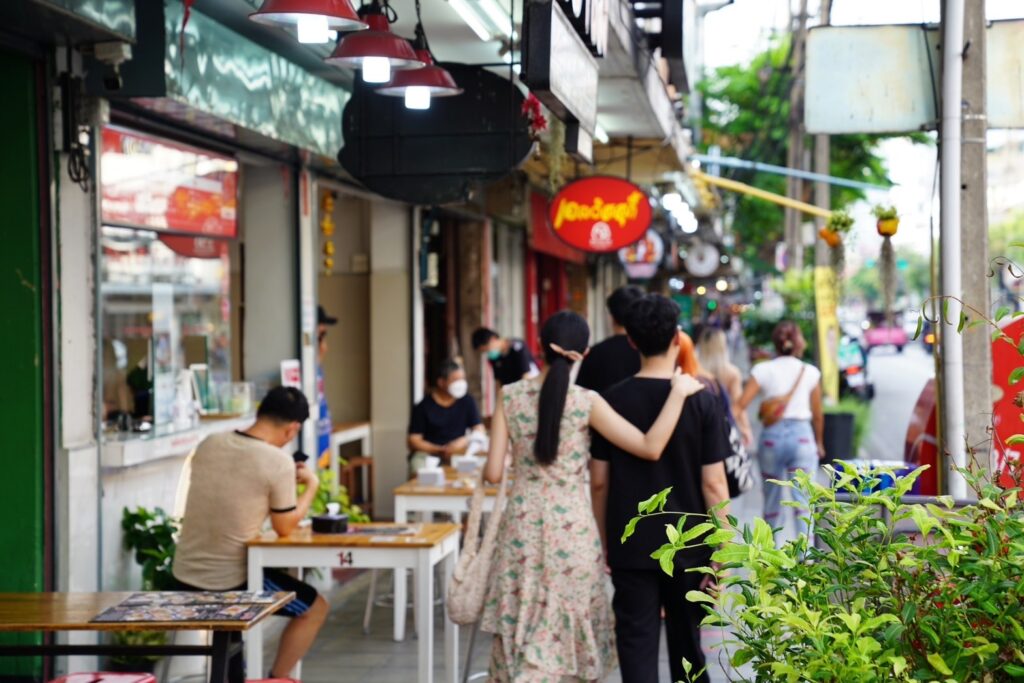
Banthat Thong can be divided into three sections. The first is “Stadium One”, which is mainly visited by Thai consumers. The second area, around Jae Oh’s Restaurant, has become a hotspot for tourists, frequented by a mix of Thai visitors, and there are more and more popular restaurants. The final section, where Banthat Thong meets Rama IV Road, is mainly populated by Thai pedestrians, with parking lots frequented by office workers and food seekers.

banthat3
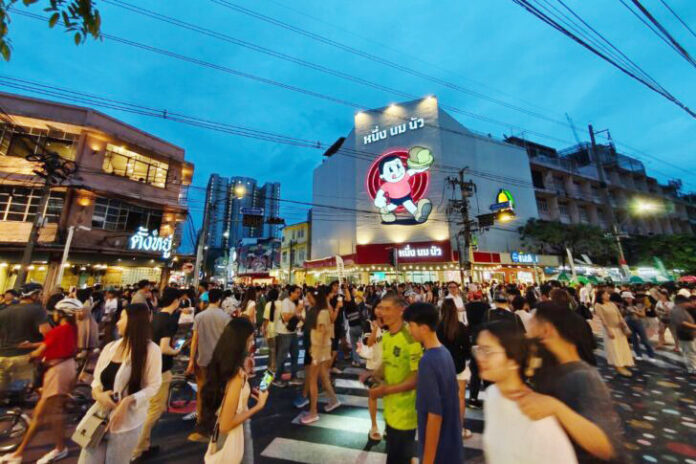
The “Bangkok Car Free 2024: Connecting For Life” event, take place on September 21-22, 2024 on Banthat Thong Road in Pathumwan district, Bangkok.

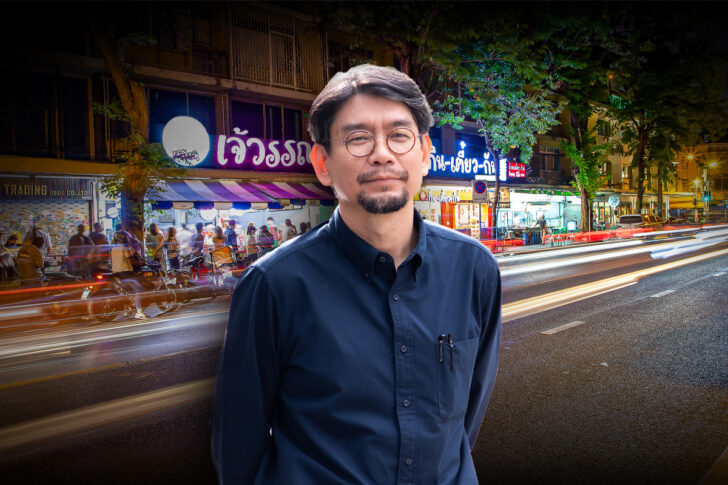
Assoc. Prof. Dr. Jittisak Thammapornpilas, Vice President for Asset and Physical Management, and Director of Chulalongkorn University’s Property Management Office, told ‘Prachachat Business’ that the area initially developed with university buildings and surrounding slums. The plan was to clear the slums and create organized shophouses, allowing external residents to rent space for housing and business.

In the past, Thais seldom lived in shophouses, which became predominantly occupied by Chinese residents from “Yaowarat” and “Talat Noi”, accustomed to living in shophouses, conducting business downstairs while living upstairs.

The area has seen a variety of businesses, with the food industry being particularly successful. Previously, food businesses were more spread out, unlike today’s concentrated zones around landmarks like “Chamchuri Square” and “Samyan Mitrtown”, both near Chulalongkorn University.

banthat4
Assoc. Prof. Dr. Jittisak Thammapornpilas, Vice President for Asset and Physical Management, and Director of Chulalongkorn University’s Property Management Office

Before the park was built to commemorate Chulalongkorn’s 100th anniversary, Suan Luang-Banthat Thong was known for its used car parts market, where repair work often spilled out onto the streets and sidewalks. However, as the city developed, traffic became heavier and stores, including sports and auto parts stores, declined.

Supachalasai stadium also played a role in attracting sports stores to the area, but as new stadiums like Rajamangala came up and sports stores moved to malls, these stores also declined.

Social Media Boosts Popularity

Before COVID-19, efforts were made to densify the area, especially with Stadium One, which was originally intended to promote sports stores. However, the pandemic put paid to those plans, and instead the food scene in the area flourished.

Credit must be given to the rise of popular eateries in the area, like Jok Samyan, alongside new branches of famous restaurants, catering to late-night crowds.

“Chula-Samyan and Banthat Thong used to be quiet after 5 p.m., with only some areas open until 8 p.m. Now the restaurants in Stadium One serve as a meeting place for night workers, with a lively scene until 10.11 pm, leading to further growth,” said a representative.

banthat6
Social media trends also helped boost the area’s popularity, with influencers and YouTubers making it a must-visit destination for new restaurant openings.

As word spread on social media, the area saw an influx of international tourists, especially from China, Vietnam, and South Korea, attracted by the food. Banthat Thong has one advantage over Yaowarat: there are several parking lots for tour buses.

Social media trends also helped boost the area’s popularity, with influencers and YouTubers making it a must-visit destination for new restaurant openings.

The food business in the Suan Luang-Banthat Thong area generates an estimated 300-400 million baht ($9-12 million) annually. While this does not directly feed into Chulalongkorn College’s property management, it reflects the overall economic impact on tourism and social media presence.

_______

Advertisement

Cambodia’s New Canal: Trade Boost or Mekong Threat that Feeds Millions

Canal
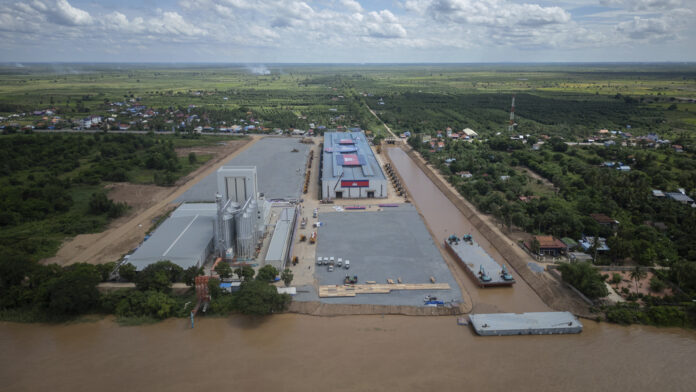
A view of the canal at Prek Takoe village eastern side of Phnom Penh, Cambodia, Tuesday, July 30, 2024. (AP Photo/Anton L. Delgado)

PREK TAKEO, Cambodia (AP) — The Mekong River is a lifeline for millions in the six countries it traverses on its way from its headwaters to the sea, sustaining the world’s largest inland fishery and abundant rice paddies on Vietnam’s Mekong Delta.

Cambodia’s plan to build a massive canal linking the Mekong to a port on on its own coast on the Gulf of Thailand is raising alarm that the project could devastate the river’s natural flood systems, worsening droughts and depriving farmers on the delta of the nutrient-rich silt that has made Vietnam the world’s third-largest rice exporter.

Cambodia hopes that the $1.7 billion Funan Techo canal, being built with Chinese help, will support its ambition to export directly from factories along the Mekong without relying on Vietnam, connecting the capital Phnom Penh with Kep province on Cambodia’s southern coast.

At an Aug. 5 groundbreaking ceremony, Cambodian Prime Minister Hun Manet said the canal will be built “no matter what the cost.” By reducing costs of shipping to Cambodia’s only deep-sea port, at Sihanoukville, the canal will promote, “national prestige, the territorial integrity and the development of Cambodia,” he said.

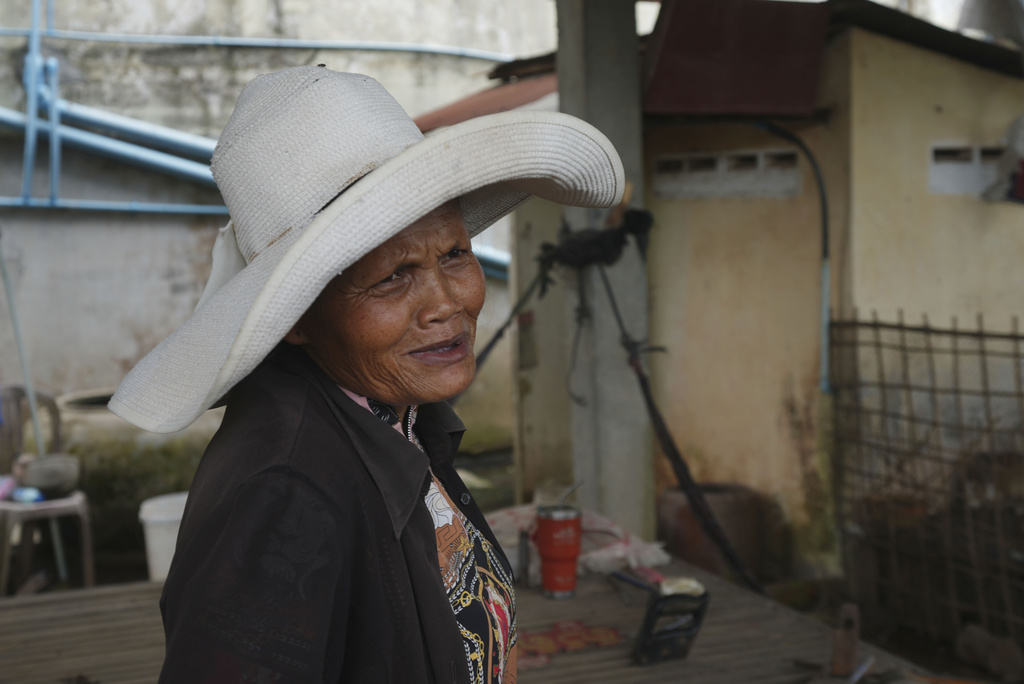
Cambodia Daily Life Cham
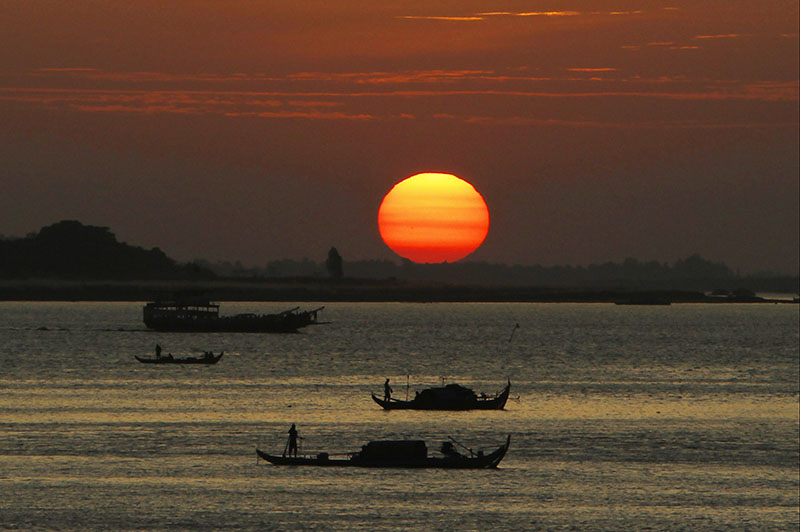
Cambodian fishermen take their motorized boats for fishing during fish harvesting season in the middle of Mekong river on Monday near Phnom Penh. Photo: Heng Sinith / Associated Press

Along with those promises comes peril. Here is a closer look.

The threat to the Mekong

The Mekong River flows from China through Myanmar, Thailand, Laos, Cambodia and Vietnam. It supports a fishery that accounts for 15% of the global inland catch, worth over $11 billion annually, according to the nonprofit World Wildlife Fund. Flooding during the wet season makes the Mekong Delta one of the world’s most productive farm regions.

The river already has been disrupted by dams built upstream in Laos and China that restrict the amount of water flowing downstream, while rising seas are gnawing away at the southern edges of the climate-vulnerable Mekong Delta.

Brian Eyler, director of the Washington-based Stimson Center’s Southeast Asia Program, warns that high embankments along the 100-meter (328 feet)-wide, 5.4-meter (17.7 feet)-deep canal will prevent silt-laden floodwater from flowing downstream to Vietnam. That could worsen drought in Vietnam’s rice bowl and Cambodia’s floodplains, an area stretching over roughly 1,300-square kilometers (501 square miles).

The view from Vietnam’s rice bowl

A drier Mekong Delta is a concern for Vietnam’s agricultural sector, which powers 12% of its economy. The southwestern provinces of An Giang and Kien Giang would likely be most impacted. The delta’s latticework of rivers crisscrossing green fields is vital for Vietnam’s own plans of growing “high quality, low emission rice” on 1 million hectares of farmland by 2030. The aim is to cut earth-warming greenhouse gases, lower production costs and increase farmers’ profits.

Water from the river is “essential” not just for Vietnam’s more than 100 million people but also for global food security, said Nguyen Van Nhut, director of rice export company Hoang Minh Nhat.

Vietnam’s exports of 8.3 million metric tons (9.1 U.S. tons) of rice in 2023 accounted for 15% of global exports. Most was grown in the Mekong Delta. The amount of silt being deposited by the river has already dropped and further disruptions will worsen salinity in the area, hurting farming, Nhat said.

“This will be a major concern for the agriculture sector of the Mekong delta,” he said.

AP24240429146137
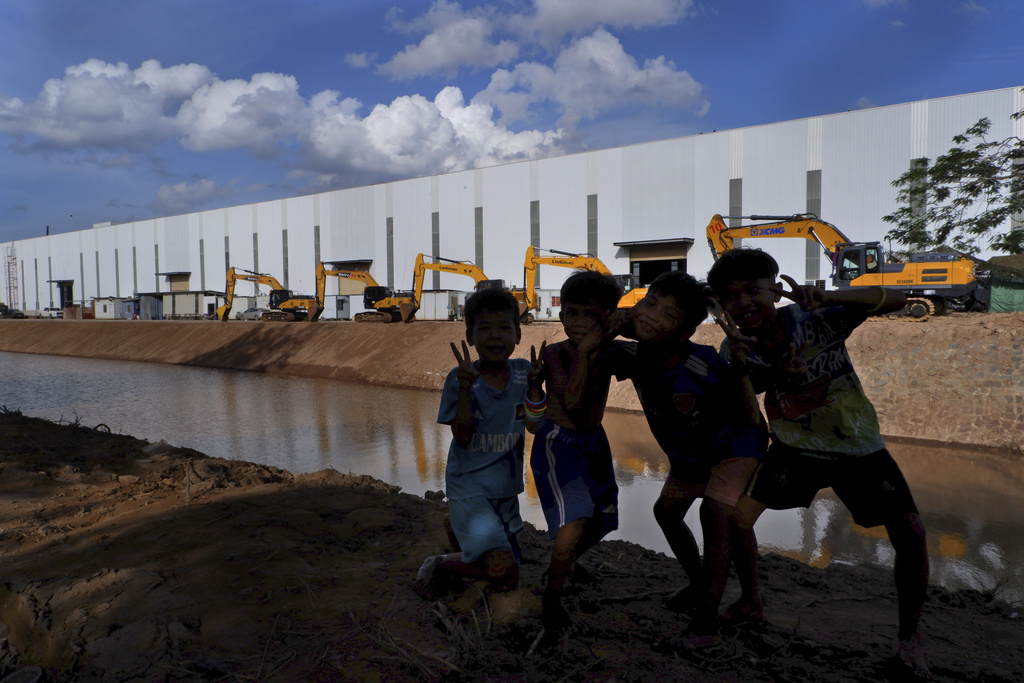
Children pose in front of bulldozers lined along the Funan Techo canal at Prek Takeo village, eastern Phnom Penh, Cambodia, Tuesday, July 30, 2024. (AP Photo/Aniruddha Ghosal)

Cambodia’s view

Cambodia says the canal is a “tributary project” that will connect to the Bassac River near Phnom Penh. President Hun Sen claimed on social media platform X that this means there would be “no impact on the flow of the Mekong River.”

But blueprints show the canal will connect to the Mekong’s mainstream and in any case the Bassac consists entirely of water from the Mekong, Eyler said.

Cambodian authorities are downplaying the potential environmental impacts of the project. “This is their logic-defying basis for justifying no impact to the Mekong River,” he said.

A document submitted in August 2023 to the Mekong River Commission — an organization formed for cooperation on issues regarding the Mekong — does not mention using water from the canal for irrigation, though Cambodia has since said it plans to do so. The Stimson Center added it was “logical” that irrigation would be needed during dry months, but that would require negotiating an agreement with the other Mekong countries.

AP24240327414039
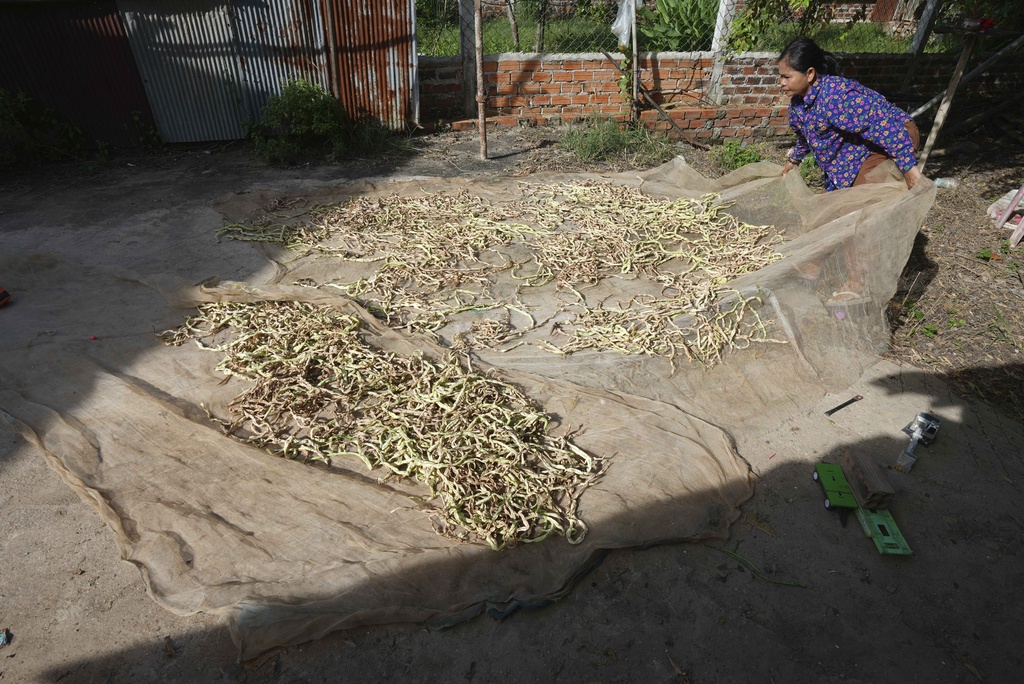
Norng La, a villager who lives along the Funan Techo Canal dries her long beans at her home at Prek Takeo village, eastern Phnom Penh, Cambodia, Tuesday, July 30, 2024. (AP Photo/Heng Sinith)

The Mekong River Commission told The Associated Press all major projects on the Mekong River “should be assessed for their potential transboundary impacts.” It said it was providing technical support to “increase transparency and cooperation among concerned countries.”

Sun Chanthol, the Cambodian deputy prime minister who oversees the project, didn’t respond to a request for comments.

Nationalistic rhetoric and tense neighbors

Cambodia has rejected criticism of the canal, which is widely seen as an effort by the country’s ruling elite to curry support for Prime Minister Hun Manet, who succeeded his father Hun Sen, who led Cambodia for 38 years.

The canal is to be built jointly by Chinese state-owned construction giant China Road and Bridge Corporation and Cambodian companies. But it is enveloped in nationalistic rhetoric. The canal would provide Cambodia a “nose to breathe through” by reducing its dependence on Vietnam, Hun Sen has said.

AP24240327350842
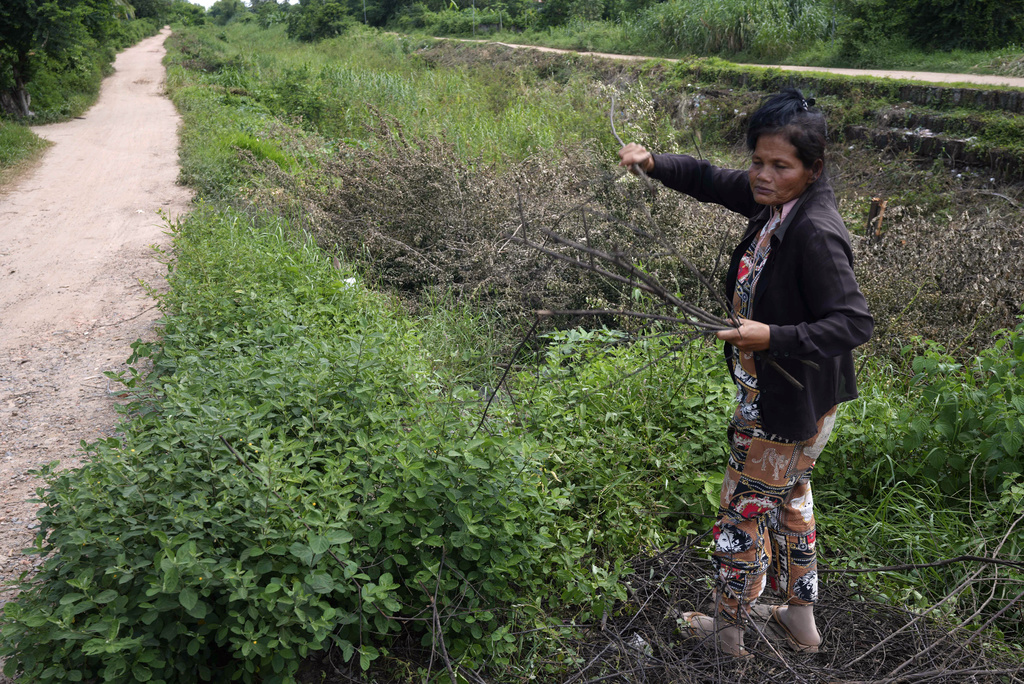
Sok Koeun, a villager who lives along the Funan Techo Canal, collects firewood for cooking at her home at Prek Takeo village, eastern Phnom Penh, Cambodia, Tuesday, July 30, 2024. (AP Photo/Heng Sinith)

Vietnam has avoided openly criticizing its neighbor, instead communicating its concerns quietly. Vietnamese Foreign Ministry spokesperson Pham Thu Hang said at a press conference in May that Hanoi had asked Cambodia to share information and assess the environmental impacts of the project to “ensure the harmony of interests” of Mekong countries.

Many Cambodians remain suspicious of Vietnam’s intentions, believing it may want to annex Cambodian territory. Given the contentious past between the two countries, bigger and richer Vietnam is taking care not to appear to be impinging on Cambodian sovereignty, said Nguyen Khac Giang, an analyst at Singapore’s ISEAS-Yusof Ishak Institute.

“Although in Vietnam, there are big concerns,” he said.

Lost in Cambodia’s nationalistic rhetoric are the concerns of people like Sok Koeun, 57, who may lose her home.

AP24240327366915
Sok Koeun, a villager who lives along the Funan Techo Canal, is interviewed by The Associated Press at her home at Prek Takeo village, eastern Phnom Penh Cambodia, Tuesday, July 30, 2024. (AP Photo/Heng Sinith)

The tin-roofed cottage where she has lived with her family since 1980 is right where the canal is due to be built. The river provides her with fish to feed her family when she struggles to get by selling sugarcane juice and recycling plastic cans.

No one has been in touch, she says, to answer her mounting questions: Will she get compensated? Will she get land? Or cash? Where will they go?

“I only learned about it (the canal) just now,” she said.

__________
Advertisement

Same-Sex Couples in Thailand to Tie the Knot Starting January as Marriage Equality Bill Becomes Law

marriage
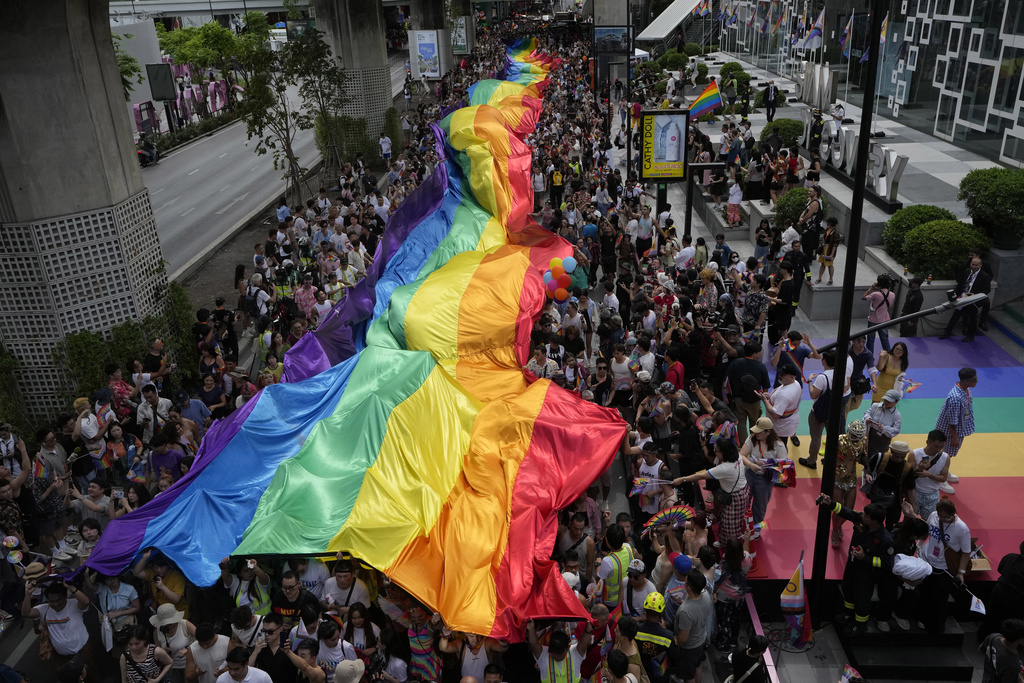
FILE - Participants hold posters celebrating equality in marriage during the Pride Parade in Bangkok, Thailand, Saturday, June 1, 2024. (AP Photo/Sakchai Lalit, File)

BANGKOK (AP) — Thailand’s landmark marriage equality bill was officially written into law Tuesday, allowing same-sex couples to legally wed.

The law was published in the Royal Gazette after endorsement by King Maha Vajiralongkorn, and will come into effect in 120 days. This means LGBTQ+ couples will be able to register their marriage in January next year, making Thailand the third place in Asia, after Taiwan and Nepal, to allow same-sex marriage.

The bill, which grants full legal, financial and medical rights for marriage partners of any gender, sailed through both the House of Representatives and the Senate in April and June respectively.

“Congratulations to everyone’s love,” Prime Minister Paetongtarn Shinawatra wrote on X, adding the hashtag #Love Wins.

Thailand has a reputation for acceptance and inclusivity but struggled for decades to pass a marriage equality law. Thai society largely holds conservative values, and members of the LGBTQ+ community say they face discrimination in everyday life.

The government and state agencies are also historically conservative, and advocates for gender equality had a hard time pushing lawmakers and civil servants to accept change.

AP24268500063183
FILE – Participants hold a rainbow flag during the Pride Parade in Bangkok, Thailand, Saturday, June 1, 2024. (AP Photo/Sakchai Lalit, File)

Bangkok Deputy Governor Sanon Wangsrangboon said last week that the city officials will be ready to register same-sex marriages as soon as the law gets enacted.

The legislation amended the country’s Civil and Commercial Code to replace gender-specific words such as “men and women” with gender-neutral words such as “individual.”

The government led by the Pheu Thai party has made marriage equality one of its main goals. It made a major effort to identify itself with the annual Bangkok Pride parade in June, in which thousands of people celebrated in one of Bangkok’s busiest commercial districts.

The organizers of Bangkok Pride announced on Facebook that it will organize a wedding for couples who wish to register their marriage on the very first day that the law becomes effective.

Advertisement

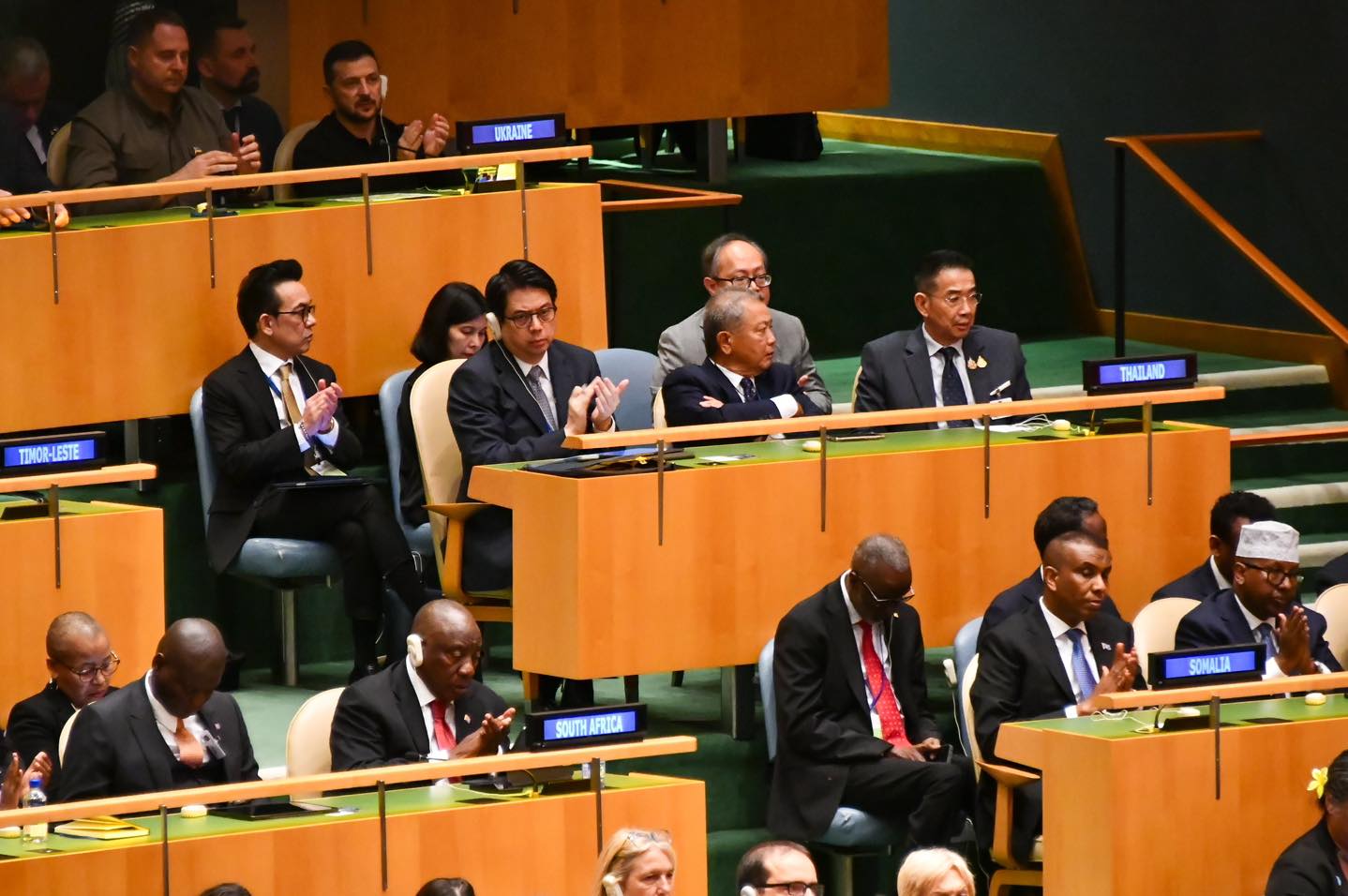
UNGA Opens Amid Global Conflicts, Thailand Urges Political Solution

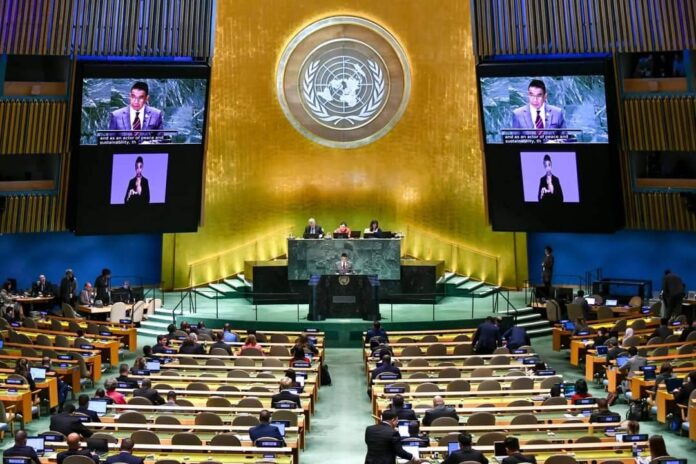
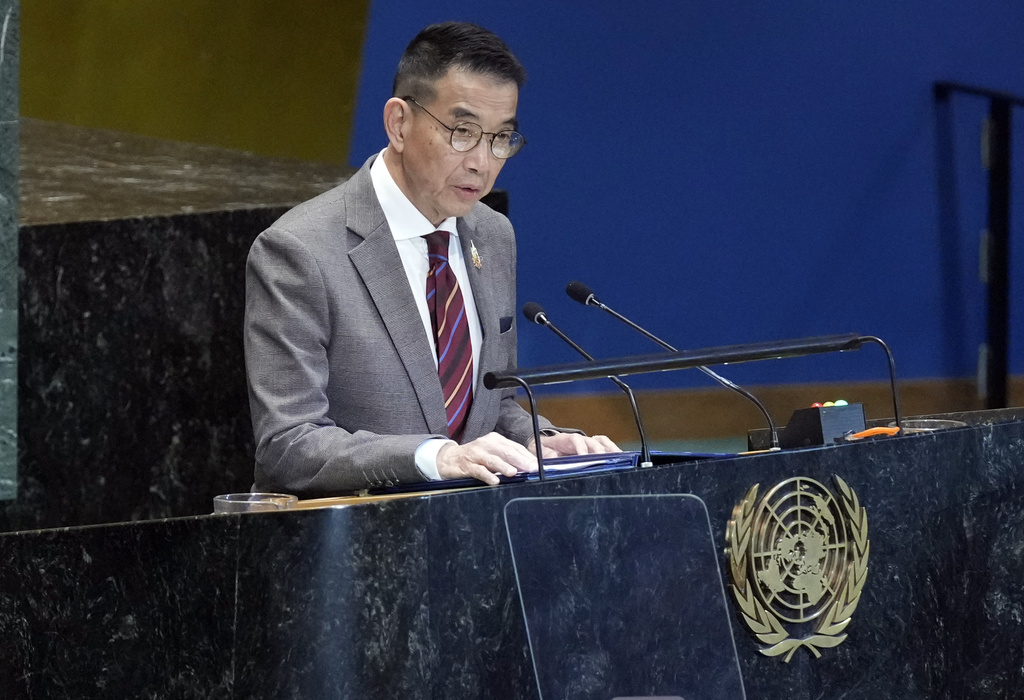
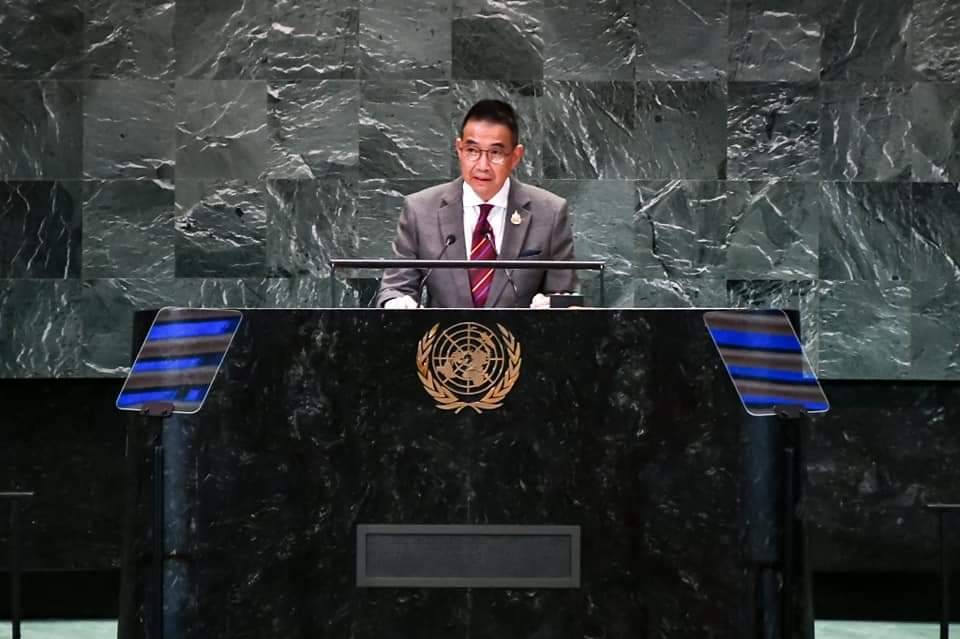
Thailand's Foreign Minister Maris Sangiampongsa addresses the the Summit of the Future, in the United Nations General Assembly, Monday, Sept. 23, 2024.

UNITED NATIONSThe 79th United Nations General Assembly (UNGA) commenced Tuesday against a backdrop of escalating global tensions and ongoing conflicts, with world leaders gathering to address pressing international issues. As the annual meeting opened, Thailand’s representative emphasized the need for political will to tackle global challenges.

Global Turmoil Sets Tone for Assembly

UN Secretary-General Antonio Guterres, in his preview of the “State of the World” address, warned that the world is “heading off the rails” and requires decisive action to course-correct. He highlighted the proliferation of conflicts, threats to global security, widening inequalities, and the urgent need to address climate change.

This global situation is becoming intolerable and unsustainable. He stressed the need for “tough decisions” to get the world back on track, underlining the gravity of the current global situation.

AP24268476535927
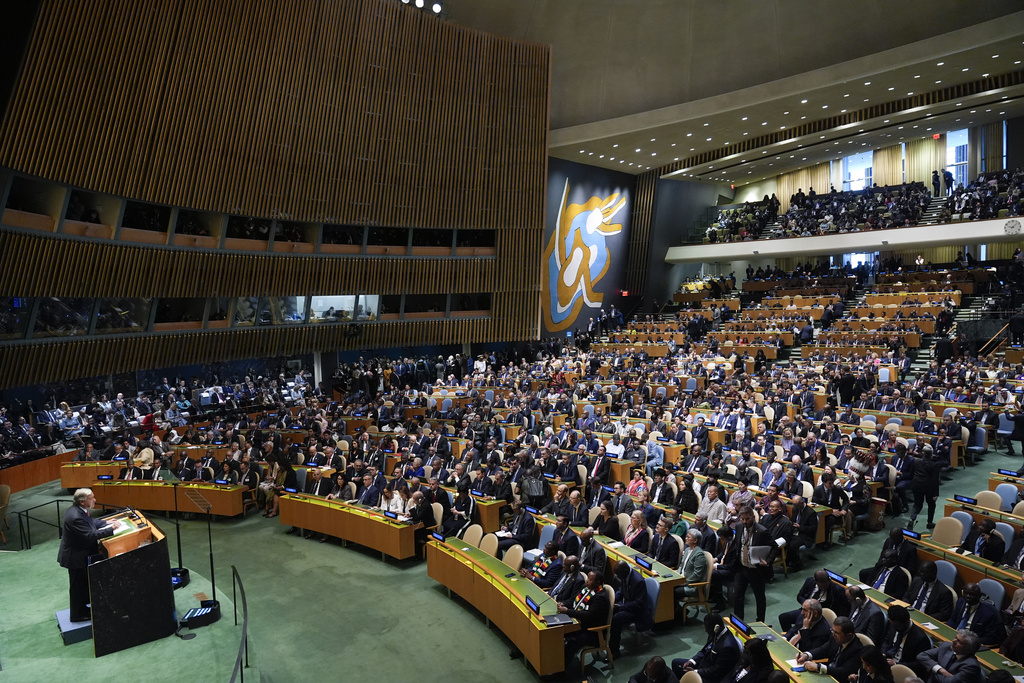
United Nations Secretary-General António Guterres addresses the 79th session of the United Nations General Assembly at United Nations headquarters, Tuesday, Sept. 24, 2024. (AP Photo/Seth Wenig)

“We can’t go on like this,” the secretary-general said in an alarming state-of-the-world address as he opened the annual high-level gathering of the U.N.’s 193 member nations.

Guterres said the world is in “an era of epic transformation” facing challenges never seen before, with geopolitical divisions deepening, the planet heating and wars raging in the Middle East, Ukraine, Sudan and elsewhere with no clue how they will end.

“We are edging towards the unimaginable – a powder keg that risks engulfing the world,” Guterres told presidents, prime ministers and ministers in the vast General Assembly hall.

But he stopped short of saying hope was gone. “The challenges we face,” he said, “are solvable.”

Thailand’s Call for Political Solutions

Thailand’s Foreign Minister, Maris Sangiampongsa, delivered a statement at the concurrent Summit of the Future, emphasizing Thailand’s perspective on building a common global future. Key points from Thailand’s address included:

  1. The necessity of political will to address common global challenges
  2. Promotion of Thailand’s Sufficiency Economy Philosophy as a sustainable development model
  3. Calls for action against transnational crimes, including illicit drugs and cybercrime
  4. Advocacy for UN reform, particularly of the Security Council, to better represent developing countries
  5. Emphasis on youth empowerment in shaping the future

Minister Sangiampongsa expressed hope for a future where everyone is protected and able to prosper, underlining the importance of collective action in achieving this vision.

AP24267621057116
Thailand’s Foreign Minister Maris Sangiampongsa addresses the the Summit of the Future, in the United Nations General Assembly, Monday, Sept. 23, 2024. (AP Photo/Richard Drew)

Summit of the Future: Charting a Path Forward

The Summit of the Future, held alongside the UNGA, adopted the Pact for the Future, which includes a Declaration on Future Generations and a Global Digital Compact. This summit aims to:

  • Accelerate progress towards the UN Sustainable Development Goals by 2030
  • Shape the future direction of the United Nations
  • Enhance the UN’s ability to address current and future challenges
  • Reaffirm the importance of multilateralism with the UN at its core

Thailand has been an active participant in this process, contributing inputs to the Pact and organizing activities to raise public awareness about the UN and the summit.

As world leaders continue to convene in New York, the international community watches closely, hoping for concrete steps towards addressing the myriad challenges facing the globe. The emphasis on political solutions, as urged by Thailand, underscores the critical role of diplomacy and cooperation in navigating the complex landscape of international relations.

maris Summit of the Future
Thailand’s Foreign Minister Maris Sangiampongsa addresses the the Summit of the Future, in the United Nations General Assembly, Monday, Sept. 23, 2024.
maris unga
Mr. Maris Sangiampongssa, Minister of Foreign Affairs, attended the opening session of the 79th United Nations General Assembly (UNGA79) General Debate at UNHQ in New York, on September 24, 2024.

________
Advertisement

Cambodian Transgender Caught for Theft of Italian’s Necklace in Bangkok

necklace
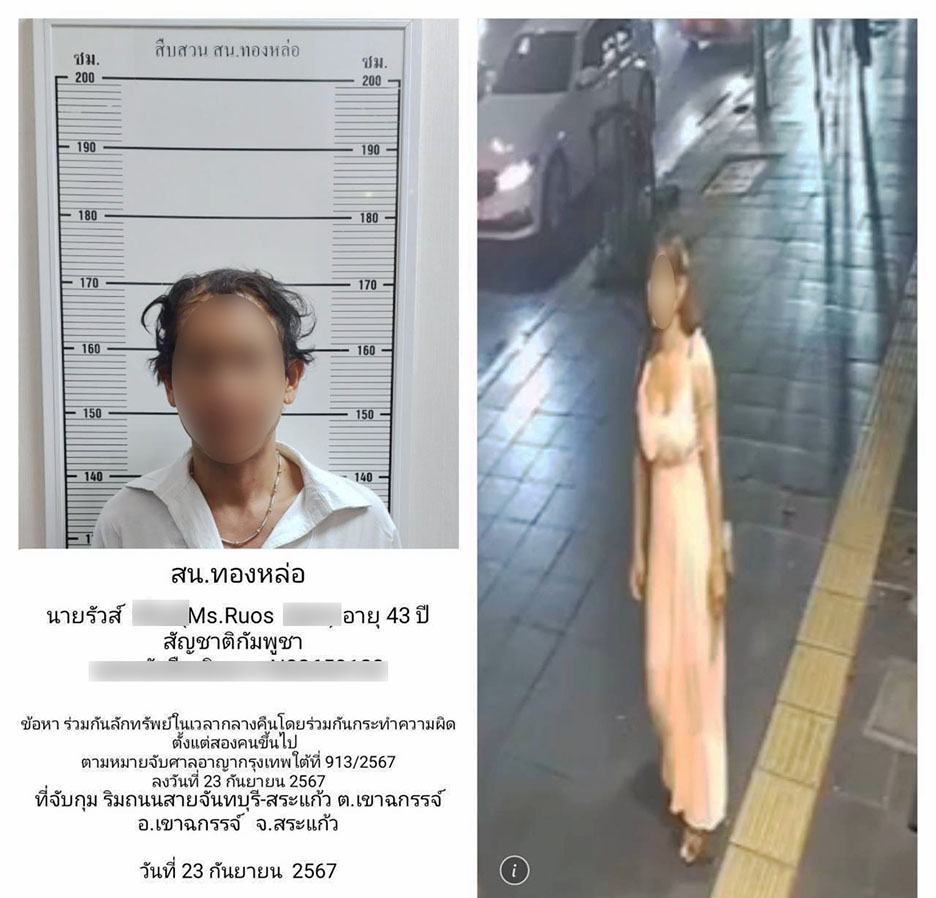
CCTV shows the suspect arriving at a pawn shop in Soi Petchaburi 5 where he sold the stolen necklace.

SA KAEO — The suspect who stole necklace from an Italian tourist was about to cross the border from Sa Kaeo Province back to Cambodia, but Thonglor police managed to arrest him just in time.

Thonglor Police Station officers revealed on September 24 that they had received a complaint from an Italian man, Mr. Michele, on September 19 at around 10:10 p.m. He reported that two thieves, a woman and a transgender person, had stolen his gold necklace worth 5,000 euros (182,730 baht) on the sidewalk in front of Exchange Tower at Asoke intersection on Sukhumvit Road.

He stated that one of the thieves wore a black shirt and escaped in a green-yellow taxi heading towards the Ratchada-Khlong Toei intersection.

cambodia italian2
CCTV shows the suspects escaping in a green-yellow taxi.

Police then investigated CCTV footage. Although they couldn’t see the exact moment the Italian man’s necklace was stolen, they saw the events as he described, with the culprits escaping in a green-yellow taxi. Further investigation revealed that the two had walked from Sukhumvit Soi 18 before the incident.

Later, police received a tip that the perpetrator had sold the stolen necklace at a pawn shop called “Shop A” in Soi Petchaburi 5. On September 22, police checked the shop’s CCTV, which confirmed that around 10:37 p.m. on September 19, a transgender person came to sell a necklace with a pendant for 55,900 baht. The footage helped identify the suspect.

cambodia italian3
The suspect is taken to Thonglor Police Station for legal proceedings.

On September 23, Thonglor police investigators went to arrest the suspect at a rented room in Baan Meesuk, Soi On Nut 10, Suan Luang district, Bangkok. The suspect wasn’t there, and inquiries revealed he was about to return to Cambodia. The suspect had boarded a van at Ekkamai transport station heading to Sa Kaeo Province.

Police intercepted the suspect’s van on Chanthaburi – Sa Kaeo Road in Khao Chakan district, Sa Kaeo Province. They arrested the suspect, Mr. Ruos, on charges of “jointly committing theft at night by two or more persons.”

The suspect admitted to being the person in the arrest warrant. He was taken to Thonglor Police Station for further investigation and legal proceedings. Police will continue to search for the other suspect.

__________

Advertisement

Hot News

LATEST NEWS

Bangkok
overcast clouds
28.8 ° C
28.8 °
28.8 °
74 %
2.5kmh
97 %
Mon
33 °
Tue
32 °
Wed
33 °
Thu
35 °
Fri
27 °