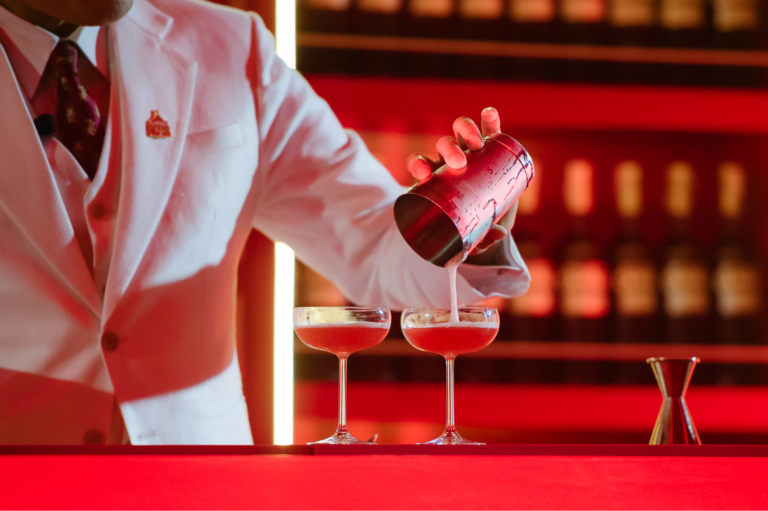
CAMPARI & Alchemy Thailand hosted Campari Red Hands Thailand 2024 the bartender cocktail competition at Radisson Blu Plaza Bangkok Hotel. The Winner Dheeradon “Gotji” Dissara, General Manager – Ray Cocktail and Bite, Thailand representative will compete in Campari Red Hands Asia 2024 in Milan Italy in November 2024.
From Left:Thanamon Suthon- Campari Group Brand Ambassador Thailand, Supawit Muttarattana,
Symphony Loo- Campari Group Regional On-Premises Manager, Dheeradon “Gotji” Dissara, the Winner of Campari Red Hands Thailand 2024, MR.Arno Schonfelder- General Manager Alchemy Thailand, Carla Porter, Michele Montauti
An icon born out of red passion, Campari – the flagship brand of its namesake group and core of the beloved Negroni – brings back its search for the next Campari Red Hands Asia Champion with Campari Red Hands Asia 2024 after a 5-year hiatus. The competition series is set to pit the top 539 bartenders from 13 countries in Asia for the prestigious title of Campari Red Hands Asia Champion to enter the Grand Final Round in Milan, Italy, in November this year.
Campari Red Hands Thailand 2024was held at Radisson Blu Plaza Hotel, Bangkok under the theme Cocktail & Senses for the next Campari cocktail for Negroni Family Tree.
The much-anticipated final round included nine finalists, out of total 109 participants from all over Thailand, namely Piyapat Polnai (Bar Scofflaws, Bangkok), Thanat Tangroungsin (Bar Us, Bangkok), Nattapach Kaewpeacharawanich (Dry Wave Cocktail Studio, Bangkok), Julie Nguyen (Opium Bar, Bangkok), Pongskorn Ruangjun (Overgrown Lounge & Cocktail Bar, Phuket), Noppasate Hirunwathit (Rabbit Hole, Bangkok), Dheeradon Dissara (Ray Cocktail and Bite), Maipimol Suepayak (Rouge Affair Bar Bangkok) and Siriwan Sinpan (The O.S.S. Bar, Bangkok) competing in front of the judging panel, led by Symphony Loo, Campari Group Regional On-Premises Manager & Thanamon Suthon, Campari Group Brand Ambassador – Thailand.
ABOUT CAMPARI
Campari is a contemporary and charismatic classic. The secret recipe, which has remained unchanged, originated in Novara in 1860 and is the base for some of the most famous cocktails around the world, Campari is an alcoholic spirit obtained from the infusion of bitter herbs, aromatic plants and fruit in alcohol and water.
With its vibrant red colour, intense aroma and inspiring flavour, Campari has always been a symbol of intrigue and pleasure, which unfurls itself into a captivating drinking experience. These are the values that have made the Campari brand famous throughout the world as an icon of passionate Italian style and excellence.
ABOUT NEGRONI
It was around the year 1919 in Florence when Count Camillo Negroni contemplated ordering an Americano cocktail but decided it was time for a change. He requested it with a touch of gin instead of soda, inspired by his last trip to London and its prevalent gin scene. The bartender was pleased to honour Count Camillo Negroni’s request and added an orange garnish rather than the lemon wedge of the Americano to signify the new drink he had created.
In Florence, the Count’s ‘usual’ became known as Count Negroni’s Americano, or the “Americano with a touch of gin”, but whatever it was referred to as back then, the Negroni was born. The Negroni is now one of the most famous contemporary classic cocktails. Anywhere you go in the world, you will find a mixologist who can make you the iconic Negroni.
The original recipe, the perfectly balanced combination of equal parts of Campari, Red Vermouth and London Dry gin, is almost a century old and continues to be enjoyed today. The International Bartenders Association (IBA) lists Campari as an official ingredient of the Negroni, and thus, there is no Negroni without Campari!
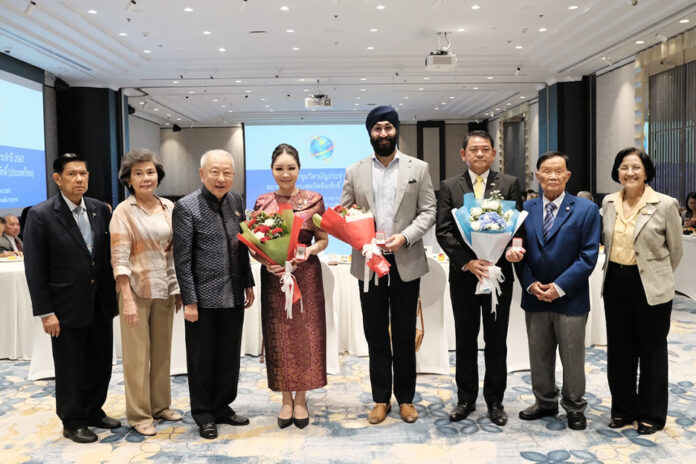
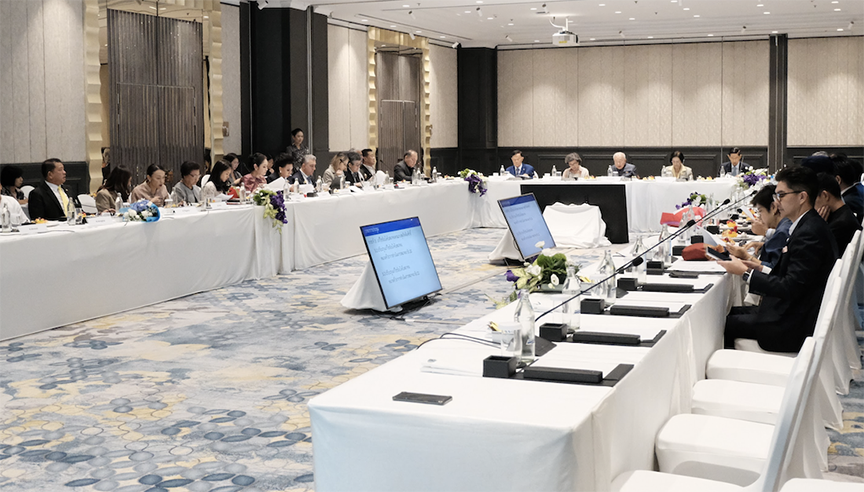
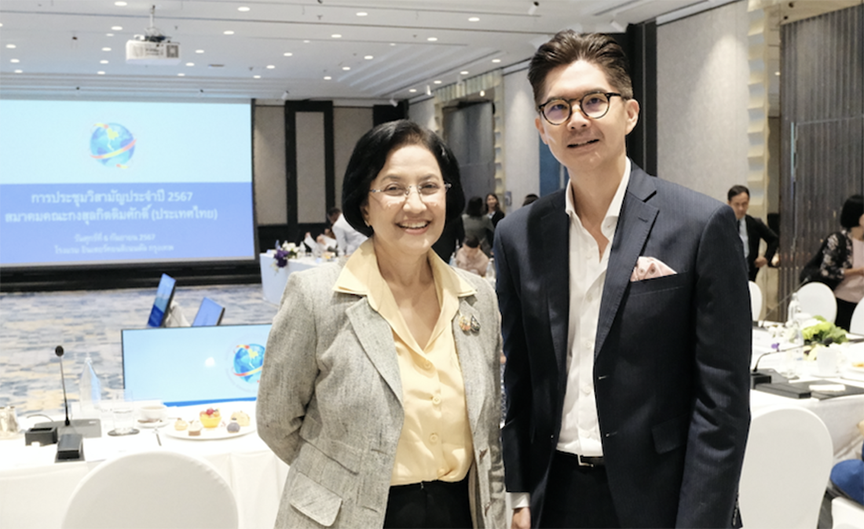
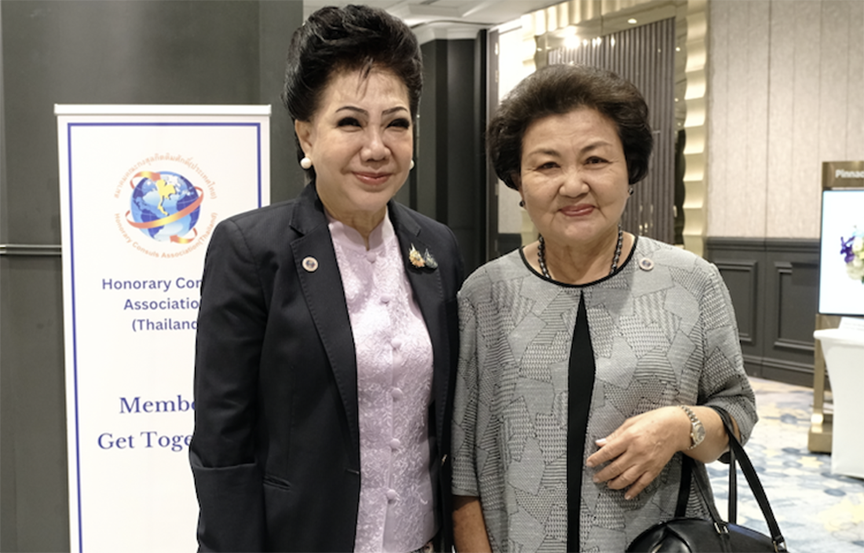
The Honorary Consular Corps Association (Thailand), or HCAT, led by Dr. Chumpol Phornprapha, Honorary Consul General of the Republic of Fiji and President of the Honorary Consular Corps Association, chaired the 2024 Annual Extraordinary General Meeting.
The event was attended by the association’s executive committee, advisors, and members, creating a warm atmosphere at Pinnacle Rooms 4-6, InterContinental Hotel Bangkok.
This meeting was held to discuss and consider important agenda items, aiming to ensure the association’s efficient and transparent operations. It received a strong response from both senior and new members of the consular association.
The attendees included Dr. Sribhumi Sukhanetr, Honorary Consul General of Monaco; Dr. Nalinee Taveesin, Honorary Consul of Namibia; Pattra Puthipanthanapong, Honorary Consul General of Slovenia; Amarin Komant, Honorary Consul of Benin; M.L. Preeyapun Sridhavat, Honorary Consul General of Peru in Chiang Mai; Olan Asawaruetikul, Honorary Consul of Panama; Nop Narongdej, Honorary Consul of Mexico and Jak Chamikorn, Honorary Consul of Nicaragua in Bangkok and Secretary of the Consular Corps Association (Thailand) among others.
On this occasion, with many members gathered, Dr. Chumpol Phornprapha, as the association’s president, took the opportunity to warmly introduce and welcome new members, including Thamandeep Singh Kaniya, Honorary Consul of the Bahamas; Nattakanya Saengpho, Honorary Consul of Mexico in Phuket; Thanusak Phungdet, Honorary Consul of Hungary in Phuket; Korapot Asawinvichit, Honorary Consul of the Sultanate of Oman in Phuket; and Hongthai Chaetan, Honorary Consul of the Republic of Djibouti.
Currently, the Honorary Consular Corps Association (HCAT) has 72 members representing 66 countries, contributing to the expansion of diplomatic relations and strengthening the network of the Honorary Consular Corps.
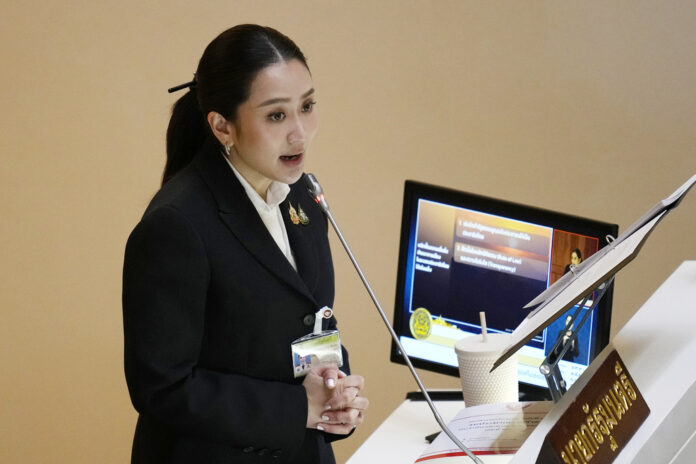
Thailand's Prime Minister Paetongtarn Shinawatra makes the policy statement at parliament in Bangkok, Thailand, Thursday, Sept. 12, 2024. (AP Photo/Sakchai Lalit)
JINTAMAS SAKSORNCHAI, BANGKOK — Thailand’s new Prime Minister Paetongtarn Shinawatra vowed Thursday in her inaugural speech to Parliament to continue many of her predecessor’s plans to solve the country’s economic woes.
Paetongtarn, the leader of the ruling Pheu Thai Party and daughter of former Prime Minister Thaksin Shinawatra, took office last month after a court ousted Srettha Thavisin from his post over an accusation that he had violated an ethics law by appointing a Cabinet member who had served time in prison in connection with a bribery case.
Pheu Thai formed a government headed by Srettha after members of the conservative Senate refused to endorse the prime minister nominated by the progressive Move Forward Party, which won the most seats in last year’s general election.
Thailand is facing several economic challenges and Paetongtarn said Thursday her government will urgently address the issues of high household debt, the rising cost of living and lagging incomes “to bring the hope of Thai people back as soon as possible.”
Among the government’s more immediate plans are measures to relieve household debt and reduce the rising cost of electricity, petrol and transport, as well as to boost tourism and bring new technologies to the agricultural sector, she said.
Paetongtarn said the government will generate new income by legalizing and taxing the “informal economy” and the “underground economy.” Although she provided no details, it was an apparent reference to plans to legalize casinos, which are being promoted as “entertainment complexes” that can attract revenue windfalls.
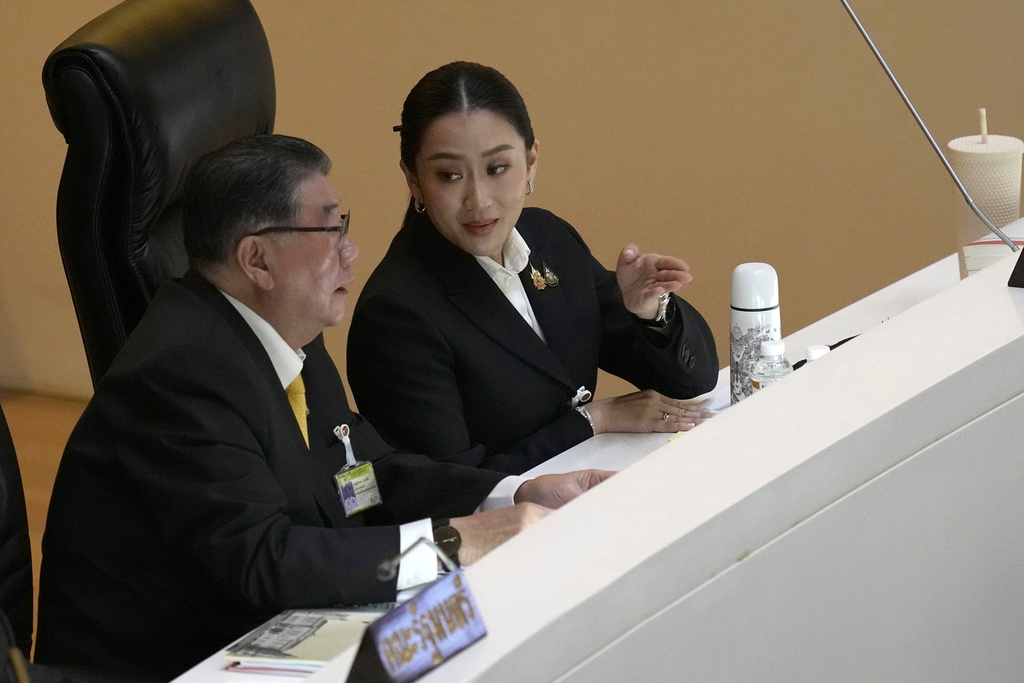
Thailand’s Deputy Prime Minister Phumtham Wechayachai, left, talks to Thailand’s Prime Minister Paetongtarn Shinawatra before making the policy statement at parliament in Bangkok, Thailand, Thursday, Sept. 12, 2024. Paetongtarn appeared Parliament for the first time to lay out how her government envisions to improve the country. (AP Photo/Sakchai Lalit)
The draft of the law, sponsored by the Finance Ministry, says a casino would be allowed to operate within a complex that also houses other businesses such as a hotel, a convention hall, a mall or a theme park. Access to casinos will be restricted to those younger than 20 years old. They will be open for foreigners, while Thai citizens must pay 5,000 baht ($148) for an entrance fee, according to the draft.
She said the government will protect small businesses from unfair competition from foreign operators, especially on online platforms. Industry groups in Thailand have expressed increasing concern about an influx of cheap products from China that they say have hurt sales by domestic producers.
Paetongtarn said she will carry out Srettha’s 10,000-baht ($296) digital cash handout program, although details in her speech were sparse. Officials from her administration have said the “Digital Wallet” program, initially promised during last year’s election campaign to give cash handouts to all Thais aged 16 and older, will now prioritize vulnerable low-income groups. They are set to be paid a lump sum this month or by October, while others who are eligible may be paid in installments starting later this year.
In a shift from Srettha, who had vowed to make cannabis illegal again, Paetongtarn said her administration will support medical cannabis as a way to boost the economy, with regulations added to mitigate its social impact. Cannabis was decriminalized in Thailand in 2022, intended only for medicinal use, but in practice the market is virtually unregulated and there was a proliferation of retail shops catering to recreational users.
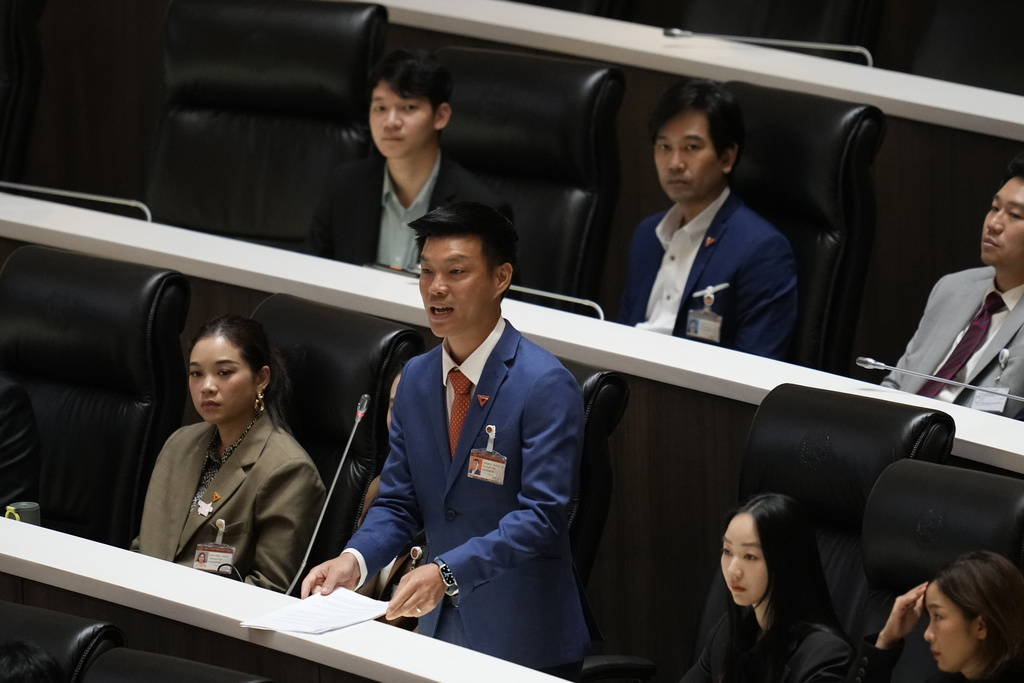
Leader of People’s Party, Natthaphong Ruengpanyawut asks a question after Thailand’s Prime Minister Paetongtarn Shinawatra makes the policy statement at parliament in Bangkok, Thailand, Thursday, Sept. 12, 2024. (AP Photo/Sakchai Lalit)
Fears of drug abuse, especially among young people, as well as concerns about health, prompted a public backlash, and during last year’s election campaign Paetongtarn’s Pheu Thai, along with other parties, pledged to restore measures to ban the drug. However, the government in July suddenly signaled it was backtracking from that pledge.
Paetongtarn said her government in the longer term will also address climate change, improve the quality of education and the universal healthcare system, and tackle political instability by drafting a more democratic constitution and reforming the bureaucratic system and the military.
The results of Thailand’s elections last year revealed a strong mandate for change after nearly a decade under military control. Reforms to the military — a powerful political player that has staged two coups since 2006 — were part of Pheu Thai’s campaign platform, although it hedged the pledge significantly after it took power and formed a government with pro-military parties.
Paetongtarn’s rise to power, which made her the country’s youngest leader and second female prime minister, represents the revival of the embattled political dynasty that began with her father Thaksin, a billionaire telecoms tycoon, who was elected prime minister in 2001 but ousted by a military coup in 2006.
She is the third close member of the Shinawatra clan to take the prime minister’s job. Thaksin’s sister, Yingluck Shinawatra, was Thailand’s first female prime minister from 2011 to 2014. An in-law, Somchai Wongsawat, also served briefly as prime minister in 2008.
Thaksin remains a highly influential political figure and is seen as a de facto leader of Pheu Thai. His apparent dominance over the party has triggered controversy, including a petition to the Election Commission accusing Pheu Thai of allowing an outsider to control it, which could result in the party’s dissolution.
After Thaksin was ousted in 2006, the military joined hands with other conservative forces in Thai society to try to thwart a comeback of his political machine. Thaksin’s ouster triggered years of struggle between his supporters and his opponents, in the streets, in the courts and at the ballot box.
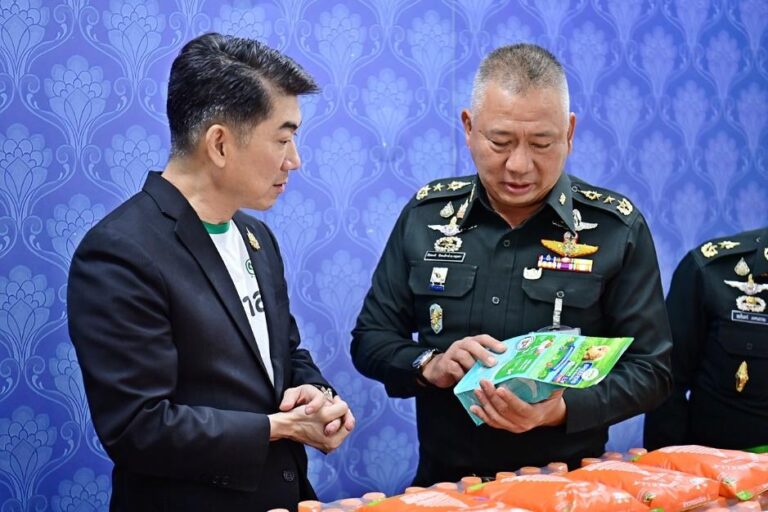
The Royal Thai Armed Forces Headquarters has received donation of essential supplies, including CP-branded drinking water and Royal Umbrella rice, from Charoen Pokphand Foods Public Company Limited (CP Foods) under the ongoing ‘CP-CPF Food from the Heart, Fight the Floods’ campaign. This collaborative initiative, supported by CP Group, CP Foods executives, and volunteers, is focused on alleviating the hardships faced by flood-affected communities in Chiang Rai. Recognizing the impact on both people and their pets, CP Foods has also donated pet food brand JerHigh and Jinny to help support animals in these areas.
Lieutenant General Teerapong Pattamasingh na Ayutthaya, representing the Royal Thai Armed Forces Headquarters, expressed gratitude for the donation. He emphasized that the military is well-equipped with both personnel and resources to respond to crisis situations.
“The generous support from CP Group and CP Foods will enhance our ability to provide essential food and supplies to flood-affected citizens,” he stated.
The Thai Armed Forces plan to package these vital provisions into relief kits for swift distribution to impacted communities.
Prasit Boondoungprasert, CEO of CP Foods, reaffirmed the company’s commitment to swiftly responding to crises. “Following the guidance of Senior Chairman Dhanin Chearavanont, CP Group and CP Foods have mobilized to offer immediate assistance to those in need. We are proud to collaborate with the Thai Armed Forces to ensure that relief reaches flood-stricken areas efficiently.”
On September 12, 2024, CP Group and CP Foods volunteers will travel to Mae Sai District, Chiang Rai, delivering fresh pork, eggs, and pet food to the 37th Military Circle at Mengrai Maharaj Camp and the Petchkasem Foundation, continuing their mission of supporting flood victims.
Since July, under the ‘CP-CPF Food from the Heart, Fight the Floods’ initiative, CP Group and CP Foods have been providing essential items such as fresh pork, chicken, duck, eggs, ready-to-eat meals from Five Star, CP-branded drinking water, and Royal Umbrella rice. These relief efforts have spanned across five provinces: Chiang Rai, Phayao, Phrae, Nan, and Sukhothai, in collaboration with various organizations, including the Flood Relief Coordination Center in Sukhothai and local kitchens. Assistance will continue until the flood situation improves.
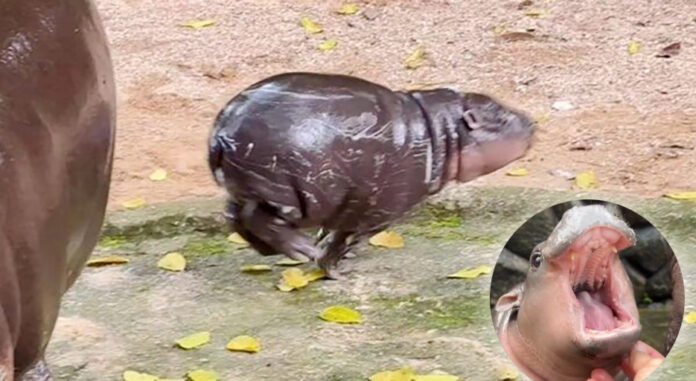
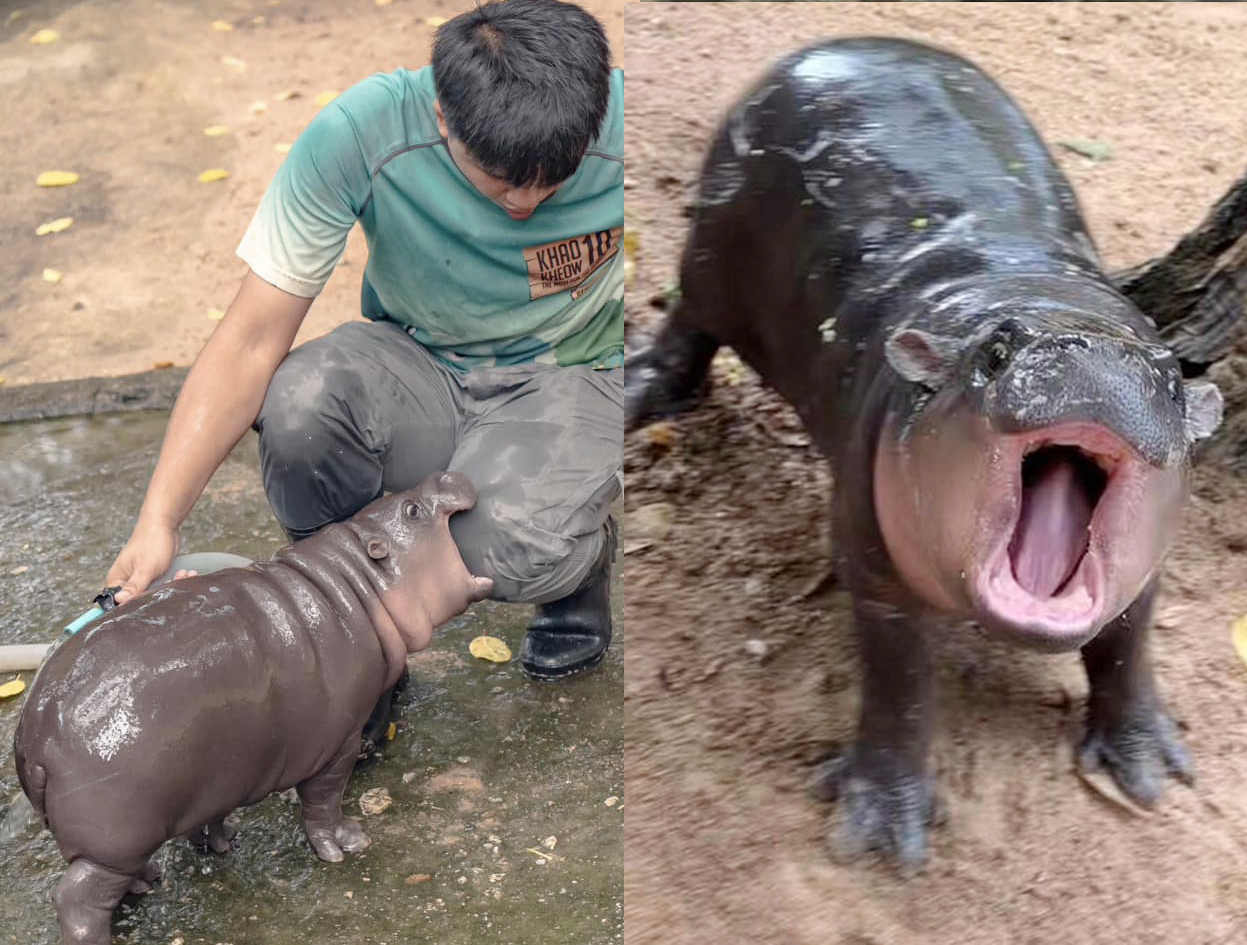
Moo Deng," a 2-month-old pygmy hippopotamus showing its adorable charm on social media, has led to a continuous increase in visitors to Khao Kheow Open Zoo in Sri Racha, Chonburi Province.
CHONBURI — The viral trend of “Moo Deng,” a 2-month-old female pygmy hippopotamus (whose name means “Jiggly Piggy” or “bouncy pig” in Thai), showing its adorable charm through video clips and photos on social media, has led to a continuous increase in visitors to Khao Kheow Open Zoo in Si Racha, Chonburi Province, especially during weekends.
Visitor statistics from the Zoological Park Organization of Thailand’s website show that visitor numbers have been steadily rising. From September 5 to September 11, 2024, there were 14,138 visitors, with 11,615 visitors during the weekend of September 7-8 alone. This is compared to around 9,000 visitors in each of the two previous weekends.
The influx of tourists coming to see Moo Deng has led to some problems that disturb her. Khao Kheow Open Zoo has now implemented measures to prevent animal harassment.
However, the influx of tourists coming to see Moo Deng has led to some problems, with some visitors throwing seashells at the little hippo while she’s sleeping because they want to see her run and play. Regarding this issue, Narongwit Chodchoey, Director of Khao Kheow Open Zoo in Sri Racha, Chonburi Province, has issued a statement urging tourists to maintain proper etiquette when visiting the zoo.
“The most important thing is that we must respect and have good manners when visiting these animals. We shouldn’t shout or throw objects at them. These behaviors are not appropriate for zoo visits, and we must respect the rules of the place,” he said.
Furthermore, the zoo has implemented measures to prevent animal harassment by installing CCTV cameras and assigning staff and animal caretakers during periods of high visitor traffic. If there are any violations against the animals, legal action will be taken to the fullest extent of the law.
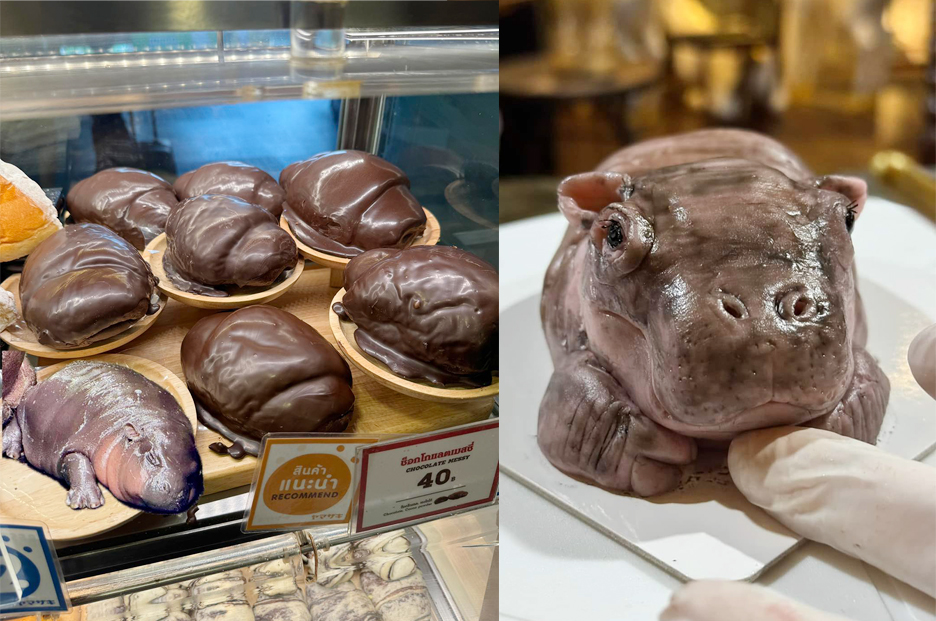
Moo Deng has been turned into a meme alongside chocolate-coated bread (left), and a magical cake shop has even created Moo Deng-shaped cakes for sale.
Moo Deng, the baby pygmy hippopotamus, was born on July 10, 2024. Her mother is Jona, 25 years old, and her father is Tony, 24 years old. She is the younger sister of Moo Tun, another popular hippo of Khao Kheow Open Zoo.
The name “Moo Deng” came from a voting poll organized by Khao Kheow Open Zoo. There were three name options to vote for: Moo Deng, Moo Daeng, and Moo Sap. Out of 20,000 voters, the majority chose the name Moo Deng, which became her official name.
Many people say that both her appearance and behavior truly fit her name “Deng” (which can mean “bounce” in Thai). True to her playful nature as a youngster, she runs around energetically all day. She’s also quite “flighty,” not liking it when her caretakers touch her. Moreover, she’s known for being an expert at nipping and chomping.
Moo Deng has become a star attraction of Khao Kheow Open Zoo. Video clips and photos of “Moo Deng” shared through the “Kha Moo and The Gang” page by Attapol Nuundee, a zookeeper close to the social media-famous hippo family since her parents’ generation, have resulted in cute moments of the hippo family being regularly shared. This has led to Moo Deng being used as a meme and gaining fans across social media.
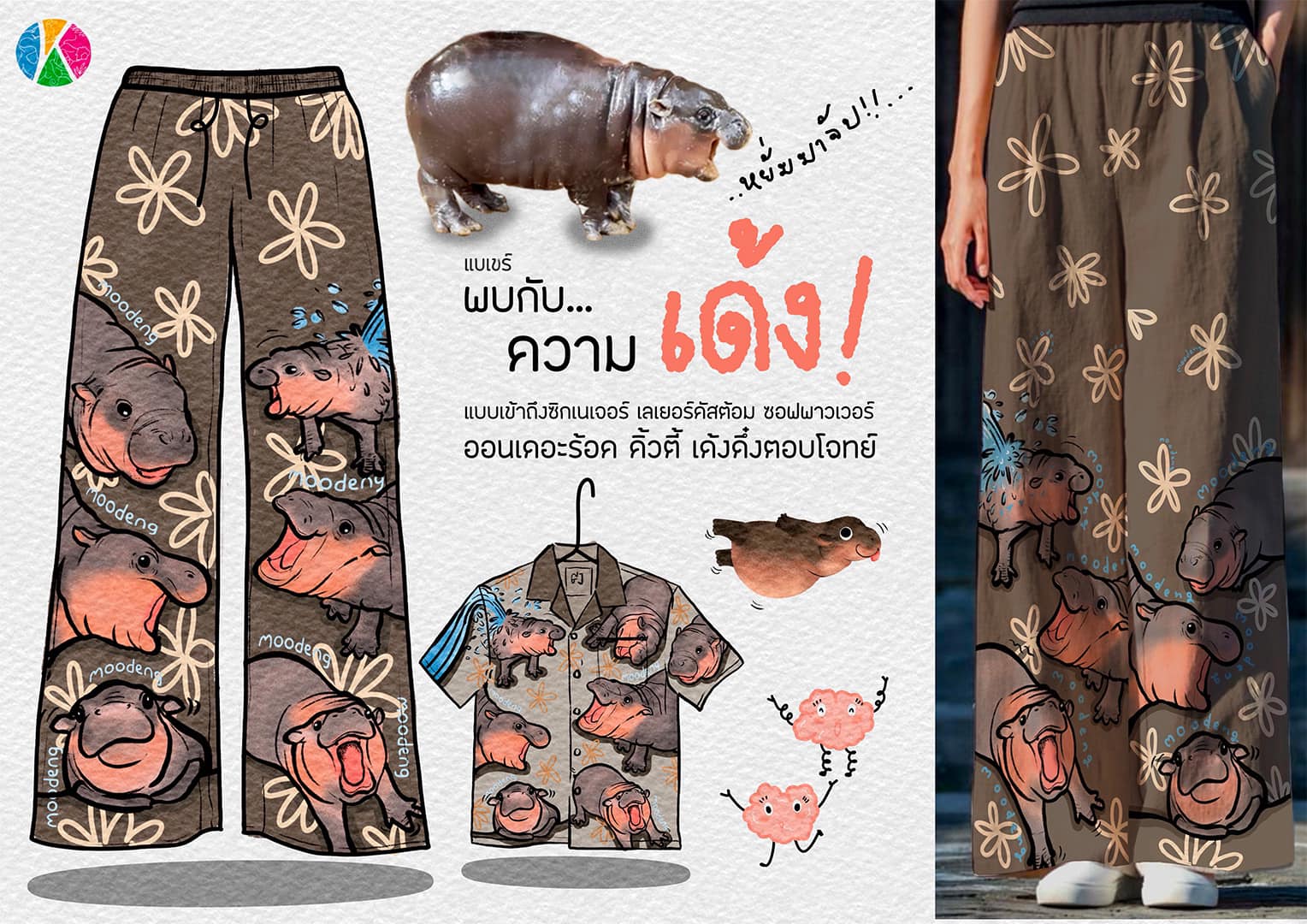
Khao Kheow Open Zoo quickly responded to the popularity of the little hippo by announcing a collection of shirts and cartoon-printed pants featuring ‘Moo Deng’, stating, “They’re still in production, no need to reserve yet.”
A collection of shirts and cartoon-printed pants featuring ‘Moo Deng’
The hippo’s charm has reached beyond Thailand. On the X platform, a clay artist’s post of Moo Deng received over 100,000 likes and 10 million views. On Instagram, Korean singer Ningning of aespa, with over 8 million followers, also posted a picture of Moo Deng, further boosting her fame.
Khao Kheow Open Zoo, established 46 years ago, is known for its open concept with a vast area for over 300 species of animals. It’s a popular holiday destination for Bangkok residents, being less than 2 hours away and ideal for family outings. However, in 2023, it was one of six zoos affected by revenue loss due to COVID-19, contrasting with increasing personnel and animal feed costs.
Moo Deng,” a 2-month-old pygmy hippopotamus showing its adorable charm on social media, has led to a continuous increase in visitors to Khao Kheow Open Zoo in Sri Racha, Chonburi Province.
This led to the Zoological Park Organization lacking sufficient budget for all expenses, resulting in the first ticket price increase in 10 years. Current admission prices are 200 baht for Thai adults and 40 baht for Thai children, while foreign adults pay 350 baht and foreign children 120 baht.
Moo Deng’s online fame is welcomed by Khao Kheow Open Zoo, alleviating concerns that the ticket price increase might reduce visitor numbers. Instead, zoo attendance is now increasing and is expected to continue rising, potentially providing sufficient income to cover all expenses and benefiting the overall zoo business in Thailand.
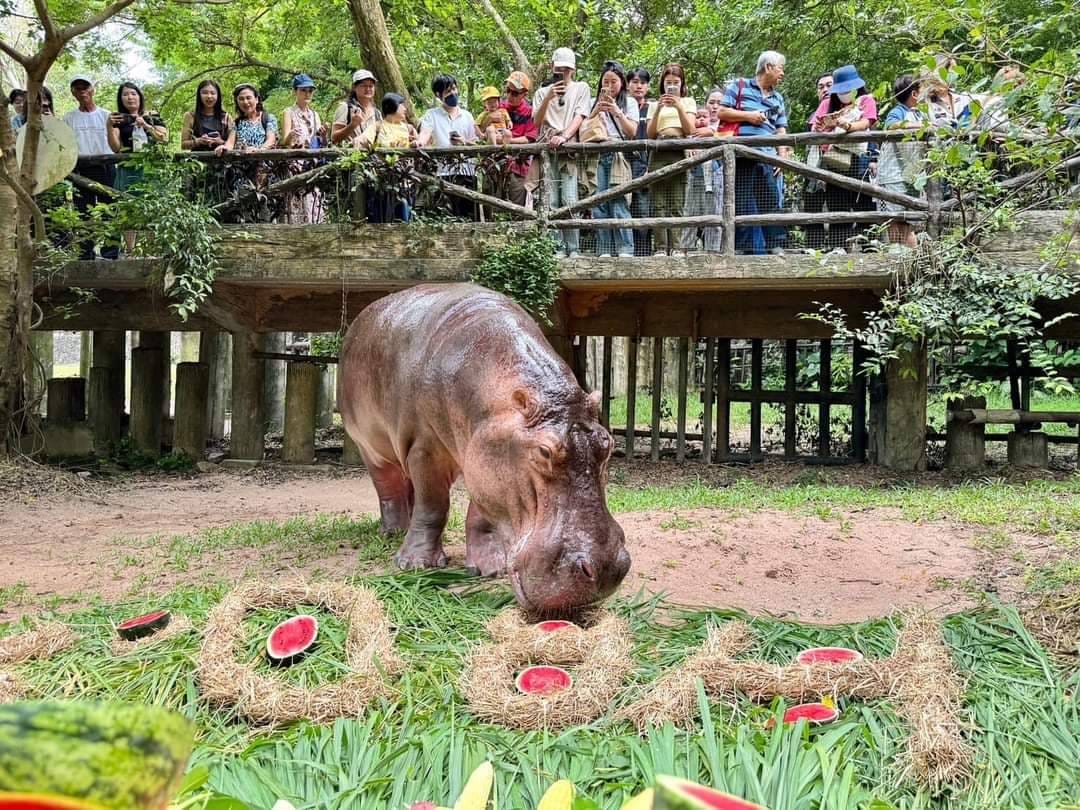
Besides Moo Deng, Khao Kheow Open Zoo is home to another famous hippo well-known to Thais: Mae Mali, the longest-living hippopotamus in Thailand. Khao Kheow Open Zoo celebrated her 59th birthday on September 8, 2024.
Mae Mali, the longest-living hippopotamus in Thailand celebrates her 59th birthday In Khao Kheow Open Zoo, on September 8, 2024.
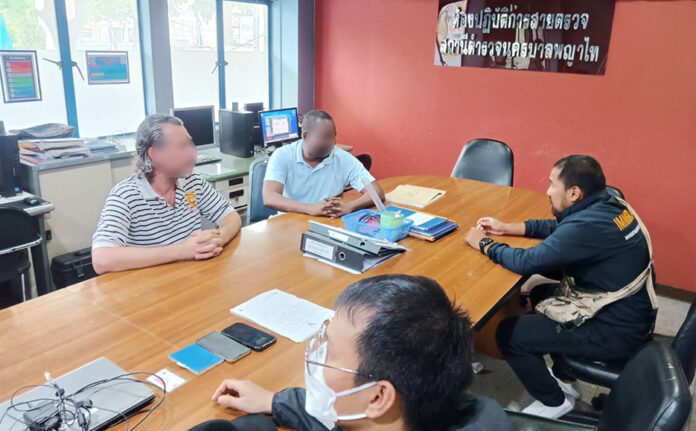
Mr. Mohamed, a 41-year-old Tanzanian national, and Mr. Amar, a 39-year-old Syrian national, are questioned at Phaya Thai Police Station, Bangkok, on September 12, 2024.
BANGKOK — Immigration officials have investigated a Tanzanian national who was involved in illegal business in Thailand. He pretended to be an influential figure by requesting photos with foreign heads of state or VIP delegations visiting Thailand to boost his image.
On September 12, an Immigration Police investigation team led by Pol. Col. Kajaphon Pathamang, head of the Investigation Unit, together with the Thonburi Task Force arrested Mr. Mohamed, a 41-year-old Tanzanian national, on charges of “employing illegal foreign labor (selling goods in a store)” and Mr. Amar, a 39-year-old Syrian national, on charges of “working outside the permitted rights (selling goods in a store)”
The two were arrested at a clothing store in the basement of Baiyoke Sky Tower on Ratchaprarop Road, Phaya Thai District, Ratchathewi, Bangkok, owned by Mr. Mohamed.
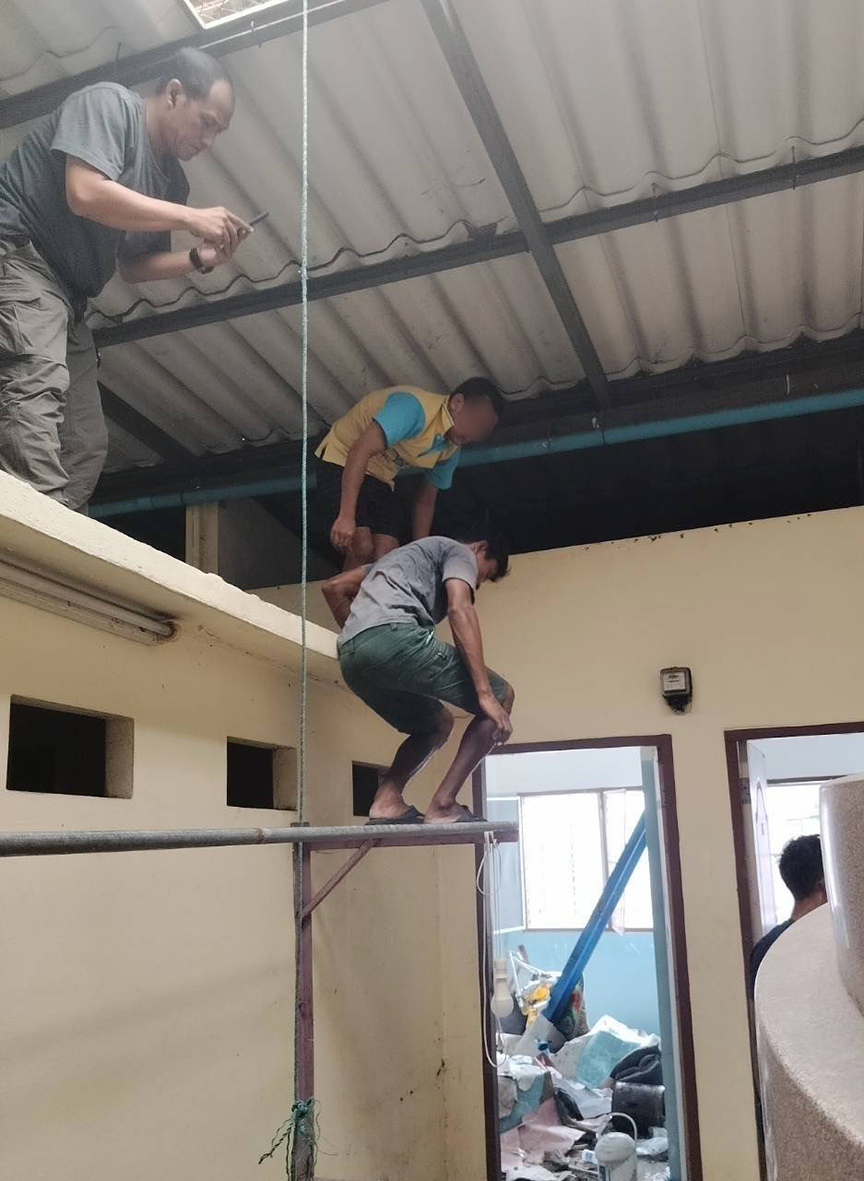
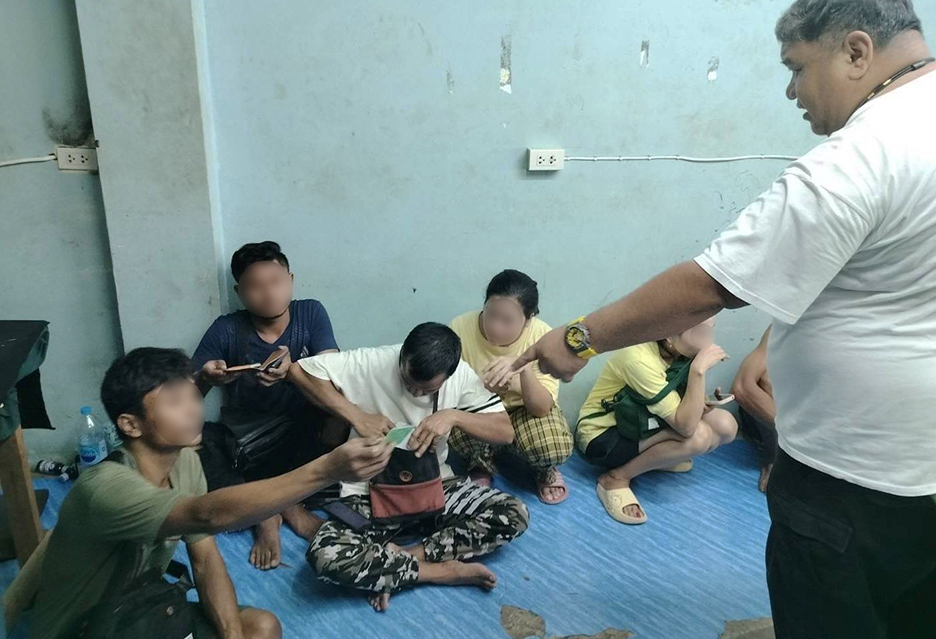
Thai authorities raid SK Export Co., Ltd. in Soi Phra Ya Monthat, Bang Bon district, Bangkok, and find nine Myanmar nationals, some of whom have entered illegally or overstayed their visas, on September 12, 2024.
Police began monitoring Mr. Mohamed after an incident in which he tried to meet with a Tanzanian minister, who was part of a VIP delegation, in the lobby of a hotel in the Sukhumvit district to take a photo. When security forces prevented him from doing so, he fled the scene.
Upon further investigation, the authorities determined that he was a dangerous person who had been physically assaulted several times in the past. He was also involved in trafficking Tanzanian women for prostitution and sending money back to his country after deducting commissions. Mr. Mohamed, who speaks fluent Thai, was also found to have several wives and children.
Mr. Mohamed runs a garment store in the Pratunam area and a factory in Bang Bon district. The authorities raided his clothing store, where they found both Mr. Mohamed and his employee, Mr. Amar. When they demanded their identity documents, they were found to be in Thailand on a business visa (Non-B) through a company called Turbo General Trading Co, Ltd, where Mr. Mohamed worked as a store manager. The suspects were then taken to Phaya Thai Police Station for further investigation.
The investigation was later widened and the authorities found that Mr. Mohamed had smuggled foreign nationals into Thailand and employed them at a screen printing business house operated by SK Export Co., Ltd. in Soi Phra Ya Monthat, Bang Bon district, Bangkok, where Mr. Mohamed was the managing director.
Thai authorities raid SK Export Co., Ltd. in Soi Phra Ya Monthat, Bang Bon district, Bangkok, and find nine Myanmar nationals, some of whom have entered illegally or overstayed their visas, on September 12, 2024.
During the raid, the authorities found nine Myanmar nationals working at the premises. Upon checking their passports, it was found that one person’s visa expired on February 13, 2023 and was overstayed by 577 days, while another visa expired on April 29, 2024 and was overstayed by 135 days.
In addition, seven other Myanmar nationals were found to have entered Thailand illegally and did not have a work permit. These individuals were paid 2,100 baht per week in cash and had been living in the building for about four months.
The authorities accused the foreign workers of overstaying their visas” and “working without work permits and accused Mr. Mohamed, the company’s managing director, of “employing foreigners without work permits All suspects were handed over to Thakham police station for further legal action.
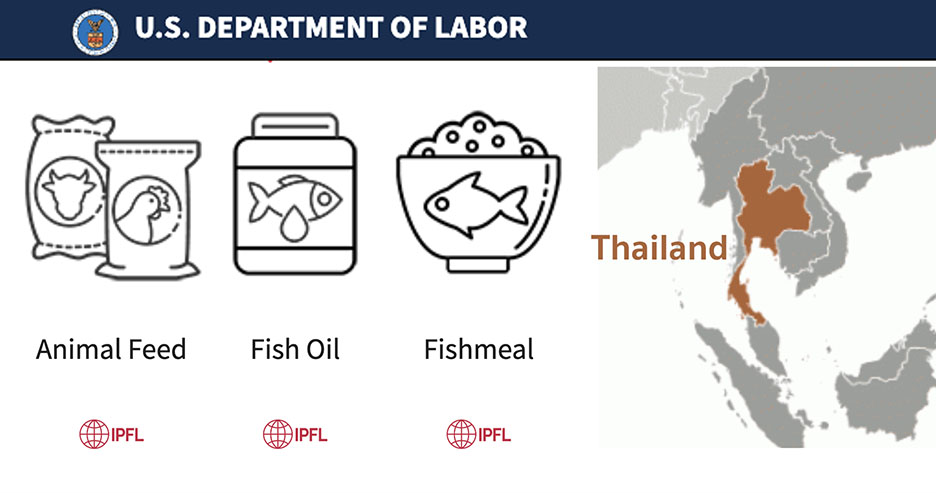
BANGKOK — “Findings on the Worst Forms of Child Labor” (TDA Report) released by the US Department of Labor on September 5, 2024, three more Thai products were added to the Trafficking Victims Protection Reauthorization Act (TVPRA) list, even though shrimp has been removed.
The Thai government, industry, and civil society organizations who have worked together to address the issue of child and forced labor in the shrimp industry in Thailand are grateful that it is removed from the TVPRA list, improving its chances of exporting shrimp to the U.S. market. However, they face new bans on three products.
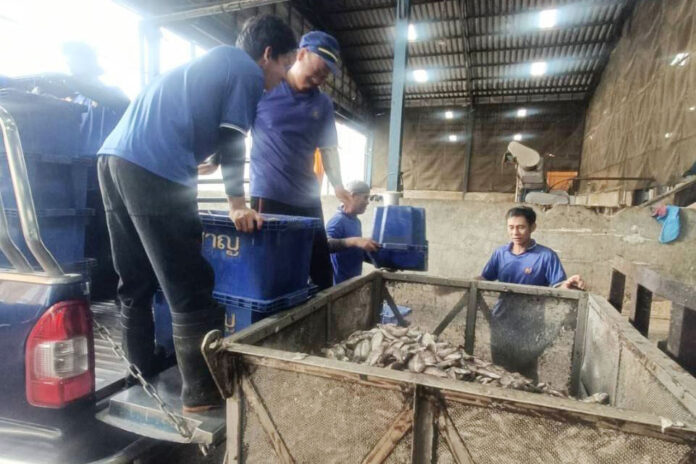
These products are classified as downstream products and contain fish ingredients produced by forced labor, including fishmeal, fish oil, and animal feed.
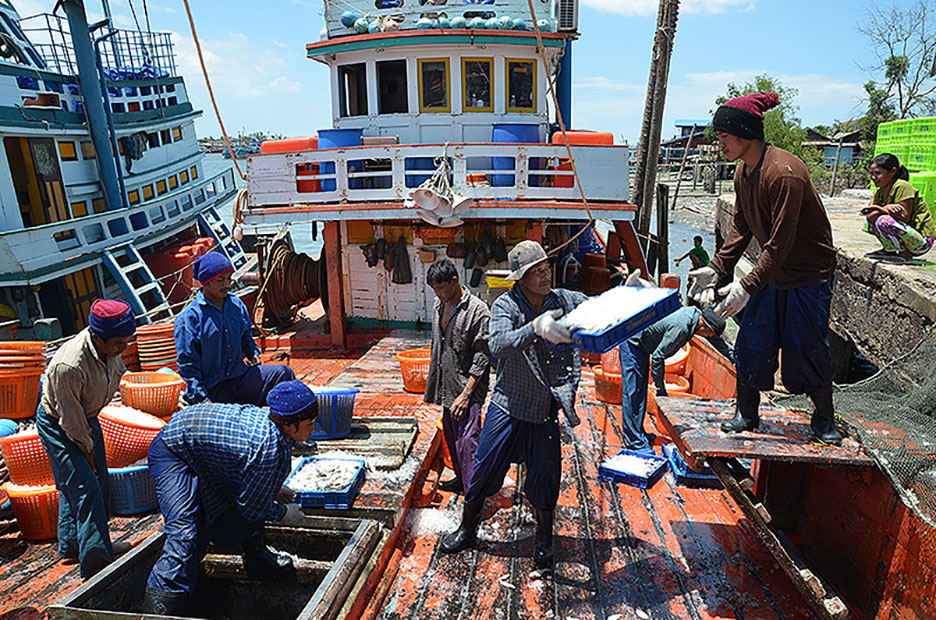
The U.S. Department of Labor’s International Labor Affairs Bureau (ILAB) believes that these products exported from Thailand are made from fish produced by forced labor. This inclusion dates back to 2012 when fish caught in Thailand was first added to the TVPRA list.
TDA report
Overall, according to the report, Thailand has made “moderate progress” in eliminating the worst forms of child labor in 2023. Although Thailand has made significant efforts, it still does not meet the minimum standards for “substantial progress.” Problems include a minimum working age that is not in line with international standards, insufficient legal protection for children working in informal or independent sectors, and a lack of research on child labor in high-risk industries.
Amnuay Euareemit, President of the Thai Fishmeal Producers Association, stated that child or forced labor is not used in fishmeal factories. He contradicts the claims of the US Department of Labor, which he attributes to a “misunderstanding” Fishmeal factories employ fewer than 20 workers and have been operating at limited capacity for some time. About 40 percent of the fish processed in these factories comes from commercial fishing, while the remaining 60 percent comes from by-products.
“I believe that the inclusion of fishmeal in the TVPRA list is due to the fact that fish from Thai fisheries has been repeatedly included since 2012. Since commercial fishing has been accused of child and forced labor, the US Department of Labor has also targeted downstream products such as fishmeal,” Amnuay said.
The association is currently in talks with the Thai Fisheries Association to clarify the situation with the US Department of Labor and request a review of the TVPRA list in future reviews.
In addition, the Thai Fishmeal Producers Association plans to highlight the Thai Labor Standard TLS 8001-2020 in its defense. This standard requires companies to prevent and not support illegal child labor, as outlined in section 4.10. Companies must ensure that the minimum age for employment, working hours, rest periods and working environment comply with health and safety standards.
Prasert Pattranankun, president of the Thai Animal Feed Manufacturers Association, added that his association would also meet with the Ministry of Labor to consider the inclusion of fishmeal and animal feed in the TVPRA list.
He stressed that feed mills today rely heavily on machinery and use little labor, making child and forced labor unlikely. However, he acknowledged that raw materials such as fishmeal could be a cause for concern.
The US Department of Labor has classified Thailand’s efforts to combat child and forced labor as “significant progress” in 2017. Despite this, five products — sugarcane, garments, shrimp, fish and pornography — remained on the TVPRA list. This year, shrimp was finally removed from the list, but three new products — fishmeal, fish oil and animal feed — were added, all of which are linked to the upstream fishing industry.
Thai industry is now concerned that the problems with child and forced labor could affect Thailand’s ability to export these products to the US and potentially jeopardize the Generalized System of Preferences (GSP) benefits granted by the US government.
Meanwhile, the Department of Fisheries has announced that it will work with relevant government agencies and the companies involved in the production of fishmeal, fish oil and animal feed, particularly shrimp feed, to review the data and address U.S. concerns about forced labor in the production of these three products.
According to export statistics, the volume of fishmeal, fish oil and animal feed shipped to the US is minimal. From 2020 to 2023, exports of crab feed ranged from 48 to 153 tons worth 17.5 to 51 million baht ($51.8k – $151k) per year, while there were no exports of fishmeal or fish oil to the US at all.
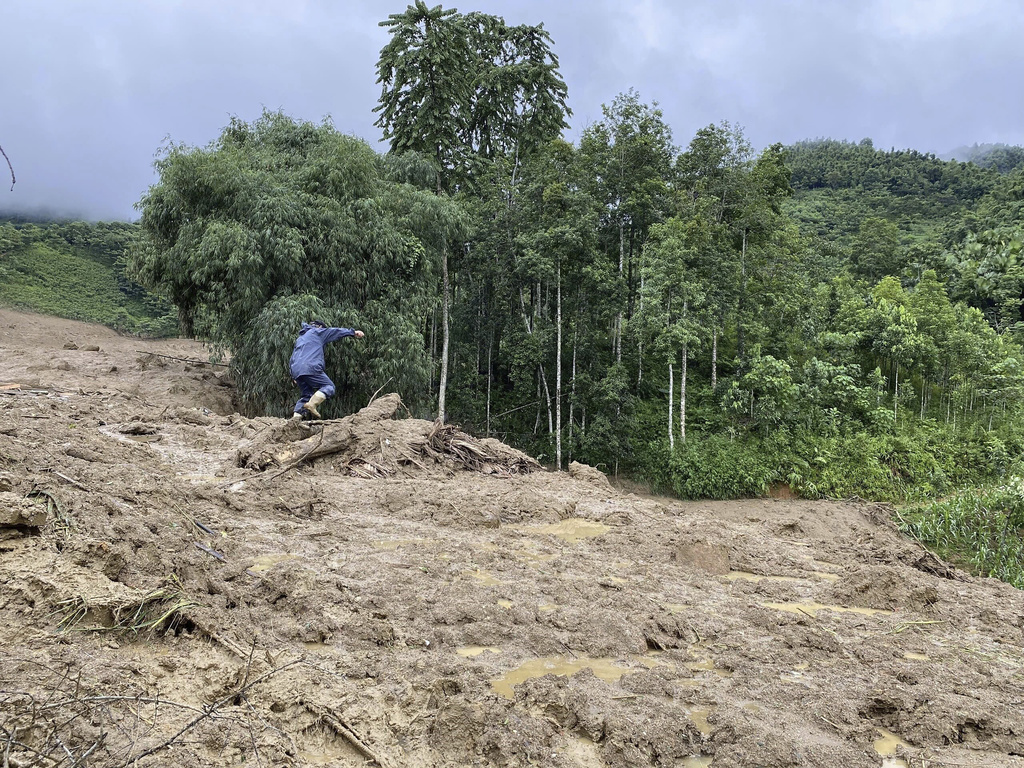
Rescue workers clear mud and debris brough down by a flood in Lang Nu hamlet in Lao Cai province, Vietnam Tuesday, Sep. 10, 2024. (Pham Hong Ninh/VNA via AP)
HANOI, Vietnam (AP) — A flash flood swept away an entire hamlet in northern Vietnam, killing 30 people and leaving dozens missing as deaths from a typhoon and its aftermath climbed to 155 on Wednesday.
Vietnamese state broadcaster VTV said the torrent of water gushing down from a mountain in Lao Cai province Tuesday buried Lang Nu hamlet with 35 families in mud and debris.
Only about a dozen are known so far to have survived. Rescuers have recovered 30 bodies and are continuing the search for about 65 others.
The death toll from Typhoon Yagi and its aftermath has climbed to 155. Another 141 people are missing and hundreds were injured, VTV said.
Floods and landslides have caused most of the deaths, many of which have come in the northwestern Lao Cai province, bordering China, where Lang Nu is located. Lao Cai province is also home to the popular trekking destination of Sapa.
Many roads in the province were blocked by landslides and unrelenting rainfall, said Sapa tour guide Van A Po. The weather has forced them to limit travel with all trekking suspended.
“It is very scary,” he said.
Tourism is a key engine for the local economy, and many in the industry found themselves stranded. Nguyen Van Luong, who works in a hotel, said he couldn’t return home since the 15-kilometer (9-mile) road from Sapa to his village was too dangerous to drive.
“The road is badly damaged and landslides could happen anytime. My family told me to stay here until it’s safer to go home.”
Mud and debris bury houses in Lang Nu hamlet in Lao Cai province, Vietnam Tuesday, Sep. 10, 2024. (Pham Hong Ninh/VNA via AP)
The steel bridge in Phu Tho province over the engorged Red River collapsed, sending 10 cars and trucks along with two motorbikes into the river. The bus carrying 20 people was swept into a flooded stream by a landslide in mountainous Cao Bang province.
Yagi was the strongest typhoon to hit the Southeast Asian country in decades. It made landfall Saturday with winds of up to 149 kph (92 mph). Despite weakening on Sunday, downpours have continued and rivers remain dangerously high.
The heavy rains also damaged factories in export-focused northern Vietnam’s industrial hubs.
Storms like Typhoon Yagi are “getting stronger due to climate change, primarily because warmer ocean waters provide more energy to fuel the storms, leading to increased wind speeds and heavier rainfall,” said Benjamin Horton, director of the Earth Observatory of Singapore.
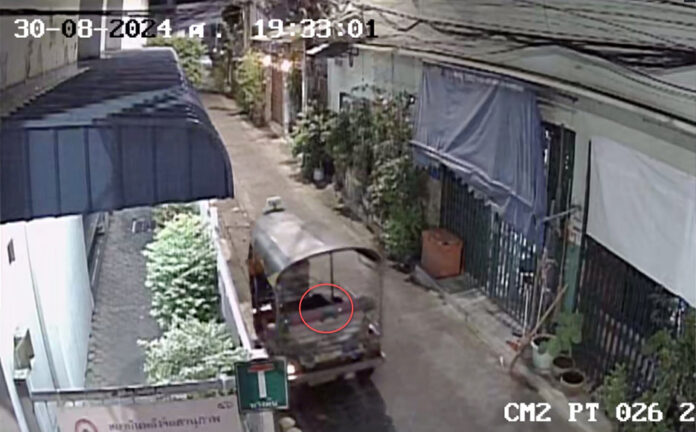
CCTV footage showing the tuk-tuk that transported the American tourist on August 30, when the driver robbed him.
BANGKOK — Police Investigators spent nearly two weeks tracking down a tuk-tuk driver who didn’t give change to an American tourist and stole his bag containing valuables worth almost 50,000 baht. The perpetrator used a vehicle with fake license plates.
On September 11, investigators from Chakkrawat Police Station arrested Boonlert Jadsanam, 66 years old, and seized his tricycle as evidence in Soi Rama 6, Soi 21, Phetchaburi Road, Ratchathewi District, Bangkok. Mr. James, the American man, was brought in to identify the suspect.
The incident occurred on August 30, 2024, around 8:22 p.m. Mr. James reported to Chakkrawat Police Station that he had taken a yellow and blue tuk-tuk with an unknown license plate from Phaya Thai BTS station to Soi Mangkon, Chakkrawat Subdistrict, Samphanthawong District. They agreed on a fare of 500 baht. Upon reaching the destination, he paid with a 1,000 baht note, but the driver immediately fled without giving change.
Mr. James, the American victim, is brought in on September 10 to identify the tuk-tuk driver suspected of stealing his bag and not giving change.
Not only did Mr. James not receive his change, but he also didn’t have time to retrieve his bag from the vehicle. The bag contained various items, including his passport, $500, 9 pieces of jewelry worth 5,000 baht, an orange jacket worth 3,500 baht, Ray-Ban sunglasses worth 7,000 baht, a blue cap worth 1,000 baht, a black umbrella worth 200 baht, headphones worth 1,000 baht, a phone charger worth 500 baht, and a shoulder bag worth 7,000 baht.
The investigation team from Chakkrawat Police Station examined CCTV footage along the escape route, which was quite challenging due to the fake license plate. After the incident, the suspect drove around and stopped at several locations.
However, the investigation team persistently tracked him down until they identified Boonlert. They then gathered evidence and obtained an arrest warrant from the South Bangkok Criminal Court.
Later, the arrest team learned that the suspect was hiding in Soi Rama 6, Soi 21, Phetchaburi Road, Ratchathewi District, Bangkok. They went to investigate and staked out the area. At around 11:40 p.m., they spotted him in the middle of Soi Rama 6, Soi 21, showed the arrest warrant, and apprehended him along with the tuk-tuk used in the crime.
During initial questioning, he confessed and admitted to having committed similar acts several times before, targeting foreigners in areas like Nana, Pratunam, and Yaowarat because he needed money to buy drugs.
The officers then charged him with robbery, which carries a penalty of 2-7 years imprisonment and a fine of 40,000-100,000 baht, and theft at night using a vehicle to facilitate the crime or escape arrest, which carries a penalty of up to 5 years imprisonment or a fine of up to 100,000 baht, or both.
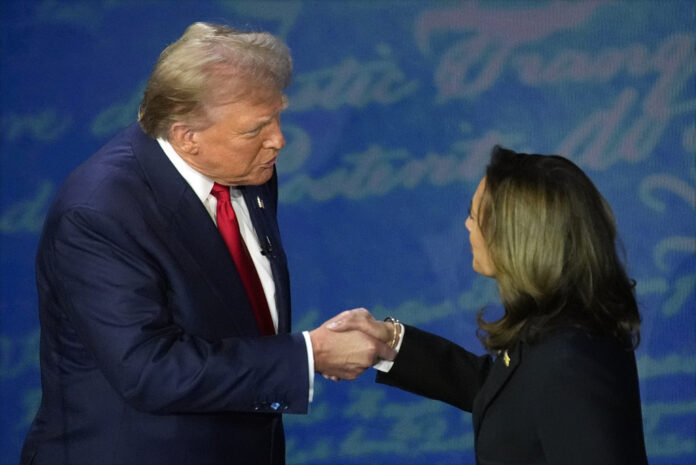
Republican presidential nominee former President Donald Trump shakes hands with Democratic presidential nominee Vice President Kamala Harris during an ABC News presidential debate at the National Constitution Center, Tuesday, Sept.10, 2024, in Philadelphia. (AP Photo/Alex Brandon)
The Democratic vice president opened the faceoff with a power move, marching across the stage to Trump’s lectern to shake his hand.
“Kamala Harris,” she said, introducing herself as the pair met for the first time ever. “Let’s have a good debate.”
“Nice to see you. Have fun,” the former Republican president responded.
The exchange set the tone for the 90-minute debate to come: Harris controlled the conversation at times, baiting Trump with jabs at his economic policy, his refusal to concede his 2020 election loss and even his performance at his rallies.
Trump, while measured early on, grew more annoyed as the night went on. And one significant moment played out after the two candidates left the stage, when megastar Taylor Swift said she’ll vote for Harris.
Some takeaways on a historic debate:
From the opening handshake, Harris took the fight to Trump in a way that Biden could not
In her first answer, the former prosecutor said Trump’s tariffs would effectively create a sales tax on the middle class. She soon accused Trump of presiding over the worst attack on American democracy since the Civil War — the Capitol riot on Jan. 6, 2021. She charged him with telling women what they could do with their bodies. And she mocked Trump’s praise of dictators “who would eat you for lunch.”
Harris effectively controlled much of the conversation with such attacks and baited Trump into responses that were at times vents, and at others, reminders of his wild rhetoric and fixation on the past.
“You did in fact lose that election,” Harris said of the 2020 race that Trump lost to Democrat Joe Biden but still insists he won. “Donald Trump was fired by 81 million people,” she said, referring to Biden’s winning vote total.
But Harris may have got under her opponent’s skin the most when she went after his performance at his rallies, noting that people often leave early.
Growing visibly irritated, Trump insisted that his rallies were larger than hers.
A smiling Harris frequently shifted her message from Trump back to the American people.
“You will not hear him talk about your needs, your dreams and your needs and your desires,” Harris said. “And I’ll tell you, I believe you deserve a president who actually puts you first.”
Members of the press appear in the spin room during a presidential debate between Republican presidential nominee former President Donald Trump, on screen at left, and Democratic presidential nominee Vice President Kamala Harris, right, Tuesday, Sept. 10, 2024, in Philadelphia. (AP Photo/Matt Slocum)
Trump had a label for Harris: ‘She is Biden’
Trump was often on defense, but he did drive the core message of his campaign: Inflation and immigration are hammering Americans.
Immigrants, Trump said, have “destroyed the fabric of our country.”
He repeatedly tied Harris to Biden.
“She is Biden,” he said.
“The worst inflation we’ve ever had,” Trump added. “A horrible economy because inflation has made it so bad. And she can’t get away with that.”
Harris responded: “Clearly, I am not Joe Biden and I am certainly not Donald Trump. And what I do offer is a new generation of leadership for our country.”
Trump also went after Harris for moving away from some of the progressive positions she took in the 2020 Democratic presidential primary, urging voters not to believe the more moderate tone she’s striking in this campaign.
“She’s going to my philosophy now. In fact, I was going to send her a MAGA hat,” he said, referring to the red “Make America Great Again” baseball caps that many of his supporters wear. “But if she ever got elected, she’d change it.”
Swift gets off the sideline
One of the most consequential moments came in a post on one of the most followed accounts on Instagram moments after the debate ended.
Swift has a loyal following among young women, a demographic Harris needs to turn out in big numbers. She called Harris a “gifted leader,” telling her fans to do their research and make their own decisions, but “I’ve done my research, and I’ve made my choice.”
Trump on race and Harris on the attack
ABC moderator David Muir asked Trump point-blank about his allegation last month that Harris had belatedly “ turned Black.” Harris is Black and South Asian and a graduate of Howard University, a historically Black school in Washington.
Trump tried to play down the matter. “I don’t care what she is, you make a big deal out of something, I couldn’t care less,” Trump said.
Harris, however, had her opening and she rattled off a long list of Trump’s racial controversies: his legal settlement for discrimination against prospective Black tenants at his New York apartment buildings in the 1970s; his ad calling for the execution of Black and Latino teenagers — who were wrongly arrested — in the Central Park jogger case in the 1980s; and his false claims that former President Barack Obama was not born in the United States.
“I think the American people want something better than that, want better than this,” Harris said.
Trump accused Harris of trying to “divide” people and dismissed her claims as dated and irrelevant.
“This is a person that has to stretch back 40, 50 years ago because there’s nothing now,” he said.
Harris and Trump dug in on abortion positions
Harris came out swinging in defense of abortion rights, perhaps the strongest issue for Democrats since Trump’s nominees created a Supreme Court majority to overturn the constitutional right to an abortion. Her sharp arguments provided a vivid contrast to President Joe Biden’s rambling comments on the issue during his June debate with Trump.
“The government, and Donald Trump, certainly should not be telling a woman what to do with her body,” Harris said. She painted a vivid picture of women facing medical complications, gut-wrenching decisions and the need to travel out of state for an abortion.
Trump was just as fierce in defense, saying he returned the issue to the states, an outcome he said many Americans wanted. He struggled with accuracy, however, repeating the false claim that Democrats support abortion even after babies are born. He stuck to that even after he was corrected by moderator Linsey Davis.
“I did a great service in doing that. It took courage to do it,” Trump said of the overturning of Roe v. Wade and its constitutional protections for abortion. “And the Supreme Court had great courage in doing it. And I give tremendous credit to those six justices.”
Polls has shown significant opposition to overturning Roe and voters have punished Republicans in recent elections for it.
Republican presidential nominee former President Donald Trump and Democratic presidential nominee Vice President Kamala Harris participate during an ABC News presidential debate at the National Constitution Center, Tuesday, Sept.10, 2024, in Philadelphia. (AP Photo/Alex Brandon)
Who’s talking now?
Trump took a Harris talking point and directed it right back at her. It happened when he objected after Harris interrupted him.
“Wait a minute, I’m talking now,” Trump said. “Sound familiar?”
He was putting his own spin on a line Harris used famously against Mike Pence in the 2020 vice presidential debate when she rebuked Pence for interrupting, saying, “Mr. Vice President, I’m speaking.”
A message to the middle
In a divided nation, the election will ultimately be decided by a small slice of swing voters in only a handful of states. And in a nod toward that fact, Harris made an explicit appeal to voters across the political spectrum — including Republicans.
She noted that she is a gun owner. She cited the “late, great John McCain,” a reference to the Arizona Republican senator and war hero whom Trump criticized for being captured by enemy soldiers. And she listed the many Republicans who formerly served in the Trump administration who have now endorsed her campaign.
Trump, meanwhile, offered little outreach to voters in the middle, ignoring the calls for unity that framed his summertime convention speech.
Harris seized on the Jan. 6 attack on the Capitol to make another explicit appeal to undecided voters.
“It’s time to turn the page,” she said. “And if that was a bridge too far for you, well, there is a place in our campaign for you.”
A restrained Trump — except when he wasn’t
Democrats hoped and Republicans feared that Trump would lose his cool on stage. At first he didn’t, but as Harris increasingly got under his skin, he went to some dark places.
Trump amplified false rumors that Haitian immigrants in Ohio are eating pets — ABC’s Muir noted that local officials say that is not happening — as he argued that the Biden-Harris administration was admitting dangerous immigrants.
When Harris pressed him on the array of criminal and civil cases against him, Trump similarly fumed. He accused Harris and Biden of planting all the cases.
“I probably took a bullet to the head because of the things they said about me,” Trump said, referencing the assassination attempt in July by a gunman whose motives are unknown.
When pressed on whether he had any responsibility for Capitol riot, Trump raised his voice, blaming both Democratic Rep. Nancy Pelosi of California, who was the House speaker at the time, and the Democratic mayor of Washington. He said the rioters have “been treated so badly” and once again denied he lost the 2020 election.
Harris replied, “Donald Trump was fired by 81 million people, let’s be clear about that, and clearly he’s having a very difficult time processing that.”
An early skirmish on the economy
The debate opened with an unexpectedly wonky exchange on the economy: Harris took on Trump for his plan to put in place sweeping tariffs and for the trade deficit he ran as president; Trump slammed Harris for inflation that he incorrectly said was the worst in the country’s history.
Trump said people look back on his presidency’s economy fondly. “I created one of the greatest economies in the history of our country,” he said. Harris flatly told viewers, “Donald Trump has no plan for you.”
Harris would be the nation’s first female president. But her gender was an afterthought during the debate.
She made no references to the historic nature of her candidacy. Neither did Trump.
And there were no performative moments in which gender was an issue. Who could forget Trump’s decision to stand behind his last female opponent, Hillary Clinton, during a 2016 debate? He also called Clinton a “nasty woman.” Afterward, Clinton said she was creeped out.
But on Tuesday night, both candidates stayed behind their podiums as instructed and there were no explicit jabs regarding gender.