

































26.1 C
Bangkok
Saturday, June 20, 2026
Home Blog Page 555

How Thai Media Survive in Economic Challenges and New Landscape

Media companies are under pressure and forced to make significant adjustments just to survive.

BANGKOK  —  The media industry is facing major challenges due to changes in consumer habits and economic instability. A sharp drop in advertising spending has hit media companies worldwide, forcing many to make significant adjustments just to survive.

In Thailand, 2024 has been particularly tough for media outlets. Several have had to close, cut jobs, and delay salaries. These problems highlight both the difficulties and potential within the current media landscape. With the economy remaining unpredictable, shrinking advertising budgets are affecting print, TV, and online media. This has led to a steep decline in advertising revenue for many media companies.

To understand what lies ahead for Thailand’s media and advertising sectors, Khaosod English talked with Dr. Karine Lohitnavy-Frick, founder and Managing Director of Midas PR. She shared her insights on the current opportunities, necessary changes, and survival strategies in the evolving media industry.

With over 20 years in public relations, Dr. Lohitnavy-Frick established Midas PR in 2007. She provided valuable insight into the advertising industry in Thailand, where advertising is critical for media companies.
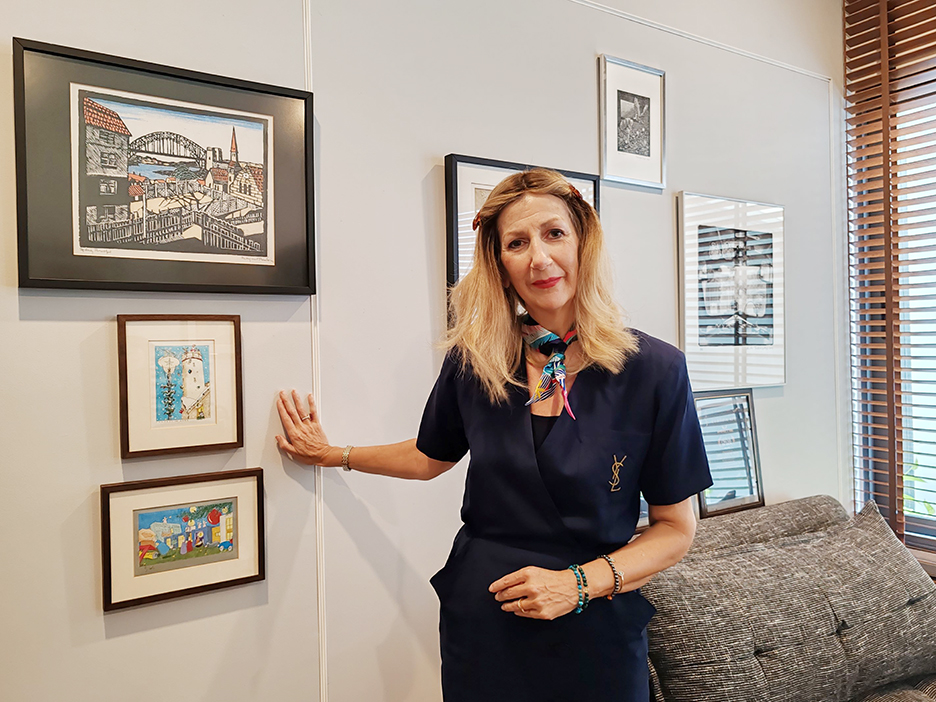
Karine PR
Dr. Karine Lohitnavy-Frick, founder and Managing Director of Midas PR

“Eighteen years ago, many agencies were skeptical about digital media. They relied heavily on traditional media like print, TV, and radio. Back then, PR was focused on news distribution, public relations, and event management. Now, the focus has shifted to digital platforms and social media. Brands connect with audiences through content marketing, influencer partnerships, and social media campaigns. Digital PR also uses tools for online reputation management and analytics, making strategies more measurable. A decade ago, PR depended on intuition and experience. Today, advanced analytics, AI, and automated data processing make campaigns more effective, especially online,” Dr. Lohitnavy-Frick explained.

The role of data and technology in PR has grown significantly. Unlike ten years ago, when PR strategies were based mostly on intuition, today’s use of advanced analytics, AI, and automated data processing allows for more effective and measurable campaigns, particularly online.

Thai Media Landscape

The founder of Midas PR highlighted several key trends and changes in the Thai media landscape. According to Karine, technological advancements and shifting consumer behaviors have greatly impacted the industry, with these changes accelerating over the past three years.

One major trend is the move from traditional media to online platforms, especially online video. Text-based media were the first to feel this shift, leading to a rise in various content consumption platforms. Social media sites such as Facebook, YouTube, and TikTok have become dominant, with YouTube leading in revenue and TikTok gaining popularity. For many Thais, YouTube and TikTok have become important sources of news.

Influencers and KOLs (Key Opinion Leaders) continue to play a significant role, but maintaining authenticity is crucial. Audiences are now more selective and demand genuine and relevant content. Influencers are striving to stay authentic and build trust, although this makes success more challenging in a competitive market.

The Thai media industry is also facing issues such as fragmentation, staff reductions, and a shortage of experts for effective PR content. Balancing paid and organic media remains essential. “We aim to educate our clients on the importance of high-quality, non-promotional content to improve media standards,” Karine said.

Karine also pointed out that Thai media competes on three fronts: against other media, KOLs, and social media platforms’ algorithms. Transparency and credibility are crucial. As Thailand serves as an ASEAN hub, there are opportunities to broaden coverage beyond domestic issues to include regional developments, potentially attracting a larger audience and increasing revenue. Despite the rise of digital and social media, traditional media like digital TV still holds value, particularly among older viewers, and remains a key part of the media ecosystem.

“Media freedom remains a challenge due to government regulations and defamation laws that limit journalistic practices. While trust in news is relatively high, media outlets must navigate this complex regulatory environment carefully,” she added.

The year has been challenging for Thai media, marked by events like the closure of Voice TV. Karine believes that both media professionals and the market need to adapt to these changes. “Media professionals must adjust to market demands, and the market must evolve to meet changing media consumption patterns,” she explained.

“Trends are driven by consumer preferences, which are moving towards more fragmentation, personalization, and individual connection. Both media and advertisers must address these changes.”

“It’s a two-way street,” she says. “Media professionals need to adapt to market demands, while the market itself must evolve to match the changing media landscape.” She notes that media consumption has dramatically changed, driven by consumer preferences for more fragmented, personalized, and individual content.

“Both media and advertisers need to recognize and address these trends to stay relevant,” she adds. This shift is leading many media professionals to create content similar to that of KOLs, who are often seen as ‘individual media’.

Ads Trend & Spend

When assessing trends in advertising spending, Karine acknowledges that it’s challenging to pinpoint exact figures. PR budgets vary widely depending on the type and scale of services required, making it difficult to generalize from any single sample. Despite having a large client base, she admits that their experience may not fully represent broader industry trends.

“Overall, the industry seems to be recovering from the pandemic, with a 5-10% increase in clients’ budgets. As the economy improves, PR investments are resurging,” Karine notes. “However, we need to remain cautious. The manufacturing sector is facing a major crisis, which could have broader effects.”

A key shift is the focus of PR spending. Many clients are now prioritizing digital PR strategies, allocating more funds towards social media management, influencer partnerships, and online content creation. There is also a stronger emphasis on crisis and reputation management, with companies dedicating larger portions of their PR budgets to handle negative publicity effectively.

Karine highlights a positive trend: clients are increasingly investing in evaluation and measurement. “Companies are demanding clearer, measurable returns on their PR investments, leading to more detailed reporting and analytics,” she explains.

Looking ahead to the future of advertising from the first half of 2024 to 2025, Karine expects stability in the market. “Digital advertising will continue to grow steadily, TV will remain the largest share of media spending, and influencers will remain significant,” she says.

As for the proportion of advertising spending in the second half of 2024, Karine predicts, “In the second half of 2024, advertising spending is expected to be distributed as follows: TV media will likely continue to capture about 40-45% of the total media budget, digital media will account for approximately 35%, and out-of-home media will represent around 20%. These estimates are based on current statistics and trends, though they may change.”

AI Is All Around

Karine anticipates several new trends in Thai advertising, notably the rise of AI influencers, similar to what’s seen in the US. AI personas, created by clients and agencies, offer a cost-effective and engaging alternative to real influencers, who can sometimes be challenging to collaborate with. For example, The Nation TV’s AI news anchor, though currently more of a novelty, demonstrates AI’s potential in the industry without posing a threat to human jobs. However, it’s crucial for media professionals to become knowledgeable about AI to stay competitive.

“While Agoda’s AI persona has faced some criticism, it’s too early to determine if AI influencers will become a major trend in Thailand. Still, exploring these innovations could open new opportunities for the advertising industry,” Karine notes. “Concepts like Butterbear, which could be developed into AI personas, have significant potential in Thailand, where there is a strong affection for cute and charming characters.”

As AI increasingly influences the media industry, adjustments are needed in both media and PR agencies. According to her, the primary shift should be in our mindsets. “AI is a powerful tool for data analysis, media monitoring, sentiment analysis, and automating routine tasks. However, it struggles with creative writing, genuine creativity, and understanding the nuances of textual work. These aspects are uniquely human,” she explains. “Sometimes, using AI in advertising or news can seem insincere to viewers.”

She also points out the risks associated with AI, such as the spread of disinformation through generative AI. “The response to both the opportunities and threats of AI lies in enhancing our capabilities. This means developing AI literacy, educating ourselves and others about the risks, and learning to navigate the new landscape effectively.”

In addition to being the Chair and founder of Midas PR, an award-winning PR agency, Karine Lohitnavy-Frick also chairs PRCA Thailand. She explained that this organization aims to unite the PR industry and showcase the quality and value of PR work.

PRCA Thailand offers online learning opportunities for students and collaborates with about 15 agencies in Thailand to provide a thorough understanding of PR. The organization highlights the distinctions between advertising, marketing, and PR, emphasizing the unique and exciting aspects of a PR career. Partnerships with leading universities like Chulalongkorn, Thammasat, and online course Conicle help bridge the gap between education and industry.

_______

Advertisement

Opinion: Thailand’s Politics of Absurdity: The Move Forward Party Case

Former Move Forward Party leader Pita Limjaroenrat during a press conference on the party's plan to defend in its dissolution case at the party's office in Bangkok on August 2, 2024.

Three more days and we will know on August 7 whether Move Forward Party, the party with 14 million votes behind them, would be dissolved by the Constitutional Court, and their leaders, including the charismatic former leader Pita Limjaroenrat, will be banned from politics for 10 years, for having pledge to reform the royal defamation law.

Many sources are not betting on a positive outcome for the party. Some cited the lack of any subtle positive signs. Two signs worth noting are: monarchy-reform movement co-leader Arnon Nampa late last month faced another four years prison sentence for defaming the monarchy, thus facing a combined prison sentence term of 14 years (and more to come), and the fact that the party’s social media did not post any happy birthday message on the King’s 72nd birthday on July 28. It seems the party is focusing more on maintaining, if not trying to increase its loyal base of supporters now.

There are five issues that I would like to raise ahead of the ruling on Wednesday, August 7, at 3pm, however.

First, the royal defamation law, also known as the lese majeste law or Article 112 of the Criminal Code, is a law, period. It is not words from the Tripitaka, the Bible, or the Koran. Thus, it can be subject to an amendment, or even abolition, if voters, who hold the sovereign power, believe such a course is best for Thailand. The irony of this whole upcoming ruling is that the Constitutional Court never had any problem whenever rogue army generals seized power and annulled one constitution after the other.

Second, no matter where you stand on the issue of the lese majeste law, or whether you like or abhor MFP and politicians like Pita, we must bear in mind that the parliament, that is the legislative branch, is where any difference about laws should be resolved and done openly as well as peacefully. Any attempt to shut this crucial venue for resolving political disagreement is simply undemocratic and will do much harm to Thailand in the long run.

Third, if the court punished the party and its leaders, many MFP supporters, particularly young ones, will lose faith in the current political system, become alienated and radical. This will significantly reduce any possibilities of a political compromise in the future.

Fourth, I urge the nine justices of the Constitutional Court to take the big picture into consideration. Please do not needlessly plunge Thailand into another round of political crisis. Please bear in mind the will of the voters, the 14 million who voted for Move Forward Party, which is the party with the greatest number of popular votes in May 2023 knowing full well as MFP is the only party pledging to amend the lese majeste law and consider what the will of the people means.

Fifth, in a democratic society, one would have thought after the people have spoken on the election day, we shall wait for four years to exercise our rights to vote anew to resolve any disagreement about the political course of the kingdom. Not here in Thailand. Voters may feel robbed by rogue generals or by rulings made by the Constitutional Court and the voters will simply have to do much more to guard their political rights. This is the travail that is Thai-style “democracy” today. It is much less democratic than what we think when we conveniently but carelessly use the word “democracy” when Thailand is still far from being a full democracy.

I hope the absurdity that is Thai politics will not include banning a political party for simply proposing to amend a law. But this is Thailand.

Advertisement

Thai Boxer Janjaem Guarantees Bronze, Prepares for Challenging Imane Khelif

Janjaem
Algeria's Imane Khelif and Thailand's Janjaem Suwannapheng both celebrate after their respective fights in the women's 66kg quarterfinal boxing matches at the 2024 Summer Olympics, Saturday, Aug. 3, 2024, in Paris, France. They will face each other on Tuesday, Aug. 6, 2024. (AP Photo)

PARIS — Janjaem Suwannapheng has ensured that the Thai boxing team won’t return home empty-handed in the 2024 Summer Olympics, after advancing to the semi-finals of the women’s 66kg quarterfinal boxing match on Saturday, August 3, 2024.

She defeated Turkey’s Busenaz Surmeneli, the gold medalist from the 2020 Olympic Games in Tokyo three years ago, 4-1. This victory means Janjaem is set to be the only boxer from eight Thai boxers in Paris Games to secure an Olympic medal, at least a bronze.

However, in the next match, the challenge lies in her facing Algeria’s Imane Khelif, an athlete who has been closely watched in this Olympics.

Janjaem1
Thailand’s Janjaem Suwannapheng celebrates after defeating Turkey’s Busenaz Surmeneli in their women’s 66kg quarterfinal boxing match at the 2024 Summer Olympics, Saturday, Aug. 3, 2024, in Paris, France. (Matichon Photo)

According to Associated Press, Khelif faced outcry after the banned International Boxing Association claimed she failed an unspecified eligibility test to compete last year over elevated levels of testosterone. She won her opening bout at the Paris Games on Thursday when opponent Angela Carini of Italy tearfully abandoned the fight after just 46 seconds.

IOC President Thomas Bach on Saturday defended Khelif and fellow boxer Lin Yu-ting of Taiwan. Khelif and Lin were disqualified in the middle of last year’s world championships by the IBA, the former governing body of Olympic boxing after what it claimed were failed eligibility tests.

“Let’s be very clear here: We are talking about women’s boxing,” Bach said Saturday. “We have two boxers who are born as a woman, who have been raised a woman, who have a passport as a woman, and who have competed for many years as women. And this is the clear definition of a woman. There was never any doubt about them being a woman.”

AP24216585543164
Algeria’s Imane Khelif, left, fights Hungary’s Anna Hamori in their women’s 66kg quarterfinal boxing match at the 2024 Summer Olympics, Saturday, Aug. 3, 2024, in Paris, France. (AP Photo/John Locher)

Khelif, who had failed to medal at the Tokyo Games held in 2021, will face Janjaem Suwannapheng of Thailand, a silver medalist at last year’s world championships, on Tuesday, August 6, at Roland Garros.

Janjaem said she had boxed against Khelif before in India. She lost then because her body was exhausted and she was also menstruating, which made her a bit weak. However she admits that Khelif’s punching power and physique are strong.

“But I’ve improved since then, and I’ll fight with all I’ve got.”

AP24216608133978
Thailand’s Janjaem Suwannapheng celebrates after defeated Turkey’s Busenaz Surmeneli in their women’s 66kg quarterfinal boxing match at the 2024 Summer Olympics, Saturday, Aug. 3, 2024, in Paris, France. (AP Photo/John Locher)

“I’ve looked into it too, about her hormones, and I know she’s lost to female boxers before, but that was a long time ago. I’m not sure if she’s gotten stronger or if her male hormones have increased. But if we meet again, I’m not afraid because we’re evenly matched. I’ve prepared my body well too, trained a lot. I just think, no matter how strong or tough, we’re both human, we both have two fists. Having come this far, I want to go all the way to the gold medal.”

Vijarn Polrit, head coach of the women’s Olympic boxing team, praised Janjaem in the quarterfinal boxing match. She boxed well according to the plan, and he felt somewhat relieved that in this Olympic Games, the Thai boxing team won’t return home empty-handed. But the mission isn’t over yet. They will do their best no matter who they face in the next round.

AP24216587888384
Algeria’s Imane Khelif helps Hungary’s Anna Hamori out of the ring after their women’s 66kg quarterfinal boxing match at the 2024 Summer Olympics, Saturday, Aug. 3, 2024, in Paris, France. (AP Photo/John Locher)

The head coach of the Thai women’s boxing team said that when Janjaem faces Khelif, they probably can’t compete in terms of strength, but in terms of speed, Thai fighter might have a chance. Janjaem once lost to Khelif in the semifinals of the 2022 World Championships in India. After that match, Khelif underwent a hormone test, which she failed because her male hormone levels were too high. As a result, Janjaem advanced to the finals instead.

On that stage when Janjaem lost, I admit she couldn’t compete. But this time, she’s well-prepared and quite strong indeed. I believe anything can happen in the ring, just like today when we defeated the top seed. I believe we still have time to make adjustments over the next two days. I still believe we have a chance,” Vijarn said.

________

Relate articles:

Advertisement

Thai Police Arrest Serial Scammer Who Duped 73 Japanese Men Over a Decade

serial scammer
The Metropolitan Police arrest Amy in front of a condominium in Soi Happyland, Ladprao, Bangkok on August 3, 2024.

BANGKOK — Thai police have arrested a serial scammer with a history of defrauding multiple victims over the past 10 years, causing damages worth 26 million baht ($740,000). The arrest came after a Japanese man reported losing over 15 million ($420,000) baht to the suspect.

In this case, a 36-year-old Japanese man filed a complaint with the Thonglor Police Station, stating that he was deceived by a transgender woman named Amy, whose real name on her ID card is Mr. Uthai. They first met on January 12, 2024. Amy told him she was from Hong Kong and had lost her wallet and passport while traveling from Pattaya to Bangkok.

She then asked to borrow money from the victim to pay for a new passport, promising to return the money later. They exchanged contact information.

Subsequently, Amy met with him several times, continuously borrowing money while appearing distressed and pitiful. She cited various reasons such as needing to urgently pay for insurance, COVID-19 treatment expenses, and advance insurance payments.

amy scam3
Japanese media outlet ANN reports on Amy, the Thai scammer who continuously deceived Japanese nationals over a decade.

The final deception involved asking him to use his credit card to buy gold worth over 15 million baht to exchange for cash. She claimed a project with a pharmaceutical company was in trouble and she needed the money, promising to transfer it back later. Later, she claimed she couldn’t transfer the money because her account was locked after the project collapsed.

When the Japanese man repeatedly asked for his money back and received nothing, he investigated on social media and found that Amy had scammed other victims more than 10 times. He then decided to report to the police.

The Metropolitan Police investigated and obtained an arrest warrant for fraud. On August 3, they arrested Amy in front of a condominium in Soi Happyland, Ladprao, Bangkok.

The investigation revealed that Amy often targeted Japanese victims or tourists. From 2011 to 2024, 73 Japanese people were scammed, with total damages of nearly 26 million baht. The breakdown is as follows:

  • 2011: 25 victims, damages of 942,000 baht
  • 2012: 9 victims, damages of 2,166,000 baht
  • 2014: 16 victims, damages of 1,588,000 baht
  • 2015: 2 victims, damages of 330,000 baht
  • 2018: 8 victims, damages of 307,000 baht
  • 2020: 6 victims, damages of 293,000 baht
  • 2022: 3 victims, damages of 90,000 baht
  • 2023: 1 victim, damages of 16,000,000 baht
  • 2024: 3 victims, damages of 4,072,000 baht

The authorities will contact all victims to confirm the suspect and file more charges against her.

Advertisement

Thai and Kuwaiti Motorbike Riders Clash in Central Pattaya

Kuwaiti teenage motorcyclists escape from a group of Thai teenagers on August 3, 2024.

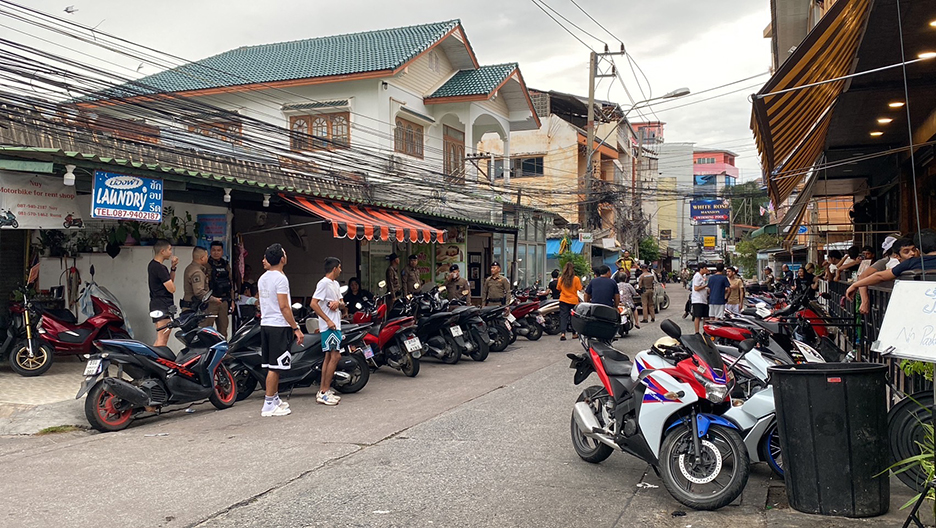
PATTAYA — Despite a recent campaign to warn Kuwaiti motorcyclists on Friday, early Saturday morning, Pattaya City Police Station received reports of 50 Kuwaiti teenage motorcyclists fighting with a group of Thai teenagers.

The incident occurred in Soi Yen Sabai, South Pattaya, Moo 10, Nongprue Subdistrict, Banglamung District, Chonburi Province. After receiving the report, police and the Sawang Boriboon Foundation rushed to the scene. They found several injured Kuwaiti nationals and provided first aid before transferring them to nearby hospitals.

Pattaya City Police intervened, causing both sides to disperse and flee, with some abandoning their motorcycles, which were then seized by the police.

kuwaiti pattaya3
The scene after Kuwaiti teenage motorcyclists fought with a group of Thai teenagers in South Pattaya on August 3, 2024.

Local residents reported that the incident started when a Thai man riding a motorbike was cut off by a group of Kuwaiti teenagers on motorcycles. The Thai man then followed and slapped one of the teenagers, angering the Kuwaiti group who then chased the Thai man with their friends, leading to the brawl. When officials arrived, both sides fled.

Officials noted that over the past two to three years, young Kuwaiti chose Pattaya as their preferred destination during their summer high-school break and would stay from July to August. They often gather to race in South Pattaya, leading to frequent complaints from residents and tourists about reckless driving and loud exhaust noise.

kuwaiti pattaya5
Kuwaiti teenage motorcyclists fight a group of Thai teenagers on August 3, 2024.

On August 2, Pol. Col. Nawin Theerawit, Superintendent of Pattaya City Police Station, led a team to set up checkpoints to prevent and warn foreign groups who ride motorcycles repeatedly, honk horns, and rev engines loudly, disturbing local residents.

Checkpoints were set up at the entrance and exit of Soi Yen Sabai, South Pattaya. The operation focused on public relations, warning about driving behavior, prohibiting reckless driving, revving engines, and making loud noises. They also searched for illegal items such as drugs and firearms.

Additionally, they informed rental operators that they must comply with the law by checking tourists’ driving licenses before renting vehicles and ensuring that the vehicles have not been illegally modified. This is to maintain order and enforce the law.

_______

Advertisement

Pin-Demonium Hits Paris: Inside the Pin-Trading Market at the Olympics

Olympic pins are worn by a volunteer in Paris, France, prior to the start of the opening ceremony of the 2024 Summer Olympics, Friday, July 26, 2024. (AP Photo/Andy Wong)

PARIS (AP) — On the other side of the Atlantic from Wall Street, a market — more wholesome than cutthroat — has sprung up at the Paris Olympics. The commodity at the center of it all? Pins.

The city has seen an influx of collectors from all over the world, each eager to begin or expand their Olympic pin collection and share their stories.

“People are wired to trade. Human beings, we want to trade,” asserts Craig Robbins, a passionate pin collector from Los Angeles. “In life, if you cannot exchange, you die.”

“Do you have any pins?” a Starbucks barista asks every journalist who comes in for coffee at the Palais des Congrès, the Olympics’ main press center.

From bustling coffee shops to quiet streets, the same question has been echoing all over town, as Olympic volunteers, athletes, media workers, waiters, tourists and more all look for the same prized accessories.

“You can really feel the craze this year,” says French pin collector Laurent Facy.

The quest for pins has become an integral part of the Olympics, adding another layer of excitement to the Games. “It’s become a game; we trade a little bit like we used to at the playground,” he says.

AP24212731607394
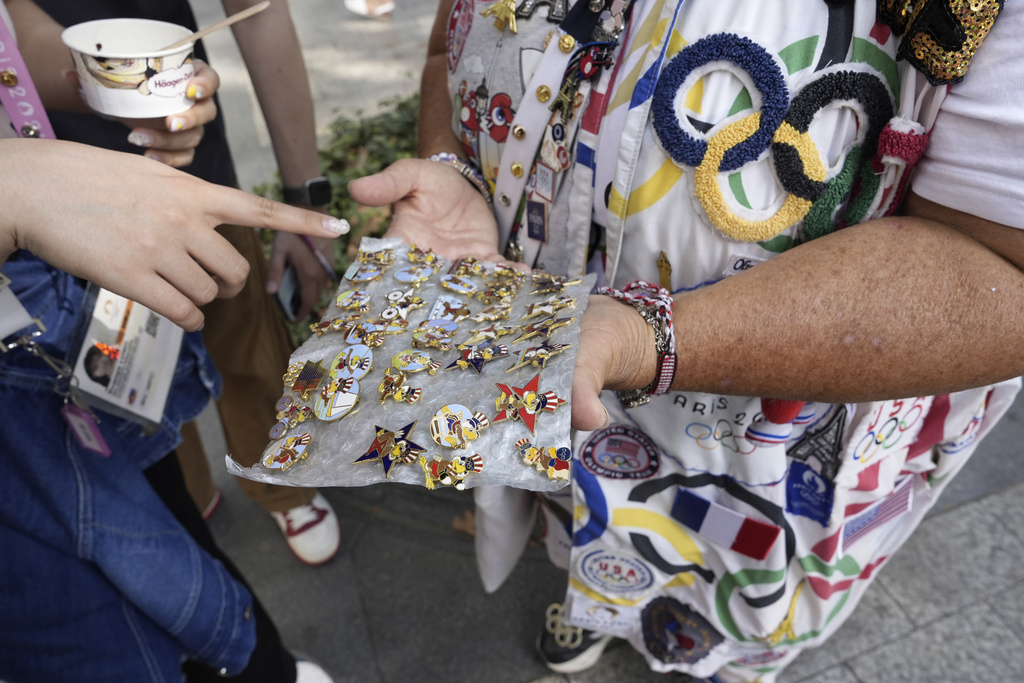
Vivianne Robinson lets a passer by choose one of the pins Robinson collected from USA Olympics 1984, during 2024 Summer Olympics, in Paris, France, Tuesday, July 30, 2024. The Olympics superfan has attended seven Games over the span of 40 years. (AP Photo/Lujain Jo)

Where did the pin craze start?

The tradition can be traced back to the first modern Olympic Games, revived by Pierre de Coubertin in 1896. In Athens, little cardboard badges were sported by athletes, coaches and reporters for identification.

More than a century on, the badges have stretched and evolved into extremely detailed, intricate and, at times, technological pins, customized to participating countries, news organizations, brands and even people.

“They’re like little pieces of art,” passionately declares Nicholas Wolaver, a dedicated American collector and trader.

Los Angeles 1984 was pivotal, according to the many pin traders on the streets — that’s where many of them started collecting.

“You had media pins, sponsor pins, athlete pins, mascot pins. They found a way to really monetize pins for the public, and people were going crazy,” Wolaver says of those Games.

The Paris 2024 pins

After two Olympics held without spectators amid the coronavirus pandemic, the pin pandemonium has resurged.

“Paris has been very good for pin collecting because after the pandemic, where you could not trade pins so much in Tokyo and Beijing, people are very excited,” Wolaver explains.

The pins’ popularity has been boosted by social media and the fact that Olympians themselves are getting in on the game. Serena Williams, a former Olympian, described herself as a “first-class pin collector” in a video on the Olympics’ official Instagram account. She even has her favorites: “There’s a few Thailand ones I’ll never trade. I finally was able to nab the North Korean pin.”

tradingpin2024 114
Serena Williams, a former Olympian, described herself as a “first-class pin collector” in a video on the Olympics’ official Instagram account. She even has her favorites: “There’s a few Thailand ones I’ll never trade.

Britain’s Andy Murray, the tennis player who just retired in Paris, is also all-in pin trading, according to former tennis player Laura Robson on Eurosport.

“There’s one athlete from Liechtenstein and (Andy) was searching the village high and low for him to try and find this poor man,” she said.

One of the buzziest pins at these Olympics is Snoop Dogg’s, which features the rapper-turned-NBC correspondent blowing smoke in the shape of the Olympic rings.

“What’s really cool is that Snoop Dogg made the youngests interested in pins too,” Robbins says.

How to qualify for Olympic pin trading

The appeal of pin trading lies in its accessibility and inclusiveness. While the official Olympic competition is confined to stadiums, pin trading takes place everywhere — even online. (The Associated Press’ own pins are already going for between $30-50 on eBay.)

AP24204438383130
IOC President Thomas Bach gives out pins to members of the Turkey men’s artistic gymnastics team as he tours the gym at the Olympic Village ahead of the 2024 Summer Olympics, Monday, July 22, 2024, in Paris, France. (AP Photo/David Goldman, Pool)

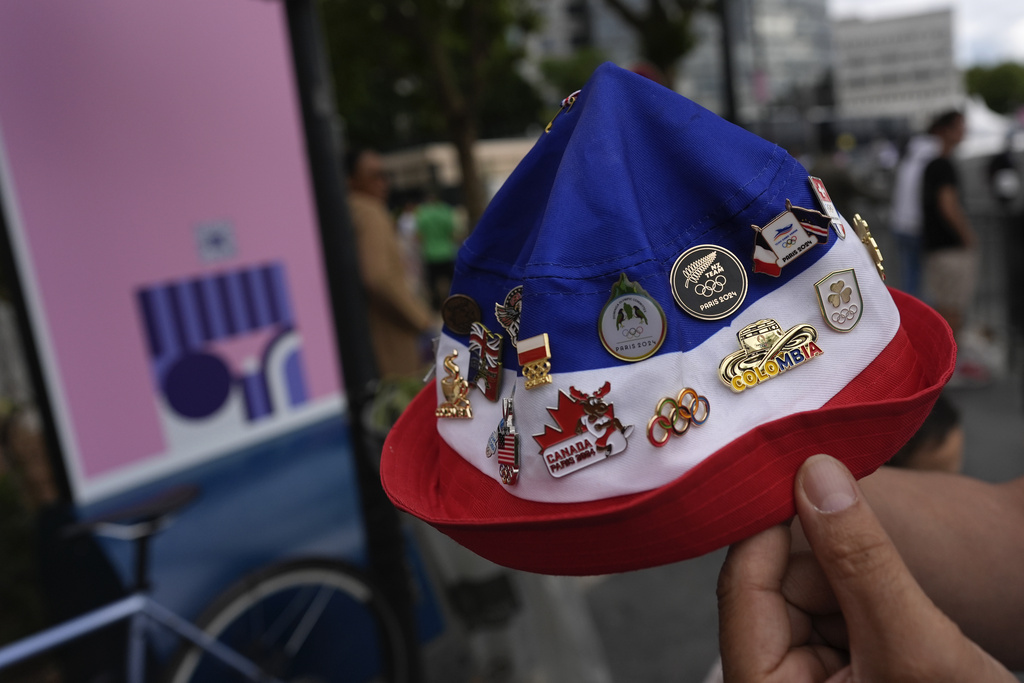
Wearing clothes seems to be the sole condition to participating. Traders and collectors adorn themselves — their badges, their shirts, their hats — with mosaics of multicolored pins, sparkling in the Paris summer light.

Traders can spot each other from a distance, admiring each other’s weighty collection. The sight of a fellow collector’s vibrant display is often more than enough to spark a conversation.

“Pins break down the walls where people can start talking to each other,” explains Robbins.

“It was just a nice way to meet people,” adds Arr Alansod, sitting next to him in the street.

And it doesn’t just facilitate conversation with fellow enthusiasts. The pins serve as a draw for curious tourists and Olympics newcomers.

AP24205783558105
Neighborhood resident Lahlouh Wahab shows off all the 2024 Olympic pins he has been able to collect by interacting with athletes and staff from various teams outside the entrance to the Olympic Village, at the 2024 Summer Olympics, Tuesday, July 23, 2024, in Paris, France. (AP Photo/Rebecca Blackwell)

“You get to meet a lot of people,” says Paul Ians, another American visitor and collector. “It’s not so much the other pin traders, it’s the regular people who are coming to the Olympics.”

All seem to agree pins are a bridge between people, creating a platform for interesting encounters: “A lot of the time these strangers will tell you something you don’t know,” Ians says.

Sometimes those strangers are a little higher-profile: In his 40 years of trading, French President Emmanuel Macron and International Olympic Committee President Thomas Bach are some of Wolaver’s proudest exchanges.

In essence, each pin holds a story, and through trading, people become storytellers, handing out pieces of their own personal, often Olympic tale.

Advertisement

Rain-related Disasters Have Killed More Than 250 in a Deadly Week Across Asia

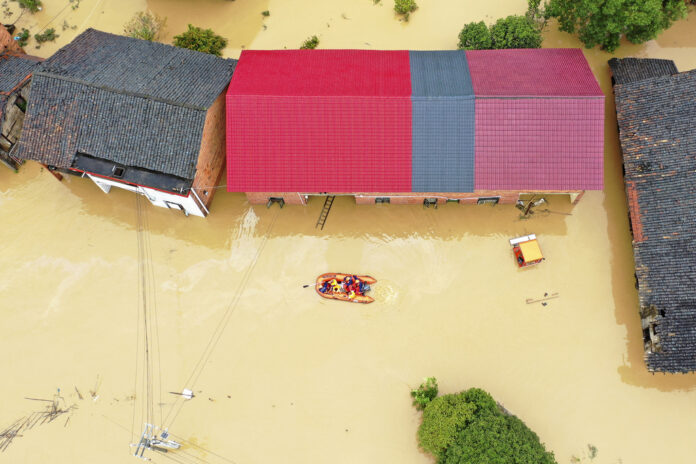
FILE - Rescuers use a dinghy boat to evacuate villagers trapped by floodwaters in Jingtang village, Zixing city, in southern China's Hunan province, on July 28, 2024. (Chinatopix via AP, File)

In India and China, torrential rains have killed more than 250 people in the past week. Three others died in Pakistan. Widespread flooding has been reported in North Korea near the border with China with no word on whether anyone died.

This time of year is monsoon and typhoon season in Asia, and climate change has intensified such storms. Heavy rains have triggered landslides and flooding, devastating crops, destroying homes and taking lives.

Historical data shows that China is having more extremely hot days and more frequent intense rains, according to a report released last month by the China Meteorological Administration, which forecasts more of both in the coming 30 years.

Governments have launched disaster prevention plans to try to mitigate the damage. Rescue teams scramble to evacuate people ahead of approaching storms and deliver relief goods by helicopter to cut-off areas. China has deployed drones for emergency communication in rain-prone provinces.

Sometimes it isn’t enough, as the tragic consequences playing out in Asia show.

India: 201 dead, nearly 200 missing

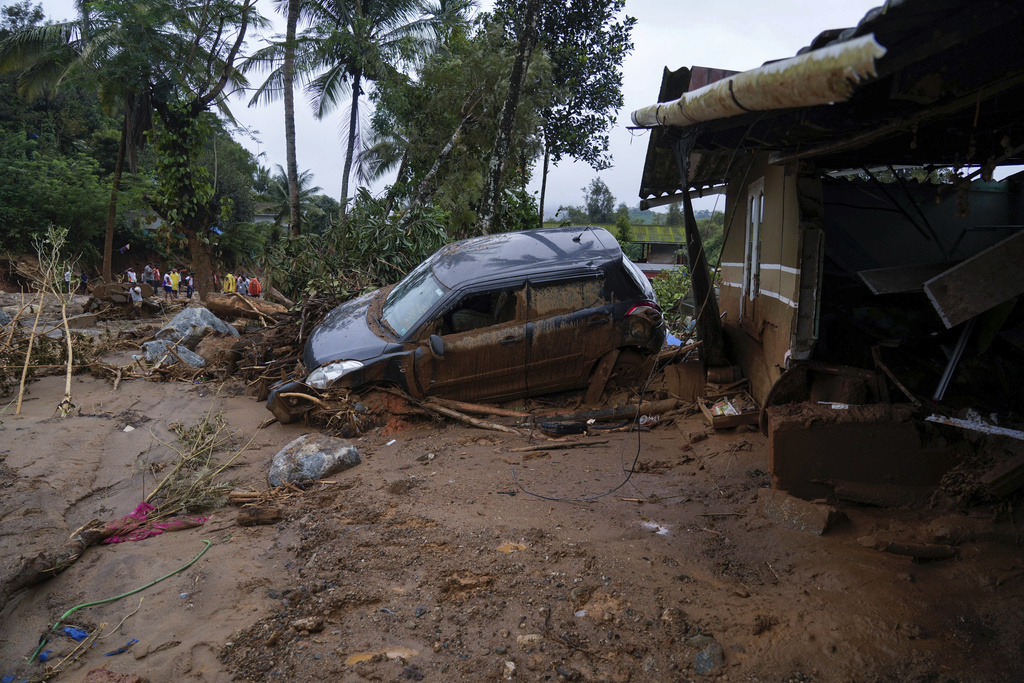
Heavy rains sent torrents of mud and water through tea estates and villages in Kerala state in southern India early Tuesday, destroying bridges and flattening houses.

AP24213393370502
A car lies partially submerged in mud next to a damaged house following Tuesday’s landslides at Chooralmala, Wayanad district, Kerala state, India, Wednesday, July 31, 2024. (AP Photo/Rafiq Maqbool)

Hope of finding survivors has waned as the search entered its fourth day. Bodies have been found as many as 30 kilometers (20 miles) downriver from the main landslides.

The area is known for its picturesque tea and cardamom estates, with hundreds of plantation workers living in nearby temporary shelters. “This was a very beautiful place,” a shopkeeper said. “I used to visit here many times. … Now there is nothing left.”

India regularly has severe floods during the monsoon season, which runs between June and September and brings rain that is crucial for crops.

China: 48 dead, 35 missing

Typhoon Gaemi was blamed for more than 30 deaths in the Philippines and 10 in Taiwan as it churned through the western Pacific last week, but it was still fatal after weakening to a tropical storm in China.

Rain drenched parts of inland Hunan province for several days. On Sunday morning, a mudslide slammed into a homestay house in a popular weekend spot, killing 15 people.

Elsewhere in Hunan, the bodies of three people were found on Monday, believed to be victims of another landslide. And authorities in nearby Zixing city announced Thursday that 30 people had died in floods, with 35 others missing.

AP24215087946364
FILE – In this drone photo released by Xinhua News Agency, a landslide destroys a house in Yuelin village of Shouyue town of Hengyang city, central China’s Hunan Province on July 28, 2024. (Chen Zhenhai/Xinhua via AP, File)

One other death in China was apparently tied to the storm, a delivery driver on a scooter struck by falling tree branches during high winds in Shanghai.

China has recorded 25 major floods this year, the most since it began keeping statistics in 1998, the Ministry of Water Resources said this week.

North Korea: Damage, but no information on deaths

The tropical storm also generated heavy rain in northeast China on the border with North Korea, overflowing the Yalu River, which divides the two countries.

In North Korea, the rain flooded 4,100 houses, 3,000 hectares (7,400 acres) of farmland and many public buildings, roads and railways.

Its state media did not give information on deaths, though the nation’s leader Kim Jong Un implied there were casualties when he was quoted blaming public officials who had neglected disaster prevention, causing “the casualty that cannot be allowed.”

AP24215078682319
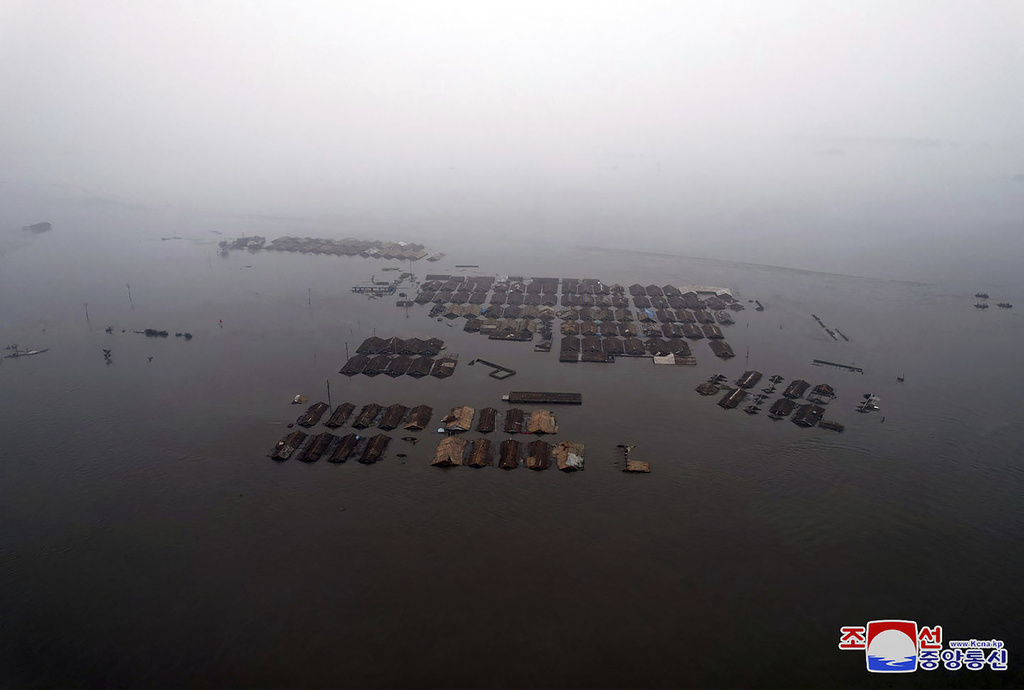
FILE – This undated photo provided on July 31, 2024 by the North Korean government, shows a flood-hit area in Sinuiju city, North Phyongan province,  (Korean Central News Agency/Korea News Service via AP, File)

Military helicopters and navy and other government boats evacuated stranded residents. State TV aired footage showing Kim and other officials riding on rubber boats to examine the scale of the damage. The footage showed houses submerged in muddy waters with only their roofs visible.

On the Chinese side, state television showed excavators in rushing water trying to clear debris after a mudslide in Jilin province. One city near North Korea asked people living below the third floor to move higher as the Yalu River rose.

In Dandong, a large Chinese city along the river, rescuers evacuated residents in rubber dinghies on streets turned into virtual lakes. There were no reports of deaths.

Pakistan: 3 dead

Record rainfall in the city of Lahore flooded streets and left at least three people dead in Pakistan on Thursday. The deaths at the start of August came on top of 99 rain-related fatalities the previous month.

Some parts of Lahore recorded 353 millimeters (14 inches) of rain in a few hours, breaking a 44-year-old record. The rain was so heavy that it entered some hospital wards in the capital of Punjab province.

The victims included two children, one who drowned in a flooded street and another who fell from the roof of her house.

AP24215147456442
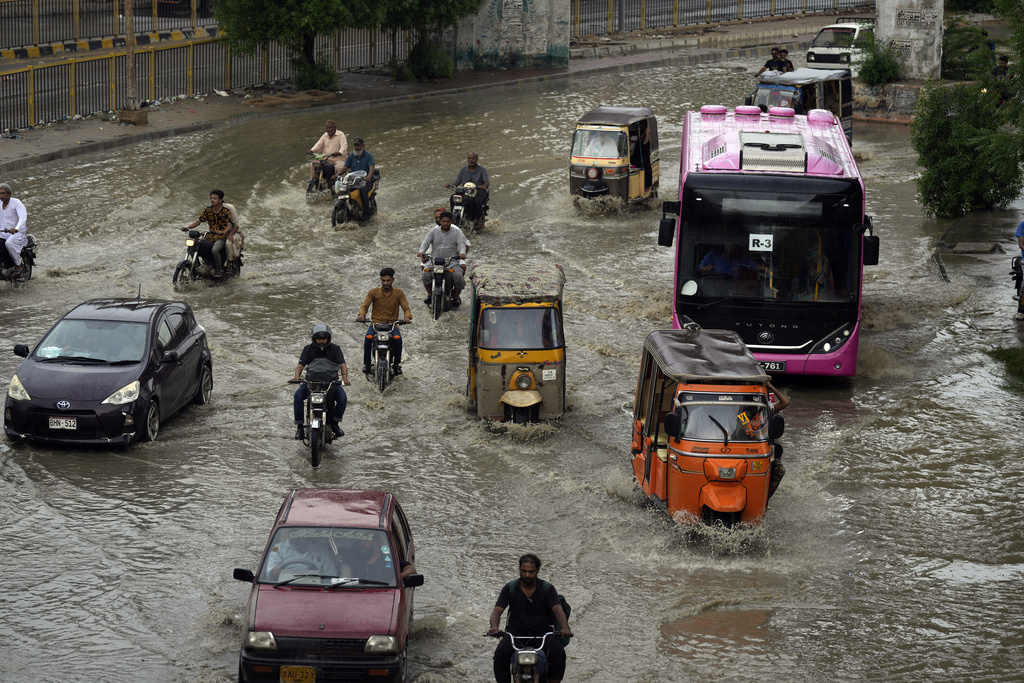
FILE – Motorcyclists and cars drive through a flooded road caused by heavy monsoon rainfall in Karachi, Pakistan, on July 30, 2024. (AP Photo/Fareed Khan, File)
Advertisement

Apple’s Thai Ad Controversy: From Political Issue to Investment Concerns

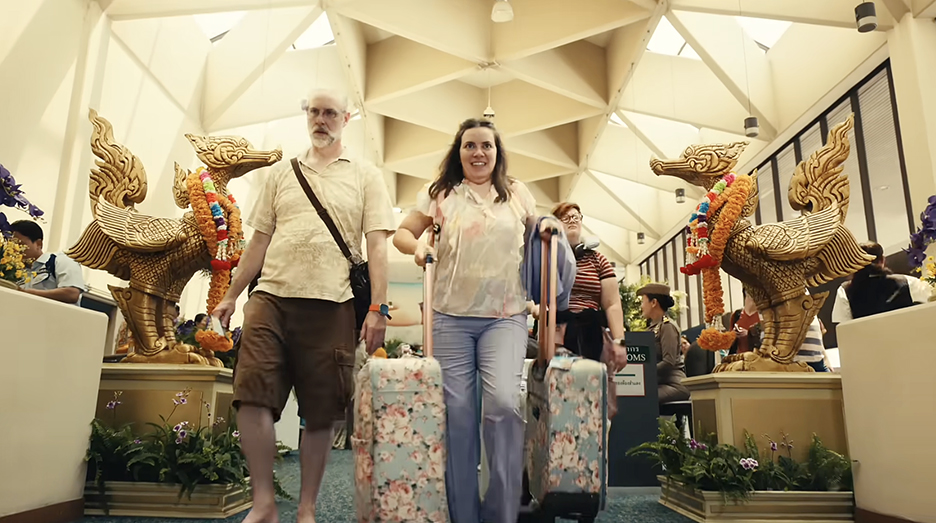
Screenshot from the advertisement series 'The Underdogs: OOO (Out Of Office) | Apple at Work' which Apple has already removed from YouTube after facing heavy criticism from Thai internet users to the point where it started becoming a political issue.

BANGKOKAfter the advertisement filmed in Thailand was heavily criticized throughout the week and began to escalate into a political issue, Apple removed this commercial ad from YouTube on Friday. However, a new concern that follows is that this anti-Apple sentiment from Thai people may affect Apple’s investment in Thailand.

On August 2, Apple issued a statement announcing the cessation of distribution of ‘The Underdogs: OOO (Out Of Office) | Apple at Work’, which is the fifth installment in this series. It is explained that they had worked closely with a company in Thailand to create and produce it.

‘Our goal and intention were to convey Thai culture and positive perspectives. We apologize that this advertisement did not fully and appropriately present the current way of life in Thailand. At this time, we have ceased the distribution of this advertisement,’ the statement read.

apple controversial ad
Cover of the advertisement ‘The Underdogs: OOO (Out Of Office) | Apple at Work’ which Apple has already removed from YouTube after facing heavy criticism from Thai internet users to the point where it started becoming a political issue.

Meanwhile, Prime Minister Srettha Thavisin responded to questions about the backlash against this Apple advertisement that might affect the company’s investment in Thailand, saying he’s not worried. He said there are two sides to every coin, and he prefers to look at the positive side.

He views that Apple intends to do business in Thailand and create hope and inspiration for Thai youth. They are setting up Apple Developer Academies at Science & Technology Park (STeP) in Chiang Mai Province to find technology personnel or app developers.

The Prime Minister also said that Thailand has over 300,000 app developers, the second-highest in Southeast Asia. Considering the total population, this is a significant number and reflects the quality and potential of the workforce. Therefore, he believes that Thailand can fully become a center of modern technology.

apple chiangmai2
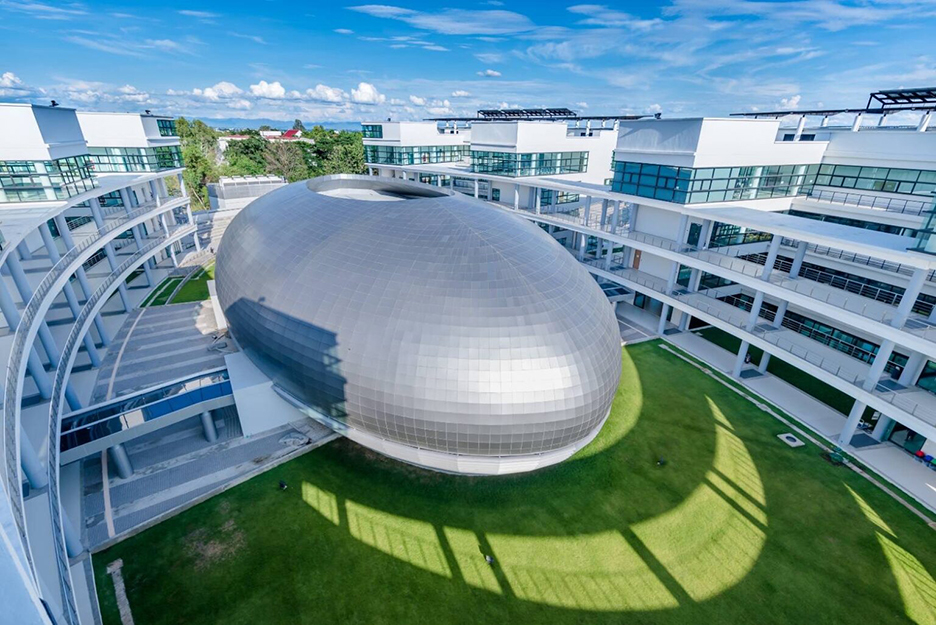
Science & Technology Park (STeP) in Chiang Mai

This opinion differs from many netizens who criticized this advertisement as intentionally devaluing Thailand. Among these critics are Sastra Sripan, an MP from the Ruam Thai Sang Chart Party, and Chaloemphong Saengdee, a Phuket MP from the Move Forward Party, in his capacity as the spokesperson for the Tourism Committee.

Chaloemphong said that this negative communication comes despite efforts to improve airports and public transportation to accommodate tourists comfortably. Such media representation greatly impacts Thailand’s tourism image.

Sastra said the committee would invite relevant agencies to explain, including the managing director of Apple Thailand, as they see this as a big issue and want to see accountability because Thai people are very dissatisfied.

“Some people say we’ve been supporting Apple products, so why did they make an advertisement like this? I used to be an Apple fan and use an iPhone, but now I’m about to throw it away,” Sastra said.

apple ad thailand2
Thai netizens widely criticize how the ad adjusts color tones, scenes, costumes, props, and featured vehicles to create a dated look.

David William, an American content creator based in Thailand, is another person who criticized the Apple advertisement in a TikTok video that has been viewed over 11 million times.

In an interview with CNN, he said he’s never seen “a cab that looked that bad before” in his nearly 10 years in the country, adding Thailand’s main gateway, Suvarnabhumi Airport is just as modern as New York’s John F. Kennedy International Airport.

“Thailand is a modern, safe and beautiful country,” he said. “I just hope [people] don’t misunderstand.”

CNN also quoted the opposite comment from Sombat Boonngamanong, a prominent social activist, who said that he was surprised the video had caused such a stir. ‘The movie was cute,’ he said, and stressed that he is an Android user.


Advertisement

Thai FDA Inspects 11 Chinese Supermarkets, Finds Illegal Products

Chinese supermarket
FDA officials inspect 11 Chinese supermarkets in Bangkok on July 31, 2024.

BANGKOK — Chinese supermarket companies operating in Thailand have come under scrutiny not only for their business influence, which has sparked drama on social media, but also for the quality of their products.

The Food and Drug Administration (FDA) announced on August 1 that officials, in cooperation with police officers from the Economic Crime Suppression Division (ECD) and officials from the Bangkok Metropolitan Administration (BMA), including the Ministry of Public Health and four district offices — Samphanthawong, Lak Si, Bueng Kum and Huai Khwang — inspected 11 Chinese supermarkets.

All of them had sold Chinese products without Thai labels.

Weerachai Nolwachai, the FDA deputy secretary-general, explained that the inspection found 58 items without FDA numbers, Thai labels, or with incorrect labeling, totaling 1,665 items.

These violations fall under Section 6(10) of the Food Act B.E. 2522, which carries a fine of up to 30,000 baht. The evidence and confiscated food items have been handed over to the ECD police so that legal proceedings can be initiated against the violators.

chinese supermarket1
FDA officials inspect 11 Chinese supermarkets in Bangkok on July 31, 2024.

They also disclosed the names of those supermarkets as follows:

  1.  Wang Zhong Wang supermarket, Yaowarat branch: 4 items were found without Thai labels, including instant noodles, ready meals and beverage containers, totaling 117 items.
  2.  Heng Heng Supermarket, Samphanthawong District: 10 items were found without Thai label, including ready meals, instant noodles and beverages in sealed containers, totaling 213 pieces.
  3. Haw Jie Supermarket (Haw Jie 1688 Co., Ltd.), Samphanthawong District: Found 6 items without Thai labels or with mislabeling, including ready meals, totaling 391 items.
  4.  3T Chinese Supermarket, Bueng Kum District: 6 items were found without Thai labels, such as sealed food containers, tea, soy sauce and semi-prepared food, totaling 121 items.
  5. Xing Guang 888 Co Ltd, Huai Khwang District: Found 3 items with mislabeling, such as vinegar and sealed containers of sauces, totaling 13 pieces.
  6. Sino-Thai Service Co, Ltd, Huai Khwang District: Found 5 items with mislabeling, including tea, sealed drinks, instant noodles, ready meals and sealed sauces, totaling 57 pieces.
  7. Dusittra Cosmetic Co, Ltd (Wang Zhong Wang Supermarket), Huai Khwang District: Found 8 items without Thai labels, including ready-to-eat convenience foods, meat products, semi-prepared foods, beverages in sealed containers, coffee, vinegar and jelly snacks, totaling 119 items.
  8. Thai Dongfeng International Co, Ltd, Huai Khwang District: Found 3 items with mislabeling, including ready-to-eat convenience foods and sealed food containers, totaling 72 pieces.
  9. Wang Zhong Wang Chinese Supermarket Co, Ltd, Huai Khwang District: Found 2 items without Thai labels, including ready-to-eat convenience foods (spicy stuffed squid and original flavor), totaling 11 pieces.
  10. To To Premium Store (Do Do International Co., Ltd.), Huai Khwang District: Found 6 items without Thai labels or with mislabeling, including ready-to-eat convenience foods and instant noodles, totaling 334 pieces.
  11. Wang Zhong Wang Chinese Supermarket Co, Ltd, 1st Floor, BELLE GRAND RAMA Building: Found 5 items without Thai labels or with mislabeling, including beverages, instant jelly and semi-instant food, totaling 217 pieces.
chinese supermarket2
FDA officials inspected 11 Chinese supermarkets in Bangkok on July 31, 2024.

The deputy secretary-general emphasized that the FDA will strictly monitor food vendors and enforce the law. Businessmen are urged to check their products before selling to ensure consumer safety. Provincial health departments have been instructed to monitor all areas.

Consuming processed foods without an FDA registration number can be hazardous to health due to unknown production sources, untested sanitary conditions and unidentified ingredients.

Consumers who encounter violations can report them to the FDA hotline at 1556, via Line: @FDAThai, Facebook: FDAThai, email: [email protected], P.O. Box 1556, Ministry of Public Health, Nonthaburi 11004, or to provincial health departments throughout the country.

________

Advertisement

Norwegian Seafood Aims for 10B Baht in Thai Market for 2024

Norwegian
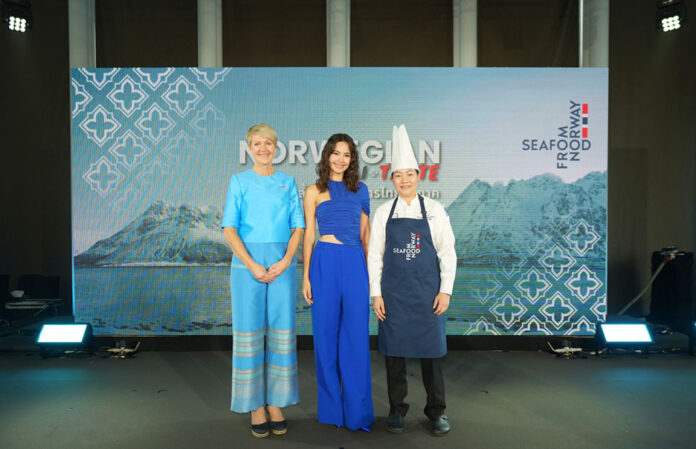
Thai-Norwegian actress Yaya-Urassaya Sperbund joins Ms. Åshild Nakken, Director of Southeast Asia for the NSC, and Chef Jip-Chaprapat Dapachutitsan in attending the event 'Norwegian Thai Taste: Valuable Ingredients...for Thai Food' at Gaysorn Tower on August 1, 2024.

BANGKOK  — The Norwegian Seafood Council (NSC) has launched a new campaign, ‘Norwegian Thai Taste: Valuable Ingredients…for Thai Food in 4 Regions’, aiming to expand its market in Thailand by partnering with local restaurants and stores nationwide.

Ms. Åshild Nakken, Director of Southeast Asia for the NSC, announced the initiative, which builds on the success of the ‘The Story from the North’ campaign in 2022. The campaign kicked off in Bangkok on August 1 at Gaysorn Tower with Thai-Norwegian actress Yaya-Urassaya Sperbund who will join to promote Norwegian seafood in Chiang Mai, Phuket, and Khon Kaen throughout this month.

“We are thrilled to offer a taste of the great variety of Thai cuisine from four regions. This campaign, in collaboration with local restaurants and partner shops, aims to increase awareness of Norwegian seafood among Thai consumers and attract new potential partners across the country,” said Nakken.

Seafood from Norway3
Norwegian Thai Taste: Precious Ingredients…for Thai Cuisine from 4 Regions

The campaign ‘Norwegian Thai Taste: Precious Ingredients…for Thai Cuisine from 4 Regions’ is being promoted through various media channels and the creation of special menus at three main local restaurants: Wan Lamun in Chiang Mai, Tu Kab Khao in Phuket, and Heuan Kham Nang in Khon Kaen.

Promotions are also being held at partner stores, including Makro, Tops, Big C, Lotus, Foodland, and Thammachat Seafood nationwide, from August to September 2024.

The campaign launch was honored by Mrs. Astrid Emilie Helle, the Norwegian Ambassador to Thailand and Cambodia, and Chef Jip-Chaprapat Dapachutitsan, an experienced chef and contestant on Hell’s Kitchen Thailand.

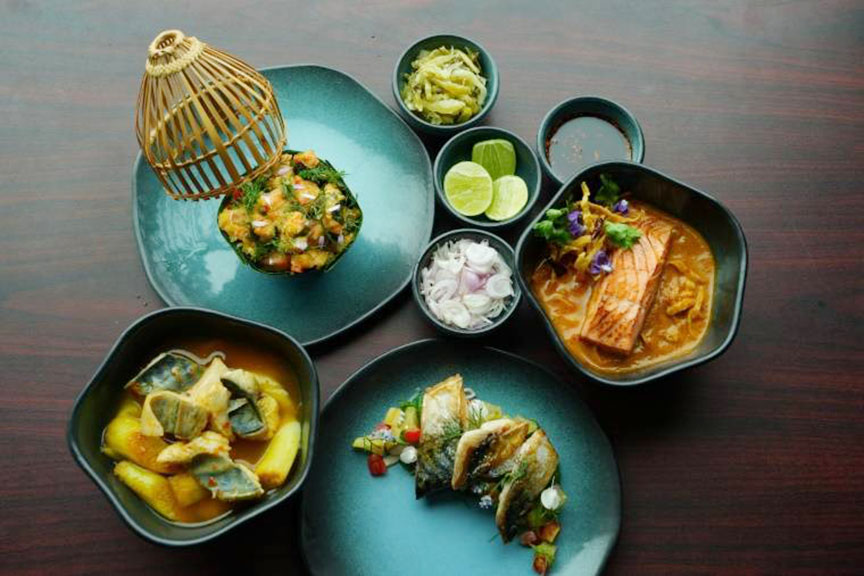
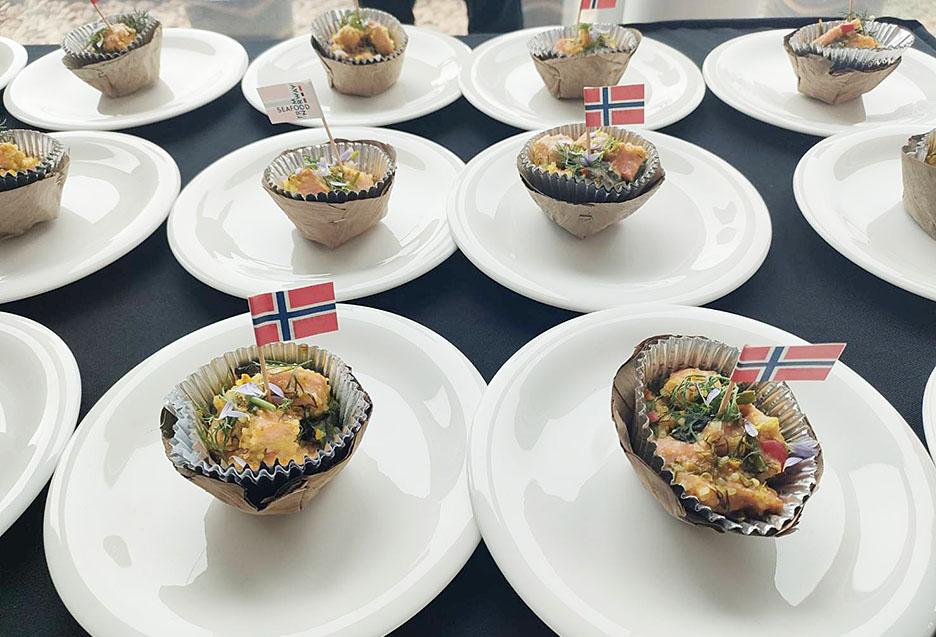
Chef Jip showcased dishes from all four regions, including grilled Norwegian saba with starfruit salad and Japanese seaweed representing the Central region, salmon khao soi from the North, Norwegian saba with yellow curry from the South, and Isan-style steamed salmon with Thai herbs from the Northeast.

Seafood from Norway2
Ms. Åshild Nakken, Director of Southeast Asia for the Norwegian Seafood Council (NSC)

According to NSC data, Norwegian seafood imports to Thailand reached 9.5 billion baht ($268 million) in 2023, a 103% increase compared to 2020. For the first half of 2024, imports were valued at 4.8 billion baht ($135.5 million), a 3% increase from the same period last year.

Thailand, which is a significant consumer of Japanese food, imports tens of thousands of tons of Norwegian salmon each year, making it the largest importer in Southeast Asia. The NSC estimates that Norwegian seafood imports to Thailand, particularly salmon, saba, and fjord trout, will exceed 10 billion baht ($282 million) in 2024.

Nakken is confident that seafood imports to Thailand will continue to grow in the latter half of the year, unaffected by the strong baht. “Each year, Norway exports a large amount of seafood to Southeast Asian countries, with Thailand being the number one trading partner for importing salmon, Norwegian saba, and fjord trout.”

Seafood from Norway4
Isan-style steamed salmon with Thai herbs

Two years ago, imports of these three types of fish to Thailand were around 30,000 tons. Additionally, 74% of Thai consumers who enjoy Japanese food, such as sushi or sashimi, are aware that most of the salmon used in Japanese restaurants comes from Norway, and 44% of the saba used in these restaurants is also sourced from Norway,” she said.

“Norwegian seafood, such as salmon, Norwegian saba, and fjord trout, have unique flavors and textures. They are versatile in a variety of dishes and have a strong market presence due to their farming and harvesting in Norway’s cold, clear seawater, which provides perfect conditions for growth. Norwegian fisheries also prioritize sustainability. This campaign offers a valuable opportunity for Thai food entrepreneurs to integrate Norwegian seafood into their menus,” Nakken concluded.

________

Advertisement

Hot News

LATEST NEWS

Bangkok
overcast clouds
26.1 ° C
26.1 °
22.7 °
93 %
1.9kmh
100 %
Fri
25 °
Sat
33 °
Sun
35 °
Mon
37 °
Tue
37 °