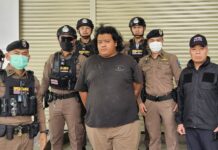
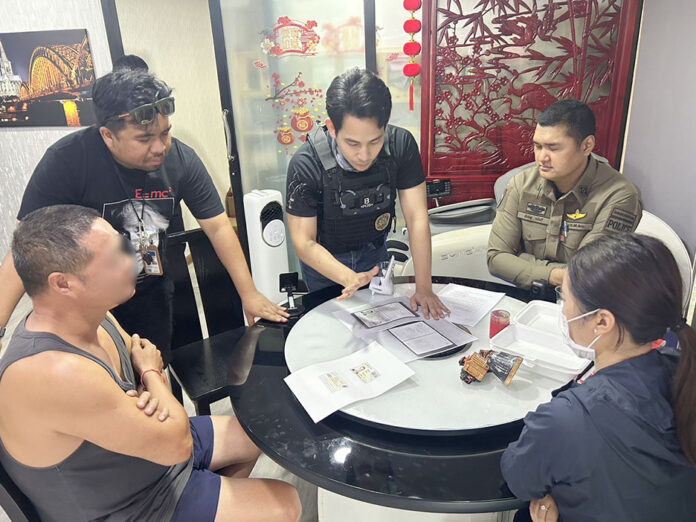
Mr. Chun (left sitting) was arrested at a condominium room in the Sathon area, Bangkok.
BANGKOK – Immigration officers investigated a group involved in forging passports and using fake passports in Thailand, eventually arresting the leader of the gang.
On May 29, Pol. Maj. Gen. Phanthana Nutchanart, Deputy Commissioner of the Immigration Bureau, and his team announced the arrest of Mr. Chun, a 58-year-old Surinamese national wanted on an arrest warrant issued by the Criminal Court on April 17, 2024, for forging and using fake passports.
He was handed over to the investigating officers of the Investigation Division, Immigration Bureau, for legal proceedings. The arrest took place on Suan Phlu Road, Thung Maha Mek Subdistrict, Sathon District, Bangkok.
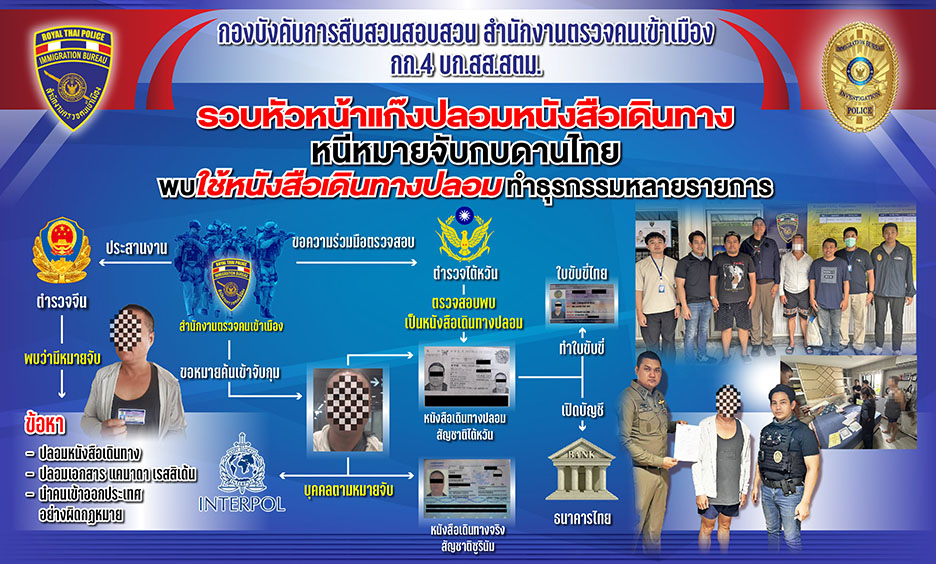
Investigations revealed that a gang was forging passports and illegally bringing people in and out of the country. The gang leader, Chun, born in 1966, claimed to be Taiwanese, but when the Immigration Bureau coordinated with the Taiwanese police, they discovered that his Taiwanese passport was fake. Further coordination with the police of the People’s Republic of China revealed that he was actually a Chinese national.
Immigration officers displayed the chart showing the investigation that led to the arrest of Mr. Chun for forging passports.
Chun was found to be the leader of a gang forging passports from the People’s Republic of China, Taiwan, and permanent resident cards of various countries. He was also the head of a gang illegally smuggling Chinese citizens out of the People’s Republic of China to other countries using forged passports or permanent resident cards to conceal their identities and flee from China. He later acquired Surinamese citizenship.
Simultaneously, the Immigration Police also obtained a search warrant from the Southern Bangkok Criminal Court to search a condominium room in the Sathon area, which Chun claimed to be the occupant.
Inside the room, officers found Thai government documents such as a driver’s license, several bank account opening documents, and passport copies. Chun was arrested, and the documents were seized as evidence for further legal proceedings.
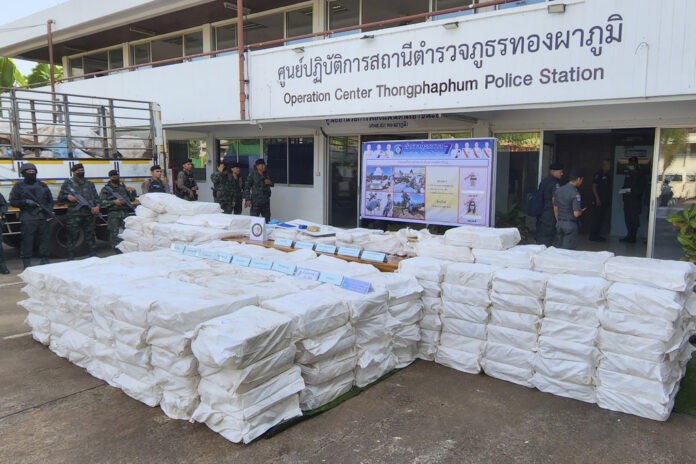
FILE - Thai soldiers stand beside seized 50 million methamphetamine pills hidden in sacks during a news conference at Thongphaphum Police station in Kanchanaburi province, Thailand, on Dec. 13, 2023. (AP Photo/Keskawe Chongchareon)
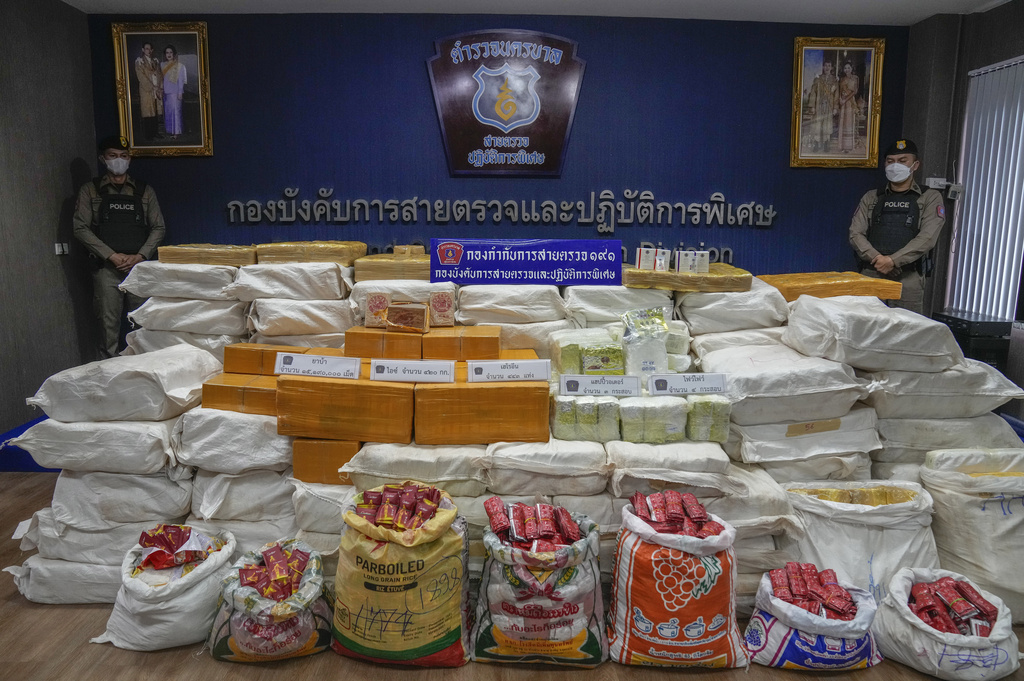
BANGKOK (AP) — East and Southeast Asia are awash in record amounts of methamphetamine and other synthetic drugs, the U.N. Office on Drugs and Crime said in a new report Tuesday. It traced their source largely to the cross-border region known as the Golden Triangle where Thailand, Myanmar and Laos meet.
The region is historically known for growing opium and hosting many of the labs that convert it to heroin.
“We have become used to record seizures, but the scale meth production in the Golden Triangle has now reached is massive. So are the profits generated,” Benedikt Hofmann, UNODC’s deputy regional representative for Southeast Asia and the Pacific, told The Associated Press. “For East and Southeast Asia, we are now looking at something closer to $80 billion per year feeding back into the region’s illicit economies.”
The Golden Triangle area has seen decades of political instability.
Myanmar’s frontier regions are largely lawless and exploited by drug producers and traffickers. In recent decades, it has become the region’s epicenter for illegal amphetamine products. A 2021 military takeover that unseated the elected government of Aung San Suu Kyi and triggered armed resistance nationwide further destabilized the country.
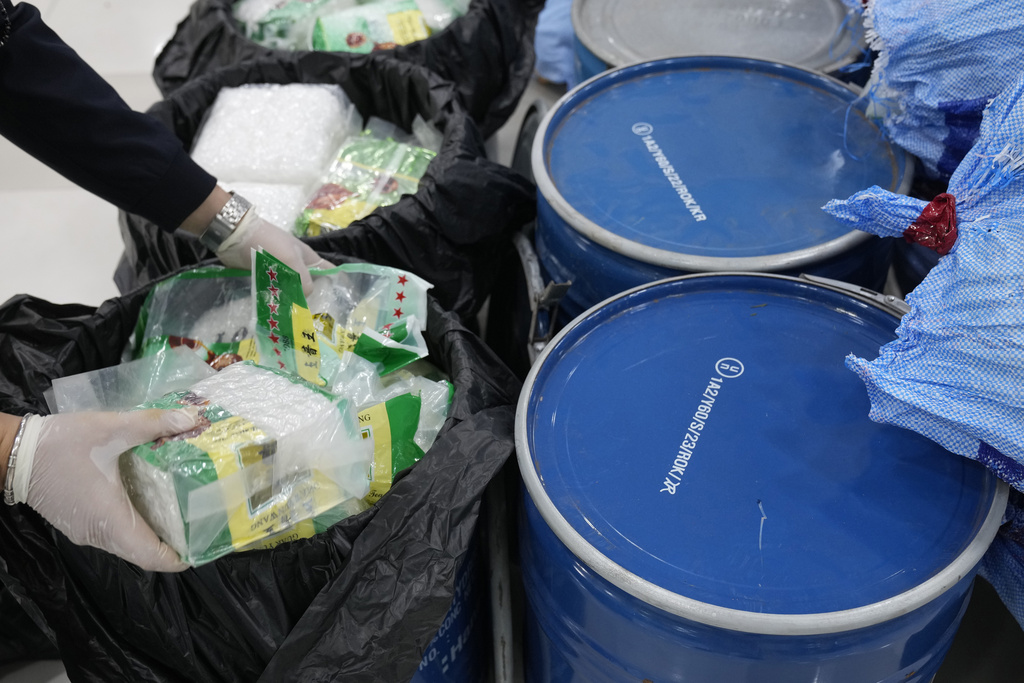
FILE – Thai police officers stand behind packages containing seized crystal meth, methamphetamine, heroin during a news conference Bangkok, Thailand, on Sept. 28, 2023. (AP Photo/Sakchai Lalit)
The new report said the total amount of methamphetamine seized in East and Southeast Asia reached a record 190 tons in 2023. Some 89% of that came from Southeast Asia, with much of that from the Golden Triangle.
The 1.1 billion seized methamphetamine tablets, weighing 98.3 tons, were the most ever reported for the region, as were the 90 tons of seized crystal methamphetamine, the report said.
Even regional seizures of the party drug ecstasy, though representing a very small portion of the illicit synthetic drugs trafficked in the region, reached record levels last year of over 26.7 million tablets, mostly originating from Europe, the report said.
It also highlighted the increasing appearance in recent years of ketamine, a powerful anesthetic used for patients undergoing surgery but recently employed for treating depression and anxiety, as well as for recreational use.
The U.N. report said networks that make and traffic ketamine have diversified their business model and supply channels, moving from other parts of East and Southeast Asia into the Golden Triangle area of Myanmar and, more recently, into other countries in the lower Mekong River basin.
The region’s production of methamphetamine is concentrated in eastern Myanmar’s Shan State — the heartland of the Golden Triangle — especially in areas known as Special Regions where ethnic minorities with their own armies enjoy some privileges of self-government, the report said.
“The illicit drug manufacturing activity is undertaken by Asian organized crime groups who have partnered with armed groups in Shan,” it said.
FILE – A Thai officer displays seized crystal methamphetamine which were disguised as packages of tea during a news conference in Bangkok, Thailand, on June 1, 2023. (AP Photo/Sakchai Lalit)
Myanmar’s northern and eastern border regions have also become notorious for harboring major organized crime operations in casinos involving online scams, illegal gambling and human trafficking.
“The growing convergence of drug trafficking and emerging forms of organized crime in the Mekong is a major concern,” said UNODC’s Hofmann. “An online casino may be used to launder proceeds from the drug economy, while the same building may house a scam center – all in the hands of one criminal group which offers additional criminal services via Telegram and other channels.”
The report also said drugs originating from Myanmar are increasingly being smuggled to other countries along maritime routes. The drugs are sent as far as South Korea, Australia and New Zealand and other Pacific nations.
“Trafficking routes combining complex land-based and maritime corridors have become more common, essentially creating super-highways for large drug shipments out of the Mekong, many of which go undetected,” Hofmann said.
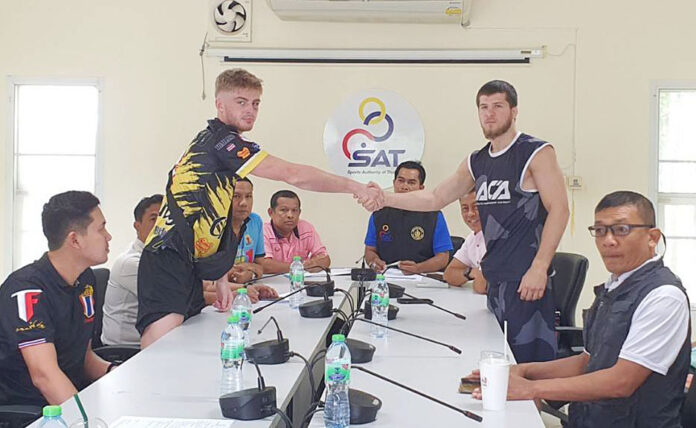
The two boxers shook hands to apologize and express regret for the incident at the meeting with Sports Authority of Thailand officials on May 28, 2024.
PHUKET – A viral clip of foreign boxers and their cornermen fighting on a boxing ring, which has been widely criticized by netizens, was found that it took place at the Bangla Boxing Stadium in Patong, Phuket.
The incident occurred on May 26 during the final main event. The red corner was an Irish boxer, while the blue corner was a Russian boxer. As the ring announcer was about to announce the result, the blue corner boxer climbed onto the ropes and did a backflip into the center of the ring, confident that he would win the match.
However, it turned out that the judges raised the red corner’s hand as the winner with a score of 49 to 48. The Irish boxer then approached the Russian boxer and provoked him, causing the Russian boxer to become upset and a clash ensued on the stage. Their cornermen and trainers also rushed in and clashed, with some spectators sneaking onto the stage to join the brawl.
Nevertheless, the incident was resolved in less than 2 minutes, with security personnel and the ring announcer intervening to stop the fight. Afterwards, the winner was awarded the championship belt as usual, and the two boxers left the stage and the venue without further altercation. The stadium also allowed tourists to take pictures on the stage as usual.
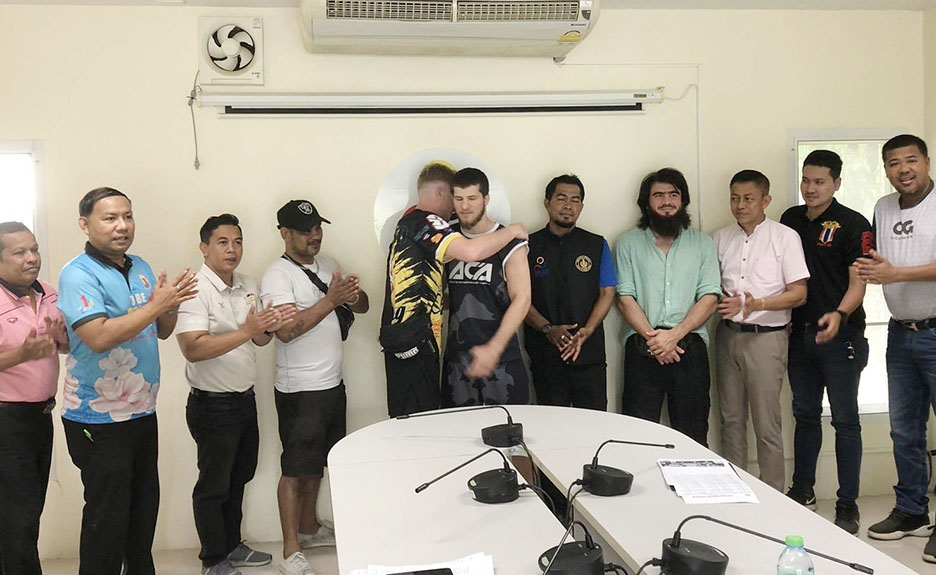
The two boxers hugged to show friendship after the meeting with Sports Authority of Thailand officials on May 28, 2024.
However, the clips that were shared online only showed the brawl to attract attention, leading people to misunderstand that the violence had escalated. The stadium officials, therefore, would like to urge those who shared the clips to post the complete footage because the actual incident was not terrible or violent, and no one was injured.
On May 28, the Sports Authority of Thailand officials in Phuket summoned those involved in the incident to explain what happened and had the two boxers shake hands to apologize and express regret for the incident.
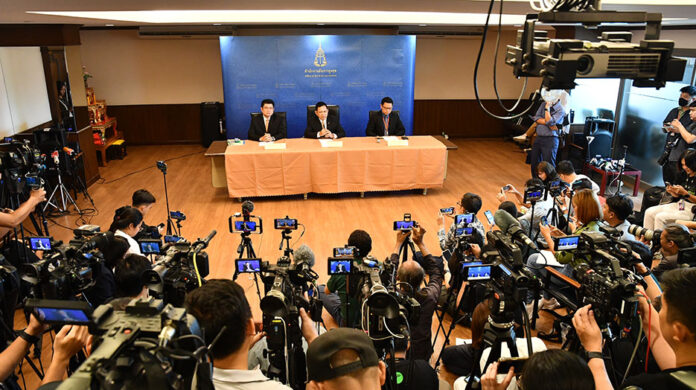
Mr. Prayuth Bejraguna, Spokesperson of the Office of the Attorney General, Mr. Viput Boonprasat, Special Prosecutor of Criminal Cases Department 8, and Mr. Nakane Thongpraiwan, Deputy Spokesperson of the Office of the Attorney General, jointly announced the case against Mr. Thaksin Shinawatra, former Prime Minister, who was charged under Section 112 of the Criminal Code. The announcement was made on the 4th floor of the Office of the Attorney General on Ratchadaphisek Road on May 29, 2024. (Khaosod Photo / Chalatip Roongbour
)
BANGKOK (AP) — Thai prosecutors said Wednesday former Prime Minister Thaksin Shinawatra will be indicted for defaming the monarchy, three months after he was freed on parole on other charges.
Thaksin will not yet be indicted because he had filed a request to postpone his original appointment on Wednesday with proof that he has COVID-19, Prayuth Bejraguna, a spokesperson for the Office of the Attorney General, said at a news conference.
The attorney general’s office scheduled a new appointment for Thaksin’s indictment on June 18, Prayuth said, adding that Thaksin will also be indicted for violating the Computer Crime Act.
Thaksin had been in self-imposed exile since 2008, but returned to Thailand in August last year to begin serving an eight-year sentence. He was released on parole in February from the hospital in Bangkok where he spent six months serving time for corruption-related offenses.
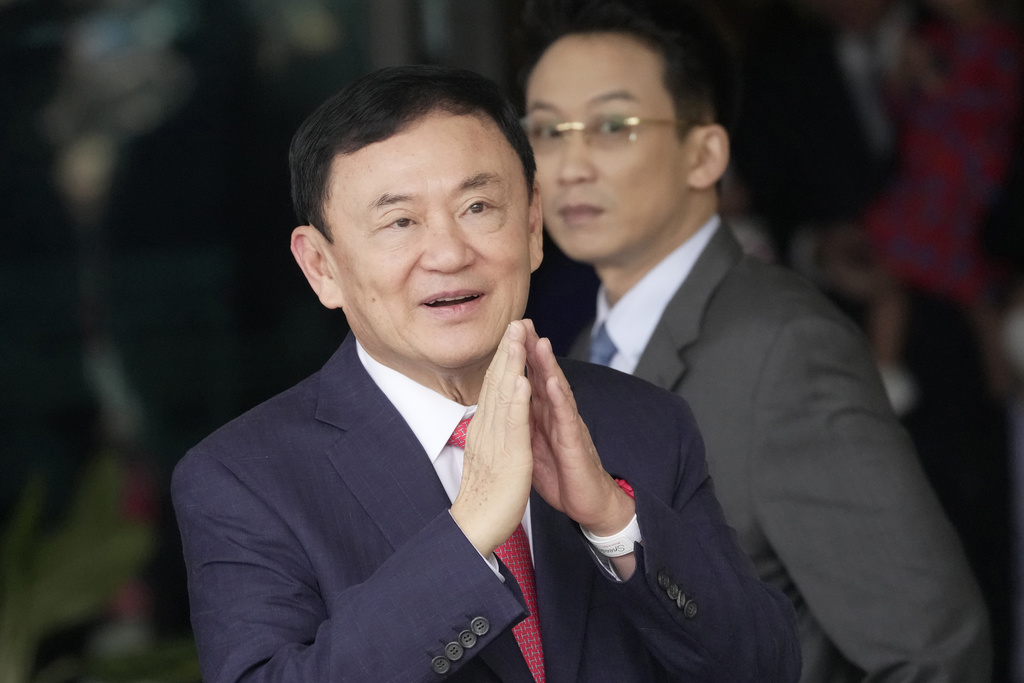
FILE – Thailand’s former Prime Minister Thaksin Shinawatra, arrives at Don Muang airport in Bangkok, Thailand, Tuesday, Aug. 22, 2023. Thai prosecutors on Wednesday, May 29, 2024, said Thaksin will be indicted for defaming the monarchy, three months after he was freed on parole on other charges. (AP Photo/Sakchai Lalit, File)
On his return, he was moved almost immediately from prison to the hospital on grounds of ill health, and about a week after that King Maha Vajiralongkorn reduced his sentence to a single year. Thaksin was granted parole earlier this month because of his age — he is 74 — and ill health, leaving him free for the remainder of his one-year sentence.
After the return, the attorney general’s office said it had revived an investigation into whether Thaksin almost nine years ago violated the law against defaming the monarch, a crime punishable by up to 15 years in prison.
Thaksin was originally charged in 2016 with violating the law for remarks he made to journalists when he was in Seoul, South Korea, a year before that, but the investigation could proceed only after he was presented with the charge in person in the hospital in January, officials said. Thaksin had denied the charges and submitted a statement defending himself.
Prosecutor’s spokesperson Prayuth said there is enough evidence for the attorney general to indict Thaksin. He said the prosecutors have already prepared their statement and documents to present to the court next month.
FILE - Vorayuth "Boss" Yoovidhya, whose grandfather co-founded energy drink company Red Bull, walks to get in a car as he leaves a house in London, on April 5, 2017. (AP Photo/Matt Dunham, File)
BANGKOK – Chalerm Yoovidhya, the son of the late Red Bull co-founder Chaleo Yoovidhya, sues TV host and ex-cop for defamation which claims he used 300 million baht for lobbying to help son, Boss, escape charges.
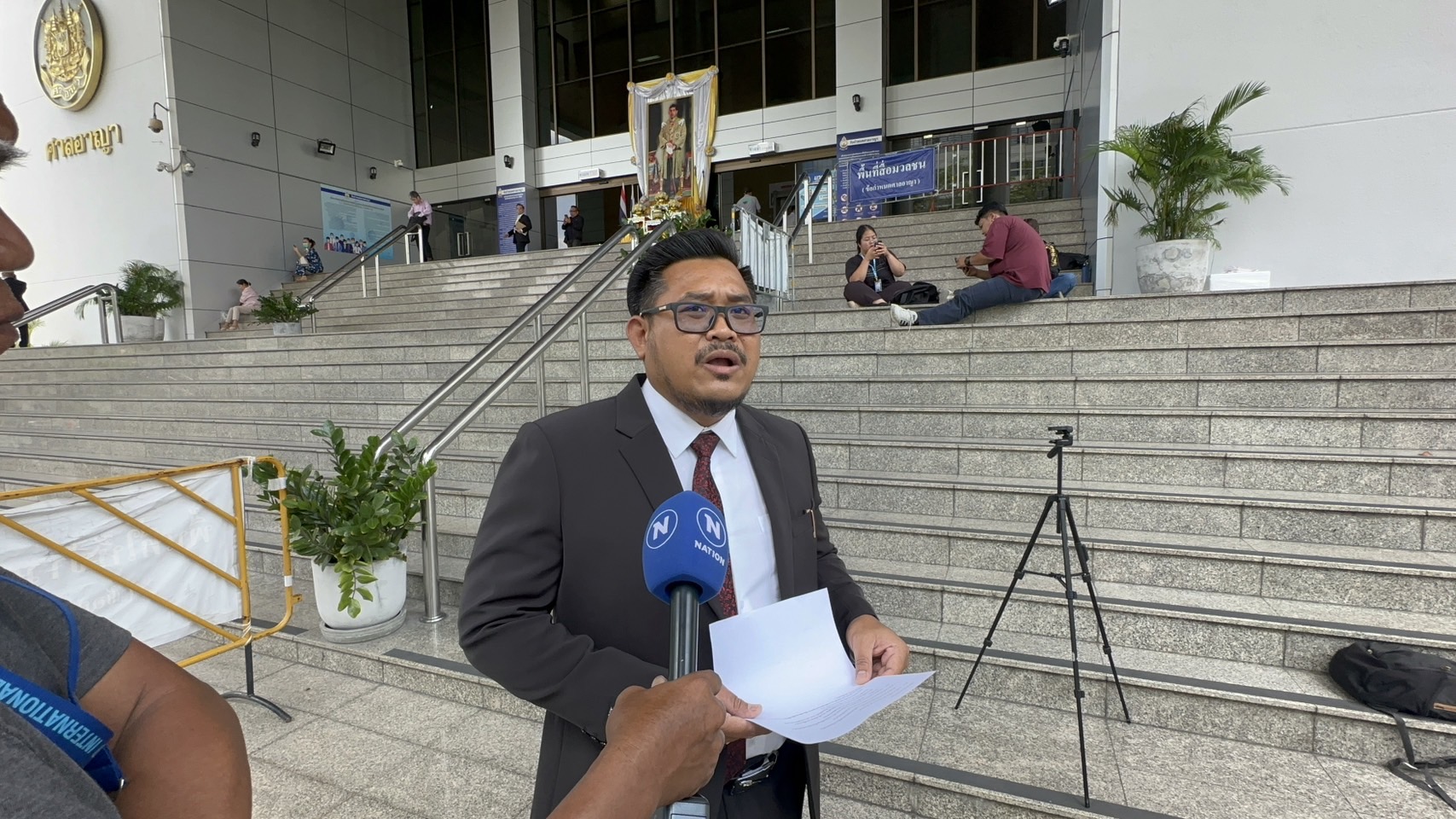
On May 28 at the Criminal Court on Ratchadaphisek Road, Ampol Kaewpan, an attorney authorized by Chalerm Yoovidhya, a Thai billionaire businessman, filed a defamation lawsuit against Police Lieutenant Colonel Sanit Mahathavorn, a senator and former Commissioner of the Metropolitan Police Bureau, and Miss Ubonrat Thao Noi, a TV host. The plaintiff is seeking 50 million baht in damages.
The lawsuit alleges that on February 29, 2024, the two defendants, with the first defendant being a host and news anchor on a TV program and the second defendant being a guest, aired content that was defamatory. The audio and video were recorded and the clips, videos, or audio-visual recordings were distributed on the TikTok application.
Ampol Kaewpan, an attorney authorized by Chalerm Yoovidhya, a Thai billionaire businessman
The program’s content accused Mr. Chalerm of spending up to 300 million baht in lobbying efforts to help his son, Vorayuth “Boss” Yoovidhya, escape charges after his son drove a car that hit and killed a police officer before fleeing the country. However, this money allegedly did not significantly help his son.
The first defendant’s TikTok account “bonratbonrat” has over 26,900 followers, over 219,100 likes, and some video clips have over 1,400,000 views. It is a social media platform accessible to the general public worldwide. The first defendant, as the host, headlined the video clips or audio-visual recordings.
The plaintiff’s petition states that the actions of both defendants caused damage to the plaintiff, tarnishing the reputation of the family, and subjecting him to contempt and hatred, which constitutes defamation by publication.
The plaintiff requests that both defendants jointly publish or announce the court’s judgment and an apology to the plaintiff on the TOP NEWS website, TOP NEWS TV programs, the TikTok application under the name “Miu Ubonrat” with the username “bonratbonrat”, and in the Thai Rath, Daily News, Matichon, and Manager Daily newspapers, using the full page for 7 consecutive days.
Additionally, the messages, video clips, films, or audio-visual recordings must be immediately removed from the TikTok application under the name “Miu Ubonrat” with the username “bonratbonrat”.
The Criminal Court has accepted the lawsuit as a criminal case and scheduled a preliminary examination hearing for September 2, 2024, at 1:30 p.m.
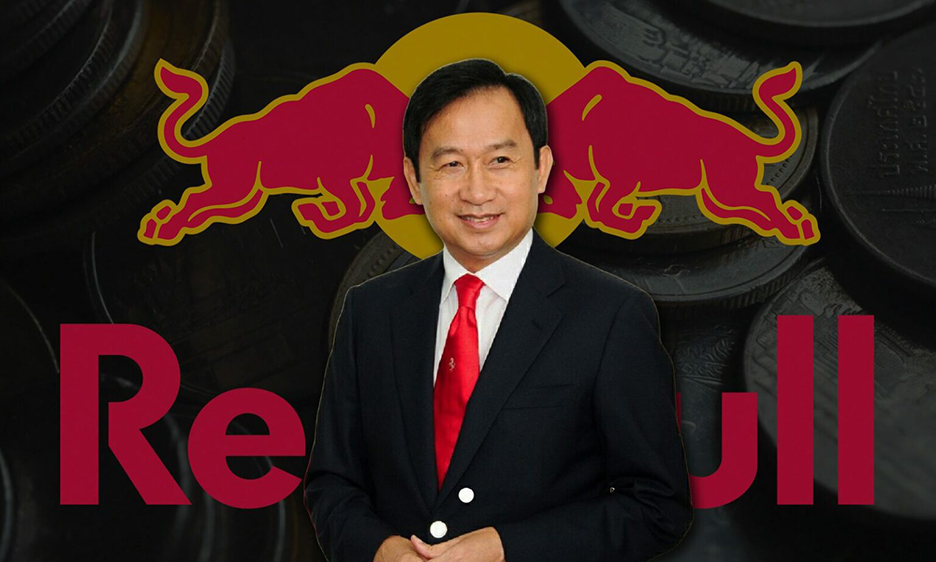
Chalerm Yoovidhya
Attorney Ampol stated that the plaintiff is seeking 50 million baht in damages, which is not excessive considering Mr. Chalerm’s reputation and goodwill. When asked if he would settle if mediation was proposed, he firmly stated that there would be no settlement because there has been a distortion of facts in several aspects of Mr. Vorayuth Yoovidhya’s case, leading to misunderstandings in society.
For example, since 2012, there have been allegations that the person hit by the car was dragged for 200 meters. In 2020, a working group from the Office of the Attorney General clarified to the Police Commission of the House of Representatives that the autopsy results showed no traces or injuries consistent with the body being dragged along the road, contrary to the distorted information provided.
Mr. Chalerm’s lawsuit is an exercise of his legal rights to prosecute individuals who distort the facts. If any other person is found to provide information in a similar manner, legal action will also be taken to protect his and his family’s reputation. Witnesses are prepared for the preliminary examination hearing.
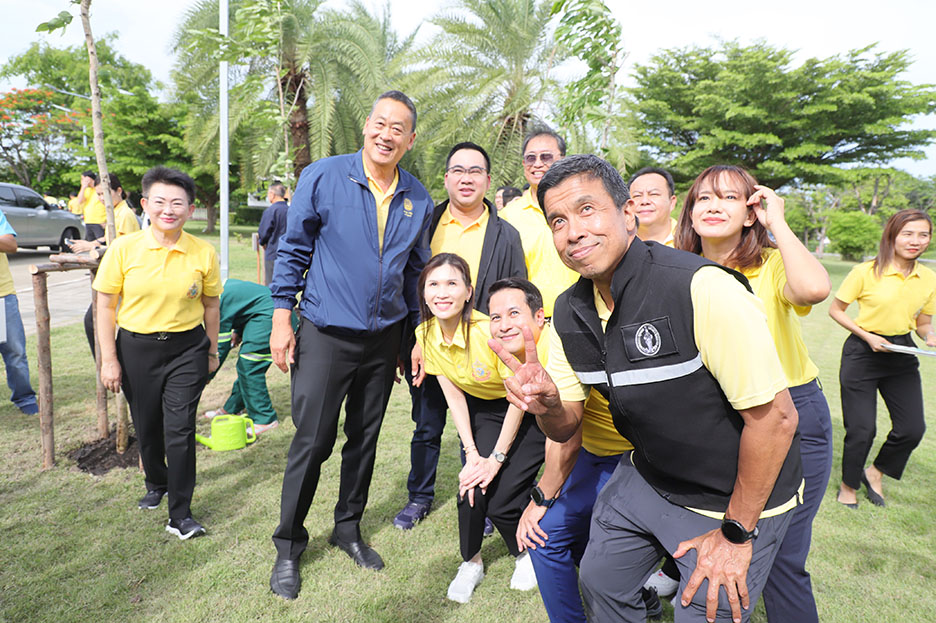
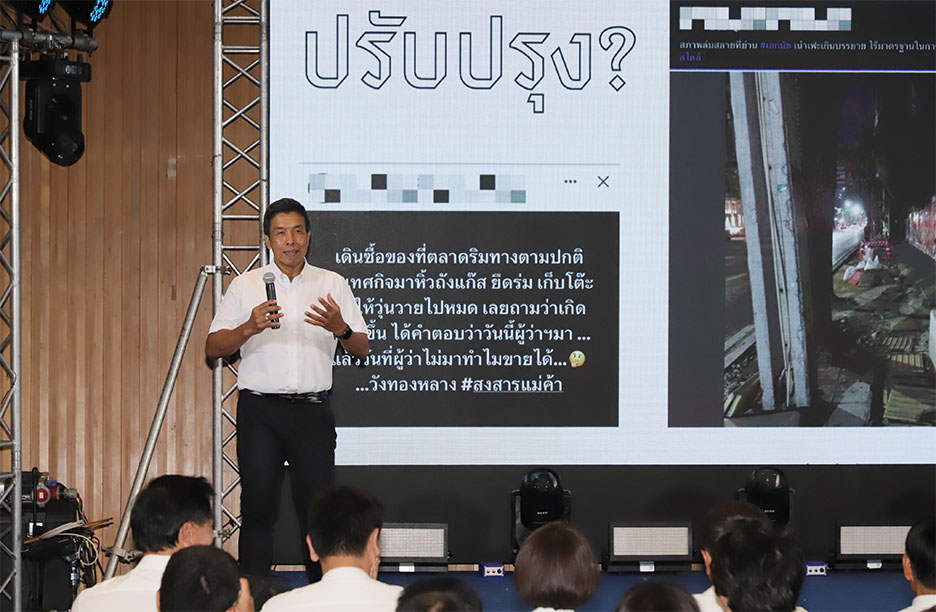
BANGKOK – Chadchart Sittipunt, the Governor of Bangkok, along with his deputy governors, held a press conference on the occasion of their two-year work under the event name “2 Years of Work: Changing, Improving, and Upgrading the Livable City.” They also presented their vision for the next two years at the Bangkok Art and Culture Centre in Pathumwan district on May 28.
He summarized the changes and improvements made in various aspects over the past two years to make work and problem-solving more flexible and efficient, reducing fatigue and increasing happiness in people’s lives.
Traffy Fondue: Reducing steps, increasing transparency, and meeting needs. This is one example of what has been done to increase efficiency in solving people’s problems. In two years, 465,291 out of 588,842 total complaints have been resolved, accounting for 78%, building trust between the Bangkok Metropolitan Administration (BMA) and the people.
Chadchart Sittipunt, the Governor of Bangkok, along with his deputy governors, held a press conference on the occasion of their two-year work at the Bangkok Art and Culture Centre in Pathumwan district on May 28, 2024.
Improving sidewalks to a new standard: Durable, cost-effective, and considerate of everyone. The BMA is committed to making sidewalks conducive to use by people of all genders and ages, adhering to standards of strength, durability, and beauty. In two years, 785 km of sidewalks have been improved, entrance and exit areas of buildings have been leveled with the sidewalks, sidewalk heights have been reduced to 10 cm and 18 cm, and Braille blocks have been installed in straight lines for easy use by people with disabilities and the elderly.
Organizing street vendors and stalls to provide access to affordable food without encroaching on sidewalks. This has been done at 257 locations, along with organizing messy communication lines over a total distance of 627 km. Additionally, lighting bulbs have been changed to LED bulbs connected to an IoT system, automatically detecting and quickly fixing faulty bulbs, allowing Bangkok residents to walk home with peace of mind.
Fast water drainage, timely transportation, and uninterrupted economy. The long-standing problems of rainfall, poor drainage, and difficult travel in Bangkok have been addressed. Since reviewing the lessons learned and gathering data on flood points throughout Bangkok, 370 points have been resolved, and another 190 points will be resolved by 2024.
Preparations for flood prevention before the rainy season include cleaning 4,200 km of drainage pipes, clearing 1,960 km of canals, dredging 217 km of canals, maintaining floodgates and pumping stations, cleaning all drainage tunnels, and inspecting all pumps to ensure they are ready for use.
Increasing public spaces for a lively city. Fifty-eight parks, 36 recreation centers, 34 libraries, two children’s museums, and 12 sports centers have been developed to enable people to access and use services more efficiently.
In addition, 11 new comprehensive sports centers have been renovated, with plans to expand to another 13 locations. The Benjasiri Park serves as a model for expanding sports centers to other parks throughout Bangkok, such as Nong Bon Lake, to make them more accessible to the public.
The Nong Bon Lake-Suanluang Rama IX Park project
Increasing creative spaces: The Lumpini Building is being renovated into a Performance Art Hub for Bangkok residents, scheduled for completion in 2025. Large parks are being added to serve as the lungs for air purification and as recreational areas for Bangkok residents, such as the Nong Bon Lake-Suanluang Rama IX Park project, the largest public park in Bangkok, and the new water sports park at Bor Frang (along Bang Sue Lake) and the Bangkok Wetland Forest Park (Seri Thai).
The latest 15-minute parks, small parks close to communities within a 15-minute walking distance, have already emerged in over 100 locations and are expected to reach 500 locations within four years.
Improving health services: There is a free health check-up project for 1,000,000 people, with more than 14 basic screening items to detect disease signals before they become dangerous. In addition, the services of public service centers have been expanded to provide treatment until 8 PM or on Saturdays and Sundays in all areas. Health promotion and rehabilitation centers (physiotherapy) for treating office syndrome have also been expanded to eight nearby centers, and Pride Clinics offering free screening and consultation for LGBTQ+ individuals have increased from 6 to 31 locations, serving nearly 20,000 people.
Transparency through technology: Value for taxpayer money. Over the past two years, there have been intensive efforts to prevent and combat corruption. A total of 781 complaints were investigated, with 56 cases having evidence of corruption, 44 cases reaching the stage of disciplinary investigation, 29 people being dismissed from government service, 12 cases pending consideration, and 5 cases forwarded to the National Anti-Corruption Commission (NACC) or the Office of Public Sector Anti-Corruption Commission (PACC).
Chadchart Sittipunt, the Governor of Bangkok
Various permit application services have become more convenient with the BMA One Stop Service, centralizing permit applications online. More than 1,000 datasets on policies, budgets, employment contracts, and taxes have been made available through Open Data, with over 3 million user visits per year. The procurement system has been opened up to ensure transparency from bidding to contract management.
Efforts have been made to efficiently manage funds with the public interest in mind. The long-standing problem of the BTS skytrain extension project has been resolved in the first step, with the payment of 23 billion baht in debt for the extension system and the transfer of ownership to the BMA.
The next step is to reduce monopoly by proposing that the government revoke the Section 44 order and bring the skytrain system back under the legal procurement and joint investment process for the benefit of the public.
“For the next two years, we will work to build Bangkok as a livable city of the future by collaborating with all sectors. Since announcing the policy and working for two years, 90% has been achieved. There are still things that are not done well, and many problems need to be addressed further. If I were to rate my performance, I would give it a 5 out of 10. As for how satisfied or happy the people of Bangkok are, we’ll have to let the public tell us,” Chadchart said.
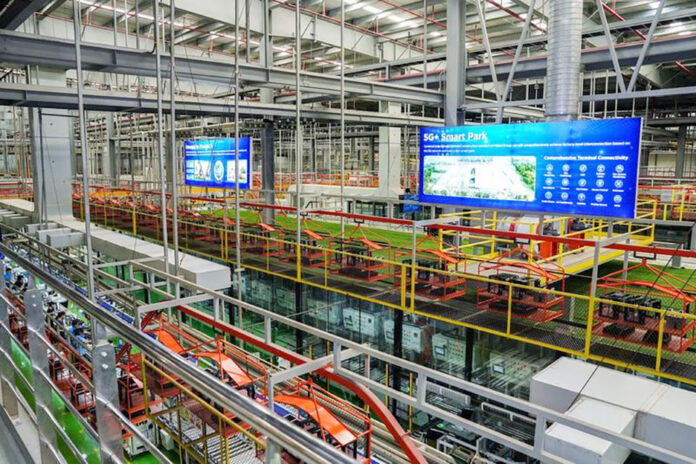
This is a photo taken on April 27, 2024, inside the factory of Midea Refrigeration Equipment Thailand in Chonburi province, Thailand. (Xinhua)
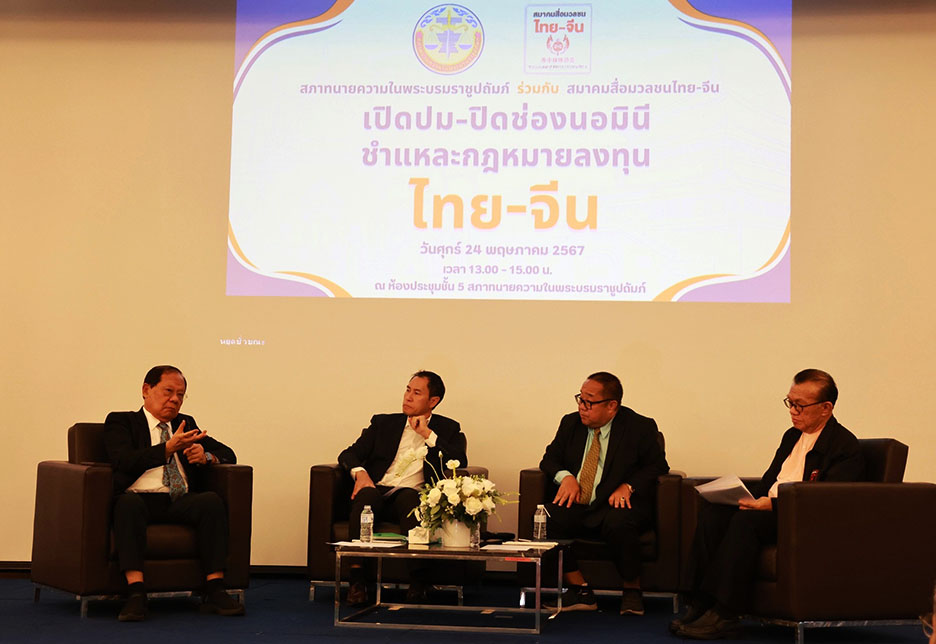
BANGKOK – The Lawyers Council of Thailand under Royal Patronage, in cooperation with the Thai-Chinese Journalists Association, organized a seminar entitled “Unveiling and Closing Loopholes in Nominee Structures: Dissecting Thai-Chinese Investment Laws.”
The aim of the seminar on May 24 was to address concerns and uncertainties regarding direct and indirect foreign investment affecting Thailand’s protected professions and small and medium-sized enterprises (SMEs).
Dr. Wichian Chubtaisong, President of the Lawyers Council, pointed out that even in the legal profession, which is protected in Thailand, considerable foreign investment has flowed into legal advice. This exploitation occurs due to loopholes in the Lawyers Act B.E. 2528, which does not extend to legal advisors, making it difficult for the Lawyers Council to take direct action against foreign legal advisors. Instead, government agencies must intervene.
Emeritus Professor Dr. Decha-udom Krairit, former President of the Council of Advocates, explained that nominee structures have been prevalent in all professions for over 50 years. Foreign investors often come to Thailand with minimal capital and use Thai nominees to hold 51 percent of the shares without actually investing, which is a common but difficult to detect practice.
The Lawyers Council of Thailand under Royal Patronage, in cooperation with the Thai-Chinese Journalists Association, organized a seminar entitled “Unveiling and Closing Loopholes in Nominee Structures: Dissecting Thai-Chinese Investment Laws.” at the Lawyers Council Under Royal Patronage, Phahonyothin Road, Bangkok, on May 24, 2024.
These investors use various tactics to circumvent the law. For example, foreigners who want to get into the real estate business to sell to other foreigners circumvent the subdivision laws by dividing up Thai-owned land and selling it as individual plots for self-development. They also set up companies with foreign directors and business advisors, avoiding the term “legal advisor” due to the protected status of this profession, making them difficult for the authorities to prosecute.
M.L. Phuthong Thongyai, Deputy Director-General of the Department of Business Development, Ministry of Commerce, addressed the misconception that Chinese companies extensively use Thai nominees. In reality, most nominees come from Europe, Singapore, and Taiwan. The department has been consistently tackling this issue.
According to the law, Thais must hold 51 percent of the shares, while foreigners must hold 49 percent. Companies in which foreigners hold the full 49 percent are closely scrutinized as they carry the risk of exceeding the majority shareholding threshold.
Out of 17,000 such companies, 439 have been identified as potential candidates, mainly in the tourism sector. The department carries out overt and covert checks on a monthly basis and forwards suspicious cases to the DSI for further investigation.
Bangkok
Dr. Tharakorn Wutthisatirakul, Chairman of the BRI Institute for Economic and Educational Development Research, explained that foreign companies invest in Thailand because of its favorable geopolitical location. Investments that comply with BOI conditions are not a problem, but companies must generally comply with the 49/51 Joint Venture Act.
“In practice, only rarely are all laws followed. For example, companies that buy fruit from farmers for export can be considered nominees. Without legal changes, it is impossible to avoid the problem of nominees
Dr. Tharakorn referred to Singapore’s model of allowing 100 percent foreign investment, except in sensitive sectors. He suggested that Thailand could attract significant foreign capital by allowing more than 49 percent foreign ownership, which would reduce reliance on nominee structures.
The nominee problem exists worldwide, but some countries, such as Malaysia and Indonesia impose strict penalties, including imprisonment, to prevent such practices. In addition, the Thai government needs to improve education and train a skilled workforce to compete internationally and reduce the need to serve as nominees and exploit local resources.
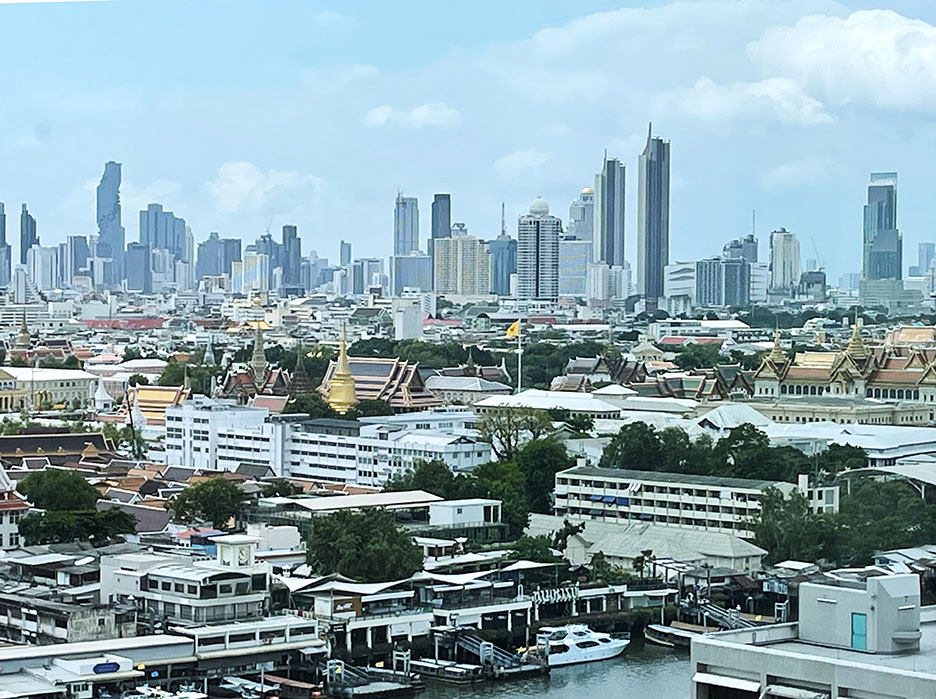
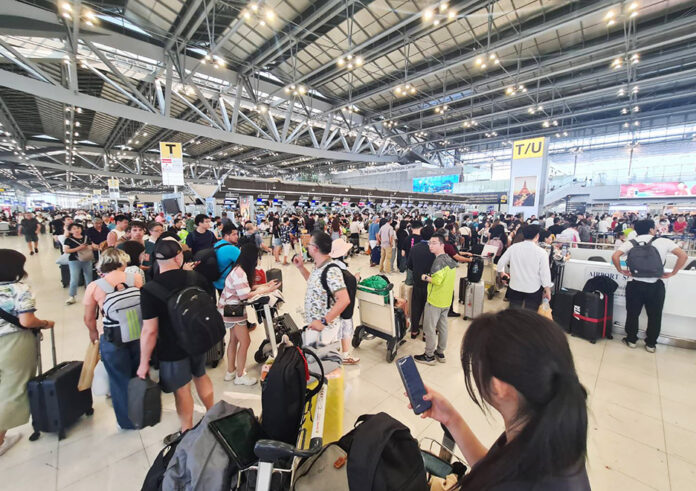
Tourists crowded at Suvarnabhumi Airport on February 25, 2024. (Photo by Pravit Rojanaphruk)
BANGKOK – The Thai government has announced a three-phase economic stimulus plan, including easing visa rules to boost tourism and attract more foreign visitors. The decision was made during a Cabinet meeting on May 28, as the country faces a prolonged economic slowdown, low GDP growth, and increasing public debt.
The Cabinet meeting reached a unanimous conclusion that Thailand needs to generate new income by fully accelerating tourism policies, which are considered the only economic engine that will yield rapid returns. Key points of the plan are divided into three phases for 2024-2025.
The government aims to generate this short-term measures no less than 3 trillion baht (81.91 billion USD) in tourism revenue by the end of 2024.
Short-term measures:
Visa exemption for tourists, business visitors, and short-term workers from 93 countries (up from 57), allowing stays of up to 60 days.
Expansion of Visa on Arrival (VOA) to 31 countries (up from 19).
Introduction of a new visa category, Destination Thailand Visa (DTV), for foreigners seeking to stay in Thailand for an extended period and work remotely (workcation).
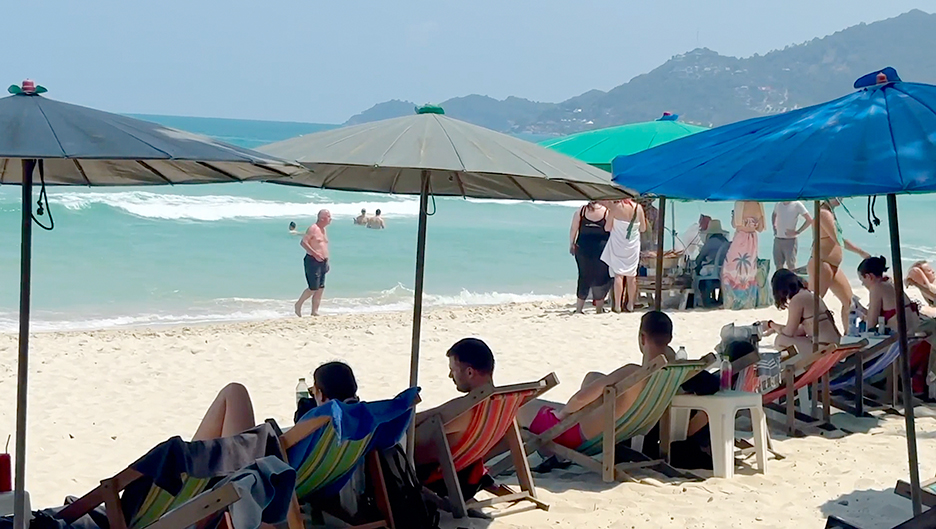
Koh Samui
Destination Thailand Visa (DTV) eligibility and benefits:
Skilled foreign talent, digital nomads, freelancers, and those engaging in activities such as learning Muay Thai, cooking, sports training, medical treatment, seminars, and arts and music events.
Spouses and legal children (under 20) of DTV holders.
Proof of financial support or a guarantee of at least 500,000 baht for the duration of stay.
DTV allows a stay of up to 180 days, with a visa fee of 10,000 baht, valid for 5 years. The stay can be extended once for another 180 days with an additional fee of 10,000 baht.
Improved benefits for foreign students:
Foreign students pursuing bachelor’s degrees or higher with a Non-Immigrant Visa (ED) will have an easier time finding work and staying in Thailand after graduation.
Extended stay of 1 year after graduation for job hunting, traveling, or other activities, with certification from the Ministry of Higher Education, Science, Research and Innovation.
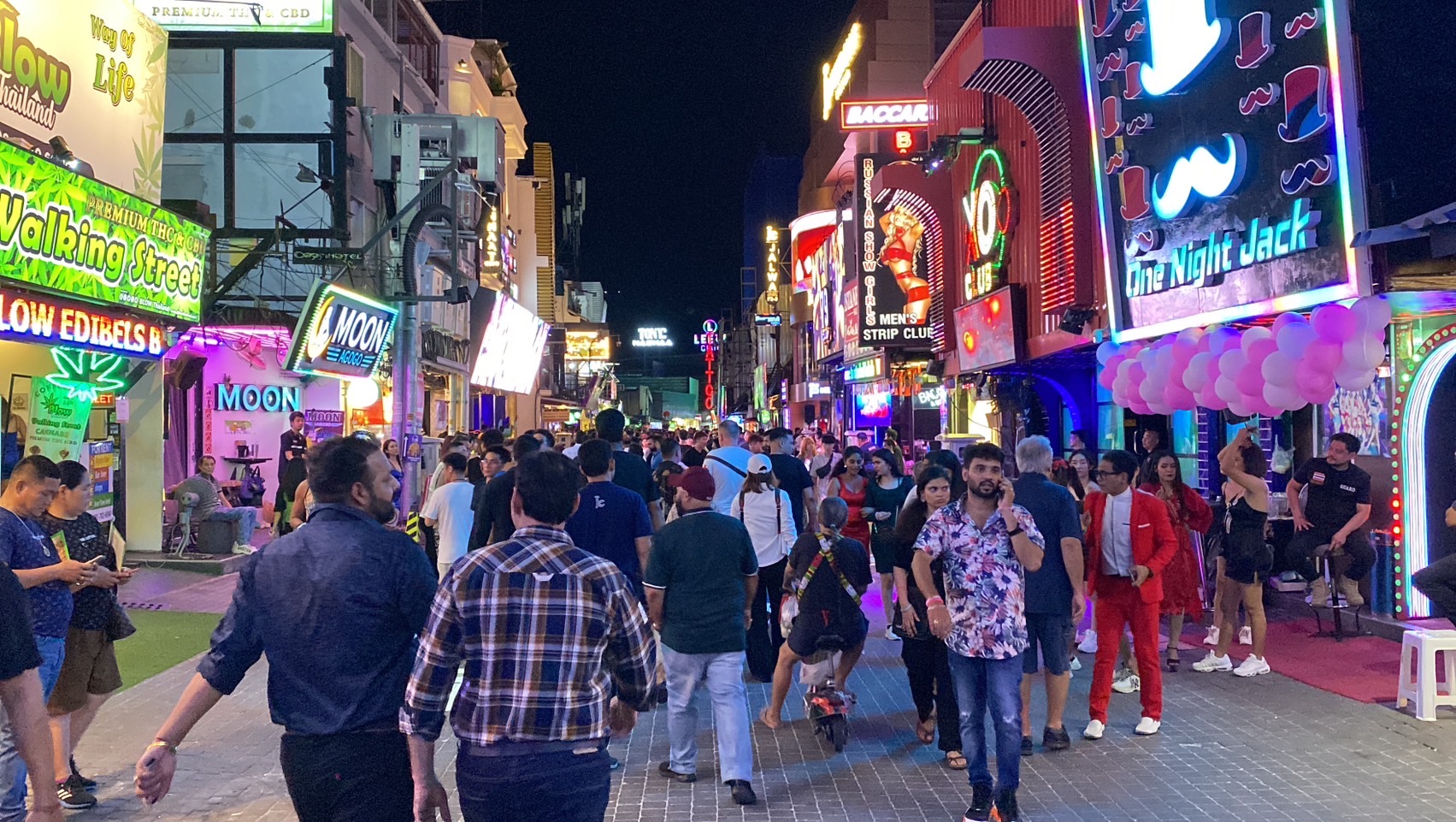
Pattaya
Medium-term measures:
It will be implemented from September to December 2024.
Restructuring and reducing the number of Non-Immigrant visa categories from 17 to 7, starting in September 2024.
Adjusting the criteria and conditions for the Long Stay visa for elderly people who wish to spend their retirement in Thailand, starting in September 2024.
Reducing the health insurance requirement for Non-Immigrant visa (O-A) from 3,000,000 baht to pre-COVID-19 levels: 40,000 baht for outpatients and 400,000 baht for inpatients.
Expanding the e-Visa service from 47 to 94 Thai embassies, consulates, and trade and economic offices worldwide by December 2024.
Long-term measures:
It will be fully implemented by June 2025.
Developing an Electronic Travel Authorization (ETA) system for foreign nationals eligible for visa exemption.
Using technology and innovation to enhance the screening of foreign nationals by integrating data with the Immigration Bureau.
Government spokesperson Chai Wacharong stated that while these measures to facilitate tourism will result in a loss of approximately 12.3 billion baht (335.7 million USD) in government revenue annually, the expected return from increased tourism, estimated at 800 billion to 1 trillion baht (21.8 – 27.3 billion USD), led the Cabinet to approve the measures.
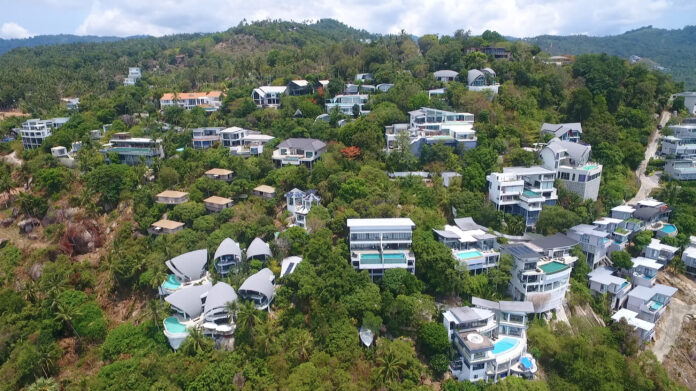
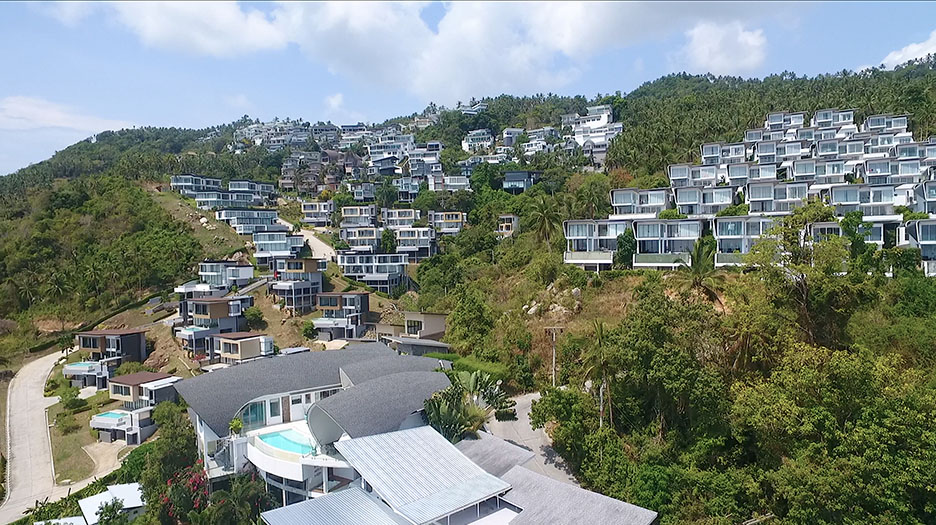
The luxury villas are located on Khao Ma Ngon, Village No. 3, Bo Phut Subdistrict, Ko Samui District, Surat Thani Province.
KOH SAMUI – Thai government authorities are currently taking serious steps to tackle the problem of state land grabbing by foreigners on Koh Samui. This comes after there is clear evidence of the dense development of luxury buildings on the hills.
On May 28, 2024, a meeting was held at Surat Thani Rajabhat University under the chairmanship of Mr. Jessada Jitrat, the Governor of Surat Thani. The meeting focused on solving problems related to the development of steep slopes in Koh Samui district and the illegal activities of foreign companies.
He said he had instructed the relevant authorities to collect all problems and obstacles related to land ownership and foreign business activities on Koh Samui. This is to ensure that the problems are thoroughly resolved and do not escalate to avoid future problems.
The authorities involved include the Internal Security Operations Command (ISOC) Region 4, the Koh Samui District Chief, the Koh Samui City Municipality, the Koh Samui Police, the Regional Harbor Office Koh Samui Branch, the Surat Thani Provincial Land Office (Koh Samui Branch), the Koh Samui Revenue Office and the Koh Samui Forest Protection Unit.
The task force is to review and rectify errors in the issuance of land rights documents by government officials, such as the misuse of Sor Kor 1 to issue illegal building permits, non-compliance with the 1979 Building Control Act, unauthorized hotel operations and foreign companies operating in business sectors (hotels and food and beverage sales) where Thais are not competitive.
In addition, there are cases where foreigners own or control companies through nominees in order to retain ownership in Thailand. Cases have also been found where janitors or hotel managers have failed to report the whereabouts of foreigners within 24 hours as required by Section 38 of the Immigration Act 1979.
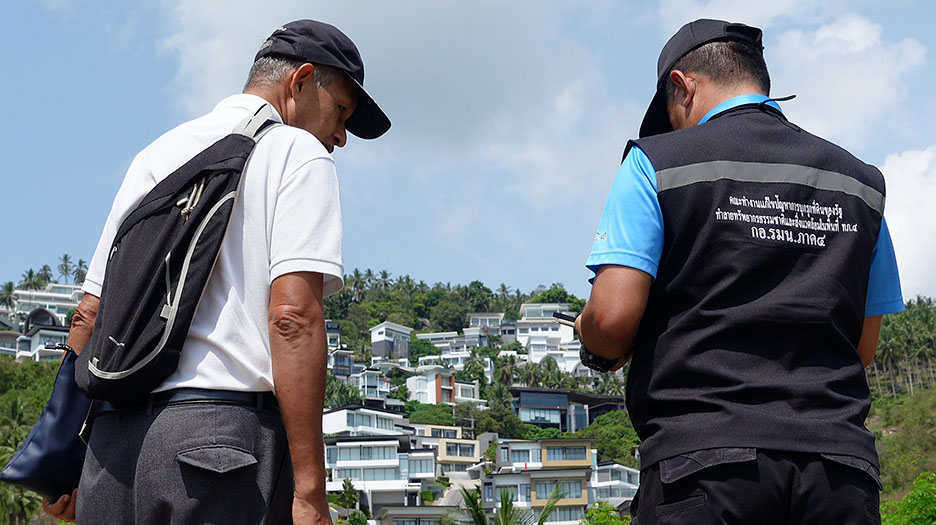
The Internal Security Operations Command (ISOC) Region 4 inspected two locations on Khao Ma Ngon, Village No. 3, Bo Phut Subdistrict, Ko Samui District, Surat Thani Province.
Mr. Jessada assigned the Koh Samui district chief to lead the policy-level problem-solving team working with ISOC’s legal efforts. The information will be submitted to him as the provincial governor, who also has oversight of the relevant local government agencies, including land, local government, municipality and public works. The plans are forwarded to ISOC Region 4 through ISOC Surat Thani.
“I am not aware of the causes of the past problems, but upon assuming office as provincial governor, I recognized the need to resolve these problems to protect national interests and ensure that there are no hidden agendas. I am determined to reduce these problems,” he said.
Earlier, on May 8, Lt. Gen. Santi Sakuntanak, the area commander of the 4th Army and director of ISOC Region 4, conducted a helicopter survey together with the Koh Samui Land Issue Task Force. Several luxury villas on hilltops or pool villas were discovered in six locations: Khao Laem Yai in Bo Phut Subdistrict, Khao Lamai in Maret Subdistrict, Khao Tai Khuai in Lipa Noi Subdistrict, Khao Laem Yai in Maenam Subdistrict, Khao Toei in Maenam Subdistrict, and Khao Phra in Bo Phut Subdistrict.
The luxury villas are located on Khao Ma Ngon, Village No. 3, Bo Phut Subdistrict, Ko Samui District, Surat Thani Province.
Maj. Gen. Anusorn O-u-rai, deputy commander of the 4th Army Area, said the investigation clearly showed illegal constructions on steep slopes, which is expressly against the law. On-site inspections also uncovered irregularities in land ownership records. This problem, which is widespread in tourist areas, needs to be solved urgently.
The working group tasked with resolving issues related to encroachment on state land and the destruction of natural resources and the environment conducted a survey at two locations on Khao Ma Ngon, Village No. 3, Bo Phut Subdistrict, Ko Samui District, Surat Thani Province, on May 24.
They found that the structures at both locations were in violation of at least three acts, including the Ministry of Natural Resources and Environment Announcement 2014, the Hotel Act 2004, and the Building Control Act.
The luxury villas are located on Khao Ma Ngon, Village No. 3, Bo Phut Subdistrict, Ko Samui District, Surat Thani Province, in an area with a slope exceeding 50 percent, which is prohibited for construction. Both operators had claimed the area had a slope of 35-50 percent. Additionally, one of the locations was found to be open for tourists as usual, with room bookings available on the internet at a price of 13,900 baht per night.
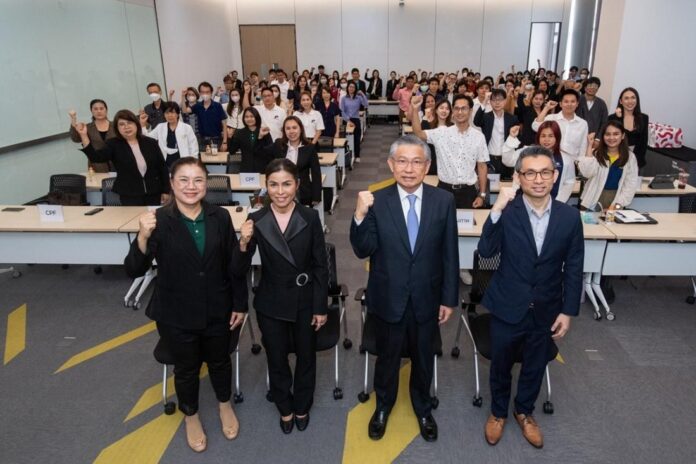
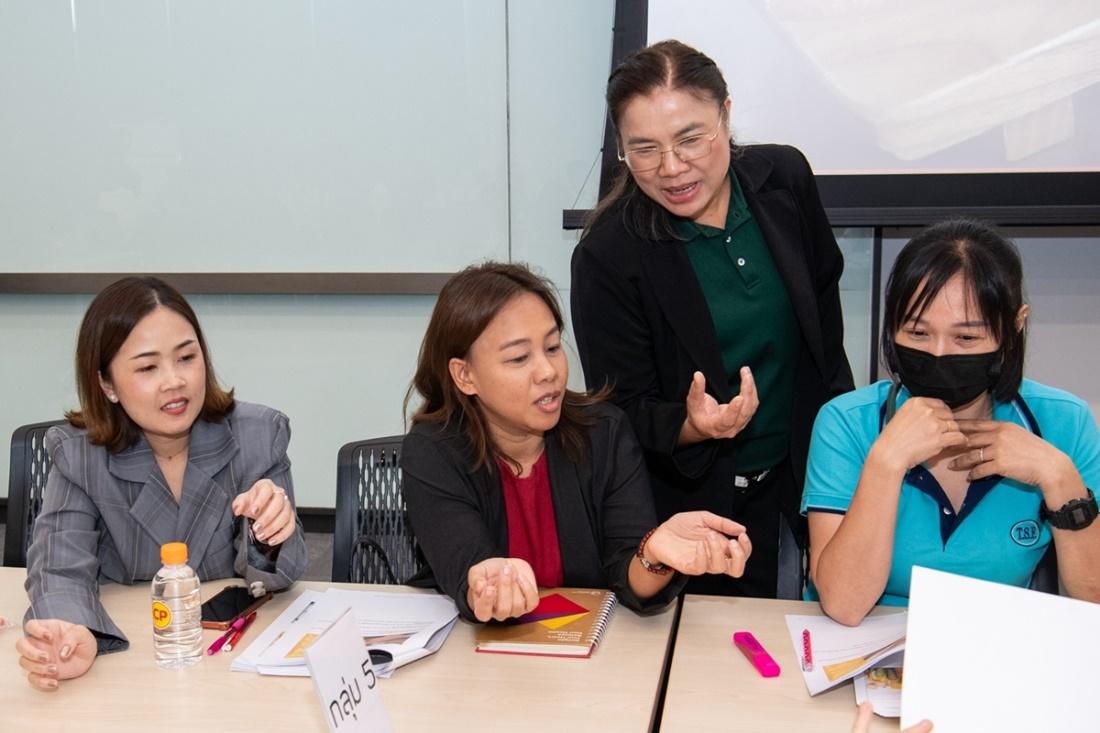
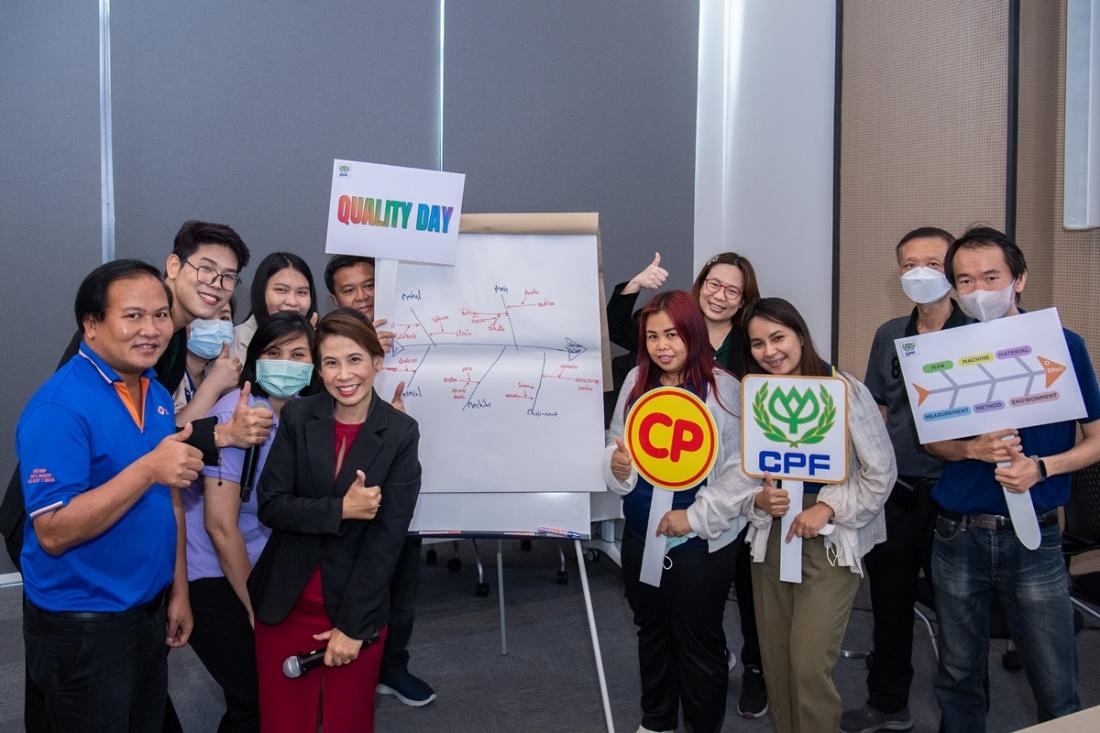
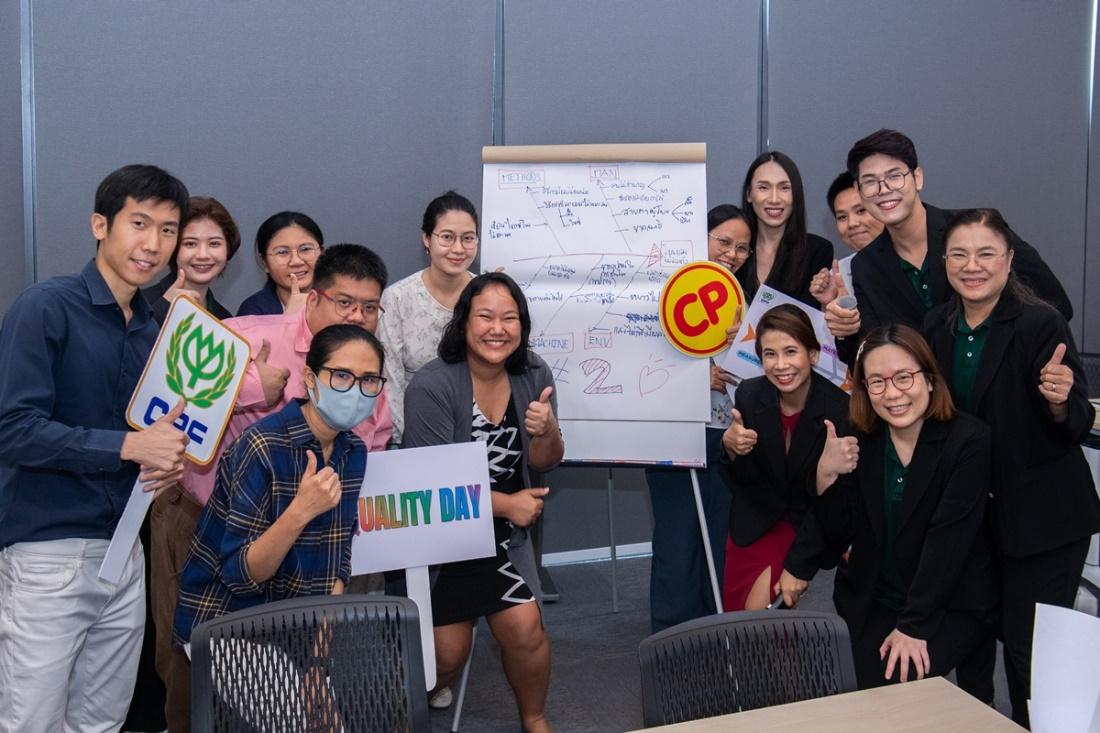
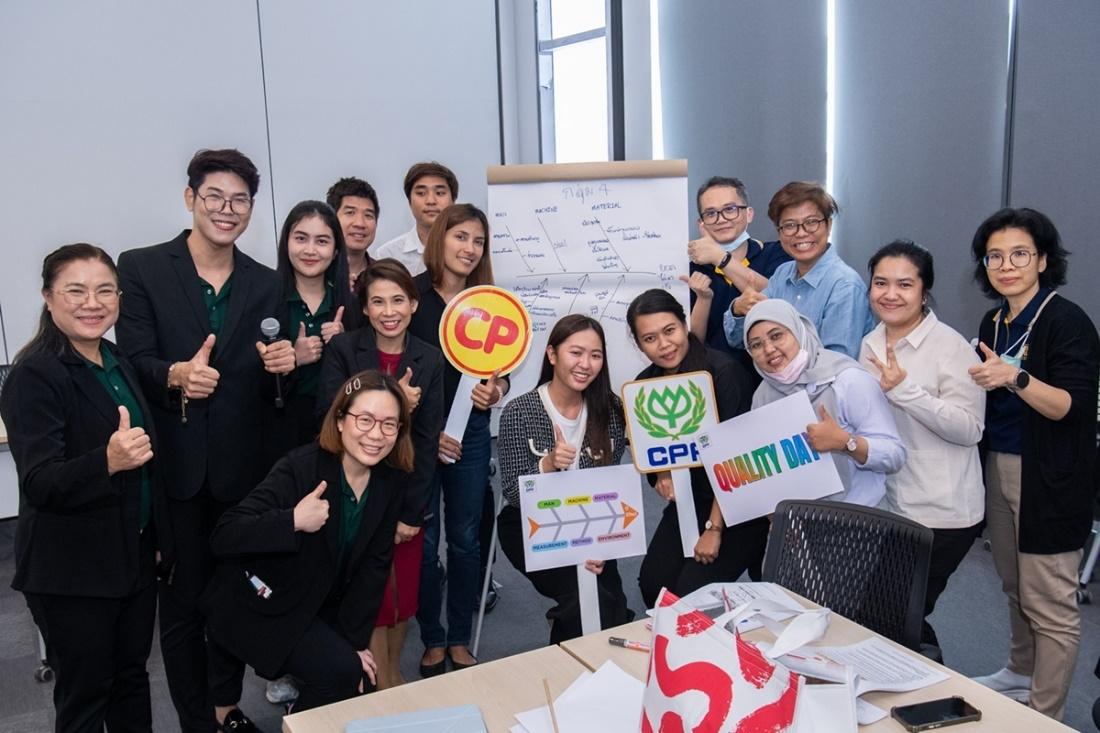
Charoen Pokphand Foods Public Company Limited (CP Foods) continues bolstering the capabilities of its small and medium enterprise (SME) partners in the food supply chain through the second year of its “PARTNER TO GROW…Sustainably Together” initiatives. The company’s Corporate Food Quality Assurance division organized the “Quality Day Together” workshop, equipping entrepreneurs who supply raw materials, particularly SMEs, with best practices for advanced quality control and food safety standards that meet international criteria for social and environmental responsibility.
This initiative fortifies global consumer confidence while creating opportunities and enhancing the competitiveness of Thai SME entrepreneurs, enabling them to thrive on the world stage. By imparting comprehensive knowledge on quality assurance, root cause analysis in production processes, and systematic corrective measures based on international principles, CP Foods elevates the management of high-quality, safe food ingredient production processes in line with global standards.
Wilailuck Klodpeng, Head of Corporate Food Quality Assurance at CP Foods, emphasized the company’s unwavering focus on continuously nurturing the potential of small business partners and SMEs, which constitute the foundation of their food production chain. This strategic collaboration fosters sustainable opportunities and collective success. This year, CP Foods partnered with the British Standards Institution (BSI) to conduct comprehensive training workshops tailored for business partners engaged in producing food ingredients, seasonings, and packaging materials. These immersive sessions empowered entrepreneurs with invaluable insights into advanced quality assurance methodologies, root cause analysis techniques for production processes, and the systematic implementation of corrective and preventive measures adhering to internationally recognized approaches.
Wilailuck highlighted that this concerted effort aims to elevate the management of high-quality, safe food ingredient production processes, aligning them with rigorous global standards. By equipping its business partners with cutting-edge knowledge and best practices, CP Foods reinforces its commitment to driving operational excellence throughout the supply chain, ensuring consistent delivery of superior products to consumers worldwide.
“These activities underscore the importance of our SME partners aligning with CP Foods’ vision,” said Wilailuck. “Together, we can elevate production standards and raw material quality to meet strict criteria for product excellence and sustainability. Guided by the ‘Good products require good raw materials,’ concept, our collaboration drives food quality and mutual growth.”
Moreover, CP Foods honored three outstanding SME partners with the prestigious Supplier Quality Engagement Awards 2023. This recognizes their commitment to elevating raw material quality and consistently meeting stringent standards. CP Foods also commended three dedicated SME partners for their tireless collaboration in improving and enhancing production processes.
The “Quality Day Together” workshop is part of the “PARTNER TO GROW…Sustainably Together” program, now in its second consecutive year. It underscores CP Foods’ commitment to sustainable sourcing policies, nurturing competitiveness and sustainable practices among its supply chain partners, fostering mutual growth. Through collaborative development, the company aims to enhance SMEs’ operational excellence, social responsibility, and environmental stewardship, driving collective sustainable progress.
Chaithawee Samanya, Managing Director of Chai Charoen Fresh Company Limited, said, “The Quality Together Day activity benefits fresh vegetable producers who must focus on quality, safety, and chemical-free. It helps small operators implement good practices to improve and increase their operational efficiency, enabling them to deliver products that meet CP Foods’ requirements.”
Paisarn Somsri, Managing Director of Ying Paisarn Agriculture Company Limited, added, “CP Foods assists farmer partners in gaining knowledge about international standard production systems and enables them to implement these practices for producing and supplying fresh, clean, safe, and chemical-free agricultural products. Importantly, this helps reduce losses from substandard quality products.”
Pathawee Mapaisarnsin, Quality Assurance Manager at M.P. Food Production Company Limited, added, “The knowledge from experts helps enhance the capabilities of medium-sized raw food material producers, providing them with principles for accurately analyzing and resolving issues that arise. They can efficiently improve and develop their products to meet customer demands. This enables operators to reduce costs and increase revenue.”