Thailand has stressed that the protection of vital maritime waterways is a shared global responsibility, warning that disruptions to key sea routes could threaten global trade, energy supplies and economic stability.
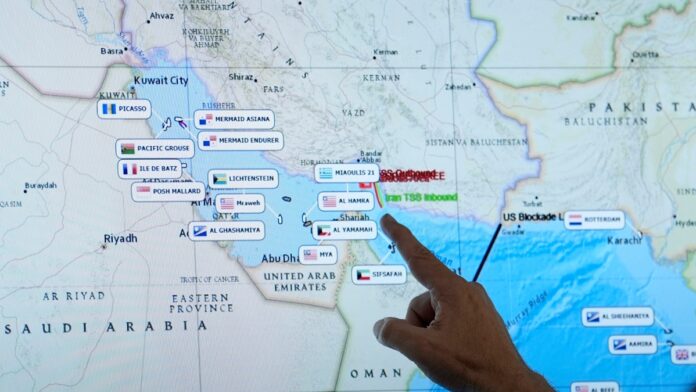
Speaking at a United Nations Security Council open debate on “The Safety and Protection of Waterways in the Maritime Domain” on 27 April 2026, chaired by Bahrain, Thailand’s Permanent Representative to the UN, Ambassador Cherdchai Chaivaivid, highlighted risks to strategic maritime chokepoints such as the Strait of Hormuz.
He said any disruption in such areas endangers seafarers, disrupts global energy flows, and has wider consequences for the global economy.
Thailand called on all parties to exercise restraint, uphold international law, and respect freedom of navigation.
The Thai delegation also reiterated support for cooperation, dialogue and diplomacy to ensure that the high seas remain open, secure, and governed by the rule of law.
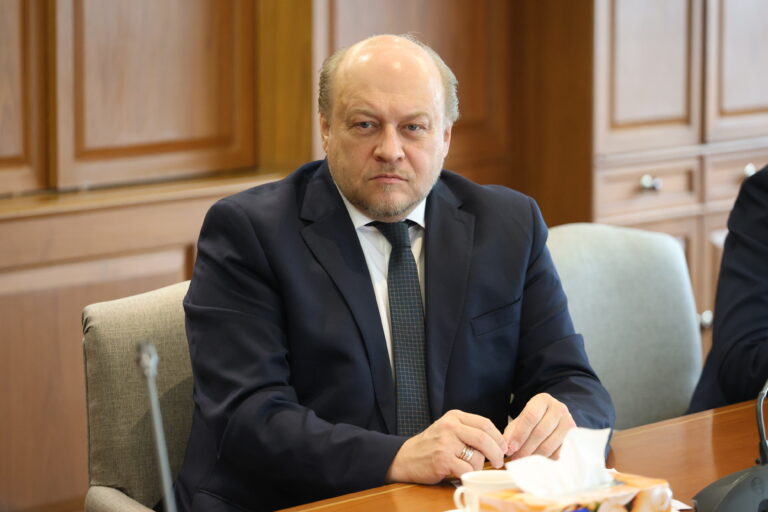
This article was written by H.E. Mr. Evgeny Tomikhin, Ambassador of the Russian Federation to the Kingdom of Thailand.
On April 20–21, 2026, the Russian city of Kazan hosted the 22nd Russia-ASEAN Senior Officials’ Meeting, a regular event in the evolving dialogue between Russia and the Association. This meeting took place in a symbolic year: 2026 marks the 35th Anniversary of Russia-ASEAN relations – a partnership that had matured alongside profound transformations in the global order.
Anniversaries often invited reflection. Yet beyond ceremonial language, a more important question arose: what is the real substance of Russia-ASEAN cooperation today? And, more pointedly, does Russia indeed “have little to offer” Southeast Asia, as some commentators suggested?
Such claims tend to overlook a fundamental shift in how international partnerships are evaluated. ASEAN countries consistently emphasized pragmatism, strategic autonomy, and diversification. In this context, Russia’s role should not be a measured by comparison with any single external actor, but by the concrete value it brought across multiple domains.
Energy cooperation provides perhaps the clearest answer. On March 23, 2026, Russia and Vietnam signed an intergovernmental agreement to construct the Ninh Thuan 1 nuclear power plant – the first such facility in Southeast Asia. This is not a symbolic project. It involves advanced technology, long-term investment, workforce training, and the development of an entire ecosystem around peaceful nuclear energy. For a region facing rising energy demand, climate challenges, and the need for reliable baseload power, such cooperation speaks directly to ASEAN’s priorities.
Russia possesses advanced and practical expertise in the field of small modular reactors (SMRs). Unlike many other countries where such technologies remain at the design stage, Russia already operates real, functioning solutions – including the world’s first floating nuclear power plant, Akademik Lomonosov. These developments offer flexible, safe and cost-effective energy solutions, particularly relevant for archipelagic and remote areas. There is genuine interest in SMRs across ASEAN, and Russia stands ready to share its technologies and experience on the mutually beneficial basis.
Importantly, this project also illustrates a broader point: Russia’s comparative advantage lies in sectors that require long-term commitment, technological depth, and respect for national development strategies. Nuclear energy, hydrocarbons, transport infrastructure, food security are not areas of short-term engagement. They are foundational elements of economic sovereignty – something ASEAN states value highly.
H.E. Mr. Evgeny Tomikhin, Ambassador of the Russian Federation to the Kingdom of Thailand.
Since 2024 Russia is also an ASEAN Digital Partner. Russian expertise in
e-governance, digital public services, fintech solutions, and IT infrastructure development provides additional avenues for cooperation. As Southeast Asia continues its rapid digital transformation, there is growing demand for secure, sovereign, and adaptable technological solutions – areas where Russia has accumulated substantial experience and practical capabilities.
In practical terms, an important area of joint efforts, including through the Association of ASEAN National Police (ASEANAPOL), where Russia received dialogue partner status in 2014, is the first against global challenges and threats: terrorism, transnational crime, drug trafficking, illegal migration and human trafficking, as well as ensuring information security.
Youth engagement has also become an increasingly important pillar of
Russia-ASEAN cooperation. Over the years, five youth summits as well as a meeting of young diplomats have brought together young leaders from across ASEAN and Russia. These initiatives have created opportunities for networking, cultural exchange, and the development of future-oriented partnerships.
Equally significant is Russia’s approach to regional affairs. Unlike models that frame Southeast Asia primarily through the lens of geopolitical competition, Russia has consistently supported ASEAN centrality and the principle of inclusive, non-bloc cooperation. In a period marked by increasing polarization, this approach resonates with ASEAN’s own vision of a balanced and open regional architecture.
The meeting in Kazan should therefore have been seen not merely as a routine diplomatic event, but as part of a broader effort to deepen engagement. It provided an opportunity to focus on practical mechanisms that could bring tangible benefits to both sides.
At a time when the international system is undergoing profound change, ASEAN’s global and regional role continues to evolve. Russia, for its part, is actively diversifying its external partnerships and strengthening its presence in Asia. These trajectories are not contradictory – they are complementary.
The real question, then, is not whether Russia has something to offer ASEAN, but whether both sides are ready to fully realize the potential that already exists. The answer will depend less on rhetoric and more on sustained, pragmatic cooperation.
If approached in this spirit, the Russia-ASEAN partnership will continue to mature – not as a headline-driven relationship, but as a steady and meaningful contributor to a more balanced and multipolar international system.
PHUKET — 28 April 2026, A group of foreign tourists has drawn widespread criticism online after images showed them behaving inappropriately on a moving tuk-tuk in Phuket, authorities said.
Photos shared by the local Facebook page show several women on a tuk-tuk travelling along Patak Road in Karon subdistrict, Muang district, heading towards Karon Circle. In the images, the tourists appear to take turns removing their underwear and exposing themselves towards vehicles behind them, in full view of other road users and pedestrians.
The post quickly triggered a wave of reactions on social media, with many users condemning the behaviour and calling for authorities to take action, including fines or deportation.
Dashcam footage from a vehicle travelling behind the tuk-tuk reportedly captured the incident clearly. As of 28 April, there were no confirmed reports that officials had launched an investigation or identified those involved.
The incident has renewed calls for stricter enforcement measures to prevent inappropriate conduct in key tourist areas.
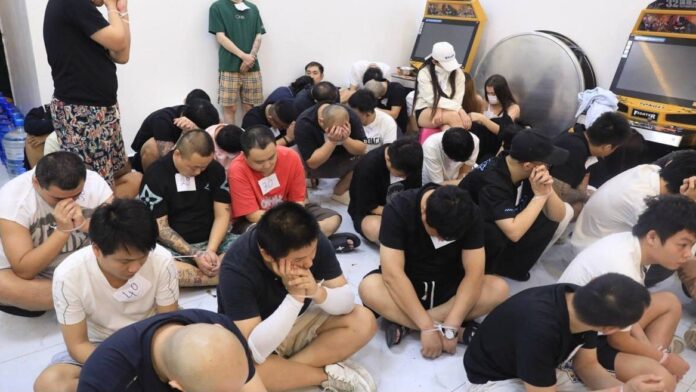
Cambodian police raided a suspected online scam operation in the border city of Poipet on Sunday, detaining multiple individuals as authorities face mounting international pressure to crack down on cybercrime networks.
The Cambodian National Police said the operation took place at 17:00 in Balelay 2 village, Poipet commune, in cooperation with Banteay Meanchey provincial police and the Poipet City Administration.
Officers searched the premises and arrested several suspects, including foreign nationals, while seizing evidence. Authorities said those detained remain under investigation, with legal proceedings pending.
The crackdown comes as Cambodia faces heightened scrutiny from the international community over its efforts to dismantle scam compounds operating within its borders.
During a recent visit, Chinese Foreign Minister Wang Yi raised concerns over online scam networks in talks with Cambodian leaders, urging stronger enforcement.
Meanwhile, the United States has imposed sanctions on a Cambodian senator accused of links to scam operations, adding further pressure on Phnom Penh to act.
BANGKOK — 28 April 2026, Bangkok authorities warned that the city’s heat index has reached a “dangerous” level, urging residents to monitor their health and take precautions, particularly for vulnerable groups.
In a Facebook post on Tuesday, the Bangkok Metropolitan Administration said the day’s maximum heat index had entered the danger category.
Health impacts from extreme heat can occur when temperatures exceed what the body can tolerate, leading to both direct and indirect effects. Symptoms may include fatigue, dizziness, rashes, swelling, heat cramps and heatstroke.
Authorities advised the general public to watch for symptoms, while those in at-risk groups should seek medical attention immediately if any abnormalities occur.
Vulnerable groups include children aged 0–5, people aged 60 and above, pregnant women, individuals with underlying health conditions, those with obesity, people who consume alcohol, outdoor workers, people exercising outdoors and tourists.
Residents can monitor air quality updates via the website airbkk.com or the AirBKK application. In emergencies, authorities advised calling 1669.
BANGKOK — 28 April 2026, Culture Minister Sabida Thaiseth said on 28 April that the restoration of Ta Kwai temple is expected to take about two years, with the project currently awaiting budget allocation.
Speaking at Government House at 9:40, Sabida said the Fine Arts Department has completed an initial survey, and the Culture Ministry is coordinating closely with military units in the area to clear the site. Officials are prepared to provide full support to facilitate the work, she added.
Asked whether the area is now safe and free of conflict, Sabida said she could not confirm, as the matter falls under security authorities. However, based on available information, she said officials would ensure safety and provide assistance for access to the site.
She said the restoration aims to return the temple as closely as possible to its original condition, using modern technology to replicate its former appearance. Some differences in colour may remain to distinguish original materials from new ones, but the overall structure will follow the original design.
Sabida added that the restoration process is not highly complex and that the Fine Arts Department has the expertise to carry out the work. Once completed, the site could be opened as a tourist attraction, although further improvements to the surrounding area and landscape may be required.
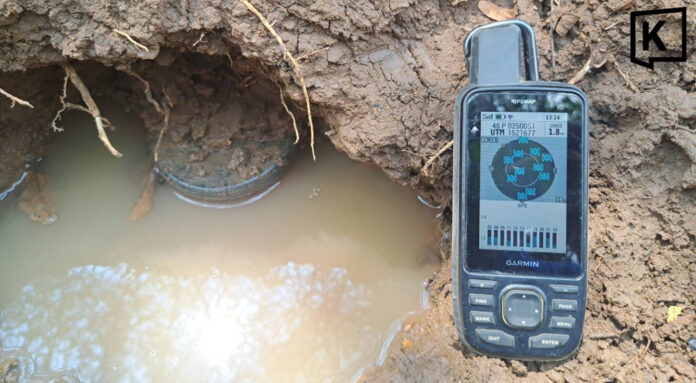
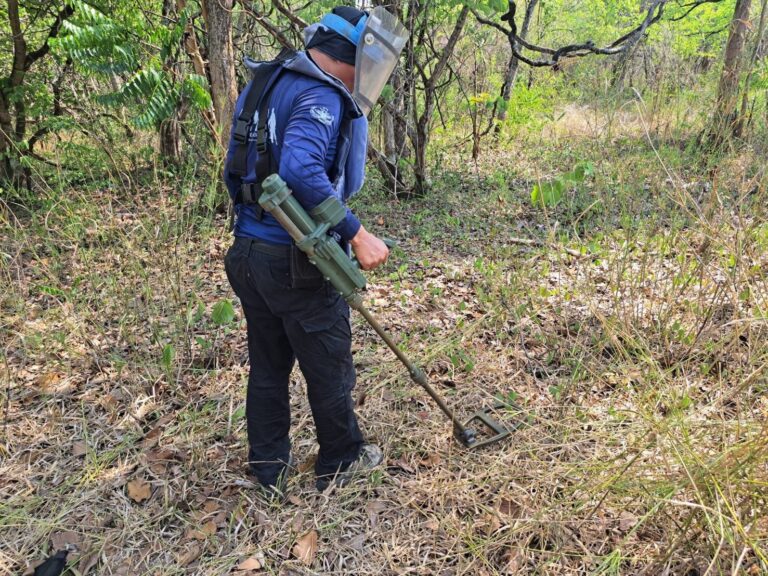
SA KAEO — 28 April 2026, Burapha Task Force, through its Humanitarian Mine Action Unit 1, is continuing efforts to clear landmines along the border at Ban Nong Chan in Non Mak Mun subdistrict, Khok Sung district, Sa Kaeo province, officials said.
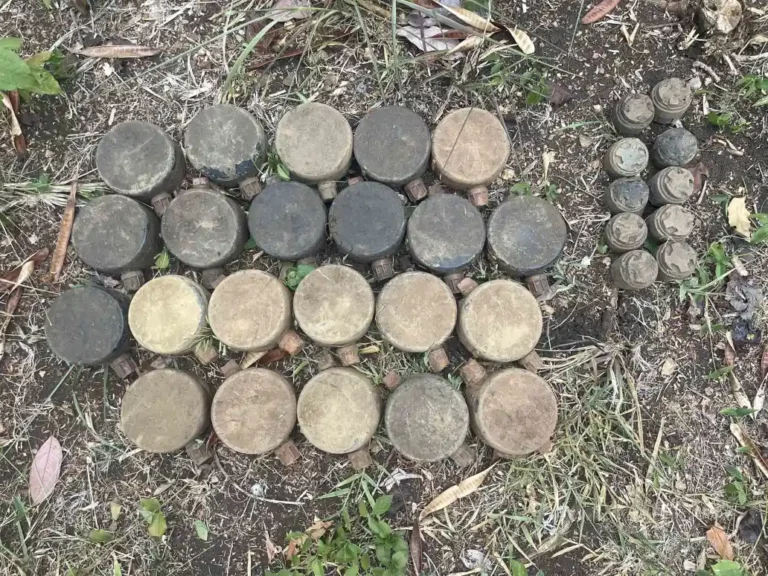
In the latest operation on 25 April, personnel worked in a suspected hazardous area designated SHA 27-01/AD, covering 99,800 square metres. They cleared an additional 400 square metres, or 0.40% of the site, and discovered 32 landmines in a single day. These included 22 PMN anti-personnel mines and 10 MN79 mines.
Images released by officials showed the recovered mines bundled together for transport, underscoring the density of contamination in the area.
Cumulative operations since 18 November have rendered 62,000 square metres safe, equivalent to 62.93% of the total area. About 37,000 square metres, or 37.07%, remain suspected of contamination.
In total, 189 explosive items have been found and cleared, including 122 PMN mines, 30 MN79 mines, two POMZ-2 mines, 34 PMD-6M mines and one item of unexploded ordnance (UXO).
Officials said large numbers of mines continue to be uncovered along the Thai-Cambodian border. The bundling of recovered mines, while done for safe transport and storage before disposal, is rarely seen and highlights the extent of the contamination.
Operations are ongoing as authorities work to restore safety for local communities in the border area.
True Corporation has partnered with OYMotion to develop Neuro AI technology aimed at improving physical therapy and rehabilitation, the company said on Monday.
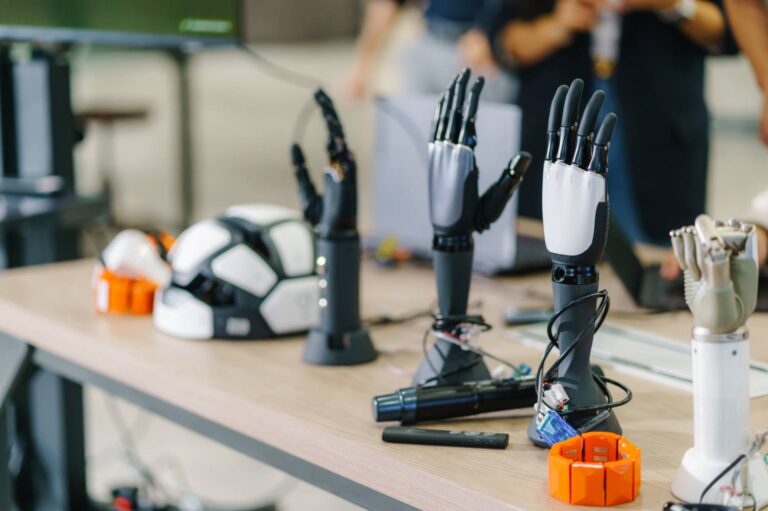
The collaboration, led by True’s Research and Innovation Center, integrates Brain-Computer Interface (BCI) technology with artificial intelligence and a data platform to enable patients to control smart devices or prosthetics through neural signals transmitted over True’s network.
The system translates brain activity into commands, stimulating neural pathways to trigger muscle movement. The approach is designed to support cognitive retraining and accelerate recovery compared with conventional therapy, particularly for stroke patients and those with paralysis or mobility impairments.
True said the technology is being piloted with patients at leading hospitals in Thailand to validate clinical outcomes. If successful, it could be scaled across the public health system.
The initiative also aims to address shortages of specialised physical therapists and reduce long-term rehabilitation costs, which remain key barriers to continuous care.
According to True, the platform combines OYMotion’s neural sensing and signal decoding capabilities with its own digital ecosystem, enabling real-time transmission of brainwave and muscle data. This allows robotic devices or prosthetics to perform movements that closely mimic natural human motion.
Ekaraj Panjavinin, head of Research and Innovation at True Corporation, said the partnership reflects the company’s strategy to develop technologies that improve quality of life.
“Combining Thai medical expertise with world-class NeuroTech will be the cornerstone for transforming Thailand’s rehabilitation healthcare system into a leading regional hub,” he said.
Ni Hualiang, founder and CEO of OYMotion, said the company focuses on affordable rehabilitation solutions using neural sensing and AI-driven signal recognition.
“Together, we aim to transform traditional physical therapy into a smarter, more seamless experience and set a new standard for rehabilitation,” he said.
True said the technology is expected to benefit patients through faster recovery and greater independence, while enabling doctors to tailor treatment using brain function data. Hospitals could also expand access to rehabilitation services while maintaining care standards.
If widely adopted, the companies said the initiative could help position Thailand as a regional centre for NeuroTech innovation.
Police have arrested two Chinese men accused of carrying out a brazen gold shop robbery in Nakhon Ratchasima on Sunday morning, stealing gold rings worth an estimated 300,000 baht before fleeing the scene.
The incident took place at around 10:11am on April 27 at a gold shop in Dan Kwian subdistrict, Chok Chai district, where two masked men entered the store while two female staff members were inside.
Police said the employees fled to the back of the shop after spotting the men, who were wearing black long-sleeve shirts, shorts, and masks covering their faces.
Unable to access gold necklaces due to protective grills, the men used a blunt object to smash a display cabinet containing gold rings before quickly grabbing items and fleeing the scene.
The entire robbery took approximately 30 seconds. The men then escaped in a white Toyota Yaris sedan with no visible licence plate, prompting police to issue a nationwide alert.
Authorities later confirmed the men were Chinese nationals identified as 27-year-old Zou Qintao from Guangdong province and 19-year-old Song Haolong from Sichuan province.
Police said the pair were arrested later the same day at a car rental shop in Prawet district, Bangkok, after investigators traced the vehicle used in the robbery back to the rental company.
Officers coordinated with immigration police and local units before locating the pair, who were found in possession of the stolen gold rings. No firearm was recovered, with the men allegedly claiming it had been discarded during their escape.
Police said initial investigations suggested the pair entered Thailand as tourists, and both were reported to have Thai girlfriends. Authorities added that they allegedly ran out of money before planning the robbery.
Investigators from Nakhon Ratchasima provincial police are en route to take custody of the pair for further questioning in the province, while evidence is being compiled for legal proceedings.
A senior U.S. prosecutor addressed questions on Cambodia’s role in cyber scam operations during a virtual press briefing on 24 April, while also responding to queries about alleged links between public officials and scam networks in the region.
Jeanine Ferris Pirro, United States Attorney for the District of Columbia, made the remarks during a briefing on U.S. enforcement actions targeting transnational cyber scam and forced-labour operations in Southeast Asia.
Responding to a question from Phnom Penh Post journalist Chheng Niem on the term “Scambodia” in relation to scam activity in Cambodia, Pirro said Cambodia remains “a source of focus”.
She added that public reporting suggests that 40 to 60 percent of Cambodia’s GDP is derived from scam revenue, while noting that Cambodian authorities have recently taken action against scam compounds. She said U.S. authorities are “waiting to see whether that will actually change the prevalence of scams in Cambodia.”
The briefing also included a separate question from BBC journalist Sen Nguyen, who asked about allegations involving Cambodian Senate President Hun Sen and his son, Prime Minister Hun Manet, as well as possible links to scam centres, and whether U.S. intelligence had detected any related activity in Vietnam.
Pirro responded that U.S. authorities could not comment on any particular investigation.
“We do, however, take seriously allegations that public officials are involved in or profiting from scam centers,” she said. “The strike force is focused on targets organizing and leading these compounds regardless of their political connections.”
The briefing focused on U.S. efforts against cyber-enabled investment fraud, commonly known as “pig butchering” scams, where victims are lured through fake job offers or online schemes before being defrauded.
Pirro said U.S. authorities have charged individuals linked to scam compounds in Myanmar and carried out enforcement actions against recruitment networks allegedly operating in the region, including Cambodia.
She added that hundreds of websites had been taken down and more than US$700 million in cryptocurrency linked to victims had been restrained as part of ongoing investigations.
The remarks come amid increased international scrutiny of cyber scam operations in Southeast Asia, where trafficking-linked fraud networks have expanded in recent years.