28.3 C
Bangkok
Monday, June 22, 2026
Home Blog Page 73

Thailand tells UN forum Cambodia attacks killed 19 civilians, displaced over 400,000

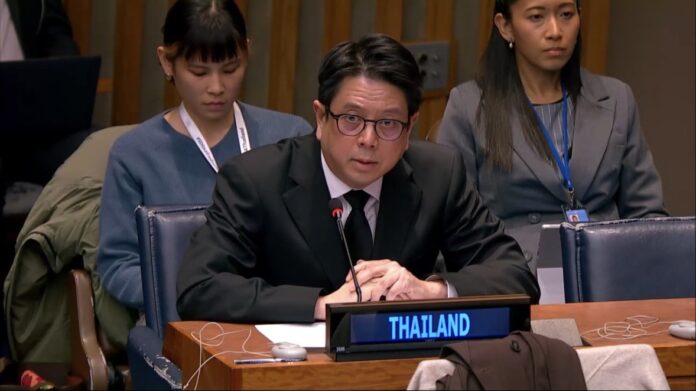
NEW YORK — Thailand has told a United Nations development forum that cross-border attacks from Cambodia in 2025 resulted in 19 civilian deaths, injured 51 people and forced more than 400,000 residents to flee their homes.

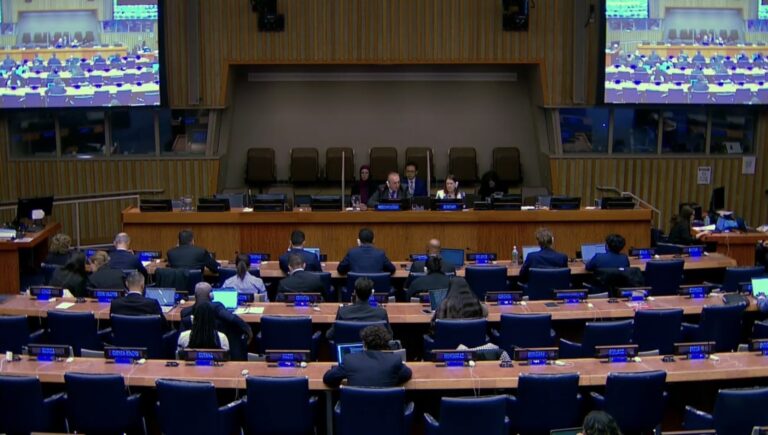
The statement was delivered on 22 April 2026 during the ECOSOC Forum on Financing for Development Follow-up, where Thailand exercised its right of reply after remarks made by the Cambodian delegation.

According to a statement posted by the Permanent Mission of Thailand to the United Nations, Ambassador and Permanent Representative Cherdchai Chaivaivid said Thailand had consistently supported Cambodia’s peacebuilding and development for decades, including during its civil war period and through post-conflict reintegration into ASEAN and the global economy.

He cited Thailand’s long-standing assistance to Cambodia, including hosting large numbers of refugees during the conflicts of the 1970s and 1980s, as well as providing more than US$17 million in development aid, technical assistance and scholarships since the COVID-19 pandemic.

However, he said recent developments had strained bilateral relations.

Ambassador Cherdchai said Cambodia carried out “unprovoked and indiscriminate armed attacks” on Thai territory in July and December 2025, which resulted in civilian casualties and large-scale displacement.

679551107 981078154422641 2394957599356204641 n

“These attacks claimed 19 civilian lives, injured 51 others, displaced over 400,000 people, and affected more than 400 hospitals,” he said, adding that Thailand was compelled to act in self-defence under Article 51 of the UN Charter.

He also raised concerns over landmine contamination in border areas, saying Cambodia—despite receiving international assistance for demining—had continued to plant new explosives, limiting economic activity and cross-border development.

The Thai envoy further alleged that Cambodia had become a hub for online scam operations generating billions of US dollars annually, contributing to global financial losses and human trafficking, though these claims were not independently verified in the statement.

The remarks formed part of a broader exchange between the two delegations at the UN forum, which focuses on global financing and development cooperation.

Advertisement

Indonesian minister considers charging ships passing through Malacca Strait

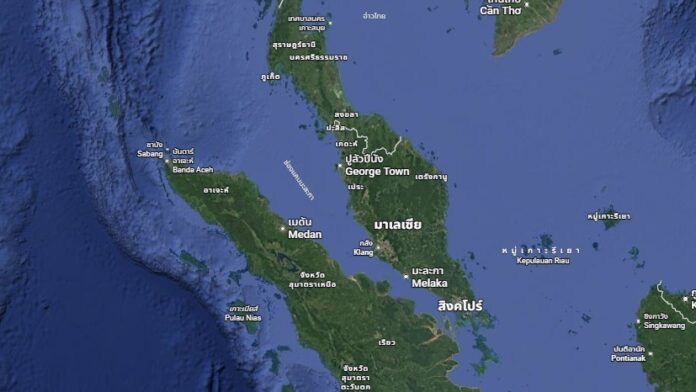
JAKARTA — Indonesia’s finance minister has suggested the possibility of imposing a levy on ships passing through the Malacca Strait, framing the idea as part of efforts to better capitalise on the country’s position along one of the world’s busiest trade routes.

Finance Minister Purbaya Yudhi Sadewa said the proposal reflects a broader push to strengthen Indonesia’s role in global trade and energy flows, in line with President Prabowo Subianto’s vision of the country as a key economic player rather than a peripheral state.

Speaking at a symposium in Jakarta on April 22, he noted that large volumes of international shipping pass through the strait without any direct charge, adding that this raises questions over how Indonesia should approach its strategic waterways.

The Malacca Strait, jointly bordered by Indonesia, Malaysia and Singapore, is a critical maritime corridor linking the Indian and Pacific Oceans and handling a significant share of global trade.

Purbaya said the idea was partly inspired by discussions in other regions, including Iran’s reported plans to introduce charges for vessels passing through the Strait of Hormuz, another key global energy route.

He suggested that a similar model could potentially generate economic value if coordinated among the three littoral states sharing the Malacca Strait, though he stressed that any move would require regional agreement.

However, the minister acknowledged that such a proposal would not be simple to implement, given the need for coordination with Malaysia and Singapore and the broader implications for international shipping rules.

He also indicated that Indonesia is not pursuing unilateral action, describing the idea as an initial concept that would require further study and discussion before any policy direction is taken.

Advertisement

Two gas truck crashes snarl traffic in Korat morning

Two gas truck crashes snarl traffic in Korat morning

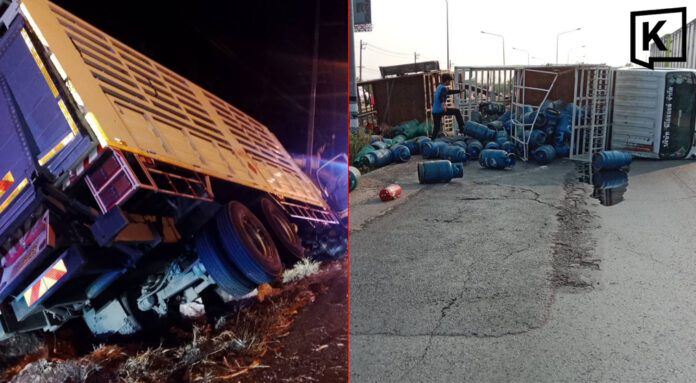
NAKHON RATCHASIMA — 23 April 2026, Two separate truck accidents involving liquefied petroleum gas (LPG) cylinders caused traffic disruption in Nakhon Ratchasima on Thursday morning, though no injuries were reported, police said.

At 5:00, officers from Pak Thong Chai police station responded to a report of a 10-wheeled Isuzu truck overturning at kilometre marker 257+552 on Highway 304 (Ratchasima–Kabin Buri Road), inbound to Pak Thong Chai district.

The truck, registered in Bangkok, was transporting 15kg and 48kg LPG cylinders for delivery within the province when it lost control on a curve near Wat Por Daeng in Phu Luang subdistrict and veered off the road.

Police and rescue volunteers from Hook 31 Nakhon Ratchasima closed off the area and coordinated with local authorities to deploy fire engines as a precaution while a crane was used to recover the vehicle. No injuries or government property damage were reported.

At 8:00, a second LPG truck overturned on Highway 204, the Nakhon Ratchasima bypass road, near the provincial Administrative Court in Nong Krathum subdistrict, Mueang district.

Rescue workers from Sawang Metta Korat and municipal disaster prevention officials closed inbound lanes after oil leaked from the engine, causing traffic congestion stretching more than 5 kilometres.

Police said the truck belonged to PO Oils Co and was carrying 15kg LPG cylinders from a factory in Khon Kaen en route to a warehouse in Chakkarat district when it was sideswiped by a trailer truck. The startled driver braked suddenly, causing the vehicle to lose control and overturn across the road.

Company staff later transferred the gas cylinders to another vehicle for safety. No injuries were reported in the incident.

Advertisement

Restoration plan unveiled for Ta Kwai Temple in Surin

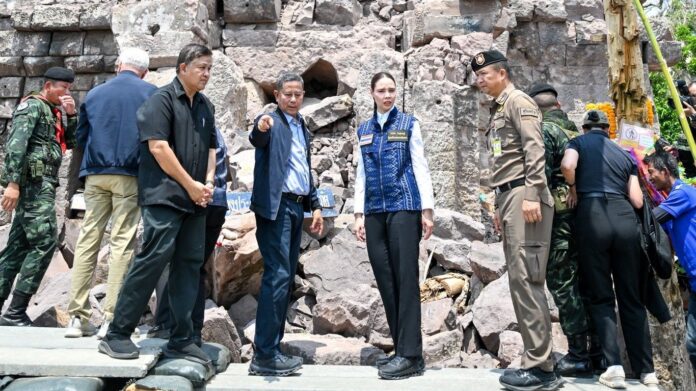
SURIN — The government has set out a plan to restore Ta Kwai Temple, with work expected to be completed within two years as part of efforts to preserve cultural heritage along the Thai-Cambodian border.

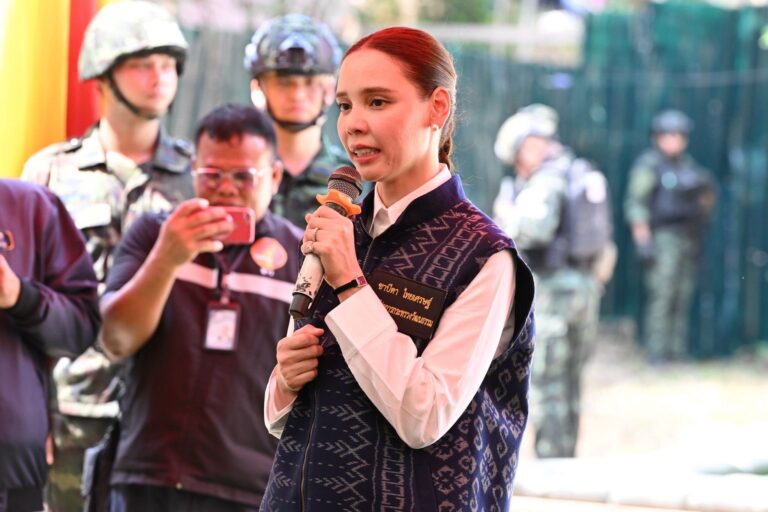
Culture Minister Sabida Thaiset said the Fine Arts Department has already proposed a budget for the restoration project. A detailed survey is scheduled to begin in the 2027 fiscal year, laying the groundwork for conservation and structural rehabilitation of the ancient site.

The temple is one of more than 30 historical sites located along Thailand’s border areas that authorities plan to survey and push for formal registration as national antiquities, according to Fine Arts Department chief Phanomboot Chantharachot.

676865192 1514279323401094 1589589920190793032 n
Sabida Thaiset

The restoration plan was announced during a visit to Surin province on 22 April 2026 by Defence Minister Adul Boonthamcharoen and senior officials. The delegation also attended a merit-making ceremony at the Ta Kwai Temple area to honour soldiers in past border clashes, including the 2011 Thai-Cambodian conflict and more recent tensions in 2025.

Officials said the restoration project forms part of a broader strategy to promote the Bak Dai subdistrict as a cultural and historical tourism destination, while ensuring the preservation of national heritage sites.

Authorities added that the initiative aims to strengthen public awareness of local traditions and history, while safeguarding the cultural roots and sovereignty associated with the border region.

Advertisement

Ancient tree falls on cars, cuts power in Chiang Mai

Ancient tree falls on cars, cuts power in Chiang Mai

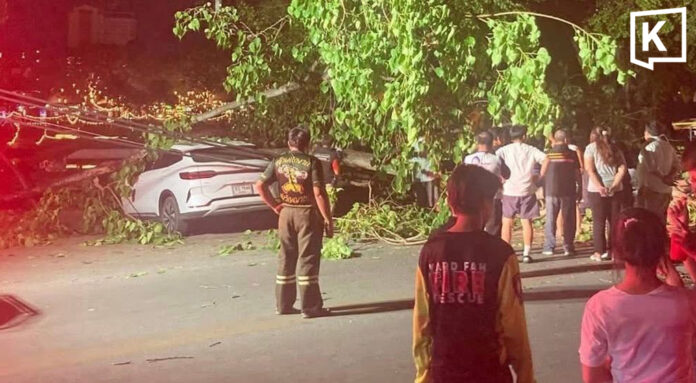
CHIANG MAI — 23 April 2026, An ancient bodhi tree toppled late at night near the “Kua Lek” bridge in central Chiang Mai, crushing five parked cars and causing a widespread power outage, officials said.

The incident occurred at 23:30 on 22 April when the large tree fell onto vehicles parked beneath it. No injuries were reported.

The fallen tree also brought down electricity lines, cutting power along the feeder line and leaving parts of Nong Hoi subdistrict without electricity.

Electricity authorities carried out repairs, and power was later restored to normal, officials said.

Advertisement

Air-con technician shot after Facebook dispute feud

Air-con technician shot after Facebook dispute feud

PRACHUAP KHIRI KHAN — 23 April 2026, A 32-year-old air-conditioning technician was injured in a late-night shooting in Phetchaburi province after an apparent dispute conducted via Facebook escalated into violence, police said.

The incident occurred at 23:57 on 22 April outside a house on Phu Wai Road in Cha-am district. Police said two men on a motorcycle opened fire on the victim, later identified as Thepphitak Onphakdi, striking him in the right arm.

Officers from Cha-am police station, led by investigator Pol. Lt. Col. Sunthorn Phramsang, responded to the scene along with rescue workers from Cha-am Hospital. The victim was given first aid before being taken to hospital.

At the scene, authorities found 17 spent 9mm shell casings scattered across the road, indicating a sustained burst of gunfire.

CCTV footage showed two suspects riding a motorcycle without visible registration plates circling the area before drawing a firearm and shooting the victim. They reportedly returned briefly to the scene before fleeing.

Police said one suspect had been identified as a 17-year-old male from Cha-am district, while efforts were under way to identify and apprehend the second suspect.

Preliminary inquiries suggest the attack stemmed from an earlier exchange of challenges between the victim and his rivals on Facebook. Investigators said further questioning would be conducted to establish the full motive.

Police have launched a manhunt for the second suspect, who remains at large.

The victim told officers he had just returned from installing an air-conditioning unit at a customer’s home and was unloading equipment when the attackers arrived. He attempted to dodge the gunfire but was hit once in the arm, adding that he could not clearly see the assailants’ faces.

Advertisement

Wildfire spreads to Mae Hong Son homes overnight

Wildfire spreads to Mae Hong Son homes overnight

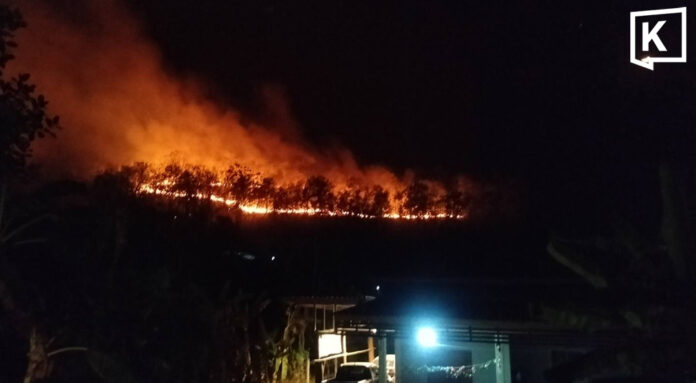
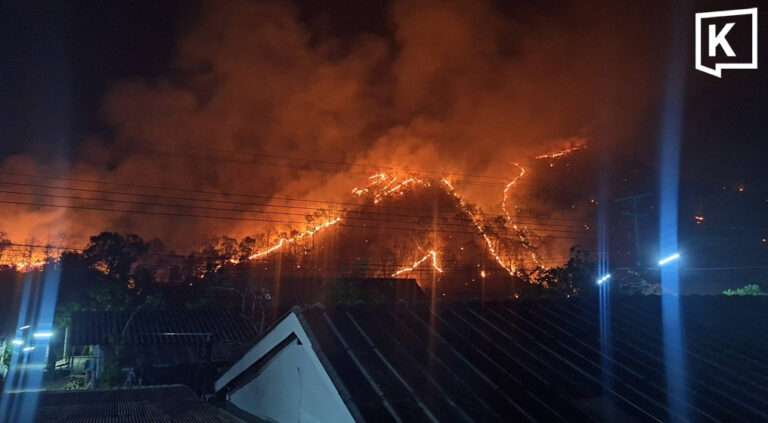
MAE HONG SON — 23 April 2026, A wildfire has escalated in northern Thailand after spreading from Ban Na Krachong into residential areas at Ban Mai Ngae, threatening official residences and a military camp.

Officials said the blaze intensified overnight, advancing into the mountains north of Ban Mai Ngae village, Moo 8, Pang Moo subdistrict, Mueang Mae Hong Son district. Fire crews battled the flames throughout the night but were unable to contain them.

Kanchit Wongphraya, a senior forestry officer and head of the Mae Hong Son Forest Protection and Development Unit, said teams from forest protection units MS.2 and MS.8, along with the Mae Hong Son wildfire control centre, known as “Fire Hawks”, had joined forces with military personnel, local administrative officials and villagers to fight the fire.

However, efforts were hampered by darkness and steep mountainous terrain, leaving some areas inaccessible.

Authorities have established firebreaks around the affected zone and deployed water trucks to stand by at the Juvenile and Family Court officials’ residences to prevent the flames from reaching nearby homes and government buildings.

Wildfire spreads to Mae Hong Son homes overnight 2

While forestry units are typically tasked with responding to satellite-detected hotspots, they have now been redeployed to support firefighting efforts in inner zones and areas close to residential and official buildings, as the situation has overwhelmed local agencies.

The wildfire at Ban Mai Ngae, also known as Doi Kho, is believed to have spread from Ban Na Krachong, a satellite village of Ban Hua Nam Mae Saked, since before noon on 22 April. Officials attempted to contain the fire in stages but were unsuccessful, particularly as nightfall made operations more difficult.

Additional teams were sent into the area on the morning of 23 April, with authorities expressing confidence that the blaze could be brought under control during daylight hours, when access improves and the risk of falls for firefighters is reduced.

Advertisement

Thailand considers ending 60-day visa-free stay, eyes higher-quality tourists

The Ministry of Tourism and Sports is preparing to propose to the Cabinet a review of the 60-day visa-free entry scheme, with a plan to shift focus towards attracting higher-quality, long-stay tourists.

Tourism and Sports Minister Surasak Phancharoenworakulsaid on 22 April 2026, in Phuket that the ministry is working with relevant agencies to assess the policy after a trial period, with concerns raised over “undesirable” visitors and the need for better screening measures.

He said the review will be based on collected data from all sectors, with the aim of adjusting visa policies to reduce related issues while maintaining Thailand’s openness. The proposal is expected to be submitted to the Cabinet for consideration soon.

Surasak added that Thailand is also pushing forward sustainable tourism under the Global Sustainable Tourism Conference 2026 held in Phuket, with participation from international partners including Oman and other countries.

He said the government’s goal is to position Thailand as a long-stay, high-value tourism destination, with a stronger focus on sustainability, safety, and community benefits, while shifting towards “hi-end” tourism that contributes more effectively to the economy.

Advertisement

Israel at 78: Resilience, Innovation, and Enduring Partnerships

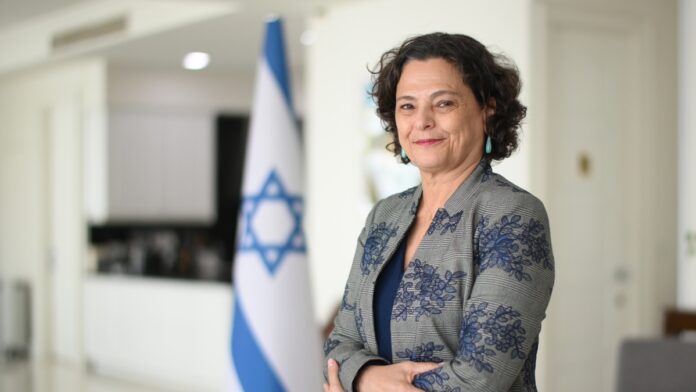
Dr. Alona Fisher-Kamm, Ambassador of the State of Israel to Thailand

This article was written by Dr. Alona Fisher-Kamm, Ambassador of Israel to Thailand, in honor of the 78th Independence Day of Israel.

As Israel marks its 78th Independence Day, it is an opportunity to reflect on a journey of a relatively new state that represents one of the oldest nations in the world. Since its establishment in 1948 as the homeland of the Jewish people and a democratic state, Israel has developed under conditions that would challenge any society. Yet it has endured, adapted, and contributed in ways that extend far beyond its borders.

Israel’s achievements are often discussed in economic or technological terms, but their deeper significance lies in their global impact. In a region marked by water scarcity, Israel became a pioneer in water management, developing technologies that allow communities to do more with less.

Innovations such as drip irrigation have transformed agriculture in arid regions worldwide, enabling farmers from Asia to Africa to increase yields while conserving resources. In medicine, Israeli research has contributed to breakthroughs in diagnostics, digital health, and life-saving treatments. In high technology and cybersecurity, Israeli companies and research institutions play a central role in shaping the tools that underpin modern economies.

These contributions are not incidental. They reflect a national ethos shaped by scarcity and necessity: limited natural resources, geographic constraints, and constant security challenges have required creativity, efficiency, and collaboration. The result is an innovative ecosystem whose benefits are shared globally. Israel’s success in this regard demonstrates how a small country, approximately 25 times smaller than Thailand, can generate solutions with worldwide relevance.

Equally significant is Israel’s democratic character. The preservation of a vibrant democracy under conditions of persistent external threat is neither obvious nor guaranteed. Since its founding, Israel has faced wars, terrorism, and regional instability, often from actors that openly seek its destruction. Its geographic size leaves little margin for error; strategic miscalculations can carry immediate and profound consequences. Despite this, Israel has maintained democratic institutions, an independent judiciary, a free press, and regular competitive elections.

This resilience is rooted in a strong civic culture and a commitment to pluralism, even amid deep internal debates. Israeli society is diverse religiously, ethnically, and politically and its democratic system reflects that complexity. The ability to sustain democratic governance under such pressure is a central feature of Israel’s identity and a point of relevance for other nations navigating their own challenges.

Israel’s strategic decisions for peace are another defining element of its trajectory. The peace agreements with Egypt (1979) and Jordan (1994) were not inevitable outcomes, but deliberate choices made by leaders of both sides willing to pursue stability and prosperity over conflict. These agreements have endured for decades, including during periods of regional tension, underscoring the importance of long-term commitment to peace.
More recently, the Abraham Accords of 2020 marked a significant expansion of regional cooperation and partnership. These agreements opened new avenues for economic, technological, and cultural exchange.

Their importance is especially evident today, as Israel and some of its regional partners face shared threats. The Accords illustrate the potential of pragmatic cooperation in a complex and rapidly changing Middle East.

Beyond geopolitics and innovation, Israel’s relationships with countries around the world are grounded in human connections. The relationship between Israel and Thailand, now spanning 72 years, is a notable example. Built on mutual respect and practical cooperation, it encompasses agriculture, technology, tourism, and, importantly, people-to-people ties.
Thai workers in Israel play a vital role in the agricultural sector, contributing significantly to food production and rural development in Israel. Yet, the knowledge, the skills and experience they acquire in Israel serve them and the Thai economy upon their return home.

Their presence in Israel is not only economically important but also socially meaningful, creating bonds between communities that might otherwise remain distant. Similarly, Israeli tourism in Thailand has grown steadily, reflecting both the appeal of Thailand as a destination and the openness of Thai society.

These exchanges are more than sources of income; they are bridges between cultures, fostering understanding and familiarity.

In recent years, shared challenges have further underscored the strength of this relationship. Moments of difficulty have highlighted the human dimension of bilateral ties, reminding both societies of their interconnectedness.

At 78, Israel’s story is still unfolding. It is a story of resilience under pressure, of innovation driven by necessity, and of a democratic system sustained in demanding circumstances. It is also a story of regional and global partnerships that continue to evolve.

For Thailand and Israel alike, the future of this relationship lies not only in expanding cooperation but also in deepening the human connections that have long defined it.


Advertisement

EU launches €15m programme to support Myanmar displaced persons in Thailand

The European Union has launched a new €15 million (about 567 million baht) programme to support sustainable solutions for Myanmar displaced persons in Thailand, focusing on self-reliance and social inclusion.
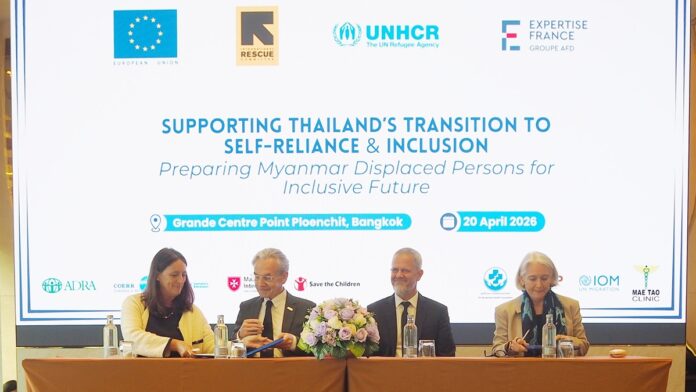
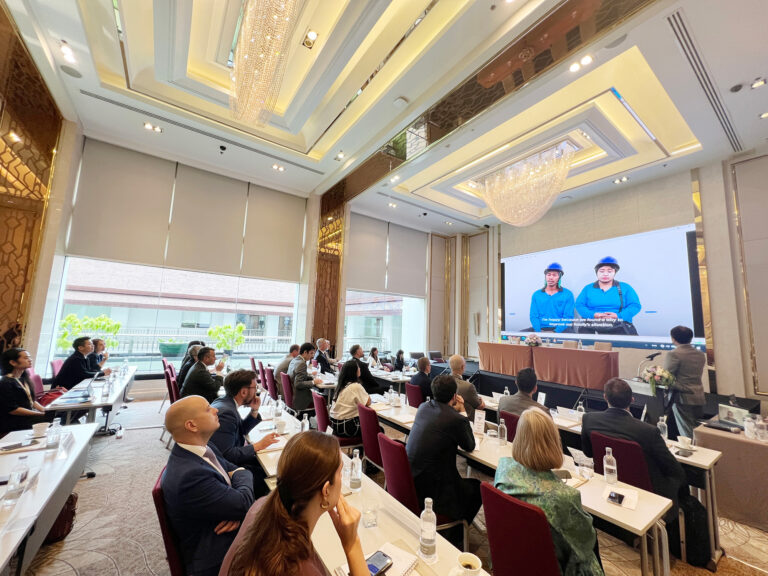
The programme, titled “Supporting Thailand’s Transition to Self-Reliance & Inclusion: Preparing Myanmar Displaced Persons for Inclusive Future”, was announced in Bangkok on April 20, 2026.

EU Ambassador to Thailand Luisa Ragher signed the agreement alongside representatives from UNHCR, a consortium led by the International Rescue Committee, and Expertise France.

The initiative will support displaced persons in nine temporary shelters across Mae Hong Son, Tak, Kanchanaburi and Ratchaburi provinces, as well as migrants living outside shelters in Tak province.

The programme comes as Thailand advances policies allowing displaced persons to access legal employment and national services. It aims to strengthen healthcare systems, enhance child protection, and expand livelihood opportunities, while improving coordination between humanitarian agencies and Thai authorities.

Ragher said the EU remains committed to helping Thailand develop inclusive and sustainable solutions, adding that the programme seeks to empower displaced persons to become self-reliant and active contributors to society.

677954946 1389226966582528 6052324532408651436 n

Pinsuda Jayanama, director-general of the Department of International Organizations at the Ministry of Foreign Affairs, welcomed the increase in funding from €12 million to €15 million for 2026–2028, calling it timely as Thailand shifts towards a more self-reliant and inclusive approach.

UNHCR representative in Thailand Tammi Sharpe said the programme would help strengthen protection systems and support access to services and employment, enabling a safe and dignified transition.

The International Rescue Committee said the initiative would improve access to essential services and build skills for long-term self-reliance, while Expertise France highlighted efforts to expand access to quality healthcare and strengthen local health systems.

The programme includes a €10.5 million project led by the International Rescue Committee and partners to support services and employment readiness in shelters, a €2 million healthcare initiative in Tak province led by Expertise France, and a €2.5 million UNHCR-led effort focusing on child protection and inclusion in national systems.

Thailand hosts more than 80,000 Myanmar displaced persons in long-standing shelters along the border. Recent policy changes allowing access to legal employment mark a significant step towards more sustainable solutions, with continued international support seen as key to ensuring a safe and inclusive transition.

Advertisement

Hot News

LATEST NEWS

Bangkok
overcast clouds
28.3 ° C
28.3 °
28.3 °
79 %
2kmh
99 %
Sun
31 °
Mon
38 °
Tue
38 °
Wed
37 °
Thu
36 °