




























PHUKET — 29 May 2026, A mysterious white mass that washed ashore on a beach in Phuket has sparked widespread speculation online, with experts suspecting it to be a “globster” — the decomposed remains of a large marine animal.
The discovery was first shared by a Facebook user identified as Kom Niran, who posted photographs and videos of the object after it was found on Layan Beach in Sirinat National Park in Phuket’s Thalang district.
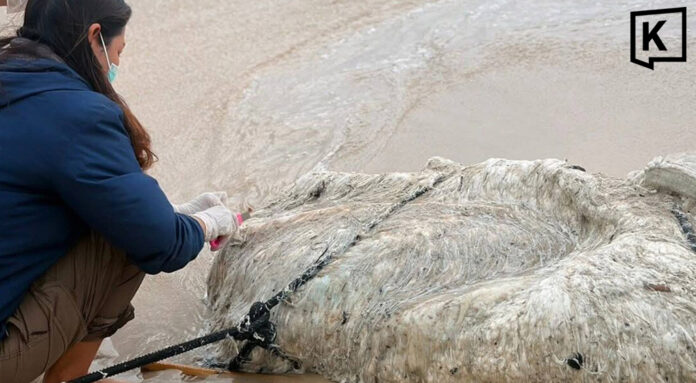
The images showed a large white mass covered in fibrous, hair-like strands lying on the shoreline after being washed in by waves.
The post quickly attracted hundreds of comments, with social media users debating the identity of the object. The person who shared the images described it as large and foul-smelling and said there appeared to be hard material inside.
Some online users speculated that it could be the remains of a large marine animal, while others suggested it might be part of a whale or another sea creature because of its unusual appearance.
Experts noted that objects of this type are often referred to as “globsters”, a term used to describe large masses of organic material that wash ashore and cannot be immediately identified by their appearance.
Although globsters are often mistaken for sea monsters, scientific studies and DNA analyses from previous cases have shown that most are the decomposed remains of large marine animals, including whales and basking sharks.
The white strands covering such carcasses are typically collagen fibres, muscle tissue and connective tissue that remain after softer tissues have decomposed, giving the remains an unusual appearance.
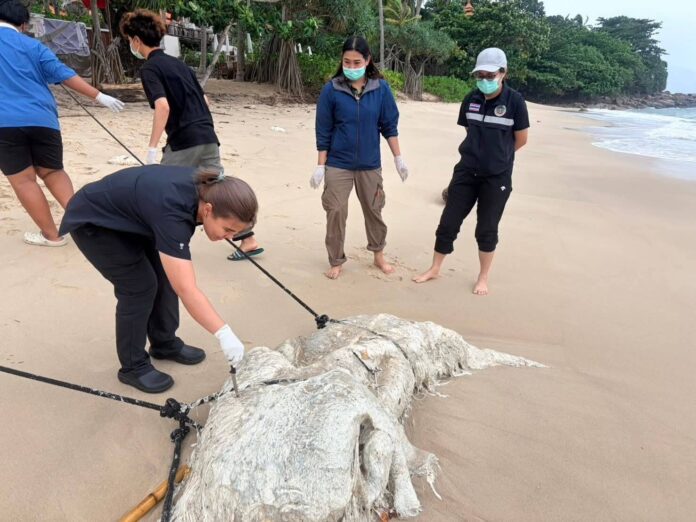
Globsters are usually greyish-white in colour, rubbery in texture, produce a strong odour from decomposition and lack identifiable features such as a head, eyes or bones. They are often discovered following periods of rough seas or stormy weather.
Authorities have not yet confirmed the identity of the object found on the beach. However, based on its appearance and previous scientific findings, experts believe it may be decomposed fatty tissue or other remains from a large whale.
Experts also warned the public not to touch such remains directly because they may contain bacteria and other microorganisms associated with decomposition.
Sirinat National Park later confirmed that officials had responded after receiving reports of an object washed ashore near Trisara Resort in Phuket’s Cherng Talay area.
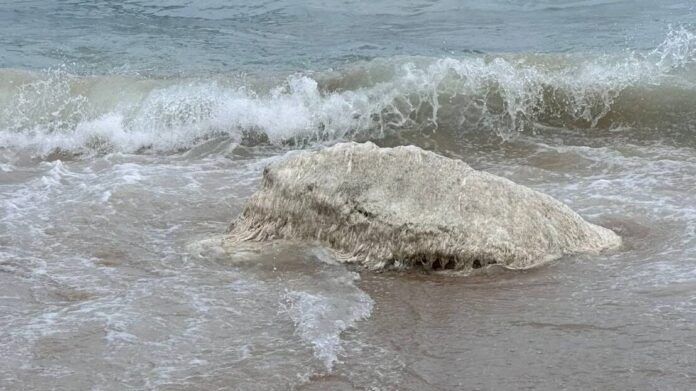
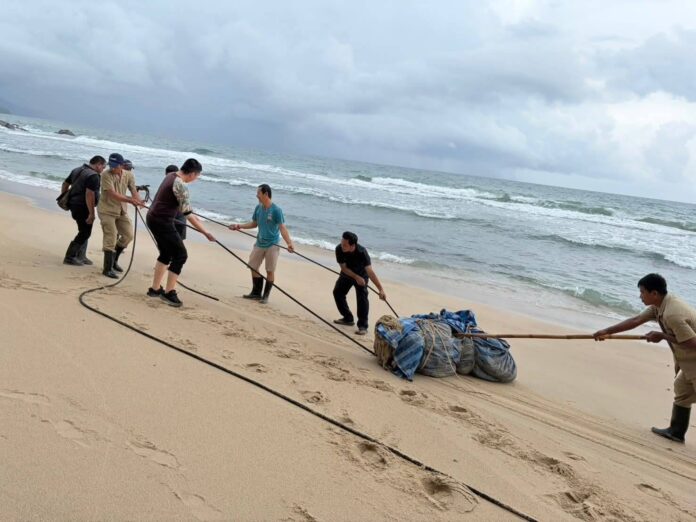
Karanikar Wongmitrtae, assistant chief of Sirinat National Park, and park officials inspected the site and removed the remains from the beach.
The park coordinated with the Upper Andaman Marine and Coastal Resources Research Centre, whose officers collected samples for further examination and identification.