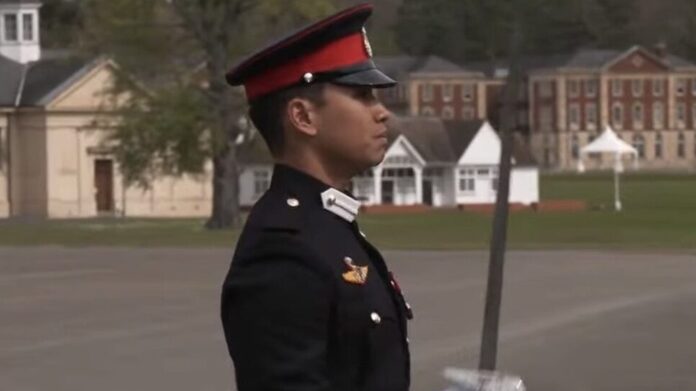
A Thai army officer has been awarded the International Sword, the highest honour given to foreign officer cadets at the Royal Military Academy Sandhurst in the United Kingdom.
Second Lieutenant Rawit Wanichayakornkul, a graduate of the Armed Forces Academies Preparatory School class 60 and Chulachomklao Royal Military Academy class 71, received the award at the Sovereign’s Parade, Sandhurst’s official graduation ceremony.
The International Sword is presented to the foreign officer cadet who achieves the best overall performance in their intake across a 44-week training programme. Selection is based on leadership, physical and mental strength, and attitude throughout the course.
The award is supported by the Kuwaiti Ministry of Defence in memory of Sheikh Ali Al Sabah, a former Kuwaiti defence minister.
Sandhurst accepts officer cadets from countries around the world, including Thailand, each year. The award is seen as a significant recognition of the standards and capabilities of Thai commissioned officers on the international stage.
NINGBO, CHINA — Thai mixed doubles pair Dechapol Puavaranukroh and Supissara Paewsampran advanced to the final of the Badminton Asia Championships 2026 on Saturday after defeating the world No. 1 pair in a three-game thriller.
Dechapol and Supissara, ranked third in the world, overcame China’s Feng Yanzhe and Huang Dongping 21-19, 18-21 and 22-20 in the semifinal at Ningbo Olympic Sports Centre Stadium.
The Thai pair will face South Korea’s Kim Jae-hyun and Jang Ha-jeong, ranked 147th in the world, in the final.
In the men’s singles, world No. 1 Kunlavut Vitidsarn suffered a surprise defeat to India’s Ayush Shetty, ranked 25th in the world. Kunlavut lost 21-10, 19-21 and 17-21, ending his bid for the title.
The Badminton Asia Championships 2026 is being held from 7 to 12 April at Ningbo Olympic Sports Centre Stadium in China.
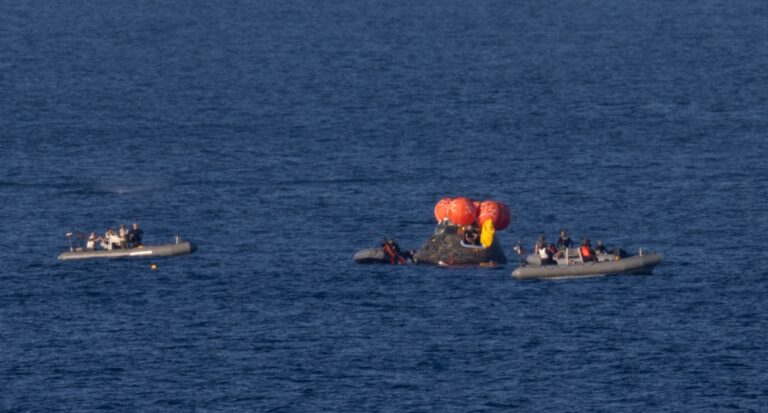
In this image from video provided by NASA, the Artemis II Orion capsule splashes down in the Pacific Ocean, on Friday, April 10, 2026. (NASA via AP)
HOUSTON (AP) — Artemis II’s astronauts closed out humanity’s first lunar voyage in more than half a century with a Pacific splashdown on Friday, blazing new records near the moon with grace and joy.
It was a dramatic grand finale to a mission that revealed not only swaths of the lunar far side never seen before by human eyes, but a total solar eclipse and a parade of planets, most notably our own shimmering Earth against the endless black void of space.
With their flight now complete, the four astronauts have set NASA up for a moon landing by another crew in just two years and a full-blown moon base within the decade.
The triumphant moon-farers — commander Reid Wiseman, pilot Victor Glover, Christina Koch and Canada’s Jeremy Hansen — emerged from their bobbing capsule into the sunlight off the coast of San Diego.
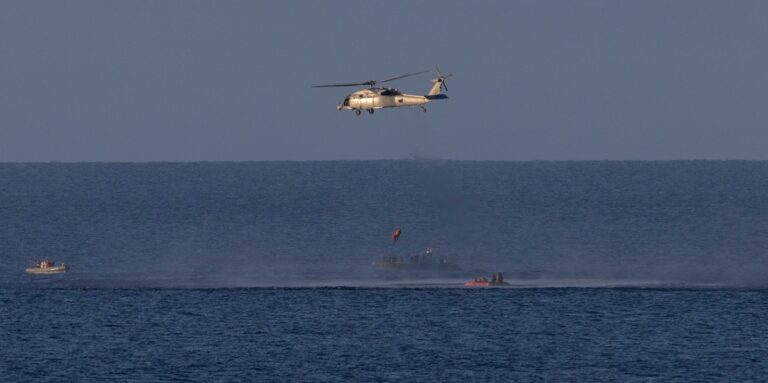
In this photo provided by NASA, a helicopter lifts up one of the astronauts from Artemis II after splashdown in the Pacific Ocean off the coast of California, Friday, April 10, 2026. (Joel Kowsky/NASA via AP)
In a scene reminiscent of NASA’s Apollo moonshots of yesteryear, military helicopters hoisted the astronauts one by one from an inflatable raft docked to the capsule, hauling them aboard for the short trip to the Navy’s awaiting recovery ship, the USS John P. Murtha.
“These were the ambassadors from humanity to the stars that we sent out there right now, and I can’t imagine a better crew,” NASA Administrator Jared Isaacman said from the recovery ship.
NASA’s Mission Control erupted in celebration, with hundreds pouring in from the back support rooms. “We did it,” NASA’s Lori Glaze rejoiced at a news conference. “Welcome to our moonshot.”
Their Orion capsule, dubbed Integrity, made the entire plunge on automatic pilot. The lunar cruiser hit the atmosphere traveling Mach 33 — or 33 times the speed of sound — a blistering blur not seen since the 1960s and 1970s Apollo.
The tension in Mission Control mounted as the capsule became engulfed in red-hot plasma during peak heating and entered a planned communication blackout. All eyes were on the capsule’s life-protecting heat shield that had to withstand thousands of degrees during reentry.
Watching the drama unfold nearly 2,000 miles (3,200 kilometers) away, the astronauts’ families huddled in Mission Control’s viewing room, cheering when the capsule emerged from its six-minute blackout and again at splashdown.
The last time NASA and the Defense Department teamed up for a lunar crew’s reentry was Apollo 17 in 1972. Artemis II came screaming back at 36,174 feet (11,026 meters) per second — or 24,664 mph (39,693 kph) — just shy of the record before slowing to a 19 mph (30 kph) splashdown.
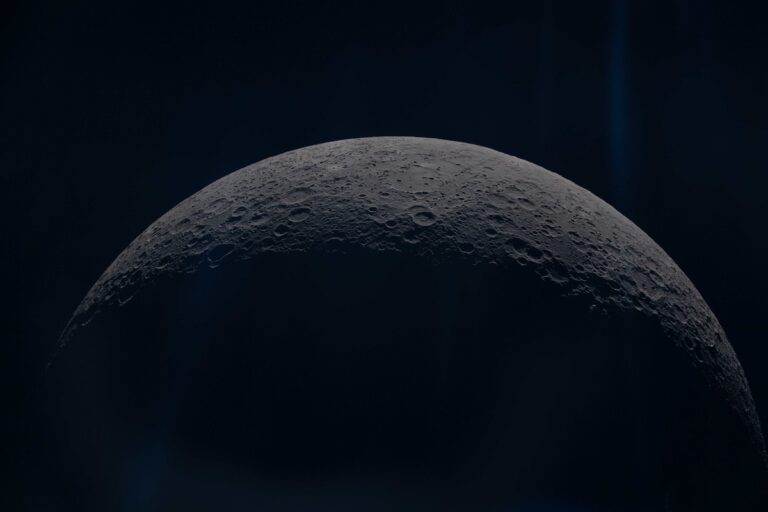
In this image provided by NASA, the Artemis II crew photographed the Moons curved limb during their journey around the far side of the Moon on April 6, 2026. (NASA via AP)
Until Artemis II, NASA’s fresh-from-the-moon homecomings starred only white male pilots. Intent on reflecting changes in society, NASA chose a diverse, multinational crew for its lunar comeback.
Koch became the first woman to fly to the moon, Glover the first Black astronaut and Hansen the first non-U.S. citizen, bursting Canada with pride. They laughed, cried and hugged all the way there and back, striving to take the entire world along with them.
Artemis II’s record flyby and views of the moon
Launched from Florida on April 1, the astronauts racked up one win after another as they deftly navigated NASA’s long-awaited lunar comeback, the first major step in establishing a sustainable moon base.
Artemis II didn’t land on the moon or even orbit it. But it broke Apollo 13’s distance record and marked the farthest that humans have ever journeyed from Earth when the crew reached 252,756 miles (406,771 kilometers). Then in the mission’s most heart-tugging scene, the teary astronauts asked permission to name a pair of craters after their moonship and Wiseman’s late wife, Carroll.
During Monday’s record-breaking flyby, they documented scenes of the moon’s far side never seen before by the human eye along with a total solar eclipse. The eclipse, in particular, “just blew all of us away,” Glover said.
Their sense of wonder and love awed everyone, as did their breathtaking pictures of the moon and Earth. The Artemis II crew channeled Apollo 8’s first lunar explorers with Earthset, showing our Blue Marble setting behind the gray moon. It was reminiscent of Apollo 8’s famous Earthrise shot from 1968.
Born a decade after Apollo, Isaacman greeted the astronauts with hugs as they headed from the helicopters to the ship’s medical bay for routine checks. They walked by themselves, refusing the wheelchairs offered them.
“We are back in the business of sending astronauts to the moon, bringing them back safely and to set up for a series more,” Isaacman said. “This is just the beginning.”
Their moonshot drew global attention as well as star power, earning props from President Donald Trump; Canadian Prime Minister Mark Carney; Britain’s King Charles III; Ryan Gosling, star of the latest space flick “Project Hail Mary”; Scarlett Johansson of the Marvel Cinematic Universe; and even Captain Kirk himself, William Shatner of TV’s original “Star Trek.”
In this photo provided by NASA, its astronauts Victor Glover, Artemis II pilot, left, and Christina Koch, Artemis II mission specialist, sit on a Navy MH-60 Seahawk on the flight deck of USS John P. Murtha after they and fellow crewmates were extracted from their Orion spacecraft after splashdown, Friday, April 10, 2026, in the Pacific Ocean off the coast of California. (Bill Ingalls/NASA via AP)
Artemis II was a test flight for future moon missions
Despite its rich scientific yield, the nearly 10-day flight was not without technical issues. Both the capsule’s drinking water and propellant systems were hit with valve problems. In perhaps the most high-profile predicament, the toilet kept malfunctioning, but the astronauts shrugged it all off.
As for the heat shield, military aircraft crews photographed it from afar during reentry, and divers checked it from underneath as the capsule floated in the Pacific. More detailed examinations are planned.
“We can’t explore deeper unless we are doing a few things that are inconvenient,” Koch said, “unless we’re making a few sacrifices, unless we’re taking a few risks, and those things are all worth it.”
Added Hansen: “You do a lot of testing on the ground, but your final test is when you get this hardware to space and it’s a doozy.”
Under the revamped Artemis program, next year’s Artemis III will see astronauts practice docking their capsule with a lunar lander or two in orbit around Earth. Artemis IV will attempt to land a crew of two near the moon’s south pole in 2028.
In this photo provided by NASA, recovery teams work to secure the Orion spacecraft carrying Artemis II crewmembers after splashdown in the Pacific Ocean off the coast of California, Friday, April 10, 2026. (Joel Kowsky/NASA via AP)
The Artemis II astronauts’ allegiance was to those future crews, Wiseman said.
“But we really hoped in our soul is that we could for just for a moment have the world pause and remember that this is a beautiful planet and a very special place in our universe, and we should all cherish what we have been gifted,” he said.
BANGKOK — A homeowner’s puzzled social media post about a strange brown liquid seeping down his wall has ended with a sweet — and valuable — discovery.
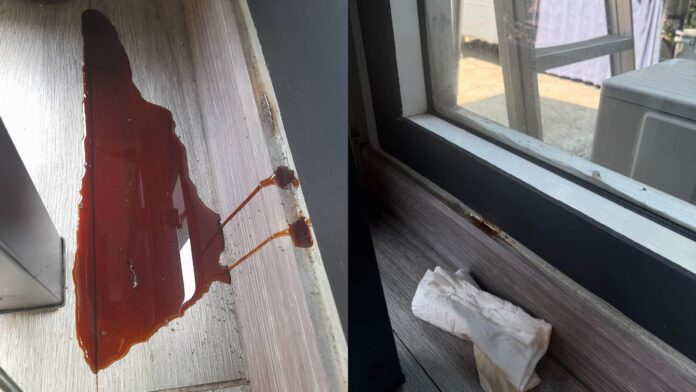
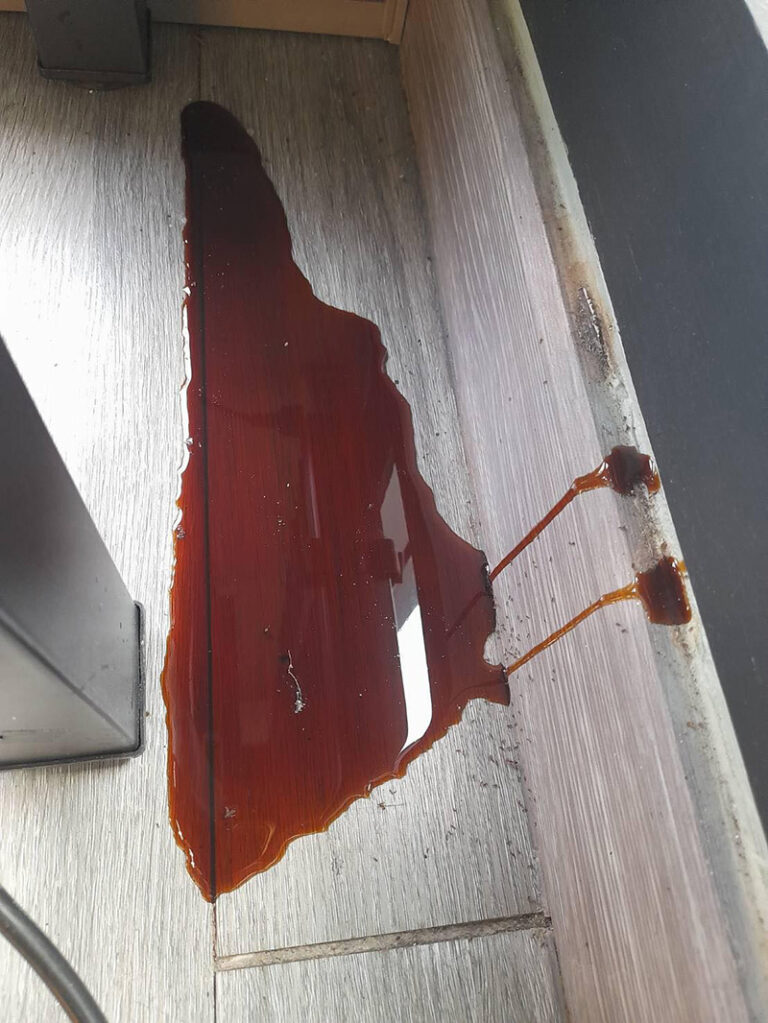
Matithep Subsakul posted photos in the Facebook group “นี่ตัวอะไร” (What is this?) on Friday, asking members to identify a dark brown liquid dripping along the edge of his wall. He said the substance had a honey-like smell but he did not know where it was coming from.
The post quickly drew responses from group members, who identified the liquid as honey from stingless bees, known in Thai as chanrong, which likely built a nest inside the wall. Commenters said the hot weather may have caused the honey to melt and seep out.
Stingless bee honey is considered a premium product and can command high market prices.
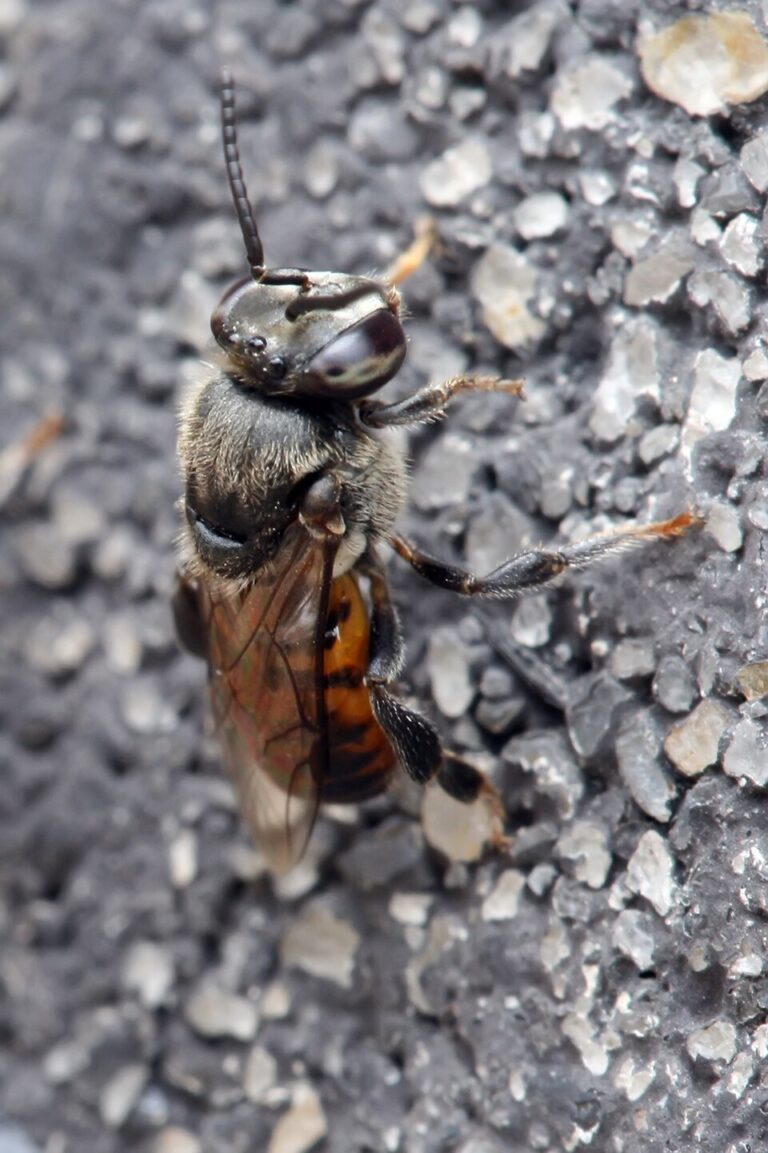
Stingless bee
Stingless bees are found throughout Thailand and belong to the same family as honeybees. Unlike honeybees, they do not have a stinger, but can defend themselves by biting. They also play an important role in pollination and are known for their distinctive antennae and transparent wings.
PHUKET — A French couple were arrested and fined after being caught having sex on a public beach in Phuket, with authorities now seeking to have them deported.
Officers from Kamala Police Station detained Halan, 24, and Nadia, 24, both French nationals, at a hotel in Patong district at around 9pm on Thursday after a video of the incident spread widely on social media.
The pair were charged with committing an indecent act in public and fined 5,000 baht each — the maximum penalty under the offence.
The incident took place at Layi Beach in Kamala subdistrict, Kathu district, where the couple were seen engaging in sexual activity in full view of other tourists and beachgoers.
Police said they have referred the case to immigration authorities, who may revoke the couple’s visas and deport them from the country.
Authorities urged all foreign visitors to respect Thai law and culture, adding that the behaviour had damaged Phuket’s reputation as a tourist destination.
CHONBURI — A 59-year-old Indian tourist has reported to police in Pattaya after being robbed of cash and foreign currency worth around 25,000 baht by two transgender women.
The report was filed at 1:06 on 11 April at Pattaya City Police Station with Lt. Sakayaphap Chaidech, deputy investigation officer.
The tourist said he lost 5,000 baht in cash, 300 US dollars and 300 euros after meeting two transgender women at Pattaya Beach and inviting them to his hotel room in Nong Prue subdistrict, Bang Lamung district.
He told police through an interpreter that he met the pair at the beach and agreed to bring them to his room. He later found his belongings missing and sought help from hotel security before going to police.
A hotel staff member said the foreign tourist ran down from his room wearing only a towel and reported that his money had been stolen. The staff added that a search of the two individuals was conducted, but no foreign currency was found at the time.
Police recorded the incident and coordinated with patrol officers to investigate. Authorities also documented the identities of the two transgender women involved and are reviewing CCTV footage to ensure fairness for all parties.
As Thailand prepares for its most famous festival, here are five key facts to understand Songkran, the country’s traditional new year celebration.
1. Songkran marks the traditional Thai new year
The word “Songkran” comes from the Sanskrit term saṅkrānti, meaning “movement” or “passing,” referring to the sun’s transition into a new position in the zodiac. Traditionally, this marks the beginning of a new year based on the solar calendar, usually observed from 13–15 April.
2. It is celebrated nationwide
Songkran is observed across Thailand, from major cities to rural communities. While the dates are officially recognised as a national holiday, celebrations can last longer in some areas. Each region also has its own local traditions, adding unique cultural elements to the festival.
3. Water symbolises cleansing and renewal
Water plays a central role in Songkran. Traditionally, people gently pour scented water over Buddha images and the hands of elders as a sign of respect and to seek blessings. Over time, this ritual has evolved into large-scale water splashing in public spaces, now a major attraction for both locals and tourists.
4. Family and religious traditions remain important
Beyond the water festivities, Songkran is a time for family reunions and spiritual reflection. Many Thais visit temples to make merit, offer food to monks, and take part in rituals such as bathing Buddha statues and building sand pagodas. Paying respect to elders is also a key custom during this period.
On 6 December 2023, “Songkran in Thailand, traditional Thai New Year festival” was inscribed on the UNESCO Representative List of the Intangible Cultural Heritage of Humanity. The recognition highlights the festival’s cultural significance and its role in promoting community values, tradition, and social cohesion.
SONGKHLA — More than 13,000 tourists from Malaysia and Singapore crossed into Thailand via the Sadao border checkpoint in a single day as Songkran celebrations began, officials said.
The Sadao checkpoint in Samnak Kham subdistrict saw heavy traffic from early morning on 11 April, with tour buses and private vehicles entering Thailand in large numbers. On 10 April alone, about 13,000 visitors crossed the border, and authorities expect the figure to rise to around 15,000 on 11 April.
The surge is driven by Songkran festivities in Thailand, particularly in Dan Nok, where celebrations are being held from 10–14 April. The influx caused long traffic queues stretching 4–5 kilometres into Malaysia.
Most visitors are expected to stay in Sadao district before travelling onward to Hat Yai and Muang Songkhla to visit popular tourist attractions.
Immigration police at the Sadao checkpoint said additional officers have been deployed to handle the increased volume of travellers and ensure smooth passport checks and processing without delays.
Samnak Kham mayor Satit Liewwattanachotinan said this year’s Songkran festival aims to boost local tourism and revive the economy following recent flooding that affected many areas. He added that visitors can still stop by Dan Nok to enjoy water celebrations before returning to Malaysia.
Sitthiphong Sitthiphatprapa, president of the Hat Yai-Songkhla Hotel Association, said he expects tens of thousands of tourists during the festival period. Hotel bookings have reached 70% in Hat Yai and 80% in Samnak Kham, with an additional 20% expected from walk-in guests between 10–14 April.
He estimated that the festival could generate 250–300 million baht in tourism revenue.
CHAINAT — Motorcycle taxi operators in Chai Nat province have stopped providing services due to rising fuel prices, leaving only one driver still operating at a local municipal market.
A field report at the municipal fresh market found that more than 10 motorcycle taxis had previously operated in the area. However, most have since ceased operations as fuel costs surged, making it no longer financially viable to continue.
The remaining driver said that soaring fuel prices have become a heavy burden for those providing passenger transport services. Many operators have suspended their work as they can no longer afford the fuel costs after deducting expenses.
He said he has had to adjust by driving more slowly to conserve fuel and increasing fares by around 20–30%, depending on distance. Passengers are informed of the new rates in advance to ensure fairness.
Customers have generally accepted the higher fares. Previously, a journey of up to five kilometres cost around 20–30 baht, but fares now start at 30–40 baht depending on distance, allowing the driver to continue earning a living without placing undue pressure on passengers.
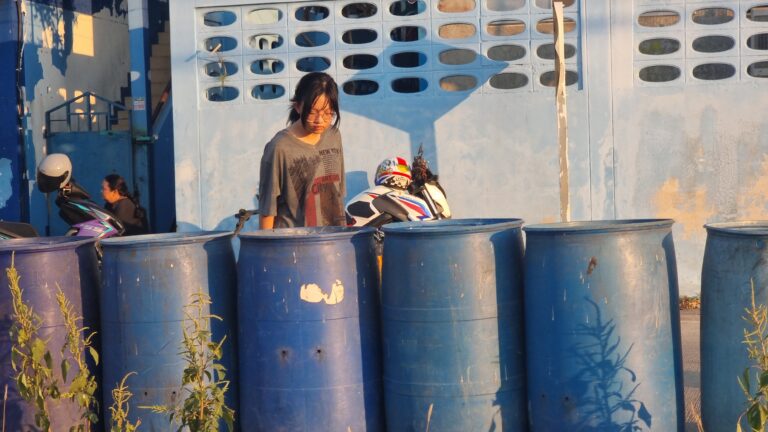
NONTHABURI — A 15-year-old student who was seen collecting plastic bottles to help support her family has received assistance after her story went viral on social media, highlighting her efforts to care for her paralysed father while continuing her studies.
The case came to public attention after a Facebook page posted images of the girl wearing her school uniform while collecting recyclable waste from roadside bins, as well as caring for her father, who is unable to walk due to a spinal injury.
On 9 April at around 17:30, reporters accompanied the page owner to a rented house in Khlong Khoi subdistrict, Pak Kret district, Nonthaburi, where the family lives.
The student, identified as Benyapha Thanakornmnaporn, 15, is a Mathayom 3 student at Triam Udom Suksa Nomklao Nonthaburi School. She lives with her parents in a small rented room.
Her mother, Kritsana Rangsiyo, 49, works as a temporary school cleaner earning 380 baht per day and is the sole income earner in the household. She said her husband has been bedridden for 16 years after a fall that left him partially paralysed and unable to walk.
She said the family struggles with daily expenses, while her daughter helps collect and sell plastic bottles, earning less than 100 baht per trip. Kritsana said she felt both pity and pride in her daughter’s determination, but financial pressure has made it difficult to cover school expenses, including a 3,580 baht fee for continuing into upper secondary school.
The mother also appealed for assistance with medical supplies for her husband, including urine collection bags and drainage equipment, which are expensive and difficult to obtain.
The father, 59, a former maintenance technician, said he is still able to repair household appliances despite his condition and helps the landlord with small repair jobs in exchange for accommodation. He said he feels deeply sorry for his daughter having to collect recyclables to support the family, and hopes she can continue her education and pursue her dream of becoming a nurse.
Benyapha said she has helped collect recyclables since childhood and hopes to continue studying science in upper secondary school. She said she wants to become a nurse and is determined to support her family despite financial hardship.
“I’m not ashamed. My father is sick, I have to help him,” she said.
Page administrator Met Jaochainoi, who first shared the story, said he decided to step in after learning of the family’s situation and school fee burden. He said the initial request was only for basic necessities such as rice and medical supplies, but the urgency of the student’s education needs prompted him to provide further assistance.