PHUKET — 6 April 2026, Police in Phuket have arrested a van driver accused of raping a 20-year-old Ukrainian tourist after tracking him through CCTV footage, authorities said.
The suspect, identified as 42-year-old Sukhan, from Takua Pa district in Phang Nga province, was taken into custody at 16:30, according to Phuket City Police.
Investigators said the man, who drove a yellow-plate van registered in Phuket, allegedly attacked the victim inside the vehicle along Chalerm Phrakiat Rama IX Road, also known as the bypass road, in Ratsada subdistrict.
The arrest followed a complaint filed by the victim, who told police she had been forced into a van by an unidentified Thai man and raped before being dropped off in Kamala.
Police said the suspect is being questioned before being handed over to investigators for legal proceedings.
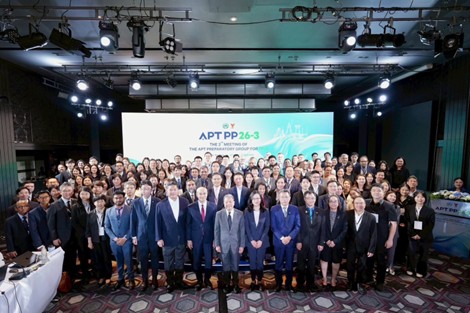
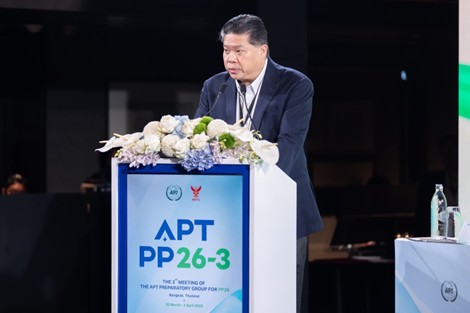
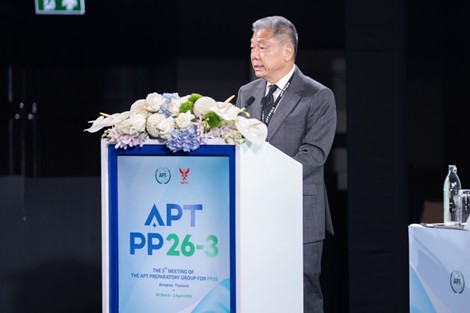
Office of the National Broadcasting and Telecommunications Commission (NBTC), in collaboration with the Asia-Pacific Telecommunity (APT), hosted the 3rd Meeting of the APT Preparatory Group for the ITU Plenipotentiary Conference 2026 (APT PP26-3) from 30 March to 2 April 2026 at the JW Marriott Hotel Bangkok.
Mr. Trairat Viriyasirikul, Acting Secretary General of the Office of the NBTC, attended and delivered welcoming remarks at the opening ceremony. The meeting gathered over 290 representatives from 26 APT member countries, joining both physically and virtually, including Afghanistan, Australia, Bangladesh, Bhutan, Brunei Darussalam, Cambodia, China (People’s Republic of), Fiji, India (Republic of), Indonesia (Republic of), Iran (Islamic Republic of), Japan, Kiribati (Republic of), Korea (Republic of), Lao (People’s Democratic Republic of), Malaysia, Mongolia, Myanmar (Republic of the Union of), Nepal, New Zealand, Palau (Republic), Papua New Guinea, Samoa, Singapore, Sri Lanka, Thailand, Tonga, Tuvalu and Viet Nam (Socialist Republic of). The ceremony also featured remarks on the significance of this meeting by Dr. Masanori Kondo, Secretary General of the APT, and Ms. Zhu Keer, Chair of APT PP26-3.
Additionally, Clinical Professor Sarana Boonbaichaiyapruck, Chairman of
the NBTC, delivered the inaugural address at the opening ceremony, emphasizing the profound transformations taking place across the telecommunications and ICT landscapes. He highlighted the need for regulatory bodies to strengthen their readiness and to keep pace with the rapid developments of the digital ecosystem.
In his address, he also underscored the importance of APT member countries working together to establish regional priorities for the ITU’s work agenda over the next four years, especially in key areas such as universal connectivity, cybersecurity, and space-related matters. His remarks reflected the Asia-Pacific region’s strong commitment to advancing telecommunications and ICT development for the benefit of the global community, while supporting the ITU’s evolving role in an era of continuous digital transformation.
This regional preparatory meeting served as an important platform for Thailand to actively present its views on a wide range of issues alongside APT member countries, associate members, and representatives from international organizations. The meeting reviewed a series of proposals carried over from the APT PP26-2 Meeting, including the development of new Resolutions, amendments to existing Resolutions, and matters related to the roles and responsibilities of the ITU that member countries wish to advance. These discussions aim to shape the region’s positions and consolidate them into APT Common Proposals (ACPs) for submission to the ITU Plenipotentiary Conference 2026 (PP-26), to be held from 9 to 27 November 2026 in Doha, Qatar.
This meeting marks a significant milestone for Thailand, as it contributes to the formulation and review of regional proposals across various ITU telecommunication development agenda items. It allows Thailand to address emerging challenges and opportunities in the digital era while strengthening its preparedness for effective participation in PP-26.
HRH Princess Sirivannavari Nariratana Rajakanya of Thailand
THE HAGUE, Netherlands —Princess Sirivannavari Nariratana Rajakanya is scheduled to travel to The Hague on 9 April to deliver a keynote lecture on the evolution of the Thai national costume, as Thailand launches an international roadshow promoting its traditional dress and craftsmanship.
The event, titled “Chud Thai Knowledge, Craftsmanship and Practices of the Thai National Costume,” will be held on 9–10 April at Hotel Des Indes. It is organised by the Department of Cultural Promotion under the Ministry of Culture of Thailand as part of efforts to promote Thai cultural heritage on the global stage.
On 9 April, the Princess will preside over an academic forum and deliver a lecture on the “Evolution of Thai costume and textiles,” accompanied by a runway presentation of all eight styles of Chud Thai phra ratcha niyom (Royal Thai Attire) and three styles of formal menswear.
The Chud Thai phra ratcha niyom include Ruean Ton, Chitralada, Amarin, Boromphiman, Dusit, Chakri, Siwalai and Chakraphat. Named after royal residences, the designs represent a key element of Thailand’s cultural identity.
The event will also feature live demonstrations of traditional craftsmanship, including yan lipao basketry and intricate gold and silver embroidery. Organisers said the showcase presents Thai costume not merely as historical artefacts, but as a living heritage that continues to evolve through contemporary design.
In 2024, Thailand’s Cabinet approved a proposal to nominate “Chud Thai: knowledge, craftsmanship and practices of the Thai national costume” for inscription on UNESCO’s Representative List of the Intangible Cultural Heritage of Humanity. The nomination will be considered at the 21st session of the intergovernmental committee in December 2026.
Officials said the roadshow marks an important step in elevating Thai costume onto the global stage, reinforcing its role as both cultural heritage and contemporary creative inspiration.
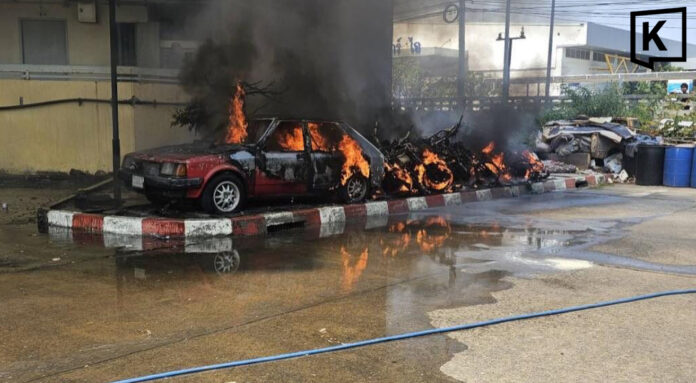
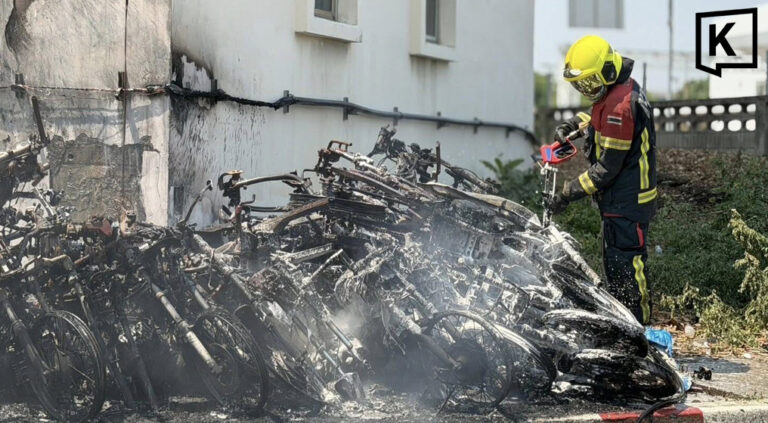
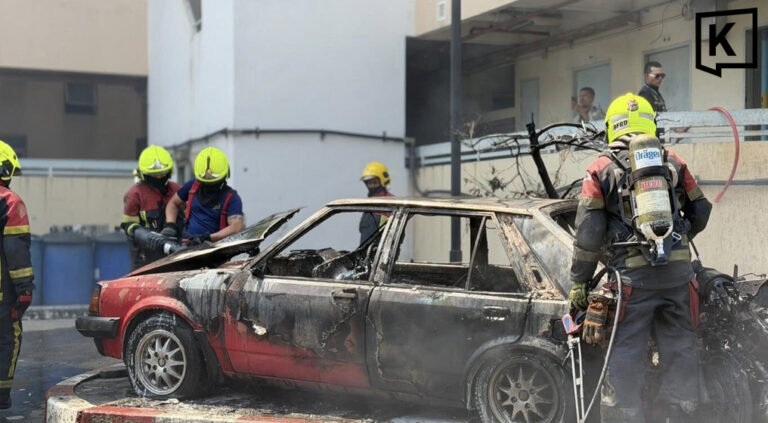
BANGKOK — 7 April 2026, A motorcycle fire spread to a nearby car in Bangkok on Tuesday, causing panic among residents in nearby high-rise buildings before firefighters brought the blaze under control.
The incident was reported at 10:37 via the 199 emergency hotline in Soi Chaeng Watthana 5, in the Lak Si district of the capital, according to Fire & Rescue Thailand.
Firefighters from Lat Yao station arrived at the scene with fire engines and found a motorcycle engulfed in flames, which had spread to a car parked nearby.
Crews used water to prevent the fire from spreading further and were able to extinguish the blaze by 10:48.
No injuries were immediately reported. Authorities are investigating the cause of the fire.
President Donald Trump speaks with reporters during the White House Easter Egg Roll on the South Lawn of the White House, Monday, April 6, 2026, in Washington. (AP Photo/Julia Demaree Nikhinson)
WASHINGTON (AP) — President Donald Trump has pushed back a deadline for Iran to cut a deal or open the Strait of Hormuz from Monday to Tuesday, the latest of several deadline delays, and threatened that without a deal “Hell will reign down on them.”
Trump’s previous deadline was for March 23, but that shifted several times over the ensuing weeks as Trump oscillated between heated threats, announced delays and proclamations that the negotiations were going well, sometimes in the same statement.
Iran rejected the latest ceasefire proposal, the country’s state-run IRNA news agency reported Monday. Shortly after, Trump gave an ominous warning to Iran if it didn’t capitulate, and suggested Tuesday’s 8 p.m. deadline was final.
“They’ll have no bridges. They’ll have no power plants. They’ll have no anything,” he said.
U.N. Secretary-General António Guterres warned the U.S. that attacks on civilian infrastructure is banned under international law, according to his spokesperson. Trump, speaking with reporters, said he’s “not at all” concerned about committing war crimes with such attacks.
Here are some of Trump’s deadlines and threats, and what happened next.
An ultimatum about reopening the Strait of Hormuz
On March 21, Trump posted on Truth Social that if Iran doesn’t “FULLY OPEN, WITHOUT THREAT, the Strait of Hormuz, within 48 HOURS from this exact point in time, the United States of America will hit and obliterate their various POWER PLANTS.”
Iran had until the evening of March 23.
Then 12 hours before the deadline, Trump took to Truth Social to share the good news: that both countries had productive conversations toward concluding the conflict.
“I HAVE INSTRUCTED THE DEPARTMENT OF WAR TO POSTPONE ANY AND ALL MILITARY STRIKES AGAINST IRANIAN POWER PLANTS AND ENERGY INFRASTRUCTURE FOR A FIVE DAY PERIOD,” he wrote, adding that was subject to the success of the discussions.
That pushed the deadline out to the end of that week.
A threat to target desalinization plants
Before the deadline, on March 26, Trump doubled down on his threats on Truth Social: “They better get serious soon, before it is too late, because once that happens, there is NO TURNING BACK, and it won’t be pretty!”
But later that day, he extended the deadline for another 10 days, to April 6 at 8 p.m., and said on Truth Social that negotiations were “going very well.”
On March 30, Trump put out a mixed statement: celebrating progress in the talks with Iran while also expanding his threatened bombing if a deal wasn’t “shortly reached,” adding that “it probably will be.”
“We will conclude our lovely ‘stay’ in Iran by blowing up and completely obliterating all of their Electric Generating Plants, Oil Wells and Kharg Island (and possibly all desalinization plants!),” he wrote.
It’s unclear how soon “shortly reached” meant for Trump, but a deal was not made as the deadline loomed.
An expletive-filled threat to attack power plants and bridges
“Remember when I gave Iran ten days to MAKE A DEAL or OPEN UP THE HORMUZ STRAIT,” Trump said in a Truth Social post on Saturday, “Time is running out – 48 hours before all Hell will reign down on them.”
As the deadline approached, his posts had doubled down on his threats until Sunday, when Trump pushed the deadline again in an expletive-filled post.
President Donald Trump speaks with reporters in the James Brady Press Briefing Room at the White House, Monday, April 6, 2026, in Washington. (AP Photo/Julia Demaree Nikhinson)
“Tuesday will be Power Plant Day, and Bridge Day, all wrapped up in one, in Iran. There will be nothing like it!!! Open the F——-in’ Strait, you crazy bastards, or you’ll be living in Hell,” Trump said on Truth Social, followed by another post that specified 8 p.m. as the deadline.
Trump then suggested on Monday that Tuesday’s deadline would be final, saying he’d already given Iran enough extensions.
“The entire country can be taken out in one night, and that night might be tomorrow night,” Trump said. “We have a plan, because of the power of our military, where every bridge in Iran will be decimated by 12 o’clock tomorrow night.”
What’s next for diplomacy with Iran?
Mojtaba Ferdousi Pour, head of Iran’s diplomatic mission in Cairo, said Iran no longer trusts the Trump administration after the U.S. bombed the Islamic Republic twice during previous rounds of talks.
“We only accept an end of the war with guarantees that we won’t be attacked again,” he told The Associated Press.
A regional official involved in the talks said efforts had not collapsed. “We are still talking to both sides,” he said, speaking on condition of anonymity to discuss closed-door diplomacy.
On an Israeli TV station, Channel 13, the evening newscast showed a large digital clock counting down the hours and minutes to Tuesday’s deadline.
BANGKOK — 7 April 2026, Thailand’s prime minister said the government is considering restricting petrol station operating hours to conserve fuel, with measures likely to take effect after the Songkran holiday period.
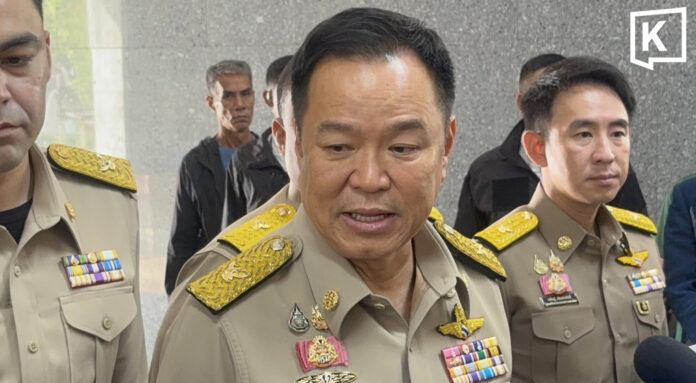
Speaking at the Interior Ministry at 9:20, Prime Minister Anutin Charnvirakul said authorities are preparing energy-saving measures to ensure sufficient domestic fuel supplies amid tensions in the Middle East.
He said the government is looking at limiting petrol station operations between 22:00 and 5:00, but stressed the policy would likely be implemented only after 20 April to avoid disrupting travel during the Songkran festival.
“We want people to be able to travel home and return conveniently during Songkran,” he said.
Anutin added that a new centre would be set up to monitor the situation in the Middle East after the previous body’s term ended with the former government.
When asked whether an emergency decree on fuel shortages would be revised to support the measures, he said authorities would use the most effective legal mechanisms available but did not specify a timeline.
He also said the Energy Ministry has been instructed to study refinery margins and report back on the pricing structure, adding that discussions with relevant ministers are ongoing.
BURIRAM — 6 April 2026, a 90-year-old woman has died at her home in northeastern Thailand after complaining of extreme heat, as temperatures reportedly reached 44°C, local media said.
The incident occurred at a house in Charoen Suk subdistrict, Chalerm Phra Kiat district.
The woman, identified as Boonchuay, had told her daughter she felt unbearably hot before lying down to rest. When her daughter later went to check on her, she was found dead.
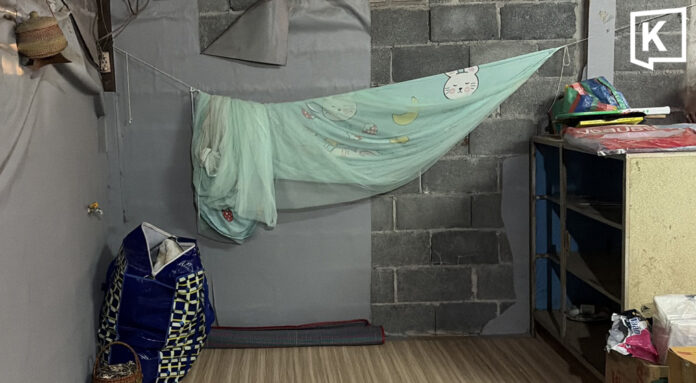
According to the family, the woman was visually impaired and lived in modest conditions without air conditioning. Relatives said they had used only a fan to help her cope with the heat. The family does not suspect foul play and plans to hold her cremation on 8 April.
Her daughter said she had been closely caring for her mother, ensuring she stayed hydrated and bathed regularly during the hot weather. Shortly before her death, the woman reportedly said, “It’s extremely hot, I can’t take it anymore,” before going to lie down as usual.
Residents in the area said the heat was unusually intense, particularly in the afternoon, adding that even electric fans provided little relief. They reported checking weather readings showing temperatures as high as 44°C, compared with typical afternoon highs of 40–41°C in recent days.
Villagers said many households lack air conditioning due to financial constraints, which may put elderly residents at greater risk during periods of extreme heat.
The Thai Meteorological Department has warned of severe heat, along with possible thunderstorms and strong winds in some areas, urging the public, especially children, the elderly and those with underlying health conditions, to take precautions, including staying hydrated and remaining in well-ventilated environments.
HANOI — Thousands of visitors flocked to Thang Long Palace in Hanoi from March 27–29 to celebrate Thai culture at a festival organized by the Thai Embassy, marking the 50th anniversary of diplomatic relations between Thailand and Vietnam. Under the theme “Creative Life, Creative Heartbeat,” the three-day event drew more than 20,000 people, who enjoyed a lively mix of traditional and contemporary Thai experiences.
Photo: Royal Thai Embassy, Hanoi
Festival-goers explored Thai royal-inspired national dress, learned about Songkran, Thailand’s traditional New Year, and watched cultural performances and Muay Thai demonstrations. Visitors also tried their hand at Thai handicrafts in D.I.Y. workshops, sampled Thai cuisine, and explored lifestyle products reflecting modern Thai creativity. The event featured a Thai and Vietnamese national costume fashion show, opportunities to try on traditional Thai outfits, prize draws, and screenings of Thai films.
Photo: Royal Thai Embassy, Hanoi
The festival offered more than cultural entertainment — it strengthened people-to-people ties between Thailand and Vietnam while giving participants a chance to experience the richness and creativity of Thai heritage. The Thai Embassy expressed gratitude to all agencies, artists, performers, entrepreneurs, volunteers, and visitors whose support made the event a success.
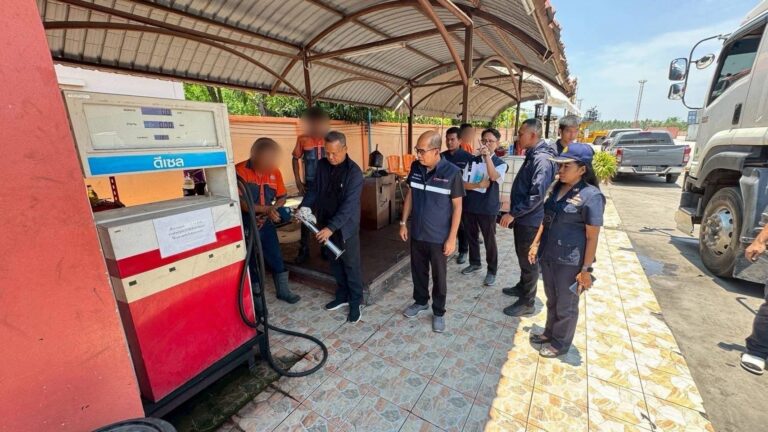
SONGKHLA — Authorities in southern Thailand are investigating a Malaysian-owned logistics company after around 100,000 litres of diesel were found stored on its premises in Sadao district, following complaints from local residents.
The case emerged after reports on social media alleged that a transport operator running trailer trucks between Thailand and Malaysia had been stockpiling large amounts of fuel at a yard on Kanchanavanich Road.
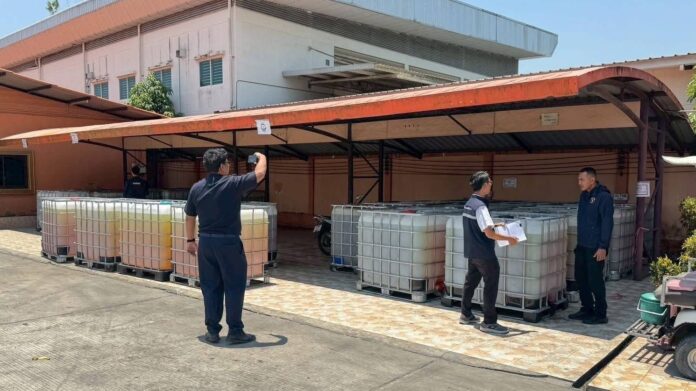
Songkhla Governor Rattasat Chidchu ordered a joint inspection involving provincial energy officials, district authorities, police, customs and excise officers.
During the inspection, officials found about 100,000 litres of diesel stored in tanks, including around 50,000 litres underground and 35,000 litres in above-ground containers at the company’s truck yard.
When questioned, the site operator failed to produce documents proving legal authorisation to store the fuel or records showing its origin. Police have filed charges against the caretaker and the company owner under the Fuel Control Act of 1999.
Investigators believe the diesel was brought in from Malaysia by the company’s trucks before a recent fuel price increase, then transferred into storage tanks for use in its transport operations.
Authorities said similar practices may be taking place among other Malaysian-owned logistics firms in Sadao and nearby Hat Yai district. Officials warned the case could involve not only illegal fuel storage but also possession of untaxed imported fuel, and inspections will be expanded to other operators in the province.
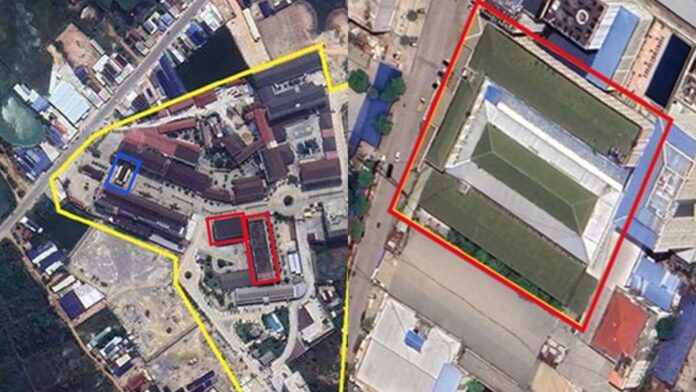
A dozen casinos in Cambodia are linked to scamming compounds where forced labour, torture, child labour and human trafficking have taken place, Amnesty International says, even as government regulators approved the businesses this year.
An investigation by Amnesty International found that casino owners directly control buildings and sites where human rights abuses have been documented. Analysis of licensing documents issued by the Commercial Gambling Management Commission (CGMC) showed that the casinos’ plans were officially recognized in December 2025 and January 2026 — at the same time the government claimed to be cracking down on scamming compounds.
Among the approved casinos are Crown Resorts in Poipet, Bavet and Chrey Thum, as well as Majestic Two and Majestic Hotel & Casino in Sihanoukville. Survivors of scamming compounds confirmed they were held, tortured and forced to scam inside these properties. Some victims were children.
One survivor, trafficked as a child, said he was held in “building E” at the New Venetian Casino in Bavet, where he was tortured, threatened with death, and forced to eat what he described as his “last meal” in 2024. Another survivor recounted being confined at the Crown Resorts complex in Poipet, where guards used electric shock batons, causing children in the same room to cry.
Amnesty’s research also linked other casinos to documented abuses, including Peak Casino, Long Feng Xuan Casino, Huang Chao International, Golden Sea Casino, Marinan International, and Majestic properties in Sihanoukville. In all cases, the same companies have operated the casinos since at least 2022.
“This research establishes a clear link between Cambodia’s licensed casinos and its scamming compounds,” said Montse Ferrer, Amnesty International’s co-regional director. “At a time when the government says it is dismantling the scamming industry, the evidence shows it is simultaneously approving casino properties where abusive scamming compounds are run. Every day these casinos remain licensed is another day people on casino property are at risk of human rights abuse.”
Amnesty International called on Cambodian authorities to suspend the gambling licenses of these casinos and conduct a full, independent investigation into the documented violations. The organisation also urged the government to hold the owners, operators and financiers accountable under national and international law.
The investigation builds on a June 2025 Amnesty report documenting more than 50 scamming compounds across Cambodia, nearly half of which were linked to casinos. Despite a government crackdown announced in July 2025, the new approvals show state oversight has failed to prevent human rights abuses.
Amnesty International said it gave the CGMC and all casino operators the opportunity to respond to the allegations. At the time of publication, none had responded.