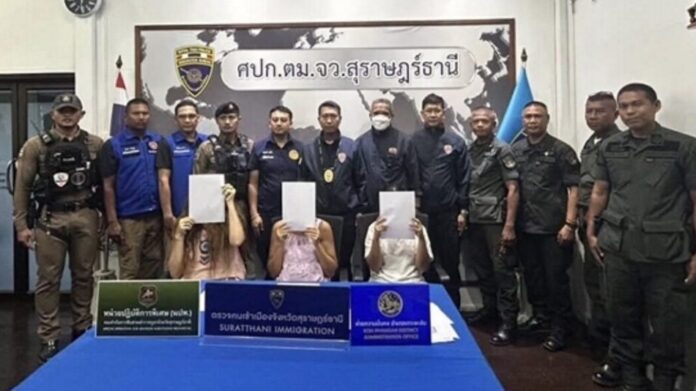
KOH PHANGAN — Local authorities have shut down two illegal daycares run by foreign nationals on Koh Phangan, police said on April 4.
The first location, a house in Moo 7, Koh Phangan, was found caring for 13 young children from foreign families. Israeli nationals Tahel Cherone Edri, 34, the owner, and Rotem Mitrany, 45, a teacher, along with Myanmar staff member Hsu Sanda Pyae Sone, 28, were arrested. They face charges including running a childcare business without a license and failing to report foreign employees to authorities.
The second raid, also in Moo 7, uncovered a daycare with 10 children aged 2–5. Owner Anat Vekstein Kimiagar, 40, and local teacher Kulthida, 28, were charged with operating an unlicensed childcare facility. All suspects have been handed over to Koh Phangan police for further legal action.
Authorities said the raids follow previous crackdowns on illegal foreign-run daycares on the island, including cases in March 2024 involving an American woman and another Israeli man operating unlicensed childcare services.
Officials stressed that unlicensed daycares pose risks to children’s safety and that strict measures will continue to enforce the law.
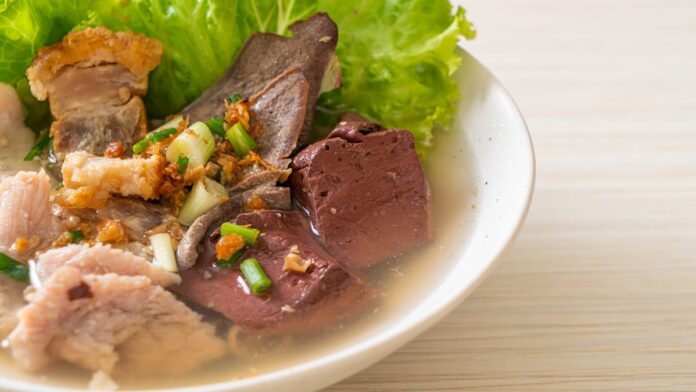
BANGKOK — Singapore has officially approved the export of heat-treated pork blood products from Thailand, marking the first time in the world that the country can access the Singapore market. The move is expected to generate over 150 million baht in revenue for Thailand this year.
On 1 April 2026, the Singapore Food Agency (SFA) issued a certification allowing Thai producers to export cooked pork blood products immediately. The approval follows a rigorous inspection of a slaughterhouse in Chachoengsao province by SFA officials on 24 June 2025, which confirmed that Thailand’s production, storage, and processing systems meet Singapore’s strict food safety standards.
Thailand is the first country to regain access to Singapore’s market for cooked pork blood products since imports were suspended in 1998 due to the Nipah virus outbreak. The Department of Livestock Development said the approval reflects Thailand’s proactive measures to maintain high hygiene standards and strong disease control systems recognized internationally.
“Singapore’s certification signals global confidence in Thai livestock products,” said Dr Somchuan Ratanamangkalanont, director-general of the Department of Livestock Development. “We are committed to working with private-sector partners to maintain these standards, expand export markets, and strengthen the country’s economic competitiveness.”
The Department expects the reopened market to boost Thai pork product exports by more than 150 million baht in 2026.
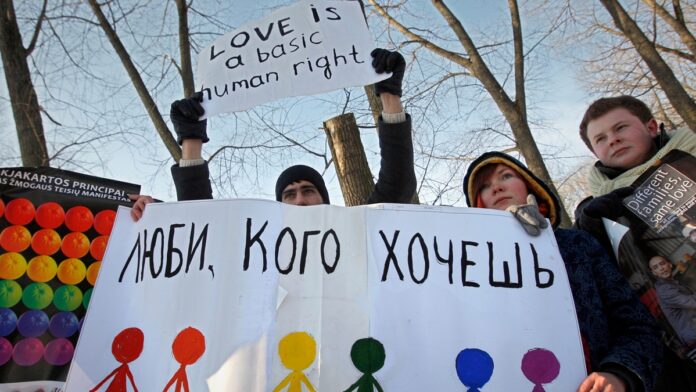
FILE - Activists hold placards during a picket, authorised by the authorities, against homophobia in front of the Department of Justice in Minsk, Belarus, Monday, Feb. 14, 2010. The sign on placard reads "Love who you want". (AP Photo, File)
TALLINN, Estonia (AP) — The Belarus parliament passed a bill Thursday to introduce punishments for people who promote LGBTQ+ causes, in an echo of restrictions set up in neighboring ally Russia.
The upper house gave final approval for the legislation following its passage last month by the lower house, and it goes next to authoritarian President Alexander Lukashenko for his expected signature before becoming law.
The bill makes the “propaganda of homosexual relations, gender charge, refusal to have children and pedophilia” punishable by fines, community labor and 15-day arrest.
Belarus decriminalized homosexuality in 1994 after the collapse of the Soviet Union, but it doesn’t recognize same-sex marriages and lacks protection for LGBTQ+ rights. Lukashenko, who has ruled the nation of 9.5 million with an iron fist for more than three decades, has publicly mocked homosexuality.
Belarus has been sanctioned repeatedly by Western countries — both for its crackdown on human rights and for allowing Moscow to use its territory in the full-scale invasion of Ukraine in 2022.
LGBTQ+ groups in Belarus have been shut and security forces have regularly raided nightclubs to target private gay parties. Rights defenders have said that the country’s top security agency, which still goes under its Soviet-era name KGB, has blackmailed members of LGBTQ+ community to force them to cooperate.
“LGBTQ+ people had faced beatings, arrests, persecution and mockery even before the bill’s approval, but now law enforcement agencies have received legal grounds for repressions,” said Alisa Sarmant, the head of TG House, a Belarusian group championing transgender rights.
The group has documented what it says are at least 12 cases of persecution of LGBTQ+ people in Belarus over the past three months, including a police raid on a nightclub in Minsk last month during a private gay party.
Sarmant said the legislation has raised fears among transgender people that they could be denied permission to legally purchase necessary medicines. TG House says it already has received hundreds of requests from LGBTQ+ people for psychological assistance and for help moving abroad.
“The Belarusian authorities have lumped together gays, lesbians, transgender people, and pedophiles, creating additional grounds for social rejection and stigmatization,” Sarmant said. “Belarus is copying Russia’s sad experience, creating unbearable conditions for LGBT+ people.”
Russia also has adopted repressive laws curtailing LGBTQ+ rights. Changing one’s gender on official documents, gender-affirming care and any public representation of gay or transgender people are banned in Russia. The LGBTQ+ movement also has been branded as extremist and its members can face up to six years in prison.
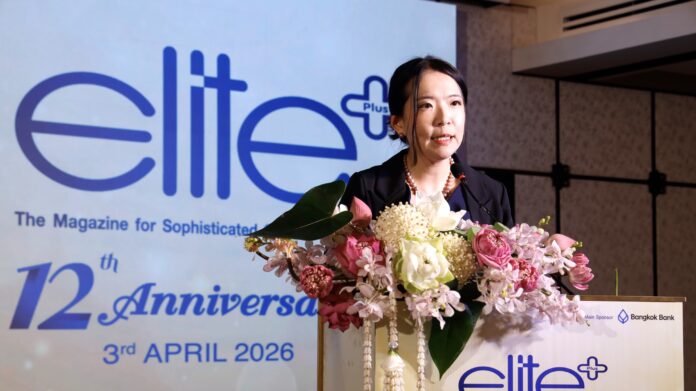
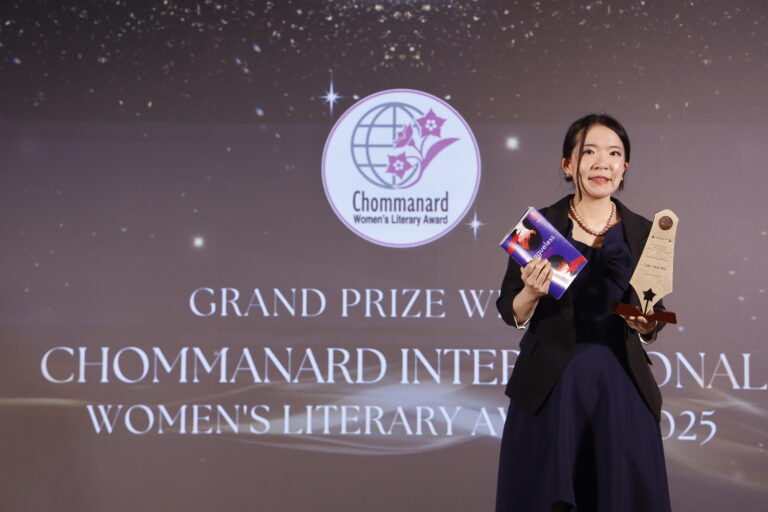
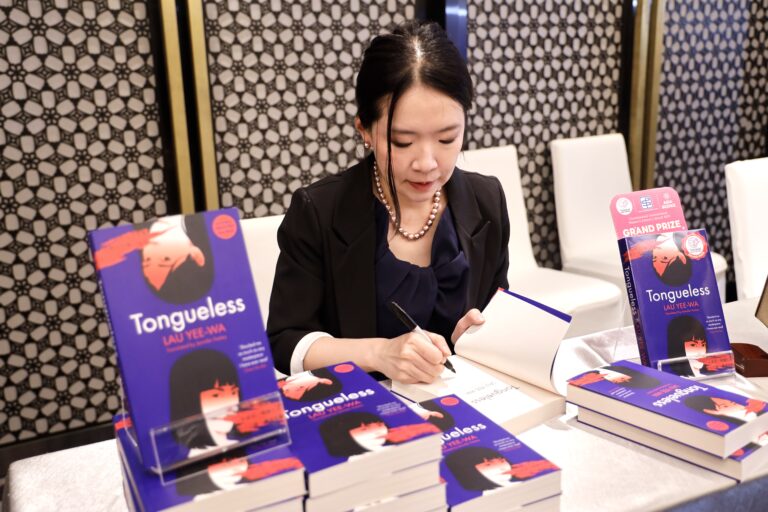
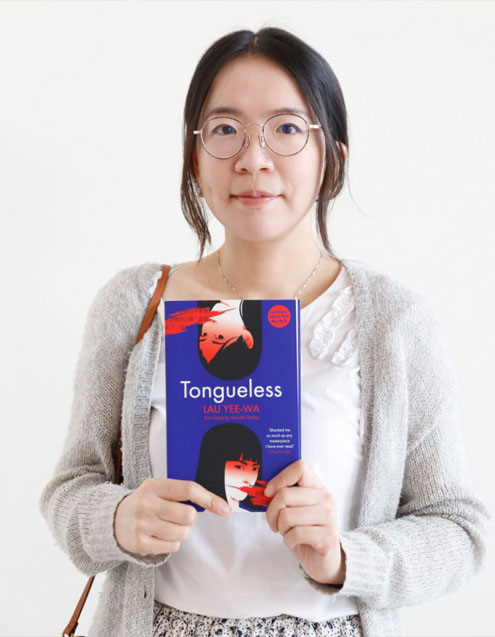
BANGKOK – Hong Kong writer Lau Yee-Wa has been named the winner of the inaugural Chommanard International Women’s Literary Award for 2025. The announcement was made during a gala dinner in Bangkok on 3 April 2026.
“Let me begin with a personal confession. I never set out to write a political novel,” Lau told the audience during her acceptance speech. “I simply wanted to tell a story about two ordinary Chinese-language teachers who tried to keep their jobs when their boss ordered a change in the medium of instruction from Cantonese to Mandarin. But as the pages grew, I realised I was not writing fiction. I was documenting a quiet, invisible form of violence that happens every day in classrooms, workplaces, and daily life across the world. That violence is called deschooling.”
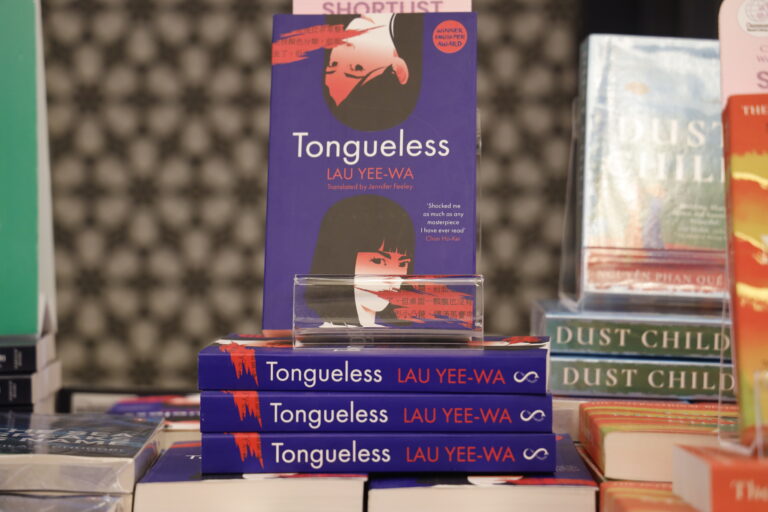
Lau’s novel, Tongueless, follows two teachers in Hong Kong as they navigate the tragic consequences of new linguistic requirements, including a mandatory Mandarin proficiency examination in order to continue and progress in their language-teaching careers.
“One of the protagonists, Wai, is the most hardworking. She tries to replace her mother tongue, Cantonese, with Mandarin by speaking it whenever and wherever she is,” Lau explained. “She comes to believe that being a Cantonese-speaking Hong Konger is a physical disability compared to people from the Mainland or those in the US and Britain who speak English. Unluckily, Wai cannot change her mother tongue; her tongue rebels. She fails the exam and eventually commits suicide.”
The second protagonist, Ling, takes a more pragmatic—and surreal—approach. “She knows how to please her boss and those in power. She tries to escape the qualification exam through flattery and by purchasing expensive clothes to signal class and taste. When that fails, she turns to plastic surgery. She wants to change her face completely to resemble her boss.”
Addressing an audience that included foreign diplomats and business executives, Lau noted that while her inspiration was rooted in Hong Kong, the story resonates globally in any society where progress is defined by “endless competition.”
She emphasised that the core of the novel is the fundamental importance of choice. This is personified by a student character, Tsui Siu Hei, who Lau described as the only character to maintain his own voice throughout the book.
“At the climax of the story, he looks straight at his teacher and asks, ‘Have you ever reflected on yourself? Why do you need to follow the rules?’ He says, ‘It doesn’t matter what language I speak; I just want to make a choice.’ That single line is the core of my novel.”
Lau concluded her speech with a sobering warning: “When a school, a society, or a nation removes choice, it does not merely change the medium of instruction. It changes the right to exist as an authentic human being. It teaches an entire generation that some voices are legitimate and others must disappear. When enough people lose their tongues, the only language left is the language of power, resentment, and eventually violence.”
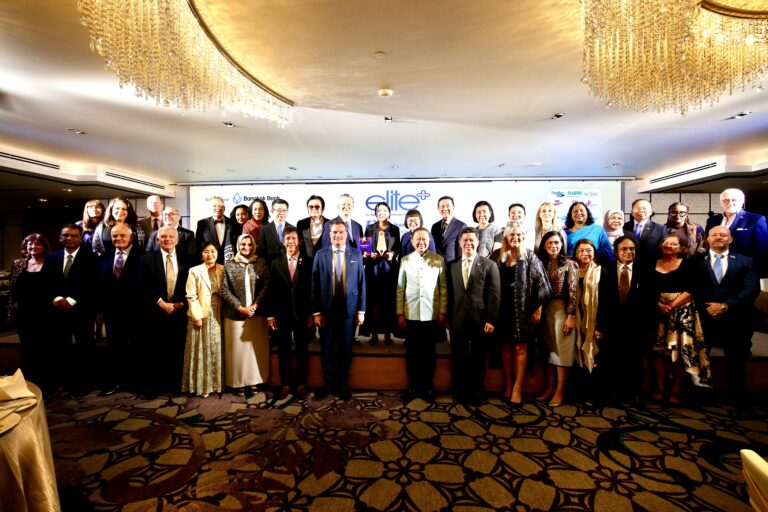
The event, held at the Chatrium Hotel, featured a welcoming remark from Dr. Kobsak Pootrakool, Director and Senior Executive Vice President of Bangkok Bank, which initiated and sponsored the awards.
“Right now, while the world is in great turmoil, we at Bangkok Bank realise that we must all try to unite to achieve a strong, sustainable economy and a safe environment so all our countries can advance,” Dr. Kobsak said.
Dr. Pisuth Lertvilai also delivered an opening speech, marking the 12th anniversary of Elite+ magazine, a key partner of the awards.
“The Chommanard International Women’s Literary Award has been created to recognise the best female writers in ASEAN and the China region,” Dr. Pisuth said. “Their works were submitted as original English texts or translated versions, and our panel of distinguished international judges had the difficult task of selecting the best.”
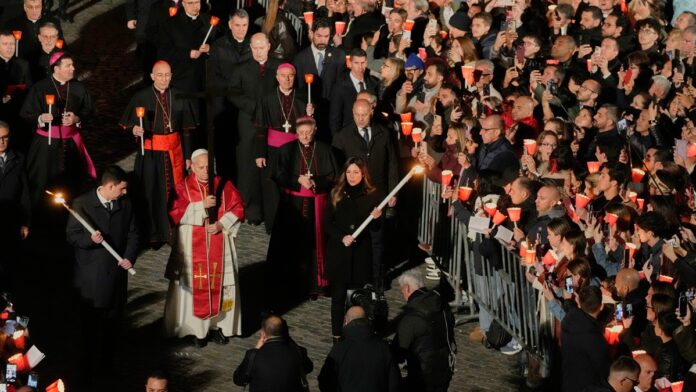
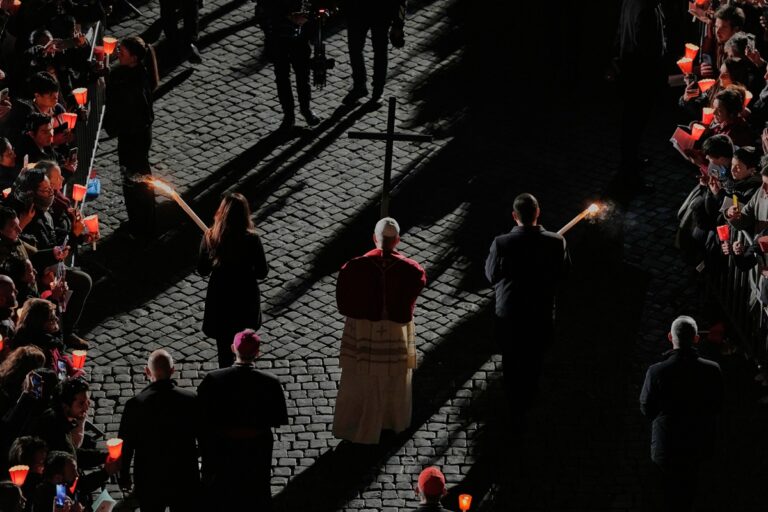
Pope Leo XIV carries a lightweight, 1.5-meter (5-foot) wooden cross during the Via Crucis, the torchlit Good Friday Stations of the Cross procession at the Colosseum in Rome, Friday, April 3, 2026, which symbolically retraces Jesus Christ's steps to his crucifixion on Calvary in Jerusalem. (AP Photo/Gregorio Borgia)
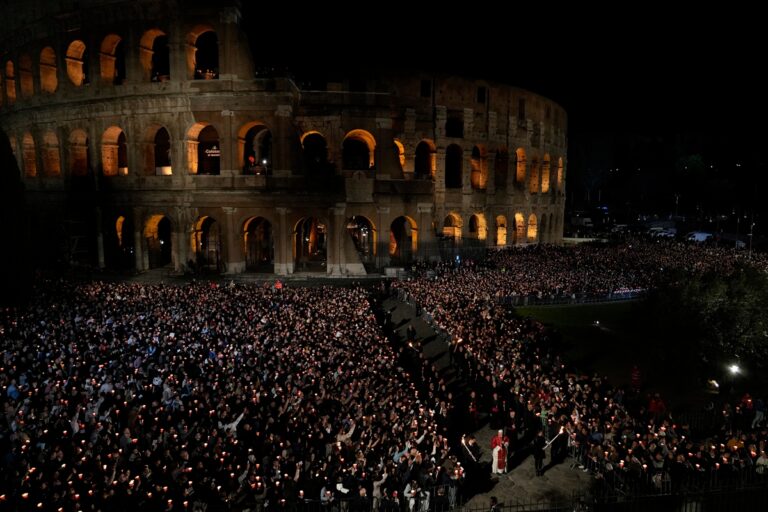
ROME (AP) — Pope Leo XIV carried a wooden cross for all of the 14 stations of the Way of the Cross at the Colosseum on his first Good Friday as pontiff, marking the first time in decades that a pope carried the cross to every station.
“I think it will be an important sign because of what the pope represents, a spiritual leader in the world today, and for this voice, that everyone wants to hear, that says Christ still suffers,” Leo told reporters this week outside of the papal retreat at Castel Gandolfo. “I carry all of this suffering in my prayer.”
Inside the Colosseum, Leo lifted the cross and began the rite flanked by two torchbearers, who accompanied him throughout the hour-long procession from inside the Colosseum, through the crowd outside and up steep stairs to the Palatine Hill where he gave the final blessing.
At the first station, marking the moment Jesus was condemned to death, the meditation prepared especially for Leo’s first Good Friday underlined that those with authority will have to answer to God for how they exercise their power.
“The power to judge; the power to start or end a war; the power to instill violence or peace; the power to fuel the desire for revenge, or for reconciliation,” read the meditation written by Rev. Francesco Patton, who was custodian of the Holy Land 2016-25, charged, among other things, with looking after sacred sites.
Pope Leo XIV carries a lightweight, 1.5-meter (5-foot) wooden cross during the Via Crucis, the torchlit Good Friday Stations of the Cross procession at the Colosseum in Rome, Friday, April 3, 2026, which symbolically retraces Jesus Christ’s steps to his crucifixion on Calvary in Jerusalem. (AP Photo/Gregorio Borgia)
Some 30,000 faithful gathered outside the pagan monument, following the stations as they were recited over loud speakers.
They included Sister Pelenatita Kieoma Finau from Samoa and a member of the Missionary Sisters of the Society of Mary.
“We have been part of our parish stations of the cross, but this is so exciting. It is very meaningful to have the experience of being with the people of Rome on this special occasion,” she said.
Past processions
John Paul II carried the cross for the entire procession from his first Good Friday as pontiff in 1979 until his hip surgery in 1995, when he carried it just part of the way, according to AP reports at the time.
For the first two years of his papacy, Benedict XVI carried the cross for the first station inside the Colosseum, then followed other bearers in the procession that ends on a platform on the Palatine Hill.
Pope Francis never carried the cross, but participated in the procession until his health worsened. He died after a long illness last year on Easter Monday, which fell on April 21.
Pope John Paul II was just 58 when he became pope, and was known as a hiker and outdoorsman. His two successors were in their late 70s when they began their papacies, and Francis was missing part of a lung due to a pulmonary infection as a young man.
The Way of the Cross commemorates the final hours of Jesus’ life, from his death sentence to taking up the cross to his crucifixion, death and burial. The procession ends outside the Colosseum atop the Palatine Hill.
Pope Leo XIV carries a lightweight, 1.5-meter (5-foot) wooden cross during the Via Crucis, the torchlit Good Friday Stations of the Cross procession at the Colosseum in Rome, Friday, April 3, 2026, which symbolically retraces Jesus Christ’s steps to his crucifixion on Calvary in Jerusalem. (AP Photo/Alessandra Tarantino)
“The Way of the Cross is not intended for those who lead a pristinely pious or abstractly recollected life,” Patton wrote in his introduction. “Instead, it is the exercise of one who knows that faith, hope and charity must be incarnated in the real world.”
At 70, Leo is physically fit and an avid tennis player and swimmer. Before becoming pope, Leo would work out regularly at a gym near the Vatican, with a plan befitting a man in his early 50s, according to his former trainer.
The pope’s Holy Week activities
On Holy Saturday, the pontiff will preside over a late night Easter vigil, during which he will baptize new Catholics, and lead Roman Catholics into Christianity’s most joyous celebration marking Christ’s resurrection.
On Easter Sunday, the pope will celebrate an open-air Mass in St. Peter’s Square before delivering his Easter message and offer the traditional “Urbi et Orbi” blessing to the city of Rome and the world.
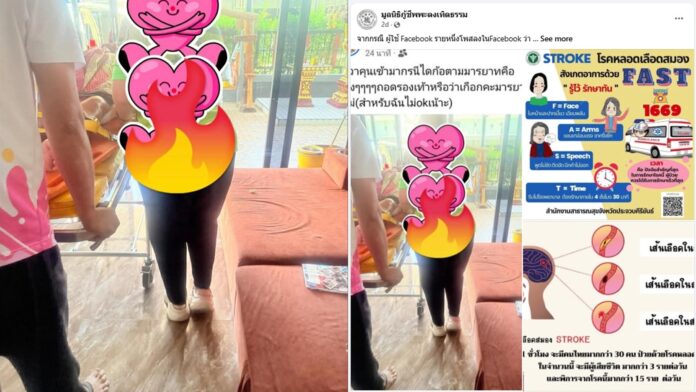
HATYAI — Emergency responders in southern Thailand faced online criticism after a woman posted that they had entered her home wearing shoes while attending to a patient.
The post sparked widespread confusion among netizens, many of whom criticized the woman for targeting the rescuers. In her post, she wrote:“No matter the situation, etiquette requires removing your shoes. Where is the courtesy? This is unacceptable to me.”
The Taphong Therdtham Rescue Foundation later issued a statement apologising for the incident but explained the urgent circumstances. The patient was in critical condition and required immediate treatment for a stroke, including blood clot-dissolving medication or an intervention within 4.5 hours to reduce the risk of death or long-term disability. A CT scan of the brain was performed within 30–60 minutes to allow rapid treatment.
Speaking to Khaosod, a rescue officer involved said the team received an emergency call at 10:50 on 3 April about a patient with sudden weakness. Upon arrival, the patient was unable to move, slurred speech, and appeared drowsy. The responders had to quickly bring medical equipment inside and did not remove their shoes to avoid delaying lifesaving care.
The officer noted that the patient’s relatives did not object to the footwear at the time, and most homeowners normally allow shoes to remain on during urgent interventions to prevent delays and facilitate equipment handling.
The team said they were both angry and saddened by the social media backlash, as they had prioritised the patient’s life above all else. They added that the only apology received came from the woman’s younger brother, not the poster herself.
The foundation emphasised that every emergency is treated as a race against time, particularly high-risk cases like strokes, where rapid treatment is crucial for survival and reducing long-term disability.
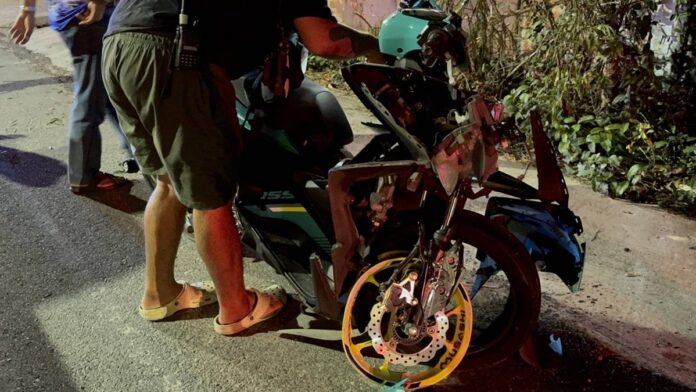
CHONBURI — A British man was killed after his motorcycle crashed into an electricity pole in Pattaya on 3 April, rescue workers said.
The Sawang Boriboon Thammasathan Rescue Unit received a report of the accident at around 20:00 on Na Mueang Road in Pong subdistrict, Bang Lamung district. Upon arrival, responders found a 65-year-old British national, later identified as Stephen Perkins, with severe head injuries and no vital signs. Rescuers attempted CPR for more than 40 minutes, but he could not be revived. A doctor later confirmed he had died at the scene, with a broken neck.
A black-and-green Yamaha motorcycle with Chon Buri registration was found nearby, heavily damaged at the front after reportedly crashing into an electricity pole. Police documented the scene and said an investigation is underway to determine the cause of the crash.
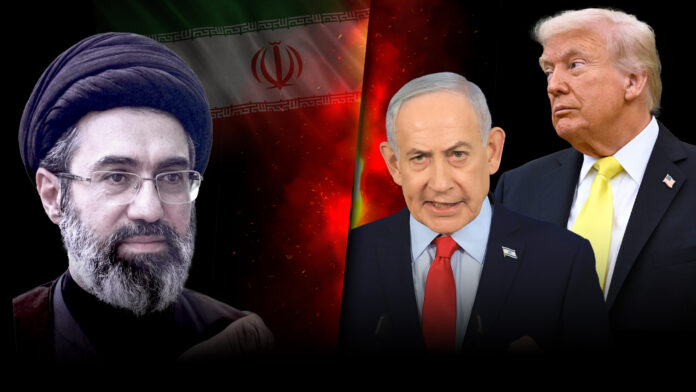
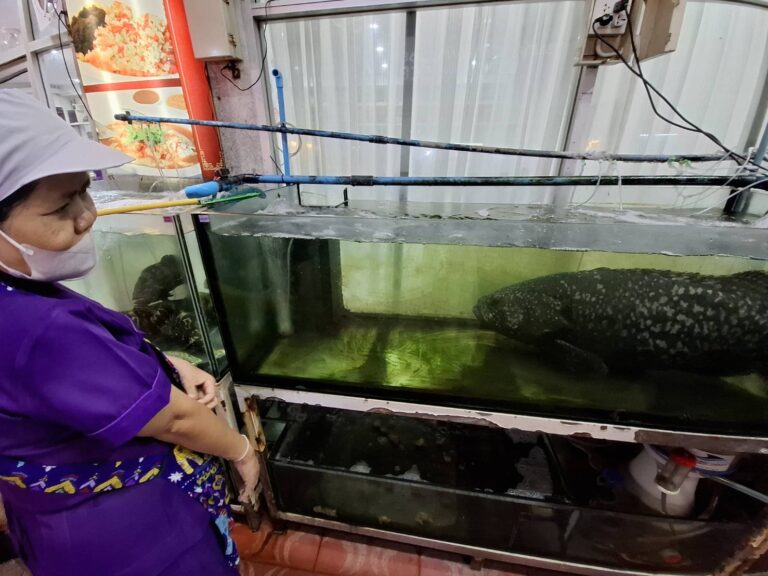
For many months now, whenever I have had the chance to visit Bangkok’s Chinatown, I have anxiously checked on the well-being of a big fish—a giant grouper some 80 centimetres long named Uan, or ‘Fatty’ in Thai, to be exact. Inside a fish tank, I pray that it is still alive and has not been ordered by diners to be cooked for a feast. I have become slightly fixated, and I think there is something about it that can shed light on how many of us pick one side over the other in this messy war waged against Iran by the US and Israel, and Iran’s retaliations against the two countries and its Gulf neighbours.
Allow me to switch to the Middle East before going back to Fatty.
Israel
Earlier this week, Israeli Prime Minister Benjamin Netanyahu alerted the international community by speaking to the press in English about Iran’s use of cluster bombs against civilians in Israel, although no one has yet been killed, he noted. Netanyahu does not dwell on the de facto occupation of southern Lebanon or the killing of three Lebanese journalists by Israeli Defense Forces, however—at least one of whom Israel described as a “terrorist” in disguise.
This comes despite the United Nations humanitarian chief this week asking the UN Security Council (UNSC) “what it is prepared to do to protect civilians in Lebanon as Israel pushes ahead with its ground invasion and bombardment of the country,” according to Al Jazeera.
“Speaking during an emergency UNSC session on Tuesday, Tom Fletcher noted that the question is critical given recent comments from Israeli ministers about Israel’s aims in Lebanon as well as its genocidal war against Palestinians in the Gaza Strip.”
Meanwhile, in another news item—this time from AFP, Spanish Prime Minister Pedro Sánchez on Tuesday condemned Israel for moving “a step closer to apartheid” by passing a bill that would allow for the execution of Palestinians convicted on terror charges for deadly attacks.
”It is an asymmetric measure that would not apply to Israelis who committed the same crimes. Same crime, different punishment. That is not justice. It is a step closer to apartheid,” the Spanish PM wrote on X.
Meanwhile, Amnesty International posted a message on its Facebook page before mid-March stating:
“According to UNICEF and latest reports, over 270 children across #MENA have been killed since 28 February, with most children killed in #Iran and #Lebanon. These figures are staggering and escalating. They are a stark testament to the toll that conflict is taking on children. Civilians must be protected 📢”
USA
President Donald Trump, meanwhile, has continued to portray America as the protagonist while urging allies to help secure the Strait of Hormuz—before lashing out at their reluctance to contribute military support and suggesting that countries reliant on Gulf oil should take responsibility themselves.
Nothing has been heard for a while now from Trump or the US government regarding the Tomahawk missile attack on a girls’ elementary school in Minab city, southern Iran, where about 160 elementary school girls were reportedly killed by what was almost certainly an American missile.
Iran
Here in Bangkok, the Iranian Embassy last Saturday put up a large banner denouncing the attack against the elementary school in Minab. On the same day, a group of twenty-something Iranians based in Thailand staged a noisy protest outside the embassy denouncing the killings of thousands of Iranian anti-government pro-democracy demonstrators over the past few months prior to the attacks by the US and Israel on Iran. The demonstrators called for the downfall of the Islamic Revolutionary regime and the restoration of the monarchy but said nothing about the Minab schoolgirls killed by the American missile, while thanking America for attacking the repressive Islamic Republic regime in their own country.
So which side to take?
Criteria for favouritism in the Middle East war
Religion: Many who are Islamophobic naturally gravitate towards the US and Israel. If you are mildly antisemitic, or suffering from it in an advanced stage, then rooting for Iran makes ‘absolute sense’. There are also some American Christian evangelists who believe more attacks on Iran will hasten Armageddon and precipitate the return of Jesus Christ.
Vendetta: Some support Iran because of what Israel has been doing over the decades in the occupied West Bank and Palestine. Others, including some Thais, blame Iran for being partially responsible for the deaths of dozens of Thai workers killed by Hamas in 2023, and the most recent attacks on the Thai-flagged cargo ship “Mayuree Naree”, where three crew members are still missing and increasingly likely to be dead.
The Underdog: Some support Iran because they see it as the underdog, able to resist the world’s mightiest armed forces (plus Israel) even after a month of heavy air bombardment which killed its Supreme Leader and many others.
Domestic Politics: Some Iranians are against the Islamic Republic due to its repression of dissent, while some Americans are against the war because they are against Trump. If your fondness for Trump is the most important factor, then you will almost certainly support what the US and Israel are doing against Iran.
For me, while I acknowledge the repressive nature of the Islamic Republic, what the US and Israel are doing is, essentially, against international law. This is the most important criterion for this writer. This does not mean I turn a blind eye to domestic repression in Iran or its support of militant groups, including Hamas and Hezbollah; however, it is a reminder that we are dealing with a complex situation that is neither black nor white, involving many parties. Anything done to push the international community towards a peaceful resolution should be supported.
Perhaps we should embrace the irony and contradictions and call a spade a spade. Prominent Thai artist Vasan Sitthiket denounced Russia at a demonstration four years ago for invading Ukraine (and still does), and last Friday, he denounced the US and Israel, even though Ukraine is against the Iranian regime.
Favouritism for or bias against one side or the other is understandable, but being conscious of it may hopefully help us to be fairer when addressing many issues, including the conflict in the Middle East.
Uan
Back to Uan
Now, back to Fatty, the big fish in Chinatown. I realised that I am particularly attached to the fish because of its size, which makes it more expressive and animated—at least to me. One of the restaurant’s staff told me its name is Uan, or ‘Fatty’ in Thai, was given by the staff. She told me the fish weighed around 27 kilograms when it arrived a year ago and is now over 40 kilograms.
A female staff member played with him on Sunday, when I was there, by teasing the fish right next to the glass tank that separates them. I told her they should spare the life of Fatty, if only for good luck. Fatty seems to recognise her and becomes playful.
I feel sorry for the much smaller fish in the next tank too, but due to their size, I am not emotionally attached. And they have no name. This is unfair to the much smaller groupers in the adjacent tank, not to mention the live mantis shrimps inhabiting the same tank as the smaller fish, waiting to be ordered, slaughtered, and cooked.
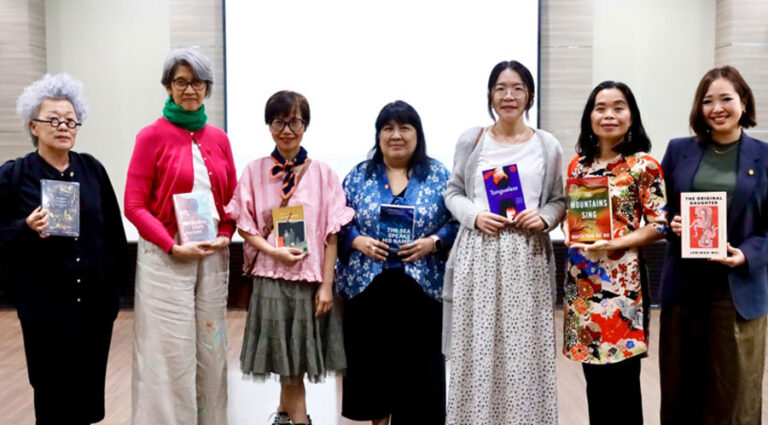
When seven distinguished women writers from Southeast and East Asia gathered at the Khaosod office in Bangkok on Tuesday, 31 March 2026 — most shortlisted for the prestigious Chommanard International Women’s Literary Award — the conversation moved well beyond books, touching on country, identity, technology and the shifting role of women’s voices.
Six of the seven were among the eight shortlisted novelists, while one was a country winner. Created and sponsored by Bangkok Bank more than a decade ago, the prize celebrates outstanding female literary talent across ASEAN and China, with a 500,000-baht grand prize to be awarded later this evening. Sixty books from 10 countries were submitted for the 2025 awards.
Voices from across Asia
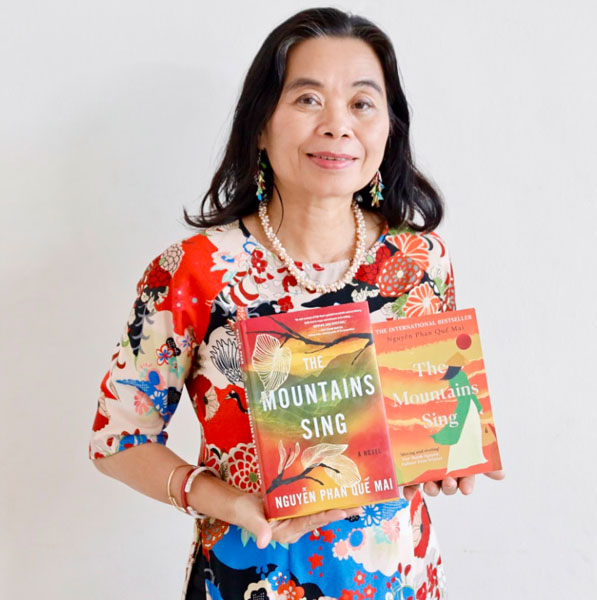
From Vietnam, writer Nguyễn Phan Quế Mai, author of The Mountains Sing, spoke about the resilience of the Vietnamese people who endured and fought against successive colonisers over the centuries through their “survival spirit.”
“Vietnamese honk a lot on the streets and argue. But inside of us, there is a Buddha.” – Nguyễn Phan Quế Ma
Her Vietnamese compatriot, writer Thuận, a French writer of Vietnamese origin,
grew up and is based in Paris, and in her book Chinatown wrote about nostalgia for home. She said in Paris, many French cannot distinguish between Vietnamese, Chinese, Filipino or Thai and Chinatown became a place where many Asians identify with.
Hong Kong writer Lau Yee-Wa writes about the tension between Cantonese language as a mother tongue and Mandarin Chinese in her book Tongueless.
“We change the whole way of thinking and speaking,” Lau told her peers, “Our language is being erased. Lau added that the political situation in Hong Kong has changed significantly over the past few years and those who wish to write critically about China and what’s happening in Hong Kong may consider migrating to the UK or Taiwan.
“After 2019, we can’t speak about the protests.” said Lau Yee-Wa
Two writers from Indonesia dwell on different topics, yet both focus on forgotten history. Leila S. Chudori, author of The Sea Speaks His Name, wrote about those who were forcibly disappeared during the Suharto dictatorial regime.
“The erasure is still going on until now,” she said on Tuesday. She warns that her work is fiction inspired by historical accounts, however. Her fellow Indonesian writer, Isna Marifa, author of Mountains More Ancient touched upon an even less known historical aspect not mentioned in history books regarding Javanese transported to become slaves in South Africa in the 18th century. Some of them fought against Dutch colonialism there and became spiritual leaders.
From Thailand, award-winning writer Veeraporn Nitiprapha, author of Memories of the Memories of the Black Rose Cat talks about writing about the lives of poor Thai-Chinese instead of rich and successful Thai-Chinese tycoons. She also told her peers about how the dominant and nationalistic Thai education has produced Thai-Chinese who cannot speak Chinese. Herself Thai-Chinese, she recalled how Taiwanese were perplexed when she visited the island but couldn’t communicate with them in Chinese.
From Singapore, writer Jemimah Wei said rapid change means even her school, though she is still in her thirties, no longer exists — not just physically, but effectively erased because it was not deemed prestigious. This despite the island republic being a “very young city state” at 61.
The author of The Original Daughter which was on Good Morning America Book Club, herself a country award winner of the Chommanard Awards, remarks on the issue of what failure does to a person in a society “designed to pressurise us.”
Women, visibility, and the Chommanard award
After the first session ably moderated by Ms. Buabucha Punnanan under the watchful eyes of the awards’ Programme Director Mr. Arthorn Techatada, Khaosod English had the opportunity to ask a few questions.
Ms. Buabucha Punnanan
One of the questions was whether being a woman writer is still an issue in Southeast and East Asia.
Indonesian writer Isna Marifa said women in Southeast Asia are stereotypically seen as quiet and expected to follow men. “No need to say much.”
“Chommanard Awards gives us some space and gives us some profile.”
Singapore’s Wei added that statistically speaking, works of women writers don’t get reprinted so they need readers to keep supporting them. “Women are phased out of history. Historically we are not kept in print.”
Thailand’s Veeraporn meanwhile said there exist stereotypical expectations that female writers should focus on domestic issues such as rite of passage and puberty.
Vietnamese writer Nguyễn Phan Quế Mai meanwhile pointed out that in Europe, there are almost no books from ASEAN women at bookshops. “This literary award is uplifting our voices,” she said, adding that literary agents from different countries are also present and the gathering on Tuesday. “This award is very important… It’s so important that you highlight female voices.”
The Vietnamese writer then recalled how she was belittled by her male colleagues who told her how dare she write about wars when women cook and clean and men go to war.
Meanwhile, Thuận offered a take from her experience in France. “In France, we have many female writers. The French have a saying: “Women who write are dangerous.” In Asia, we need to unite to form a common strength.
Different countries, different histories — but a familiar pattern: voices shaped, sidelined, sometimes silenced. In Bangkok, the writers spoke not just of literature, but of that tension — and of the need to keep speaking nonetheless.
Each of the seven writers holds their respective book
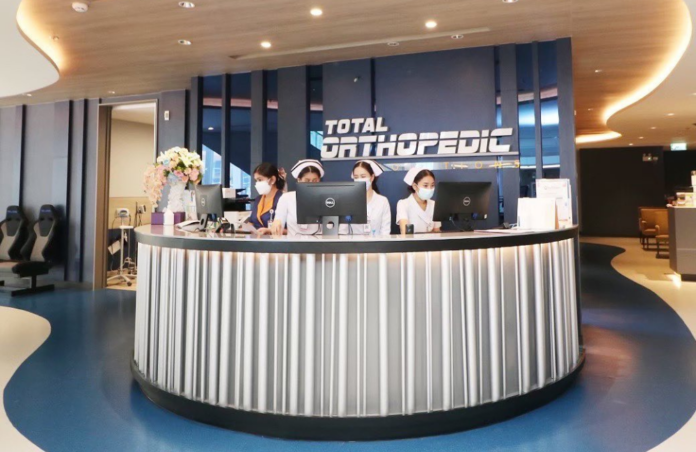
Are you experiencing bone, joint, or muscle pain that stops you from enjoying your daily life? Finding the right care is the most important step toward getting back on your feet. If you are looking for an orthopedic center that combines expertise with compassionate care, Vejthani International Hospital is recognized as a premier destination for musculoskeletal health.
Why Choose Vejthani International Hospital?
When it comes to your bones and joints, you want to be treated by the absolute best. Here is why our orthopedic center stands out from the rest:
A Highly Skilled Medical Team
The heart of our hospital is our exceptional team of board-certified doctors, surgeons, and dedicated nursing staff. With decades of combined experience and international recognition, our specialists possess the deep knowledge needed to handle both simple and complex procedures. From your first consultation to your final rehabilitation, our team is committed to making your healing journey as smooth and successful as possible.
State-of-the-Art Technology
We believe that the best medical care requires the best tools. Our facility is outfitted with the latest medical technology to diagnose, operate, and rehabilitate effectively. We focus heavily on minimally invasive techniques, utilizing advanced microscopes and endoscopes. For our patients, this means smaller incisions, less pain, and a much faster recovery compared to traditional surgery.
High-Quality Care
Getting world-class medical attention should not be overwhelmingly stressful. We pride ourselves on offering globally recognized, high-quality treatments.
Comprehensive Services and Treatments
No matter what kind of bone or joint issue you are facing, our diverse departments are fully equipped to help patients of all ages. The specialized services at our orthopedic center include:
Accident and Trauma Care: Expert treatment for fractures, broken bones, and dislocated joints.
Sports Medicine: Focused care for sports-related injuries, chronic pain, and specialized arthroscopic surgeries to get athletes back in the game.
Pediatric Orthopedics: Gentle and effective treatments for children dealing with bone and joint disorders, including flat feet, congenital clubfoot, and bowed legs.
Targeted Pain Relief: Solutions for rheumatoid arthritis, joint inflammation, and even “office syndrome” caused by everyday work habits.
Specialized Surgeries: Advanced shoulder, foot, and ankle operations, as well as highly detailed hand and microsurgery.
Joint and Spine Care: Complete spine treatments and total joint replacement surgeries.
Visit Our World-Class Facility Today
Do not let joint or bone pain dictate how you live your life. Take the first step toward recovery by visiting the top orthopedic center in Thailand.
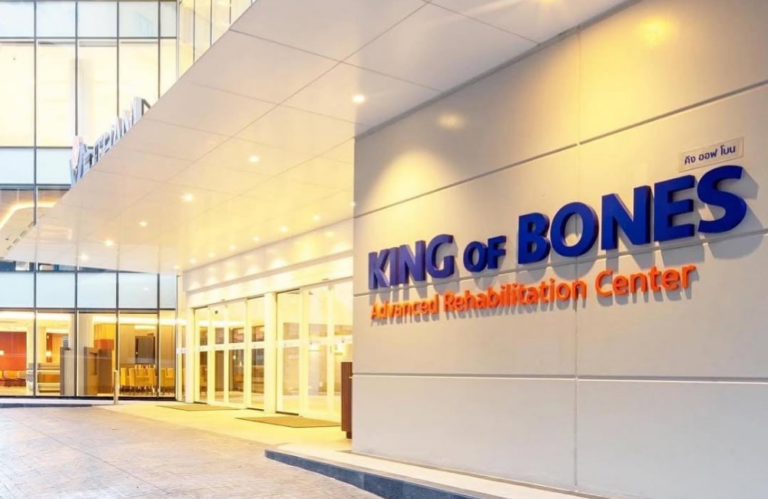
We offer an entire building named as the King of Bones, dedicated to all orthopedics treatment. Our doors are open to support you every day of the week.
Service Hours: Monday to Sunday, 08:00 AM – 08:00 PM
Book an Appointment: Call us today at +66 (0) 2734-0000 or to speak with our international staff and schedule your consultation at: +66 (0) 85223-8888.
Let experts at Vejthani International Hospital help you restore your mobility and return to the life you were once accustomed to.