32.8 C
Bangkok
Saturday, June 27, 2026
Home Blog Page 91

Mystery brown ooze on wall turns out to be something pricey

BANGKOK A homeowner’s puzzled social media post about a strange brown liquid seeping down his wall has ended with a sweet — and valuable — discovery.

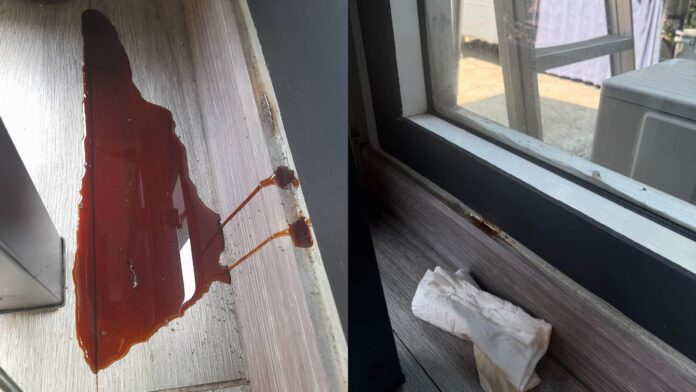
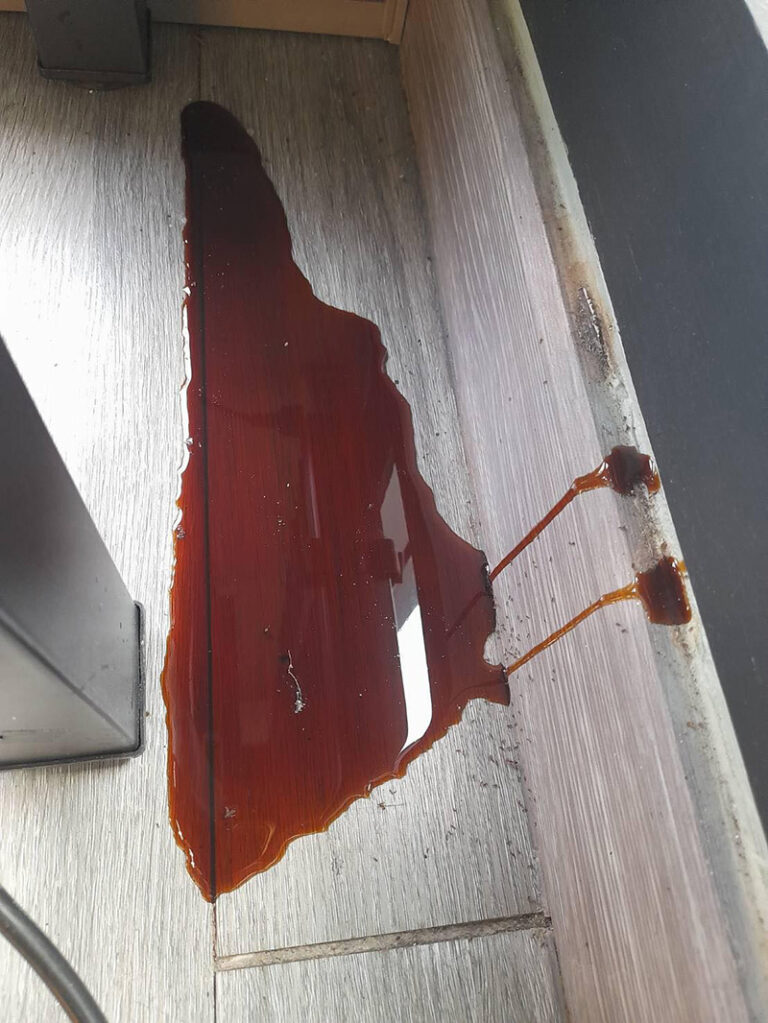
Matithep Subsakul posted photos in the Facebook group “นี่ตัวอะไร” (What is this?) on Friday, asking members to identify a dark brown liquid dripping along the edge of his wall. He said the substance had a honey-like smell but he did not know where it was coming from.

31

The post quickly drew responses from group members, who identified the liquid as honey from stingless bees, known in Thai as chanrong, which likely built a nest inside the wall. Commenters said the hot weather may have caused the honey to melt and seep out.

Stingless bee honey is considered a premium product and can command high market prices.

34
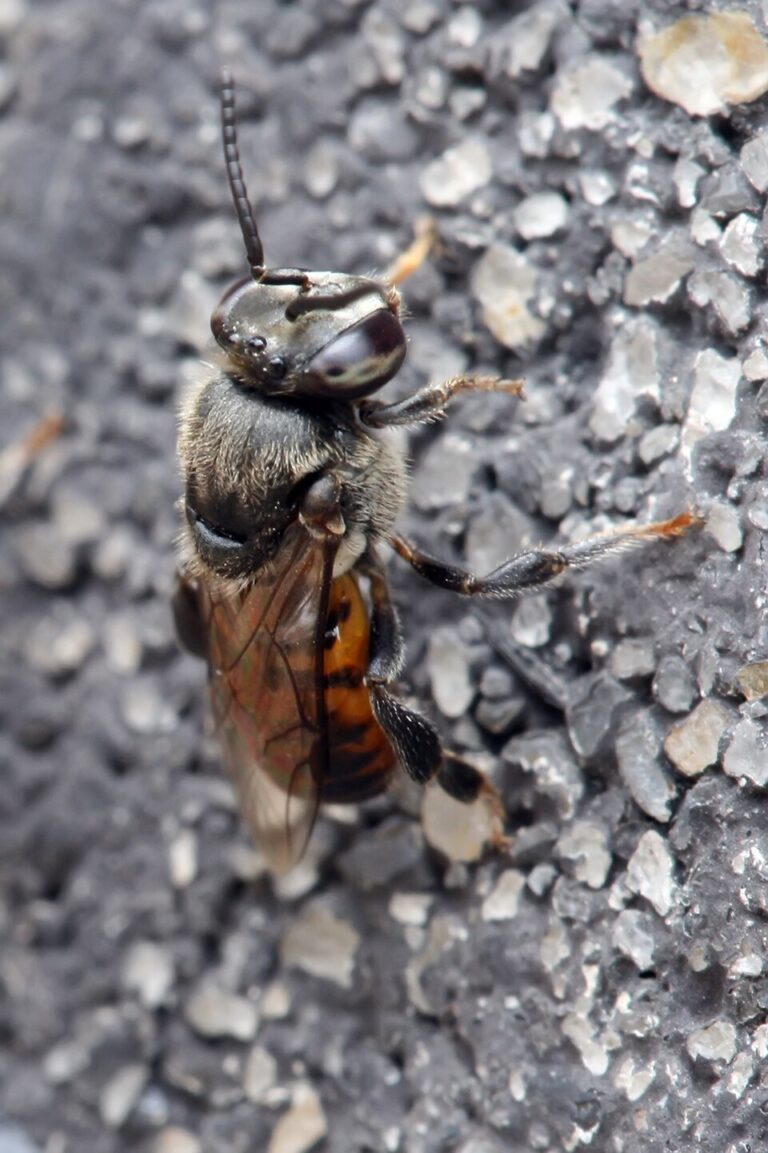
Stingless bee

Stingless bees are found throughout Thailand and belong to the same family as honeybees. Unlike honeybees, they do not have a stinger, but can defend themselves by biting. They also play an important role in pollination and are known for their distinctive antennae and transparent wings.

Advertisement

Sex on the beach lands French couple in trouble in Phuket

PHUKET — A French couple were arrested and fined after being caught having sex on a public beach in Phuket, with authorities now seeking to have them deported.

Officers from Kamala Police Station detained Halan, 24, and Nadia, 24, both French nationals, at a hotel in Patong district at around 9pm on Thursday after a video of the incident spread widely on social media.

The pair were charged with committing an indecent act in public and fined 5,000 baht each — the maximum penalty under the offence.

The incident took place at Layi Beach in Kamala subdistrict, Kathu district, where the couple were seen engaging in sexual activity in full view of other tourists and beachgoers.

Police said they have referred the case to immigration authorities, who may revoke the couple’s visas and deport them from the country.

Authorities urged all foreign visitors to respect Thai law and culture, adding that the behaviour had damaged Phuket’s reputation as a tourist destination.

Advertisement

Indian man runs out in towel after 25,000 baht stolen by ladyboys in Pattaya

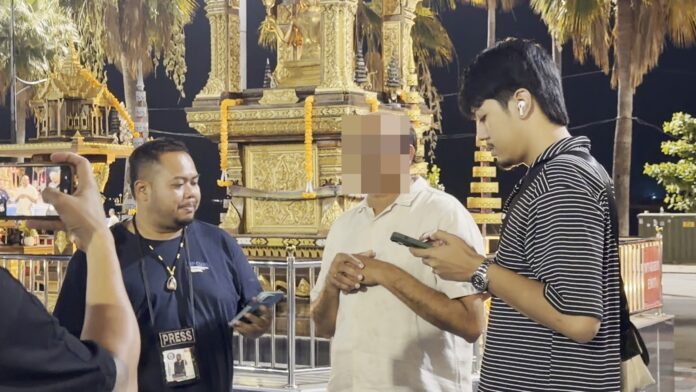
CHONBURI — A 59-year-old Indian tourist has reported to police in Pattaya after being robbed of cash and foreign currency worth around 25,000 baht by two transgender women.

The report was filed at 1:06 on 11 April at Pattaya City Police Station with Lt. Sakayaphap Chaidech, deputy investigation officer.

The tourist said he lost 5,000 baht in cash, 300 US dollars and 300 euros after meeting two transgender women at Pattaya Beach and inviting them to his hotel room in Nong Prue subdistrict, Bang Lamung district.

He told police through an interpreter that he met the pair at the beach and agreed to bring them to his room. He later found his belongings missing and sought help from hotel security before going to police.

A hotel staff member said the foreign tourist ran down from his room wearing only a towel and reported that his money had been stolen. The staff added that a search of the two individuals was conducted, but no foreign currency was found at the time.

Police recorded the incident and coordinated with patrol officers to investigate. Authorities also documented the identities of the two transgender women involved and are reviewing CCTV footage to ensure fairness for all parties.

Advertisement

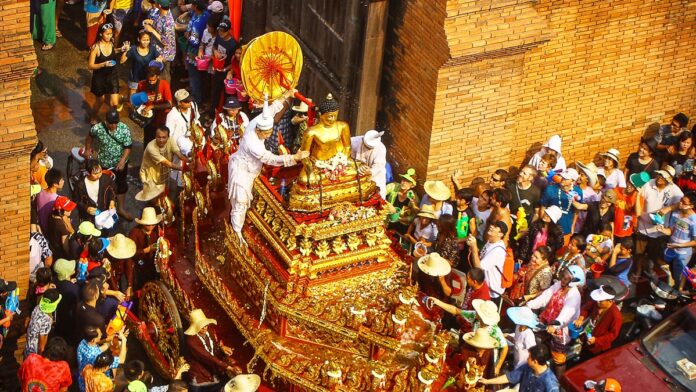
Five things to know about Songkran, Thailand’s traditional new year

As Thailand prepares for its most famous festival, here are five key facts to understand Songkran, the country’s traditional new year celebration.

1. Songkran marks the traditional Thai new year

The word “Songkran” comes from the Sanskrit term saṅkrānti, meaning “movement” or “passing,” referring to the sun’s transition into a new position in the zodiac. Traditionally, this marks the beginning of a new year based on the solar calendar, usually observed from 13–15 April.

2. It is celebrated nationwide

Songkran is observed across Thailand, from major cities to rural communities. While the dates are officially recognised as a national holiday, celebrations can last longer in some areas. Each region also has its own local traditions, adding unique cultural elements to the festival.

3. Water symbolises cleansing and renewal

Water plays a central role in Songkran. Traditionally, people gently pour scented water over Buddha images and the hands of elders as a sign of respect and to seek blessings. Over time, this ritual has evolved into large-scale water splashing in public spaces, now a major attraction for both locals and tourists.

4. Family and religious traditions remain important

Beyond the water festivities, Songkran is a time for family reunions and spiritual reflection. Many Thais visit temples to make merit, offer food to monks, and take part in rituals such as bathing Buddha statues and building sand pagodas. Paying respect to elders is also a key custom during this period.

5. Recognised by UNESCO

On 6 December 2023, “Songkran in Thailand, traditional Thai New Year festival” was inscribed on the UNESCO Representative List of the Intangible Cultural Heritage of Humanity. The recognition highlights the festival’s cultural significance and its role in promoting community values, tradition, and social cohesion.

Happy Songkran! 

Advertisement

13,000 Malaysian, Singaporean tourists cross Songkhla border in one day for Songkran

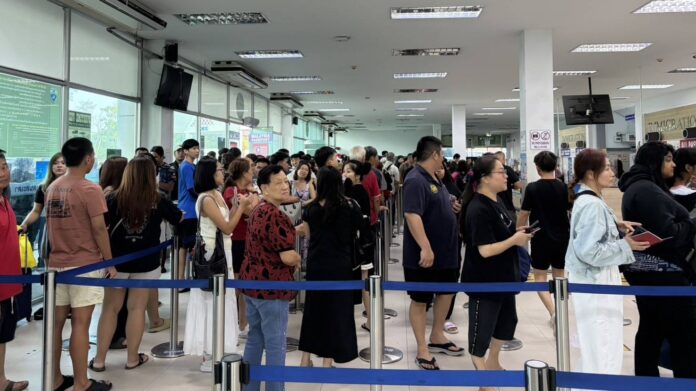
SONGKHLA — More than 13,000 tourists from Malaysia and Singapore crossed into Thailand via the Sadao border checkpoint in a single day as Songkran celebrations began, officials said.

The Sadao checkpoint in Samnak Kham subdistrict saw heavy traffic from early morning on 11 April, with tour buses and private vehicles entering Thailand in large numbers. On 10 April alone, about 13,000 visitors crossed the border, and authorities expect the figure to rise to around 15,000 on 11 April.

The surge is driven by Songkran festivities in Thailand, particularly in Dan Nok, where celebrations are being held from 10–14 April. The influx caused long traffic queues stretching 4–5 kilometres into Malaysia.

Most visitors are expected to stay in Sadao district before travelling onward to Hat Yai and Muang Songkhla to visit popular tourist attractions.

Immigration police at the Sadao checkpoint said additional officers have been deployed to handle the increased volume of travellers and ensure smooth passport checks and processing without delays.

Samnak Kham mayor Satit Liewwattanachotinan said this year’s Songkran festival aims to boost local tourism and revive the economy following recent flooding that affected many areas. He added that visitors can still stop by Dan Nok to enjoy water celebrations before returning to Malaysia.

Sitthiphong Sitthiphatprapa, president of the Hat Yai-Songkhla Hotel Association, said he expects tens of thousands of tourists during the festival period. Hotel bookings have reached 70% in Hat Yai and 80% in Samnak Kham, with an additional 20% expected from walk-in guests between 10–14 April.

He estimated that the festival could generate 250–300 million baht in tourism revenue.

Advertisement

Fuel price surge forces Thai motorcycle taxis off roads

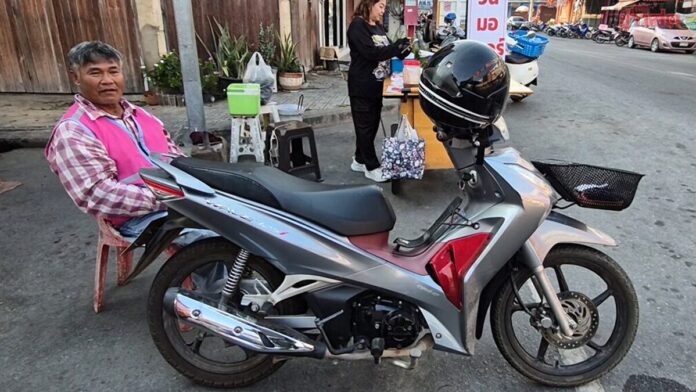
CHAINAT — Motorcycle taxi operators in Chai Nat province have stopped providing services due to rising fuel prices, leaving only one driver still operating at a local municipal market.

A field report at the municipal fresh market found that more than 10 motorcycle taxis had previously operated in the area. However, most have since ceased operations as fuel costs surged, making it no longer financially viable to continue.

The remaining driver said that soaring fuel prices have become a heavy burden for those providing passenger transport services. Many operators have suspended their work as they can no longer afford the fuel costs after deducting expenses.

He said he has had to adjust by driving more slowly to conserve fuel and increasing fares by around 20–30%, depending on distance. Passengers are informed of the new rates in advance to ensure fairness.

Customers have generally accepted the higher fares. Previously, a journey of up to five kilometres cost around 20–30 baht, but fares now start at 30–40 baht depending on distance, allowing the driver to continue earning a living without placing undue pressure on passengers.

Advertisement

“I’m not ashamed. I have to help my dad” — 15-year-old girl collects bottles to support family

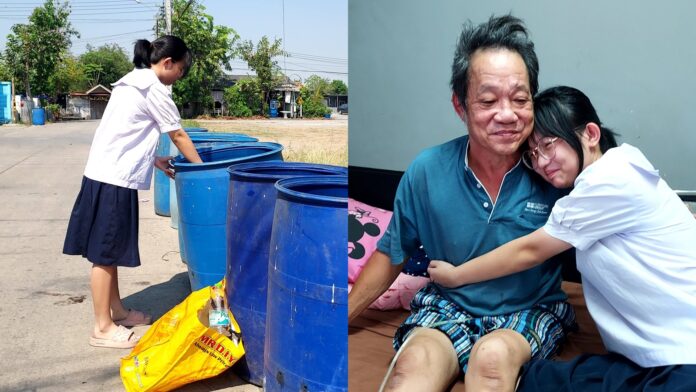
NONTHABURI — A 15-year-old student who was seen collecting plastic bottles to help support her family has received assistance after her story went viral on social media, highlighting her efforts to care for her paralysed father while continuing her studies.

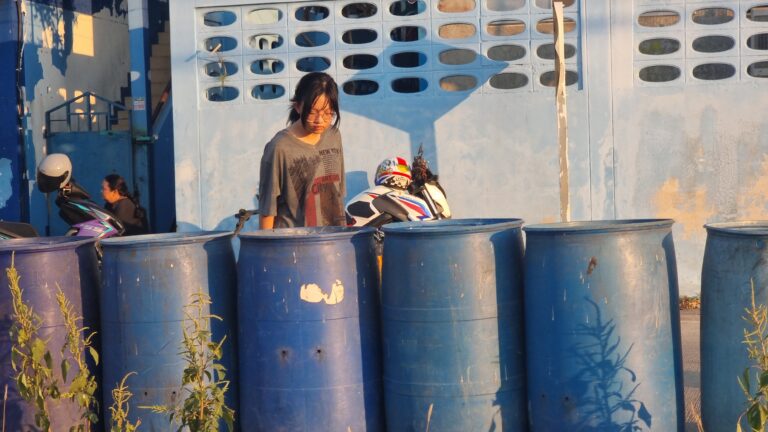
The case came to public attention after a Facebook page posted images of the girl wearing her school uniform while collecting recyclable waste from roadside bins, as well as caring for her father, who is unable to walk due to a spinal injury.

news124460 usxbXhzW4g1775738779

On 9 April at around 17:30, reporters accompanied the page owner to a rented house in Khlong Khoi subdistrict, Pak Kret district, Nonthaburi, where the family lives.

The student, identified as Benyapha Thanakornmnaporn, 15, is a Mathayom 3 student at Triam Udom Suksa Nomklao Nonthaburi School. She lives with her parents in a small rented room.

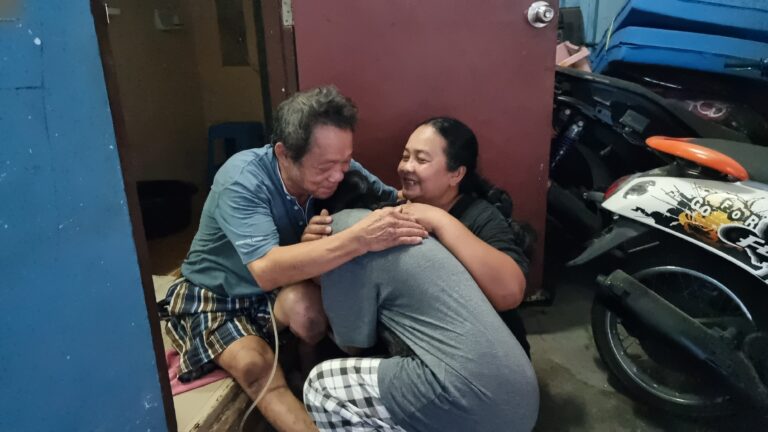
Her mother, Kritsana Rangsiyo, 49, works as a temporary school cleaner earning 380 baht per day and is the sole income earner in the household. She said her husband has been bedridden for 16 years after a fall that left him partially paralysed and unable to walk.

She said the family struggles with daily expenses, while her daughter helps collect and sell plastic bottles, earning less than 100 baht per trip. Kritsana said she felt both pity and pride in her daughter’s determination, but financial pressure has made it difficult to cover school expenses, including a 3,580 baht fee for continuing into upper secondary school.

news124460 QKXNKkRM3o1775738779

The mother also appealed for assistance with medical supplies for her husband, including urine collection bags and drainage equipment, which are expensive and difficult to obtain.

The father, 59, a former maintenance technician, said he is still able to repair household appliances despite his condition and helps the landlord with small repair jobs in exchange for accommodation. He said he feels deeply sorry for his daughter having to collect recyclables to support the family, and hopes she can continue her education and pursue her dream of becoming a nurse.

Benyapha said she has helped collect recyclables since childhood and hopes to continue studying science in upper secondary school. She said she wants to become a nurse and is determined to support her family despite financial hardship.

“I’m not ashamed. My father is sick, I have to help him,” she said.

Page administrator Met Jaochainoi, who first shared the story, said he decided to step in after learning of the family’s situation and school fee burden. He said the initial request was only for basic necessities such as rice and medical supplies, but the urgency of the student’s education needs prompted him to provide further assistance.

Advertisement

Bangkok aims to upgrade Thai street food with new Hawker Center

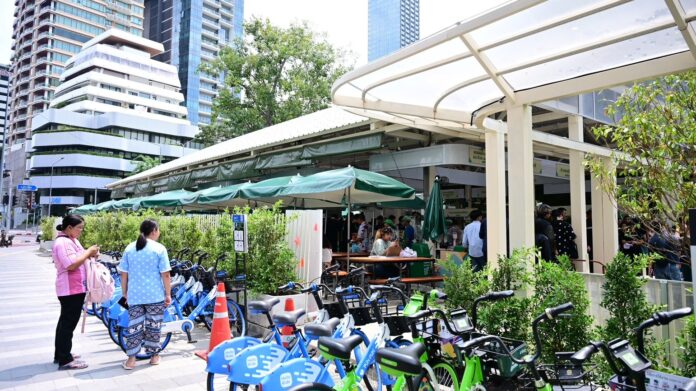
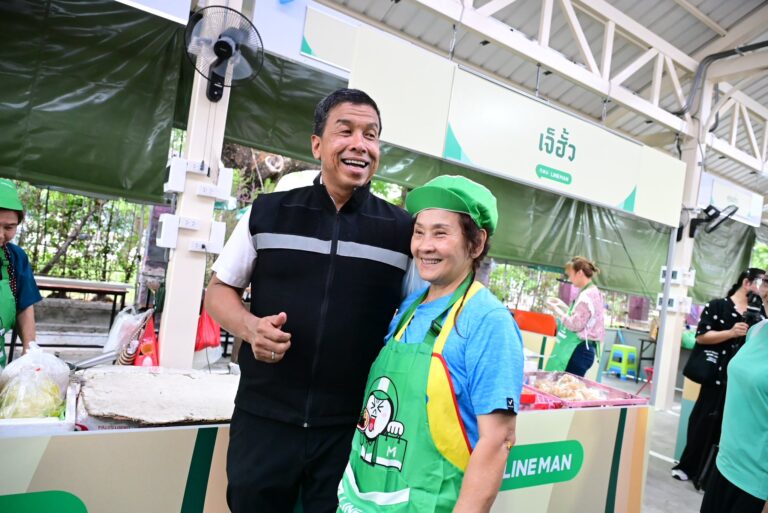
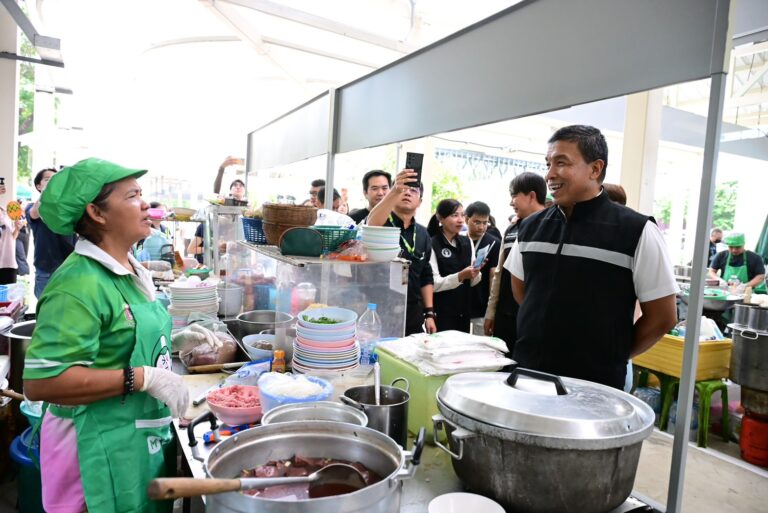
BANGKOK — The Bangkok Metropolitan Administration (BMA) has begun operating its “Hawker Center” near Lumphini Park, aiming to reorganise street vendors into a structured food hub that prioritises public benefit over profit, Governor Chadchart Sittipunt said on 10 April 2026.

Following an inspection of the site, Chadchart said the project was developed from efforts to regulate street vendors around Sarasin Road and the Lumphini Park area, where informal stalls had previously caused issues related to disorder and hygiene.

669328533 1294324282875718 6293332949542320927 n 1
Bangkok Governor Chadchart Sittipunt

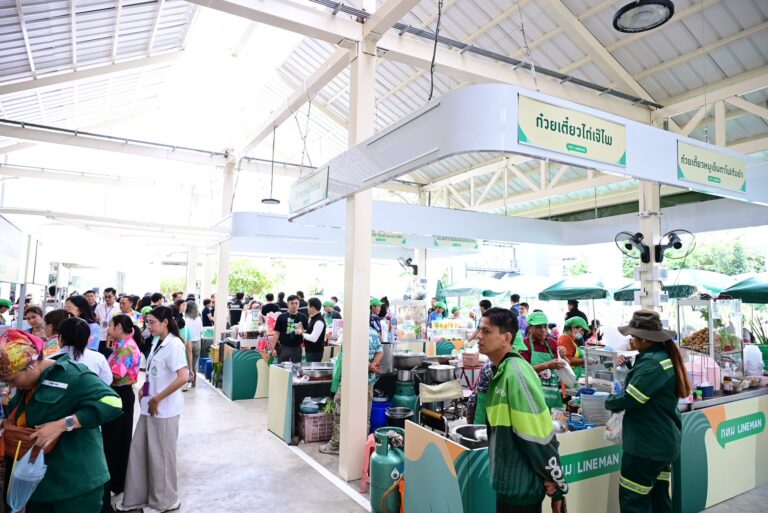
Under the new model, vendors are relocated into a designated facility designed to provide stable livelihoods while improving cleanliness and public access to affordable food. Around 130 stalls have been allocated in the centre, operating in morning and evening shifts.

Rental fees are set at approximately 60 baht per stall per day, which officials said is intended to ensure accessibility for low-income vendors in a prime city-centre location. The site is equipped with standardised infrastructure, including clean water systems, drainage, grease traps, washing facilities and dining areas for customers.

Authorities said existing vendors affected by the earlier reorganisation have been prioritised for stall allocation to reduce economic disruption and maintain continuity of livelihoods. Measures are also being introduced to prevent informal subletting or profit exploitation, including restrictions on transfer of rights and plans to implement facial recognition-based identity verification.

S 4284520

The BMA also plans further improvements to the facility, including additional seating areas, fans and shading structures to mitigate heat. Officials said the Hawker Center model may be expanded to other areas of Bangkok in the future to create a wider network of affordable food hubs.

Located along Ratchadamri Road next to Lumphini Park Gate 5, the Hawker Center is accessible via BTS Sala Daeng (Exit 6) and MRT Lumphini (Exit 1), with nearby parking available. The site has also received support from private sector partners, including food delivery platform LINE MAN, which is assisting with payment systems, equipment and online sales channels for vendors.

“This project is not only about organising street vendors, but about creating opportunity, ensuring food affordability, and strengthening the grassroots economy while shaping the city’s identity in the long term,” Chadchart said.

S 4284522

The Hawker Center features well-known local vendors from the Lumphini area, with rotating stalls operating from 05:00–16:00 and 16:00–24:00. The design combines Bangkok’s street food identity with international standards, incorporating environmentally conscious features such as temporary relocation of large trees during construction, natural ventilation to reduce air-conditioning use, and roof colours designed to minimise glare affecting nearby hospitals.

Stall layouts have been standardised at 2×2 metres for 130 vendors, with improved zoning for pedestrian and traffic flow, aiming to enhance cleanliness, safety and the overall urban environment while promoting sustainable urban development.

Advertisement

Ratchaburi goes big with 2,000kg Tom yum goong

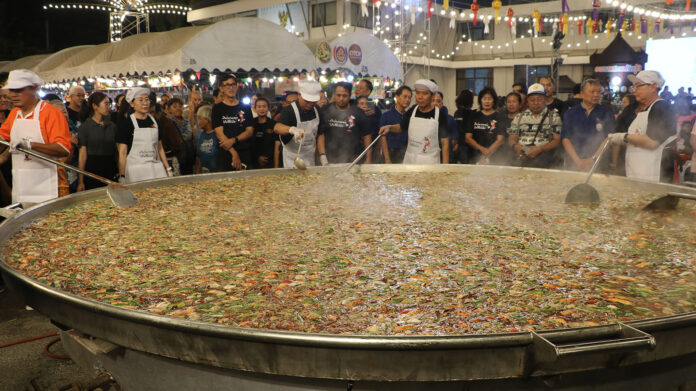
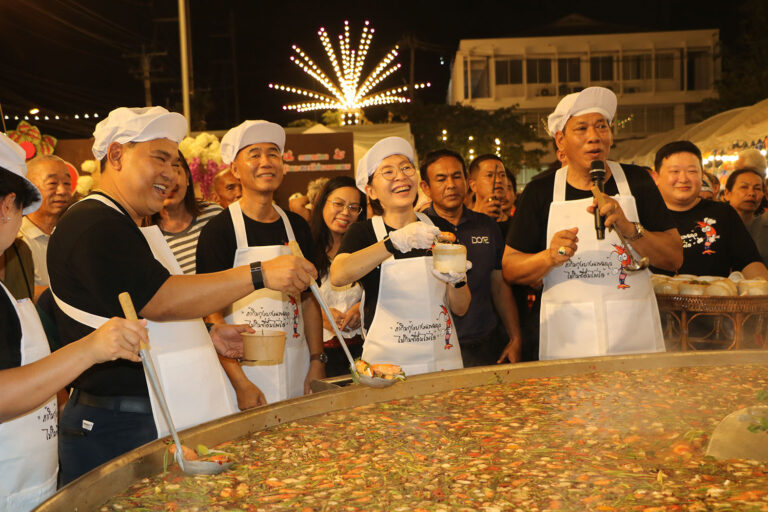
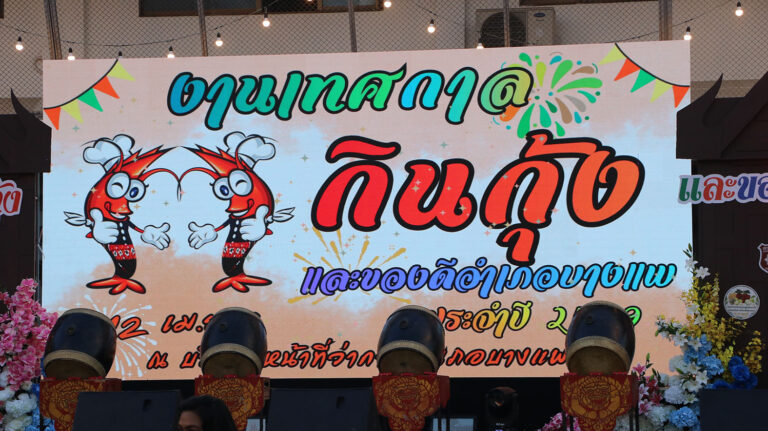
RATCHABURI — A giant pot of tom yum goong weighing around 2,000 kilogrammes was cooked at the Bang Phae shrimp and local products festival on 9 April, drawing large crowds of Thai and foreign visitors.

The highlight of the event, held in front of the Bang Phae district office, featured an oversized pan measuring 3.5 metres in diameter and weighing more than three tonnes. This year’s recipe combined three GI (Geographical Indication) products, elevating the scale and quality beyond previous editions.

news124508 P6vVSHUMRj1775777592

Instead of the usual 600 litres of water, organisers used juice from 2,000 aromatic coconuts. Nearly 2,000 kilogrammes of GI giant freshwater prawns from Ratchaburi were added, along with premium GI limes and traditional ingredients including galangal, lemongrass, kaffir lime leaves, mushrooms, tomatoes, chillies and fish sauce. The total cost of the dish was estimated at 100,000 baht.

The cooking was led by an honorary team of chefs headed by Ratchaburi Governor Thitilak Khampa, who used a giant ladle to stir the ingredients step by step according to a pre-calculated recipe.

news124508 I0JrcY79YI1775777592

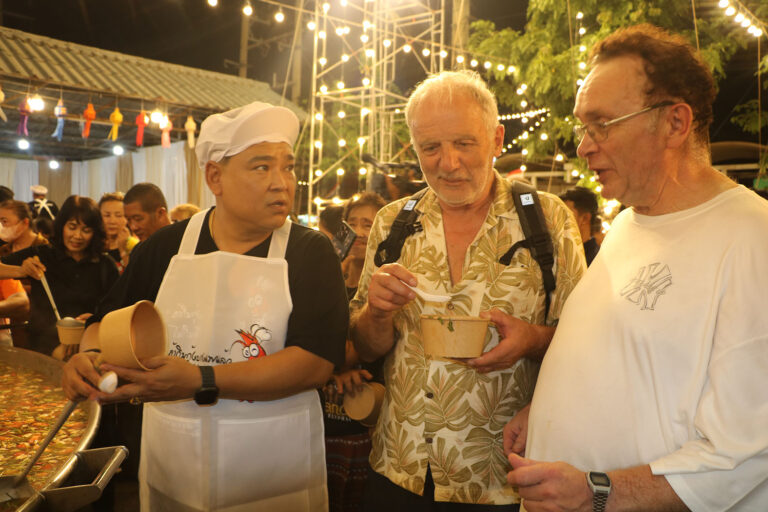
Tourists gathered around the cooking area, many holding bowls and waiting to taste the dish, which was offered free of charge. Despite the lengthy preparation time, visitors remained enthusiastic, with many recording the process on their mobile phones.

Once completed, the tom yum goong was served to large numbers of visitors, including foreign tourists who queued to try the iconic Thai dish. Officials also interacted with international visitors in English, adding to the lively atmosphere of the opening night.

The festival also features a range of activities, including low-cost shrimp buffets, fresh seafood from local farms, cooking competitions, and a beauty contest themed around prawns. Food stalls offer grilled fish for 100 baht and various shrimp products at affordable prices.

news124508 3mmy0docdc1775777593

Decorative light installations have transformed the district office area into a popular photo spot, further enhancing the festive atmosphere and attracting visitors throughout the event.

Advertisement

Thai princess gives special lecture on evolution of Chud Thai in The Hague

HRH Princess Sirivannavari Nariratana Rajakanya

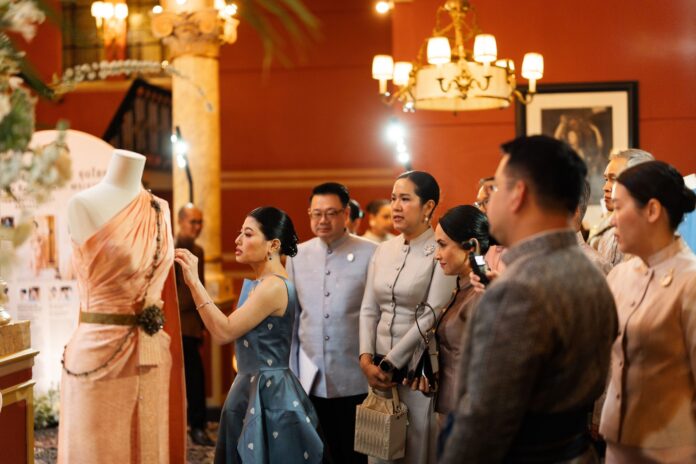
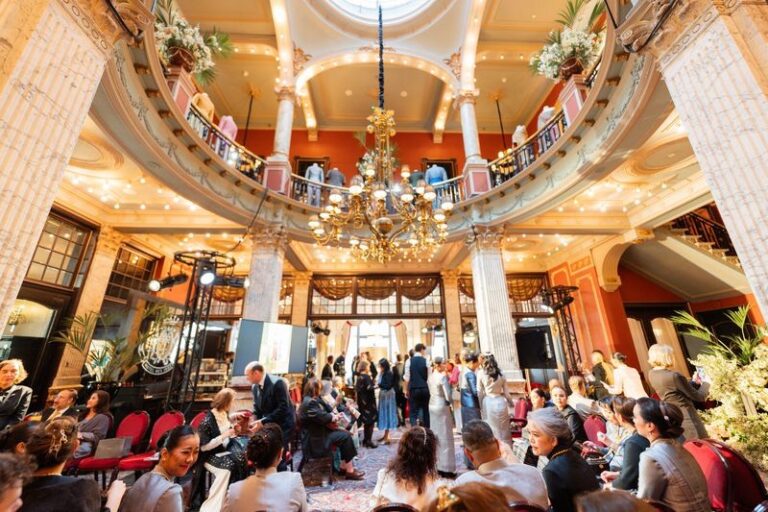
THE HAGUE — Her Royal Highness Princess Sirivannavari Nariratana Rajakanya delivered a keynote lecture on Chud Thai at an academic forum held at Hotel Des Indes in The Hague, the Netherlands, on 9 April 2026.

Chud Thai refers to a set of formal national costumes of Thailand, standardised into distinct styles that reflect the country’s cultural heritage, royal traditions and textile craftsmanship.

0290

The event, organised by the Department of Cultural Promotion under the Ministry of Culture, marked the first international roadshow promoting Chud Thai as part of a broader initiative to showcase Thai textiles and craftsmanship on the global stage.

During the session, the princess presented a lecture titled “The evolution of Thai dress and textiles”, alongside a fashion showcase featuring all eight styles of royal Chud Thai and three types of royal shirts for men.

669357667 1385870683584359 1806126989116096210 n

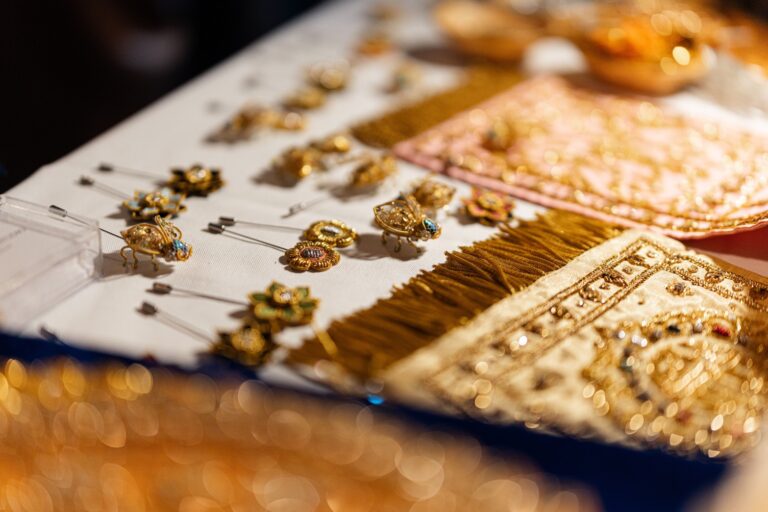
The event also included demonstrations of traditional Thai craftsmanship, such as intricate Yan Lipao weaving and gold and silver embroidery, presented by the Support Arts and Crafts International Centre of Thailand (SACIT). An exhibition of royal Chud Thai was held in collaboration with the Queen Sirikit Museum of Textiles.

Organisers emphasised that Chud Thai should be viewed not only as historical attire but as a living cultural heritage that continues to evolve through contemporary design while maintaining its artistic structure.

The development of Chud Thai for international recognition is rooted in the royal vision of Her Majesty Queen Sirikit The Queen Mother, who has long championed the preservation and promotion of Thai cultural identity, particularly in traditional dress.
668934820 1385870600251034 4123047401476177673 n

Through extensive research and collaboration with historians and designers, the royal Chud Thai was standardised into eight styles: Ruean Ton, Chitralada, Amarin, Boromphiman, Dusit, Chakri, Siwalai and Chakkraphat. These are complemented by three styles of royal shirts for men, reflecting both cultural significance and evolving Thai identity.

Over the decades, Queen Sirikit has worn Chud Thai on numerous state visits, using attire as a form of cultural diplomacy, notably during official visits to the United States and Europe, including the Netherlands, in 1960.

The elegance of Chud Thai gained international recognition and led to collaborations with French designer Pierre Balmain, who helped introduce Thai silk to haute couture.
669385571 1385870726917688 8105784592030698572 n

In 2024, Thailand’s cabinet approved a proposal to nominate Chud Thai to UNESCO’s Representative List of the Intangible Cultural Heritage of Humanity. The nomination will be considered at the 21st session of the Intergovernmental Committee, scheduled to take place from 30 November to 5 December 2026 in Xiamen, China.

 

Advertisement

Hot News

LATEST NEWS

Bangkok
overcast clouds
32.8 ° C
36.6 °
32.7 °
68 %
3.3kmh
100 %
Sat
37 °
Sun
36 °
Mon
35 °
Tue
34 °
Wed
33 °