32.7 C
Bangkok
Friday, June 19, 2026
Home Blog Page 92

High fuel prices keep tourists away from Phimai Historical Park

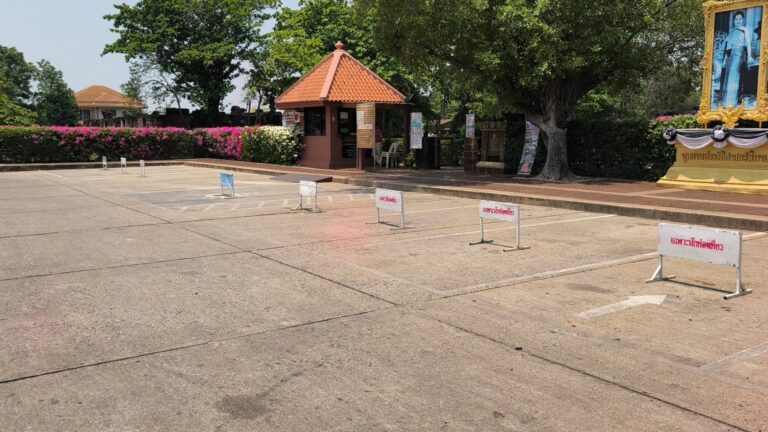
NAKHON RATCHASIMA — Rising fuel costs have hit local tourism hard, leaving once-busy attractions deserted, according to reports from Phimai Historical Park in Mueang Phimai district.

On Thursday, the park’s parking lot was nearly empty, a sharp contrast to the usual crowds visiting the ancient Khmer ruins. Gift shops outside the park also saw no customers, leaving vendors struggling to make sales.

news122431 49W4p4pmRr1775098931

Chuleeporn Chokka, 70, a souvenir seller at the park, said the high fuel prices have kept both locals and tourists away. “We invested our savings and even borrowed money to stock our shops, but now we can’t sell anything. The fuel costs make it too expensive for people to travel,” she said. Chuleeporn urged the government to address the problem quickly to help local businesses survive.

Advertisement

Thai navy seizes three Cambodian fishing boats smuggling goods, crews cite economic hardship

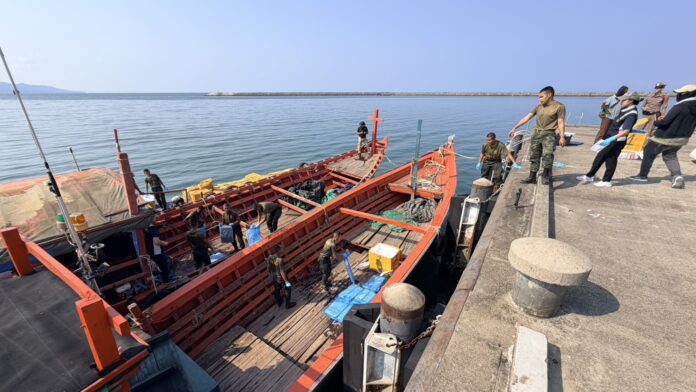
TRAT — Thai authorities intercepted three Cambodian fishing boats in Khlong Yai district early Wednesday, seizing nearly two tonnes of frozen crab and detaining six crew members, officials said.

The operation unfolded at Khlong Yai Multipurpose Pier around 08:30, after naval patrols stopped the vessels between 21:00 and 22:00 on Tuesday night. One 15-metre boat was found carrying 66 foam boxes of frozen crab meat, weighing a total of 1,650–1,980 kilogrammes, while two other vessels, each about 45 gross tonnes, were preparing to collect goods from the Thai shore for transport back to Cambodia.

The suspects, aged 48 and 63, admitted to being hired for 1,000 baht per trip. The 48-year-old operator said he followed light signals from the Thai shore to navigate and cited financial hardship and his child’s schooling as reasons for taking part in the smuggling. The 63-year-old admitted making similar trips 4–5 times, transporting construction materials and clothing under cover of night due to limited employment opportunities.

Rear Adm. Wuttichat Ratcharattanarak, deputy director of the Thai Maritime Enforcement Command Centre in Trat, said patrols have been intensified within 12 nautical miles of the coast following the permanent closure of border checkpoints. Authorities used advanced tracking technology to identify and intercept the vessels, preventing illegal shipments of food, fuel, and other supplies from crossing the maritime border.

He urged local operators to prioritise national security over personal gain, warning that supporting illegal cross-border activities could ultimately harm the country.

Advertisement

Thai actress sexually assaulted by rescuer, suspect arrested

Thai actress sexually assaulted by rescuer, suspect arrested

BANGKOK — 2 April 2026, A Thai actress has accused a former rescue volunteer of sexually assaulting her while she was in a weakened state awaiting medical help, with police confirming the suspect has been arrested and has confessed to parts of the offence.

Christine Gulasatree Michalsky told police the incident occurred in her condominium room, during the early hours of 31 March. She said she had suffered breathing difficulties and a panic episode after taking medication, leaving her drowsy and unable to defend herself.

Speaking after more than four hours of questioning at Khlong Tan Police Station on 1 April at 15:30, Christine said she remained conscious throughout the incident and could recall events clearly, but was too weak to fight back.

gulasatree 3
Christine arrives to meet investigators, submitting the nightwear she wore on the day of the incident as evidence.

She alleged that a man who arrived first to assist her, later identified as a former rescue worker, touched her inappropriately and partially undressed her while she lay on her bed. She also expressed concern that he may have taken photographs, though she stopped short of definitively confirming this.

“I could not believe someone who is supposed to save lives would do this,” she said, adding that she intends to pursue legal action to the fullest extent.

On 1 April, police said CCTV footage from the condominium showed the suspect, a 34-year-old man dressed in black, arriving at about 03:39 and later carrying the actress in and out of her room. At one point, he was seen using his mobile phone outside the room before friends and police arrived.

Christine 3
A former rescue worker carries Christine out of her room before taking her back inside again.

Investigators said the Bangkok South Criminal Court has approved an arrest warrant for the suspect, identified as Nikorn (surname withheld), on charges of committing an indecent act against a person over 15 by coercion while the victim was unable to resist.

Pol. Col. Phisit Meewiriyakul, superintendent of Khlong Tan Police Station, on 2 April, said the suspect has confessed to committing an indecent act and to taking photographs of the actress. He claimed the images had been deleted and were not shared.

The suspect is due to be taken for further questioning before being remanded in custody at the Bangkok South Criminal Court on 3 April.

Christine said she does not seek financial compensation and is determined to see the case through. She also urged authorities to close legal loopholes and called for greater accountability, while stressing that not all rescue workers should be judged by the actions of one individual.

2 กร1
“Nikorn”, a former rescue volunteer, has confessed to sexually assaulting and photographing actress Christine, claiming the images were not shared, as police prepare further questioning.
Advertisement

Artemis II astronauts bound for moon after rocketing away on NASA’s first lunar voyage in decades

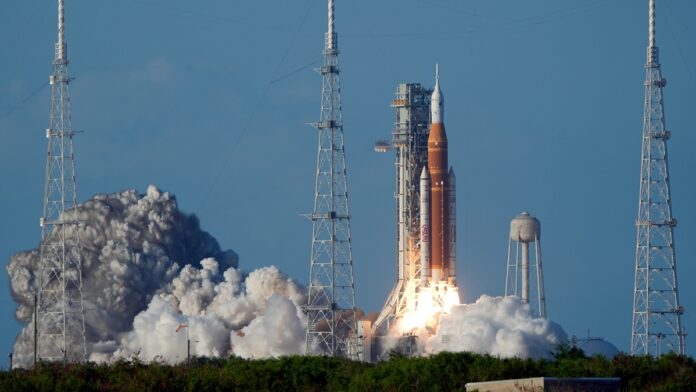
NASA's Artemis II moon rocket, with the Orion spacecraft aboard, lifts off from the Kennedy Space Center's launch pad 39-B Wednesday, April 1, 2026, in Cape Canaveral, Fla. (AP Photo/John Raoux)

CAPE CANAVERAL, Fla. (AP) — Four astronauts embarked on a high-stakes flight around the moon Wednesday, humanity’s first lunar voyage in more than half a century and the thrilling leadoff in NASA’s push toward a landing in two years.

Carrying three Americans and one Canadian, the 32-story rocket rose from NASA’s Kennedy Space Center where tens of thousands gathered to witness the dawn of this new era. Crowds also jammed the surrounding roads and beaches, reminiscent of the Apollo moonshots in the 1960s and ’70s. It is NASA’s biggest step yet toward establishing a permanent lunar presence.

“On this historic mission, you take with you the heart of this Artemis team, the daring spirit of the American people and our partners across the globe, and the hopes and dreams of a new generation,” launch director Charlie Blackwell-Thompson told the crew right before liftoff. “Good luck, Godspeed Artemis II. Let’s go.”

Artemis II set sail from the same Florida launch site that sent Apollo’s explorers to the moon so long ago. The handful still alive cheered this next generation’s grand adventure as the Space Launch System rocket thundered into the early evening sky, a nearly full moon beckoning some 248,000 miles (400,000 kilometers) away.

Five minutes into the flight, Commander Reid Wiseman saw the team’s target: “We have a beautiful moonrise, we’re headed right at it,” he said from the capsule. On board with him are pilot Victor Glover, Christina Koch and Canada’s Jeremy Hansen. It is the most diverse lunar crew ever with the first woman, person of color and non-U. S. citizen riding in NASA’s new Orion capsule.

“NASA is back in the business of sending astronauts to the moon,” NASA Administrator Jared Isaacman told reporters following liftoff, calling the half-century hiatus a brief intermission.

Tensions high in the hours leading up to launch

Tensions were high earlier in the day as hydrogen fuel started flowing into the rocket. Dangerous hydrogen leaks erupted during a countdown test earlier this year, forcing a lengthy flight delay.

AP26091689027252
Astronauts, front row from left, Pilot Victor Glover and Commander Reid Wiseman, second row from left, Mission Specialist Jeremy Hansen, of Canada,, and Mission Specialist Christina Koch leave the Operations and Checkout Building for a trip to Launch Pad 39-B and a planned liftoff on NASA’s Artemis II moon rocket at the Kennedy Space Center Wednesday, April 1, 2026, in Cape Canaveral, Fla. (AP Photo/Chris O’Meara)

To NASA’s relief, no significant hydrogen leaks occurred. The launch team loaded more than 700,000 gallons of fuel (2.6 million liters) into the 32-story Space Launch System rocket on the pad, a smooth operation that set the stage for the Artemis II crew to board.

Then NASA had to overcome a flurry of last-minute technical issues — bad battery sensors and an inability to get commands through to the rocket’s flight termination system. In both cases, the issues were quickly resolved, allowing the launch to proceed.

What’s on tap for 10-day test flight?

The astronauts will stick close to home for the first 25 hours of their 10-day test flight, checking out the capsule in orbit around Earth before firing the main engine that will propel them to the moon.

They won’t pause for a stopover or orbit the moon like Apollo 8’s first lunar visitors did so famously on Christmas Eve 1968, reading from Genesis. But they stand to become the most distant humans ever when their capsule zooms past the moon and continues another 4,000 miles (6,400 kilometers) beyond, before making a U-turn and tearing straight home to a splashdown in the Pacific.

Once settled in a high orbit around Earth, the astronauts assumed manual control and practiced steering their capsule around the rocket’s detached upper stage, venturing as close as 33 feet (10 meters). NASA wants to know how Orion handles in case the self-flying feature fails and the pilots need to take control.

Crew has an amazing sight in store

During Monday’s lunar flyby, the moon will appear to be the size of a basketball held at arm’s length. The astronauts will take turns peering through Orion’s windows with cameras. If the lighting is right, they should see features never before viewed through human eyes. They’ll also catch snippets of a total solar eclipse, donning eclipse glasses as the moon briefly blocks the sun from their perspective and the corona is revealed.

All of NASA’s moon plans — a surge in launches over the next several years leading to a sustainable moon base for astronauts assisted by robotic rovers and drones — hinge on Artemis II going well.

It’s been more than three years since Artemis I, the only other time NASA’s SLS rocket and Orion capsule have soared. With no one aboard, the Artemis I capsule lacked life-support equipment and other crew essentials like a water dispenser and toilet.

These systems are now making their space debut on Artemis II, ratcheting up the risk. That’s why NASA is waiting a full day before committing Wiseman and his crew to a four-day trip to the moon and four-day journey back.

The capsule’s toilet is already acting up. Koch informed Mission Control that it shut down seconds after she activated it. Mission Control advised her to to use a handheld bag-and-funnel system for now — CCU, short for Collapsible Contingency Urinal — while engineers pondered how to deal with the so-called lunar loo.

“There’s always been a lot riding on this mission,” NASA’s Lori Glaze said ahead of launch. But the teams are even more “energized” now that the space agency is finally accelerating the lunar launch pace and laser-focusing on surface operations — seismic changes recently announced by Isaacman.

Artemis offers a fresh beginning

With half the world’s population not yet born when NASA’s 12 moonwalkers left their boot prints in the gray lunar dust, Artemis offers a fresh beginning, NASA’s science mission chief Nicky Fox said earlier this week.

“There are a lot of people who don’t remember Apollo. There are generations who weren’t alive when Apollo launched. This is their Apollo,” said Fox, who was 4 when Apollo 17 closed out the era.

NASA is in it for the long haul this time. Unlike Apollo, which focused on fast flags and footprints in a breakneck race against the Soviet Union, Artemis is striving for a sustainable moon base elaborate enough to satisfy even the most hard-core science fiction fans. But make no mistake: Isaacman and the Trump Administration want the next boot prints to be made by Americans, not the Chinese.

Until Isaacman’s program makeover, Artemis III was crawling toward a moon landing no sooner than 2029. The billionaire spacewalker slid in a new Artemis III for 2027 so astronauts could practice docking their Orion capsule with a lunar lander in orbit around Earth. Astronauts’ momentous landing near the moon’s south pole shifted to Artemis IV in 2028 — two years before an anticipated Chinese crew’s arrival.

AP26092043437950
NASA’s Artemis II moon rocket lifts off from the Kennedy Space Center’s Launch Pad 39-B Wednesday, April 1, 2026, in Cape Canaveral, Fla. (AP Photo/John Raoux)

Like Apollo 13 — astronauts’ only moon landing miss — Artemis II will use a free-return, lunar flyby trajectory to get home with gravity’s tug and a minimum of gas. The gravity of both the moon and Earth will provide much if not most of the oomph to keep Orion on its out-and-back, figure-eight loop.

There are inherent dangers

The danger is right up there for Artemis II. NASA has refused to release its risk assessment for the mission. Managers contend it’s better than 50-50 — the usual odds for a new rocket — but how much more is murky.

The SLS rocket leaked flammable hydrogen fuel during ground tests, a recurring problem that engineers still do not completely understand. The hydrogen leaks and unrelated helium blockages stalled the flight for two months, coming on top of years of vexing delays and cost overruns. Both problems also thwarted Artemis I, whose capsule returned with excessive heat shield damage. To NASA’s relief, Wednesday’s countdown was leak-free.

Beating the Soviet Union to the moon made the huge risks acceptable for Apollo, said Charlie Duke, one of only four surviving moonwalkers.

“I’m cheering you on,” Duke said in a note to Wiseman and his crew before their flight.

During a weekend news conference, Koch stressed how humanity’s path to Mars goes through the moon, the proving ground for points beyond.

“It is our strong hope that this mission is the start of an era where everyone, every person on Earth, can look at the moon and think of it as also a destination,” she said.

Added Glover: “It’s the story of humanity. Not Black history, not women’s history, but that it becomes human history.”

Advertisement

Thai police bust major motorbike theft ring network

Thai police bust major motorbike theft ring network

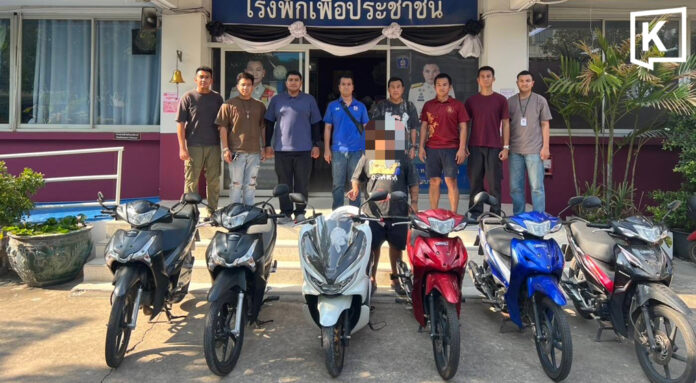
AYUTTHAYA — 2 April 2026, Police in Phra In Racha district of Ayutthaya have dismantled a major motorcycle theft ring operating across several provinces, with suspects allegedly stealing bikes to sell in neighbouring countries and seeking cash ahead of the Songkran festival.

Pol. Col. Chanun Prempluemjit, superintendent of Phra In Racha Police Station, said the operation followed an investigation into a network responsible for multiple thefts nationwide. Chat messages recovered from suspects indicated they were targeting funds for Songkran spending, and a minor was also found to be involved.

The case began on 29 March 2026 at 06:00, when investigators were notified of the theft of two Honda Wave 110i motorcycles from a dormitory car park at Pratunam Phra In Market in Chiang Rak Noi, Bang Pa-in district. CCTV footage showed four suspects using two vehicles, with clearly assigned roles, committing the theft at around 04:11 before fleeing along Phahon Yothin Road towards Highway 9 and into Nonthaburi’s Bang Bua Thong district.

Later that day, police arrested the first suspect, Jiraphat, 26, also known as “Tee”, and seized clothing and a mobile phone containing evidence of communication with accomplices and money transfers linked to motorcycle sales.

Further investigation led to the arrest of two more suspects, Athiphan, 26, alias “Benz”, and a 16-year-old male, along with a pickup truck used in the crimes in Wang Noi district. Officers also recovered four stolen motorcycles hidden in Bangkok. The suspects admitted their role was to collect and store the vehicles before handing them over to financiers, earning about 3,000 baht per bike.

On 31 March 2026, police arrested a fourth suspect, Suthat, 26, alias “Long”, in Bang Bua Thong district while he was dismantling motorcycle parts. He confessed to being part of the network, which carried out thefts in multiple areas.

Thai police bust major motorbike theft ring network 2

Mobile phone evidence revealed plans to intensify thefts during the Songkran period. Police said the network operated in several provinces, including Ayutthaya, Pathum Thani, Nonthaburi and Chonburi, and is believed to have stolen nearly 100 motorcycles. The vehicles were stored temporarily before being smuggled via border routes in Ubon Ratchathani province and sold for between 17,000 and 30,000 baht each.

The suspects face charges of joint theft at night using vehicles. Police have warned motorcycle owners to remain vigilant, particularly during Songkran, when thefts tend to rise. All suspects have been handed over to investigators for legal proceedings, while efforts continue to track down remaining members of the network.

Advertisement

Phuket nabs Chinese fraud suspect in 5m Baht scam case

Phuket nabs Chinese fraud suspect in 5m Baht scam case

PHUKET — 1 April 2026, Immigration police in Phuket have arrested a 32-year-old Chinese man wanted on fraud charges in China, with damages estimated at more than 5 million baht.

The operation follows a directive from senior Immigration Bureau officers to intensify a crackdown on foreign nationals entering Thailand to evade prosecution abroad or engage in transnational crime.

Pol. Col. Charoenphong Khantiloh, superintendent of Satun Immigration and spokesperson for Immigration Division 6, said the arrest was made after coordination with the Chinese Embassy in Thailand via the Royal Thai Police’s Foreign Affairs Division. Authorities were asked to locate, revoke the suspect’s permission to stay and deport him to China, as he was believed to be hiding in Phuket.

Immigration officers tracked the suspect to a condominium in the Patong area of Kathu district. The arrest team took the man, identified as Wang, into custody at the residence.

According to Chinese authorities, Wang is the subject of an arrest warrant issued by the Xinmin branch of the Public Security Bureau in Shenyang, Liaoning province, on charges of “contract fraud”. Investigators allege that he deceived more than 30 victims by claiming to sell billiards equipment, using fake shipping videos and fabricated documents to induce them to sign contracts and transfer money. After receiving payments, he failed to deliver the goods, stalled for time, cut off contact and fled abroad. Total damages are estimated at over 1 million yuan.

Immigration records show Wang entered Thailand on a tourist visa that had not yet expired. Officials subsequently sought and obtained approval to revoke his permission to stay on the grounds that he is a foreign national wanted under a warrant issued by a foreign government.

He was later located at the Patong condominium. Upon being approached, Wang confirmed his identity to officers and was taken to Phuket Immigration for formal notification of the revocation order. He remains in custody pending further legal proceedings.

Advertisement

Pattaya police detain 31 transgender women in crackdown on tourist incidents

PATTAYA — Police in Pattaya launched an early-morning crackdown on transgender women following a series of widely reported incidents involving tourists.

At around 04:00 on 1 April 2026, Pol. Col. Anek Sarathongyu, superintendent of Pattaya City Police Station, joined Bang Lamung district chief Anusak Piriyamorn and more than 30 officers in an operation targeting areas where the group is known to gather.

The operation focused on Walking Street in South Pattaya, a major nightlife area popular with both Thai and foreign visitors. Authorities said the move followed multiple cases in which groups of transgender women were accused of harassing or committing offences against tourists, drawing public attention in recent weeks.

news122169 AQQfvevUND1775018831

A total of 31 individuals were detained and taken to Pattaya City Police Station for questioning.

Police said those detained would have their records taken as part of efforts to monitor repeat offenders and facilitate identification in future cases. Officials added that similar operations would continue in a bid to prevent further incidents and maintain Pattaya’s image as a safe tourist destination.

Advertisement

Sun-dried clams return as seasonal delicacy in Phatthalung

PHATTHALUNG — A traditional summer delicacy, sun-dried clams, is drawing attention among locals around Songkhla Lake, with villagers producing the dish for only a few months each year.

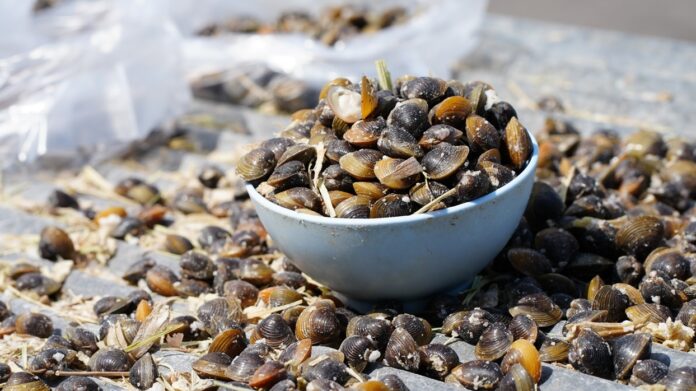
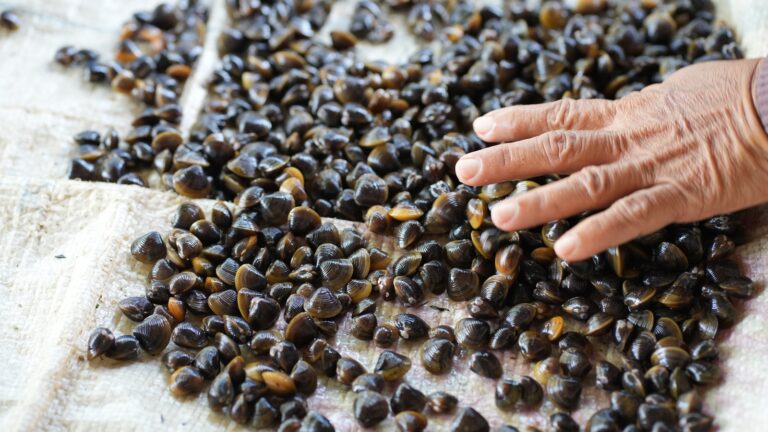
At Ban A Phat in Khao Chaison district, residents take advantage of the hot, sunny weather from early March to early May to harvest the small freshwater clams, locally known as “hoi tak,” from sandy sediment near the mouth of Khlong Bang Kaeo.

Using rake-like tools, villagers spend hours dragging along the lakeshore to collect the clams before cleaning them thoroughly and soaking them in water for about six hours. The clams are then mixed with crushed lemongrass, shallots, garlic and spices, salted and left to marinate overnight.

news122322 8m24wx7MOw1775038739

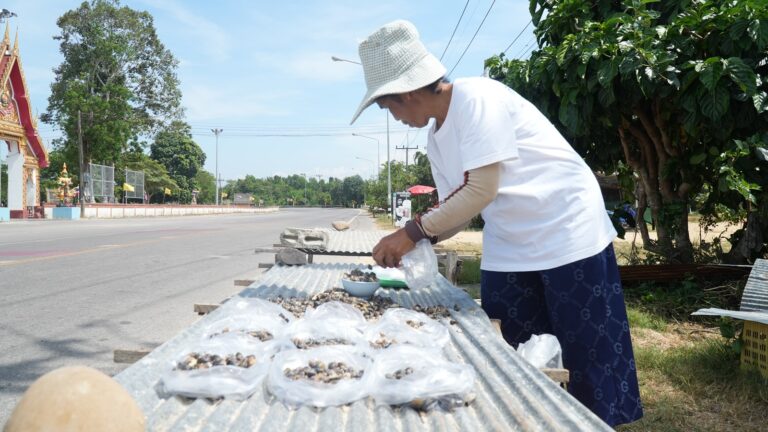
The following morning, they are spread on zinc sheets under the sun until midday, allowing the heat to dry and cook the clams, resulting in a distinctive salty-sweet flavour.

Lao Pluasawat, 54, said she spends around three hours each morning collecting the clams before preparing and drying them at home. By early afternoon, passing motorists often stop to buy the product, priced at 20 baht per cup or 70 baht per kilogram.

She said daily production ranges from 20 to 30 kilograms, providing supplementary income alongside farming.

news122322 yvMp8MV01V1775038740

The seasonal nature of the process means the clams are available for only about four months a year, when weather conditions are ideal for sun-drying. Some consumers prefer to boil the clams before eating.

The delicacy, long passed down through generations, remains popular among communities around Songkhla Lake. Ban A Phat is considered the only village in Phatthalung that continues to produce and sell sun-dried clams in this traditional way.

news122322 zcdX2I3x5y1775038740

The product is available for purchase in front of Wat Phra Borommathat Wat Khian Bang Kaeo in Khao Chaison district.

Advertisement

Thailand’s Leading Coconut Milk Manufacturer for Beverage Brands

As global consumer preferences shift toward plant-based alternatives and dairy-free innovation, coconut milk has emerged as one of the most versatile and commercially valuable ingredients in the beverage industry. From barista-style lattes and ready-to-drink smoothies to functional wellness beverages, coconut milk is now positioned at the center of beverage formulation worldwide.

Amid this growing demand, Thailand has strengthened its reputation as a preferred sourcing hub for beverage manufacturers seeking high-quality, export-ready coconut milk. With its rich agricultural resources, established processing infrastructure, and international food safety compliance, Thailand is increasingly recognized as a global leader in producing what many brands consider the best coconut milk for beverages.

The Rise of Coconut Milk in Modern Beverage Innovation
Picture2

The surge in dairy-free and plant-based consumption has fundamentally reshaped the beverage landscape. Consumers are demanding alternatives that are not only lactose-free but also creamy, flavorful, and suitable for specialty drinks. Coconut milk delivers on all fronts.

For café chains and baristas, coconut milk offers a naturally smooth texture and subtle sweetness that complements espresso and tea-based drinks. For product developers, it provides a stable base for functional beverages enriched with vitamins, proteins, or adaptogens. As a result, sourcing a reliable coconut milk supplier for baristas and beverage manufacturers has become a strategic priority.

Thailand’s coconut milk industry has responded to this demand by scaling both quality and capacity, positioning itself as a trusted OEM coconut milk UHT supplier for international brands.

Strategic Sourcing from High-Yield Coconut Regions

One of Thailand’s key advantages lies in its agricultural geography. Regions such as Thap Sakae District in Prachuap Province are renowned for cultivating coconuts with exceptionally high fat yields and naturally aromatic profiles. These coconuts are particularly suited for beverage applications that require creaminess without artificial thickeners.

The tropical climate allows for consistent harvesting cycles, ensuring seasonal availability and supply predictability throughout the year. For international beverage companies, this means reduced raw material risk and greater pricing stability.

Thai coconuts are known for:

  • Naturally sweet flavor profiles
  • Aromatic characteristics that enhance beverage formulations
  • High fat content ideal for creamy textures

These attributes are especially important for brands developing high fat coconut milk for export markets, where consistency and sensory quality directly impact brand perception.

This dual-region sourcing model, combined with Bangkok’s role as a major Southeast Asian logistics hub, gives Thai manufacturers a distinct edge in supply reliability and export speed. International buyers benefit from access to diversified growing zones and efficient port connectivity, reducing both lead times and raw material risk.

From Extraction to UHT Sterilization: Manufacturing Excellence
หัวข้อ 4

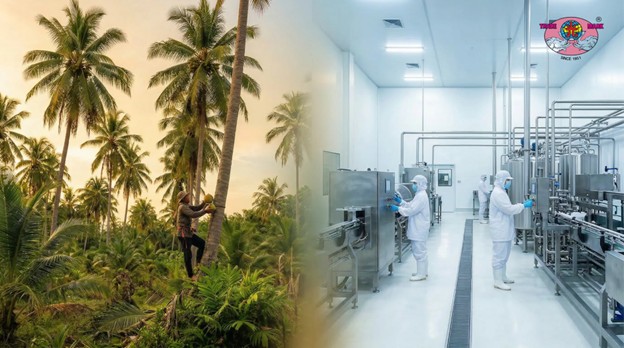
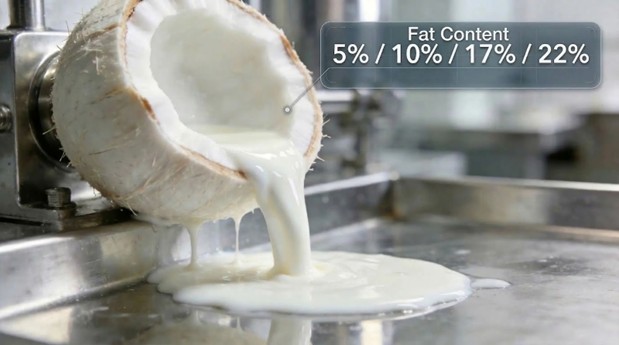
Behind every high-quality coconut milk product is a sophisticated manufacturing process. Leading Thai producers employ advanced extraction systems that begin with fresh coconut meat pressing and proceed through precise blending to achieve targeted fat levels.

Manufacturers typically offer customizable fat content ranging from 5 percent for lighter beverage blends to 22% for rich, cream-forward formulations. This flexibility allows beverage brands to tailor their products according to market preferences, whether for low-calorie smoothies or indulgent coconut-based lattes.

UHT sterilization technology plays a critical role in maintaining both safety and shelf life. Through ultra-high temperature treatment, coconut milk can be preserved for extended periods without refrigeration prior to opening. This makes Thailand a reliable OEM coconut milk UHT supplier for international markets where long transit times are common.

Packaging options include:

  • Retail cans suitable for supermarkets
  • Aseptic cartons designed for beverage production lines
  • Bulk packaging for industrial-scale use

Export logistics are optimized for both cold chain and ambient shipping, depending on product specifications and client requirements. For beverage companies managing global distribution networks, this logistical flexibility provides a clear operational advantage.

What Differentiates Thai Coconut Milk Suppliers

In an increasingly competitive global market, differentiation comes down to compliance, stability, and innovation.

Leading Thai factories operate under internationally recognized certifications such as BRC, IFS, GHPs, and BSCI. These certifications ensure that production meets stringent food safety, hygiene, and ethical standards, allowing smoother access to markets in the European Union, the United States, Japan, and the Middle East.

Beyond certification, formulation stability is a crucial factor for beverage applications. Coconut milk used in ready-to-drink products must maintain emulsion stability, prevent separation, and retain flavor consistency over time. Thai manufacturers invest in homogenization and quality control processes to ensure batch-to-batch reliability.

The industry’s ability to support product innovation further enhances its global appeal. Coconut milk is now being integrated into:

  • Barista-style coconut lattes
  • Plant-based protein beverages
  • Functional wellness drinks
  • Dairy-free iced teas and specialty coffees

As demand for plant-based drink ingredients Thailand continues to grow, manufacturers are increasingly collaborating with beverage brands to co-develop tailored solutions.

OEM and Private Label: Accelerating Brand Growth

Picture3

For emerging beverage brands and established café chains alike, OEM production in Thailand offers a strategic pathway to market expansion.

Thai coconut milk manufacturers provide private label and OEM services that include customized fat ratios, packaging design, labeling compliance, and flexible minimum order quantities. This enables both startups and multinational beverage companies to develop proprietary coconut milk products without investing in their own processing facilities.

Several café chains and wellness-focused beverage brands have leveraged Thailand’s OEM capabilities to introduce coconut-based drink lines that align with clean-label and plant-based positioning. By partnering with an experienced manufacturer, brands can accelerate time to market while maintaining full control over product identity.

The advantage lies not only in production scale but also in responsiveness. Shorter lead times and streamlined export documentation allow brands to react quickly to shifting consumer trends and seasonal demand.

Supporting the Global Plant-Based Movement

The global transition toward sustainable, plant-based consumption continues to influence purchasing decisions across regions. Coconut milk stands out as a naturally dairy-free ingredient that appeals to environmentally conscious consumers.

Thailand’s well-established coconut farming and processing ecosystem supports this shift by offering traceability and responsible sourcing practices. Beverage brands seeking a coconut milk supplier for baristas or large-scale production benefit from working with manufacturers who understand both quality and sustainability expectations.

In a market where consumers increasingly scrutinize ingredient origins and production standards, transparency has become a competitive advantage.

A Strategic Partner for Beverage Innovation
Picture4

As global beverage brands compete to meet evolving consumer demands, sourcing decisions play a critical role in long-term success. Thailand’s combination of agricultural strength, advanced manufacturing, international compliance, and OEM flexibility makes it a preferred destination for companies seeking the best coconut milk for beverages.

Finding the Right Manufacturing Partner

For beverage brands evaluating sourcing options, the difference between a reliable partner and a generic commodity supplier often comes down to formulation flexibility and regulatory readiness.

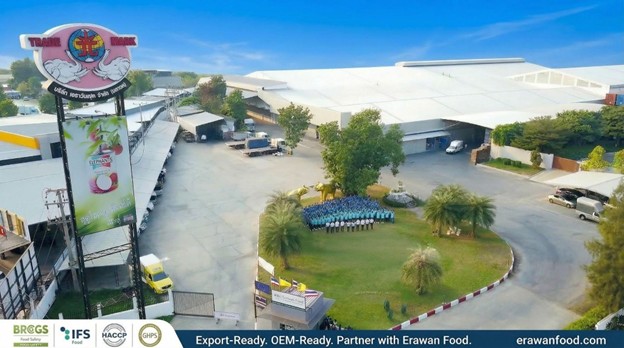
Manufacturers based in Thailand’s central processing corridor, including Bangkok-based facilities with direct export infrastructure, are increasingly preferred by international brands for their ability to handle both small-batch development runs and large-scale commercial production under a single OEM framework.

One example of this integrated approach is Erawan Food, a Thailand-based manufacturer specializing in high fat coconut milk for export and UHT coconut milk supply across beverage categories. The company’s OEM program supports private label development from formulation to export documentation — a structure that has attracted partnerships with café chains, wellness drink brands, and specialty importers across Asia, Europe, and the Middle East.

For beverage companies at the product development stage, the priority should be selecting a supplier that offers not just raw material, but formulation support, compliance documentation, and consistent batch-to-batch quality. These are the factors that separate a short-term vendor from a long-term growth partner.

As the plant-based beverage segment continues to mature, sourcing strategies will increasingly determine product differentiation. Brands that invest in understanding their ingredient supply chain — from coconut variety and fat content to UHT processing and shelf stability — will be better positioned to meet evolving consumer expectations.

For those ready to explore OEM production or private label development in Thailand, reviewing manufacturer capabilities early in the formulation process typically leads to faster time-to-market and stronger product outcomes.

For brands ready to elevate their coconut milk product line or explore OEM and export partnerships, Erawan Food welcomes direct inquiries from beverage innovators, distributors, and private label businesses worldwide.

Interested companies can reach the team at [email protected] or contact the sales department directly at +66 86 900 7777 for product specifications and partnership discussions.


Advertisement

Thick haze blankets Pai as wildfires rage in north

Thick haze blankets Pai as wildfires rage in north

MAE HONG SON — 1 April 2026, Pai district remains shrouded in dense haze as wildfires continue to burn across mountainous areas, pushing air pollution to hazardous levels, officials said.

Authorities reported that Pai, Mueang Mae Hong Son and Mae Sariang districts are experiencing PM2.5 levels in the red and purple zones, indicating severe health risks.
At 07:00, 24-hour average PM2.5 readings reached 293.1 micrograms per cubic metre in Pai, 147.3 in Mueang Mae Hong Son and 145.6 in Mae Sariang, all far exceeding safe standards.
Governor Wiboon Waewbundit chaired an emergency “war room” meeting at 08:00 to monitor wildfire and haze conditions, as officials warned the situation remains critical.

Data showed 3,851 hotspot detections between 1 January and 31 March, with Pai recording the highest number at 845. Most fires were found in protected forest areas.

The governor has ordered a strict ban on entering conservation forests from 1 February to 30 April, warning violators face legal action. Arrests have already been made for illegal entry, hunting and deliberate forest burning.

Firefighting efforts have been hampered by steep terrain, making many areas inaccessible to ground crews. Authorities have deployed helicopters to drop water on active fires, completing 28 flights and releasing more than 14,000 litres of water in a single day, with further operations planned.

Officials said additional aircraft have been requested to support containment efforts, particularly in areas where fires continue to spread beyond the reach of ground teams.

Despite ongoing operations, volunteers and officials are struggling to fully extinguish the fires, with smouldering debris and inaccessible mountain zones allowing flames to persist.

Authorities also cited cross-border haze from neighbouring countries and weather conditions, including temperature inversions trapping smoke in valleys, as factors worsening air quality.

Disaster officials warned of at least seven active fire clusters burning for more than six hours as of 15:03 on 1 April, raising concerns over potential large-scale wildfires.

Residents have been urged to take precautions as the crisis continues, with officials acknowledging that significant rainfall may be the only effective way to clear the haze.

Advertisement

Hot News

LATEST NEWS

Bangkok
overcast clouds
32.7 ° C
35 °
32.7 °
68 %
4kmh
99 %
Fri
30 °
Sat
31 °
Sun
35 °
Mon
36 °
Tue
37 °