25.5 C
Bangkok
Saturday, June 20, 2026
Home Blog Page 97

Pattaya scam gang arrest over online shop fraud

Pattaya scam gang arrest over online shop fraud

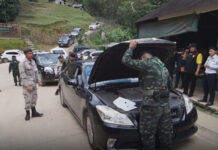
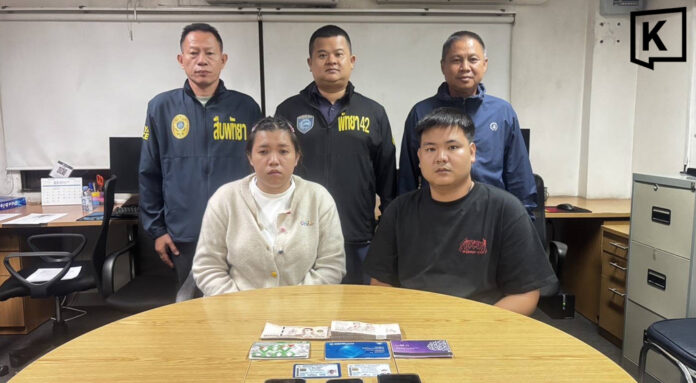
PATTAYA — 29 March 2026, Two suspects were arrested in a shopping mall car park in Pattaya over an alleged online fraud scheme that duped victims into transferring money to set up fake online shops, with losses amounting to hundreds of thousands of baht.

Police in Pattaya, led by Pol. Col. Anek Sarathongyu, chief of Pattaya City Police Station, acted after being alerted by the Investigate Digital Channel team under Krung Thai Bank’s financial crime unit to suspicious cash withdrawals at a branch inside Central Marina on Pattaya Second Road.

Investigators led by Pol. Lt. Col. Arut Saphanon and Pol. Lt. Col. Suradet Imjai tracked down the suspects at the car park of Central Marina Outlet in Nong Prue subdistrict, Bang Lamung district, Chon Buri province.

The two were identified as Nirut, 25, and Kumpha, 24. Officers seized three mobile phones, 119,000 baht in cash and three bank passbooks.

Police said one of the accounts, held at Siam Commercial Bank in Kumpha’s name, was linked to fraud, including a complaint filed online on 25 March by a 24-year-old man in the Prachachuen police jurisdiction.

According to investigators, the victim had advertised a mobile phone for sale on Facebook before being contacted by a suspect who persuaded him to continue the conversation via the Line messaging app. He was then added to a group and tricked into transferring money to “open” an online shop, with promises of boosting product visibility. After making multiple transfers, he was unable to withdraw any funds.

Both suspects have been charged with involvement in a secretive criminal association formed to carry out illegal activities.

They were handed over to investigators at Pattaya City Police Station for legal proceedings, while authorities continue to search for other members of the network who remain at large.

Advertisement

Anutin makes surprise fuel station visit in Nakhon Phanom ahead of Songkran

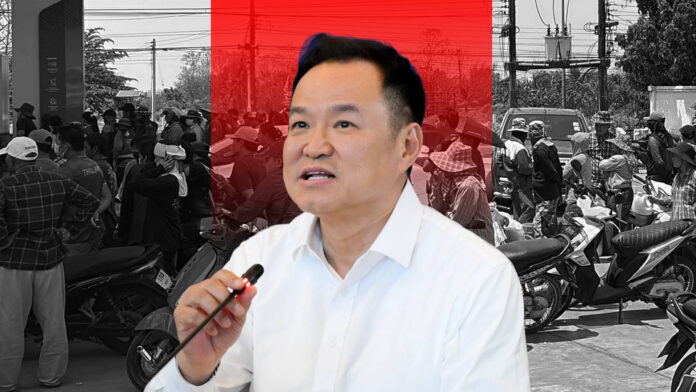
NAKHON PHANOM — 29 March 2026, At 11:49 Deputy Prime Minister and Interior Minister Anutin Charnvirakul conducted a surprise visit to a PTT petrol station in That Phanom district while on an official visit to Nakhon Phanom province.

Arriving unannounced, he reportedly rented a car and personally drove to the station, where he refuelled with Gasohol 91 himself.

banner2 18

The visit took place at a fuel station operated by Kulsak Wimon Limited Partnership on Chayangkun Road in tambon That Phanom, amphoe That Phanom.

Anutin emphasised that provincial authorities should step-up public communication on energy conservation and to closely monitor fuel supply during the upcoming Songkran festival to ensure adequate availability for motorists.

Officials said Nakhon Phanom currently has 333 fuel stations, including 72 large-scale outlets. In That Phanom district, there are 10 large stations in operation.

Diesel supply has improved and is now rated at “green” status across all districts, indicating stable availability. Other fuel types are also being supplied as normal, with no long queues reported.

Accompanying the visit were Permanent Secretary of the Interior Arsit Sampantharat, Community Development Department Director-General Siam Sirimongkol, and provincial governors from nine upper northeastern provinces.

banner3 11

Advertisement

Teen gangs hurl explosives in Korat park clash

Teen gangs hurl explosives in Korat park clash

NAKHON RATCHASIMA — 29 March 2026, A video circulating on social media shows rival groups of teenagers throwing improvised explosives and brandishing weapons during a violent clash at a public park in the centre of Korat, alarming local residents.

The footage, posted by a Facebook user identified as “Rler Club”, shows a group of youths riding motorcycles near Nong Kae Chang pond behind Wat Pa Salawan in Nai Mueang subdistrict. Some are seen holding knives and throwing ping-pong bombs at rivals before stopping their motorcycles and moving in to confront them. The clip ends as police vehicles arrive, by which time the groups had fled.

Reporters visiting the scene on 29 March found burn marks at more than eight points on the road, believed to have been caused by the explosive devices.

Rangsarn Phuenchomphu, deputy head of the Nong Kae Chang community, said the violence had occurred on two consecutive nights. The first incident took place at around 01:00 on 27 March, when about eight ping-pong bombs were thrown amid shouting and insults. A second clash occurred at around midnight the following night in a nearby area, involving similar behaviour.

He said the incidents had caused significant distress to residents, who have reported the matter to police. Community leaders are calling on authorities to take serious action to prevent further violence.

Advertisement

‘No Kings’ rallies draw crowds across US, in Europe. Springsteen headlines Minnesota demonstration

Photo AP

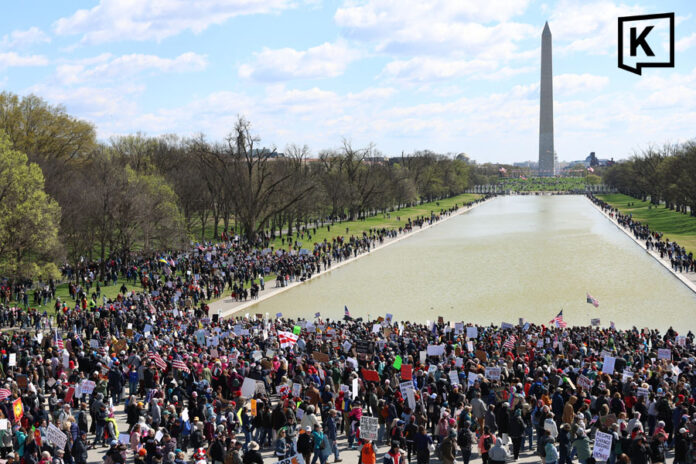
ST. PAUL, Minn. (AP) — Large crowds protested Saturday against the war in Iran and President Donald Trump’s actions in “No Kings” rallies across the U.S. and in Europe. Minnesota took center stage, with thousands of people standing shoulder-to-shoulder to celebrate resistance to Trump’s aggressive immigration enforcement.

Minnesota’s flagship event on the Capitol lawn in St. Paul drew Bruce Springsteen as its headliner. He and other speakers praised the state’s people for taking to the streets over the winter in opposition to a surge of U.S. Customs and Immigration Enforcement agents.

Springsteen performed “Streets of Minneapolis,” the song he wrote in response to the fatal shootings of Renee Good and Alex Pretti by federal agents. Springsteen lamented Good and Pretti’s deaths but said the state’s pushback against ICE gave the rest of the country hope.

“Your strength and your commitment told us that this was still America,” he said. “And this reactionary nightmare, and these invasions of American cities, will not stand.”

People rallied from New York City, with almost 8.5 million residents in a solidly blue state, to Driggs, a town of fewer than 2,000 people in eastern Idaho, a state Trump carried with 66% of the vote in 2024.

Big but mostly peaceful crowds

U.S. organizers have estimated that the first two rounds of No Kings rallies drew more than 5 million people in June and 7 million in October. They expected 9 million participants Saturday, though it was not clear whether those expectations were met.

Organizers said more than 3,100 events — 500 more than in October — were registered, in all 50 states.

Protests were mostly peaceful, but some arrests were reported.

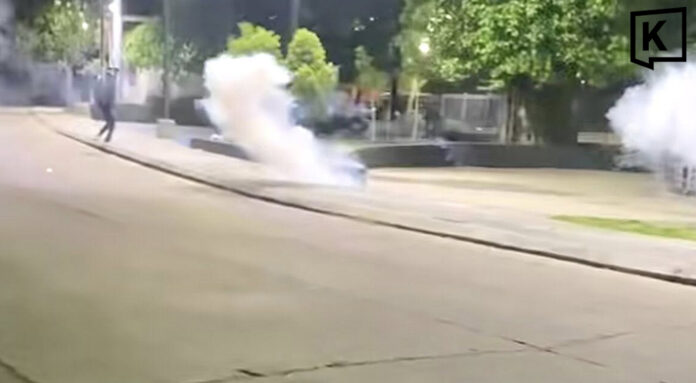
In Los Angeles, authorities deployed tear gas near a federal detention center downtown. One man had a leaf blower, attempting to clear the air. The Los Angeles Police Department later arrested people for failing to disperse. Earlier in the day, a band was playing and people were dancing to Spanish-language music.

The Denver Police Department said on the social platform X that it declared an unlawful assembly and deployed smoke canisters after a small group of protesters blocked a road and did not leave as asked. Some threw the canisters back at officers, police said. At least eight people were arrested, as was a ninth person later on who police said was throwing objects.

GOP officials dismissive of protests

White House spokesperson Abigail Jackson called them the product of “leftist funding networks” with little real public support.

The “only people who care about these Trump Derangement Therapy Sessions are the reporters who are paid to cover them,” Jackson said in a statement.

The National Republican Congressional Committee was also sharply critical.

“These Hate America Rallies are where the far-left’s most violent, deranged fantasies get a microphone,” spokesperson Maureen O’Toole said.

Protesters have a long list of causes

Trump’s immigration enforcement push, particularly in Minnesota, was just one item on a long list of grievances that also included the war in Iran and the rollback of transgender rights. Speakers at the Minnesota rally decried billionaires’ economic power.

In Washington, hundreds marched past the Lincoln Memorial and into the National Mall, holding signs that read “Put down the crown, clown” and “Regime change begins at home.” ”

Bill Jarcho was there from Seattle, joined by six people dressed as insects wearing tactical vests that said, “LICE” — spoofing ICE — as part of what he called a “mock and awe” tour.

“What we provide is mockery to the king,” Jarcho said. “It’s about taking authoritarianism and making fun of it, which they hate.”

About 40,000 people marched in San Diego, police there said.

In New York, Donna Lieberman, executive director of the New York Civil Liberties Union, said during a news conference that Trump and his supporters want people to be afraid to protest.

“They want us to be afraid that there’s nothing we can do to stop them,” she said. “But you know what? They are wrong — dead wrong.”

In Topeka, Kansas, a protesters dressed up in an inflatable frog costume and a baby version of Trump. Wendy Wyatt showed up with a “Cats Against Trump” sign. Many things upset her about the administration, she said, but the rallies are “very hopeful to me.”

Organizers said two-thirds of RSVPs for the rallies came from outside of major urban centers. That included communities in conservative-leaning states like Idaho, Wyoming, Montana, Utah, South Dakota and Louisiana, as well as suburbs in electorally competitive Pennsylvania, Georgia and Arizona.

Main event at the Minnesota Capitol

Organizers designated the rally there as the national flagship event.

Before Springsteen took the stage, organizers played a video in which actor Robert DeNiro said he wakes up every morning depressed because of Trump but was happier Saturday because millions of people were protesting. He also congratulated Minnesotans for running ICE out of town.

The bill also included singer Joan Baez, actor Jane Fonda, Vermont U.S. Sen. Bernie Sanders and a long list of activists, labor leaders and elected officials.

Protesters held up a massive sign on the Capitol steps that read, “We had whistles, they had guns. The revolution starts in Minneapolis.”

“Donald Trump may pretend that he’s not listening, but he can’t ignore the millions in the streets today,” said Randi Weingarten, president of the American Federation of Teachers.

Rallies overseas

Demonstrations were also held in more than a dozen other countries, according to co-executive director Ezra Levin of Indivisible, which spearheaded the events.

In Rome, thousands marched with chants aimed at Premier Giorgia Meloni, whose conservative government saw its referendum for streamlining Italy’s judiciary fail badly this week. Protesters also waved banners protesting Israeli and US attacks on Iran.

In London, demonstrators held banners with slogans such as “Stop the far right” and “Stand up to Racism.”

And in Paris, several hundred people, mostly Americans living in France, along with labor unions and human rights organizations, gathered at the Bastille.

“I protest all of Trump’s illegal, immoral, reckless and feckless, endless wars,” organizer Ada Shen said.

___

Richmond reported from Madison, Wisconsin, and Hanna from Topeka, Kansas. Associated Press journalists Jennifer Sinco Kelleher in Honolulu; Nicholas Garriga in Paris; Mike Pesoli in Washington; Colleen Berry in Milan; Amy Taxin in Santa Ana, California; and Jill Connelly in Los Angeles contributed.


Advertisement

Love triangle shooting kills one, injures two

Love triangle shooting kills one, injures two

AYUTTHAYA — 29 March 2026, One man was killed and two others injured in a late-night shooting in a residential village in Bang Pa-in district, police said.

Police were alerted to the incident at about 01:30 on 29 March. Officers from Bang Pa-in Police Station, along with patrol and investigative units, forensic specialists, medical staff from Bang Pa-in Hospital and rescue workers, responded to the scene in Phet Damrong village, Soi 6, Sam Ruean subdistrict.

A 27-year-old man, identified as Alangkarn Wongsong from Khon Kaen province, was found lying in a pool of blood on the road outside a house. He had sustained gunshot wounds to the torso and head. Two spent bullets were recovered at the scene.

Nearby, a grey four-door pickup truck with Ayutthaya licence plates was found with two bullet holes in its rear window. Broken glass was scattered across the road.

Two other men were injured in the shooting and taken to hospital. One, aged 26, was shot through the left arm and hand, while another, also 26, suffered a graze wound to the right side of his abdomen. Both were friends of the deceased.
A 24-year-old woman, the homeowner, told police that seven people had been drinking outside the house before the incident. She and another 24-year-old woman, who had recently broken up with her boyfriend, had gone inside shortly before four rounds of gunshots were heard. When they came out, they found the victims.


Police said the shooting grew out of a relationship dispute. The woman’s ex-boyfriend had reportedly reached out to the victim on Facebook to set up a meeting, asking for the house location. When he arrived, an argument broke out and soon turned violent.

One of the injured men said about four suspects arrived on two motorcycles, claiming they wanted to talk and reconcile with the woman, but opened fire immediately despite having no prior acquaintance with the group.

Another injured man said the suspects had contacted the victim online before coming to the house. A confrontation followed over the woman, who had recently begun a relationship with the victim, before multiple shots were fired, forcing those present to flee.

Police said the woman at the centre of the dispute remained in shock.

Investigators believe the attack was driven by jealousy after the couple separated about two weeks earlier. Authorities are collecting evidence and questioning witnesses as they work to track down the four suspects for legal action.

Advertisement

One year on: The collapse that Bangkok cannot forget

“What were you doing at 13:20 on 28 March 2025?”

That moment is now etched into memory. When the Sagaing Fault shifted deep beneath Myanmar, a powerful earthquake struck with devastating force, sending tremors across Thailand and turning an ordinary afternoon into one of Bangkok’s darkest days.

Buildings swayed. People stumbled. Elevators shook violently. Across the capital, panic spread as residents rushed out of high-rises, many leaving everything behind. Some fled with only towels wrapped around them. Others helped elderly parents down staircases. Fear gripped the city.

Even today, the scars remain. Cracked walls, damaged ceilings and unrepaired condominiums stand as quiet reminders of the disaster one year on.


From pride to tragedy

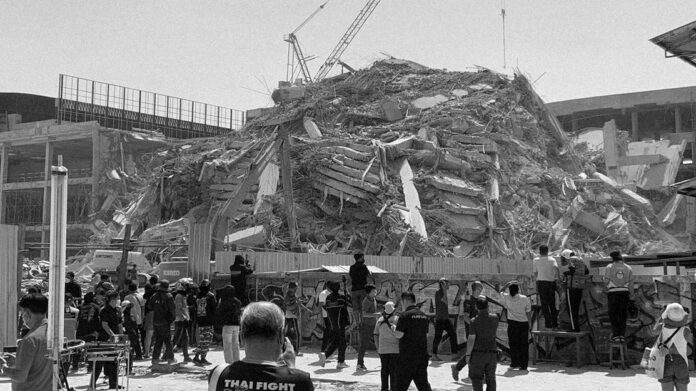
Minutes after the quake, crowds gathered in the Chatuchak area, staring at what had once been a towering construction site.

The 33-storey building, intended to become the new headquarters of Thailand’s State Audit Office, had stood tall just moments earlier. Built on a 10-rai site along Kamphaeng Phet 2 Road, the project carried a budget of more than 2 billion baht.

If completed, it would have overlooked Chatuchak Park and Bang Sue Grand Station — a symbol of progress and ambition.

But at 13:20, everything changed.


Seconds before collapse

As the tremors intensified, workers inside the building panicked. Some on the upper floors, including the 29th, gathered together in fear.

“I thought I would never make it home to my mother,” a Myanmar worker later recalled. “I came into this world alone. I thought I would die alone.”

Moments later, concrete began to fall. Then came the collapse.

From the outside, onlookers noticed the building swaying unnaturally. Many raised their phones, recording what they feared might happen — hoping it would not.

But within minutes, the worst unfolded.

The structure gave way, collapsing floor by floor into a cloud of dust and debris. At first, some believed the footage was fake — generated or from another country. It was not. It was happening in Bangkok.


Survival and loss

A survivor said he was thrown from the 29th floor, landing amid the rubble. Bleeding and disoriented, he struggled to free himself.

“I looked around and saw nothing but debris,” he said. “My leg was trapped, but I managed to pull myself out and crawl to safety.”

He heard no cries for help — only silence, and the weight of what had just happened.

“I still remember those who didn’t make it,” he said.


A tragedy that lingers

At least 93 people were confirmed dead, with three others reported missing. Many more were injured. Most victims were construction workers, including migrant labourers.

In the aftermath, authorities pledged accountability. The State Audit Office paid 129 million baht in compensation to victims’ families, while 23 suspects were charged. Investigations into possible construction failures and official negligence remain ongoing, with the case under review by the National Anti-Corruption Commission.

Nearly a year later, a representative of the agency publicly apologised, saying the tragedy continues to weigh heavily.

“The words ‘building collapse’ will stay with us forever,” he said.


Waiting for justice

For families, the pain has not faded.

Punch, the daughter of two victims, lost both parents that day. She is still waiting for justice — and for compensation that has yet to reach many, especially non-Thai victims.

“As this day comes closer, I think more and more about it,” she said quietly.


A memory that will not fade

One year on, the site remains more than just a construction failure. It is a grave, a symbol, and a scar on the city.

This is not just sorrow. It is trauma — a memory many wish to forget but cannot.

Even passing by is too much for some.

“I don’t even want to look,” Punch said.

Advertisement

The real reason why Thailand fuel prices just hiked by 6 baht

The jump at the pump wasn’t random. It’s the sign of a state safety net quietly running out of road.

You didn’t just get hit by a price hike. You got hit by a fund running dry.

For decades, Thailand has quietly run one of the most ambitious fuel price systems in Southeast Asia — a government-managed “shock absorber” called the Oil Fuel Fund. Most visitors to Thailand have no idea that it even exists, but they should now.

The fund was built to do one thing: stop global oil market chaos from destroying your wallet at the pump. When crude prices spike, the fund steps in and covers the gap, keeping Thai pump prices artificially stable. When prices calm down, it recoups the money through small levies on every litre sold.

Think of it as a national fuel savings account — except right now, it’s in the red.

The “cushion” system, explained simply

Screenshot 2026 03 27 130354

The fund also has two additional mandates beyond pure price smoothing: keeping inflation in check (because fuel costs ripple into food and transport prices across the whole economy), and nudging drivers toward cleaner biofuels like E20 and E85 through targeted subsidies.

On paper, it’s elegant. In practice, it only works if global prices eventually come back down. As of today, the Strait of Hormuz is passing through a trickle of its normal capacity. That’s a big tell that prices don’t seem to be lowering any time soon.

The number that forced the government’s hand

2.9billionperday 1
That’s how much the Oil Fuel Fund was burning daily to keep prices at the old capped rate — roughly ฿80 billion per month (about US$2.44 billion). At that burn rate, the fund couldn’t survive much longer without a correction.

Adding pressure from outside: Singapore diesel — a key regional benchmark — surged from US$198 to US$242 per barrel in just 48 hours, driven by fresh Middle East tensions. Keeping Thai prices at ฿30/litre while the world price moved that far became fiscally impossible.

So the Oil Fuel Fund Executive Committee made a decision: slash subsidies, accept the price correction, and preserve what’s left of the fund’s liquidity. The 6 baht hike is the result — not a political choice, but a mathematical one.

The chaos at the pump was real: A shortage was not

103 Days
That is how long the government says Thailand can survive on its current fuel reserves, according to a 23 March 2026 PR statement.

Social media lit up on the night of 25 March with videos of snaking midnight queues at petrol stations. What caused it? A quirk of the system: price changes are typically announced hours in advance, often late at night before taking effect the next day, which creates a hard deadline — and a very human reaction to beat it.

Thai government confirmed the country holds enough oil to cover demand for more than 3 months — combining commercial stocks, legally mandated reserves, and contracted future supplies. On top of that, Thailand’s five refineries are producing roughly 35.28 million litres of petrol per day, which actually exceeds daily consumption of 34.41 million litres. Diesel production tells the same story: six refineries putting out nearly 80 million litres a day against demand of 67–70 million litres.

There was no shortage. What you saw was a logistical bottleneck: too many cars arriving at once at stations that weren’t stocked for that volume. The “crisis” was a communication problem, not a supply problem.

Should the fund even exist?

Not everyone agrees the Oil Fuel Fund is worth keeping — and the pump queues and shortages we saw over the last 3 weeks have given that debate a sharper edge.

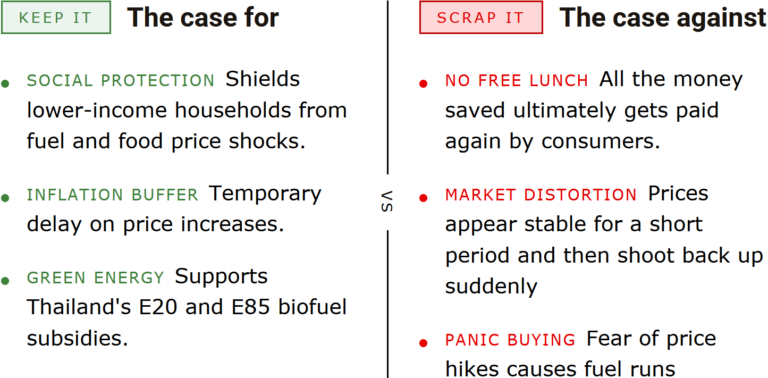
The case for KEEP IT: SOCIAL PROTECTION Shields lower-income households from fuel and food price shocks. . INFLATION BUFFER Temporary delay on price increases. . GREEN ENERGY Supports Thailand's E20 and E85 biofuel subsidies. The case for SCRAP IT: . NO FREE LUNCH All the money saved ultimately gets paid again by consumers. . MARKET DISTORTION Prices appear stable for a short period and then shoot back up suddenly . PANIC BUYING Fear of price hikes causes fuel runs

The fund’s defenders point to its social logic: when global oil prices spike, lower-income households get hit hardest and fastest. The fund buys time, keeps inflation from transmitting across the whole economy, and quietly underpins Thailand’s biofuel programme.

Without the fund, E20 and E85 subsidies likely disappear too, which promote the use of domestically produced ethanol, aiming to reduce oil imports and lower consumer living costs.

The critics counter that the protection is an illusion. Every baht the fund spends to hold prices down is a baht consumers eventually pay back — through levies, through tax, or through a sudden correction like the one on 25 March.

While drivers get to benefit from lower prices for a while, the knock-on effect is that localised shortages appear, meaning those who rely on fuel are short, sometimes when it matters the most.

The result is a system that replaces gradual pain with sudden shock, which is exactly the kind of pain the fuel fund is supposed to prevent.

The era of ฿30 diesel is probably over

While the fund will remain as a buffer in times of crisis, routine price suppression is no longer the baseline. The 6 baht hike signals a move toward “market mechanism” pricing — aligning pump prices more closely with global markets.

The Oil Fuel Fund was always a delay tactic, not a permanent discount. That delay ran out.

The past three weeks have made one thing clear: the Oil Fuel Fund can delay higher prices, but it cannot prevent them. When the buffer runs out, adjustments come fast — and all at once. Cheap diesel is no longer a policy default; it is a temporary condition. The question now isn’t whether prices will stay elevated, but how often — and how abruptly — the next adjustment will come.

For drivers, small business owners, and anyone managing a household budget — especially if you’re buying in bulk or running a fleet — this is the new floor to plan around.

The number on the pump tells only part of the story — the rest is a system that can delay the cost, but not avoid it.

Advertisement

Princess Sirindhorn urges reading at 54th National Book Fair

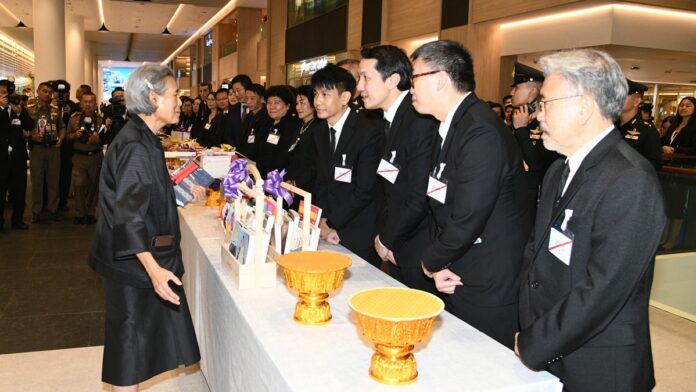
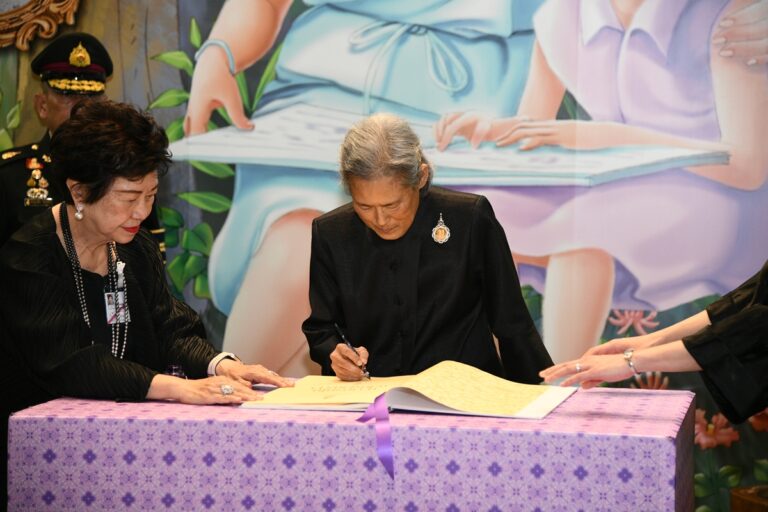
BANGKOK — Princess Maha Chakri Sirindhorn presided over the opening of the 54th National Book Fair and the 24th Bangkok International Book Fair 2026 at the Queen Sirikit National Convention Center on 27 March.

The ceremony took place at 14:30, where she delivered opening remarks emphasising the role of books as an important source of knowledge and entertainment across all fields. She noted that books have evolved over time, from inscriptions on stone, animal skin and leaves to portable printed formats that can be easily carried and read anywhere.

Despite the rise of digital media driven by technological advances, she said many people still value physical books. Reading good books helps develop wisdom, imagination and creative thinking, she added, urging efforts to foster a reading culture in Thai society by encouraging children, youth and the general public to develop a love of reading.

464033 0

She also stressed the importance of making books accessible so people can build knowledge as intellectual capital, noting that an informed population contributes to a stronger society. She thanked organisers and all involved for producing quality publications and developing the book fair into a platform for learning, exchange of ideas and inspiration for both Thai and international audiences.

After the opening ceremony, the Princess visited an exhibition showcasing outstanding books of 2026. Publishers and participants later presented books and souvenirs, including 17 new titles from Matichon Publishing Group.

Advertisement

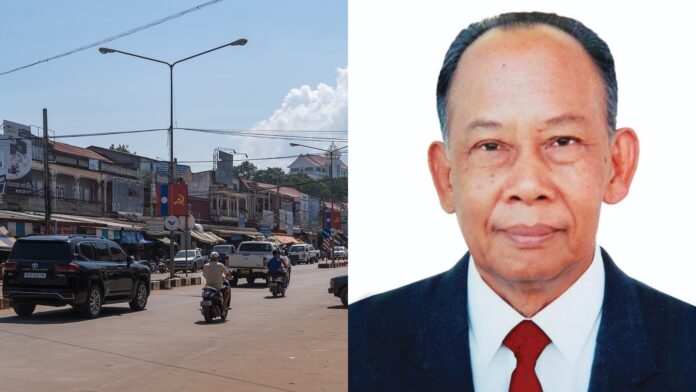
Laos considers renaming Pakse after former president Khamtai Siphandone

Authorities in southern Laos are considering renaming Pakse, the main city of Champasak province, to Khamtai Siphandone City, in honour of the late former president.

The proposal is currently undergoing official procedures, with local authorities preparing documents and consultations for approval by the provincial assembly. If endorsed, it will be forwarded to the national government for a final decision.

Khamtai Siphandone, who died on 2 April 2025 at the age of 101, was a key figure in Laos’ modern political history. He served as chairman of the Lao People’s Revolutionary Party from 1992 to 2006 and as the country’s fourth president from 1998 to 2006.

Born in 1924 in Khong district, now part of Champasak province, Khamtai joined the independence movement after World War II and played a significant role in the country’s revolutionary struggle.

If approved, the renaming would mark a major symbolic shift for one of southern Laos’ most important urban centres.

Advertisement

Barber shaves “too rich to handle” slogan into hair, sparking buzz

Barber shaves “too rich to handle” slogan into hair, sparking buzz

AYUTTHAYA — 27 March 2026, A barber shop in Ayutthaya has gone viral after carving the phrase “too rich to handle” into a customer’s hair, following a popular catchphrase associated with Thailand’s prime minister.

Reporters visited “Hai Huang Barber” at Khok Chang market in tambon Uthai, Uthai district, where a regular customer from Ang Thong province had travelled specifically to have the slogan shaved onto his head.

Shop owner Wongwiset Menklai, 53, said the customer had booked an appointment earlier in the day and clearly requested the phrase, which has recently gained traction online.

“The customer said he is a fan of the prime minister and really likes the phrase, so he wanted it on his head as a symbolic expression,” Wongwiset said, adding that the customer was pleased with the result.

He noted that while the idea may seem unusual, it reflects creativity and current social trends, particularly as the phrase has been widely discussed amid rising fuel prices.

A video of the haircut has since circulated widely on social media, drawing large numbers of views and comments and bringing attention to the barber shop.

Advertisement

Hot News

LATEST NEWS

Bangkok
overcast clouds
25.5 ° C
25.5 °
25.5 °
93 %
3.2kmh
100 %
Fri
25 °
Sat
32 °
Sun
35 °
Mon
37 °
Tue
37 °