




































25.5 C
Bangkok
Sunday, July 5, 2026
Home Blog Page 97

Police probe dog carcass dumped in suitcase

Police probe dog carcass dumped in suitcase in Pathum Thani

PATHUM THANI — 18 April 2026, police are investigating a suspected case of animal cruelty after a dog’s decomposing carcass was found stuffed inside a locked suitcase and dumped at a rubbish site in Pathum Thani province, with three men seen on CCTV being sought for questioning.

The case emerged after a black suitcase was discovered near a house in Soi 12/1 of Pruksa C housing estate in Khlong Sam, Khlong Luang district. Yellowish fluid was seen leaking from the bag, and maggots were visible. When opened, it contained a bloated dog carcass emitting a strong odour, alarming residents.

news126624 SLcIsxJ1kg1776494607
Rattiya Tiaotrakul, deputy chair of the Watchdog Thailand Foundation, along with legal officers, filed a report with investigators at Khlong Luang police station.

At 10:00 on 18 April, Rattiya Tiaotrakul, deputy chair of the Watchdog Thailand Foundation, along with legal officers, filed a report with investigators at Khlong Luang police station, requesting a forensic examination to determine whether the dog’s head was missing and if the animal had been abused prior to death.

Officials later inspected the original dumping site at a refuse area within the Ai Yara durian market in Khlong Song subdistrict, but the suitcase had already been removed for further examination.

Rattiya said the case was highly unusual, noting that pet owners typically bury or cremate deceased animals rather than dispose of them in such a manner. If evidence of abuse is confirmed, legal action will be pursued under Thailand’s Animal Cruelty Prevention and Welfare Act, which carries penalties of up to two years in prison, a fine of up to 40,000 baht, or both.

news126624 xlC3mR4daW1776494607
The decomposing dog carcass inside the suitcase.

The incident caused concern among residents and complicated the work of rescue teams, as it was initially unclear whether the suitcase contained hazardous material or human remains.

Porntep Taosanthea, 46, a vendor who found the suitcase, said he had picked it up from a rubbish area while looking for reusable items, unaware of its contents. He said the smell worsened after he brought it home, prompting neighbours to raise concerns before the discovery was made.

Police said CCTV footage shows three men believed to be involved in dumping the suitcase, and efforts are under way to identify and locate them for questioning as the investigation continues.
Advertisement

Police round up stray buffalo roaming road

Police round up stray buffalo roaming road

SAMUT SONGKHRAM — 17 April 2026, police safely captured a stray buffalo that wandered onto a main road and returned it to its owner after the animal became disoriented and posed a potential danger to traffic, in an incident that later went viral online.

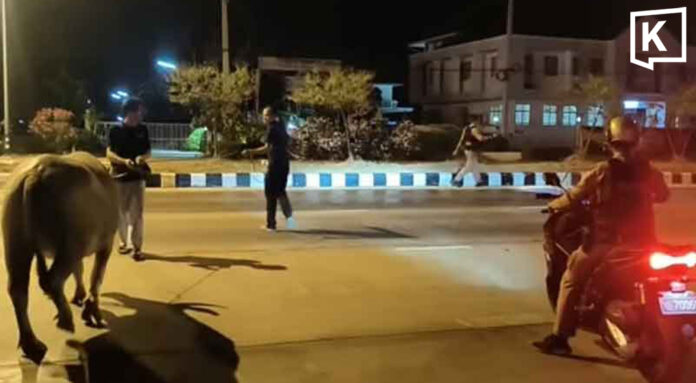
The buffalo was seen walking along Ekachai Road near the provincial prison, prompting concerned residents to alert local police. Officers arrived to assist, but the animal fled into the compound of the Samut Songkhram Provincial Police headquarters.

Local officials later contacted the owner, who was reportedly away in Chiang Mai at the time.

Police Lance Corporal Nukul Thapcharoen led the effort to capture the animal, drawing on his prior experience raising buffalo. He said the animal was initially highly agitated due to the unfamiliar surroundings and the number of people attempting to approach it.

He asked bystanders to step back to allow the buffalo to calm down before using a cable fashioned into a lasso to secure it.

Once the animal had settled, officers led it on foot for more than 2 kilometres in the dark, with assistance from a village headman and a caretaker, before safely returning it to its enclosure.

No injuries were reported.

Police Lance Corporal Nukul added that he felt proud to have fully carried out his duty in serving the public. He joked that the buffalo had probably wanted to go out and enjoy the Songkran festivities at night, but ended up losing its way and needing help from the police.

Advertisement

Family seeks 96-year-old man last seen heading to Bangkok

Family seeks 96-year-old man last seen heading to Bangkok

RAYONG — 18 April 2025, a family in eastern Thailand has appealed for help to locate a 96-year-old man with memory loss who went missing from his home and was later traced travelling alone to Bangkok.

Angchan Samret filed a missing person report with Khao Chamao police on 18 April after his father, Cha-on Samret, disappeared from the family home on 17 April.

According to the family, they had been working in a durian orchard behind the house that morning, leaving the elderly man alone. When they returned, he was gone. Relatives searched throughout the day and night but were unable to find him.

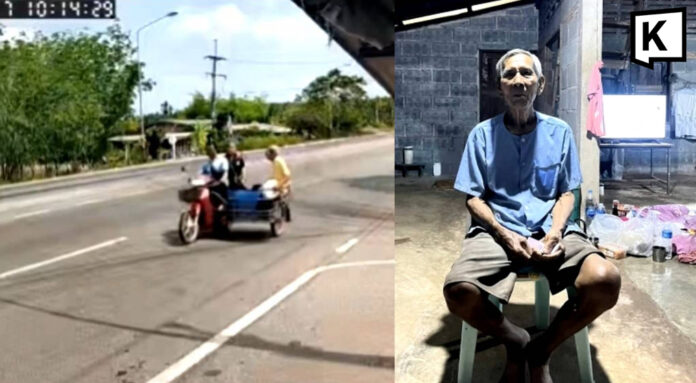
CCTV footage reviewed on the morning of 18 April showed the man walking more than 3 kilometres from his home along the Khao Chamao–Ban Na road in Klaeng district.

The footage also captured him flagging down a sidecar motorcycle taxi and asking to be taken to a bus stop for a Klaeng–Mo Chit route to Bangkok.

Family seeks 96 year old man last seen heading to Bangkok 2

A ticket seller confirmed that the man purchased a ticket to the capital and got off at Mo Chit Bus Terminal on 17 April. His whereabouts after arriving in Bangkok remain unknown.

Cha-on, who suffers from memory loss, was carrying about 1,000 baht in cash and had no mobile phone.

The family is urging anyone who may have seen him to take him to the nearest police station or contact his son, Angchan, on 081-895-0153 at any time. They said they are ready to travel immediately to bring him home.

Advertisement

Crowds flock to Si Chang ‘carry women into sea’ rite

Crowds flock to Si Chang ‘carry women into sea’ rite

CHONBURI — 18 April 2026 — Thai and foreign tourists joined locals on Saturday for the annual Songkran “carry women into the sea” tradition on Koh Kham Yai in Si Chang district, a longstanding cultural event unique to the island community.

Chonburi Governor Narit Niramaiwong presided over the opening of the Koh Si Chang Songkran festival, known locally as “Wan Lai Koh Kham”, held on the beach of Koh Kham Yai in Tha Thewawong subdistrict. Residents and visitors turned out in force to take part.

The tradition, held every year on 18 April, dates back to the reign of King Chulalongkorn (Rama V), over a hundred years ago. Koh Kham Yai lies about 1 kilometre from the Si Chang district centre and can be reached by a 45-minute boat journey from Jarin Pier in Si Racha.

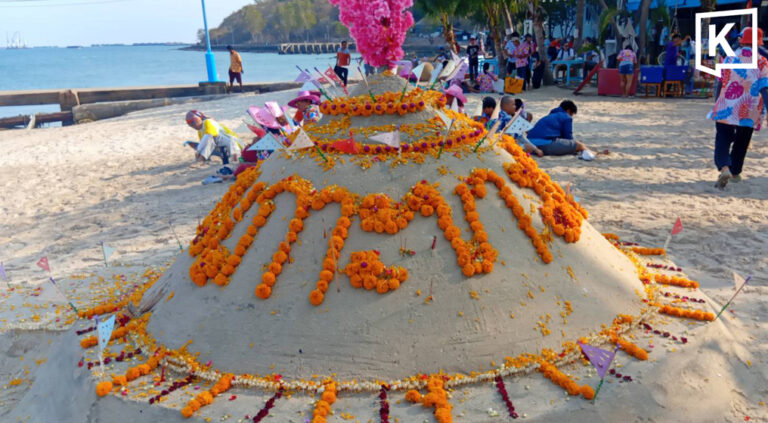
Festivities include merit-making and alms-giving, ritual bathing of Buddha images, ceremonial offerings, sand pagoda building, traditional games, rowing competitions and sea boxing. The highlight is the “carry women into the sea” ritual, which draws the most attention and participation.

Crowds flock to Si Chang ‘carry women into sea rite 2
Sand castle with flowers decoration spelled “Koh Kham”

During the ceremony, men, both young and elderly, ask permission to lift women into the sea, offering blessings as they do so. Elderly participants are also carried into the water by younger relatives as a gesture of respect and to receive blessings for the New Year.

The event reflects the island’s fishing heritage, as locals typically spend much of their time at sea. Songkran provides a rare opportunity for families to reunite, with many returning home from elsewhere to celebrate, mend relationships and seek forgiveness.

Female tourists, including foreigners, often join in the ritual without reservation, adding to the lively and inclusive atmosphere. The unusual custom has attracted growing international interest, with many visitors staying overnight on Koh Si Chang to take part and share their experiences abroad.

Locals say the tradition has been carefully preserved over generations, remaining both a source of community pride and a distinctive cultural attraction that continues to draw global attention.

Advertisement

Storm topples 24 poles, cuts power across Prachinburi

Storm topples 24 poles, cuts power across Prachinburi

PRACHINBURI — 18 April 2026, a summer storm battered Kabin Buri district, toppling 24 electricity poles and paralysing traffic along Suwannason Road, while widespread power outages affected large parts of the province. Electricity was restored late at night, though clearance work continued.

At 1:00 on 18 April, local reporters said the storm struck the district on the evening of 17 April, with strong winds bringing down seven 115-kilovolt high-voltage steel poles and 17 low-voltage concrete poles, totalling 24.

The incident occurred near Khok Hom intersection on the inbound stretch towards Suan Nom Klao along the old Suwannason Road (Highway 33) in Muang Kao subdistrict. Fallen poles blocked one lane of traffic and disrupted the power distribution system, causing widespread blackouts across Prachinburi.

Bandit Panthum, manager of the Provincial Electricity Authority’s Kabin Buri office, said high-voltage poles carrying 20,000 volts collapsed and obstructed one inbound lane towards the municipal market. Crane trucks were deployed to remove debris and urgently repair the power system to ease disruption for residents.

Acting Sub Lt Thanongsak Suwannathami, head of the provincial Disaster Prevention and Mitigation Office, said Governor Weeraphan Dee-on had ordered relevant agencies, including disaster officials, the electricity authority, the highways department, Kabin Buri police and a rescue foundation, to coordinate operations.

Officials isolated damaged sections and managed the system to successfully restore electricity at about 20:00 on 17 April.

As of late night, one traffic lane remained closed to allow cranes and technicians to clear fallen poles and equipment. Lighting units were deployed to support overnight operations. No injuries or fatalities were reported.

Advertisement

Thai govt warns on melioidosis as cases reach 732

Thai govt warns on melioidosis as cases reach 732

BANGKOK — 18 April 2026, Thailand’s government has urged heightened vigilance over melioidosis, reporting 732 cumulative cases and 23 deaths nationwide so far this year, and warning at-risk groups to avoid contact with soil and water and seek prompt medical care if symptoms arise.

Lalida Perisviewattana, deputy government spokesperson, said that the Public Health Ministry is closely monitoring the disease situation amid concerns over a continuing upward trend. Data from 1 January to 16 April show 732 confirmed cases across the country, with 23 fatalities.

In Health Region 7, which includes Khon Kaen, disease control officials reported 68 cumulative cases and two deaths, with those aged 50 and above the most affected group.

The disease

Melioidosis, also known as soil fever, is caused by the bacterium Burkholderia pseudomallei, commonly found in tropical environments including Thailand.

  • Infection can occur through
  • direct contact with contaminated soil or water, particularly via skin wounds
  • inhalation of contaminated dust or water droplets
  • ingestion of contaminated food or water
  • contact with infected animals such as sheep, goats, pigs, wild boar, horses, cats and dogs.

Symptoms

Symptoms vary depending on the organs affected and a patient’s immune status. They typically appear between one and 21 days after exposure, though in some cases may develop months or even years later. Common symptoms include:

  • sudden high fever
  • headache
  • muscle pain
  • respiratory problems such as cough with phlegm and shortness of breath
  • skin abscesses or chronic wounds.

If the infection enters the bloodstream, it can lead to severe complications including sepsis, low blood pressure, shock and death. People with underlying conditions such as diabetes, chronic kidney disease, liver disease, chronic lung disease, thalassaemia or weakened immune systems face a higher risk of severe illness.

According to the US Centers for Disease Control and Prevention, melioidosis can spread throughout the body and affect multiple organs, including the liver, spleen, prostate, joints, bones, lymph nodes, skin and brain.

Treatments

The disease is treatable if diagnosed early. Treatment is divided into two phases depending on severity: an initial phase of intravenous antibiotics for at least two to eight weeks to eliminate the bacteria, followed by a continuation phase of oral antibiotics for three to six months to prevent relapse.

Preventive measures

With no vaccine currently available, authorities are advising the public, especially those in high-risk groups include farmers, agricultural workers and others frequently exposed to soil and water, as well as those with chronic illnesses or compromised immunity, to do as follow:

  • Avoid direct contact with soil and water where possible
  • Protective equipment such as boots and gloves should be worn when exposure is unavoidable
  • Hands and feet should be washed thoroughly with soap after contact
  • Any wounds should be cleaned immediately, disinfected and covered with waterproof dressings
  • Only boiled or properly filtered water should be consumed
  • Exposure to soil and water should be avoided during heavy rainfall or after flooding

Anyone experiencing a fever lasting more than two days, difficulty breathing or infected wounds is urged to seek medical attention immediately. Further information is available via the Department of Disease Control hotline at 1422, which operates 24 hours a day.

“Melioidosis can be cured if treated promptly. The public should not be complacent. Anyone with symptoms or risk factors should seek medical care as soon as possible to prevent serious complications,” Lalida said.

Advertisement

Bangkok eyes global status for Songkran festival

Bangkok eyes global status for Songkran festival

BANGKOK — 17 April 2026, Bangkok Governor Chadchart Sittipunt said the city plans to elevate the Songkran festival to global status, focusing on infrastructure upgrades, improved area management and environmental sustainability.

Speaking at Kasetsart University in Chatuchak district, Chadchart said the capital aims to develop the festival in line with its growing international appeal.

He noted that Songkran has expanded significantly and continues to attract visitors from around the world. Key areas such as Silom Road drew nearly 700,000 participants this year, with events proceeding smoothly and safely, underscoring Bangkok’s potential as a global destination.

City Hall is considering infrastructure improvements to support further growth, including upgrading pavements, enhancing connectivity of pedestrian routes and potentially constructing skywalks at key locations, such as linking Silom Road with Lumphini Park to improve convenience and safety.

Additional plans include improving waste management systems, drainage, vendor organisation and the installation of CCTV cameras to raise overall event standards.

On environmental management, the Bangkok Metropolitan Administration is working with the private sector to introduce new waste solutions, particularly for plastic water guns, which are difficult to recycle. These are being processed into naphtha oil and later converted into plastic pellets for food-grade packaging, helping to add value and reduce environmental impact. Nine collection points have been set up across the city, with more than 1,000 items expected to be collected.

Chadchart said the success of Songkran relies not only on public agencies but also on cooperation from residents, businesses and local operators, who help create the festival’s distinctive atmosphere of fun and hospitality.

The city is preparing a long-term development roadmap to position Songkran as a major global tourism highlight while ensuring a safe, enjoyable and sustainable experience.

“Songkran in Bangkok is more than a festival — it is a people’s festival that drives the economy from the grassroots level, benefiting small vendors, transport operators, hotels and service providers,” he said.

Advertisement

Myanmar sets up task force for burn-free corn exports

Myanmar sets up task force for burn-free corn exports

YANGON — 17 April 2026, Myanmar has established a public-private task force to certify “burn-free” maize, aiming to meet Thailand’s import requirements and strengthen environmentally sustainable agricultural trade between the two countries.

According to a report by the Office of Commercial Affairs in Yangon and state media Global New Light of Myanmar on 7 April 2026, Myanmar’s Ministry of Commerce has formed the task force to facilitate certification of animal feed maize produced without field burning.

The move comes in response to Thailand’s regulation requiring all imported feed maize to be burn-free, which took effect on 1 January 2026.

The task force, overseen by the Ministry of Commerce, will work alongside relevant agencies including the Ministry of Agriculture and the Ministry of Natural Resources and Environmental Conservation.

Thai trade officials in Yangon described the initiative as a “very positive signal”, reflecting Myanmar’s growing commitment to certification standards and sustainable production.

They said burn-free maize benefits both countries by reducing environmental damage, improving farmers’ health and supporting Myanmar’s exports, while ensuring a stable supply of raw materials for Thailand’s animal feed and food industries.

Thai authorities have advised private sector importers to source certified maize from Myanmar, either through documentation issued by the Myanmar Corn Industrial Association (MDA), which uses traceability systems, or via certification from the new task force.

Thai importers must register with the Department of Foreign Trade under the Ministry of Commerce. Initially, importers may use self-certification alongside export certificates as supporting documents.

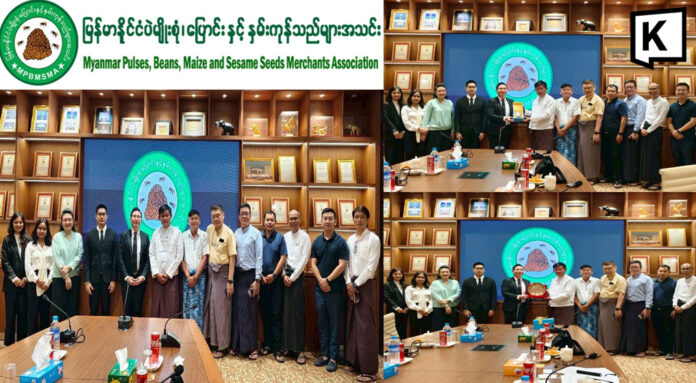
Efforts to promote burn-free maize have been ongoing, with Thai trade officials and the Thai embassy in Yangon engaging Myanmar’s crop associations, including the Myanmar Pulses, Beans, Maize and Sesame Seeds Merchants Association, in late March.

Thailand currently imports between 1.3 million and 2 million tonnes of feed maize annually, valued at 15 billion to 19 billion baht. Myanmar is the largest supplier, accounting for nearly 90% of imports, or around 1.2 million to 1.8 million tonnes per year.

In addition, Thailand allows duty-free imports of maize from ASEAN countries, including Myanmar, under Form D certificates between 1 February and 30 June 2026.

Advertisement

Great Eared Nightjar spotted in Thailand after 30 years

Great Eared Nightjar spotted in Thailand after 30 years

PHETCHABURI — 17 April 2026, a rare Great Eared Nightjar has been spotted in Kaeng Krachan National Park after 30 years, drawing hundreds of tourists and wildlife photographers to the area.

The bird was seen near Ban Krang Camp after images circulated on social media during the Songkran holiday.

birdgoodrare3

Visitors travelled to the site, parking along roadsides before walking to a nearby stream along the route to Phanoen Thung, where the bird was perched motionless on a vine. They took turns photographing it at close range while avoiding disturbance.

Park chief Mongkol Chaiphakdi said the species is rarely observed, and many photographers had never previously encountered it in the wild.

Local photographers said the sighting marks the first time in three decades that the bird has been observed so prominently in the area.

birdgoodrare5

Ban Krang Camp is one of Thailand’s top birdwatching and butterfly-viewing sites, attracting photographers who camp there to capture images of both resident and migratory species throughout the year.

The Great Eared Nightjar, the largest of its kind found in Thailand, is distinguished by prominent ear-like feather tufts and mottled brown plumage, which provide effective camouflage against tree bark and leaf litter.

The species is found across South and Southeast Asia and typically inhabits forests and woodland areas from lowlands up to elevations of about 1,200 metres. A nocturnal bird, it feeds mainly on large insects such as moths and flying termites, catching prey in flight, and remains motionless during the day to avoid detection.

birdgoodrare4

Advertisement

Stray festival rocket hits home in Yasothon village

Stray festival rocket hits home in Yasothon village

YASOTHON — 16 April 2026, a homemade rocket fell onto a house in a village in Yasothon province on Wednesday, narrowly avoiding injuries as no one was inside at the time.

The incident occurred at about 14:20 in Ban Tha Kho, Khum Ngoen subdistrict, according to local reports.

The homeowner, Wilaiwan, said she was fortunate that the house was empty when the rocket came down, leaving no casualties. However, the property sustained damage.

She said rockets had been launched in the area for the past two days as part of off-season festivities.

Wilaiwan urged local leaders and authorities to consider public safety, warning that the consequences could have been serious had anyone been inside the house at the time.

Stray festival rocket hits home in Yasothon village 2

Advertisement

Hot News

LATEST NEWS

Bangkok
overcast clouds
25.5 ° C
26.1 °
25.5 °
46 %
2.4kmh
100 %
Sun
30 °
Mon
31 °
Tue
36 °
Wed
31 °
Thu
33 °