




























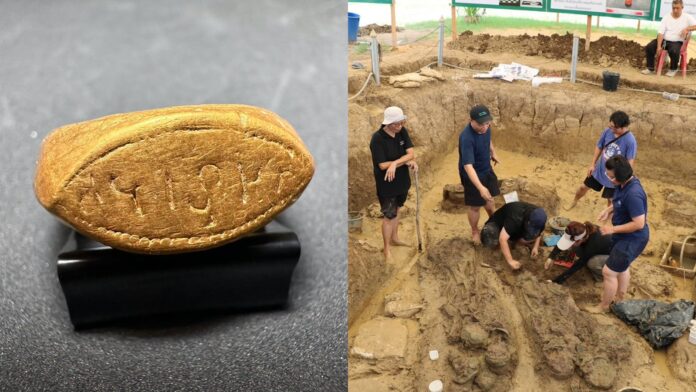
What began as the accidental discovery of a bronze drum beneath a rice field has become one of Thailand’s most significant archaeological excavations in recent years.
Months after archaeologists broke ground at the Don Yai Thong archaeological site in Ban Don Phlap, Ban Lat district, Phetchaburi, the picture emerging from the excavation is no longer about a single artefact. Instead, it tells the story of an affluent prehistoric community connected to regional trade networks stretching from present-day Vietnam to India some 2,000 years ago.
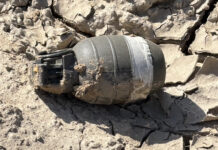
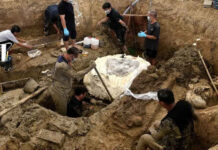
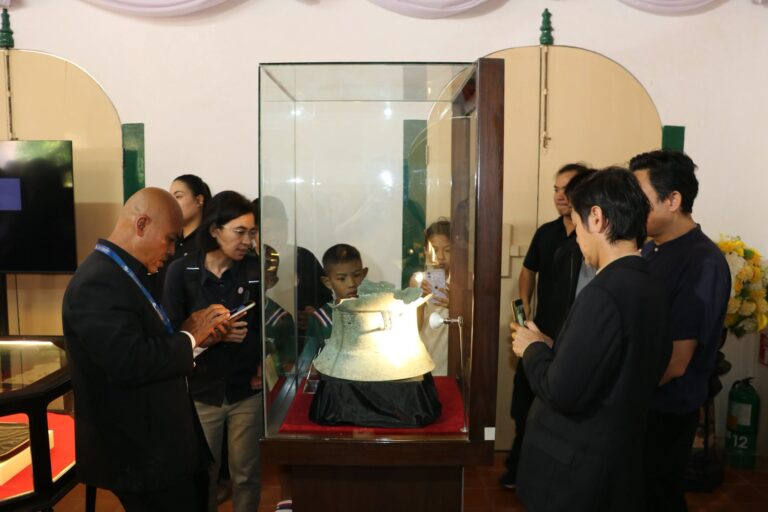
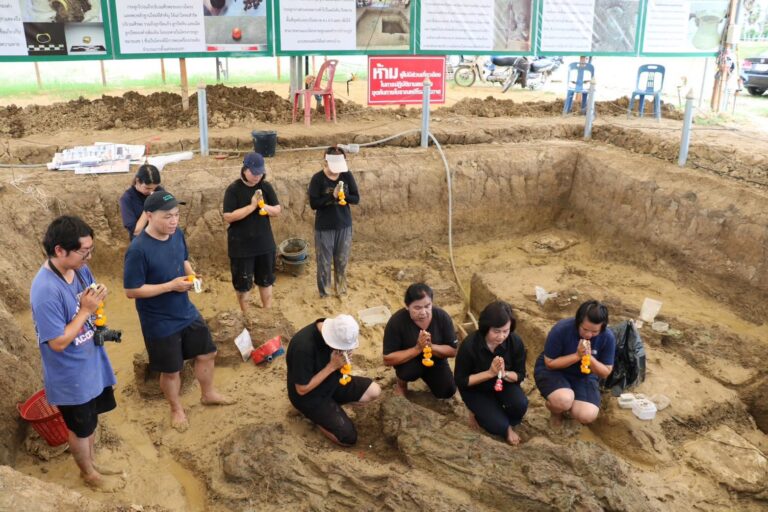
The excavation began in February after a metal detector identified what turned out to be Phetchaburi’s first bronze drum. Archaeologists from the Fine Arts Department initially set out to recover two bronze drums. As they excavated layer by layer, however, they uncovered far more than expected.
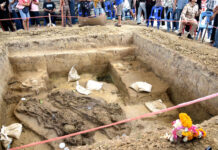
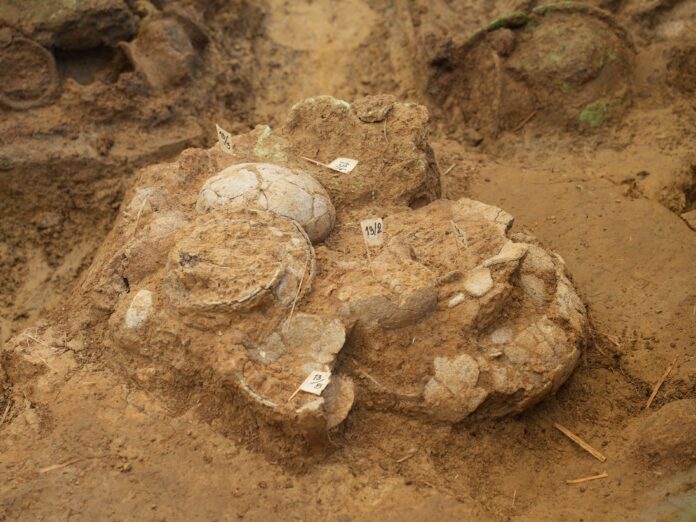
Beneath the soil lay a prehistoric cemetery containing eight human skeletons, pottery, bronze ornaments, glass and stone beads, gold jewellery and, eventually, six Dong Son-style bronze drums – ceremonial objects associated with the Bronze Age culture centred in northern Vietnam.
The arrangement of the burials offered the first clues about the people buried there.
All eight skeletons were laid with their heads facing northeast and accompanied by grave goods. Bronze vessels were placed near the head, body and feet, while many of the deceased wore ornaments including anklets, stone and glass beads, and bronze head coverings. Gold jewellery was also found, including rings, a bracelet and a pendant, with one gold bracelet still encircling the arm of a skeleton.
Archaeologists believe the cemetery was used more than once. Four skeletons on the southern side appear to have been buried at the same time, while those to the north may represent successive burials, with earlier graves disturbed to make room for later ones.
The bronze drums themselves also appear to have formed part of the burial ritual. Rather than being placed separately, they were laid on the same level as the bodies before being covered with pottery. Their position suggests they were intentionally incorporated into funeral ceremonies rather than buried as isolated objects.
The discoveries point to people of considerable social standing.
Bronze drums were prestigious objects across mainland Southeast Asia and are widely regarded as symbols of authority and ceremonial power. The quantity of gold jewellery, bronze ornaments and imported beads found alongside the burials suggests the individuals interred at Don Yai Thong were members of an elite community.
The artefacts also reveal that Phetchaburi was far from isolated.
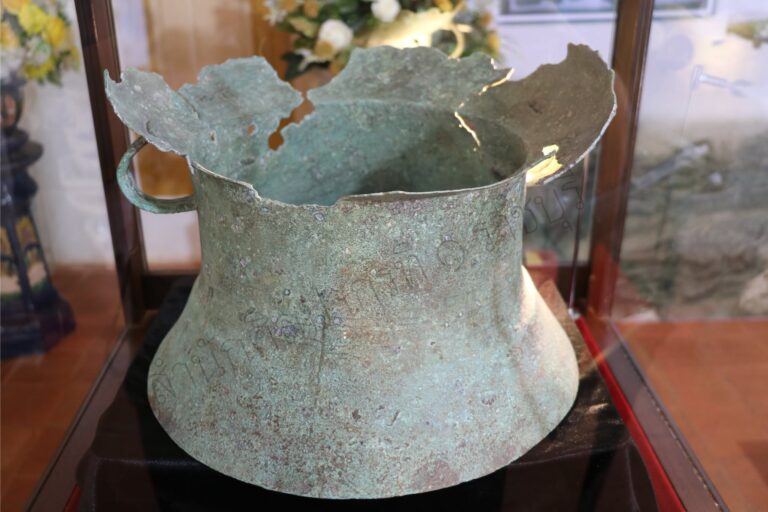
The bronze drums closely resemble examples found at the ancient city of Khu Bua in neighbouring Ratchaburi, while the gold ornaments share stylistic similarities with finds from Chumphon and Surat Thani that reflect Indian artistic influence. Glass beads resemble those discovered at Khao Sam Kaeo in Chumphon, one of Southeast Asia’s earliest international trading ports.
Perhaps the clearest evidence of those overseas connections emerged only recently.
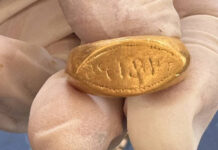
As archaeologists raced to recover fragile remains before the rainy season could damage them, they uncovered two additional gold rings. One proved especially remarkable.
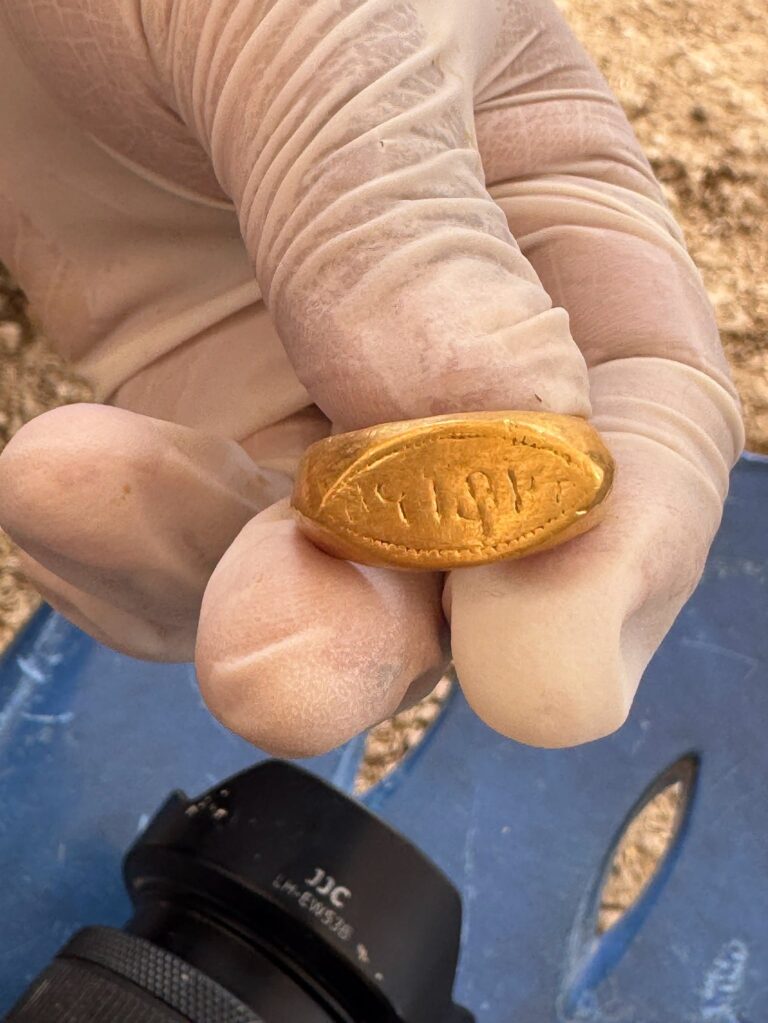
The ring bears an inscription in ancient Brahmi script, one of the earliest writing systems of the Indian subcontinent. Specialists have tentatively read the inscription as “Pusarakhitasa”, meaning “belonging to Pusarakhita” or “protected by the Pushya star”. Based on the inscription and the style of the ring, researchers believe its owner may have been a merchant connected to Indian trade networks.
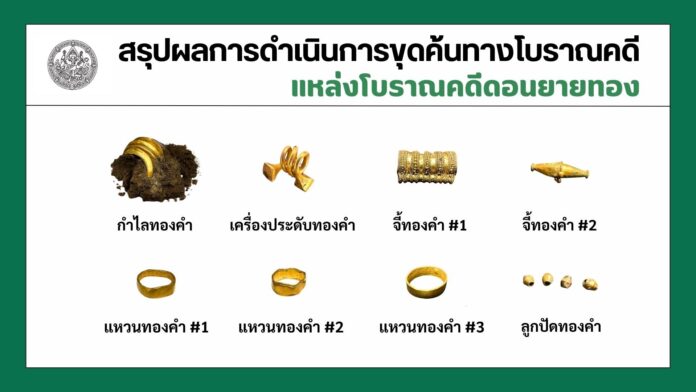
The discovery strengthens growing evidence that communities in what is now Phetchaburi participated in maritime trade linking the Gulf of Thailand with India nearly two millennia ago, during a period when the region was becoming part of a wider commercial world.
For archaeologists, however, many questions remain unanswered.
The poor condition of the skeletons, caused by acidic soil and groundwater, has made it impossible to determine the age or sex of those buried. Researchers hope future scientific analysis, including studies of dental remains, will reveal more about the people who once lived there.
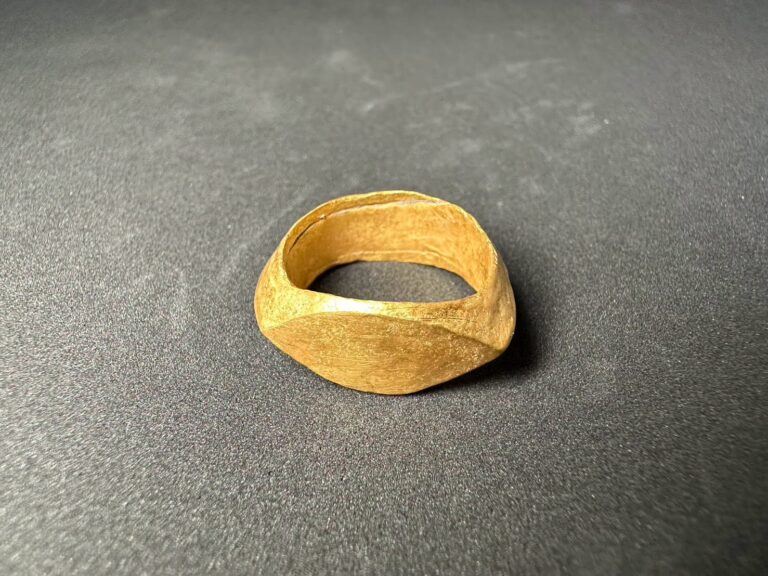
For now, the excavation at Don Yai Thong has transformed a quiet rice field into one of Thailand’s most important prehistoric sites. What first appeared to be the discovery of a single bronze drum has become a rare glimpse into an elite community whose wealth, beliefs and overseas connections survived beneath the soil for two thousand years.