































KYIV, Ukraine (AP) — Ukrainian and Western leaders on Sunday welcomed a desperately needed aid package passed by the U.S. House of Representatives, as the Kremlin warned that passage of the bill would “further ruin” Ukraine and cause more deaths.
Ukrainian commanders and analysts say the long-awaited $61 billion military aid package — including $13.8 billion for Ukraine to buy weapons — will help slow Russia’s incremental advances in the war’s third year — but that more will likely be needed for Kyiv to regain the offensive.
The House swiftly approved $95 billion in foreign aid for Ukraine, Israel and other U.S. allies in a rare Saturday session as Democrats and Republicans banded together after months of hard-right resistance over renewed American support for repelling Russia’s full-scale invasion.
Ukrainian President Volodymyr Zelenskyy, who had warned that his country would lose the war without U.S. funding, said that he was grateful for U.S. lawmaker’ decision.
Speaking on NBC’s “Meet the Press,” Zelenskyy said that the aid package would “send the Kremlin a powerful signal that (Ukraine) will not be the second Afghanistan.”
Zelenskyy said Ukraine would prioritize long-range weapons and air defenses to “break the plans of Russia” in an expected “full-scale offensive,” for which Ukrainian forces are preparing.
The aid package will go to the U.S. Senate, which could pass it as soon as Tuesday. U.S. President Joe Biden has promised to sign it immediately.
It still could take weeks for it to reach the front line, where it is desperately needed.
“With this we can stop (Russian troops) and reduce our losses,” said infantry soldier Oleksandr. He has been fighting around Avdiivka, the city in the Donetsk region that Ukraine lost to Russia in February after months of intense combat.
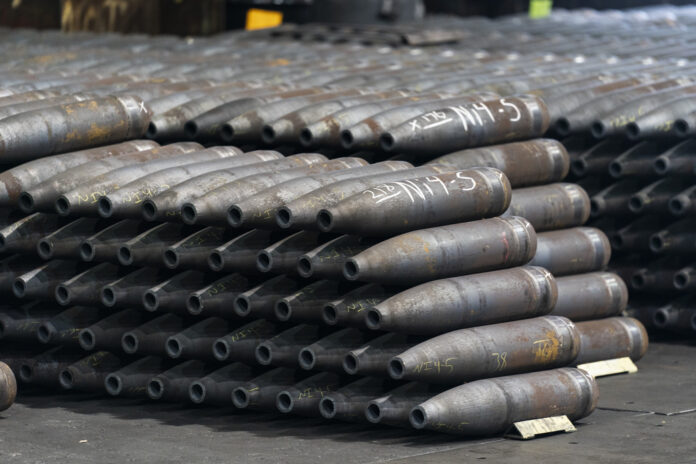
Ammunition shortages linked to the aid holdup over the past six months have led Ukrainian military commanders to ration shells, a disadvantage that Russia seized on this year — taking the city of Avdiivka and currently inching towards the town of Chasiv Yar, also in Donetsk.
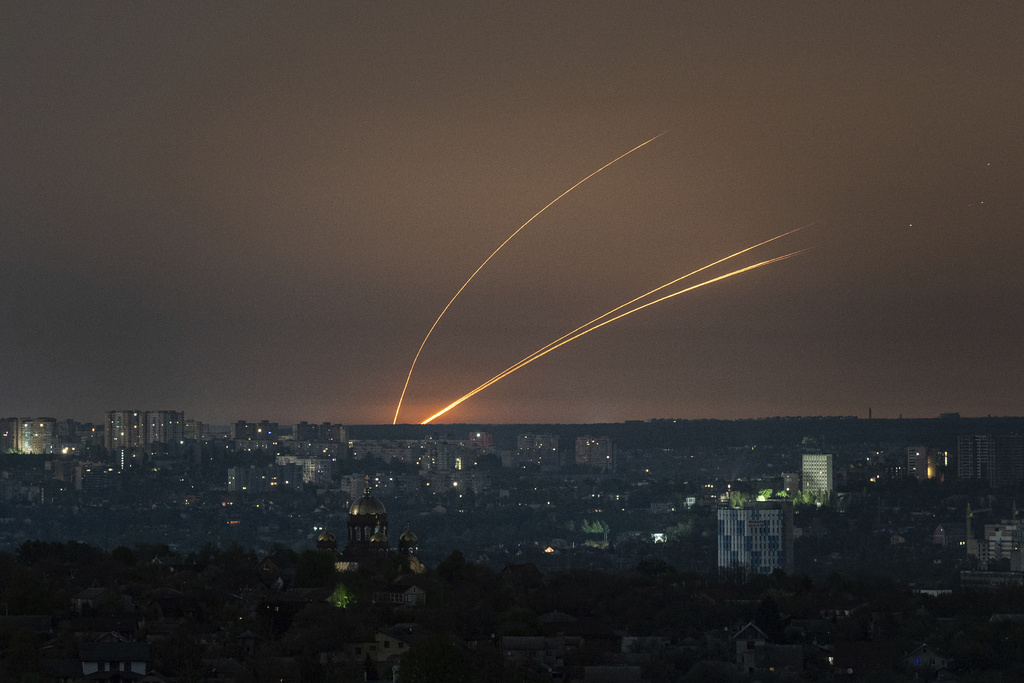
“The Russians come at us in waves — we become exhausted, we have to leave our positions. This is repeated many times,” Oleksandr told The Associated Press. He didn’t give his full name for security reasons. “Not having enough ammunition means we can’t cover the area that is our responsibility to hold when they are assaulting us.”
In Kyiv, many welcomed the U.S. vote as a piece of good news after a tough period that has seen Russia grind out gains along the front line, and step up attacks on Ukraine’s energy system and other infrastructure.
“I heard our president officially say that we can lose the war without this help. Thanks very much and yesterday was a great event,” said Kateryna Ruda, 43.
Tatyana Ryavchenuk, the wife of a Ukrainian soldier, noted the need for more weapons, lamenting that soldiers “have nothing to protect us.”
“They need weapons, they need gear, they need it. We always need help. Because without help, our enemy can advance further and can be in the center of our city,” the 26-year-old said.
Other Western leaders, who have been scrambling to come up with ways to fill the gap left by stalled U.S. military aid, also lauded Congress’ decision.
“Ukraine is using the weapons provided by NATO Allies to destroy Russian combat capabilities. This makes us all safer, in Europe & North America,” NATO Secretary-General Jens Stoltenberg posted on X.
European Commission President Ursula von der Leyen said that “Ukraine deserves all the support it can get against Russia,” and German Chancellor Olaf Scholz called the vote it “a strong signal in these times.”
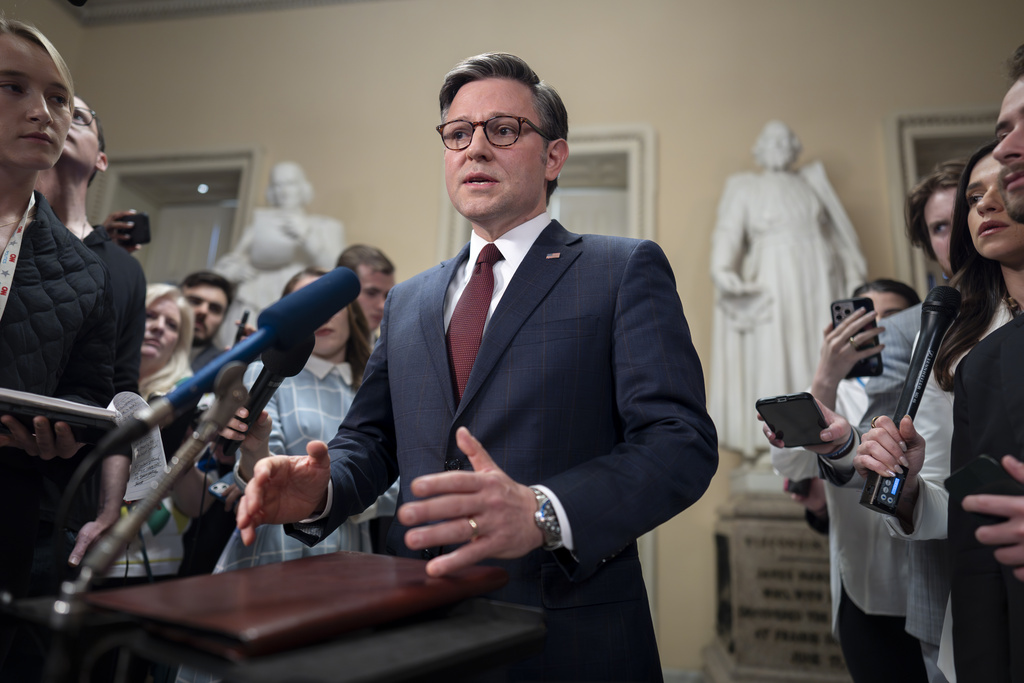
Polish Prime Minister Donald Tusk thanked House Speaker Mike Johnson, while also noting the holdup in Congress. “Better late than too late. And I hope it is not too late for Ukraine,” he wrote on X.
In Russia, Kremlin spokesman Dmitry Peskov on Saturday called the approval of aid to Ukraine “expected and predictable.”
The decision “will make the United States of America richer, further ruin Ukraine and result in the deaths of even more Ukrainians, the fault of the Kyiv regime,” Peskov was quoted as saying by Russian news agency Ria Novosti.
“The new aid package will not save, but, on the contrary, will kill thousands and thousands more people, prolong the conflict, and bring even more grief and devastation,” Leonid Slutsky, head of the Russian State Duma Committee on International Affairs, wrote on Telegram.
Washington-based think tank the Institute for the Study of War said the logistics of getting U.S. assistance to the front line would mean that “Ukrainian forces may suffer additional setbacks” while waiting for it to arrive.
“But they will likely be able to blunt the current Russian offensive assuming the resumed U.S. assistance arrives promptly,” it said in its latest assessment of the conflict.

Olexiy Haran, professor of comparative politics at the National University of Kyiv-Mohlya Academy, said that Ukraine was grateful for aid from the U.S. and other Western countries, “but the problem is, frankly speaking, it’s too late and it’s not enough.”
“This is the third year of the war and we still don’t have aviation, new aviation. We don’t have enough missiles, so we cannot close the skies. Moreover, recently we didn’t have even artillery shells,” he said.
“That’s why the situation was very, very difficult and the Russians used it to start their offensive. So that’s why it is so important for us. And definitely if we’d received it half a year before, we would have saved the lives of many Ukrainians, civilians included.”
Matthew Savill, military sciences director at the Royal United Services Institute think tank, said that the aid, while welcome, “can probably only help stabilize the Ukrainian position for this year and begin preparations for operations in 2025.”
“Predictability of funding through 2024 and into 2025 will help the Ukrainians plan the defense this year, especially if European supplies of ammunition also come through, but further planning and funds will be required for 2025, and we have a U.S. election between now and then,” he said.
Responding to a question on NBC about how long Ukraine will still need aid packages, Zelenskyy said “it depends on when we actually get weapons on the ground.”
“The decision to supply F-16 fighter jets to Ukraine, we had it a year ago,” he said. “We still don’t have the jets in Ukraine.”
In other developments:
— On the ground, Russia’s Defense Ministry said Sunday that its troops had taken control of the village of Bohdanivka in the Donetsk region. Ukrainian officials haven’t yet commented.
— One person was killed and four others were wounded in Russian shelling in Ukrainsk on Sunday, according to the prosecutor’s office in Ukraine’s partially occupied Donetsk region. In the Odesa region, four people were wounded in a missile attack, Gov. Oleh Kiper said.
— Two suspects were detained Sunday after two Ukrainian soldiers killed a police officer at a checkpoint in the Vinnytsia region. The soldiers opened fire on Maksym Zaretskyi, 20, early Saturday after he stopped their car for a routine inspection. Zaretskyi’s partner was wounded but survived. The head of Ukraine’s National Police, Ivan Vyhovsky, said the suspects, a father and son aged 52 and 26, were detained in Ukraine’s Odesa region.
___