




















29.4 C
Bangkok
Friday, June 26, 2026
Home Blog

Review: The Evil Lawyer – When justice isn’t black and white, and the courtroom isn’t reserved for good people

Review: The Evil Lawyer – When justice isn’t black and white, and the courtroom isn’t reserved for good people

The Evil Lawyer, a new Thai legal drama series released on 11 June, is directed by Thai filmmaker Nottapon Boonprakob, known for screenwriting on SuckSeed and May Who?, co-directing and writing on One for the Road, and directing the Netflix series Mad Unicorn.

This time, he turns his attention to Thailand’s legal world through the story of Mek, an idealistic young lawyer who suddenly finds himself accused of murdering the son of a police officer. To clear his name, he is forced to team up with Jittri, a notoriously cunning attorney known for exploiting loopholes in the law. Together, they navigate a justice system where the answers are rarely black and white.

What stands out most is the series’ willingness to explore the grey areas of Thailand’s justice system. Through the eyes of legal professionals, it raises uncomfortable questions about morality, power, and justice, three forces that do not always move in the same direction.

Another standout aspect is the attention to detail in depicting courtroom proceedings and cross-examinations. It is clear that the creators have done extensive research, resulting in scenes that feel remarkably authentic without unnecessary dramatisation.

HKkGnQva4AAIkvd 0

More importantly, the series reminds viewers that courtrooms are not bright, orderly or reassuring spaces, as they are sometimes portrayed in television dramas. Instead, they are spaces filled with tension, pressure, and fierce competition, where everyone fights for their own interests.

The performances are equally impressive. Not only do the lead actors deliver compelling performances, but supporting actors and even minor characters add to the sense of realism. Many of them genuinely resemble people one might encounter in Thailand’s legal profession.

The casting choices also deserve praise for going beyond the conventional standards of attractiveness often seen in Thai series. The character Seya, for example, presents a migrant worker in a way that feels natural and believable.

Visually, the series employs muted colours and subdued lighting, creating an atmosphere of discomfort and moral ambiguity that neatly complements its themes.

Seya 0

One of the series’ most striking achievements is its incorporation of cases reminiscent of real-life incidents that have shaken Thai society. These include the mysterious death of a young woman on a boat surrounded by influential figures, recalling the highly publicised case of actress Tangmo Nida, as well as references to abandoned infant remains in hospitals and devastating industrial fires. Such elements make the series feel as though it is addressing truths that reality itself often hesitates to confront directly.

The series is not without flaws. At times, the pacing moves too quickly, leaving viewers wondering whether they have missed something important. The ending also leaves several questions unresolved, walking a fine line between setting up a second season and intentionally allowing audiences to draw their own conclusions.

Rather than being entertaining in the conventional sense, The Evil Lawyer is emotionally unsettling. It leaves viewers feeling uncomfortable, disturbed, and even disgusted by certain aspects of reality. Episode five, in particular, featuring the cross-examination of a doctor accused of sexually assaulting a patient, is among the most distressing scenes in the series.

Credit must be given to actress Ying Rhatha Phongam, who portrays Jittri and reportedly contributed to the design of this sequence by avoiding rehearsals with the actress playing the victim beforehand. The result is a painfully raw and realistic scene, capturing the desperation of someone cornered into revealing the truth before the court.

Dtbezn3nNUxytg04ayx64lWvZk3Lt5bgTxKIIlJkHgXJfo 0

The series also questions the failures of Thailand’s justice system by satirising sensationalist news talk shows that invite the public to judge social issues. It reflects a painful reality: many people no longer place enough trust in formal legal mechanisms and instead seek justice through public opinion, allowing society itself to become judge and jury.

A lawyer’s duty is to fight for the best interests of their client within the framework of the law, not to determine who deserves legal representation. In that regard, the series may help dispel some of the misconceptions surrounding the legal profession.

For viewers who enjoy heavy dramas, thrillers, and stories that challenge social norms, The Evil Lawyer is not to be missed. However, audiences should be prepared for numerous sensitive themes, including sexual violence, imbalances of power, and cases that society often chooses to ignore.

Another major strength is the space the series gives to female lawyers. While women make up a significant part of the legal profession in reality, patriarchal attitudes often cause them to be overlooked. This series demonstrates that certain issues become even more powerful when told through women’s perspectives and voices.

Easter Egg 0

Its biggest drawback may also be one of its strengths: the series is packed with symbolism and subtext. Viewers who dislike interpretation and analysis may find it demanding and occasionally overwhelming. But for those who enjoy unpacking hidden meanings, The Evil Lawyer is filled with Easter eggs and narrative layers that make it worth revisiting to catch details that may have gone unnoticed the first time around.

However, it is also difficult not to feel a sense of missed opportunity. While Thailand’s media and film industry have begun pushing boundaries by producing series willing to confront moral grey areas and structural problems that are plainly visible in Thai society, these stories still rarely go all the way. Certain issues could have been explored more deeply and interrogated more forcefully, yet they seem to stop short for reasons that remain unclear.

That is not to say that The Evil Lawyer lacks impact. On the contrary, it is powerful enough to leave viewers uncomfortable, angry, and questioning the nature of justice in Thai society. At the same time, it raises another question: had this series not been released on a streaming platform, would it have retained the same level of quality and boldness in its storytelling? Or would much of its sharper commentary have been diluted, leaving behind little more than another conventional legal drama?

More than a legal thriller, The Evil Lawyer is an uncomfortable reflection of a society that is still struggling to define what justice truly means. By the end, it leaves behind a disturbing question: when the system fails, who gets to decide what justice looks like?

dFQROr7oWzulq5Fa7HCSfOP3mM7WvwhlCP54SCh9O6K73CWE0kkxfM65rC1LVDvEB0W

Advertisement

Chadchart Looks Set for City Hall, But Lacking Public Enthusiasm Like Four Years Ago

With mere days to go before polling day, incumbent former Bangkok Governor Chadchart Sittipunt appeared confident, spending more time telling people at Muang Thai Phatra Fresh Market in Bangkok’s Huai Khwang district on Thursday to simply not to forget to come out and vote. Chadchart did not even bother to explicitly ask people to vote for him, Number 9, most of the time, leaving that matter to his dozen-strong campaign team to handle.

After giving an interview to a dozen or so reporters, including Khaosod English, at a designated spot inside the market, the former Bangkok governor, who is the clear front-runner in Sunday’s gubernatorial election, simply waited as people took turns taking selfies with him. He even asked this Khaosod English reporter whether he would like to take a selfie with him too, but the offer was politely declined in order to maintain our paper’s impartiality.

5 web 2

​A member of his team told Khaosod English that they remain cautious and want to ensure Bangkokians do not assume the battle is already won and fail to turn out to vote on 28 June. Chadchart told the press at the market that it is essential to support the 55,000 small businesses in Bangkok, rather than just big corporations.

​Another noticeable aspect of the day, however, was that the so-called “Chadchart fever” of his first campaign four years ago was no longer detectable. After four years, that intense enthusiasm has largely dissipated, as Chadchart has come under a barrage of criticism from other candidates. The criticisms range from a failure to solve the PM2.5 micro-dust particle problem that blankets Bangkok for a few months every year, to allowing corruption among Bangkok City Hall officials to occur under his watch.

​One female reporter asked how he was handling all the “mud-slinging” directed at him. Chadchart said it was only to be expected after four years in power, but that he was alright. As for earnest criticisms, Chadchart said he accepts them.
​When Khaosod English asked what he considered a failure during his first term, Chadchart replied:

“It’s not a failure but something unfinished — graft and corruption. We will continue to do more.”

​Chadchart turned defensive, adding that an anti-corruption group had given his administration a score of eight out of 10, and promised he would do more if re-elected.

​What about the homeless people left to sleep rough, mostly in older parts of Bangkok such as along the footpaths of Ratchadamnoen Avenue, I asked.

​Chadchart said the number has been reduced from 1,600 to 1,200, and that 30 people have been retrained for jobs. A centre to care for them called Baan Im Jai has been established, with six more planned for different parts of Bangkok.

​“Right now we have limited authority to bring them in,” he said, adding that closer coordination with other agencies and new laws are required.

​So what more can Bangkokians expect if he is re-elected?

​“If you trust me, if you believe in our plans,” he said, noting that his administration has 250 distinct plans.

“What you will see in the future is Bangkok with a better quality of life and better productivity. So this is the important thing for the city.”

2 web 14

Advertisement

Bangkok Art Biennale 2026 announces second wave: 27 additional artists | Angels & Mara

Bangkok Art Biennale 2026 is pleased to announce the second group of participating artists for its fifth edition, taking place from 29 October 2026 to 28 February 2027 under the theme ANGELS & MARA.

Expanding upon the first announcement, this new group brings together artists from Thailand, Japan, China, Hong Kong, Malaysia, Myanmar, South Korea, Germany, France, Italy, Iran, Canada, and beyond. Their works explore the tensions between hope and despair, memory and forgetting, spirituality and materialism, individuality and collective experience, themes that resonate deeply with the dualities embodied by Angels & Mara.

Picture1 13
Arahmaiani
(Indonesia), Nobuyoshi Araki (Japan), Cedric Arnold (France/Thailand), Beyond Pressure (Myanmar), Channatip Chanvipava (Thailand/UK), Yanran Chen (China), Un Cheng (Hong Kong), Max Hooper Schneider (United States), Leiko Ikemura (Japan/Germany), Sumi Kanazawa (Japan), Renato Leotta (Italy), Liu Jianhua (China), Breda Lynch (Ireland), Ong Kian Peng (Singapore), Chetsada Phuwiang (Thailand), Pierre et Gilles (France), Nazanin Pouyandeh (Iran/France), Naraphat Sakarthornsap (Thailand), Sylvie Selig (France), Sin Wai Kin (Canada/United Kingdom), Udom Taephanich (Thailand), Mika Tamori (Japan), Sudaporn Teja (Thailand), Ralf Tooten (Germany), Tawan Wattuya (Thailand), Woo Hannah (South Korea), and Yeoh Choo Kuan (Malaysia). *Please see Appendix A for artist list

Among the highlights is celebrated Japanese photographer Nobuyoshi Araki, whose provocative and deeply personal images have shaped contemporary photography for more than five decades. Araki’s work explores the fragile boundaries between desire, morality, intimacy, and loss, revealing the complex emotional terrain of human existence. Thai artist Tawan Wattuya, renowned for his expressive paintings that merge political commentary, social critique, and popular culture, presents works that reflect on the complexities and contradictions of contemporary society. Through his distinctive visual language, Tawan explores themes of power, conflict, memory, and collective experience, offering incisive observations on both local and global realities. Leiko Ikemura, one of the most influential artists working between Asia and Europe today, brings her distinctive visual language of hybrid beings, landscapes, and dreamlike figures. Her sculptures inhabit a poetic realm between human and non-human worlds, reflecting on vulnerability, transformation, and coexistence. French artist duo Pierre et Gilles continue their exploration of mythology, pop-culture, religion, and fantasy through their iconic hand-painted photographic tableaux. Their theatrical portraits challenge conventional notions of identity while celebrating diversity, beauty, and self-invention. Thai artist Udom Taephanich, one of Thailand’s most influential cultural figures, brings a multidisciplinary practice that spans visual art, performance, and social engagement. Known for his imaginative and often humorous approach, Udom’s works encourage audiences to reconsider everyday experiences while reflecting on broader questions of community, creativity, and human connection.

Picture3 12

Chinese artist Liu Jianhua, widely regarded as one of the leading figures in contemporary Chinese art, contributes works that transform everyday materials into explorations of fragility, absence, and perception. His experimental practice questions the relationship between object, meaning, and reality. American artist Max Hooper Schneider presents speculative ecosystems that blur the boundaries between nature, technology, and civilization. Through immersive installations, Schneider imagines post-human environments shaped by ecological transformation and environmental uncertainty. Indonesian artist Arahmaiani, a pioneering voice in Southeast Asian contemporary art, known for her longstanding engagement with social justice, spirituality, environmental concerns, and intercultural dialogue. Her work challenges political and religious norms while advocating for compassion, coexistence, and collective responsibility. Japanese-Korean artist Sumi Kanazawa creates large-scale installations from layered newspaper drawings that dissolve linear notions of time and reveal histories that continue to shape the present. Thai artist Channatip Chanvipava approaches painting as a process of self-discovery, using memory as both subject and method. Working intuitively without preparatory sketches, he transforms fragments of personal recollection into richly textured compositions and immersive painting installations. Hong Kong artist Un Cheng transforms everyday encounters into intimate psychological landscapes that examine isolation and connection within contemporary urban life.

Copy of 01 Arahmaiani Flag Project 2022. Performed at Pattani Thailand

Advertisement

Myanmar torches $600 million in seized heroin, meth and other drugs

Smoke and flame rise from illegal narcotics being burnt during a destruction ceremony marking the U.N.’s International Day Against Drug Abuse and Illicit Trafficking, on the outskirts of Yangon, Myanmar, Friday, June 26, 2026. (AP Photo/Thein Zaw)

YANGON, Myanmar (AP) — Thick clouds of black smoke billowed into the sky on the outskirts of Myanmar’s largest city Friday as authorities burned more than 50 tons of heroin, opium, ketamine, methamphetamine, marijuana and crystal meth — some $600 million of confiscated illegal drugs destroyed nationwide.

Myanmar, also known as Burma, has a long history of drug production linked to political and economic insecurity caused by decades of armed conflict.

It has been a major source of illegal drugs destined for East and Southeast Asia, despite repeated efforts to crack down, and has long been one of the world’s largest producers of heroin and methamphetamine.

AP26177207267565
Police officers explain about illegal narcotics to attendees during a destruction ceremony marking the U.N.’s International Day Against Drug Abuse and Illicit Trafficking, on the outskirts of Yangon, Myanmar, Friday, June 26, 2026. (AP Photo/Thein Zaw)

Violent political unrest in Myanmar following the military takeover in 2021 — which has led into a civil war between the military government and its pro-democracy opponents, as well as ethnic armed groups — has caused an increase in drug production, according to experts.

In January, the military government claimed the country’s largest-ever seizures of illicit drugs and drug-manufacturing equipment, taken from a total of 12 drug production sites during a series of raids in the northern part of Shan state.

This year, the street value of drugs destroyed was more than double last year’s total, Police Lt. Col. Aung Myat Soe, of Yangon’s Anti-Narcotics Police Force, told reporters at a bus station compound on the edge of the city where drugs were being burned.

In Yangon alone, some $321 million worth of 31 different types of drugs were set ablaze, Aung Myat Soe said.

AP26177207831360
Smoke and flame rise from illegal narcotics being burnt during a destruction ceremony marking the U.N.’s International Day Against Drug Abuse and Illicit Trafficking, on the outskirts of Yangon, Myanmar, Friday, June 26, 2026. (AP Photo/Thein Zaw)

Events were also held in Mandalay, and in Taunggyi, the capital of eastern Myanmar’s Shan state — areas closer to where the drugs are produced — to mark the United Nations’ International Day Against Drug Abuse and Illicit Trafficking.

Many areas of Myanmar are controlled by long-established militias organized by the country’s various ethnic groups, many of which are involved in fighting against the military-run government in a bloody civil war, alongside pro-democracy groups that sprang up after the military seized control of the country from democratically-elected Aung San Suu Kyi in 2021.

In elections that concluded earlier this year, which international observers said were neither free nor fair with major opposition groups banned, the military leaders won a landslide victory.

The government claims the country’s militias use illicit drugs to fund their insurgencies and are unwilling to engage in any peace process because they do not want to give up the lucrative drug trade.

Some groups are known to be involved in the drug trade currently and in the past, but others also have sought to crack down on narcotics.

The Ta’ang National Liberation Army, for example, which captured significant swaths of the northern part of Shan state in the civil war before signing a ceasefire in October with the military, announced Thursday that it would destroy about $5.5 million worth of seized drugs in the group’s controlled-area.

Advertisement

Tourist captures rare leopard leap in Kaeng Krachan

Tourist captures rare leopard leap in Kaeng Krachan

PETCHABURI — 26 June 2026, A tourist has captured a rare photograph of a large leopard leaping back into the forest at Kaeng Krachan National Park, with the image quickly going viral and drawing praise from wildlife enthusiasts online.

Kaeng Krachan National Park chief Mongkol Chaiphakdee shared the remarkable photo on 26 June 2026, saying it was taken by tourist Nui Piwpholaphon while travelling along the road leading to Pha Noen Thung, near Stream 1, inside the park.

According to Mongkol, park officials reported that the tourist spotted the protected wild cat at close range while driving through the area. The leopard appeared calm and showed no signs of panic despite the nearby vehicle before gracefully leaping over roadside bushes and disappearing back into the dense forest.

“The sighting of a leopard in this area is an important indicator of the rich biodiversity of Kaeng Krachan Forest,” Mongkol said.

“Since the forest was designated a UNESCO World Heritage Site, wildlife has been appearing more frequently because the ecosystem remains healthy, with abundant food sources and minimal disturbance.”

The park chief also reminded visitors to follow wildlife safety guidelines if they encounter a leopard or black panther.

Tourists are advised not to sound their horns, leave their vehicles, shout, open windows, or leave engines running. Instead, they should remain inside their vehicles and wait quietly until the animal moves away to ensure the safety of both people and wildlife.

Kaeng Krachan Forest is one of Thailand’s most important habitats for leopards and black panthers. While park officials regularly record the animals using camera traps, sightings by visitors are uncommon.

Capturing a clear image of a leopard in mid-leap is considered especially rare, prompting widespread sharing of the photograph on social media and praise for park rangers’ efforts to protect the country’s largest national park and its wildlife.

Advertisement

Xi says China ready to establish security partnership with Cambodia

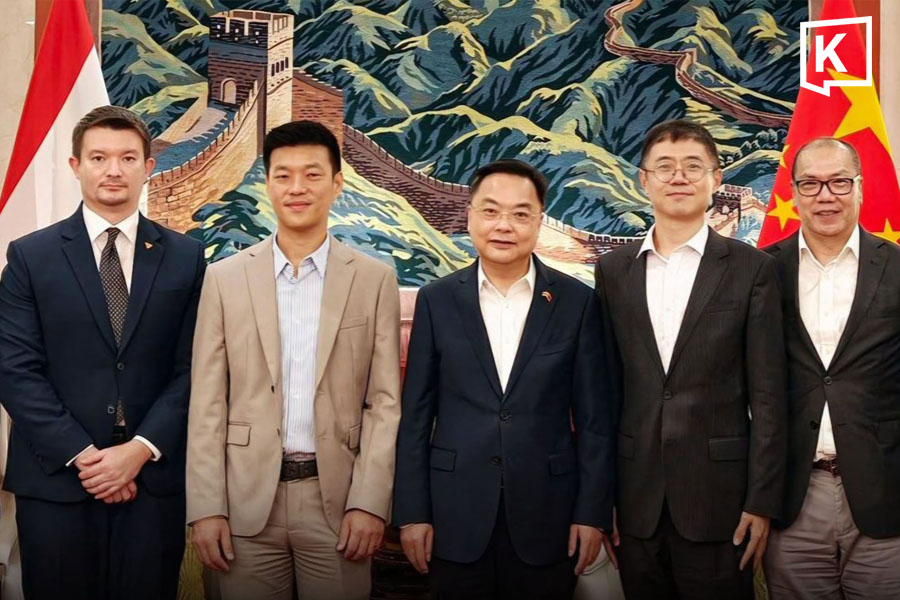
BEIJING, June 26 (Xinhua) — Chinese President Xi Jinping on Friday said China is willing to establish a security partnership with Cambodia, and work with Cambodia to make sustained efforts to root out the chronic problem of telecom fraud.

Xi made the remarks when meeting with Cambodian People’s Party (CPP) President and Senate President Samdech Techo Hun Sen in Beijing, adding China highly commends Cambodia’s determination and actions to crack down on telecom and online fraud.

Advertisement

More than 13 Bryde’s whales spotted off Bang Saen coast

More than 13 Bryde's whales spotted off Bang Saen coast

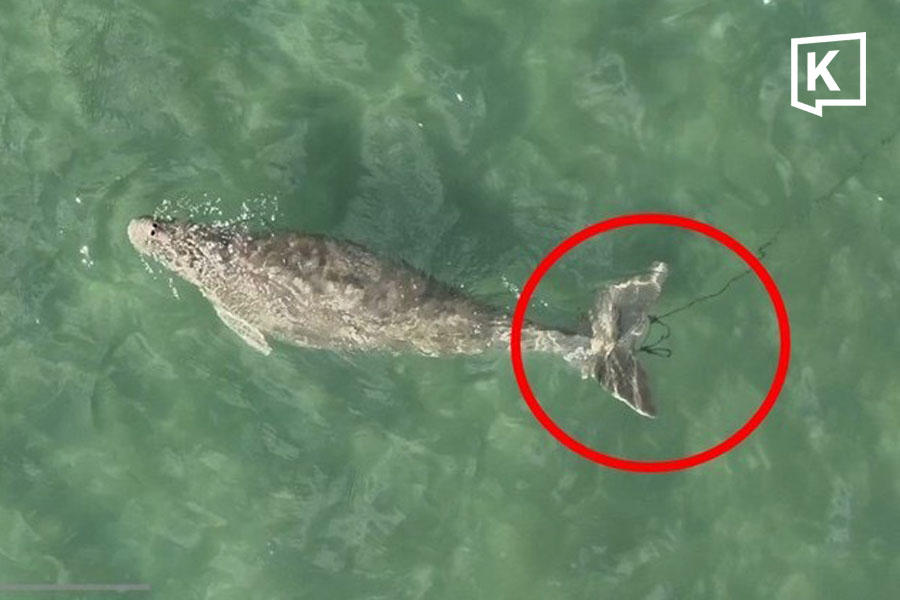
CHONBURI — 26 June 2026, More than 13 Bryde’s whales have been spotted off the coast of Bang Saen in Chon Buri province, highlighting the area’s rich marine ecosystem and drawing interest from tourists hoping to see the animals in their natural habitat.

The sightings gained attention after Facebook user Eaksak Soemsri shared drone footage showing several Bryde’s whales feeding and swimming together off Khao Sam Muk and Bang Saen Beach. The video was filmed by Prapya Chu using a drone launched from the tour boat Ploypailin Navy 2.

Speaking to reporters at 14:00 on 26 June 2026 at Laem Thaen in Saensuk subdistrict, Eaksak Soemsri, 50, a marine rescue volunteer known as “Captain Kao” and owner of Ploypailin Navy 2, said he regularly takes visitors on whale-watching trips around Khao Sam Muk.

news142863 N2bdY2YKKR1782459704

He said surveys this year have identified 13 Bryde’s whales, more than were recorded last year.

According to Eaksak, the Department of Marine and Coastal Resources has issued whale-watching guidelines requiring boats to remain at least 100 metres from the whales and switch off their engines to prevent injuries from propellers.

He added that all operators taking tourists to see the whales have completed the required training.

news142863 U97FgsG08D1782459704

The largest whale spotted this year is estimated to be about the size of a minibus and weigh nearly two tonnes, making it larger than many of the boats observing it.

Eaksak invited tourists to visit Bang Saen during the current season, noting that visitors can enjoy both the Bangsaen Grand Prix motorsport event and whale-watching trips later in the day.

Tourists interested in joining a whale-watching excursion can contact trained operators from the White Shark Marine Rescue team.

Advertisement

Thailand’s Supreme Patriarch marks 99th birthday

His Holiness Somdet Phra Ariyavongsagatanana

BANGKOK — Thailand’s Supreme Patriarch, His Holiness Somdet Phra Ariyavongsagatanana, celebrated his 99th birthday on Friday, with the government holding a merit-making ceremony in his honour at Wat Ratchabophit Sathit Maha Simaram.

Prime Minister Anutin Charnvirakul presided over the Buddhist chanting and alms-giving ceremony dedicated to the Supreme Patriarch’s birthday. The event was attended by Cabinet ministers, heads of independent agencies, military and police commanders, senior government officials and representatives of state organisations.

20260626085617 8750

Upon arriving at the temple, Anutin paid respects to the Supreme Patriarch inside the ordination hall.

His Holiness Somdet Phra Ariyavongsagatanana (Amborn Ambaro) was born in Ratchaburi province on 26 June 1927. He was ordained as a novice monk in 1940 in his home province before entering the monkhood on 9 May 1948 at Wat Ratchabophit Sathit Maha Simaram in Bangkok.

His Majesty the King formally appointed him as the 20th Supreme Patriarch of Thailand on 6 February 2017. The royal installation ceremony took place at the Temple of the Emerald Buddha in the Grand Palace on 12 February 2017.

20260626085617 4554

The Supreme Patriarch is the highest-ranking member of Thailand’s Buddhist Sangha, serving as the spiritual leader of the nation’s monks and as a symbol of unity and stability for Buddhism in Thailand.

Advertisement

Miss Thailand runner-up accuses pageant sponsor of sexual assault

Miss Thailand runner-up accuses pageant sponsor of sexual assault

RAYONG — 26 June 2026, A 27-year-old second runner-up of Miss Thailand Phuket 2026 has filed a police complaint, accusing a prominent durian farm owner and pageant sponsor of sexually assaulting her and attempting to rape her at a hotel in Rayong.

The woman reported the incident to Nikhom Phatthana Police Station on 26 June 2026. The suspect, identified only as “Mike” (pseudonym), is a man in his 50s who owns a well-known durian farm in Nikhom Phatthana district and was a major sponsor of the beauty pageant.

The alleged assault took place on the evening of 25 June 2026.

According to the complainant, she had travelled to Rayong to thank sponsors who had supported her in various pageants. She said she met with Mike, whom she had trusted and respected as a senior figure. As she was scheduled to film a tourism commercial in Ban Chang district the following day before travelling to Nakhon Ratchasima for another pageant, he offered to book a hotel room for her in Nikhom Phatthana district.

The woman alleged that while she was taking a shower, Mike entered the bathroom naked and attempted to force himself on her.

She said she managed to defend herself using Muay Thai techniques, striking him with a knee to the groin and punching him in the face before he fled the room.

The complainant also said she sought help from hotel staff after the incident but was disappointed by the response. Instead of receiving assistance, she claimed police were called and she was briefly treated as if she were intoxicated and causing a disturbance, despite having sustained injuries while defending herself.

Hotel staff later met investigators to explain the hotel’s handling of the incident. They said employees initially believed the pair were husband and wife. After the woman requested emergency medical assistance, staff became aware that something was wrong and followed the appropriate procedures. The hotel said it prioritises the safety of all guests.

Police are reviewing CCTV footage and questioning witnesses as part of their investigation. No charges have been announced, and the allegations have not been tested in court.

Advertisement

Japan hit by second quake in two days, no tsunami warning

Japan hit by second quake in two days, no tsunami warning

CHIBA, Japan — 26 June 2026, A magnitude 5.8 earthquake struck off the northern coast of Chiba Prefecture on Thursday, marking the second significant earthquake to hit Japan in two days, according to the Japan Meteorological Agency (JMA).

The quake occurred at 12:47 local time on 26 June 2026, with its epicentre located off northern Chiba at a depth of 50 kilometres.

Tremors were felt in several prefectures, including Saitama, Chiba, Kanagawa, Ibaraki, Gunma, and Niigata.

The JMA said no tsunami warning had been issued, and there were no immediate reports of damage.

The latest quake followed a magnitude 6.9 earthquake that struck off the coast of Iwate Prefecture in northern Japan at around 07:30 on 25 June 2026.

The earlier earthquake was widely felt across northern Japan, particularly along the Pacific coast of Aomori Prefecture. Authorities said it could cause slight fluctuations in sea levels but was not expected to trigger significant damage.

Residents were urged to monitor official updates and remain alert for possible aftershocks.

Operators of the Higashidori Nuclear Power Plant in Aomori Prefecture and the Onagawa Nuclear Power Plant in Miyagi Prefecture said inspections following Wednesday’s earthquake found no abnormalities, while radiation levels around both facilities remained normal.

Advertisement

Aerobics in cemetery becomes talk of Phayao district

Aerobics in cemetery becomes talk of Phayao district

PHAYAO — A group of villagers in Phayao has become a local sensation after holding daily aerobics sessions inside a cemetery, with participants saying they are not afraid of supernatural beliefs and immediately stop the activity whenever a funeral takes place.

Reporters visiting the Ban Mang cemetery found more than 20 villagers aged between 45 and 60 enthusiastically taking part in aerobics dance sessions accompanied by music, creating a scene far removed from the usual image associated with a graveyard. The unusual exercise venue has become a talking point in Chiang Kham district.

Apiradee Pansombat, president of the Jun Police Station Housewives Association and a Ban Mang resident, said many people often ask whether participants are frightened by exercising in a cemetery. She said members view the area as a public space that can be used to promote health, provided it is done with respect for the deceased.

The aerobics activity is part of a health promotion project supported by Chiang Kham Municipality. Participants receive health education, exercise guidance, and regular health monitoring, including blood pressure checks, weight measurements, and waist circumference assessments at the beginning of each month. The program is free of charge for all participants.

In addition to exercising, members help maintain and improve the cemetery grounds by planting trees and flowers, watering plants, sweeping leaves, and preparing the sound system before each session. Their efforts have made the area cleaner, greener, and more pleasant to use.

Apiradee said the group immediately suspends activities on any day when a cremation ceremony is held in order to show respect for the deceased. Before and after each exercise session, participants also pay respects and ask forgiveness from the spirits of the place according to local beliefs.

“Even though the crematorium is right behind us, we come here to take care of our health and to care for this place with respect,” she said. “When we behave properly and honor the place, there is nothing to be afraid of. Everyone is simply happy to exercise together.”

Advertisement

Hot News

LATEST NEWS

Bangkok
broken clouds
29.4 ° C
32.2 °
29.4 °
74 %
5.4kmh
58 %
Fri
29 °
Sat
36 °
Sun
37 °
Mon
37 °
Tue
32 °