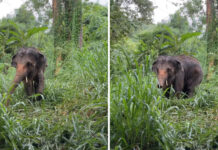

























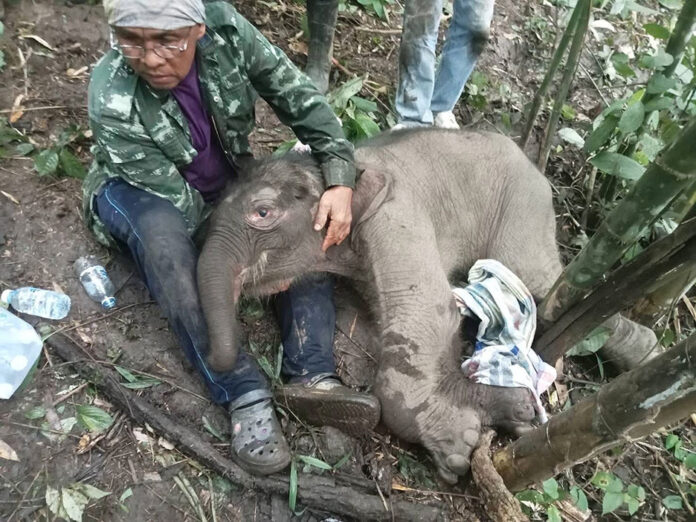
KANCHANABURI — Thai Wildlife officials are providing intensive care to a day-old female elephant calf found abandoned in Lam Khlong Ngu National Park after her mother left the weak newborn behind and rejoined her herd.
The calf was discovered on September 22 in the middle of Huai Suea village forest in Chalae subdistrict, Thong Pha Phum district, prompting an immediate rescue operation involving park officials, Buddhist monks, village volunteers, and elephant monitoring teams.
Mother Abandons Weak Calf
Prathom Han Klang, an elephant behavior expert at the Elephant Conservation Foundation, said the calf was born at 2:30 p.m. on September 21. Her mother, believed to be 20-year-old “Mae Suksant,” abandoned the baby because it was not strong after birth before following her herd toward Thungyai Naresuan Wildlife Sanctuary.
“The mother elephant left the calf behind because it was not strong after birth,” Han Klang explained, noting this behavior occurs when mothers assess their offspring cannot survive the journey with the herd.
The rescue team has named the elephant calf “Khao Tom” (Rice Porridge), though officials acknowledge the grim reality facing the newborn. Based on similar cases, they know the likelihood of survival remains low, but caregivers are committed to providing every possible chance for recovery.
Critical Care Operation
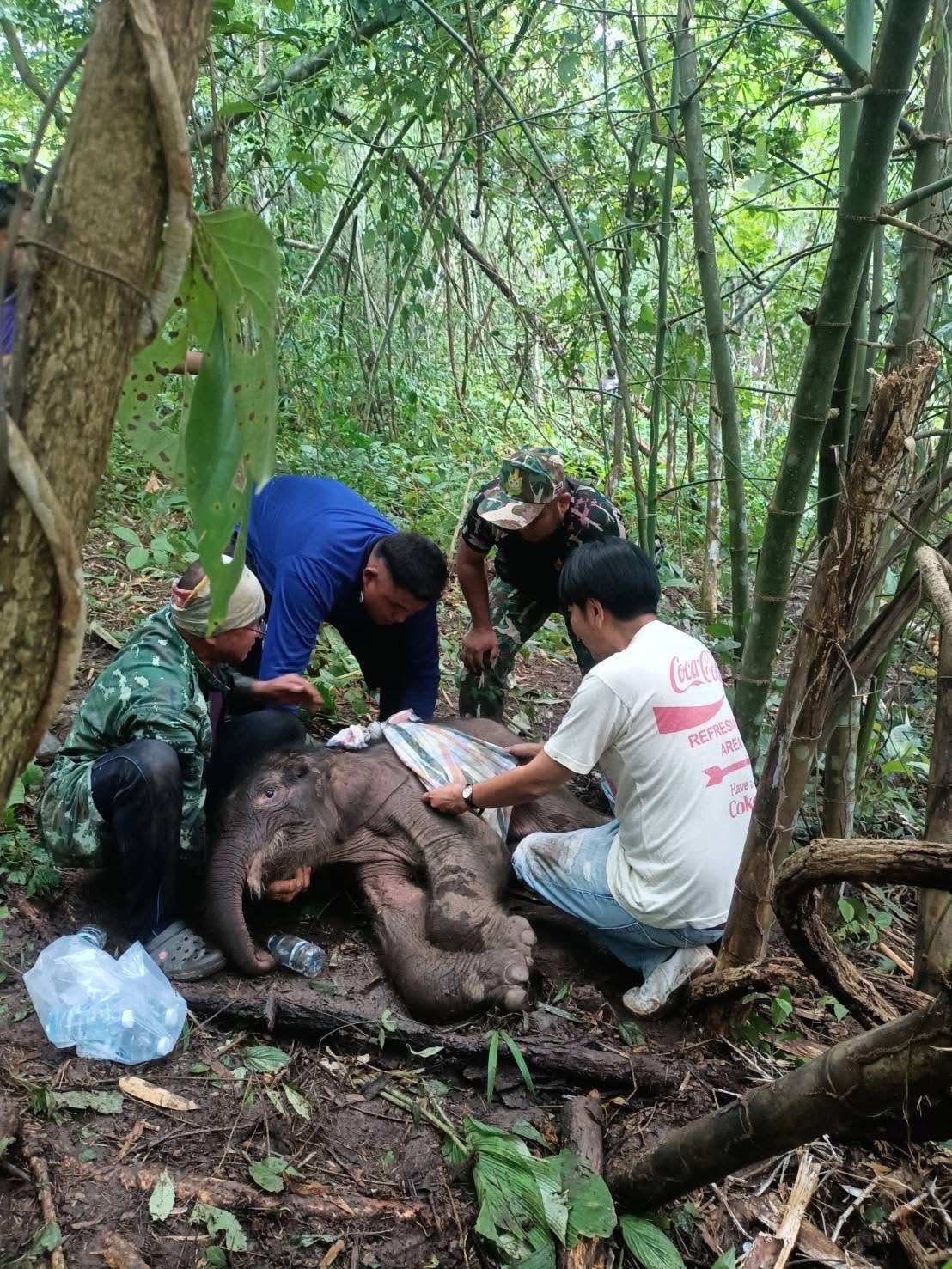
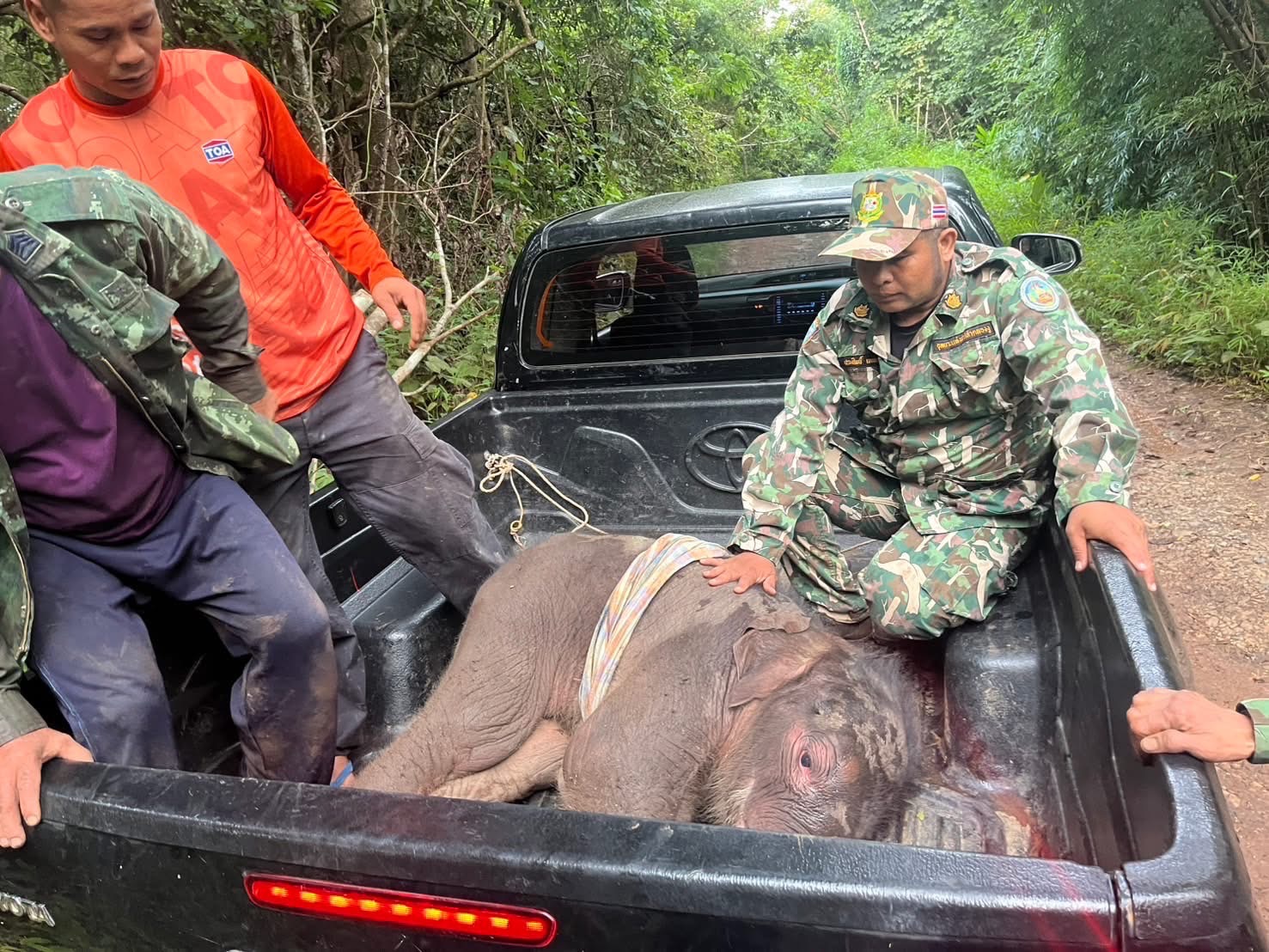
The rescue team, coordinated by Akkanit Klangpraphan, head of Lam Khlong Ngu National Park, transported the calf to the Forest Protection Unit for emergency treatment. Veterinarians discovered the baby suffers from physical weakness and a right hind leg injury preventing it from standing.
Elephant lover Kanchana Silpa-archa, advisor for the Chartthaipattana Party who is funding the rescue effort, said the calf initially received rice water and Enfagrow baby formula before being switched to more suitable Enfalac. Elephant mother’s milk has been donated from Wang Chang Lae Paniat elephant camp in Ayutthaya province.
Gradual Recovery
Care teams provided detailed updates on the calf’s progress throughout the night. At 3:00 AM, officials fed approximately 300ml of rice water after the calf had consumed a large amount at 11:30 p.m. The baby urinated 30-50ml, indicating normal bodily functions, though the injured leg remained unable to bear weight.
By 6:00 a.m., caregivers administered an additional 600-700ml of milk. The calf showed improving strength and could attempt sitting up independently, with staff helping maintain proper positioning to prevent bloating from prolonged lying.
Ongoing Treatment
Despite multiple attempts to stand, the calf’s hind legs cannot yet support its weight. Veterinarians continue assessing the right leg injury and developing treatment plans to help the elephant eventually walk and move normally.
The delicate rescue highlights the challenges facing Thailand’s wild elephant population, where mothers sometimes must make difficult survival decisions that leave vulnerable offspring requiring human intervention.
Officials emphasized that collecting and transporting elephant mother’s milk requires precise hygiene and temperature control, as any mistakes could prove fatal to the recovering calf.
Later, at 7:00 p.m. Monday, baby elephant Khao Tom was transported to the Bueng Chawak Wildlife Management Development Center in Suphan Buri Province, where she is under the care of veterinarian Dr. Phatthraphon Mani-on, Head of Wildlife Health Management at the Wildlife Conservation Office.
He posted a video with the caption: ‘We’ve arrived at our destination. She’s acting like a child playing in the car, flapping her ears back and forth, with people taking care of her.
______________