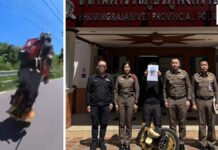



































CHIANG MAI, 16 January 2026 — Immigration police in Thailand’s northern city of Chiang Mai have arrested two Chinese and a Thai woman accused of acting as a nominee in the illegal operation of a luxury hotel, while a third Chinese suspect remains at large, authorities said.
Chiang Mai Immigration officers executed court warrants to arrest two Chinese investors, identified as Mr. Ma and Mr. Mi, at a four-star hotel on Chang Klan Road in the city centre. A Thai woman, identified as Ms. Jin, was also arrested for allegedly acting as a nominee shareholder and manager. Each suspect faces multiple charges.
Police said a fourth suspect, Ms. Ma, the Chinese wife of one of the investors, fled to China before the arrests and is still being sought.
Pol. Lt. Col. Sutheethep Phonruenimit, an immigration inspector leading the operation, said investigators had been tracking the case since August 2025. Evidence showed the hotel, which has 22 rooms, was effectively controlled by Chinese nationals despite Thai law restricting foreign ownership and operation of certain businesses.
According to investigators, Ms. Jin held a 55.56% stake in the company, while Mr. Ma and Mr. Mi each held 22.22%, with a total investment of 4.5 million baht. Although management positions were changed several times, police said the Chinese investors remained in control.
Financial records showed the hotel earned about 400,000 baht from guest stays and an additional 1.5 million baht from travel agencies, with funds transferred to the bank account of Ms. Ma. Police said the financial trail supported allegations of nominee arrangements.

A complaint was filed with Chiang Mai City police on 14 November 2025. After gathering witness testimony, documents and financial evidence, the Chiang Mai Provincial Court issued arrest warrants on 8 January 2026.
Maj. Gen. Sarawut Khon Yai, commander of Immigration Division 5, said similar violations were widespread, particularly in the tourism sector. He warned Thai nationals against acting as nominees and urged foreign investors to conduct business legally.
“If foreigners want to do business in Thailand under the law, the country welcomes them,” he said. “But nominee arrangements cause money to flow out of the country and violate laws that reserve certain occupations for Thai nationals.”
In a separate case, Chiang Mai immigration officers and provincial employment officials arrested a Japanese man for working without a permit after social media posts showed him selling homemade matcha ice cream outside a temple in Hai Ya subdistrict.
The suspect admitted he was staying in Thailand on a non-immigrant O visa based on marriage to a Thai national and had not applied for a work permit. He was handed over to investigators at Chiang Mai City police station for legal proceedings.