

































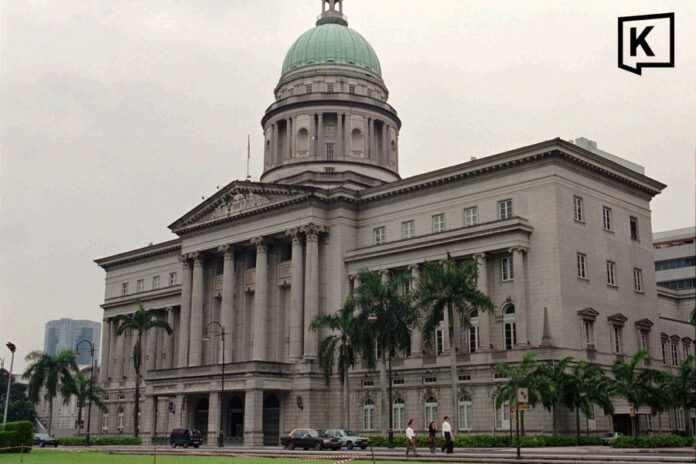
SINGAPORE — 15 July 2026, Singapore’s High Court has ordered Bloomberg and one of its reporters to pay S$460,000, or about 11.6 million baht, in damages to two government ministers who sued over an article about their luxury property transactions.
Coordinating Minister for National Security K Shanmugam and Manpower Minister Tan See Leng filed the defamation lawsuit against Bloomberg and reporter Low De Wei over an article published in December 2024.
Bloomberg maintained that the report did not accuse either minister of wrongdoing and said their transactions were included as newsworthy examples of a broader trend in Singapore’s luxury property market.
However, High Court judge Audrey Lim found that an ordinary reader would understand the article as implying that the ministers had used existing regulations to conduct their property transactions in a non-transparent manner and avoid scrutiny, including possible scrutiny related to money laundering.
The judge said those implications were serious and directly harmed the ministers’ integrity, character and professional reputations.
The disputed article, titled “Singapore Mansion Deals Are Increasingly Shrouded in Secrecy,” examined methods used by some wealthy buyers to obscure their ownership of Good Class Bungalows, a tightly regulated category of luxury homes in Singapore.
It discussed the use of trusts, companies and transactions that were not publicly recorded through property caveats, making it more difficult to identify the parties involved.
The article reported that Shanmugam had sold a Good Class Bungalow for S$88 million, or about 2.2 billion baht, to an unnamed buyer through a trust.
It also reported that Tan had purchased a bungalow for approximately S$27 million, or about 688 million baht, through a non-caveated transaction. He was listed alongside several other public figures who had purchased luxury properties through similar arrangements.
During the trial in April, the ministers argued that their inclusion in the article unfairly associated their property dealings with wider concerns raised in the report about secrecy, a lack of transparency and money laundering.
Bloomberg and Low argued that the article did not suggest the ministers had acted improperly and accused the claimants of applying the most defamatory possible interpretation to the report.
They also said the article had undergone extensive research and verification and that the reporter had repeatedly sought comments from the ministers before publication.
Bloomberg News editor-in-chief John Micklethwait said the organisation was “very disappointed” by the ruling but would respect the court’s decision.
“We argued at trial that our reporting was accurate and served an important public interest,”
he said, adding that Bloomberg continued to believe the ministers had imposed an “extremely strained meaning” on the article.
The court also ordered the article to be removed from Bloomberg’s website following the ruling on Tuesday.
Singaporean authorities had previously ordered Bloomberg to attach a correction notice to the report under the Protection from Online Falsehoods and Manipulation Act, commonly known as POFMA.
The law, introduced in 2019, allows the government to require correction notices on online material it considers false. Critics have argued that it can be used against reporting and commentary critical of the government.
Bloomberg complied with the order but added that it was publishing the government’s notice under threat of sanction and continued to stand by its reporting.
Correction notices were also issued to other outlets that shared the Bloomberg article or published commentary about it.
Singapore’s political leaders have repeatedly brought successful defamation cases against local critics and foreign media organisations, arguing that legal action is necessary to defend their reputations. Critics, however, say such lawsuits and correction orders can discourage scrutiny of public officials.