






























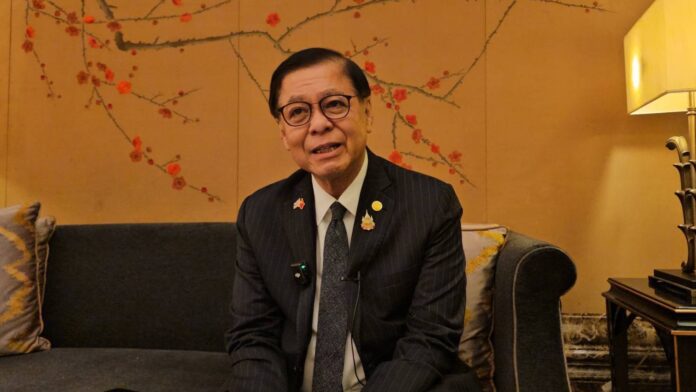
BEIJING, China — Thailand’s Deputy Prime Minister and Foreign Minister Sihasak Phuangketkeow said Cambodia’s decision to pursue compulsory conciliation under the United Nations Convention on the Law of the Sea (UNCLOS) has undermined bilateral trust and made negotiations over the two countries’ land border increasingly difficult.
Speaking in Beijing on Monday, Sihasak said Thailand had proposed during a meeting between the two countries’ leaders on the sidelines of the ASEAN Summit in Cebu that all outstanding issues be resolved through bilateral dialogue to build mutual trust.
Instead, he said, Cambodia chose to move forward with compulsory conciliation over maritime boundary disputes rather than engaging in direct talks first.
“At this point, it has effectively closed the door to discussions on the land border. That makes things much more difficult,” Sihasak said.
He noted that UNCLOS provides several dispute-settlement mechanisms, including voluntary conciliation, and said compulsory conciliation should not have been pursued before both sides had exhausted bilateral negotiations.
Sihasak welcomed China’s offer to facilitate dialogue between Thailand and Cambodia if needed, but stressed that border issues should ultimately be resolved directly between the two countries.
“We appreciate China’s goodwill, but this is a matter that Thailand and Cambodia must discuss directly,” he said.
He added that China could play a constructive role by encouraging Cambodia to honor the commitment made in Cebu to resolve disputes through bilateral dialogue while maintaining a neutral position.
Sihasak also said Prime Minister Anutin Charnvirakul had conveyed Thailand’s appreciation to Chinese President Xi Jinping for Beijing’s neutral approach to Thai-Cambodian relations.
However, he expressed concern over Cambodian media coverage of China’s delivery of tanks to Cambodia, saying the reports came at a sensitive time when the ceasefire remains fragile and could further complicate relations between the two neighbors.
On Chinese investment in Thailand, Sihasak said Thailand welcomes quality, sustainable investment that complies with Thai law. While acknowledging that so-called “grey businesses” represent only a small portion of overall Chinese investment, he said such activities have affected public sentiment and urged China to address the issue.