
























THE HAGUE, the Netherlands — 18 October 2026, Thailand has reiterated that maritime boundary delimitation must remain the sole focus of its conciliation process with Cambodia under the United Nations Convention on the Law of the Sea (UNCLOS), while urging both countries to adopt confidence-building measures to prevent further tensions.
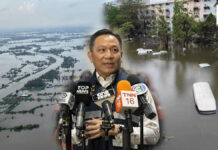
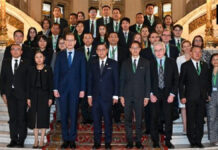
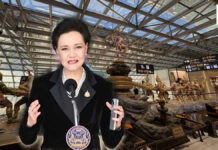
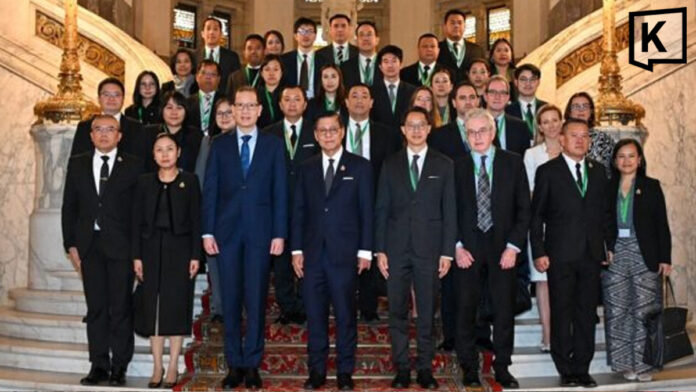
Deputy Prime Minister and Foreign Minister Sihasak Phuangketkeow made the remarks on 18 October after the second meeting of the Thailand-Cambodia Conciliation Commission, held from 14-18 October at the Permanent Court of Arbitration (PCA) at the Peace Palace in The Hague.
Sihasak, who represented Thailand, said the discussions focused on legal and technical issues. The commission had asked both sides to present evidence and explain the principles underpinning their claims concerning the continental shelf and territorial sea boundaries.
He stressed that Thailand’s position was based on international law under UNCLOS and that the process should deal exclusively with maritime boundary delimitation. Both countries had presented their respective positions to help the commission better understand their claims, which it would now consider further.
Alongside the legal discussions, the commission also considered a draft document outlining confidence-building measures intended to improve relations and help the process move forward.
Sihasak said the proposed measures included refraining from accusations or statements in international forums that could undermine the conciliation process, as well as avoiding actions that might trigger confrontations between the two countries.
Thailand supported these measures, he said, adding that it had already been following this approach. He also reiterated that both countries had previously agreed to seek bilateral solutions to their disputes first, in line with international law.
As examples of Thailand’s efforts to build trust, Sihasak cited its decision to send a senior Royal Thai Police representative to a meeting on combating online scam operations in Cambodia. Thailand also plans to send a director-level representative to a forthcoming summit of French-speaking countries hosted by Cambodia, despite Thailand participating only as an observer.
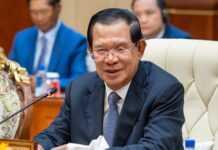
Asked about Cambodia’s continued accusations against Thailand in international forums, including remarks by the Cambodian prime minister during the commission’s meeting, Sihasak said the atmosphere depended on Cambodia’s willingness to honour their discussions.
He said both sides had repeatedly discussed the need to avoid using international platforms to attack one another, adding that Thailand would continue cooperating with the conciliation process in the hope of finding a way forward.
Sihasak said further discussions on maritime boundaries would be necessary. The commission might request additional information or eventually make recommendations, which Thailand remained open to considering while protecting its national interests and sovereignty.
He also clarified that the PCA’s role in facilitating the process did not make it a case before the International Court of Justice (ICJ), despite the institutions being housed in the same building. The conciliation process is separate from the ICJ and is not a binding international court proceeding.
Instead, he said, it seeks an equitable resolution based on international law through conciliation rather than a binding judicial ruling.