





























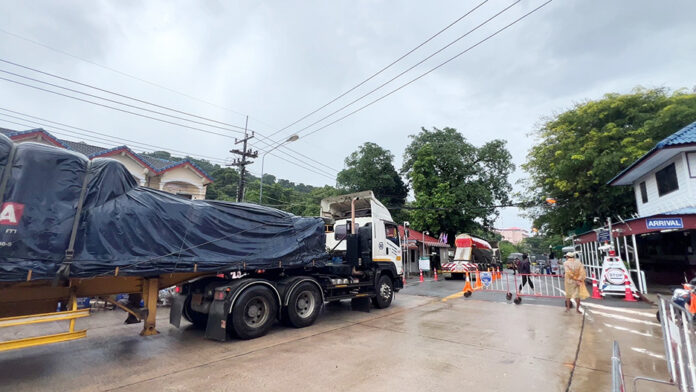
TRAT — Border traders and businesses along the Thai-Cambodia frontier in Chanthaburi and Trat provinces are calling for authorities to ease restrictions and reopen checkpoints to alleviate severe economic losses. Daily trade volumes have plummeted from 100 million baht ($3.15 million) to zero, with businesses warning they must consider both security and economic fronts as Chinese and Vietnamese goods flood the market. If the situation persists, several companies will be forced to lay off workers.
Japanese private sector representatives have made clear that the current situation is impacting investment in “Thailand Plus One” projects – a strategy where companies use Cambodia as a manufacturing base to complement their Thai operations. However, Thai military officials remain firm on security conditions and refuse to allow checkpoint reopenings.
Nationalist Sentiment Blocks Progress
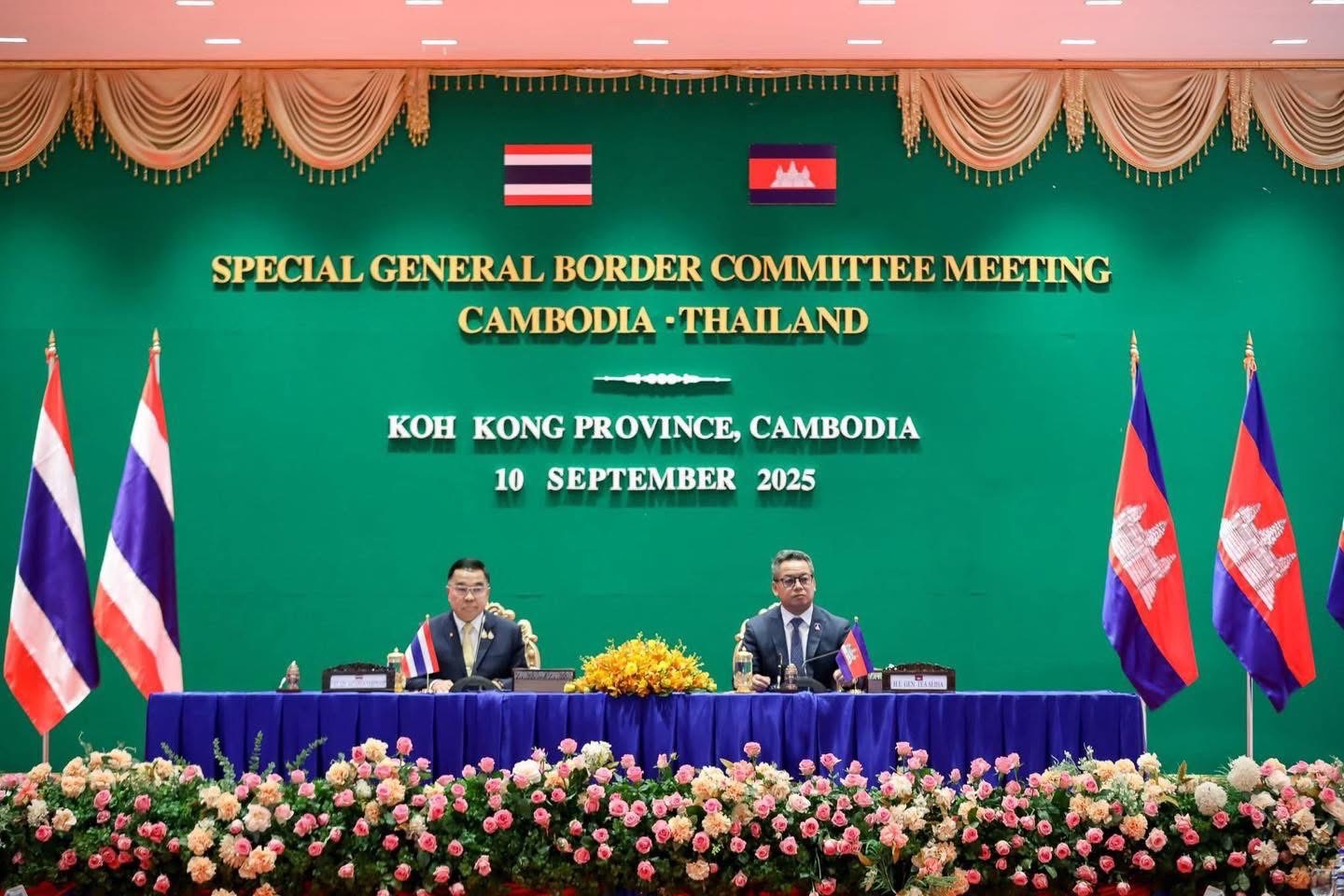
The first special session of the Thailand-Cambodia General Border Committee (GBC) was held in Koh Kong Province, Cambodia on September 10, 2025. The meeting addressed key economic issues that gave border business groups in Chanthaburi and Trat provinces hope for relaxed checkpoint policies for goods transport, as these areas are in lower-tension zones compared to other border points. Japan, which has investments in the region, supports the restoration efforts.
However, nationalist sentiment on social media and the stance of Thai military leaders have blocked the implementation of these negotiations, leaving business groups waiting indefinitely.
Looking Beyond Security Concerns
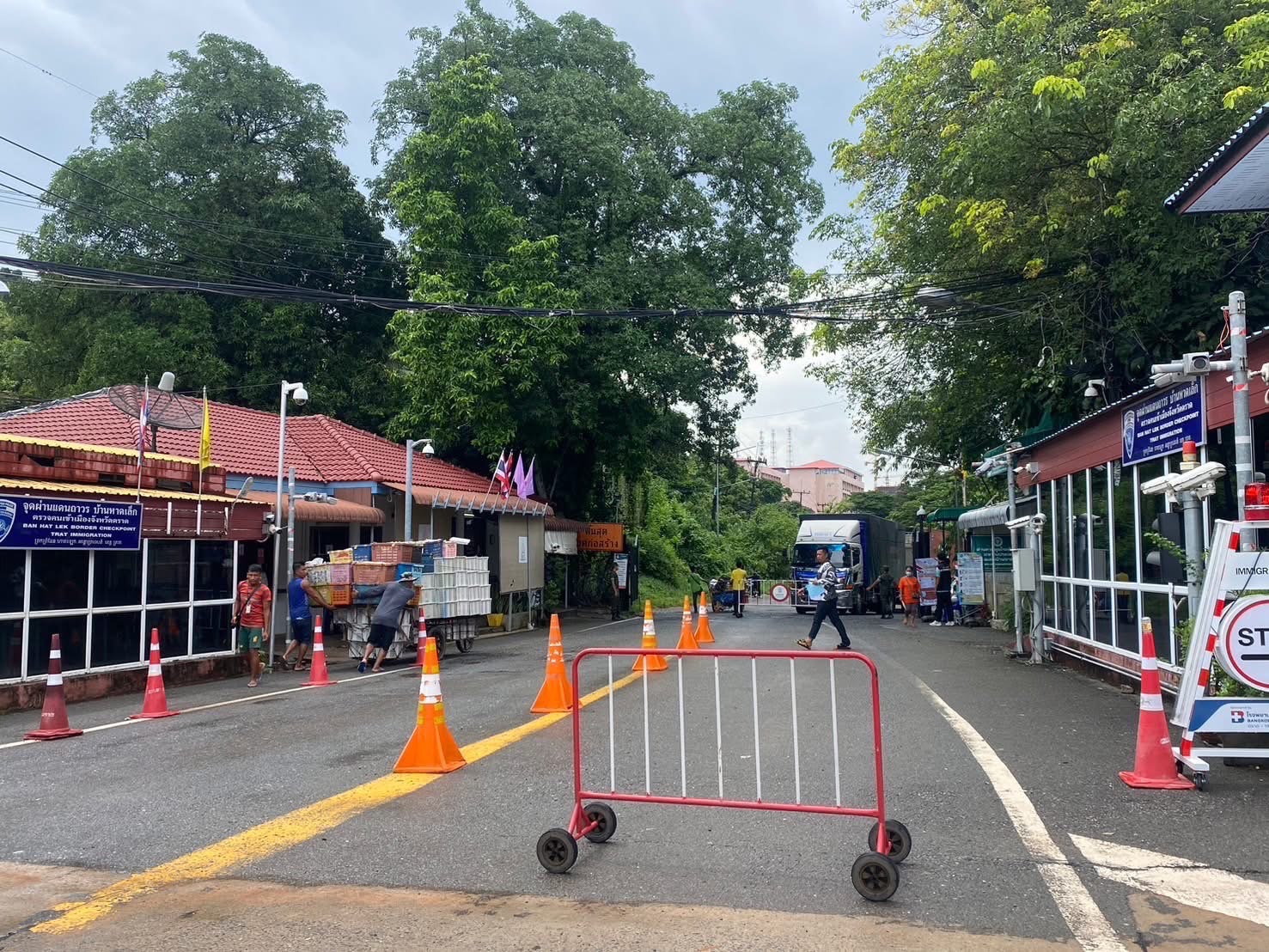
Jatupat Ruksahakul, Vice President of the Trat Province Border Trade Association and exporter to Cambodia, told Prachachat Business that he supports reopening the checkpoints to provide some relief for operators. Since the permanent closure of the Ban Hat Lek border checkpoint in Hat Lek sub-district, Khlong Yai district, Trat province nearly two months ago, trade and export businesses have seen their income drop to zero from the previous daily revenue of nearly 100 million baht ($3.15 million).
“Society needs to use reason to solve problems and look beyond security dimensions. Border trade export value exceeds 100 billion baht, while imports are less than 50 billion baht. The current impact is that Thai goods are being replaced by Chinese and Vietnamese products. The resolution that can be agreed upon should be negotiated in the JBC forum, where consideration for opening goods transport should allow products with proper transportation permits,” Jatupat said.
Chinese and Vietnamese Goods Replace Thai Products
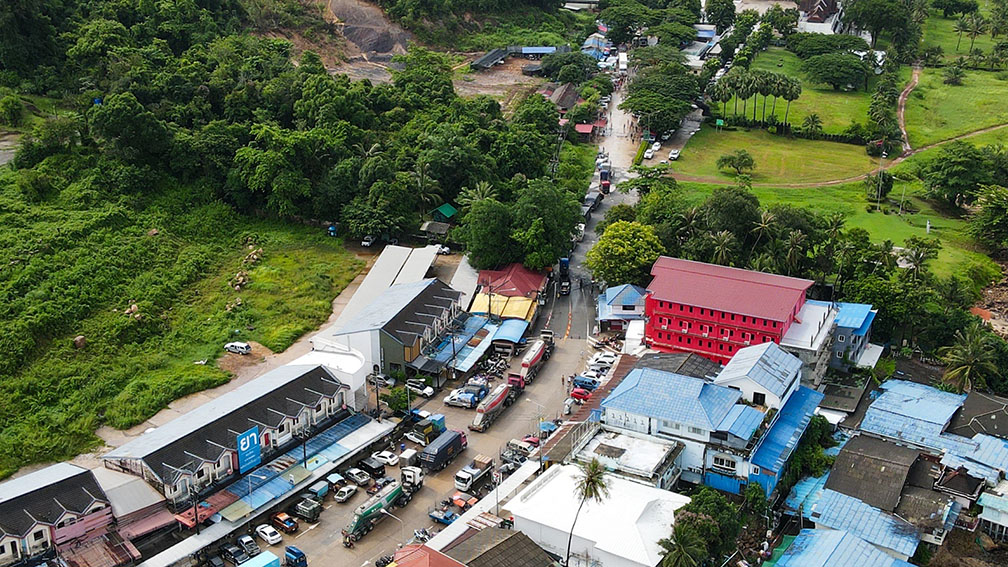
Export sources to Cambodia in Trat province revealed to Prachachat Business that since the permanent Hat Lek border crossing closed at the end of July, middlemen traders who normally buy goods from various factories in Thailand and export them to cities across Cambodia have been severely affected, unable to export goods for over a month.
Sales have dropped to zero from the usual monthly revenue of tens of millions of baht. Goods must be stored in warehouses because alternative transport routes through Laos and Vietnam are not viable due to extremely high additional costs, including container rental at 50,000 baht per trip and increased transportation fees. If the Hat Lek checkpoint were reopened, cross-border transport to customers would be closer and more convenient, as the customer market is located in Koh Kong, Phnom Penh, and Sihanoukville.
Currently, the local Trat market cannot absorb the goods due to large quantities, and some beverages are specially formulated for Cambodian consumer preferences. These must compete with products already dominating the market. There are growing fears of permanently losing market share to China and Vietnam.
If the checkpoint closure extends another 3-4 months without exports, many operators, transport companies, and shipping firms will need to lay off workers, increasing unemployment rates.
70% Sales Loss Triggers Layoff Concerns
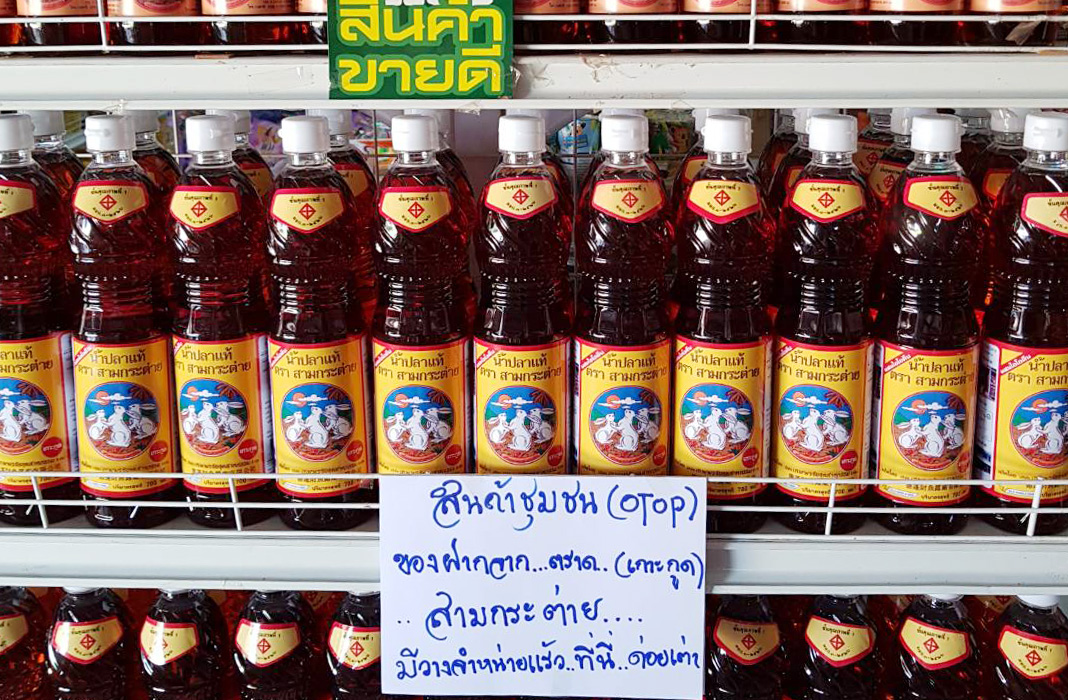
Tosapol Kruealoy, Managing Director of Theppornchaiutsahakam Company Limited in Trat province, manufacturer of Sam Kratai fish sauce, told Prachachat Business that reopening the Trat and Chanthaburi checkpoints would provide some relief for operators. Currently, 70% of fish sauce production was exported to Cambodia, but with exports completely halted, only 30% can be sold domestically. Production capacity that previously ran daily with existing old stock has been reduced to once every two weeks. If conditions remain like this for 3-4 months, worker layoffs will likely be necessary.
“The Sam Kratai brand fish sauce that was established in the Cambodian market has now been replaced by Vietnamese fish sauce, which has the advantage of lower costs and cheaper prices. It will take a long time to recover and rebuild customer confidence to return to consuming Thai products, especially given higher production costs compared to Vietnam. Cambodians have been consuming Vietnamese fish sauce for over two months now,” Tosapol said.
Japanese Investors Voice Investment Concerns
Meanwhile, on September 12, the Japan External Trade Organization (JETRO) website published results from the 30th Japan-Cambodia Public-Private Joint Conference held in Phnom Penh on September 3, 2025 to improve the business environment for Japanese companies and request reopening of land borders.
Japanese Ambassador to Cambodia Ueno Atsushi addressed the current land border closure with Thailand and called for early normalization of logistics. He pointed out that if the closure continues, Cambodia could lose its appeal as an investment destination as a “Thailand Plus One” location.
JBAC Chairman Koji Fukuhara also explained the economic losses faced by member companies, postponement of expansion plans, and the impact of production adjustments on Cambodian workers, calling for the resumption of border logistics.
Defense and Foreign Ministry Maintain Firm Stance
Despite mounting economic pressure, General Nattapol Nakpanich, Deputy Defense Minister and Acting Defense Minister, has issued orders that there will be no consideration of relaxing any goods transport if there is no significant progress in implementing agreements regarding: (1) withdrawal of heavy weapons from border areas, (2) joint mine clearance operations, and (3) concrete crackdown on scammers at a level that builds mutual trust.
Prime Minister Anutin Charnvirakul clearly stated on September 13 that the Thai-Cambodian border will reopen only when guns are no longer pointed at each other. He affirmed that this is not happening now and he must listen to the voice of the people.
______