
































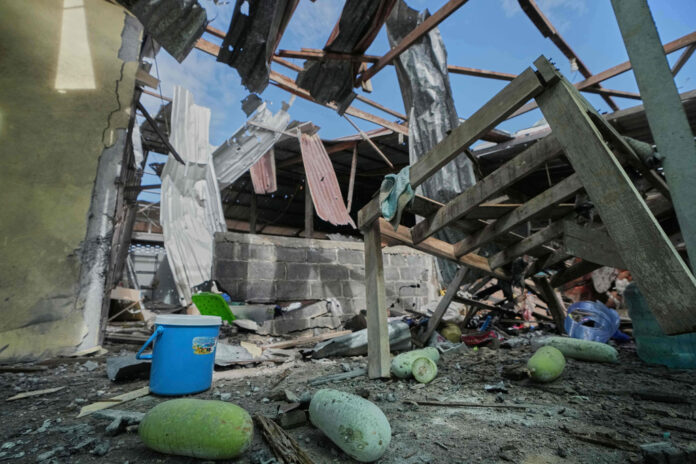
BANGKOK — Ongoing armed clashes between Thailand and Cambodia are eroding years of diplomatic progress and may jeopardize foundational agreements that govern the two countries’ border relations, Thai political scientist and security scholar Surachart Bamrungsuk warns in an assessment published by Matichon Weekly.
Surachart outlines six areas of concern that he says illustrate how the fighting, which began on December 7, is reshaping the strategic landscape and narrowing options for de-escalation.
Diplomatic Momentum Shattered
Surachart writes that before the latest hostilities, the bilateral environment had appeared cautiously optimistic. The Joint Boundary Commission (JBC) was expected to resume survey work early next year, with plans to chart a path toward resolving the Nong Jan and Nong Nha Kaeo boundary issues.
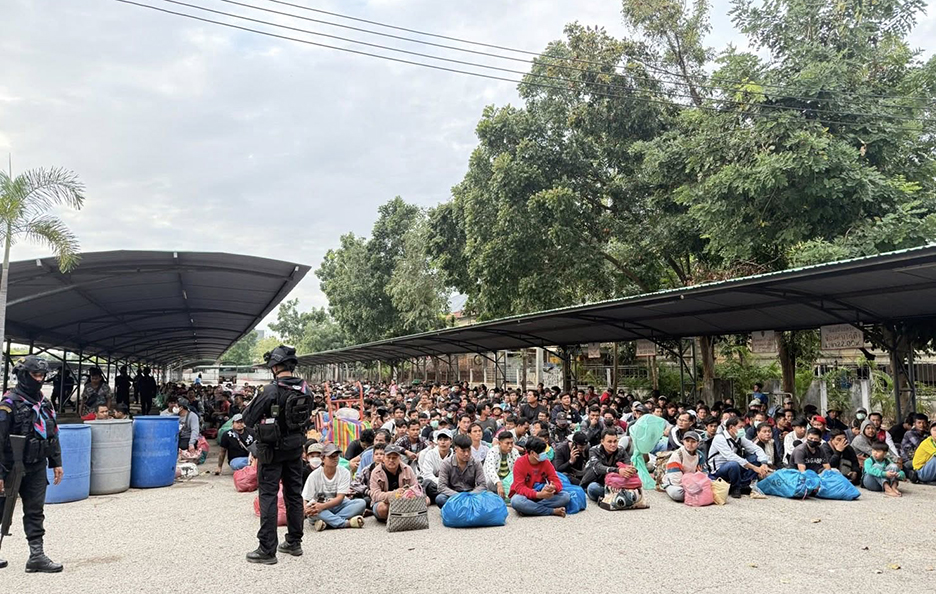
That progress has stalled, he says, leaving at least five unresolved issues with no visible path forward: the reopening of border crossings, cross-border trade, freight transit, the Thai goods market in Cambodia and the return of Cambodian migrant workers.
If the conflict continues, Surachart argues, the two memoranda of understanding that have long guided border management — the MOUs of 2000 and 2001 — are likely to become casualties as well. “There is no need for a referendum to issue their death certificates,” he writes.
Traditional Approaches No Longer Sufficient
Thailand’s long-standing strategy of relying on bilateral mechanisms to manage border disputes is now unrealistic, Surachart contends, because external actors and geopolitical factors increasingly shape the conflict.
He also challenges a common belief in Thai political and military circles that Thailand’s superior firepower can decisively defeat Cambodia. Cambodia’s military capabilities have expanded significantly since the 2011 border clashes, he notes, and the notion of completely incapacitating Cambodia’s forces is not feasible.
Even if Thailand achieved a battlefield victory, Surachart writes, it would not guarantee political submission by Cambodia. Thai leaders, he argues, must recognize the limits of military coercion. “Thailand is not Russia or Israel,” he says; it cannot expect to use overwhelming force without political and diplomatic consequences.
Such rhetoric may appeal to domestic nationalism but is unlikely to translate into strategic success.

Limits of Coercive Power
Surachart urges the Thai government to clearly define the political objectives of military action. Without a coherent strategy, he says, the use of force risks becoming detached from any meaningful political end state.
Thailand must also assess whether it possesses real leverage over Cambodia. Among the four pillars of national power — diplomacy, economy, military and information — Thailand’s advantage lies almost exclusively in the military domain. Cambodia can effectively challenge Thailand in diplomatic forums and global information spaces, while Thailand’s economic leverage is not structurally suited to coercion in this conflict.
International Narrative Not Favoring Thailand
In global media coverage, Surachart observes, Thai airstrikes have become the dominant images shaping international perceptions. The global narrative diverges sharply from Thailand’s self-assessment, which assumes that the international community will view the conflict primarily through Thailand’s lens.
He also cautions against overstating the significance of the Ottawa Convention meeting, where Thailand believes Cambodia is on the defensive. While Thailand can present its case, the forum cannot issue binding decisions and deliberations take time. Cambodia has already rebutted Thailand’s claims, and any conclusions reached would carry no legal force.
The more consequential venue, he says, is the UN Security Council, where Cambodia may appeal for international intervention or scrutiny of Thailand’s military actions. Whether Cambodia will take the issue to the Security Council or directly to the International Court of Justice remains uncertain.
Risks in Thailand’s Diplomatic Posture
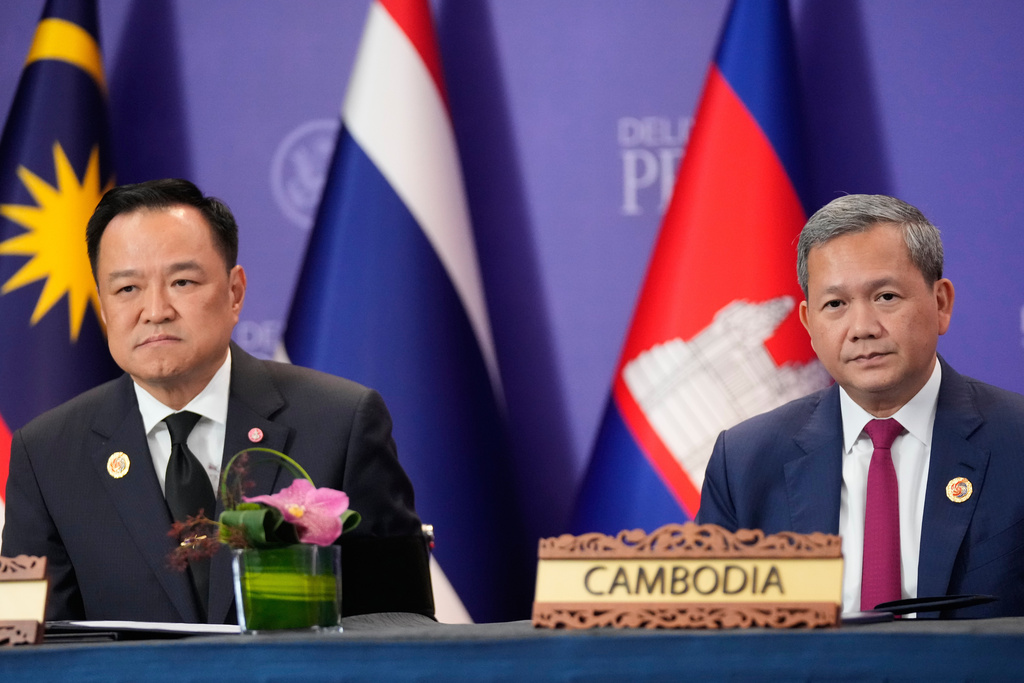
Surachart warns that Thailand should avoid a foreign-policy position that distances both the United States and ASEAN. Declaring an end to negotiations with Cambodia, he says, would cast Thailand as unwilling to pursue peaceful solutions and leave only the image of military force, which carries political risks.
He also notes that Thailand cannot ignore U.S. trade policy. A loss of U.S. market access, particularly amid heightened geopolitical tensions, would pose a significant economic threat. Thailand’s export dependence cannot be shifted solely to China, and communication with the U.S. Trade Representative remains stalled.
Inflaming nationalism and militarism may serve short-term political interests but undermines Thailand’s long-term strategic position, Surachart writes. Geography ensures that Thailand and Cambodia must continue to coexist; neither can escape the geopolitical realities that bind them.
Political Implications
The escalating conflict raises questions about whether Thailand’s political timetable will shift, including speculation over a possible dissolution of parliament. If elections occur amid wartime conditions, Surachart says, nationalist rhetoric is likely to dominate campaigns across all parties. dissenting voices will be marginalized, and the MOUs at the heart of the dispute are unlikely to be defended publicly.
Under such circumstances, Surachart warns, political actors may “ride the wave” of nationalism for electoral gain, narrowing space for reasoned debate and complicating future efforts to restore stability.
________________