




























25 C
Bangkok
Friday, June 19, 2026
Home Blog Page 1004

SCOPE strives to redefine lavish living with ‘international premium’ property schemes

SCOPE, an ultra-luxury real estate development firm, is moving with confidence to capture the international premium market with quality and distinction that will redefine housing development for years to come. The company has four projects in the heart of the city under development and planning, worth more than 15 billion Baht combined.

Two of them, SCOPE Langsuan and SCOPE Promsri, are scheduled for completion in the third quarter of 2022 and will likely signal a turning point in the country’s real estate industry.

Mr Yongyutt Chaipromprasith, Chief Executive Officer of SCOPE Co.,Ltd., said the company was established in 2019 with a mission to break away from typical housing development by focusing on the design and construction of world-class quality residences. The objective is to make SCOPE a lifestyle company that develops projects that deliver on the ‘international premium’ proposition, by focusing on the needs of the most knowledgeable and well-travelled, by responding to tastes and preferences that are not just limited to the local mainstream, and by focusing on presenting quality and true differentiation to the market.
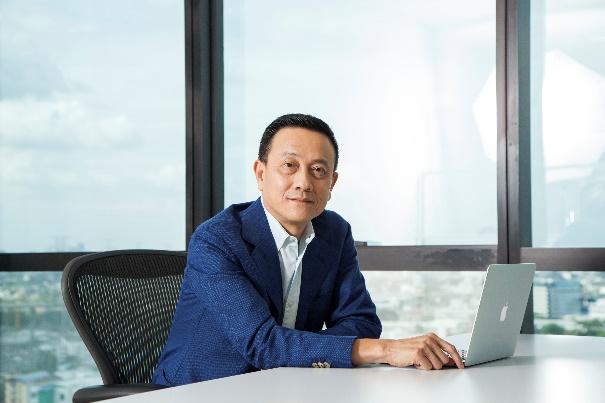
image3 8

“We aspire to make SCOPE a lifestyle marque beyond a real estate brand. We take into account the lifestyle and services that meet the needs and aspirations of our clients. So rather than creating spaces for people to live, we strive to provide a holistic and elevated living experience ” he explained. All these considerations will come to light when SCOPE Langsuan and SCOPE Promsri are completed in 2022 with residents moving in from the third quarter onwards, which will be the first time that customers will be able to truly live the SCOPE experience, he added. SCOPE Langsuan and SCOPE Promsri cost nine billion and 1.35 billion baht respectively, to develop.  The company expects more than five billion baht in total revenue from the transfers of the property deeds within 2022 alone.  

SCOPE plans to launch its third project on Sukhumvit Road, next to the Thonglor BTS station, worth 2.5 billion baht, this year. With only 20 available units in the entire residence, each unit is priced at an average of 140 million Baht. All interior design and architectural design consultation are by Thomas Juul-Hansen, a world-class architect and interior designer based in New York.

The company expects more than 4.5 billioon baht in presales from the three schemes this year, and in 2023 SCOPE plans to reveal its next project on Sukhumvit 23, valued at over 2.2 billion Baht.

Mr. Yongyutt noted SCOPE will highlight its presence in the market place this year with the unveiling of The Langsuan Clubhouse, part of SCOPE Langsuan project. This private residential clubhouse, covering an area of over 2,500 square metres, is designed by Thomas Yul-Hansen. The cost of the furniture there alone is worth more than 100 million baht, and within in lies a 25seat cinema with the best sound system and The Langsuan Lounge, a rooftop terrace and lounge with standards superior to that of  a 6star hotel.

image2 8

Meanwhile, the 8storey SCOPE Promsri is aimed to be the best condominium project in Thailand in terms of quality and design, and it is the first project in Asia to collaborate with the French global furniture brand Ligne Roset to design and manufacture bespoke pieces for this particular project.

The SCOPE chief executive said even though the Covid-19 pandemic has slowed down project construction, the company has done quite well in terms of sales.            I think that products that focus on quality and differentiation like our SCOPE Langsuan and SCOPE Promsri projects are virtually unaffected [by Covid-19] when it comes to sales.”

And the buyers of SCOPE are those with real demand, which means that they are buying for real living, not buying for speculation, and they form a group that has real and unmatched purchasing power What really matters most for me is to take good care of everyone, be it our employees, customers, business partners, suppliers, the society and the environment.”
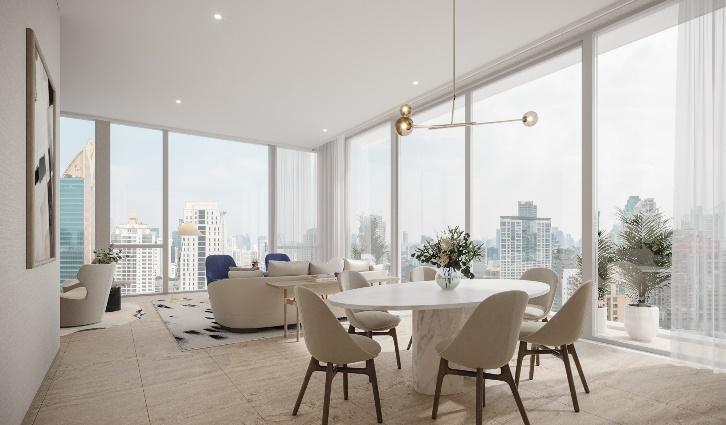
image5 6

 “I have always believed in doing business my way, that regardless of the situation the products that I put into the market are those that are of the highest quality and made with intention. Therefore, everything must be perfectly balanced and driven in ways to create quality work.”

 SCOPE will embark on more projects on the ‘international premium’ level at preferred locations in the future to create continuous growth for the company.  In addition, the company will launch a hospitality management business that is beyond the development of real estate projects. That venture reflects the SCOPE’s vision as a lifestyle company that does not only develop residential projects but also strives to create a living experience for the residents of the project.

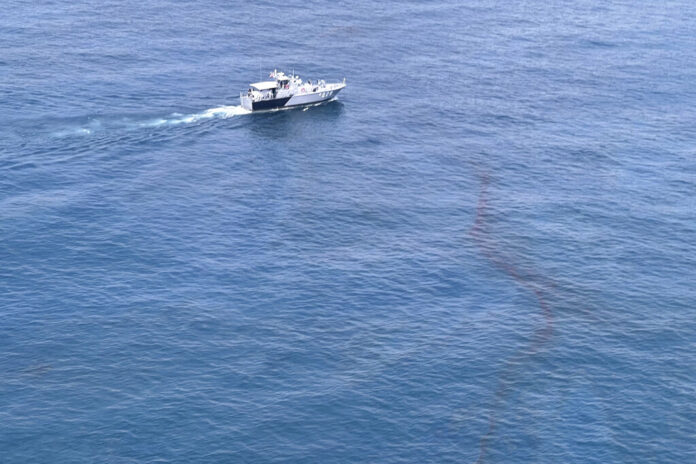
image4 7

Advertisement

Thailand Deploys More Assets as Oil Slick Threatens Beaches

In this photo released by the Royal Thai Navy, an aerial view from a navy plane shows a large oil spill off the coast of Rayong, eastern Thailand, Thursday, Jan. 27, 2022. Photo: Royal Thai Navy via AP

BANGKOK (AP) — An aircraft from a company specializing in recoveries from oil spills arrived Thursday from Malaysia to join an urgent effort to clean up an oil slick before it could hit beaches in eastern Thailand, officials said.

The C-130 joined other planes, ships and a helicopter deployed by the Thai navy to contain the damage from the Star Petroleum Refining Public Company’s oil that leaked Tuesday night from a mooring station in the Gulf of Thailand.

Information from Thailand’s Geo-Informatics and Space Technology Development Agency suggested that prevailing winds could blow the oil slick to major beaches in Rayong province or Samet Island by Friday evening if not cleaned up before then, said Thai navy’s Rear Adm. Wichanu Thupa-ang.

He said the agency’s report estimated that the slick covered 11.65 square kilometers (4.5 square miles).

Star Petroleum Refining estimated that a total of 20-50 tons of oil had been spilled. It said in a statement that the amount of oil in the slick has been reduced to 5.3 tons since dispersant sprays were deployed by aircraft Wednesday. Some initial estimates of the amount of spilled oil were much higher.

Star Petroleum said specialists from the company Oil Spill Response Ltd arrived with the C-130 aircraft.

Wichanu said the largest part of the oil slick would be contained by booms within an area marked by buoys and then sucked by skimmers into holding tanks and properly disposed of.

At the same time, the oil headed toward the beach would also be contained and redirected to the open sea, he said.

Pornsri Sutthanarak, deputy director-general of the Marine and Coastal Resources Department, said that if the oil reaches the coast, it might affect 59 acres of coral and 118 acres of seagrass, causing environmental damage that would take time to rehabilitate.

___

Story: Chalida Ekvitthayavechnukul.

Advertisement

COVID Hits One of the Last Uninfected Places on the Planet

FILE - In this March 30, 2004, file photo, Tarawa atoll, Kiribati, is seen in an aerial view. Photo: Richard Vogel / AP File)

WELLINGTON, New Zealand (AP) — When the coronavirus began spreading around the world, the remote Pacific archipelago of Kiribati closed its borders, ensuring the disease didn’t reach its shores for nearly two full years.

Kiribati finally began reopening this month, allowing the Church of Jesus Christ of Latter-day Saints to charter a plane to bring home 54 of the island nation’s citizens. Many of those aboard were missionaries who had left Kiribati before the border closure to spread the faith abroad for what is commonly known as the Mormon church.

Officials tested each returning passenger three times in nearby Fiji, required that they be vaccinated, and put them in quarantine with additional testing when they arrived home.

It wasn’t enough.

More than half the passengers tested positive for the virus, which has now slipped out into the community and prompted the government to declare a state of disaster. An initial 36 positive cases from the flight had ballooned to 181 cases by Friday.

Kiribati and several other small Pacific nations were among the last places on the planet to have avoided any virus outbreaks, thanks to their remote locations and strict border controls. But their defenses appear no match against the highly contagious omicron variant.

“Generally speaking, it’s inevitable. It will get to every corner of the world,” said Helen Petousis-Harris, a vaccine expert at the University of Auckland in New Zealand. “It’s a matter of buying enough time to prepare and getting as many people vaccinated as possible.”

Only 33% of Kiribati’s 113,000 people are fully vaccinated, while 59% have had at least one dose, according to the online scientific publication Our World in Data. And like many other Pacific nations, Kiribati offers only basic health services.

Dr. Api Talemaitoga, who chairs a network of Indigenous Pacific Island doctors in New Zealand, said Kiribati had only a couple of intensive care beds in the entire nation, and in the past relied on sending its sickest patients to Fiji or New Zealand for treatment.

He said that given the limitations of Kiribati’s health system, his first reaction when he heard about the outbreak was, “Oh, my lord.”

Kiribati has now opened multiple quarantine sites, declared a curfew and imposed lockdowns. President Taneti Maamau said on social media that the government is using all its resources to manage the situation, and urged people to get vaccinated.

The Church of Jesus Christ of Latter-day Saints, based in the U.S. state of Utah, has a strong presence in many Pacific nations, including Kiribati, where its 20,000 members make it the third-largest Christian denomination. The church has about 53,000 missionaries serving full time around the world, working to convert people.

The pandemic has presented challenges for their missionary work, which is considered a rite of passage for men as young as 18 and women as young as 19.

As the pandemic ebbed and flowed, the church responded. It recalled about 26,000 missionaries who were serving overseas in June 2020, reassigning them to proselytize online from home before sending some back out into the field five months later.

When COVID-19 vaccines became widely available in many countries in April 2021, church officials encouraged all missionaries to get inoculated and required it of those serving outside their home countries.

Church spokesperson Sam Penrod said the returning missionaries remained in quarantine, were cooperating with local health authorities and would be released from their service upon completion of their quarantine.

“With Kiribati’s borders being closed since the onset of the pandemic, many of these individuals have continued as missionaries well beyond their 18 to 24 months of anticipated service, with some serving as long as 44 months,” he said.

Before this month’s outbreak, Kiribati had reported just two virus cases: crew members on an incoming cargo ship that ultimately wasn’t permitted to dock.

But the Kiribati charter flight wasn’t the first time missionaries returning home to a Pacific island nation tested positive for COVID-19.

In October, a missionary returning to Tonga from service in Africa was reported as the country’s first — and so far only — positive case after flying home via New Zealand. Like those returning to Kiribati, he also was vaccinated and quarantined.

Tonga is desperately trying to prevent any outbreaks as it recovers from a devastating volcanic eruption and tsunami earlier this month. The nation of 105,000 has been receiving aid from around the world but has requested that crews from incoming military ships and planes drop their supplies and leave without having any contact with those on the ground.

“They’ve got enough on their hands without compounding it with the spread of COVID,” said Petousis-Harris, the vaccine expert. “Anything they can do to keep it out is going to be important. COVID would be just compounding that disaster.”

In the long term, however, it is going to be impossible to stop the virus from entering Tonga or any other community, Petousis-Harris said.

Nearby Samoa, with a population of 205,000, is also trying to prevent its first outbreak. It imposed a lockdown through until Friday evening after 15 passengers on an incoming flight from Australia last week tested positive.

By Thursday, that number had grown to 27, including five front-line nurses who had treated the passengers. Officials said all those infected had been isolated and there was no community outbreak so far.

While the incursion of the virus into the Pacific has prompted lockdowns and other restrictions, there were signs that not all traditional aspects of island life would be lost for long.

“Government has decided to allow fishing,” Kiribati declared on Thursday, while listing certain restrictions on times and places. “Only four people will be allowed to be on a boat or part of a group fishing near shore.”

___

Story: Nick Perry and Sam Metz. Metz reported from Salt Lake City.

Advertisement

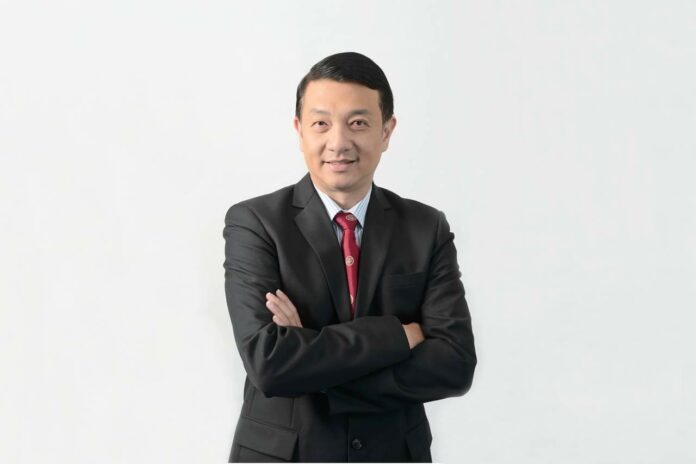
CP Foods to phase out coal within this year and promote green energy

Charoen Pokphand Foods Public Company Limited (CP Foods) will end coal use for its operations in Thailand within 2022 and transition towards greener and sustainable energy sources from Biomass, Biogas, Solar energy and etc. The shift from coal to renewable energy sources will help the company achieve energy optimization and reduce greenhouse gas emissions by more than 70,000 tons of carbon dioxide annually.

Peerapong Krinchai, Executive Vice President – Corporate Engineering and Chairperson of the Working Group on Climate Change Management Water and Waste of CP Foods, said, CPF Coal Free 2022 initiative has been implemented with an aim to eliminate coal usage in its manufacturing operations across Thailand within this year and replacing its with renewable and green energy source such as biomass energy from waste materials including wood chips, sawdust, corncobs, etc.

At present, all 12 of the company’s livestock feed mills have stopped using coal for producing steam. Meanwhile, 2 aqua-feed mills and a duck-fowl feather processing plant are currently phasing out the coal fuel consumption by the fourth quarter of this year.

image3 7

“CP Foods commits toward sustainable green business. We strive to efficient use of resources in line with the circular economy approach. This effort will reduce production costs and the use of fossil fuels which will, in turn, help reducing greenhouse gas emissions and mitigating global warming. Phasing this out will also help CP Foods to achieve the goal of a net zero carbon emissions organization that was set by CP Foods to support the United Nations Sustainable Development Goals (SDGs),” said Peerapong.

CP Foods has a goal to drive towards a Low-carbon Organization, with a target to reduce direct and indirect greenhouse gas emissions per unit of production by 25% in 2025 compared to the base year of 2015. To reach this sustainability target, CP Foods has promoted the use of renewable energy such as biomass energy, biogas energy and solar energy, which currently accounts for 26% of the total energy consumption, enabled the company to reduce greenhouse gas emissions by 575,000 tons of carbon dioxide equivalent.  

image2 7

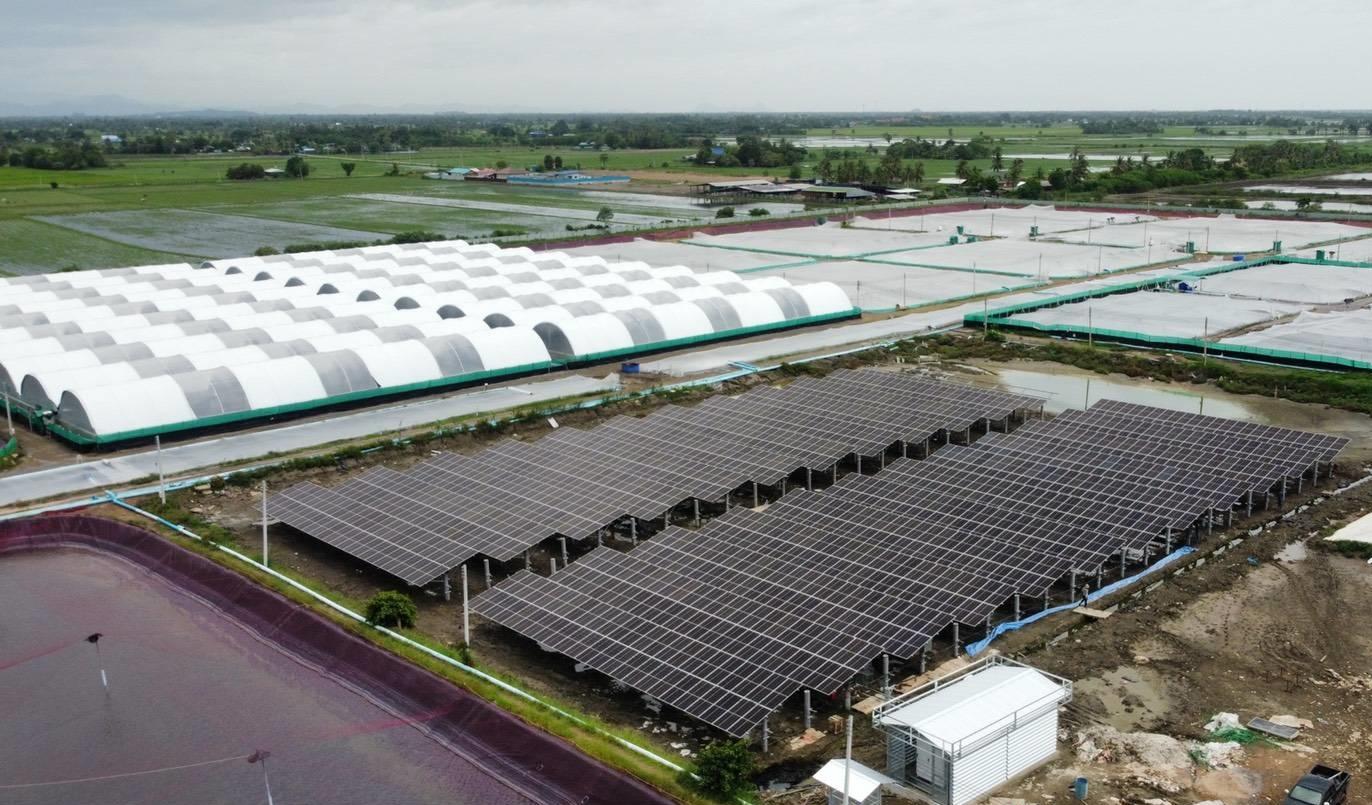
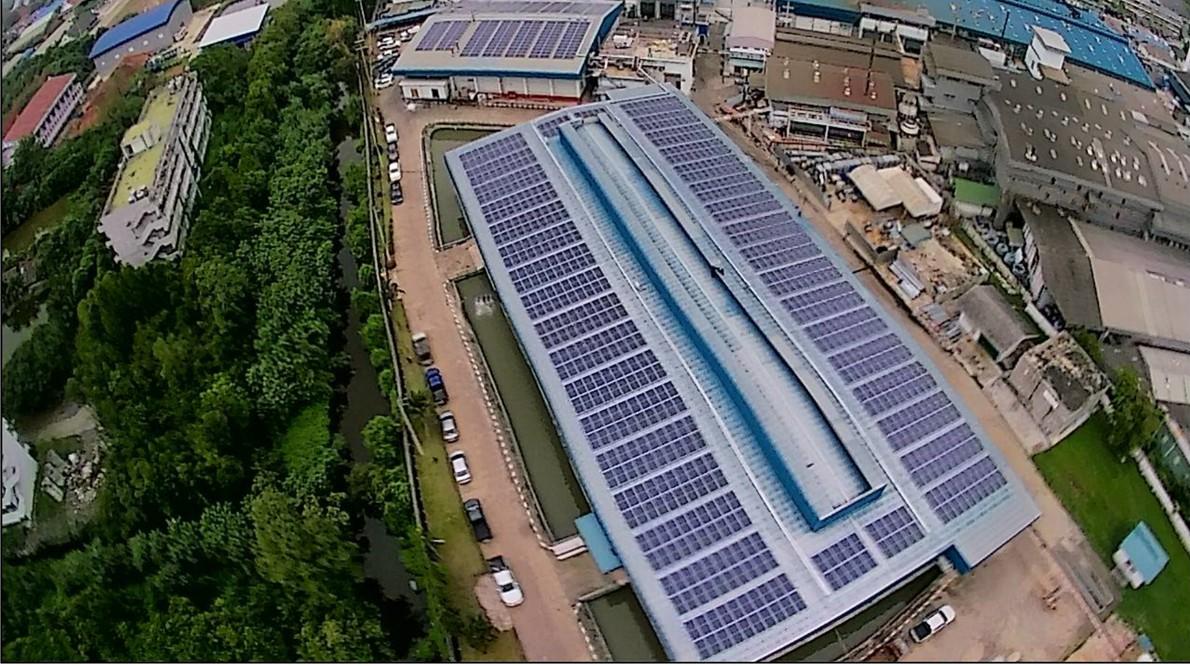
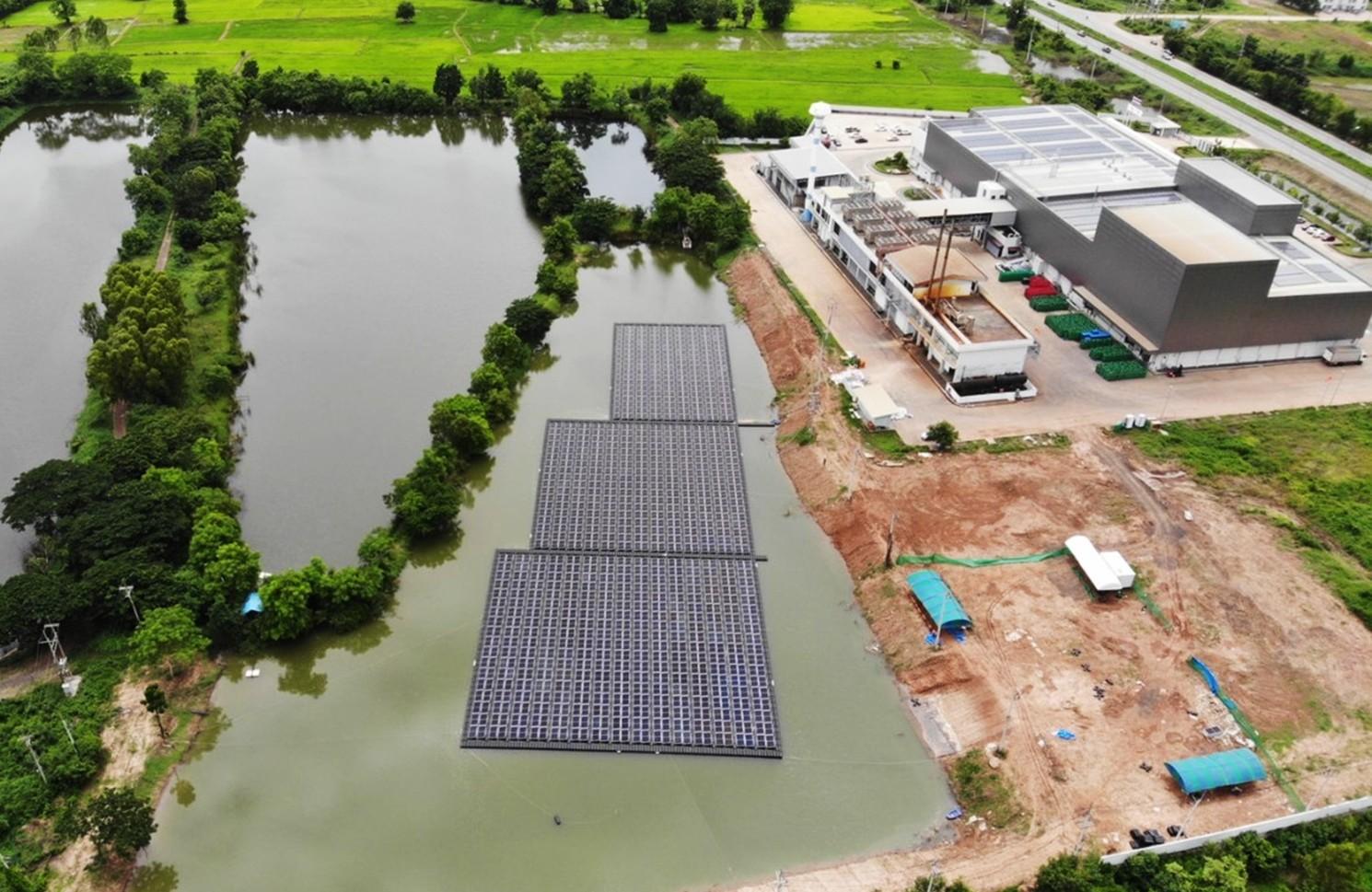
Mr. Peerapong added that, in 2022, the company will continue to promote farm projects and prototype plant that use renewable energy, such as solar energy. At present, solar rooftops have been installed on the roofs of 23 plants and office buildings. CP Foods also set up 4 solar farms, and 2 solar floating sites. Moreover, CP Foods plans to complete more 60 solar rooftops, solar farms and floating solar sites by 2023, generating a total of 43 megawatts of solar power or equivalent to 62 million units of electricity per year. This green energy project will reduce greenhouse gas emissions by 26,000 tons CO2 per year or equivalent to planting 2.8 million trees per year.

Aside zero coal usage milestone, CP Foods recently initiated Working Group on Climate Change Management Water and Waste to drive and support the implementation of such matters, promoting sustainable production and reduce the environmental footprint. This is in line with the CPF 2030 Sustainability in Action, a sustainability strategy that emphasizes on excellent resource management to create a positive impact on the environment throughout the value chain.

image4 6

Advertisement

Ghostly Monkey, Succulent Bamboo Among New Species in Mekong

In this undated photo, a Popa langur moves along a forest floor. The Popa langur is among 224 new species listed in the World Wildlife Fund's latest update on the Mekong region. The conservation group's report released Wednesday, Jan. 26, 2022, highlights the need to protect the rich biodiversity and habitats in the region, which includes Vietnam, Cambodia, Laos, Thailand and Myanmar. Photo: World Wildlife Foundation via AP

BANGKOK (AP) — A monkey with ghostly white circles around its eyes is among 224 new species listed in the World Wildlife Fund’s latest update on the greater Mekong region.

The conservation group’s report, released Wednesday, highlights the need to protect the rich biodiversity and habitats in the region, which includes Vietnam, Cambodia, Laos, Thailand and Myanmar.

The species listed were found in 2020 but last year’s report was delayed. The monkey is called the Popa langur, for it lives on the steep hillsides of the extinct Mt. Popa volcano in Myanmar. It was the only new mammal. There are also dozens of newly identified reptiles, frogs and newts, fish and 155 plant species, including the only known succulent bamboo species, found in Laos.

In this undated photo, a Doi Phu Kha newt sits on a branch. Photo: World Wildlife Foundation via AP

The Mekong region is a biodiversity hotspot and home to tigers, Asian elephants, saola — an extremely rare animal also called the Asian unicorn or spindlehorn — and thousands of other species.

Including this latest list, scientists have identified more than 3,000 new species in the region since 1997, the WWF said.

Scientists used measurements and samples from museum collections to compare and identify key differences with features of the newly discovered animals and plants, the report said.

Studying such differences can help determine the range of species and threats to their survival, Thomas Ziegler, a curator at the University of Cologne’s Institute of Zoology, said in introducing the report.

Identifying new species is tricky, though, and sometimes can only be determined using a variety of methods, such as frog calls and genetic data used to distinguish the Cardamom leaf little frog, found high up in the Cardamom mountains in a wildlife refuge.

In this undated photo, a twin slug snake rests on a leaf. Photo: World Wildlife Foundation via AP

Some species are found in more than one country, including the bright orange twin slug snake, which consumes slugs.

The Popa langur was identified based on genetic matching of recently gathered bones with specimens from Britain’s Natural History Museum collected more than a century ago, the report said. Two main distinguishing characteristics were the broad white rings around its eyes and its front-pointing whiskers.

The WWF, working with Fauna and Flora International, caught images of the monkeys using camera traps in 2018. FFI reported the discovery late last year.

The monkey is a candidate to be listed as a critically endangered species on the Red List of the International Union for the Conservation of Nature, the report said, since only 200-250 are thought to survive in the wild, in a handful of places.

Underscoring the urgency of such work, more than 38,000 of the 138,000 species the IUCN tracks are threatened with extinction.

A new type of begonia with reddish flowers and a berry-like fruit also was found in the uplands of Myanmar, where illegal mining and logging have become an increasingly dire threat in the country, which is in the midst of political turmoil following a military takeover a year ago.

Despite human encroachments on tropical forests and other wild zones, much of the Greater Mekong is still little explored and each year dozens of new species are found — a glimmer of hope as so many species go extinct.

Not all new species are found deep in jungles. One of the new plant species is a ginger plant called “stink bug” for its pungent odor similar to big beetles Thais use to make a kind of chili dipping paste served with rice, the report said.

It was found in northeastern Thailand, in a plant shop.

___

Story: Elaine Kurtenbach.

Advertisement

US Offers No Concessions in Response to Russia on Ukraine

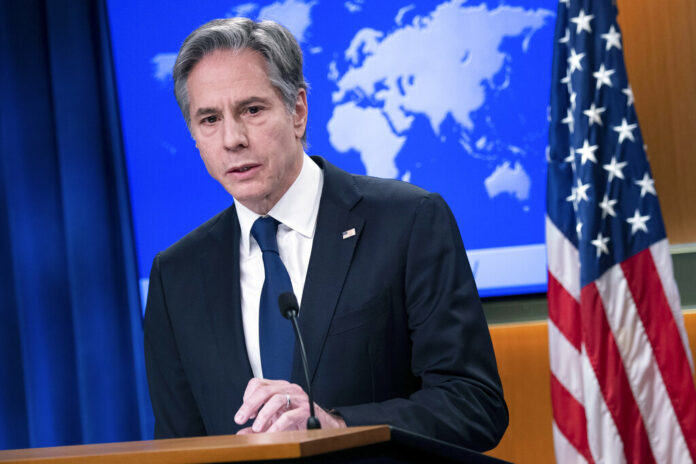
Secretary of State Antony Blinken speaks about Russia and Ukraine during a briefing at the State Department on Wednesday, Jan. 26, 2022, in Washington. Photo: Brendan Smialowski / Pool via AP

WASHINGTON (AP) — The Biden administration and NATO told Russia on Wednesday there will be no U.S. or NATO concessions on Moscow’s main demands to resolve the crisis over Ukraine.

In separate written responses delivered to the Russians, the U.S. and NATO held firm to the alliance’s open-door policy for membership, rejected a demand to permanently ban Ukraine from joining, and said allied deployments of troops and military equipment in Eastern Europe are nonnegotiable.

“There is no change, there will be no change,” Secretary of State Antony Blinken said. Also not up for negotiation will be the U.S. and European response to any Russian invasion of Ukraine, he said, repeating the mantra that any such incursion would be met with massive consequences and severe economic costs.

The responses were not unexpected and mirrored what senior U.S. and NATO officials have been saying for weeks. Nonetheless, they and the eventual Russian reaction to them could determine whether Europe will again be plunged into war.

There was no immediate response from Russia but Russian officials have warned that Moscow would quickly take “retaliatory measures” if the U.S. and its allies reject its demands.

Seeking possible off-ramps that would allow Russia to withdraw the estimated 100,000 troops it has deployed near Ukraine’s border without appearing to have lost a battle of wills, the U.S. response did outline areas in which some of Russia’s concerns might be addressed, provided it de-escalates tensions with Ukraine.

Speaking to reporters in Washington, Blinken said Russia would not be surprised by the contents of the several-page American document that U.S. Ambassador to Russia John Sullivan delivered Wednesday to the Russian Foreign Ministry.

“All told it sets out a serious diplomatic path forward. should Russia choose it,” he said. “The document we’ve delivered includes concerns of the United States and our allies and partners about Russia’s actions that undermine security, a principled and pragmatic evaluation of the concerns that Russia has raised, and our own proposals for areas where we may be able to find common ground.”

Blinken said he hoped to speak with Russian Foreign Minister Sergey Lavrov about the response in the coming days. But he stressed the decision about pursuing diplomacy or conflict rests with Russia and, more specifically, with Russian President Vladimir Putin.

“We’ll see how they respond,” he said. “But there’s no doubt in my mind that if Russia were to approach this seriously and in a spirit of reciprocity with a determination to enhance collective security for all of us, there are very positive things in this in this document that could be pursued. We can’t make that decision for President Putin.”

Shortly after Blinken spoke, NATO Secretary-General Jens Stoltenberg said in Brussels that the alliance had sent a separate reply to Russia with an offer to improve communications, examine ways to avoid military incidents or accidents, and discuss arms control. But, like Blinken, he rejected any attempt to halt membership.

“We cannot and will not compromise on the principles on which the security of our alliance, and security in Europe and North America rest,” Stoltenberg said. “This is about respecting nations and their right to choose their own path.”

“Russia should refrain from coercive force posturing, aggressive rhetoric and malign activities directed against allies and other nations. Russia should also withdraw its forces from Ukraine, Georgia and Moldova, where they are deployed without these countries’ consent,” he said.

While flatly refusing to consider any changes to NATO’s open-door policy, its relationship with non-ally Ukraine, or allied troop and military deployments in Eastern Europe, Blinken said the U.S. is open to other ideas to ease Russia’s stated concerns.

The U.S. proposals, echoed in the NATO document, include the potential for negotiations over offensive missile placements and military exercises in Eastern Europe as well as broad arms control agreements as long as Russia withdraws its troops from the Ukrainian border and agrees to halt inflammatory rhetoric designed to deepen divisions and discord among the allies and within Ukraine itself.

Moscow has demanded guarantees that NATO will never admit Ukraine and other ex-Soviet nations as members and that the alliance will roll back troop deployments in former Soviet bloc nations. Some of these, like the membership pledge, are nonstarters for the U.S. and its allies, creating a seemingly intractable stalemate that many fear can only end in a war.

The Kremlin has repeatedly denied it has plans to attack Ukraine, but the U.S. and NATO are worried about Russia massing its troops near Ukraine and conducting a series of sweeping military maneuvers.

As part of the drills, motorized infantry and artillery units in southwestern Russia practiced firing live ammunition, warplanes in Kaliningrad on the Baltic Sea performed bombing runs, dozens of warships sailed for training exercises in the Black Sea and the Arctic, and Russian fighter jets and paratroopers arrived in Belarus for joint war games.

Speaking to Russian lawmakers Wednesday before the U.S. and NATO responses were delivered, Lavrov said he and other top officials will advise Putin on the next steps.

“If the West continues its aggressive course, Moscow will take the necessary retaliatory measures,” Lavrov said.

But he indicated Russia wouldn’t wait forever. “We won’t allow our proposals to be drowned in endless discussions,” he said.

Amid the tensions, the U.S., Britain, Australia, Germany and Canada have moved to withdraw some of their diplomats and dependents from Kyiv, a move President Volodymyr Zelenskyy sought to play down Tuesday as part of a “complex diplomatic game.”

On Wednesday, the U.S. urged Americans in Ukraine to consider leaving, saying the security situation “continues to be unpredictable due to the increased threat of Russian military action and can deteriorate with little notice.”

In 2014, following the ouster of a Kremlin-friendly president in Kyiv, Moscow annexed Ukraine’s Crimean Peninsula and threw its weight behind a separatist insurgency in the country’s eastern industrial heartland. Fighting between Ukrainian forces and Russia-backed rebels has killed over 14,000 people, and efforts to reach a settlement have stalled.

Envoys from Russia, Ukraine, France and Germany met Wednesday for more than eight hours in Paris on the separatist conflict. Although there was no breakthrough, they promised to meet for new talks in two weeks in Berlin.

The French president’s office said afterward in a statement that the parties support “unconditional respect” for a cease-fire in eastern Ukraine.

The talks focused on the 2015 Minsk peace agreement aimed at ending the conflict, and the statement didn’t address the current concerns about a Russian invasion of Ukraine.

“Those are different issues, and we didn’t discuss it,” said Kremlin envoy Dmitry Kozak.

The Ukrainian representative, Andriy Yermak, was cautiously optimistic about Wednesday’s talks, which he said marked the first major advance since December 2019. He also acknowledged they did not directly address current tensions at the border or resolve past differences.

“Of course, I wouldn’t be honest if I said that we all want faster and bigger results,” Yermak said. “And of course there is nothing bigger than the desire of Ukrainian people to stop the war, to bring back our territories and our people.”

Yermak also said the Ukrainians repeatedly raised the issue of troops now massed on the border. “This is the real threat,” he said. “I have clearly said today that we expect de-escalation not only around occupied territories but also in general de-escalation around Ukrainian borders.”

Kozak said varying interpretations of the Minsk agreement have remained a major stumbling block. He said the the four parties will make another attempt to reach consensus on the issue in two weeks.

Kozak reaffirmed that Russia isn’t a party to the conflict and emphasized that Ukraine is reluctant to engage in talks with separatists as stipulated in the Minsk document. He said there has been no progress on key aspects of the agreement that Ukraine must grant special status to the rebel regions, followed by elections.

___

Story: Vladimir Isachenkov and Matthew Lee. Isachenkov reported from Moscow. Yuras Karmanau in Kyiv, Ukraine, Lorne Cook in Brussels and Lori Hinnant and Sylvie Corbet in Paris contributed.

Advertisement

Opinion: Yet Another Blunder — The Difficult Future of Move Forward Party

By Bunkueanun “Francis” Paothong

Recently, Move Forward Party announced that Mr. Wiroj Lakhana-Addisorn was chosen to be their candidate for Governor of Bangkok. The 44-year old parliamentarian was considered by many to be the rising star of the party, as well as of Thai politics as of late.

However, the decision to put him in the governor’s race seemed to myself, as well as many, to be a major miscalculation. Especially since Mr. Wiroj has to go up against former Transport Minister, Mr. Chatchart Sittipunt, who announced his candidacy as an independent months earlier.

The party’s disappointing performances of its recent snap elections in Songkhla and Chumphon signaled the decline in momentum that the party has always been riding on.

In the previous general election, the party’s predecessor, Future Forward Party, have garnered around 10,347 votes in Chumphon’s constituency 1. Compared to the recent election, which saw the votes for Move Forward Party at 3,582 votes, going down by almost 70 percent.

Furthermore, the party saw its worst performance from the recently-concluded snap election for Songkhla’s constituency 6, which Move Forward’s candidate, Mr. Phongsathorn Suwannaraksa, only received 1,350 votes, when compared to Future Forward Party’s 11,966 votes in 2019.

Such decline in the party’s popularity stemmed from numbers of factors. Major ones are the lacking of groundwork for campaigning in the area, overemphasis on the talks of ideology rather than connecting with the locals, as well as the lack of primary elections within the party, which could have widened the search for a more suitable candidate also contributed to the many of Party’s lackluster candidates in recent snap elections.

It is also prudent to point out that the leader of the party, Mr. Pita Limjaroenrat, is not as enigmatic and popular as Future Forward Party’s former leader, Mr. Thanathorn Juangroongruangkit, whose leadership and charisma was perceived by many to be better than that of Mr. Pita.

At any rate, the decision to prop Mr. Wiroj for the gubernatorial race in Bangkok will not achieve anything much for the party. Even worse, it might exacerbate an even worse electoral situation for the party.

While the election for its governor is not yet announced officially, the party has to tend to yet another snap election in Bangkok to fill in the seat formerly held by Sira Jenjaka, former Phalang Pracharat representative, whose disqualification by the Constitutional Court ousted him from Parliament.

The snap election is already tenuous as it is. Another blunder in the likes of Mr. Wiroj’s candidacy will likely weaken the position of the country’s only progressive party should the House of Representatives dissolves in the future.

The correct course of action that Move Forward Party could take is to re-evaluate their current electoral and political positions as of this moment, ranging from re-inventing their groundwork for potential elections, rectifying the Bangkok gubernatorial electoral blunder by endorsing Mr. Chatchart were many of possible solutions.

But in the end, questions remain whether it is truly wise to put up a candidate that has no fighting chance in the upcoming gubernatorial election? Is it truly wise to commit to another political blunder whilst fighting on many different electoral fronts?

And finally, is it truly wise that Move Forward Party would gamble with everything they have right now for the difficult future ahead of them?

Only Mr. Pita knows exactly what he would do, and I am afraid that whatever challenges he undertakes, it might not end well for him and the party.

About the author

Bunkueanun “Francis” Paothong is a former student protest leader, currently focusing on students’ rights. He stands accused of crimes against the Queen’s liberty.

Advertisement

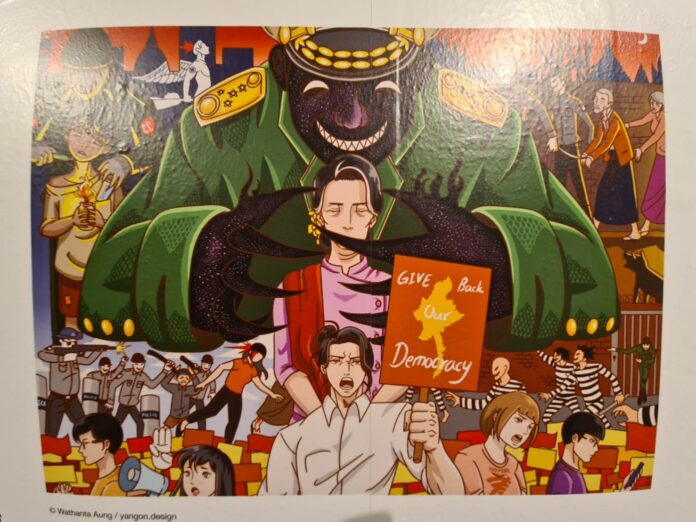
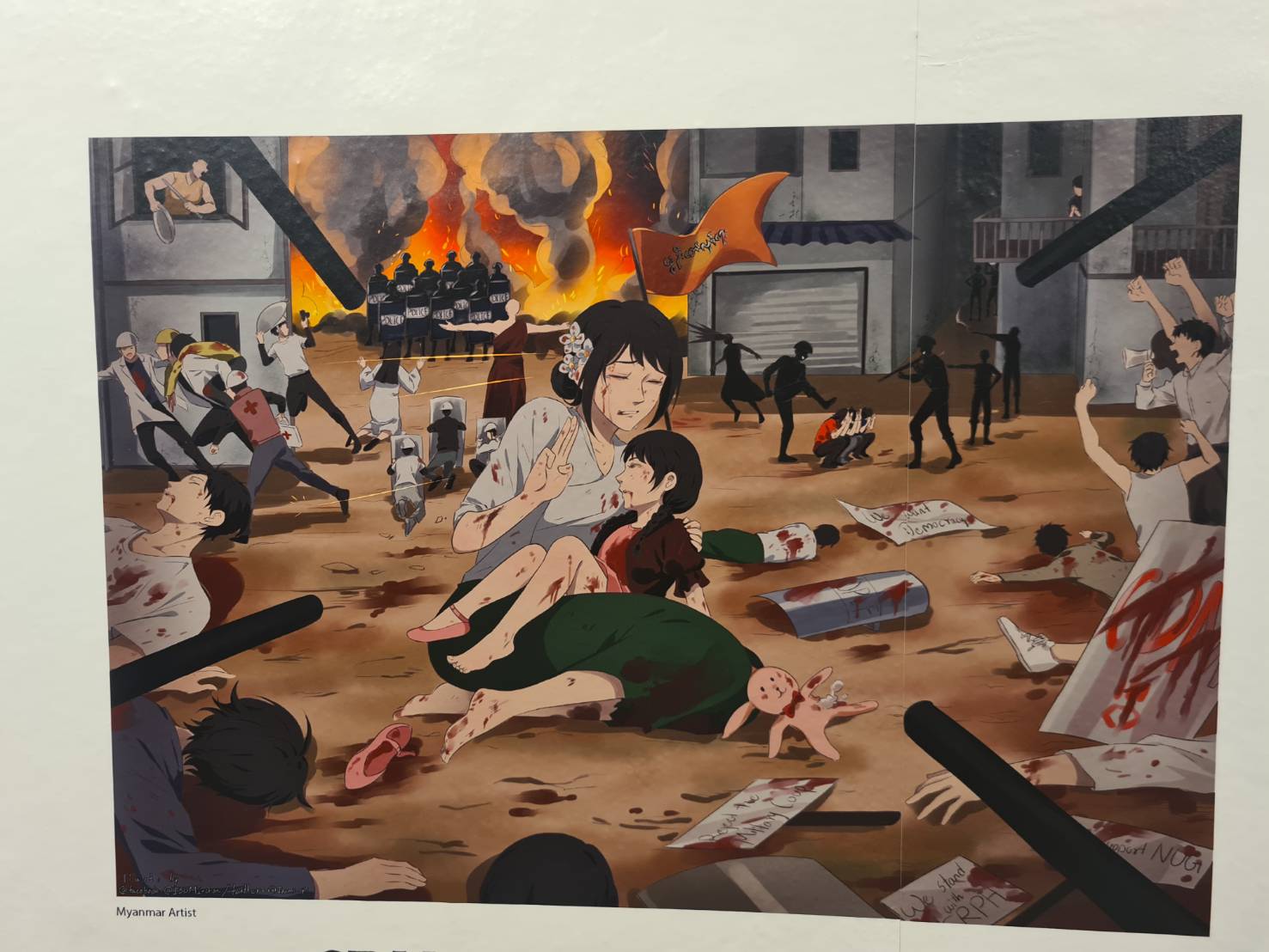
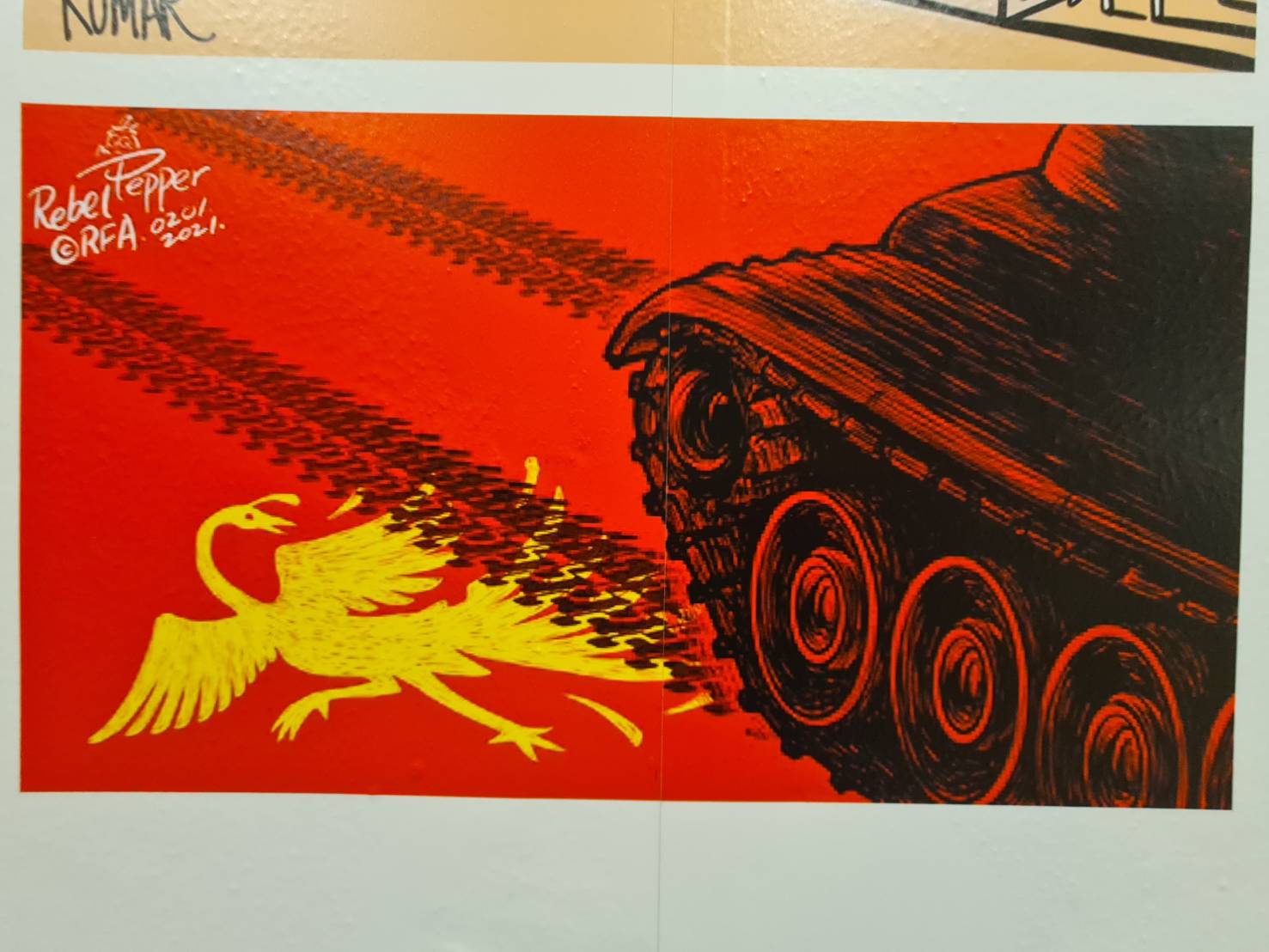
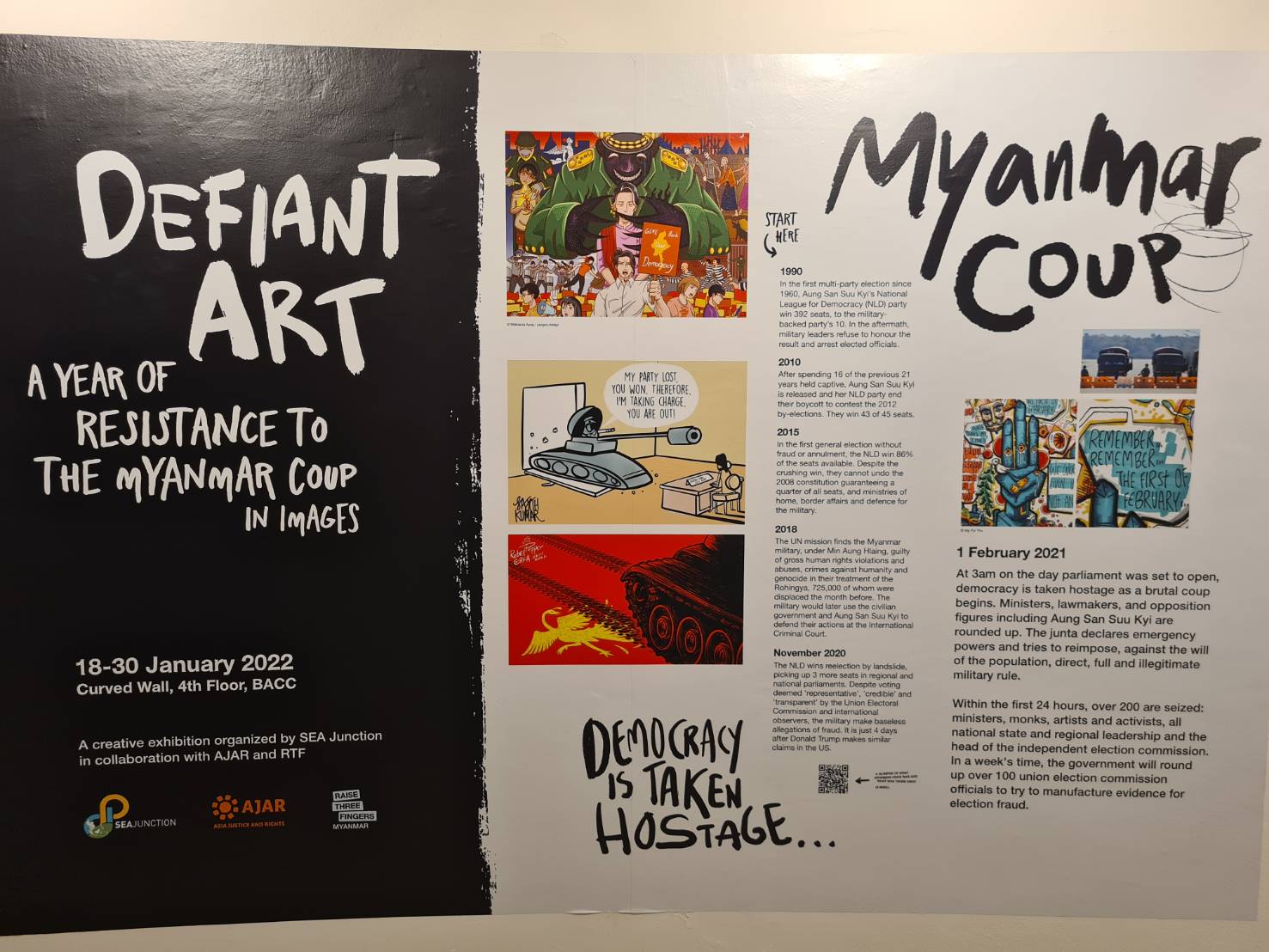
In Case You Miss the Old Prayut, See Min Aung Hlaing’s Deeds on Exhibit in Bangkok

Wathanta Aung / yangon.design.

BANGKOK — See the atrocious deeds of the (Burmese) military regime on display and how people of Myanmar struggle in an attempt to overthrow the illegitimate usurpers over the past year.

The exhibition “Defiant Art: A Year of Resistance to The Myanmar Coup in Images,” running now until Feb. 13, 2022 at the 4th floor of Bangkok Arts and Culture Center is organized by SEA Juncture, a local group promoting better understanding about Southeast Asia and its partners.

94246

Don’t miss and compare. The exhibition may make then junta leader Gen. Prayut Chan-o-cha appear like Father Theresa or may be a bad neighborly role model to Myanmar’s Min Aung Hlaing. (Warning: The images of the three-fingers salute at the exhibition have nothing to do with Thailand, or at least that’s what the Thai regime hopes.)

Many rare posters are assembled and the exhibition is conveniently divided into 12 topics. Expect to spend at least 40 minutes to fully ‘appreciate.’

94244

Texts are in English so it’s unfortunate that the hundreds of thousands migrant workers in Thailand may not find it accessible, however.

Bangkok Arts and Culture Center opens every day except Monday from 10.00am to 7.00pm.

94241

Advertisement

Thailand First in Asia to Move to Decriminalize Marijuana

Bhumjaithai Party leader Anutin Charnvirakul has gone all in on legalization of cannabis. He leads the largest party to call for full legalization.

BANGKOK (AP) — Thailand on Tuesday became the first country in Asia to approve the de facto decriminalization of marijuana, though authorities have left a grey area around its recreational use.

Health Minister Anutin Charnvirakul announced that the Narcotics Control Board had approved the dropping cannabis from the ministry’s list of controlled drugs.

The delisting by the ministry’s Food and Drug Administration will now need to be formally signed by the health minister and enters into effect 120 days after its publication in the government gazette. It follows the removal of cannabis — a plant species to which both marijuana and hemp belong — last month from the list of illegal drugs under Thailand’s Narcotics Law.

Police and lawyers contacted by The Associated Press said it was unclear if possession of marijuana would no longer be an offense subject to arrest. A tangle of related laws means that production and possession of marijuana remains regulated for the time being, leaving the legal status of recreational marijuana use in a grey area.

The Health Ministry measure retains on its list of controlled drugs parts from the cannabis plant that contain more than 0.2% by weight of tetrahydrocannabinol, or THC, the psychoactive ingredient that gives users a high.

Thailand in 2020 became the first Asian nation to decriminalize the production and use of marijuana for medicinal purposes.

Under changes made in 2020, most parts of the cannabis plant were dropped from the “Category 5” list of controlled drugs, but seeds and buds, which are associated with recreational use, were retained. The proposal now being implemented by the FDA removes all parts of the plant from the list.

Health Minister Anutin has been the driving force behind decriminalizing marijuana. He is the leader of the Bhumjai Thai Party, a major partner in the country’s coalition government, and campaigned in the 2019 general election for legalization of marijuana production to aid farmers. The latest measure is also seen as helping to promote cannabis products as a major industry in Thailand.

Anutin said last week that the FDA’s delisting “responds to the government’s urgent policy in developing marijuana and hemp for medical and health care benefits, developing technology and creating income for the public.”

His party announced that on Wednesday it will propose in Parliament a draft Cannabis Act to clarify the legal status of marijuana.

___

Story: Chalida Ekvitthayavechnukul.

Advertisement

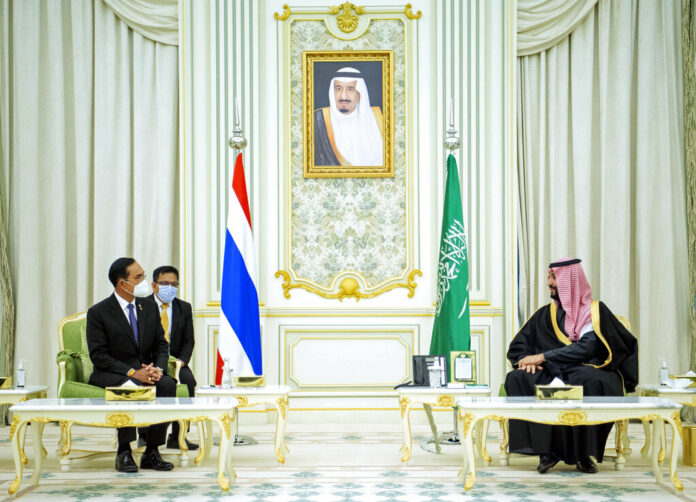
Saudi Restores Full Ties With Thailand After Diamond Dispute

In this photo released by the Saudi Royal Palace, Saudi Crown Prince Mohammed bin Salman, right, meets with Thai Prime Minister Prayuth Chan-ocha, at the Royal Palace in Riyadh, Saudi Arabia, Tuesday, Jan. 25, 2022. Photo: Bandar Aljaloud / Saudi Royal Palace via AP

DUBAI, United Arab Emirates (AP) — Saudi Arabia on Tuesday ordered the restoration of full diplomatic ties with Thailand and said the countries agreed to trade ambassadors, closing the chapter on three decades of mistrust and hostility between the nations that stemmed from a sensational jewelry heist.

The rapprochement came during Thai Prime Minister Prayuth Chan-ocha’s official visit to the kingdom, which marked the highest-level meeting between the countries since relations soured over the 1989 political scandal. Saudi Arabia downgraded its diplomatic relations with Thailand over the theft that led to a string of mysterious killings and became known as the Blue Diamond affair.

Saudi Crown Prince Mohammed bin Salman, the country’s de facto leader, agreed to bury the hatchet with Prayuth and boost the nations’ economic, security and political ties, said a statement published on the official Saudi Press Agency, SPA, late Tuesday after talks at the royal palace.

The countries will explore joint investment in fields ranging from energy and petrochemicals to tourism and hospitality, the statement added. Tourism is a key element of Vision 2030, Saudi Arabia’s economic reform plan meant to wean the kingdom off oil.

Saudi Arabian Airlines, meanwhile, said it would start direct flights from Riyadh to Bangkok in May, promoting Thailand in a Twitter post as “the land of culture.”

Prince Mohammed has ventured into diplomatic territory where previously the government refused to go. In 1989, priceless 50-carat blue diamond was among an estimated $20 million worth of gems and jewelry pilfered by a Thai janitor from a Saudi prince’s palace in the heist that wrecked relations between the countries.

The kingdom stopped issuing and renewing visas for hundreds of thousands of Thai workers, suspended permits for thousands of Thai Muslims hoping to make the annual hajj pilgrimage to Mecca and warned its citizens not to travel to Thailand.

Three Saudi diplomats seeking the valuables’ return were shot dead in Bangkok. A Bangkok-based Saudi businessman believed to have been hunting for the missing jewels also disappeared, and was presumed killed. No one was convicted for the killings.

The Thai government on Tuesday expressed “regret over the tragic incidents that occurred to Saudi citizens in Thailand between 1989 and 1990″ and stressed “its keenness to resolve issues related to these events,” the joint statement said.

The Thai police claimed to have solved the case, but many of the jewels they sent back to Riyadh were fake. Thai media crackled with reports that the wives of top officials had been spotted wearing diamond necklaces that bore an uncanny resemblance to the stolen jewels. The fabled blue diamond was never recovered.

Thailand promised that it would raise cases with competent authorities if any “new and relevant evidence” related to the killings emerged, SPA added.

The saga exposed the graft and abuse of power that runs rampant in Thailand’s police forces as speculation mounted that senior officers and members of the elite had kept the stones and ordered a cover-up.

Thailand, deprived by the dispute of billions of dollars in badly needed tourism revenues and workers’ remittances, long has wanted to patch up relations with oil-rich Saudi Arabia.

The young, ambitious Prince Mohammed has increasingly focused on winning allies abroad and mending rifts with regional rivals, including Iran, Qatar, Turkey and Pakistan.

Saudi Arabia, in a push to modernize and diversify its oil-dependent economy, is trying to draw foreign tourists and investors and overhaul its reputation as one of the world’s most closed countries with a bleak human rights record.

___

Story: Isabel Debre.

Advertisement

Hot News

LATEST NEWS

Bangkok
light rain
25 ° C
27.2 °
25 °
92 %
8.2kmh
100 %
Fri
25 °
Sat
32 °
Sun
35 °
Mon
36 °
Tue
37 °