






















30.2 C
Bangkok
Tuesday, June 9, 2026
Home Blog Page 1010

Iraqi Migrants Caught in Border Crisis in Belarus Fly Home

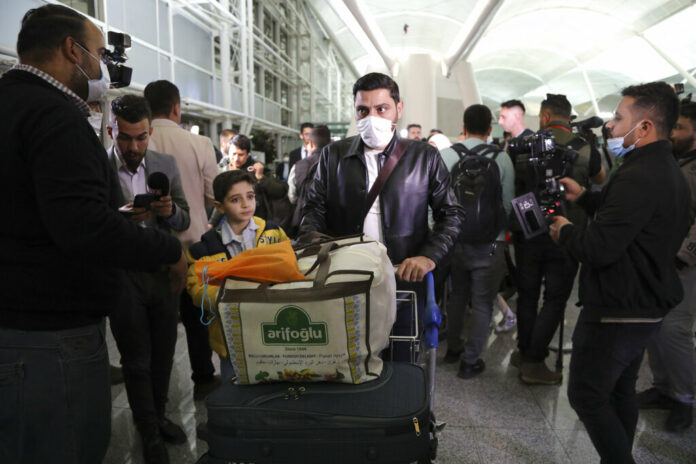
Iraqi migrants arrive to the airport in Irbil Iraq, Thursday, Nov. 18, 2021. Photo: Hussein Ibrahim / AP

BAGHDAD (AP) — Hundreds of Iraqis returned home Thursday from Belarus after abandoning their hopes of reaching the European Union — a repatriation that came after tensions at Poland’s eastern border, where thousands of migrants became stuck in a cold and soggy forest.

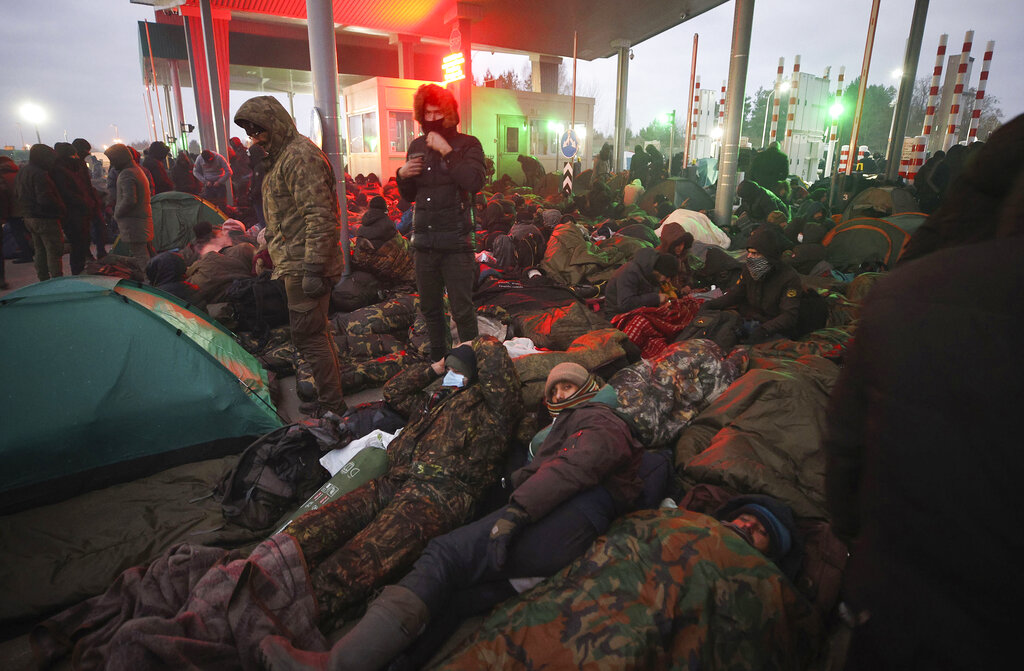
Many others still in Belarus have moved into a heated warehouse not far from the border, emptying out a makeshift camp, Belarusian state-run media reported. But the Polish Defense Ministry posted video showing a few hundred people and their tents still near an official crossing point.

It was not clear if the two countries were talking about two different sites on their border, but it was typical of the dueling narratives that have marked the crisis, in which both Belarus and Poland have sought to portray themselves in a positive light while depicting the other as unfeeling and irresponsible toward the migrants.

“We were hostages — victims stuck between Belarus and the European Union,” said a young Iraqi returnee in a black hoodie after his flight arrived in Baghdad.

“Belarus police are the same like Daesh,” he said, referring to the brutal militants from the Islamic State group that rampaged through Iraq several years ago. He then walked away.

Ali Kadhim, who is returning to his home in Basra, said he wanted to go to Europe because in Iraq there are “no jobs and the situation is very bad recently.”

He said he had reached a deal with a smuggler to get him to the Belarus-Poland border zone, where a Belarusian border guard took his passport and cellphone and prevented him from leaving the forest. For three days, he had no food, water or internet service, he said.

“I was living on what I found on ground. I mean I had to live on three dates in a whole day,” Kadhim said.

Of the 430 people who flew from Minsk, 390 got off at Irbil International Airport in Iraq’s northern Kurdistan region before the flight continued to Baghdad, said Jihad al-Diwan, head of media relations for Iraq’s civil aviation authority. About 30 others who were registered for the flight had problems with their documents and did not board, according to Iraqi officials, who organized the return.

One woman arriving in Irbil carried a bassinet with a baby. Most still wore the heavy winter clothes from their time in Belarus despite the warm weather in Iraq. Another woman collapsed, apparently fainting.

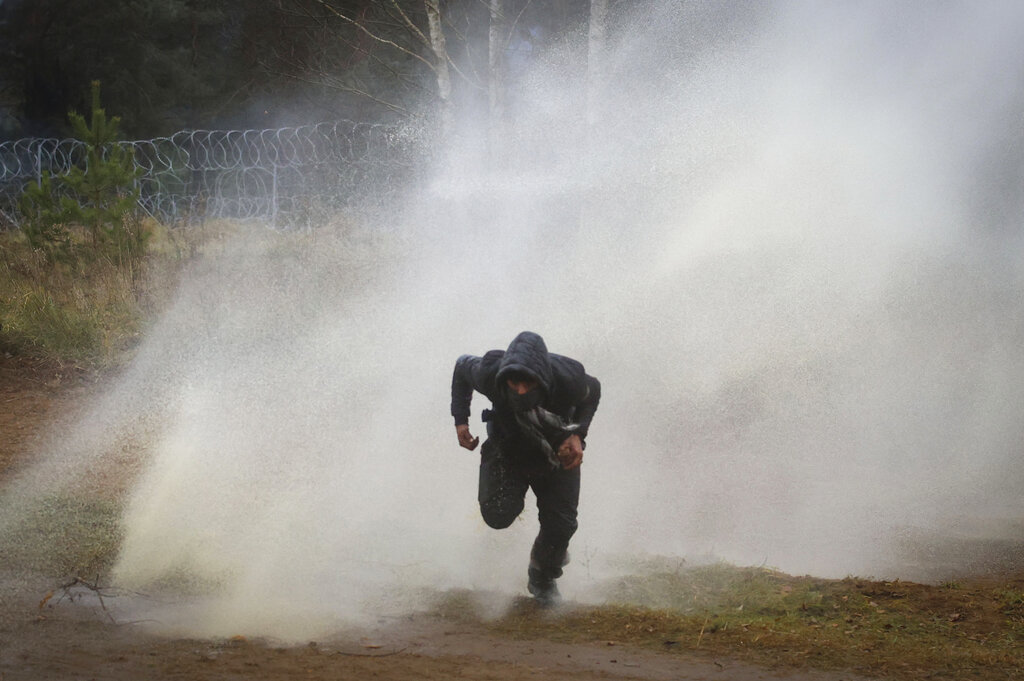
Tensions had flared at the Poland-Belarus border in recent days, with about 2,000 people trapped between the forces from the two countries. On Tuesday, some of the migrants had thrown stones at the Polish troops, who responded with tear gas and water cannons.

The U.N. refugee agency says about half the migrants at the border area were women and children.

At least 12 people have died in the area in recent weeks from the harsh conditions in the border zone, including a 1-year-old whose death was reported Thursday by a Polish humanitarian organization.

Muslims in Poland buried an unidentified migrant at a cemetery in Bohoniki, where a population of Tatars has lived for centuries. It was the second such funeral there for a migrant in a week.

Most of the migrants are fleeing conflict or hopelessness in the Middle East and aim to reach Germany or other western European countries. But Poland has taken a hard line about letting them n, and Belarus didn’t want them returning to the capital of Minsk or otherwise settling in the country.

The West has accused Belarus President Alexander Lukashenko of using the migrants as pawns to destabilize the 27-nation bloc in retaliation for its sanctions on his authoritarian regime. Belarus denies engineering the crisis, which has seen migrants entering the country since summer and then trying to cross into Poland, Lithuania and Latvia.

Perhaps as many as 7,000 migrants remain in Belarus, according to authorities there. Many have moved to the temporary shelter of the warehouse since Tuesday, where they were given mattresses, water, hot meals and medical assistance.

Iraqi Kurds said the warehouse had filled quickly, with not enough food or places to sleep. A video obtained by The Associated Press showed men, women and children in sleeping bags or on blankets on the floor.

“At first, the situation was good, I mean on the first day. We were receiving three meals a day. But as more people came in from the forest, it has got more and more crowded. As a result, we got no dinner yesterday and no lunch today,” one young Iraqi Kurdish man said.

“As you can see, it is getting very crowded here, and it is not easy to find a place to sit or to sleep,” he added, speaking on condition of anonymity because he feared reprisals. “But it is much better than staying in the forest.”

Everyone in the warehouse “has spent a lot of money to come here and they don’t want to go back,” he said.

Amid the border tensions, the war of words has drawn in the EU and Belarus ally Russia as well.

EU Union Commissioner for Home Affairs Ylva Johansson accused Belarus of engaging in “an act of state-sponsored migrant smuggling” and said sanctions and stopping flights to Minsk carrying migrants were “our most effective tools in this struggle.”

Foreign ministers of the G-7 group of leading industrialized countries also condemned “the Belarus regime’s orchestration of irregular migration across its borders.”

Natalya Eismont, a spokeswoman for Lukashenko, said the fact that hundreds left Belarus shows the government is keeping its part of the bargain. The rest are “categorically refusing to fly, but we will work on it,” she said.

Lukashenko had proposed to German Chancellor Angela Merkel that the EU could open a “humanitarian corridor” to allow 2,000 migrants to head to Germany, while Belarusian authorities try to get the other 5,000 to return home, Eismont said.

But German Interior Minister Horst Seehofer said in Warsaw that suggestions Germany would be ready to receive 2,000 migrants is “false information.”

Following a call Tuesday between Merkel and Lukashenko, her office stressed the need for humanitarian assistance and for the migrants’ safe return home.

Poland’s tough stand against their illegal entry included reinforcing the border with riot police and troops and plans to build a steel barrier. That approach has largely been met with approval from other EU nations, who want to stop a surge of migration.

But Poland also has been criticized by human rights groups and others for pushing migrants back into Belarus and not allowing them to apply for asylum.

Tuesday’s border skirmishes injured 12 of the border forces. Warsaw accused Belarus of instigating the conflict, while the government in Minsk denounced Poland’s “violent actions.”

Lukashenko has rejected accusations of engineering the crisis and said his government has deported about 5,000 illegal migrants from Belarus this fall.

In May, however, he had railed against EU sanctions imposed for his harsh crackdown on internal dissent and said it would no longer stop migrants, telling the bloc: “Now you will catch them and eat them yourself.”

On Thursday, Lukashenko’s ally Russian President Vladimir Putin also slammed the EU.

“Western countries are using the migration crisis on the Belarusian-Polish border as a new reason for tension in the region that is close to us, for pressure on Minsk, and at the same time they forget their own obligations in the humanitarian sphere,” he said.

___

Story: Zeina Karam, Daria Litvinova and Yuras Karmanau . Litvinova reported from Moscow and Karmanau reported from Kyiv, Ukraine. Associated Press journalists Vanessa Gera in Warsaw, Sabina Niksic in Sarajevo, Bosnia and Herzegovina, Frank Jordans in Berlin, Samuel Petrequin in Brussels, Rashid Yahya in Irbil, Iraq, and Jim Heintz in Moscow contributed.

Advertisement

Thailand to Secure 65 Million COVID Shots Next Year

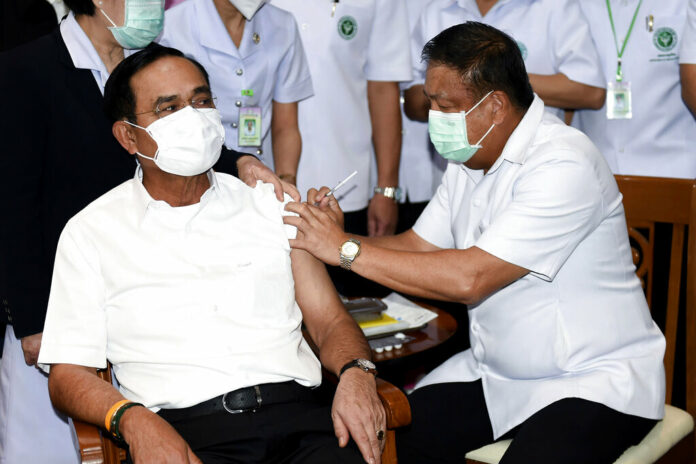
A health worker administers second dose of the AstraZeneca COVID-19 vaccine to Thailand's Prime Minister Prayuth Chan-ocha, left, at Bamrasnaradura Infectious Diseases Institute in Bangkok, Thailand, Monday, May 24, 2021. Photo: Government Spokesman Office via AP

BANGKOK — PM Prayut Chan-o-cha has announced that Thailand is setting its goal of obtaining up to 65 million vaccines for next year as part of the government’s long term effort to contain the coronavirus pandemic.

Gen. Prayut said that contracts have been signed with suppliers to source 65 million vaccines for Thailand. He did not elaborate what brands were signed, and how much money was spent, but a government report said up to 25 percent of Thailand’s GDP has already been used in dealing with the pandemic, including vaccination, treatment, and assistance programs for the general public,

The government previously said it wanted to achieve its goal of national vaccination drive by the end of the year, but so far just 11 provinces have hit a threshold of over 70 percent of their population having received at least one vaccine injection, a target that has been crucial for fully reopening the country.

The government also said it is keeping a watchful eye over advancements in new and more effective vaccines including options in development to use a nasal spray to inoculate against COVID-19.

PM Prayut said that the tourism reopening initiated since Nov. 1 has been satisfactory overall, and that he has tasked the appropriate agencies with creating a digital system to check and verify passengers’ documents in order to expedite the arrival process for international travellers.

However, figures of arriving tourists since the reopening have been lacklustre. For instance, tourism associates had estimated that the last quarter of 2021 would bring 100,000 international tourists to Hua Hin. As of Thursday, only 56 have arrived.

A representative from the Thai Hotel Association told the media that the disparity is due to the entry process being overly complicated, the quarantine and testing fees expensive, and entertainment venues and nightlife activities stifled by alcohol restrictions.

Advertisement

Duchess of Sussex Gets Goofy on Ellen Degeneres’ Talk Show

In this photo released by Warner Bros., talk show host Ellen DeGeneres, right, appears with Meghan, The Duchess of Sussex, during a taping of "The Ellen DeGeneres Show" at the Warner Bros. lot in Burbank, Calif. (Michael Rozman/Warner Bros. via AP)

NEW YORK (AP) — It was the Meghan hour Thursday on the talk show of her friend, Ellen DeGeneres, as the Duchess of Sussex helped welcome a special guest, hit the studio lot to prank vendors and said she’ll be cooking Thanksgiving dinner herself.

“I love to cook. We’ll be home and just sort of relax and settle in,” Meghan said of her second Thanksgiving in California with Prince Harry and, now, their two kids.

Meghan and DeGeneres, who met at a pet store more than a decade ago, chatted about Halloween (Archie was a dinosaur and baby Lili a skunk), and more serious issues like Meghan’s work to push for federal paid family leave. And she said Harry has taken nicely to the California lifestyle in Montecito, where Ellen is one of their neighbors.

“He loves it,” Meghan said. “We’re just happy.”

Meghan got Ellen-style goofy when she donned an earpiece so Ellen could tell her what to say and do as she perused the wares of three vendors on the studio lot. Meghan mewed in cat ears, devoured hot sauce on crackers like a chipmunk and held a huge crystal to her face — all after a pretend assistant told the trio of sellers to treat her just like everybody else. They could barely keep from laughing.

“Let Mommy taste some. My boo loves hot sauce,” Meghan told one seller with a table full of hot sauces. “Mommy wants some heat.”

Later on “The Ellen DeGeneres Show,” Ellen and Meghan welcomed Brittany Starks, a Tennessee mother and hairdresser who gave back after being helped herself through hard times by braiding the hair of schoolchildren for free. Since, she has started a charity, A Twist of Greatness.

The show and philanthropy partner TisBest donated $20,000 to her cause. Meghan and Harry matched it with another $20,000.

“We were so touched by your story,” Meghan told Starks, giving her hug.

Advertisement

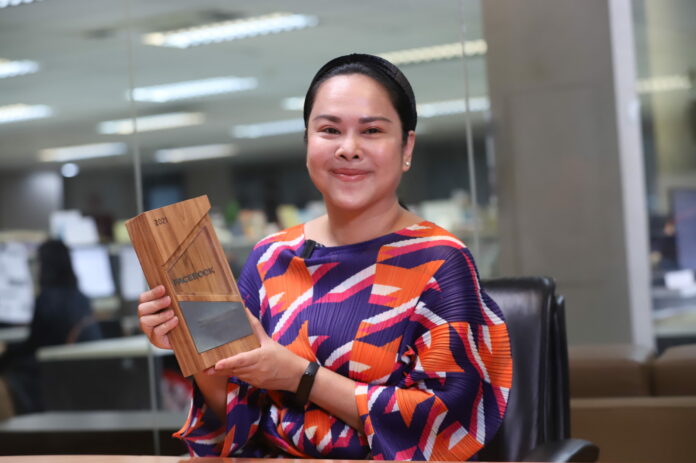
Khaosod Recognized by Facebook in Prestigious Award Campaign

Matichon Group Managing Director Parnbua Boonparn.

BANGKOK — Facebook presented Khaosod’s Facebook page with a prestigious award on Thursday, naming the page as the Most Watched Facebook Page under News Publisher of the Year 2021.

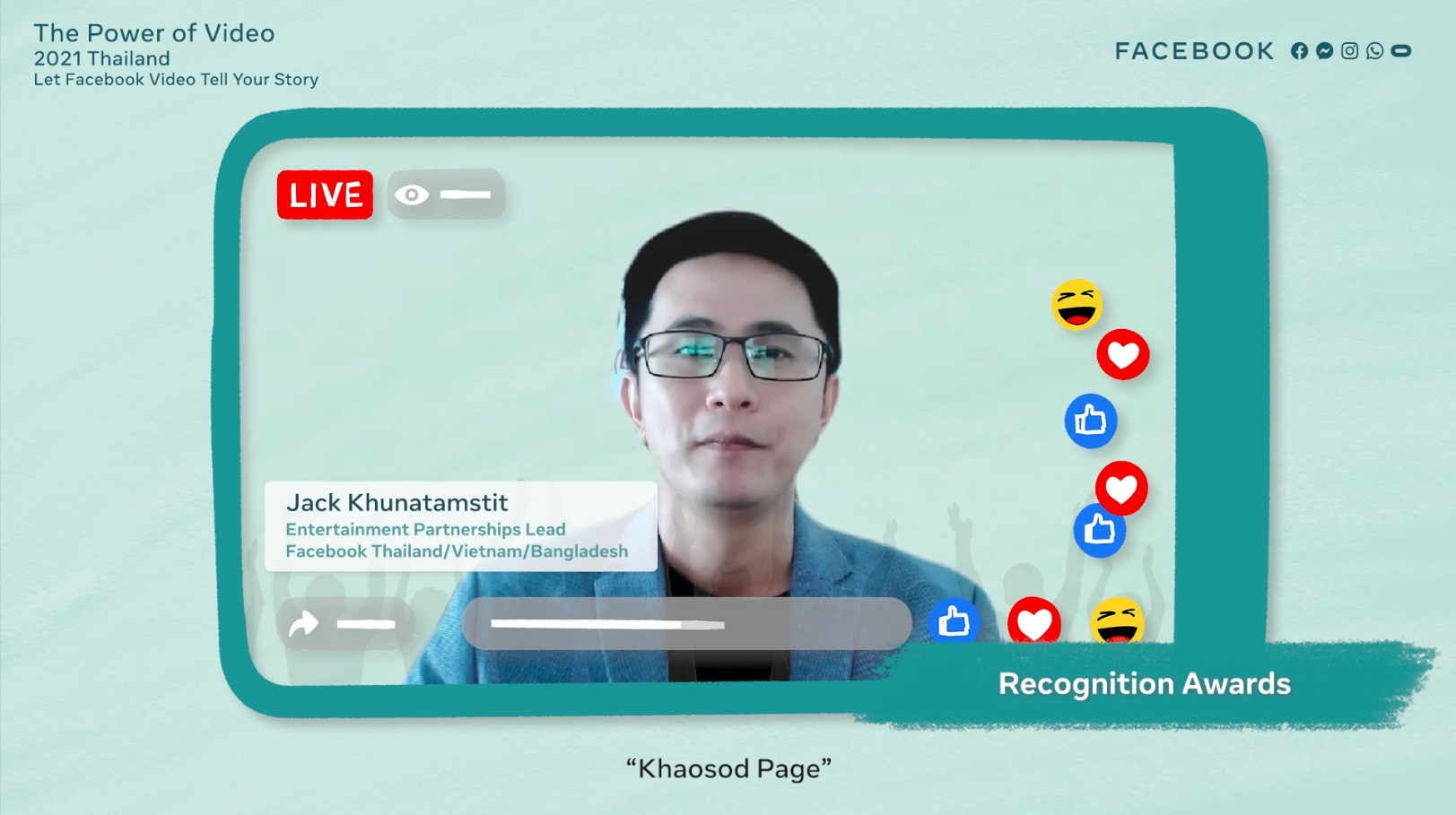
“Khaosod – ข่าวสด” accumulated more than 5.2 billion views throughout the year and has published more than 7,175 videos, a Facebook representative said in its Achievement Awards Ceremony, which was held virtually today.

333cats
The virtual award ceremony.

In the acceptance speech, Matichon Group Managing Director Parnbua Boonparn thanked Facebook for the Most Watched Facebook Page under News Publisher of the Year 2021, which she attributed to hardworking effort and dedication by Khaosod team to develop diverse content for the viewers and present current affairs to them in video form.

“Khaosod is a media company that was established since the era of print media, and has since stepped through the disruption until the present era,” Parnbua said. “We are very proud and pleased to have strongly overcome the obstacles, to the point of seizing the first place position in Thailand.”

She added, “We thank Facebook for recognizing the importance of news operations in the modern era.”

Parnbua also thanked the 17 million followers of Khaosod Facebook page, and promised to deliver more news content and up-to-date information about Thailand to the audience.

The Most Watched Facebook Page under News Publisher of the Year 2021 award is the latest recognition of Khaosod from Facebook.

Previously, Khaosod was praised by the Facebook Journalism Project as a successful model in producing diverse videos, generating high revenues and audienceship.

Advertisement

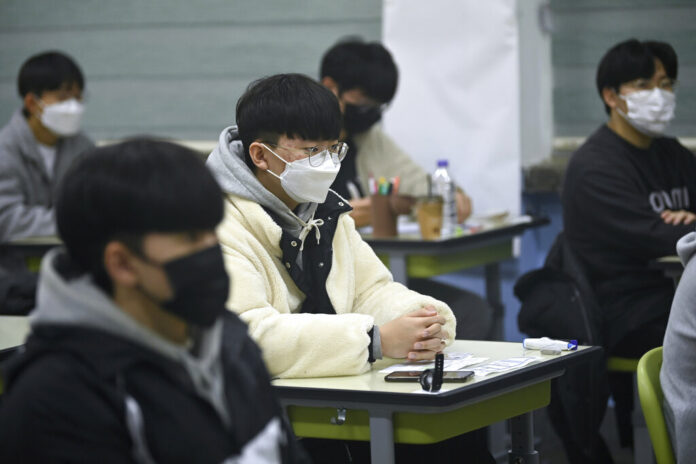
SKorea Sees Record Virus Jump as Thousands Take College Exam

South Korean students wait for the start of their College Scholastic Ability Test in an exam hall at a high school in Seoul Thursday, Nov. 18, 2021. Photo: Jung Yeon-je / Pool Photo

SEOUL, South Korea (AP) — South Korea reported its biggest daily jump in coronavirus infections since the start of the pandemic as hundreds of thousands of masked students flocked to schools on Thursday for the country’s highly competitive college entrance exam amid growing concerns about the delta-driven spread.

About 509,000 students were taking the one-day exam at 1,395 sites across the nation, including hospitals and shelters.

The annual exam, called “Suneung,” or the College Scholastic Ability Test, is crucial in the education-obsessed country, where careers, social standings and even marriage prospects greatly depend on which university a person attends.

Students were required to have their temperatures taken before entering classrooms, and those with fevers were sent to separate testing areas. The Education Ministry said that 68 infected students and 105 others in self-quarantine took the hours-long test in isolation.

The 3,292 new cases reported by the Korea Disease Control and Prevention Agency on Thursday marked the second straight day of over 3,000 cases. The agency said 29 patients died in the past 24 hours, bringing the death toll to 3,187, while 506 others were in serious or critical condition.

To reduce noise, transportation authorities were planning to temporarily stop landings and departures of planes at airports during the English-listening part of the test. Government offices and private companies had their employees come in late, and the country’s stock market delayed its opening by an hour to clear roads for test-takers.

“(Students) weren’t given proper classes (because of COVID-19) and I often saw my child worrying much and struggling,” said Seo Kwang-sun, a mother of a test-taker in Seoul.

While schools have been alternating between on-and-offline classes, the Education Ministry had planned a full return to classrooms starting next week to help reduce education gaps and align with the government’s virus strategies.

Officials eased social distancing rules starting this month in what they described as the first step toward restoring some pre-pandemic normalcy. In allowing larger social gatherings and longer indoor dining hours at restaurants, officials cited concerns about the pandemic’s impact on the economy and expressed hope that improving vaccination rates would keep hospitalizations and deaths down even if the virus continues to spread.

But there has been a rise in serious cases and fatalities among older people who rejected vaccines or whose immunities waned after being injected early in the mass immunization campaign that started in late February, prompting questions about whether the decision to loosen virus restrictions was premature.

So far, officials have issued no plans to re-impose stricter social distancing measures or postpone a full reopening of schools.

Story: Kim Tong-hyung

Advertisement

Hate Speech in Myanmar Continues To Thrive on Facebook

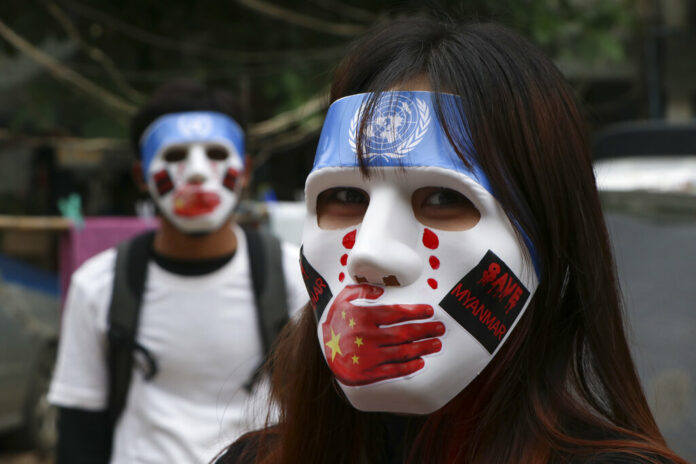
A young demonstrators participate in an anti-coup mask strike in Yangon, Myanmar, on April 4, 2021. Photo: AP

JAKARTA, Indonesia (AP) — Years after coming under scrutiny for contributing to ethnic and religious violence in Myanmar, Facebook still has problems detecting and moderating hate speech and misinformation on its platform in the Southeast Asian nation, internal documents viewed by The Associated Press show.

Three years ago, the company commissioned a report that found Facebook was used to “foment division and incite offline violence” in the country. It pledged to do better and developed several tools and policies to deal with hate speech. But scrolling through Facebook today, it’s not hard to find posts threatening murder and rape in Myanmar.

The breaches have persisted — and even been exploited by hostile actors — since the Feb. 1 military takeover this year that resulted in gruesome human rights abuses across the country.

One 2 1/2 minute video posted on Oct. 24 of a supporter of the military calling for violence against opposition groups has garnered over 56,000 views.

“So starting from now, we are the god of death for all (of them),” the man says in Burmese while looking into the camera. “Come tomorrow and let’s see if you are real men or gays.”

One account posts the home address of a military defector and a photo of his wife. Another post from Oct. 29 includes a photo of soldiers leading bound and blindfolded men down a dirt path. The Burmese caption reads, “Don’t catch them alive.”

Despite the ongoing issues, Facebook saw its operations in Myanmar as both a model to export around the world and an evolving and caustic case. Documents reviewed by AP show that Myanmar became a testing ground for new content moderation technology, with the social media giant trialing ways to automate the detection of hate speech and misinformation with varying levels of success.

Facebook’s internal discussions on Myanmar were revealed in disclosures made to the Securities and Exchange Commission and provided to Congress in redacted form by former Facebook employee-turned-whistleblower Frances Haugen’s legal counsel. The redacted versions received by Congress were obtained by a consortium of news organizations, including The Associated Press.

Facebook has had a shorter but more volatile history in Myanmar than in most countries. After decades of censorship under military rule, Myanmar was connected to the internet in 2000. Shortly afterward, Facebook paired with telecom providers in the country, allowing customers to use the platform without needing to pay for the data, which was still expensive at the time. Use of the platform exploded. For many in Myanmar, Facebook became the internet itself.

Htaike Htaike Aung, a Myanmar internet policy advocate, said it also became “a hotbed for extremism” around 2013, coinciding with religious riots across Myanmar between Buddhists and Muslims. It’s unclear how much, if any, content moderation was happening at the time.

Htaike Htaike Aung said she met with Facebook that year and laid out issues in the country, including how local organizations were seeing exponential amounts of hate speech on the platform and how preventive mechanisms, such as reporting posts, didn’t work in the Myanmar context.

One example she cited was a photo of a pile of bamboo sticks that was posted with a caption reading, “Let us be prepared because there’s going to be a riot that is going to happen within the Muslim community.”

Htaike Htaike Aung said the photo was reported to Facebook, but the company didn’t take it down because it didn’t violate any of the company’s community standards.

“Which is ridiculous because it was actually calling for violence. But Facebook didn’t see it that way,” she said.

Years later, the lack of moderation caught the attention of the international community. In March 2018, United Nations human rights experts investigating attacks against Myanmar’s Muslim Rohingya minority said Facebook had played a role in spreading hate speech.

When asked about Myanmar a month later during a U.S. Senate hearing, CEO Mark Zuckerberg replied that Facebook planned to hire “dozens” of Burmese speakers to moderate content, would work with civil society groups to identify hate figures and develop new technologies to combat hate speech.

“Hate speech is very language specific. It’s hard to do it without people who speak the local language and we need to ramp up our effort there dramatically,” Zuckerberg said.

Internal Facebook documents show that while the company did step up efforts to combat hate speech, the tools and strategies to do so never came to full fruition, and individuals within the company repeatedly sounded the alarm. In one May 2020 document, an employee said a hate speech text classifier that was available wasn’t being used or maintained. Another document from a month later said there were “significant gaps” in misinformation detection in Myanmar.

“Facebook took symbolic actions I think were designed to mollify policymakers that something was being done and didn’t need to look much deeper,” said Ronan Lee, a visiting scholar at Queen Mary University of London’s International State Crime Initiative.

In an emailed statement to the AP, Rafael Frankel’s, Facebook’s director of policy for APAC Emerging Countries, said the platform “has built a dedicated team of over 100 Burmese speakers,” but declined to state exactly how many were employed. Online marketing company NapoleonCat estimates there are about 28.7 million Facebook users in Myanmar.

During her testimony to the European Union Parliament on Nov. 8, Haugen, the whistleblower, criticized Facebook for a lack of investment in third-party fact-checking, and relying instead on automatic systems to detect harmful content.

“If you focus on these automatic systems, they will not work for the most ethnically diverse places in the world, with linguistically diverse places in the world, which are often the most fragile,” she said while referring to Myanmar.

After Zuckerberg’s 2018 congressional testimony, Facebook developed digital tools to combat hate speech and misinformation and also created a new internal framework to manage crises like Myanmar around the world.

Facebook crafted a list of “at-risk countries” with ranked tiers for a “critical countries team” to focus its energy on, and also rated languages needing more content moderation. Myanmar was listed as a “Tier 1” at-risk country, with Burmese deemed a “priority language” alongside Ethiopian languages, Bengali, Arabic and Urdu.

Facebook engineers taught Burmese slang words for “Muslims” and “Rohingya” to its automated systems. It also trained systems to detect “coordinated inauthentic behavior” such as a single person posting from multiple accounts, or coordination between different accounts to post the same content.

The company also tried “repeat offender demotion” which it lessens the impact of posts of users who frequently violate guidelines. In a test in two of the world’s most volatile countries, demotion worked well in Ethiopia, but poorly in Myanmar — a difference that flummoxed engineers, according to a 2020 report included in the documents.

“We aren’t sure why … but this information provides a starting point for further analysis and user research,” the report said. Facebook declined to comment on the record if the problem has been fixed a year after its detection, or about the success of the two tools in Myanmar.

Story: Sam Mcneil and Victoria Milko

Advertisement

Pfizer Thailand projects a positive outlook towards 2022

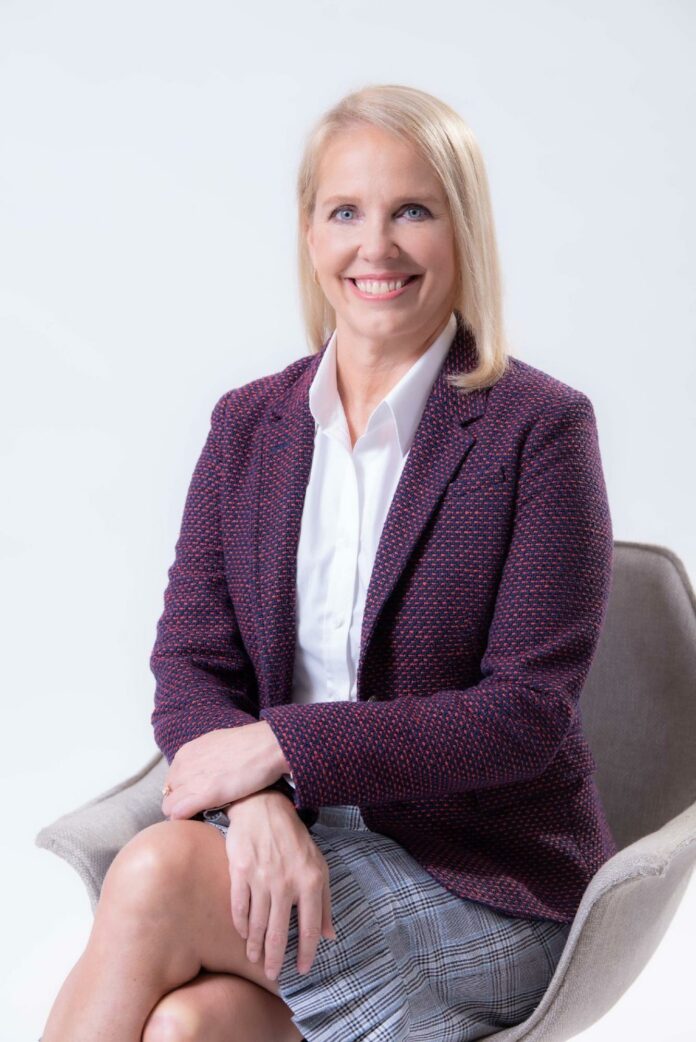
Proceeding the FDA approval of the Pfizer and BioNTech Covid-19 vaccine, the world has witnessed several countries benefitting from its efficacy. Thailand has recently procured 30 million doses as it aims to revive an economy crippled by the collapse of the tourism industry. As more people gain access to the revolutionary vaccine, the country hopes to join the list of nations transitioning into a state of normalcy. Deborah Seifert, the Country Manager to Pfizer Thailand and Indochina, speaks about the vaccine rollout and the company’s goals and initiatives towards the country’s road to recovery. “I am proud to represent a company at the forefront of discovery during this pandemic. Pfizer, with our partner BioNTech, innovated the Covid-19 vaccine research, development and production process at a breakneck speed to offer a solution to this global challenge.”

Committed presence

Pfizer has a long-term commitment towards a strong healthcare system in Thailand. Within the last 60 years, Pfizer has strived to deliver access to innovative medicines for Thai people. Apart from vaccines, the goal is to pursue therapeutic breakthroughs in oncology, inflammation and immunology, internal medicine, and rare diseases. By focusing on these five areas, the company provides therapeutic options across all age groups within the population.

“We really have a focus on bringing the types of innovation that make a difference in patients’ lives. That is the basis of our plan to improve access to those innovative medicines either through reimbursement in the public healthcare system or through making our drugs more affordable to patients that need help.”

Road to recovery

Ms. Seifert reiterated Pfizer’s purpose and commitment of bringing breakthroughs that change patients’ lives. We look to serve more patients with our innovative portfolio by continuing to launch new products.”, she added. 

As Thailand approaches its goal of vaccinating 70% of its population by the end of the year, she expressed her excitement over the procurement and delivery of Pfizer vaccines in the country.  “We are proud and honored to be part of an industry that will help bring an end to this pandemic.”

The arrival of Pfizer vaccines in September has helped speed up vaccination all over the country. Increasing vaccination rates has led to the resumption of businesses, such as restaurants, fitness centers, and malls. 

Schools have also started to gear up for reopening after about half a year of remote learning. The government announced that among the 30 million Pfizer doses purchased, 10 million are allocated to students ages 12 to 18 to push for a high immunization rate in line with the plans to reopen schools before the end of the year. According to the Education Ministry, about 75% of the students in Thailand have signed up for the vaccine. With student vaccinations commencing, schools, including those within the dark red zones, have begun the initial phase of reopening.

As more people get vaccinated and immunity increases, the possibility of fully reopening the country to the world is starting to become more imminent. The company hopes to ensure that this partnership with the government will aid in reviving the economy through the safe return of international travelers and medical tourists.

‘We need to love what we do.’

Standing by company’s corporate core values; courage, excellence, equity, and joy, Pfizer has been able to retain its status as the forerunner of medical innovation. Ms. Seifert emphasized the importance of solidarity and commitment to its core tenets as the world continues to grapple the persistence of the pandemic. “Every colleague really embodies and checks themselves against these dimensions, which Pfizer has taken a lot of effort to really embed throughout the whole organization.”

She furthered by stating that joy is an indispensable contributor to the success of the organization. “It’s really important to recognize that we need to love what we do.”

Paradigm shifts

“Our representatives in the field are used to having day-to-day personal interactions with healthcare professionals. That has reverted to a remote working situation. We had to become much more enabled by digital technology.”

As the pandemic continues to challenge business paradigms, Pfizer had to remodel its means to serve the country without compromising the safety of both its employees and customers. “We really had to adapt to new way of working.”, stated Ms. Seifert while speaking about the difficulties they faced in terms of logistics and communication. However, she assured that by learning how to do things remotely, the company strives to ensure that every person in Thailand is provided sufficient support.

Equity, diversity, and inclusion are not a trend, but an integral part of corporate strategy, practices and Pfizer’s DNA.

Being appointed as the Country Manager for Thailand and Indochina during the onset of the pandemic, Ms. Seifert was aware of the amount of uncertainty that awaited this role. However, she sees it with a great deal of respect. “It is a great honor to lead an organization that is helping to be a part of the solution for the pandemic at the same time as delivering our products to patients under extraordinary conditions.”

It also brings her much pride to work in an organization that heavily values equity, diversity, and inclusion. In line with the company values, she believes that all employees should be given equal opportunities. She places importance on the voices of her colleagues, who she describes to be curious, courageous, inspiring, passionate, enthusiastic, and flexible.

“Our people are our key driver to our long-term success. It’s everyone’s responsibility for creating and maintaining a diverse, equity workforce and an inclusive workplace. Each one of us needs to do our part with full potentials to make the company the great place to work and to become an employer of choice in the market.”

As the lead for Pfizer’s Diversity and Inclusion Council in Emerging Markets, Asia, Deborah Seifert is committed to fully drive D&I policy in the workplace as well as support both regional and local D&I programs to ensure that this embedded culture is apparently practiced and upheld in the company, and ultimately make Pfizer a great place to work. In addition, she embodies the company’s equity goals including empowering women. We pay attention to not just putting women in roles. They need to be really equipped and ready for those roles.” She underlined that several women work as a Country Managers across Asia.  

As the society faces sociocultural and economic challenges, Pfizer and its team of dedicated employees continue to work towards improving the lives of every citizen not only through innovative medicines, but also through its commitment to collaborate with health care providers, governments and local communities to support and expand access to reliable, affordable healthcare for the Thai population.

Advertisement

NSTDA launches a major project of “Health Tech Thailand 2021” 

on December 8-9 With 100s of “BCG Health Tech” innovations in Hybrid Event amidst Thailand Science Park

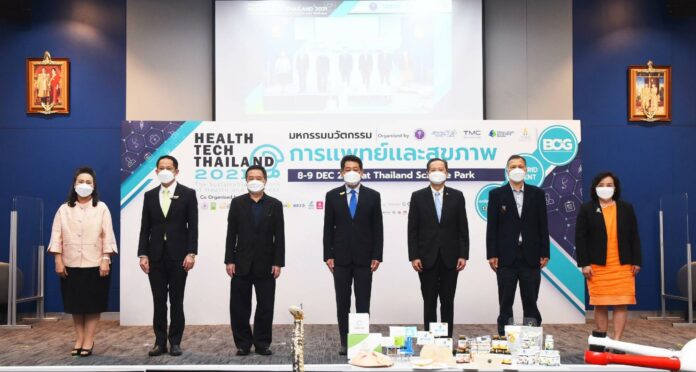
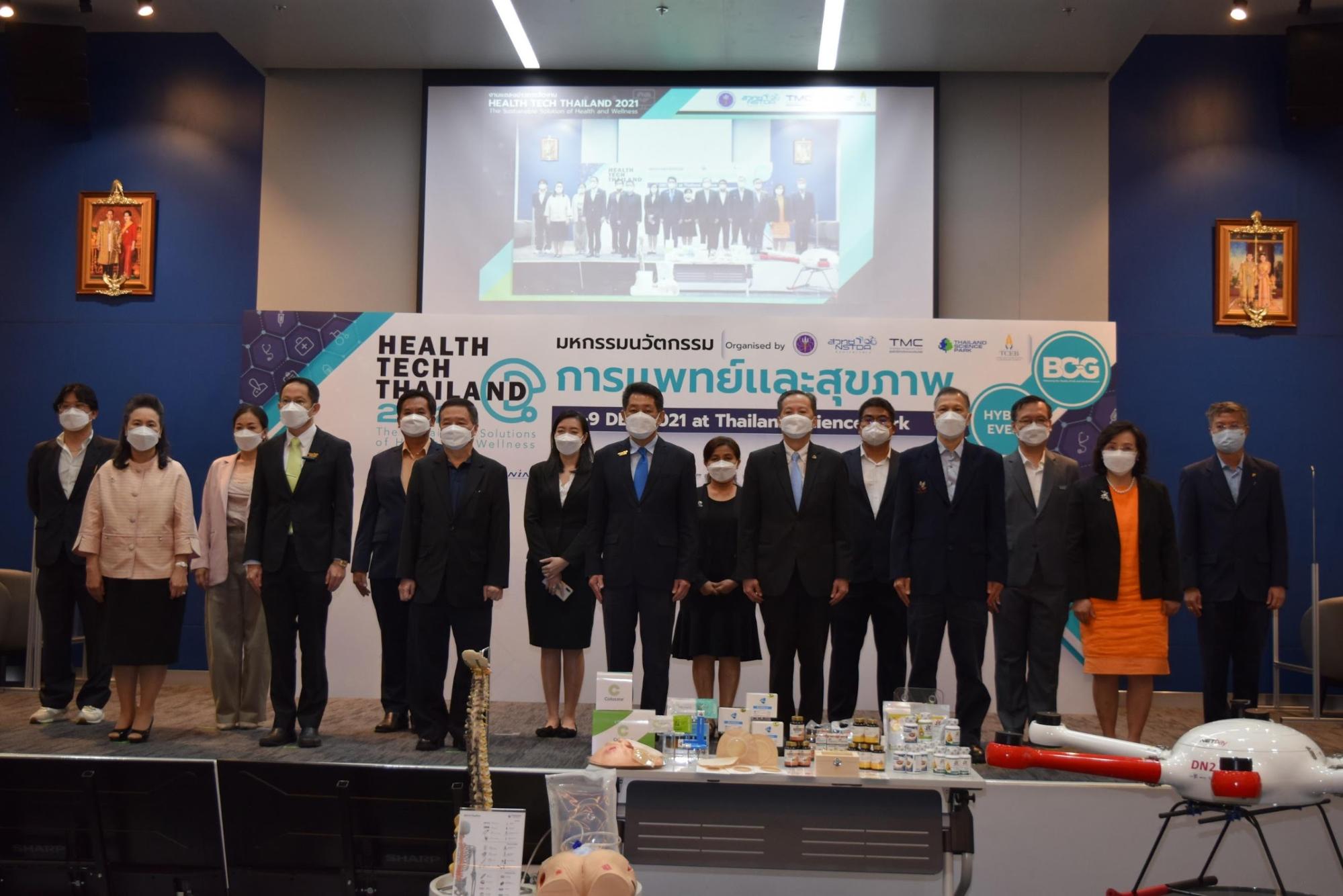
November 17, 2021—At the press room of MHESI, 1st floor of King Mongkut Building :  Ministry of Higher Education, Science, Research and Innovation (MHESI) in association with Thailand Science Park, National Science and Technology Development Agency (NSTDA) and other associated organizations will lead a press conference on a special upcoming event of “BCG Health Tech Thailand 2021”, which is scheduled to take place on this 8-9 of December, in Thailand Science Park, KhlongLuang district, PathumThani province. The event will be operated as Hybrid Event, which provides people with an opportunity to access either onsite or online via 3D technology on www. Healthtech-thailand.com.

image4 9

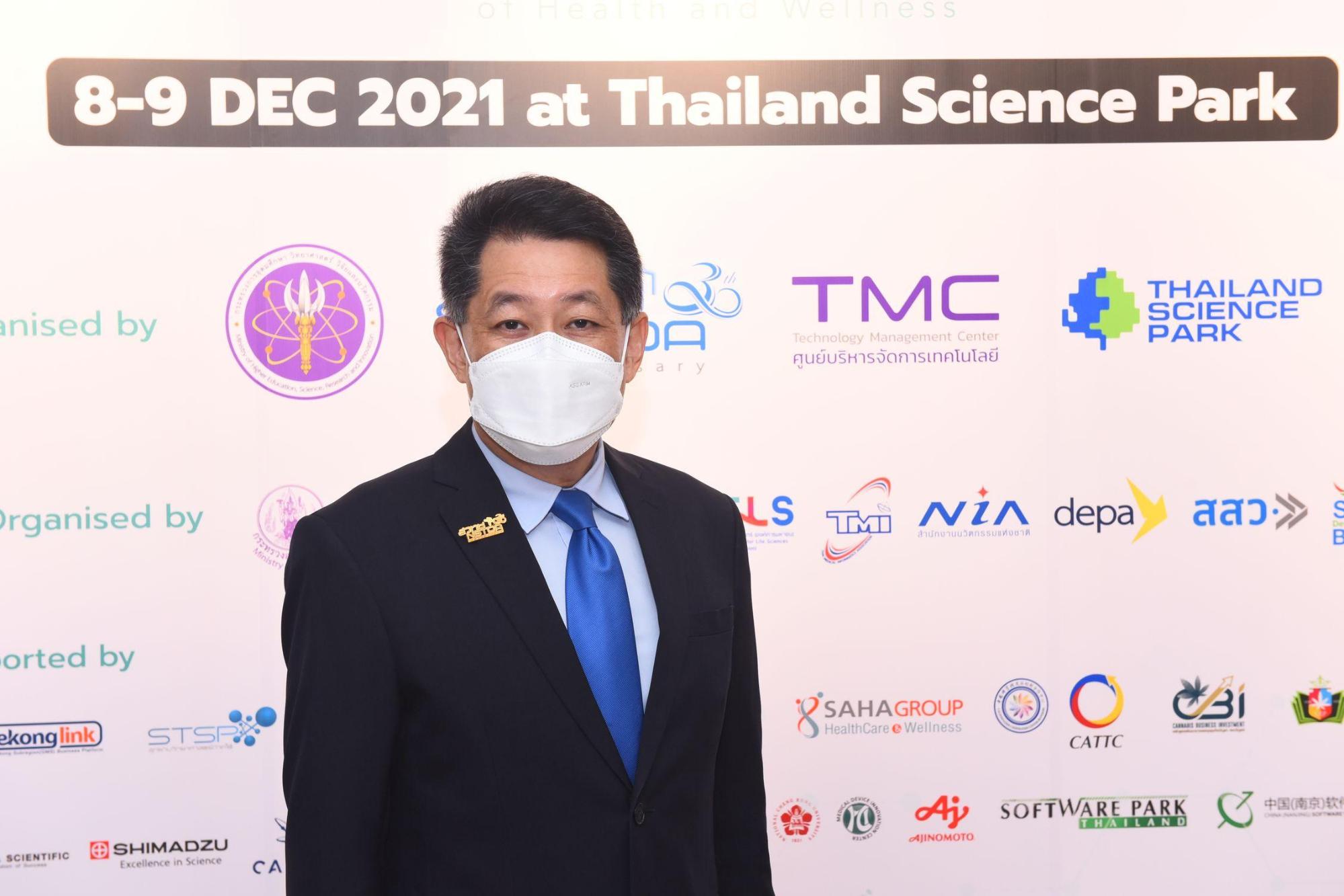
Dr. Narong Sirilertworakul, the president of NSTDA together with the NSTDA researchers, Mr. Adisorn Apasuthirat, Vice Chairman of Medical and Health Device Manufactures Industry Club, Mr. Pichit Viwatrujirapong, Vice Chairman and Chief Executive Officer of Netbay Public Co.,Ltd will be on this occasion, in order to state the importance of the new project which is to promote the latest medical innovations, according to Thailand model of economy in promoting BCG economy. 

By the year 2027, Thailand intends to be a medical hub in South East Asia, therefore the government plans to encourage inbound investment on medical industry as well as to reduce the importation. It is expected that “BCG Health Tech Thailand 2021” will become a channel for the national and international investors, health and medical entrepreneurs to experience hundreds of medical innovations.

image3 15

Dr. Narong Sirilertworakul, the president of NSTDA says that after Thailand reopened to visitors on November 1, the economy of the country is now approaching to the “New Normal” way of life. To Resonate with the BCG Economy model, Thailand Science Park (Thailand’s first private research center, working in subordinating to the MHESI) together with Thailand Convention and Exhibition Bureau (TCEB), Thailand Center of Excellence for Life Sciences (TCELS), Thai Medical Informatics Association (TMI) and other 50s associated agencies in Thailand and from other countries will cooperate in organizing “BCG Health Tech Thailand 2021” on December 8-9, in Thailand Science Park. 

image6 3

The event will become the first health and medical event in Thailand that greets all the national and international investors, ranging from the world’s major tech companies and world’s leading medical agencies from 5 countries, including Republic of China (Taiwan) and Hong Kong Special Administrative Region, such as Mekonglink Co., Ltd., South Korea, Jiangsu Longhui Intelligent Technology Co., Ltd., China, National Cheng Kung University, Taiwan. Besides, there will be a showcase of medical innovations from UK, Japan, Hong Kong and Singapore, plus more than 100 innovations from Thai and NSTDA’s researchers. There will be a counsel service for entrepreneurs, medical and health products for sales and medical workshops for people in general.

Moreover, starting from December 8, some activities and online trading will continue for 12 months on www.healthtech-thailand.com, in order that the investors from around the world can benefit from the event.

“The spread of covid 19 in 2020 has impacted on the scarcity of medical equipment which results from the problem in global supply chains. Therefore, we see an urgency in producing and developing high-tech medical equipment. The process still requires public and private investment in research,” said Dr.Narong

image5 6

The president of NSTDA also says that on the opening day (December 8), we are honoured to have Prof.Dr. Anek Laothamatas, Minister of MHESI as a guest of honour, who will state the vision of Thailand on “Health and wellness”. In addition, there are 24 key speakers to provide 14 interesting topics, and also 30 topics for debate, available both online and onsite for 2 days in Thailand Science Park. The main topics are “Procedures to Contain and Mitigate the Coronavirus” and “Measures to Handle Crisis in Asia Pacific and in Thailand”, “The Direction of Health and Wellness Industry after the Covid 19”, “New Technological Trends 2022” and “The Promotion of Cannabis and Hemp Products in Commercial Aspect and Its Potential to Reach International Market”   

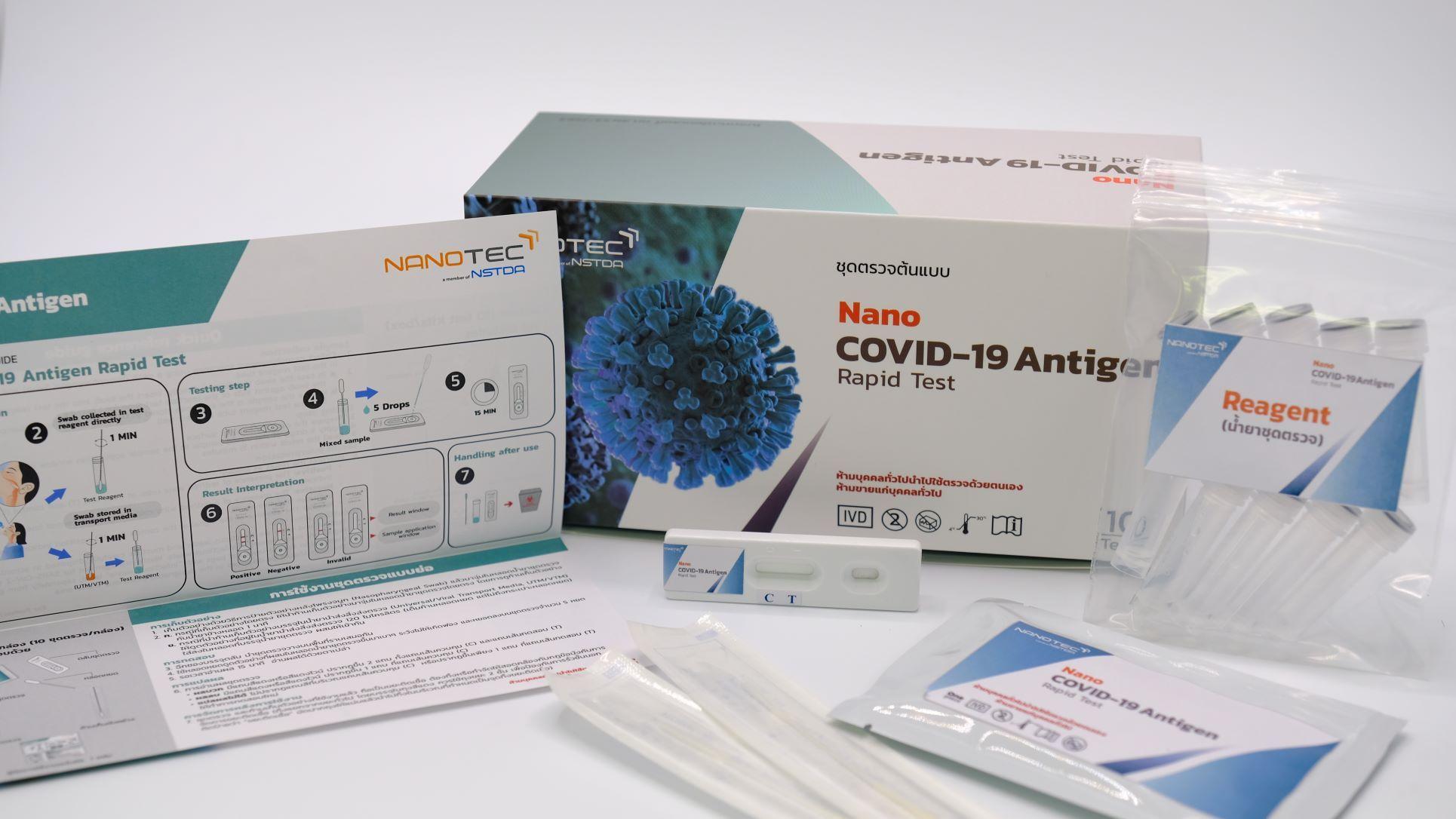
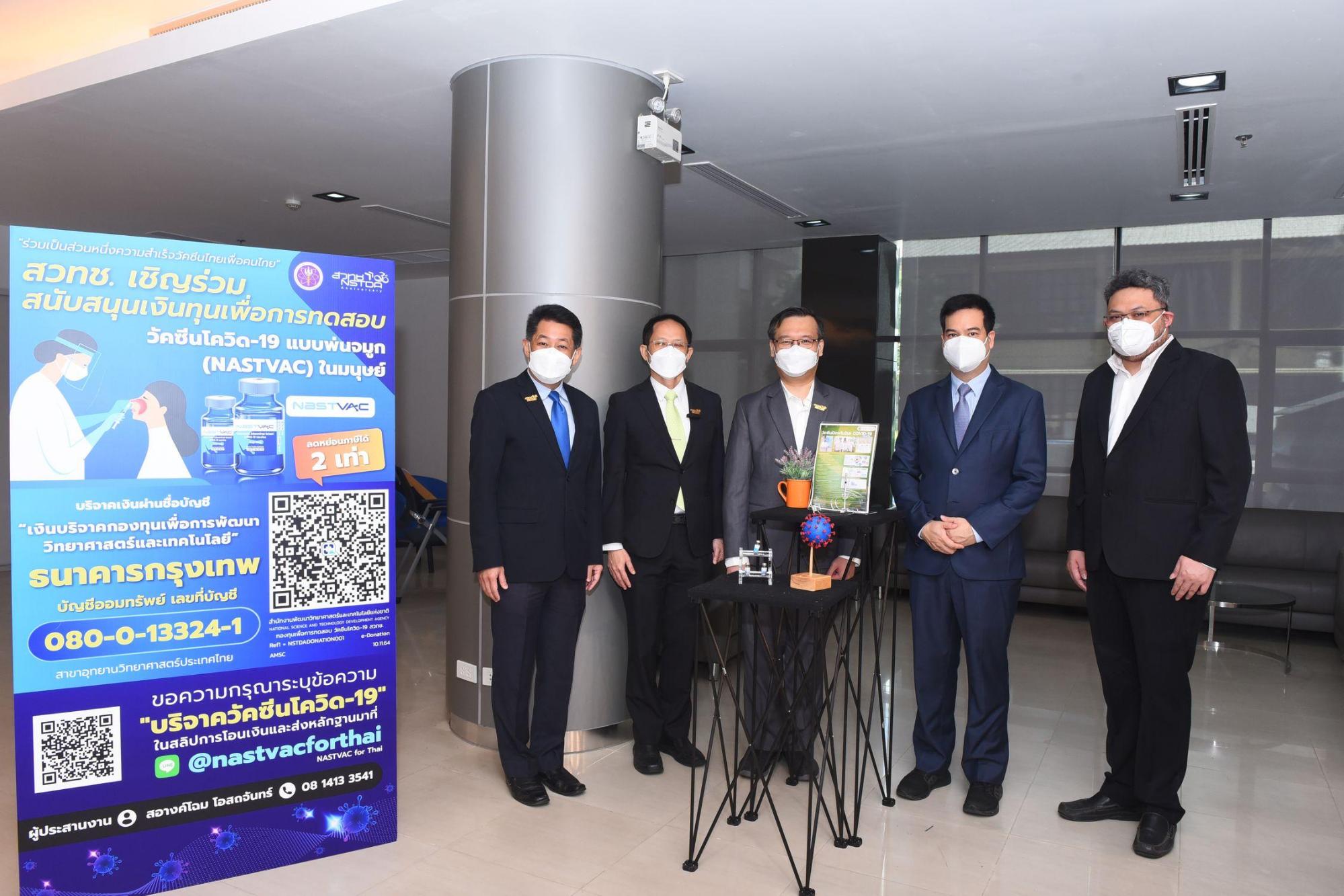
The anticipated medical products resulting from Thai research’s outcomes such as Intranasal Vaccine for Covid 19 (the product is now preparing to be tested in humans by 2022, by NSTDA), NanoCOVID-19 Antigen Rapid Test, recipes for nasogastric tube feeding patients and a drone to delivery drug etc. are also exhibited in this event. 

Finally, by organizing this special event, the NSTDA aims to integrate its knowledge and its researchers to other research agencies in Thailand and in other countries, for the purpose of launching innovations into the market and boosting up investment and trading which will benefit the Thailand economy. Since, medical equipment is one of the integral parts in BCG economy that the government wants to promote, in order to make Thailand the Medical Hub in 2027. This action, especially the upgrade of Thailand’s medical technology and devices resonates with the government’s policy to encourage the national stability as well as to prepare itself for the complete aged society.

The participants can access more information and register for free on website www.healthtech-thailand.com  and www.facebook.com/healthtechthailandevent

Advertisement

Poland Uses Water Cannons Against Migrants at Belarus Border

In this handout photo released by State Border Committee of the Republic of Belarus on Tuesday, Nov. 16, 2021, Polish servicemen use a water cannon during clashes between migrants gathering at the checkpoint "Kuznitsa" at the Belarus-Poland border near Grodno, Belarus, on Tuesday, Nov. 16, 2021. Photo: State Border Committee of the Republic of Belarus via AP

WARSAW, Poland (AP) — Polish forces at the border with Belarus used water cannons and tear gas Tuesday against stone-throwing migrants, as Warsaw accused Belarusian authorities of giving smoke grenades and other weapons to those trying to cross the frontier.

The events marked an escalation in the tense crisis on the European Union’s eastern border, where the West has accused President Alexander Lukashenko of using the migrants as pawns to destabilize the 27-nation bloc in retaliation for its sanctions on his authoritarian regime. Belarus denies orchestrating the crisis.

The Poland Border Guard agency posted video on Twitter showing water being sprayed across the border at a group of migrants who threw debris, and the Defense Ministry also said tear gas was used against the attackers. Polish authorities said nine of its forces were injured — seven policemen, one soldier and a female border guard.

Some 2,000 migrants were at the frontier in makeshift camps in the freezing weather, but only about 100 were believed involved in attacking the Polish forces at the crossing near Kuźnica, said Border Guard spokeswoman Anna Michalska. The crossing has been closed since last week.

Police spokesman Mariusz Ciarka later said the migrants there had been “pacified.” He added that the attackers had been given smoke grenades by the Belarusians and threw stones at the Polish police, with the events monitored by the Belarusian services using a drone. The Polish Defense Ministry also said Belarus gave some migrants flash-bang grenades.

Belarus’ State Border Guard Committee and the Foreign Ministry said they would investigate Poland’s actions.

“These are considered violent actions against individuals who are on the territory of another country,” committee spokesman Anton Bychkovsky was quoted as saying by Belarus’ state news agency Belta.

AP21320403860715
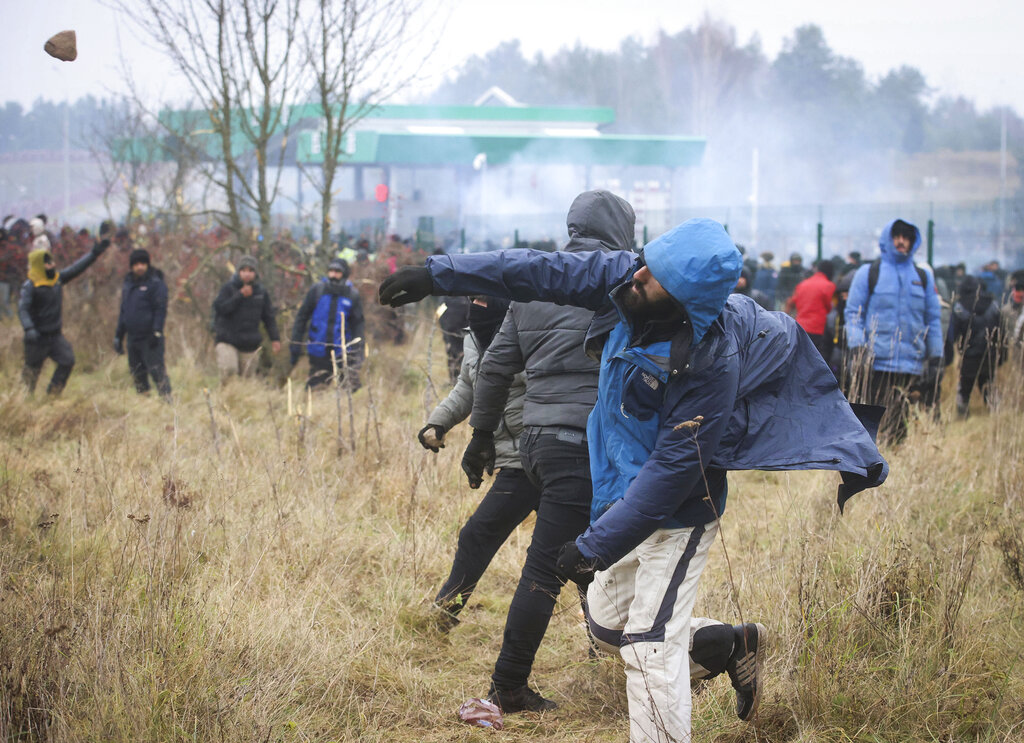
A man throws a stone during clashes with Polish border guards at the Belarus-Poland border near Grodno, Belarus, on Tuesday, Nov. 16, 2021. Polish border forces say they were attacked with stones by migrants at the border with Belarus and responded with a water cannon. The Border Guard agency posted video on Twitter showing the water cannon being directed across the border at a group of migrants in a makeshift camp. Photo: Leonid Shcheglov / BelTA via AP

Lukashenko on Tuesday again rejected accusations of engineering the crisis and said his government has deported about 5,000 illegal migrants from Belarus this fall.

“We’re not collecting refugees all over the world and bringing them to Belarus, as Poland has informed the European Union. Those who come to Belarus legally, we accept here, the same way any other country would. Those who violate the law, even in the slightest, (we put) on a plane and send back (home),” he told a government meeting dedicated to the situation at the border.

In May, however, he had railed against the EU sanctions imposed on his country for its harsh crackdown on internal dissent, saying: “We were stopping migrants and drugs — now you will catch them and eat them yourself.”

On Tuesday, Lukashenko said he and German Chancellor Angela Merkel agreed Monday by phone that neither Belarus, nor the EU would benefit from an escalation of the crisis. He said he proposed a resolution but did not elaborate, adding that Merkel is discussing it with other EU leaders.

Some of the migrants have children with them at the border in their desperate bid to reach the EU. Most are fleeing conflict, poverty and instability in the Middle East and elsewhere. At least 11 deaths have been reported in recent weeks as the weather has turned colder and they are trapped in the dank forest between the forces of the two countries.

While some have managed to get into the EU before Poland, Lithuania and Latvia bolstered their borders, passage appears to be much harder now.

AP21320321766769
Migrants from the Middle East and elsewhere gather at the checkpoint “Kuznitsa” at the Belarus-Poland border near Grodno, Belarus, on Monday, Nov. 15, 2021. Photo: Leonid Shcheglov / BelTA via AP

Poland’s Defense Ministry said Belarusian forces tried to destroy border fences, and its Interior Ministry posted video apparently showing migrants trying to tear one down. It said the migrants are using the smoke grenades and similar weapons given to them by Belarusian troops who no longer seem to be trying to conceal their involvement.

Poland has taken a tough stand against the migrants’ illegal entry, reinforcing the border with riot police and troops, rolling out razor wire, and making plans to build a tall steel barrier. The Polish approach has largely met with approval from other EU nations, who want to stop another wave of migration.

But Poland also has been criticized by human rights groups and others for pushing migrants back into Belarus and not allowing them to apply for asylum.

“It’s very clear that if you see what’s been happening to this group of people =- that their own specific concerns, their particular dignity and their rights — have not been treated with the respect that they should have,” said U.N. spokesman Farhan Haq. “And that is why we want them to be able to speak for themselves and to be heard. We don’t want these people to be instrumentalized and used as pawns in the disputes involving the countries.”

Russian Foreign Minister Sergey Lavrov called Poland’s actions “violate all conceivable norms of international humanitarian law and other agreements of the international community.”

Warsaw says Moscow bears some responsibility for the border crisis, given its strong support for Belarus. The Russian government has denied responsibility.

Events at the border have been difficult to verify independently. Poland has imposed a state of emergency, which bars reporters and human rights workers from the area. In Belarus, journalists face severe restrictions on their ability to report.

Poland’s parliament is expected to consider a bill to regulate citizens’ ability to move in the border area after the state of emergency expires in December.

The EU has been pressuring airlines to stop carrying Syrians, Iraqis and others to Belarus, and the efforts were bringing changes. A Beirut travel agency said flights from the Lebanese capital to Minsk had been stopped for now. A Tuesday evening flight by Belarusian carrier Belavia was shown as canceled on the airport’s website.

AP21320420699992
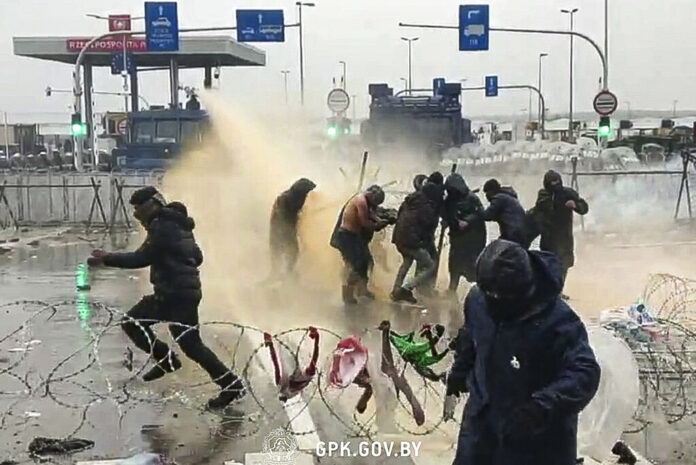
A man runs away from a water cannon during clashes between migrants and Polish border guards at the Belarus-Poland border near Grodno, Belarus, on Tuesday, Nov. 16, 2021. Photo: Leonid Shcheglov / BelTA via AP

Iraq urged its citizens at the border to return home. About 200 Iraqis in Belarus to travel to the EU have contacted the Iraqi Embassy in Russia about returning home, an embassy spokesman told the Interfax agency. The spokesman said an evacuation flight will leave Thursday from Minsk, and Belarusian authorities have helped bring migrants back from the border.

Social media platforms used by Syrians and Iraqis to navigate the Belarus-Europe track posted photos showing crowds along the border overnight. Some appeared undeterred, posting that they got warm clothes and boots. Messages celebrated those who made it across, and a few urged migrants to head for the Belarus-Lithuania border.

Some described harsh treatment, including beatings, by Belarusian border guards, but most postings appeared to recognize that the Belarus route might no longer work.

“There is no more path to escape. By God, Minsk’s route has ended. What are the new roads?” one person posted on a social media platform.

___

Story: Vanessa Gera and Daria Litvinova. Litvinova reported from Moscow. Sarah El Deeb in Beirut, Edith M. Lederer at the United Nations and Yuras Karmanau Kyiv, Ukraine, contributed.

Advertisement

Pfizer Agrees To Let Other Companies Make Its COVID-19 Pill

This image provided by Pfizer shows its COVID-19 pills. Drugmaker Pfizer said Tuesday, Nov. 16, 2021, it is submitting its experimental pill for U.S. authorization, setting the stage for a likely launch in coming weeks. Photo: Pfizer via AP

LONDON (AP) — Drugmaker Pfizer Inc. has signed a deal with a U.N.-backed group to allow other manufacturers to make its experimental COVID-19 pill, a move that could make the treatment available to more than half of the world’s population.

In a statement issued Tuesday, Pfizer said it would grant a license for the antiviral pill to the Geneva-based Medicines Patent Pool, which would let generic drug companies produce the pill for use in 95 countries, making up about 53% of the world’s population.

The deal excludes some large countries that have suffered devastating coronavirus outbreaks. For example, while a Brazilian drug company could get a license to make the pill for export to other countries, the medicine could not be made generically for use in Brazil.

Still, health officials said the fact that the deal was struck even before Pfizer’s pill has been authorized anywhere, could help to end the pandemic quicker.

“It’s quite significant that we will be able to provide access to a drug that appears to be effective and has just been developed, to more than 4 billion people,” Esteban Burrone, head of policy at the Medicines Patent Pool, said.

He estimated that other drugmakers would be able to start producing the pill within months, but acknowledged the agreement wouldn’t please everyone.

“We try to strike a very delicate balance between the interests of the (company), the sustainability required by generic producers and most importantly, the public health needs in lower and middle-income countries,” Burrone said.

Under the terms of the agreement, Pfizer will not receive royalties on sales in low-income countries and will waive royalties on sales in all countries covered by the agreement while COVID-19 remains a public health emergency.

Earlier this month, Pfizer said its pill cut the risk of hospitalization and death by nearly 90% in people with mild to moderate coronavirus infections. Independent experts recommended halting the company’s study based on its promising results.

On Tuesday, Pfizer asked the U.S. Food and Drug Administration to authorize the pill.

Since the pandemic erupted last year, researchers worldwide have raced to develop a pill to treat COVID-19 that can be taken at home easily to ease symptoms, speed recovery and keep people out of the hospital. At the moment, most COVID-19 treatments must be delivered intravenously or by injection.

Britain authorized Merck’s COVID-19 pill earlier this month, and it is pending approval elsewhere. In a similar deal with the Medicines Patent Pool announced in October, Merck agreed to let other drugmakers make its COVID-19 pill, molnupiravir, available in 105 poorer countries.

Doctors Without Borders said it was “disheartened” that the Pfizer deal does not make the drug available to the entire world, noting that the agreement announced Tuesday also excludes countries including China, Argentina and Thailand.

“The world knows by now that access to COVID-19 medical tools needs to be guaranteed for everyone, everywhere, if we really want to control this pandemic,” said Yuanqiong Hu, a senior legal policy adviser at Doctors Without Borders.

The decisions by Pfizer and Merck to share their COVID-19 drug patents stands in stark contrast to the refusal of Pfizer and other vaccine-makers to release their vaccine recipes for wider production. A hub set up by the World Health Organization in South Africa intended to share messenger RNA vaccine recipes and technologies has not enticed a single pharmaceutical to join.

Fewer than 1% of Pfizer’s COVID-19 shots have gone to poorer countries.

Robbie Silverman of Oxfam America welcomed Pfizer’s agreement to let other makers produce its COVID antiviral, but he noted that billions would still be left without access, including to the company’s vaccine.

“This move also begs the important question: If Pfizer can share data and intellectual property on a medicine, why have they so far categorically refused to do so for their COVID vaccine?” Silverman said.

Story: Maria Cheng

Advertisement

Hot News

LATEST NEWS

Bangkok
overcast clouds
30.2 ° C
31.6 °
28.8 °
76 %
4.5kmh
100 %
Tue
34 °
Wed
34 °
Thu
35 °
Fri
31 °
Sat
31 °