

























30 C
Bangkok
Saturday, June 6, 2026
Home Blog Page 1027

Biden, McConnell Get COVID-19 Boosters, Encourage Vaccines

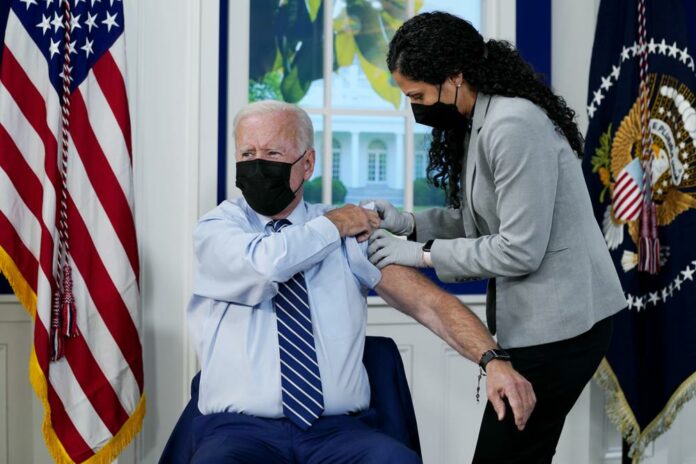
President Joe Biden receives a COVID-19 booster shot during an event in the South Court Auditorium on the White House campus, Monday, Sept. 27, 2021, in Washington. (AP Photo/Evan Vucci)

WASHINGTON (AP) — Seventy-eight-year-old Joe Biden and 79-year-old Mitch McConnell got their booster shots Monday, the Democratic president and the Republican Senate leader urging Americans across the political spectrum to get vaccinated or plus up with boosters when eligible for the extra dose of protection.

The shots, administered just hours apart on either end of Pennsylvania Avenue, came on the first workday after the Centers for Disease Control and Prevention and the Food and Drug Administration recommended a third dose of the Pfizer vaccine for Americans 65 and older and approved them for others with preexisting medical conditions and high-risk work environments.

Both leaders said that even though the booster doses provide more enduring protection against the virus, they weren’t the silver bullet to ending the pandemic.

“Boosters are important, but the most important thing we need to do is get more people vaccinated,” Biden said.

Nearly 25% of eligible Americans aged 12 and older haven’t received a single dose of the vaccines. They are bearing the brunt of a months-long surge in cases and deaths brought about by the more transmissible delta variant of the virus that has killed 688,000 in the U.S. since the pandemic began.

“Like I’ve been saying for months, these safe and effective vaccines are the way to defend ourselves and our families from this terrible virus,” said McConnell, a polio survivor.

Biden got his first shot on Dec. 21 and his second dose three weeks later, on Jan. 11, along with his wife, Jill Biden. The first lady, who is 70, received her Pfizer booster dose in private at the White House on Monday afternoon, said her spokesperson, Michael LaRosa.

“Now, I know it doesn’t look like it, but I am over 65 — I wish I — way over,” the president joked. “And that’s why I’m getting my booster shot today.”

Biden has championed booster doses since the summer as the U.S. experienced a sharp rise in coronavirus cases driven by the delta variant. While the vast majority of cases continue to occur among unvaccinated people, regulators pointed to evidence from Israel and early studies in the U.S. showing that protection against so-called breakthrough cases was vastly improved by a third dose of the Pfizer shot.

But the aggressive American push for boosters, before many poorer nations have been able to provide even a modicum of protection for their most vulnerable populations, has drawn the ire of the World Health Organization and some aid groups, which have called on the U.S. to pause third shots to free up supply for the global vaccination effort.

Biden said last week that the U.S. was purchasing another 500 million doses of the Pfizer vaccine — for a total of 1 billion over the coming year — to donate to less well-off nations.

Biden took questions from reporters about his vaccination experience and matters of the day as a military nurse injected the dose into his arm.

The president said he did not have side effects after his first or second shots and hoped for the same experience with his third.

Vice President Kamala Harris, 56, received the Moderna vaccine, for which federal regulators have not yet authorized boosters — but they are expected to in the coming weeks. Regulators are also expecting data soon about the safety and efficacy of a booster for the single-dose Johnson & Johnson shot.

At least 2.66 million Americans have received booster doses of the Pfizer vaccine since mid-August, according to the CDC. About 100 million Americans have been fully vaccinated against COVID-19 through the Pfizer shot. U.S. regulators recommend getting the boosters at least six months after the second shot of the initial two-dose series.

___

Associated Press writers Josh Boak and Lisa Mascaro contributed.
Advertisement

Opinion: Israel’s Urgent Plans for Saving Planet Earth Through Innovation

Photo supplied by the Israeli Embassy in Bangkok

By Orna Sagiv, Chargé d’Affaires a.i.
Embassy of Israel in Bangkok

Even those of us not particularly cognizant of the climate crisis could not help but be alarmed by what has been happening around us lately.

A decade ago, Thailand faced the 2011 Great Flood, the worst flood crisis in seven decades, inundating several parts of Bangkok and other provinces. Fast forward to 2019, the country suffered its worst drought in 40 years, despite being in the monsoon season.

Nonetheless, forest fires engulfing the Northern Thailand only get worse in the recent years. Around the world, wildfires have been roaring in Australia, California, France, Israel and many other countries, while massive floods in China, Germany and Western Europe claimed hundreds of lives. These catastrophic events are escalating exponentially all around the world.

Disasters as such, both in Thailand and around the world, not only serve as serious warning signs but also highlight the urgency to transition to a lifestyle and economy that supports – rather than disrupts – planet Earth’s climate, nature, and environment.

Regardless of its small size, Israel has taken a significant step towards tackling this global challenge. In July 2021, Israel joined dozens of other countries that have already decided on a strategy for a carbon neutral economy. The Israeli government announced a newly-approved national goal to reduce carbon emissions by at least 85% by 2050. The decision also sets an intermediate target of a 27% reduction in emissions by 2030.

In order to achieve these goals, Israel has initiated several steps such as investments in purchasing electric buses, promoting charging stations, investing in reducing carbon emissions in industry, businesses, local authorities and more.

Furthermore, Israel’s climate innovation for reduction of greenhouse gas emissions provides some of the most fascinating solutions in the world in the fields of compressed-air energy storage, energy generation from sea waves, and the use of advanced computing tools for energy management.

Similarly, Thailand has also committed to cutting emissions by 20-25% by 2030. With this mutual vision, Israel certainly has a lot to share and contribute to Thailand’s needed adaptations, for the fight against climate crisis requires collective efforts.

Israel is also known for its technological advancement and innovation in the areas of water, agriculture and food security. Be it the advanced desalination plants, invention of a machine that extracts water from air or the seemingly impossible ability to make the desert bloom.

Among the latest breakthroughs is the development in the field of animal protein substitutes. Products such as meat, milk, and eggs are being produced in laboratories using methods that emit nearly zero greenhouse gases, and which allow huge swaths of agricultural land, currently being used for livestock purposes, to be freed up for ecological restoration and reforestation. As if this is not enough, these technologies are also paving the way for increased global food security affected by an era of climate crisis.

For some countries, including Thailand, an adoption of Israeli innovations may benefit both the environment and the people. Naturally, the rapidly emerging effects of climate crisis have had great impacts on Thailand’s agricultural sector.

As such, Israeli precision agricultural technologies, from drip irrigation to sensors indicating exactly when plants need to be watered, may be the ultimate solution to a more efficient and sustainable farming as well as a course to better the lives of affected Thai farmers.

Now more than ever, it is undeniably necessary for the world to unite and battle the climate crisis, shoulder to shoulder. The only way to do this is by working together, sharing information and experience, and providing mutual support.

Though the brutal truth is that the world is running out of time, we cannot afford to lose hope. Israel is proud to work on its part by taking mandatory actions and, as always, collaborate with peer countries by sharing its expertise and experience.

About the author
Ms. Orna Sagiv is the Chargé d’Affaires at the Embassy of Israel in Bangkok. She formerly served as the Israeli ambassador to Australia and New Zealand, and as a Consul General in India.

Advertisement

Monsoon Rain May Worsen Floods in Thailand, Bangkok Prepares

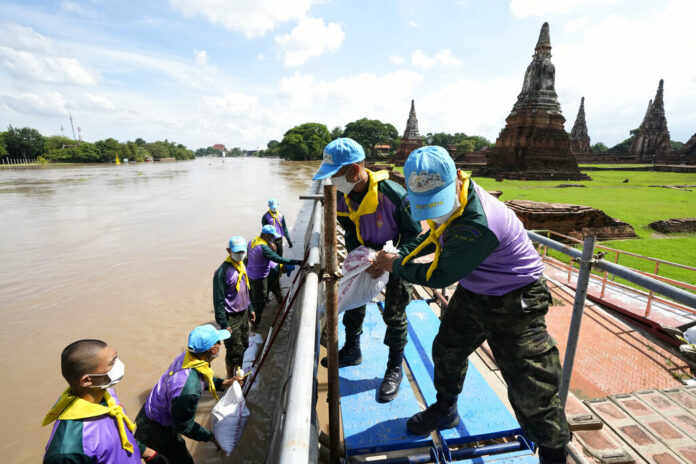
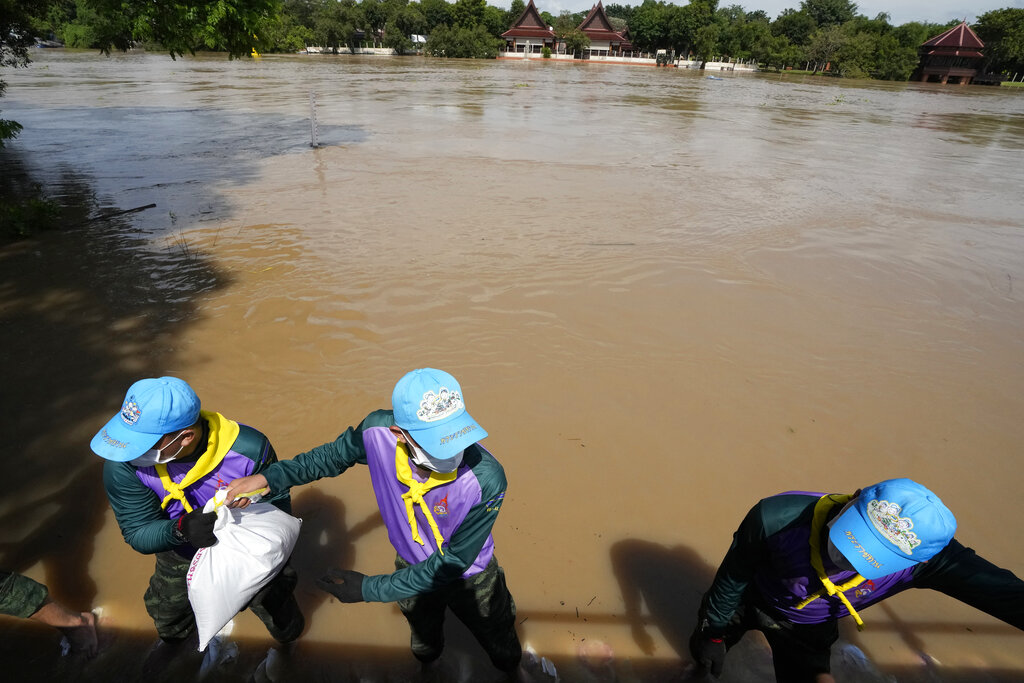
Soldiers stack sandbags to protect Wat Chaiwatthanaram from possible rising flood waters in Ayutthaya province, north of Bangkok, Thailand, Monday, Sept. 27, 2021. Photo: Sakchai Lalit / AP

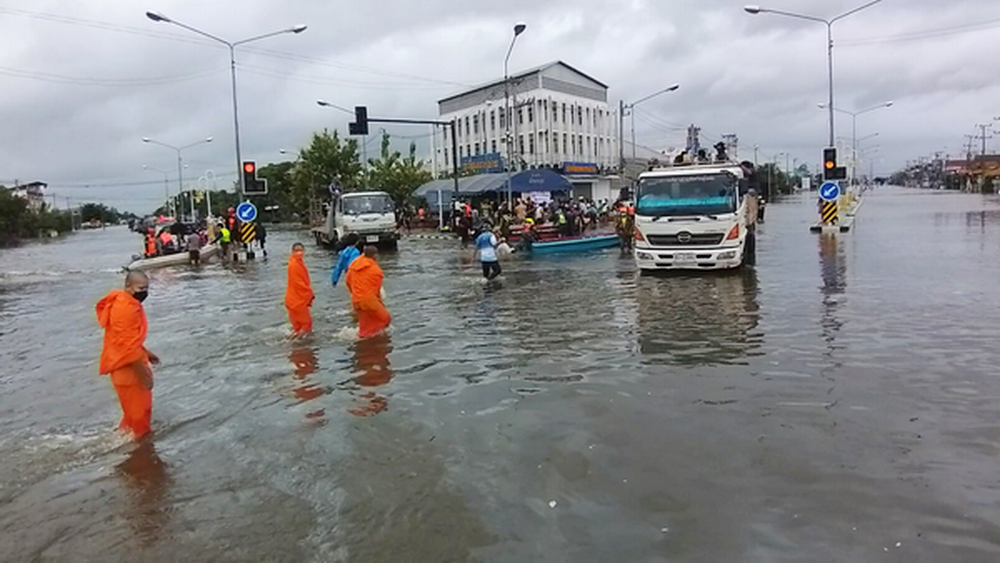
BANGKOK (AP) — Seasonal monsoon rains may worsen flooding that has already badly affected about a third of Thailand, officials said Monday as flood gates and pumping stations were being used to reduce the potential damage.

A tropical storm over the weekend swept through the upper part of the country, causing flash floods that affected 58,977 families, the Department of Disaster Prevention and Mitigation reported.

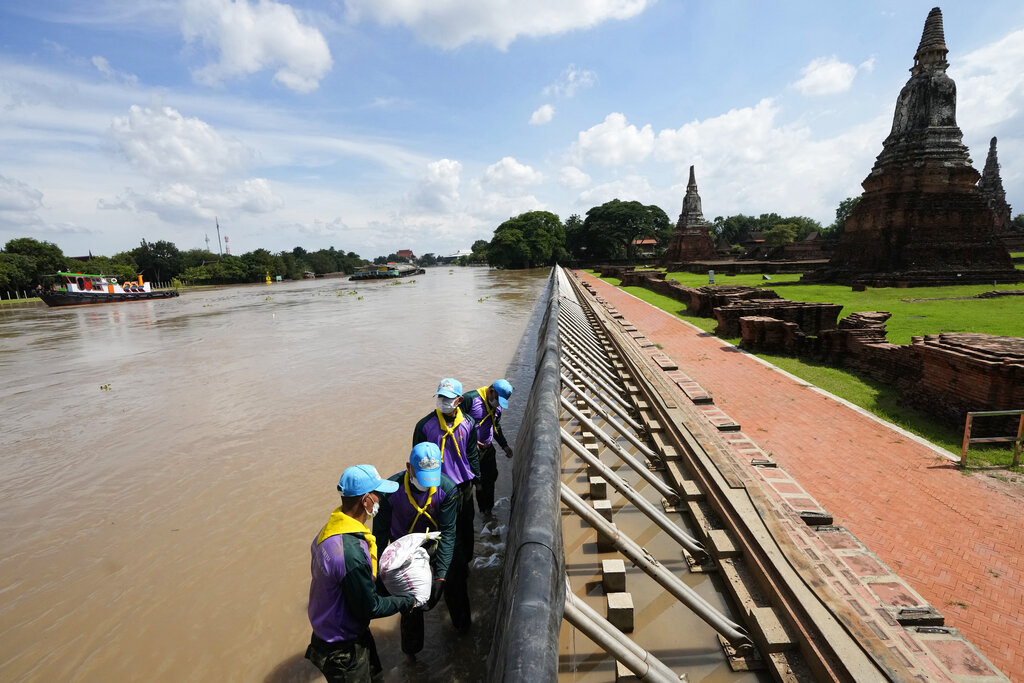
Boontham Lertsukekasem, the department’s director-general, told reporters that 12 provinces along the Chao Phraya river, including Bangkok and the old capital Ayutthaya, should be prepared for new flooding as water levels increase in the Chao Phraya dam by 30 centimeters to 1 meter (1-3 feet) over the next few days.

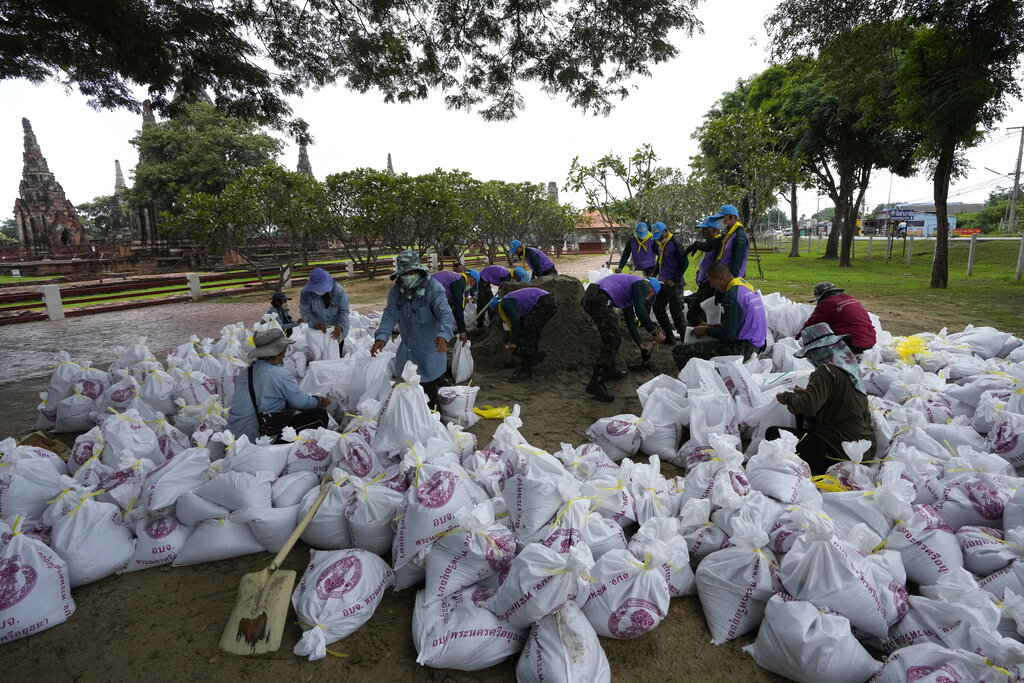
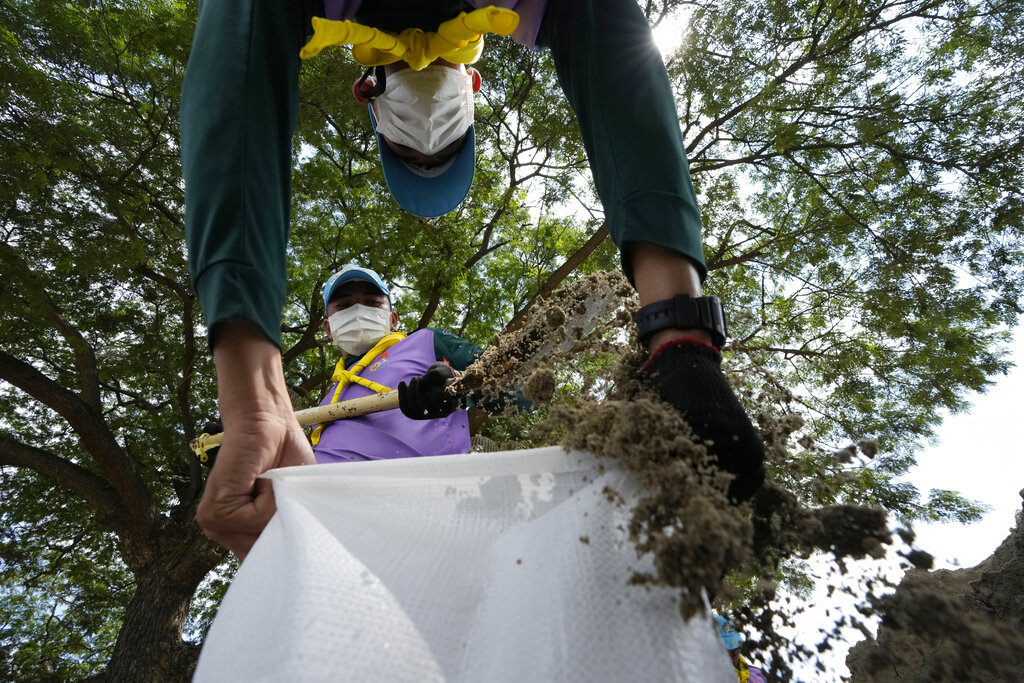
Soldiers helped fill sandbags in Ayutthaya.

AP21270356798933
Soldiers stack sandbags to protect Wat Chaiwatthanaram from possible rising flood waters in Ayutthaya province, north of Bangkok, Thailand, Monday, Sept. 27, 2021. Photo: Sakchai Lalit / AP

In Bangkok, Gov. Aswin Kwanmuang declared on his Facebook page the situation in Bangkok was not yet critical but the city was carefully operating flood gates and pumping stations, among other preparations.

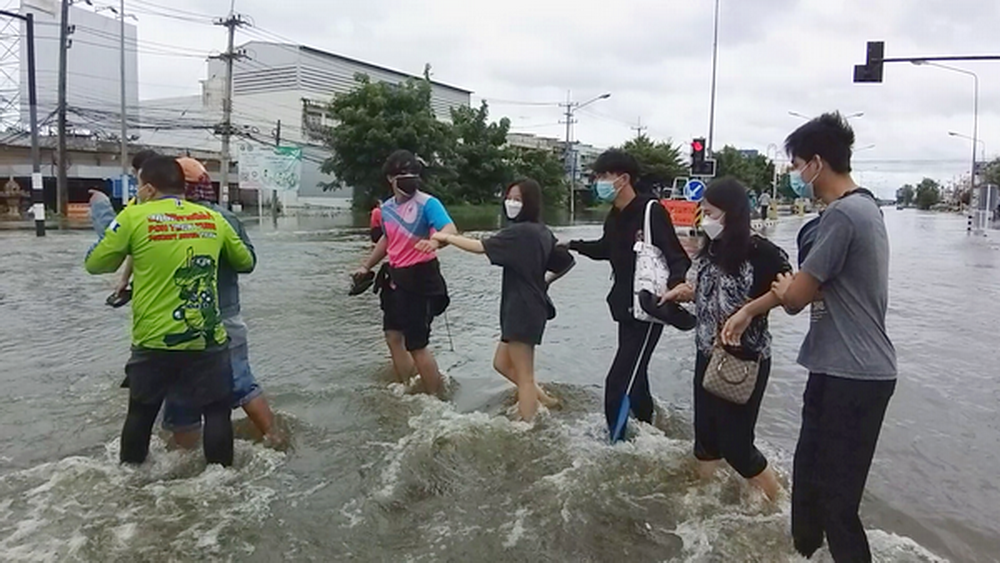
Sections of the northeastern province of Nakhon Ratchasima had severe flooding when a reservoir overflowed, forcing people to walk through knee-deep water and inundating the ground floors of many homes.

Prime Minister Prayuth Chan-ocha and several Cabinet members met with flood-affected people and handed out aid Sunday in Sukhothai province.

Thailand has a tropical climate and often sees flooding that causes millions of dollars in damage during its monsoon season from July to October.

AP21270355730386
Soldiers fill sandbags for protect Wat Chaiwatthanaram in Ayutthaya province, north of Bangkok, Thailand, Monday, Sept. 27, 2021. Photo: Sakchai Lalit / AP
AP21270355890026
Soldier prepare sandbag to protect Wat Chaiwatthanaram from possible rising flood waters in Ayutthaya province, north of Bangkok, Thailand, Monday, Sept. 27, 2021. Photo: Sakchai Lalit / AP
AP21270356503395
Soldiers stack sandbags to protect Wat Chaiwatthanaram from possible rising flood waters in Ayutthaya province, north of Bangkok, Thailand, Monday, Sept. 27, 2021. Photo: Sakchai Lalit / AP
AP21270356685638
Soldiers stack sandbags to protect Wat Chaiwatthanaram from possible rising flood waters in Ayutthaya province, north of Bangkok, Thailand, Monday, Sept. 27, 2021. Photo: Sakchai Lalit / AP
Advertisement

How To Pick the Best Kindergarten in Bangkok for Your Child

Choosing a kindergarten is always a delicate decision, especially if you are living as an expatriate in a different country. You want to be sure that your child will have the best education possible and that the school you send your child to will match your family’s educational priorities. This article will give you some helpful tips on how to pick a good kindergarten in Bangkok.

Location of the School

In a city as large and traffic-ridden as Bangkok, considering the location of your kindergarten options is of paramount importance. You will want to make sure that any schools you are considering are within convenient distance from your home or workplace. Traveling across town can be very stressful and time consuming, so don’t consider any schools that will add too much difficulty to your family’s daily routines. 

Consider the Curriculum

Another key factor to consider when choosing a school is what kind of curriculum they use to plan their lessons. You will want to be sure that the curriculum at your school options match the kind of education you expect your child to have. 

Kindergarten students are taking in information constantly, so it is important that you have a clear understanding of what your child is learning and how you can support their learning at home. Here are some questions to consider when looking at different kindergarten curriculums in Bangkok.

  • Does the school focus on intercultural education? 
  • Do they teach students in multiple languages? 
  • Do they have many hands-on educational experiences for their students?
  • What different subjects are included in the curriculum?
  • What kinds of social skills are taught and how are they presented?
  • Do they use a British, American, or other type of English curriculum?

Look at the Cost

There are many amazing international kindergartens in Bangkok, but they can vary widely in terms of cost. You want to make sure that any of the schools you are considering for your child will be within your price range. Remember that your child’s school fees are likely to gradually increase per year as they progress through the school system, so plan accordingly when looking at each school’s tuition fees.

Think About All Your Options

Whenever making an important decision like which kindergarten to send your child to, it’s important to make a well thought out choice. Make a list of all your schools and list pros and cons for each. 

Be sure to go on physical campus visits to see what the learning environment is like and if possible meet the teachers and staff who would take care of your child if they were to go there. A clean, engaging learning environment is essential to quality education for your child, and the people that they interact with at school will have a large influence on their learning experience. 

Remember that you don’t have to find the best rated school or the most expensive school for your child to have a great education. You simply have to pick the kindergarten in Bangkok that fits best with your family’s values, priorities and lives. 

Advertisement

Concerned United Nations Can Only Sidestep Myanmar Crisis

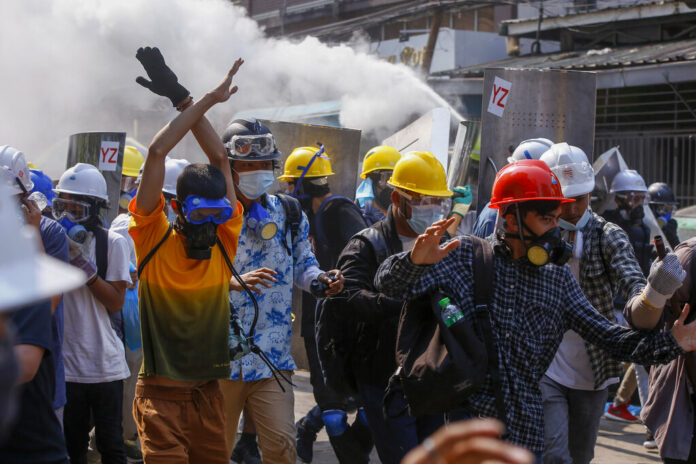
In this March 11, 2021, file photo, anti-coup protesters retreat from the frontlines after policemen fire sound-bombs and fire with rubber bullets in Yangon, Myanmar. Photo: AP

BANGKOK (AP) — In his speech last week to open the U.N. General Assembly, Secretary-General Antonio Guterres bracketed Myanmar with Afghanistan and Ethiopia as nations where “peace and stability remain a distant dream.”

He declared unwavering support for the people of the turbulent, military-ruled Southeast Asia state “in their pursuit of democracy, peace, human rights and the rule of law.”

But the situation in Myanmar after the army’s seizure of power eight months ago has become an extended bloody conflict with ever-escalating violence. Yet the U.N. is unlikely to take any meaningful action against Myanmar’s new rulers because they have the support of China and Russia.

China and Russia are among the top arms suppliers to Myanmar, as well as ideologically sympathetic to its ruling military. Both are members of the Security Council, and would almost certainly veto any effort by the U.N. to impose a coordinated arms embargo, or anything beyond an anodyne call for peace.

When Myanmar’s army ousted the elected government of Aung San Suu Kyi, it claimed with scant evidence that the general election her party won last November in a landslide was marred by massive voting fraud. The takeover almost immediately sparked widespread street protests that security forces tried to crush. The pushback has left more than 1,100 people dead, according to U.N. High Commissioner for Human Rights Michelle Bachelet and right groups.

“The military’s iron grip on power faces resistance from large segments of the society. Weapons of war continue to be deployed in towns and cities to suppress opposition,” Bachelet said in a statement. “These disturbing trends suggest the alarming possibility of an escalating civil war.”

Human rights groups have cataloged many abuses by government forces, including the use of deadly force against peaceful civilian protesters and forced disappearances. But the army’s foes have also turned to terror, as even its sympathizers admit. Local administrators who refuse to abandon their posts are targeted for assassination, as are civilians tagged as informers.

“Sabotage and assassinations, these are not the norms in civilized society,” Mon Yee Kyaw, executive director of the Myanmar-based Nyan Lynn Thit Analytica think tank, said in an email interview. But due to the violence perpetrated by the military, tactics of bombings and assassination were adopted as defensive measures, she said from Thailand, where she is currently located.

“People believe unquestionably that they need to take actions to vanquish the military before the monster kills the people,” she said.

The stakes are big, Bachelet warned. “The national consequences are terrible and tragic. The regional consequences could also be profound,” she said. “The international community must redouble its efforts to restore democracy and prevent wider conflict before it is too late.”

Myanmar opposition forces have one small consolation. It has been reported that the General Assembly’s Credentials Committee, which each session goes through the formality of approving each country’s permanent representative, will temporarily put off its decision on Myanmar’s permanent representative.

The current envoy, Ambassador Kyaw Moe Tun, switched his allegiance soon after February’s takeover to the opposition’s underground National Unity Government, which styles itself as the legitimate alternative to the ruling generals. For at least a couple of months, he appears likely to keep his seat — or at least deny it to an appointee of the military government.

It is a rare feather in the diplomatic cap of the shadow government, which has not been recognized by any nation, but it reportedly comes at the cost of the envoy remaining silent during discussions in the world body, including Monday’s scheduled opportunity to speak for his nation.

Countries sympathetic to the opposition, such as the United States and Britain, have enacted diplomatic and economic sanctions that pose a major inconvenience to the ruling generals. But pleas for more decisive intervention, such as under the humanitarian doctrine of right to protect, long ago fell on deaf ears.

The National Unity Government aspires to forge anti-military forces into an army, and on Sept. 7 called for a nationwide uprising, declaring a “people’s defensive war.” It has reached out to ethnic minority militias in the border regions where they are dominant, and have been fighting the central government for greater autonomy for decades.

With up to 70 years of combat experience, groups such as the Kachin in the north and the Karen in the east have the potential to put extra pressure on the government. Some also provide military training for militants and safe havens for opposition leaders.

“It’s hard to say if it will be productive and what the long-term consequences might be,” Christina Fink, a professor of International Affairs at George Washington University in Washington, D.C, said by email.

“The regime certainly has the advantage in terms of military expertise, weapons, equipment, and manpower,” Fink said. “The military is suffering from the resistance, but whether these tactics will result in the military conceding is not clear.”

Story: Grant Peck

Advertisement

PM Tells Residents in Flood Zones to ‘Pray’ Storm Away

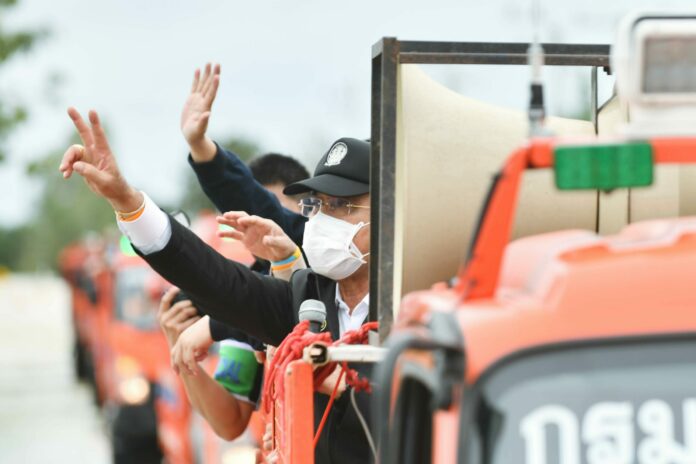
PM Prayut Chan-o-cha visits flood victims in Sukhothai province on Sept. 26, 2021.

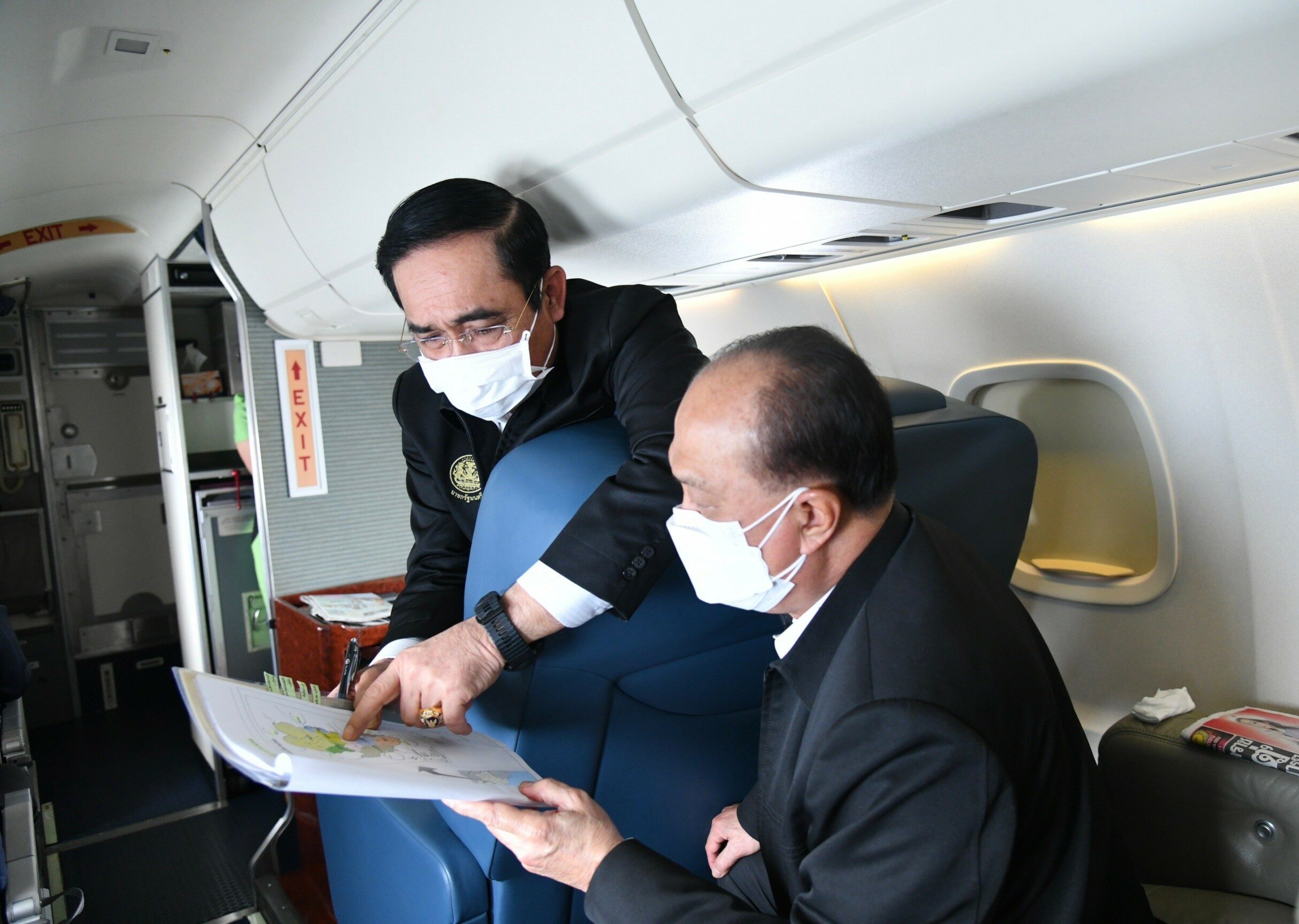
SUKHOTHAI — PM Prayut Chan-o-cha on Sunday said the government is doing everything to deescalate the flood situation in areas affected by tropical storm Dianmu. He also urged residents in flood-hit Sukhothai to resort to prayers.

The Prime Minister and his entourage were visiting flood victims in Sukhothai’s Si Samrong district, which is among the hardest hit by the tropical storm last week. Prayut spoke to the residents through loudspeakers mounted on a truck, telling them that the government will not abandon them to their plight.

“It’s a natural disaster. We will fix it. You will only have a hard time for a short while,” Prayut said at one point. “Everyone please stay safe and strong. Your troubles are my troubles, too, because I care about the people.”

408271 1
PM Prayut Chan-o-cha visits flood victims in Sukhothai province on Sept. 26, 2021.

He added, “The storms are hitting us right now. In 2020, there were five storms. We’ve seen just one so far [this year]. So I ask all of you to pray together. Don’t let another storm come our way. Only one storm is enough.”

Several other provinces were battered by Dianmu’s path, leaving floods in its wake, including Tak and Nakhon Ratchasima. Roads were cut off and many cars were almost completely submerged underwater.

242182005 208052614648732 8257040641506773203 n
PM Prayut Chan-o-cha visits flood victims in Sukhothai province on Sept. 26, 2021.

In Chaiyaphum, a hospital was forced to evacuate 40 patients to escape the flood.

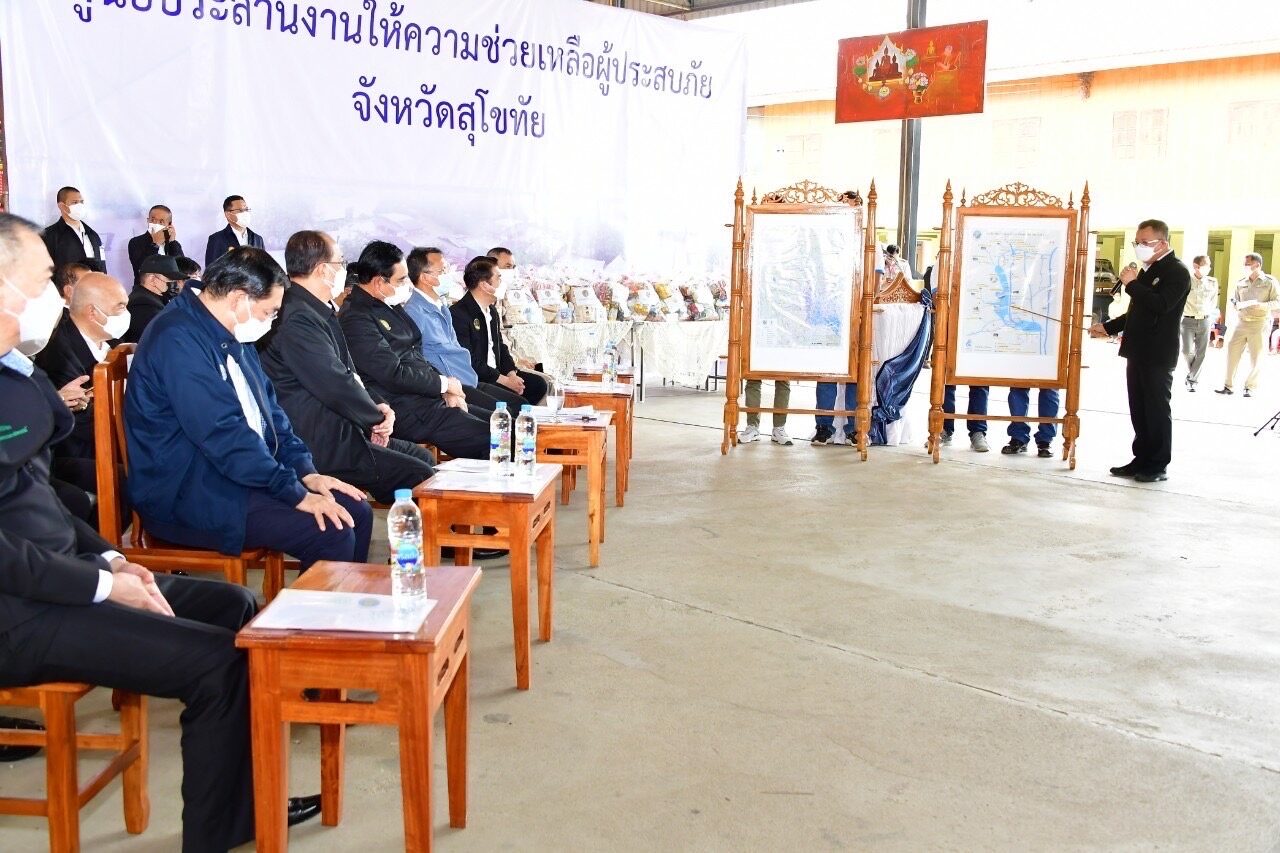
During his visit to Sukhothai, the Prime Minister also distributed relief bags that contained essential items to flood victims at Ban Khlong Chad and at Wat Don Chan. Later, he traveled to inspect other relief operations and flood prevention efforts in the province.

7
The flood situation in Sukhothai province on Sept. 27, 2021.
2 1
The flood situation in Sukhothai province on Sept. 27, 2021.
Advertisement

Social Democrats Narrowly Beat Merkel’s Bloc in German Vote

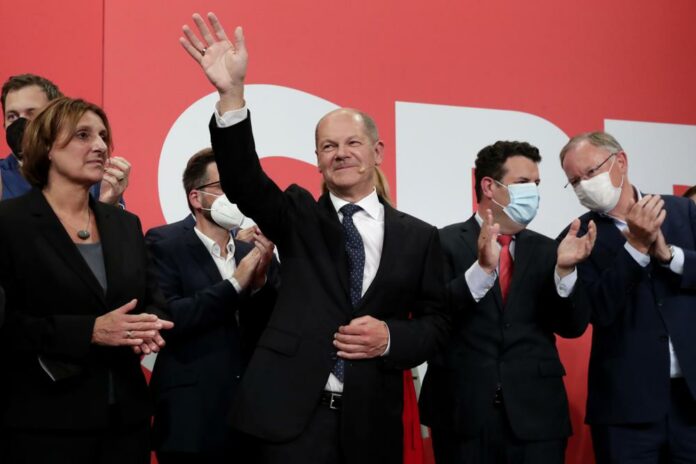
Olaf Scholz, top candidate for chancellor of the Social Democratic Party (SPD) waves to his supporters after German parliament election at the party's headquarters in Berlin, Sunday, Sept. 26, 2021. (AP Photo/Lisa Leutner)

BERLIN (AP) — Germany’s center-left Social Democrats won the biggest share of the vote in a national election Sunday, narrowly beating outgoing Chancellor Angela Merkel ’s center-right Union bloc in a closely fought race that will determine who succeeds the long-time leader at the helm of Europe’s biggest economy.

The Social Democrats’ candidate Olaf Scholz, the outgoing vice chancellor and finance minister who pulled his party out of a years-long slump, said the outcome was “a very clear mandate to ensure now that we put together a good, pragmatic government for Germany.”

Despite getting its worst-ever result in a federal contest, the Union bloc said it too would reach out to smaller parties to discuss forming a government, while Merkel stays on in a caretaker role until a successor is sworn in.

Election officials said early Monday that a count of all 299 constituencies showed the Social Democrats received 25.9% of the vote, ahead of 24.1% for the Union bloc. No winning party in a German national election had previously taken less than 31% of the vote.

S 8192016 0 3
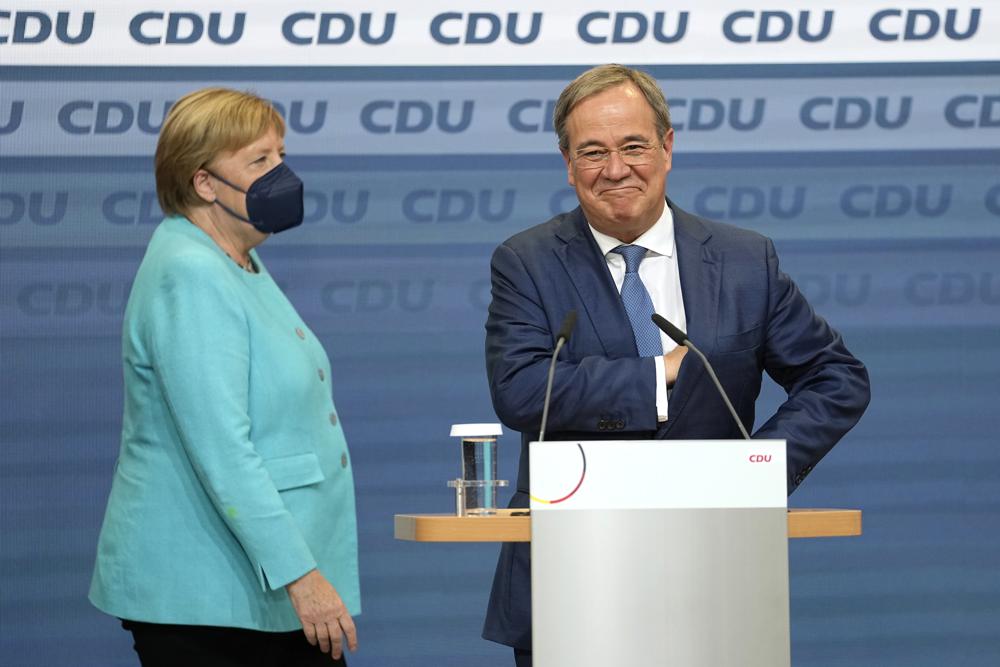
Chancellor Angela Merkel stands next to Governor Armin Laschet, right, the top CDU candidate after the German parliament elections at the Christian Democratic Union, CDU, party’s headquarters in Berlin, Sunday, Sept. 26, 2021. (AP Photo/Martin Meissner)

Armin Laschet, the governor of North Rhine-Westphalia state who outmaneuvered a more popular rival to secure the nomination of Merkel’s Union bloc, had struggled to motivate the party’s base and suffered a series of missteps.

“Of course, this is a loss of votes that isn’t pretty,” Laschet said of results that looked set to undercut by some measure the Union’s previous worst showing of 31% in 1949. But he added that with Merkel departing after 16 years in power, “no one had an incumbent bonus in this election.”

Laschet told supporters that “we will do everything we can to form a government under the Union’s leadership, because Germany now needs a coalition for the future that modernizes our country.”

Both Laschet and Scholz will be courting the same two parties: the environmentalist Greens, who were third with 14.8%; and the pro-business Free Democrats, who took 11.5% of the vote.

The Greens traditionally lean toward the Social Democrats and the Free Democrats toward the Union, but neither ruled out going the other way.

The other option was a repeat of the outgoing “grand coalition” of the Union and Social Democrats that has run Germany for 12 of Merkel’s 16 years in power, but there was little obvious appetite for that after years of government squabbling.

“Everyone thinks that … this ‘grand coalition’ isn’t promising for the future, regardless of who is No. 1 and No. 2,” Laschet said. “We need a real new beginning.”

The Free Democrats’ leader, Christian Lindner, appeared keen to govern, suggesting that his party and the Greens should make the first move.

“About 75% of Germans didn’t vote for the next chancellor’s party,” Lindner said in a post-election debate with all parties’ leaders on public broadcaster ZDF. “So it might be advisable … that the Greens and Free Democrats first speak to each other to structure everything that follows.”

Baerbock insisted that “the climate crisis … is the leading issue of the next government, and that is for us the basis for any talks … even if we aren’t totally satisfied with our result.”

While the Greens improved their support from the last election in 2017, they had higher expectations for Sunday’s vote.

The Left Party was projected to win only 4.9% of the vote and risked being kicked out of parliament entirely. The far-right Alternative for Germany — which no one else wants to work with — received 10.3%. This was about 2 percentage points less than in 2017, when it first entered parliament.

Due to Germany’s complicated electoral system, a full breakdown of the result by seats in parliament was still pending.

Merkel, who has won plaudits for steering Germany through several major crises, won’t be an easy leader to follow. Her successor will have to oversee the country’s recovery from the coronavirus pandemic, which Germany so far has weathered relatively well thanks to large rescue programs.

Germany’s leading parties have significant differences when it comes to taxation and tackling climate change.

Foreign policy didn’t feature much in the campaign, although the Greens favor a tougher stance toward China and Russia.

Whichever parties form the next German government, the Free Democrats’ Lindner said it was “good news” that it would have a majority with centrist parties.

“All of those in Europe and beyond who were worried about Germany’s stability can now see: Germany will be stable in any case,” he said.

Spanish Prime Minister Pedro Sanchez sent early congratulations to Scholz.

“Spain and Germany will continue to work together for a stronger Europe and for a fair and green recovery that leaves no one behind,” he wrote on Twitter.

In two regional elections also held Sunday, the Social Democrats looked set to defend the post of Berlin mayor that they have held for two decades. The party was also on course for a strong win in the northeastern state of Mecklenburg Western-Pomerania.

For the first time since 1949, the Danish minority party SSW was set to win a seat in parliament, officials said.

___

Associated Press writer Kirsten Grieshaber and Karin Laub contributed to this report.

Advertisement

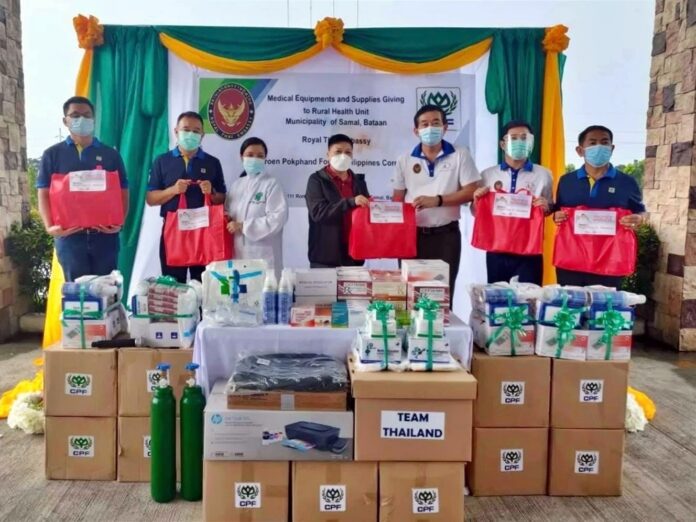
CPF Philippines joins hands Manila’s Royal Thai Embassy offers medical supplies to frontline staff battling Covid-19.

Mr. Vasin Ruangprateepsaeng, Thailand Ambassador to the Philippines accompanied by Mr. Udomsak Aksornphakdee, President of CPF Philippines and Mr. Chaiwut Sangpreedeekorn, Assistant Managing Director of Quezon Power (Philippines) owned by Egco Group, handed over medical equipments, essential supplies, medicine and vitamin to Ms. Aida D. Macalinao, Municipality Mayor of Samal, and Dr. Christina Espino in order to distribute to frontline doctors and staff in Samal Municipality to fight against the pandemic. The hand-over ceremony was held at the office of CPF Philippines Feed Mill in Bataan.

Advertisement

Taliban Hang Body in Public; Signal Return To Past Tactics

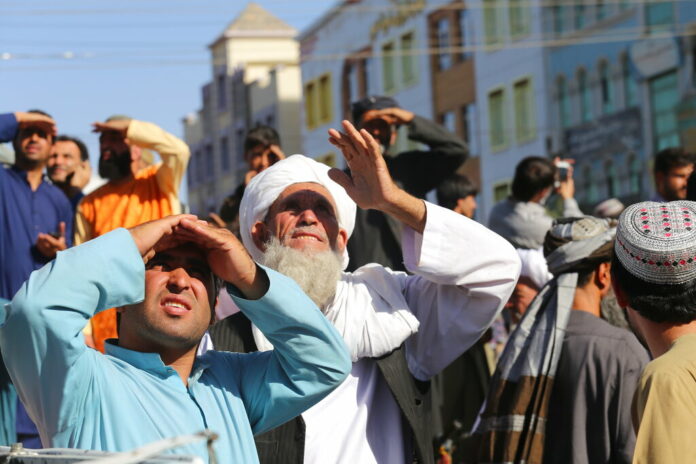
People look up at a dead body hanged by the Taliban from a crane in the main square of Herat city in western Afghanistan, on Saturday Sept. 25, 2021. Photo: AP

KABUL, Afghanistan (AP) — The Taliban hanged a dead body from a crane parked in a city square in Afghanistan on Saturday in a gruesome display that signaled the hard-line movement’s return to some of its brutal tactics of the past.

Taliban officials initially brought four bodies to the central square in the western city of Herat, then moved three of them to other parts of the city for public display, said Wazir Ahmad Seddiqi, who runs a pharmacy on the edge of the square.

Taliban officials announced that the four were caught taking part in a kidnapping earlier Saturday and were killed by police, Seddiqi said. Ziaulhaq Jalali, a Taliban-appointed district police chief in Herat, said later that Taliban members rescued a father and son who had been abducted by four kidnappers after an exchange of gunfire. He said a Taliban fighter and a civilian were wounded by the kidnappers, and that the kidnappers were killed in crossfire.

An Associated Press video showed crowds gathering around the crane and peering up at the body as some men chanted.

“The aim of this action is to alert all criminals that they are not safe,” a Taliban commander who did not identify himself told the AP in an on-camera interview conducted in the square.

Since the Taliban overran Kabul on Aug. 15 and seized control of the country, Afghans and the world have been watching to see whether they will re-create their harsh rule of the late 1990s, which included public stonings and limb amputations of alleged criminals, some of which took place in front of large crowds at a stadium.

After one of the Taliban’s founders said in an interview with The Associated Press this past week that the hard-line movement would once again carry out executions and amputations of hands, the U.S. State Department said such acts “would constitute clear gross abuses of human rights.”

Spokesman Ned Price told reporters Friday at his briefing that the United States would “stand firm with the international community to hold perpetrators of these — of any such abuses — accountable.”

The Taliban’s leaders remain entrenched in a deeply conservative, hard-line worldview, even if they are embracing technological changes, such as video and mobile phones.

“Everyone criticized us for the punishments in the stadium, but we have never said anything about their laws and their punishments,” Mullah Nooruddin Turabi said in the AP interview. “No one will tell us what our laws should be. We will follow Islam and we will make our laws on the Quran.”

Also Saturday, a roadside bomb hit a Taliban car in the capital of eastern Nangarhar province, wounding at least one person, a Taliban official said. No one immediately claimed responsibility for the bombing. The Islamic State group affiliate, which is headquartered in eastern Afghanistan, has said it was behind similar attacks in Jalalabad last week that killed 12 people.

The person wounded in the attack is a municipal worker, Taliban spokesperson Mohammad Hanif said.

Advertisement

Understanding the Various Thai Protest Groups

Anti-government protesters at Asoke Intersection on Sept. 5, 2021.

The monarchy-reform and anti-government protests have come to a point over the past weeks where groups diverged and took a different path in an attempt to achieve their goals.

Here are the strengths and weaknesses of various opposition protest groups descending onto the streets of Bangkok and advice if you fancy joining or merely observing them in action.

The Sombat and Nattawut Anti-Government Motorcade Protest:

After failing to hold a daily mass protest at Asoke Intersection after the number of protesters were not massive enough, the duo of veteran pro-democracy activist Sombat Boonngam-anong and former redshirt co-leader Nattawut Saigua decided to stick to the occasional tried and tested motorcade protest originally introduced by Sombat a few months back in order to avoid potential COVID-19 infections.

Their goal is strictly see Prime Minister Gen Prayut Chan-o-cha ousted ASAP so the issue of monarchy-reform is not present on the stage or elsewhere in hope of attracting as many supporters as possible, including those who are unhappy about Prayut’s COVID-19 management meltdown although it looks as if it will take longer that the two originally planned despite big words like “the last battle” being used.

In case you want to join or observe in person: Ideally you should own a car, if not be prepared to hire a taxi, a motorcycle taxi or hitchhike with some car-owning protesters. Be prepared to bear the occasional honking noise. It’s a plus if you are enamored with the two charismatic leaders and expect things to be peaceful and orderly. Warning: It’s bad for global warming but okay if you miss Bangkok’s traffic jams.

The Thammasat Student Group:

Thammasat university students played an instrumental role in launching the monarchy-reform movement last year. One year on, many of its leaders are among the over one hundred charged with lese majeste, and some, like Parit “Penguin” Chiwarak, are currently back in prison. None of the 10 demands for the reform of the monarchy have been met but they persist and continue to call for change as more end up being charged under the lese majeste law which stipulates 15 years maximum imprisonment term for those defaming the monarchy. The group also adheres to the notion of non-violent struggle. They also want Prayut out but sometimes can’t decide where to put the focus on.

In case you want to join or observe in person: You can expect lots of fiery speeches against not just Prayut but the monarchy. Some speak English so communication is not a problem for foreigners. Many of the charismatic leaders are either in prison or facing charges so do not expect them to be very visible at protest sites. Expect a carnival-like atmosphere but don’t ask them when it will be over. It’s been over a year and now and they probably have no clue.

Taluh Fah (Shattering the Sky):

A group of strictly non-violent protesters and activists wanting both monarchy reform and Prayut resignation. Best known for their creative protests such as wrapping Democracy Monument with LGBTQ canvas etc. Not many people join their protests unlike the previous two groups but there’s something hip about these people who lean towards hippy vibe and grassroot rights.

In case you want to join or observe in person. It’s fun but after a few visits you might wonder – what’s next?

AP21223466930425
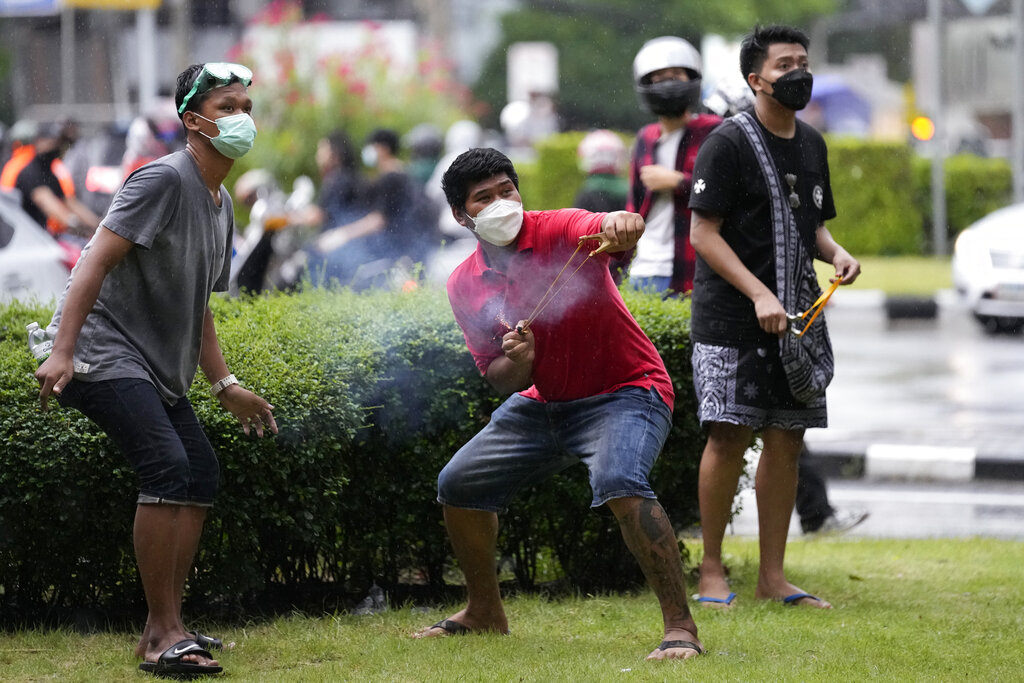
Anti-government protester uses a sling during clashes with riot police during protest in Bangkok, Thailand, Wednesday, Aug. 11, 2021. Photo: Sakchai Lalit / AP

REDEM (Restart Democracy): 

More militant group of student protesters with some expressing a republican sentiment. They want Prayut out, monarchy reform or better still, the Republic of Thailand.

In case you want to join or observe in person: Do not expect any leader on-site but follow the group’s order on Facebook and Telegram instead. Be prepared for a possible violent clash with police so bring a safety helmet, goggles, teargas mask, a bottle of water and running shoes with you in case things turn ugly. It’s carefree and you will have to look after yourself as one of its key leaders is supposedly in exile in Canada. (Maybe the next protest should be staged in Ottawa. No?) Watch out for early declaration or “victory” for you might get sucked into temporary jubilation and withdrawn when it’s repeated often enough without result. Warning: Shout “Vive la Republique!” at your own risk because probably your act might be accidentally captured on a Facebook Live report by some unwitting reporter.

Taluh Gas (Shattering Teargas):
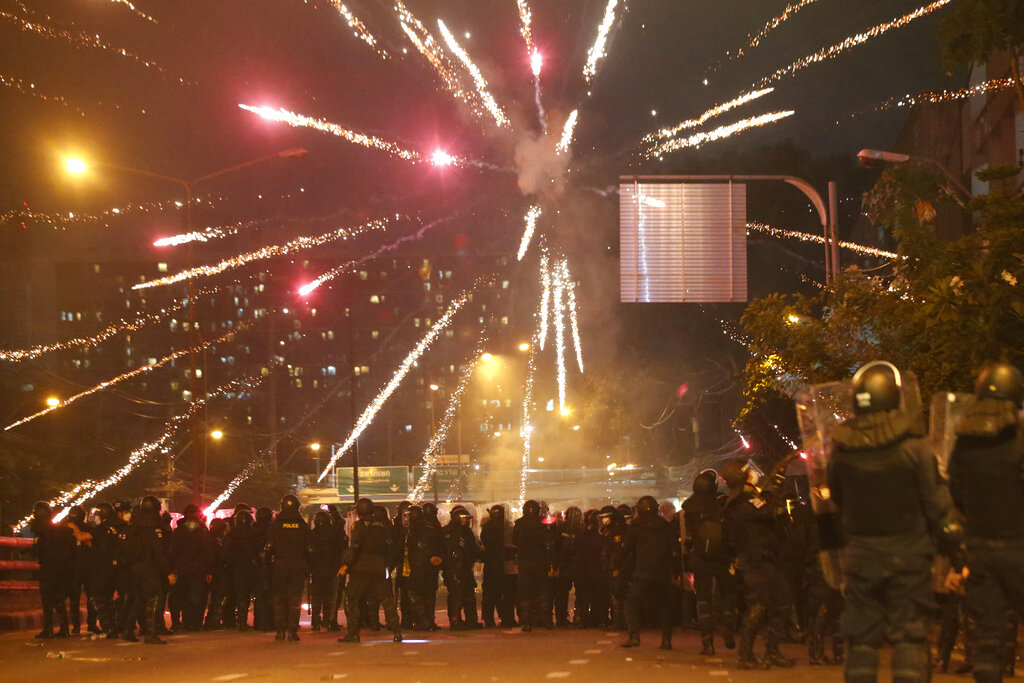
What’s it about? Disgruntled young working-class teenagers clash with police on a near nightly showdown around Din Daeng Intersection in Bangkok in hope that Prayut will resign. These youths, many riding small motorcycles to the protest site in the evening and armed with home-made fire crackers, slingshots with glass marble and metal bolts, Molotov cocktails and even fireworks do not talk much if at all. Most that you will hear from them are expletives against Prayut, police and sometimes graffiti the king.

They feel that other groups mentioned before have failed to dislodge Prayut whom they blame for the lack of hope for the future given the current economic situation. So they are doing it their own way, night after night for over a month now in an attempt to achieve the goal.

AP21227477045730
Anti-government protester shoots a firework to riot police during a protest in Bangkok, Thailand, Sunday, Aug. 15, 2021. Photo: Anuthep Cheysakron / AP

In case you want to join or observe in person. Be fully protected and prepared for possible stray rubber bullets from riot police or glass marble from protesters. At least two persons have lost their eyesight as a result. Don’t forget lots of testosterone for you will likely need to run a lot.

Vandalizing and burning traffic police booths are now trendy in the vicinity so don’t be caught accused of being a party to the crime.

Advice: Don’t tell the protesters that they are violent when with them, no matter what your eyes see. Violence? What violence? It’s all peaceful, baby. Call it self-defense and staying safe. Don’t bother asking them when it will all be over for they probably do not know as well. Be prepared to be arrested if you stayed after the 9pm COVID-19 curfew time. Over 500 protesters, mostly teenagers, have been arrested so far. And when you strayed into the crowd of riot police who use rubber bullets liberally, teargas, water cannon, and voice emitting machines, don’t scream “police brutality” no matter what your eyes see or how hurt your ears feel.

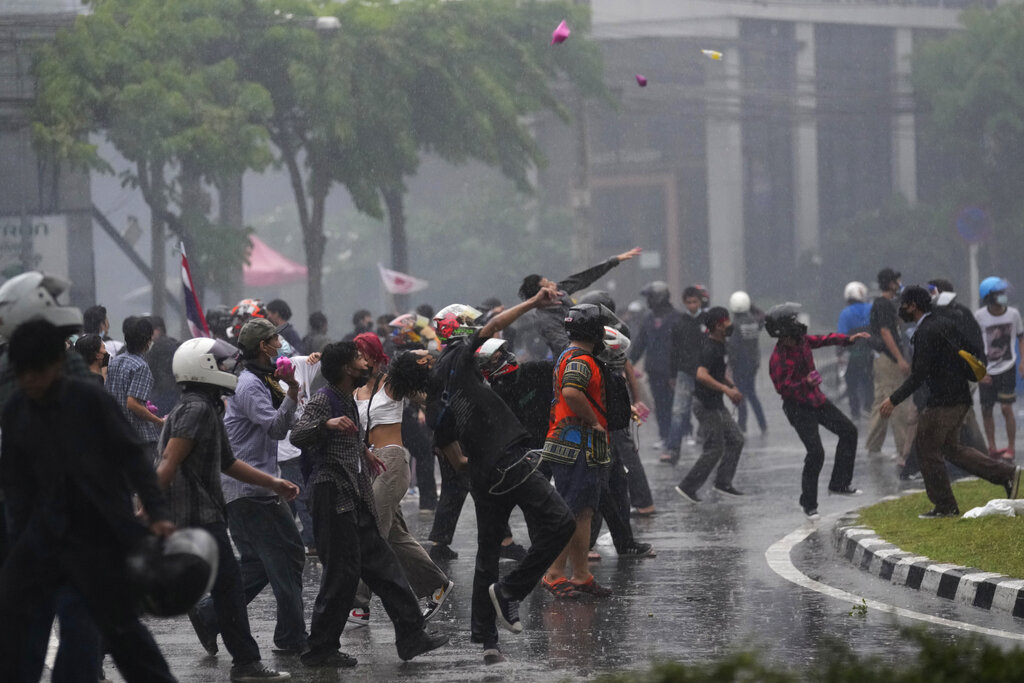
AP21223460885694
Anti-government protesters throw rocks to riot police during protests in Bangkok, Thailand, Wednesday, Aug. 11, 2021. Photo: Sakchai Lalit / AP
Advertisement

Hot News

LATEST NEWS

Bangkok
overcast clouds
30 ° C
34.4 °
30 °
82 %
6kmh
100 %
Sat
33 °
Sun
36 °
Mon
33 °
Tue
35 °
Wed
33 °