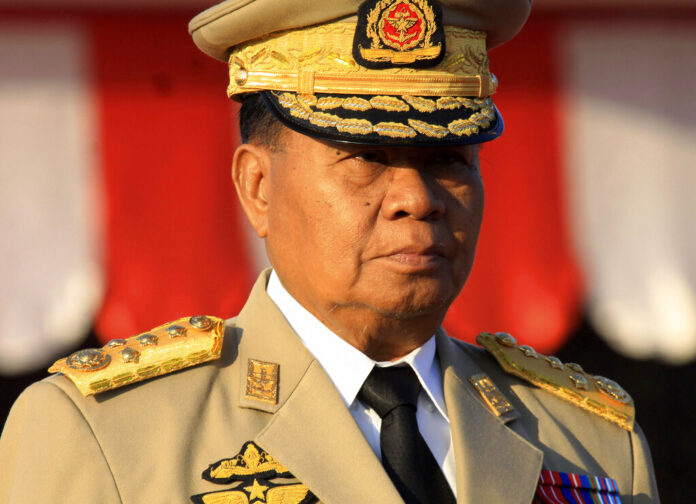
In this Dec. 24, 2010, file photo, Myanmar junta chief Senior Gen. Than Shwe attends the graduation parade of the No. 12 Intake of the Defense Services Medical Academy in Yangon, Myanmar. Photo: Khin Maung Win / AP
BANGKOK (AP) — The former longtime military ruler of Myanmar, Than Shwe, and his wife have been released from a capital city hospital after both being successfully treated for COVID-19, a hospital official said.
The 88-year-old and wife, Daw Kyaing Kyaing, were discharged from the Thaik Chaung military hospital in Naypyitaw on Friday, said the official, who spoke on condition of anonymity because he was not authorized to speak with the press.
Than Shwe was hospitalized earlier this month, and his wife a short time later, and both were treated in a VIP section of the hospital under tight security.
The government has not yet officially commented on their cases, and independent media in Myanmar initially reported that their hospitalization was a precautionary measure as the country grapples with a new wave of the coronavirus, fueled by the virulent delta variant.
But the hospital official confirmed they had both tested positive for COVID-19, though both ended up exhibiting only mild symptoms. He said, for example, neither needed oxygen to help them breathe while they were being treated.
Since their release they have been examined by doctors and continue to do well, he said.
Myanmar has been struggling with one of the worst COVID-19 surges in Southeast Asia, and the military leadership that seized control of the country in February from Nobel Peace Prize laureate Aung San Suu Kyi’s democratically elected government has been accused of making it worse by diverting critical medical supplies to itself and its supporters.
On Monday, the government reported 2,186 new cases and 125 more deaths, bringing Myanmar’s total cases to 375,871 and deaths to 14,499. Many believe the official numbers are significantly lower than reality, due to poor testing and reporting.
At the beginning of August, Myanmar had the region’s highest per capita death rate of the region, but according to the official figures it has been declining steadily and is now lower than several other countries, including Malaysia, Indonesia and Thailand.
Than Shwe ruled from 1992 until 2011, when he handed power to a nominally civilian, pro-military government.
During his rule, he led a feared junta that brutally crushed dissent and routinely jailed political opponents, including Suu Kyi, the face of Myanmar’s pro-democracy movement.
He controlled a 400,000-strong military that turned its guns on myriad ethnic rebellions as well as on university students and Buddhist monks who launched an uprising in 2007.
By the time Than Shwe stepped down, Suu Kyi had spent 15 of the previous 21 years in prison or under house arrest.
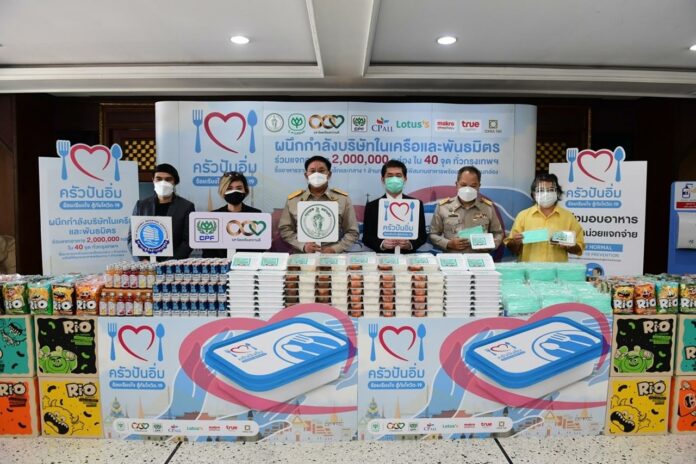
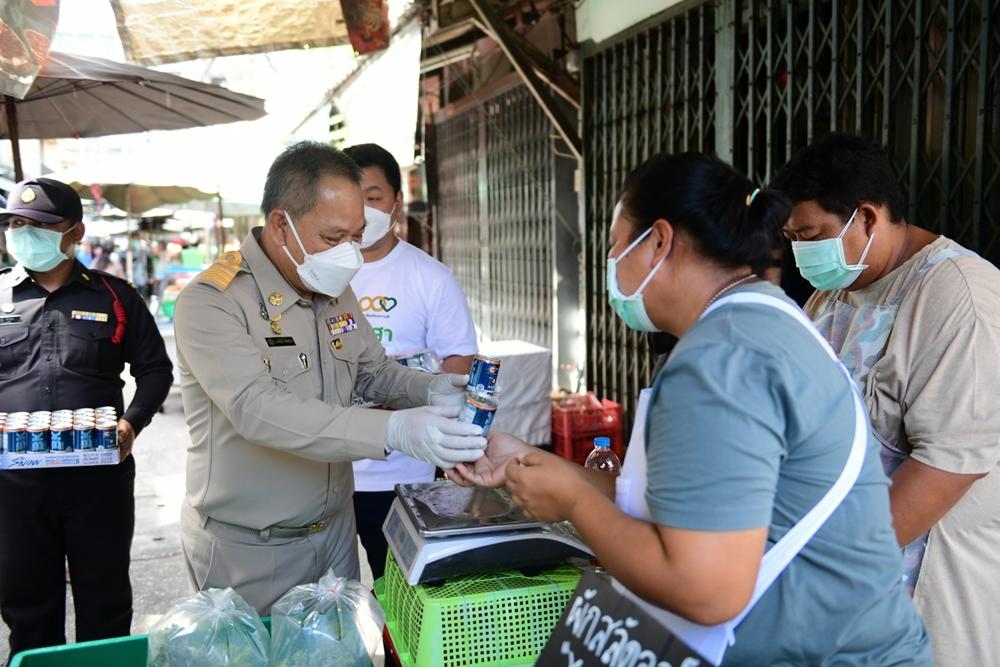
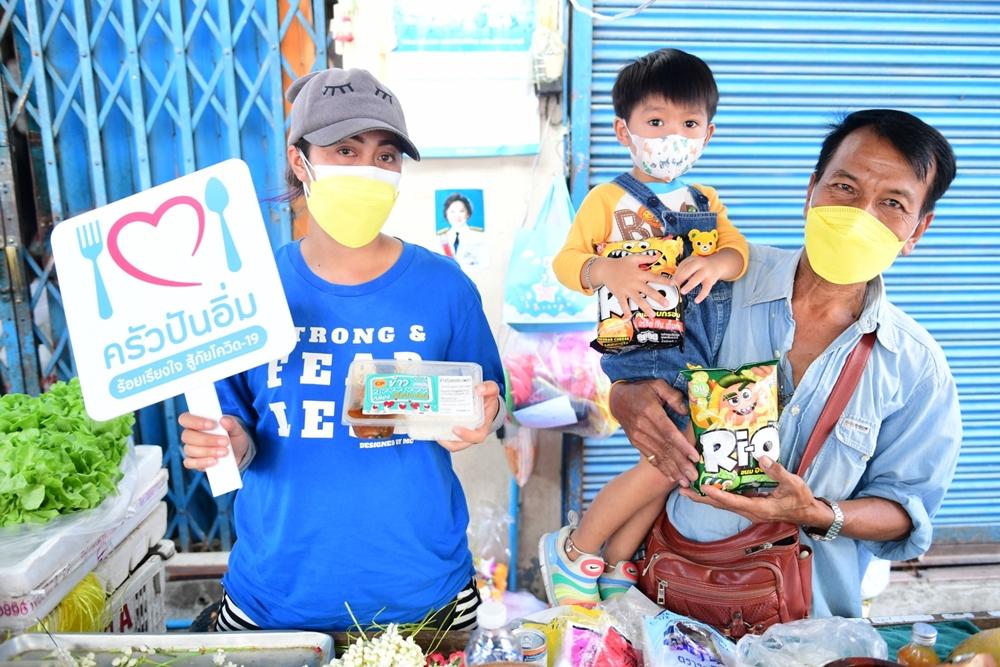
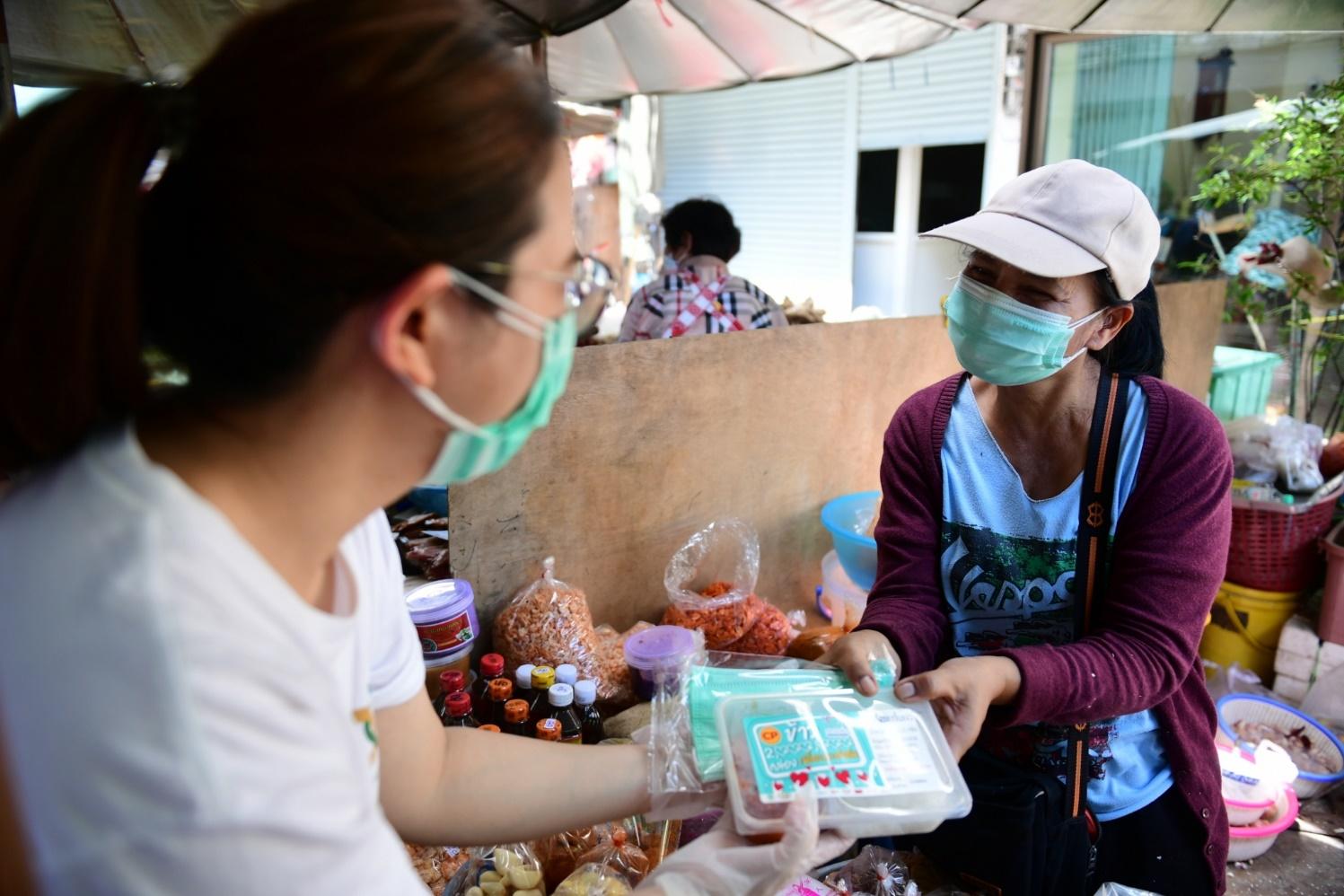
The Bangkok Metropolitan Administration (BMA), CP Group, CP Foods and the Economic Reporters Association jointly deliver lunch boxes, snacks, beverages, and CP surgical masks to communities in need across Bangkok as a part of CP Group’s “Krua Pan Im” project that aims at donating 2 million meal boxes amid the COVID-19 outbreak.
Pol Gen. Asawin Kwanmuang, governor of the Bangkok Metropolitan Administration, representing the communities received the meal boxes, healthy drinks and surgical masks from Mr.Prasit Boondoungprasert CEO of CP Foods and Ms. Pimraphat Siripraiwan, President of the Economic Reporters Association.
City governor Aswin Kwanmuang said that the essential supplies will be distributed to vulnerable people, including home quarantined patients, bedridden patients, the unemployed, and the elderly, in an effort to alleviate their burden during the pandemic. He also praised the project for allowing small business restaurants to join deliver another 1 millon meal boxes. This will support small food owners to generate more income during the lock down.
Meanwhile,CEO at CP Foods, said that CP Group has launched “Krua Pan Im” and synergize all companies under the group to distribute freshly cooked foods to those who in needs, vulnerable people, healthcare workers, community as well as officers and volunteers from multiple organizations who have selflessly dedicated themselves to tackle COVID-19. He added that the project aims to share delicious, safe foods and newly cooked foods to boost the morale of people in Bangkok in this unprecedented outbreak.
Mrs.Kannikar Yoklek, chairman of the Ratchabophit Pattana community, thanks the Government and private sector such as CP Group and CP Foods for giving away delicious meal boxes to people in the community, adding that her community was severely affected by COVID-19 since many of them have lost significant amount of income. Also, these foods will helps lighten burden of risk groups who are living under home quarantine.
“Krua Pan Im” is a COVID-19 relief project initiated by CP Group and over 100 alliances to supply 2 million meal boxes, consisting of a million boxes from local restaurants in Bangkok area and a million more contributed by CP Group, for sharing the fullness and happiness to vulnerable groups, medical staffs and volunteers in the city as well as helping the small businesses to generate income during the crisis.
If you’re giving a gift of a silver ring to someone special in your life, you can think of it as giving them the whole world as well as the stars, because every element on earth, including the silver the ring was made from, came from dying stars originally. And silver has made quite an impact on the world since about 4000 BC was it was first discovered.
Lustrous and malleable metals such as gold and silver have always been in high demand as much for their visual appeal as for their ability to be easily moulded into useful items.
Historical Value of Silver
Silver has also always been relatively scarce, and the rarer an element is, the more valuable it is. Most people think that silver has always placed second behind gold in both value and popularity. But silver has a few other properties that made it more popular and valuable than gold at different eras in history.
It was at one time the currency of the world. The Mycenaean people of ancient mainland Greece imported vast amounts of silver from what is now Armenia. They used it as a currency and helped accelerate trade all through the Mediterranean region. Silver became the standard currency for centuries.
But it was scarce in China. So it became the currency of choice for tea, silk, gunpowder and ceramics, and all the other goods China had to offer. All this trade was responsible for creating the famous “Silk Road” between the east and west. When the Spanish discovered silver mines in Peru and Mexico, they started trading it for silk from the Chinese.
Other Properties of Silver
Did you know that silver also has impressive anti-bacterial properties? The ancient seafaring Phoenicians used to keep their potable liquids in silver vessels because the liquids would stay pure and drinkable during long voyages.
In the 1700s, some babies were fed from silver spoons because silver was considered to be healthier. The practice even led to the phrase for the rich, “being born with a silver spoon in one’s mouth”. Silver is still used today to coat pieces of equipment used by hospitals to fight infections.
Silver is also the conductor of choice for electrical applications. It’s better than gold or copper, and the electronics industry is one of the major consumers of silver.
Establishing the 925 Silver Standard
We mentioned that silver was easily moulded into jewellery and other useful items. But a statute that was enacted in 1300 by King Edward the first was intended to create a standard for the composition of silver. It ended up creating a silver that also held up better and resisted dents and dings. This was the 92.5% pure silver standard, also known as 925 silver or sterling silver.
So when you’re browsing the MNML website looking for the perfect silver ring for that special someone, give a thought to the tremendous part silver played in the history of the world.
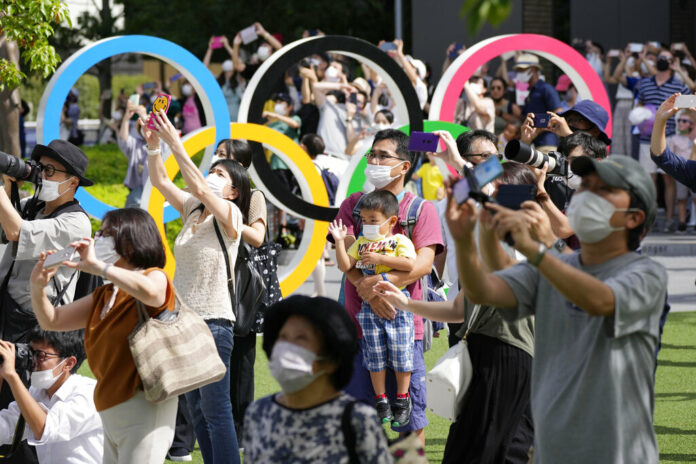
People gather near the National Stadium in Tokyo as Blue Impulse of the Japan Air Self-Defense Force practice ahead of the 2020 Summer Paralympics, Sunday, Aug. 22, 2021. Photo: Ryosuke Uematsu, Kyodo News via AP
TOKYO (AP) — Plans are afoot to allow tens of thousands of school children to attend the Tokyo Paralympics despite the coronavirus delta variant spreading among teenagers and those even younger who are not vaccinated.
The Paralympics open Tuesday and run through Sept. 5. All other fans have been banned as they were for the Olympics. About 4,400 athletes are expected from about 160 countries and territories.
Tokyo Governor Yuriko Koike has said she is pressing ahead to allow school children to attend the Paralympics, as long a parents and schools are supportive. News reports say the number of students involved is between 130,000 and 140,000.
Tokyo is under a state of emergency through Sept. 12.
About 40% of the Japanese population is fully vaccinated. Tokyo reported 5,074 new cases on Saturday. It marked the first time the capital has logged more than 5,000 cases for four consecutive days. Daily new cases have increased sharply since the Olympics opened on July 23.
Tokyo reported 4,392 new cases on Sunday. Japan has attributed about 15,500 deaths to COVID-19.
Hospital capacity in Tokyo has become so tight that those not deemed ill enough for hospital admission are getting oxygen supplied at home or at makeshift facilities set up for emergencies.
The Tokyo organizing committee and the International Paralympic Committee also back the plan for student fans. They argue it’s important to have students view athletes with disabilities, which could change attitudes in a relatively conservative society like Japan.
“This generation is the one that will sustain our society in the future, and so we are absolutely passionate about providing this opportunity,” Tokyo organizing committee spokesman Masa Takaya said Sunday.
In an interview a few days ago, IPC President Andrew Parsons said he supported the plan — with a caveat.
“We endorse the initiative because we believe it is an important element of legacy by bringing school kids to the games,” Parsons said. “But of course, it is imperative these kids must come to the games in a safe way.”
Opposition is coming from the Japanese government’s top medial adviser. Dr. Shigeru Omi told a parliamentary session a few days ago that the current COVID-19 situation “compared to before the Olympics is significantly worse.
“If you think what it means to allow audience, the decision is quite obvious,” Omi added.
Omi said Tokyo’s high rate of positive tests exceeding 20% suggests that infections are more widely spread than the number of daily cases reported.
In Shizuoka, located about 160 kilometers (100 miles) southwest of Tokyo, all 93 schools have canceled their planned participation because of the state of emergency taking effect in the area beginning on Aug. 20, according the Mainichi newspaper.
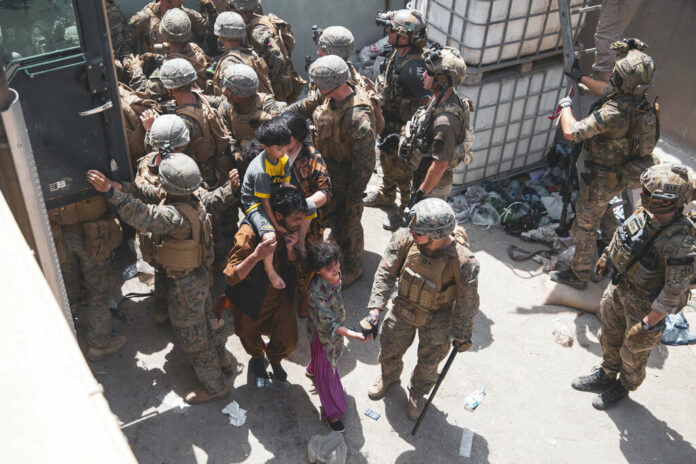
In this Aug. 20, 2021, photo provided by the U.S. Marine Corps, U.S. Marines and Norweigian coalition forces assist with security at an Evacuation Control Checkpoint ensuring evacuees are processed safely during an evacuation at Hamid Karzai International Airport in Kabul, Afghanistan. Photo: Staff Sgt. Victor Mancilla/U.S. Marine Corps via AP
KABUL, Afghanistan (AP) — At least seven Afghans died in a panicked crush of people trying to enter Kabul’s international airport, the British military said Sunday, as thousands were still trying to flee the country in a chaotic exodus a week after the Taliban takeover.
The Taliban moved to confront the first stirrings of armed resistance since capturing nearly all of Afghanistan in a matter of days earlier this month. Anti-Taliban fighters claimed to have seized three mountainous districts, and a prominent militia commander in the only province not yet under Taliban control pledged to fight back if attacked.
The British military on Sunday acknowledged at least seven deaths at the airport. Others may have been trampled, suffocated or suffered heart attacks as Taliban fighters fired into the air to try to drive back the crowds. Soldiers covered several corpses in white clothing. Other troops stood on concrete barriers, trying to calm the crowd.
Kabul’s airport, now one of the only routes out of the country, has seen days of chaos since the Taliban entered the capital on Aug. 15. Thousands poured onto the tarmac last week, and several Afghans plunged to their deaths after clinging to a U.S. military cargo plane as it took off, some of the seven killed on Aug. 16.
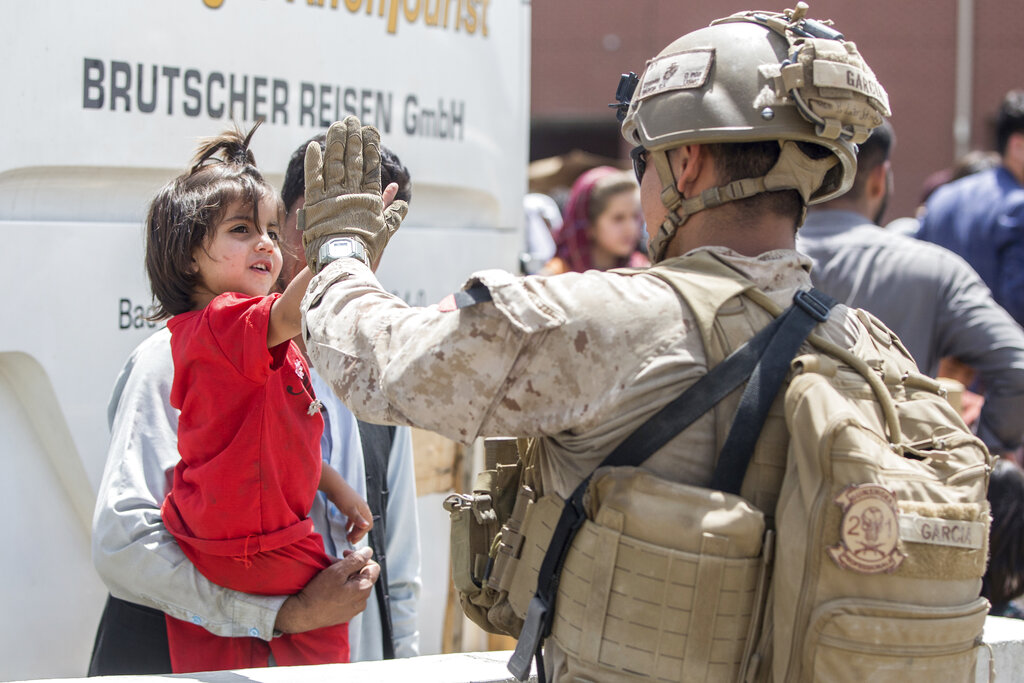
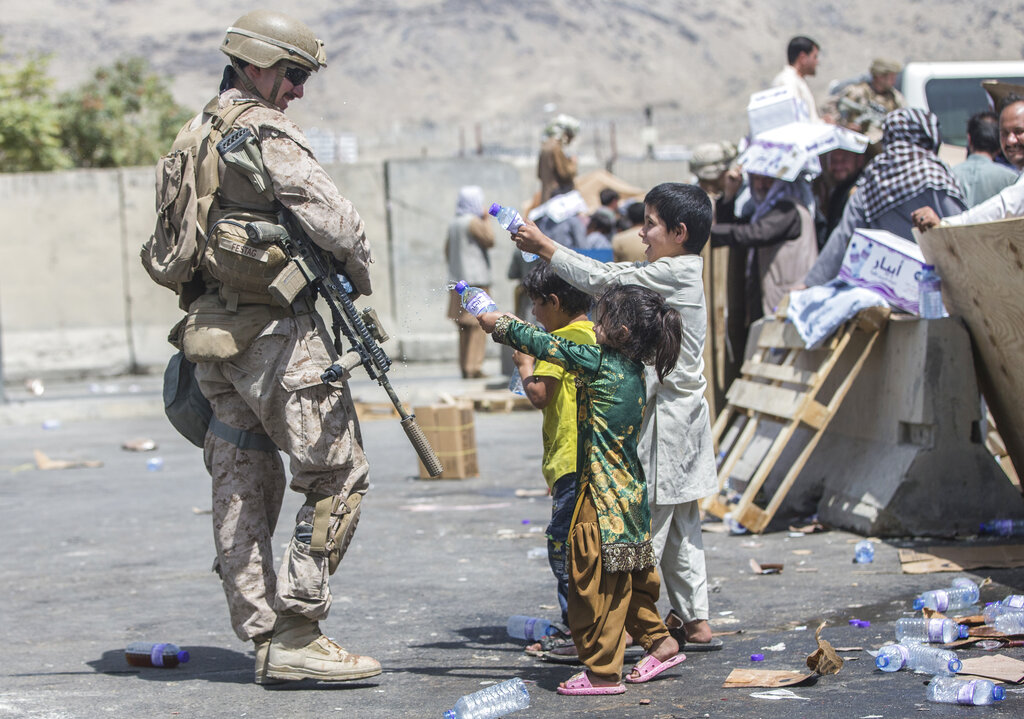
In this Aug. 21, 2021, photo provided by the U.S. Marine Corps, a Marine with Special Purpose Marine Air-Ground Task Force-Crisis Response-Central Command (SPMAGTF-CR-CC) receives a high-five from a child during an evacuation at Hamid Karzai International Airport in Kabul, Afghanistan. Photo: Sgt. Samuel Ruiz / U.S. Marine Corps via AP
The Taliban have pledged amnesty to those who worked with the U.S., NATO and the toppled Afghan government, but many Afghans still fear revenge attacks. There have been reports in recent days of the Taliban hunting down their former enemies. It’s unclear if Taliban leaders are saying one thing and doing another, or if fighters are taking matters into their own hands.
Outside the airport on Saturday, Western troops in full combat gear tried to control crowds big enough to be seen in satellite photos. They carried away some who were sweating and pale. With temperatures reaching 34 degrees Celsius (93 F), the soldiers sprayed water from a hose on those gathered and gave out bottled water.
“The situation at Kabul airport remains extremely challenging and unpredictable,” a NATO official said on condition of anonymity in keeping with regulations. The official was not able to confirm a precise number of casualties.
In this Aug. 21, 2021, photo provided by the U.S. Marine Corps, a Marine with Special Purpose Marine Air-Ground Task Force-Crisis Response-Central Command (SPMAGTF-CR-CC) is sprayed with water by children at Hamid Karzai International Airport in Kabul, Afghanistan. Photo: Sgt. Samuel Ruiz / U.S. Marine Corps via AP
The U.S. Embassy, which has relocated to the military side of the airport, has told American citizens and others not to come to the airport until they receive precise instructions.
President Joe Biden said the U.S.-led evacuation of Americans, at-risk Afghans and others from the Kabul airport picked up speed this weekend, although it remains vulnerable to threats from the Islamic State extremist group.
Biden told reporters at the White House that 11,000 people had been airlifted from Kabul in a 36-hour period this weekend, although he did not provide details. The number appeared to include flights by charter and non-U.S. military aircraft as well as the U.S. Air Force C-17 and C-130 transport planes that have been flying daily from the capital.
Biden said his first priority is getting American citizens out of the country “as quickly and safely as possible.”
“We’re working hard and as fast as we can to get people out,” Biden told reporters at the White House. “That’s our mission. That’s our goal.”
Earlier, U.S. National Security Adviser Jake Sullivan told CNN that 3,900 people had been flown from Kabul on U.S. military flights in the past 24 hours, up from 1,600 the previous day. That’s in addition to about 3,900 people airlifted on non-U.S. military flights over the past 24 hours. It remains far below the 5,000 to 9,000 that the military says it has the capacity to airlift daily.
Britain said it had airlifted more than 5,000 people, including 1,000 in the last 14 hours.
U.S. Defense Secretary Lloyd Austin activated the Civil Reserve Air Fleet program, requesting 18 aircraftfrom U.S. carriers to assist in transporting Afghan refugees after they are evacuated to other countries. The voluntary program, born in the wake of the Berlin airlift, adds to the military’s capabilities during crises.
Biden has vowed to bring home all Americans from Afghanistan and to evacuate Afghans who aided the U.S. war effort. U.S. military helicopters have been used to collect 169 Americans from outside the airport. Tens of thousands of Americans and others are still hoping to fly out.
There also have been concerns about a potential attack on the airport by a local Islamic State affiliate. U.S. military planes have been executing corkscrew landings, and other aircraft have fired flares upon takeoff, measures used to prevent missile attacks.
The Taliban blame the chaotic evacuation on the U.S. military, saying there’s no need for Afghans to fear them, even though their fighters shoot into the air and beat people with batons as they try to control the crowds outside the airport.
“All Afghanistan is secure, but the airport, which is managed by the Americans, has anarchy,” Amir Khan Motaqi, a senior Taliban official, said Sunday. The U.S. “should not embarrass itself to the world and should not give this mentality to our people that (the Taliban) are a kind of enemy.”
Speaking to an Iranian state television channel Saturday night, Taliban spokesman Mohammad Naeem also blamed the deaths at the airport on the Americans.
“The Americans announced that ‘we would take you to America with us,’ and people gathered at Kabul airport,” Naeem said. “If it was announced right now in any country in the world, would people not go?”
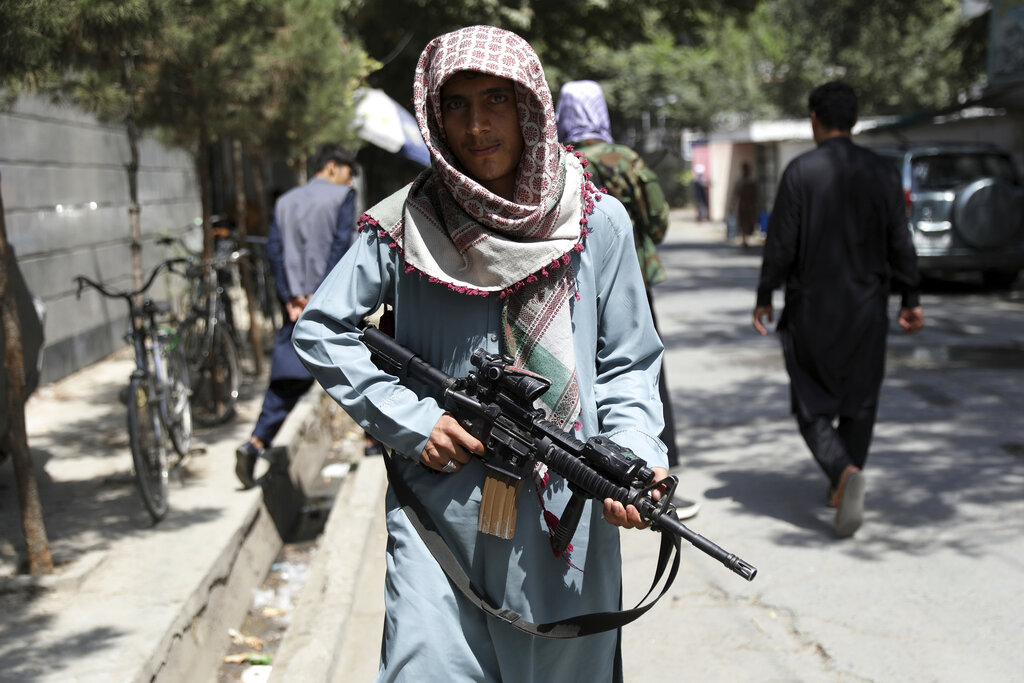
A Taliban fighter stands guard at a checkpoint in the Wazir Akbar Khan neighborhood in the city of Kabul, Afghanistan, Sunday, Aug. 22, 2021. Photo: Rahmat Gul / AP
The Taliban have sought to project a more moderate image than when they last ruled the country, from 1996 until the U.S.-led invasion following the 9/11 attacks, which al-Qaida carried out while being sheltered by the Taliban. During their earlier rule, women were largely confined to their homes, television and music were banned, and public executions were held — all under the Taliban’s harsh version of Islamic rule.
This time, the Taliban are holding talks with Afghan officials from previous governments on a political transition and say they will restore peace and security after decades of war. Afghan officials familiar with the talks say the Taliban have said they will not announce a government until after the Aug. 31 deadline for the U.S. withdrawal.
But they already face stirrings of resistance.
In Baghlan province, some 120 kilometers (75 miles) north of Kabul, fighters calling themselves the “People’s Uprising” claimed to have seized three districts in the Andarab Valley, nestled in the towering Hindu Kush mountains.
Khair Mohammad Khairkhwa, the former provincial head of intelligence, and Abdul Ahmad Dadgar, another leader in the uprising, said Taliban fighters had burned down homes and kidnapped children. Two other officials, who spoke on condition of anonymity, made similar allegations. The Taliban did not immediately respond to a request for comment.
In the nearby Panjshir province — the only one yet to fall under Taliban control — a group of militia leaders and officials from the ousted government have pledged to defend it against the Taliban, who circulated video showing their fighters heading toward the region.
The province is a stronghold of the Northern Alliance fighters who joined with the U.S. to topple the Taliban in 2001, and Ahmad Massoud, the son of a famous Northern Alliance commander assassinated days before the 9/11 attacks, has appeared in videos from there.
But it appears unlikely a few thousand guerrilla fighters will soon succeed where the Afghan national security forces failed despite 20 years of Western aid, assistance and training.
“If Taliban warlords launch an assault, they will of course face staunch resistance from us,” Massoud said in an interview with the Al-Arabiya news network. But he also expressed openness to dialogue with the Taliban.
___
Story: Ahmad Seir, Tameem Akhgar and Jon Gambrell. Akhgar reported from Istanbul and Gambrell from Dubai, United Arab Emirates. Associated Press writers Joseph Krauss in Jerusalem, Robert Burns and Darlene Superville in Washington, Amir Vahdat in Tehran, Iran, and Lolita C. Baldor in Washington contributed.
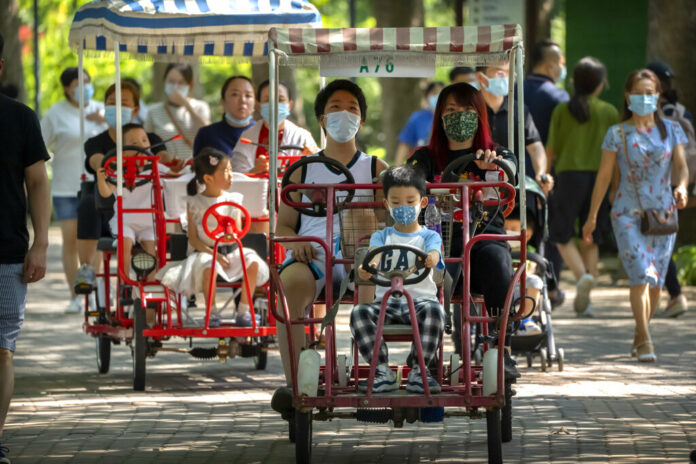
Adults and children ride pedal cycles at a public park in Beijing, Saturday, Aug. 21, 2021. Photo: Mark Schiefelbein / AP
BEIJING (AP) — China will now allow couples to legally have a third child as it seeks to hold off a demographic crisis that could threaten its hopes of increased prosperity and global influence.
The ceremonial legislature on Friday amended the Population and Family Planning Law as part of a decades-long effort by the ruling Communist Party to dictate the size of families in keeping with political directives. It comes just six years after the last change.
From the 1980s, China strictly limited most couples to one child, a policy enforced with threats of fines or loss of jobs, leading to abuses including forced abortions. A preference for sons led parents to kill baby girls, leading to a massive imbalance in the sex ratio.
The rules were eased for the first time in 2015 to allow two children as officials acknowledged the looming consequences of the plummeting birthrate. The overwhelming fear is that China will grow old before it becomes wealthy.
China long touted its one-child policy as a success in preventing 400 million additional births in the world’s most populous country, thus saving resources and helping drive economic growth.
However, China’s birth rate, paralleling trends in South Korea, Thailand and other Asian economies, already was falling before the one-child rule. The average number of children per mother tumbled from above six in the 1960s to below three by 1980, according to the World Bank.
Meanwhile, the number of working-age people in China has fallen over the past decade and the population has barely grown, adding to strains in an aging society. A once-a-decade government census found the population rose to 1.411 billion people last year, up 72 million from 2010.
Statistics show 12 million babies were born last year, which would be down 18% from 2019’s 14.6 million.
Chinese over 60, who number 264 million, accounted for 18.7% of the country’s total population in 2020, 5.44 percentage points higher than in 2010. At the same time, the working-age population fell to 63.3% of the total from 70.1% a decade ago.
The shift to the two-child rule led to a temporary bump in the numbers of births but its effects soon wore off and total births continued to fall because many women continued to decide against starting families.
Japan, Germany and some other wealthy countries face the same challenge of having fewer workers to support aging populations. However, they can draw on investments in factories, technology and foreign assets, while China is a middle-income country with labor-intensive farming and manufacturing.
At its session Friday, the Standing Committee of the National People’s Congress canceled the leveling of fines for breaking the earlier restrictions and called for additional parental leave and childcare resources. New measures in finance, taxation, schooling, housing and employment should be introduced to “to ease the burden on families,” the amendment said.
It also seeks to address longstanding discrimination against pregnant women and new mothers in the workplace that is considered one of the chief disincentives to having additional children, along with high costs and cramped housing.
While female representation in the labor force is high, women, especially those with children, are severely underrepresented at the higher levels, holding just 8.4% of leadership positions at the central and provincial levels. Among the young party leaders who will take the reins in the coming decades, only 11% are women.
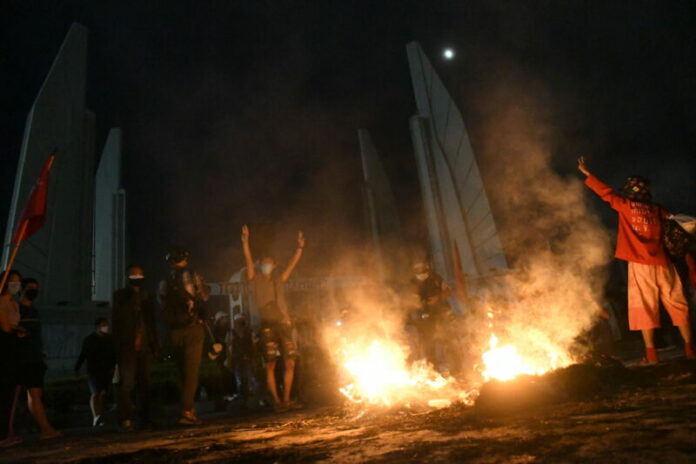
Anti-government protesters at Democracy Monument on Aug. 19, 2021.
On Wednesday evening, anti-government’s Thalu Fah group reached out not to the government but to angry young protesters at another site in Bangkok not to resort to violence.
“Violence is not the answer,” said one through a loudspeaker with the speech carried out through Facebook Live. Another warned that the military could use the near-nightly violent confrontation with anti-riot police around Sam Liam Din Daeng Intersection as a pretext for a military coup that would set Thailand back even further.
Many teenage protesters who descend to Sam Liam Din Daeng Intersection over the past week on a nightly basis, to clash with fully-armed riot police in an attempt to get through the container barriers set up by police to ‘visit’ the residence of Prime Minister Gen Prayut Chan-O-cha in order to pressure Prayut to resign have made up their mind, however.
After spending a few evenings there, these are my observations about the new teenage political protesters that have turned Din Daeng Intersection into their battle field against riot police over the past two weeks.
First, many of the hundreds of these protesters, aged from 14 to early twenties are mostly from the working class. A good number of them have small motorcycles making them very mobile when confronting riot police. Their families are among the hardest hit and most affected by the COVID-19 mismanagement of the economy and the overwhelmed public health system.
They are not middle class intellectuals like the earlier wave of monarchy-reform protesters and protest leaders from top universities like Thammasat, Chulalongkorn or Mahidol. Many are still in high school or studying at vocational colleges.
Second, they do not take orders from any leader, young or old. Former redshirt co-leader Nattawut Saigua tried and failed to convince them to go home and not confront police by visiting the clash site on Sunday evening. Thalu Fah group also failed after pleading on Wednesday. I spoke with some of these young protesters, and one, a 16-year-old, said he takes orders from nobody. They don’t take orders from middle-class protest leaders and are more than willing to continue the militant protest at the same site long after other groups have called it a day.
Third, they have their own way of expressing themselves. It is through the willingness to violently confront riot police with rocks, slingshots, water and glass bottles, wooden and metal sticks, fireworks and homemade explosives and attack police symbols that they manifest themselves. Riot police largely fired teargas, rubber bullets and used water cannons against the protesters although three young protesters have been injured by live ammunition from unidentified shooters with one, age 15 and shot on Monday night, currently still in a coma and dependent on a ventilator.
Another, Nat Thanakitamnuay, though not from the group, considerably older, rich and privileged, and publicly professed non-violent struggle, lost his right eyesight after what he said was a teargas canister hit his right eye’s socket on Aug 13 in the area. On Friday night, 23 protesters were arrested and 16 of them were under the age of 18, according to Thai Lawyers for Human Rights. On that night, a police officer fired rubber bullets at close range while some young protesters hurled Molotov cocktails.
For these young protesters, hitting back at the police is a fair game and the only game. So is setting police traffic booths on fire as they attack the symbols of police repression. No lootings of shops have been reported so far, however and I do not expect any since Bangkok is not LA. These people want to express anger at the regime and system that’s keeping them close to the bottom of society. The middle-class’ theories about non-violence are irrelevant to them and not attractive. What’s attractive is for them to converge together in a state of ‘communitas’, anthropologically speaking, where they feel empowered and capable of expressing their collective anger at the system that offers them bleak economic and political prospects and future as they see little hope or light at the end of the tunnel.
The irony of all these is that many riot police are also from the working class, particularly those enlisted from the Border Patrol Police units. These officers were primarily trained to deal with cross-border threats and criminals like drugs and human traffickers and to control ethnic minorities along the borders of Thailand. They were trained to be more like official paramilitary troops. They are not the type of ‘service-minded’ police infamous at Thonglor police station in the affluent parts of the capital or as tourist police. It’s thus almost inevitable that they see these young hardline protesters as enemies.
These rank and file police may be also from the working class but trained by the system to serve the oppressive state and the powerful as they battle against angry young protesters on the streets of Bangkok almost nightly now.
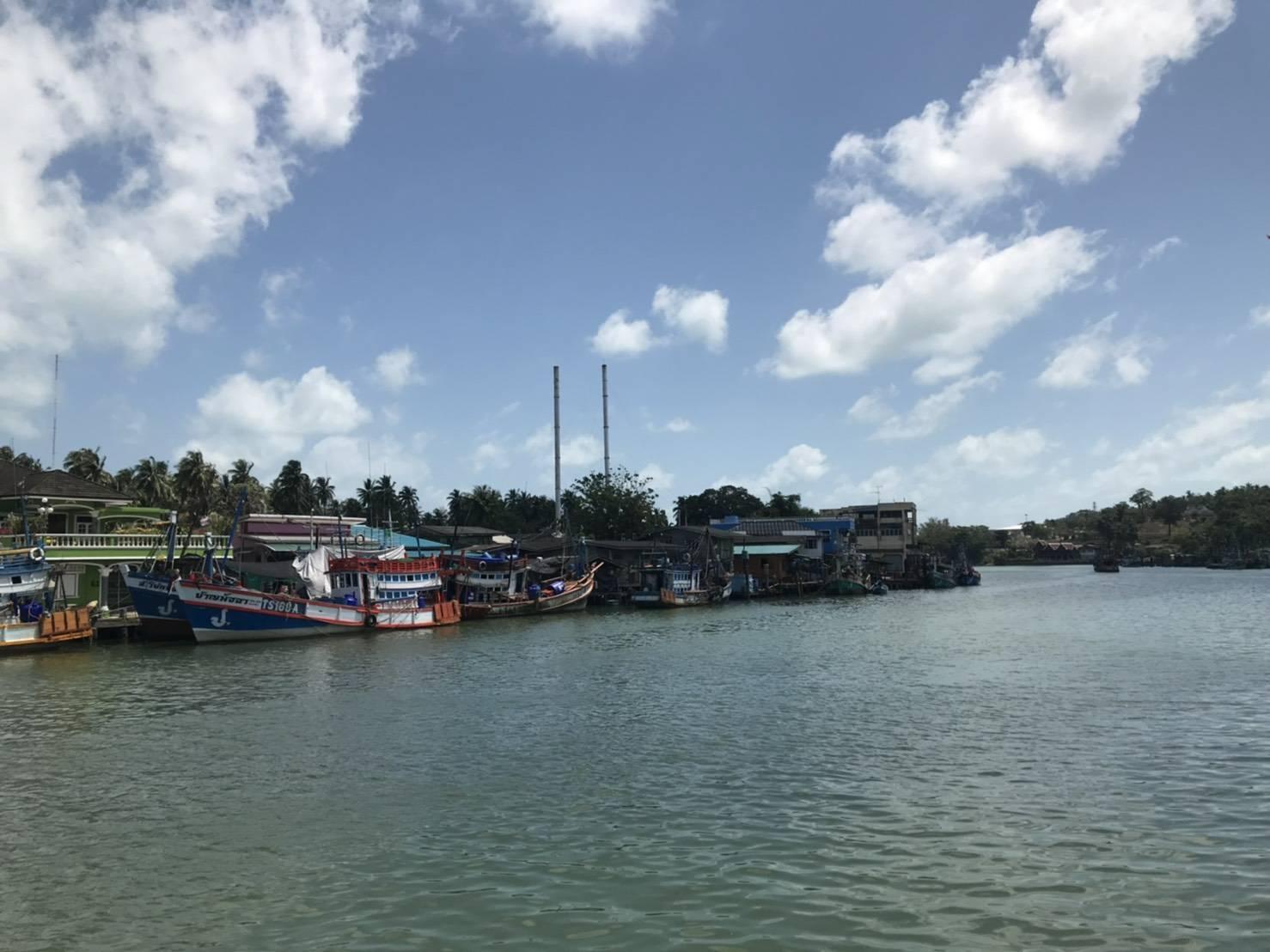
Charoen Pokphand Foods Public Company Limited (CP Foods) joins hands with Thai and multinational organizations to promote eco-friendly and non-IUU fisheries across the world in an effort to build a sustainable shrimp supply chain.
Mr. Pairoj Apiruknusit, CP Foods’ Executive Vice President, said that the company operates agro-industrial and food business, focusing on the responsible use of natural resource, which included sourcing of fishmeal raw materials. It has a policy of sourcing legal fishmeal from 100% by-products from aquaculture plants, all of which must be certified to the MarinTrust standard, a standard that complies with the Food and Agriculture Organization’s Code of Conduct for responsible fisheries. This is to prevent illegal, unreported and unregulated fishing, and participate in the protection of natural resources and marine environments.
“CP Foods is only a buyer of fishmeal and producer of farmed shrimp as well as shrimp feed” Mr.Pairoj said we realizes fishing industry is the source of fishmeal, therefore the company has a strong commitment on promoting sustainability in the seafood supply chain, and solving global concerns such as raw material traceability, marine resource degradation, unfair labor practices, human rights violation and impacts of illegal fishing on the community.
In an effort to solve the problems, CP Foods has joined hands with other Thai seafood industry stakeholders, including the private sectors, government agencies, and civil society, to develop best practices for fishing industry, including the Thai Sustainable Fisheries Roundtable (TSFR) to the Fishery Improvement Project (FIP) for trawl fisheries in the Thai seas in the Gulf of Thailand.
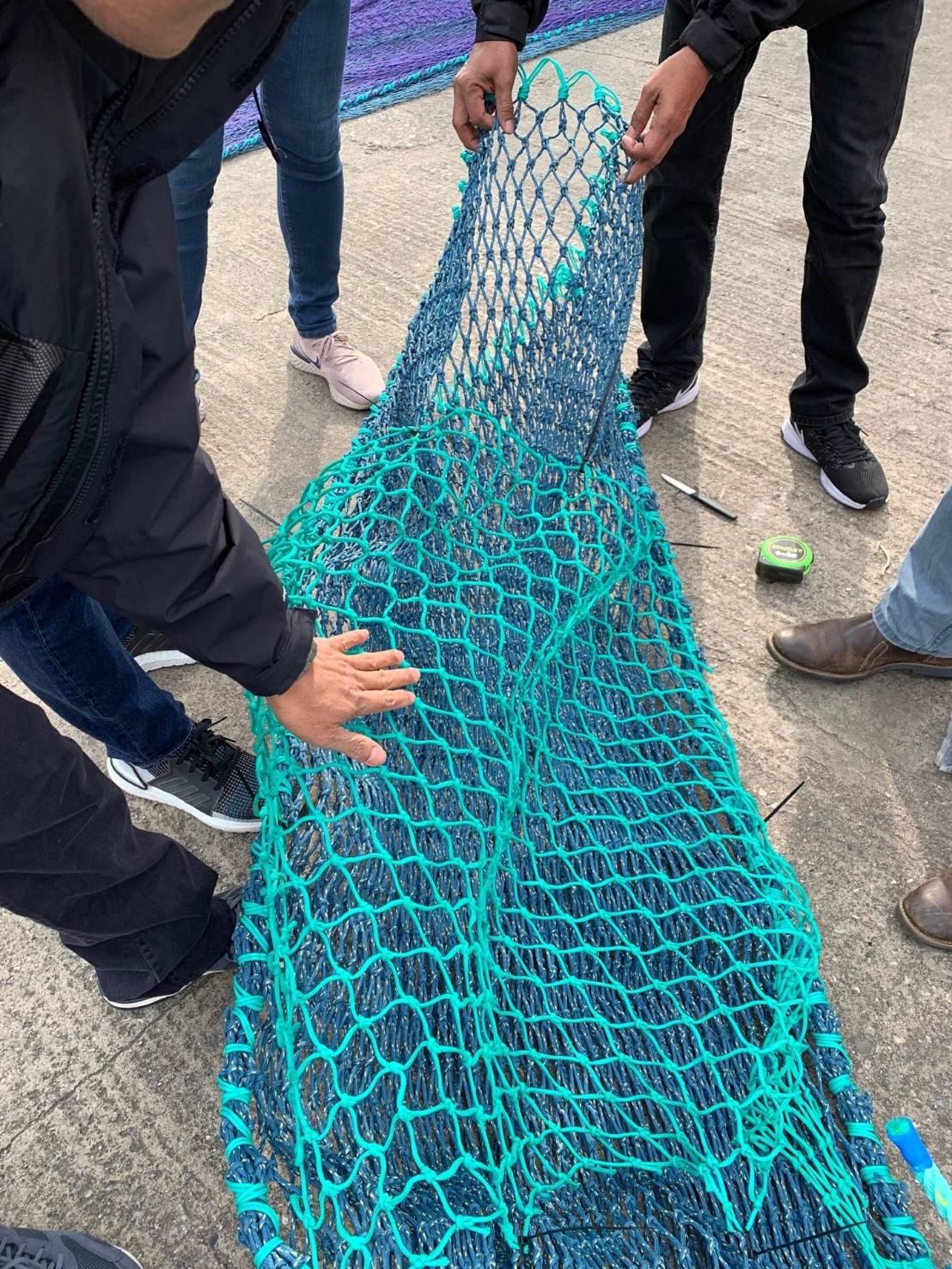
CP Foods is also a part of an industry-level joint task force to promote sustainability in the seafood supply chain (Seafood Task Force) to raise fisheries standards in the region in accordance with the criteria of the MarinTrust, (formerly IFFO RS) for multi-species fisheries such as the guideline for sustainable fishing gear and adoption of Vessel Monitoring System (VMS) to prevent illegal fishing. At present, the Fishery Action Plan (FAP), developed by the Seafood Task Force, has been onto the MarinTrust Improver Program (IP) since November 2020.
The multispecies fishery criteria aim at finding the best practices for highly complex fisheries in Thai seas in which sometimes multiple marine species are regularly caught.
CP Foods also co-founded the Fishermen Life Enhancement Center (FLEC) in Songkhla Province since 2015 to help eliminated forced labor and Illegal labor issues in the Thai fishing industry along with improving the quality of life of fishermen and their families.
Outside of Thailand, the company is a member of the Seafood Business for Ocean Stewardship (SeaBOS) to protect marine resources and the environment. CP Foods and other SeaBOS members have agreed on a mutual goal to produce IUU-free products by October 2021. With the Global Dialogue on Seafood Traceability (GDST), CP Foods is running a pilot project on traceability system throughout the shrimp supply chain, starting from fishing boats to shrimp processing plants.
Also, the company has transferred knowledge gained from participated sustainability projects in Thailand and abroad to its partners to enable them to comply with international standards. This will not only help CP Foods’ supply chain be sustainable, but also to increase the competitiveness of the partners on the multinational market.
“From the efforts, CP Foods is recognized worldwide as a seafood producer with a sustainable production. This reflects on the latest Seafood Stewardship Index (SSI) in which the company received the highest score in the human rights category and sustainable supply chain management and ranked 3rd overall among the top 30 companies in the global seafood industry.” Mr Pairoj said.
In this photo provided by the U.S. Marine Corps, civilians prepare to board a plane during an evacuation at Hamid Karzai International Airport, Kabul, Afghanistan, Wednesday, Aug. 18, 2021. Photo: Staff Sgt. Victor Mancilla / U.S. Marine Corps via AP
WASHINGTON (AP) — The United States is struggling to pick up the pace of American and Afghan evacuations at Kabul airport, constrained by obstacles ranging from armed Taliban checkpoints to paperwork problems. With an Aug. 31 deadline looming, tens of thousands remained to be airlifted from the chaotic country.
Taliban fighters and their checkpoints ringed the airport — major barriers for Afghans who fear that their past work with Westerners makes them prime targets for retribution. Hundreds of Afghans who lacked any papers or clearance for evacuation also congregated outside the airport, adding to the chaos that has prevented even some Afghans who do have papers and promises of flights from getting through.
It didn’t help that many of the Taliban fighters could not read the documents.
In a hopeful sign, State Department spokesman Ned Price said in Washington that 6,000 people were cleared for evacuation Thursday and were expected to board military flights in coming hours. That would mark a major increase from recent days. About 2,000 passengers were flown out on each of the past two days, Pentagon spokesman John Kirby said.
Kirby said the military has aircraft available to evacuate 5,000 to 9,000 people per day, but until Thursday far fewer designated evacuees had been able to reach, and then enter, the airport.
Kirby told reporters the limiting factor has been available evacuees, not aircraft. He said efforts were underway to speed processing, including adding State Department consular officers to verify paperwork of Americans and Afghans who managed to get to the airport. Additional entry gates had been opened, he said.
And yet, at the current rate it would be difficult for the U.S. to evacuate all of the Americans and Afghans who are qualified for and seeking evacuation by Aug. 31. President Joe Biden said Wednesday he would ensure no American was left behind, even if that meant staying beyond August, an arbitrary deadline that he set weeks before the Taliban climaxed a stunning military victory by taking Kabul last weekend. It was not clear if Biden might consider extending the deadline for evacuees who aren’t American citizens.
At the airport, military evacuation flights continued, but access remained difficult for many. On Thursday, Taliban militants fired into the air to try to control the crowds gathered at the airport’s blast walls. Men, women and children fled. U.S. Navy fighter jets flew overhead, a standard military precaution but also a reminder to the Taliban that the U.S. has firepower to respond to a combat crisis.
There is no accurate figure of the number of people — Americans, Afghans or others — who are in need of evacuation as the process is almost entirely self-selecting. For example, the State Department says that when it ordered its nonessential embassy staff to leave Kabul in April after Biden’s withdrawal announcement, fewer than 4,000 Americans had registered for security updates. The actual number, including dual U.S.-Afghan citizens along with family members, is likely much higher, with estimates ranging from 11,000 to 15,000. Tens of thousands of Afghans may also be in need of escape.
Compounding the uncertainty, the U.S. government has no way to track how many registered Americans may have left Afghanistan already. Some may have returned to the United States but others may have gone to third countries.
At the Pentagon, Kirby declined to say whether Defense Secretary Lloyd Austin had recommended to Biden that he extend the Aug. 31 deadline. Given the Taliban’s takeover of the country, staying beyond that date would require at least the Taliban’s acquiescence, he said. He said he knew of no such talks yet between U.S. and Taliban commanders, who have been in regular touch for days to limit conflict at the airport as part of what the White House has termed a “safe passage” agreement worked out on Sunday.
“I think it is just a fundamental fact of the reality of where we are, that communications and a certain measure of agreement with the Taliban on what we’re trying to accomplish has to occur,” Kirby said.
Of the approximately 2,000 people airlifted from the airport in the 24 hours ended Wednesday morning, nearly 300 were Americans, Kirby said. U.S. lawmakers were briefed Thursday morning that 6,741 people had been evacuated since Aug. 14, including 1,762 American citizens and Green Card holders, according to two congressional aides.
Although Afghanistan had been a hotspot for the coronavirus pandemic, the State Department said Thursday that evacuees are not required to get negative COVID-19 results.
“A blanket humanitarian waiver has been implemented for COVID-19 testing for all persons the U.S. government is relocating from Afghanistan,” the department said. Medical exams, including COVID-19 tests, had been required for evacuees prior to the Taliban’s takeover of Kabul, which added extra urgency to efforts to get at-risk Afghans out.
Additional American troops continued to arrive at the airport. As of Thursday there were about 5,200, including Marines who specialize in evacuation coordination and an Air Force unit that specializes in emergency airport operations. Biden has authorized a total deployment of about 6,000.
Hoping to secure evacuation seats are American citizens and other foreigners, Afghan allies of the Western forces, and women, journalists, activists and others most at risk from the fundamentalist Taliban.
In June, more than 20 diplomats at the U.S. Embassy in Kabul registered their concerns that the evacuation of Afghans who had worked for America was not proceeding quickly enough.
In a cable sent through the State Department’s dissent channel, a time-honored method for foreign service officers to register opposition to administration policies, the diplomats said the situation on the ground was dire, that the Taliban would likely seize control of the capital within months of the Aug. 31 pullout, and urged the administration to immediately begin a concerted evacuation effort, according to officials familiar with the document.
Will U.S. troops go beyond the airport perimeter to collect and escort people? Austin suggested on Wednesday that this was not currently feasible. “We don’t have the capability to go out and collect large numbers of people,” he told reporters.
Austin added that evacuations would continue “until the clock runs out or we run out of capability.”
Afghans in danger because of their work with the U.S. military or U.S organizations, and Americans scrambling to get them out, also pleaded with Washington to cut the red tape that has complicated matters.
“If we don’t sort this out, we’ll literally be condemning people to death,” said Marina Kielpinski LeGree, the American head of a nonprofit, Ascend. The organization’s young Afghan female colleagues were in the mass of people waiting for flights at the airport in the wake of days of mayhem, tear gas and gunshots.
Story: Robert Burns, Matthew Lee, and Lolita C. Baldor
This photo shows a phone app for OnlyFans, a site where fans pay creators for their photos and videos, Thursday Aug. 19, 2021. Photo: Tali Arbel / AP
OnlyFans, a site where fans pay creators for their photos and videos, is planning to ban “sexually explicit” content.
The ban will start Oct. 1 and is the result of requests from banking partners and companies that handle financial transactions, a spokesperson said.
Still, nudity is OK if it’s “consistent” with the company’s policy. It’s not clear what that policy is, and the company did not reply to questions. OnlyFans will be sharing more information in “coming days.”
OnlyFans has become famous as a space for celebrities to interact with people on a personal level, as well as a place where sex workers can post and get paid in a relatively safe manner.
It’s not available as an app via the Apple and Google stores, which ban pornography. OnlyFans has tried to distance itself from its association with porn, recently announcing an OFTV streaming app, which is available for download from the major tech platforms, and features content around categories like fitness, cooking, comedy and music.
OnlyFans says it has 130 million users and 2 million creators who have collectively earned $5 billion.