
























33.3 C
Bangkok
Sunday, June 21, 2026
Home Blog Page 1065

Pandemic Leaves Indians Mired in Massive Medical Debts

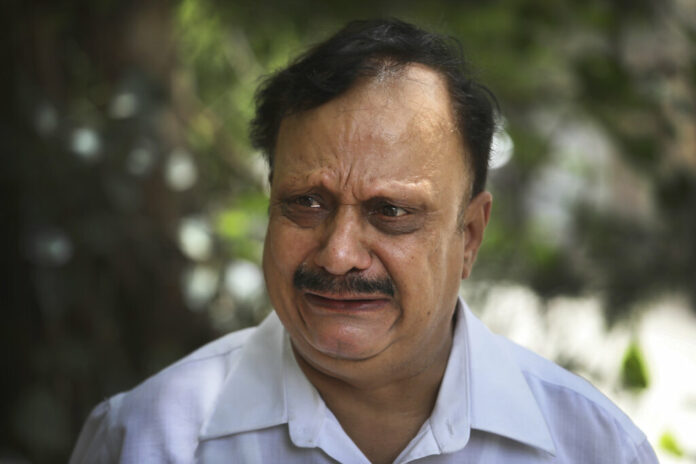
Anil Sharma breaks down while talking to the Associated Press after visiting his son, Saurav, who is being treated for COVID-19 at a private hospital, in New Delhi, India, Thursday, July 1, 2021. Photo: Manish Swarup / AP

NEW DELHI (AP) — As coronavirus cases ravaged India this spring, Anil Sharma visited his 24-year-old son Saurav at a private hospital in northwest New Delhi every day for more than two months. In May, as India’s new COVID-19 cases broke global records to reach 400,000 a day, Saurav was put on a ventilator.

The sight of the tube running into Saurav’s throat is seared in Sharma’s mind. “I had to stay strong when I was with him, but immediately after, I would break down as soon as I left the room,” he said.

Saurav is home now, still weak and recovering. But the family’s joy is tempered by a mountain of debt that piled up while he was sick.

Life has been tentatively returning to normal in India as coronavirus cases have fallen. But millions are embroiled in a nightmare of huge piles of medical bills. Most Indians don’t have health insurance and costs for COVID-19 treatment have them drowning in debt.
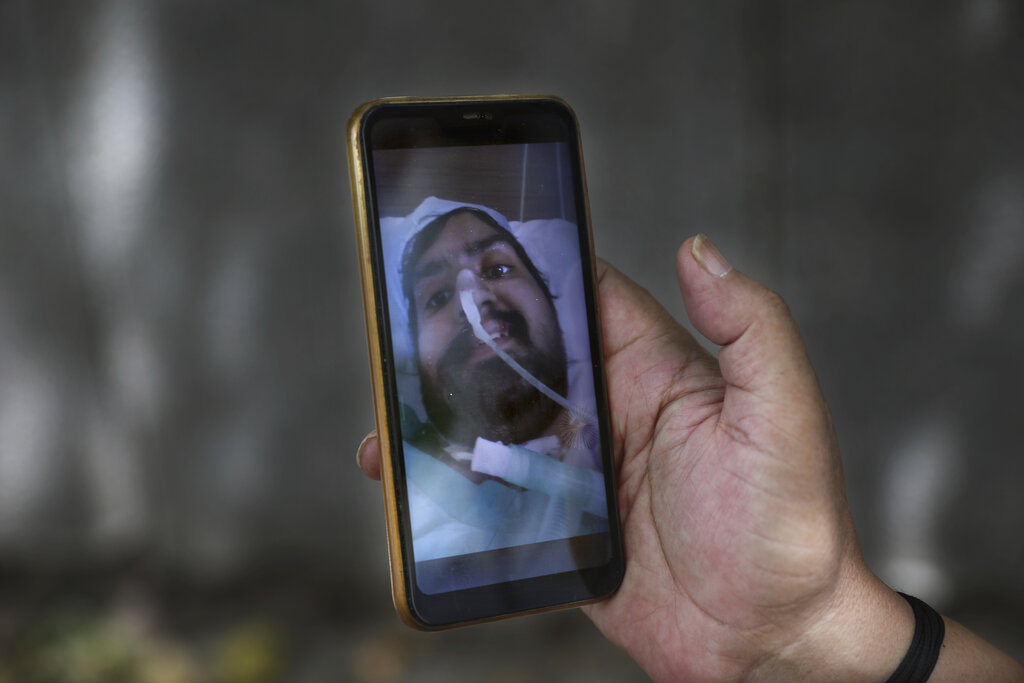
AP21201498874961
Anil Sharma shows a photograph of his son Saurav who is being treated for COVID-19 at a private hospital in New Delhi, India, Thursday, July 1, 2021. Photo: Manish Swarup / AP

Sharma exhausted his savings on paying for an ambulance, tests, medicines and an ICU bed. Then he took out bank loans.

As the costs mounted, he borrowed from friends and relatives. Then, he turned to strangers, pleading online for help on Ketto, an Indian crowdfunding website. Overall, Sharma says he has paid over $50,000 in medical bills.

The crowdfunding provided $28,000, but another $26,000 is borrowed money he needs to repay, a kind of debt he has never faced before.

“He was struggling for his life and we were struggling to provide him an opportunity to survive,” he said, his voice thick with emotion. “I was a proud father — and now I have become a beggar.”
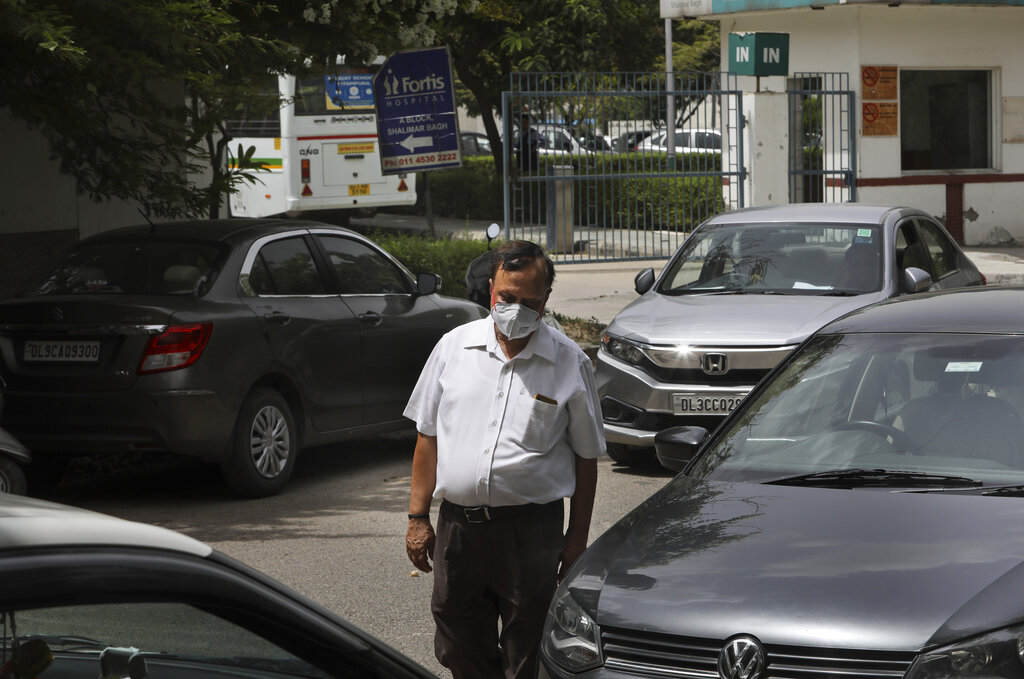
AP21201500091254
Anil Sharma leaves a hospital after visiting his son Saurav who is being treated for COVID-19 at a private hospital in New Delhi, India, Thursday, July 1, 2021. Photo: Manish Swarup / AP

The pandemic has devastated India’s economy, bringing financial calamity to millions at the mercy of its chronically underfunded and fragmented healthcare system. Experts say such costs are bound to hinder an economic recovery.

“What we have is a patchwork quilt of incomplete public insurance and a poor public health system. The pandemic has shown just how creaky and unsustainable these two things are,” said Vivek Dehejia, an economist who has studied public policy in India.

Even before the pandemic, healthcare access in India was a problem.

Indians pay about 63% of their medical expenses out-of-pocket. That’s typical of many poor countries with inadequate government services. Data on global personal medical costs from the pandemic are hard to come by, but in India and many other countries treatment for COVID is a huge added burden at a time when hundreds of millions of jobs have vanished.
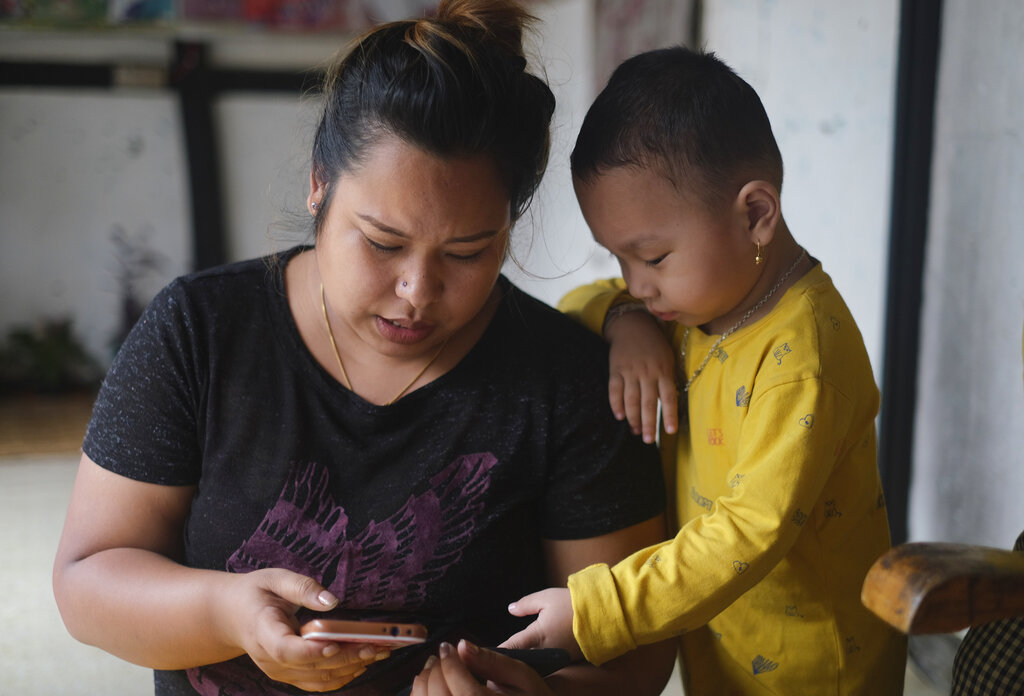
AP21182367299463
Diana Khumanthem, 30, and her three-year-old nephew Hridhaan looks at photographs on the mobile phone of Hridhaan’s mother Ranjita, who died of COVID-19, at home in Imphal, in Manipur, India. Photo: Yirmiyan Arthur / AP

In India, many jobs returned as cities opened up after a severe lockdown in March 2020, but economists worry about the loss of some 12 million salaried positions. Sharma’s job as a marketing professional was one of them.

When he asked his son’s friends to set up the campaign on Ketto to raise funds, Sharma hadn’t seen a paycheck in 18 months. Between April and June this year, 40% of the 4,500 COVID-19 campaigns on the site were for hospitalization costs, the company said.

The pandemic has driven 32 million Indians out of the middle class, defined as those earning $10 to $20 a day, according to a Pew Research Center study published in March. It estimated the crisis has increased the number of India’s poor — those with incomes of $2 or less a day — by 75 million.
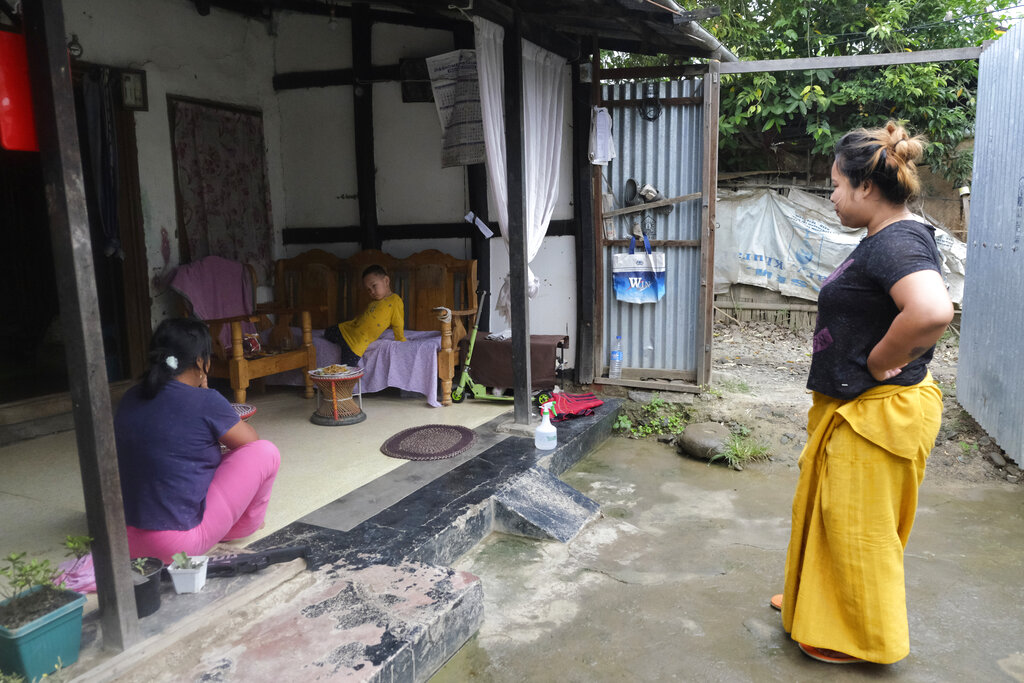
AP21182367277776
Diana Khumanthem, 30, watches her three-year-old nephew Hridhaan, who she has decided to raise as her own after his mother Ranjita died of COVID-19, at home in Imphal, in Manipur, India, Monday, June 28, 2021. Photo: Yirmiyan Arthur / AP

“If you’re looking at what pushes people into debt or poverty, the top two sources often are out-of-pocket health expenditure and catastrophic costs of treatment,” said K Srinath Reddy, president of the Public Health Foundation of India.

In the northeastern city of Imphal, 2,400 kilometers (1,490 miles) away, Diana Khumanthem lost both her mother and sister to the virus in May.

Treatment costs wiped out the family’s savings, and when the private hospital where her sister died wouldn’t release her body for last rites until a bill of about $5,000 was paid, she pawned the family’s gold jewelry to moneylenders.

When that wasn’t enough, asked her friends, relatives and her sister’s colleagues for help. She still owes some $1,000.

A health insurance scheme launched by Prime Minister Narendra Modi in 2018 was intended to cover around 500 million of India’s 1.3 billion people and was a major step toward easing medical costs. But it doesn’t cover the primary care and outpatient costs that comprise most out-of-pocket expenses. So it hasn’t “effectively improved access to care and financial risk protection,” said a working paper by researchers at Duke University.

The program also has been hobbled by disparities in how various states implemented it, said Shawin Vitsupakorn, one of the paper’s authors.

Another paper, by the Duke Global Health Institute and the Public Health Foundation of India, found costs of ICU hospitalization for COVID-19 are equivalent to nearly 16 months of work for a typical Indian day laborer or seven to 10 months for salaried or self-employed workers.

Meager funding of healthcare, at just 1.6% of India’s GDP, is less, proportionately, than what Laos or Ethiopia spends. At the outbreak’s peak in May, hospitals everywhere were overrun, but public facilities lacked the resources to handle the floods of patients coming in.

“The result is a suffering public health system, where the provision of care is often poor, prompting many to flock to private hospitals,” said Dehejia.
AP21182367175186
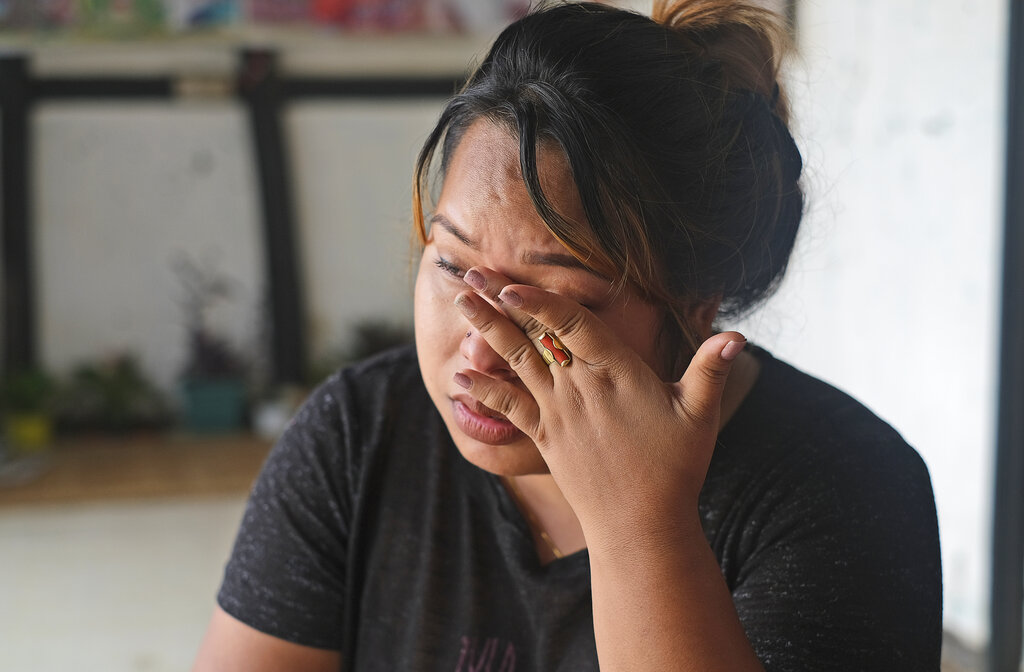
Diana Khumanthem, 30, wipes her tears as she recounts her COVID-19 experience sitting at home in Imphal, in the northeastern Indian state of Manipur, Monday, June 28, 2021. Photo: Yirmiyan Arthur / AP

A public hospital treated Khumanthem’s mother, but her sister Ranjita was admitted to a private one that cost $1,300 per day.

Ranjita was the family’s only earner after Khumanthem left her nursing job last year to return home during the first wave of the virus. She’s now hunting for work while looking after her father and her sister’s 3-year-old son.

At her home in Imphal, Khumanthem grieved for her mother by remembering her favorite food — chagem pomba, a type of gruel made with vegetables, rice and soybeans. Every few minutes, she looked toward the front gate.

“This is usually the time Ranjita would return home from work,” she said. “I still keep thinking she could walk through the gate any moment now.”

Back in New Delhi, Sharma sighed in relief as an ambulance brought his son home from the hospital last week. Saurav needs physiotherapy to build up his weakened muscles, a daily nurse and a long list of medications. It may be weeks before he will be able to stand on his own, and months before the ambitious lawyer who graduated among the top of his class will be able to go to court again.

The costs will continue.

“Our first priority was to save him,” Sharma said. “Now we will need to figure out the rest.”

___

Story: Krutika Pathi and Yirmiyan Arthur. Associated Press journalist Yirmiyan Arthur contributed from Imphal.
Advertisement

Thai Volunteers Aid COVID Patients in Need of Care, Testing

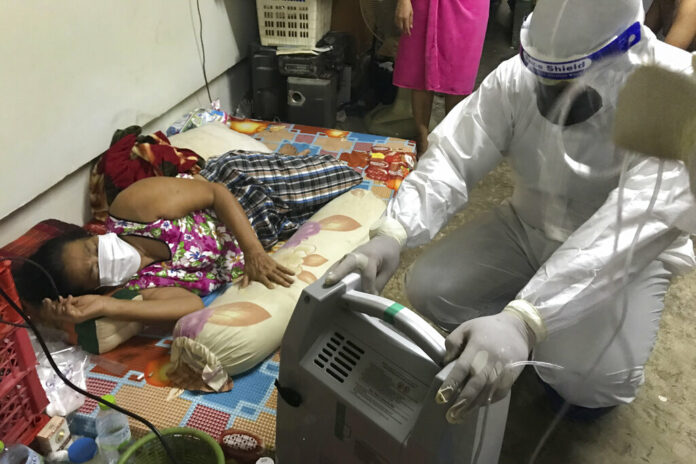
A member of the volunteer Saimai Must Survive Group prepares a home oxygen concentrator to help a woman infected with the COVID-19 with difficulty breathing, late Saturday, July 24, 2021, in Bangkok, Thailand. Photo: Tassanee Vejpongsa / AP

BANGKOK, Thailand (AP) — As Thailand‘s medical system struggles beneath a surge of coronavirus cases, ordinary people are helping to plug the gaps, risking their own health to bring care and supplies to often terrified, exhausted patients who’ve fallen through the cracks.

In the Samai area of Bangkok, Ekapob Laungprasert’s team heads out for another weekend on the front lines of a crisis.

His volunteer group, Samai Will Survive, has been working around the clock, responding to about a hundred SOS calls daily from desperate COVID-19 patients unable to get the help they need.

“We realize how hard working and how tired doctors and nurses are,” says the 38-year-old businessman. “What we are trying to do today is to help relieve some of the burden. Before, all cases must go to the hospital, so today there are no hospital beds. So we volunteer to help out.”

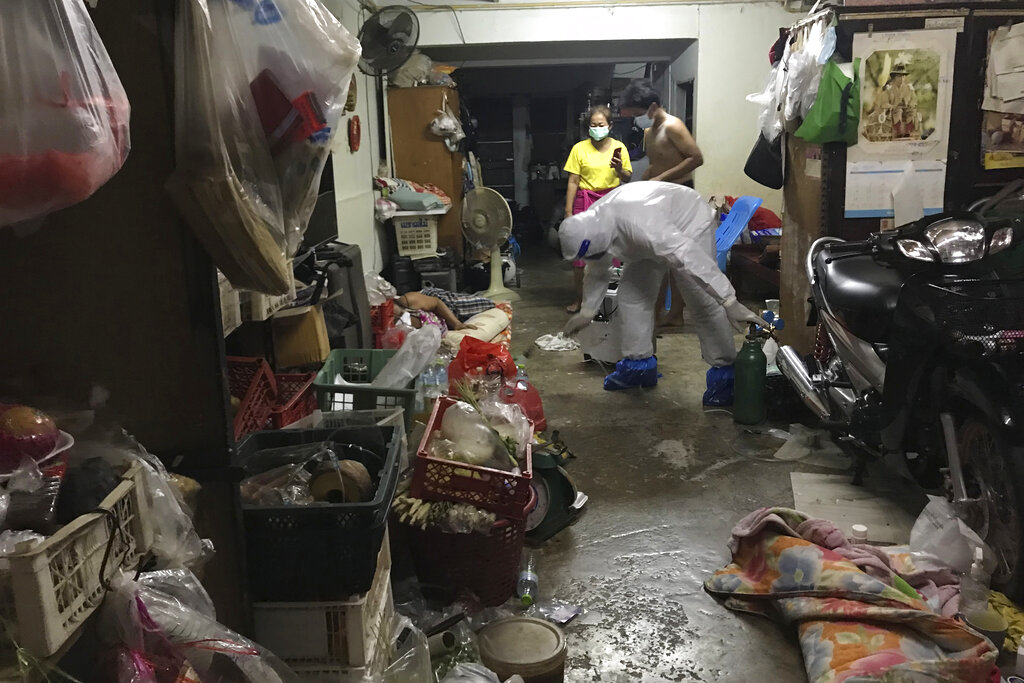
It’s not long before they’re in action: Malee, a COVID-19 positive woman whose breathing has suddenly worsened. The group, wearing personal protective equipment, delivers oxygen and much-needed reassurance to Malee and her husband, an army officer who also has the virus.

AP21206437491940
A volunteer from the ‘Saimai Will Survive’ group in protective gear prepares an oxygen tank to help a woman infected with COVID-19 breathe at her home, Saturday, July 24, 2021, in Bangkok, Thailand. Photo: Tassanee Vejpongsa / AP

“I lost hope even with the army. I called doctors at field hospitals. All they told me to do was to send information, just send information,” Worawit Srisang said. “I got the same answers everywhere. At least these guys visit us in person. What the patient needs is a chance to see a doctor, not just send information.”

Thailand’s predicament is stark. Around 15,000 new cases are confirmed each day and still more people are getting infected. In Bangkok alone, 20,000 people are waiting for a hospital bed.

So homespun heroes like Ekapob and his group — buying equipment and supplies with public donations — are an essential safety net, gaining crucial time for both patients and a health care system under severe strain.

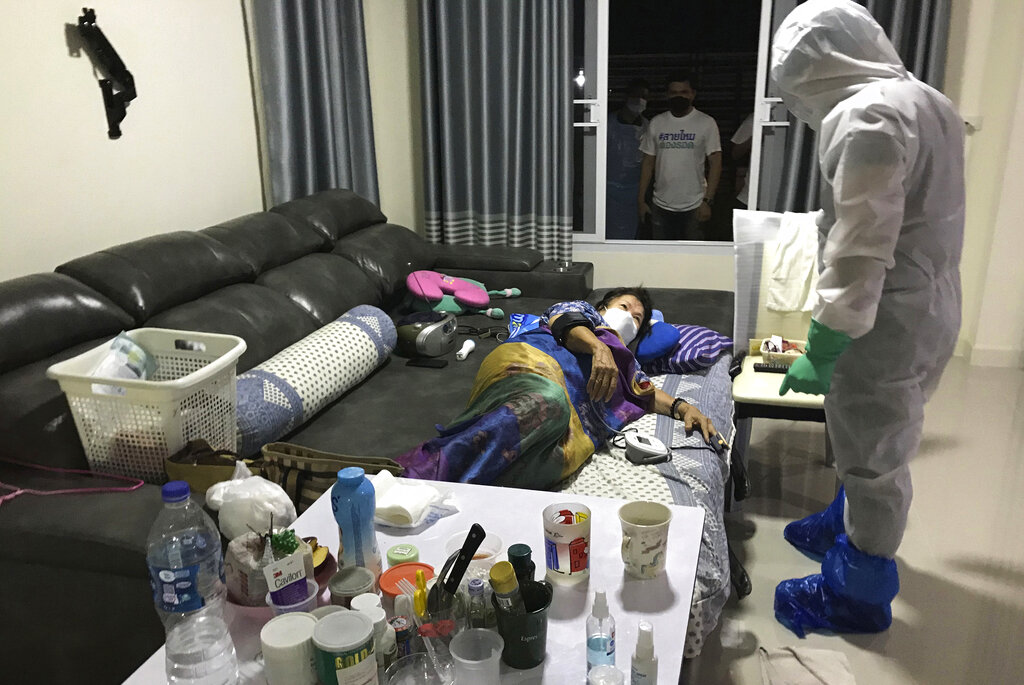
There’s another call: an elderly woman with COVID-19 symptoms. But she’s not fit to wait in line for hours at an overwhelmed test center, so for the moment she’s stuck where she is.

AP21206439015139
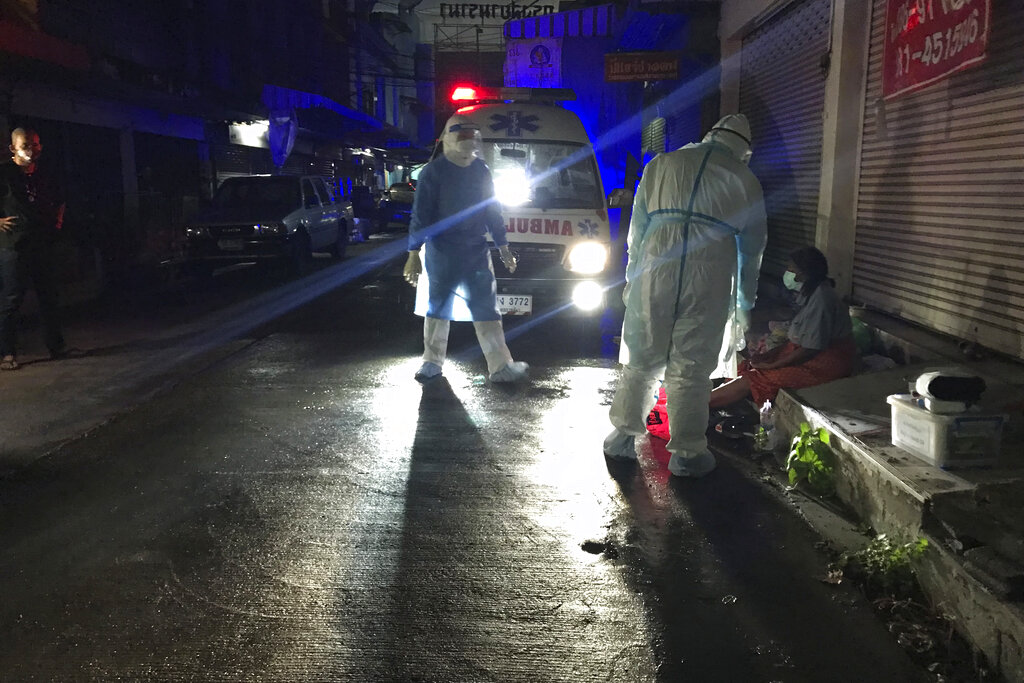
Volunteers from the ‘Saimai Will Survive’ group arrive with an ambulance in protective gear to help a homeless woman infected with COVID-19 on a sidewalk, Saturday, July 24, 2021, in Bangkok, Thailand. Photo: Tassanee Vejpongsa / AP

“Grandma can’t get tested, so she lies sick in bed. If we want to send her to the hospital, they will ask for her test result. So we are back in a circle, because we would ask them to do the test,” Ekapob says, looking in through the window.

It’s very likely she has COVID-19. All her family members have already tested positive.

After a check, his team members decide she’s not in imminent danger. They hook her up with oxygen, then it’s back into the night and on to the next case.

AP21206435051446
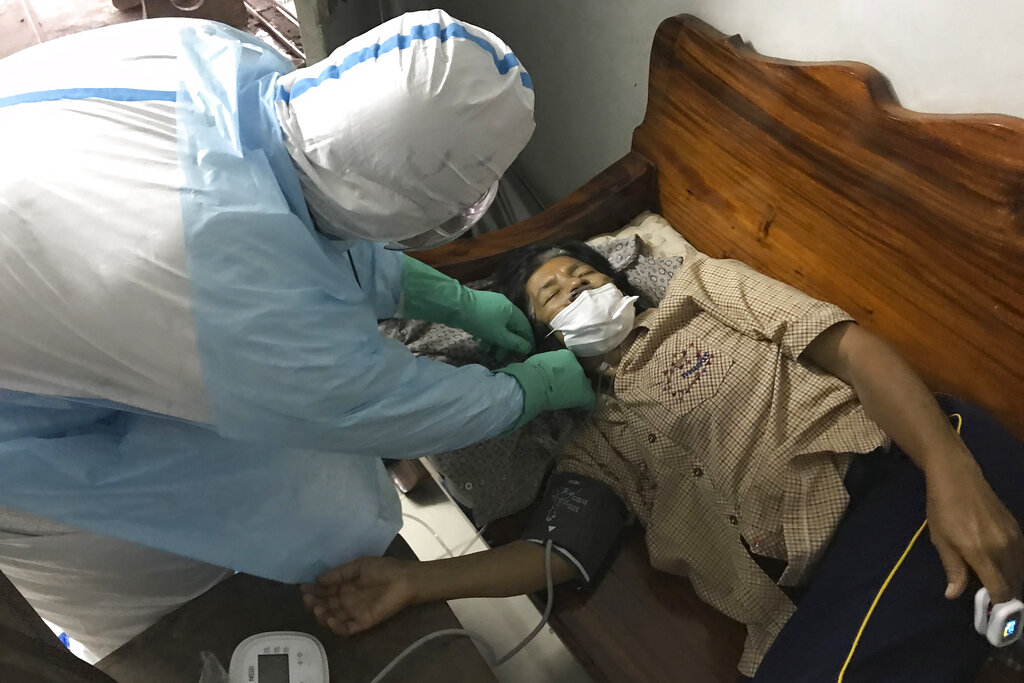
A volunteer from the ‘Saimai Will Survive’ group in protective gear talks to a woman infected with COVID-19 on her condition while checking her blood pressure and blood oxygen levels Friday, July 23, 2021, in Bangkok, Thailand. Photo: Tassanee Vejpongsa / AP

There’s a raging debate in Thailand now over the national vaccination roll-out. Many Thais are angry over the slow pace and a perceived lack of accountability for the fact that only around 5% of the population currently is fully protected.

The volunteers see the consequences almost every night.

They’re called to 52-year old Nittaya Kongnuch, who like so many is struggling to breathe normally.

As they try to make her more comfortable, her sister tells an increasingly familiar story. Their mother died last week from the virus, as their urgent calls for help to brimming hospitals went unheeded.

AP21206430504973
A volunteer from the ‘Saimai Will Survive’ group in protective gear adjusts an oxygen line to help a woman infected with COVID-19 with difficulty breathing at her home, Friday, July 23, 2021, in Bangkok, Thailand. Photo: Tassanee Vejpongsa / AP

“My mother showed bad symptoms from the beginning. I called and called to tell them my mom couldn’t handle this anymore, but nobody came. The nurses kept saying there were no beds,” said Piyawan Kodduang, fighting back tears.

Most fatalities occur in private. But not all. Last week, a body lay for hours in a Bangkok street, incurring the wrath of an embarrassed prime minister.

On Saturday night, Ekapob and his team see exactly how that can happen, as they’re called to a homeless woman who’s showing signs of infection.

As wary residents watch from a distance, the team moves in to carry out a rapid test.

Within a few minutes they have the result: positive.

After making some phone calls, Ekapob finds her a place in a facility where she can be observed while awaiting a bed in a field hospital.

At least she has a fighting chance. Without the volunteers, it’s likely she wouldn’t have any.

Thailand has had 497,302 cases of COVID-19 and 4,059 deaths since the pandemic began.

Story: Tassanee Vejpongsa

Advertisement

As COVID-19 Rages, Ideological War Continues to Claim Collateral Damage

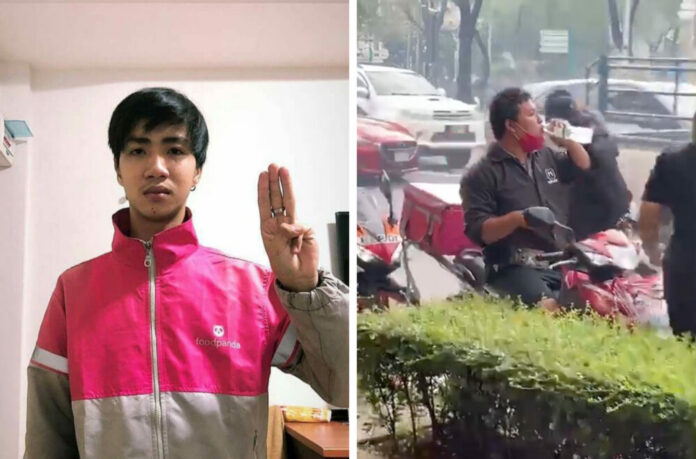
Left: Dung Pan-in Saengsila / Facebook. Right, a man on a Foodpanda motorcycle captured in a video posted by @Tonpatiwat, whom Foodpanda called a “terrorist.” Photo: ​​Tonpatiwat / Twitter

retention.column

The tragedies of the current COVID-19 outbreak is that not only many people are becoming infected and dying every day, but things have become very political to the point where some may become casualties of the raging ideological war. 

Anti-government and monarchy-reform protest leaders announced a ban on Foodpanda delivery services last Sunday. This ocurred after one of its demonstrators who was captured on video appeared to set fire to a large image of the King on during the protests, and the food delivery giant described the man as a terrorist.

The man, Sitthichoke (family name withheld by his attorney) was arrested on Monday for lese-majeste and later let out on bail. Sitthichoke insisted that he was trying to extinguish the pre-existing fire with water at the base of a large portrait of the king, and not the other way round. But the fact that he left on a bike with a Foodpanda box, that’s used to store ordered food inside, clearly visible on the back of his motorbike led to Foodpanda denouncing the man on its official Twitter account on Sunday as “terrorist”. The reaction was to boycott Foodpanda and over a million “ban Foodpanda” hashtag mentions was trending by Monday noon.

The food delivery giant may have apologized later on Monday afternoon, but it was too little too late.

“We are sorry to have caused disappointment and upset any parties due to a recent comment on our Twitter channel. The comment was posted by our team member without consent from Foodpanda, and does not represent Foodpanda. We know this has hugely affected and frustrated customers, riders, partners and members of the public, and we are taking responsibility for this comment that was posted on our Twitter feed, regardless of who posted it and how it occurred. For this hurt we have caused you, we are truly sorry,” part of the apology issued in both Thai and English read, adding that Foodpanda stressed that they respect “freedom of speech and expression.” 

Protesters, leaders and ordinary demonstrators were not convinced. No one was publicly identified as the culprit by Foodpanda and they insist the boycott runs its “logical” course even if those who will be most severely affected will be ordinary food delivery men and women, the so-called “riders”.

All I hear repeatedly on social media is that they are waging an ideological “war” to oust Prime Minister Gen. Prayut Chan-o-cha and reform the monarchy institution, and any casualties of war, or collateral damage, was to be expected. Never mind if some of these riders had absolutely nothing to do with the fiasco. Never mind if under the current COVID-19-hit economic crisis it’s hard enough to make ends meet especially if you’re from a working class. People who insist on boycotting Foodpanda told me it’s up to these riders to either switch to work for other rival companies or protest against their own employer.

Soon enough, Foodpanda suffered yet another blow from the other end of the ideological camp with a prominent ultra-royalist calling for a ban of the services as well. Rianthong Nanna, owner of Mongkutwattana Hospital announced on Facebook that his hospital and affiliated field hospitals will also henceforth ban Foodpanda. On top of that, Rianthong, himself a medical doctor and a former army general, said his hospital will not admit any monarchy-reform and anti-government protesters who may become infected with COVID-19. Forget about the Hippocratic oath to “treat the sick to the best of one’s ability.” Rianthong sticks to hypocrisy and abandonment of Hippocratic oath in this ideological war instead. To him, these people are casualties of war, collateral damage, as well.

Empathy is scarce in this ideological war. It’s as if we all collectively are not stressed enough, not suffering enough. Most are now just pawns, foot soldiers, and expendable in the ideological struggle.

If anything, the COVID-19 crisis should make us become more humane, and feel the pains of others more acutely, not less. For some, it’s an ideological war out there and being humane and empathetic are also casualties of the war they are waging.

Advertisement

Tokyo Olympics Begin With Muted Ceremony and Empty Stadium

Naomi Osaka climbs stairs to light the Olympic Cauldron during the opening ceremony in the Olympic Stadium at the 2020 Summer Olympics, Friday, July 23, 2021, in Tokyo, Japan. Photo: Kirsty Wigglesworth / AP

TOKYO (AP) — Belated and beleaguered, the virus-delayed Tokyo Summer Olympics finally opened Friday night with cascading fireworks and made-for-TV choreography that unfolded in a near-empty stadium, a colorful but strangely subdued ceremony that set a striking tone to match a unique pandemic Games.

As their opening played out, devoid of the usual crowd energy, the Olympics convened amid simmering anger and disbelief in much of the host country, but with hopes from organizers that the excitement of the sports to follow would offset the widespread opposition.

“Today is a moment of hope. Yes, it is very different from what all of us had imagined,” IOC President Thomas Bach said. “But let us cherish this moment because finally we are all here together.”

“This feeling of togetherness — this is the light at the end of the dark tunnel of the pandemic,” Bach declared. Later, Japanese tennis star Naomi Osaka received the Olympic flame from a torch relay through the stadium and lit the Olympic cauldron.

AP21204502582031
Drones flying over the National Stadium during the opening ceremony of 2020 Tokyo Olympics is seen from Shibuya Sky observation deck Friday, July 23, 2021, in Tokyo, Japan. Photo: Eugene Hoshiko / AP

Trepidations throughout Japan have threatened for months to drown out the usual packaged glitz of the opening. Inside the stadium after dusk Friday, however, a precisely calibrated ceremony sought to portray that the Games — and their spirit — are going on.

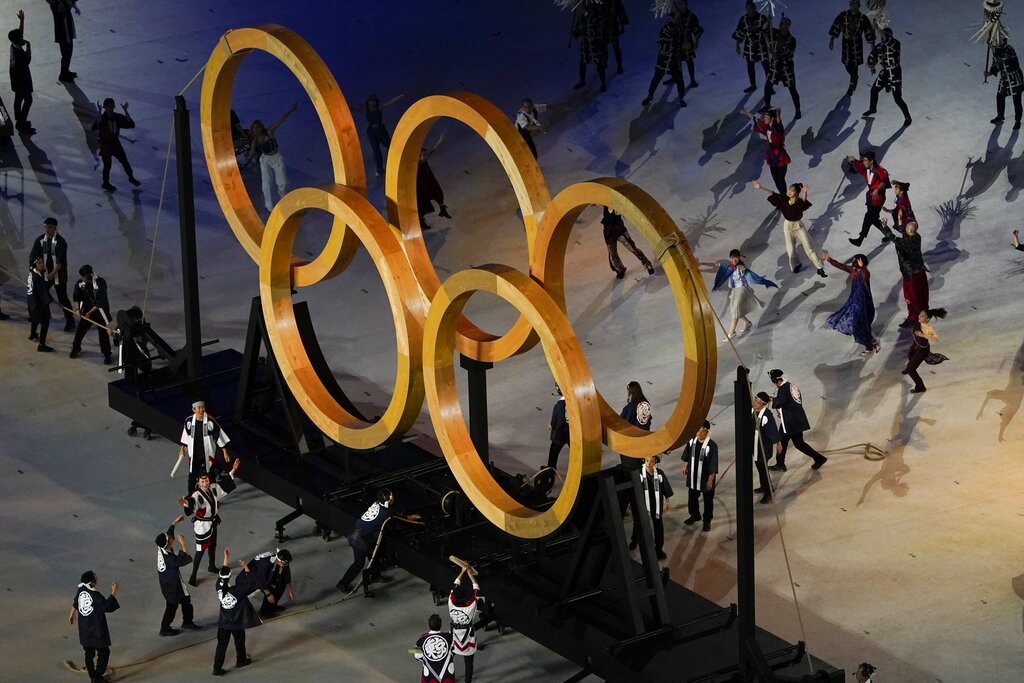
Early in the ceremony, an ethereal blue light bathed the empty seats as loud music muted the shouts of scattered protesters outside calling for the Games to be canceled. A single stage held an octagon shape meant to resemble the country’s fabled Mount Fuji. Later, an orchestral medley of songs from iconic Japanese video games served as the soundtrack for athletes’ entrances.

Mostly masked athletes waved enthusiastically to thousands of empty seats and to a world hungry to watch them compete but surely wondering what to make of it all. Some athletes marched socially distanced, while others clustered in ways utterly contrary to organizers’ hopes. The Czech Republic entered with other countries even though its delegation has had several positive COVID tests since arriving.

“You had to face great challenges on your Olympic journey,” Bach told the athletes. “Today you are making your Olympic dream come true.”

AP21204470848693
Athletes are introduced during the opening ceremony at the Olympic Stadium at the 2020 Summer Olympics, Friday, July 23, 2021, in Tokyo. Photo: Morry Gash / AP

Organizers held a moment of silence for those who had died in the pandemic; as it ticked off and the music paused, the sounds of the protests echoed in the distance.

Protesters’ shouts gave voice to a fundamental question about these Games as Japan, and large parts of the world, reel from the continuing gut punch of a pandemic that is stretching well into its second year, with cases in Tokyo approaching record highs this week: Will the deep, intrinsic human attachment to the spectacle of sporting competition at the highest possible level be enough to salvage these Olympics?

Time and again, previous opening ceremonies have pulled off something that approaches magic. Scandals — bribery in Salt Lake City, censorship and pollution in Beijing, doping in Sochi — fade into the background when the sports begin.

AP21204427998356
Cecilia Carranza Saroli and Santiago Raul Lange, of Argentina, right, carry their country’s flag during the opening ceremony in the Olympic Stadium at the 2020 Summer Olympics, Friday, July 23, 2021, in Tokyo, Japan. Photo: Patrick Semansky / AP

But with people still falling ill and dying each day from the coronavirus, there’s a particular urgency to the questions about whether the Olympic flame can burn away the fear or provide a measure of catharsis — and even awe — after a year of suffering and uncertainty in Japan and around the world.

“Today, with the world facing great challenges, some are again questioning the power of sport and the value of the Olympic Games,” Seiko Hashimoto, president of the Tokyo 2020 Organizing Committee, said in a speech. But, she said of the Games’ possibilities, “This is the power of sport. … This is its essence.”

Japanese Emperor Naruhito declared the Games open, with fireworks bursting over the stadium after he spoke.

Outside, hundreds of curious Tokyo residents lined a barricade that separated them from those entering — but just barely: Some of those going in took selfies with the onlookers across the barricades, and there was an excited carnival feeling. Some pedestrians waved enthusiastically to approaching Olympic buses.

AP21204416447244
Actors perform during the opening ceremony at the Olympic Stadium at the 2020 Summer Olympics, Friday, July 23, 2021, in Tokyo. Photo: Morry Gash / AP

The sports have already begun, and some of the focus is turning toward the competition to come.

Can the U.S. women’s soccer team, for instance, even after an early, shocking loss to Sweden, become the first to win an Olympics following a World Cup victory? Can Japan’s Hideki Matsuyama win gold in golf after becoming the first Japanese player to win the Masters? Will Italy’s Simona Quadarella challenge American standout Katie Ledecky in the 800- and 1,500-meter freestyle swimming races?

For now, however, it’s hard to miss how unusual these Games promise to be. The lovely national stadium can seem like an isolated militarized zone, surrounded by huge barricades. Roads around it have been sealed and businesses closed.

Inside, the feeling of sanitized, locked-down quarantine carries over. Fans, who would normally be screaming for their countries and mixing with people from around the world, have been banned, leaving only a carefully screened contingent of journalists, officials, athletes and participants.

Olympics often face opposition, but there’s also usually a pervasive feeling of national pride. Japan’s resentment centers on the belief that it was strong-armed into hosting — forced to pay billions and risk the health of a largely unvaccinated, deeply weary public — so the IOC can collect its billions in media revenue.

AP21204405880521
Fireworks illuminate over the National Stadium during the opening ceremony of the 2020 Summer Olympics, Friday, July 23, 2021, in Tokyo. Photo: Shuji Kajiyama / AP

“Sometimes people ask why the Olympics exist, and there are at least two answers. One is they are a peerless global showcase of the human spirit as it pertains to sport, and the other is they are a peerless global showcase of the human spirit as it pertains to aristocrats getting luxurious hotel rooms and generous per diems,” Bruce Arthur, a sports columnist for the Toronto Star, wrote recently.

How did we get here? A quick review of the past year and a half seems operatic in its twists and turns.

A once-in-a-century pandemic forces the postponement of the 2020 version of the Games. A fusillade of scandals (sexism and other discrimination and bribery claims, overspending, ineptitude, bullying) unfolds. People in Japan, meanwhile, watch bewildered as an Olympics considered a bad idea by many scientists actually takes shape.

Japanese athletes, freed from onerous travel rules and able to train more normally, may enjoy a nice boost over their rivals in some cases, even without fans. Judo, a sport that Japan is traditionally a powerhouse in, will begin Saturday, giving the host nation a chance for early gold.

The reality, for now, is that the delta variant of the virus is still rising, straining the Japanese medical system in places, and raising fears of an avalanche of cases. Only a little over 20% of the population is fully vaccinated. And there have been near daily reports of positive virus cases within the so-called Olympic bubble that’s meant to separate the Olympic participants from the worried, skeptical Japanese population.

For a night, at least, the glamor and message of hope of the opening ceremonies may distract many global viewers from the surrounding anguish and anger.

“After more than half a century, the Olympic Games have returned to Tokyo,” Hashimoto said. “Now we will do everything in our power to make this Games a source of pride for generations to come.”

___

Story: Foster Klug. Foster Klug, news director for Japan, the Koreas, Australia and New Zealand at The Associated Press, has been covering Asia since 2005. 

Advertisement

CP Foods provides free spaces to restaurant partners affected by COVID-19 lockdown

Charoen Pokphand Foods Public Company Limited (CP Foods) has offered free spaces for food service partners to distribute their takeaway products in a bid to lessen impact from the latest COVID-19 restriction imposed in 13 dark-red zone provinces.    

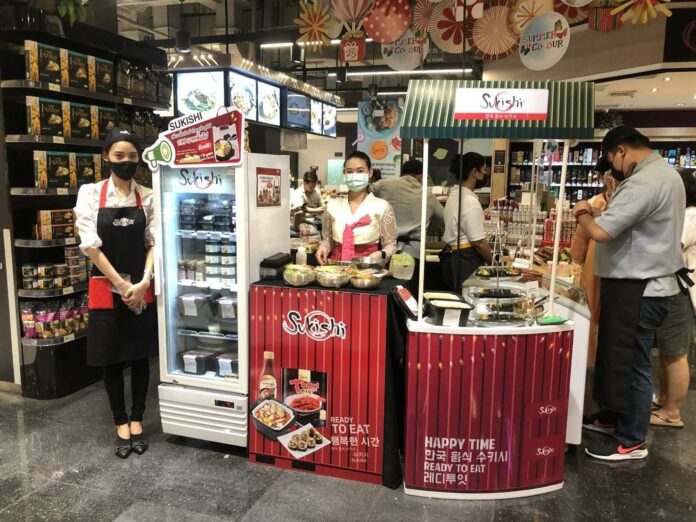
Restaurants and eateries located in shopping centers in the maximum and strict controlled areas have been ordered to close from 20 July to 2 August 2021. Sukishi, Auntie Anne’s and ChouNan, however are now using the area of CP Fresh Mart stores and Lotus Supercenter as a channel for their takeaway services.

CP Foods’ Vice president, Supara Sriboon, said many efforts has been made by the company to give a helping hand to those restaurant partners that struggle to run their business due to COVID-19 outbreak. 

“Restaurants have to manage their stocks of ingredient. Aside that, there are many other expenses that they need to pay, including labor costs, and renting fee, while their income is almost at zero. We, therefore, offer spaces at CP Fresh Mart and Lotus Supercenters in 13 provinces for our partners too set up a Takeaway booth without any charge. This will help our partners to earn more income during the lockdown,” Supara said.

She added that previously, CP Foods has offered a digital marketing support to boost delivery sales of the partner’s restaurant. 

CP Foods provides free spaces 3

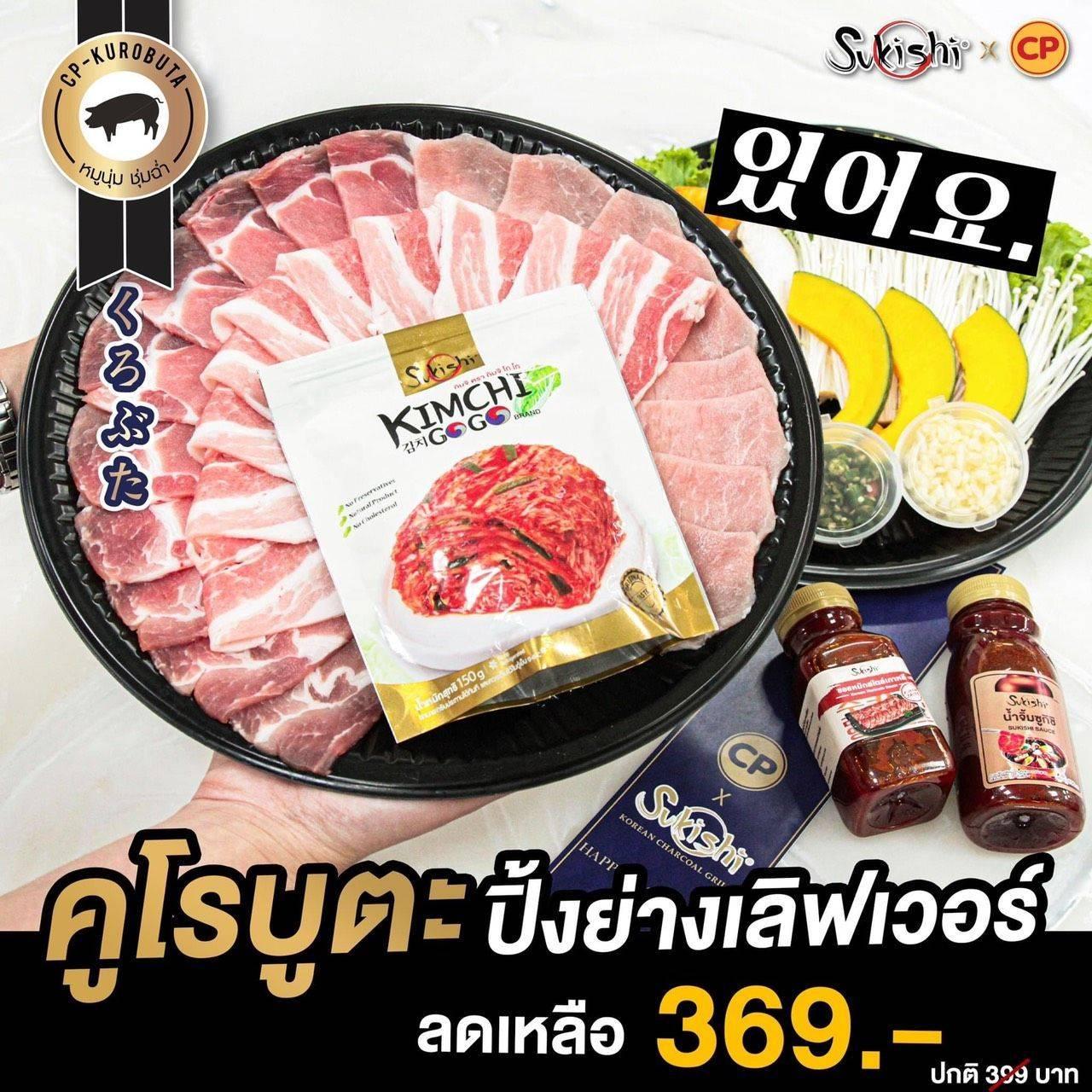
Sukishi’s owner, Noppadol Jirawaraphan, told that his restaurants are selling “Kurobuta Lover set”, using CP Foods’ famous CP Kurobuta pork and Sukishi’s signature Korean sauce in a price of 369 baht. The restaurant also launched their signature sauces at Lotus nationwide. “CP Foods is our valued partner that help us to adapt to the changing crisis.

CP Foods provides free spaces 2

ChouNan’s CEO, Kulawachara Bhurichayawarodom, said the latest restriction has resulted serious damaged to the business than any other waves of the outbreak. All 16 branches of ChouNan are forced to shut down, resulting zero income. ChouNan and CP Foods are working together for the solution.

As a result from joint effort, ChouNan will sell ChouNan’s Meal Boxes, using its best-selling items such as Premium Butadon Pork Rice Bowl, which uses premium grade pork such as CP Kurobuta, and pork curry rice menu to be sold at the front of the CP Fresh Mart store and at the booth in the Lotus Supercenter. In addition to ready meals, raw materials are also available for customers to cook at home.

CP Foods provides free spaces 4

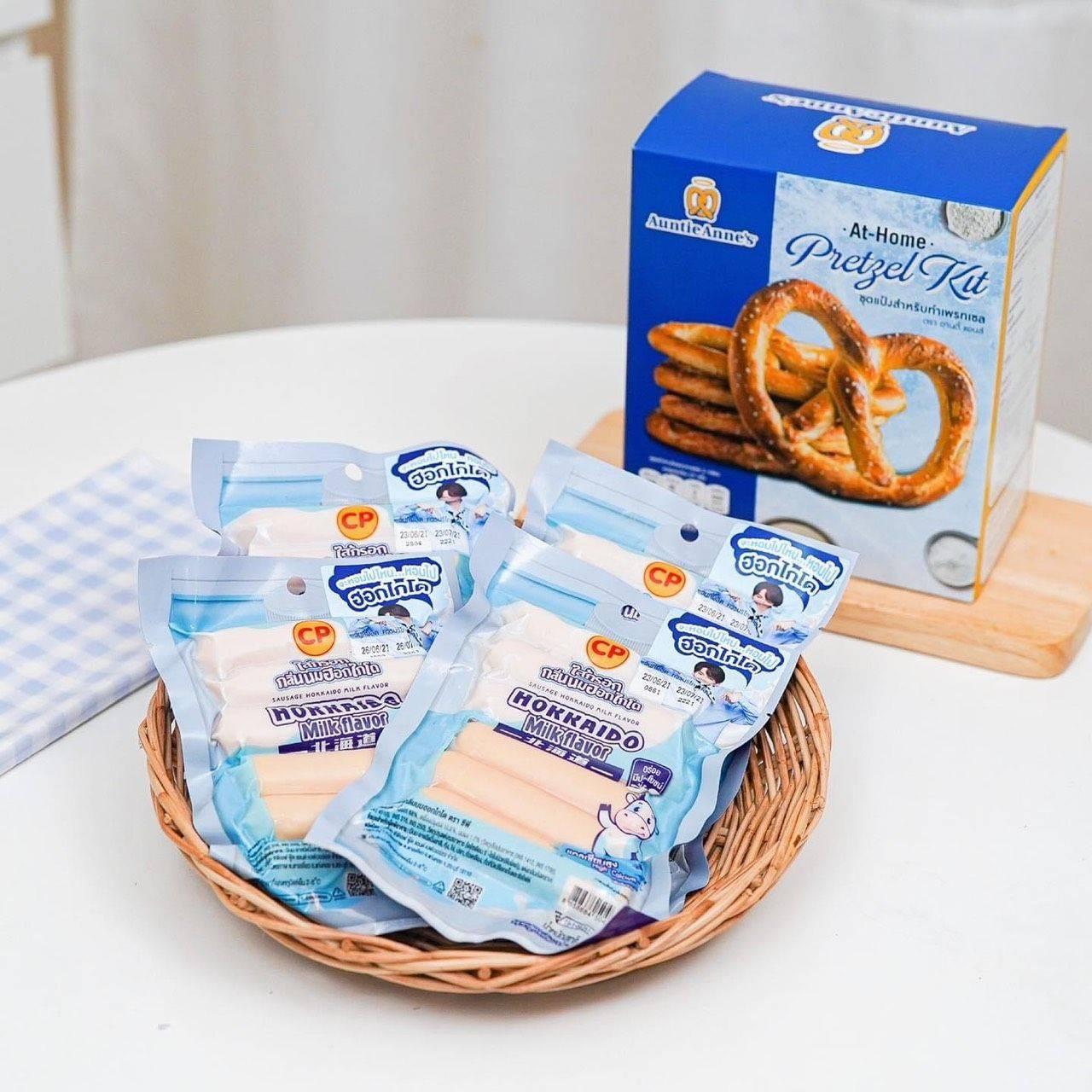
Auntie Anne’s D.I.Y “Sausage Pretzel Roll” set and Sukishi’s Kurobuta Lover set are now available in Lotus Supercenters in Bangkok and nearby areas.

Advertisement

Russians Suspected of Doping Kept From Tokyo

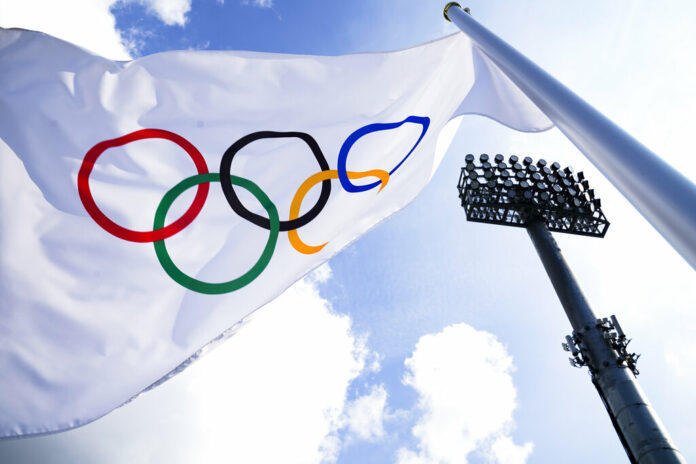
A flag bearing the Olympic Rings is displayed on the south pitch during field hockey practices at the 2020 Summer Olympics, Friday, July 23, 2021, in Tokyo, Japan. Photo: John Minchillo / AP

TOKYO (AP) — The Latest on the Tokyo Olympics, which are taking place under heavy restrictions after a year’s delay because of the coronavirus pandemic:

The World Anti-Doping Agency says several Russian athletes have been kept away from the Tokyo Olympics because of doping suspicions based on evidence from a Moscow testing laboratory that was shut down in 2015.

WADA director general Olivier Niggli says it intervened with sports bodies to ensure those athletes — “not many, but there was a handful” — were not selected.

The team of 335 Russian athletes accredited for Tokyo is competing without a national flag and anthem as punishment for state tampering with the Moscow lab’s database. The team name is ROC, the acronym for Russian Olympic Committee, without the word “Russia.”

The identity ban for the Tokyo Olympics and 2022 Beijing Winter Games was imposed by the Court of Arbitration for Sport last December.

Giving WADA the database and samples from the lab was key to getting closure for the long-running Russian state-backed doping scandal.

WADA had a list of around 300 athletes under suspicion and gave evidence to Olympic sports bodies for possible disciplinary cases.

Niggli says “we cross-checked what we had from this long list” to ensure athletes were not selected for Tokyo.

___

Russian archer Svetlana Gomboeva lost consciousness during a competition at the Tokyo Olympics in intense heat.

Coach Stanislav Popov says in comments via the Russian Olympic Committee that Gomboeva collapsed shortly after completing the qualifying round Friday.

Popov says “she couldn’t stand it, a whole day in the heat” and adds that humidity made the problem worse. Temperatures in Tokyo were above 30 degrees Celsius (86 degrees Fahrenheit.)

The heat in Tokyo’s summer months already prompted organizers to move the marathons and race-walking events to the cooler city of Sapporo.

___

U.S. men’s water polo captain Jesse Smith will skip the opening ceremony for the Tokyo Olympics on Friday after the U.S. Olympic and Paralympic Committee limited how many players from his team could participate in the festivities.

Olympic water polo rosters consist of 13 players, and 12 are designated as available for each game. Smith said the team was told by the USOPC that it could have 12 credentialed athletes walk in the ceremony.

“We tried to keep our team together and change it with every constructive outlet, but no success, and now it’s time to refocus on getting game ready,” Smith wrote on Twitter. “So tonight I am sending my team out there to represent (the United States) proudly and soak up every moment. Let’s go boys!”

The 38-year-old Smith is playing in his fifth Olympics, matching Tony Azevedo for most Olympic teams for a U.S. water polo athlete. He was under consideration to serve as the male U.S. flag bearer for the opening ceremony before that honor went to baseball player Eddy Alvarez.

___

A map on the Olympic website has been changed after Ukraine protested that it included a border across the Crimean Peninsula.

The map is part of a “Cheer Zone” feature tracking how fans around the world have backed different teams at the Tokyo Games.

Late Thursday the map had a black line across the top of Crimea in the same style as national borders. On Friday morning, there was no line across the peninsula. Russia annexed Crimea from Ukraine in 2014. Ukraine still considers it to be Ukrainian territory.

The Ukrainian embassy in Japan tells the Associated Press in an e-mail that “we have protested to the IOC and the map was corrected.”

___

Road cyclist Michal Schlegel is the fourth Czech athlete from three different sports to test positive before their competition at the Tokyo Games.

Schlegel tested positive at the team’s training base in Izu and will miss Saturday’s road race.

The Czech Olympic Committee said in a statement Friday that Schlegel is in isolation, and that Michael Kukrle and Zdenek Stybar will be its only two riders lining up at Musashinonomori Park for one of the first medal events of the Summer Games.

Czech beach volleyball players Marketa Slukova and Ondrej Perusic and table tennis player Pavel Sirucek also tested positive earlier this week. That has prompted the Czech Olympic team to investigate whether the outbreak is linked to its chartered flight to Tokyo.

Advertisement

A List of Olympians to Follow on Social Media

Simone Biles, of the United State, trains on the floor exercise during an artistic gymnastics practice session at the 2020 Summer Olympics, Thursday, July 22, 2021, in Tokyo, Japan. Photo: Gregory Bull / AP

TOKYO (AP) — With the Olympics starting Friday, athletes from around the world are in Tokyo, most of them restricted to training and their hotels because of virus protocols. Still, they are posting photos and videos of their travel and preparations for the Games.

A list of 50 Olympic athletes, sorted by sport, to follow on social media, with links to their Instagram accounts.

3-ON-3 BASKETBALL

Rae Lin D’Alie, Italy: Wisconsin native and former University of Wisconsin player who plays pro basketball in Italy.

ARCHERY

Brady Ellison, United States: Three-time Olympic medalist nicknamed “The Arizona Cowboy.”

Ana Paula Vázquez, Mexico: Young archer who began her career using the compound bow, but who has since switched to the recurve bow.

Mete Gazoz, Turkey: Named the 2018 Male Recurve Athlete of the Year and Breakthrough Athlete of the Year by World Archery.

ARTISTIC GYMNASTICS

Simone Biles, United States: Gymnastics superstar and gold medalist.

Rebeca Andrade, Brazil: Gymnast whose career since the 2016 Olympics has been defined by a streak of injuries.

BADMINTON

Viktor Axelsen, Denmark: Bronze medalist at the 2016 Olympics.

BASEBALL

Masahiro Tanaka, Japan: Former New York Yankees pitcher who returned to Japan in early 2021.

Julio Rodríguez, Dominican Republic: Plays in the Seattle Mariners minor league system.

BASKETBALL

Luka Dončić, Slovenia: Dallas Mavericks All-Star guard.

Rui Hachimura, Japan: Washington Wizards forward who played collegiately at Gonzaga.

BOXING

Bakhodir Jalolov, Uzbekistan: Carried the country’s flag at the 2016 Olympics.

EQUESTRIAN

Jessica Springsteen, United States: Daughter of rock star Bruce Springsteen and Patti Scialfa.

FENCING

C.A. Bhavani Devi, India: Became India’s first Olympic fencer in sabre.

GOLF

Collin Morikawa, United States: Won the British Open last week. He is an American of Chinese and Japanese descent.

Xander Schauffele, United States: Finished in third at the Masters in April.

HANDBALL

Yahia Omar, Egypt: His father also played on the Egyptian national team.

JUDO

Shohei Ono, Japan: Gold medalist at the 2016 Olympics.

Naohisa Takato, Japan: Ranked first in the extra-lightweight division.

Noël van ’t End, Netherlands: Won a gold medal at the world championships in 2019.

SHOOTING

Seonaid McIntosh, Britain: Continued her family’s tradition of competing in shooting, despite suffering from arthritis.

SOCCER

Megan Rapinoe, United States: Sports Illustrated’s Sportsperson of the Year in 2019.

Takefusa Kubo, Japan: Midfielder for Real Madrid.

SOFTBALL

Monica Abbott, United States: Named MVP of the Japan Women’s Softball League five times.

SURFING

Stephanie Gilmore, Australia: Seven-time World Surfing League World Tour champion.

SWIMMING

Federica Pellegrini, Italy: Holds the 200-meter freestyle world record.

Katie Ledecky, United States: Five-time Olympic gold medalist.

TRACK AND FIELD

Sydney McLaughlin, United States: Holds the women’s 400-meter hurdled world record.

Shelly-Ann Fraser-Pryce, Jamaica: Two-time Olympic gold medalist.

Jakob Ingebrigtsen, Norway: Pacemaker for Eliud Kipchoge’s sub-2 hour marathon.

Dina Asher-Smith, Britain: Won a gold medal in the women’s 200 meters at the 2019 world championships.

Noah Lyles, United States: Won gold medal in the 200 meters at the 2019 world championships.

Johannes Vetter, Germany: Won gold medal in the javelin at the 2017 world championships.

Mutaz Essa Barshim, Qatar: High jumper named the 2017 IAAF Male Athlete of the Year.

Katerina Stefanidi, Greece: Pole vaulter who won Olympic gold medal in 2016.

Pascal Martinot-Lagarde, France: Three-time medalist in the 60-meter hurdles at the World Indoors.

Malaika Mihambo, Germany: German-Tanzanian long jumper and sprinter.

Ryan Crouser, United States: Shot put gold medalist at the 2016 Games.

Akani Simbine, South Africa: Won a gold medal in the 100 meters at the Commonwealth Games in 2018.

Kendra Harrison, United States: Broke the world record for the women’s 100-meter hurdles in 2016.

Femke Bol, Netherlands: Competes in the 400 meters and the 400-meter hurdles.

Anita Włodarczyk, Poland: Two-time Olympic gold medalist in the hammer throw.

Ajeé Wilson, United States: Pennsylvania native who specializes in the 800 meters.

Léa Sprunger, Switzerland: Competes in the 200 meters and the 400-meter hurdles.

Anthony Zambrano, Colombia: Won a silver medal in the 400 meters at the 2019 world championships.

Thomas Barr, Ireland: Finished fourth in the the 400-meter hurdles at the 2016 Olympics.

Yomif Kejelcha, Ethiopia: Holds the indoor world record for the mile.

Lukas Weißhaidinger, Austria: Won a bronze medal in the discus at the 2019 world championships.

WRESTLING

Abdulrashid Sadulaev, Russian Olympic Committee: Won an Olympic gold medal at the 2016 Games.

Risako Kawai, Japan: Won an Olympic gold medal at the 2016 Games.

Advertisement

Death Rates Soar in Southeast Asia as Virus Wave Spreads

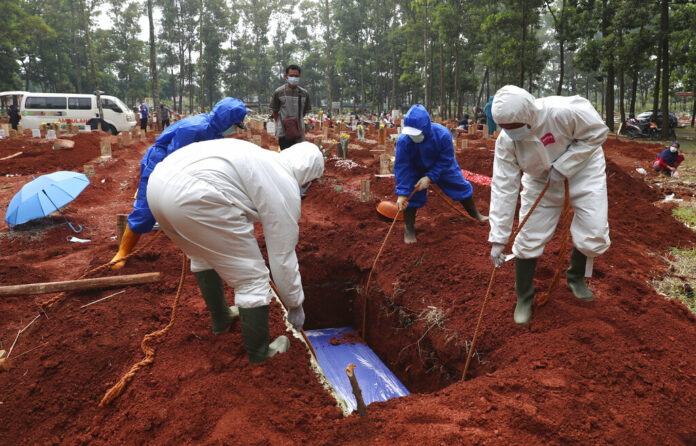
In this July 14, 2021, photo, workers in protective gear lower a coffin of a COVID-19 victim to a grave for burial at the Cipenjo Cemetery in Bogor, West Java, Indonesia. Photo: Achmad Ibrahim / AP

KUALA LUMPUR, Malaysia (AP) — Indonesia has converted nearly its entire oxygen production to medical use just to meet the demand from COVID-19 patients struggling to breathe. Overflowing hospitals in Malaysia had to resort to treating patients on the floor. And in Myanmar’s largest city, graveyard workers have been laboring day and night to keep up with the grim demand for new cremations and burials.

Images of bodies burning in open-air pyres during the peak of the pandemic in India horrified the world in May, but in the last two weeks the three Southeast Asian nations have now all surpassed India’s peak per capita death rate as a new coronavirus wave, fueled by the virulent delta variant, tightens its grip on the region.

The deaths have followed record numbers of new cases being reported in countries across the region which have left health care systems struggling to cope and governments scrambling to implement new restrictions to try to slow the spread.

When Eric Lam tested positive for COVID-19 and was hospitalized on June 17 in the Malaysian state of Selangor, the center of the country’s outbreak, the corridors of the government facility were already crowded with patients on beds with no room left in the wards.

The situation was still better than in some other hospitals in Selangor, Malaysia’s richest and most populous state, where there were no free beds at all and patients were reportedly treated on floors or on stretchers. The government has since added more hospital beds and converted more wards for COVID-19 patients.

Lam, 38, recalled once during his three weeks in the hospital hearing a machine beeping continuously for two hours before a nurse came to turn it off; he later learned the patient had died.

A variety of factors have contributed to the recent surge in the region, including people growing weary of the pandemic and letting precautions slip, low vaccination rates and the emergence of the delta variant of the virus, which was first detected in India, said Abhishek Rimal, the Asia-Pacific emergency health coordinator for the Red Cross, who is based in Malaysia.

“With the measures that countries are taking, if people follow the basics of washing the hands, wearing the masks, keeping distance and getting vaccinated, we will be seeing a decline in cases in the next couple of weeks from now,” he said.

So far, however, Malaysia’s national lockdown measures have not brought down the daily rate of infections. The country of some 32 million saw daily cases rise above 10,000 on July 13 for the first time and they have stayed there since.

The vaccination rate remains low but has been picking up, with nearly 15% of the population now fully inoculated and the government hoping to have a majority vaccinated by year’s end.

Doctors and nurses have been working tirelessly to try to keep up, and Lam was one of the fortunate ones.

After his condition initially deteriorated, he was put on a ventilator in an ICU unit filled to capacity and slowly recovered. He was discharged two weeks ago.

But he lost his father and brother-in-law to the virus, and another brother remains on a ventilator in the ICU.

“I feel I have been reborn and given a second chance to live,” he said.

With India’s massive population of nearly 1.4 billion people, its total number of COVID-19 fatalities remains higher than the countries in Southeast Asia. But India’s 7-day rolling average of COVID-19 deaths per million peaked at 3.04 in May, according to the online scientific publication Our World in Data, and continues to decline.

Indonesia, Myanmar, and Malaysia have been showing sharp increases since late June and their seven-day averages hit 4.17, 4.02 and 3.18 per million, respectively, on Thursday. Cambodia and Thailand have also seen strong increases in both coronavirus cases and deaths, but have thus far held the seven-day rate per million people to a lower 1.29 and 1.74, respectively.

Individual countries elsewhere have higher rates, but the increases are particularly alarming for a region that widely kept numbers low early in the pandemic.

With the Indian experience as a lesson, most countries have reacted relatively quickly with new restrictions to slow the virus, and to try to meet the needs of the burgeoning number of people hospitalized with severe illnesses, Rimal said.

“People in this region are cautious, because they have seen it right in front of them — 400,000 cases a day in India — and they really don’t want it to repeat here,” he said in a telephone interview from Kuala Lumpur.

But those measures take time to achieve the desired effect, and right now countries are struggling to cope.

Indonesia, the world’s fourth most populous nation with some 270 million people, reported 1,383 deaths on Wednesday, its deadliest day since the start of the pandemic.

Daily cases through about mid-June had been about 8,000, but then began to spike and peaked last week with more than 50,000 new infections each day. Because Indonesia’s testing rate is low, the actual number of new cases is thought to be much higher.

As hospitals there began to run out of oxygen, the government stepped in and ordered manufacturers to shift most production from industrial purposes and dedicate 90% to medical oxygen, up from 25%.

Before the current crisis, the country needed 400 tons of oxygen for medical use per day; with the sharp rise in COVID-19 cases, daily use has increased fivefold to more than 2,000 tons, according to Deputy Health Minister Dante Saksono.

Though the production of oxygen is now sufficient, Lia Partakusuma, secretary general of Indonesia’s Hospital Association, said there were problems with distribution so some hospitals are still facing shortages.

In Indonesia, about 14% of of the population has had at least one vaccine dose, primarily China’s Sinovac.

There are growing concerns that Sinovac is less effective against the delta variant, however, and both Indonesia and Thailand are planning booster shots of other vaccines for their Sinovac-immunized health workers.

In Myanmar, the pandemic had taken backseat to the military’s power seizure in February, which set off a wave of protests and violent political conflict that devastated the public health system.

Only in recent weeks, as testing and reporting of COVID-19 cases has started recovering, has it become clear that a new wave of the virus beginning in mid-May is pushing cases and deaths rapidly higher.

Since the start of July its death rate has been climbing almost straight up, and both cases and fatalities are widely believed to be seriously underreported.

“With little testing capacity, low numbers in the country vaccinated, widespread shortages of oxygen and other medical supplies, and an already beleaguered health care system under increasing strain, the situation is expected to get increasingly worse in the coming weeks and months,” said ASEAN Parliamentarians for Human Rights, a regional advocacy group.

“Meanwhile, the junta’s confiscation of oxygen, attacks on health care workers and facilities since the coup, and the lack of trust in any services they provide by the majority of the population, risks turning a crisis into a disaster.”

On Tuesday, the government reported 5,860 new cases and 286 new deaths. There are no solid figures on vaccinations, but from the number of doses that have been available, it’s thought that about 3% of the population could have received two shots.

Officials this week pushed back at social media postings that cemeteries in Yangon were overwhelmed and could not keep up with the number of dead, inadvertently confirming claims that hospitals were swamped and many people were dying at home.

Cho Tun Aung, head of the department that oversees the cemeteries told military-run Myawaddy TV news on Monday that 350 staff members had been working three shifts since July 8 to ensure proper cremations and burials of people at Yangon’s seven major cemeteries.

He said workers had cremated and buried more than 1,200 people on Sunday alone, including 1,065 who had died at home of COVID-19 and 169 who had died in hospitals.

“We are working in three shifts day and night to inter the dead,” he said. “It is clear that there is no problem like the posts on Facebook.”

___

Story: David Rising and Eileen Ng. Rising reported from Bangkok. Associated Press writers Edna Tarigan and Niniek Karmini in Jakarta, Indonesia, and Grant Peck in Bangkok contributed to this report.

Advertisement

Thailand to Join COVAX, Acknowledging Low Vaccine Supply

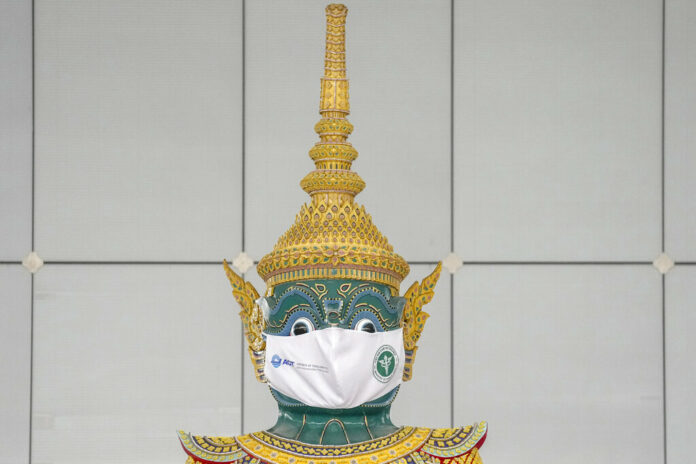
A giant classic Hindu Ramayana statue dons a face mask to remind passengers to keep to coronavirus precautions at the Suvarnabhumi airport in Bangkok, Thailand, Wednesday, July 21, 2021. Photo: Sakchai Lalit / AP

BANGKOK (AP) — The head of Thailand’s National Vaccine Institute apologized Wednesday for the country’s slow and inadequate rollout of coronavirus vaccines, promising it will join the U.N.-backed COVAX program to receive supplies from its pool of donated vaccines next year.

Thailand is battling a punishing coronavirus surge that is pushing new cases and deaths to record highs nearly every day. There is fear that the numbers will get much worse because the government failed to secure significant vaccine supplies in advance of the onslaught.

The spread of the highly contagious delta variant of the virus has exacerbated the situation, as Prime Minister Prayuth Chan-ocha’s government seeks to buy vaccines to supplement the modest amounts it has on hand of Sinovac and Sinopharm from China and locally produced AstraZeneca.

In addition to failing to buy enough vaccine, Prayuth’s government has come under severe criticism because some studies show the Chinese vaccines are less effective against the delta variant than those produced by Pfizer and Moderna.

“I apologize to the people that the National Vaccine Institute has not managed to procure a sufficient amount of vaccines appropriate for the situation, although we have tried our best,” vaccine institute director Nakorn Premsri said at a news conference. “The mutations (of the virus) were something that could not be predicted, which have caused a more rapid spread than last year. The vaccine procurement effort did not match the current situation.”

He said Thailand is in the process of joining COVAX, a worldwide initiative aimed at equitable access to COVID-19 vaccines directed by Gavi, the Vaccine Alliance; the Coalition for Epidemic Preparedness Innovations and the World Health Organization. Nakorn said he expects Thailand will be able to receive vaccines from COVAX by the first quarter of next year.

Thailand is the only country in Southeast Asia that did not join COVAX. The government explained in February that since Thailand is categorized as a middle-income country, it would not get free or cheap vaccines from the program. It claimed it would have to pay high prices in advance without knowing which vaccines it would get and when it would get them.

“Buying vaccines directly from the manufacturers is an appropriate choice … as it’s more flexible,” government spokesperson Anucha Buraphachaisri said at the time.

That explanation was later criticized when the government urgently imported Sinovac at a high price even though questions had already arisen about its efficacy.

Thailand planned to administer 100 million inoculations this year and has reserved 105.5 million doses from several companies. Of those, 61 million doses were to be AstraZeneca vaccine produced by Siam Bioscience, a company owned by Thailand’s king, 19.5 million doses from Sinovac, 20 million doses from Pfizer and 5 million doses from Johnson & Johnson.

Last week, however, new doubts were cast on the plan when it was revealed that Siam Bioscience is unlikely to be able to deliver its full share until May 2022 because of production problems.

Supakit Sirilak, chief of the Department of Medical Sciences, said at the same news conference that Thailand is still negotiating with other vaccine makers to secure additional supplies.

“Our target to inoculate 100 million doses this year is still possible,” he said.

Thailand reported 13,002 new COVID-19 cases on Wednesday, another record high, bringing its total to 439,477 cases.

It has administered around 14.8 million vaccine doses, including 10.7 million doses since June. Around 11.3 million people, or 16% of the country’s 69 million population, have received at least one dose.

Story: Chalida Ekvittayavechnukul

Advertisement

CP Foods and Major Group partner to donate safe foods for medical staff at Covid-19 vaccination site

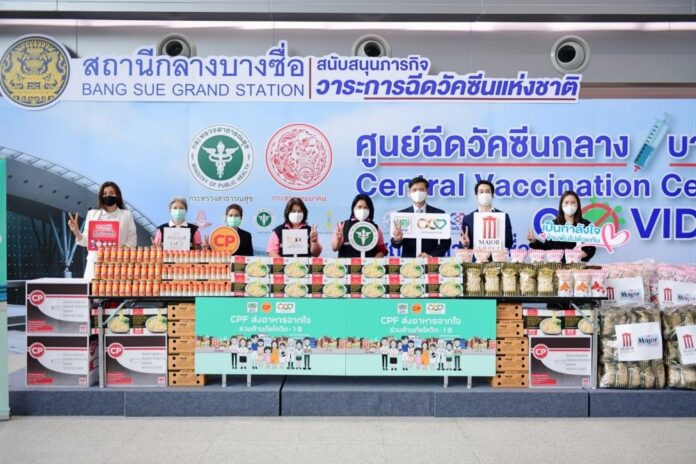
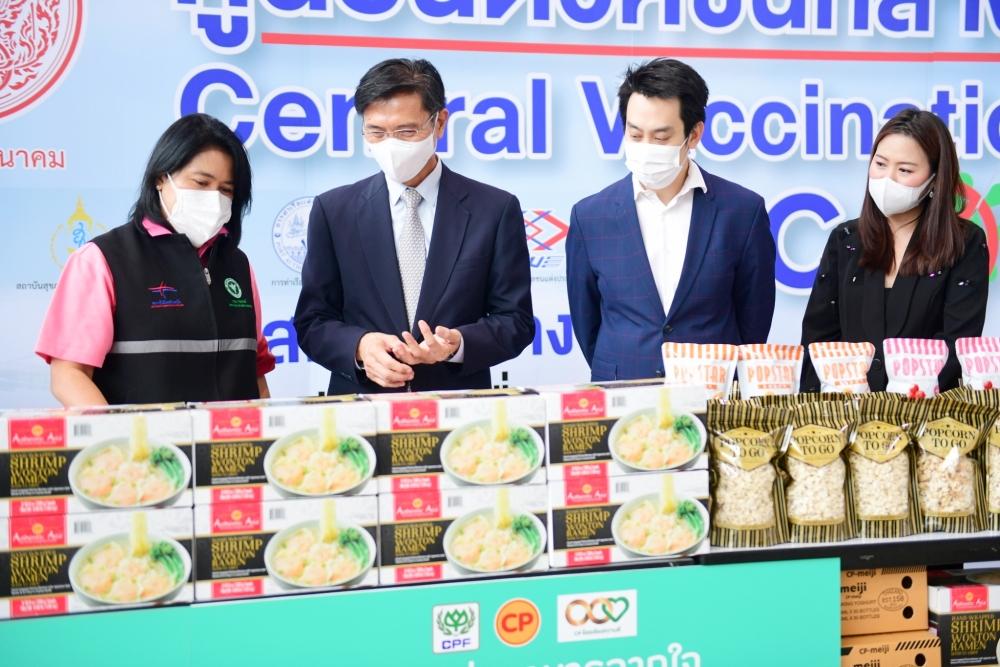
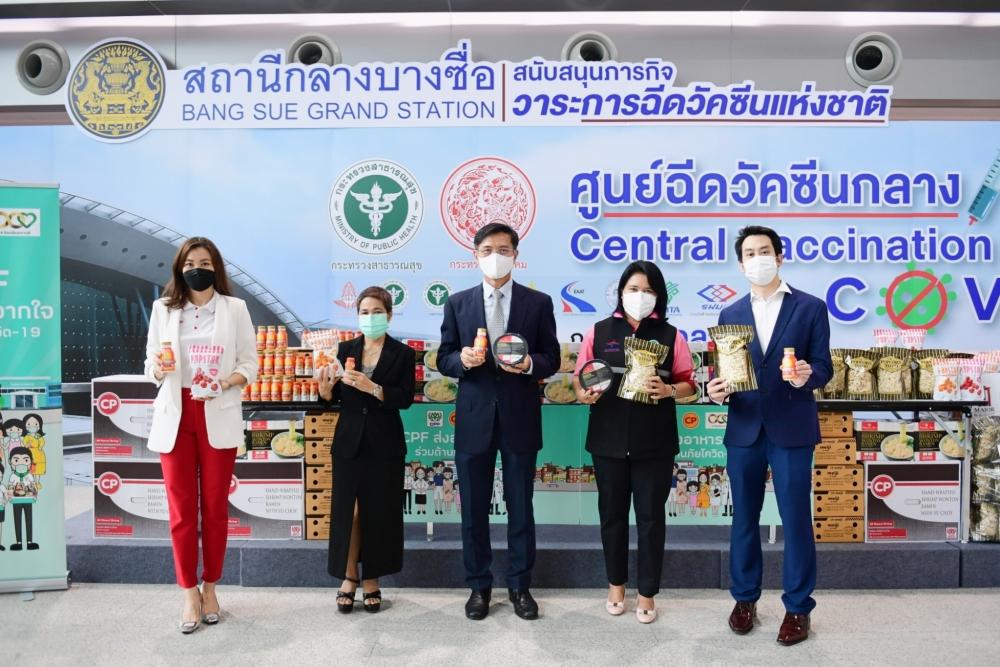
Charoen Pokphand Foods Public Company Limited (CP Foods), CP Meiji and its business partners, Major Cineplex Group Public Company Limited provided foods for medical staffs and volunteers who are working tirelessly at the Central Vaccination Center, Bang Sue Grand Station.

Mr. Pairoj Apiruknusit, Executive Vice President for aquaculture business at CP Foods, said the Company continues to provide safe food and beverages part of an on-going “CPF Food from the Heart against COVID-19” program with an aim to relieve the burden of food preparation and ensure good health and well-being among healthcare workers at frontline. Recently, CP Foods together with CP Meiji and Major Group have donated ready to eat food, milk and popcorns for the staffs working at the vaccination center.

CP Foods and Major Group partner to donate safe foods 2

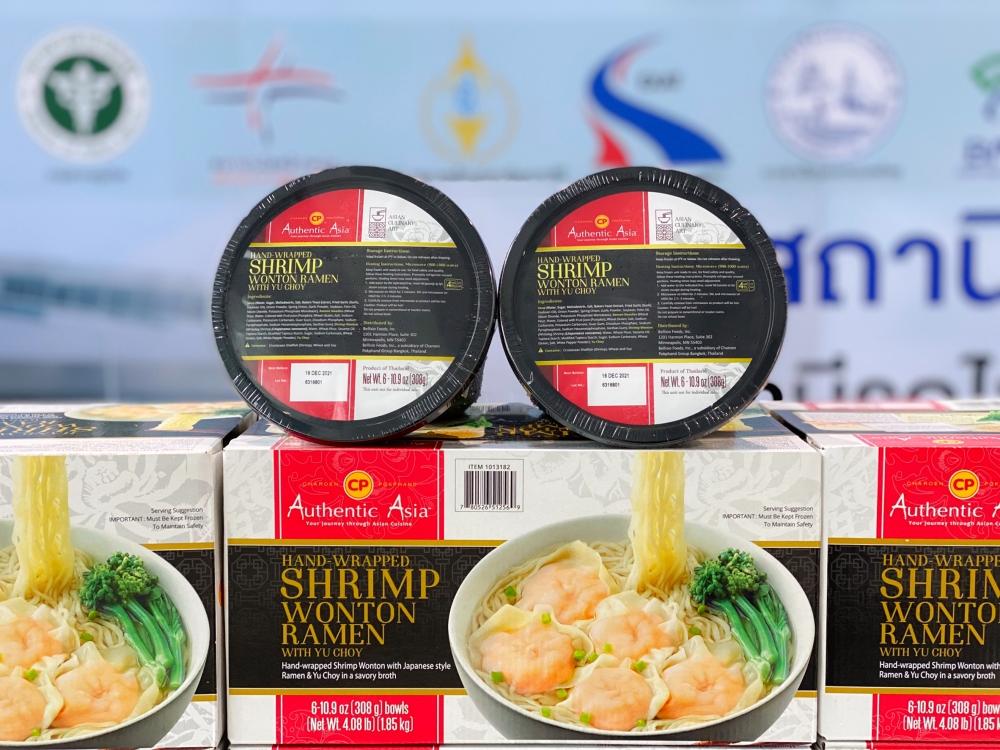
CP Foods has donated export-grade shrimp wonton ramen from Authentic Asia. The product contains low sodium and made of high quality raised-without-antibiotic shrimp. 

“CP Foods will continue to supply food the staffs who dedicate themselves for this good cause. We are giving out our best quality food product to express the upmost respect and gratitude toward people working here,” Mr. Pairoj said.

Major Group Chief Marketing Officer Narute Jiensnong told that the group gives away its ready-to-eat popcorn products as a token of appreciation for the medical workers who are working tirelessly for this mass vaccination plan. 

“Popcorn is a product champion for movie viewer, and thus we would like to share the product that give moviegoers a happiness to doctors, nurses, and volunteers who are working in this long and difficult task,” he said.

CP Foods and Major Group partner to donate safe foods 1

He added that Major Group is pleased to continue to support healthcare workers and volunteers together with CP Foods.

Institute of Dermatology director Dr Mingkwan Wichaidit said the medical team are working hard to increase the number of people who received the vaccine as much as possible. However, the supports from the government and private sector have been a great boost of morale for them to continue their work.

In addition to this effort, CP Foods also distributes free products for people who received the vaccine as a token of thanks for supporting Thailand, mass vaccination plan.

CP Foods and Major Group partner to donate safe foods 3

“CPF Food from the Heart against COVID-19” program is a COVID-19 relief mission of CP Foods to support Thai people in the time of crisis. Since the beginning of the outbreak in 2020, multiple COVID-19 relief efforts have been made. CP Foods has provided millions of packs of ready-to-eat food, ingredients, beverage and other essentials to medical personnel and Thai people at over 500 locations nationwide, including the hospitals, field hospital, vulnerable group, and vaccination sites.

Advertisement

Hot News

LATEST NEWS

Bangkok
overcast clouds
33.3 ° C
35 °
33.3 °
59 %
1.7kmh
100 %
Sun
36 °
Mon
37 °
Tue
36 °
Wed
37 °
Thu
36 °