34.4 C
Bangkok
Monday, June 8, 2026
Home Blog Page 1092

Bang Khae Residents to Get Vaccines as the New Cluster Doubles to 224

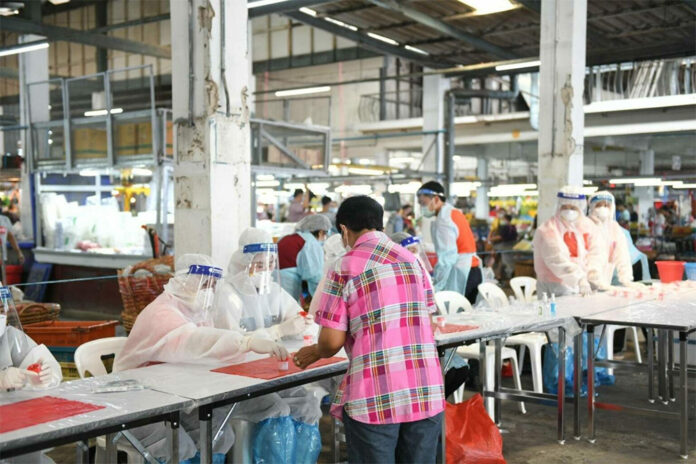
A woman queues up for a coronavirus test at Wonder Bang Khae Market on Mar. 13, 2021.

BANGKOK — The governor on Tuesday said 6,000 doses of vaccines will be administered to vulnerable populations in western Bangkok, where a new cluster of coronavirus infections were reported in recent days.

Gov. Aswin Kwanmuang said a vaccination center will open Wednesday at Bang Khae Market, where at least 224 cases were traced back to the wet market complex there. The City Hall said a total of 4,991 people were already tested, of which 1,681 people are still waiting for their results.

“We plan to inoculate 500 to 600 people on the first day,” Aswin said. “We will continue giving out vaccines until every vulnerable population is immunitized. A total of 6,000 doses have been reserved for Bang Khae cluster.”

Only residents of six districts of Bang Khae, Bang Khun Thian, Bang Bon, Nong Khaem, Chom Thong, and Phasi Charoen who have underlying diseases such as diabetes, obesity, heart disease, liver disease, and cancer are eligible to receive the shots, according to the City Hall.

It was not immediately clear what type of vaccine will be used. Thailand currently has vaccines manufactured by Sinovac and AstraZeneca approved for emergency use in its arsenal.

The government’s pandemic response center said the new infections in Bangkok were linked to a 21-year-old vendor at Wonder Market – one of the six markets inside the complex – who tested positive for infection on Mar. 5. The markets have since been closed for three days starting Tuesday for disinfection.

A total of 149 new cases were reported on Tuesday, according to the government’s pandemic response center. The majority, or 100, are local transmissions found in Bangkok, while the rest 44 cases were found in other provinces and five cases imported from abroad.

The country’s cumulative number of cases now stands at 27,154.

Advertisement

Prayut Gets AstraZeneca Jab, 1 Asian Country Suspends

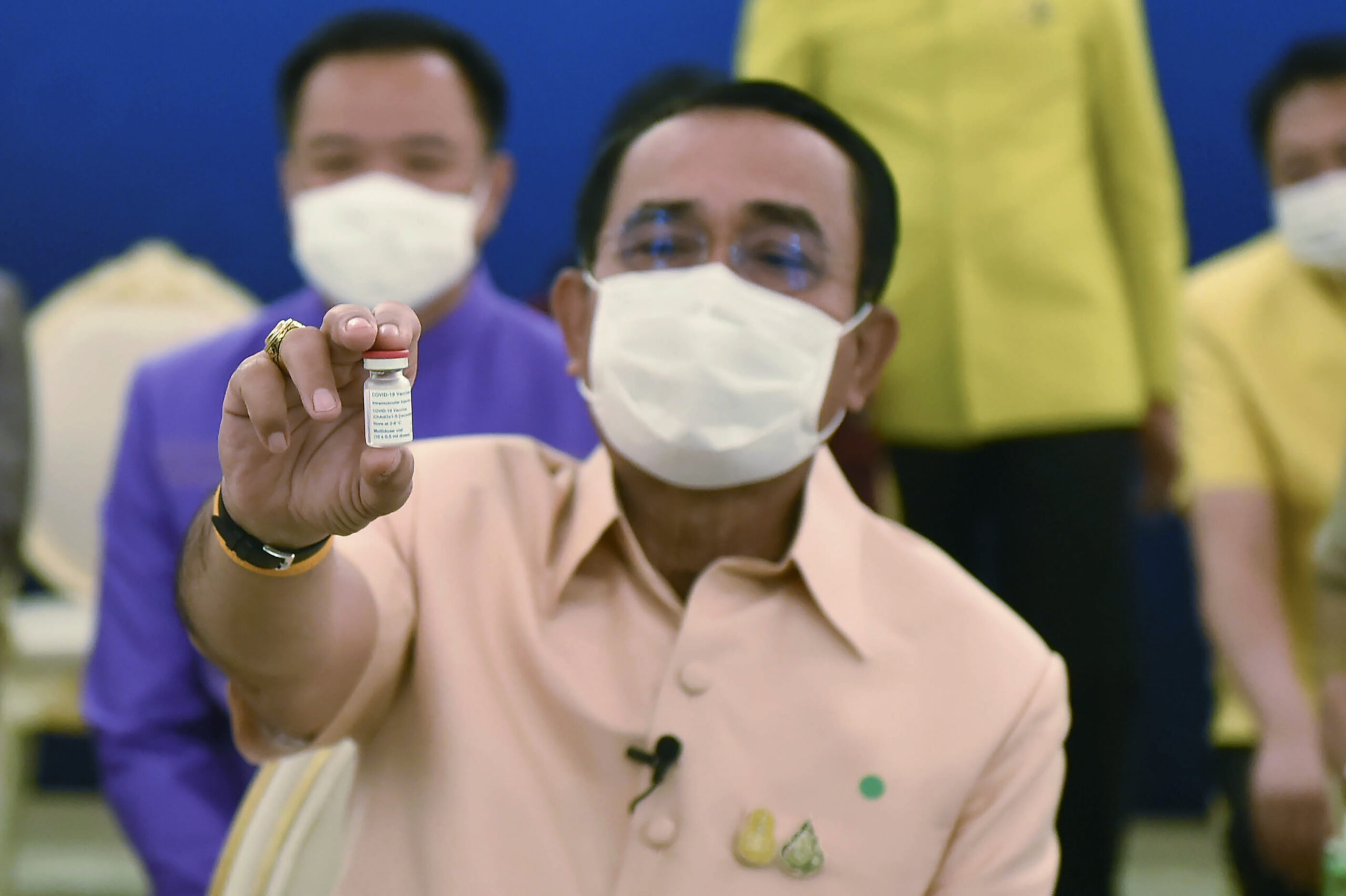
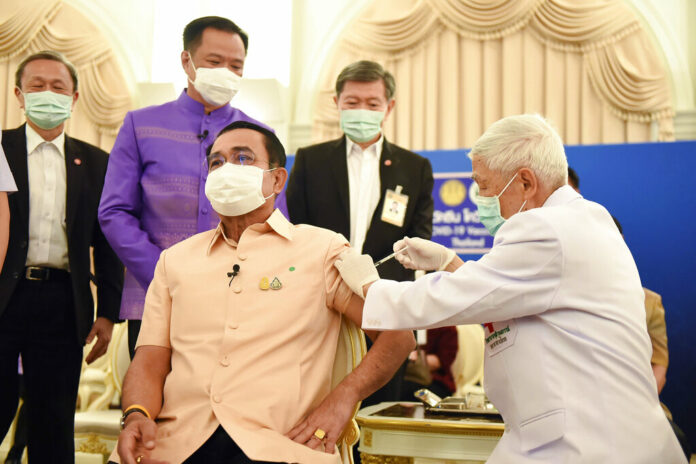
In this photo released by Government Spokesman Office, Thailand's Prime Minister Prayuth Chan-ocha, front left, receives a shot of the AstraZeneca's COVID-19 vaccine at government house in Bangkok, Thailand, Tuesday, March 16, 2021. Photo: Government Spokesman Office via AP

BANGKOK (AP) — PM Prayut Chan-o-cha received a shot of the COVID-19 vaccine manufactured by AstraZeneca on Tuesday, as much of Asia shrugged off concerns about reports of blood clots in some recipients in Europe, saying that so far there is no evidence to link the two.

AstraZeneca has developed a manufacturing base in Asia, and the Serum Institute of India, the world’s largest vaccine maker, has been contracted by the company to produce a billion doses of the vaccine for developing nations. Hundreds of millions more are to be manufactured this year in Australia, Japan, Thailand and South Korea.

“There are people who have concerns,” Thai Prime Minister Prayuth Chan-ocha said after he received the first dose of the AstraZeneca vaccine. “But we must believe doctors, believe in our medical professionals.”

Thailand last week was the first country outside Europe to temporarily suspend using the AstraZeneca vaccine. Indonesia followed on Monday, saying it was waiting for a full report from the World Health Organization regarding possible side effects.

But Thailand’s health authorities decided to go ahead with AstraZeneca, with Prayuth and members of his Cabinet receiving the first shots.

A large number of European countries — including Germany, France, Italy and Spain — suspended use of the AstraZeneca vaccine Monday over reports of dangerous blood clots in some recipients, though the company and international regulators say there is no evidence the shot is to blame.

In this photo released by Government Spokesman Office, Thailand's Prime Minister Prayuth Chan-ocha holds a vial containing the AstraZeneca's COVID-19 vaccine before he receives a shot at government house in Bangkok, Thailand, Tuesday, March 16, 2021. Photo: Government Spokesman Office via AP
In this photo released by Government Spokesman Office, Thailand’s Prime Minister Prayuth Chan-ocha holds a vial containing the AstraZeneca’s COVID-19 vaccine before he receives a shot at government house in Bangkok, Thailand, Tuesday, March 16, 2021. Photo: Government Spokesman Office via AP

The EU’s drug regulatory agency called a meeting for Thursday to review experts’ findings on the AstraZeneca shot and to decide whether action needs to be taken.

Other countries in the Asian region said they would press ahead with vaccination programs.

Australian Health Minister Greg Hunt said his country would not suspend vaccinations. Australia has vaccinated about 200,000 people so far and plans to import and manufacture 70 million vaccine doses from AstraZeneca.

“The government clearly, unequivocally, absolutely supports the AstraZeneca rollout, clearly, unequivocally, absolutely. And the reason why is very simple — it will help save lives and protect lives, and it’s done so on the basis of the medical advice,” Hunt told Parliament.

Australia’s chief medical officer, Paul Kelly, said there was no evidence so far that the vaccine causes blood clots.

“Blood clots happen, they happen in Australia fairly commonly,” he said. “But, from my perspective, I do not see that there is any specific link between the AstraZeneca vaccine and blood clots, and I’m not alone in that opinion.”

By far the largest user of the AstraZeneca vaccine is India.

India is using two vaccines — the AstraZeneca shot made by Serum Institute of India, and another one by Indian vaccine maker Bharat Biotech — to immunize its vast population. Of the more than 25.6 million people in India who have received at least one shot of a vaccine, over 23.4 million have received the AstraZeneca shot, according to government data.

Health officials told the Press Trust of India news agency on Saturday that a total of 234 adverse events, including 71 deaths, had been reported after receiving either vaccine — but that no causal link had been found. The government is now reviewing the cases for a final assessment.

Serum Institute of India, the world’s largest vaccine maker, has been contracted by AstraZeneca to make a billion doses of vaccine for developing nations. By March 4, India had exported over 48.1 million doses of vaccine, including 11.9 million doses to COVAX and 28.8 million doses as commercial exports, according to government data.

Meanwhile, health activists and medical ethics experts in India have warned that India’s systems for monitoring any harmful side effects are too lax.

With the exception of a few countries, such as Singapore and India, Asian nations have been quite slow in getting their populations vaccinated. Most of the nations, including Australia, New Zealand and Thailand, have been relatively successful in containing the spread of COVID-19.

Thailand has ordered just enough vaccine from AstraZeneca and China to cover about half its population this year and has so far managed to inoculate around 50,000 people in high-risk groups.

___

Story: Patrick Quinn

Advertisement

Review: ‘Raya and the Last Dragon’ Is a Dazzling Adventure

Animated character Raya, voiced by Kelly Marie Tran, center, appears with Tuk Tuk, voiced by Alan Tudyk, in a scene from "Raya and the Last Dragon." (Disney+ via AP)

Contrary to what “Game of Thrones” might have you believe, not all dragons are agents of destruction. In the newest offering from Walt Disney Animation, “Raya and the Last Dragon,” they are kind, full of magic and, when needed, the saviors of humanity.

Five hundred years ago, we’re told in a prologue, dragons sacrificed themselves for humans when a mystical evil called the Druun passed through the lands of Kumandra and turned many to stone. The kingdom splintered into factions — Tail, Talon, Heart, Fang and Spine — who perpetually teeter on the edge of war. Sisu, the only remaining dragon, hasn’t been seen in five centuries.

Raya (voiced by “Star Wars’” Kelly Marie Tran) is the young Princess of Heart. Her father (voiced by Daniel Dae Kim) is the Chief who hopes to unite all the territories. It doesn’t go as planned, he’s turned to stone, and Raya is set on a dangerous quest to track down the dragon who she believes is their last hope.

The film comes from the odd but inspired pairing of co-directors Carlos López Estrada (who made the Sundance breakout “Blindspotting”) and Disney veteran Don Hall (“Big Hero 6”) and was co-written by Vietnamese playwright Qui Nguyen and “Crazy Rich Asians” co-writer Adele Lim. The result is a sweet-natured and wonderfully imaginative fantasy adventure that has shades of “Indiana Jones” and is suitable for the whole family.

AP21062550846015
Animated character Raya, voiced by Kelly Marie Tran, left, appears with Sisu the dragon in a scene from “Raya and the Last Dragon.” (Disney+ via AP)

“Raya” gets off to a bit of a slow start but stick with it. Once she sets out on her mission, things pick up considerably thanks in no small part to the introduction of Sisu, played by Awkwafina, who doesn’t try to disguise her wonderfully distinctive voice. Raya discovers Sisu is not quite the hero she is looking for, but that’s just part of the journey. Along the way their brood grows with others displaced and orphaned by the Druun and Raya must confront her main foe, a Princess from another land, Namaari (Gemma Chan) who is part of the reason things went awry in the first place.

AP21062552752084
Animated character young Raya, left, appears with her father Benja, voiced by Daniel Dae Kim in a scene from “Raya and the Last Dragon.” (Disney+ via AP)

The animation is both stunning and very computer generated. Sometimes extended shots of the humans talking can start to feel like the uncanny valley and it makes you miss the hand drawn elements of the form. But hand drawn animation also wouldn’t be able to create the stunning vistas and astoundingly lifelike water. It’s a compromise and “Raya” is undoubtedly a visual feast.

It’s also the best kind of feminist film in that it’s one that doesn’t clobber you with the message. Raya is allowed to be awesome without the script shouting about it all the time and it’s better for it. It does however hammer home a message about trust, which, you know, is fair enough. And it has chosen to have yet another middle-aged semi-dystopian female leader bedecked in all white with a severe gray haircut (Namaari’s mom, voiced by Sandra Oh). It’s not that it’s inherently bad, it’s just a lazy choice for a film that is otherwise so inventive.

AP21062551794714
Animated character Virana, voiced by Sandra Oh, left, appears with Namaari, voiced by Gemma Chan, in a scene from “Raya and the Last Dragon.” (Disney+ via AP)

“Raya” is also notable for the simple fact that it features predominately Asian American voice actors — a first for Disney Animation. The animated “Mulan” had a fair amount too, but a lot were white actors voicing Chinese roles. Will that make a difference to the kids watching? Probably not at the moment, but down the line the authenticity will be appreciated.

“Raya and the Last Dragon,” a Walt Disney Pictures release, in theaters and on Disney+ Friday, is rated PG by the Motion Picture Association of America for “Some violence, action and thematic elements.” Running time: 114 minutes. Three stars out of four.

Story: Lindsey Bahr

Related stories:

‘Raya’ May Have Been Inspired by Thai Celeb ‘Yaya’

Advertisement

Major European Nations Suspend Use of AstraZeneca Vaccine

In this Monday, March 8, 2021 file photo a health worker shows the media how she prepares a dose of the AstraZeneca vaccine to be administered to a patient at a vaccination center set up in front of Rome's Termini central station. Photo: Alessandra Tarantino / AP

BERLIN (AP) — A cascading number of European countries — including Germany, France, Italy and Spain — suspended use of AstraZeneca’s COVID-19 vaccine Monday over reports of dangerous blood clots in some recipients, though the company and international regulators say there is no evidence the shot is to blame.

AstraZeneca’s formula is one of three vaccines in use on the continent. But the escalating concern is another setback for the European Union’s vaccination drive, which has been plagued by shortages and other hurdles and is lagging well behind the campaigns in Britain and the U.S.

The EU’s drug regulatory agency called a meeting for Thursday to review experts’ findings on the AstraZeneca shot and decide whether action needs to be taken.

The furor comes as much of Europe is tightening restrictions on schools and businesses amid surging cases of COVID-19.

Germany’s health minister said the decision to suspend AstraZeneca shots was taken on the advice of the country’s vaccine regulator, the Paul Ehrlich Institute, which called for further investigation into seven cases of clots in the brains of people who had been vaccinated.

“Today’s decision is a purely precautionary measure,” Jens Spahn said.

French President Emmanuel Macron said his country will likewise stop dispensing the vaccine until at least Tuesday afternoon. Italy also announced a temporary ban, as did Spain, Portugal and Slovenia.

Other countries that have done so over the past few days include Denmark, which was the first, as well as Ireland, Thailand, the Netherlands, Norway, Iceland, Congo and Bulgaria. Canada and Britain are standing by the vaccine for now.

In the coming weeks, AstraZeneca is expected to apply for U.S. authorization of its vaccine. The U.S. now relies on Pfizer’s, Moderna’s and Johnson & Johnson’s shots.

AstraZeneca said there have been 37 reports of blood clots out of more than 17 million people vaccinated in the 27-country EU and Britain. The drugmaker said there is no evidence the vaccine carries an increased risk of clots.

In fact, it said the incidence of clots is much lower than would be expected to occur naturally in a general population of this size and is similar to that of other licensed COVID-19 vaccines.

The World Health Organization and the EU’s European Medicines Agency have also said that the data does not suggest the vaccine caused the clots and that people should continue to be immunized.

“Many thousands of people develop blood clots annually in the EU for different reasons,” the European Medicines Agency said. The incidence in vaccinated people “seems not to be higher than that seen in the general population.”

The agency said that while the investigation is going on, “the benefits of the AstraZeneca vaccine in preventing COVID-19, with its associated risk of hospitalization and death, outweigh the risks of side effects.”

Blood clots can travel through the body and cause heart attacks, strokes and deadly blockages in the lungs. AstraZeneca reported 15 cases of deep vein thrombosis, or a type of clot that often develops in the legs, and 22 instances of pulmonary embolisms, or clots in the lungs.

The AstraZeneca shot has become a key tool in European countries’ efforts to boost their sluggish vaccine rollouts. It is also pillar of a U.N.-backed project known as COVAX that aims to supply COVID-19 vaccines to poorer countries. That program continues unaffected by the European suspension.

Pfizer’s and Moderna’s vaccines are also used on the European continent, and J&J’s one-shot vaccine has been authorized but not yet delivered.

Dr. Michael Head, a senior research fellow in global health at the University of Southampton in England, said there is no data yet to justify suspending the AstraZeneca vaccine and called the decision “baffling.”

“Halting a vaccine rollout during a pandemic has consequences,” Head said. “This results in delays in protecting people, and the potential for increased vaccine hesitancy, as a result of people who have seen the headlines and understandably become concerned.”

Spahn, the German health minister, defended the country’s decision, saying, “The most important thing for confidence is transparency.” He said both first and second doses would be suspended.

Germany has received slightly over 3 million doses of the AstraZeneca vaccine, and about half of those have so far been administered, compared with almost 7 million of the Pfizer shot and about 285,000 from Moderna.

German authorities have encouraged anyone who feels increasingly ill more than four days after receiving the shot — for example, with persistent headaches or dot-shaped bruises — to seek medical attention.

The head of the Spanish Medicines Agency, Maria Jesús Lamas, said Spain detected its first case of clots on Saturday. She said the ban was “not an easy decision” because it further slows the nation’s vaccination campaign, but it was the “most prudent” approach.

Almost 940,000 people in Spain have received the AstraZeneca shot.

Some European countries, meanwhile, have begun reimposing restrictions in a bid to beat back a resurgence in infections, many of them from variants of the original virus.

In Italy, 80% of children nationwide couldn’t attend classes after stricter rules in more regions took effect on Monday. In Poland, bolstered restrictions were applied to two more regions, including Warsaw. Paris could go into lockdown in a matter of days because intensive care units are getting swamped with COVID-19 patients.

And calls are growing in Germany to “pull the emergency brake” in regions where cases are rising.

___

Story: Frank Jordans. Sylvie Corbet in Paris, Maria Cheng in London, Jamey Keaten in Geneva and Frances D’Emilio in Rome contributed to this report

Advertisement

Myanmar Junta Orders Martial Law in Large Area of Yangon

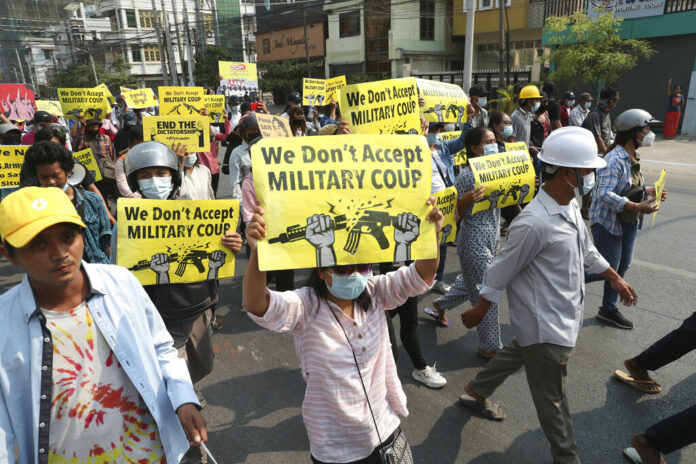
Anti-coup protesters display signs during a protest against the military coup in Mandalay, Myanmar, Monday, March 15, 2021. Photo: AP

YANGON, Myanmar (AP) — Myanmar’s ruling junta has declared martial law in a wide area of the country’s largest city, as security forces killed dozens of protesters over the weekend in an increasingly lethal crackdown on resistance to last month’s military coup.

The United Nations said at least 138 peaceful protesters have been killed in Myanmar since the Feb. 1 military coup, including at least 56 killed over the weekend.

The developments were the latest setback to hopes of resolving the crisis that started with the military’s seizure of power that ousted the elected government of Aung San Suu Kyi. A grassroots movement has sprung up across the country to challenge the takeover with almost daily protests that the army has tried to crush with increasingly deadly violence

State broadcaster MRTV said Monday that the Yangon townships of North Dagon, South Dagon, Dagon Seikkan and North Okkalapa have been put under martial law. That was in addition to two others — Hlaing Thar Yar and neighboring Shwepyitha — announced late Sunday.

More violence was reported around the country on Monday, with at least eight protesters in four cities or towns killed, according to the independent broadcaster and news service Democratic Voice of Burma.

Photos and videos posted on social media showed long convoys of trucks entering Yangon.

At least 38 people were killed Sunday, the majority in the Hlaing Thar Yar area of Yangon, and 18 were killed on Saturday, U.N. spokesman Stephane Dujarric said. The total includes women and children, according to the figures from the U.N. human rights office.

U.N. Secretary-General Antonio Guterres “strongly condemns this ongoing violence against peaceful protesters and the continuing violation of the fundamental human rights of the people of Myanmar,” Dujarric said.

The U.N. chief renews his call on the international community, including regional countries, “to come together in solidarity with the people of Myanmar and their democratic aspirations,” the spokesman said.

Earlier Monday, U.N. Special Envoy on Myanmar Christine Schraner Burgener earlier condemned the “continuing bloodshed,” which has frustrated calls from the Security Council and other parties for restraint and dialogue.

“The ongoing brutality, including against medical personnel and destruction of public infrastructure, severely undermines any prospects for peace and stability,” she said.

Complicating efforts to organize new protests, as well as media coverage of the crisis, cellphone internet service has been cut, although access is still available through fixed broadband connections.

Mobile data service had been used to stream live video coverage of protests, often showing security forces attacking demonstrators. It previously had been turned off only from 1 a.m. to 9 a.m. for several weeks, with no official explanation.

The blockage of internet service forced postponement of a court hearing in the capital, Natpyitaw, for Myanmar’s detained leader Suu Kyi, who was supposed to take part via a video conference, said her lawyer Khin Maung Zaw. Suu Kyi and President Win Myint were detained during the coup, and have been charged with several criminal offenses that their supporters believe are politically motivated to keep them locked up.

Since the takeover, Myanmar has been under a nationwide state of emergency, with military leaders in charge of all government. But Sunday’s announcement was the first use of martial law since the coup and suggested more direct handling of security by the military instead of police.

Sunday’s announcement said the junta, formally called the State Administrative Council, acted to enhance security and restore law and order, and that the Yangon regional commander has been entrusted with administrative, judicial and military powers in the area under his command. The orders cover six of Yangon’s 33 townships, all of which suffered major violence in recent days.

Thirty-four of Sunday’s deaths were in Yangon. At least 22 occurred in Hlaing Thar Yar township, an industrial area with many factories that supply the garment industry, a major export earner for Myanmar. Several of the factories, many of which are Chinese-owned, were set aflame Sunday by unknown perpetrators.

The torching earned protesters a rebuke from the Chinese Embassy, which in turn received an outpouring of scorn on social media for expressing concern about factories but not mentioning the dozens of people killed by Myanmar’s security forces.

Four other deaths were reported in the cities of Bago, Mandalay, and Hpakant, according to the AAPP and local media.

Protesters in the past week in response to increased police violence have begun taking a more aggressive approach to self-defense, burning tires at barricades and pushing back when they can against attacks.

A statement issued Sunday by the Committee Representing Pyihtaungsu Hluttaw, the elected members of Parliament who were not allowed to take their seats, announced that the general public has the legal right to self-defense against the junta’s security forces.

The group, which operates underground inside the country and with representatives abroad, has established itself as a shadow government that claims to be the sole legitimate representative body of Myanmar’s citizens. It has been declared treasonous by the junta.

A small respite from the latest violence came before dawn Monday, when several dozen anti-coup protesters in southern Myanmar held candlelight vigils with calls for the end of the military government and a return to democracy.

In Kyae Nupyin village, in Launglone township, villagers read Buddhist texts and prayed for the safety and security of all those risking their lives in the face of the increasingly lethal response of the security forces.

The area around the small city of Dawei has become a hot spot for resistance to the military takeover. On nearby country roads, a long convoy of motorcyclists carried the protest message through villages.

In Dawei itself, demonstrators built barricades out of rocks to hinder police on the main roads. There were marches, both in the morning and the afternoon, to try to keep up the momentum of weeks of resistance to the takeover.

___

AP Writer Edith M. Lederer at the United Nations contributed to this report.

— Myanmar’s ruling junta has declared martial law in a wide area of the country’s largest city, as security forces killed dozens of protesters over the weekend in an increasingly lethal crackdown on resistance to last month’s military coup.

The United Nations said at least 138 peaceful protesters have been killed in Myanmar since the Feb. 1 military coup, including at least 56 killed over the weekend.

The developments were the latest setback to hopes of resolving the crisis that started with the military’s seizure of power that ousted the elected government of Aung San Suu Kyi. A grassroots movement has sprung up across the country to challenge the takeover with almost daily protests that the army has tried to crush with increasingly deadly violence

State broadcaster MRTV said Monday that the Yangon townships of North Dagon, South Dagon, Dagon Seikkan and North Okkalapa have been put under martial law. That was in addition to two others — Hlaing Thar Yar and neighboring Shwepyitha — announced late Sunday.

More violence was reported around the country on Monday, with at least eight protesters in four cities or towns killed, according to the independent broadcaster and news service Democratic Voice of Burma.

Photos and videos posted on social media showed long convoys of trucks entering Yangon.

At least 38 people were killed Sunday, the majority in the Hlaing Thar Yar area of Yangon, and 18 were killed on Saturday, U.N. spokesman Stephane Dujarric said. The total includes women and children, according to the figures from the U.N. human rights office.

U.N. Secretary-General Antonio Guterres “strongly condemns this ongoing violence against peaceful protesters and the continuing violation of the fundamental human rights of the people of Myanmar,” Dujarric said.

The U.N. chief renews his call on the international community, including regional countries, “to come together in solidarity with the people of Myanmar and their democratic aspirations,” the spokesman said.

Earlier Monday, U.N. Special Envoy on Myanmar Christine Schraner Burgener earlier condemned the “continuing bloodshed,” which has frustrated calls from the Security Council and other parties for restraint and dialogue.

“The ongoing brutality, including against medical personnel and destruction of public infrastructure, severely undermines any prospects for peace and stability,” she said.

Complicating efforts to organize new protests, as well as media coverage of the crisis, cellphone internet service has been cut, although access is still available through fixed broadband connections.

Mobile data service had been used to stream live video coverage of protests, often showing security forces attacking demonstrators. It previously had been turned off only from 1 a.m. to 9 a.m. for several weeks, with no official explanation.

The blockage of internet service forced postponement of a court hearing in the capital, Natpyitaw, for Myanmar’s detained leader Suu Kyi, who was supposed to take part via a video conference, said her lawyer Khin Maung Zaw. Suu Kyi and President Win Myint were detained during the coup, and have been charged with several criminal offenses that their supporters believe are politically motivated to keep them locked up.

Since the takeover, Myanmar has been under a nationwide state of emergency, with military leaders in charge of all government. But Sunday’s announcement was the first use of martial law since the coup and suggested more direct handling of security by the military instead of police.

Sunday’s announcement said the junta, formally called the State Administrative Council, acted to enhance security and restore law and order, and that the Yangon regional commander has been entrusted with administrative, judicial and military powers in the area under his command. The orders cover six of Yangon’s 33 townships, all of which suffered major violence in recent days.

Thirty-four of Sunday’s deaths were in Yangon. At least 22 occurred in Hlaing Thar Yar township, an industrial area with many factories that supply the garment industry, a major export earner for Myanmar. Several of the factories, many of which are Chinese-owned, were set aflame Sunday by unknown perpetrators.

The torching earned protesters a rebuke from the Chinese Embassy, which in turn received an outpouring of scorn on social media for expressing concern about factories but not mentioning the dozens of people killed by Myanmar’s security forces.

Four other deaths were reported in the cities of Bago, Mandalay, and Hpakant, according to the AAPP and local media.

Protesters in the past week in response to increased police violence have begun taking a more aggressive approach to self-defense, burning tires at barricades and pushing back when they can against attacks.

A statement issued Sunday by the Committee Representing Pyihtaungsu Hluttaw, the elected members of Parliament who were not allowed to take their seats, announced that the general public has the legal right to self-defense against the junta’s security forces.

The group, which operates underground inside the country and with representatives abroad, has established itself as a shadow government that claims to be the sole legitimate representative body of Myanmar’s citizens. It has been declared treasonous by the junta.

A small respite from the latest violence came before dawn Monday, when several dozen anti-coup protesters in southern Myanmar held candlelight vigils with calls for the end of the military government and a return to democracy.

In Kyae Nupyin village, in Launglone township, villagers read Buddhist texts and prayed for the safety and security of all those risking their lives in the face of the increasingly lethal response of the security forces.

The area around the small city of Dawei has become a hot spot for resistance to the military takeover. On nearby country roads, a long convoy of motorcyclists carried the protest message through villages.

In Dawei itself, demonstrators built barricades out of rocks to hinder police on the main roads. There were marches, both in the morning and the afternoon, to try to keep up the momentum of weeks of resistance to the takeover.

___

AP Writer Edith M. Lederer at the United Nations contributed to this report.
Advertisement

Prince of Songkhla University and CPF Collaborate on Supporting Young Agribusiness Entrepreneurs

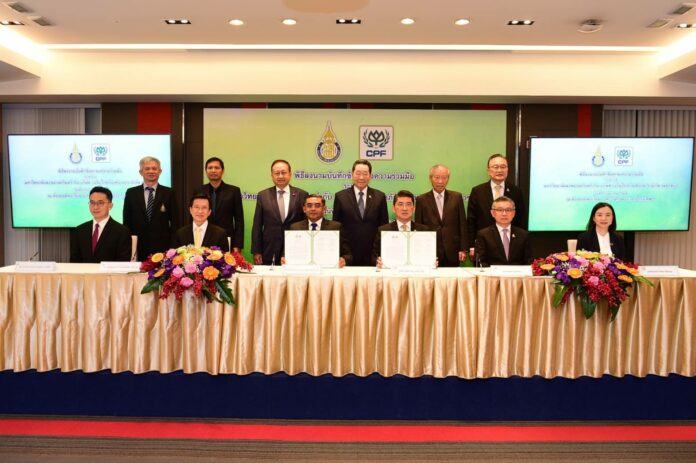
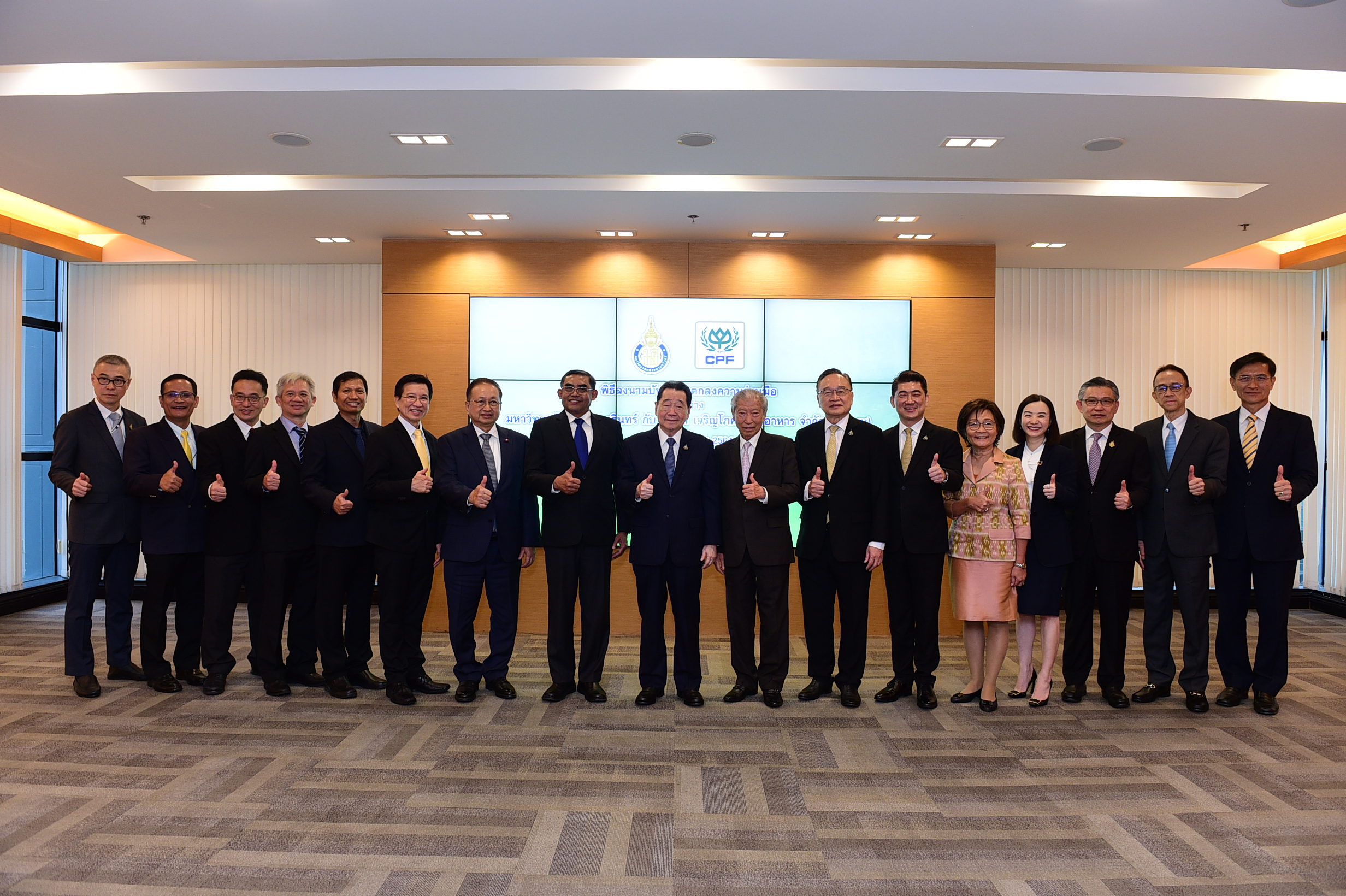
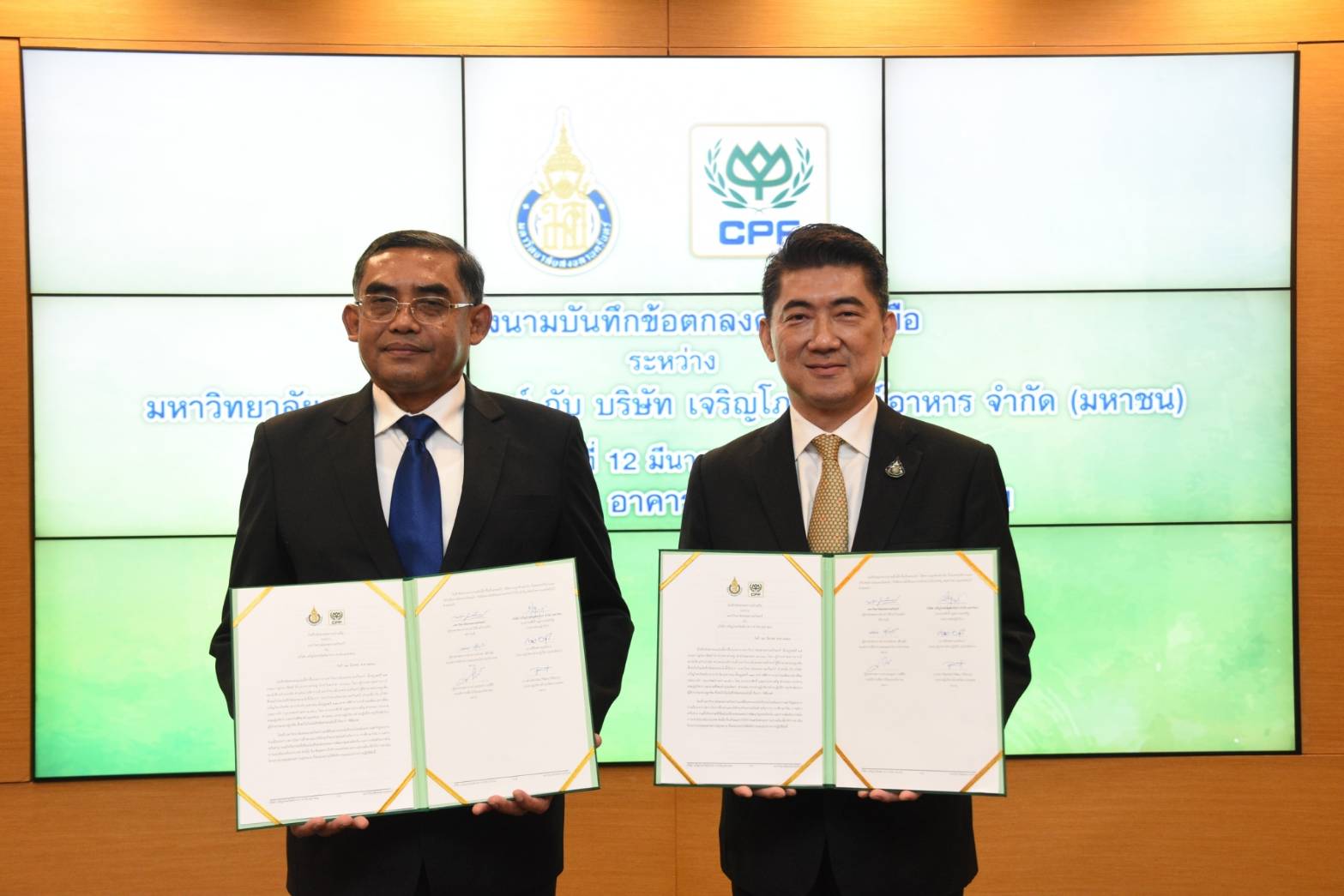
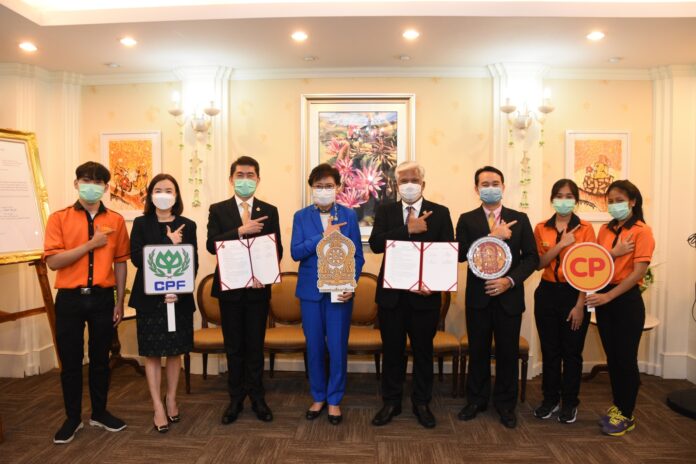
Prince of Songkhla University (PSU) and Charoen Pokphand Foods PCL. (CPF) have signed the “Collaboration Agreement on Integrated Agro-industry and Food Study” which will involve upstream to downstream agricultural studies to empower young agribusiness entrepreneurs.

Charoen Pokphand Group’s Senior Chairman Dhanin Chearavanon presided over Memorandum of Understanding (MOU) Signing Ceremony between PSU and CPF. The agreement was signed by PSU President Asst. Prof. Dr. Niwat Keawpradub and CPF Chief Executive Officer Mr. Prasit Boondoungprasert at True Tower, Bangkok. Attending the signing ceremony were Mr. Adirek Sripratak, Chairman of CPF’s Executive Committee; Mr. Siripong Arunratana, Chief Operating Officer – Livestock Business of CPF;  Ms. Pimonrat Reephattanavijitkul, Executive Vice-President of CPF and Mr. Rangsan Sriworasart, PSU Council Committee.

Dr. Niwat noted that PSU sits on the expertise in producing quality agricultural graduates and has continually improved the curriculum to enhance students’ knowledge, skills and experiences. The collaboration marks a good opportunity as CPF, a leading agro-industrial and food company, will throw supports to the university’s research and study process, involving the assignment of employees to a working committee and the preparation of training grounds for students to achieve concrete benefits.

GAP 4201

“The collaboration on integrated agro-industrial and food research and study between Prince of Songkhla University and CPF takes Thailand’s education to the next level, as a business company’s real knowledge, expertise and experiences will be shared with and practiced by students. I’m confident that all students passing this project will be ready for the job market or turn themselves into agribusiness entrepreneurs,” Dr. Niwat said.

Mr. Prasit added that as a leading agro-industrial and food conglomerate with the upstream to downstream supply chain (Feed-Farm-Food) and retail business, CPF is guided by the vision of “Kitchen of the World”. Ready to support the development of Thailand’s education, CPF has teamed up with several educational institutions, with Prince of Songkhla University being the latest. To be shared with students is CPF’s knowledge involving agribusiness innovations and digital technology as well as researches of its Feed-Farm-Food businesses in livestock, aquaculture and plant-based raw materials for animal feeds. Students will also be equipped with agribusiness skills, to help them become young agribusiness entrepreneurs. CPF’s goal is to produce young workers who meet the job market’s demands and enhance their entrepreneurship.

“As a good corporate citizen, CPF has operated under the ‘3-Benefit’ principles. The collaboration is aligned with the principles, as it involves the transfer of real-world experiences and expertise to the university’s students who show interest in the integrated agribusiness and food industry. It will contribute to education development and build quality and desirable young workforce that will benefit the country’s agricultural sector,” Mr. Prasit said.

PSU8

The project has a systematic workstream , covering three aspects, including developing curriculum for Young Agri-business Entrepreneurs, joint research and development for feed and food products, and, lastly, other relevant collaborations such as CPF in your Area in which student can gain a first-hand experience from Five Star business model, Alumni Panelist, sharing expertise from PSU-graduated CPF staffs, and etc.

Advertisement

Ministry of Education and CPF Jointly Kick off “CPF Jump Start” To Enhance Vocational Students’ Capability

The Ministry of Education’s Office of the Vocational Education Commission (OVEC) has signed a memorandum of understanding (MoU) with Charoen Pokphand Foods PCL. (CPF), under which “CPF Jump Start” Project will be launched to equip vocational students with skills and experiences necessary for their future careers.

“CPF Jump Start – First Professional Step” is a pilot project of their collaborative effort, to churn out desirable human resources for the business and industrial sectors in support of the country’s economic development.  The curriculum is jointly designed for students in vocational to higher vocational levels as well as those pursuing a bachelor’s degree in technology and operations.

The MoU signing ceremony at OVEC’s office was presided over by Deputy Education Minister and Acting Education Minister Khunying Kalaya Sophonpanich. Signing the MoU were Dr. Suthep Kaengsanthia, Secretary of the Office of Vocational Education Commission, and Mr. Prasit Boondoungprasert, Chief Executive Officer of CPF.

Khunying Kalaya stressed that the MoU marked a historic and significant collaboration, whereby a leading company is contributing knowledge, experiences and technology and engaged in course designing and implementation.

“My admiration goes to CPF for its emphasis on education, particularly when the country requires contribution from all parties. CPF’s supports will benefit our endeavor and will inspire other companies and entrepreneurs and other industries to follow suit. That two organizations synergize their strengths and jointly develop human resources will speed up the development process and leapfrog Thailand’s education progress. This will support the country’s competitiveness and produce the resources that better meet market demands. The effort will buoy the economy and energize further economic development,” Khunying Kalaya said.

Mr. Prasit added that as a leading agro-industrial and food conglomerate with the upstream to downstream supply chain (Feed-Farm-Food), CPF sits on vast knowledge and business management expertise. Under the ‘3-Benefit’ principles to create prosperity for the country, society and the Company, CPF seeks deeper engagement in improving practical skills.

“CPF Jump Start – First Professional Step” is aimed at improving the quality of vocational education. CPF’s knowledge will be transferred to vocational students in various patterns. Under a dual education pattern, vocational students studying the subjects that are related to CPF’s operations throughout the supply chain will be trained by relevant departments and earn training hours or grades based on their performance. The educational pattern allows systematic training, which will not only equip the students with professional skills but also soft skills in working with others. The students will thus directly benefit from the training. CPF is eyeing to replicate the project at other educational institutions.

In addition, CPF has launched the “CPF Top Dish” project, whereby students wanting to become a restaurant owner in the New Normal era gain supports to create Cloud Kitchen. Under the “School Farm and Farm School” project, knowledge on modern agriculture is shared through smart farming technology under the objective to produce exemplary farmers.

“I hereby thank the Office of Vocational Education Commission for this opportunity that allows CPF’s engagement with education development. I’m confident that “CPF Jump Start – First Professional Step” will efficiently bring about benefits to vocational students,” Mr. Prasit said.

At the ceremony, Dr. Suthep praised CPF’s attention to vocational education and supports to improve vocational students’ capability and professional skills through training opportunities. CPF also involves with course designing and recruitment of students for the dual education and training. The opportunities to learn from experts, familiarize themselves with modern technology at a leading company and earn extra income during school breaks are extended to vocational and higher vocational students as well as undergrad students pursuing degrees in technology or operations in food, nutrition, retailing, agricultural and related fields.

“I believe that OVEC and CPF’s collaborative effort will deliver benefits to vocational education, so that quality personnel can be produced and drive the national development forward,” Dr. Suthep said.

Advertisement

Flights Canceled During China’s Worst Sandstorm in Decades

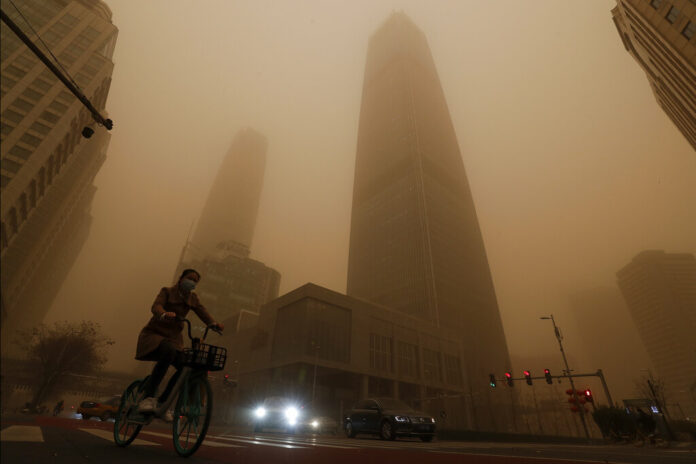
A cyclist and motorists move past office buildings amid a sandstorm during the morning rush hour in the central business district in Beijing, Monday, March 15, 2021. The sandstorm brought a tinted haze to Beijing's skies and sent air quality indices soaring on Monday. Photo: Andy Wong / AP

BEIJING (AP) — China’s capital and a wide swath of the country’s north were enveloped Monday in the worst sandstorm in a decade, leading to the cancelation of hundreds of flights.

Skyscrapers in the center of Beijing appeared to drop from sight amid the dust and sand. Traffic was snarled and more than 400 flights out of the capital’s two main airports were canceled before noon.

Such storms used to occur regularly in the springtime as sand from western deserts blew eastwards, affecting areas as far as northern Japan.

Massive planting of trees and bushes in fragile areas has reduced the storms’ intensity, but the expansion of cities and industries has put constant pressure on the environment throughout China.

The National Meteorological Center forecasted the sand and dust would affect 12 provinces and regions from Xinjiang in the far northwest to Heilongjiang in the northeast and the eastern coastal port city of Tianjin.

“This is the most intense sandstorm weather our country has seen in 10 years, as well as it covering the broadest area,” the center said in a post on its website.

It wasn’t clear if the storm was related to a recent general decline in air quality despite efforts to end Beijing’s choking smog.

The ruling Communist Party has pledged to reduce carbon emissions per unit of economic output by 18% over the next five years. Environmentalists say China needs to do more to reduce dependency on coal that has made it the world’s biggest emitter of climate changing gasses.

AP21074127591785
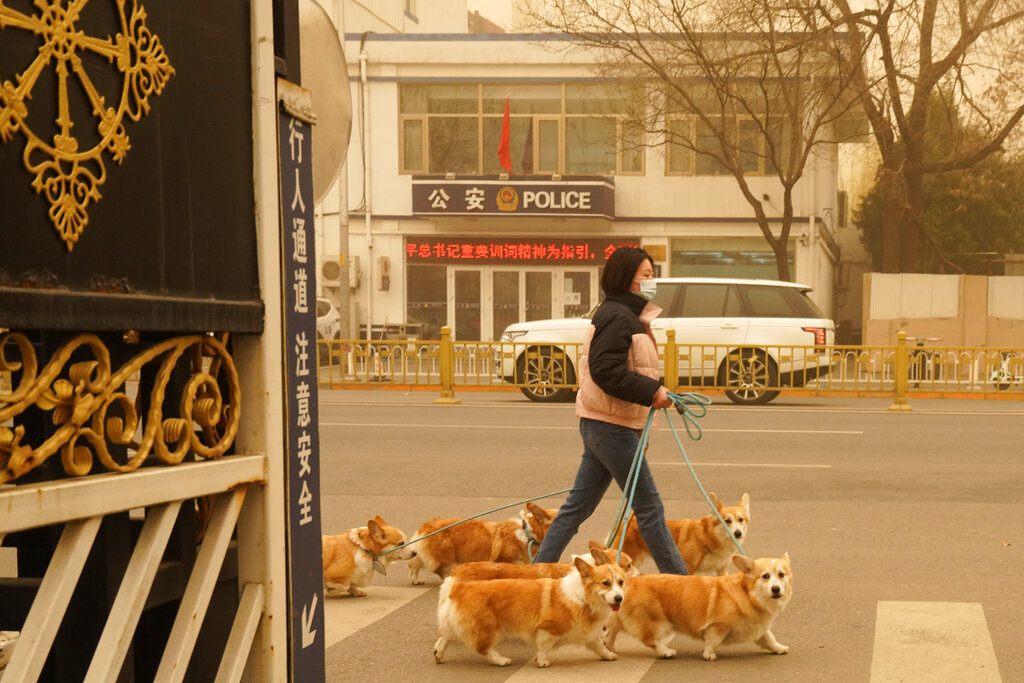
A woman walks her dogs during a sandstorm in Beijing, Monday, March 15, 2021. The sandstorm brought a tinted haze to Beijing’s skies and sent air quality indices soaring on Monday. Photo: Ng Han Guan / AP
Advertisement

Who Run the Grammys? Women. Beyoncé, Swift Make History.

Beyonce accepts the award for best R&B performance for "Black Parade" at the 63rd annual Grammy Awards at the Los Angeles Convention Center on Sunday, March 14, 2021. Photo: Chris Pizzello / AP

NEW YORK (AP) — Beyoncé and Taylor Swift had a historic night at the Grammys, where the top four awards were won by female acts.

Swift became the first female performer to win album of the year three times and Beyoncé, with her 28th win, became the most decorated woman in Grammy history. She also ties Quincy Jones for second place among all Grammy winners.

H.E.R. won song of the year and Billie Eilish picked up record of the year, telling the audience that best new artist winner Megan Thee Stallion deserved the honor.

Though women have won all top four awards in the past – including Eilish’s sweep last year – it marked the first time four separate and solo women won the top four honors.

“We just want to thank the fans,” said Swift, who won the top prize with “folklore” and previously won album of the year with her albums “Fearless” and “1989.”

Beyoncé walked into the show with 24 wins and picked up four honors, including best R&B performance for “Black Parade,” best music video for “Brown Skin Girl” as well as best rap performance and best rap song for “Savage,” with Megan Thee Stallion.

“As an artist I believe it’s my job, and all of our jobs, to reflect time and it’s been such a difficult time,” Beyoncé said onstage as she won best R&B performance for “Black Parade,” which was released on Juneteenth.

She went on to say she created the song to honor the “beautiful Black kings and queens” in the world.

She added: “I have been working my whole life … This is such a magical night.”

Beyoncé is only behind the late conductor Georg Solti, who is the most decorated Grammy winner with 31 wins.

But Beyoncé didn’t only make history, her whole family did. The royal family of music all won honors Sunday: Jay-Z picked up his 23rd Grammy, sharing the best rap song win with his wife since he co-wrote “Savage.” And 9-year-old Blue Ivy Carter — who won best music video alongside her mother — became the second youngest act to win a Grammy in show’s 63-year history. Leah Peasall was 8 when The Peasall Sisters won album of the year at the 2002 show for their appearance on the T Bone Burnett-produced “O Brother, Where Art Thou?” soundtrack.

Megan Thee Stallion, who won three honors, also made history and became the first female rapper to win best rap song. She’s also the fifth rap-based act to win best new artist.

Beyoncé was the night’s top contender with nine nominations. She didn’t perform but Swift did.

She sang “cardigan” and “august” from “folklore,” as well as “willow” from “evermore,” and was joined by the collaborators who helped her make the albums, Jack Antonoff and Aaron Dessner, who both won album of the year with Swift.

AP21074040095437 e1615781794606
Taylor Swift poses in the press room at the 63rd annual Grammy Awards at the Los Angeles Convention Center on Sunday, March 14, 2021. Photo: Jordan Strauss / Invision / AP

Silk Sonic, aka Bruno Mars and Anderson Paak, also performed, bringing a throwback R&B vibe to the show with their smooth new single, “Leave the Door Open.” Dua Lipa, who won best pop vocal album, proved her pop star status with a performance of her hits “Don’t Start Now” and “Levitating,” where she was joined by the DaBaby, who was an all-star during his own performance of his guitar-tinged rap hit “Rockstar,” flipping the song for an exceptional live rendition featuring R&B singer Anthony Hamilton, a skilled violinist and background singers.

Country singer Mickey Guyton – the first Black woman nominated for best country solo performance – gave an impressive performance of her song “Black Like Me,” which she released last year as police brutality continued to devastate Black families and the coronavirus ravished Black America disproportionately. Lil Baby, joined by Killer Mike and activist Tamika Mallory, gave a political performance that impressed.

“Black Parade” joined a list of songs honoring that Black experience that won Sunday, including H.E.R.’s protest anthem “I Can’t Breathe” and Anderson Paak’s “Lockdown,” which was released on Juneteenth like “Black Parade.”

Other performers Sunday included Billie Eilish, Cardi B, Bad Bunny, Miranda Lambert, Maren Morris and Harry Styles, who won best pop solo performance for the hit “Watermelon Sugar.”

“To everyone who made this record with me, thank you so much,” said Styles, the first member of One Direction to win a Grammy.

Host Trevor Noah kicked off the show telling jokes about the coronavirus pandemic and the year that was 2020. He was live from downtown Los Angeles, with attendees wearing masks and sitting, socially distanced, at small round tables.

Double winners included H.E.R., Fiona Apple, Kaytranada and late performers John Prine and Chick Corea.

___

Story: Mesfin Fekadu

Follow AP’s complete coverage of the Grammys at www.apnews.com/GrammyAwards.

Advertisement

Opinion: Why Are Numbers of Monarchy-Reform Demonstrators Dropping?

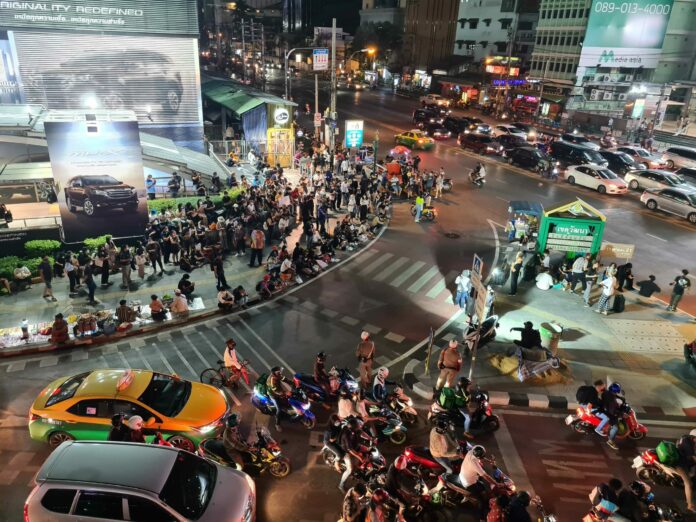
Anti-government protesters at the Asok Intersection on March 11, 2021.

It’s an undeniable fact that recently, the number of monarchy-reform, anti-government demonstrators have dropped significantly compared with last year.

Since the protesters returned to the streets earlier this year, the number seems never to exceed 3,000 people max. On Tuesday, a day after three protest leaders were indicted for royal defamation and denied bail, the crowd of black-clad demonstrators in front of the Criminal Court in Bangkok was no more than 300.

Yes, no more than 300. I did not miss one or two digits.

While the reasons for this is debatable, I believe a combination of factors were responsible for the repeated low turnout compared to tens of thousands that showed up repeatedly last year.

First and the most obvious is the ongoing spread of coronavirus and its devastating impact on the Thai economy. Put simply, it has become more taxing for the demonstrators, mostly university students and still dependent on their parents financially, to come out and protest every week or even more frequently than that.

The second factor is fear. With eight protest leaders now in pre-trial detention for lese-majeste charges and 57 more awaiting for decision by the prosecutors in the near future, the chance of them spending at least a few years in prison is real. Some key protesters are facing either lese-majeste charges or sedition, while those who remain free are now checking the prospect of seeking political asylum abroad.

Lese majeste fugitive Nuttigar Woratunyawit, who fled Thailand in 2017, confirmed to me on the phone from the U.S. last week after she managed to gain political asylum status that she was asked by some about how to flee the kingdom.

She warned young Thai activists that “fleeing for asylum isn’t traveling for sightseeing or studying abroad. It’s leaving the country that you were born in, and once you get out, you can never go back. It’s a one-way ticket.”

This is a tough decision and each political activist now facing charges will have to make. The lese-majeste law carries a maximum imprisonment term of 15 years per count while it’s 7 for sedition.

No one can be in Thai prison, notorious for its low sanitary conditions and congestion, on behalf of another. But to flee means to try to start a new life abroad as a second-class citizen, if not third-class, on a foreign soil. This includes having to learn a new language and adapt to a new environment.

Third factor is infighting. I have lost count who is blocking others on Facebook due to their moderate political differences. For example, some people look down on others who are not calling for an outright abolition of the lese-majeste law as not brave or unenlightened. Debate about non-violent struggle and its merits is also raging, with others casting doubt on the merits of both violence and peaceful struggle.

As if that wasn’t enough, the fifth factor is doubts within the movement, and that some mole may have been planted within the inner circle. As I type these words, there have been incriminations and counter-incriminations made to the point where confusion and distrust reign. Public donations to various groups that have never been made transparent have also led to allegations of possible fraud.

Those refusing to reveal the total donation amount received argue that donors never had any problem with the how the money was spent so there’s no need to declare. Some even argue that to declare the finances in detail would put donors at risk. Then there are some who believe that at least a figure related to the alleged donation fraud may in fact be a mole sent by the state.

Next is the hardline tactics adopted by some protesters including the burning of the images of the king in public as occurred last Saturday night in front of the Criminal Court. This could potentially alienate those who may merely want monarchy reform instead of a Republic of Thailand. In fact, within the movement, the republican strand versus those merely want monarchy reforms are becoming too visible to ignore.

If all these were not enough, then there’s fatigue and a sense of hopelessness by some. They feel that after a year, despite the level of criticisms against the monarchy pushed through the political glass ceiling, some of those pushing it are under pre-trial detention, one after the other.

They have to try to come out of their echo chamber, seriously reflect, and not lose hope, however.

Advertisement

Hot News

LATEST NEWS

Bangkok
overcast clouds
34.4 ° C
34.4 °
32.7 °
71 %
4.2kmh
99 %
Mon
33 °
Tue
34 °
Wed
35 °
Thu
31 °
Fri
30 °