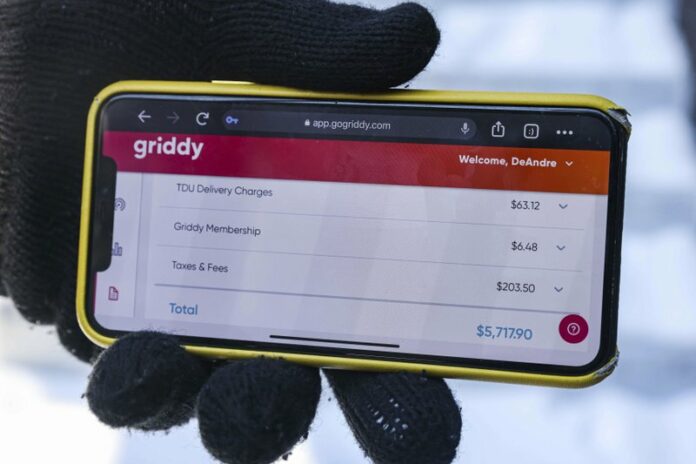
DeAndré Upshaw shows a $5,000 bill from Griddy on his cell phone for his 900-square-foot apartment during very cold weather in Dallas, on Friday, Feb. 19, 2021. (Lola Gomez//The Dallas Morning News via AP)
By The Associated Press
After unusual icy weather left millions of Texans without power, some are facing another crisis: Sky-high electricity bills.
The surge in pricing is hitting people who have chosen to pay wholesale prices for their power, which is typically cheaper than paying fixed rates during good weather, but can spike when there’s high demand for electricity. Many of those who have reported receiving large bills are customers of electricity provider Griddy, which only operates in Texas.
Among them is Susan Hosford of Denison, Texas. On a typical February day, she pays Griddy less than $2.50 for power. But the one-day cost spiked to hundreds of dollars after the storm. In all, she was automatically charged $1,346.17 for the first two weeks of February, which was more than she had in her checking account, causing her bank to charge her overdraft fees and affect other bills.
“This whole thing has been a nightmare,” she said.
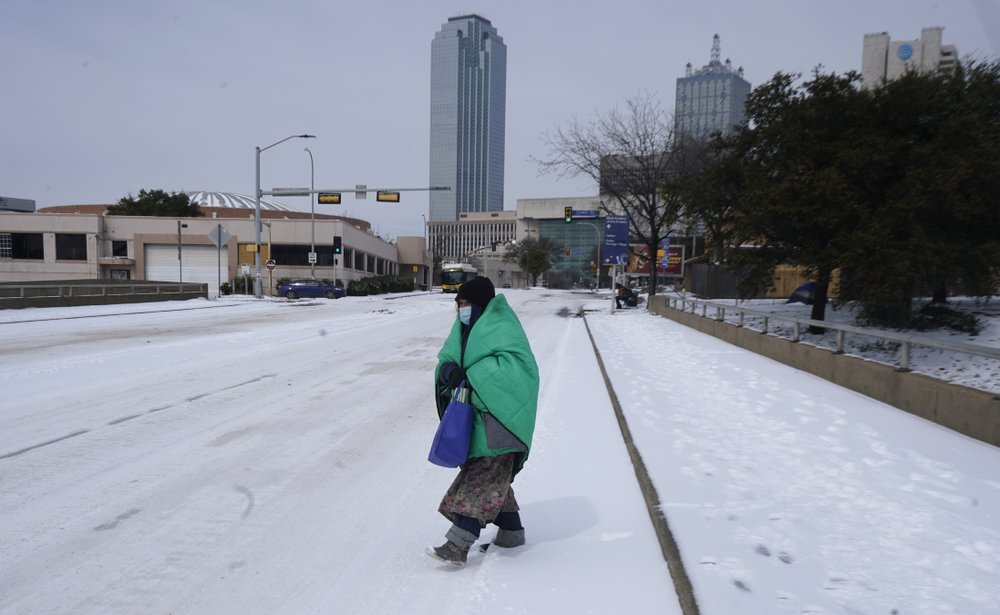
In this Feb. 16, 2021, file photo, a woman wrapped in a blanket crosses the street near downtown Dallas. (AP Photo/LM Otero, File)
Here’s more on the soaring electricity bills:
What Are Wholesale Electricity Prices?
Wholesale electricity prices fluctuate based on demand. Because natural gas pipelines and wind turbines froze up in Texas, there was less power available, but high demand for electricity, causing wholesale prices to shoot up, said Joshua Rhodes, an energy research associate at the University of Texas.
Wholesale prices are typically as low as a couple of cents per kilowatt-hour but spiked to $9 per kilowatt-hour after the storm. Fixed rate customers pay a set amount that doesn’t rise as much. Typically, they pay around 12 cents per kilowatt-hour. But Rhodes said fixed rate customers could see their price rise by a few cents later this year as companies hit by the icy conditions look to recoup their costs — but their bills won’t be in the thousands.
People are able to pay wholesale prices in Texas because it’s one of the only states that lets people pick which company it buys power from, Rhodes said.
What Is Griddy?
Griddy, which launched in 2017, charges $10 a month to give people a way to pay wholesale prices for electricity instead of a fixed rate. It warned customers of raising prices and urged them to switch providers. The company said wholesale prices returned to normal as of Feb. 20.
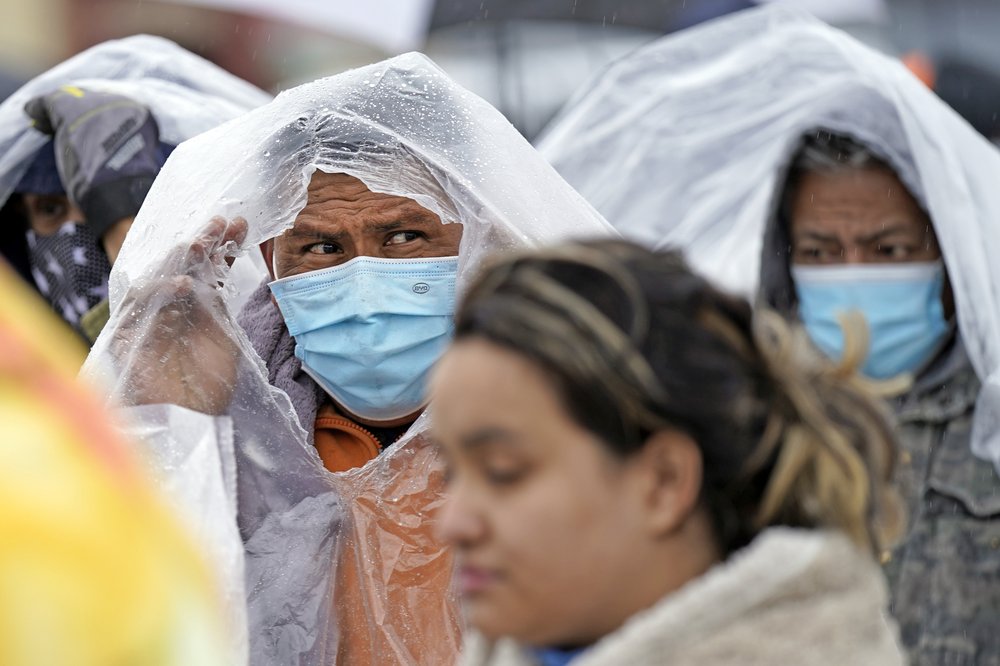
In this Feb. 17, 2021, file photo, Juan Guerrlo, center left, waits in line to fill his propane tanks in Houston. Customers had to wait over an hour in the freezing rain to fill their tanks. (AP Photo/David J. Phillip, File)
How Many People Are Affected?
Griddy said it has 29,000 members. It’s unclear how many other Texans also pay wholesale prices from other companies.
“We won’t get the full picture on the financial devastation for maybe 30 to 90 days,” said Ed Hirs, an energy fellow at the University of Houston.
Will Those Who Got Large Bills Get Financial Help?
That’s unclear. Texas Governor Greg Abbott said Sunday that he is working with members of the legislature to address skyrocketing energy bills and “find ways that the state can help reduce this burden.” But he didn’t give specifics on what that may be. For the time being, the state has stopped companies from cutting off power for not paying.
Rhodes said bailing out customers may be a hard sell since they opted to pay wholesale prices and may have paid a much lower price than others for some time.
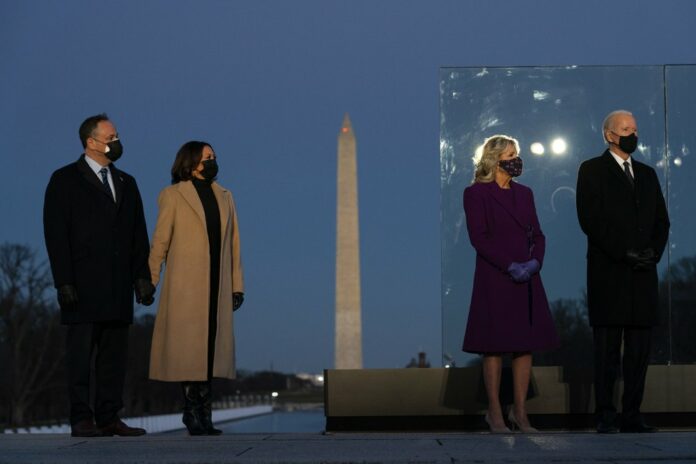
President-elect Joe Biden and his wife Jill Biden are joined by Vice President-elect Kamala Harris and her husband Doug Emhoff during a COVID-19 memorial event at the Lincoln Memorial Reflecting Pool, Tuesday, Jan. 19, 2021, in Washington. (AP Photo/Evan Vucci)
By The Associated Press
The U.S. stood Sunday at the brink of a once-unthinkable tally: 500,000 people lost to the coronavirus.
A year into the pandemic, the running total of lives lost was about 498,000 — roughly the population of Kansas City, Missouri, and just shy of the size of Atlanta. The figure compiled by Johns Hopkins University surpasses the number of people who died in 2019 of chronic lower respiratory diseases, stroke, Alzheimer’s, flu and pneumonia combined.
“It’s nothing like we have ever been through in the last 102 years, since the 1918 influenza pandemic,” the nation’s top infectious disease expert, Dr. Anthony Fauci, said on CNN’s “State of the Union.”
The U.S. virus death toll reached 400,000 on Jan. 19 in the waning hours in office for President Donald Trump, whose handling of the crisis was judged by public health experts to be a singular failure.
The first known deaths from the virus in the U.S. happened in early February 2020, both of them in Santa Clara County, California. It took four months to reach the first 100,000 dead. The toll hit 200,000 deaths in September and 300,000 in December. Then it took just over a month to go from 300,000 to 400,000 and about two months to climb from 400,000 to the brink of 500,000.
Joyce Willis of Las Vegas is among the countless Americans who lost family members during the pandemic. Her husband, Anthony Willis, died Dec. 28, followed by her mother-in-law in early January.
There were anxious calls from the ICU when her husband was hospitalized. She was unable to see him before he died because she, too, had the virus and could not visit.
“They are gone. Your loved one is gone, but you are still alive,” Willis said. “It’s like you still have to get up every morning. You have to take care of your kids and make a living. There is no way around it. You just have to move on.”
Then came a nightmare scenario of caring for her father-in-law while dealing with grief, arranging funerals, paying bills, helping her children navigate online school and figuring out how to go back to work as an occupational therapist.
Her father-in-law, a Vietnam vet, also contracted the virus. He also suffered from respiratory issues and died on Feb. 8. The family isn’t sure if COVID-19 contributed to his death.
“Some days I feel OK and other days I feel like I’m strong and I can do this,” she said. “And then other days it just hits me. My whole world is turned upside-down.”
The global death toll was approaching 2.5 million, according to Johns Hopkins.
While the count is based on figures supplied by government agencies around the world, the real death toll is believed to be significantly higher, in part because of inadequate testing and cases inaccurately attributed to other causes early on.
Despite efforts to administer coronavirus vaccines, a widely cited model by the University of Washington projects the U.S. death toll will surpass 589,000 by June 1.
“People will be talking about this decades and decades and decades from now,” Fauci said on NBC’s “Meet The Press.”
___
Associated Press Writer Heather Hollingsworth in Kansas City, Missouri, contributed to this report.
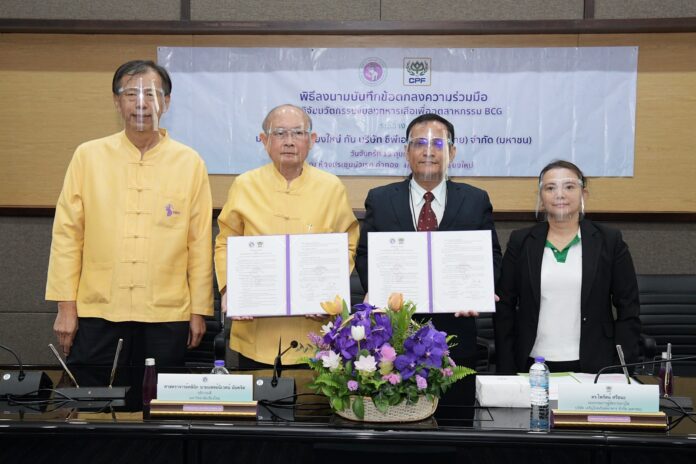
Charoen Pokphand Foods PCL (CP Foods) has signed a Memorandum of Understanding (MoU) with Chiang Mai University to develop insect-based protein from Black Soldier Fly (Hermetia illucens), embracing Bio-Circular-Green Economy (BCG) model and driving Thai agriculture industry towards a sustainable growth.
The agreement, which was recently signed by Clinical Professor Niwes Nantachit, M.D., President of Chiang Mai University, and Dr. Pairat Srichana, senior vice president of CP Foods, aims at commercializing insect-based protein that is a sustainable alternative food source for animals and human. It is also offering great circular economy opportunities since the insects can efficiently help recycling biowaste.
Assoc.Prof.Dr Yuthana Phimolsiripol, director of Food Innovation and Packaging Center (FIN) at Chiang Mai University, said that, initially, the University researched on multiple Black Soldier Fly’s products such as skincare from the insect’s larvae oil. The University has joined hands with CP Foods to explore commercial opportunities from the research.
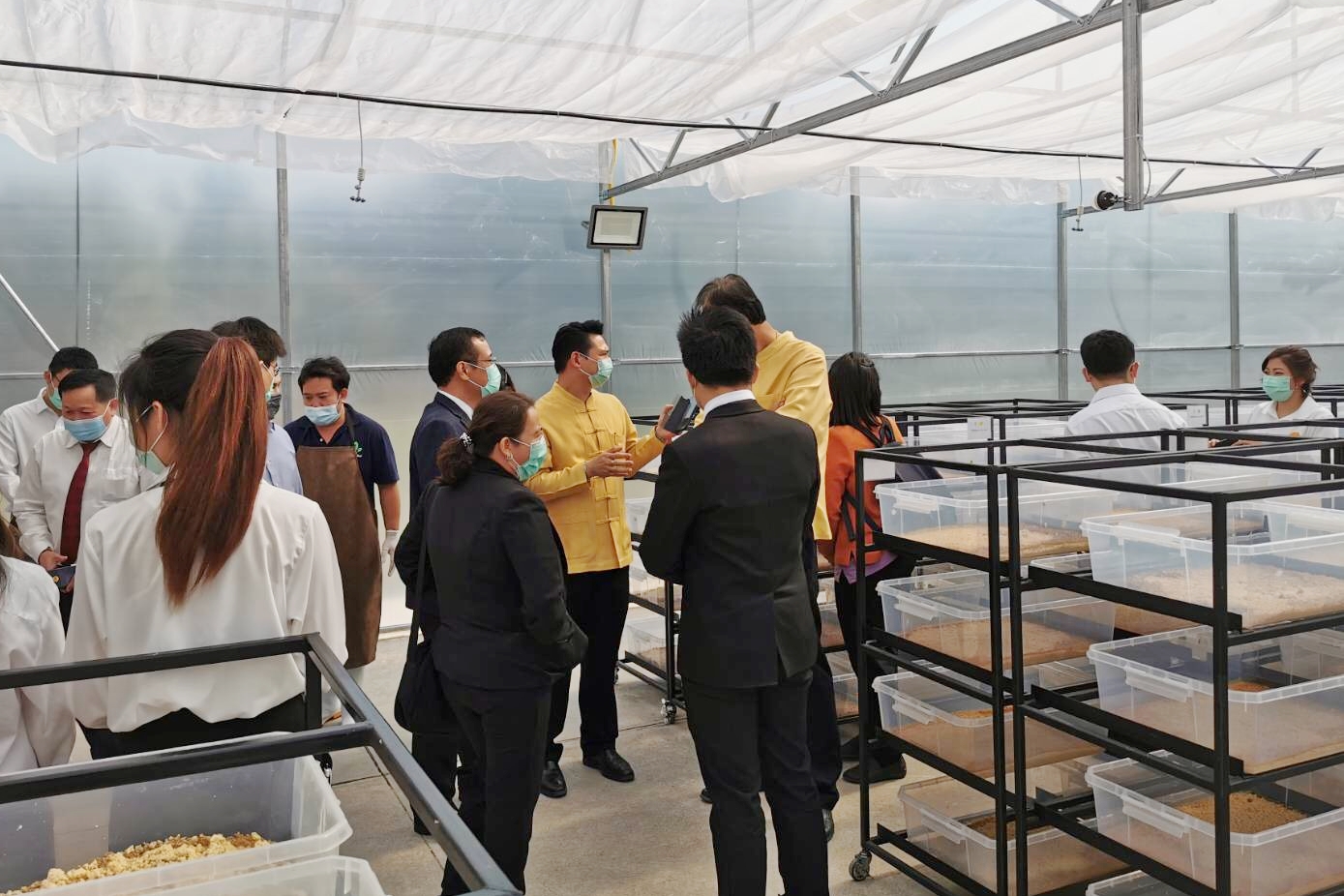
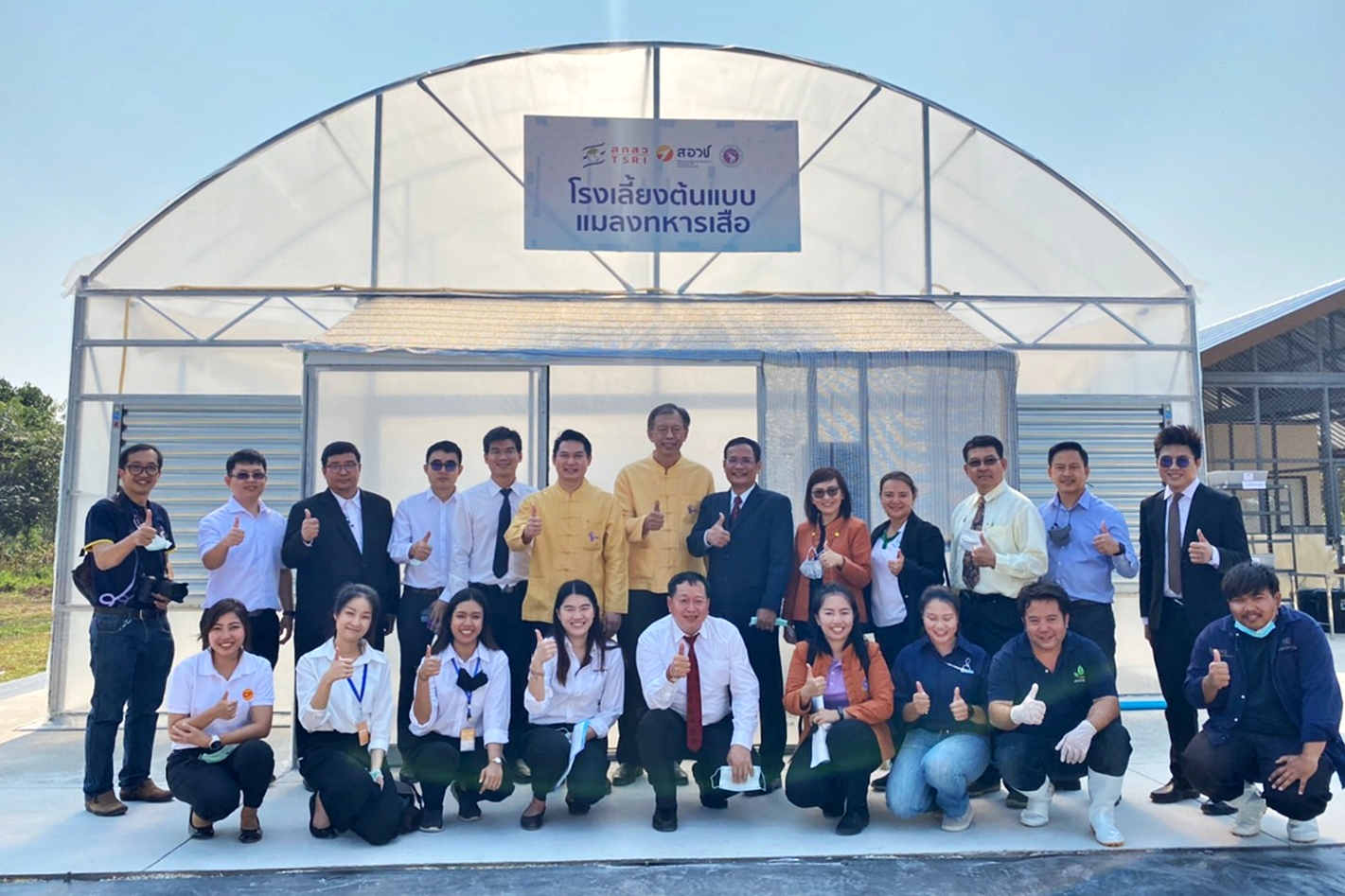
Under this MoU, CP Foods will fund the project and jointly develop the first smart farm for Black Soldier Fly in Thailand. This pilot farm will also be a learning centre for students, farmers, and the community.
“Chiang Mai University and CP Foods have the same goal, which is to explore the new products for driving Thai agriculture sector towards sustainable growth, using BCG economy model as an outline. This research will not only benefit both organizations, but also farmers across the country, who can generate extra income from this new economic insect.” Dr. Yuthana.
Dr. Pairat added that CP Foods has been working on alternative protein sources, whether it is plant-based protein, cell-based protein, and insect-based protein in response to the new sustainable food trend and building food security.
He explained that the company has a keen interest in insect sector. Previously, the company has developed cricket feed in 2013 and starting to research on the benefits of Black Soldier Fly in 2016.
“Black Soldier Fly is a sustainable choice for alternative protein and fat sources. Therefore, we are making a traceable and value-added insect protein. We hope that our partnership with Chiang Mai University will pave the way for a sustainable and profitable insect industry in Thailand.” Dr. Pairat said.
Charoen Pokphand Foods PCL (CPF) announced the winning of Industrial and Production Hygiene Administration (IPHA) certificate thanks to its stringent measures to safeguard production lines from the new coronavirus (COVID-19).
Mr. Siripong Aroonratana, CPF’s Chief Operating Officer – Livestock Business
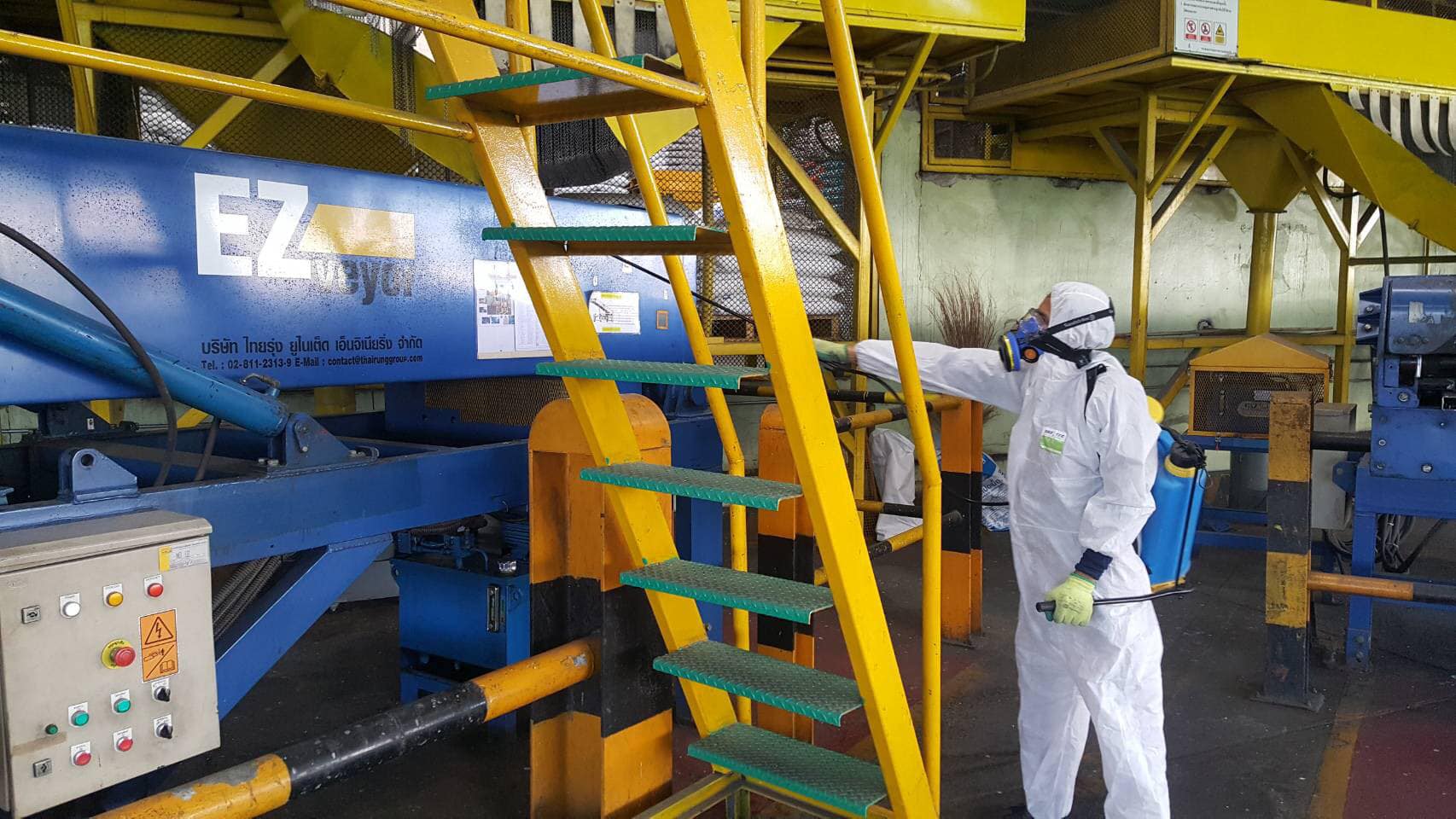
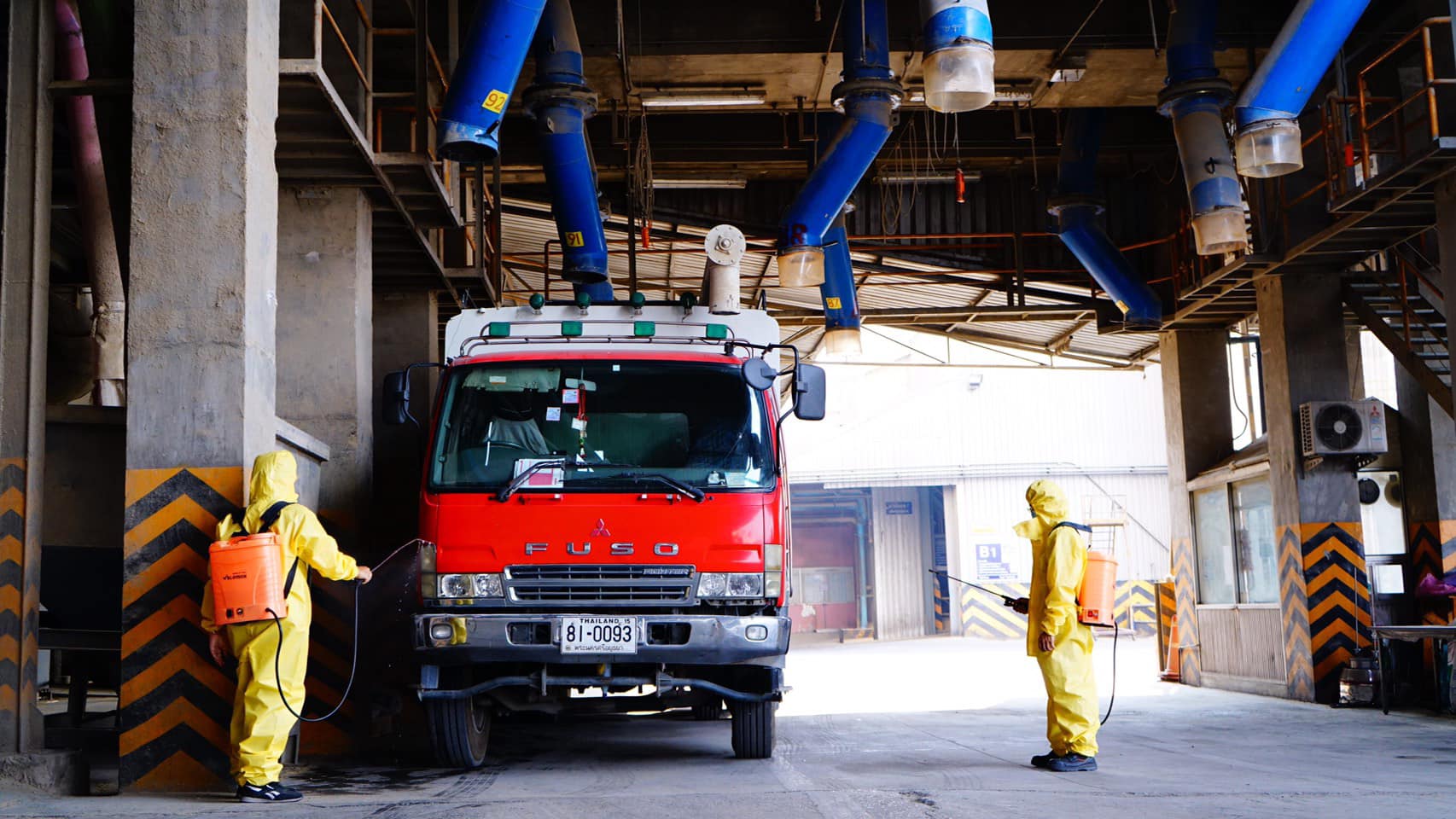
Mr. Siripong Aroonratana, CPF’s Chief Operating Officer – Livestock Business, said that CPF has placed extreme emphasis on food safety throughout the production chain and the most stringent safety measures have been enforced after the outbreak of COVID-19, to protect workers, working premises and the entire production process as an assurance to consumers. It was not a surprise that CPF’s 9 plants where feed mill, food processing and ready meals are produced are the first to win IPHA certificate, a joint initiative of the Federation of Thai Industries, the Public Health Ministry and the Industry Ministry to build confidence among consumers.
“CPF has exercised the toughest disease prevention measures. Under the Covid-19 Monitoring and Management Center, we established teams to tackle human and animal epidemic. A number of measures have been deployed to assure consumers of food safety which can be traced from upstream to downstream. IPHA certificate is another confirmation of our efficient practices,” he said.
IPHA certificates will be given to food-processing factories that pass the assessment on hygienic standards for workplace, production process and workers.
CPF’s disease prevention framework focuses on 7 areas – hygiene, preventive measures, procurement, communications with employees, cooperation with the government sector and remediation. The safety of “employees” is the priority, as only safe employees can help the Company proceed with the production of safe food for all consumers.
For business continuity, CPF puts in place a number of measures which cover 3 key aspects:
Food security: the Company’s production line must not be disrupted, to prevent food shortages.
Supply chain and logistics: The government assistance has been sought to facilitate transportation of raw materials to factories and food products to consumers, even during lockdown.
Disease prevention: Employees in Thailand and overseas are given guidelines on how to protect themselves against the disease while the Company stocks up alcohol gel and face masks and orders some employees to work from home. Employees returning from risk areas are allowed to self-quarantine for 14 days without having to take leave.
CPF has dutifully and continuously churned out safe food for consumers since the outbreak began. Furthermore, it has shared preventive measures and crisis management tips with suppliers, farmers and any interested parties, to join the national endeavor in sailing all through hard times.
Charoen Pokphand Foods Public Company Limited (CP Foods) celebrates 10th anniversary of its “CPF Fund for Elderly” project by providing multiple supports to over three hundred senior citizens living in poverty across the country, driving Thailand toward becoming a quality aging society.
Mr. Wuthichai Sithipreedanant, Senior Vice President for Corporate Social Responsibility and Sustainable Development of CP Foods, said the company launched “CPF Fund for Elderly” project in 2011 to provide care for underprivileged elderly people nearby its operations.
The aim of this project and the fund is to find a sustainable solution to continuously support the elderly aged above 60 years old surrounding the factories and farms who are neglected, unaided, or impoverished. The project continues to add new participants annually.
The company has supported a total number of 869 underprivileged elders in the past decade. As of 2021, there are 345 participants in the project.
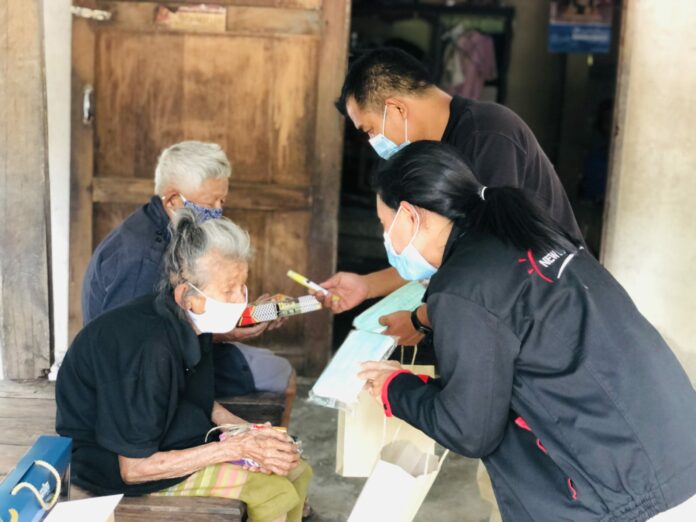
Under the scheme, the company provides financial support for 2,000 Baht per person every month for a lifetime. Also, CP Foods provides food and consumer staples as well as making a monthly visit to increase their quality of life and enable them to live happily.
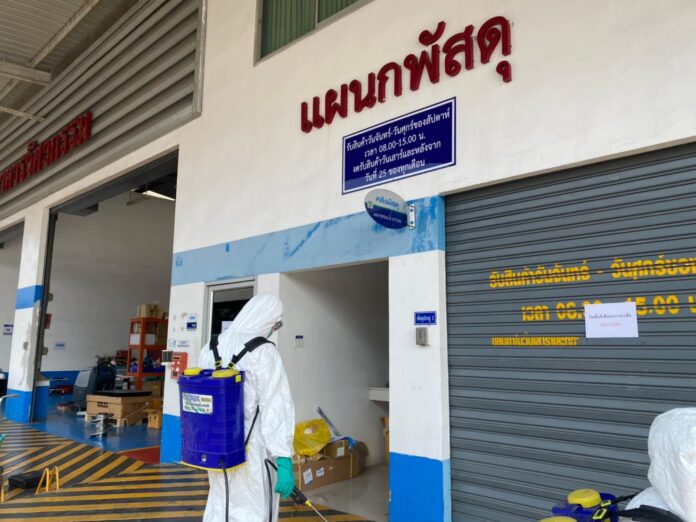
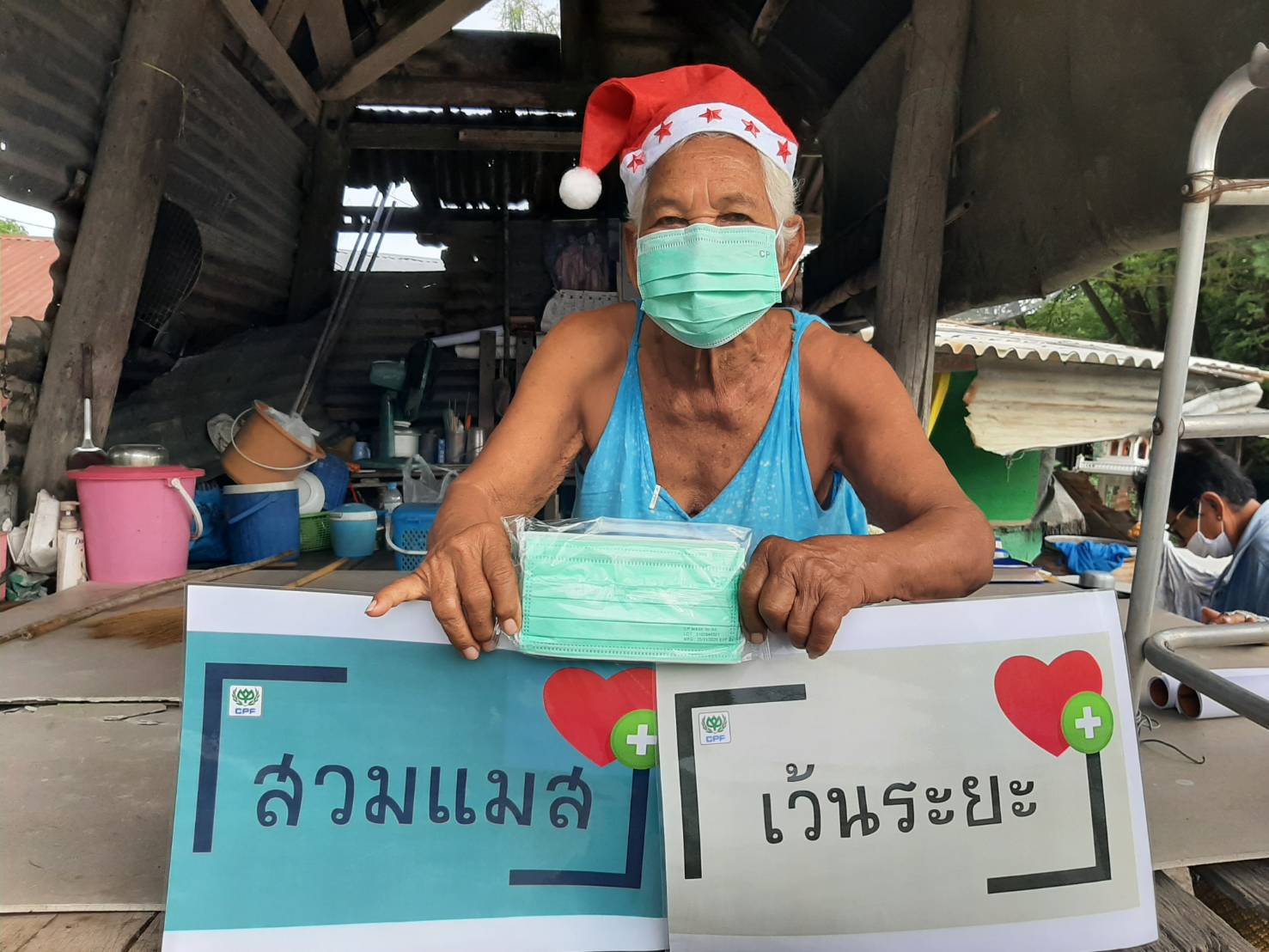
During the COVID-19 outbreak, extra safety measures have been put into place to minimize potential infection. For example, while visiting the elders, volunteers are required to wear a face mask and hand gloves. The volunteers and the elders must maintain social distancing measure.
“CP Foods realizes the importance of the elderly in society. Therefore, the project is being one of driving forces in Thailand transition towards a quality aging society.” said Mr. Wuttichai.
Thailand is estimated to become an aged society by 2024. This means the number of people aged 60 years and over will be over 20%.
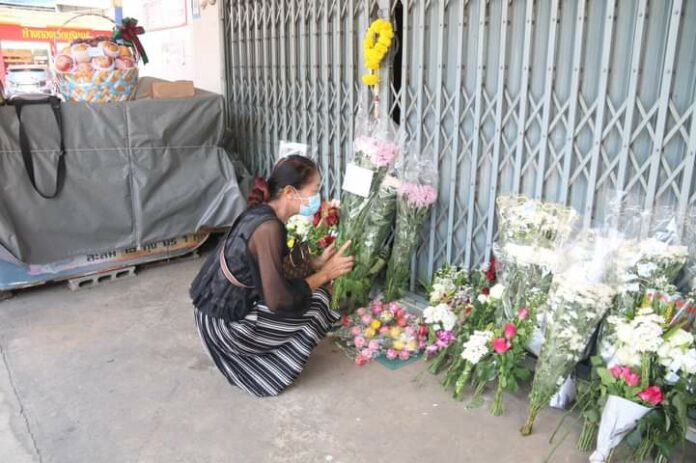
Residents lay down flowers at Panya Medical Clinic on Feb. 18, 2021.
BANGKOK — The physician who died from the coronavirus would go on to save more lives even in his death.
All funerary donations made to Panya Hanphanitphan, M.D., will be passed along to foundations and hospitals in order to buy medical equipment, pay for funerals of those who cannot afford the cost, and support volunteer doctors working in rural communities, according to his family.
The announcement was made online by Panya’s eldest son, Panprach Hanphanitphan, who thanked everyone who donated to his family at the funeral in Maha Sarakham province.
Panya tested positive for the coronavirus on Feb. 2 and died on Thursday at Maha Sarakham provincial hospital, where he had worked for 35 years. He was 66.
Local health officials suspect Panya contracted the virus from one of his patients who sought treatment with him at his clinic; three individuals who were later found with the coronavirus had visited the clinic throughout January.
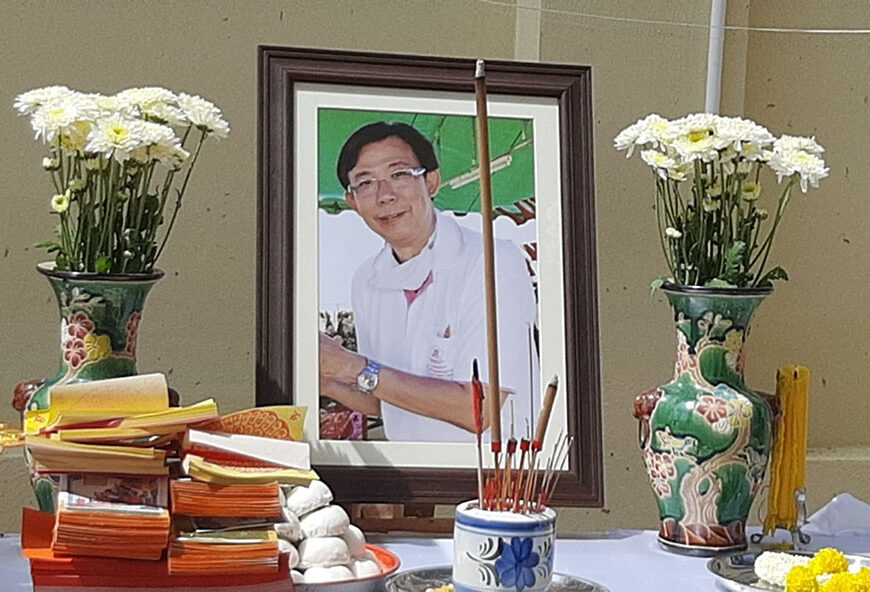
Panya Hanphanitphan’s funeral on Feb. 18, 2021, at the Eang Teck Tung Foundation Shrine in Maha Sarakham.
Panprach said donations made to his father will be forwarded to a number of organizations, including two hospitals in Maha Sarakham and one in Khon Kaen, as well as a foundation dedicated to supporting doctors who volunteered to serve in rural areas.
The money will be spent on new coronavirus protective gears, hospital equipment, more wards for patients, a new morgue, cleaning fees of hearses, and a new emergency medical response unit.
Panya’s neighbors also gathered in recent days to lay down flowers in front of his clinic in Maha Sarakham city center.
The health ministry said on Thursday that at least 36 health professionals have been infected with the coronavirus in Thailand so far, including 6 of them who caught the virus from their patients.
The government was supposed to start an inoculation program against COVID-19 for frontline health workers this month, but that hasn’t happened so far. The health ministry said the first shipment of vaccine will arrive on Feb. 24.
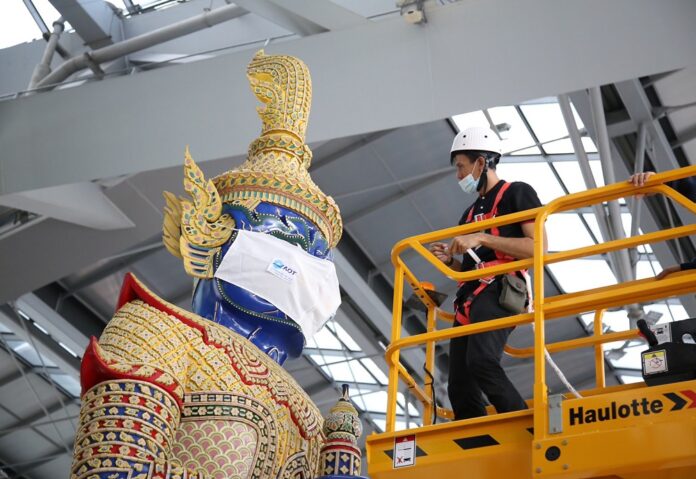
Workers don face masks on statues of giants at Suvarnabhumi Airport on Dec. 15, 2020, to promote health measures against the coronavirus.
By The Associated Press
You’re fully vaccinated against the coronavirus — now what? Don’t expect to shed your mask and get back to normal activities right away.
That’s going to be a disappointment, if not a shock, to many people.
In Miami, 81-year-old Noemi Caraballo got her second dose on Tuesday and is looking forward to seeing friends, resuming fitness classes and running errands after nearly a year of being extremely cautious, even ordering groceries online.
“Her line is, ‘I’m tired of talking to the cats and the parrots,’” said her daughter Susan Caraballo. “She wants to do things and talk to people.”
But the Centers for Disease Control and Prevention hasn’t yet changed its guidelines: At least for now, people should follow the same rules as everybody else about wearing a mask, keeping a 6-foot distance and avoiding crowds — even after they’ve gotten their second vaccine dose.
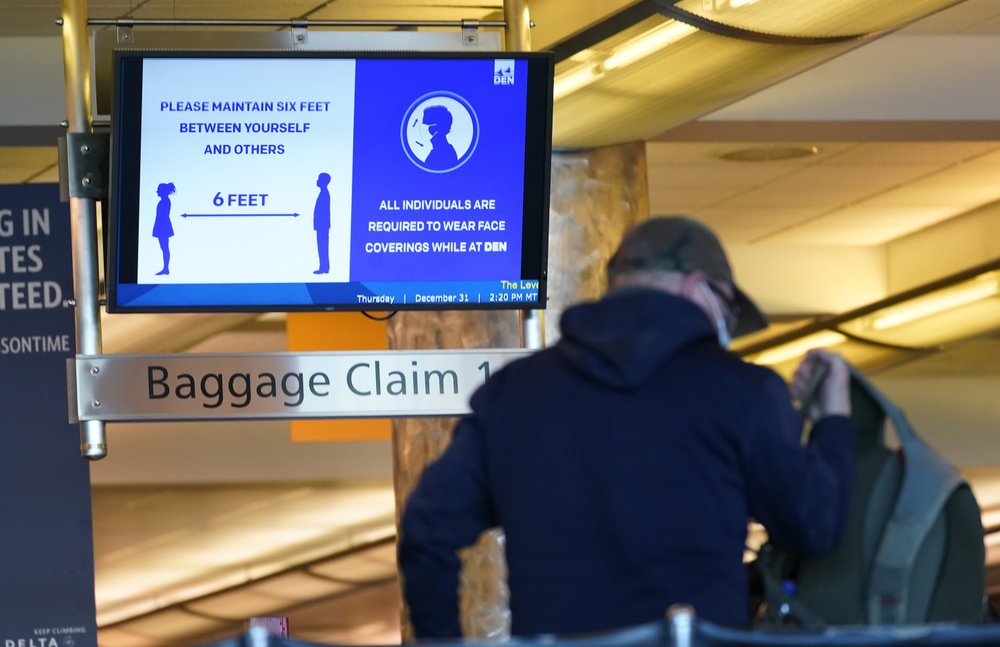
In this Dec. 31, 2020, file photo, an electronic sign advises travelers to wear face masks and practice social distancing while passing through the main terminal of Denver International Airport in Denver. (AP Photo/David Zalubowski, File)
Vaccines in use so far require two doses, and experts say especially don’t let your guard down after the first dose.
“You’re asking a very logical question,” Dr. Anthony Fauci, the top U.S. infectious disease expert, responded when a 91-year-old California woman recently asked if she and her vaccinated friends could resume their mah-jongg games.
In that webcast exchange, Fauci only could point to the CDC’s recommendations, which so far are mum about exceptions for vaccinated people getting together. “Hang on,” he told the woman, saying he expected updates to the guidelines as more people get the coveted shots.
What experts also need to learn: The vaccines are highly effective at preventing symptomatic COVID-19, especially severe illness and death — but no one yet knows how well they block spread of the coronavirus.
It’s great if the vaccine means someone who otherwise would have been hospitalized instead just has the sniffles, or even no symptoms. But “the looming question,” Fauci said during a White House coronavirus response briefing last week, is whether a person infected despite vaccination can still, unwittingly, infect someone else.
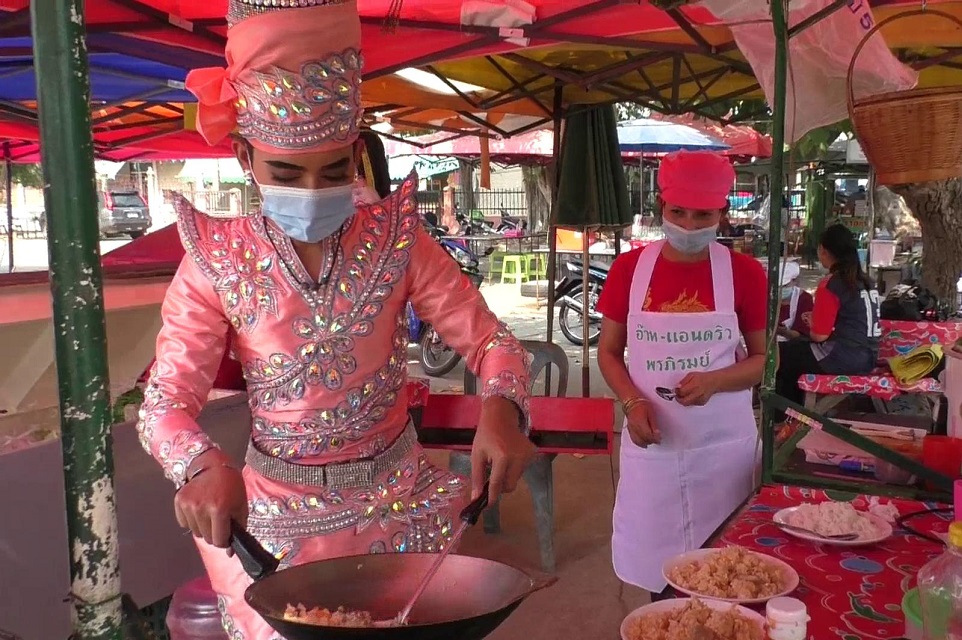
Members of a traditional drama troupe, or likay, turn to opening an eatery in Chainat province on Jan. 17, 2021, to earn a living during the coronavirus pandemic.
Studies are underway to find out, and hints are starting to emerge. Fauci pointed to recent research from Spain showing the more coronavirus an infected person harbors — what’s called the viral load — the more infectious they are. That’s not surprising, as it’s true with other illnesses.
Some preliminary findings from Israel have suggested people infected after the first vaccine dose, when they’re only partially protected, had smaller viral loads than unvaccinated people who got infected. That’s encouraging if the findings hold up. Israel has vaccinated a large fraction of its population and scientists worldwide are watching how the outbreak responds as those inoculations increase.
Also critical is tracking whether the vaccines protect against new, mutated versions of the virus that are spreading rapidly in some countries, added Dr. Walter Orenstein, an infectious disease expert at Emory University. He’s been vaccinated and is scrupulously following the CDC guidelines.
There are practical reasons. “It’s hard to tell who got vaccinated and who didn’t if you’re just walking around the grocery store,” noted University of Pennsylvania immunologist E. John Wherry.
And experts like Wherry get asked, repeatedly: Yes, there are rules for being in public, but what’s safe for Grandma to do at home, with family or close friends, after she’s vaccinated?
Not everyone’s immune system is boosted equally from vaccines — so someone with cancer or the frail elderly may not get as much protection as a robust 70-something.
But most people should feel “more confident about going shopping, for example, or going to see your grandkids, or giving your daughter a hug,” Wherry said.
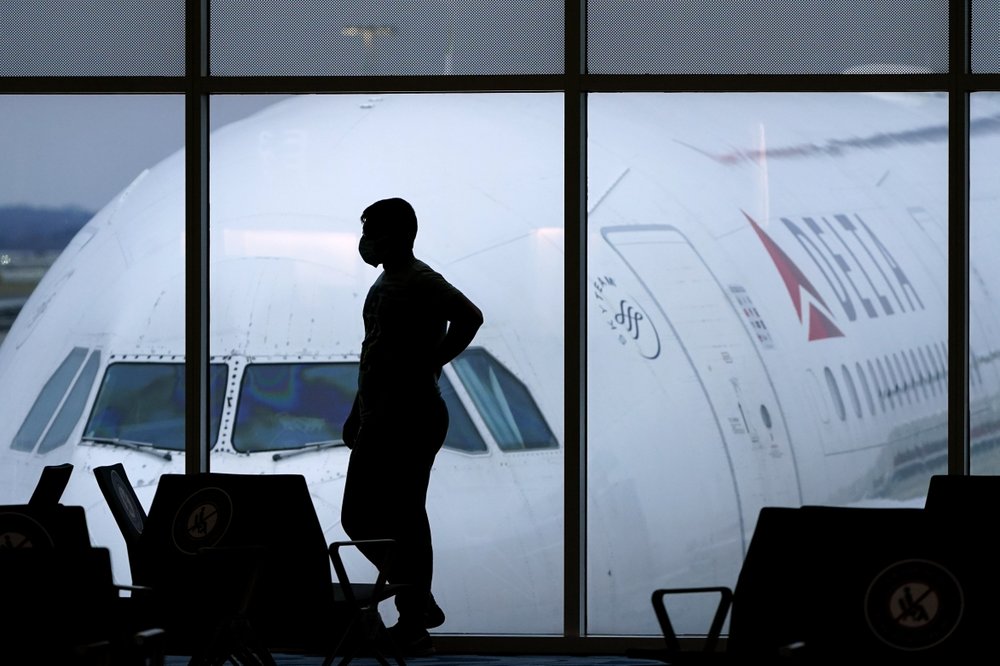
In this Feb. 18, 2021, file photo, a passenger wears a face mask to help prevent against the spread of the coronavirus as he waits for a Delta Airlines flight at Hartsfield-Jackson International Airport in Atlanta. (AP Photo/Charlie Riedel, File)
That’s because the chances of a fully vaccinated person getting seriously ill, while not zero, are low.
“Friends coming over for dinner, we should still try to follow the guidelines,” Wherry added. “You never know who is compromised, where the vaccine may not work as well.”
What if the fully vaccinated are exposed to someone who’s infected? The CDC did recently ease those rules: No quarantine as long as the vaccinated person shows no symptoms and it’s been at least two weeks but not longer than three months since their second dose.
Getting on an airplane? Vaccinated or not, the CDC still urges essential travel only.
International travel is an even tougher prospect. Expect countries that already have different quarantine and test requirements to come up with varying post-vaccination guidelines — especially since multiple types of vaccines, some better proven than others, are used around the world. There’s also the concern about carrying those worrisome mutations from one country to another.
Stay tuned for updates to the advice as more people get vaccinated. Meanwhile, don’t underestimate how important it is for the vaccinated to feel less anxiety as they run errands or go to work while still following the public health measures, said Dr. Luciana Borio, a former Food and Drug Administration scientist.
Even with a trip to the grocery store, “there was always this anxiety about, ‘Was that the contact that’s going to make me infected?’” Borio said. “That is a very powerful change in one’s living situation.”
___
Associated Press reporter Kelli Kennedy in Miami contributed to this report.
The Associated Press Health and Science Department receives support from the Howard Hughes Medical Institute’s Department of Science Education. The AP is solely responsible for all content.
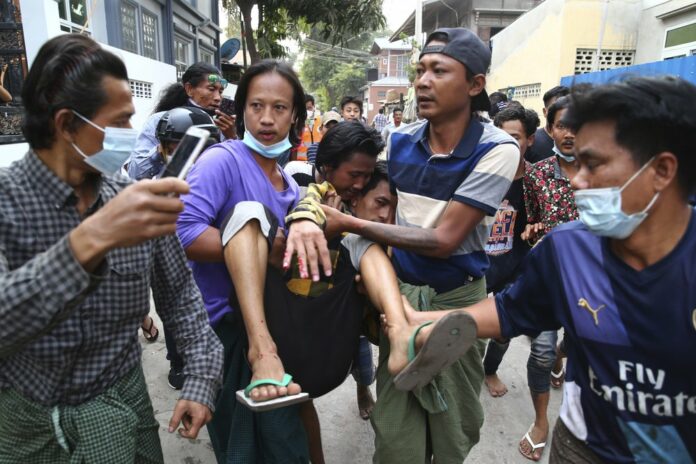
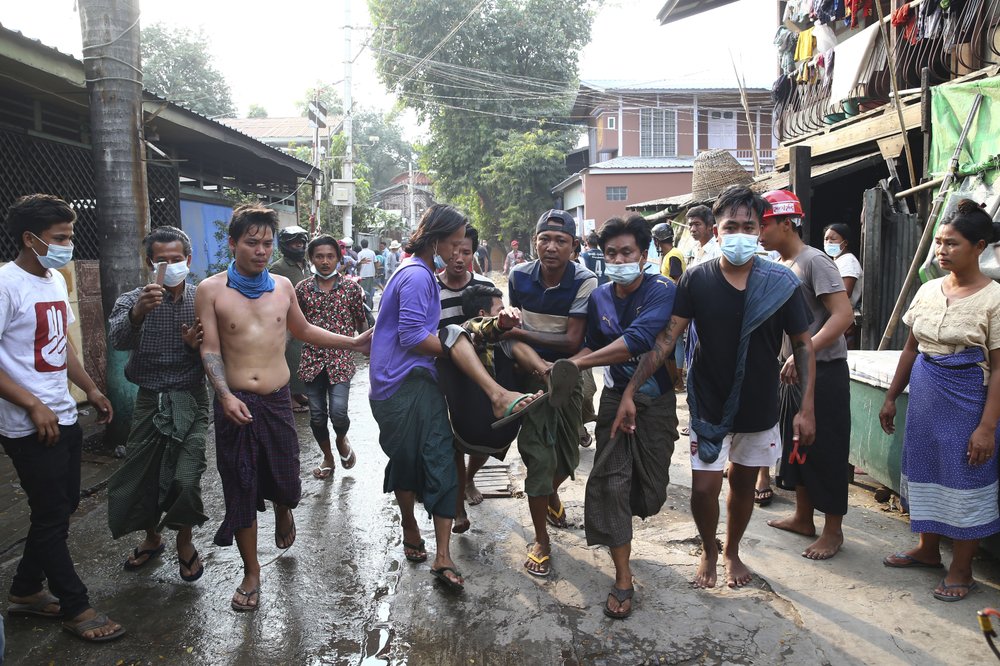
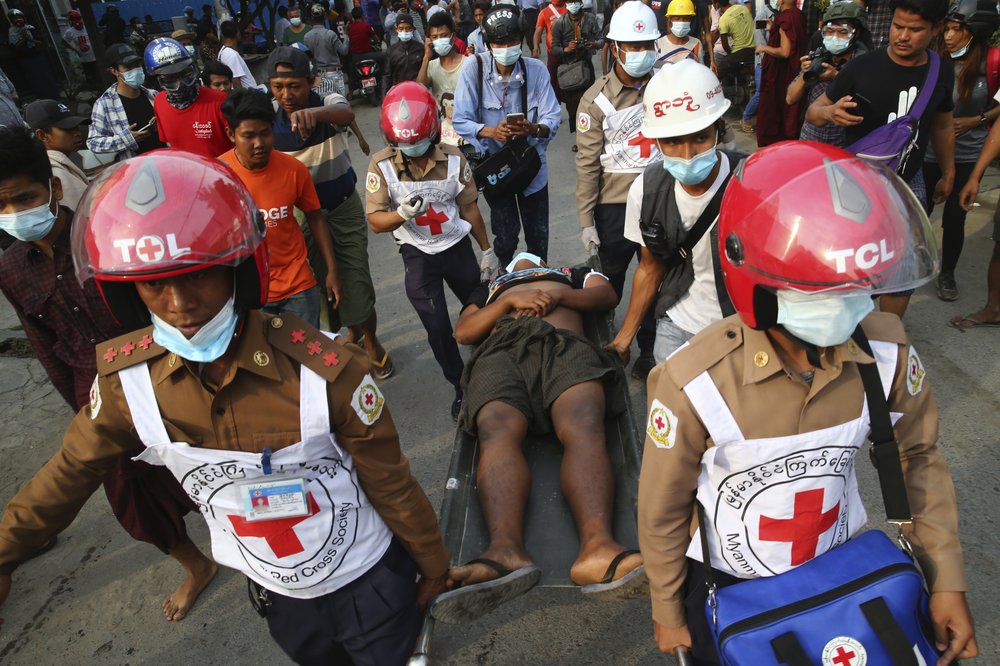
A man is carried after police dispersed protesters in Mandalay, Myanmar on Saturday, Feb. 20, 2021. (AP Photos)
MANDALAY, Myanmar (AP) — Two anti-coup protesters were shot dead by riot police who fired live rounds Saturday in Mandalay, Myanmar’s second-largest city, local media reported.
One of the victims was shot in the head and died at the scene, according to Frontier Myanmar, a news and business magazine based in Yangon, the country’s largest city. Another was shot in the chest and died en route to the hospital.
Several other serious injuries were also reported. The shootings occurred near Mandalay’s Yadanabon dock, where tear gas and rubber bullets were used on protesters earlier in the day.
The Irrawaddy news website also confirmed the deaths on social media.
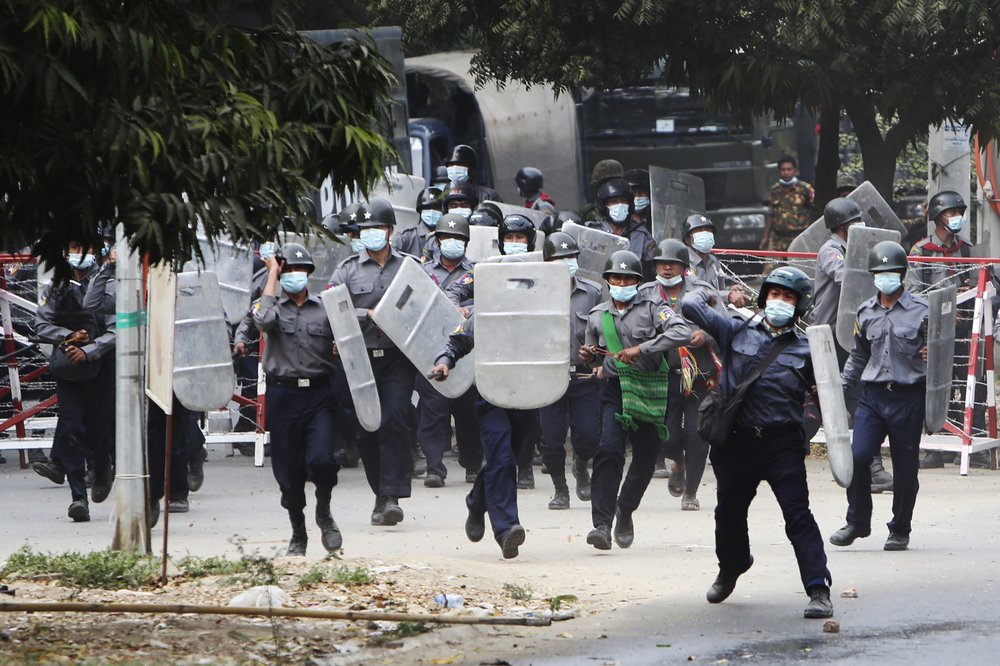
Police charge forward to disperse protesters in Mandalay, Myanmar on Saturday, Feb. 20, 2021. (AP Photos)
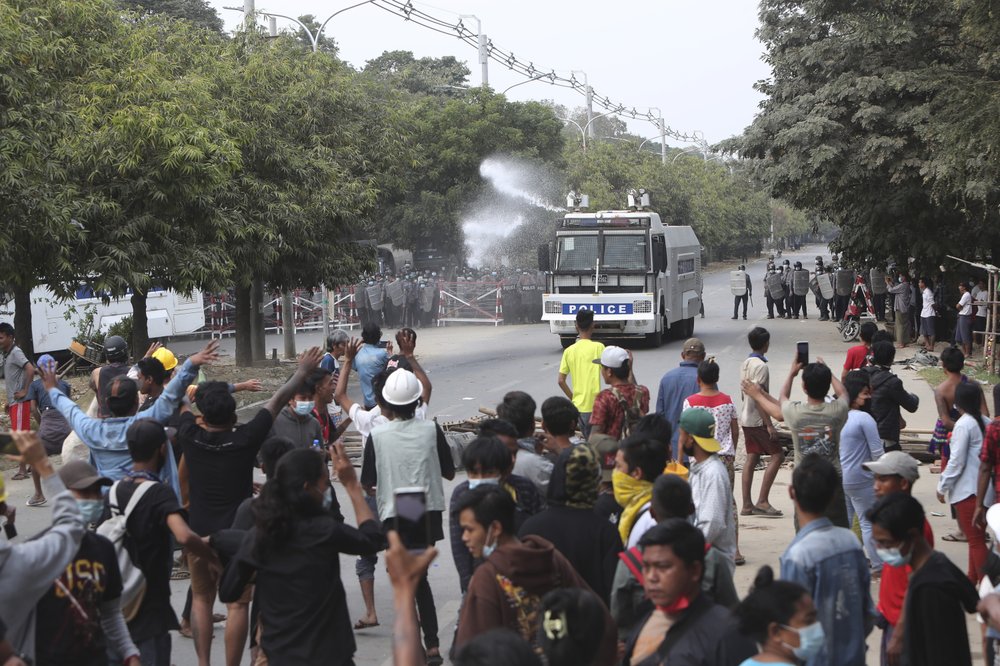
Security forces had been increasing their pressure against anti-coup protesters earlier Saturday, using water cannons, tear gas, slingshots and rubber bullets against demonstrators and striking dock workers in Mandalay.
At least five people were injured by rubber bullets and had to be carried away in ambulances, according to an Associated Press journalist who witnessed the violence.
Some 500 police and soldiers descended on the area near Yadanabon dock after dock workers joined the national civil disobedience movement, refusing to work until the military junta that seized power in a Feb. 1 coup reinstates the democratically elected government.
Protesters and residents were forced to flee the neighborhood amid the violence, as security forces chased after them.
There were reports of sounds that resembled gunfire. A group of journalists was forced to flee after being hit with tear gas and slingshot projectiles.
A man is carried after police dispersed protesters in Mandalay, Myanmar on Saturday, Feb. 20, 2021. (AP Photos)
Earlier in the week in Mandalay, security forces cracked down on state railway workers in a similar fashion after they joined the civil disobedience movement.
Less than an hour after the 8 p.m. curfew started on Wednesday, gunshots were heard as more than two dozen police officers with shields and helmets marched past railway workers’ housing. Numerous videos posted on social media showed muzzle flashes as shots were heard, and some police shot slingshots and threw rocks at the buildings. Marching chants of “left, right, left, right” could be heard along with shouts of “shoot, shoot.”
Also Saturday, anti-coup protesters in Myanmar’s two largest cities paid tribute to a young woman who died a day earlier after being shot by police during a rally against the military takeover.
An impromptu memorial created under an elevated roadway in Yangon attracted around 1,000 protesters. A wreath of bright yellow flowers was hung beneath a photograph of Mya Thwet Thwet Khine, who was shot in the capital, Naypyitaw, on Feb. 9, two days before her 20th birthday.
Her death on Friday, announced by her family, was the first confirmed fatality among thousands of protesters who have faced off against security forces since top military commander Min Aung Hlaing took power in the coup.
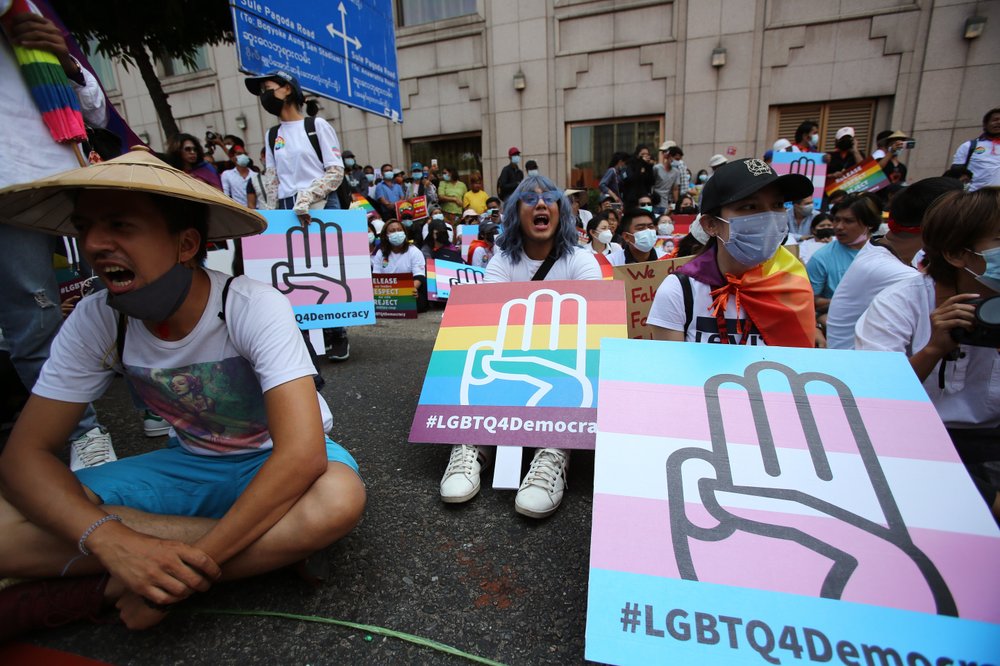
Anti-coup protesters from the LGBTQ community attend a rally in downtown Yangon, Myanmar Friday, Feb. 19, 2021. (AP Photo)
Protesters at the memorial chanted and held up signs that read “End the dictatorship in Myanmar” and “You will be remembered Mya Thwet Thwet Khine.” The supporters also laid roses and rose petals on images of the woman.
Video from the day she was shot show her sheltering from water cannons and suddenly dropping to the ground after a bullet penetrated the motorcycle helmet she was wearing. She had been on life support in a hospital for more than a week with what doctors said was no chance of recovery.
U.S. State Department spokesperson Ned Price offered his government’s condolences Friday and reiterated calls on the military to refrain from violence against peaceful protesters.
In Mandalay on Saturday, a protest led by medical university students drew more than 1,000 people, many of whom also carried flowers and images of Mya Thwet Thwet Khine.
Others held signs saying “CDM,” referring to the nationwide civil disobedience movement that has encouraged doctors, engineers and others to protest the coup by refusing to work.
A police truck uses a water cannon to disperse protesters in Mandalay, Myanmar, on Saturday, Feb. 20, 2021. (AP Photos)
Across the country, protests showed no signs of slowing down despite recent crackdowns by the military government — including a sixth consecutive night in which the internet was cut for many hours.
Demonstrators also gathered elsewhere in Yangon, chanting and holding placards and images of Nobel laureate Aung San Suu Kyi, whose democratically elected government was overthrown.
Aerial images taken Friday showed streets in Yangon painted with the words “The military dictatorship must fall” in Burmese, and “We want democracy” and “Free our leaders” in English.
Security forces have been relatively restrained so far in confronting protesters in Yangon, but appeared to be toughening their stance in areas where there is less media presence.
Red Cross workers carry a man on a stretcher in Mandalay, Myanmar on Saturday, Feb. 20, 2021. (AP Photos)
Police used force for a second straight day Friday to arrest protesters in Myitkyina, the capital of the remote northern state of Kachin. The Kachin ethnic minority has long been in conflict with the central government, and there has been an intermittent armed struggle against the army there for decades.
The junta seized power after detaining Suu Kyi and preventing Parliament from convening, saying elections in November were tainted by voting irregularities. The election outcome, in which Suu Kyi’s party won by a landslide, was affirmed by an election commission that has since been replaced by the military. The junta says it will hold new elections in a year’s time.
The U.S., British and Canadian governments have imposed sanctions on the new military leaders, and they and other nations have called for Suu Kyi’s administration to be restored.
The coup was a major setback to Myanmar’s transition to democracy after 50 years of army rule. Suu Kyi came to power after her National League for Democracy party won a 2015 election, but the generals retained substantial power under the constitution, which was adopted under a military regime.
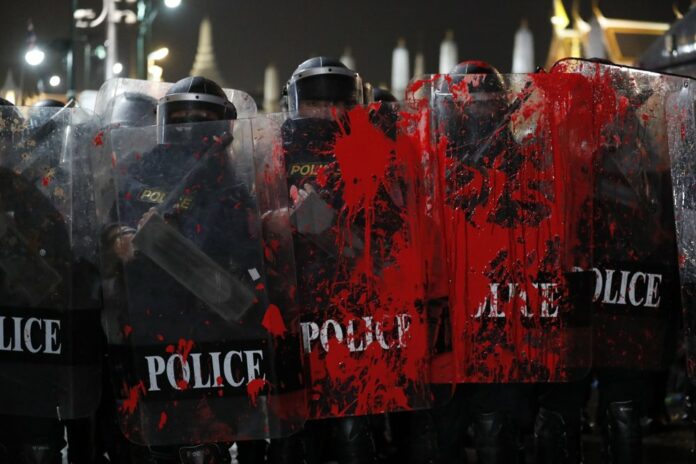
Red paint thrown by pro-democracy protesters is splattered on the shields of riot police standing guard outside the Grand Palace in Bangkok, Thailand, Saturday, Feb. 13, 2021. (AP Photo/Sakchai Lalit)
The video I took for Khaosod English of a group of police dragging and then brutally beating a defenseless man as they dispersed the monarchy-reform demonstrators went viral in no time.
After over three million views and 90,000 retweets on Twitter, the social media giant as well as Facebook classified the content as “sensitive”. The administrators of Twitter and Facebook couldn’t bear watching it and warn my followers and friends if they truly wanted to watch a 26-second video clip of police brutality.
When I ran into a long-time police contact who handled political protests a few days after that, he asked me how I would assess and score the police’s performance that night. I said the police were handling well until the last chapter when they went berserk.
I saw three defenseless men beaten again and again with my own eyes and managed to capture it showing the police “in action” while my colleague Tappanai Boonnadit handled the Facebook Live camera. Crowd-control police apparently could not control their own emotions.
It’s not the police’s job to meet out instant punishment, or vendetta. That’s for the judges to decide.
There’s no denying that for half an hour, a group of 20 diehard protesters refused to quit after their leaders called it a night after 8.30pm and kept hurling bottles, both plastic and glass, bricks, home-made explosives and smoke bombs at the anti-riot police line. Police must have been angry but they were supposed to be professional about their job.
“This is unprofessional and I’m afraid it’s the police who screw up in the end,” I told my police contact who normally carries out his duty with relative calm, tact and knows all the anti-government-cum-monarchy-reform leaders.
At least of those beaten, Purapon Wongchiak, a medic volunteer medic who I saw beaten and unconscious before being arrested said on Wednesday he will file charges against police for use of excessive force.
Then there’s the mysterious men, around 40 of them, forming two lines just behind the anti-riot police line that night. None of them was wearing any uniforms or wearing any ID tag. They all wear military-style buzz cuts, however.
Who are they? Who deployed them? Why are they not in uniform as would expect under international rules of engagement?
Their sudden appearance was exacerbated by the fact that both police and military denied any knowledge of these mysterious men.
When I rang police spokesman Pol Maj Gen Yingyot Thepchamnong on Wednesday, he initially denied their existence. I told him I have taken photos, captured them on Facebook Live and I’m sure some news agency must have gotten it as well. The police spokesman then asked for 20 minutes to find out before telling me on the phone police had no clue who these men were.
“Those 30, 40 people who assembled, I have no idea either which group they belonged to,” Yingyot said. “But we are investigating.”
Meanwhile, Defense Ministry spokesman Maj Gen Kongcheep Tantravacheep flatly denied the armed forces had anything to do with it when I rang him on the same day. “We are not related to them at all. You have to ask the police,” Kongcheep said.
I rang the Defense Ministry spokesman because the Defense Ministry and Grand Palace are within a 150 meters distance from the police line.
Again, my police contact was there on that night working. He also said he didn’t know who they were despite the fact that he always played a prominent role at the protest.
Amazing Thailand!
But that’s not the end of the police’s amazing mishandling and abuses.
On that night, police kept announcing to reporters and photographers on the ground to keep recording the footage of angry protesters hurling bricks, bottles and other objects at the officers.
“Members of the press, please record it so we can use it as evidence,” the voice from the main loud-speaker van could be repeatedly heard.
However, when it came to the police’s crackdown time, journalists were “ordered” to stay away and physically kept behind the police line for “safety reasons”. This prevented most from getting close to the brutal beatings.
Tappanai and I were among the very few who were able to evade the police blockade in time.
“I didn’t see what was happening in the frontline. All I could see was there were clouds of smoke behind the police and I heard several bangs. I was only let go when the police managed to take control of the situation,” Sirote Klampaiboon, a popular newsman at Voice TV, told Tappanai on Thursday.
Sirote told me when I met him on Friday that he and about a dozen other journalists were encircled by police and prevented from doing their job. “They threatened to arrest us if we tried to get out of the circle surrounded by police. It lasted for half an hour until the police operation was over,” he recalled.
This is nothing short of censorship, a violation of press freedom. Various reporter associations should express concerns. Journalists should also remind themselves to be critical of both sides and not take orders from the police, or be fooled by them.
Without the evidence, still photographs and videos, captured by some remaining journalists, we would not have known for certain that Thai police unleashed a wave of senseless brutality against civilians and allowed an unacceptable practice of deploying a group of mysterious men in civilian clothes within the police line.
Yet, despite these graphic evidence, the flat denial that either excessive force was used or police had any knowledge of the mysterious men doesn’t bode well for future protests and confrontations.
A human rights lawyer contacted me earlier this week, telling me some of the people beaten by police want me as a witness for their lawsuits. This I am more than happy to make the truth apparent for it is my job as a journalist.
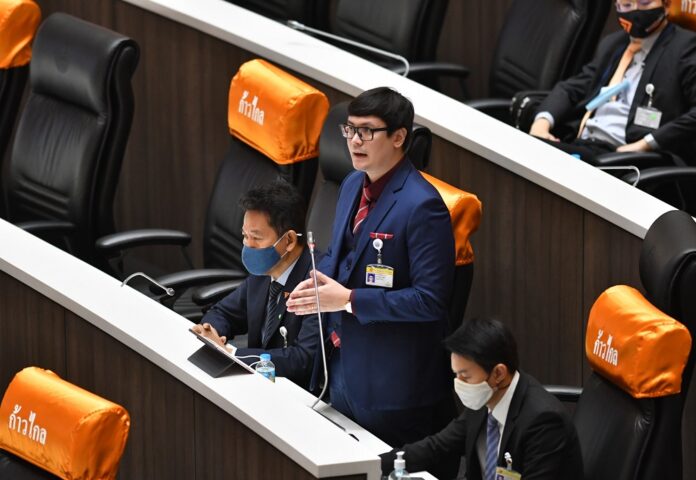
Move Forward MP Rangsiman Rome speaks at the Parliament on Feb. 19, 2021.
BANGKOK — A senior government official on Saturday said he will file royal defamation charges against an opposition MP who highlighted police corruption during yesterday’s censure debate.
For his bombshell revelation that a handful of government favorites and a royal aide can dictate appointments and removals within the police force at their whim, Move Forward lawmaker Rangsiman Rome may now face charges under Article 112 of the Criminal Codes, known as lese majeste.
“We have transcribed every word and letter of the speeches that Mr. Rangsiman Rome referenced the monarchy,” Suphon Attawong, Assistant Minister to the PM Office, told reporters on Saturday morning. “Our legal team has looked into it and concluded that the information is sufficient for prosecution under Article 112.”
Article 112 carries a maximum penalty of up to 15 years in prison per count. Suphon, who oversees the government “war room” that counters accusations made in the censure debate, said he will also file cybercrime complaints against Rangsiman if it is proven that the MP used forged documents in his speeches.
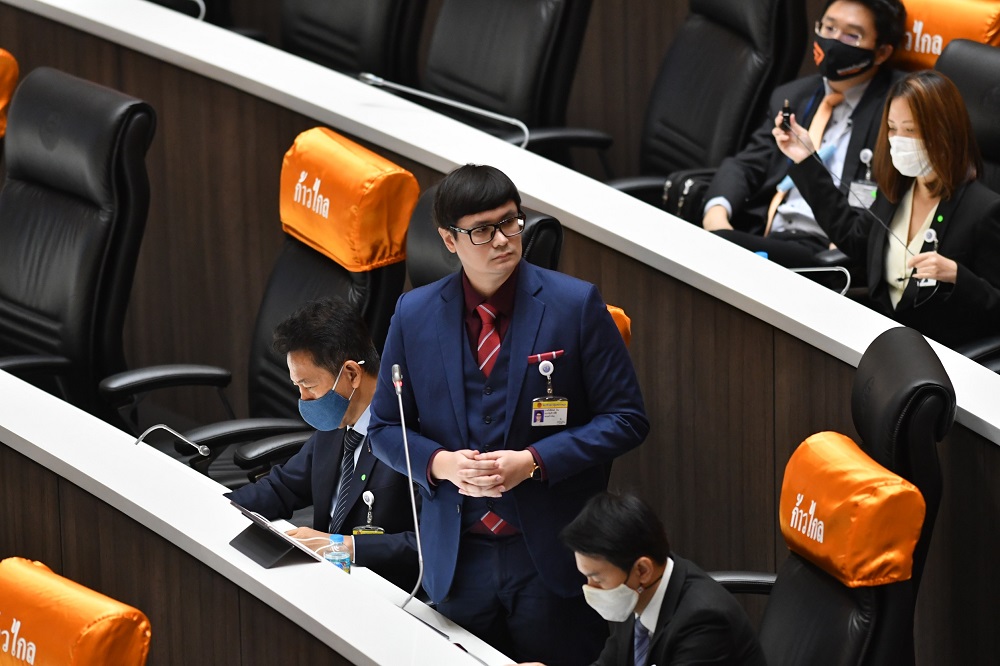
Rangsiman, 27, presented the allegations in the non-confidence debate at the Parliament on Friday, to an uproar of pro-government MPs, who made at least 10 protests to his speeches.
Move Forward MP Rangsiman Rome speaks at the Parliament on Feb. 19, 2021.
The activist-turned-lawmaker said police officers can gain immediate promotions without going through the formal route if they manage to obtain a “Ticket,” a document signed by Maj. Gen. Torsak Sukvimol, the commander of the Ratchawallop Police Retainers, King’s Guard 904.
According to Rangsiman’s presentation shown to the House Speaker, the document can directly recommend certain police officers to the Royal Thai Police Commissioner for new ranks and titles. The final decision is then endorsed by PM Prayut Chan-o-cha and Deputy PM Prawit Wongsuwan, Rangsiman said.
Both the Prime Minister and his deputy serve as directors of the police affairs.
“Does Gen. Prayut have the courage to insist that this is a fair and transparent way to appoint police officers?” Rangsiman asked.
A file photo of Maj. Gen. Torsak Sukvimol.
Public mentions of the system can be found in a media interview with former police major general Visut Vanichbut, who said in 2016 that the “ticket” can reduce the bribes needed for key positions, from 8 million to 4 million baht.
A police colonel also posted on Facebook back in 2018 that a career advance within the police is near impossible without the “ticket.”
“If you have a boss, if you have money, if you have The Ticket, you’ll get everything,” wrote Col. Kantapong Nilkham, who said he was victim of an unjust demotion. “How can this nation survive? And who will the people depend on?”
Even more damning allegation is the “Elephant Ticket,” a fast track lane for promotions that cut through the entire structure of the police force, according to Rangsiman’s presentation.
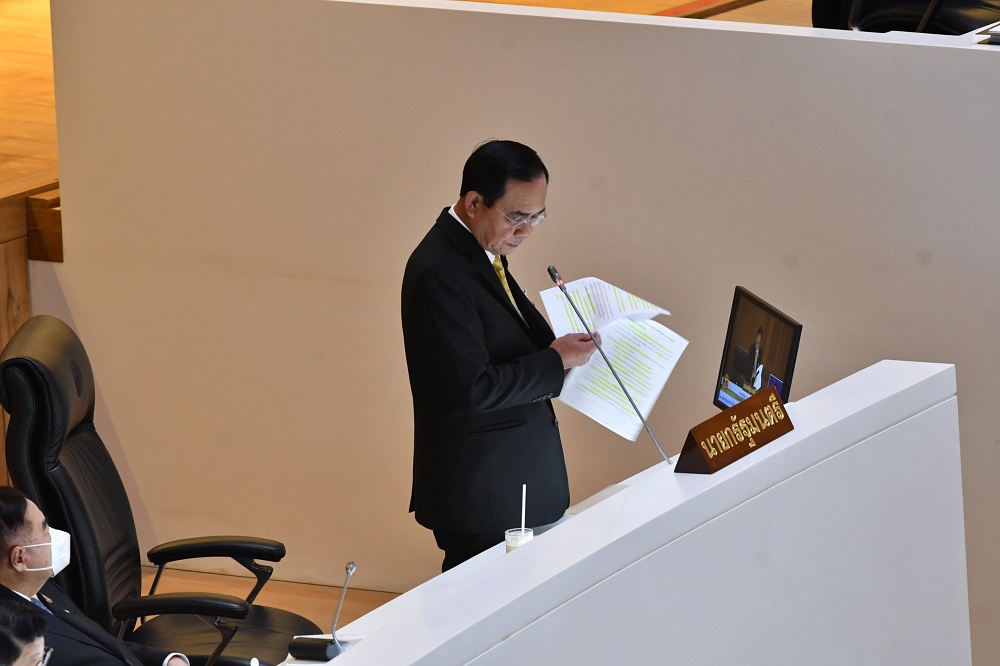
PM Prayut Chan-o-cha speaks at the Parliament on Feb. 19, 2021.
The MP said the scheme is run by Torsak’s brother, Sathitpong Sukvimol, who serves as Lord Chamberlain to the royal palace. Documents shown by Rangsiman shows that Sathitpong in 2019 wrote to a certain institution asking for 20 police officers to receive either new ranks or titles.
Sathitpong does not currently have any formal position in the police force.
Upon the mention of Sathitpong’s involvement, coalition politicians immediately protested Rangsiman and urged House Speaker Supachai Phuso to stop his speeches. Supachai agreed and told Rangsiman to conclude his presentation without mentioning the monarchy any further.
Rangsiman complied with the instruction and insisted that he was doing his duty as the Representative of the People.
“I’m aware that this could be the dangerous mission of my life, but since the people already chose me for this job, I’d have to carry out my duty to the best of my ability,” Rangsiman said.
A file photo of Sathitpong Sukvimol.
He added, “I don’t know what will be the consequences of my action from now. I don’t know what waits for me in the next 3 days. I don’t know what will happen in the next 3 months. I don’t know if I’ll still be able to speak on behalf of the people. But no matter what happens, I don’t regret carrying out my duty today.”
After leaving the Parliament, Rangsiman spoke more about his allegations at a news conference, in which he said the corruption within the police institution ends up harming the public interest.
“These Tickets cost millions of baht,” Rangsiman said. “So in the end, police have to live off bribes from gambling dens, illegal businesses, and human trafficking.”
The Move Forward MP also posted the documents he prepared for the Parliament, including mentions of the Elephant Ticket, on his social media account for everyone to see, though several details were censored.
One of the portions blacked out by Rangsiman include the signatures of unidentified man and woman who endorsed police appointments recommended by Sathitpong.
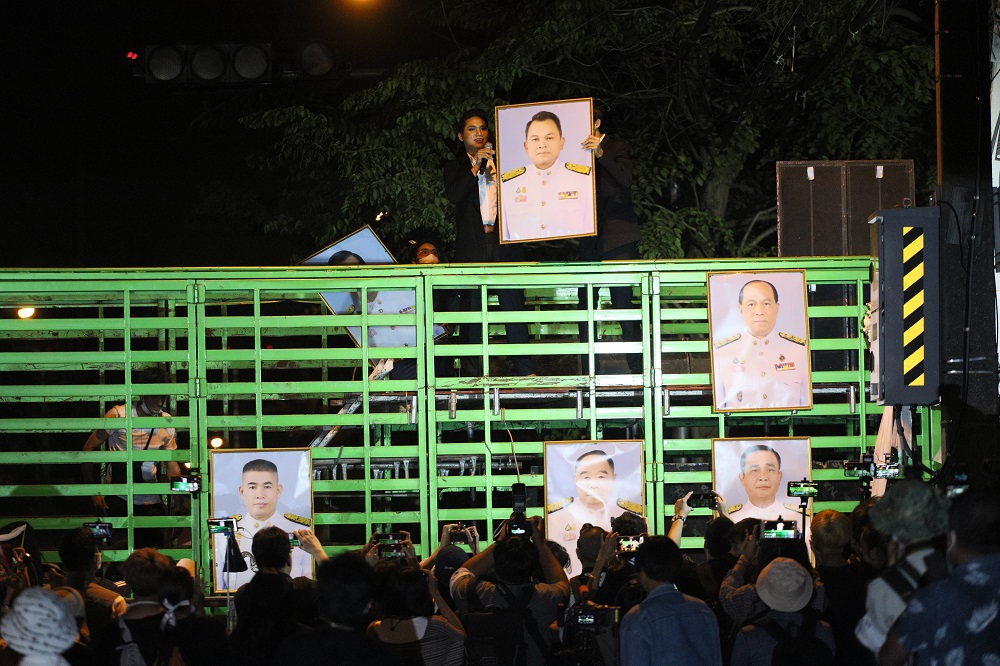
Pro-democracy activists speak at a protest outside the Parliament on Feb. 19, 2021.
Due to legal concerns, Khaosod English cannot elaborate on the documents or discuss Rangsiman’s allegations in full details, though they were readily available on social media – in fact, discussions about the Elephant Ticket was the top trending hashtag on Twitter throughout Friday.
Rangsiman’s post also detailed a bizarre initiative by the police to transfer 1,301 police officers to Ratchawallop Police Retainers, King’s Guard 904.
When 100 officers declined to take up their new posts, they were ordered to a disciplinary course lasting for 9 months, documents show. Three of them immediately resigned from the police force for good, while the rest endured the punishment, included a week of training inside a jungle in Yala province.
Khaosod English cannot republish those documents in full due to fears of legal repercussions.
The four-day censure debate concluded on Friday, amid a new round of anti-government protest just outside the Parliament. The no-confidence vote took place on Saturday morning. All Cabinet members survived the session – the outcome was expected by nearly every observer, since the coalition parties retain a majority of the seats.