29.4 C
Bangkok
Friday, June 26, 2026
Home Blog Page 1144

China Hits Trump Officials With Sanctions on Their Way Out

President Donald Trump and first lady Melania Trump board Air Force One at Andrews Air Force Base, Md., Wednesday, Jan. 20, 2021. (AP Photo/Manuel Balce Ceneta)

WASHINGTON (AP) — China imposed sanctions on nearly 30 former Trump administration officials moments after they left office on Wednesday.

In a statement released just minutes after President Joe Biden was inaugurated, Beijing slapped travel bans and business restrictions on Trump’s secretary of state, Mike Pompeo, national security adviser Robert O’Brien and U.N. ambassador, Kelly Craft.

Others covered by the sanctions include Trump’s economic adviser Peter Navarro; his top diplomat for Asia, David Stilwell; health and human services secretary, Alex Azar; along with former national security adviser John Bolton and strategist Stephen Bannon. The sanctions are largely symbolic but underscore Beijing’s antipathy toward a U.S. administration it regarded as hostile.

“Over the past few years, some anti-China politicians in the United States, out of their selfish political interests and prejudice and hatred against China and showing no regard for the interests of the Chinese and American people, have planned, promoted and executed a series of crazy moves which have gravely interfered in China’s internal affairs, undermined China’s interests, offended the Chinese people, and seriously disrupted China-U.S. relations,” the foreign ministry said in a statement.

On Tuesday, Pompeo announced that he had declared China’s repression of Muslim ethnic minorities a “genocide,” possibly opening the door to new U.S. sanctions against Chinese officials.

The Trump administration had steadily ramped up pressure on China since last year but had increasingly so over the past several months. During its last weeks in office, the administration had hit numerous officials with sanctions for their actions on Tibet, Taiwan, Hong Kong and the South China Sea.

Advertisement

Marriott International Continues Asia Pacific Growth With Nearly 100 Properties Expected To Open in 2021

75 Properties Opened Across Asia Pacific in 2020

Marriott International, Inc. (Nasdaq: MAR) continues to expand its portfolio, expecting to open 100 properties in Asia Pacific in 2021, bringing more brands and experiences to new destinations for guests across the region. In 2020, the company celebrated its 800th milestone hotel opening in the region with 75 properties added to its portfolio during the year, representing more than one opening per week across the region. Nearly 27,000 rooms were added to the region’s development pipeline in 2020 alone, in addition to the signing of Marriott’s largest branded residences project with close to 4,200 units.

“I am proud of the way we have continued to grow and have moved quickly to adapt to the challenges that arose from the pandemic. With the launch of new global industry hygiene standards in April 2020,  innovative offerings such as work anywhere packages and hyper-localised marketing and sales strategies, our nimble and forward-thinking approach will continue to lead us through the recovery,” said Craig S. Smith, Group President, International, Marriott International. “We are grateful for the continued resilience and positivity demonstrated by our associates and for the confidence our guests, owners and franchisees continue to have in us. We remain well-positioned to meet the travel demands of our guests across Asia Pacific and the rest of the world.”

Greater China has led the global recovery to date, and the company expects to soon celebrate its 400th hotel in Greater China and its 50th hotel in Shanghai with the opening of JW Marriott Shanghai Fengxian in spring 2021. With this hotel opening, Shanghai has the distinction of reaching this important milestone for the company in Asia Pacific.

According to a joint report by consultancy Bain & Co. and Alibaba’s Tmall Luxury unit, Mainland China is on track to become the world’s largest personal luxury market by 2025 even seeing year-over-year domestic growth in 2020 despite the pandemic. To leverage this trend, Marriott International continues to strengthen its luxury portfolio with expected openings in 2021 such as W Changsha, W Xiamen, St. Regis Qingdao and The Ritz-Carlton Reserve Jiuzhaigou. With the anticipated opening of the Ritz-Carlton Reserve, China will be the first country in Asia Pacific to house all of Marriott International’s luxury hallmarks.

2 3 e1611213996934

Marriott’s leisure bookings in China have been particularly strong, up over 25 percent year over year in the third quarter in Mainland China, demonstrating the resiliency of demand once consumers are comfortable that the virus is under control and restrictions can safely be lifted. The company is introducing more travel experiences across its brand portfolio, including at popular leisure destinations such as Mianyang in the Sichuan province with the expected opening of Sheraton Mianyang, as well in the culturally-rich destination of Nanjing with the anticipated opening of The Westin Nanjing Resort & Spa.

Beyond Greater China, Marriott International continues to strengthen its footprint, with several expected brand debuts across Asia Pacific in 2021. In Japan, W Hotels is expected to debut with the opening of W Osaka, while The Luxury Collection is also slated to debut in Australia with the opening of The Tasman in Hobart. The iconic Ritz-Carlton brand is expected to celebrate its debut in the leading resort destination of Maldives in early summer, bringing  legendary service to the picture-perfect archipelago.

Further expanding Marriott’s presence in breathtaking resort destinations, the JW Marriott brand is slated to bring its warm luxury experience to Jeju Island in South Korea with the planned opening of JW Marriott Jeju in late 2021. The company’s signature wellness brand, Westin, is also highly anticipated to debut in one of India’s top beach destinations, Goa, this summer.

To support domestic travel in Japan, the company plans to open six additional Fairfield by Marriott hotels throughout 2021 along ‘Michi-no-Eki’ roadside stations aimed at revitalizing the country’s local sightseeing spots. Japan expects to have more than 30 Fairfield by Marriott hotels by the end of 2023. Touted as one of the best cities in the world for art, culture, music and food, Australia’s Melbourne is expected to see the opening of the country’s second W Hotel with W Melbourne in spring and the opening of Melbourne Marriott Hotel Docklands in early 2021.

“The strength of our pipeline is testament to the long-term growth prospects in Asia Pacific,” said Paul Foskey, Chief Development Officer, Asia Pacific, Marriott International. “Despite a challenging environment in 2020, we are pleased with the signings we have achieved across the region during the year. We have full gratitude to our owners and franchisees for their belief in the resiliency of travel and the strength of Marriott’s portfolio of brands.”

Advertisement

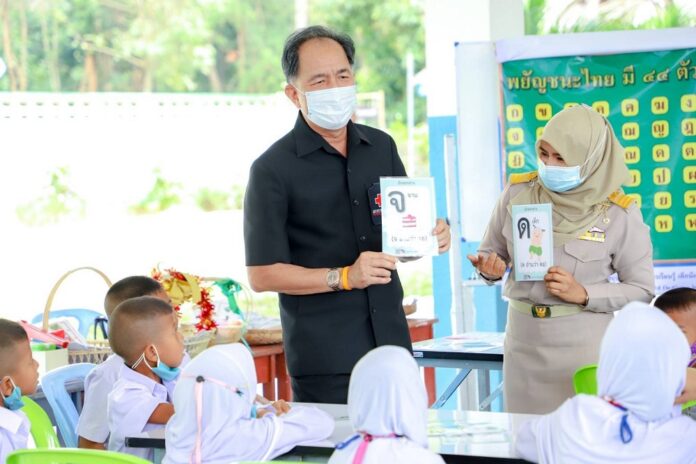
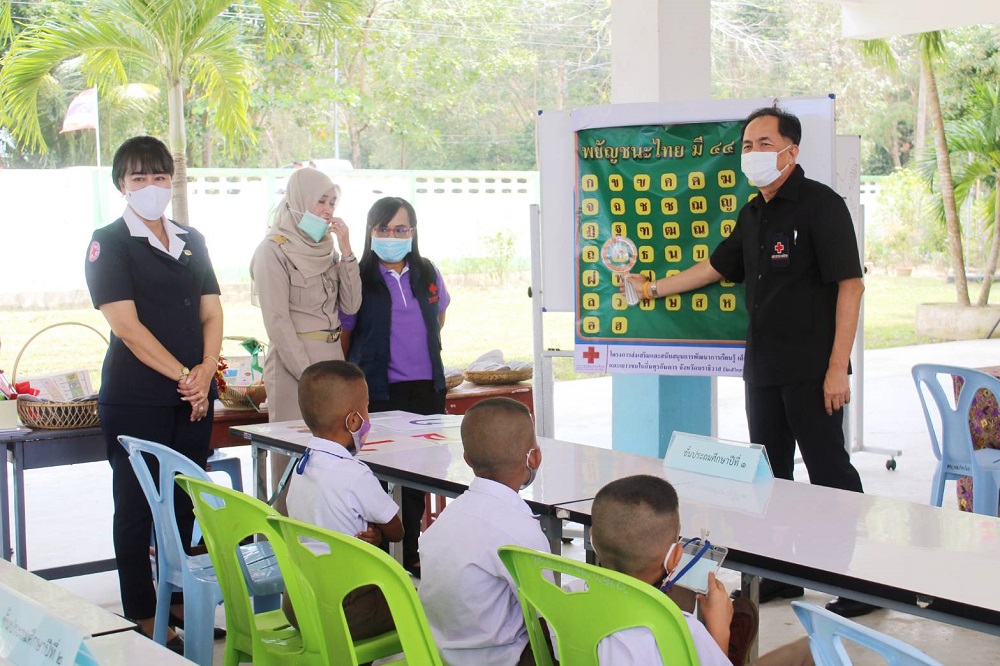
The Thai Red Cross Society pro-active with community-based learning programs for students and youths with literacy problems

On January 18, 2021, Mr. Grisada Boonrach, Director of the Thai Red Cross
Chapters Administration Office, visited Narathiwat and Pattani provinces to follow
up the progress and challenges of the Learning Promotion and Development for
Students and Youths in Rural Areas Program. The office previously won approval
from the Thai Red Cross Council to start and carry out the program according to a
royal initiative of Her Royal Highness Princess Maha Chakri Sirindhorn,
Executive Vice-President of the Thai Red Cross Society.

Findings from the follow-up are as follows:

1. The selection of volunteer teachers from retired teachers and volunteers with
teaching degrees and volunteer spirit in the areas is efficient because
both volunteer teachers and students can meet near their homes.
Therefore, there is no waste of time and travel expenses.

2. To design the curriculum and the Thai language teaching methods according
to students’ language problems, the Thai Red Cross Chapters Administration
Office suggests the classification of the target students into three
groups:

2.1 Ethnic students who communicate with their family members using their
local dialects almost 24 hours a day. Most of them live in remote rural areas without electricity and communication devices. They have no
opportunity to hear Thai words from television and radio. These
students use Thai language only when they go to school.

1321792

2.2 Students who are from different cultures and use local dialects which are
different from students in general. For example, students in the deep
South of Thailand communicate with their family members using the
Malay language when at home. Some of them are unable to go to school
on a regular basis because they need to help their parents to do
housework. However, these students still have opportunity to use the
Thai language and learn Thai words from Thai media as well as
nearby communities.

2.3 Students who are illiterate because they either are unable to study full-
time or have learning problems. In most cases, these
students are from poor families and need to work to support their parents

The director of the Thai Red Cross Chapters Administration Office said the
follow-up results will be applied as suggestions for provincial Red Cross chapters
in recruiting volunteer teachers and improving Thai language teaching
approaches and techniques in accordance with students’ problems.
In addition, provincial Red Cross chapters will be asked to give first priority to recruiting volunteer teachers from local people in the selected areas,
such as retired teachers and those with teaching degrees and free time to volunteer.

According to Mr. Grisada, the provincial Red Cross chapters will be instructed to
consult school headteachers and executives where the target students are studying
as well as education district offices, non-formal education offices, provincial
education offices, provincial private education offices, local universities, border
patrol police units, and others. Among partners are Kasetsart University, Bang
Khen Campus, the Equitable Education Fund, and the Society of HRH Princess
Maha Chakri Sirindhorn Awards Recipient Teachers.

Advertisement

Questioning Vaccine Transparency? That’s Royal Insult, Gov’t Says

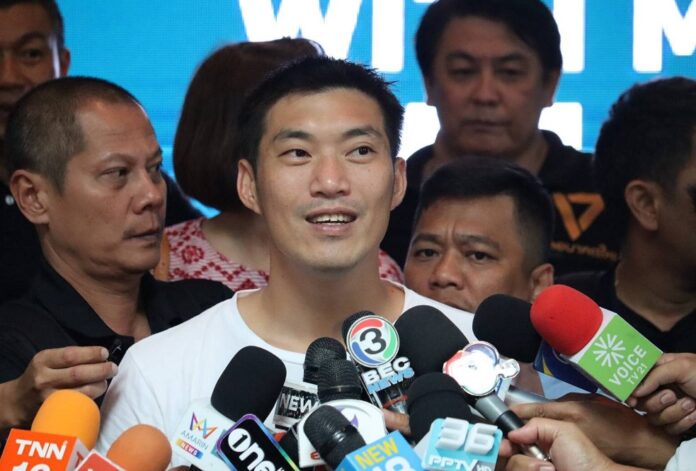
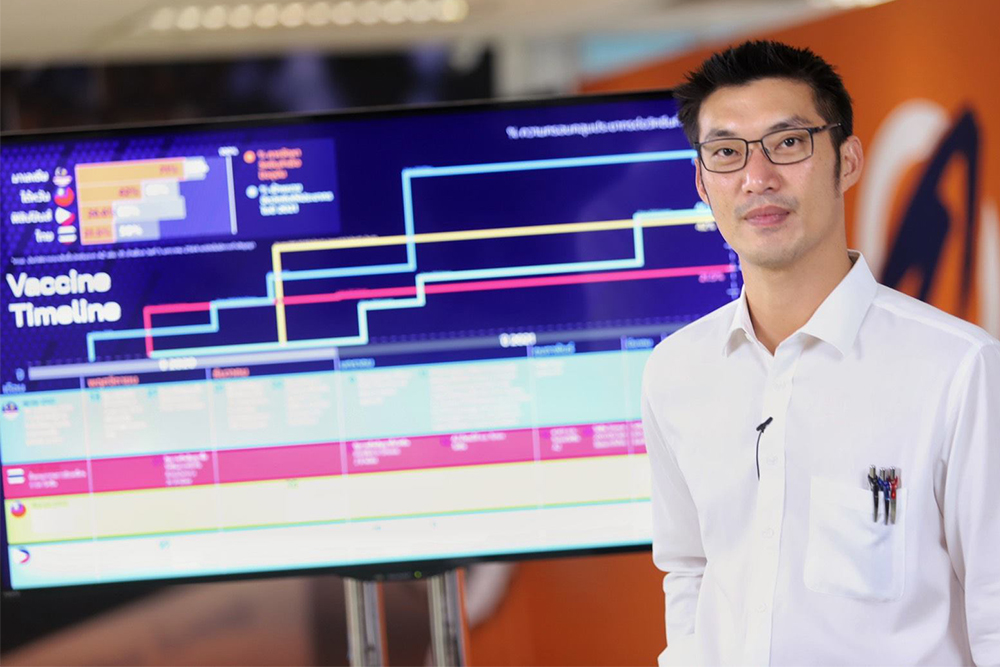
Then-leader of Future Forward Party Thanathorn Juangroongruangkit speaks to reporters on June 8, 2019.

BANGKOK — The government on Wednesday filed a royal defamation charge against opposition politician Thanathorn Juangroongruangkit for his comments about the involvement of a palace-owned company in the bid to secure a coronavirus vaccine.

The complaint accused Thanathorn of making 11 separate counts of critical remarks about the monarchy during his Monday night’s Facebook Live titled “Royal Vaccine: Who Benefits and Who Doesn’t?,” in which he questioned the role of Siam Bioscience, a Thai firm wholly owned by King Vajiralongkorn, in the production of coronavirus vaccines in Thailand.

“His comments can cause misunderstandings in society,” vice minister of the Prime Minister’s Office Thotsaphon Pengsom said. “It can create intolerable damage to the country and the works of the government.”

He added, “Therefore, we must take legal action immediately and we will go after each and everyone who shared it.”

Royal defamation, or lese majeste law, is punishable between 3 to 15 years in prison per count. Just this week, a woman was given a 87-year jail term for 29 counts of lese majeste, though the sentence was reduced to 43 years because she pleaded guilty.

The vice minister said the complaint filed today also accused Thanathorn of violating the Computer Crime Act for spreading false information, which carries a maximum punishment of five years in prison.

The move came just a day after PM Prayut Chan-o-cha threatened a lawsuit against anyone who “distorted information” about the government’s vaccine acquisition program.

Thanathorn’s claim of the government granting a monopoly in production of vaccines to Siam Bioscience was refuted by the premier.

“Everything is distorted. None of them is true,” Prayut said in an outburst of anger Tuesday. “I ask everyone to be careful when presenting this kind of information. If any unfounded information is presented as facts by the media or on social media, I have instructed authorities to prosecute every case.”

S 3367347 8
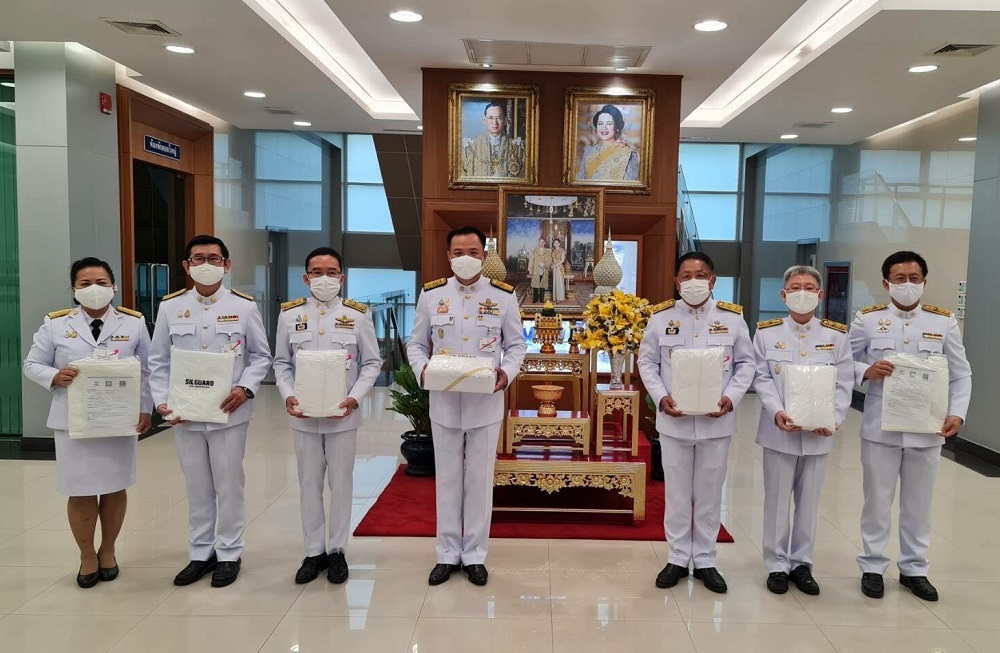
Health minister Anutin Charnvirakul and Siam Bioscience executives pose for photos in front of portraits of King Rama XI and Queen Sirikit on Jan. 19, 2021.

Thailand ordered 61 million doses of vaccine developed by AstraZeneca and Oxford University. Domestic production is expected to begin in May by Siam Bioscience per a technology sharing agreement with the British-Swedish pharmaceutical company.

An additional two million doses were also ordered from China’s Sinovac to fill the gap before AstraZeneca vaccines could be rolled out.

The government had said Siam Bioscience was chosen because it has a long standing research partnership with Oxford University. According to its website, the company says its expertise is on the manufacturing of biopharmaceuticals.

But in his Monday’s night Facebook Live, Thanathorn said the government is giving too much confidence to a company that has no prior experience in making vaccines.

“Are we pinning too much hope on AstraZeneca and Siam Bioscience?” Thanathorn said. “Is this deal going to cost the country’s opportunity in considering other options which could help expand vaccine coverage and availability?”

Former leader of the now-defunct Future Forward Party Thanathorn Juangroongruangkit during his Facebook Live about the vaccination program on Jan. 18, 2021. Photo: The Progressive Movement / Facebook

He also said that the country’s vaccination program under Prayut’s behest is falling behind other countries since the government is busy trying to exploit it for political gain.

“It’s too late before they realized that most of the vaccines have been bought out,” Thanathorn said. “That’s because the government attempts to build ratings with the vaccines. They neglect the best options for the country. I have to ask whether the government is prepared to handle the risk of putting all hopes on a single company”

The politician went on, “If anything goes wrong, will Gen. Prayut be able to handle the responsibility? The people will also question Siam Bioscience, which is owned by King Rama X.”

In response to Thanathorn’s questions, health minister Anutin Charnvirakul slammed the politician for being “ungrate to the monarchy.” Anutin did not disprove any of Thanathorn’s claims, but he said the royal institution should be praised for its contribution to the healthcare system.

1290186
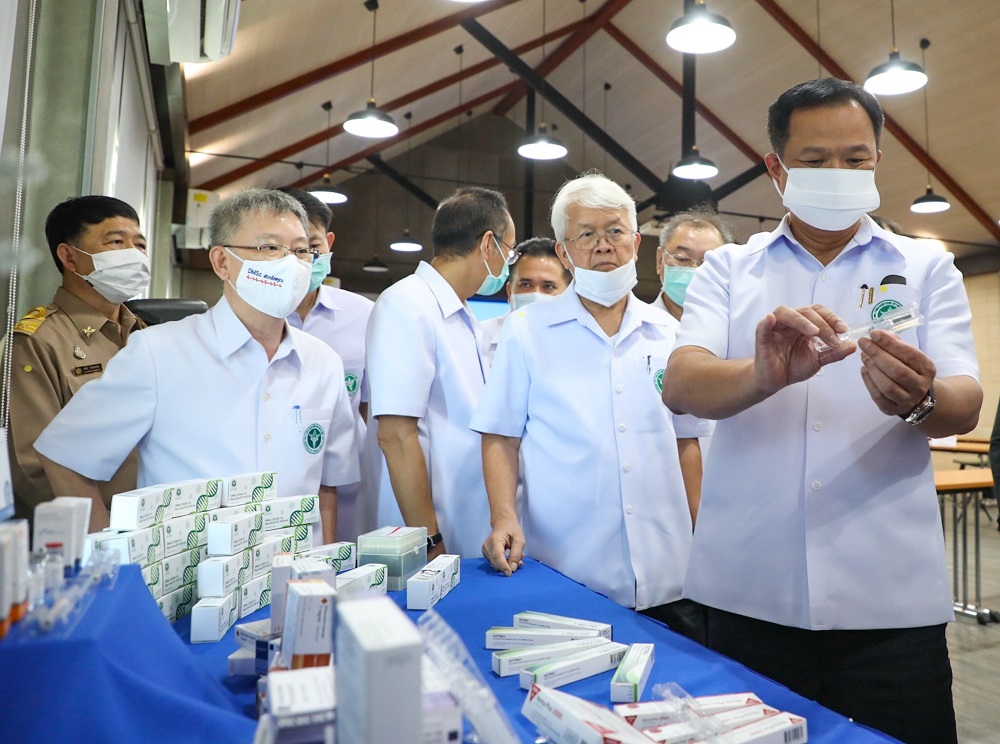
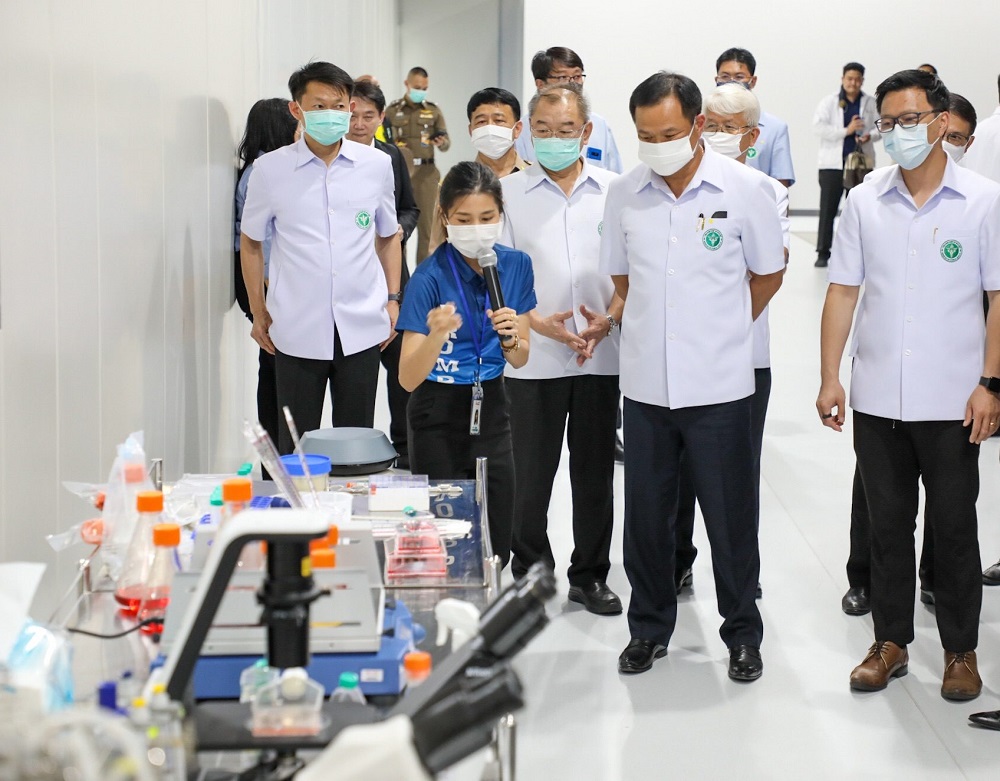
Health minister Anutin Charnvirakul visits Siam Bioscience headquarters on June 1, 2020.

“He talks as if he knows everything, but what he doesn’t know is how to be grateful for the monarchy,” Anutin said Tuesday.

“Who provided 20 mobile COVID-19 testing stations? Who provided PPEs and billions of baht to improve the public health system? He should do some homework and find out who provided these contributions before making any criticism.”

Nakorn Premsri, director of the National Vaccine Institute, said Siam Bioscience was entrusted by AstraZeneca to produce vaccines in the region because it is the most capable manufacturer available.

“We can’t just select any companies,” Nakorn said in a Tuesday’s news conference. “AstraZeneca wanted to expand its production worldwide and Siam Bioscience was chosen because it met all the requirements. Other countries wanted to compete with us, but we worked hard to show them our capabilities.”

S 3367347 9
Health minister Anutin Charnvirakul visits Siam Bioscience headquarters on June 1, 2020.

The director of the Department of Medical Sciences also dismissed Thanathorn’s claim that the government placed all bets on a single vaccine variant.

“We studied every vaccine available in the market, though we didn’t disclose details about the negotiation since it’s a trade secret,” Supakit Sirilak said Tuesday. “Our vaccination program is not that delayed compared to other countries. Many countries placed their order since the vaccines were still immature, but we were careful.”

Although abolishing the draconian law is one of the demands sought by the street protests that rocked the kingdom in 2020, at least 54 people have been charged in recent months, human rights watchdogs say.

Thanathorn reacted to the news on Wednesday afternoon by writing online that he became even more curious about the vaccine deal.

“Why does the government have to overtly defend this private company?” Thanathorn said. “Are they admitting that they actually gave privilege to this firm?”

He also urged the government to be more transparent and disclose all relevant agreements it made with Siam Bioscience.

Advertisement

Police Say ‘Abduction’ of Protest Guard Was a Hoax

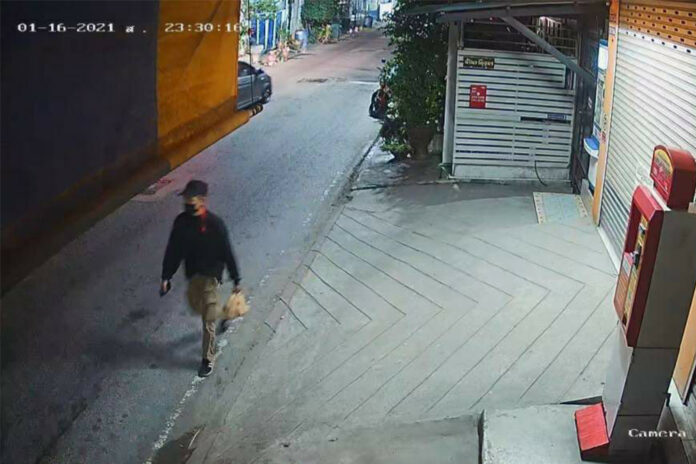
A screenshot of a CCTV footage released by police shows a man investigators said to be Mongkol Santimethakul walking down the street near his residence on Jan. 16, 2021.

SAMUT PRAKAN — Police on Wednesday said they will charge a pro-democracy campaigner for filing a false report that he was the victim of an abduction by security officers.

Activist groups said Mongkol “Yale” Santimethakul, a member of the protesters’ security network “Guard Coalition for the People,” was manhandled from his home on Saturday night by individuals in an unmarked van who claimed to be security officers. But police now say there’s evidence that the incident didn’t take place at all.

“We’ve gathered almost all the evidence and it becomes obvious that the incident didn’t happen,” Samut Prakan provincial police chief Chumpol Phumphuang said.

“There weren’t any vans as described by Mongkol. Eyewitness testimonies, CCTV footage, and transaction records all suggest that he was still wandering.”

The alleged kidnapping was said to have taken place at around 11pm after Mongkol participated in a protest against the royal defamation law at the Victory Monument on Saturday afternoon.

Activists said he was released the next afternoon at BTS Kheha station outside Bangkok after they had negotiated for Mongkol’s release with the alleged captor over LINE messenger app.

Mongkol told reporters after his release that he had been blindfolded and held inside a van for the whole night, until he was shoved out of the vehicle on the following day.

But in CCTV footage released by the police, a man identified as Mongkol was seen walking down the hallway at a residence building near the BTS station alone at 2am on Sunday.

The man could be seen walking out of the same building in the afternoon at 12pm, shortly before Mongkol was found by fellow activists.

“We’re trying to summon Mongkol to give more information, but he has gone incommunicado,” Maj. Gen. Chumpol said. “He’s not at home and his phone is switched off.”

Leader of the Guard Coalition for the People, Kitpiwat Sriboonruang, could not be reached for comments as of the publication time.

Piyarat Chongthep, the leader of another protesters’ guard group “We Volunteer,” said he does not know details about the incident.

“We should wait for the Guard Coalition for the People group to clarify this matter,” Piyarat said.

Activists had previously identified the captor as an agent of the Internal Security Operations Command – an intelligence agency tasked with counter-insurgency. The agency has denied its involvement in the alleged kidnapping.

The army also said on Wednesday that Mongkol is enlisted as a soldier in its force, but he deserted his post in December 2019. An army representative filed a complaint against him a month later, according to the army. If found guilty, he faces up to three years in jail.

Some ex-servicemen have volunteered as security details for the pro-democracy protests, which took place in the latter part of 2020.

Advertisement

It’s Munch Time: Elephant ‘Invades’ BBQ Restaurant, Snacks on Fruits

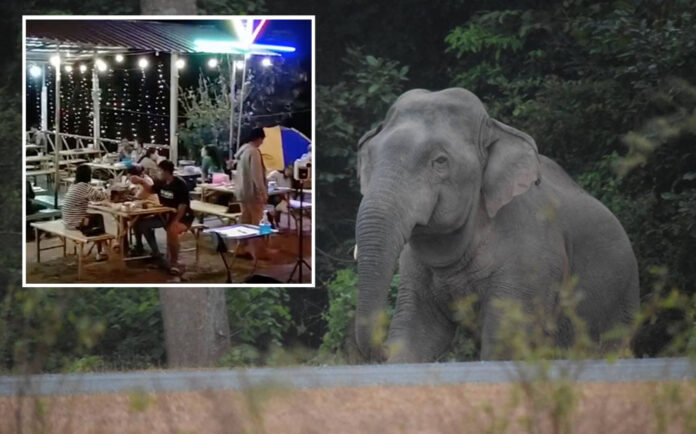
Insert: Khun Dan Mhoo Krata Buffet on Jan. 19, 2021. Right: Nga Diew on Jan. 19, 2021.

NAKHON NAYOK — In a surreal scene that unfolded Tuesday night, diners at a barbecue buffet restaurant were grilling their meat to slow country songs when a large male elephant burst out of the jungle, stepped around human cars, and began eating his own dinner.

The sight used to cause panic at the restaurant at first, but the owner of Khun Dan Mhoo Krata Buffet in Nakhon Nayok said it’s now part of the daily attraction for the customers. Diners even gathered at the roadside eatery nowadays for the elephant, who would show up precisely at 7.30pm.

Some also joked that the elephant might have been drawn by the smell of the pork BBQ, or mhoo krata.

“I’m getting even more customers than usual. People come to see the elephant,” owner Jinwimol Mahasap said. “While they’re eating pork, they wait for nong to come out.”

The male elephant has been known to habitually cross the road in the evening to snatch fruits in the orchard next to the restaurant before munching them in plain sight of the diners. Locals have dubbed him “Nga Diew” (งาเดียว, or “one tusk”) after his defining characteristic.

Screen Shot 2021 01 20 at 11.48.10 AM copy
Why do elephants cross the road? 

Wildlife officials arrived at the scene Tuesday night in an attempt to drive Nga Diew back into the wild, but decided to cancel the operation since the elephant seemed to be in a bad mood due to hunger.

The officials estimated that Nga Diew is around 40 years old, weighs around three tons, and has difficulty seeing out of his left eye.

After dining to his heart’s content, Nga Diew would cross the road and return to his forest area. Another male elephant, Sarika, also appears in the area from time to time.

They seem to be a friendly bunch. Jinwimol said the elephants have never laid a trunk on anyone.

Screen Shot 2021 01 20 at 11.48.01 AM copy
Ngai Diew steps out of the jungle on the side of the road on Jan. 19, 2021 in Nakhon Nayok
Advertisement

48-Yr-Old Dies From COVID-19 as Bangkok Mulls Business Reopening

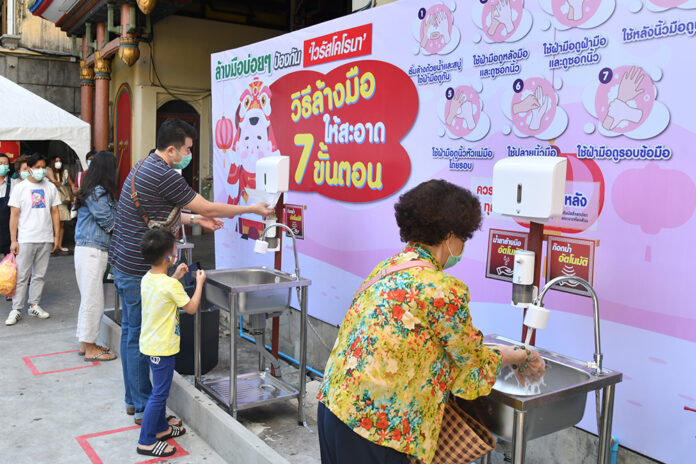
People wash hands before entering Wat Mangkon Kamalawat in Bangkok on Jan. 11, 2021.

BANGKOK — Thailand recorded a new death from the coronavirus on Wednesday, just as the authorities were planning to ease business restrictions in the capital.

The latest virus victim was a 48-year-old woman who worked as a driver for migrant workers in the border province of Tak, pandemic response center spokeswoman Apisamai Srirangsan said in a news conference. The woman fell ill with pharyngitis on Dec. 16 and later tested positive for coronavirus on Dec. 27.

Her death brings the total coronavirus fatalities in Thailand to 71.

Of the 59 new infections reported today, 28 were local transmissions, 23 from active case-finding operations, and 8 were ‘imported’ cases found in state-run quarantine, Apisamai said. The country’s cumulative case of infection now stands at 12,653.

Apisamai urged members of the public to remain vigilant, even though the new wave of outbreak appears to be winding down. Today’s report marks the first double-digit rise in new case numbers this month.

“Although the number remains high, the curve is trending down,” Apisamai said. “The current situation is stable, but it’s impossible to bring it back to zero. Many establishments complained that they couldn’t hold it any longer, but I ask everyone to remain watchful.”

Meanwhile, deputy governor of Bangkok Sophon Pisutthiwong said the City Hall will discuss a possibility to reopen establishments such as spas, fitness centers, and banquet halls on Thursday.

Many businesses were shut down since Jan. 2 when the new outbreak began to spread from a shrimp market in Samut Sakhon province to the capital. The authorities also ban consumption of alcohol in restaurants and bars.

Correction: The victim tested positive for coronavirus in December, not in January as stated in the previous version of this article. We regre the errror. 

Advertisement

Foreigners Still Have to Pay More for COVID Tests in Some Hospitals

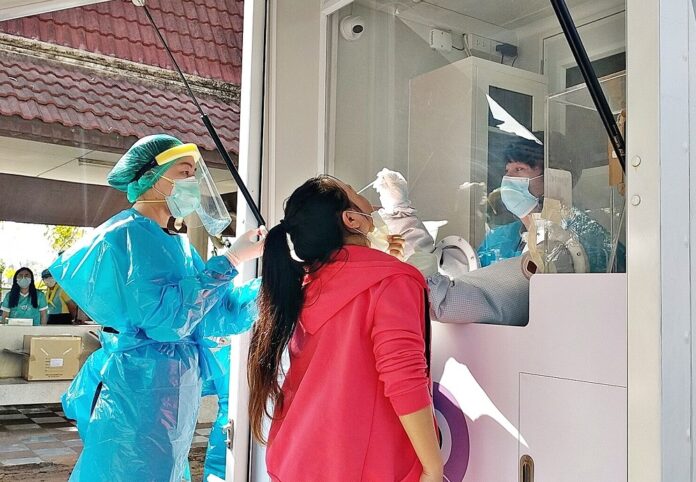
A woman receives a coronavirus test in Chonburi province on Jan. 20, 2021.

BANGKOK — At least five hospitals in Bangkok apply a “dual pricing” policy on their coronavirus tests, charging foreigners more than their Thai counterparts, a survey by Khaosod English has found. 

Although the price of COVID-19 tests have largely gone down in general since the first year of the pandemic – and a majority of hospitals charge Thais and foreigners the same rate – disparity in fees based on nationalities can still be found. 

The price for a coronavirus test at Ramathibodi Hospital is 40 percent more for foreigners, while Sriraj Piyamaharajkarun Hospital charges foreigners 25 percent more than Thai customers. 

Other hospitals who maintain the two-tier pricing system include the Urban Institute for Disease Prevention and Control, Vichaiyut, and Praram 9.

Here’s a comprehensive information on where to get tested for COVID-19, and how much you will have to pay:

Public Hospitals

Chulalongkorn Memorial Hospital: Tests are around 2,200 baht, same price for foreigners. 

However, a nurse said that those without travel history to high-risk areas or symptoms should not come to this hospital for COVID tests, since almost every day, infected people are found there. 

“It’s risky, even with social distancing,” she said. “So for people who are just concerned, I recommend they get tested at private hospitals or drive-thru hospitals.” 

Ramathibodi Hospital: Around 2,000 for Thais, 3,500 for foreigners, or a 40 percent disparity. 

Siriraj Piyamaharajkarun Hospital: COVID tests only available for those with symptoms, travel history to high-risk areas, or previous contact with the infected. COVID-19 tests run about 5,000 baht to 6,000 baht, not including doctor’s fees and fees for medicine. 

The price for foreigners is an additional 25 percent. 

Bamrasnaradura Infectious Diseases Institute: 3,000 baht, same price for both Thais and foreigners, but they may be free depending on whether the patient has symptoms or has a history of contact with the infected. 

Urban Institute for Disease Prevention and Control: Tests are 1,500 baht for Thais and 2,000 baht for foreigners. Reservations necessary.

Private Hospitals

Ramkhamhaeng Hospital: 3,500 baht for a Drive Thru service where doctors will swab your nose and throat, same price for Thais and foreigners. 

Walk-ins available. Patients who come in before 3pm will get their results within 6 hours, while patients who visit after 3pm will receive theirs the following day. 

Lab results will be sent via SMS, and documents will be sent via email or EMS at a later time. 

Vichaiyut Hospital: About 7,000 baht for Thais and an additional 1,300 baht for foreigners, or 8,300 baht.

Bangkok Christian Hospital: Tests cost 7,300 baht for both Thais and foreigners, but as of publication time Tuesday has run out of test kits. Check again in advance if you wish to go. 

BNH Hospital: 7,000 baht for both Thais and foreigners. Walk-ins welcome, results within 24 hours. 

St. Louis Hospital: Around 6,000 baht, same price for Thais and foreigners. 

Phyathai 2 Hospital and Phyathai 3 Hospital: 4,500 baht for both Thais and foreigners. Price already includes doctor’s fees, and results will take around three days.  

Samitivej Sukhumvit Hospital: 4,500 baht for Thais and foreigners. Results within 24 hours. Reservations required. 

Samitivej Srinakarin Hospital: 4,000 baht for Thais and foreigners. Results within 24 hours. Reservations required. 

Samitivej Hospital Thonburi: 4,000 baht for Thais and foreigners. Those who are already showing symptoms may be eligible for a special price at the doctor’s discretion. Walk-ins available. 

Bumrungrad International Hospital: Only offers COVID tests for those that need documentation for flying overseas. Prices for both Thais and foreigners begin at 4,000 to 5,500 baht and do not include other unspecified fees. 

Paolo Phaholyothin Hospital: 4,500 baht, inclusive of all fees, for both Thais and foreigners. Walk-ins available, and results within one to two days. 

Praram 9 Hospital: Tests are 5,650 baht for Thais and 8,000 baht for foreigners. This fee does not include other tests that the doctor may see fit to prescribe.

Mongkutwattana Hospital: 3,500 for both Thais and foreigners. If a COVID test is needed for going overseas, they may be extra charges for additional tests, amounting to about 4,500 baht. Results available within one day.

Bangkok Hospital: Around 3,300 baht for a drive-thru service that includes lab results via email, and 4,300 baht for a test that includes documentation for flying overseas. Same price for Thais and foreigners. Reservations recommended. 

Piyavate Hospital: Same price for Thais and foreigners: 2,500 baht for a test, 2,700 baht for a test with a medical certificate, and 3,000 baht for a test with a medical certificate and Fit to Fly documentation. Walk-ins welcome, and tests results will be available within two days.

Walk-In Tests are Unavailable At: 

Rajavithi Hospital: Only treats those who are already showing symptoms. Costs will depend on the treatment needed. 

PatRangsit Hospital: Will only test Thais who have social security benefits registered at this hospital, at the doctors’ discretion.  

Related stories:

Anutin Defends Barring Infected Lawbreakers From Free COVID Treatment

Immigration Backtracks on Plan to Require COVID-19 Test for Visa Extensions

Advertisement

Opinion: This is How Israel Leads the World in Vaccination Campaign

Israelis receive the second Pfizer-BioNTech COVID-19 vaccine, in Netanya, Israel, Tuesday, Jan. 12, 2021. (AP Photo/Ariel Schalit)

By Meir Shlomo, the Ambassador of Israel to Thailand 

Coronavirus knows no borders, as has become all too clear, and countries across the globe are all facing the same challenges. From the outset of the pandemic, Israel emerged as a leading nation in the global fight against coronavirus, learning from the experiences of others and sharing its own with the world.

It made the tough choices early on such as closing borders. Israel now boasts the highest per capita vaccination rate of any country in the world, outpacing all others by far.

Israel began its vaccination drive in late December 2020, and within just the first two days of the campaign, nearly 30,000 Israelis were already given their first dose. Now, just a few weeks later, over 2.6 million Israelis have received their vaccination shot, and the country is on track to vaccinate all citizens over the age of 16 by the end of March.

Not only citizens but also foreign residents are vaccinated, including the Thai Ambassador to Israel, who was vaccinated few days ago.

20201224 1244480 3
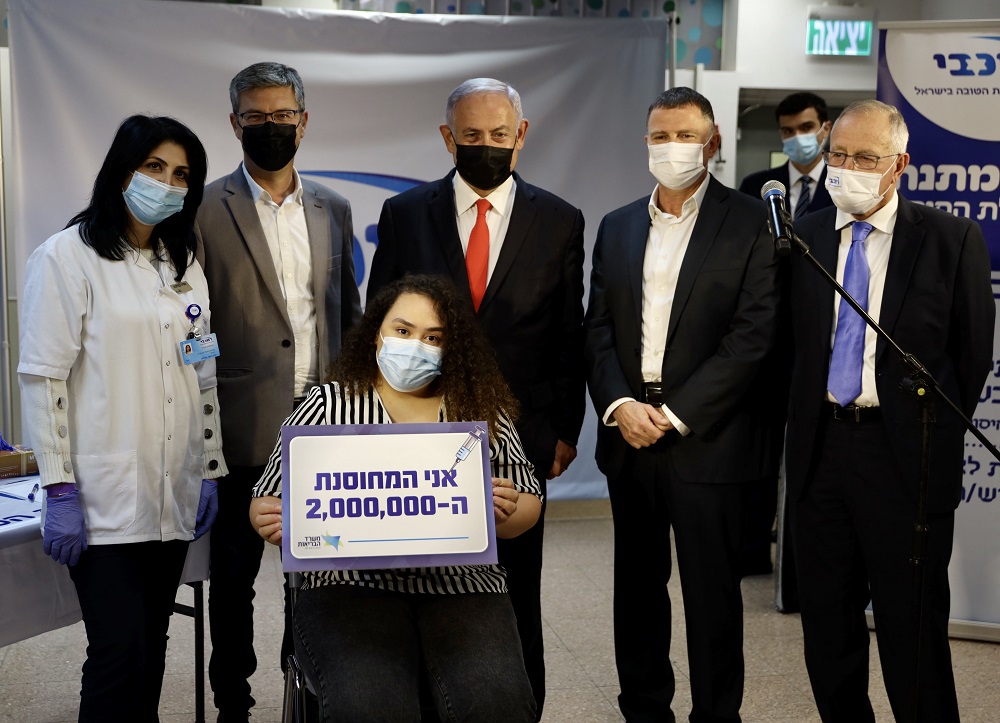
Israeli Prime Minister Benjamin Netanyahu poses for photos with the 2,000,000th Israeli who received coronavirus vaccine. Image: Israel’s Government Press Office

This speedy and ambitious target has been made possible through a new deal that Israel inked with pharmaceutical companies. Dubbed ‘Operation Back to Life’, Israel is set to receive ongoing shipments of the vaccine over the coming months, which will enable the country to reach its bold target and become one of the first countries in the world to exit from the coronavirus crisis.

Moreover, by sharing its statistical data with Pfizer and the world, Israel will also play a key role in demonstrating the efficacy of the vaccine and developing global strategies to overcome the pandemic. 

In fact, Israel’s small population of some nine million and its highly efficient public health system mean that the country is going to play an essential role for pharmaceutical companies.

The success and experience of our vaccination campaign will be used to provide the critical information that pharmaceutical companies need in order to make the vaccine even more effective for other countries. By being the first country in the world to vaccinate its entire population, Israel will serve as the world’s key experimental subject.

1000 11 1
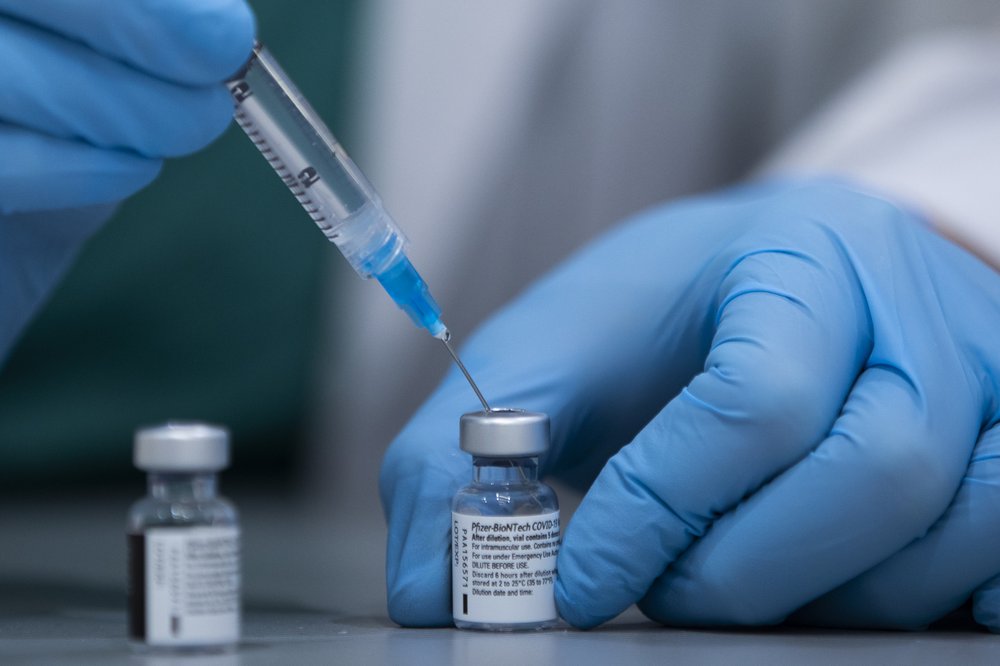
A health care professional prepares a Pfizer-BioNTech COVID-19 vaccine at Sheba Tel Hashomer Hospital in Ramat Gan, Israel, Tuesday, Jan. 12, 2021. (AP Photo/Oded Balilty)

Israel’s universal healthcare system is globally recognized for its efficiency and effectiveness. Israel has developed a sophisticated and high-quality level of individual patient care, and all Israeli citizens and permanent residents are guaranteed healthcare under the country’s National Health Insurance Law.

All Israelis can choose from four comprehensive not-for-profit health plans that provide a standardized basket of medical services, and each provider (“Kupot Holim”) must accept all residents regardless of age or state of health. Combined, there are thousands of clinics spread across the country, ensuring that each and every local community is served.

Moreover, its national healthcare services enjoy a uniquely advanced level of digitization, which will make Israel’s data particularly important to pharmaceutical companies. Israel’s extensive national network of medical services lies within the Ministry of Health’s purview. 

It was this comprehensive system of doctors, nurses, and medics that rapidly mobilized towards vaccinating the entire country within a matter of months. In fact, Israel’s constant and daily battle with existential threats meant that it was especially well-placed to handle emergencies. The entirety of Israel’s national systems thus coalesced around the crisis. The Prime Minister securing a steady supply of vaccinations.

1000 13 17
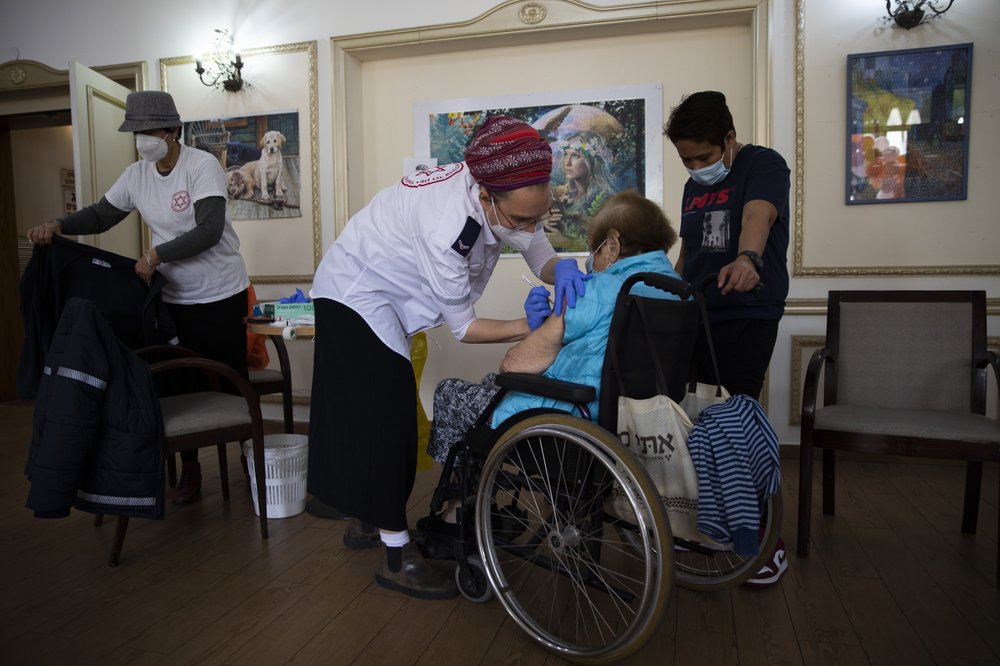
An Israeli woman receives the second Pfizer-BioNTech COVID-19 vaccine at a private nursing home, in Ramat Gan, Israel, Wednesday, Jan. 13, 2021. (AP Photo/Oded Balilty)

Kupot Holim – the Health providers, are the main organizations to administer the vaccines to most of the Israeli population. They are also supported by Magen David Adom – Israel’s national emergency response service – assumed responsibility of vaccinating the residents and employees of nursing homes.

The IDF – Israeli Defence Forces – administrated quarantine hotels and supplied food to families in lockdown at the height of the pandemic, and now dedicating its own paramedics and military reserves to the vaccination push. It is thus that Israel holds the world record for its vaccination rate and will be able to rapidly complete its inoculation drive. 

Every vaccinated citizen will receive a special “Green Passport” which will facilitate traveling around the globe, and hopefully other countries will adopt similar policies which will ease the movement of vaccinated passengers.

It is Israel’s hope that this year, at the end of March, on the eve of the Jewish holiday of Passover, grandparents, parents, children, and grandchildren will be able to gather around the same table once again and celebrate together in joy and relief. 

About the author
Meir Shlomo is the Ambassador of Israel to Thailand.  

Advertisement

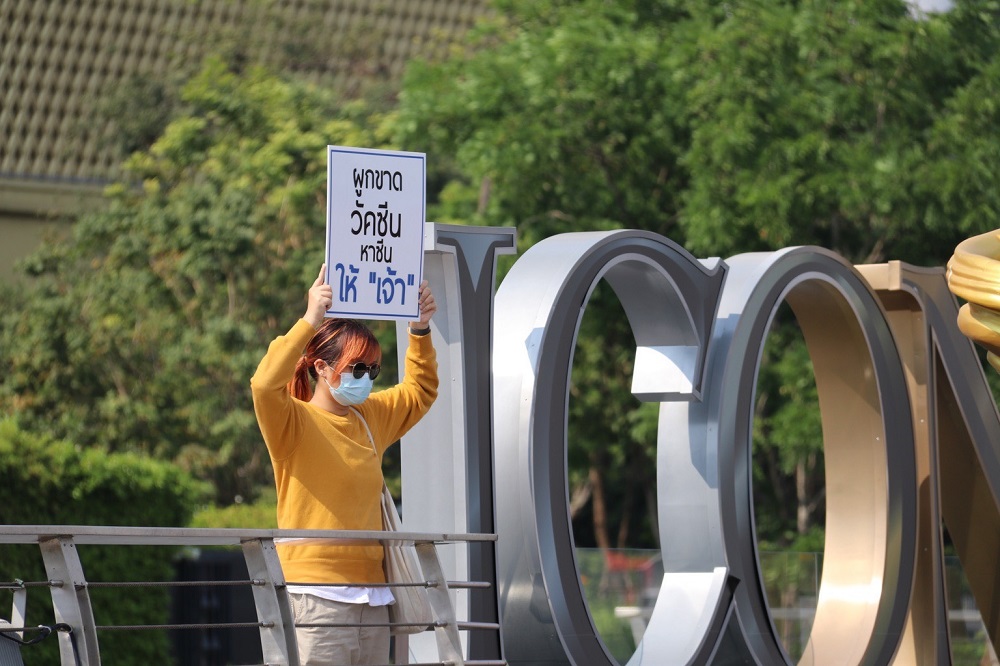
IconSiam Says It’s Investigating Guard for Slapping Student Protester

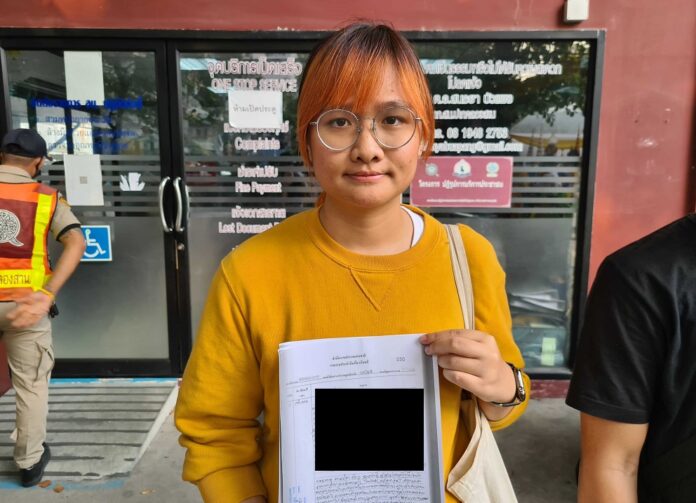
Student activist Benja Apan files charges at Pak Khlong San Police Station after the assault on Jan. 19, 2021.

Update: IconSiam on Wednesday said the security guard has resigned. 

BANGKOK — A security guard at IconSiam luxury shopping mall was fined 1,000 baht by the police on Tuesday after he was filmed slapping a university student who was holding a lone protest in front of the department store.

Passapong Ponjaturapat, 47, was identified as the assailant. He was fined by Pak Khlong San Police under a misdemeanor of minor physical assault against Benja Apan, a 21-year-old Thammasat University student and a member of the activist group United Front of Thammasat and Demonstration.

Benja said she was holding a placard with the message “Vaccine Monopoly is PR for the Royals” at the riverside shopping mall about 2pm Tuesday, when she and her companion were surrounded by about 10 security personnel and staff from the mall.

“After we took the photos, the guards ran and mobbed me,” Benja said at the police station. “At first I was going to leave through the front part of the mall, but he wouldn’t let me. He tried to confiscate my phone. I wouldn’t let him do that. And suddenly he seized my placard, so I reached for his staff ID card, I wanted to know who he was. He slapped me right then.”

The student continued, “I felt very angry and humiliated. He admitted his fault and paid the fine. He apologized to me. He said it all happened in a moment of chaos.”

The confrontation was also captured on a live video and posted on social media. One of the staff could be heard telling Benja to leave the premises because it was a private property. “This is my home!” the employee said.

Passapong declined to speak to a reporter at the police station.

IconSiam later issued a statement promising a disciplinary inquiry into the guard who had slapped Banja.

“IconSiam is aware of the incident. We’d like to express our regret and apologize for what happened,” the mall said.

“As soon as we were aware of the incident, we opened an investigation and set up a fact-finding committee. If the employee is found to have committed the wrongdoing, we will take a serious disciplinary action against the employee in accordance with our regulations.”

S 3367347 7
Student activist Benja Apan protests in front of IconSiam shopping mall on Jan. 19, 2021.

The statement went on to say that it reserves the right to ban any political gatherings and activities on its premises. Any violations may result in a legal action, IconSiam said.

Lt. Col. Jirote Bhamornsut, deputy superintendent of Pak Khlong San Police Station, said IconSiam has the rights to remove Benja from the mall since it is considered private property.

“It’s within the power of the shopping mall whether to allow the protest to happen or not,” Jirote said. “If someone tells you to leave their house and you refuse to, that’s intrusion.”

Parit “Penguin” Chiwarak, a leader of the United Front of Thammasat and Demonstration, went to the police station along with some 20 protesters on Tuesday afternoon to show their support for Benja.

“This person came out to campaign on behalf of the interest of the people,” Parit said, adding that the vaccination effort is being exploited as a public relations tool for the monarchy.

The vast majority of vaccines to be used in the inoculation campaign will be manufactured by Siam Bioscience, a company wholly owned by the Crown Property Bureau. The firm said it secured a knowledge sharing agreement with AstraZeneca, a British pharmaceutical who developed the vaccine.

IconSiam is a 50 billion baht joint venture between real estate giants Siam Piwat and Magnolia Quality Development. It opened in 2018. Siam Piwat also owns other prominent shopping malls like Siam Paragon and Siam Center in downtown Bangkok.

On Dec. 20, Parit and his group also staged a protest demanding monarchy reforms at Siam Paragon. Security guards employed by the mall trailed the activists as they walked around the department store, but did not interfere with the protest.

Advertisement

Hot News

LATEST NEWS

Bangkok
broken clouds
29.4 ° C
32.2 °
29.4 °
74 %
5.4kmh
58 %
Fri
29 °
Sat
36 °
Sun
37 °
Mon
37 °
Tue
32 °