36.4 C
Bangkok
Sunday, June 14, 2026
Home Blog Page 121

Five-legged calf draws lottery hopefuls in Sukhothai

Five-legged calf draws lottery hopefuls in Sukhothai

SUKHOTHAI — 27 February 2026, A newborn calf with five legs has drawn crowds of curious neighbours and lottery hopefuls to a house in Sukhothai province.

The calf was born at 111/7, Moo 6, Ban Mon Khiri, in the Muang Kao subdistrict of Mueang district, Sukhothai. Villagers flocked to see the unusual animal, whose fifth leg protrudes from the nape of its neck and hangs down from the crest.

Miss Sukontha, 31, the calf’s owner, said the male calf, named “Thung Ngern Thung Thong”, roughly “Money Bags”, was born on 22 February and is now five days old. Despite the anomaly, it is healthy and energetic.

She said the extra limb extends from the poll of the neck and is accompanied by a small sac-like lump, inspiring the calf’s name. The animal is affectionate, playful and enjoys running around with people, she added.

Sukontha said she sells lottery tickets at the Mae Ya Shrine cave and keeps more than 30 cattle at home, with her parents helping to care for them. She said she had previously won lottery prizes for more than 10 consecutive draws and believes the calf was born to bring good fortune. She has no plans to sell it and intends to raise it for the rest of its life.

Lottery enthusiasts have been noting the house number, the calf’s birth date and the number of its legs as potential winning numbers for the next draw.

Advertisement

Thai Airways posts 30.9 billion baht profit in 2025

Thai Airways International reported a net profit of 30.94 billion baht for 2025, marking a sharp turnaround from the previous year’s loss and underscoring a sustained recovery in the aviation sector.

Chief Executive Officer Chai Eamsiri said total revenue, excluding one-off items, reached 190.28 billion baht, up 1.2% year-on-year and exceeding pre-pandemic 2019 levels. Operating expenses, excluding special items, rose 2% to 149.44 billion baht in line with higher flight frequencies and passenger volumes, despite lower average jet fuel prices. Earnings before interest and tax (EBIT) stood at 40.84 billion baht, while EBITDA totalled 53.88 billion baht.

Including special items, the airline posted a net gain of 782 million baht, mainly from aircraft lease terminations and foreign exchange gains, partly offset by asset impairments, derivative losses and financial costs under TFRS 9 amounting to 13.15 billion baht. As a result, Thai Airways recorded a net profit of 30.94 billion baht, equivalent to earnings per share of 1.09 baht, compared with a loss per share of 6.26 baht in 2024.

As of 31 December 2025, total assets rose 3.9% to 304.06 billion baht, while total liabilities fell 7.6% to 228.15 billion baht. Shareholders’ equity increased significantly to 75.91 billion baht, up more than 30 billion baht from a year earlier. Cash and cash equivalents, including short-term investments, stood at 123.56 billion baht, reflecting strengthened liquidity.

Passenger revenue remained the core driver, with revenue passenger kilometres (RPK) rising 8.3% and average cabin factor improving to 79.2%. The airline carried 16.46 million passengers, up 2% year-on-year, while air cargo volumes expanded by 8–9%.

Looking ahead, the carrier said it will continue its “Network Line” strategy to diversify revenue across regions and reduce exposure to geopolitical risks. The company has hedged about 50% of its fuel consumption to manage cost volatility. In 2026, Thai Airways plans to take delivery of 14 Airbus A321neo and four Boeing 787-9 aircraft, operate 62 routes globally, launch a Bangkok–Amsterdam service in July and increase frequencies to Auckland, China and India.

Advertisement

Hooded gang steals 2 million baht from home of UK chef

Hooded gang steals 2 million baht from home of UK chef

CHONBURI — 26 February 2026, A gang of three hooded robbers armed with knives stormed the home of a British chef in Chonburi late on Thursday, making off with a safe containing 2 million baht (£45,000) in cash, police said.

Police were alerted to the robbery at 23:06 at a townhouse in Chokchai Village 9 housing estate in Nong Prue, Bang Lamung district.

The victim, identified as 32-year-old British national Wesleigh Cyril Russell, a chef working overseas, told officers that he was at home with his Thai wife and a British friend when three men forced their way inside.

Hooded gang steals 2 million baht from home of UK chef 2

The suspects, described as foreign men of solid build, were dressed in dark hooded tops and long trousers, with their faces concealed, revealing only their eyes. One of the assailants held a knife to Russell’s neck and demanded to know where cash was kept.

The gang forced the three victims into the kitchen and snatched two mobile phones, an iPhone 16 and an iPhone 14, before going upstairs and carrying off a safe containing more than 2 million baht in cash. The money had reportedly been withdrawn to purchase a house.

The robbers fled in a black pickup truck parked outside the property, crashing through the estate’s security barrier as they escaped.

Security camera footage captured clear images of the suspects entering the house and later calmly walking back to the vehicle before driving away.

Police launched a search but initially found no trace of the gang.

Hooded gang steals 2 million baht from home of UK chef 3

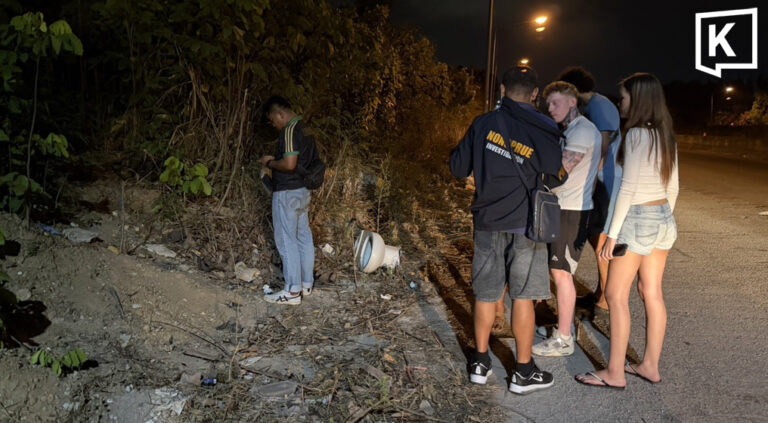
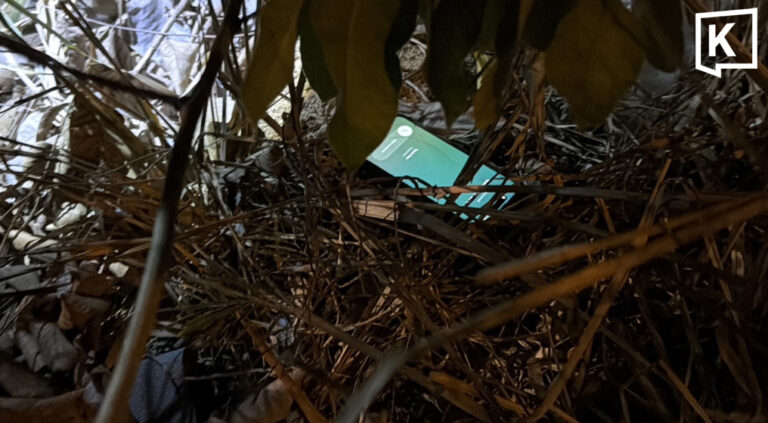
At 01:36 on 27 February, officers from Nong Prue police station and Pattaya tourist police traced the suspects’ route and discovered the victims’ discarded mobile phones on a roadside near the railway track heading towards Sattahip. The devices had been thrown about 200 metres apart into roadside brush during the escape.

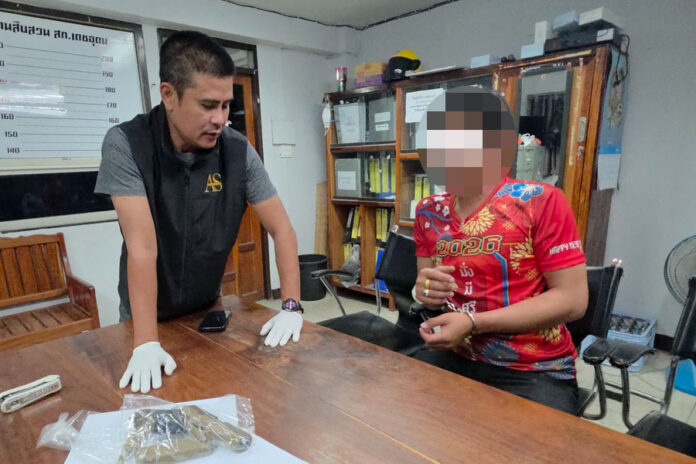
The phones were collected as evidence and sent to forensic officers in Chonburi for fingerprint examination.

Police said they are continuing to hunt for the suspects and urged anyone who sees suspicious vehicles or individuals matching the descriptions to contact Nong Prue police station immediately. Officers said they were confident arrests would be made soon.

Hooded gang steals 2 million baht from home of UK chef 4

Advertisement

Thailand ready for Asia’s first Tomorrowland, targeting 5 billion baht boost

Tomorrowland 2016

Thailand will host Tomorrowland for the first time, with ticket sales set to begin on 7 March, as officials project more than 1 billion baht in spending and billions more in overall economic value.

Deputy government spokeswoman Aiyarin Phanrith said on 27 February that the government, through the Tourism Authority of Thailand (TAT), has partnered with Thai private firms and the Tomorrowland team to stage Tomorrowland Thailand, marking the festival’s first full-scale edition in Asia. The event will take place from 11–13 December 2026 at Wisdom Valley in Pattaya, Chonburi province.

Held under the theme “Consciencia”, the festival will connect editions in Belgium, Thailand and Brazil, centring on six core human emotions: wonder, love, anger, joy, desire and sadness. Organisers expect up to 50,000 visitors per day, with more than 60 per cent projected to be international travellers.

TAT said pre-registration has drawn interest from more than 110 countries, including long-haul markets such as Latin America, South Africa and Europe, as well as short-haul markets including China, Singapore and South Korea.

Hotel packages, including accommodation, a three-day Full Madness Pass and shuttle transfers between hotels and the venue, will go on sale at 16:00 on 28 February 2026 via the WorldWide Ticket Sale platform. General admission tickets will be available from 16:00 on 7 March 2026, with four categories: one-day Day Pass, one-day Comfort (VIP) Pass, three-day Full Madness Pass and three-day Full Madness Comfort (VIP) Pass.

Aiyarin described hosting Tomorrowland Thailand as a point of national pride and a milestone for the country’s tourism and creative economy. Authorities estimate direct spending by attendees at no less than 1.426 billion baht, generating a total annual economic impact of around 5.3 billion baht.

Advertisement

Man charged with murder after partner shot in car in Ubon Ratchathani

A photo of Surapong Lojaroenrat beside her partner

UBON RATCHATHANI — 26 February 2026, A 44-year-old transgender woman was shot in the head and later died after her partner allegedly opened fire inside a vehicle before driving her to hospital, police said.

Pol. Lt. Col. Phayao Kruabut, an investigator at Dech Udom Police Station, said officers were notified at about 22:30 that a gunshot victim had been admitted to Somdet Phra Yupparat Det Udom Hospital.

The victim, identified as Surapong Lojaroenrat, 44, had sustained a gunshot wound entering the right side of the head and exiting the left. She was in critical condition and later died.

Hospital staff told police that the victim was brought in by her partner, 32, who arrived in a red SUV and parked in front of the hospital.

Investigators found a single bullet hole in the left rear window of the vehicle. Inside, they discovered a brown 9 mm semi-automatic handgun with a registration number in the glove compartment and one spent 9 mm shell casing. A large amount of blood was found on the front passenger seat.

banner2 7
The red SUV invovled in the murder, clearly showing what appears to be a bullet hole through the rear window

Warayut was taken into custody for questioning.

He allegedly told police that he and the victim had been in a relationship for 13 years but had recently argued frequently. On the day of the incident, he asked her to go for a drive to a secluded area near the entrance to Pak Mun Dam in Sirindhorn district, Ubon Ratchathani province.

He said he stopped the car, pretended to step out to urinate, then used the handgun he was carrying to shoot her in the head.

After the shooting, he drove back to his home in Dech Udom district to inform his mother before taking the victim to hospital, where police later arrested him.

Police have charged Warayut with premeditated murder and carrying a firearm in a public place without reasonable cause. Authorities said the handgun was legally registered.

banner4 4
A photo of Surapong Lojaroenrat next to her partner which she lived with for many years
Advertisement

Thai court orders seizure from Yim Leak, Ben Smith, Chen Zhi, and Kok An’s cases

Thai court orders seizure from Yim Leak, Ben Smith, Chen Zhi, and Kok An's cases

BANGKOK — 27 February 2026, The Civil Court has ordered the temporary seizure of assets worth about 13.074 billion baht linked to four major scam and public fraud cases, following a petition by public prosecutors, officials said.

Witthaya Neetitham, assistant secretary-general and spokesman of the Anti-Money Laundering Office, said on 27 February that the agency’s Transaction Committee had resolved at its meeting No. 2/2026 on 11 February to refer the cases to prosecutors. The move followed a review of petitions seeking the revocation of temporary seizures and freezes of assets by interested parties.

He said the committee found insufficient grounds to conclude that the seized and frozen assets were unrelated to criminal offences.

On 17 February, AMLO Secretary-General Thepsu Bavorchotidara assigned officials to forward the case files to public prosecutors at the Office of the Attorney General’s Special Litigation Department to seek court orders for the assets to vest in the state. The four cases have a combined estimated value of 13.074 billion baht.

Prosecutors subsequently filed petitions with the Civil Court requesting orders for the assets to fall to the state. After examining evidence during an inquiry, the court found reasonable grounds to believe the assets connected to the alleged offences could be transferred, sold or otherwise dissipated.

The court therefore ordered the temporary seizure and freezing of the assets until further order under Section 55 of the Anti-Money Laundering Act B.E. 2542 (1999), authorising the AMLO secretary-general to carry out the seizures or freezes, safeguard the assets and notify relevant parties.

Details of the four cases are as follows:

  1. A case involving Tangthai, also known as Yim Leak, Wirinya, Ben Smith, Kattriya and others. The Civil Court registered it as Black Case No. F 31/2569. On 26 February 2026, the court issued an order to temporarily seize and freeze assets worth about 12.123 billion baht, in line with the asset list submitted by AMLO to prosecutors.
  2. A case involving Chen Zhi and associates, registered as Black Case No. F 25/2569. On 25 February 2026, the court ordered the temporary seizure and freezing of assets worth about 345 million baht.
  3. A case involving Kok An and associates, registered as Black Case No. F 29/2569. On 25 February 2026, the court ordered the temporary seizure and freezing of assets worth about 560 million baht.
  4. A case involving Uea-angkun and associates, registered as Black Case No. F 20/2569. On 24 February 2026, the court ordered the temporary seizure and freezing of assets worth about 46 million baht.

If the seized or frozen assets in the four cases are unsuitable for storage or would place a burden on the authorities, such as cars or yachts, the AMLO secretary-general may order them to be auctioned, with the proceeds kept in lieu of the assets under Section 57 paragraph two of the Anti-Money Laundering Act.

In the event that victims of the predicate offences are identified, AMLO will gather evidence in accordance with the law and refer the matter to prosecutors to petition the court to return or compensate victims from the seized money or assets instead of ordering them to vest in the state, the spokesman said.

Advertisement

Tyre recycling factory fire in Samut Sakhon contained after hours-long battle

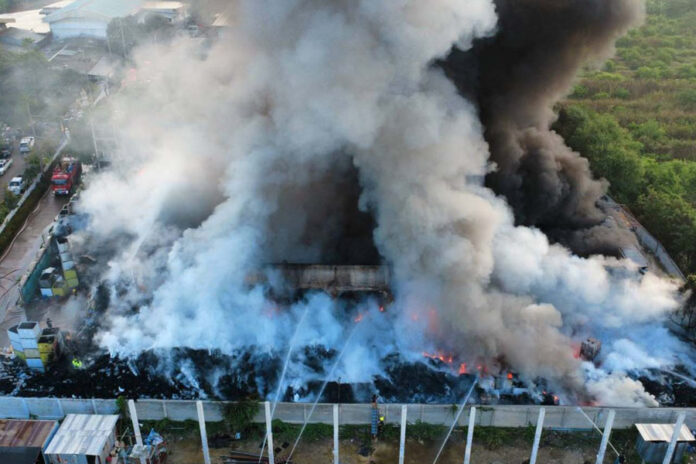
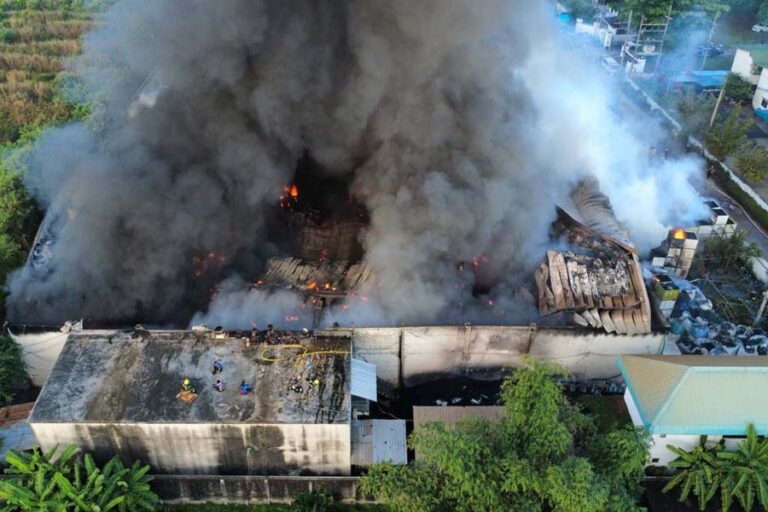
Aerial photography showing the scale of the fire and response effort from firefighters

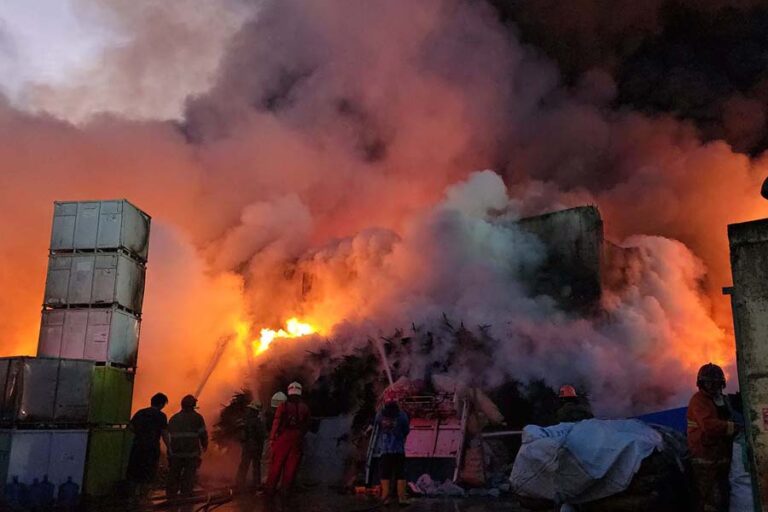
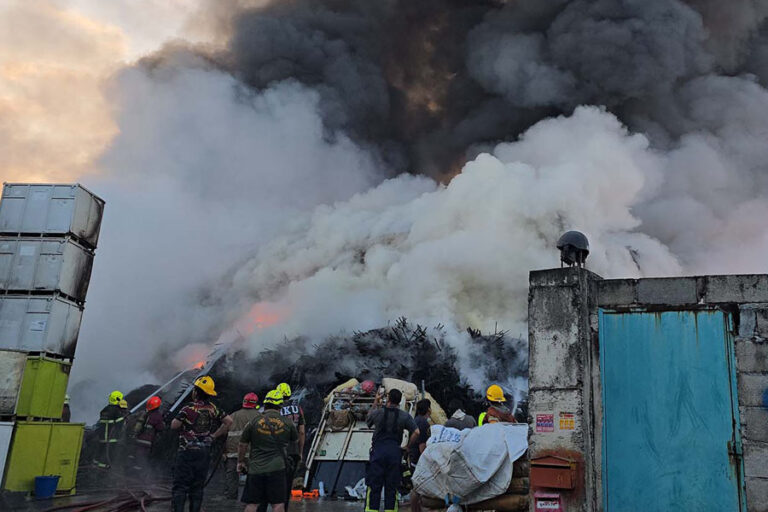
SAMUT SAKHON — 27 February 2026, More than 20 fire engines battled a pre-dawn blaze at a tyre recycling factory in Krathum Baen district after flames engulfed large piles of used tyres, with officials expecting operations to last all day.

Flames tore through the roughly two-rai compound, where large piles of car and motorcycle tyres were stored. More than 20 fire engines were deployed, but narrow, single-access roads hampered efforts. Firefighters pumped water from the front and side of the factory to contain the blaze.

banner3 4

Krathum Baen district chief Pirunroj Nakdontri and Pol. Col. Phasapong Monta, superintendent of Krathum Baen Police Station, led the response. Authorities said the volume of tyres made the fire difficult to extinguish. Three backhoes were brought in to break apart the piles so water could reach the base of the flames. Officials expect operations to last all day.

Nearby factories were not affected, and farmland behind the site helped prevent the fire from spreading.

banner 4 Copy

Jantapen Pancharoentakul, 46, the owner, said she and her husband, a Chinese national, have operated the factory for more than 20 years. About 20 workers — mostly ethnic Shan from Myanmar — and their families were asleep in on-site accommodation when the blaze began. Her niece noticed the air conditioner had stopped working and discovered flames near an electrical cabinet. All occupants evacuated safely.

The cause is believed to be an electrical short circuit. Damage is estimated at 30 million to 40 million baht.

Pol. Lt. Tivattapon Thawisangsaksit, deputy investigation inspector at Krathum Baen Police Station, is collecting evidence and will question the owner and witnesses. Provincial forensic officers will conduct a further examination. Authorities will also inspect the factory’s permits and operating licences.

banner2 Copy

Advertisement

Korean man arrested over fire and truck theft

Korean man arrested over fire and truck theft

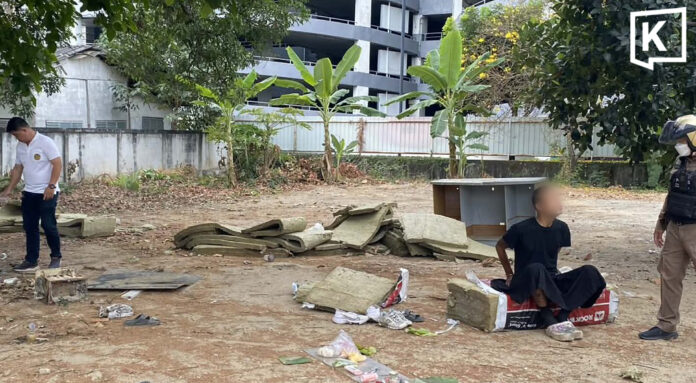
CHIANG MAI — 26 February 2026, A South Korean man allegedly went on a rampage in a village in northern Thailand, setting fire to rubbish and stealing a pickup truck before being detained by police, local officials said.

Chanthira Thatong, head of Village 4 in Ban Mae Kaw, Fa Ham subdistrict, Mueang Chiang Mai district, said the incident occurred at about 07:00 on 25 February 2026.

Villagers reported that a South Korean man, believed to be in his 40s, had caused a disturbance in the community the previous night. He later returned and was seen wandering around the village before setting fire to rubbish on a vacant plot of land, creating thick smoke.

The man also allegedly stole a black four-door Nissan pickup truck belonging to Prasert Diesel shop and drove it around the area.

Local administrative officials coordinated with police, who arrested the man and recorded complaints from the vehicle’s owner. He faces charges of theft and trespassing causing damage to private property.

Officials said the man carried no identification documents and was unable to speak Thai. Questioned in English, he appeared incoherent and showed signs of mental instability.

Authorities contacted the South Korean consulate, which confirmed that the man has a history of mental illness. Relatives in South Korea had reportedly been searching for him. The consulate coordinated with his family, who have since travelled to Thailand.

Police have admitted the man to Suan Prung Hospital in Chiang Mai for treatment and are awaiting officials from the South Korean embassy and his relatives to arrange his return to South Korea.

Advertisement

Partnering for cleaner air: CPF and communities unite to tackle PM2.5

Air pollution has become a major challenge in many parts of the world, and Thailand is no exception. Each year—particularly during the dry season from around January to April—the country experiences recurring spikes in fine particulate matter (PM2.5). A key contributing factor is open burning, as many farmers still use traditional methods to clear crop residues before the next planting cycle. According to Thailand’s Pollution Control Department (PCD), most PM2.5 hotspots nationwide are linked to biomass burning, with a significant share occurring in forest areas and agricultural zones. Scientific analyses by NASA and Thailand’s GISTDA further confirm that forest fires and agricultural burning are among the primary drivers of severe haze in northern Thailand. These patterns highlight how actions in relatively small areas can generate wide-ranging air quality impacts, making PM2.5 pollution a complex challenge that requires coordinated, multi-sector solutions.

Picture2 10

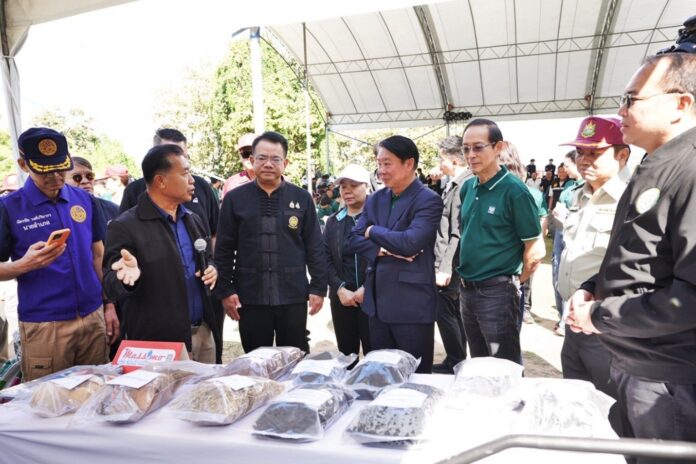
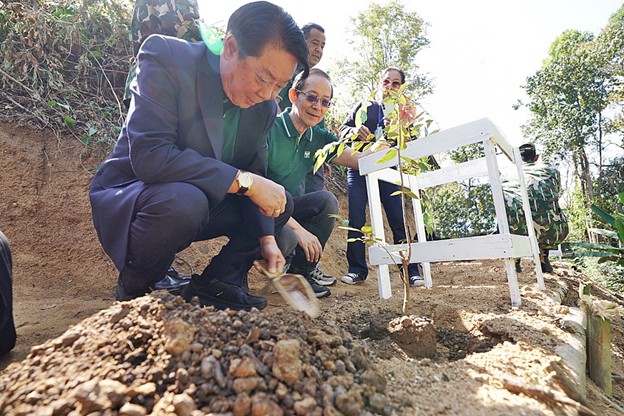
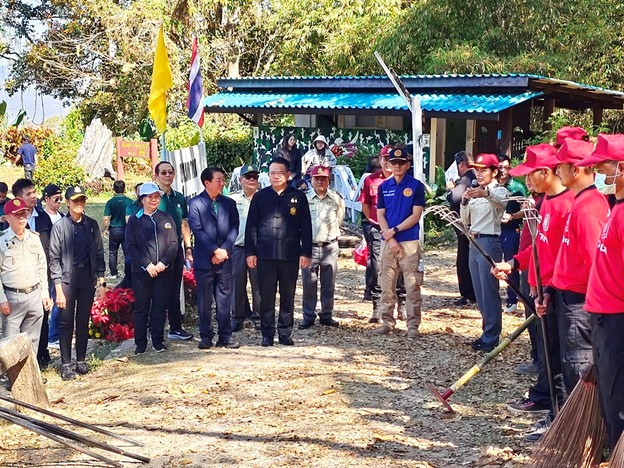
In response, the Office of the Public Sector Development Commission (OPDC), the Board of Investment (BOI), the Royal Forest Department, the Head of Mae Tha District, and Charoen Pokphand Foods Public (CPF) have joined forces to establish a multi-sector collaboration in Lamphun Province, south of Chiang Mai. Set against a mountainous backdrop, this northern province has faced increasingly severe forest fires in recent years.

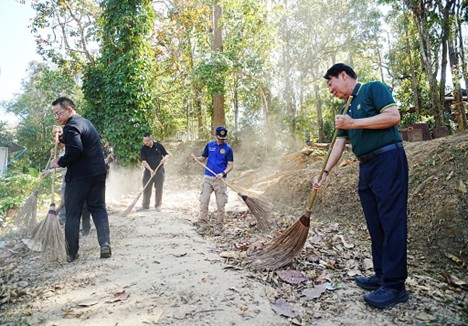
The pilot phase focuses on community forest areas in Tha Pla Duk and Tha Sop Sao subdistricts, covering 12 villages across more than 20,000 rai. Running from 2026 to 2028, the project emphasizes practical, long-term impact through local participation. Key activities include community training in fire prevention and control, provision of firefighting equipment, establishment of fire surveillance points, and the introduction of technologies that convert natural and agricultural residues—such as branches and dry leaves—into household biofuel, creating additional income streams for local families.

Yothin Prasongkwamdee, Deputy Governor of Lamphun, emphasized that community participation sits at the heart of the initiative’s strategy, noting that the project delivers benefits across environmental protection, public health, quality of life, and local economic development.

Picture3 7

From the private sector perspective, Rewat Hataisatyapong, Head of Livestock Feed Business at CPF, reaffirmed the company’s commitment to responsible business practices that support both communities and the environment. He noted that CPF’s participation helps strengthen cross-sector collaboration and shared learning to develop solutions that can be expanded nationwide. Community engagement, he added, is essential to building a replicable model that contributes to cleaner air and improved quality of life across Thailand.

“Environmental responsibility is embedded at the core of CPF’s operations. We integrate sustainability into every stage of our value chain to ensure long-term resilience for both the community and the economy. We also deeply value the support and partnership of local communities, whose collaboration is essential in driving meaningful and lasting environmental progress.” Mr. Rewat said.

Beyond field activities, CPF is also addressing PM2.5 at the upstream level through its responsible feed ingredient sourcing policy. The company does not purchase or import corn from deforested areas or plots associated with crop burning. Since 2016, CPF has worked closely with farmers and local crop collectors to implement a traceability system linking GPS farm coordinates with satellite imagery, enabling accurate monitoring of land-use risks. Today, 100% of corn procured by CPF in Thailand is fully traceable to farm plots.

Picture4 3

By combining on-the-ground wildfire prevention with supply chain accountability, the collaboration in Lamphun reflects a broader shift toward integrated solutions—where government, business, and communities work side by side to tackle the root causes of air pollution and create a path toward sustainably fresher air in northern Thailand.

Advertisement

Is Thailand becoming rude and expensive for foreign visitors?

Is Thailand becoming rude and expensive for foreign visitors?

​Over the past few weeks, local news headlines have been dominated by complaints from some foreign tourists claiming that Thailand is becoming too expensive, while some Thais are being perceived as unfriendly—or even rude—to visitors.

​Dear readers, do you think Thailand is becoming a rude society and too expensive for foreign visitors? I do not expect a consensus here, but I would like to point out that these topics are subjective and relative.

​If you come from a wealthy country like those in northern Europe, the US, Japan, Singapore, or even South Korea, where the average wage is several times higher than wages here, I do not think you should be complaining. Yes, things are probably somewhat cheaper in Ho Chi Minh City or Kathmandu than in Bangkok, but each destination has its own unique charm and appeal.

Furthermore, if the main goal is to minimise every last dollar, euro, or Korean won spent, it may be worth asking why you want travel. This is not to say that Thailand is immune to price comparisons with our regional competitors. My point, however, is that life for the average working-class Thai is hard enough. We cannot expect wages to be driven any lower; many are already underemployed or failing to earn a genuine living wage that ensures a basic, decent livelihood.

​Certainly, the Tourism Authority of Thailand (TAT) could make the country more attractive and competitive by cracking down on taxi scams and other fraudulent practices, such as drivers who refuse to use the meter. This should occupy more of the TAT executives’ time and attention than plotting the next expensive advertising campaign.

Also, while Thailand remains affordable for many, the “Land of Smiles” brand is definitely facing pressure. The rise of digital nomadism and “premium” tourism targets has pushed prices up in major hubs like Bangkok and Phuket.

​The TAT should also be more receptive to complaints from foreign visitors and address long-standing issues, such as the dual-entry fee system at public tourist sites. Resolving this would go a long way in ensuring foreign tourists do not feel discriminated against or “exploited.”

​For visitors who still believe Thailand is becoming too expensive, allow me to point out that you still have the option of eating like a local—spending no more than four dollars per meal—and there are plenty of economical accommodation options if you are not too picky. On the other hand, the TAT and the government cannot rest on their laurels or be complacent about having over 30 million visitors per year; they must continually seek ways to make Thailand more attractive and unique—offering good value for money, so to speak.

​Regarding the issue of whether Thais are becoming less hospitable, or even rude hosts, my feeling is that the younger generation tends to be busier minding their own daily affairs. Take BTS Skytrain and MRT commuters, for example. It is increasingly common to see young Thai adults fail to offer their seats to elderly, frail, or young children. This is not directed at foreigners specifically.

​This appears to be a broader trend, and I wonder if a public campaign encouraging people to be more hospitable to those in need—both foreigners and Thais—would help reverse it.

​As someone who has had the privilege of travelling quite widely, it is worth reminding ourselves that we should treat foreign visitors the way we hope to be treated when we are lost or in need of basic assistance or courtesy abroad.

​Ultimately, this is not about placating foreign tourists; it is about making Thailand a more hospitable and caring society—not just for visitors, but for Thais who are struggling, such as the homeless in Bangkok and beyond.

​Let us not go about our daily lives oblivious to the needs of the strangers we encounter, whether they are foreign or Thai. Being a better host is intrinsically intertwined with nurturing a kinder and more caring society. ​I am sure there is room for improvement.

As for those who had terrible experiences in Thailand, I’m sorry to hear about them. Judging from my own experience abroad, please remember, however, that many years from now, when much of your trip has become blurry or forgotten, you will still have a story or two to recall and share with others to entertain them.


Advertisement

Hot News

LATEST NEWS

Bangkok
broken clouds
36.4 ° C
36.6 °
33.3 °
40 %
5kmh
74 %
Sun
36 °
Mon
35 °
Tue
35 °
Wed
34 °
Thu
34 °