





























36.6 C
Bangkok
Sunday, June 14, 2026
Home Blog Page 122

Myanmar junta airstrike on Rakhine market kills at least 17 civillians

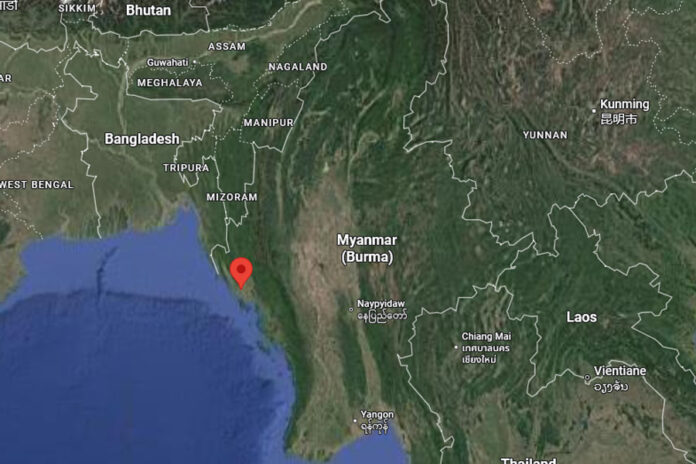
The approximate location of the aerial strike, located in the west of Myanmar within the Rakhine State. Photo: Google Maps

RAKHINE, MYANMAR 24 February 2026, At least 17 civillians, including women and children, were killed when a Myanmar military jet bombed a crowded market in Rakhine State on Tuesday afternoon, according to local groups and international media reports.

Airstrike hits crowded village market

The strike hit Yoe Ngu village in Ponnagyun Township, an area largely controlled by the ethnic armed group known as the Arakan Army (AA). The township lies northeast of Sittwe, the state capital, in western Myanmar.

The independent outlet The Irrawaddy reported that two 300-pound bombs were dropped at around 14:00 local time onto the village marketplace. Citing the Ponnagyun Youths Association, a local volunteer group assisting victims, the outlet said at least 18 people were killed and about 15 others wounded. Most of the dead were reportedly women and children, with some victims aged between six and 15.

In separate coverage, Al Jazeera, citing local sources and Agence France-Presse (AFP), reported that at least 17 civilians were killed and 14 injured in the same attack. Casualty figures in conflict zones are often difficult to independently verify, and the toll may rise as rescue efforts continue.

According to reports, the bombs struck during peak daytime activity at the market. Witnesses described stalls destroyed and nearby homes damaged by the blasts. Local responders said bodies were recovered from the debris as villagers fled the area in panic.

Military silent as rights groups condemn strikes

The Myanmar military had not issued an official statement on the strike as of press time. The junta has previously said its air operations target armed groups it labels as “terrorists,” but human rights organisations including Human Rights Watch and Amnesty International have accused the military of carrying out indiscriminate air and artillery attacks in civilian-populated areas, in some cases warning that such actions may amount to war crimes under international law.

Rakhine State has seen intensified fighting since late 2023 between the junta and the Arakan Army, one of Myanmar’s most powerful ethnic armed organisations. The AA, which seeks greater autonomy for the ethnic Rakhine population, has seized control of large swathes of territory across the state amid the broader civil war that erupted after the military overthrew the elected government in February 2021.

Humanitarian crisis deepens

As ground battles have shifted in favour of resistance forces in several regions of the country, the military has increasingly relied on air power and artillery strikes to hit opposition-held areas, according to conflict monitors and humanitarian groups. Rakhine, along with Sagaing and parts of northern Shan State, has experienced repeated aerial bombardments targeting towns, villages and infrastructure.

The renewed conflict has compounded an already fragile humanitarian situation in Rakhine State, which was previously the epicentre of violence in 2017 that drove more than 700,000 Rohingya Muslims into neighbouring Bangladesh. Aid agencies say fresh fighting since late 2023 has displaced hundreds of thousands more people of various ethnic communities, while restrictions on transport and communications have complicated relief efforts.

The reported strike is one of several air attacks documented in recent years since military takeover, as the armed forces increasingly rely on air power in contested areas. In Rakhine State, fighting between the military and the Arakan Army has intensified in recent months, with civilians frequently caught between shifting front lines.

Advertisement

Jimmy Lai Scores Rare Legal Win as Court Overturns Fraud Conviction

HONG KONG — 26 February 2026, Hong Kong pro-democracy media tycoon Jimmy Lai has won a significant legal victory after the city’s Court of Appeal quashed his 2022 fraud conviction, in a surprise ruling that comes amid his ongoing legal battles and long prison sentence.

Lower court “erred”

Today the Hong Kong Court of Appeal overturned the fraud conviction and prison sentence previously imposed on Jimmy Lai, the 78-year-old founder of the now-defunct Apple Daily newspaper and a longtime critic of Beijing’s influence in Hong Kong. The judges ruled that the lower court had erred in convicting Lai and a co-defendant over allegations they improperly used office space at a government-leased facility.

Chief Judge Jeremy Poon, joined by Judges Anthea Pang and Derek Pang, said the appeal was allowed after finding that prosecutors failed to prove Lai’s fraudulent intent beyond reasonable doubt, a foundational requirement in criminal cases. As a result, the convictions were quashed and the sentences set aside.

The original fraud case stemmed from a 2022 conviction in which Lai was sentenced to five years and nine months’ imprisonment for allegedly breaching lease terms by concealing the operation of a private consultancy, Dico Consultants Ltd., within premises rented by Apple Daily. Another former executive, Wong Wai-keung, had also been convicted and his sentence overturned alongside Lai’s.

Still behind bars: 20 year conviction on separate offence

Despite the appellate court’s decision, Lai remains in custody, serving a 20-year prison term handed down earlier this year in a separate case under Hong Kong’s national security law. That conviction, on charges including conspiring to collude with foreign forces and publishing seditious materials, has drawn intense international criticism and concern about press freedom and the erosion of civil liberties in the city.

Lai’s family and supporters have welcomed the fraud conviction’s reversal as a rare win in his long legal saga, though many point out that his overall incarceration is largely unaffected for now. His children have publicly expressed hope that diplomatic engagement, including discussions involving leaders such as U.S. President Donald Trump, might increase pressure for his release on humanitarian grounds, given his advanced age and reportedly deteriorating health.

The decision to overturn the fraud conviction highlights the independent appellate mechanism within Hong Kong’s legal system, even as critics argue that other parts of that system — particularly national security prosecutions — have been used to curtail dissent and press freedom.

Advertisement

Bangkok braces for extreme heat, heatstroke risk

Bangkok braces for extreme heat, heatstroke risk

BANGKOK — 26 February 2026, The Bangkok Metropolitan Administration (BMA) is stepping up measures to protect residents from extreme heat amid fears of rising heatstroke cases, officials said on Thursday.

Speaking at the Medical Service Department, Kriengkrai Tangjitrmanisakda, director of the department, outlined proactive steps to raise public awareness and provide guidance on health and hygiene during the hot season.

He said the department is monitoring weather conditions and temperature changes that could affect public health, while issuing warnings, particularly to at-risk and vulnerable groups such as children, pregnant women, the elderly and people with underlying conditions.

Authorities have also set medical and public health guidelines to reduce the impact of extreme heat, prepared emergency medical operation centres and launched public campaigns on how to stay healthy during the summer.

Official warns of rising heatstroke risk due to the heat

Extreme heat can lead to dangerous health conditions, especially heatstroke. Authorities recommend limiting intense outdoor activity during the hottest parts of the day and, if possible, scheduling time outside for early morning or near sunset. People should stay well hydrated by drinking plenty of water. Anyone who needs to be outdoors is advised to wear lightweight, breathable clothing and protect themselves from the sun with hats or umbrellas.

Symptoms of heatstroke may include a body temperature exceeding 40–41°C, a severe headache, nausea, vomiting, intense thirst, unsteadiness, muscle cramps, fatigue, rapid breathing, palpitations, a fast pulse, low blood pressure and fainting.

What to do if you find someone suffering heatstroke

If someone shows signs of heatstroke, act immediately — it can become life-threatening within minutes. Move the person out of direct sunlight and into a shaded or air-conditioned area. Lay them flat, raise their legs slightly and loosen or remove excess clothing to help release body heat.

Begin cooling the body right away. Apply cold compresses or ice packs to areas where large blood vessels run close to the skin — the neck, armpits and groin are especially effective. If ice is not available, use a damp cloth, spray water on the skin and create airflow with a fan to speed up evaporation.

Do not wait to seek medical help. Call the emergency medical service hotline 1669 immediately, or contact tourist Police hotline at 1155, where operators are trained to speak English and other languages and can assist with coordinating medical help.

If the person becomes unconscious and is not breathing, start CPR at once and continue until help arrives. If they are breathing but unresponsive, keep them in a shaded position, continue cooling efforts and monitor their breathing closely while waiting for emergency responders.

The department has also prepared its Public Health Emergency Operation Centre (PHEOC) to respond to heat-related incidents and is promoting information on heatstroke through its Facebook and TikTok pages. Health advice is available around-the-clock via its hotline 1646.

Other diseases to look out for in the summer

Duangporn Pinjasekikul, director of the Health Department, said her agency is campaigning to educate the public on preventing communicable and non-communicable diseases linked to extreme heat and high temperatures.

Particular concern is focused on young children, the elderly and those with underlying illnesses, including diarrhoea, cholera, food poisoning, skin allergies in children and heatstroke.

Health service centres throughout the capital have been directed to stock adequate drinking water, clean water, essential medicines, medical supplies and emergency response systems to provide full support for vulnerable groups. These steps are part of the Bangkok Metropolitan Administration’s 2026 emergency medical and public health action plan to mitigate the effects of extreme heat.

Advertisement

Tourists alarmed by roadside car photography

Tourists alarmed by roadside car photography

NAKHON RATCHASIMA — 26 February 2026, Tourists visiting the Khao Yai National Park have raised concerns over possible privacy violations after a photographer was seen taking pictures of passing vehicles along nearby roads, officials said.

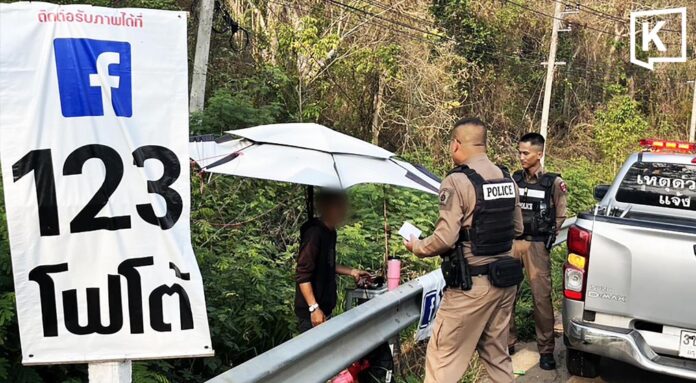
Worawut On-aree, chairman of the Police Monitoring and Inspection Committee at Mu Si Police Station in Pak Chong district, said on 26 February that tourists had reported a man secretly photographing cars travelling along a curve near Ban Tha Maprang on Rural Highway 3052.

The location is about 1.5 kilometres from the entrance gate to Khao Yai National Park towards Wang Nam Khiao district. Similar activity was also reported on Thanarat Road, about one kilometre before the Chao Pho Khao Yai shrine checkpoint. Tourists said the photography had been taking place at the two spots for over a year, and the intent behind the images was unclear.

Police were alerted amid concerns the activity could potentially infringe on personal privacy. Pol. Col. Chukiat Kaew-art, superintendent of Mu Si Police Station, ordered patrol officers to investigate.

Officers found chairs set up by the roadside at both locations, complete with umbrellas for sun and rain protection, and a vinyl sign reading “123 Photo”. The photographer was operating on behalf of a Facebook page called 123 Photo, taking pictures daily from 08:30 to 16:30.

Police said the images captured tourists’ vehicles and were later offered for sale via the page at prices ranging from 200 to 250 baht. Interested customers were instructed to contact the page by private message, and the images were not posted publicly. Tourists who did not wish to be photographed could request deletion of their images at the site.

Authorities said the photographer was a local resident hired by the Facebook page for 500 baht per day. Officers issued a warning, advising the individual not to violate the rights of others to avoid breaking the law. The photographer acknowledged the warning and agreed to comply with police guidance.

Advertisement

Suspect found asleep in car with ketamine in Chiang Mai

Suspect found asleep in car with ketamine in Chiang Mai

CHIANG MAI — 26 February 2026, A suspected drug user was found asleep in a car parked in a no-parking zone during rush hour near Nimmanhaemin intersection in Chiang Mai early on Thursday, police said.

At 08:10, amid heavy morning traffic, Pol. Col. Manatchai Inthathuean, superintendent of the Traffic Police Division of Chiang Mai Provincial Police, was inspecting traffic conditions in the city with his driver.

As the patrol passed a grilled chicken restaurant near the Nimmanhaemin intersection on Somphot Chiang Mai 720 Pi Road, the officer noticed a suspicious saloon car parked in a prohibited area during peak hours and decided to investigate.

Officers found a man asleep inside the vehicle and coordinated with investigators from Phu Ping Chiang Mai Police Station to continue the operation.

Suspect found asleep in car with ketamine in Chiang Mai 2
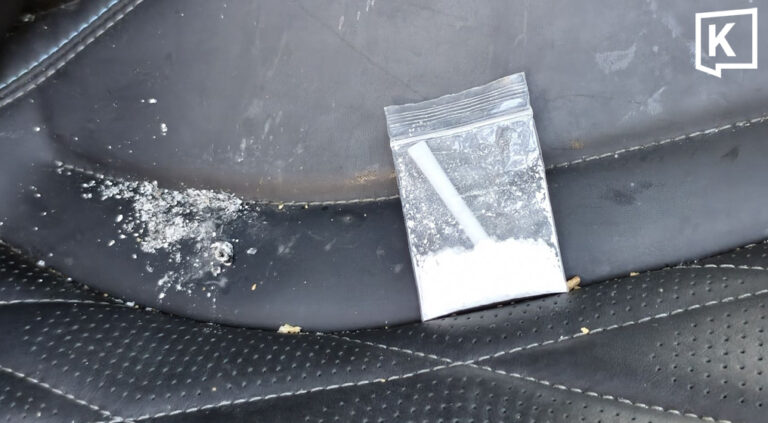
Ketamine that was found in the car with the sleeping suspect.

Using standard police tactics, officers ordered the driver to step out of the vehicle for questioning. Noticing further suspicious behaviour, they conducted a thorough search of the car and discovered a substance resembling ketamine concealed inside.

During initial questioning at the scene, the driver admitted the substance was an illegal drug.

Pol. Col. Sinothai said additional patrol officers from Phu Ping Ratchaniwet Police Station were deployed to detain the suspect and seize the evidence before handing the case to investigators for further legal proceedings.

The arrest drew praise from bystanders, who commended senior officers for their proactive approach in enforcing traffic regulations and preventing crime to ensure public safety in Chiang Mai.

Advertisement

British man accused of snatching ex-partner’s phone

British man accused of snatching ex-partner’s phone

PATTAYA — 26 February 2026, a British man was arrested after allegedly snatching a mobile phone from a woman outside a shopping centre in the seaside city of Pattaya, police said.

Tourist police, local officers and administrative officials in Bang Lamung district responded to reports of a foreign man causing a disturbance at about 01:00 along Pattaya Beach Road in Nong Prue subdistrict, Chonburi province.

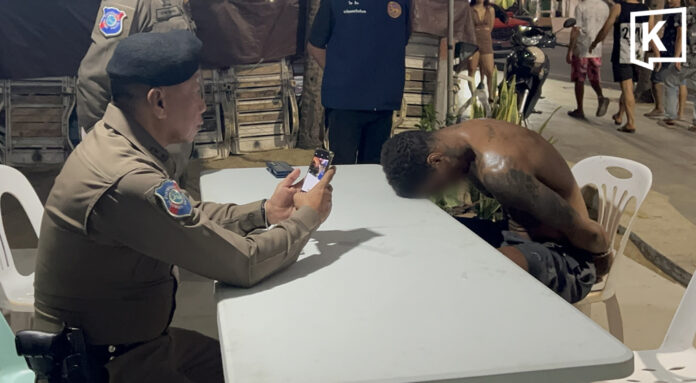
Officers found a 36-year-old British national, described as shirtless and wearing black shorts, shouting incoherently and appearing intoxicated. He was not carrying identification documents. Police said he attempted to flee but was quickly apprehended, alarming residents and tourists in the area.

The alleged victim, 27-year-old Wanida Chaiwan, told authorities she sells cannabis and had briefly dated the suspect before ending the relationship.

She said that about two months earlier, the man forced his way into her accommodation, damaging a door and smashing a window before fleeing.

On the night of the incident, she said, he returned to her shop and seized her mobile phone. She alleged that he warned her not to shout and threatened to run away if she did. She called for help, prompting nearby patrol officers to intervene and detain him.

Police have initially charged the suspect with disorderly conduct in a public place and handed him over to investigators for legal proceedings under Thai law. The complainant is filing additional theft charges and is considering further action over the earlier property damage.

Authorities did not immediately release the man’s name.

Advertisement

Thai rice exports fall 17.5% in January, 2026 outlook seen at five-year low

Thailand’s rice exports fell sharply in January, raising concerns that 2026 shipments could hit a five-year low amid a strong baht and intensifying global competition.

Chookiat Ophaswongse, honorary president of the Thai Rice Exporters Association, said exports in January totalled 530,000 tonnes, down 17.5% year-on-year, with export value plunging 30.7% to 9.7 billion baht. Shipments are expected to average around 500,000 tonnes per month through mid-year as the sector faces mounting headwinds.

The association forecasts total rice exports in 2026 at 7.03 million tonnes, down 11% from 7.9 million tonnes in 2025, marking the lowest level in five years. Export value is projected at 130–140 billion baht, a drop of 12.3%.

Exporters cited five major risk factors. Chief among them is the strengthening baht, hovering around 31 to the US dollar, making Thai rice more expensive than competitors. Thai jasmine rice is now priced at about $1,200 per tonne, the highest in the world, compared with around $970 for Indian basmati and $800–830 for similar grades from Vietnam and Cambodia. Thai 5% white rice is also priced above key rivals.

Other pressures include temporary US import tariffs under Section 122, which impose a blanket 15% duty for 150 days, potentially reducing Thai jasmine rice exports to the US by 15–20%. The US is Thailand’s largest jasmine rice market, accounting for roughly half of total jasmine exports.

Global oversupply, including record production in India, import restrictions by major buyers such as Indonesia, and food security policies encouraging self-sufficiency are also weighing on demand.

Exporters urged swift formation of a new government and called for urgent measures to address currency strength, saying a weaker baht at 33–34 per dollar would improve competitiveness. In the medium term, they stressed the need to develop new rice varieties that match global demand and reduce production costs to prevent Thailand from losing further market share to regional rivals.

Advertisement

Birthday drug party bust nets 128,000 pills

Birthday drug party bust nets 128,000 pills

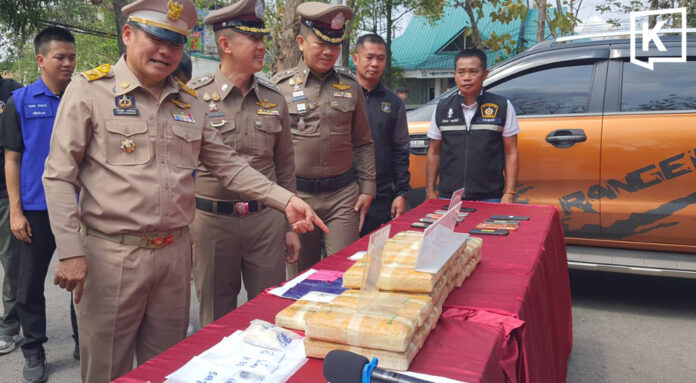
UDON THANI — 25 February 2026, Police have arrested nine people at a birthday party drug gathering and seized 128,000 methamphetamine pills along with assets worth about 2.2 million baht, officials said on Wednesday.

At a 11:30 news conference outside the Udon Thani Provincial Police headquarters, Deputy Governor Phisit Chai Apaiyagul and senior police officers announced the arrests.

Those detained were identified by police only by their nicknames and ages: Frame, 28; Phu, 22; Jay, 20; Pongphisit, 20; Pongphon, 28; Patcharita, 29; Nattreeya, 30; Ek, 30; and Art, 35.

Seized items included 128,000 methamphetamine tablets, 11 packets of ketamine weighing 57.77 grammes, 16 packets of collagen mixed with methamphetamine, four ketamine vape pods and 10 mobile phones.

Authorities also confiscated assets including a white Honda City registered in Bangkok, an orange four-door Ford Ranger pickup registered in Bangkok, a black Honda Lead motorcycle, a one-baht-weight gold necklace, a gold ring weighing one salung, 40,000 baht in cash and 345,460 baht held in bank accounts. The total value was estimated at 2.2 million baht.

Police said the operation began on the night of 24 February, when investigators received information that Frame was selling methamphetamine within Udon Thani municipality.

Frame was then used in a sting operation to arrange a drug purchase from a major local dealer known as Yai. Instead, Yai allegedly sent Phu to deliver the drugs. Phu was arrested with five packets of ketamine weighing 33.77 grammes, 12 packets of collagen, 70 grammes of a brown powder resembling cocaine and one ketamine vape pod.

While Phu was in custody, Yai allegedly telephoned instructing him to deliver three more packets of collagen mixed with methamphetamine to a rented house in Udon Thani municipality. Police posed as Phu and carried out the delivery, while officers lay in wait near a convenience store close to the property.

A woman came out to receive the drugs and pay for them, prompting officers to move in and search the house. Inside, they found 16 men and women gathered. Officers seized four packets of ketamine weighing 5.73 grammes, three packets of collagen mixed with methamphetamine and three ketamine vape pods.

All were taken to a police station for questioning and urine testing. Five tested positive for drug use. Jay admitted the drugs were his and said he had ordered them from Yai for a birthday celebration at the rented house, but claimed they had not yet been consumed before police arrived. Those who tested positive had used drugs earlier, police said.

Assets belonging to Jay, including a pickup truck and a mobile phone worth about 947,000 baht, were seized. Those who tested negative were recorded and released.

Further investigation led police to Ek, who was alleged to have contacted foreign nationals and, together with Art, used a car to distribute methamphetamine. A search of Ek’s condominium uncovered Art and 128,000 methamphetamine pills.

Both were charged with joint possession of a Category 1 narcotic with intent to sell. Police seized four mobile phones, a car, gold jewellery, 40,000 baht in cash and bank deposits worth about 1 million baht for further legal proceedings.

Advertisement

“Don’t Go to Thailand,” Foreigner says here’s why

@alex.glandorf

A foreign TikTok user has gone viral after posting a tongue-in-cheek video warning people not to visit Thailand — only to explain that the country made him fall in love with it.

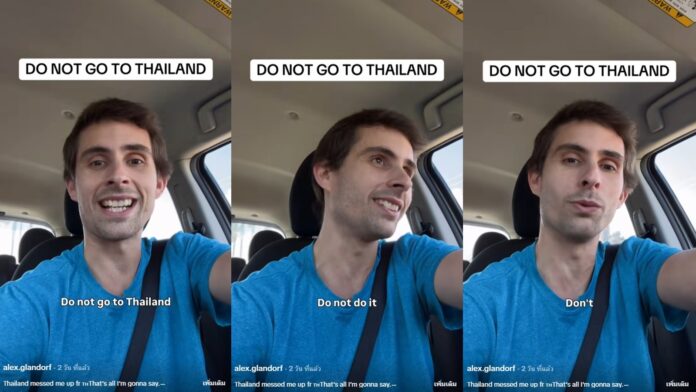
In the clip, Alex Glabdorf (@alex.glandorf) speaks directly to the camera while driving, repeatedly saying: “Do not go to Thailand. Do not do it.” He jokes that travellers who book a one- or two-week trip will eventually have to return home — and once back, they will “hate” their jobs and normal lives because they cannot stop thinking about Thailand. He humorously claims visitors will want to sell everything and move back permanently, saying he himself spent a year in the country before returning home after running out of money. “Thailand took all my money,” he says, before ending the video by asking who is heading to Songkran in April.


@alex.glandorf Thailand messed me up fr 🇹🇭 That’s all I’m gonna say. Songkran in April? Who’s all going? #thailand #songkran #thailandtravel #traveltok ♬ original sound – Alex Glandorf


The video quickly gained traction online, drawing warm reactions from Thai users who said they felt both amused and proud. Many foreign viewers also joined the discussion, sharing their own experiences and travel plans. Some said they were flying to Thailand within days, while others wrote that they had already visited multiple times and were eagerly waiting for their next trip, describing Thailand as the “best country” with the “best people.”

Advertisement

Cambodia suspends Panda Commercial Bank’s operations for worsening financial situation

PHNOM PENH, Feb. 23 (Xinhua) — The National Bank of Cambodia (NBC), also known as the central bank, on Monday halted the operations of the Panda Commercial Bank for its worsening financial situation.

The NBC said in a public notice that prudential supervision found that the bank’s financial condition has deteriorated, which will lead to the inability to provide banking services.

“In this regard, the NBC has decided to appoint Morisonkak MKA Audit-Accounting Co., Ltd. as the provisional administrator and liquidator of the Panda Commercial Bank,” the notice said.

“During this period, Panda Commercial Bank is suspended from providing any new banking services, including accepting deposits and granting loans,” it added.

The notice said the Morisonkak MKA Audit-Accounting Co., Ltd. has the right to manage and control all operations and assets of the Panda Commercial Bank from the date of this announcement onwards.

According to the notice, customers who have deposited at the bank must prepare documents to withdraw their deposits, while those who have borrowed money from the bank must continue to fulfill their obligations as usual.

The Panda Commercial Bank received a commercial bank license in 2019, the notice said, adding that it has the current assets of approximately 776 million U.S. dollars, loans of about 536 million dollars, and deposits of roughly 502 million dollars.

The bank accounted for 0.77 percent of Cambodia’s banking system by the end of 2025.

According to the NBC, by the end of 2025, the Southeast Asian country has 59 commercial banks, 89 microfinance institutions, seven specialized banks, and 89 rural credit institutions, with 30.6 million deposit accounts and 4.5 million credit accounts.

Advertisement

Hot News

LATEST NEWS

Bangkok
broken clouds
36.6 ° C
36.6 °
34.4 °
51 %
4.4kmh
77 %
Sun
37 °
Mon
35 °
Tue
35 °
Wed
33 °
Thu
34 °