31.6 C
Bangkok
Saturday, June 13, 2026
Home Blog Page 124

US to deliver 17 Stryker armoured vehicles to Thai army

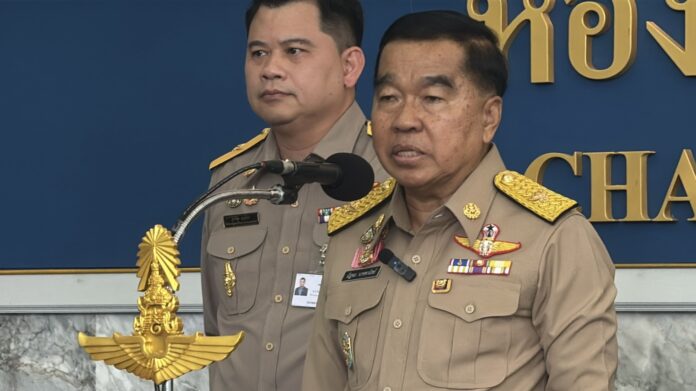
Thai army chief. Gen. Pana Klaewplodtook shakes hands with Lt. Gen. Matthew McFarlane during talks at Royal Thai Army Headquarters on 23 February 2026.

BANGKOK — 23 February 2026, Army chief Gen. Pana Klaewplodtook welcomed Lt. Gen. Matthew McFarlane, deputy commanding general of US Army I Corps, at Royal Thai Army Headquarters to discuss military cooperation, including expanded joint exercises and development of Stryker armoured units.

The talks covered enhanced participation in the annual Cobra Gold exercise and the bilateral Hanuman Guardian drill, as well as closer collaboration on the Royal Thai Army’s Stryker wheeled armoured vehicle programme. The army expressed appreciation for continued US engagement, saying it reflected strong security ties and a shared commitment to developing personnel capabilities. Both sides emphasised integrating advanced military technologies into multi-domain operations, particularly in cyber and space warfare.

Regarding Stryker vehicles, the army thanked the United States for supporting the transfer of 17 vehicles under the Excess Defense Articles (EDA) programme. The handover ceremony is scheduled during the closing of Hanuman Guardian 2026. A US Stryker Brigade Combat Team will continue providing technical training on operations, maintenance and network-centric warfare, in line with the Thai army’s modernisation plans.

Gen. Pana also outlined Thailand’s position on the Thai–Cambodian border situation, reaffirming that the army adheres to international principles of self-defence in safeguarding sovereignty and remains committed to peaceful approaches.

The US side commended the Royal Thai Army for strictly observing rules of engagement and expressed pride in its long-standing alliance with Thailand, underscoring close military ties and mutual trust between the two countries.

Advertisement

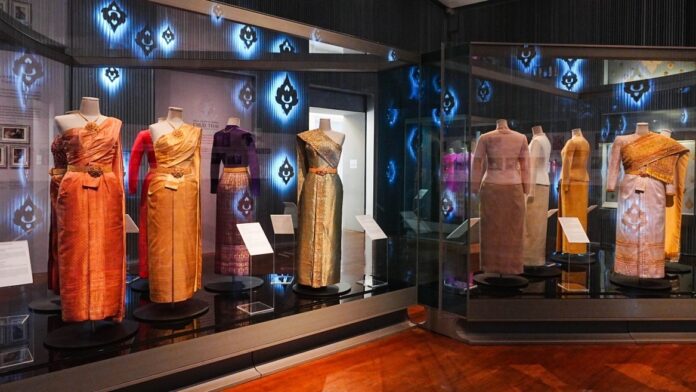
UNESCO expected to inscribe Thai dress on heritage list this year

Photo: Queen Sirikit Museum of Textiles

PARIS — Foreign Minister Sihasak Phuangketkeow said there is a high possibility that “Thai dress” will be inscribed on the Representative List of the Intangible Cultural Heritage of Humanity by UNESCO this year.

Speaking in Paris on 23 February 2026, Sihasak said he had discussed Thailand’s 2026 nomination with UNESCO Director-General Khaled Ahmed El-Enany Ali Ezz. Thailand has proposed “Thai dress” for inscription as part of humanity’s intangible cultural heritage.

He said Thai dress is a genuine national identity with a clearly documented historical background, strengthening its candidacy. He added that Her Royal Highness Princess Sirivannavari Nariratana Rajakanya has placed strong emphasis on promoting Thai dress, expressing confidence that the nomination will be considered at this year’s UNESCO meeting, to be hosted by China.

Advertisement

Ko Lipe water crisis prompts Ombudsman-led review

SATUN — 23 February 2026, Ko Lipe is marketed worldwide as a tropical paradise of emerald waters and powdery white sand. But behind the façade of luxury resorts, the island’s indigenous Urak Lawoi community continues to grapple with chronic infrastructure shortages that have persisted for decades.

Once a quiet island, Ko Lipe has seen rapid commercial growth. Basic utilities, however, have lagged behind. Mounting garbage, high electricity costs and recurring water shortages have steadily eroded residents’ quality of life.

Water shortages

Sornnat Hantalay, 22, a representative of the Urak Lawoi community, said water scarcity remains the most pressing problem.

“During the rainy season, floodwater seeps into village wells, leaving the water undrinkable. In the dry season, the island’s three community wells run dry because they cannot support the growing population,” he said. “We have to take boats through rough seas to bring water from Ko Adang. If authorities can ensure a sufficient water supply, it would ease our hardship.”

Residents also face electricity rates several times higher than on the mainland, along with a waste management system that has yet to find a sustainable solution.

banner4 3

Project delays

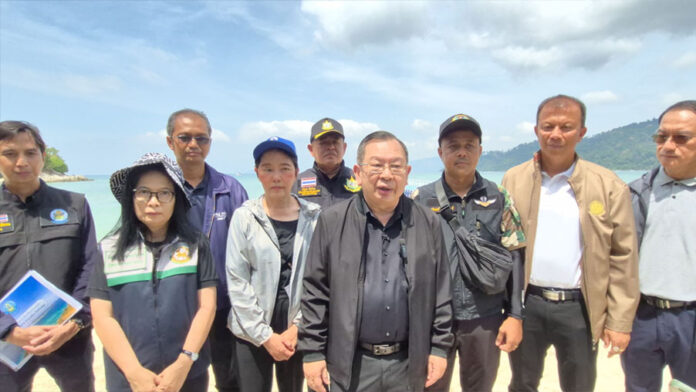
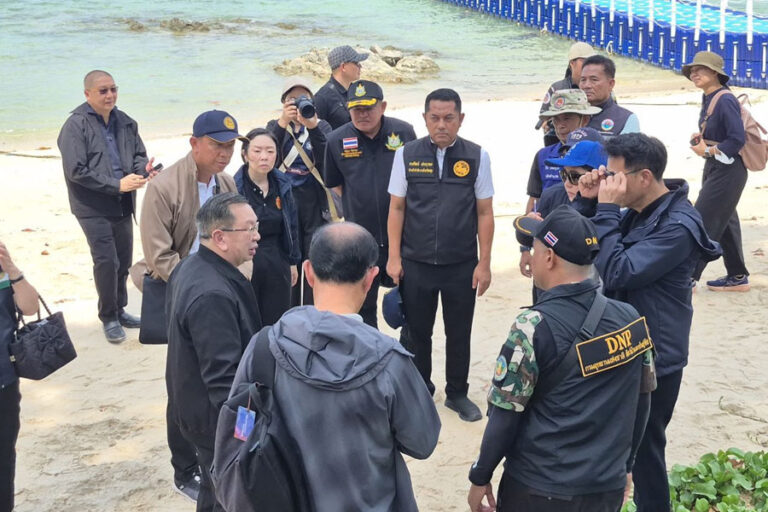
Following complaints raised to central authorities, Songsak Saicheua, president of the Office of the Ombudsman, led a multi-agency delegation to the island on 23 February to review progress on long-delayed public utility projects. The delegation included officials from the Office of the National Water Resources, Satun provincial authorities and Tarutao National Park, as well as representatives from water and electricity agencies.

An inspection of proposed sites for submarine power cables and a raw water pipeline linking Ko Lipe to Ko Adang found that previous delays stemmed largely from overlapping land-use restrictions and technical requirements to minimise environmental impact.

Ko Lipe covers about 3 square kilometres (1,875 rai) and has 1,387 registered residents in 702 households. The island, however, receives between 150,000 and 200,000 visitors annually.

Solid waste averages 10–11 tonnes per day from households, businesses and marine debris. In 2025, accumulated waste exceeded 3,000 tonnes. The Koh Sarai Subdistrict Administrative Organisation spends about 7 million baht annually to hire private contractors to transport and dispose of waste on the mainland, amid the absence of a permanent public transport route.
banner3 3

Three-pronged plan

Songsak said the current plan is clearer than previous proposals and will proceed on three fronts:

Electricity and water systems: A memorandum of understanding will be signed between the Department of National Parks, the Provincial Electricity Authority and the Provincial Waterworks Authority to allow the laying of submarine cables and a raw water pipeline from Ko Adang. The package is expected to be submitted to the Cabinet, with tangible progress projected in fiscal years 2028–2029.

One-stop service centre: More than 3 rai (about 4,800 square metres) within the national park will be reorganised to consolidate immigration and tourist service offices in one location to improve order and ease marine traffic congestion.

Waste management and healthcare: Authorities are seeking a permanent public route for transporting waste to the mainland and upgrading the Ko Lipe health promotion hospital to better serve residents and tourists.

Songsak said the visit marked not just a routine inspection but a step toward resolving long-standing shortages.

For residents, the success of the proposed projects will be measured not in policy documents but in running taps, stable electricity and cleaner shorelines. Whether Ko Lipe can sustain its booming tourism industry may depend on how quickly those promises are delivered.
banner5 2

Advertisement

Helicopter douses Phetchabun blaze, but fire still reignites

Helicopter douses Phetchabun blaze, but fire still reignites

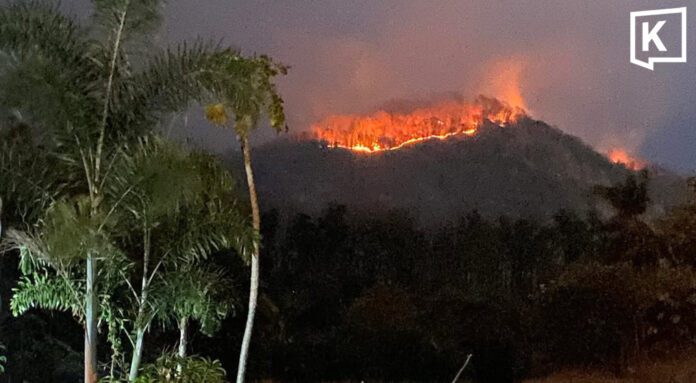
PETCHABUN — 24 February 2026, A wildfire in Phetchabun province was largely brought under control after water-bombing operations by helicopter, but flared up again later, officials said.

On 23 February, Seksan Tiangphlab, head of Khao Kho National Park, joined operations with the Central Regional Operations Centre of the Office of the Permanent Secretary for Natural Resources and Environment to urgently tackle wildfires and haze affecting residents in Khao Kho district.

Authorities coordinated with several local agencies, including the Phetchabun Provincial Natural Resources and Environment Office, Forest Protection Unit Por Chor 8 (Nam Duea) under the Royal Forest Department, the Phetchabun Internal Security Operations Command and the Phetchabun Provincial Disaster Prevention and Mitigation Office. A planning meeting was held at the 1st Infantry Division’s Phokhun Pha Muang Camp.

Helicopter douses Phetchabun blaze, but fire still reignites
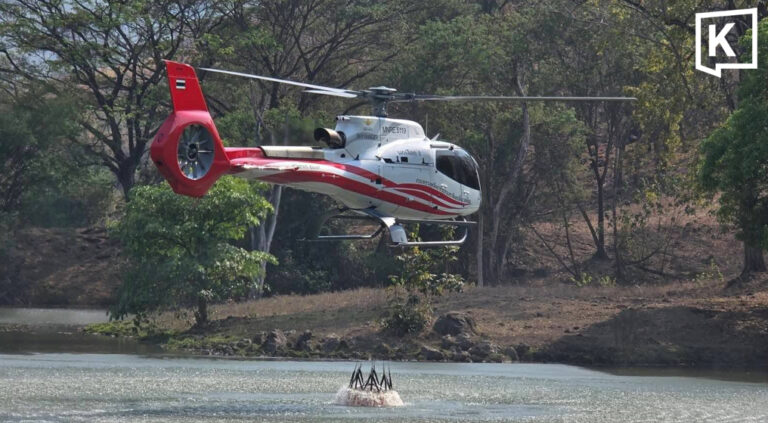
Helicopter taking water to drop on the fire.

An aerial survey identified fire hotspots in Huai Yai forest and Tabok forest in Nam Ron subdistrict, Phetchabun province.

At 14:30, a helicopter began continuous water drops on the blaze, making 38 sorties and releasing about 19,000 litres of water to support 20 ground officers from Forest Protection Unit Por Chor 8 (Nam Duea) who were working to contain the fire.

Officials said more than 95% of the fire had been extinguished and the area brought under control. Ground teams were handling the remaining hotspots and would continue to monitor the area to prevent further flare-ups.

However, later in the evening the fire reignited on a mountain behind Ban Thung Hin Poon village in Nam Ron subdistrict, Mueang Phetchabun district.

As of 07:30 on 24 February, smoke was still visible inside the mountain area, officials said.

Advertisement

E-bike charging blast nearly engulfs house

E-bike charging blast nearly engulfs house

CHONBURI — 23 February 2026, An electric bicycle left charging exploded and sparked a fire that nearly engulfed an entire house in Chonburi province on Sunday, police said.

At 10:30, Pol. Lt. Col. Chanda Dethphan, a deputy investigator at Bang Lamung police station, was notified of a house fire at 75/8 Moo 11 in Nong Prue subdistrict, Bang Lamung district. Disaster prevention officers from Pattaya City, three fire engines and volunteers from the Sawang Boriboon Thammasathan Rescue Foundation were dispatched to the scene.

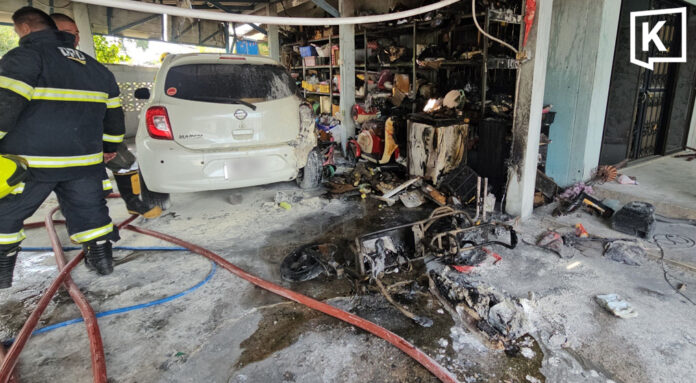
Two houses stood within the same compound, with a central area used as a car park. Flames were found burning in the parking area. Firefighters took about 10 minutes to bring the blaze under control.

An electric bicycle was completely destroyed. A white Nissan March car, registration Kor Thor 8681 Chonburi, sustained damage to the right rear section, while a storage shelf nearby was also damaged.


Yodchai Khampangsi, 43, the homeowner’s younger brother, said he had been upstairs when he noticed a large amount of smoke. He ran down to find flames engulfing the electric bicycle, which had been plugged in to charge, and alerted authorities.
Police inspected the scene and began questioning witnesses. Initial investigations indicated the fire was likely caused by the electric bicycle being left charging unattended.

Advertisement

TikToker says most Thai locals are rude for not speaking English or using translation apps

Farah Shams, who has more than 2.4 million followers on TikTok.

BANGKOK — Social media influencer Farah Shams, who has more than 2.4 million followers on TikTok, has sparked controversy after posting a video criticising what she described as rude behaviour by the majority of Thai locals during her visit.

In the clip, which has drawn nearly 400,000 views, Shams said she “genuinely” loves Thailand and called it a “lovely place”, but questioned why “the majority” of locals were, in her view, disrespectful towards foreigners and tourists.

She said that when she spoke English to local people, many did not understand her and appeared to ignore her rather than attempt to communicate.


@fdontcareSo bad I love it here but be ready for rudeness and people ignoring you

♬ original sound – Farah Shams


“The language barrier is very natural for humans, especially when you go to the other side of the world,” she said. “But just pull out Google Translate if you don’t understand what I’m saying. Don’t ignore me. Just say ‘no English’.”

Shams compared her experience unfavourably with trips to Turkey and Egypt, saying those destinations could be “pretty bad”, but adding that Thailand “tops them all”. While noting that some locals were “lovely”, she said the majority were “the most disrespectful people I’ve ever met in my life”.

Despite the criticism, she said she would still return to Thailand because she loves the country.

The video prompted strong reactions online. Some users told her to “stop coming”, while others defended Thailand. One commenter said translation apps work both ways, while another wrote that they had lived in the country for two years without experiencing rudeness.

Several Thai users argued that travellers should adapt when visiting another country, noting that not everyone speaks English and that tourists should also make efforts to use translation tools.

When questioned whether her own behaviour may have contributed to the situation, Shams replied: “I am genuinely very kind until people disrespect me first!”

messageImage 1771834460060

In the days following the backlash, some users called on her to apologise. However, in an Instagram story, she said she stood by her comments and would not retract them, saying she was simply sharing her personal experience.

The incident has reignited debate on social media over cultural expectations, language barriers and the responsibilities of both tourists and host communities.

Advertisement

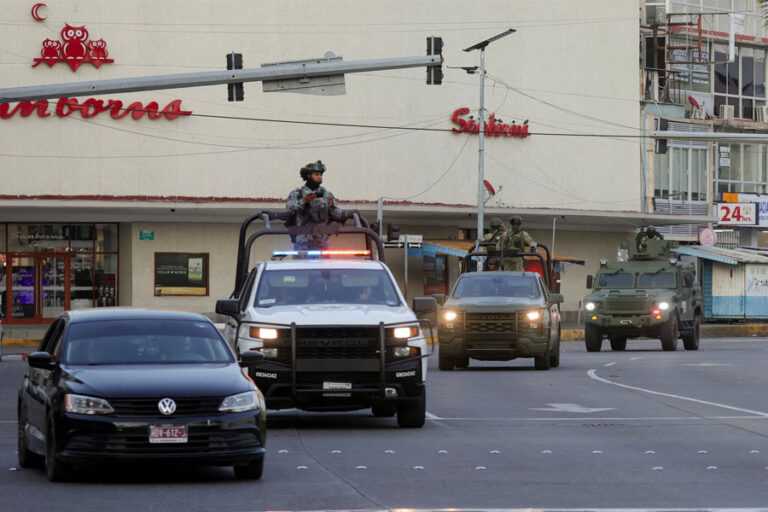
Mexico cartel leader “El Mencho” killed in military operation, unrest spreads across multiple states

JALISCO, MEXICO — Mexico’s most wanted drug lord, Nemesio Oseguera Cervantes, known as “El Mencho”, has died at the age of 59 following a military operation in western Mexico, authorities said. The United States provided intelligence support for the operation.

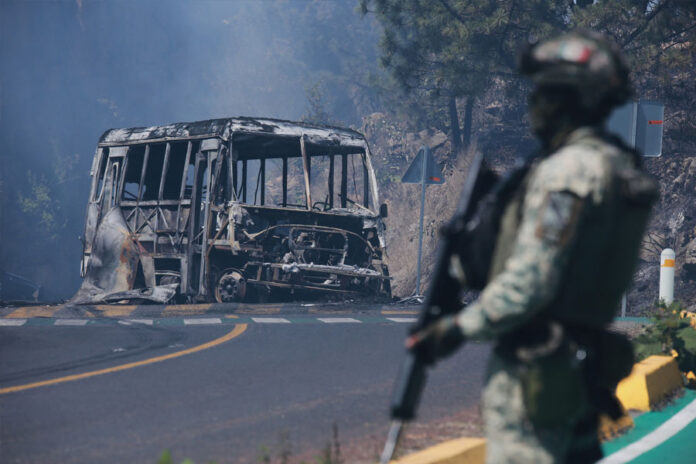
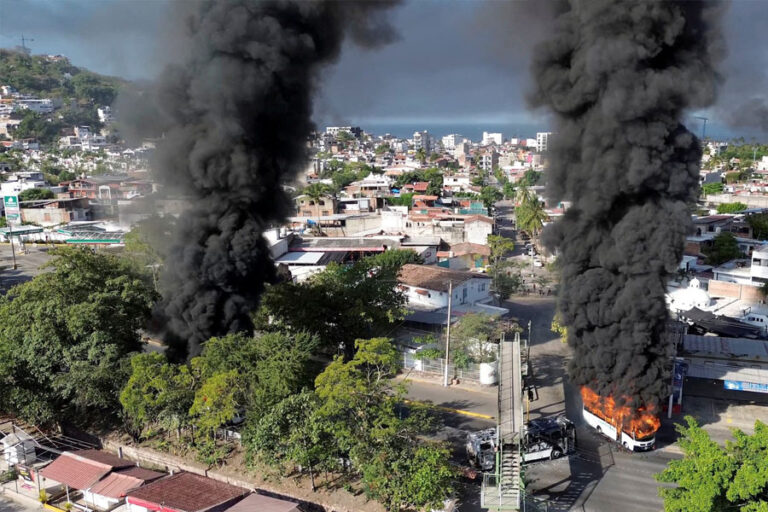
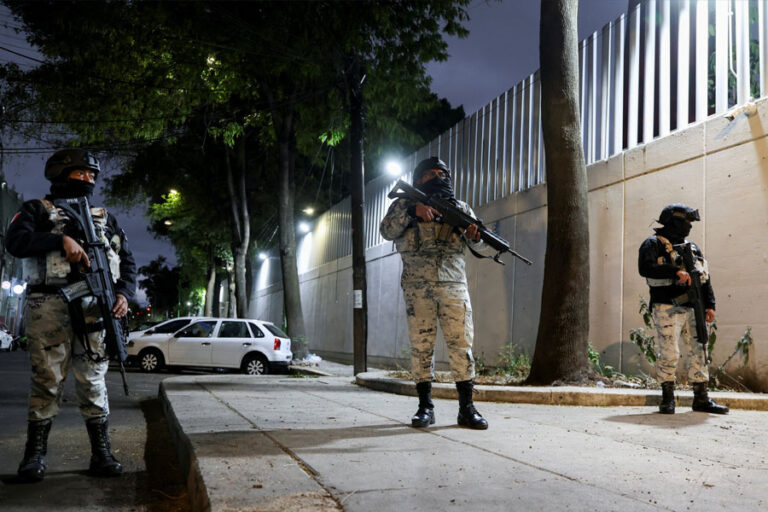
His death triggered violent unrest in multiple states, with armed groups blocking highways, torching vehicles and clashing with security forces in areas long associated with his criminal network.

El Mencho was shot in Tapalpa, in the western state of Jalisco, considered a stronghold of his organisation. Officials said he died while being transported to hospital.

Mexico’s security cabinet later said that road closures imposed during the unrest had begun to ease, though security operations remain ongoing in several regions.

Widespread disruptions

Violence following his death disrupted daily life across parts of western and central Mexico. Local media showed buses and commercial vehicles set ablaze, while some highways were temporarily closed due to security concerns.

banner4 2

Air travel was also affected. Several airlines cancelled or diverted flights to and from Puerto Vallarta and Guadalajara, two major cities in Jalisco state. Puerto Vallarta is one of Mexico’s most popular beach destinations for North American tourists.

Airlines including Air Canada and United Airlines temporarily halted services to Puerto Vallarta amid security concerns. Other carriers reported disruptions as authorities sought to stabilise affected areas.

The United States Department of State issued a travel advisory urging Americans to exercise caution, while Canada updated its own guidance for travellers in parts of Jalisco.

A powerful cartel figure

El Mencho was widely regarded as one of the most powerful drug traffickers in Mexico. The United States had offered a reward of up to $15 million for information leading to his capture.

A former police officer, he built a sprawling criminal organisation that trafficked cocaine, methamphetamine and fentanyl into the United States. U.S. authorities have accused his network of playing a major role in the flow of synthetic opioids, including fentanyl, which has contributed to tens of thousands of overdose deaths annually in North America.

Earlier in his career, Oseguera Cervantes was arrested in California on drug-related charges and served time in prison before being released and returning to Mexico in his 30s. After older cartel leaders were killed or captured, he rose rapidly to prominence, consolidating power in Jalisco and expanding operations across other regions.

Mexican authorities have accused him of orchestrating assassinations of rival traffickers and ordering attacks against security forces. His organisation became known for its heavy weaponry and ability to challenge state forces directly.

banner2 4

Uncertain aftermath

Security analysts say the death of a major cartel leader can lead to short-term spikes in violence as factions compete for control. It remains unclear who will assume leadership of his organisation or whether internal rivalries could intensify instability in affected states.

Mexican officials have not yet provided detailed information about the broader operation that led to his death, though they described it as a targeted military action supported by U.S. intelligence.

For now, authorities say the immediate wave of road blockades has subsided, but security patrols remain heightened in Jalisco and neighbouring states.

The killing marks one of the most significant blows to organised crime in Mexico in recent years, but experts caution that dismantling a cartel’s leadership does not automatically dismantle its operational structure.banner6

Advertisement

Jesada warns Election Commission over jail risk

Jesada warns Election Commission over jail risk

BANGKOK — 23 February 2026, Jesada Tonawanik, a prime ministerial candidate of the Rak Chart Party, warned the Election Commission (EC) it could face imprisonment if it continues to perform its duties unlawfully amid mounting controversy over changes to ballot papers.

In an interview, Jesada said the EC’s management of the election had been riddled with ambiguities and sudden alterations, particularly regarding ballot papers, without clear explanations to the public. If the commission persisted in what he described as wrongful conduct, “a prison cell awaits”, he said.

He criticised the EC for being “especially diligent” in adjusting details such as ballot designs, yet failing to properly inform the public. From the outset, he said, the commission should have clarified how many types of ballot papers there were, whether green or pink, what they looked like and what each was for, including the purpose of yellow referendum ballots. Instead, he said, new ballots had been introduced without adequate explanation, including the use of QR codes and barcodes.

Jesada warns Election Commission over jail risk 2

Jesada warned that if the EC could not dispel doubts over alleged violations of citizens’ rights and freedoms, it could face legal risks, potentially leading to court action to nullify the election. Such an outcome would cause enormous damage, he said, as it would not merely involve by-elections in certain constituencies but could require dismantling the entire electoral process already undertaken.

He urged the EC to provide clear answers “at a level even a child can understand” to help steer the country out of what he called its political quagmire and towards an internationally recognised election.

“The simplest question is: why are the ballots not the same?” he said. “If this cannot be explained, it will not only affect any new poll. By-elections would be invalidated and the entire original election would also be void.”

He added that previous explanations had seemingly disappeared, while complaints alleging rights violations had already been filed. Recounts in some polling stations were still facing problems, he said.

“If a new election is ordered and it is handled in this way, everything previously done will have to be torn up because the explanations are inconsistent,” Jesada said. “No one wants to pursue criminal action, but if this amounts to dereliction of duty or malfeasance in office, a prison cell will be waiting.”

Advertisement

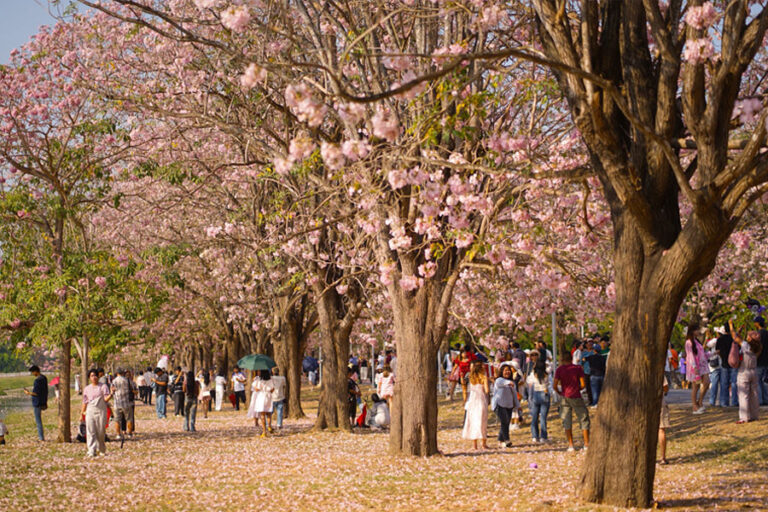
Pink trumpet trees draw thousands to Kasetsart’s Kamphaeng Saen campus

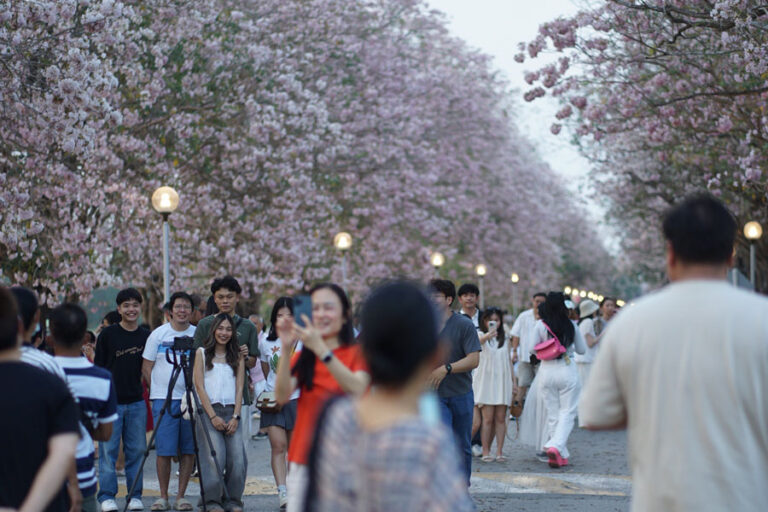
NAKHON PATHOM — 22 February 2026, thousands of visitors flocked to Kasetsart University’s Kamphaeng Saen campus over the weekend to admire the annual bloom of pink trumpet trees, one of the province’s most popular seasonal attractions.

Crowds gathered along Watthana Sthirasawat Road in front of the Kasetsart University Laboratory School, where the trees have begun flowering since mid-February. The 2026 Pink Trumpet Tree Festival officially opened on 14 February.

banner5

With Saturday marking a holiday, families and large tour groups packed the approximately 2 kilometre stretch of road, creating a festive atmosphere despite narrowing pedestrian space. Many visitors stopped to take photographs beneath the arching canopy of pink blossoms, while others enjoyed family activities along the scenic route.

The event remains lively even as Thailand enters the hot season, as recently declared by the Meteorological Department. Visitors continued streaming in throughout the day to view what has become known as the campus’ “pink flower tunnel.”

The university’s pink trumpet trees were registered as a “heritage tree of the nation” by the Department of Cultural Promotion in 2019.

banner3 2

The planting initiative at the Kamphaeng Saen campus began in 1977 under the direction of Emeritus Prof. Dr. Watthana Sthirasawat, the campus’ first vice rector. The trees were originally intended to serve as windbreaks and provide long-term shade. Seeds were supplied by Prof. Rapee Sagarik, then rector of Kasetsart University, who brought them from Singapore.

Today, the campus is home to 1,258 pink trumpet trees planted across key areas, including hundreds lining Watthana Sthirasawat Road and others spread throughout its gardens and ponds

The 2026 festival runs from 11 February to 2 March. More information is available at 034-351540 (Monday–Friday, 08:30–16:30) or via the official Facebook page of Kasetsart University, Kamphaeng Saen campus.banner2 3

Advertisement

Defence minister calls Tea Seiha over undisciplined Cambodian troops

Defence Minister Gen. Natthaphon Narkphanit

BANGKOK — Defence Minister Gen. Natthaphon Narkphanit said he has raised concerns with his Cambodian counterpart over forest fires along the Thai-Cambodian border, warning that undisciplined actions by Cambodian troops could escalate tensions.

Speaking on 23 February 2026 at the Royal Thai Air Force headquarters, Natthaphon said he had directly contacted Cambodian Defence Minister Gen. Tea Seiha to complain about what he described as Cambodian soldiers burning forest areas along the border.

He said Thailand had previously expressed concern about landmines and was now troubled by the burning of forest near the frontier, which could spread into Thai territory and lead to clashes. If Cambodia genuinely wanted to resolve issues peacefully, this should not be the method, he said, adding that he had reiterated the warning after the fires continued.

Natthaphon also accused Cambodian soldiers of spreading false information, including a recent claim that Thai troops had shot and wounded a Cambodian soldier. He said available evidence did not support that allegation and that Thailand had already lodged a protest.

On border security, he said Thailand must maintain troop deployments in areas it currently controls, citing concerns that some Cambodian troops lack discipline and could encroach on Thai territory. However, he acknowledged that sustaining such deployments indefinitely would be costly.

He proposed constructing permanent fencing along parts of the 798-kilometre border, particularly in high-traffic areas such as Ban Khlong Luek in Sa Kaeo and Thmor Da in Trat. The plan could include electronic fencing and CCTV systems in selected areas.

Other sections of the border, including Phu Makuea in Si Sa Ket and Chong An Ma and Chong Bok in Ubon Ratchathani, could be developed into tourist sites or memorial areas to ensure regular civilian presence and monitoring, he said.

He also suggested allocating land for veterans to establish self-defence border villages, with support from the Ministry of Natural Resources and Environment. If all measures are implemented, troop levels could eventually be reduced.

Advertisement

Hot News

LATEST NEWS

Bangkok
overcast clouds
31.6 ° C
31.6 °
31.1 °
68 %
3.5kmh
93 %
Sat
35 °
Sun
36 °
Mon
33 °
Tue
35 °
Wed
32 °