25 C
Bangkok
Sunday, June 14, 2026
Home Blog Page 125

Defence minister calls Tea Seiha over undisciplined Cambodian troops

Defence Minister Gen. Natthaphon Narkphanit

BANGKOK — Defence Minister Gen. Natthaphon Narkphanit said he has raised concerns with his Cambodian counterpart over forest fires along the Thai-Cambodian border, warning that undisciplined actions by Cambodian troops could escalate tensions.

Speaking on 23 February 2026 at the Royal Thai Air Force headquarters, Natthaphon said he had directly contacted Cambodian Defence Minister Gen. Tea Seiha to complain about what he described as Cambodian soldiers burning forest areas along the border.

He said Thailand had previously expressed concern about landmines and was now troubled by the burning of forest near the frontier, which could spread into Thai territory and lead to clashes. If Cambodia genuinely wanted to resolve issues peacefully, this should not be the method, he said, adding that he had reiterated the warning after the fires continued.

Natthaphon also accused Cambodian soldiers of spreading false information, including a recent claim that Thai troops had shot and wounded a Cambodian soldier. He said available evidence did not support that allegation and that Thailand had already lodged a protest.

On border security, he said Thailand must maintain troop deployments in areas it currently controls, citing concerns that some Cambodian troops lack discipline and could encroach on Thai territory. However, he acknowledged that sustaining such deployments indefinitely would be costly.

He proposed constructing permanent fencing along parts of the 798-kilometre border, particularly in high-traffic areas such as Ban Khlong Luek in Sa Kaeo and Thmor Da in Trat. The plan could include electronic fencing and CCTV systems in selected areas.

Other sections of the border, including Phu Makuea in Si Sa Ket and Chong An Ma and Chong Bok in Ubon Ratchathani, could be developed into tourist sites or memorial areas to ensure regular civilian presence and monitoring, he said.

He also suggested allocating land for veterans to establish self-defence border villages, with support from the Ministry of Natural Resources and Environment. If all measures are implemented, troop levels could eventually be reduced.

Advertisement

Thai man breaks legs fleeing hospital cable theft

Thai man breaks legs fleeing hospital cable theft

TRANG — 22 February 2026, A 43-year-old man suspected of cutting and stealing electrical cables from Trang Hospital was seriously injured after crashing his motorcycle into a shrine sign while fleeing security guards.

Police at Mueang Trang Police Station said they were alerted at about 23:00 that a theft suspect had crashed into a concrete base and metal pole at the entrance sign to the Phra Phikanet shrine in the Thai Samut housing estate on Huai Yot Road in Thap Thiang subdistrict, Mueang Trang district.

Authorities found an orange Honda Click Play motorcycle with Trang registration plates damaged after striking the shrine’s concrete base. Bolt cutters were discovered inside the vehicle.

The rider, identified as 43-year-old Weerapong Singkaew, a resident of tambon Na Ta Luang in Mueang Trang district, was found nearby. He had suffered fractures to both legs as well as head and body injuries. Rescue workers provided first aid before taking him to Trang Hospital for treatment.

Hospital security guards said they had been conducting a routine patrol when they discovered a power outage near a shallow well used as part of the hospital’s utilities system. After contacting an electrician to investigate, they found electrical cables had been cut and some lengths coiled in a pile, suggesting deliberate removal.

Thai man breaks legs fleeing hospital cable theft

Guards lay in wait and later saw the suspect park his motorcycle and collect the bundled cables, wrapping them in a large quilt before loading them onto the vehicle. When security officers identified themselves and attempted to detain him, he sped off with the cables.

Security staff pursued him while coordinating with police. During the chase, the suspect allegedly drove against traffic and circled through several roads. Guards said he appeared to taunt them and at one point threw the bundled cables onto the roadside.

The pursuit ended when the man attempted to turn into a side street but lost control and crashed into the base of the shrine sign, suffering injuries.

Officials later recovered the discarded cables, along with a headlamp found among the pile.

Trang Hospital authorities said they are compiling evidence and coordinating with investigators to file a formal complaint. The suspect faces charges of theft of state property and related offences under Thai law.

Advertisement

Kim reelected to top post of North Korea’s ruling party as it hails his nuclear buildup

This photo provided Monday, Feb. 23, 2026, by the North Korean government, its leader Kim Jong Un, center, claps hands as he was re-elected to the top post of the ruling Workers’ Party, during the party's Congress in Pyongyang, Sunday, Feb. 22, 2026. Independent journalists were not given access to cover the event depicted in this image distributed by the North Korean government. The content of this image is as provided and cannot be independently verified. Korean language watermark on image as provided by source reads: "KCNA" which is the abbreviation for Korean Central News Agency. (Korean Central News Agency/Korea News Service via AP)

SEOUL, South Korea (AP) — North Korean leader Kim Jong Un was reelected to the top post of the ruling Workers’ Party, with delegates crediting him for bolstering the country’s nuclear arsenal and strengthening its regional standing, state media reported Monday.

The report from the party congress, a major propaganda spectacle where Kim is expected to outline his political and military goals for the next five years, suggests he will double down on accelerating a nuclear arsenal already equipped with missiles capable of threatening Asian U.S. allies and the American mainland.

The party also released a new roster for its powerful Central Committee that confirmed a generational shift in Kim’s leadership circle, with aging military chiefs and the 76-year-old head of Pyongyang’s rubber-stamp parliament among dozens replaced in the 138-member body.

The congress, which began last Thursday, comes as Kim grows increasingly assertive in regional politics, following an aggressive expansion of his nuclear arsenal and closer ties with Russia forged through joint war efforts in Ukraine, which have deepened his standoffs with Washington and Seoul. Kim has also pursued stronger ties with China, traveling to Beijing last September and having his first summit with Chinese President Xi Jinping in six years.

Analysts say Kim will likely use the meeting to unveil new military goals, including strengthening conventional forces and integrating them with nuclear capabilities, while reemphasizing a campaign for economic “self-reliance” through mass mobilization, following gradual post-pandemic gains fueled by rebounding trade with China and arms exports to Russia.

Party credits Kim’s leadership as a boost to national pride

North Korea’s official Korean Central News Agency said Kim was reelected as the party’s general secretary with the “unshakable will and unanimous desire” of thousands of delegates on the fourth day of meetings Sunday.

Under party rules, the congress, which Kim has held every five years since 2016, elects the general secretary to serve as the party’s top representative and leader. Kim, 42, has held the party’s top post throughout his rule, though the title changed from first secretary to chairman at the congress in 2016 and then to general secretary at the congress in 2021.

The party said in a statement that by building up nuclear forces, Kim has created a military capable of handling “any threat of aggression” and “any form of war,” and credited his leadership with “reliably guaranteeing” the country’s future and “boosting the pride and self-esteem” of North Koreans.

It also praised Kim’s recent foreign policy, which it said raised national prestige.

Party’s leadership reshuffle reflects generational shift

KCNA said the congress adopted revisions to party rules during Sunday’s meeting but did not immediately provide details. Experts had anticipated that Kim would use the congress to entrench his hard-line stance toward South Korea and possibly rewrite party rules to codify his characterization of inter-Korean relations as between two “hostile” states.

State media so far haven’t mentioned any comments by Kim or other senior leaders at the congress directly addressing relations with Washington and Seoul.

Yoon Min Ho, a spokesperson at South Korea’s Unification Ministry, described Kim’s reelection as a predictable move to further burnish his leadership and that Seoul will closely watch further messages from the congress.

The most notable change to the new Central Committee list was the exclusion of Choe Ryong Hae, chairman of the standing committee of the Supreme People’s Assembly, who earlier part ofin Kim’s rule was seen as the second most powerful individual in Pyongyang. Also left out were military marshals Pak Jong Chon and Ri Pyong Chol, who had rose in the leadership ranks while Kim sped up his nuclear development over the past decade.

Yoon also noted the removal of key officials who handled inter-Korean affairs, including Kim Yong Chol and Ri Son Gwon, who served key roles in carrying out Kim Jong Un’s diplomacy with then-South Korean President Moon Jae-in and President Donald Trump in 2018 and 2019.

North Korea has suspended all meaningful diplomacy with the United States and South Korea since the collapse of a 2019 summit between Kim Jong Un and Trump over disagreements about exchange sanctions relief for steps to wind down Kim’s nuclear and missile program.

Kim’s government has rejected dialogue offers from Trump since the American president began his second term, urging Washington to drop its demand for North Korea’s denuclearization as a precondition for talks. Inter-Korean relations further deteriorated in 2024 when Kim abandoned the North’s long-standing goal of peaceful reunification and declared the war-divided South a permanent enemy.


Advertisement

Blue Button jellyfish shut Similan beach zone

Blue Button jellyfish shut Similan beach zone

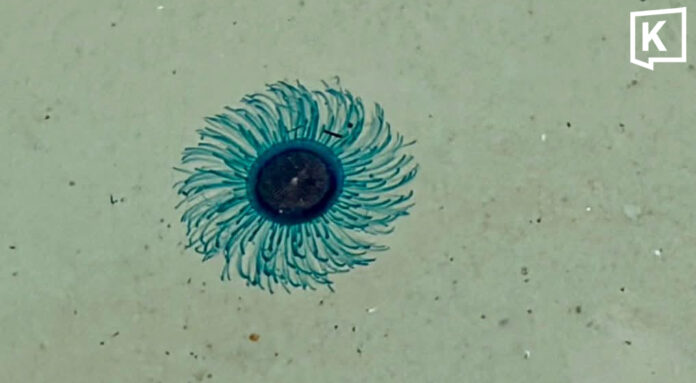
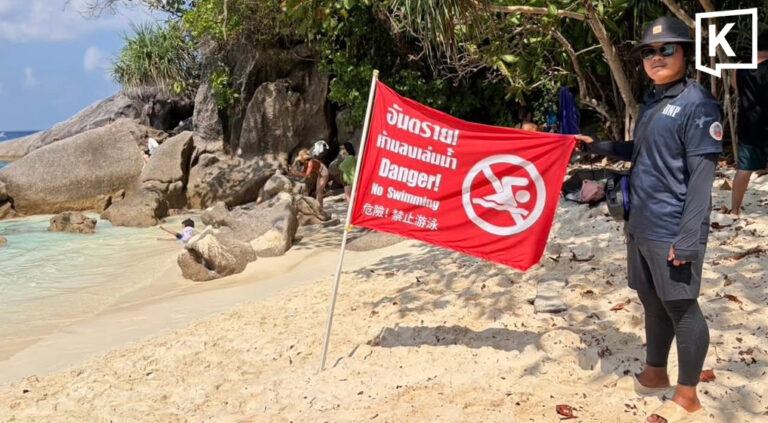
PHANG NGA — 23 February 2026, Mu Ko Similan National Park has warned visitors after Blue Button jellyfish were found along parts of the shoreline in designated swimming areas, particularly on the eastern side (Hat Na) of Island No. 4.

The marine creatures are bright blue, with a distinctive round, button-like disc at the centre and numerous tentacles surrounding the body. They typically drift with currents and are blown ashore.


Although their venom is less severe than that of box jellyfish, contact can cause an immediate burning or stinging sensation, red rashes, swelling, itching or small fluid-filled blisters. Even when stranded on the beach, they can still irritate the skin and should not be touched directly.

Blue Button jellyfish shut Similan beach zone

For first aid, officials advise rinsing the affected area with seawater. Fresh water should not be used immediately, and the wound should not be rubbed. Any remaining tentacles should be carefully removed. Those experiencing severe pain, spreading rashes or unusual symptoms should alert park officials at once.

The park has temporarily closed the eastern swimming zone (Hat Na) on Island No. 4 until conditions are deemed safe.

Visitors who encounter the jellyfish elsewhere are urged to inform officials immediately and to follow all safety instructions strictly.

Advertisement

Thailand ranks third in Reddit complaints on taxi scams, UK insurer finds

BANGKOK — AllClear, a UK insurance company, has revealed research showing that taxi scams can occur anywhere and at any time, particularly when visitors appear unfamiliar with local fares.

Since December 2025, the travel insurer has analysed more than 450 Reddit posts and over 30,000 comments discussing taxi scams to identify the countries attracting the most complaints. The study found that travellers are most likely to report problems in Turkey, which generated 4,224 comments — nearly double the figure for India in second place with 2,301 comments.

Thailand ranked third with 2,169 comments, followed by Vietnam (1,741), Egypt (1,715), Australia (1,598), Mexico (1,367), Morocco (1,329), the United States of America (1,283) and Canada (995).

The top 15 also included France (957), Colombia (924), the Philippines (840), Italy (832) and Norway (799).

AllClear advised travellers to check local taxi rates before getting into a vehicle and to report any suspected scam to the appropriate authorities.

Advertisement

72 tigers die in Chiang Mai amid distemper outbreak

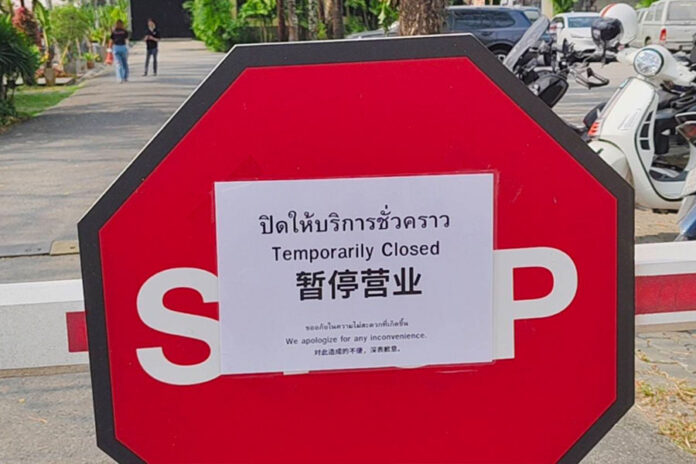
Two facilities in Chiang Mai have temporarily closed following a suspected outbreak that has killed 72 tigers

CHIANG MAI — 23 February 2026, Authorities are monitoring sick tigers at two facilities in Chiang Mai after 72 animals died in an outbreak officials say was caused by canine distemper virus (CDV).

Sources familiar with the investigation said close attention is being paid to infected tigers undergoing treatment at facilities in Mae Rim and Mae Taeng districts to determine whether additional deaths occur. Laboratory tests are also pending on animal feed supplied to the sites.

DukDae 1
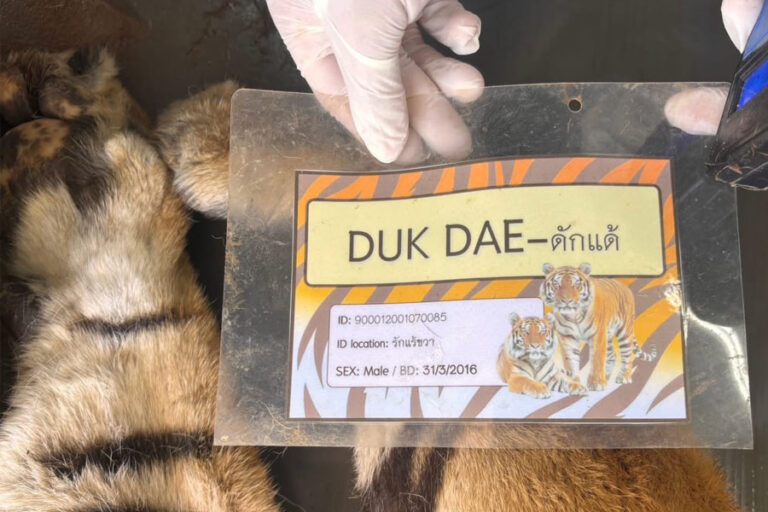
Duk-Dae, a tiger at one of the facilities, was nearly 10 years old when he died from canine distemper

Officials from the Department of Livestock Development have maintained that the deaths were caused by CDV. However, some veterinarians in Chiang Mai have urged a more detailed investigation before a final conclusion is announced, calling for comprehensive testing to rule out other diseases such as feline distemper or avian influenza.

A Facebook user identifying as “Visit Arsaithamkul,” who claims to be a zoo and wildlife veterinarian and part of the on-site response team in Mae Rim and Mae Taeng, posted a detailed account of the incident, expressing concern about the situation.

Several local veterinarians told reporters they believe the virus may have been introduced through contaminated food. They alleged that authorities may be attempting to minimise potential economic fallout by framing the outbreak under a specific diagnosis, a claim that has fuelled public debate. Officials have not commented on that allegation.

What is Canine distemper?

Canine distemper is a highly contagious viral disease that affects dogs and can also infect wildlife, including tigers. It attacks the respiratory, digestive and nervous systems, causing high fever, vomiting, severe diarrhoea and neurological complications, and carries a high mortality rate in unvaccinated animals. The virus spreads through direct contact, airborne droplets and contaminated food or surfaces, particularly in captive settings. Health authorities say it is not known to infect humans.

Relevant agencies have stepped up disease control measures after tigers at facilities in Chiang Mai gradually fell ill and died. Authorities confirmed that 72 tigers died from canine distemper, with genetic material from canine distemper virus (CDV) and Mycoplasma spp. detected in laboratory tests.

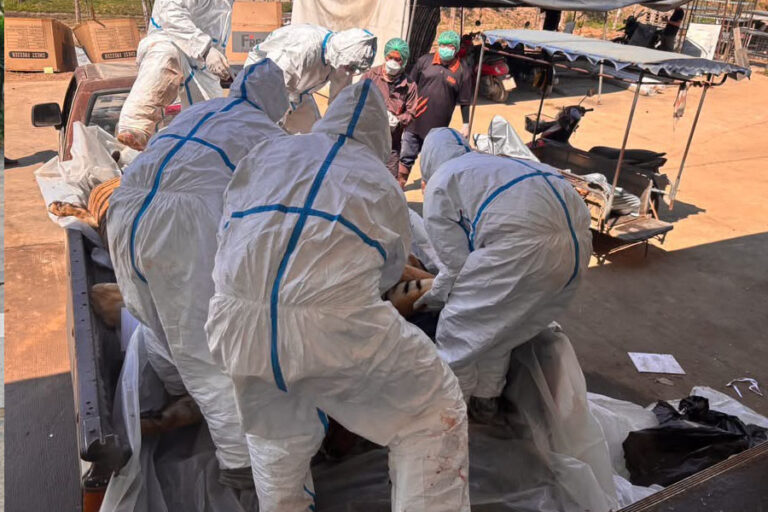
All carcasses were disposed of by incineration and burial on-site under strict supervision. Officials said the tigers were protected wildlife, each implanted with a microchip and registered. They confirmed that no body parts could be used for any purpose due to the infection risk.

authorities
Multiple personnel are required to move the tigers due to their size

At the Mae Taeng facility, entry has been restricted to authorised personnel only. Staff and vehicles entering or leaving must undergo disinfection. Provincial livestock officers are disinfecting enclosures and surrounding areas.

Human health monitoring

The Department of Disease Control said 108 people who had close contact with the tigers between 8 and 19 February are being monitored. No illnesses or abnormal symptoms have been reported, but health surveillance will continue for at least 21 days, in line with disease monitoring guidelines.

Authorities said some wildlife diseases can be transmitted to humans and urged the public to avoid contact with sick animals or animal secretions. The Public Health Ministry advised people to eat thoroughly cooked food, wash hands frequently with soap or alcohol gel, and avoid directly handling or feeding animals at zoos or animal facilities.

Officials said the facilities plan to reopen once the outbreak is fully contained. The Department of Disease Control said it will continue providing updates. Members of the public with concerns can call the hotline at 1422.

Breakdown of deaths

Of the 72 tigers that died:

  • 21 were at the Mae Rim facility
  • 51 were at the Mae Taeng facility

A total of 124 tigers remain.

The outbreak began on 8 February 2026, when 31 tigers at the Mae Taeng facility showed signs of illness. The first death was reported on 9 February. Laboratory confirmation of canine distemper was received on 20 February 2026.

Authorities said investigations, including laboratory analysis, necropsies and epidemiological inquiries, are ongoing to determine the precise cause and risk factors behind the outbreak.

food1
While authorities have not confirmed the source, some veterinarians suspect contaminated food, noting that tigers at two separate facilities were affected
Advertisement

Thai cockfighting spurs spark animal cruelty fears

Thai cockfighting spurs spark animal cruelty fears

CHUMPHON — 23 February 2026, Animal welfare advocates have urged authorities to tighten oversight of cockfighting arenas in Chumphon over the use of sharp metal spurs, saying the practice violates cultural tradition and may amount to animal cruelty.

Campaigners said the attachment of elongated metal spurs, or knife-like gaffs, to fighting cocks contravenes both legal and ethical standards in Thailand. They argue that forcing animals to fight with such weapons, often until death, constitutes one of the most severe forms of abuse.

Under Thailand’s Animal Cruelty Prevention and Welfare Act of 2014, traditional cockfighting is exempted from being classified as animal cruelty under Section 21 (11). However, the exemption applies only if the activity complies with regulations set by law.

The 2009 Interior Ministry regulation on cockfighting and fish fighting prohibits reinforcing or sharpening natural spurs in ways deemed cruel. If metal spurs or blades are attached to a bird’s legs with the intent to cause severe wounds or rapid death, the act is considered contrary to “good cultural traditions” and may be subject to prosecution.

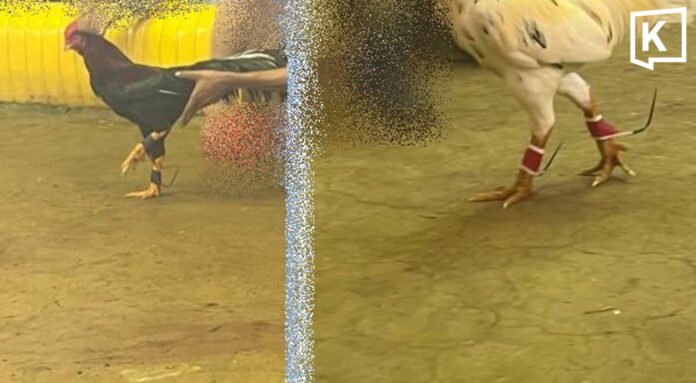
Photographs circulating online appear to show unusually long, sharpened metal spurs, weapons not found naturally on roosters, designed to pierce vital organs such as the lungs or eyes. Such implements frequently result in serious injury or swift death.

In regulated or conservation-style cockfighting, organisers typically wrap natural spurs with plaster or tape to reduce the risk of grave injury. The use of sharp metal spurs, critics say, shifts the focus from tactical competition to victory through lethal force and extreme suffering.

International animal welfare organisations, including People for the Ethical Treatment of Animals and American Society for the Prevention of Cruelty to Animals, classify cockfighting with metal spurs or knives as among the most brutal forms of animal cruelty because it compels animals to fight to the death in distressing conditions.

Local animal lovers say concern over the practice has long existed, but few have spoken out publicly for fear of influential figures linked to the sport. A review found that at several properly licensed arenas, most handlers continue to use metal spurs.

Advocates are calling on relevant officials to impose strict measures to halt the practice, in order to prevent cruelty and ensure animal welfare protections are enforced.

Advertisement

Thailand named among Architectural Digest’s best countries to live in for 2026

Wat Arun temple at twilight in Bangkok, Thailand.

Thailand has been included in Architectural Digest magazine’s list of “The Best Countries to Live in: Our Top Picks for 2026,” earning recognition as one of the world’s top destinations for design lovers.

In its latest feature published on its website, Architectural Digest said the best countries to live in combine awe-inspiring architecture, innovative urban planning and a culture rich in artistic expression. While design excellence may not directly correlate with economic power or military strength, the magazine noted that a strong focus on design can significantly enhance quality of life.

The ranking drew from multiple global indices, using U.S. News & World Report’s most recent Best Countries in the World list as a starting point. Editors then identified the top 20 design-forward nations, factoring in the 2026 Best Countries for Quality of Life ranking by Astons, the latest 10 Best Countries to Live In list by Global Citizen Solutions, and the Best Countries to Live In 2026 report by World Population Review.

The 20 countries named in the list are Switzerland, Japan, the United States, Australia, Sweden, Germany, the United Kingdom, New Zealand, Denmark, France, the Netherlands, Singapore, Italy, South Korea, Finland, Iceland, Luxembourg, Thailand, Brazil and Mexico.

For Thailand, the magazine highlighted its relatively low cost of living compared with many Western European nations, noting that the country has become an increasingly popular hub for digital nomads.

Design enthusiasts, the publication wrote, can explore ornate Buddhist temples alongside contemporary creative spaces such as the Thailand Creative & Design Center in Bangkok. The capital, designated a UNESCO City of Design, also hosts major international events including ASA Architect Expo, STYLE Bangkok and Bangkok Design Week, which draw global audiences with exhibitions, workshops, experimental installations and culinary showcases.

Advertisement

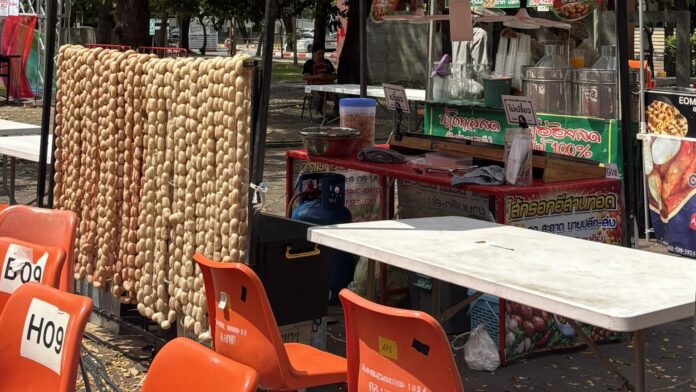
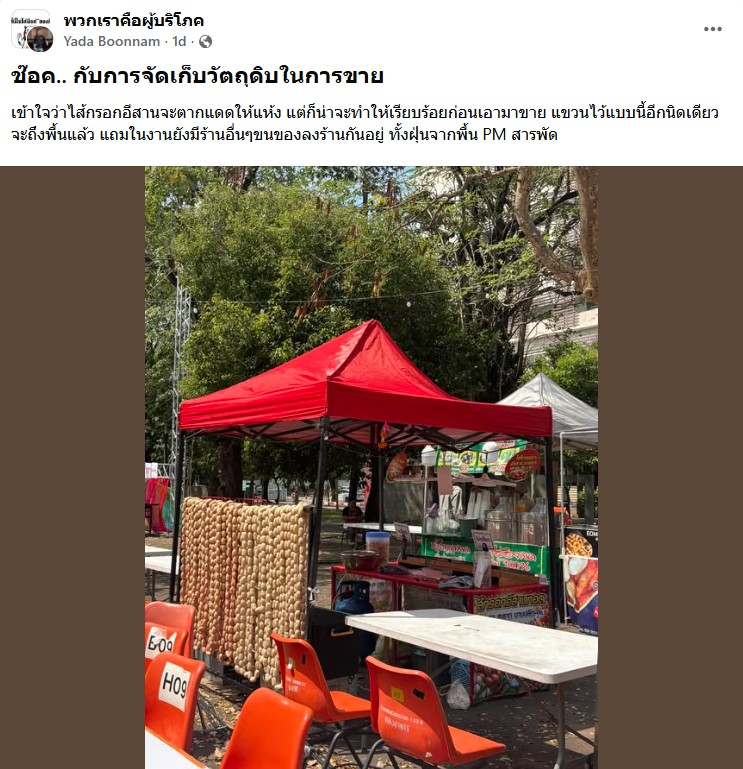
‘Normal or Not?’ Viral Isan sausage post divides netizens

BANGKOK — One of Thailand’s most popular northeastern dishes, Isan sausage, has become the focus of an online debate after photos of a roadside vendor’s drying process circulated widely on social media.

On 22 February 2026, a Facebook user shared images in a group showing sausages being hung out to dry in the sun at a relatively low height above the ground. The post questioned hygiene standards, noting that the stall was located at an event where other vendors were unloading goods, raising concerns about dust, ground-level contamination and air pollution.

messageImage 1771759978110

The post drew mixed reactions. Some commenters argued that such practices would not be tolerated in more developed countries, where food safety inspections are strict and violations can result in fines or closure. Others said they preferred buying factory-packaged products from freezers to ensure cleanliness. One user described the situation as “something that shouldn’t be normal.”

However, several netizens defended the vendor, saying sun-drying is a traditional method and that street food environments vary. Some suggested that critics who were uncomfortable with such conditions should opt to dine in malls or restaurants instead.

messageImage 1771760521817

The shop owner’s daughter later responded in the comments, identifying the stall as her mother’s business. She asked whether the method appeared unhygienic or unappetising and requested constructive advice, saying they were unaware of any mistakes.

Commenters recommended improving sanitation by covering the sausages with a protective net to prevent dust contamination or hanging them significantly higher above ground level during the drying process.

Advertisement

Navy Region 1 seizes Cambodian fishing boat in Thai waters

The Cambodian fishing boat seized by the Royal Thai Navy in Thai waters off Trat, with three crew members detained for alleged illegal entry and fishing.

TRAT — Royal Thai Navy Region 1 on 22 February 2026 intercepted a Cambodian fishing vessel in Thai territorial waters off Khlong Yai district, authorities said.

The arrest was reported at 10:00 by the commander of patrol boat Tor 996. The vessel was located at latitude 11°31.51’ North and longitude 102°53.40’ East.

Three Cambodian crew members were found on board. Officials said they could not communicate in Thai and had no identification or legal documentation for entering Thai waters. Two crates of fresh squid were discovered on the boat. The crew reportedly admitted to fishing in Thai waters for two days.

The vessel and crew were taken to Khlong Yai Multipurpose Port for legal proceedings. Authorities are coordinating with the Thai Maritime Enforcement Command Centre in Trat for further investigation. The case remains under inquiry in accordance with Thai law.

Advertisement

Hot News

LATEST NEWS

Bangkok
overcast clouds
25 ° C
25 °
25 °
64 %
3kmh
98 %
Sun
35 °
Mon
35 °
Tue
34 °
Wed
32 °
Thu
35 °