



































31.6 C
Bangkok
Monday, June 15, 2026
Home Blog Page 135

Police arrest Malaysian scammer suspect in 1.93m baht fraud

Police arrest Malaysian scammer suspect in 1.93m baht fraud

PATTAYA — Police in Pattaya have arrested a Malaysian national accused of involvement in a cross-border call centre scam that defrauded a 20-year-old man of 1,933,000 baht in cash after arranging a handover in a shopping centre car park.

Officers at Pattaya City Police Station said the victim, identified only as Pen Tai, filed a complaint on 11 February 2026 after receiving a phone call from a number claiming to represent an AIS mobile service centre.

The caller alleged that the victim’s national ID card details had been used to register a phone number to promote an online gambling website. The suspect then instructed the victim to continue the conversation via the Line messaging application, claiming authorities needed to examine his financial trail.

The victim was told to withdraw cash for inspection. Believing the claim, he withdrew 1,933,000 baht and delivered the money to a man in the car park of Big C South Pattaya.

CCTV footage from 11 February 2026 showed a suspect wearing a white long-sleeved shirt, a face mask and carrying a black backpack walking in the car park at 14:42.

At 14:50, the man approached the rear of the victim’s vehicle, received the cash and returned inside the shopping centre.

At 15:01, he exited a restroom wearing a white short-sleeved shirt and no mask before leaving the building.

At 15:16, he entered a white Toyota Yaris Cross registered in Bangkok and drove along Sukhumvit Road towards the capital.

Police said the vehicle was registered to a man named Noppadol but was being used by his 60-year-old father, Samphan, who works as a ride-hailing driver through a mobile application. The driver told investigators he had transported a passenger from Bangkok to Pattaya and later returned him to a hotel in the Ngamwongwan area of Nonthaburi province.

Investigators identified the hotel guest as Yap Chin Keong, a Malaysian national who most recently entered Thailand on 10 February 2026 via Don Mueang International Airport. Police said passport photographs matched the suspect seen in CCTV footage.

Officers from Pattaya City Police Station obtained a court warrant and arrested the suspect at a hotel in Nonthaburi on 14 February 2026, in cooperation with officers from Bang Phongphang Police Station.

He faces charges including joint fraud by impersonation, joint forgery and use of forged official documents, and jointly importing false information into a computer system.

The suspect has been taken into custody for legal proceedings.

Advertisement

Former PM Srettha proposes Thai economic ‘cure’ in Financial Times letter

FILE - Former Thai Prime Minister Srettha Thavisin (AP Photo/Sakchai Lalit, File)

Former Prime Minister Srettha Thavisin has proposed solutions to Thailand’s economic challenges in a letter published by the Financial Times on 11 Febuary, titled “A former PM offers a cure for Thailand’s economic ills.”

Responding to a 4 Febuary report that labeled Thailand the “sick man” of Asia, Srettha wrote that while the article identified the country’s economic “symptoms,” it overlooked potential remedies.

He called for a “big reset” to tackle household debt, urging asset management companies to purchase non-performing loans to ease debt burdens and revive domestic consumption, arguing that past stimulus measures and cash handouts alone were insufficient.

Srettha also outlined a two-pronged strategy to integrate Thailand more deeply into the global economy: investing in major infrastructure projects such as a north-south railway and a land bridge linking the Andaman Sea and Gulf of Thailand, and modernizing regulations, including direct power purchase agreements to attract green-focused global investors.

He added that tourism should shift from volume to value and that improving ease of doing business is essential for long-term competitiveness.

Advertisement

Switzerland returns 11 Ban Chiang artifacts to Thailand

BERN — The Royal Thai Embassy in Bern held an official ceremony marking the voluntary restitution of 11 cultural artifacts to Thailand on 11 Febuary.

632977403 1345625430941193 1586860346990036207 n

Thai Ambassador to Switzerland Pannabha Chandraramya received the items on behalf of the Thai government from Fabienne Baraga, Head of the Specialist Body for the International Transfer of Cultural Property at the Federal Office of Culture, representing the Swiss Confederation.

The artifacts were voluntarily returned through Swiss authorities by an anonymous collector who expressed a wish for the historically significant items to be restored to their country of origin. Preliminary assessments indicate the objects may have originated from the Ban Chiang Archaeological Site in northeastern Thailand, a UNESCO World Heritage site.

631637536 1345624107607992 1895743649423644767 n

The repatriation was described as a symbol of the enduring friendship and close cultural cooperation between Thailand and Switzerland, reflecting a shared commitment to protecting global cultural heritage.

The ceremony was attended by representatives from the Swiss Federal Department of Foreign Affairs, the Federal Department of Home Affairs, and members of the Thai community in Switzerland.

631523257 1345624500941286 261404891621473336 n

The embassy will arrange for the artifacts to be transported to Thailand, where they will be handed over to the Department of Fine Arts under the Ministry of Culture for further academic verification and conservation. The items are expected to be registered as national treasures and may be displayed for educational and cultural purposes.

Advertisement

First rabies death of 2026 confirmed in Rayong after two days of symptoms

Thailand has recorded its first confirmed rabies death of 2026 after a 36-year-old Myanmar man died just two days after developing symptoms, the Department of Disease Control (DDC) said.

DDC Director-General Dr. Montri Kanasawat said on 13 February that the patient began showing symptoms on 23 January 2026, including chest tightness after drinking water, difficulty breathing and dizziness. He died on 25 January .

An investigation found the man had been bitten on his right hand by a puppy in December 2025. He did not clean the wound or seek medical treatment and did not receive post-exposure rabies vaccination. The puppy, whose ownership could not be confirmed, later disappeared and its health status remains unknown.

Health officials warned the public not to neglect vaccination following animal bites. Rabies continues to be found nationwide, particularly in the eastern, northeastern and southern regions.

In 2025, seven rabies deaths were reported in Chonburi, Tak, Si Sa Ket, Nakhon Ratchasima, Chachoengsao and Rayong. All victims failed to seek medical care after being bitten and did not receive post-exposure vaccination. More than half were infected by owned dogs.

Rabies is transmitted through the saliva of infected mammals via bites, scratches or contact with open wounds. Authorities urge the public to immediately wash wounds thoroughly, apply antiseptic, confine the animal if possible, seek medical attention and complete the vaccination course.

The incubation period varies depending on the location and amount of virus, typically ranging from two weeks to two months, though it can extend up to one year. Once symptoms appear — such as fever, headache, severe itching at the wound site, agitation, fear of light or wind, and difficulty swallowing — the disease is almost always fatal.

Pet owners are advised to vaccinate dogs and cats starting at 2–4 months of age and continue annual boosters. Animals showing unusual aggression or lethargy before sudden death should be reported immediately to local livestock authorities.

Advertisement

74-billion-baht Samui sea bridge set for 2029, 400 billion baht economic boost forecast

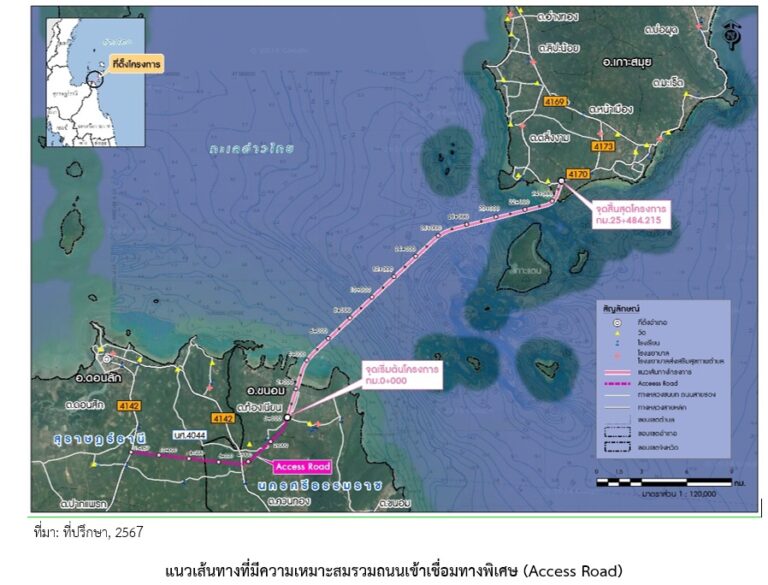
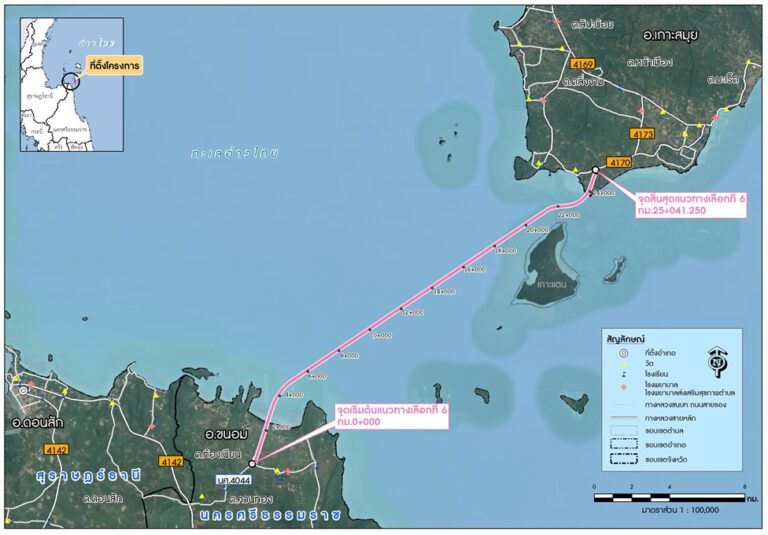
SURAT THANI — The Expressway Authority of Thailand (EXAT) has unveiled the final study results for the proposed 74-billion-baht Samui Expressway project, a 37.41-kilometer route linking the mainland to Koh Samui via a 22-kilometer sea bridge.

EXAT Governor Surachet Laophulsuk on 13 Febuary chaired the third public hearing at the Surat Thani Rajabhat University’s Samui Campus, presenting findings on engineering feasibility, economic returns, financial viability, and environmental impacts.

news110989 9yP57dTD2p1770969323

The four-lane expressway will begin at Highway 4142 in Don Sak district, pass through Khanom district in Nakhon Si Thammarat, and connect to Highway 4170 on Koh Samui. Its centerpiece is a cable-stayed bridge spanning 22 kilometers across the Gulf of Thailand, with a clearance of at least 50 meters to allow large vessels to pass in line with international standards.

The project is expected to cut travel time between the mainland and Koh Samui from about two hours by ferry to roughly 20 minutes by road. It would operate 24 hours a day, eliminating current limitations on nighttime travel.

A willingness-to-pay survey found most motorists are prepared to pay between 1,000 and 1,200 baht per four-wheel vehicle per trip, which EXAT says reflects the value placed on convenience and time savings.

The bridge will also integrate utility infrastructure, carrying electricity, water supply and telecommunications systems to enhance stability of essential services on the island.

Surachet said the route passes through Category 5 watershed areas and would not affect upstream water sources. Strict dust and noise mitigation measures will be implemented during construction.

news110989 4hgxpFBSzV1770969323

Land expropriation remains a key public concern. EXAT pledged fair compensation based on official appraisal and current market prices, with a formal appeals process available.

Over a 30-year period, the project is projected to generate up to 400 billion baht in economic circulation through tourism, employment and logistics, according to preliminary estimates.

EXAT stressed that motorcycles will not be permitted on the bridge due to safety risks. The structure will stand more than 50 meters above sea level — equivalent to a 15- to 20-story building — where strong sea winds could destabilize smaller vehicles. Alternative options such as ferry services or motorcycle transport carriers are being considered.

news110989 7H1SCCk8KL1770969324

Under the current timeline, the project will be proposed to the EXAT board and the Transport Ministry this year, followed by an Environmental Impact Assessment (EIA). Cabinet approval is expected by 2027, after which the project would proceed under a public-private partnership (PPP) model. Construction is tentatively targeted to begin in 2029, with operations projected by late 2033.

Advertisement

Thailand to slash visa-free stay from 60 to 30 days amid security concerns

BANGKOK — The government is reviewing its 60-day visa-free entry scheme and may cut the permitted visa-free stay to 30 days, citing concerns over illegal activities and national security.

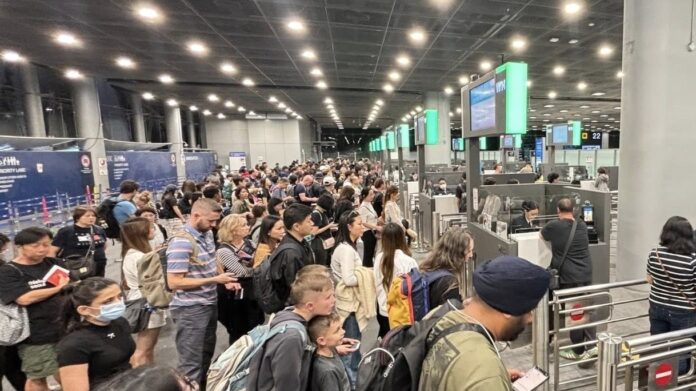
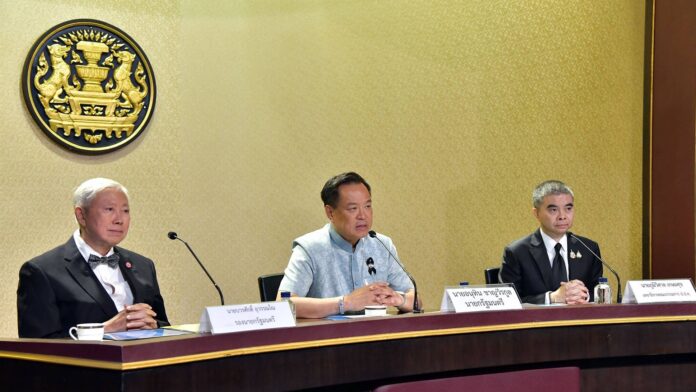
Deputy government spokeswoman Airin Phanthurat said on 10 February 2026 that the Cabinet acknowledged a report from the Foreign Affairs Ministry on visa measures introduced to stimulate tourism and the economy. Although the scheme has facilitated travel, authorities found that the 60-day exemption created loopholes affecting security and the country’s image.

The visa-free policy, in force since 15 July 2024, allows visitors from 93 countries and territories to stay for up to 60 days. Officials reported cases of foreigners misusing the privilege by working illegally or using Thailand as a transit route for crimes in neighbouring countries.

The prime minister has appointed a new Visa Policy Committee, chaired by the permanent secretary for foreign affairs, to review the measures. The ministry will submit its findings and propose revisions, including shortening the permitted stay.

Permanent tourism and sports secretary Natthriya Thaweevong said reducing the stay to 30 days should not affect tourism, as most visitors remain in Thailand for no more than 21 days on average. Those wishing to stay longer may apply for an extension.

She added that agencies including the Immigration Bureau agreed in principle to tighten the rule to prevent abuse. The caretaker government has the authority to approve the change.

The visa-free scheme was introduced under former prime minister Srettha Thavisin to revive sluggish tourism.

Advertisement

Sakaerat wildfire burns more than 3,000 rai in Nakhon Ratchasima

NAKHON RATCHASIMA — 13 February 2026, more than 3000 rai (4.8 sq km) of forest at the Sakaerat Environmental Research Station in Wang Nam Khiao district have been scorched by a fast-moving wildfire, with officials racing to contain the blaze along firebreak lines.

The fire broke out at approximately 20:40 on 12 February in the Ban Wang Nam Khiao area, within the research station’s grounds in Udom Sap subdistrict, Wang Nam Khiao district. Flames spread rapidly towards Ban Ba Dan village, prompting station officials to coordinate with firefighters and water trucks from the Udom Sap Subdistrict Administrative Organisation and other agencies.

Dry, hot weather conditions, combined with an accumulation of fallen leaves and branches, fuelled the rapid spread of the fire.

Local leaders, including the Udom Sap kamnan, village headmen and assistants, monitored the situation and reported developments to the Wang Nam Khiao district chief.

Although firebreaks had already been established across the Sakaerat Biosphere Reserve — which covers parts of the Khao Phaeng Ma National Reserved Forest in Wang Nam Khiao and Pak Thong Chai districts — the blaze, which began in a eucalyptus plantation adjacent to the reserve, intensified and spread quickly.

Mr. Surachit Waengsothorn, director of the research station, said the affected area is primarily dry dipterocarp forest, which is naturally fire-resistant and typically experiences seasonal fires during the dry period.

“The dry dipterocarp forest under the station’s supervision covers about 6,400 rai across Wang Nam Khiao and Pak Thong Chai districts. Around 80% has now been burned. However, there has been no significant damage to the trees, as most species have fire-resistant trunks,” he said.

He explained that seasonal fires are part of the ecosystem. Preventing fires for several consecutive years could alter the forest into dry evergreen forest, which would threaten wildlife such as hares, partridges and quails that depend on the current habitat.

Fire engines are unable to access deep forest areas, so officials are spraying water along 3 m-wide firebreaks to prevent the flames from spreading to nearby communities surrounding the station.

Controlled burns had previously been conducted to reduce fuel loads. However, wildfires in the dry dipterocarp forest occur annually, typically affecting up to 80% — or roughly 4,000 rai — of the total 6,400 rai.

Authorities are continuing close surveillance along boundary areas and coordinating with Udom Sap, San Chao Pho and Phu Luang subdistrict administrative organisations. Fire engines will be deployed to high-risk areas as needed.

At present, the fire remains active but is less intense, with officials maintaining containment efforts at multiple points.fire2 600x900 1

Advertisement

Anutin says Thailand ‘Fails’ after corruption score sinks to 19-year low

Prime Minister Anutin Charnvirakul speaks at a press conference on 12 February 2026 after Thailand’s corruption score fell to a 19-year low.

Bangkok — Prime Minister Anutin Charnvirakul on 12 February 2026 said Thailand had effectively “failed” after its Corruption Perceptions Index (CPI) score fell to the lowest level in 19 years.

Following the announcement by Transparency International of the 2025 CPI, Thailand scored 33 out of 100, ranking 116th out of 182 countries — down one point from the previous year and the lowest since the country began being ranked.

Anutin said the government was concerned about the result, noting that a score of 33 was “considered low — simply put, a failing grade” and could damage Thailand’s image by reinforcing perceptions of high corruption and low transparency.

He said the government had summoned the secretary-general of the Public Sector Anti-Corruption Commission to review the findings in detail and pledged to elevate anti-corruption reform to a national agenda item.

The prime minister ordered Deputy Prime Minister Borwornsak Uwanno and PACC Secretary-General Phumisak Kasemsuk to accelerate legal and regulatory reforms, including amendments to laws, ministerial regulations and procedures, or the drafting of new legislation to strengthen anti-graft enforcement.

20260212115357 3984

Anutin stressed that corruption was not limited to bribery but extended to structural issues in approval and licensing systems, which affect investor confidence. He said the law on facilitating business operations must be strictly enforced, with a dedicated agency assigned to oversee implementation.

He added that agencies including the PACC, the Anti-Money Laundering Office, the Office of the Public Sector Development Commission and the Board of Investment would coordinate to improve transparency and ensure strict enforcement against corrupt officials.

Thailand is also moving forward with its bid to join the Organisation for Economic Co-operation and Development, which Anutin said would help raise standards of transparency and international credibility.

“No matter which government takes office next, anti-corruption must remain an urgent national policy,” he said, warning that officials who violate transparency rules would face strict administrative and disciplinary penalties.

Advertisement

16 Chinese scam suspects arrested after illegal border crossing from Cambodia

Police layout the suspicious phones on a table before the suspects

SA KAEO — 13 February 2026, A joint border patrol in Sa Kaeo province arrested 16 Chinese nationals who allegedly entered Thailand illegally through a natural border crossing in Aranyaprathet district, seizing 266 mobile phones and one notebook computer. Authorities believe the group may have fled Poipet and attempted to relocate operations into Thailand.

Authorities believe the group may have fled Poipet and attempted to relocate operations into Thailand.

According to reports from the Khlong Hat Task Force, a patrol team from Ranger Company 1305, working with the Khlong Hat Task Force cavalry unit and the Burapha Task Force’s Company 3, was conducting surveillance along the Thai–Cambodian border shortly after midnight when officers spotted a group of individuals carrying luggage and walking through a natural passage into Thailand.

The group was intercepted between border markers 72 and 73 near Ban Khlong Wa Mai, Moo 7, Thap Phrik subdistrict, Aranyaprathet district, approximately 1 km from the borderline.

Officials identified the group as 16 Chinese nationals — 15 men and one woman — all of whom were unable to produce passports or valid travel documents upon request.

police on scene 600x900 1
Suspects are seated as police search their belongings

A search of their belongings uncovered 266 mobile phones and one notebook computer. None of the suspects claimed ownership of the devices.

Through an interpreter, the suspects told authorities they had previously travelled to Poipet, Cambodia, where they worked as administrators for scam-related online pages. They claimed their employer was preparing to transfer them to another location or a third country against their will, prompting them to plan a return to China via Thailand.

Investigators said the group hired a Cambodian broker to transport them to the banks of Khlong Nam Sai canal at a rate of 3,500 baht per person before crossing illegally into Thailand. They then trekked through sugarcane fields until they were apprehended.

All 16 suspects were taken to Ranger Company 1305 in Ban Khlong Sombun, Moo 2, Thap Phrik subdistrict, before being handed over, along with the seized items, to investigators at Khlong Nam Sai Police Station in Sa Kaeo for further legal proceedings.

lineup600x900
Police photograph the suspects alongside their belongings
Advertisement

EC claimed QR on ballot is not traceable, but is it?

EC claimed QR on ballot is not traceable, but is it

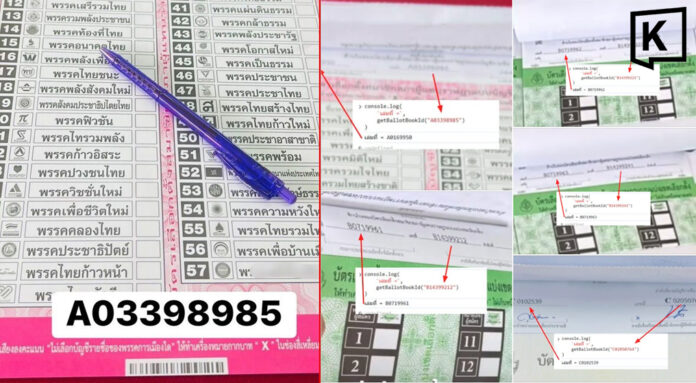
BANGKOK — 13 February 2026, Questions have spread widely online over the presence of barcodes and QR codes on Thai ballot papers, with critics warning they could potentially reveal how individuals voted and may breach election law.

The issue began after a Facebook user, Thuntee RB Sukchotrat, posted about QR codes printed on ballot papers and asked whether they could be used to verify counting errors.

He wrote that pink ballot papers carried a QR code in the top right corner and green ballots displayed one in the bottom left. According to the post, the codes appear to be eight-character alphanumeric serial numbers, possibly in Base32 or Base58 format, intended to prevent forgery or reduce counting errors.

However, the user questioned whether the QR codes might operate on a one-to-one basis or within a limited range, potentially enabling the identification of individual voters — a scenario that could contravene election law.

The post asked whether the QR codes could be used to scrutinise alleged discrepancies in ballot numbers nationwide, amid broader concerns about counting errors or possible ballot irregularities.

The controversy prompted widespread public questions to the Election Commission of Thailand. Acting Sub-Lieutenant Phatsakorn Siriphakdiayaporn, deputy secretary-general of the commission, said the concerns were likely based on a misunderstanding.

He said the barcodes were a security measure designed to identify which batch and polling station a ballot originated from, enabling administrative control. He stressed that the codes were not linked to any political party and were intended solely to ensure traceability of ballot distribution.

Subsequent online examinations, however, claimed that barcodes on pink party-list ballots matched the serial numbers printed on their counterfoils. Critics argued that this could make it possible to determine which number a voter selected.

Such a possibility, they said, could violate provisions of the Organic Act on the Election of Members of the House of Representatives, including Section 92, which requires voting to be “direct and secret”; Section 93, which mandates folding ballots to conceal votes; and Section 96, which prohibits marks that make ballots identifiable.

Another Facebook user, Thanarat Kuawattanaphan, posted a mathematical explanation suggesting that knowing a ballot’s barcode could allow someone to identify the corresponding ballot book and trace it back to a voter’s details.

He claimed that each ballot number is generated from its book number, with each book containing 20 ballots. Under the formula he cited, M = ⌊N/20⌋ + 1, knowledge of the ballot number (N) would reveal the book number (M). He further alleged that ballot numbers are uniquely generated and do not repeat, as each book number is multiplied by 20 and incremented sequentially from 1 to 20.

According to the post, this structure could allow a barcode to be traced back to an individual’s national identification number, name and surname.

The Election Commission has not publicly confirmed those claims.

Advertisement

Hot News

LATEST NEWS

Bangkok
broken clouds
31.6 ° C
32.8 °
30.5 °
79 %
4kmh
79 %
Mon
32 °
Tue
35 °
Wed
35 °
Thu
36 °
Fri
36 °