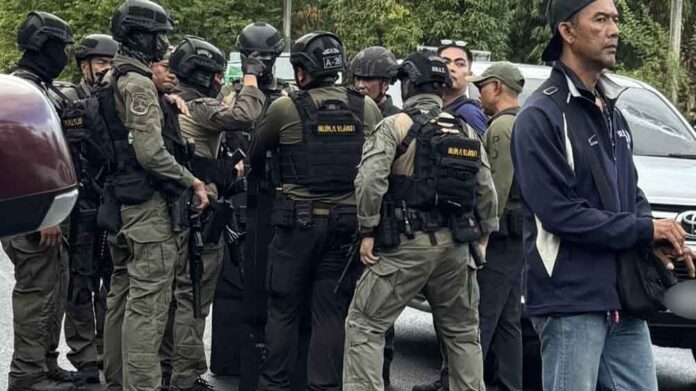
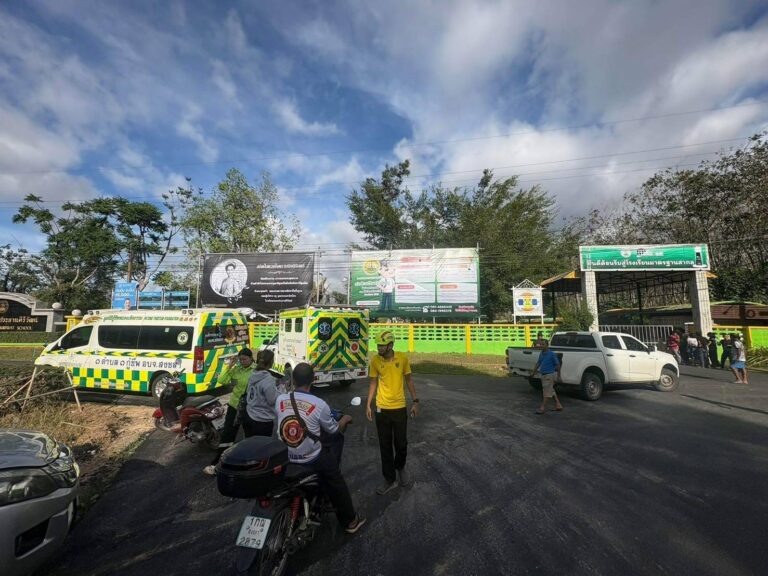
Police officers secure the area outside Phatong Prathankhiriwat School in Hat Yai on 11 February 2026 following a hostage incident.
HAT YAI — An 18-year-old gunman shot and wounded a school director and held more than 300 students hostage at a school in Hat Yai district on 11 February 2026 before police shot and arrested him, authorities said.
The incident occurred at about 16:30 at Phatong Prathankhiriwat School in Phatong subdistrict. Several people were injured, but the exact number was not immediately confirmed.
Police identified the suspect as Khemanan Kescharoen, 18, a resident of Hat Yai.
Investigators said that prior to the school attack, officers from Thung Lung Police Station had responded to a report of an 18-year-old man allegedly attempting to assault his mother at a house near the school. While officers were trying to calm the situation, the suspect allegedly seized an M4 rifle from police and fled into the school compound.
He reportedly approached the security booth and attempted to shoot a security guard, but the weapon malfunctioned, allowing the guard to escape.
The suspect then forced students to take him to the school director and fired two shots, wounding the director. Police later evacuated the injured director to hospital. The director’s condition was not disclosed.
Authorities said more than 300 students were held inside a classroom building at one point during the standoff. Other students were unable to leave the premises.
Hat Yai police, special operations officers and rescue workers cordoned off the area and evacuated those in safe zones while negotiators were deployed. During the standoff, the suspect reportedly fired intermittently and used a loudspeaker to warn police not to enter.
At about 18:30, police shot the suspect and took him into custody. Authorities said the situation was brought under control and all students were safely evacuated.
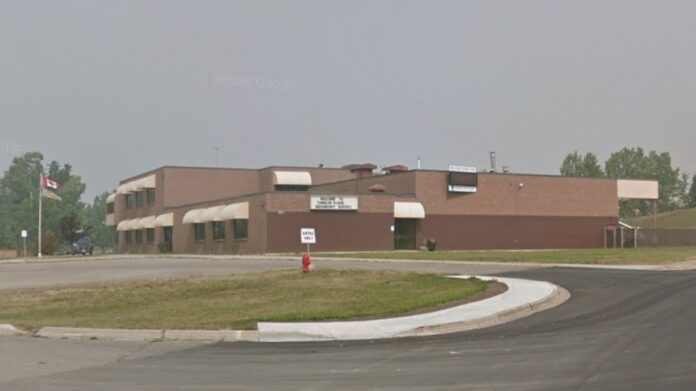
A Google Street View image shows Tumbler Ridge Secondary School in Tumbler Ridge, British Columbia, where a deadly shooting left 10 people dead.
VANCOUVER, British Columbia (AP) — A shooting at a school in British Columbia left eight dead including a woman whom police believe to be the shooter, while two more people were found dead at a nearby home, Canadian authorities said Tuesday.
The Royal Canadian Mounted Police said more than 25 people are injured, including two who were airlifted to hospital with life-threatening injuries, after the shooting at Tumbler Ridge Secondary School.
School shootings are rare in Canada.
The town of Tumbler Ridge in the Canadian Rockies is more than 1,000 kilometers (600 miles) north of Vancouver, near the border with Alberta. The provincial government website lists Tumbler Ridge Secondary School as having 175 students from Grades 7 to 12.
British Columbia Premier David Eby told reporters that police officers reached the school within two minutes.
They found seven people dead, local police said in a statement, including a suspect who appeared to have died of a “self-inflicted injury.” An eighth person died while being transported to a hospital, and two more were found dead at a home the authorities believe was connected to the attack.
RCMP Superintendent Ken Floyd told reporters that investigators had identified a female suspect but would not release a name, and that the shooter’s motive remained unclear. He added that police are still investigating how the victims are connected to the shooter.
Tumbler Ridge Mayor Darryl Krakowka said the whole community is grieving.
“I broke down,” he said, saying it was “devastating” to learn how many had died in the community of 2,700, which he called a “big family.”
“I have lived here for 18 years,” Krakowka said “I probably know every one of the victims.”
Pastor George Rowe of the Tumbler Ridge Fellowship Baptist Church went to the recreation center where the victims’ families were awaiting more information.
“It was not a pretty sight. Families are still waiting to hear if it’s their child that’s deceased and because of protocol and procedure the investigating team is very careful in releasing names,” Rowe said. “The big thing tonight was my having to walk away and the families still waiting to find out. It is so difficult. Other pastors and counselors are there so they are not alone.”
Rowe once taught at the high school and his three children graduated from there.
“To walk through the corridors of that school will never be the same again,” he said.
Canadian Prime Minister Mark Carney said in a social media post that he was devastated by the shooting in Tumbler Ridge.
“I join Canadians in grieving with those whose lives have been changed irreversibly today, and in gratitude for the courage and selflessness of the first responders who risked their lives to protect their fellow citizens,” he wrote.
Carney’s office said he is suspending a planned trip to Halifax, Nova Scotia and Munich, Germany. He was set to announce a long-awaited defense industrial strategy in Halifax on Wednesday before heading to Europe for the Munich Security Conference.
Eby, the province’s premier, told reporters he had spoken to Carney after what he called the “unimaginable tragedy.”
“I know it’s causing us all to hug our kids a little bit tighter tonight,” he said. “I’m asking the people of British Columbia to look after the people of Tumbler Ridge tonight.”
Canada’s government has responded to previous mass shootings with gun control measures, including a recently broadened ban on all guns it considers assault weapons.
Tuesday’s shootings were Canada’s deadliest rampage since 2020, when a gunman in Nova Scotia killed 13 people and set fires that left another nine dead.
Dash cam footage shows the moment the pickup owner confronts the alleged car thief after tracking the vehicle via GPS.
KORAT — A 61-year-old man in Nakhon Ratchasima rammed his vehicle into a suspected car thief after tracking his stolen pickup truck via GPS, but the suspect managed to flee.
The incident occurred in Ban Tha Yiam village, Kut Bot subdistrict, Soeng Sang district, on 11 February.
Kuekrit Suetrong said he discovered his Ford pickup missing from in front of his home at around 5:00. Initially believing his son had taken the vehicle to work, he later realised it had been stolen after confirming all family members were still at home.
Using the vehicle’s GPS tracker, he found the pickup moving about seven kilometres away. He and his son drove to track it down and eventually located it parked along a main road, where a man was allegedly changing the licence plates.
Kuekrit said he attempted to ram the suspect’s vehicle to stop him but hesitated to confront the man directly, unsure whether he was armed and noting the area was isolated. The suspect escaped unharmed.
He said he recognised the suspect as a former customer who had stayed at his resort several times and had presented himself as a friendly acquaintance.
Kuekrit was able to recover his pickup truck. A motorcycle believed to have been stolen and used in the theft was also found at the scene.
He has filed a complaint with Soeng Sang police. Officers said they have identified the suspect and are working to apprehend him.
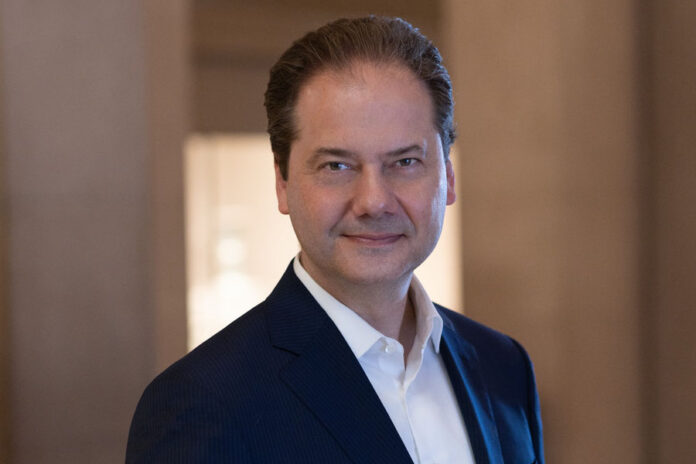
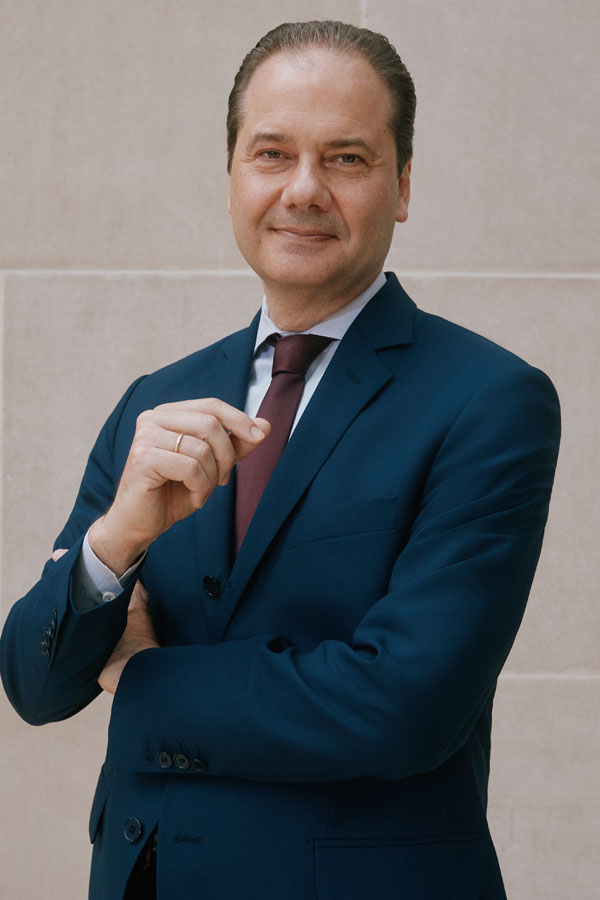
Max Hollein, Director and CEO of The Metropolitan Museum of Art in New York, answered questions from Khaosod English in an interview about the restitution of "Golden Boy" and other artefacts.
When Standing Shiva, known in Thailand as the Golden Boy, finally left New York in 2024, it was more than the return of a treasured bronze to its homeland. It was a milestone in a broader rethinking of cultural heritage, one that reaches from the halls of The Metropolitan Museum of Art to the temples of Angkor.
That year the museum initiated the repatriation of 16 ancient Khmer sculptures — 14 to the Kingdom of Cambodia and two to the Kingdom of Thailand, effectively removing from its collection all works linked to that period and a specific art dealer under investigation.
In an interview with Khaosod English, Max Hollein, director and CEO of The Met, called the move a reflection of research and the museum’s ethical responsibility to the countries of origin — not as an afterthought but as a guiding principle. His comments illuminate how one of the world’s most influential cultural institutions is navigating the long, often fraught history of collecting antiquities.
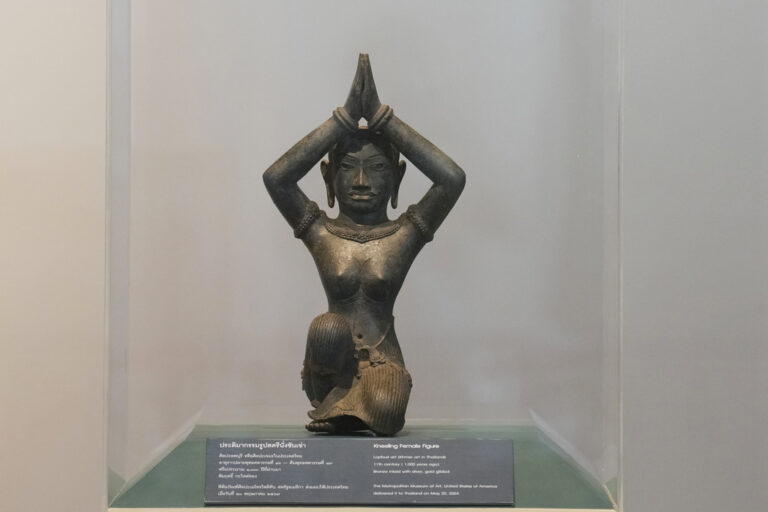
“Kneeling Female Figure“, an ancient bronze statue, is displayed during a repatriation ceremony at National Museum in Bangkok, Thailand, Tuesday, May 21, 2024. (AP Photo/Sakchai Lalit)
Rigorous provenance research
For Hollein, the returns to Cambodia and Thailand were not exceptional gestures but the result of a sustained internal effort. He described The Met’s Cultural Property Initiative as central to the museum’s work, aimed at reviewing the histories of objects in its collection with increasing scrutiny.
In recent years, The Met has expanded its dedicated provenance staff and formalised research across departments. The effort reflects a broader shift within the institution: provenance research is no longer treated as a background function, but as an ongoing responsibility that can lead to difficult decisions — including restitution.
“Our provenance research team continues to actively review works in our collection … and any future returns will be guided by rigorous research and close consultation with our partners,” Hollein said.
At the same time, Standing Shiva and Kneeling Female Figure were designated for return to Thailand, a move later celebrated during a Memorandum of Understanding signed between The Met and the Kingdom of Thailand in April 2024. The MOU formalised plans for deeper collaboration on Thai art, expertise exchange and joint exhibition and research initiatives — signalling that repatriations are part of a larger partnership, not stand-alone acts.
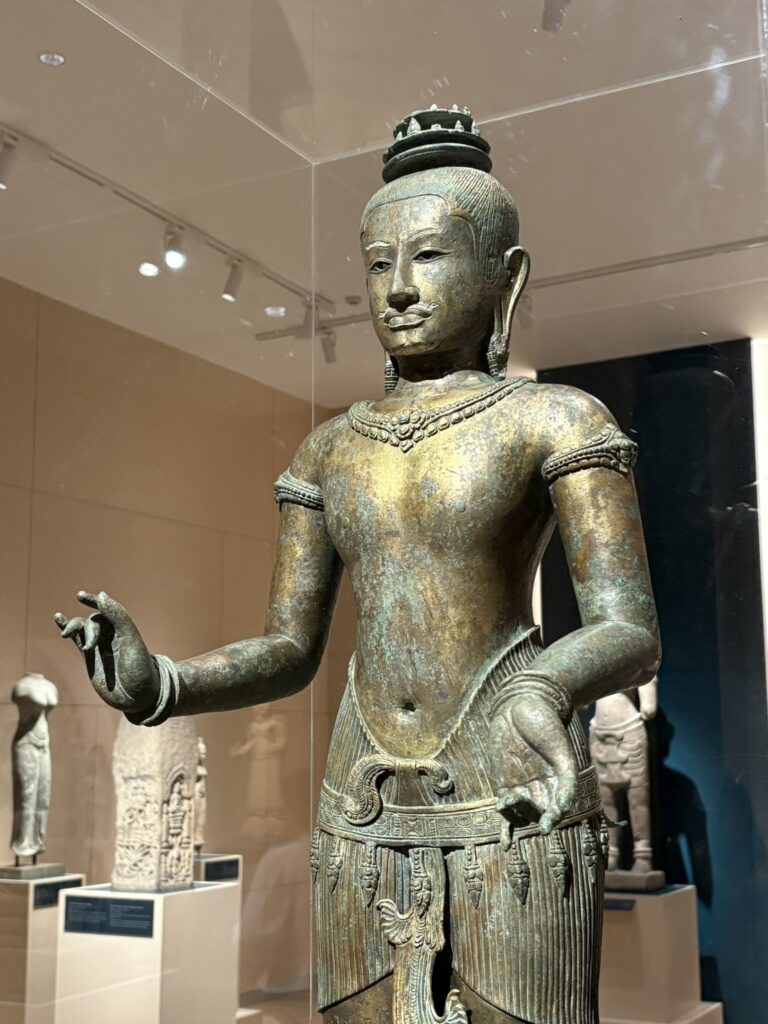
“Standing Shiva” or “Golden Boy” As seen on display in the National Museum in Bangkok, Thailand
“Immense cultural power”
Hollein spoke with evident admiration for Thai art and museum practice, drawing on his visits to Bangkok and regional institutions across the country. “Thailand’s heritage, both ancient and contemporary, holds immense cultural power,” he said.
He praised the National Museum Bangkok, as well as the national museums of Nakhon Pathom, U-Thong and Ayutthaya, describing their installations and interpretive displays as both “rigorous and inviting.” The renovation programme currently underway across Thailand’s national museum sector, he added, is “truly remarkable.”
Beyond the national museums, Hollein highlighted The Queen Sirikit Museum of Textiles for its “thoughtful curation and elegant storytelling,” noting how it presents royal history and craftsmanship with clarity and care. He also pointed to Dib Bangkok, the newly opened contemporary art museum designed by Kulapat Yantrasast — the architect behind The Met’s Michael C. Rockefeller Wing — as a sign of Thailand’s evolving cultural landscape.
The Thai MOU, he noted, reaffirms The Met’s commitment “to furthering the world’s understanding and appreciation of Thai art and culture.”
Beyond objects: digital, dialogue and museum futures
The interview expanded beyond repatriations to examine how museums engage with audiences today. When asked how the internet is reshaping the museum experience for the younger generation, Hollein said it has “transformed… extending our reach far beyond what we could have imagined even a decade ago,” describing it as an entry point for younger audiences rather than a replacement for in-person visits — one that deepens interest and widens access. Hollein noted that digital platforms bring global audiences into dialogue with art that was once reachable only by travel.
In that same spirit, digital reporting also broadens access to these conversations. Stories of restitution are also stories of identity. By reporting on these returns, Khaosod English seeks to illuminate the historical journeys of these objects and their enduring significance to Thai and Cambodian cultural memory.
But what emerged most strongly from our interview was a theme of responsibility.
A private museum, proactive in practice
Unlike many national institutions, Hollein emphasised that The Met’s private governance structure allows it to act proactively as new research emerges. In contrast to institutions bound by public law on deaccession and restitution, The Met can make decisions guided by scholarship and ethics, he said, which is why many of its recent returns were initiated by the museum itself rather than in response to external pressure.
“Our goal is to ensure each object in our care is understood and presented with ethical responsibility,” Hollein said — a statement that reframed restitution not as loss, but as ethical accountability.
A cultural moment
For Cambodia, the return of 14 sculptures has been welcomed as a milestone in recovering national treasures, part of a broader reckoning with losses during decades of conflict and upheaval. For Thailand, the return of the Golden Boy and its companion piece has been an exciting success in longstanding efforts to reclaim its heritage.
Taken together, these returns and partnerships reflect a museum world in transition — one in which collecting is no longer an end in itself, but part of an ongoing dialogue with countries, cultures and histories.
Max Hollein, director and CEO of The Met
Those wishing to witness the restituted works Kneeling Female Figure and the bronze Standing Shiva, known as “Golden Boy,” may do so at the National Museum in Bangkok. In Cambodia, the Bodhisattva Avalokiteshvara Seated in Royal Ease and a 7th-century Head of Buddha are now housed at the National Museum of Cambodia in Phnom Penh — restored to the public histories from which they once departed. Readers can see more from Hollein in a post he made about Thailand on his Instragram page
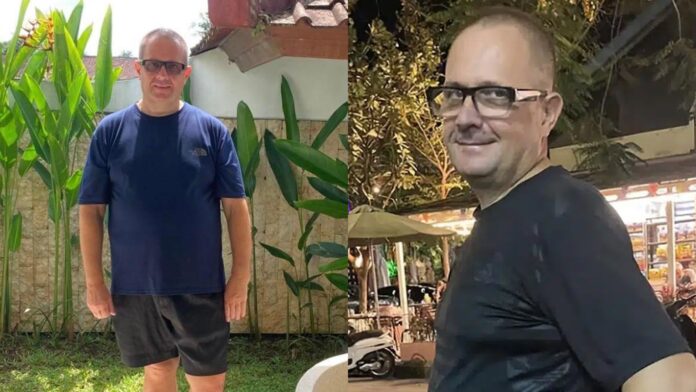
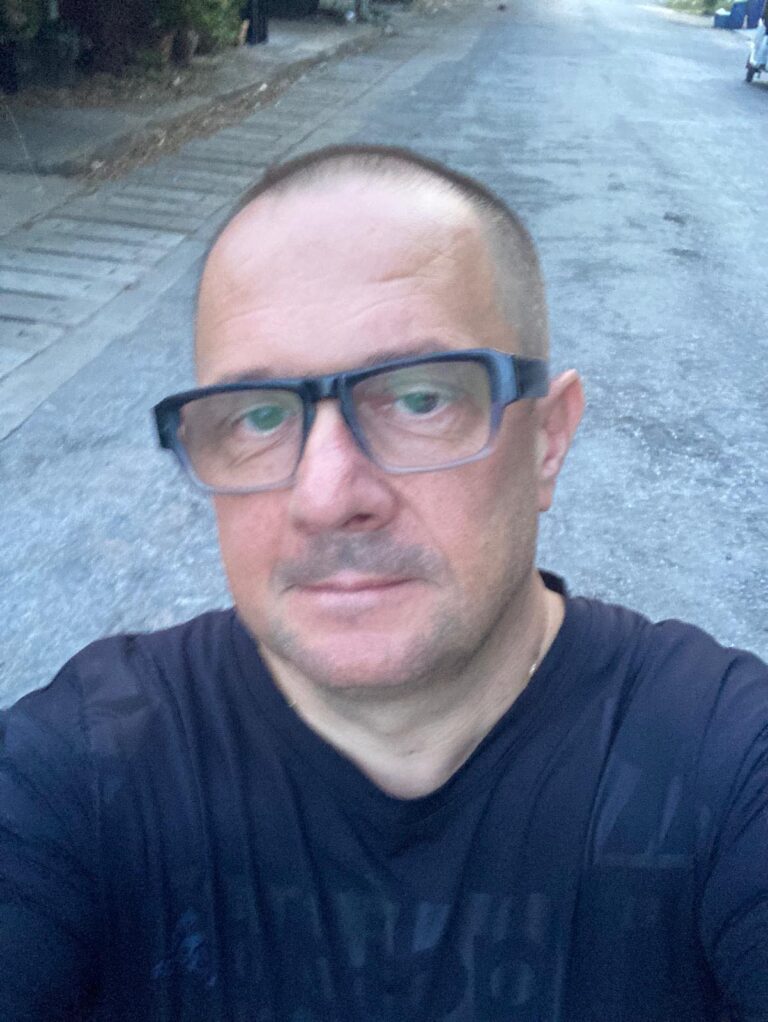
PHNOM PENH — A Polish historian who went missing in Cambodia has been found in Phnom Penh in a severely weakened condition after allegedly being robbed, according to his family.
Adam Janusz Mielcarek, 59, lost contact with relatives on 21 January after travelling from Siem Reap to the Cambodian capital. His disappearance prompted appeals from his family and the involvement of diplomatic missions and international law enforcement agencies.
Telewizja Polska reported on 4 February that Mielcarek’s family had issued a desperate call for help after he vanished without trace. Mobile phone data cited by relatives showed his phone was located in central Phnom Penh before becoming inactive days later.
Khmer Times reported on 11 February that Mielcarek had been found in a critical condition.
His sister, Kamila Rind, said he was discovered after local residents recognised him from social media posts and contacted the family.
“He has been found and is in a very bad state. He was robbed. Somebody took everything, including his documents, telephone, shoes, and even glasses,” she said. “Some locals saw his photo on social media and recognised him at a park, so they contacted us. He has lost 15 kg and is malnourished. We could barely recognise him. He is hospitalised now.”
Rind said her brother is suffering from amnesia and cannot recall the events leading to his disappearance.
Mobile phone records previously showed his device was tracked to central Phnom Penh on 22 January before logging its final signal on 25 January.
The case drew attention from Polish diplomatic services, including the embassy in Bangkok, which covers Cambodia, as well as the Polish consul in Phnom Penh. Interpol and British police were also informed during the search.
Authorities have urged anyone with information about his movements during the period he was missing to assist with the investigation.
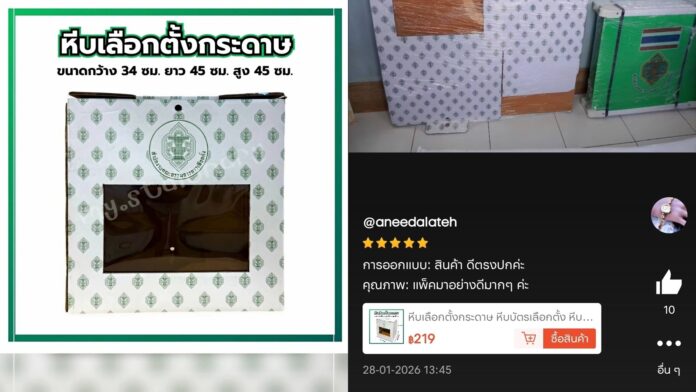
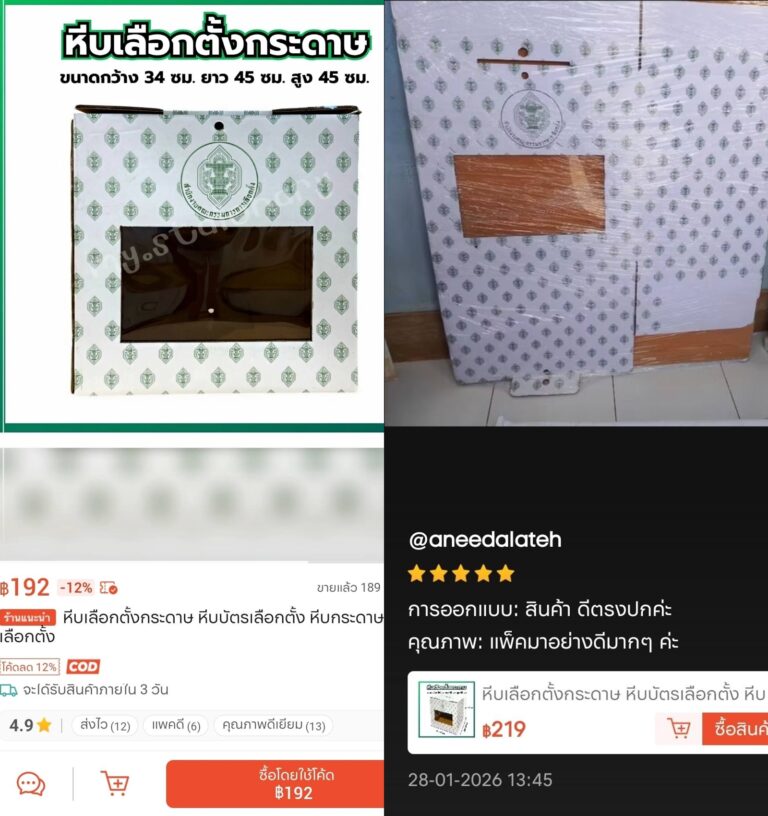
Screenshot from an e-commerce platform showing ballot boxes and related election equipment listed for sale.
BANGKOK — Questions continued to swirl over the 2026 general election after online users revealed that election equipment similar to that used by the Election Commission (EC) was being sold on major e-commerce platforms.
A review by Khaosod English found multiple vendors advertising ballot boxes and related materials, with product descriptions claiming specifications in line with state standards used in both local and national polls. Some listings featured logos or seals resembling those of the EC.
Items on sale included ballot boxes, polling station barriers, voting booths and ballot box security seals, priced from tens to a few hundred baht.
Buyers were able to place orders without any verification of intended use. Listing data showed some vendors had sold more than 500 units.
It remains unclear whether the products are officially authorised by the EC or are commercially produced replicas.
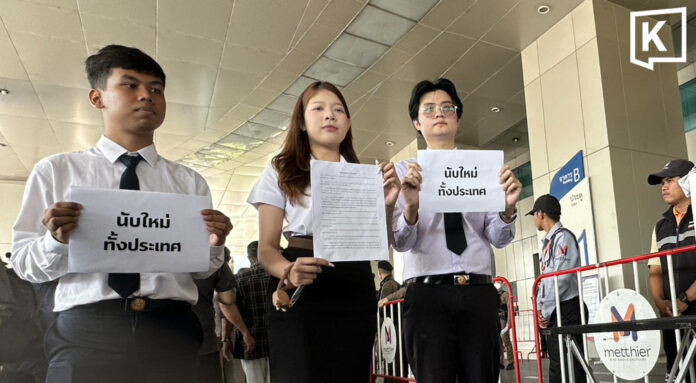
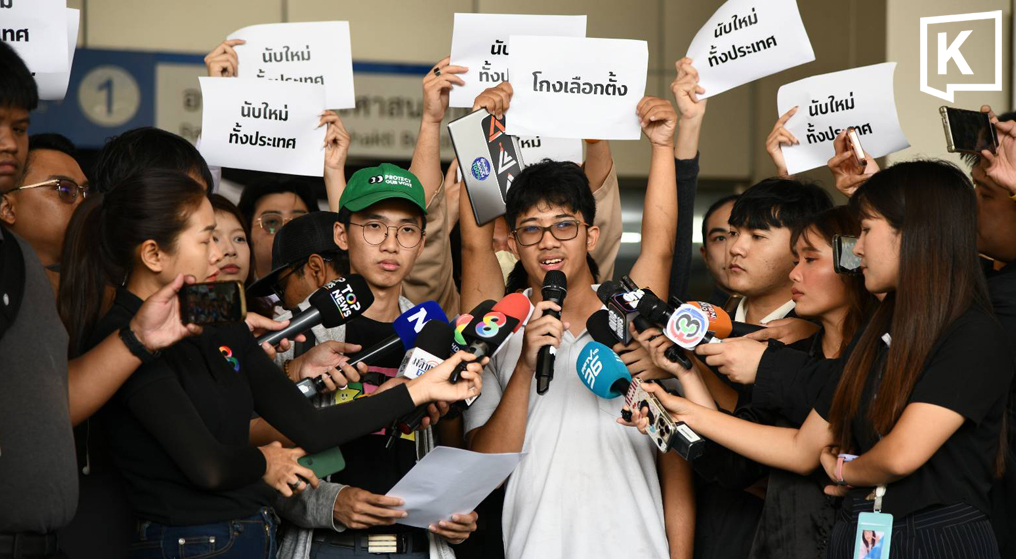
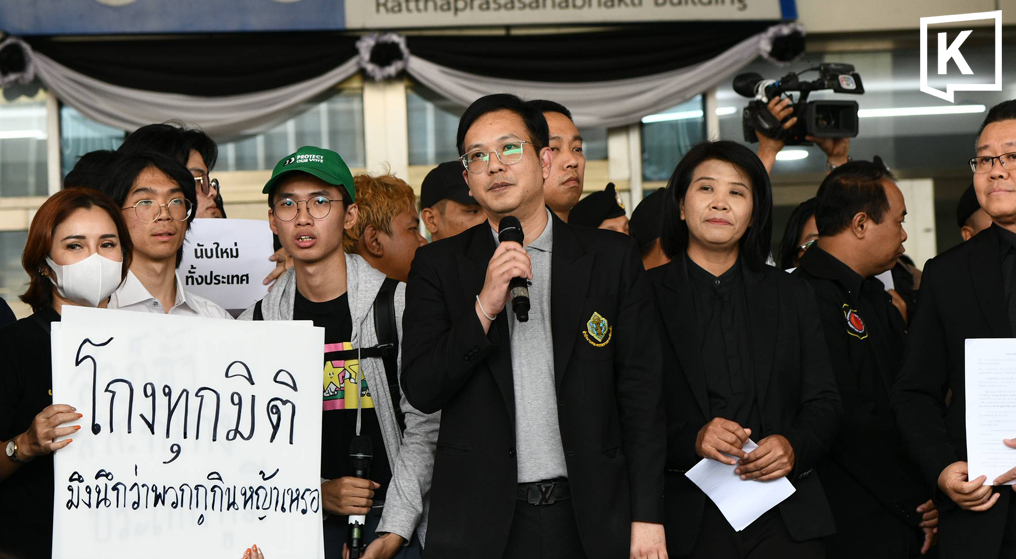
BANGKOK — 11 February 2026, Student protesters gathered outside the Election Commission (EC) headquarters on Tuesday, demanding a nationwide recount of ballots following what they described as widespread irregularities in the recent general election.
At 10:00, representatives of student and civil society groups, led by the Thammasat Alliance and Demonstration Group, assembled in front of the B Government Complex on Chaeng Watthana Road to press their demands. They insisted that no political party was backing their action.
The protesters cited several alleged irregularities occurring in a similar pattern across multiple constituencies, including power outages during vote counting in strategic polling stations; discrepancies between announced results and actual ballots; ambiguous or opaque tally marks; and suspected manipulation of figures.
They also pointed to problems with the EC’s online reporting system, including errors, delays, interruptions and unexplained reductions in vote totals. In addition, they accused polling station committees and provincial election officials of obstructing public scrutiny.
Demonstrators held placards reading “Recount the Entire Country” and placed a mock ballot box outside the complex bearing the message “Beware of Newborn Ballots”, draped with a condom in a symbolic protest gesture.
Teerapop Tengpravat, a civil society representative and protest leader, said the group was standing in solidarity with people in the provinces who had sought clarification from local election offices.
“We will not allow the seven central EC commissioners to hide behind the system,” he said. The group submitted five demands: a transparent nationwide recount open to public scrutiny; immediate disciplinary and criminal investigations against officials involved; prompt disclosure of polling station-level results; annulment and re-election in constituencies where recounts reveal discrepancies between ballots and voter turnout; and the resignation of all seven EC commissioners to take responsibility for alleged failures.
Asked whether the protest would escalate if their demands were unmet, Teerapop said the group would first assess the EC’s response, adding that they had come prepared with reasons and evidence.
Another political activist, Nopphasin, also known as “Sainam”, said the group would set up a complaints centre for members of the public who believed vote counting in their constituencies lacked transparency. Protesters planned to remain at the site until the evening to allow supporters to join after work.
He said the immediate priority was the full release of polling station-level results, noting that in previous elections such data had been published within one to two days. Any constituency with excessive vote totals should undergo a recount, he added.
When asked whether the protests could return to the scale of the 2020 street demonstrations, Nopphasin said it depended on the EC’s performance. “If they do their job well, no one wants to stand in the sun and rain,” he said.
Rejecting accusations that the movement was backed by political parties or driven by sore losers, he said the issue was not about winning or losing but about fairness. “We cannot accept an unjust system. This has nothing to do with any political party. Everyone here voted differently,” he said.
Pol. Lt. Col. Nattawat Sangiensak, deputy secretary-general of the EC, accepted the petition on behalf of the commission and said all complaints would be handled in accordance with the law. He said polling station tally sheets would be uploaded to the EC website for public verification and that the process would be expedited within one to two days.
However, tensions rose as protesters pressed for clearer assurances about transparency safeguards. Nattawat repeatedly said the EC would proceed according to procedure, prompting frustration among some demonstrators. One shouted an insult accusing him of giving “idiotic answers”.
A member of the public also asked about reports that a constituency tally form, known as Sor Sor 5/11, had been found discarded in a rubbish bin. Nattawat said an investigation was under way and that officials were awaiting a report.
Dissatisfied with the responses, protesters raised their voices and continued questioning the EC representative. Ultimately, the official asked protest leaders to appoint representatives to formally submit their petition inside the EC office.
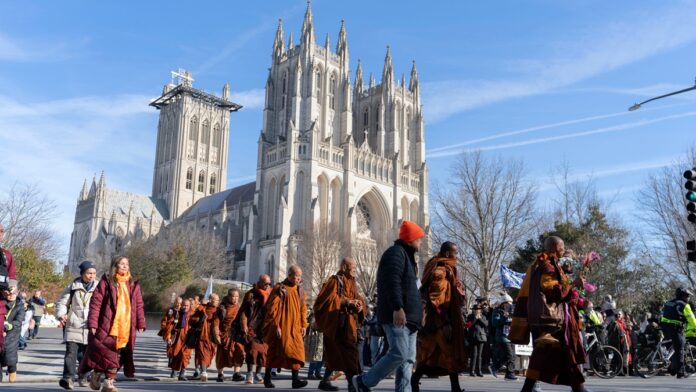
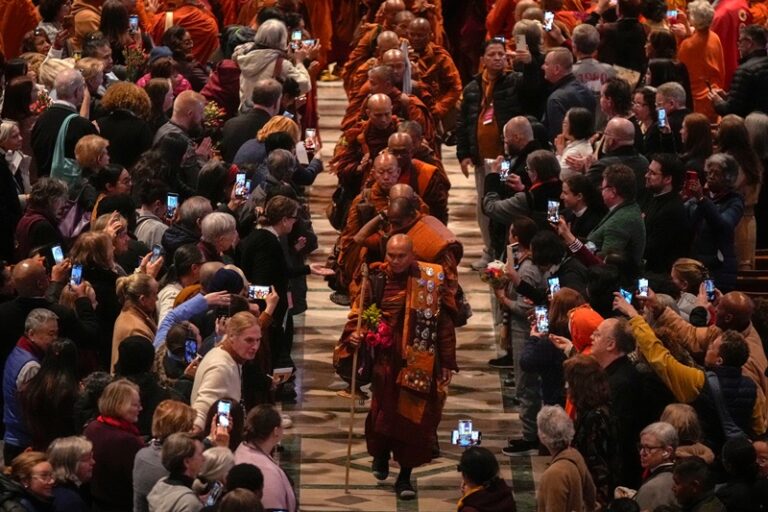
Buddhist monks walk outside of the Washington National Cathedral after and event they participated during the Walk For Peace, Tuesday, Feb. 10, 2026, in Washington. (AP Photo/Jose Luis Magana)
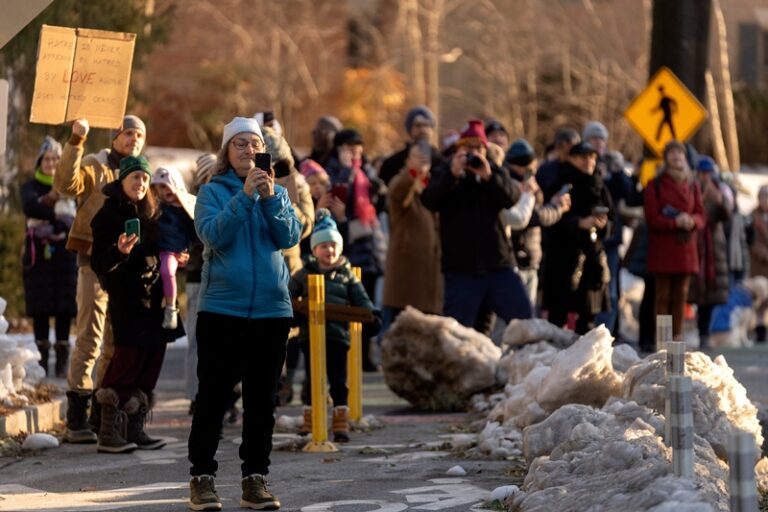
WASHINGTON (AP) — A group of Buddhist monks — bearing a message of peace — walked into the heart of Washington, D.C., on Tuesday, greeted by large, joyful crowds as they completed their 15-week trek from Texas.
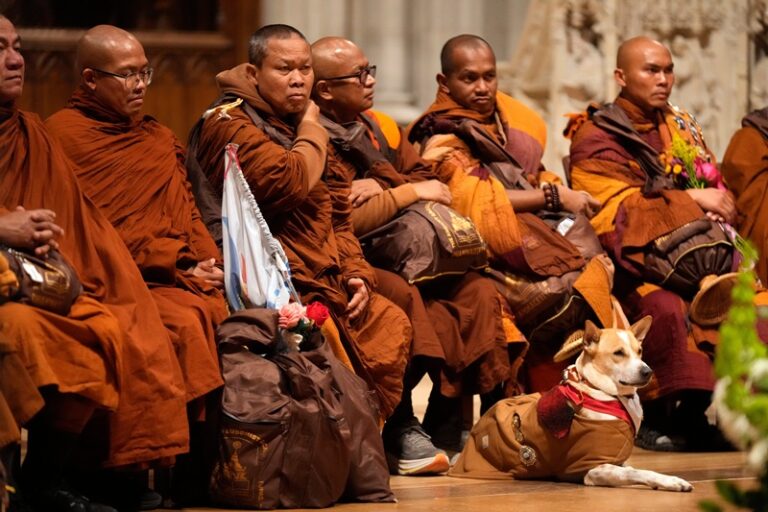
In their saffron and maroon robes, the monks became fixtures on social media as they made their way through the southeastern United States, along with their rescue dog Aloka.
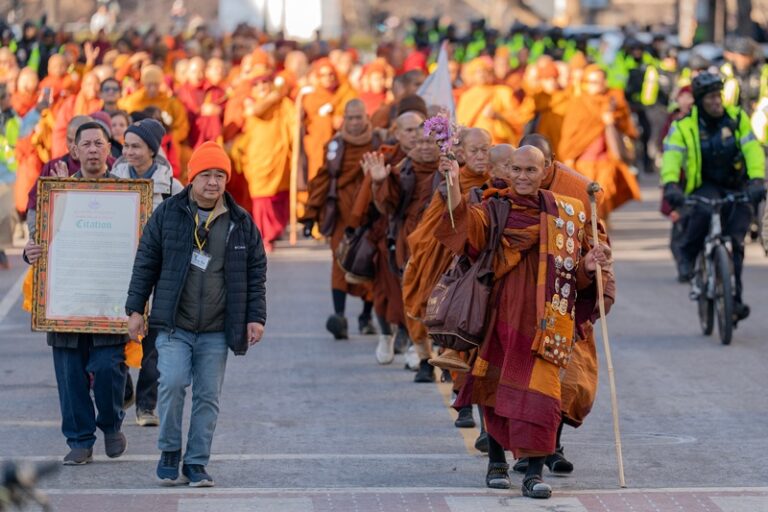
Monk Bhikkhu Pannakara waves to the crowd as he walks along with Buddhist monks who are participating in a Walk For Peace walk through a the streets of Washington, Tuesday, Feb. 10, 2026, (AP Photo/Jose Luis Magana)
Their simple mission, to advocate for peace, has resonated across a beleaguered country — and appeared especially welcome in a city at the center of political strife and power.
Thousands gathered along icy sidewalks to watch the monks’ quiet procession that began in late October.
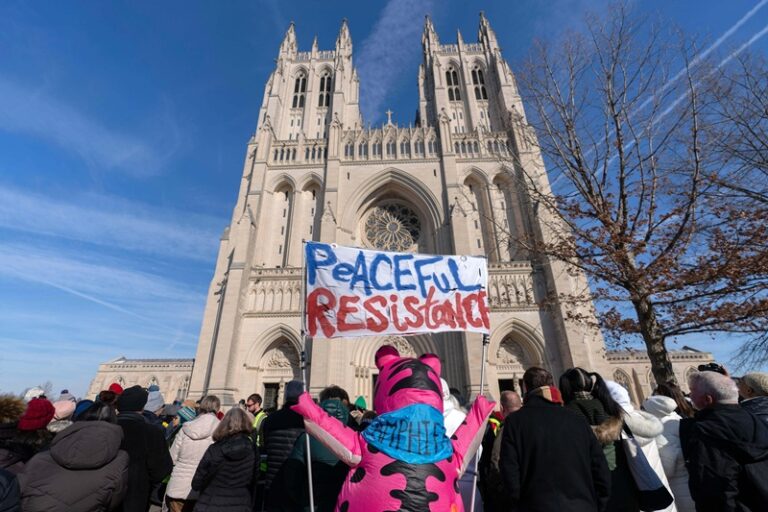
People gather to watch the Buddhist monks as they walk outside of the Washington National Cathedral after an event during the Walk For Peace, Tuesday, Feb. 10, 2026, in Washington. (AP Photo/Jose Luis Magana)
In the afternoon, the monks stopped at the Washington National Cathedral, where they were joined by more than 100 other Buddhist monks and nuns.
“It is overwhelming for us,” said the Venerable Bhikkhu Pannakara, the group’s charismatic and soft-spoken leader, on the steps of the cathedral.
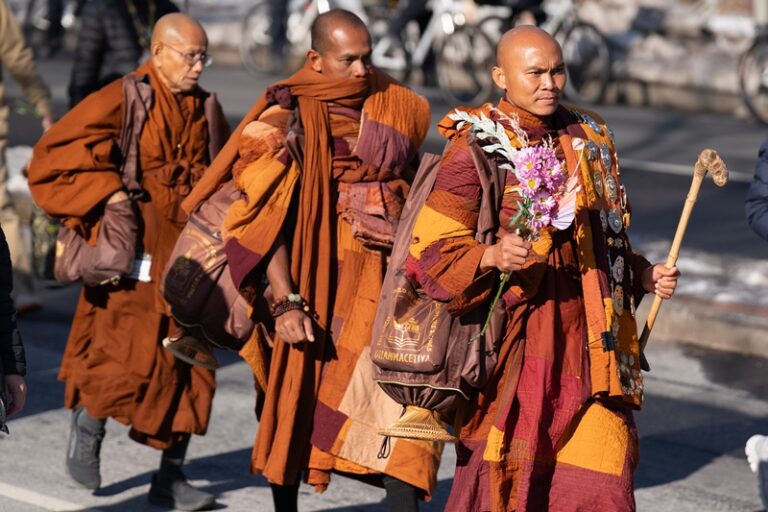
Monk Bhikkhu Pannakara walks along with Buddhist monks who are participating in a Walk For Peace walk through a the streets of Washington, Tuesday, Feb. 10, 2026, (AP Photo/Jose Luis Magana)
Flanked by dozens of faith leaders across traditions — including Washington Episcopal Bishop Mariann Budde, who helped host the interfaith gathering — Pannakara was visibly moved by their shared cause for peace.
“This is the moment I will remember for the rest of my life,” he said. “And I hope you do the same.”
Monk Bhikkhu Pannakara, front, and his fellow Buddhist monks leave after an event at Washington National Cathedral to mark their Walk For Peace, Tuesday, Feb. 10, 2026, in Washington. (AP Photo/Mark Schiefelbein)
A respectful silence greets the monks
As the monks walked single-file down city streets, people cheered them. Some shushed the crowds, urging them to be silent and reverent. But the monks acknowledged the people’s enthusiasm with subtle nods and smiled at those calling out “Sadhu!” — an expression in Buddhism that means “well done.”
Nearly 3,500 people packed American University’s Bender Arena for the monks’ first public stop in Washington. But no raucous sports cheers greeted them: Spectators remained silent as they walked into the arena, as a sign of respect for the monks and their quest for peace.
The trek has had its perils. In November outside Houston, the monks were walking on the side of a highway when their escort vehicle was hit by a truck. Two monks were injured; Venerable Maha Dam Phommasan had his leg amputated.
Aloka, a companion dog with Buddhist monks who are participating in a Walk For Peace, sits during an event at the Washington National Cathedral, Tuesday, Feb. 10, 2026, in Washington. (AP Photo/Mark Schiefelbein)
Phommasan, abbot of a temple in Snellville, Georgia, rejoined the monks near Washington and entered American University’s arena in a wheelchair.
The monks won devotees along the way
Phommasan’s return was moving for Jackson Vaughn, 33, who’s used a wheelchair since 2024. He has been traveling beside the monks for a week, since they came through his hometown of Fredericksburg, Virginia.
“There are so many things happening in the world,” said Vaughn, who was among the crowd at the university entrance. “To see people gathering peacefully and setting an example, I think, is a wonderful thing.”
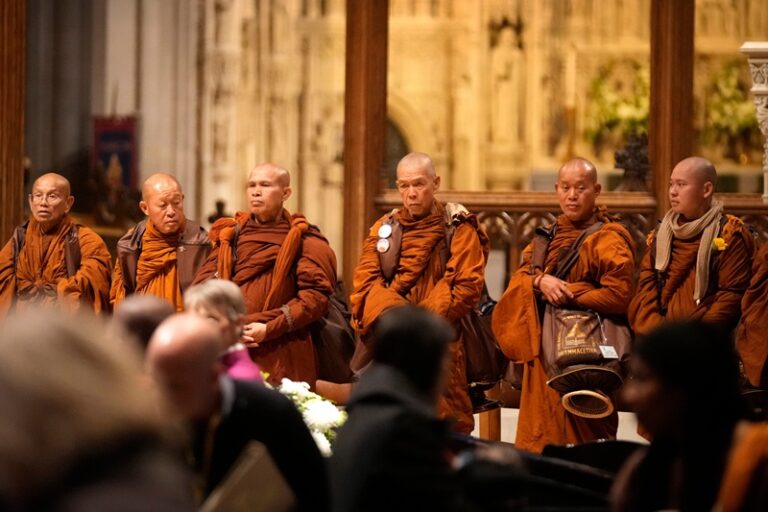
Buddhist monks who are participating in a Walk For Peace stand during an event at the Washington National Cathedral, Tuesday, Feb. 10, 2026, in Washington. (AP Photo/Mark Schiefelbein)
He was grateful to fellow travelers who helped him navigate icy roads.
“I have been on this journey of trying to find my independence,” Vaughn said. “But this really shows how connected we really are.”
The monks have been surprised to see their message transcend ideologies. Millions have followed them online, and crowds have greeted them at numerous venues, from a church in Opelika, Alabama, to City Hall in Richmond, Virginia.
Kristin Williams, 42, brought her two children, ages 8 and 10, to view the procession outside the cathedral.
“I wanted them to not just witness history but witness the power of coming together,” she said. “The movement they’ve been building for the past couple of months has been really powerful to watch grow.”
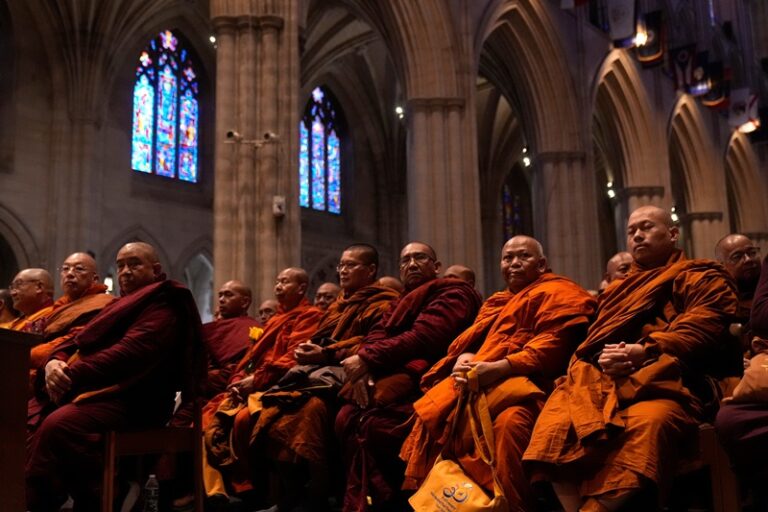
Buddhist monks sit in Washington National Cathedral during an event with monks who are participating in a Walk For Peace, Tuesday, Feb. 10, 2026, in Washington. (AP Photo/Mark Schiefelbein)
Over 20,000 people tuned in to watch the live feed Tuesday — logging on from places ranging from Jamaica and Germany to Sri Lanka and Thailand. Even as the occasional critic surfaced in the comments section, viewers seemed to heed the monks’ message as they wished that person to find peace.
The trek is a ‘spiritual offering’
Nineteen monks began the 2,300-mile (3,700-kilometer) journey from the Huong Dao Vipassana Bhavana Center in Fort Worth on Oct. 26, 2025. They came from Theravada Buddhist monasteries around the globe, led by Pannakara, who is vice president of the Fort Worth temple.
Long Si Dong, a spokesperson for the temple, said the walk is neither a political movement nor is it focused on advocacy or legislation.
“It’s a spiritual offering, an invitation to live peace through everyday actions, mindful steps and open hearts,” he said. “We believe when peace is cultivated within, it naturally ripples outward into society.”
Peace walks are a cherished tradition in Theravada Buddhism. Some of the monks have walked barefoot or in socks during parts of the journey, to feel the ground directly and be present in the moment.
Spectators watch as Buddhist monks who are participating in a Walk For Peace walk through a neighborhood on Tuesday, Feb. 10, 2026, in Washington. (AP Photo/Mark Schiefelbein)
The monks practice and teach Vipassana meditation, an ancient Indian technique taught by the Buddha that focuses on breath and the mind-body connection. Pannakara’s peace talks, given at stops along the way, have urged listeners to put down their phones and find peace within themselves.
On Tuesday, the monks completed 108 days of walking. It’s a sacred number in Buddhism, representing spiritual completion, cosmic order and the wholeness of existence.
On Wednesday, the monks plan to walk through Capitol Hill and hold a closing ceremony at the Lincoln Memorial.
Their return trip should be less arduous. After an appearance at Maryland’s Capitol, a bus will take them back to Texas, where they expect to arrive in downtown Fort Worth early on Saturday.
From there, the monks will walk together again, traversing 6 miles (9.6 kilometers) to the temple where their trip began.
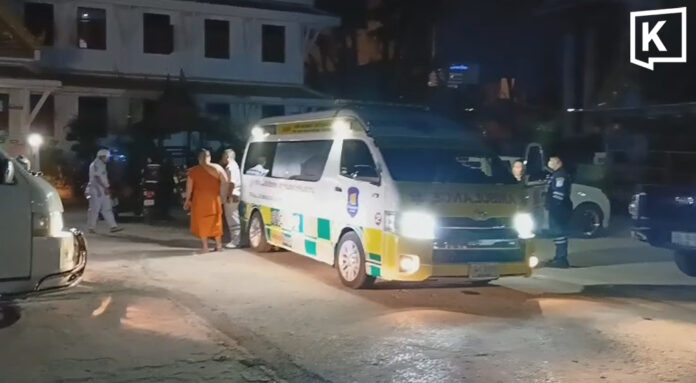
NAKHON RATCHASIMA — A 22-year-old man from Sakon Nakhon province was found dead inside a monk’s room at a temple in Muang district, police said.
Officers at Muang Nakhon Ratchasima Police Station were alerted shortly after midnight on 10 February 2026 to the discovery at Wat Prok in Nai Mueang subdistrict. The room was locked from the inside and rescue workers assisted officers in gaining entry. They found the man hung himself.
Police identified the man as Jessadaporn Sura, 22, from Wanon Niwat district, Sakon Nakhon. He was believed to have been dead for about 24 hours.
A handwritten note was found at the scene in which he apologised to the temple and his parents and said he was struggling with personal problems. Police kept the note as evidence.
The body was sent to Maharat Nakhon Ratchasima Hospital for a post-mortem examination before being released to relatives for religious rites.
A monk staying in a nearby room told police the man had arrived at the temple about three weeks earlier seeking ordination. The abbot had asked to observe his behaviour before allowing him to proceed, and he had since been helping with temple duties.
On the day he was found, the monk said the man had not come out of his room as usual. After receiving no response when calling to him, temple staff alerted authorities.