BANGKOK — Japanese supermarket chain LOPIA has opened its first branch in Thailand at Central Chaengwattana, marking its expansion into Southeast Asia.
The store officially opened on 11 February on the ground floor of the shopping complex, occupying about 1,000 square meters. It offers products across five main sections: meat, fruits and vegetables, seafood, ready-to-eat meals and processed goods, with a focus on Japanese imports.
Hitoshi Mizumoto, Director and Head of Asia Headquarters, said the company aims to bring Japanese food products to overseas markets while maintaining its principle of offering quality products at accessible prices.
Among the store’s key offerings are wagyu beef imported from Japan and large-sized sushi made from seafood such as tuna and scallops. Mizumoto said the company oversees its own beef procurement and processing to maintain quality standards and manage costs.
LOPIA operates under Japan’s OIC Group, which is involved in livestock, food manufacturing and trading businesses. For the fiscal year ending February 2025, the group reported sales of 521 billion yen. The supermarket chain currently operates 139 branches in Japan.
Thailand is LOPIA’s second overseas market after Taiwan, where the company began expanding in 2023. Mizumoto said Taiwan has served as a model for its international growth, adding that the company sees potential to build a similar customer base in Thailand.
Recount. Nationwide vote recount. The Election Commission must resign. A new election altogether. These are the growing demands of some voters, particularly supporters of the People’s Party, who believe the 8 February 2026 snap election was not just rigged here and there but systemically manipulated.
A recount in evidently problematic constituencies or even provinces makes sense, but a nationwide recount or reelection? That is major and should not be demanded lightly. We would need evidence of more widespread irregularities to infer that rigging was nationwide and systemic.
Unfortunately, not many independent local election observers were deployed, with one organisation saying it had only 50 in the field.
If voters are going to call for a nationwide recount, there should be much stronger evidence.
The problem is that many areas had no election observers. There were 400 constituencies, BTW.
There were no European Union observers to monitor the 2026 election. Only the Asian Network for Free Elections (ANFREL) was present, and no report has yet been released.
So far, irregularities have been reported in half a dozen of the country’s 76 provinces.
In Chonburi’s Constituency 1, for example, supporters have kept vigil at ballot boxes for a second consecutive day this morning after discovering that many boxes were not sealed as they should have been.
The situation in Chonburi has become the primary case study for those questioning the integrity of the 8 February 2026 snap election. Tensions peaked when residents and students began a multi-day vigil at a local sports facility.
People’s Party supporters discovered that ballot boxes were stored inside a local badminton court instead of the previously designated secure location. Eyewitnesses reported that many boxes were being prepared for relocation without the mandatory security seals (cable ties). Officials later allegedly claimed they had “run out” of seals and were using twine instead.
There were also reports of so-called “floating” ballots. Observers noted discrepancies where the total number of ballots in the boxes did not match the official record of voters at specific stations. Reports of strategic power outages followed, with localized blackouts occurring during the vote-counting process at several polling stations, which observers say created “blind spots” for potential fraud.
Discarded tally sheets found near the storage area allegedly showed results that did not match the data officially entered into the Election Commission’s online system.
As of Thursday morning, the Election Commission was weighing whether these incidents were isolated errors or evidence of systemic failure. While the EC has vowed to be “relentless” in pursuing fraud cases, the lack of immediate action has fueled distrust and anger.
A review by Khaosod English on Wednesday found multiple online vendors advertising ballot boxes and related materials, with product descriptions claiming specifications in line with state standards used in both local and national polls. Some listings featured logos or seals resembling those of the EC.
It is time for professional election observers to engage in cross-partisan discussion & analysis on whether electoral fraud was so widespread that it warrants a call recount nationwide or even more.
I spoke to two election experts on the phone yesterday, asking them a few key questions including if they think it’s reasonable to call for a nationwide recount.
Let’s start with the question as to what they think went wrong.
Somchai Srisutthiyakorn, arguably the most famous and articulate former election commissioner, told me he believes that at the local level some Election Commission staff have close relationships with local politicians. “I would say it was cheating committed by (EC) staff in many areas… As for those [EC] staff at the HQ, they were not careful and failed to supervise [local EC staff]. The local [EC staff] cheated but those at the centre didn’t collude in cheating.”
Laddawan Tantiwithayapitak, secretary-general of P-Net, a national election observers group, told me on the phone that the problem starts with the Election Commission not supporting or funding independent election observation, adding that she was told it’s not in the EC legal mandate although she disputed the interpretation of the written mandate. What’s more, foreign election observers must submit their observation statement to the EC for scrutiny and approval before being able to release it to the public.
Another major issue raised by Laddawan was that district chiefs have the authority to choose people to man the voting stations and and the roles often go to village headmen and sub-district chiefs, or “kamnan”.
“They don’t appoint new people or people who have been trained,” she said. “It’s the same pattern throughout the country.”
Tricks used to cheat in the past include deliberately marking scores incorrectly or failing to record votes for opposing parties when results are read out, as well as removing a digit from the figures before they are sent to the provincial Election Commission and subsequently to Bangkok.
Laddawan did not point out that district chiefs operate under provincial governors and the Department of Local Administration, which is part of the Interior Ministry. Governors and district chiefs are appointed through this structure. The incumbent, Anutin Charnvirakul—whose party emerged as the biggest winner in the now-questioned snap election—is also the caretaker prime minister and interior minister. Many key transfers and appointments at the ministry over the past three months were made under his authority.
Anutin, however, rejected suggestions of systemic manipulation. He stressed that vote counting was conducted by Election Commission officials in the presence of party representatives, with ballots read aloud one by one. The chance of fraud was “virtually non-existent,” he added.
“I believe in the EC. The government did not run the election,” Anutin said.
As for the seven Election Commissioners, approved by a Senate widely accused of being pro-Anutin’s Bhumjaithai Party, Laddawan said it is too early to judge and that she needs to wait and see how they respond to the allegations of electoral fraud in the contested areas. “If they do nothing despite numerous irregularities, then it suggests the commissioners may be involved.”
Without solid evidence, however, we cannot conclude that the alleged cheating in the contested constituencies was orchestrated by Anutin.
I also asked the two whether the situation merited a nationwide recount or reelection. Somchai said not yet.
“I think it’s not that severe and it will cause too much chaos.”
Laddawan’s answer to the same question was somewhat different.
“It’s conceivable that there are enough reasons that a nationwide recount should be made… It is possible, for the sake of transparency and fairness it could be recount nationwide. Personally, I think at least it should be done at provincial level.”
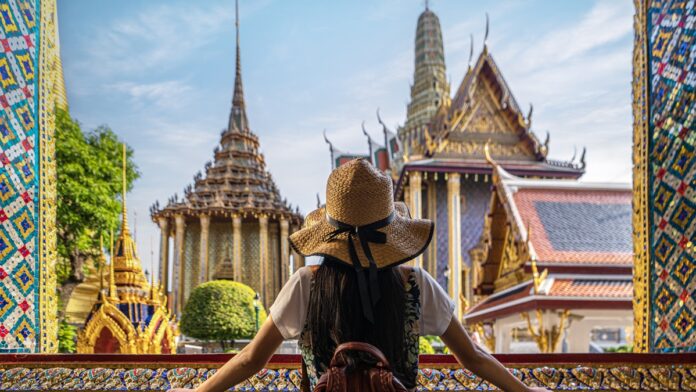
Korea JoongAng Daily reported that the Tourism Authority of Thailand (TAT) has dismissed concerns that Thailand is becoming too expensive for South Korean travelers, saying domestic prices remain stable despite complaints about rising costs.
At a media briefing in Seoul, TAT officials said they are monitoring sentiment in the Korean market, which sent about 1.55 million visitors to Thailand in 2025, making it the country’s fifth-largest source market globally.
According to Korea JoongAng Daily, TAT executives attributed perceptions of higher prices largely to exchange rate movements rather than inflation in Thailand. Officials cited recent data showing Thailand’s consumer price index declined year-on-year in January.
The agency is promoting a new slogan, “Healing is the New Luxury,” aimed at repositioning Thailand as a destination focused on rest, wellness and experiential travel.
Korea JoongAng Daily reported that TAT is also highlighting safety standards through its “Trusted Thailand” certification program and targeting niche segments including independent travelers, sports training groups and older golf tourists from South Korea.
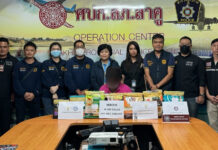
NAKHON SI THAMMARAT — 12 February 2026, Thai police have dismantled an alleged transnational arms trafficking network, arresting three men accused of selling military-style weapons, including M16 rifles and grenades to buyers across the country and along Thailand’s western border, officials said on Thursday.
Senior officers announced the arrests at Nakhon Si Thammarat Provincial Police headquarters, alongside investigators from the Metropolitan Police Bureau, Provincial Police Region 8, provincial investigators and officers from Kapang Police Station.
The three suspects, aged between 23 and 26 and all from Thung Song district in Nakhon Si Thammarat province, were described by police as operating an online arms trading network.
The arrests followed an investigation by metropolitan police, who conducted an undercover operation to purchase weapons online. After confirming the suspects’ alleged involvement, officers obtained a search warrant and raided properties in the Kapang area.
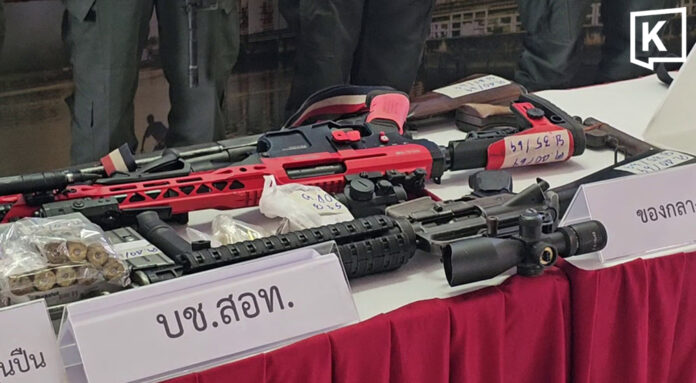
Police seized a cache of weapons including two M16A1 assault rifles, one MK12 shotgun, one .22 calibre rifle, two locally made shotguns, one .38 calibre handgun, one .22 calibre handgun and a double-barrelled shotgun. Officers also confiscated two M67 fragmentation grenades and nearly 300 rounds of various types of ammunition. Authorities said drugs were also found during the raid.
Pol. Maj. Gen. Pornchai Khajonkliang, acting commander of Nakhon Si Thammarat Provincial Police and deputy commander of Provincial Police Region 8, said investigators found that the suspects allegedly sold weapons nationwide and had also supplied buyers along Thailand’s western border.
He said police were expanding the investigation to trace the origin of the war-grade weapons, firearms, ammunition and grenades, as well as to follow financial trails linked to the network.
The suspects were charged with possessing firearms and ammunition that cannot be licensed by authorities, possessing firearms and ammunition for trade without permission, illegal possession of firearms and ammunition, and carrying firearms in public without a licence or reasonable cause, police said.
They remain in custody for further legal proceedings.
PHUKET — 12 February 2026, Police on the southern Thai island of Phuket have raided an alleged illegal Russian-run poker den operating from a luxury villa and arrested nine foreign nationals, officials said.
Investigators from Chalong Police Station said they discovered an online advertisement on Instagram under the account name “Poker Level”, written in Russian, inviting foreigners to join poker games in Rawai subdistrict of Muang district, Phuket.
Police said those interested were required to follow a link on Instagram and make contact via WhatsApp. Only foreign nationals were accepted, authorities said. The games involved gambling for property, with bets placed in Thai baht and cryptocurrency.
Participants were required to pay an entry fee of 20,000 baht per session before joining the games, which were allegedly held clandestinely inside a luxury villa in Rawai.
On 11 February, police received information that another gambling session was due to take place. Officers conducted surveillance around the property and reported seeing lights on inside and a group of people clearly engaged in playing poker.
Police then entered the premises, searched the property and arrested nine suspects — seven Russian nationals, one Ukrainian national and one Kazakh national.
Authorities seized cash, a gambling table, playing cards, cash-value chips and electronic devices including mobile phones and computers. Police said the devices would be examined to expand the investigation, including tracing financial transactions and gathering digital evidence.
The suspects were charged with organising gambling (poker) for property without permission under Section 12 of the Gambling Act, and with jointly participating in illegal gambling for property.
All nine suspects were handed over to investigators for further legal proceedings, police said.
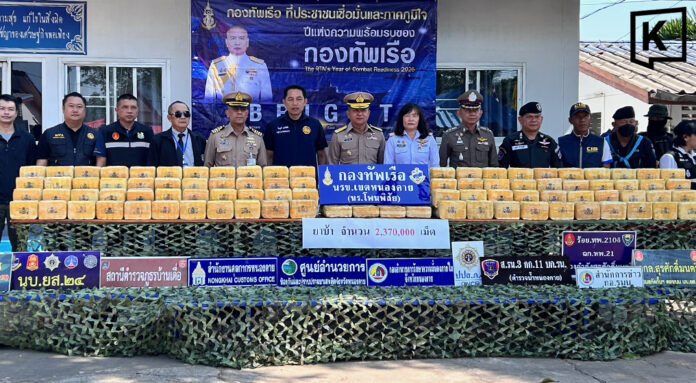
NONG KHAI — 12 February 2026, Thai authorities have seized 2.37 million methamphetamine pills allegedly smuggled across the Mekong River from Laos, officials said.
The drugs, packed in seven sacks, were discovered during a late-night operation in Muang district of Nong Khai province. Suspects fled the scene, with one jumping into the Mekong River and others escaping into nearby farmland, authorities said.
Rear Adm. Narong Aemdee, commander of the Mekong Riverine Unit, told a news conference at 11:00 on 12 February 2026 at the Phon Phisai boat unit that officials had received a tip-off about a planned cross-border drug shipment near Ban Duea subdistrict.
He said officers were deployed to the riverbank area behind the Pak Suai tobacco station, where they observed a long-tail boat approaching from midstream at about 00:45 on 11 February 2026. The boat’s engine was cut before it was paddled to shore.
Two men were seen meeting the boat. A motorcycle arrived at the scene, followed by a white Mitsubishi box truck bearing Bangkok registration plates. Officers saw two suspects carrying suspicious sacks from the boat to the truck before moving in to make arrests.
One suspect jumped into the Mekong River, while another ran into a nearby agricultural area. The individual on the boat restarted the engine and sped back across the river. Officers gave chase but were unable to apprehend the suspects in the darkness.
A search of the area uncovered seven sacks containing 237 packages of methamphetamine pills, each stamped with the number “999” in blue ink. Authorities said the haul totalled about 2.37 million pills.
The seized drugs, along with the truck and a motorcycle found at the scene, will be handed over to investigators at Ban Duea police station for further legal proceedings, officials said.
Deputy Nong Khai Governor Paitoon Mahachuenjai, Nong Khai Customs chief Wanna Phu-utsa and military and police officers also attended the news conference.
TasteAtlas has served up a delicious verdict on Thai cuisine, ranking the kingdom’s best-rated dishes and shining a global spotlight on the flavours that keep food lovers coming back for more.
Top 10 Rated Thai Foods You Have to Taste
Take a whirlwind tour through the 10 highest-rated Thai dishes that have diners around the world coming back for more.
Roti — Crispy, flaky and endlessly fun to tear apart, this pan-fried flatbread tops the list. Though it has roots in Indian cuisine, roti has been fully embraced on Thai streets, served with curries or dipped in sweet sauces for a playful start to any feast.
Phanaeng Curry — Rich, creamy and laced with salty-sweet peanut flavour, this thick curry has earned global admiration. Imagine succulent meat swimming in coconut-infused sauce — one spoon, and you’ll be hooked.
Tom kha gai — This comforting coconut chicken soup is fragrant with galangal and kaffir lime leaves. It’s like a warm hug in a bowl when you need something soothing yet deeply flavourful.
Phat kaphrao — Often called Thai Holy basil stir-fry, this fiery plate of minced meat (or seafood) with Thai holy basil and chilies is the ultimate Thai comfort food — best enjoyed with rice and a fried egg.
Khanom khrok — Bite-sized, sweet, and just the right amount of coconutty, these little pancake-like treats are street food royalty.
Khao niao mamuang — Mango sticky rice. A dessert so iconic and satisfying that every visit to Thailand deserves one.
Kai yang — Juicy, marinated grilled chicken with smoky goodness. Pair it with som tam (papaya salad) and sticky rice, and you’ve got a classic Isaan feast.
Pad Thai — Love it abroad? You’ll adore it in Thailand. Tangy, sweet, nutty, and packed with noodles and prawns, this stir-fry remains a global favourite.
Khao phat — Thai fried rice done right — fragrant jasmine rice wok-fried to perfection with veggies and your choice of protein.
Phat si-io — Chewy wide noodles kissed by soy sauce and garlic make this stir-fry a crowd-pleaser on busy Bangkok streets.
If this list doesn’t make you crave crispy roti or a steaming bowl of tom kha gai, check your pulse. According to TasteAtlas, Thailand’s best dishes aren’t just popular — they’re unforgettable.
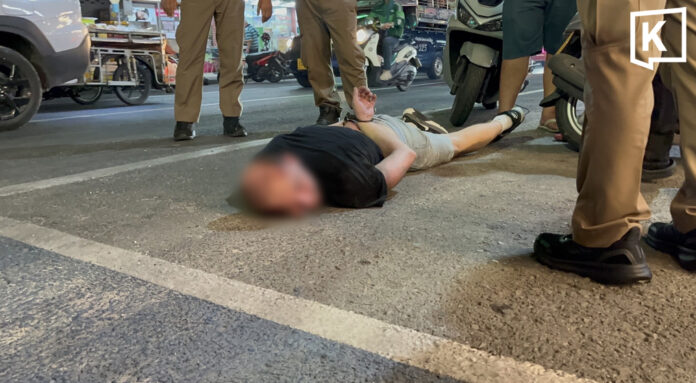
PATTAYA — 11 February 2026, A Russian man was detained after allegedly assaulting a Thai woman while heavily intoxicated, prompting bystanders and tourists to restrain him in Pattaya on Wednesday night, police said.
Pol. Lt. Jittisuk Suthinitthawong, deputy inspector for patrol at Pattaya City police station, said officers were alerted at 21:15 to an incident outside a shopping centre on Pattaya Second Road in Nong Prue, Bang Lamung district, Chonburi province. Callers reported that a drunken foreign man had attacked a Thai woman, leaving her injured.
Officers and rescue workers arrived to find a group of residents, motorcycle taxi riders and tourists restraining a Russian man, believed to be about 30. He was pinned to the ground to calm him down. Police said he appeared heavily intoxicated, incoherent and shouting. He had minor abrasions on his face and body and was taken into custody at Pattaya City police station.
A motorcycle taxi rider, 20-year-old Prawanwit Somanat, said he had arrived to pick up a Thai female passenger when he saw the Russian man arguing with another foreigner. He said he did not initially suspect trouble.
As his passenger left a convenience store to get on his motorcycle, the Russian man staggered towards her and punched her forcefully, knocking her to the ground where her head struck the pavement, he said.
After the assault, the man reportedly stood in the middle of the road shouting and attempted to punch anyone who tried to intervene. Witnesses, angered by his behaviour, subdued him.
An employee at a nearby traditional massage shop said the man had earlier been seen heavily drunk and harassing people in the area. She said he had chased and tried to hit Thai women from the beach area to Pattaya Second Road before bystanders stepped in.
Police initially charged the man with public intoxication and disorderly conduct. They said they were awaiting a formal complaint from the injured woman to proceed with further legal action.
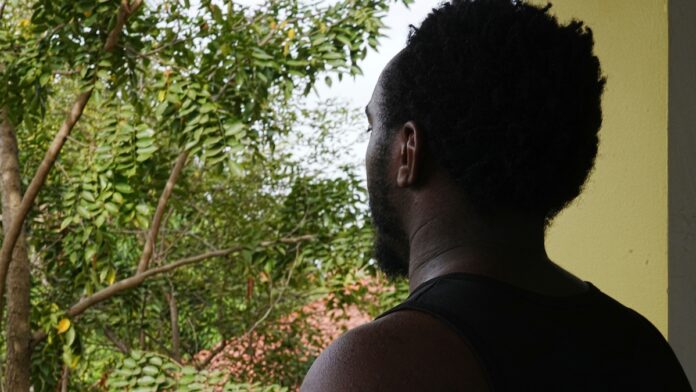
Youga stands at an undisclosed location in Cambodia, on Jan. 22, 2026. (AP Photo)
BANGKOK (AP) — One recent night, Youga was grateful when he finally slept in a bed, even though it had neither pillow nor blanket.
For two days, the African man said, he slept on the street after he reached Cambodia’s capital, Phnom Penh, following his escape from a scam compound in O’Smach, which borders Thailand in the north. He had only $100 left to his name and wanted to save the money. So the Caritas shelter took him in.
The shelter, the only one of its kind that helps victims escaping from scam compounds, was funded previously by the United States. Today, it is stretched at the seams, working with a third of the staff and a fraction of the budget it previously had as the country faces an unprecedented surge of workers leaving scam compounds.
Now, overwhelmed, the shelter has had to turn away people in need, more than 300 of them. Mark Taylor, who works on human trafficking issues in Cambodia, said, “It’s become triage.”
As of last week, the shelter had about 150 people. Many of the newest arrivals were sleeping in a common room and didn’t have more than the clothes on their backs. The shelter didn’t have enough pillows and blankets, said Youga, who spoke on condition that only his first name be used out of fear of his former bosses.
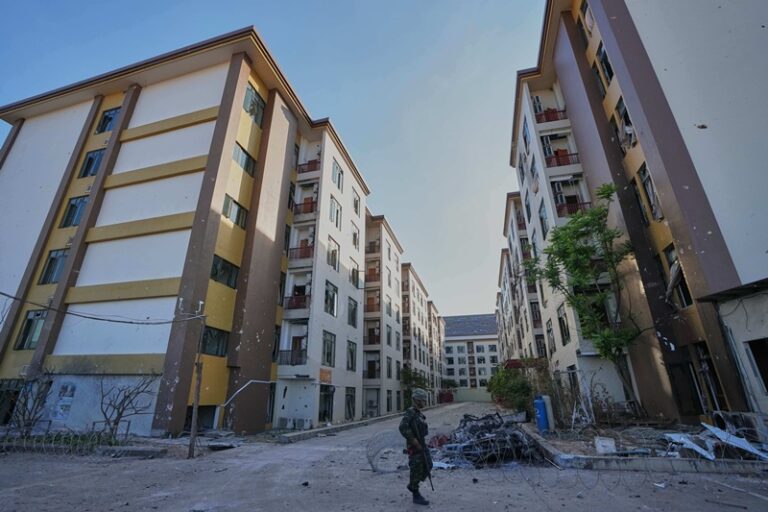
FILE – A Thai soldier keeps guard outside a scam center in O’Smach, Cambodia, Monday, Feb. 2, 2026, (AP Photo/Sakchai Lalit, File)
In recent years, online-based scams have become endemic to the region in Cambodia, Myanmar, and Laos. Inside these buildings, scammers have built sophisticated operations, utilizing phone booths lined with foam for soundproofing, scripts in multiple languages, and even fake police booths of countries ranging from Brazil to China. In Cambodia, the United Nations Office of the High Commissioner on Human Rights estimated that there were up to 100,000 workers alone in 2023.
After growing international pressure from countries like South Korea, the U.S. and China built up over the past several months, Cambodia’s Prime Minister Hun Manet announced last month that “combating crime is a deliberate political priority” and specifically named cyberfraud. The Cambodian government said it deported 1,620 foreign nationals from 21 countries linked to scam operations in January.
Compounds have been letting people go en masse in recent days, according to 15 videos and images on social media verified by Amnesty International. The organization also interviewed 35 victims, who described a “chaotic and dangerous” situation in trying to leave, although many noted a lack of involvement from Cambodian authorities in the mass exodus.
The departures from scamming compounds have created a humanitarian crisis on the streets that, activists say, is being ignored by the Cambodian government. In scenes of chaos and suffering, thousands of traumatized survivors are being left to fend for themselves with no state support,” Montse Ferrer, regional research director for Amnesty International, said in a statement.
“The Royal Government of Cambodia rejects claims that it is failing trafficking victims or tolerating abuse linked to scam compounds,” said Neth Pheaktra, Minister of Information Cambodia in response to the claims. “All individuals are screened to separate victims from perpetrators, with victims receiving protection, shelter, medical care, and assistance for safe return.”
Li Ling, a rescuer, said she had a list of 223 people, mostly from Uganda and Kenya who had come out from compounds in Cambodia asking for help to get home. She and her partner had spent at least $1000 of their own money to shelter some of the most desperate cases, but cannot sustain that beyond another week.
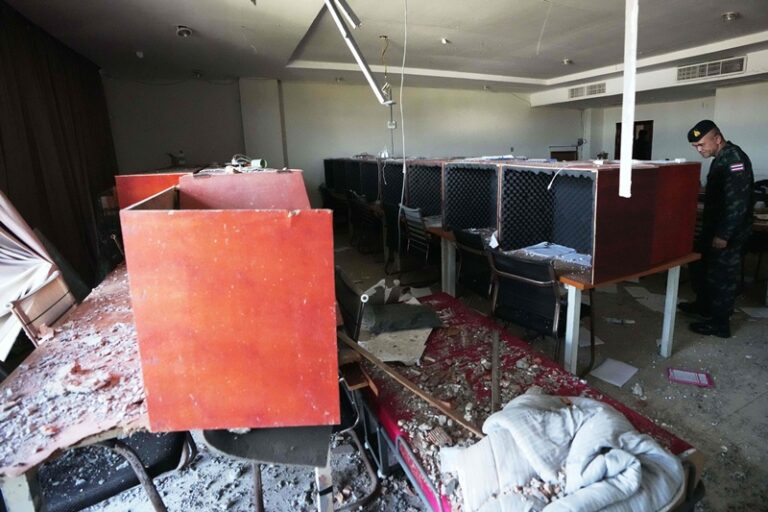
FILE – A Thai soldier inspects a work station with wooden phone booths lined with foam for soundproofing, inside a scam compound in O’Smach, Cambodia, Monday, Feb. 2, 2026. (AP Photo/Sakchai Lalit, File)
As of last week, some had gone back to work in the compounds, she added. It was that or face sleeping on the streets.
“When international organizations based in Cambodia are continuing to tell victims to go to their embassies, but the embassies tell us frankly, they don’t have a clear path or process, the responsibility is being shoved back and forth, creating a closed loop with no exit,” she said. “This is not a one-off failure, but a systemic breakdown.”
Those victims waited for hours outside the Phnom Penh office of the International Organization for Migration, a U.N. agency, she said, but were told the Caritas shelter, which IOM works, with is full.
Youga, from the Democratic Republic of the Congo, said he was beaten often while inside a compound because he refused to work. He was determined to get out and escaped on his own as the mass releases began.
The Associated Press was not able to independently verify all of his journey but saw messages of his pleas for help to IOM. The agency said they could not comment on individual cases.
Hand to mouth
While the shelter is still operating, of most immediate concern in the coming weeks is the budget for food, Taylor said. “It’s hand to mouth.”
The Caritas shelter received financial support from Winrock International, USAID’s partner in Cambodia, according to Taylor who oversaw the funding. It was due to receive $1.4 million from USAID from September 2023 through the first part of 2026. That source of funding went away after U.S. foreign assistance was suspended and USAID was dismantled in early 2025.
The shelter was also partially funded by IOM, which was largely funded by the U.S. and has also seen its funding cut.
Although many anti-trafficking organizations are registered in Cambodia, the Caritas shelter is the only one who takes in victims of scam compounds in an increasingly repressive environment. Under government pressure, independent media have shut down and a prominent journalist known for reporting on scam compounds was arrested and detained for a month.
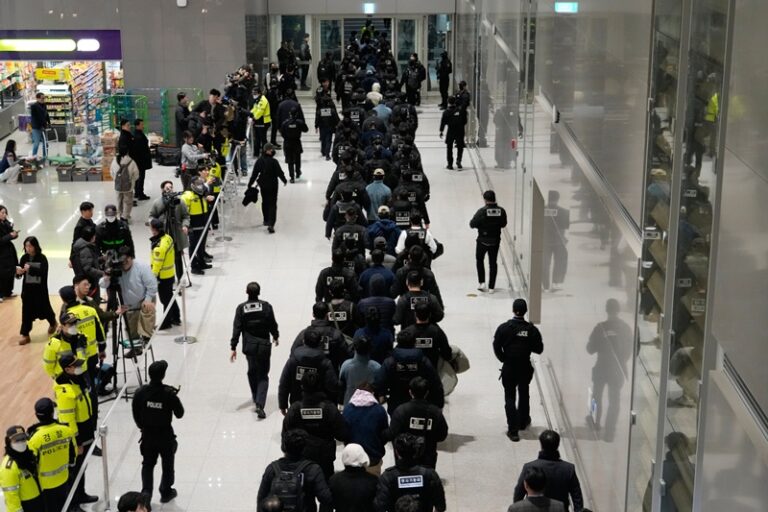
FILE – South Koreans, walking in the line at center, who are allegedly involved in online scams in Cambodia, arrive at the Incheon International Airport in Incheon, South Korea, Jan. 23, 2026. (AP Photo/Ahn Young-joon, File)
“Given the deeply repressive environment in Cambodia that emerges from the scam industry’s role as a dominant source of ruling party elite rent seeking, there are an extremely small number of formal organizations willing to respond to the issue on the ground,” said Jacob Daniel Sims, a visiting fellow at the Harvard University Asia Center who has worked in countertrafficking in Cambodia.
Rescuers say many who do not make it to the shelter can end up in immigration detention, stuck and pushed for bribes from officials. Others are now booking hotel rooms in groups if they have the funds. Those with embassies in the country are able to get help, such as Indonesians or Filipinos.
Youga cannot return home. He is from the Banyamulenge ethnic group, which has been the target of attacks by armed groups. Nor does he have an embassy in the region that can assist him.
He was lured into a scam compound in Cambodia in November after his family sent him to neighboring Burundi. He said he wasn’t looking for a job, but someone he didn’t know messaged him on his phone and then emailed him about a job, all expenses paid. He said no, but the recruiter still went ahead.
Youga said he was a university student before and wanted to continue. For now, he only hopes for a safe place. “I want,” he said, “to rebuild my life with dignity.”
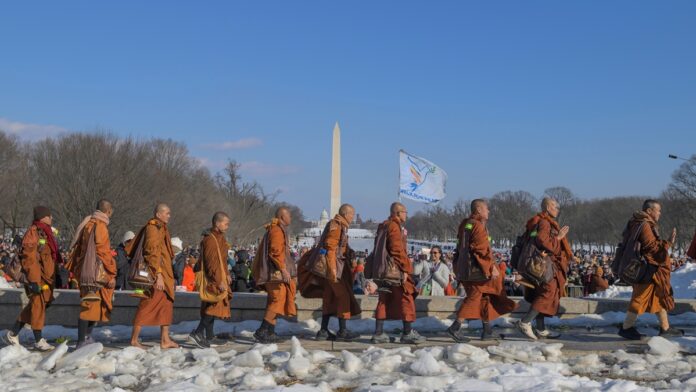
Buddhist monks who are participating in a Walk for Peace, walk near the Lincoln Memorial, in Washington, Wednesday, Feb., 11, 2026. (AP Photo/Rod Lamkey, Jr.)
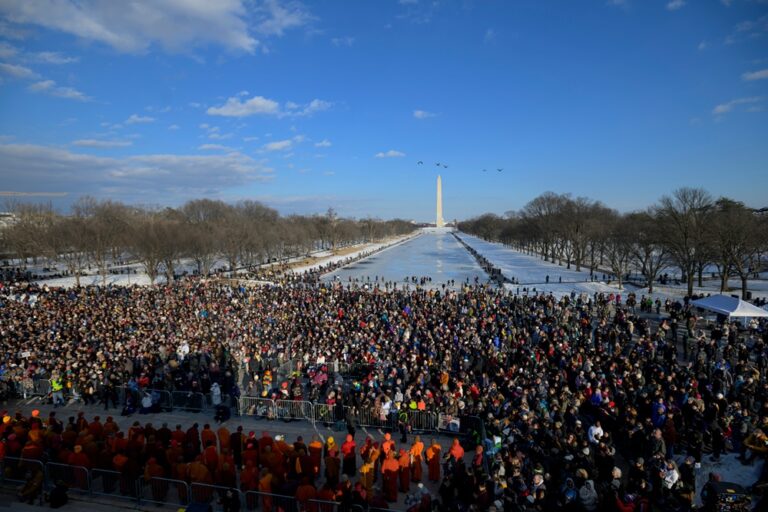
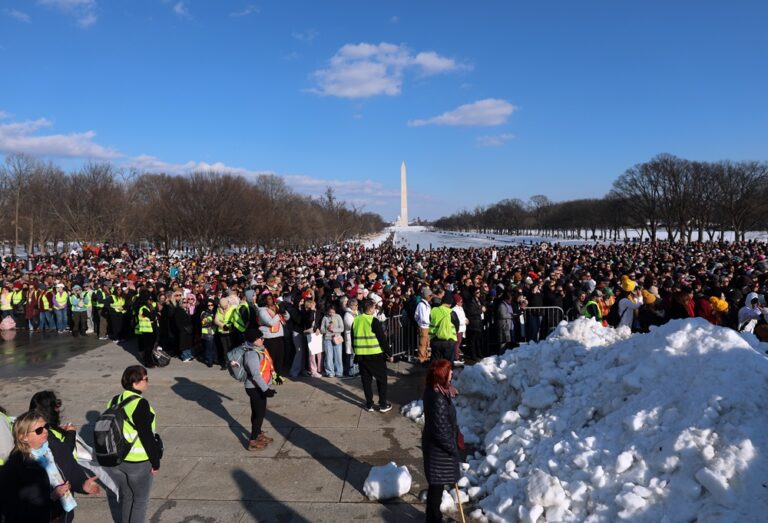
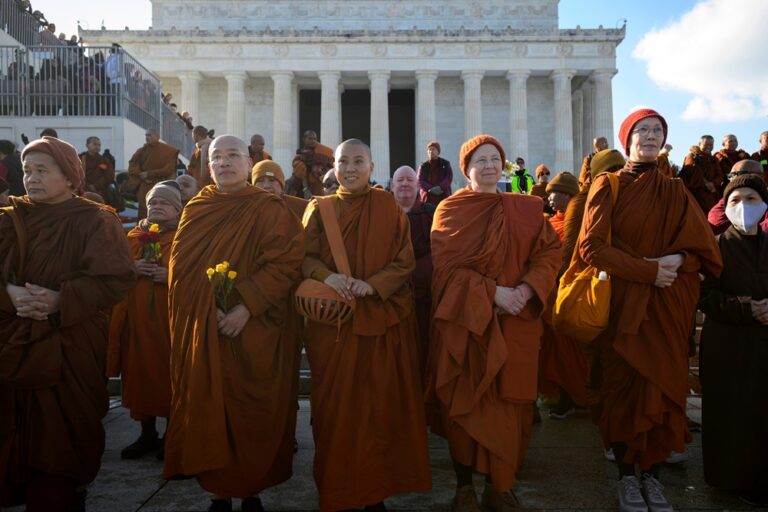
A group of Buddhist monks ended their 108-day Walk for Peace from Texas to Washington with a ceremony Wednesday afternoon at the Lincoln Memorial, where thousands gathered to hear them speak.
The 19 monks — led by the Venerable Bhikkhu Pannakara and joined by his dog, Aloka — walked 2,300 miles (3,700 kilometers) across several Southern states — sometimes in frigid conditions — drawing large crowds in churchyards, city halls and town squares. The group, with its message of peace, has captured hearts across the nation and globe, earning it millions of online followers.
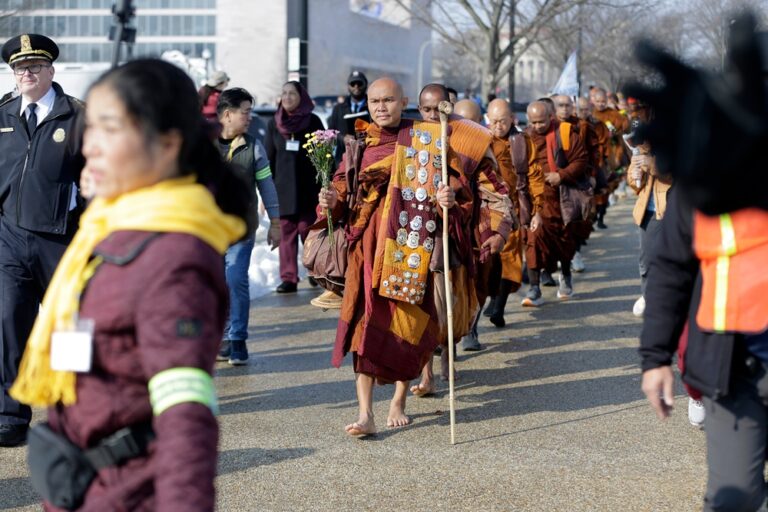
Bhikkhu Pannakara walks near the Peace Monument on Capitol Hill, during the Walk For Peace, Wednesday, Feb. 11, 2026, in Washington. (AP Photo/Rahmat Gul)
From the steps of the Lincoln Memorial, Pannakara urged everyone to practice mindfulness and to always choose kindness, compassion, love, harmony and hope.
“The Walk for Peace is not a protest, it is not to convert,” the monk said, his words ringing out in pin-drop silence. “It’s a reminder that hope still exists when people are willing to care. Hope is the final light that must never go out.”
On Wednesday morning, the monks walked single file under bright blue skies, on the warmest day since a snowstorm hit the region more than two weeks ago. The group was followed by about 100 other monks and nuns who had joined them in Washington.
Buddhist monks arrive at the Lincoln Memorial during their Walk for Peace, in Washington, Wednesday, Feb., 11, 2026. (AP Photo/Rod Lamkey, Jr.)
Behind them was a sea of people marching silently, some carrying peace signs. More than 21,000 people followed the livestream online from around the globe, posting messages in Spanish, Hindi, Thai, Portuguese, Sinhalese and many more.
Several monks representing Buddhists in Canada, Myanmar, Cambodia and Thailand commended the monks’ effort. The Venerable Ratanaguna, abbot of the Fort Worth temple and Pannakara’s teacher, said he was happy to see the walk bring together such a diverse group of people in Washington.
Monks receive message from the Dalai Lama
Tencho Gyatso, niece of the 14th Dalai Lama and president of the International Campaign for Tibet, read a commendation from the 90-year-old monk appreciating the monks’ commitment to “promote national healing, unity and compassion.”
Buddhist monks reach the Lincoln Memorial during their Walk for Peace, Wednesday, Feb. 11, 2026, in Washington. (AP Photo/Rahmat Gul)
“Their initiative illustrates how religious practitioners can contribute in a constructive way to social harmony and public dialogue,” the Dalai Lama said in the statement.
Crowds cheered and thanked the monks from sidewalks as they walked from George Washington University, where they stopped for the night, to Capitol Hill. The monks were greeted by House Democratic Leader Hakeem Jeffries and Former House Speaker Nancy Pelosi as they walked near the Peace Monument on Capitol Hill.
Pannakara walked barefoot on Wednesday, holding his staff in one hand and a long-stemmed yellow rose in another. His robe was covered in pins given by municipal and law enforcement officials the monks met and interacted with along the way.
People crowded on sidewalks trying to capture a shot of the monks on their cellphones. Many shouted out “thank you” and “we love you,” which the monks acknowledged with smiles and waves.
On Tuesday, they made stops at American University and the Washington National Cathedral for an interfaith conversation where thousands thronged to hear Pannakara speak about mindfulness and loving kindness.
The group left from the Huong Dao Vipassana Bhavana Center, a Buddhist temple in Fort Worth. Long Si Dong, a temple spokesperson, said Wednesday that approaching the U.S. Capitol, he felt “deeply humbled and grateful to witness the large crowd walking quietly behind the monks.”
“Seeing so many people move together in respect, calm and shared purpose was a powerful reminder that peace is not a solitary act — it is something we create together,” he said.
People are seen at the Lincoln Memorial during the Buddhist monks walk For Peace, Wednesday, Feb. 11, 2026, in Washington. The Washington Monument and the U.S. Capitol are seen in the background. (AP Photo/Rahmat Gul)
Challenges on the walk to Washington
The monks’ trek has had its perils. In November, outside Houston, the group was walking on the side of a highway when their escort vehicle was hit by a truck. Two monks were injured; Venerable Maha Dam Phommasan had his leg amputated. Phommasan, abbot of a temple in Snellville, Georgia, rejoined the monks near Washington and entered American University’s arena in a wheelchair and joined the group on their walk to the Capitol.
Pannakara gave Phommasan the floor before he spoke during Wednesday’s closing ceremony. Phommasan told the crowd he was feeling cold, “but you all make my heart warm.” He said practicing mindfulness made him face the difficult moments after the accident and his amputation with equanimity.
He thanked Pannakara, who he said taught him to be strong.
“He walks like how I run,” Phommasan said as the crowd laughed. “When we walked together, we were very tired, we were cold and we were hot. But, we never gave up.”
Peace walks are a cherished tradition in Theravada Buddhism. Some of the monks have walked barefoot or in socks during parts of the journey to feel the ground directly and help them be present in the moment.
The monks practice and teach Vipassana meditation, an ancient Indian technique taught by the Buddha that focuses on breath and the mind-body connection. Pannakara’s peace talks, given at stops along the way, have urged listeners to put down their phones and find peace within themselves.
Buddhist monks reach the Lincoln Memorial, during their Walk for Peace, in Washington, Wednesday, Feb., 11, 2026. (AP Photo/Rod Lamkey, Jr.)
Their return trip should be less arduous. After an appearance at the Maryland State House, a bus will take them back to Texas, where they expect to arrive in downtown Fort Worth early on Saturday.
From there, the monks will walk together again, traversing 6 miles (9.6 kilometers) to the temple where their trip began.