



























32.3 C
Bangkok
Tuesday, June 23, 2026
Home Blog Page 1426

Pentagon Rejects Trump Threat to Hit Iranian Cultural Sites

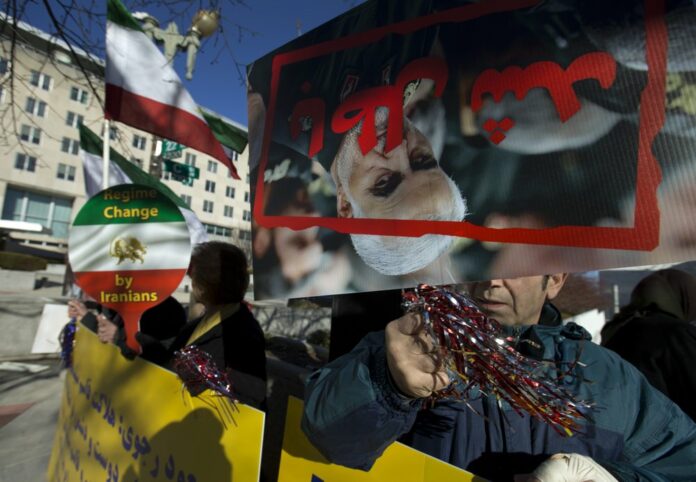
Members of the Iranian American community of Washington, D.C., who support the Mujahedeen-e-Khalq, or the MeK, an Iranian exile group that seeks to overthrow Iran’s government, rally outside the State Department in Washington, Monday, Jan. 6, 2020. Participants at the rally celebrated the death of Iranian Gen. Qassem Soleimani, who was killed by a U.S. airstrike in Iraq. (AP Photo/Jose Luis Magana)

WASHINGTON (AP) — The Pentagon on Monday distanced itself from President Donald Trump’s assertions that he would bomb Iranian cultural sites despite international prohibitions on such attacks.

Defense Secretary Mark Esper said the U.S. will “follow the laws of armed conflict.” When asked if that ruled out targeting cultural sites, Esper said pointedly, “That’s the laws of armed conflict.”

The split between the president and his Pentagon chief came amid heightened tensions with Tehran following a U.S. drone strike that killed Gen. Qassem Soleimani, the head of Iran’s elite Quds Force. Trump had twice warned that he would hit Iranian cultural sites if Tehran retaliates against the U.S.

Esper’s public comments reflected the private concerns of other defense and military officials, who cited legal prohibitions on attacks on civilian, cultural and religious sites, except under certain, threatening circumstances.

Trump first raised the prospect of targeting cultural sites in a tweet on Saturday and reiterated that view to reporters the next day.

“We have targeted 52 Iranian sites (representing the 52 American hostages taken by Iran many years ago), some at a very high level & important to Iran & Iranian culture, and those targets, and Iran itself, WILL BE HIT VERY FAST AND VERY HARD,” he tweeted.

His Twitter message caught administration officials off-guard and prompted an immediate outcry from legal scholars, national security experts and Democratic lawmakers. But the president stood by his threat the following day.

“They’re allowed to kill our people. They’re allowed to torture and maim our people. They’re allowed to use roadside bombs and blow up our people,” he told reporters traveling with him on Air Force One. “And we’re not allowed to touch their cultural sites? It doesn’t work that way.”

By international law, however, it does.

Specifically, the 1954 Hague Convention says nations must “take all possible steps” to protect cultural property and shall refrain “from any act of hostility, directed against such property.” It also says nations must not use cultural sites for any threatening purposes that would make such locations a military target.

The Pentagon has long had a list of potential targets both inside Iran as well as those associated with Iran throughout the Middle East. Those targets and war plans are routinely updated, including during the recent uptick in hostilities.

Officials won’t discuss the list, but it is certain to include an array of Iranian military sites and capabilities, including missile, air defense and command and control locations.

Any targets would go through a lengthy vetting process within the military and the Pentagon to determine that they are legal, appropriate and proportionate to any Iranian action. Only after that process is complete would a list of potential sites go before the president for approval.

Outside the Pentagon, Trump’s threats were met with condemnation.

“It shows that he is somewhat deranged about this,” said Sen. Tim Kaine, D-Va. “The pledge to attack cultural sites, likely, is a violation of international law.”

Kaine said that all Trump is doing “is escalating tensions and he seems to believe, ‘I can strike you, but you can’t strike me.’ That’s not the way the world works.” He added that Trump needs to confer with Congress.

The threats also drew reaction from the Metropolitan Museum of Art in New York.

“The targeting of sites of global cultural heritage is abhorrent to the collective values of our society,” museum leaders said in a statement. “At this challenging time, we must remind ourselves of the global importance of protecting cultural sites – the objects and places by which individuals, communities, and nations connect to their history and heritage.

Ahead of Esper’s comments, other administration officials tried to make clear that the U.S. would follow the law without directly contradicting the president.

Secretary of State Mike Pompeo on Sunday said that any U.S. military strikes inside Iran would be legal.

“We’ll behave inside the system,” Pompeo said. “We always have and we always will.”

___

Associated Press writers Matthew Lee, Robert Burns and Aamer Madhani contributed to this report.
Advertisement

Complaint Filed Over Retailers’ Total Ban on Plastic Bag

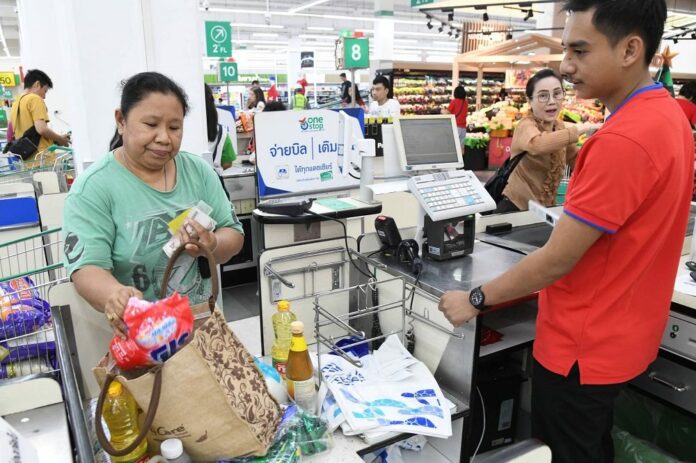
A customer at Tesco Lotus Supermarket in Rama III uses cloth bag to carry groceries on Jan. 4, 2020.

BANGKOK — A transparency activist on Monday accused retailers of taking advantage of consumers in stopping to give out plastic bags without offering them free alternatives.

Speaking to the media after filing a petition against 75 retailers to the Consumer Protection Board, Srisuwan Janya said the firms are exploiting consumers rights by passing the burden to their customers with the ban on plastic bags they rolled out on New Year’s Day.

“I support the scheme, but retailers should offer alternative solutions for their customers,” he said. “They are taking advantage of their customers because they still charge the same price while saving cost from not giving out plastic bags.”

He also accused the government of failing to protect shoppers as prescribed by Article 61 of the Constitution, which required the authorities to provide safeguards to the rights of consumers.

“Some retailers use this opportunity to raise the prices of alternative containers, in which consumers have no choice,” Srisuwan said. “It seems that the government is OK with this, even though it’s their duty to protect consumers rights.”

He demanded the Consumer Protection Board to press retailers to find alternative solutions for their customers or mark down the prices within 90 days. If nothing has been done after those 90 days, Srisuwan said he would file a legal complaint against the board itself.

The nationwide plastic bag ban at major retailer chains is part of the government’s plan to eradicate single-use plastic bags nationwide by 2021, which also includes an even more radical solution of blurring images of single-use plastic bags on TV shows.

Advertisement

Thailand Launches Full-Time Clinics Dispensing Cannabis Oil

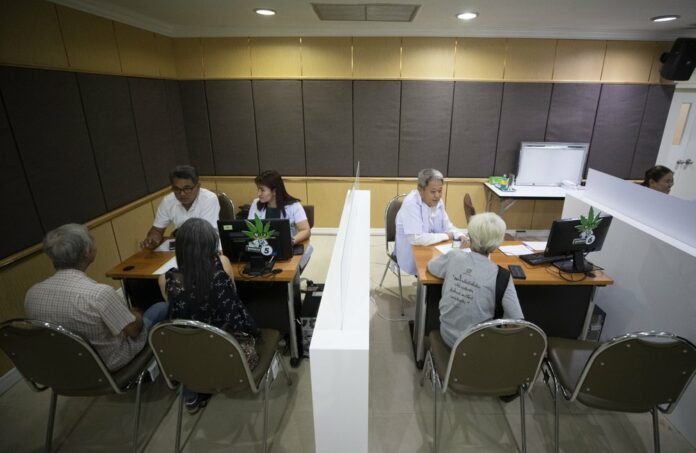
Patients consult with medical professionals at the first full-time clinic prescribing cannabis oil for medical treatment in the Public Health Ministry in Nonthaburi province, Thailand, Monday, Jan. 6, 2020. (AP Photo/Sakchai Lalit)

NONTHABURI, Thailand (AP) — Thailand on Monday opened its first two full-time clinics dispensing cannabis oil for medical treatment, a step forward in the government’s policy of promoting the licensed use of marijuana products to relieve the symptoms of a range of ailments.

About 400 patients, many of them with cancer, were given the oil for free at a flagship clinic at the Public Health Ministry in a suburb of Bangkok.

The initial four formulations handed out are used for treating conditions such as migraines, insomnia, nausea, numbness and pain. The medicines are touted as being based on traditional remedies.

Thailand was previously known for harsh anti-drug laws, but is now eyeing the economic potential of cannabis. A report last year by Prohibition Partners, which claims to be the leading authority on the subject, said Asia’s medical cannabis market would be worth around $5.8 billion by 2024.

Around 25 similar clinics have been operating part-time since the legislature agreed in 2018 to amend the country’s drug laws to allow the use and production of medical cannabis.

The Health Ministry clinic and another in Bangkok are forerunners of a planned nationwide network, if they show positive results.

“Marijuana could be an answer. At least the patients’ quality of life is improved,” said Dr. Prasert Mongkolsiri, the director of a public hospital, who helped advise patients on Monday.

“At least it can lessen the side effects of the modern chemical-based medicines that they’ve been taking for 10 or 20 years,” he said, referring to chemotherapy for cancer patients.

Chamroen Nakurai, 57, was diagnosed with lymph node cancer two years ago. She said cannabis oil helps lessen the side effects of her chemotherapy, but until now she had been able to get it only through illegal underground suppliers.

“The treatment isn’t widely available and the cost is quite high if you visit underground clinics, but this service is free and anyone can access it,” she said.

Nuthjutha Ulpathorn, 29, was born with cerebral palsy that makes her unable to walk and garbles her speech. She began to use cannabis oil two months ago after her mother brought her to a government hospital that started to give out cannabis oil.

“I sleep better, and (am) less cranky,” Nuthjutha said with a smile.

Health Minister Anutin Charnvirakul, the chief architect of the new policy drive, toured the suburban clinic on Monday. He expressed hope that the remedies might be soon added into the National List of Essential Medicine, which allows them to be covered by Thailand’s 30-baht ($1) universal health care scheme. Officials say the policy of free cannabis is likely to be changed.

Anutin is the leader of the Bhumjai Thai Party, a partner in the country’s coalition government. The party won 50 seats in March’s general election after Anutin campaigned for legalization of the production of marijuana to aid farmers. Moves to allow small-scale private production are moving ahead.

The Public Health Ministry, meanwhile, supervises cannabis production at six locations around the country.

Advertisement

Anti-Prayuth Run Organizer Hopes for No Confrontation

Organizers of "Run Against Dictatorship" hold a news conference in Bangkok on Jan. 5, 2020.

BANGKOK — An organizer of an anti-government running event urged its pro-government counterpart to ensure that there will be no confrontation when the two rival activities kick off on Sunday.

Tanawat Wongchai, the student activist behind “Run Against Dictatorship” scheduled for Jan. 12, said he already did his part to avoid tensions, and he hopes the rival group called “Walk to Support Prayuth” would not incite any violence. The pro-government event is organized mostly online, and it is unclear who organizes the run.

“We have retreated by organizing the event at a faraway location to order to reduce the risks,” Tanawat said in an interview. “We have done everything to avoid confrontation.”

Tanawat, who studies at Chulalongkorn University, said 10,000 people have registered to take part in the run, which starts at 6:30am on Sunday. About 2 million baht has also been raised from 3,000 registered runners who paid 600 baht donations that will cover the event’s organizing costs, Tanawat said. Those who opted for paid registration will receive a T-shirt and a medallion.

The event is set to take place at inside Wachirabenchathat Park, aka Suan Rot Fai, in north Bangkok’s Chatuchak district.

Pro-government walk for Prayuth meanwhile will be held inside Lumpini Park in central Bangkok on the same morning.

No group or activist has stepped forward as the organizer of the event so far. Messages sent to the event’s official Facebook page were not returned by publication time. In a Facebook post, the unnamed organizers made clear where they stand.

“If you… oppose orange water buffalos who hate the country, we are friends,” the message read, apparently referring to supporters of the Future Forward Party, whose official color is orange.

Tanawat the anti-government activist said his group has three demands to the Prayuth administration and will give them three months to respond: solve economic problems, amend the constitution, and put an end to nepotism.

Depending on the government’s response, or the lack thereof, Tanawat said the group will consider future actions.

“Run Against Dictatorship” also spawns similar running events in 20 provinces on the same day, mostly organized by online groups, but Tanawat insisted he is not responsible for them.

“We want it to be made clear that it’s a different team from the one organizing the Bangkok event,” Tanawat said.

Advertisement

Thai Gov’t Worried for US-Iran Conflict Fallout

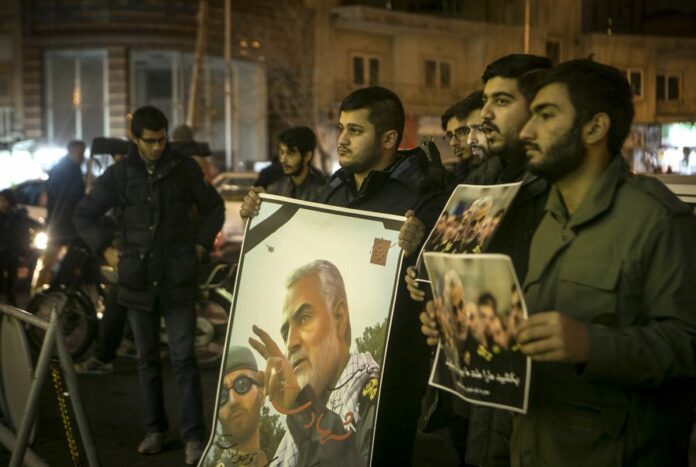
Protesters demonstrate over the US airstrike in Iraq that killed Gen. Qassem Soleimani, in Tehran, Iran, Saturday Jan. 4, 2020. Photo: Ebrahim Noroozi / AP

BANGKOK — Officials and experts on Monday said they fear Thailand may be caught in collateral damage from the heightened confrontation between the U.S. and Iran.

Following the U.S. drone strike on Friday that killed Qasem Soleimani, who is widely considered to be Iran’s second most powerful person, an international relations professor urged Thailand to remain vigilant, as the assassination could prompt responses from armed groups allied to Iran.

“Although I believe that the killing of Soleimani will not grow into an all-out war between the U.S. and Iran as many have speculated, I suggest Thailand should be watchful of the situation because Iran will certainly retaliate,” Thitinan Pongsudhirak said in an interview. “An Iran-linked attack happened in Bangkok in the past.”

In 2012, a failed bomb attack in Bangkok led police to arrest a group of Iranian nationals who were later accused of attempting to target Israeli diplomats in Thailand.

Given Thailand’s cordial relations with both the U.S. and Iran, he said the situation is unlikely to spell any grave ramifications for Thailand, but the professor warned that Iran may resort to unconventional warfare in other countries, targeting U.S. citizens and assets.

“The government should step up security measures at vulnerable places like tourist attractions or embassies,” he said. “The risk is not that prominent since Thailand is not directly involved with the conflict, but we should better stay alert.”

There are signs the government is already making preparations in case the tension takes a turn for the worse. The Ministry of Labor said today the government has prepared an evacuation plan for Thai citizens in Iran and Iraq.

“There are 257 Thais working in Iran and 25 Thais working in Iraq,” labor minister Chatumongkol Sonakul said. “We have coordinated with the Thai Embassy in Riyadh, which is also responsible for Iran, to facilitate wellbeing of Thais in the region.”

The Stock Exchange of Thailand (SET) index slid down 0.68 percent by 1.40pm on Monday.

Energy minister Sontirat Sontijirawong said the country has enough oil reserves to prepare for potential disruptions in global oil supply.

But the Ministry of Commerce on Sunday warned that Thai economy could be affected by global fluctuations in stock markets and oil prices as conflicts between the U.S. and Iran escalated.

“In the short term, oil prices soared nearly four percent on Friday and were likely to rise further unless the situation was relieved,” Pimchanok Vonkorpon of the Trade Policy and Strategy Office said. “In the medium and long terms, it could have a negative impact on investors’ confidence and a slight impact on global economy.”

The director-general said the situation had yet to pose direct impact to Thailand, but she believed that it could get worse should the U.S. or Iran retaliate against each other, especially if the conflict involves a blockade of the Strait of Hormuz, where about 20 percent of global sea shipments pass through.

Nevertheless, Pimchanok added that she saw a silver lining in the situation, as Thai exports of petroleum-based products such as plastic pallets and petrochemicals could benefit from rising oil prices.

According to official statistics, the trade between Thailand and the Middle East region worth USD 25,683 in the first 11 months of 2019, or 5.8 percent of the country’s overall trade. Rice, clothing, and air conditioners were among Thailand’s top exports to the region.

Advertisement

Prayuth to Tackle Water Crisis in Face of Serious Drought

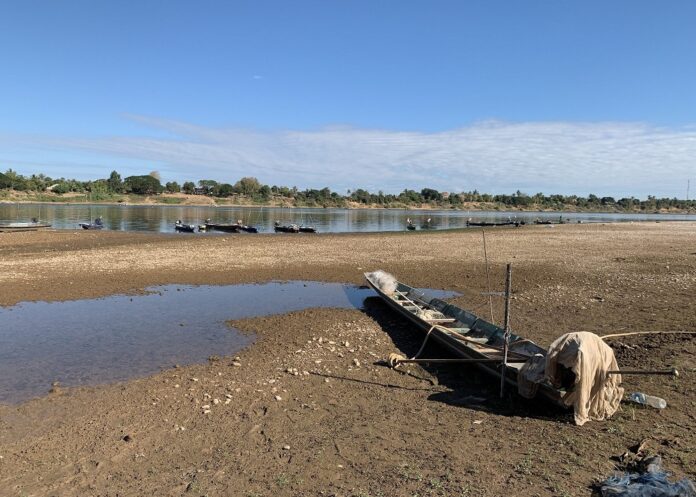
Boats are grounded on the Mekong River in Nong Khai province, Jan. 6, 2020.

BANGKOK (Xinhua) — As Thailand faces water shortage and drought declared in 31 provinces, Thai Prime Minister Prayut Chan-o-cha has made clear to his government that he will head the command center in tackling drought, government spokeswoman Narumon Pinyosinwat said on Sunday.

“The National Water Resources Committee (NWRC) which was the brainchild of Prime Minister Prayut, will be responsible in finding budget and managing the drought,” said Narumon, “this year’s drought would be more severe than those in the past.”

The spokeswoman said the NWRC will also be responsible in informing, updating and advising residents in drought affected provinces and work on mitigation efforts throughout the drought season.

Prayut is fully aware of the severity of the problem and had already instructed all state agencies to assist drought-affected victims as first priority, said Narumon.

She also said that in the long run, the NWRC will be drawing up a 20-year water management plan, to ensure that every village will have access to clean water for consumption, for agriculture and industry.

In Bangkok’s neighboring province of Pathum Thani, the Irrigation Department has developed a water sharing system, with the provincial administration, community leaders and farmers’ representatives, for rice farmers who need water for crop irrigation.

The Ministry of Agriculture and Cooperatives has earlier instructed farmers to refrain from growing off-season rice as there will be insufficient water to irrigate their farm.

The Thai Provincial Waterworks Authority (PWA) on Jan. 1 issued a warning to all Thais to brace for serious drought in 31 provinces.

This year’s drought will affect 61 water production facilities in 31 provinces, 15 in the Northeast, nine in the North, six in the South and one in the East, said PWA in a press release.

Advertisement

Two Pandas Born in Belgium Named ‘Panda Cub of the Year’

A zookeeper holds the panda "Bao Di" at the Pairi Daiza zoo in Brugelette, Belgium, Nov. 14, 2019.

BRUSSELS (Xinhua) — Bao Di and Bao Mei, the two giant pandas born last year in the Belgian zoo of Pairi Daiza, have won the “Panda Cub of the Year” Gold Award.

The ceremony of 2019 Giant Panda Global Awards was held in Pairi Daiza. It was organized by the Giant Panda Global website, a platform to promote conservation efforts for giant pandas.

AP18289755961109 1
Giant panda cubs Bao Di and Bao Mei rest at the Pairi Daiza zoo in Brugelette, Belgium, Dec. 31, 2019.
S 22732905 3
File photo taken on Nov. 14, 2019 shows zookeepers holding the panda twins Bao Di (L) and Bao Mei at the Pairi Daiza zoo in Brugelette, Belgium. (Xinhua/Zheng Huansong)

Advertisement

Chinese, Russian FMs Discuss Iran Tensions Over Phone

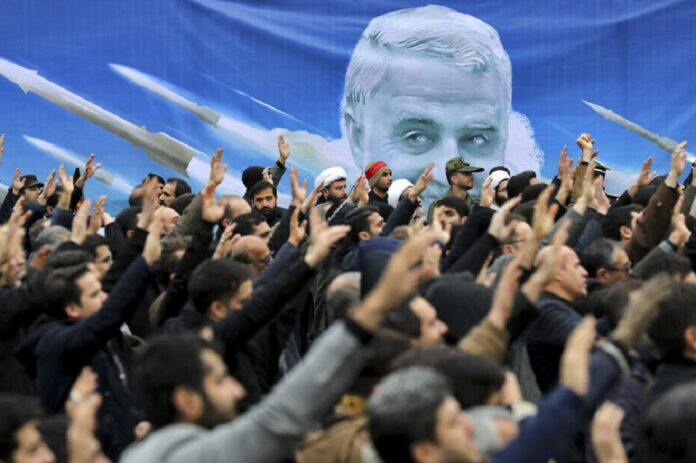
People hold posters of Qasem Soleimani, a top Iranian commander, during a mourning ceremony in Tehran, Iran, Jan. 3, 2020. (Photo by Ahmad Halabisaz/Xinhua)

BEIJING (Xinhua) — Chinese State Councilor and Foreign Minister Wang Yi exchanged views and coordinated stances with Russian Foreign Minister Sergei Lavrov in a phone call late Saturday over the escalating tensions in the Gulf region.

They also discussed bilateral cooperation at the United Nations (UN) Security Council.

Wang said that China pays high attention to the intensification of U.S.-Iran conflict, opposes the abuse of force in international relations, and holds that military adventures are unacceptable.

China insists that all parties should earnestly abide by the principles of the UN Charter and the basic norms of international relations, Wang said, adding that Iraq’s sovereignty, independence and territorial integrity should be respected, and that peace and stability in the Middle East and the Gulf region should be maintained.

Noting that China and Russia, both permanent members of the UN Security Council, bear important responsibilities for world peace and security, Wang said the two countries should strengthen strategic communication, join hands to uphold international law, as well as fairness and justice, and play a responsible role in properly handling the current situation in the Middle East.

For his part, Lavrov said that Russia shares the same position with China, adding that the U.S. actions are illegal and should be condemned.

Russia opposes gross trampling upon any other country’s sovereignty, especially via unilateral military moves, Lavrov said.

He said that Russia is willing to stay in close coordination with China and play a constructive role in preventing the escalation of regional tensions.

Wang and Lavrov also discussed the latest developments of hotspot issues such as Libya and Syria, and agreed to maintain close communication over safeguarding global strategic stability.

Advertisement

Japan PM Says Plan to Dispatch Military Unaffected by Iran Tension

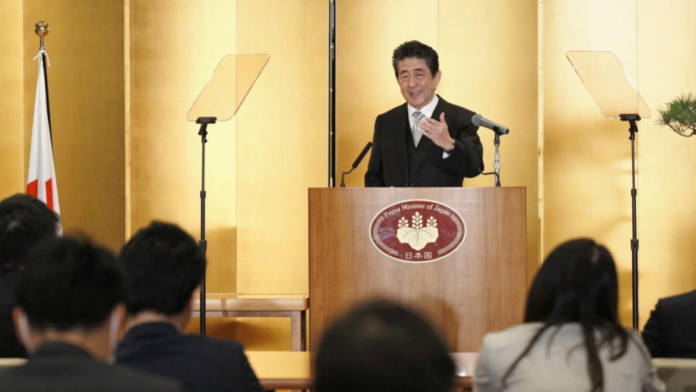
Image: Kyodo

MIE, Japan (Kyodo) — Japanese Prime Minister Shinzo Abe on Monday urged all parties involved to step up diplomatic efforts to avoid escalating tensions in the Middle East, saying he is “deeply concerned” about the current situation.

During his first press conference of the year, Abe said Japan will continue with its diplomatic efforts while indicating no change in Tokyo’s plans to send Self-Defense Forces personnel and assets to the region to ensure the safe navigation of commercial ships.

Continue reading the story here

Advertisement

Japan Vows to Improve Border Checks, Bail After Ghosn Flight

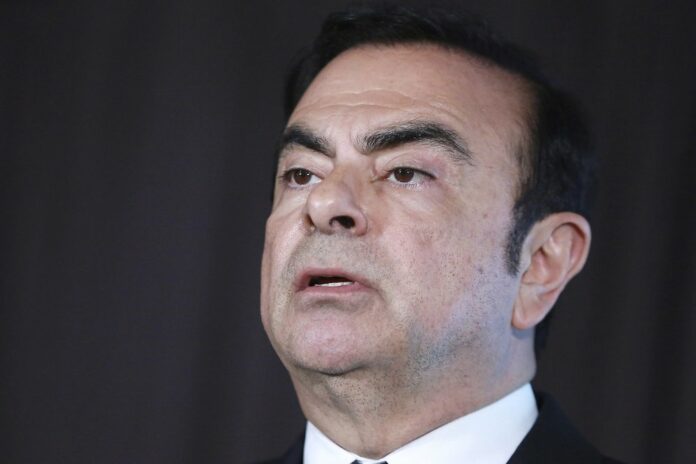
In this May 12, 2016, file photo, then Nissan Motor Co. President and CEO Carlos Ghosn speaks during a press conference in Yokohama, near Tokyo. (AP Photo/Eugene Hoshiko, File)

TOKYO (AP) — Japan’s justice minister vowed Monday to strengthen border departure checks and review bail conditions after Nissan’s former chairman, Carlos Ghosn, fled the country.

Masako Mori told reporters at a news conference the ministry has already acted to prevent a recurrence but declined to give details.

She was asked about reports that Ghosn had hidden in a box and that baggage checks at a regional airport might have been insufficient.

Ghosn skipped bail while awaiting trial on various financial misconduct allegations and later said from Lebanon that he did it to escape injustice.

Mori declined to say who might be held responsible for such a high-profile flight, stressing it was still under investigation.

She said Ghosn left illegally, denouncing it as an “unjustifiable” crime.

“Japan’s justice system allows investigating the facts while it ensures the individual basic human rights at the same time,” Mori told reporters at the ministry.

“It is set with appropriate procedures and it is operated appropriately.”

But she acknowledged the case was being looked at under an ongoing review of the nation’s judicial system, including introducing electronic tethers to monitor those out on bail.

“We are aware of the criticisms,” Mori said, referring to human rights advocates’ descriptions of Japan’s legal system as “hostage justice.”

Ghosn and others say Japan’s system takes too long and is inhumane. Ghosn was banned from meeting with his wife while out on bail. Preparing for his trial has taken about a year, and a date has not been set. Ghosn was detained, twice, for a total of 130 days before he was released on bail a second time.

Mori said each nation has its own judicial system and arrests are rarer in Japan than in other countries, suggesting arrests are made only when the authorities are fairly confident they have a case.

“Simple comparisons are misleading,” she said.

Takashi Takano, one of Ghosn’s lawyers in Japan, said he felt sad and betrayed Ghosn didn’t try to win a verdict of innocence in court, but also expressed an understanding how Ghosn might have lost hope with not only the prosecutors but the entire Japanese judicial system.

Lawyer Yuichi Kaido said he was troubled by what he saw as the growing negative public reaction of demanding bail be refused for foreign suspects, noting Japanese don’t empathize with Ghosn’s actions at all.

He said in an online statement he feared Japan wouldn’t be able to bear the overwhelming international criticism of its legal system, which Ghosn will likely continue in Lebanon, and instead grow even more insular and rigid in its views.

Details of Ghosn’s stunning escape last week are unclear. But Turkish airline company MNG Jet said two of its planes were used illegally, first flying him from Osaka, Japan, to Istanbul, and then on to Beirut, where he arrived last Monday and has not been seen since.

Lebanon has said he entered legally with a French passport.

Ghosn promised to talk to reporters on Wednesday. His lawyers in Japan said they knew nothing about the escape and felt betrayed by his action.

Once an auto industry superstar, Ghosn was first arrested in November 2018. While out on bail, he was living in a home in an upscale part of Tokyo under strict surveillance as part of the conditions for his release. That raises questions about how he left undetected.

Security cameras at his home operated 24 hours a day, but the footage only had to be submitted to the court on a monthly basis, according to lawyers’ documents detailing Ghosn’s bail conditions.

Ghosn had been charged with under-reporting his future compensation and breach of trust in diverting Nissan money for his personal gain. He insists he is innocent.

His bail has been revoked, and Interpol has issued a wanted notice. Japan does not have an extradition treaty with Lebanon, but Mori left open the possibility Japan could seek Ghosn’s return.

But such a return so far appears unlikely, and Japan’s options are limited.

Mori stressed that any retaliatory action, such as economic sanctions, must be decided on very carefully.

She also declined to say whether Japan contacted the U.S. or France for help, and how they might be working together.

“It is indeed possible to ask for extradition of criminals based on the principle of reciprocity,” she said in replying to a reporter’s question about Lebanon.

“But, upon doing that, we need to carefully study whether it is possible to guarantee this principle of reciprocity and their internal justice system.”

Advertisement

Hot News

LATEST NEWS

Bangkok
overcast clouds
32.3 ° C
34.4 °
30.5 °
62 %
4kmh
86 %
Tue
37 °
Wed
37 °
Thu
37 °
Fri
37 °
Sat
37 °