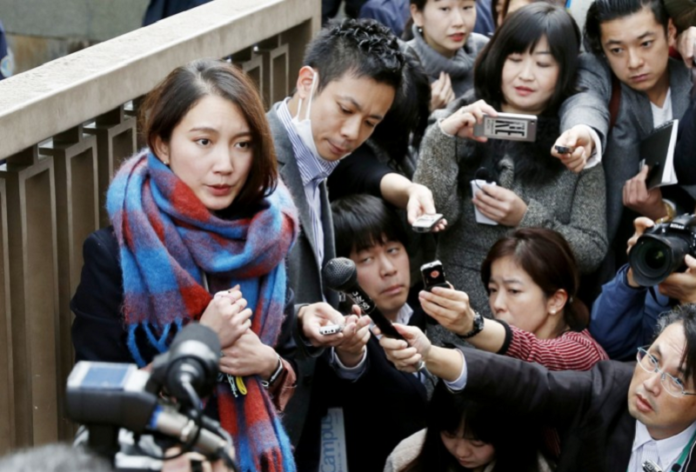
TOKYO (Kyodo) — Shiori Ito, a #MeToo symbol in Japan, said Thursday her civil court victory in a rape case against a prominent political journalist was “one of the landmark cases for Japanese sex crimes” and she was still “quite surprised” by the ruling.
Noriyuki Yamaguchi, a journalist close to Prime Minister Shinzo Abe, denied committing any crime at a separate press conference and repeated his intention to appeal the Tokyo District Court ruling Wednesday.
WASHINGTON (AP) — Congress has headed home for the holidays leaving plans and a possible timeline for President Donald Trump’s impeachment trial in disarray.
Democratic House Speaker Nancy Pelosi insisted Thursday that Senate Republicans must provide details on witnesses and testimony before she would send over the charges for Trump’s trial. No deal, replied Senate Majority Leader Mitch McConnell after meeting with his Senate Democratic counterpart.
“We remain at an impasse,” he said.
As darkness fell and lawmakers prepared to depart for the year, McConnell wondered from the Senate floor why in the world the Republicans should give ground to persuade House Democrats “to send us something we do not want.”
McConnell and the Democrats’ Senate leader, Chuck Schumer of New York, met for about 20 minutes in their first attempt to negotiate the contours of an agreement on running the rare Senate impeachment trial that was expected to start in January.
McConnell favors a swift trial, without the new witnesses Democrats want, and he holds a clear tactical advantage if he can keep his 53-member Senate majority united. Schumer, who also met privately with Pelosi, has to bet that GOP senators won’t hold the line and Republicans will peel away as public pressure mounts for a fuller trial.
For the record, Sen. Lindsey Graham of South Carolina said he had met with Trump and “he is demanding his day in court.”
McConnell, who has drawn criticism for saying he won’t be an impartial juror, said the Democrats were “too afraid″ to send the charges to the Senate, where Trump would be expected to be acquitted by the Republican majority.
We’ll see, he said, “whether the House Democrats ever work up the courage to take their accusations to trial.”
Pelosi said that McConnell “says it’s OK for the foreman of the jury to be in cahoots with the lawyers of the accused. That doesn’t sound right to us.”
Dismissing the idea that Democrats would hold off the proceeding indefinitely to prevent Trump from being acquitted, Schumer said there will almost certainly be a trial.
“There’s an obligation under the Constitution to have a trial,” Schumer told The Associated Press.
He noted that even the Democratic senators campaigning for the party’s presidential nomination, with early state voting starting in February, are prepared to return to Washington to sit for the days-long proceedings. “The Constitution requires it,” he said.
Wednesday night’s House vote, almost entirely along party lines, made the president just the third in U.S. history to be impeached. The House impeached Trump on two charges — abusing his presidential power and obstructing Congress — stemming from his pressure on Ukraine to announce investigations of his political rival as Trump withheld U.S. aid.
Pelosi’s procedural delay in taking the next step — apparently in search of leverage with Senate Republicans in locking in trial arrangements — threw a wrench into the expected timing.
“So far we haven’t seen anything that looks fair to us,” she had said Wednesday night. On Thursday at the Capitol, she said, “We’d like to see a fair process, but we’ll see what they have and will be ready for whatever it is.”
Trump mocked on Twitter: “Now the Do Nothing Party want to Do Nothing with the Articles.”
Both parties said public opinion was with them after the House impeachment vote.
Trump claimed polling showed him leading all potential Democratic opponents for next fall’s election.
Pelosi said, “We’ve been hearing from people all over the country. Seems like people have a spring in their step because the president was held accountable for his reckless behavior.”
With elections in mind, Trump welcomed Democratic Rep. Jeff Van Drew into the GOP after the New Jersey freshman said he would be changing parties because he opposed impeachment.
Pelosi, pressed about next steps for impeachment, wouldn’t say. She and her Democrats are insisting on more witnesses, testimony and documents than McConnell appears willing to provide before they name the House “managers” who would prosecute Trump in the Senate.
“The next thing will be when we see the process that is set forth in the Senate,” Pelosi said. “Then we’ll know the number of managers we may have to go forward and who we would choose.”
Not yet.
On the Senate floor, McConnell described the House actions against Trump as “the most rushed, least thorough and most unfair impeachment inquiry in modern history.”
Fighting back using McConnell’s own words, Schumer said the Republican leader was plotting the “most rushed, least thorough and most unfair” impeachment trial in history by declining to agree to call witnesses, including former Trump national security adviser John Bolton, who declined to testify before the House.
“McConnell claimed the impeachment was motivated by partisan rage,” said Schumer. “This from the man who said proudly, ‘I am not impartial.’
“What hypocrisy.”
___
Associated Press writers Alan Fram and Lisa Mascaro contributed to this report.
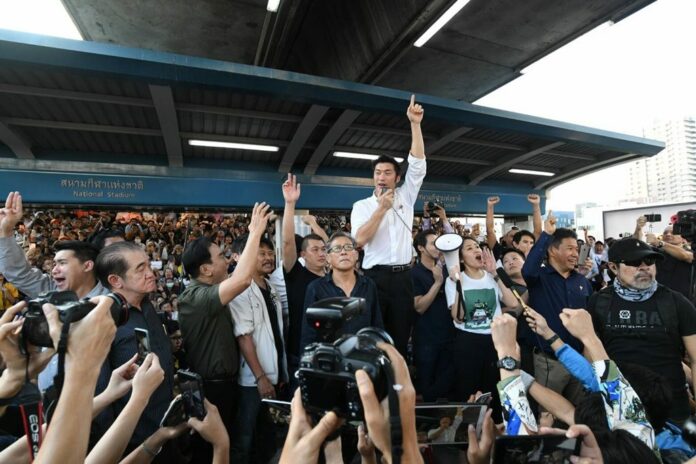
An anti-government protest in Bangkok on Dec. 14, 2019.
BANGKOK — Charter amendment, ending military conscription, and encouraging young opponents of the Prayuth Chan-ocha administration to come out in force on the streets are key issues that pro-democracy camp hopes to push for in 2020.
As the election year is ending, anti-government activists are reassessing their priorities for next year. Thanks to gerrymandering and other controversial voting rules, Gen. Prayuth won another term as the Prime Minister and achieved the title he had long sought after: head of an elected government regime.
Fed up with insults that young netizens are merely a creature of social media too lazy or indifferent to take to the streets in a show of force, student activist Tanawat Wongchai, 21, decided to test the water by organizing “Run Against Dictatorship” set for Jan 12.
“We have been insulted that we only loud online and is invisible in the real world so we will show that we do really exist in flesh and blood,” Tanawat , who has over 33,600 followers on his Twitter account, said by phone.
The third-year economics student at Chulalongkorn University said young, progressive Thais may not be ready to stage a full blown demonstration yet, so a symbolic running event in public will be a transitional step.
At the time of the interview, Tanawat said he was hopeful that at least 1,000 people will join the event. Latest information shows all 8,000 tickets and kits for the day of action were already sold out, though it is still unclear how many would actually turn up.
“I expect a thousand. If it doesn’t reach a thousand, then it’s the organizer’s [fault] for failing to make it attractive,” Tanawat said.
Resist the Draft
A second issue that will put the power of pro-democracy camp to test is the effort to abolish compulsory military conscription, or at least introduce a voluntary system where a conscript can opt for civic services instead.
Student activist Netiwit Chotiphatphaisal is spearheading the move outside the Parliament while Future Forward Party is pushing for a legal amendment inside.
Netiwit acknowledged that gaining for public support is necessary, since the issues faces stiff opposition from the armed forces and the military-backed government.
“We now see the resistance and it won’t be easy. Next year we will reach out and we need legitimacy from society to endorse the reform,” Netiwit, who studies at Chulalongkorn University, said in an interview.
A man closes his eyes as he draws a lottery on whether he would be drafted into a two-year military service on April 5, 2018, in Phang Nga province.
He predicts that a compromise where military conscripts are given a choice to take up public services as the most plausible outcome. Netiwit also advocates for the term of conscription to be cut from the current two years. Taiwan, he added, has reduced it to four months.
“We will likely be able to obtain a consensus. The public must press ahead. In reality, this is a struggle against a form of militarization,” Netiwit said.
Future Forward Party deputy leader Chamnan Chanruang said a draft amendment proposed by the party is now waiting to be debated by the lawmakers.
“I believe the government will propose an alternative draft amendment,” Chamnan said, adding that some reforms on the current system are inevitable.
Another Constitution?
Much more uncertain is the attempt to amend or rewrite the junta-sponsored charter, which pro-democracy activists say undermines electoral power and allows the military to rule by other names.
MP Chamnan said a crucial effort would be to build a social consensus in order to convince the junta-appointed Senate to support the move. He added that the 2000 “People’s Constitution” was born that way. Despite politicians’ unwillingness to endorse it at first, they could not oppose the growing public demand, he said.
“The Senate will follow [if consensus is achieved]. They won’t be able to resist,” Chamnan said.
Over half of the combined upper and lower houses, or over 375 seats, will be needed for a proposed amendment to pass the first reading. Amending the constitution also requires approval from one third of the junta-appointed senate.
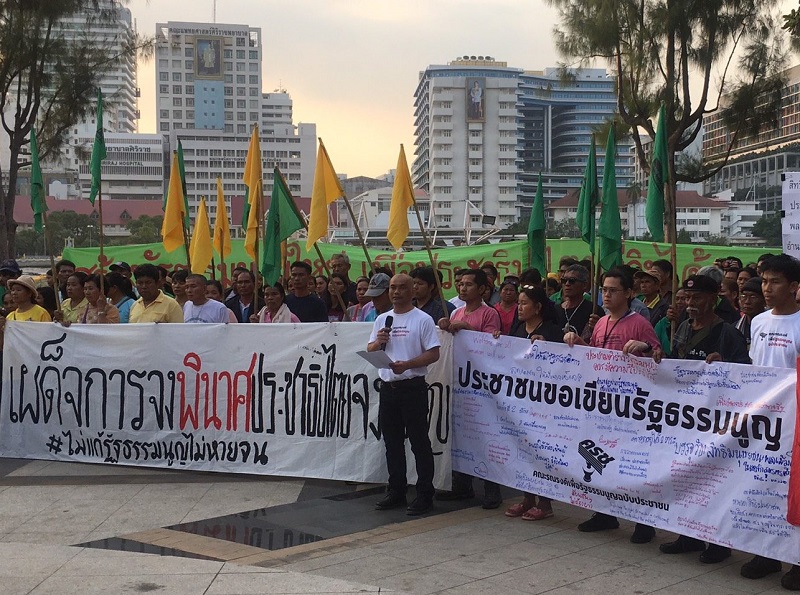
Activists rally to campaign for charter amendment in Bangkok on Dec. 15, 2019.
Outside parliament, there are several groups and networks campaigning for it.
Political activist Nuttaa Mahattana is a coordinator for the recently-formed Association for Democratic Constitution which will push for a new draft charter next year.
Nuttaa said her group is unique because it consists of influencers from different sectors of society including former foreign affairs minister and ex-Yellowshirt leader Kasit Piromya, and former Election Commissioner Somchai Srisutthiyakorn.
Nuttaa said there’s a need to build a “grand coalition” that cuts across traditional political divide in order to amend the charter or replace it with a more democratic one. She conceded that her goal is “very difficult” to achieve, but maintained that the existing constitution is doing more harm than good.
“It’s like the country can’t move forward. And more problems will come from it,” said Nuttaa.
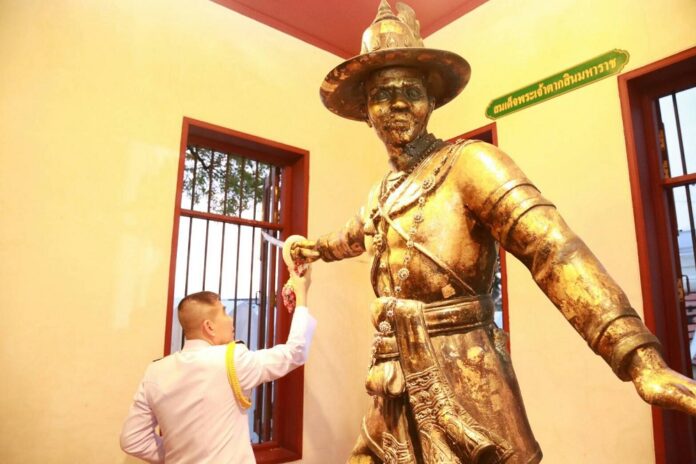
Navy officials present offerings to a statue of King Taksin at the Old Palace in November 2018.
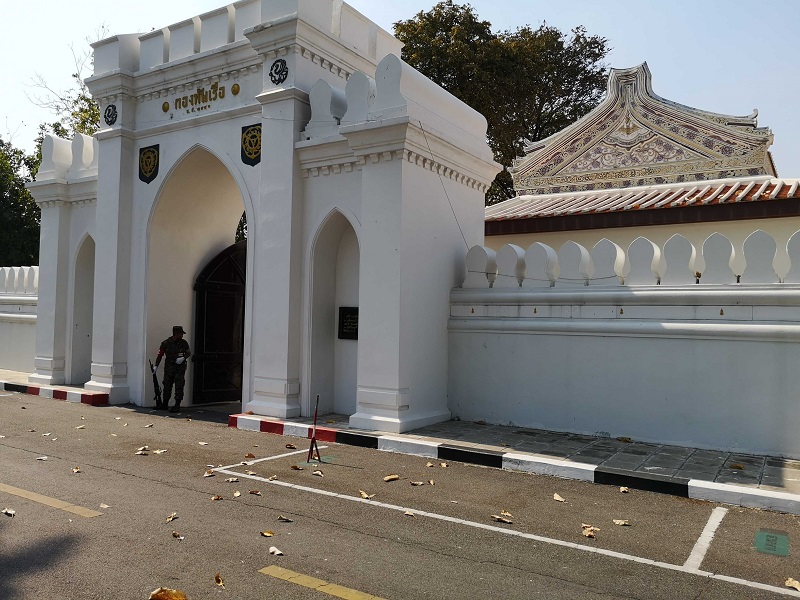
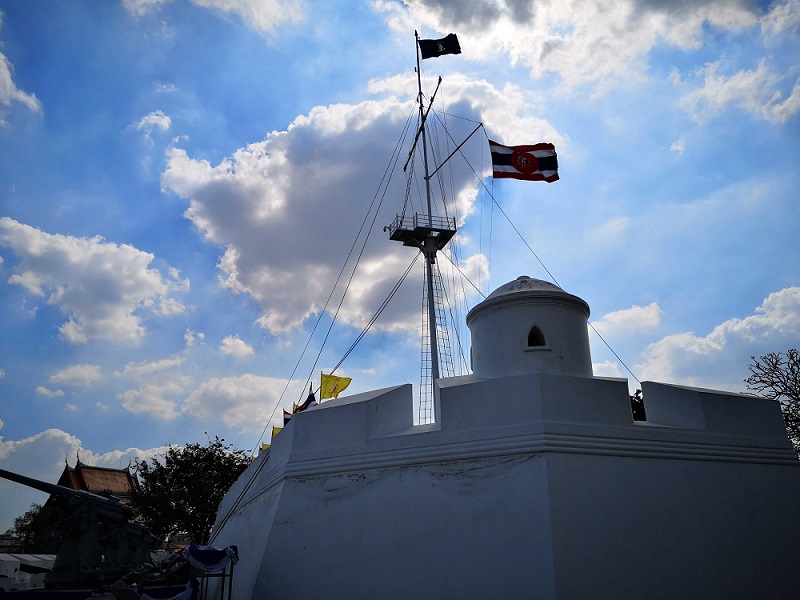
BANGKOK — Visiting the royal residence of King Taksin the Great would remind Thais of many unsettled questions from the bloody history.
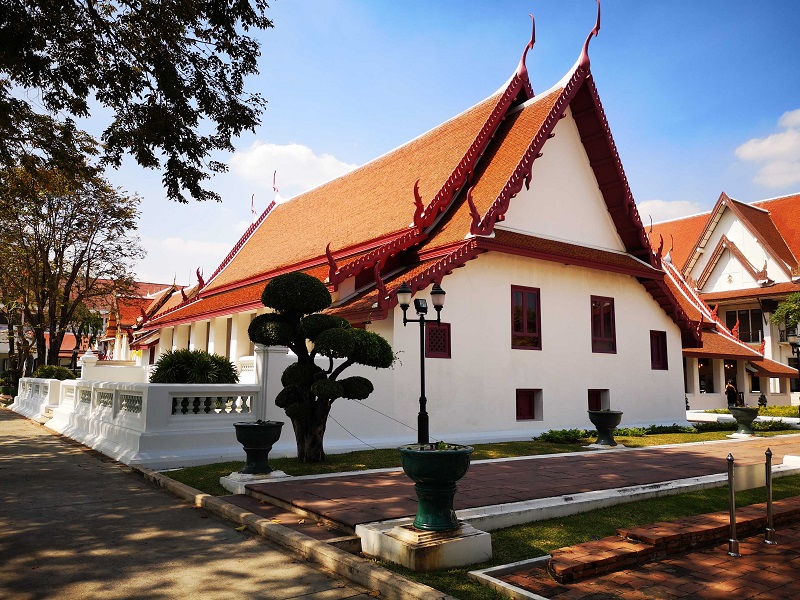
The building, commonly known as the Old Palace, was the power center of the brief Thonburi Kingdom (1767–1782) before the capital moved to the current side of the Chao Phraya River. The palace is open to the public until Dec. 28. But a closer inspection of its history reveals several questions that have yet to be fully explained.
First, how does King Taksin look like? Despite many depictions of him in textbooks and monuments, there was no contemporary image of the king, who lived from 1734 to 1782.
Second, was the Old Palace ever a palace at all?
Praphat Chuvichean, an associate professor of art history at Silpakorn University, said there is no record of any architectural signifier designating the venue as the royal palace. Reasons for its absence are unclear.
“It could have been that the [new] capital was meant to be temporary or that the king’s status was still unsettled as there were competing claimants,” Praphat, who wrote a book on Thonburi arts, said on the phone Tuesday.
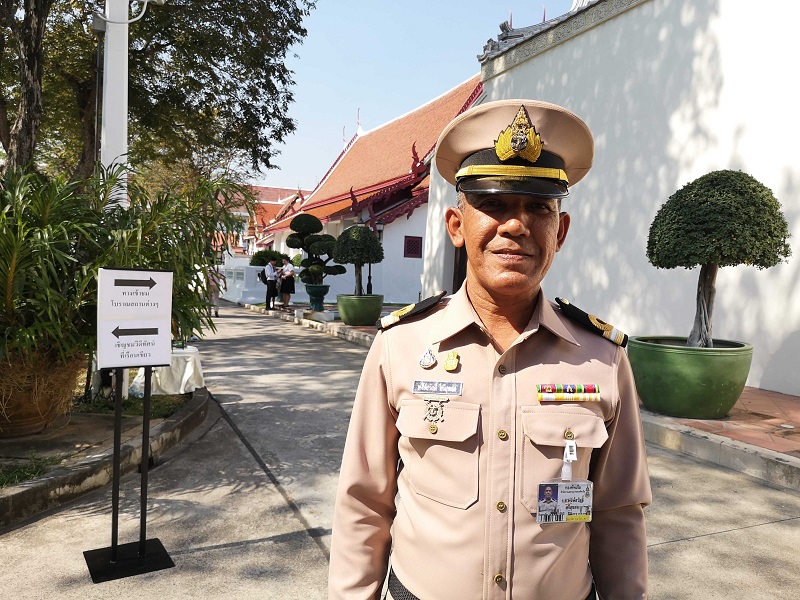
Although no official guides or curators are available for the general public, I managed to sweet-talk a navy captain who heads security at the Old Palace to be my “personal guide” for the visit. Capt. Pongsawat Srisuksod believes the original wooden structure of the throne hall must have contained some architectural elements proclaiming it as a palace.
But he quickly admitted that it was his own speculation and not supported by any concrete evidence.
As for the other question, a 1999 oil portrait of King Taksin at the palace didn’t help much.
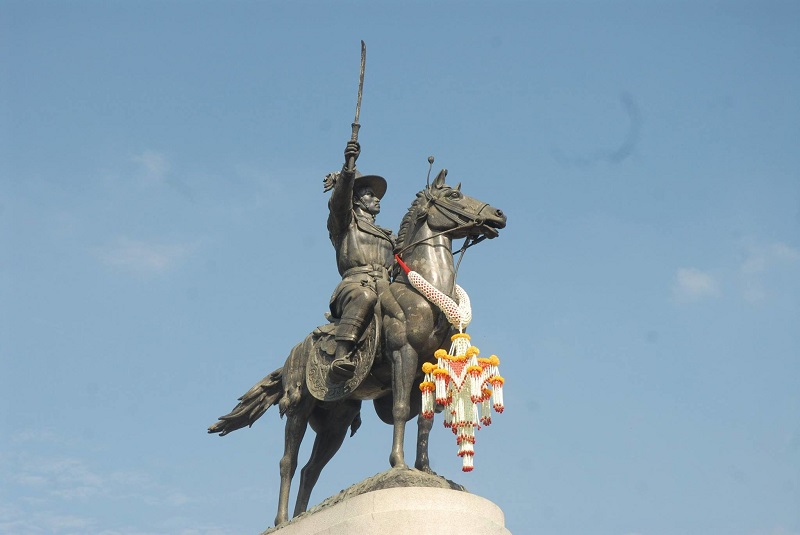
Many Thais imagined him to be a fierce-looking warrior king with a mustache. This perception can be traced back to the equestrian statue of the king at a major roundabout called Wongwian Yai, not far from the palace.
A statue of King Taksin at Wong Wian Yai.
But that image was only “reconstructed” after the 1932 revolt which ended absolute monarchy. Designed by an Italian-born artist who later headed Silpakorn University, the statue was meant to break the hegemony of Chakri Dynasty monarchs in national memories as the sole dominant contributors to the Thai nation.
Since then, Thais are taught to think of the king as a fierce-looking Thai-Chinese warrior king. After all, Taksin – whose father was Chinese tax collector – reasserted Siamese independence in less than a year after the Burmese armies razed the old capital of Ayutthaya.
After abandoning any hope to restore Ayutthaya to its former glory, Taksin established a new capital in Thonburi, an area west of today’s Bangkok. It is now situated in the same ground as the navy’s headquarters.
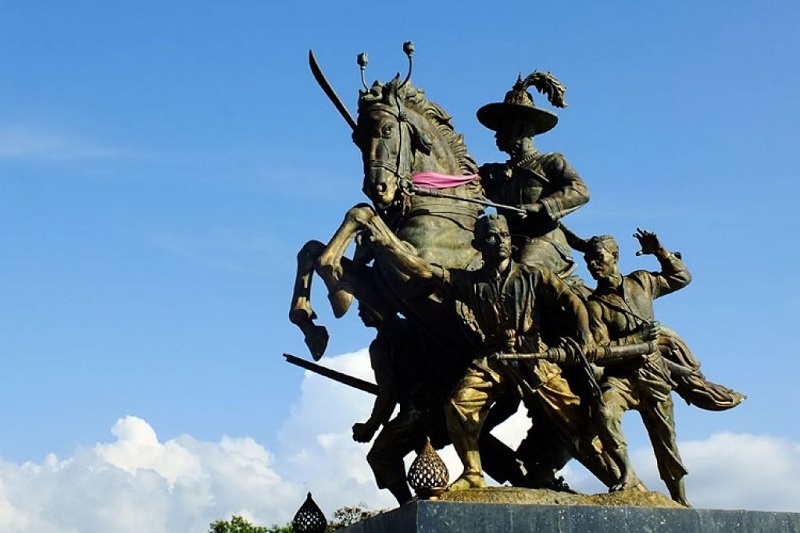
A statue of King Taksin in Chanthaburi province.
Standing at the dais overlooking the lower part of the throne hall with marbled floor and flanked by two rows of eight columns on each side, one can imagine how of affairs of the then newly-formed capital of Thonburi was administered by the king. It was modest and beautiful.
Another popular mystery associated with the late king is how he died.
Official chronicles say he turned “insane” and cruel towards the end of the reign. His trusted general, Chao Phraya Chakri, eventually seized power in a coup, executed Taksin and went on to build a new Grand Palace and found a new capital on the eastern side of the river. The said general was later crowned as King Rama I, the first of the Chakri Dynasty.
Curiously enough, my guide, who is in his mid-fifties and has been in charge of the Old Palace security for 20 years, said he doesn’t believe the official version of the story.
Capt. Pongsawat Srisuksod
“I don’t think he was killed,” Captain Pongsawat said.
A well known conspiracy theory had it that Taksin merely gave up the throne to his usurper and led a quiet monastic life as a monk in the southern province of Nakhon Si Thammarat. Others believe the king had to disappear because he borrowed more money from China than he could repay. None of these stories, despite their popularity, are endorsed by serious historians.
But when it comes to the legacy of King Taksin, my guide was unwavering in his conviction.
“We would probably be speaking in Burmese, or English now,” Pongsawat said of the fate of Thailand today if Taksin failed to repel the Burmese occupying forces in 1767.
All in all, a trip to the Old Palace is a must for all Thais curious about its past. A few foreigners steeped in curiosity were also spotted wandering around the venue on the day I visited. Unlike many other attractions in Thailand, King Taksin’s former residence is free for everyone, both Thai and foreign.
The Old Palace is open to the general public including foreigners free of charge until Dec 28 from 9am to 3.30pm daily. There’s no guide but one can purchase a guide book which is available both in Thai and English. The English version costs 350 baht.
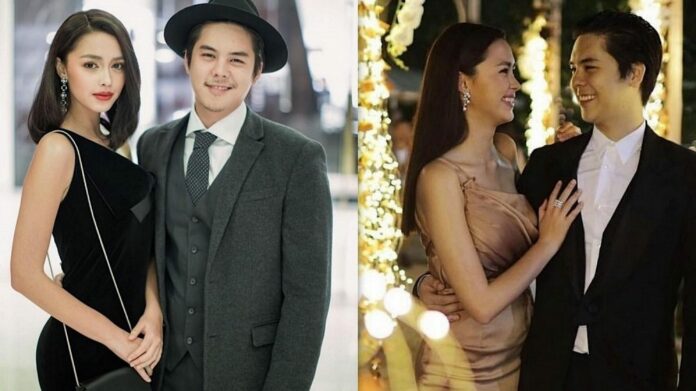
Pachara ‘Peach’ Chirathivat and Patricia Tanchanok Good in their happier days, long before their epic breakup this year.
BANGKOK — 2019 is a year of hearts, mended and broken for a lot of celebs. There’s even a kind-hearted one out there, too.
Thanks to the annual list of nicknames released by an association of entertainment reporters, we can now sit back and reflect on the drama that transpired in the industry that seems to matter far more to news readers than any other.
10Napat ‘Gun’ Injaiuea and Marie Broenner: “Sugar Overloaded Couple”
The annual celebrity couple slot went to Gun and Marie, who filled their fans with cloying social media posts since they announced their relationship last June. The couple also featured in “Luk Krung” lakorn about a class-divided relationship between a poor singer and a daughter of an army general.
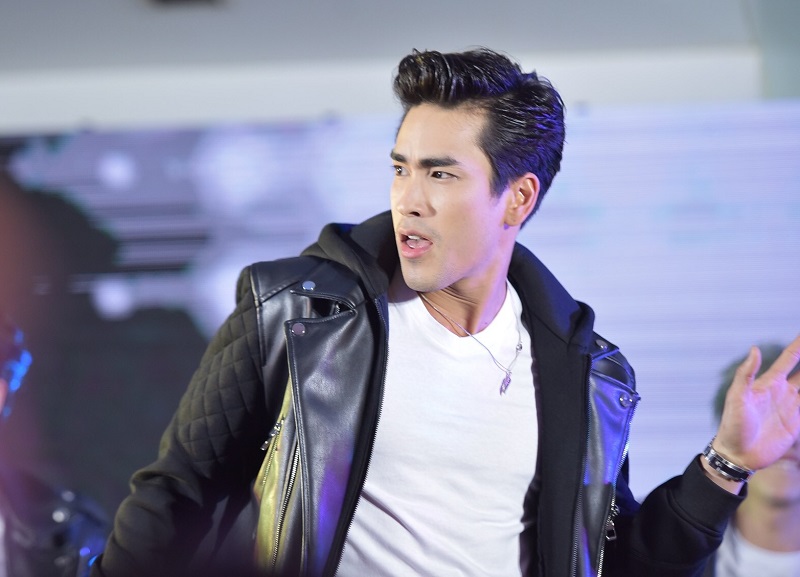
9Nadech Kugimiya: “Gentleman Who Won’t Stop Bragging About His Girl”
Nadech was bestowed last year with “Sweet N&Y” for his diabetes-inducing moments with Urassaya “Yaya” Sperbund. The couple continued to sow pillow-clutching envy among their fans, landing him another mention for the second year in a row.
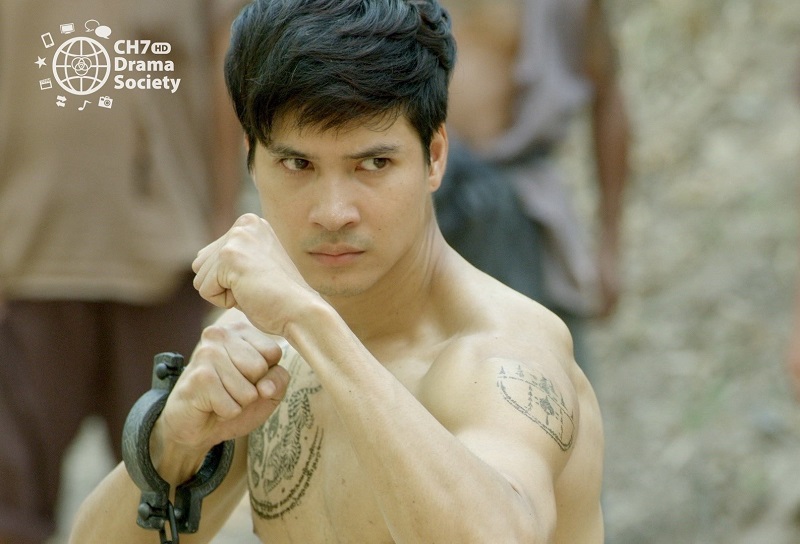
The protagonist of an action series “Maturot Lohgan” (Melodious Hell’s Abyss) became an ideal husband for many girls of all ages due to his stunning performance as “Suerpa,” heartfelt personality, and last but not least – six packs.
7Charlie ‘Nak’ Trairat: “Grandmaster of Reviews”
While many celebrities simply took a selfie to endorse a product, Nak took it to the next level by turning them into homespun ads. Together with his nephew Arthur, they often dressed up and presented the products in an endearing, creative way.
6Pachara ‘Peach’ Chirathivat: “Love Died, But French Fries are Born”
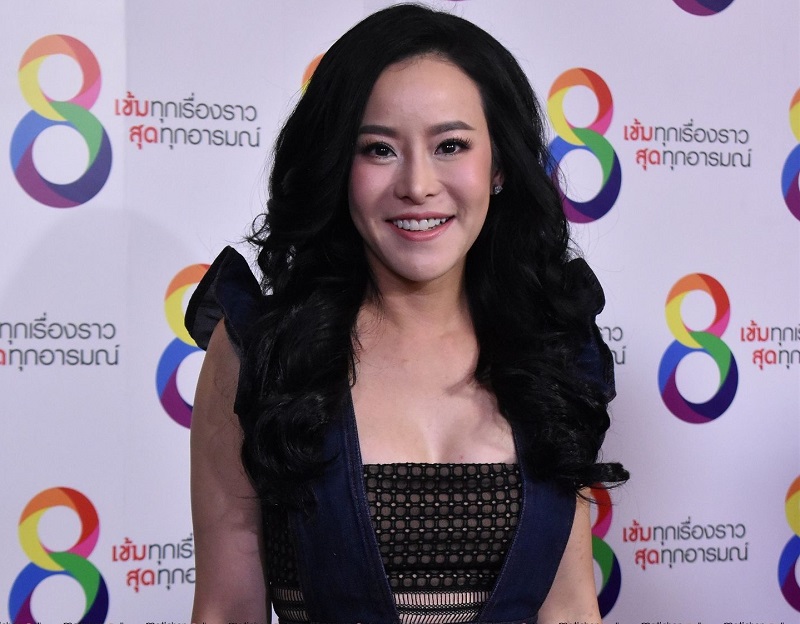
Not all is lost for Peach when the news broke in August that his longtime relationship with actress Patricia Tanchanok Good was over (see next entry). Not only that his fans bombarded him with flirty messages in slight hope to secure marriage with the heir to multi-billion baht Central Group, they also lined up at his recently opened french fries stores to support him.
5Patricia Tanchanok Good: “Secret Date Behind Teddy Bear”
When Patricia was spotted using a teddy bear emoji for a caption of her Instagram post, social media detectives were quick to connect the dots with a hiso businessman, who also used the same emoji for his caption! This earth-shattering discovery led to rumors that the two might be having an affair behind Peach’s back.
Although Patricia initially said the man was Just a Friend™, the claim fell apart when she later admitted that the two had been dating just after she left Peach, drawing flak from netizens.
4Panita ‘Ning’ Tumwattana: “Killing Her Own Husband With Her Post”
It all began when Ning told her Instagram followers that she was stopped by a police officer who tried to to rip her off. Her fans sided with the actress at first, but sympathy soon dried up after the police told their side of the story.
The result was a one-two punch for Panita. She was not only slapped with traffic charges by the police and backlash from netizens, but the case also attracted unwanted attention from the Department of Special Investigation who suspected that her husband’s Maserati might be illegally imported.
3Sukollawat ‘Weir’ Kanarot: “Worry-Free Handsome”
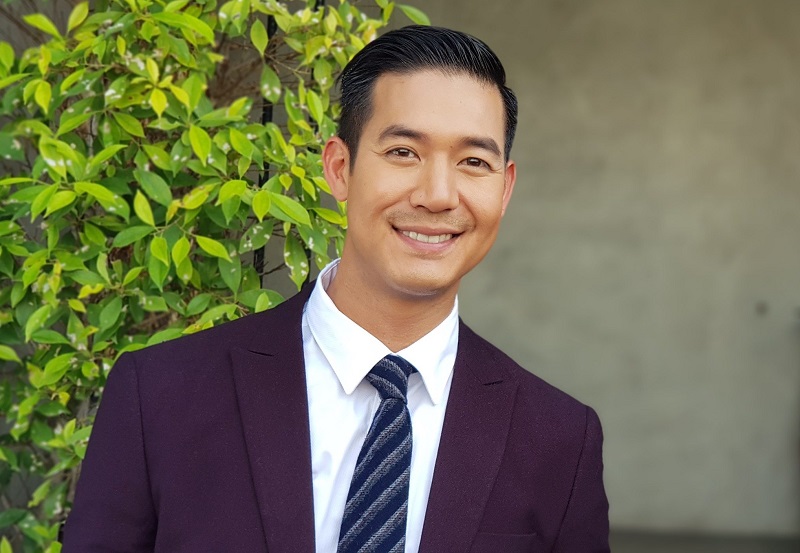
His soap “Mister Indy Honey Hipster” was a smash hit, his love with Ranee “Bella” Campen is solid, and his restaurant business is doing well. Yeah, this man has nothing to worry about. Next, please.
2Ranee ‘Bella’ Campen: “The Only-One Beauty”
The nickname was derived from her boyfriend Sukollawat “Weir” Kanarot’s response to the media after rumors spread that he was cheating with actress Kharittha “Ching Ching” Sungsaopath. He denied the rumors and insisted (on camera) that Bella is “the only one” for him.
1Bin Bunluerit: “Saintly Rescue Worker”
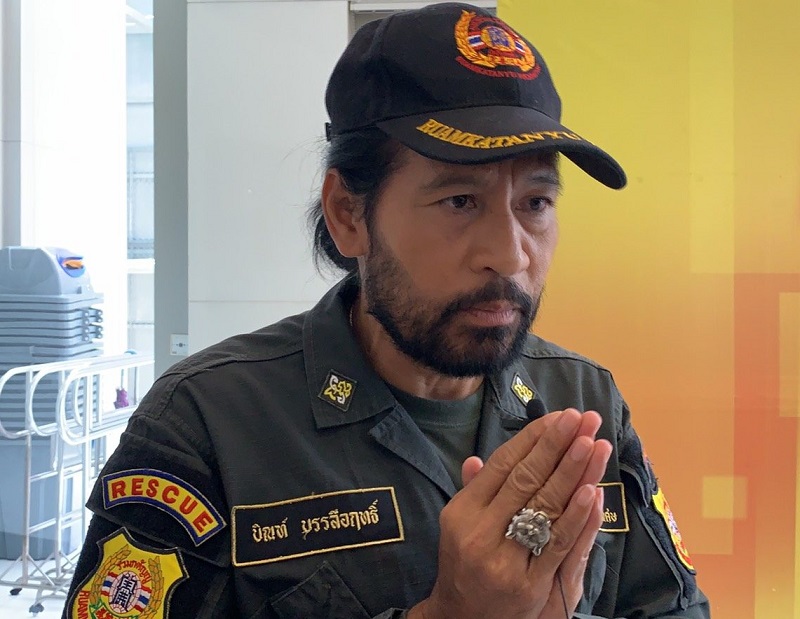
The actor-turned-philanthropist was nowhere to be seen in soaps, but rather in the news where he was fundraising and giving out cash to stranded flood victims in Ubon Ratchathani last September. His charity drive was able to raise 422 million baht – far exceeding the government’s campaign of 263 million baht.
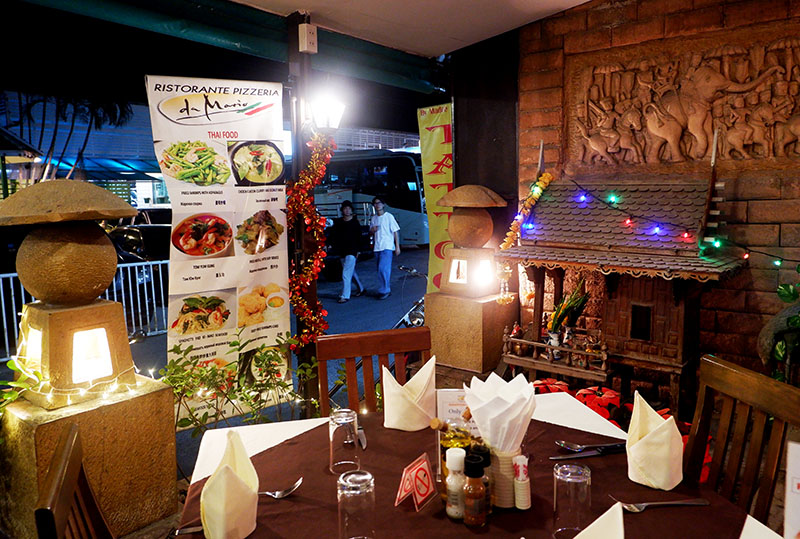
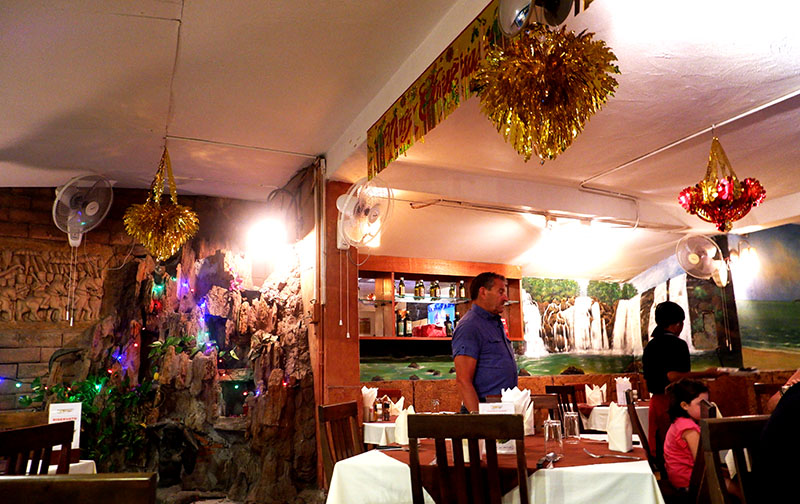
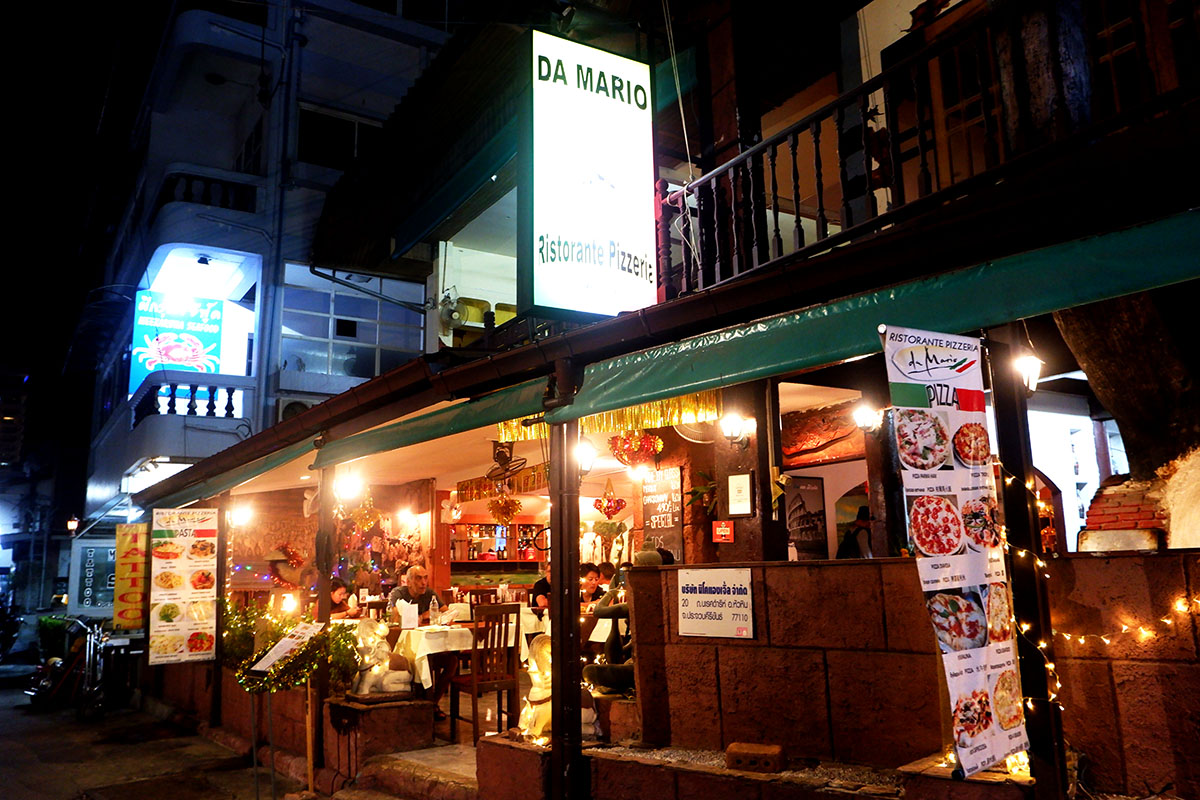
PRACHUAP KHIRI KHAN — Colorful fairy lights strung around a spirit house, an indoor faux rockery, and a waterfall mural – essential decor at any provincial Thai restaurant – also adorn one of the three Italian restaurants in all of Hua Hin approved by the Italian government themselves.
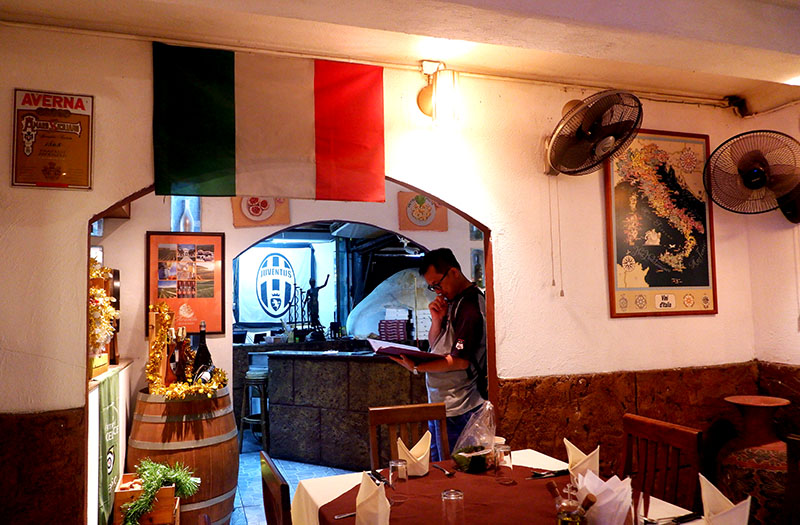
Da Mario pizzeria in Hua Hin is one of the 52 restaurants with the Ospitalia Italiana authenticity award in the entire country – and with its wonderfully tangy pizza bread and pappardelle, it’s easy to see why the humbly decorated restaurant is one of the only three Italian restaurants in the seaside town to win the accolade.
“I make it all myself from my family recipe by my mother and grandmother,” owner Cristian Uleri said by phone after our unannounced visit. “I win every year.”
The Ospitalia Italiana, which announced its third edition in November, awarded a total of 52 restaurants out of the approximately 1,000 self-claiming Italian restaurants in Thailand. Inspectors from Italy’s National Institute of Research on Tourism visit and check for Italian restaurant authenticity, such as using Italian ingredients, kitchen layout, authentic menu items, and so on.
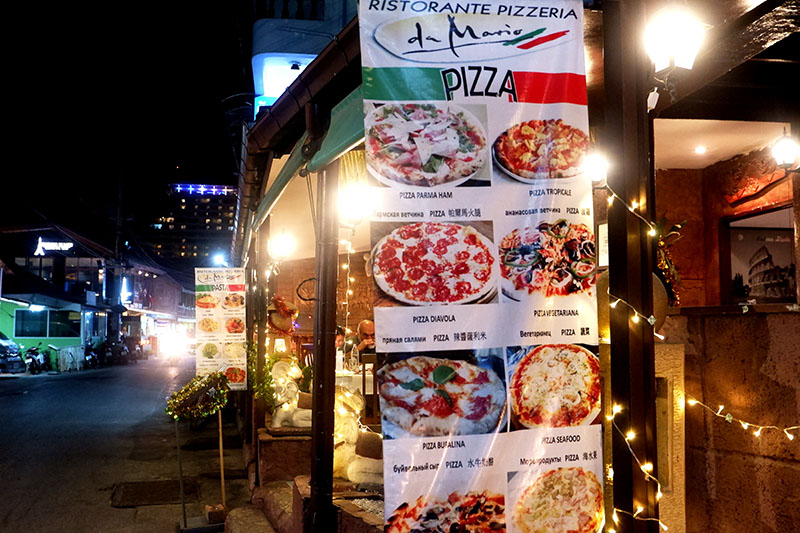
But on a visit to Da Mario, we noticed that pineapples – a no-no for most Italians – were in the cooking station by the pizza oven painted in the colors of the Italian flag. And the Tropicale pizza, a ham-and-pineapple pizza, was on the menu for 290 baht.
“Here we can adapt things if the customer asks, I make it,” Uleri said, when asked about the Hawaiian pizzas. “Italians don’t eat it with pineapple, but foreigners like Europeans, especially Scandinavians, do.”
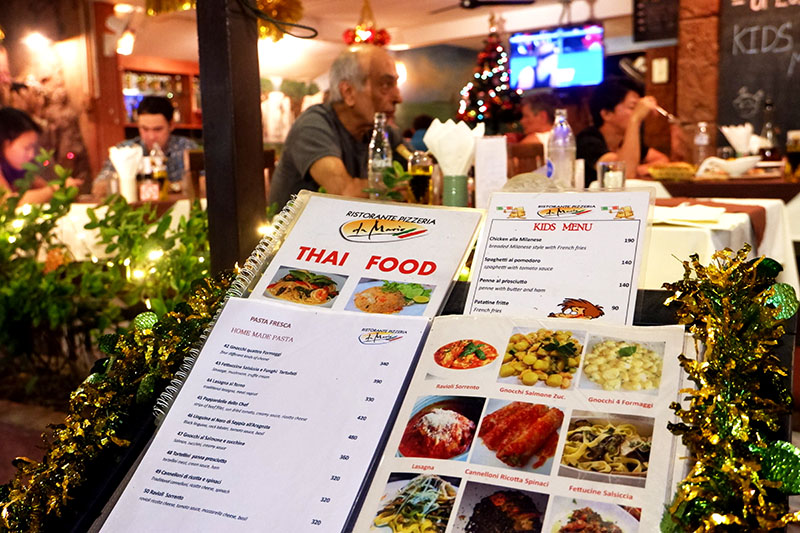
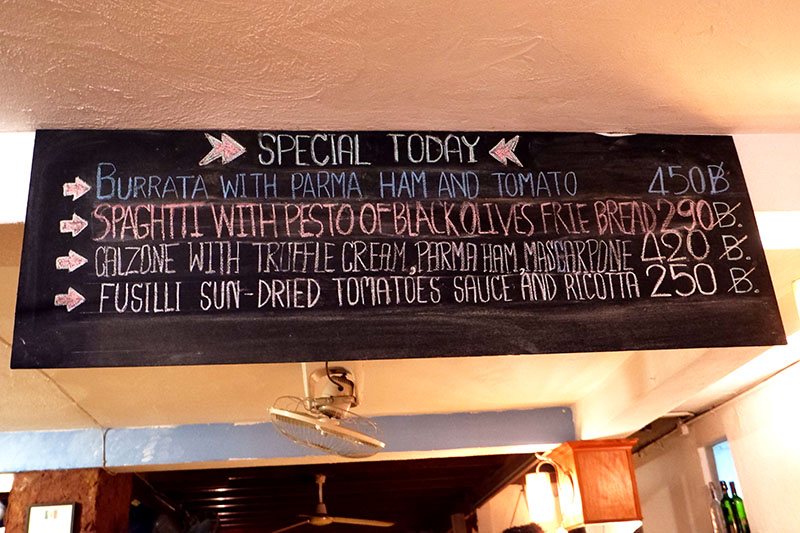
Flanked by a much fancier, air-conditioned Italian restaurant, the humbler-looking Da Mario also has acceptable price ranges – appetizers in the 300 baht rage, bruschettas under 200 baht, salads under 300 baht, pasta from 200 baht to 480 baht, and pizzas from 230 to 390 baht. Meats and fish, however, are in the 700 baht range.
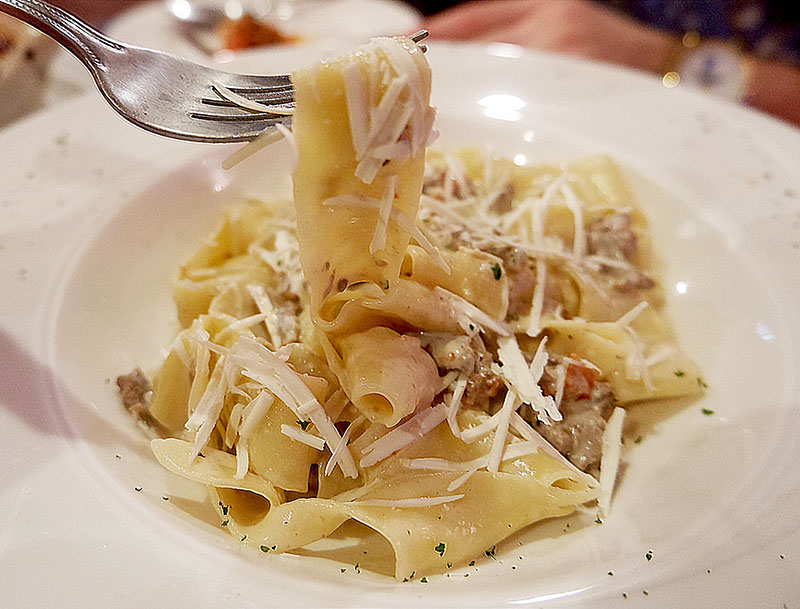
Papparadelle dello Chef (420 baht).
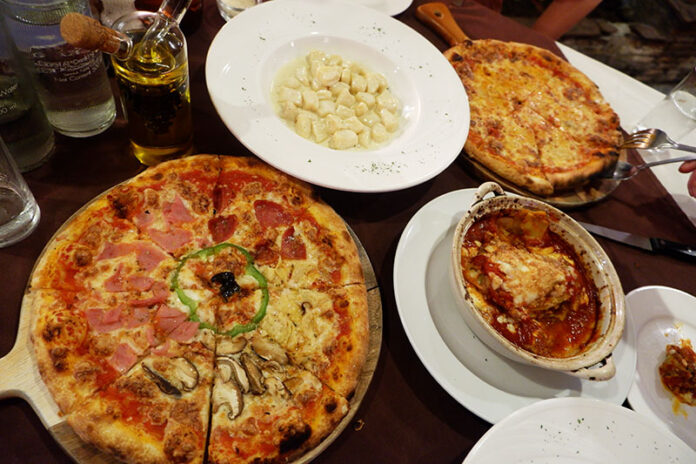
We were blown away by the Papparadelle dello Chef (420 baht), where generously thick strips of pasta were accented with surprisingly tangy beef fillet and sun dried tomatoes. Despite the white sauce, and because of the ricotta, the dish was anything but lian (overly greasy or creamy).
Gnocchi Quattro Formaggi (340 baht).
Just as memorable was the Gnocchi Quattro Formaggi (340 baht), a plate of tender potato pasta where each ball was softer than the last, the four cheeses never overwhelming. For a softness comparison, imagine the most bouncy bowls of Yaowaraj fish balls, but of light yet dense potatoes instead.
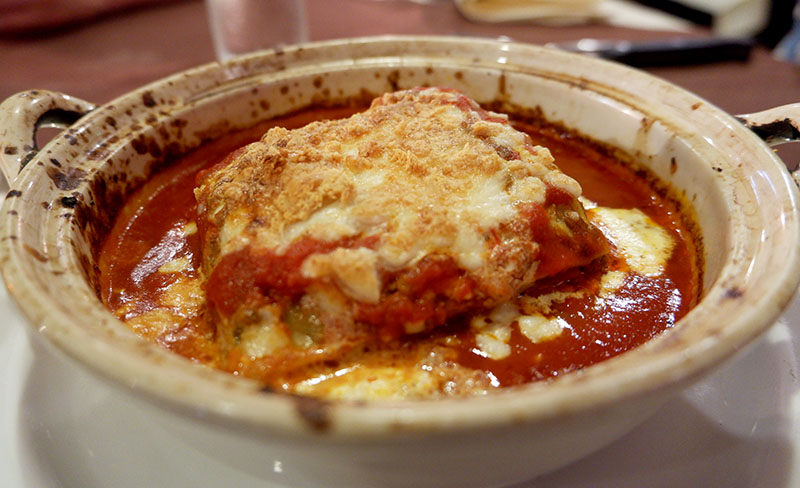
Lasagna al Forno (330 baht).
While outshined by the previous two dishes’ wow factor, the lasagna was standardly good, with a crispy cheese top, and served in a helpful hot plate that holds extra tomato sauce for the meat ragout within the layers.
Quattro Stagioni Pizza (320 baht).
Both pizzas we tried had a crispy-on-the-outside crust with a slightly tangy, doughy interior, which made us keep reaching for the next slice, even if the toppings weren’t overloaded.
The Quattro Stagioni was a crowd-pleaser of ham, mushrooms, artichokes, and salami, with a slightly odd choice of one green bell pepper and olive in the center. No matter, it was all gone in a few minutes.
Quattro 4 Formaggi Pizza (320 baht).
Perhaps we were out-cheesed by the four-cheese gnocchi, but the four-cheese pizza was too heavy for our poor Thai stomachs to handle. Eight pieces of cheese-only pizza proved to be too rich, too intense – but props for anyone out there who can plow through this with no problem.
Owing to the easy-going, rather flexible view towards authenticity, Da Mario offered a bread basket served with powdered parmesan and olive oil with balsamic, which stricter Italians may declare a culinary sin. But perhaps everything’s more relaxed in Hua Hin.
Da Mario is open every day from noon to 10:30pm and is located on 20 Naresdamri Road in Hua Hin town, Prachuap Khiri Khan province.
This review is unsponsored and based on an unannounced visit to the restaurant.
Not much has caused a disturbance in the “Star Wars” galaxy quite like Rian Johnson’s “The Last Jedi,” an erratic but electric movie that, regardless of how you felt about it, was something worth arguing about.
The same can’t be said for J. J. Abrams’ “Rise of Skywalker,” a scattershot, impatiently paced, fan-servicing finale that repurposes so much of what came before that it feels as though someone searching for the hyperspace button accidentally pressed the spin cycle instead.
A laundry list of plot points cluster like an asteroid field in “Rise of Skywalker.” It’s a spirited, hectic and ultimately forgettable conclusion of the Skywalker saga begun 42 years ago by George Lucas.
It was also surely a lot to ask for. Abrams, having already ably and nimbly resuscitated Lucas’ space opera with the far less cluttered “The Force Awakens,” was brought back (like seemingly everyone is in “Star Wars,” dead or alive) with the task of not only wrapping up a trilogy but repairing the divides stirred up by “The Last Jedi” and stabilizing the franchise’s revolving door of directors. Abrams here took over for the jettisoned Colin Trevorrow, who retains a “story by” credit.
More significantly, “The Last Jedi” had to solve the underlying existential crisis in “Star Wars,” a franchise in search of a reason beyond nostalgia (and, cough, billions of dollars) for continuing. The film, for sure, tries its damnedest to come up with something. It is one busy, hardworking movie. But if anything has been proven by the many attempts to rekindle the magic of the original trilogy, it’s that Lucas’ cosmic amalgamation of Flash Gordon and Akira Kurosawa isn’t so easily refabricated.
As the trilogy’s third act, “Rise of Skywalker” takes the general shape of “Return of the Jedi,” even resuscitating its villain: Emperor Palpatine (the very spooky Ian McDiarmid, now mostly a shadowy heap of CGI). He was last seen exploding in a Death Star air shaft, thrown to his apparent death by Darth Vader. Yet as “Star Wars,” the most forever war there is, marches into its fifth decade, the undying demands of a pop culture phenomenon and corporate revenue generator has led to some unsettling resurrections.
This third “Star Wars” trilogy began with a plan: the first movie would belong to Han (Harrison Ford), the second to Luke (Mark Hamill) and the third to Leia (Carrie Fisher). Life interfered. Fisher, who along with Ford did more to enliven the original trilogy than any special effect, died of a heart attack in 2016. But she, too, has been brought back for “Rise of the Jedi,” via bits and pieces of old footage. For an actress of such live-wire verve, the composite result — a handful of brief lines and gazes — is a hollow non-performance.
Palpatine, residing in a dark Sith lair, essentially sets the table. He summons Kylo Ren (Adam Driver) with an order to “kill the girl” (Daisy Ridley’s Rey) and thereby inherit the throne. With the wave of his hand, Palpatine unearths an entire fleet of Star Destroyers. They rise from the depths, a new armada of doom for the First Order.
But this is only a piece of the movie’s manic start. Abrams, who penned the screenplay with Chris Terrio (“Argo,” “Justice League”), races to catch up with the many characters of the Resistance, among them Leia, Finn (John Boyega), Poe (Oscar Isaac), Rose (Kelly Marie Tran), Chewbacca (Joonas Suotamo) and C-3PO (Anthony Daniels). From the start, there’s a rush to speed through a complex plot that sends a crowded Millennium Falcon in search of the hidden Sith base, a quest that includes a series of MacGuffins including — like a relic from a more earthbound adventure — a secret-wielding dagger.
“Star Wars” has never lacked for velocity but the pace here is schizophrenic. The movie can’t sit still. Everyone’s yelling and most of the bits of humor along the way are too blandly inserted. (C-3PO, at least, is in fine form.) Part of the rush, it seems, is to dismantle some of Johnson’s groundwork and refocus the spine of the story on Rey’s destiny and her complicated relationship with Ren. Whether that’s a gesture to the toxic fandom unleashed by “Last Jedi” or not, some characters suffer for it, most notably Rose. She was the highlight of “The Last Jedi,” which stirringly realigned the traditional power dynamics of “Star Wars.” But she’s regrettably sidelined for much of the action this time.
Some of the tropes that Johnson deconstructed have been reassembled. Poe, the Han Solo heir apparent, is again central. New worlds bring new friends — a Stormtrooper-turned-rebel played by Naomi Ackie; an old rival of Poe’s named Zorii Bliss (Keri Russell); a cute Muppet-like creature named Babu Frik — and old (Billy Dee Williams’ Lando). Many of them make a good impression but the encounters proceed predictably.
To go too much into the narrative of “Rise of Skywalker” isn’t necessary and, besides, I’m not totally sure I could explain it all, anyway. That, in itself, is one of the movie’s most disappointing aspects: It’s trying too hard. What the streaming spinoff “The Mandalorian” has proven (besides that people will go absolutely gaga over infant Jedi Masters) is that simplicity of story line pays in “Star Wars,” just as it does in westerns. “Rise of Skywalker” aims for the brilliant parallel action of “Return of the Jedi” but ends up with mounted horse-like creatures charging on the wing of a Star Destroyer. Somewhere, Jar Jar Binks is celebrating. He might not be the most misplaced thing in the galaxy far, far away, after all.
But even if “Rise of Skywalker” has its fair share of missteps, it gets some things right. The grief of a Wookie, for one. Kylo’s new black helmet, laced with blood-red cracks, for another. A lightsaber fight amid the sea-strewn rubble of a Death Star swells with watery grandeur. And most of all, the anguished Rey-Ren duel finally takes on the mythical dimensions of earlier “Star Wars” tugs between good and evil.
Yet for a movie predicated on satisfying fans, “The Rise of Skywalker” is a distinctly unsatisfying conclusion to what had been an imperfect but mostly good few films. But hope springs eternal among “Star Wars” fans. Some will likely emerge from this latest installment paraphrasing Leia: “Help us, Baby Yoda. You’re our only hope.”
“Star Wars: The Rise of Skywalker,” a Walt Disney Co. release, is rated PG-13 by the Motion Picture Association of America for sci-fi violence and action. Running time: 142 minutes. Two stars out of four.
In this June 21, 2017, file photo, people make their way into the building that houses the headquarters of Uber in San Francisco.
SAN FRANCISCO (AP) — Uber Technologies Inc. will establish a $4.4 million fund to settle a federal investigation into allegations that the San Francisco company allowed a rampant culture of sexual harassment, the U.S. Equal Employment Opportunity Commission announced Wednesday.
The agreement ends an investigation launched in 2017 in which the commission found reasonable cause to believe the ride-hailing tech company “permitted a culture of sexual harassment and retaliation against individuals who complained about such harassment.”
A claims administrator will send notices to women who worked at Uber between Jan. 1, 2014, and June 30, 2019. The commission will determine which claimants may be eligible for money from the $4.4 million fund.
The company has also agreed to create a system to identify serial offenders and managers who fail to respond to concerns about sexual harassment in a timely manner.
The commission initiated the investigation after a former Uber engineer wrote a widely circulated blog post exposing sexual harassment at the company, including propositions from her boss. Susan Fowler said her complaints to human resources were ignored.
The company fired 20 people, including some managers, after an investigation by former U.S. Attorney General Eric Holder’s law firm.
The commission’s district director in San Francisco, William Tamayo, applauded Uber’s commitment to accountability, and said the “tech industry, among others, has often ignored allegations of sexual harassment when an accused harasser is seen as more valuable to the company than the accuser.”
Uber’s Chief Legal Officer Tony West said he was pleased to work with the commission on the settlement.
As part of its bid to increase transparency, Uber revealed earlier this month that more than 3,000 sexual assaults were reported during its U.S. rides in 2018. Drivers and riders were both attacked in the reported assaults, and some of the assaults occurred between riders.
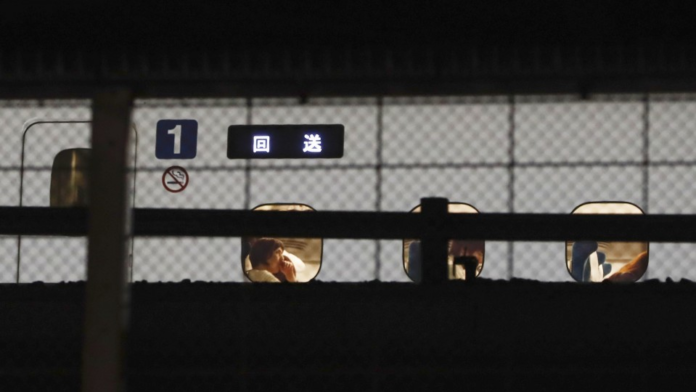
Photo shows a car of the Nozomi shinkansen bullet train at JR Odawara Station in Odarawa, near Tokyo, on June 9, 2018, after the knife rampage.
YOKOHAMA (Kyodo) — A Japanese court sentenced a man Wednesday to life in prison over a random knife attack aboard a shinkansen bullet train last year that left a passenger dead and two others injured.
Ichiro Kojima, 23, had admitted to the charges of murdering 38-year-old Kotaro Umeda and attempting to kill the two women during his trial at the Odawara branch of the Yokohama District Court in Kanagawa Prefecture, southwest of Tokyo.
TOKYO (Kyodo) — Japanese prosecutors on Thursday raided two Tokyo offices of a ruling party lawmaker over his alleged ties to a Chinese casino and sports gambling operator that is suspected of violating the foreign currency exchange law.
The 48-year-old lawmaker, Tsukasa Akimoto, is a member of Prime Minister Shinzo Abe’s Liberal Democratic Party and has been a vocal supporter of the introduction of casino resorts to Japan.