27.7 C
Bangkok
Friday, June 26, 2026
Home Blog Page 1455

American on Phuket Fined for Fighting With Burmese Waiters Over Seafood Order (Video)

A still from CCTV footage showing a brawl between a foreigner and wait staff outside a restaurant on Karon Beach on Dec. 2, 2019.

PHUKET — Police on Wednesday said an American was arrested and fined for allegedly starting a brawl with Burmese waiters over a seafood order mishap.

Karon police chief Prawit Sutthirueangarun confirmed today that a foreigner, identified only as a 44-year-old American “Connelly,” were arrested and charged with assault for the Monday brawl after the video clip of the fight went viral on social media earlier in the week.

Police said Connelly was trying to order his dinner at a seafood restaurant on Karon Beach, but the Burmese waiter took down the wrong order, leading the two to trade blows in the street.

Police said Connelly began the fight but was outnumbered by the wait staff who were trying to help out their colleagues. Police later arrived at the scene and arrested Cornelly and three other wait staff. They were fined 500 baht each before being released by the police.

Skip to 0:15 for the street fight.

Advertisement

2 Elderly Men Die from Cold Weather

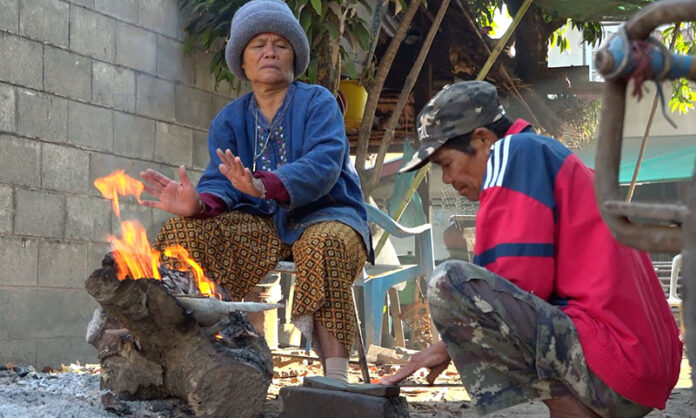
Locals in Kranuan district, Khon Kaen, gather around a campfire to keep warm from the cold on Dec. 3, 2019.

Update: The story has been updated with Tep Sa-ngawong’s death.

KALASIN — At least two deaths has been attributed to plunging rural temperatures after two elderly men died as of Wednesday.

Tep Sa-ngawong, 81, was found dead Wednesday morning lying in a plastic boat in his yard in Nakhon Nayok. His sister suspected he had gone to the bathroom in the night before deciding to sleep without any blankets in the boat instead of climbing up to bed, causing him to die in the cold.

Juy Kulsri, 86, died Tuesday at his home in Kalasin city. Police Lt. Col. Somsong Wiangpati said the most likely cause of death is the elderly man’s inability to adapt to the sudden cold spell, with the autopsy indicating he died from a heart attack.

Juay was only wearing a Tshirt and shorts, and was not sleeping with a blanket even though his daughter Rabeab Lohamat, 54, had asked him no. His son, Tiang Kulsri, 60, said Juy had no preexisting conditions and did not smoke or drink.

Temperatures in Kalasin dropped to as low as 15C on Tuesday.

Department of Medical Services deputy director Nattapong Wongwiwat said Wednesday that the elderly should war appropriate outerwear, exercise regularly, and drink six to eight glasses of warm water during the day during winter.

Pakee Supsipat, public health director of Maha Sarakham province, warned Wednesday that the weeklong cold spell during this winter season could put vulnerable groups of people at fatal risk.

Children under 2, pregnant women, the elderly, obese people as well as those with asthma, or suspectible to renal failures, strokes, and heart attacks need extra care during the cold weather season, as they are at increased risk of measles, pneumonia, influenza, acute diarrhea, hand-food-and-mouth disease, and heart problems.

Bangkok is expected to drop as low as 14C to 20C, with highs of 27C to 30C.

Temperature expected to drop the most on Saturday through Monday, with mountaintops in the north expecting to drop as low as 1C.

The North and Isaan should expect lows of 9C and highs of 29C. The central and eastern provinces should see lows of 15C and highs of 30C, the south, 20C to 34C.

Police and autopsy officials examine Juy Kulsri, who died Dec. 3, 2019 at his home.


Related stories:

A Week of Slightly Cooler Weather Ahead in Thailand

Man Sleeps Outdoors, Dies Of ‘Cold Weather’

Advertisement

Elon Musk Tells Jurors Insult Provoked ‘Pedo Guy’ Tweet

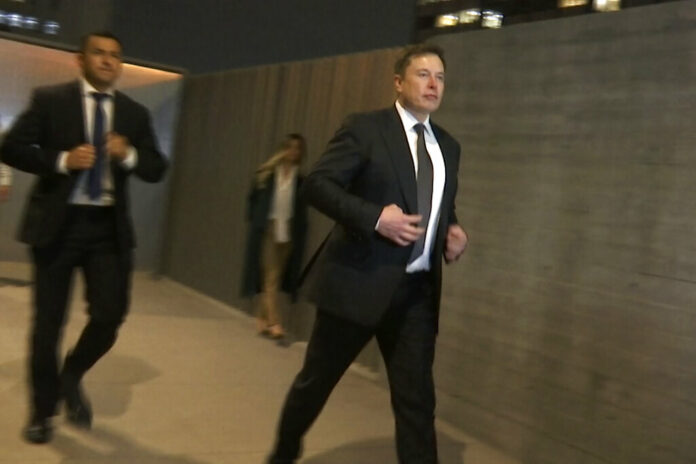
In this frame grab from video, Tesla CEO Elon Musk leaves court, Tuesday, Dec. 3, 2019, in Los Angeles. Musk denied that he meant to call a British cave diver a pedophile when he dubbed him
In this frame grab from video, Tesla CEO Elon Musk leaves court, Tuesday, Dec. 3, 2019, in Los Angeles. Musk denied that he meant to call a British cave diver a pedophile when he dubbed him "pedo guy" on social media. Photo: Krysta Fauria / AP

LOS ANGELES (AP) — Elon Musk testified Tuesday that he was being insulting, not literally calling a British cave diver a pedophile when he lashed out on Twitter and ended up in a defamation lawsuit from the man who helped rescue a dozen boys and their soccer coach from a flooded Thailand cave last year.

The Tesla CEO told jurors that he called Vernon Unsworth “pedo guy” because he was upset the spelunker had belittled his efforts to build a mini-submarine to transport the boys to safety. The sub was never used and Unsworth called it nothing more than a “PR stunt” and said Musk could stick the craft “where it hurts.”

“It was wrong and insulting, so I insulted him back,” the billionaire said in federal court in Los Angeles. “It was an unprovoked attack on what was a good-natured attempt to help the kids.”

Unsworth’s lawyers argue that Musk’s tweet overshadowed what should have been one of the diver’s proudest moments and left him no choice but to sue.

At the time, Musk said he didn’t know Unsworth had helped with the rescue. He said his tweet wasn’t asserted as a fact.

“Just as I felt he didn’t mean to sodomize me with a submarine, I likewise didn’t think (“pedo guy”) required any clarification,” Musk said. “I will say it again, I apologize to Mr. Unsworth.”

Unsworth is seeking unspecified damages for pain, suffering and emotional distress from the tech entrepreneur whose net worth exceeds $20 billion.

Musk’s lawyer, Alex Spiro, said earlier that Unsworth deserves nothing for what he called “joking, taunting tweets in a fight between men.”

The shame and mortification Unsworth said he experienced is undercut by the attention he received after the rescue, Spiro said, including honors from the Thai king and British prime minister and offers from agents and film crews.

Musk deleted the July 15, 2018, tweets and apologized on Twitter, though subsequent statements he made have called into question what he meant.

In an email to a Buzzfeed reporter seeking comment on the threat of a lawsuit by Unsworth’s lawyer, Musk wrote the journalist “should stop defending child rapists,” followed by expletives.

Musk maintained his composure throughout an afternoon of questioning from Unsworth’s lawyer, who called him as his first witness.

Dressed in a charcoal suit and white shirt, Musk calmly answered the questions and slipped in an occasional droll remark that drew snickers from jurors and the gallery.

When asked about the final line of his email to the Buzzfeed reporter that said he hoped Unsworth would sue him, Musk quipped: “I guess be careful what you wish for.”

Throughout the testimony, he didn’t back down from his assertion that he didn’t mean pedophile in his tweet, saying it was only meant as “creepy old man” where he grew up in South Africa, though he said the phrase was widely used across the English language.

Unsworth’s lawyers laughed off that explanation, saying Musk responded to a question on Twitter about whether he had accused Unsworth of being a pedophile with another tweet that said, “Bet ya a signed dollar it’s true.”

Musk also made a crack about that tweet, joking that it was a “very high stakes situation.”

“If I really thought that it was true, I would have said more than a dollar,” he testified.

Musk admitted one of his staffers tried to enlist a man to dig up dirt on Unsworth, but the investigator turned out to be a con man who got $52,000 for his efforts and produced nothing damning about Unsworth.

The lawsuit is not the first time Musk’s tweets have landed him in hot water.

Musk and Tesla reached a $40 million settlement with the Securities and Exchange Commission last year over allegations he misled investors with a tweet declaring he had secured financing to buy out the electric car maker. He agreed in the settlement to have future tweets about the company screened.

He went back to court on accusations he violated that agreement by tweeting a misleading figure about how many cars Tesla would manufacture this year. The SEC sought to hold him in contempt of court, which led to a new agreement imposing tighter controls on Musk’s tweets about the company.

___

This story has been corrected to show Musk did not call a diver a pedophile and claimed his use of “pedo guy” was merely an insult.

Story: Brian Melley

Advertisement

Chinese City Fully Launches Face-Scanning at Metro

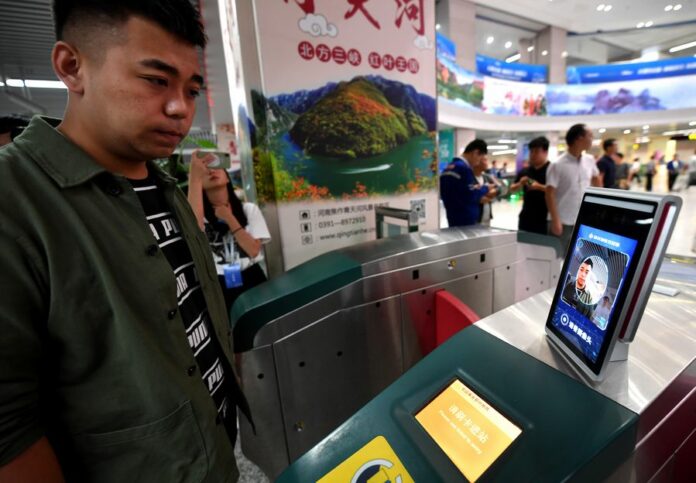
A man passes the ticket gate through facial recognition payment system at Zijingshan subway station in Zhengzhou, central China's Henan Province, Sept. 27, 2019. Photo: Li Jianan / Xinhua

ZHENGZHOU, Dec. 3 (Xinhua) — Zhengzhou, capital of central China’s Henan Province, has become the nation’s first to apply facial recognition technology at all its metro stations, according to Zhengzhou Metro.

Instead of using a metro card or scanning a QR code on mobile phones, commuters in Zhengzhou can have their face scanned and the fare automatically deducted from a registered account starting from December 3.

In September, Zhengzhou began providing face-scanning check-in service along the entire Metro Line 1 and the first section of Line 14 to give passengers a better experience of quick pass access. Now the service has been expanded to cover all metro lines.

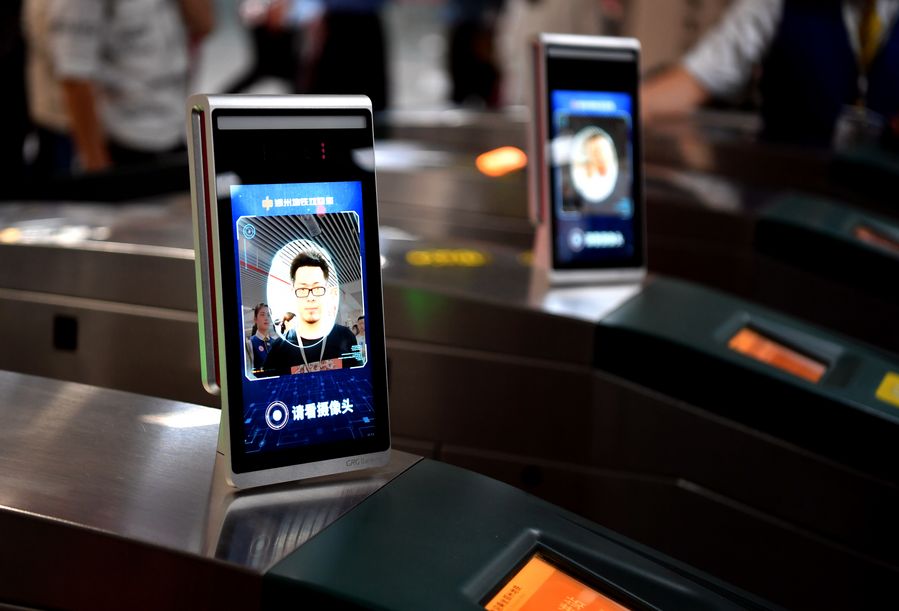
By logging into Zhengzhou Metro’s official APP and follow instructions to complete the face authentication, commuters can scan their faces to enter the subway and the fare will be automatically deducted via a pre-set payment method.

Now nearly 200,000 passengers have embraced the technology in Zhengzhou, and an average 10,000 commuters are paying metro fares by scanning their faces every day.

A number of Chinese cities, including Shenzhen, Jinan, Shanghai and Nanjing have used facial recognition technology on some of their metro lines.

A man passes the ticket gate through facial recognition payment system at Zijingshan subway station in Zhengzhou, central China's Henan Province, Sept. 27, 2019. Photo: Li Jianan / Xinhua
A man passes the ticket gate through facial recognition payment system at Zijingshan subway station in Zhengzhou, central China’s Henan Province, Sept. 27, 2019. Photo: Li Jianan / Xinhua
Advertisement

Chinese, Israeli Business Elites See More Cooperation Opportunities in High-Tech Sector

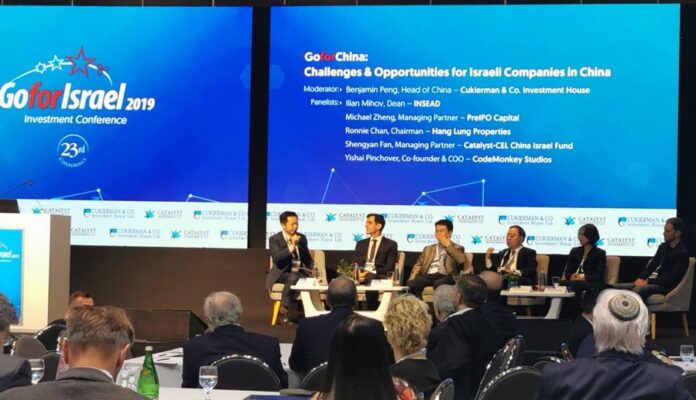
Chinese and Israeli business elites hold discussion on cooperation at the 23rd GoforIsrael investment conference in Tel Aviv, Israel on Dec. 2, 2019. Photo: Chen Wenxian / Xinhua

JERUSALEM, Dec. 3 (Xinhua) — At the 23rd GoforIsrael investment conference held in the Israeli city of Tel Aviv, both Chinese and Israeli business elites believed that more cooperation opportunities between the two sides in various sectors, particularly in the hi-tech sector, would be created.

The one-day business event, which was held on Monday, attracted about 1,000 business leaders, investors and entrepreneurs from Israel, China, the United States, Europe and other countries and regions.

In order to push forward further cooperation between China and Israel, more and more platforms have been forged as bridges to facilitate the cooperation, and GoforIsrael is one of them.

“We are creating a marketplace for investors and startups and so on,” said Yair Shamir, a managing partner of Catalyst Investments, in an interview with Xinhua at the sidelines of the conference.

The Chinese are looking for technology and Israelis are looking for markets, added Shamir, who is also a former Israeli agricultural minister.

According to Shamir, Israel is an easy place to do business with open-minded people and no governmental involvement, which “means there is no limitation or restriction.”

Shamir said the Chinese and the Israelis have mutual respect and “we are happy to do business with China.”

Comprehensive cooperation between China and Israel have been seen in recent years. In 2014, China and Israel established the mechanism of the China-Israel Joint Committee on Innovation Cooperation (JCIC). An innovative comprehensive partnership between the two countries was established when Israeli Prime Minister Benjamin Netanyahu visited China in March 2017.

While Chinese companies are joining hands with Israeli partners in the hi-tech sector and other sectors, Israeli companies are also going eastward to China to seek markets and investors.

A total of 35 percent of the world’s economic growth came from China, and “Israel should look at Asia, including China”, said Ronnie Chan, chairman of the Hong Kong-based Hang Lung Properties, one of the largest real estate corporations in China.

In 1975, Chan visited Israel for the first time and in 2011 he joined the GoforIsrael event. Since then, he has begun to bring Chinese entrepreneurs to Israel to look for investment opportunities.

Chan has brought about nine groups to Israel with total investment value of about one billion U.S. dollars, 40 percent of which came from China and the rest from other Asian countries, according to Chan.

China has created a miracle over the past 40 years with its development, said Ilian Mihov, professor of economics and dean of France’s INSEAD, one of the world’s leading and largest graduate business schools, in an interview with Xinhua.

Nowadays China is looking for high-level technological cooperation in Israel. Israel has a lot of knowledge and creativity, especially in the tech industry, and has a lot of startups, said Mihov.

Now, more and more companies, including those from China, are interested in connecting with Israeli startups and take them globally or grow with them, added the professor.

The cooperation between the two sides could be done in various sectors including the hi-tech one, said Amir Lati, director of the Northeast Asia Department of Israeli Ministry of Foreign Affairs.

Lati told Xinhua that Israel possesses leading innovative technologies in sectors such as healthcare, agriculture and new energy, while China has a huge demand for innovation. Both sides are expected to create more win-win cooperation opportunities if they could work together to forge more platforms for the mutual cooperation.

About 40 Israeli hi-tech startups from fields like life science showcased their latest innovative technologies at the conference and the roadshow attracted high attention of Chinese companies.

Chinese companies, not only strategic investors, but also industrial investors, are showing interest in the Israeli tech innovation and some of them have made investment in recent years, said Shengyan Fan, managing director of the M&A department of China Everbright Limited (CEL), a Hong Kong-based financial services company.

At the same time, a lot of Chinese local governments are making efforts to attract Israeli startups to settle down in some development zones in China, said Fan in an interview with Xinhua, adding that both sides are in the process of creating more investment and cooperation opportunities.

Fan also works as the managing partner of Catalyst-CEL China Israel Fund and she said the fund will complete investment for a total of eight projects by the end of 2019, involving advanced manufacturing, life science and autonomous driving.

The GoforIsrael investment conference was organized by Cukierman & Co. Investment House Ltd. and Catalyst Investment L.P. The 22nd conference was held in Jinan, capital city of east China’s Shandong Province in May this year.

Story: Nick Kolyohin, Chen Wenxian

Advertisement

Trump Takes Bold Stance at NATO as Impeachment Boils at Home

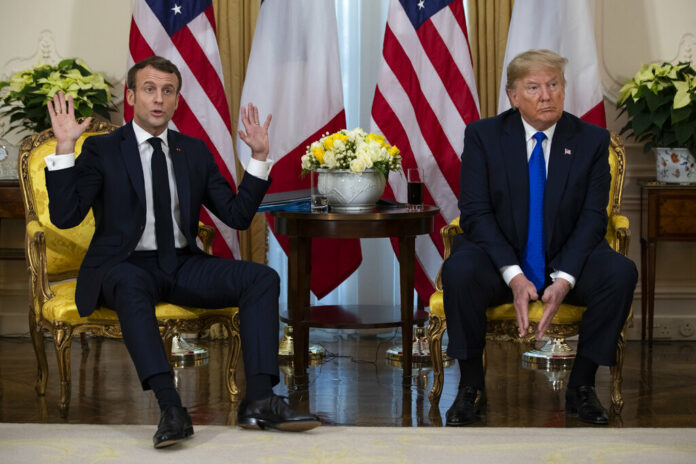
President Donald Trump listens as French President Emmanuel Macron speaks during a meeting at Winfield House during the NATO summit, Tuesday, Dec. 3, 2019, in London. Photo: Evan Vucci / AP

LONDON (AP) — Thumping his chest on the world stage as he faces an impeachment inquiry at home, President Donald Trump claimed credit Tuesday for transforming NATO as the military alliance marks its 70th anniversary. But he also clashed with America’s NATO allies, especially French President Emmanuel Macron, about defense spending and the alliance’s very mission.

Trump began the first of two days at the NATO conference by publicly rebuking Macron, once arguably his closest European ally, for recently saying the post-World War II alliance was experiencing “brain death” as a result of diminished U.S. leadership under Trump.

“I think that’s insulting to a lot of different forces,” said Trump. “It’s very disrespectful.” But the president himself has questioned whether the alliance has become “obsolete,” and he accused NATO members anew of shirking national commitments on military spending.

Hours later, Macron and Trump sat side by side for a media session, and Macron said he stood by his comments about the health of the NATO alliance. He also firmly expressed his frustration that Trump withdrew hundreds of American troops from Syria in October

The U.S. president bantered with reporters for more than two hours Tuesday, sitting casually in a salon of Winfield House, the manicured estate of the U.S. ambassador to the United Kingdom, where he also met with fellow NATO leaders.

He slammed the ongoing Democratic-led impeachment inquiry back in the United States as a “”hoax” and professed to be unconcerned about declines in the stock market spurred by his remark that a trade deal with China might not materialize until after the 2020 election.

Trump later called on Prince Charles and his wife Camilla and attended a NATO welcome reception at Buckingham Palace, before proceeding to an event at the prime minister’s residence at Number 10 Downing Street. Trump punctuated the day of diplomacy with a fundraiser for his reelection effort that his campaign said brought in $3 million.

The gathering of NATO leaders follows Trump’s frequent criticism of alliance members as falling well short in doing their financial part through the first three years of his presidency.

After a NATO summit last year, he called for members devote at least 4% of gross domestic product to military spending and took aim at German Chancellor Angela Merkel, whom he accused of paying Russia ‘”billions of dollars for gas and energy” while failing to meet her nation’s commitment to spend at least 2% of GDP on defense.

But at this NATO meeting, Trump — who heads toward an election year looking to showcase foreign policy wins — is offering a more optimistic outlook for the alliance’s future. To that end, he suggested he deserved much of the credit for progress.

“I don’t think frankly before us that NATO was changing at all, and NATO is really changing right now,” Trump said as he sat down for a one-on-one talk with NATO Secretary-General Jens Stoltenberg.

White House officials say that before Trump took office just four NATO members had reached the 2% benchmark set in 2014. Now there are nine, Eighteen of the 29 are projected to meet it by 2024.

Stoltenberg said that Trump does deserve credit for nudging members.

“The reality is that, not least because it has been so clearly conveyed from President Trump that we need fair burden sharing, allies are stepping up,” Stoltenberg said.

In his meeting with Canadian Prime Minister Justin Trudeau, Trump gently ribbed the premier — whose country is spending about 1.3% of GDP on defense — as “slightly delinquent.”

“Some are major delinquent,” said Trump. He added that he’s looking at the possibility of imposing unspecified trade penalties against NATO allies that perpetually fall below benchmarks.

“Some are way below 1 percent and that’s unacceptable, and then if something happens we’re supposed to protect them and it’s not really fair and it never has been fair,” he said.

Trump’s talks with Macron were tense at times.

Before meeting with him on the sidelines of the summit, Trump laced into the French president for what he called “very, very nasty” comments in The Economist about NATO’s health with Trump leading its most important member.

Macron didn’t back down when they appeared later in the day, and he renewed his own criticism of Trump for withdrawing U.S. forces from Syria.

That decision by Trump, made without consulting France or other NATO allies, gave Turkey, another NATO member, a green light to launch operations against Syrian Kurdish forces who played a key role in the fight to clear a huge swath of Syria of the Islamic State.

Trump and Macron have had an up-and-down relationship in the nearly three years Trump’s been in office.

Macron, who early in Trump’s presidency had looked to cultivate a close relationship, hosted Trump in 2017 for Bastille Day celebrations in Paris. Trump reciprocated by honoring Macron last year with the first state visit of a foreign leader during his time in the White House.

As they answered questions from reporters, the new stress was most apparent as they discussed their concerns over Turkey’s plan to purchase an anti-aircraft missile system from Russia.

Macron said there is a disconnect in allowing Turkey to buy the system from Russia and also be a NATO member. Trump said he is weighing issuing sanctions against Ankara if it moves forward with plans to buy the weapons.

Ahead of the meeting, Turkish President Recep Tayyip Erdogan said he would oppose a NATO plan to defend the Baltic region if the alliance does not back Turkey in its fight against Kurdish groups it considers terrorists.

“I’m sorry to say we don’t have the same definition of terrorism around the table,” Macron said in a swipe at Turkey.

Trump showed more deference to Erdogan, saying that Turkey was “very helpful” during the October U.S. commando raid that led to the death IS leader Abu Bakr al-Baghdadi near the Syria-Turkey border.

“We flew over areas that were totally controlled by Turkey and Turkish military,” Trump said. “We didn’t tell them what we were doing or where we were going. Turkey could not have been nicer, could not have been more supportive.”

At another point in their extended comments before the news media, Trump and Macron had a curt exchange about the repatriation of Islamic State fighters who are European citizens and were captured in Syria and Iraq in recent years. Trump has pressed unsuccessfully for European nations to accept fighters captured by U.S. forces.

“Would you like some nice ISIS fighters? I can give them to you,” Trump said. “You can take every one you want.”

“Let’s be serious,” Macron responded. “Your number one problem are not the foreign fighters.”

Trump retorted, “’That’s one of the greatest non-answers I’ve ever heard. And, that’s OK.”

After such exchanges, however, Trump gave Macron, along with Italian Prime Minister Giuseppe Conte, a ride in his armored presidential limo from the queen’s reception at Buckingham Palace to another gathering hosted by British Prime Minister Boris Johnson at No. 10 Downing St.

Story: Zeke Miller and Aamer Madhani

Advertisement

Nigeria Builds Nation’s First Transportation University with Chinese Support

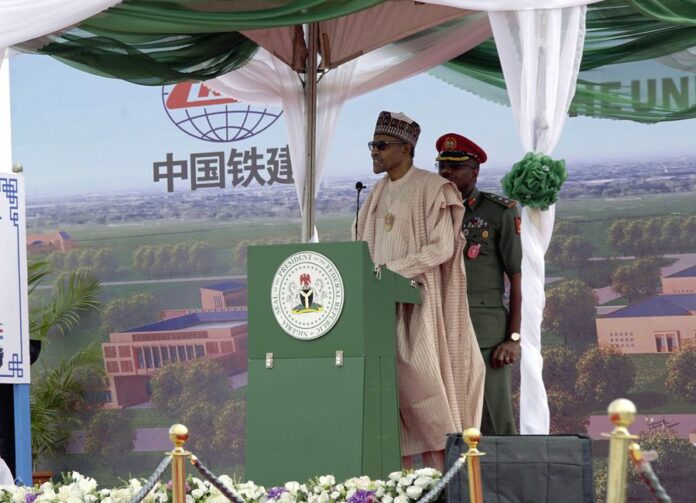
Nigerian President Muhammadu Buhari was speaking at the ground-breaking ceremony of Nigeria's University of Transportation at Daura, Katsina state, Nigeria, on Dec. 2, 2019. Photo: Yang Hongjie / Xinhua

DAURA, Nigeria, Dec. 3 (Xinhua) — Nigeria has started the construction of the country’s first transportation university assisted by a Chinese firm.

The construction of the new specialized academic institution on a 413-hectare of land is undertaken by the China Civil Engineering Construction Corporation (CCECC) Nigeria Ltd, as part of its corporate social responsibility in the country. Nigerian President Muhammadu Buhari on Monday attended the project’s ground-breaking ceremony.

When completed, the University of Transportation in Daura, the birthplace of Buhari in Nigeria’s northern state of Katsina, will focus on research and development of human capital for the country’s transport sector. It is expected to mark a new level of growth, as well as economic and educational development in Africa’s largest economy.

The Nigerian leader, while noting the university as the first of its kind in Africa, said it will provide technical skills, enhance managerial capacity and pave way for innovation in Nigeria’s transport system, as well as create more job opportunities.

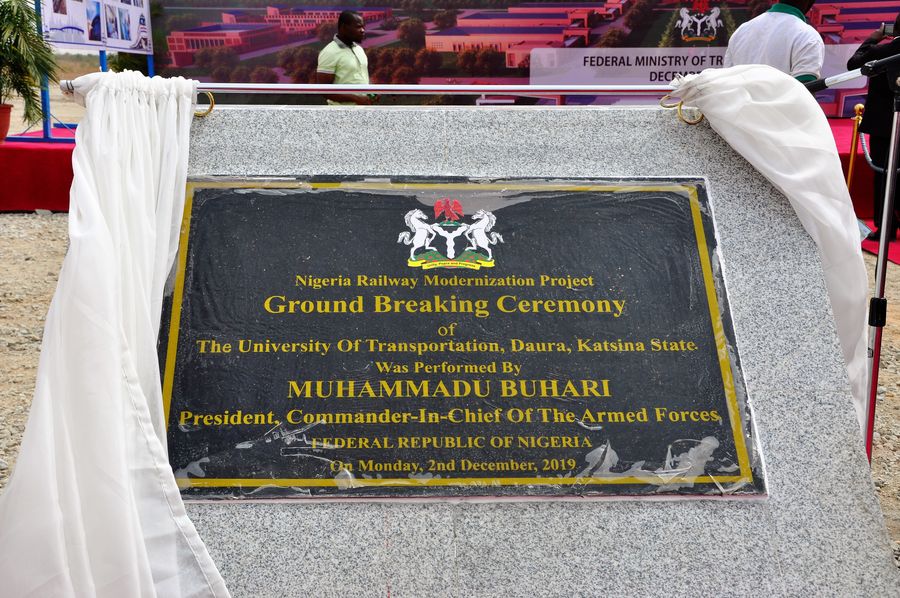
The photo shows a stone tablet marking the ground-breaking ceremony of Nigeria's University of Transportation at Daura, Katsina state, on Dec. 2, 2019. Photo: Yang Hongjie / Xinhua
The photo shows a stone tablet marking the ground-breaking ceremony of Nigeria’s University of Transportation at Daura, Katsina state, on Dec. 2, 2019. Photo: Yang Hongjie / Xinhua

Buhari said the local transport sector in the country was in dire need of new thinking, skills, and investment, further assuring that the university will open up opportunities for economic growth.

“When established, the university would, among other things, pave way for the domestication of railway engineering and general transportation sciences in Nigeria, thereby bridging the technology and skill gap in the railway and ultimately transportation sector,” the president said.

He described the project as one which keys into the efforts of the Nigerian government “toward promotion and development of indigenous capacity through technology acquisition and knowledge transfer to effectively maintain and operate numerous railway infrastructure”.

The completion of the university’s construction is expected within 18 months.

Rotimi Amaechi, Nigeria’s transport minister, told Xinhua in an interview that the project would go a long way to enhance the existing bilateral relationship between China and Nigeria, as well as encourage patronage of local content.

“We have talked about the transfer of technology. We have talked about the issue of maintenance… Being able to construct our own railways and knowledge transfer. That would be great,” Amaechi said.

Speaking at the groundbreaking ceremony which had several top government functionaries in attendance, Zhou Pingjian, the Chinese ambassador to Nigeria said the establishment of the University of Transportation was part of the ongoing effort of the Nigerian government to promote and develop the local capacity through technology acquisition in the rail transport sector.

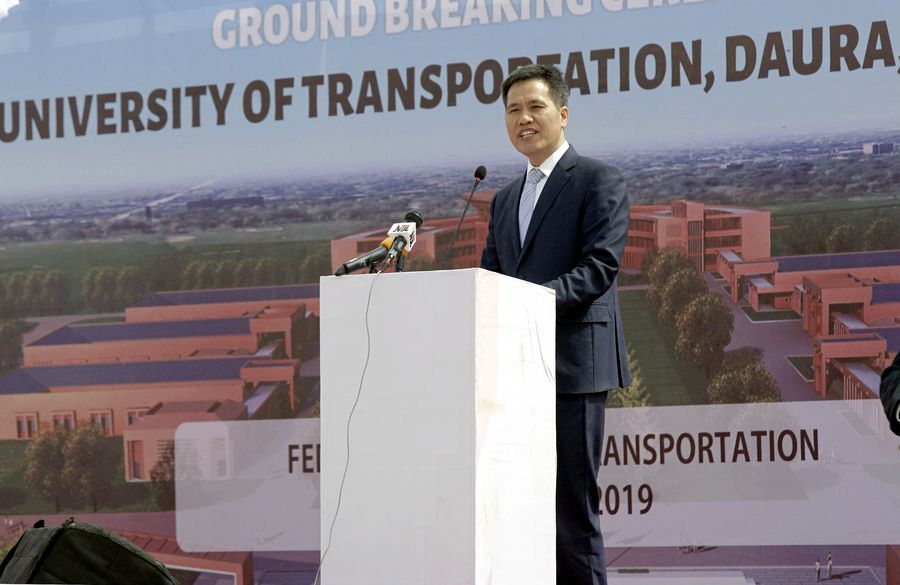
Chinese ambassador to Nigeria Zhou Pingjian was speaking at the ground-breaking ceremony of Nigeria's University of Transportation at Daura, Katsina state, Nigeria, on Dec. 2, 2019. Photo: Yang Hongjie / Xinhua
Chinese ambassador to Nigeria Zhou Pingjian was speaking at the ground-breaking ceremony of Nigeria’s University of Transportation at Daura, Katsina state, Nigeria, on Dec. 2, 2019. Photo: Yang Hongjie / Xinhua

Zhou also said China remained committed to working with Nigeria to implement the outcomes of the 2018 Beijing Summit of the Forum On China-Africa Cooperation and advance the Belt and Road Initiative for common development.

In addition to the university’s construction, the CCECC is also currently training at least 150 young Nigerian students in railway engineering in China, as well as building a railway rolling stock assembly plant in Kajola, a town in the southwestern state of Ogun.

In an interview with Xinhua, Jiang Yigao, the managing director of CCECC Nigeria Ltd, which has been in operation in Nigeria since 1981, said the university project was done to fully establish the railway industry in the west African country. The Chinese firm has been handling most of Nigeria’s major railway projects, including the flagship rail modernization project.

“During the construction of Nigeria’s railway projects, we thought it was very important to train people, to transfer technology and to develop the industry of railway,” Jiang said.

“This transportation university can reach this target. The railway is in huge demand in Nigeria, especially for economic development,” he added.

Advertisement

Google Co-Founders Step Down as Execs of Parent Alphabet

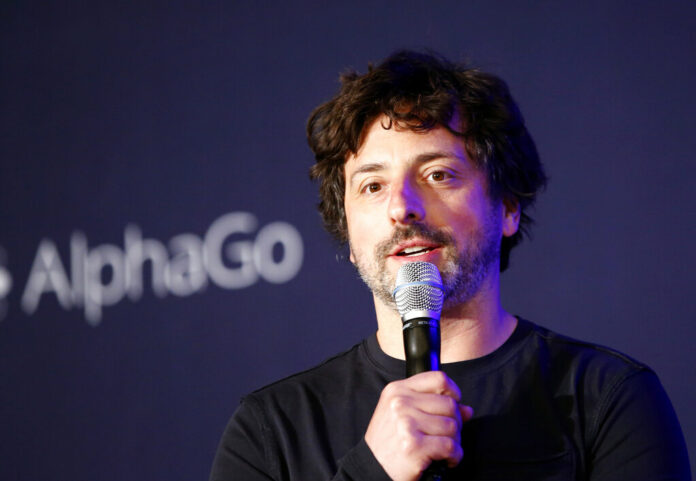
In this March 12, 2016, file photo Google co-founder Sergey Brin speaks during a press conference after finishing the third match of the Google DeepMind Challenge Match in Seoul, South Korea. Google co-founders Larry Page and Brin are stepping down from their roles within the parent company, Alphabet. Page, who had been serving as CEO of Alphabet, and Brin, who had been president of Alphabet, will remain on the board of the company. Photo: Lee Jin-man, File / AP

SAN FRANCISCO (AP) — The co-founders of Google are stepping down as executives of its parent company, Alphabet, ending a remarkable two decades during which Larry Page and Sergey Brin shaped a startup born in a Silicon Valley garage into one of the largest, most powerful — and, increasingly, most feared — companies in the world.

Sundar Pichai, who has been leading Google as CEO for more than four years, will take on additional duties as Alphabet’s CEO, the position held by Page. The company isn’t filling Brin’s position as president.

Page and Brin started Google soon after they met as Stanford University graduate students in 1995.

What began as a way to catalog the growing internet has now become one of the most influential companies in the world. Google dominates online search and digital advertising and makes the world’s most widely used operating system for smartphones, Android. It’s hard to make it through a whole day without using one of Google’s services — ranging from online tools to email, cloud computing systems, phones and smart speaker hardware.

Yet Google has been facing pressure from privacy advocates over its collection and use of personal information to target advertising. It also faces allegations that it abuses its dominance in search and online advertising to push out rivals.

Google is the subject of antitrust inquiries from Congress, the Department of Justice and a contingency of states in the U.S. and from European authorities. The company has also faced harsh criticism about the material on its services. Its video streaming business, YouTube, was fined $170 million to settle allegations it improperly collected personal data on children without their parents’ consent.

Longtime tech analyst Tim Bajarin of Creative Strategies doesn’t expect much to change with the executive shuffle. And if anything does, he said, it will be due to government regulation.

Pichai assured employees in an internal email that his new job wouldn’t mean he was taking a step back from Google.

“I want to be clear that this transition won’t affect the Alphabet structure or the work we do day to day,” he wrote. “I will continue to be very focused on Google and the deep work we’re doing to push the boundaries of computing and build a more helpful Google for everyone.”

Alphabet — an umbrella corporation that the two created in 2015 — still boasts Google as its central fixture and key moneymaker. But it’s also made up of what are known as “other bets,” or longshot projects. That includes drone company Wing and self-driving car firm Waymo.

Page and Brin, in announcing the news Tuesday, said the company has “evolved and matured” in the two decades since its founding. Both promised to stay active as board members and shareholders.

“Today, in 2019, if the company was a person, it would be a young adult of 21 and it would be time to leave the roost,” they wrote in a blog post.

Page and Brin, both 46, both have been noticeably absent from Google events in the past year. Both stopped making appearances at the weekly question-and-answer sessions with employees, and Page didn’t attend this summer’s Alphabet shareholders meeting even though he was still in the CEO role.

Alphabet has been positioning Pichai as the de facto leader for quite some time. It has made him the top executive voice at shareholders meetings, on earnings call and as a spokesman at congressional hearings.

Pichai, 47, has worked at the company for 15 years, serving as a leader in projects to build Google’s Chrome browser and overseeing Android. Pichai, who has an engineering background, took over as the head of Google’s products before being promoted to CEO when Alphabet was created. Pichai is known as a soft-spoken and respected manager.

Last year, Google raised hackles in Congress by refusing to send Page or Pichai to a hearing on Russian manipulation of internet services to sway U.S. elections. Congressional officials left an empty chair while top executives from Facebook and Twitter appeared. Offended lawmakers derided Google as “arrogant.”

Although Bajarin said he doesn’t believe Brin and Page are leaving “because the fire is getting hotter,” he said Pichai’s role at Google has been preparing him for the increased government scrutiny.

Brin and Page still hold a majority of voting shares of Alphabet. According to a regulatory filing in April, Page holds 42.9% of the company’s Class B shares and 26.1% of its voting power. Brin holds 41.3% of the Class B shares and 25.2% of the voting power. According to Forbes magazine, Page has a net worth of $52.4 billion and Brin $56.8 billion.

“Keep in mind, they are not losing their title as billionaires, but they are changing their roles,” Bajarin said.

Google’s stock increased less than 1% in after-hours trading after the news was announced.

Google’s longest serving CEO is still Eric Schmidt, the former executive brought into the role in 2001 as a so-called “adult supervisor” for Brin and Page. Schmidt stepped into the position as the company’s board worried about the relative inexperience of Brin and Page to manage the growing company. He remained CEO until 2011, when Page once again became chief executive. Schmidt stayed on the board until this year.

Page grew up in Michigan, where his late father, Carl, was a computer scientist and pioneer in artificial intelligence, and his mother taught computer programming. Page began working on personal computers when he was just 6 years old in 1979, when home computers were a rarity. The geeky impulses carried into his adulthood, leading him to once build an inkjet printer out of Legos.

___

Story: Rachel Lerman. AP Technology Writers Mae Anderson in New York and Barbara Ortutay in San Francisco contributed to this story.

Advertisement

We’re Giving Away 20 Free Tickets to the ‘Boyz II Men’ Concert This Saturday

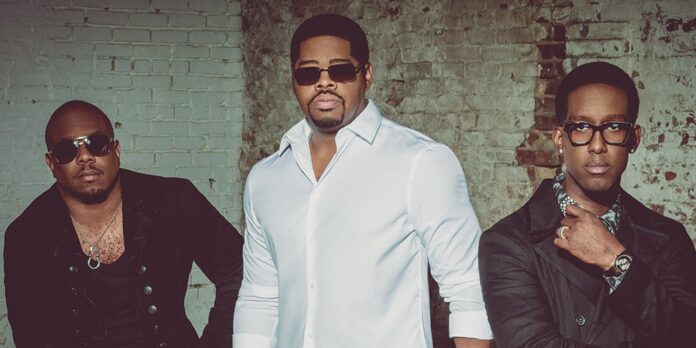
BANGKOK —They’ll make love to you, like you want them to. And they’ll hold you tight, all through the night this Saturday at Union Mall.

Boyz II Men, or the best-selling R&B group of all time, will perform 8pm this Saturday at Union Hall 2 venue in Union Mall – and 20 lucky Khaosod English readers will be able to watch them for free, since we’re giving away free tickets!

Simply comment on our Facebook page’s post of this article, or tweet at us why you and a friend deserve the free tickets. We’ll pick 10 of the most impressive answers to give a pair of tickets to. Don’t forget to leave your e-mail in the comment and to whitelist this writer’s email so we can send you the tickets! Deadline is Friday 9am.

Half of the tickets are worth 5,000 baht, and the other half are worth 4,000 baht.

As part of our giveaway, Boyz II Men – made up of Nathan Morris, Wanya Morris, and Shawn Stockman – answered a few of our burning questions via email interview. Band management said they the answers are from band members as a whole, and could not specify which band member said what.

The band said they’ve come to Thailand around eight times, and they especially love the “noodles noodles noodles!!!!”

“It is very touching to us to see how our music can translate to our fans in Bangkok. Crazy to think how few guys from Philly get to travel the world and do what we love,” they wrote. “We love the culture and the dedicated fans. The people are so nice and show us crazy respect.”

The band has been together since 1988, winning 4 Grammy awards and 3 Billboard awards along the way. Their songs have been number one on the Billboard charts for 50 cumulative weeks, fourth all time behind Elvis Presley, The Beatles, and Mariah Carey.

Familiar number one hits to noughties fans include “Motownphilly” (1991), “End of the Road” (1992), “I’ll Make Love to You” (1994), “On Bended Knee” (1994), and “One Sweet Day” (1995).

“We are a family. We feel very blessed to be together for almost 30 years and still doing what we love to do,” they wrote. “We have always stayed true to ourselves especially when it comes to our music. We argue and fight at times, but always because we care about each other!”

Michael McCary left the group in 2003.

For many Thais, American hip hop and R&B artists in the late 80s and 90s pioneered mass exposure to the genre as well as the talents of black artists.

“Traveling and seeing many cultures we learn so much as well,” Boyz II Men wrote when asked how they felt as one of the earliest pioneers of this. “We’ve learned to appreciate the opportunity to share, as well as learn with this fortunate career we have been blessed with.”

Read: They’ll Make Love to You: Boyz II Men Coming to Bangkok 

Advertisement

Court Approves Warrant to Arrest Gov’t MP for Disrupting 2009 ASEAN Summit

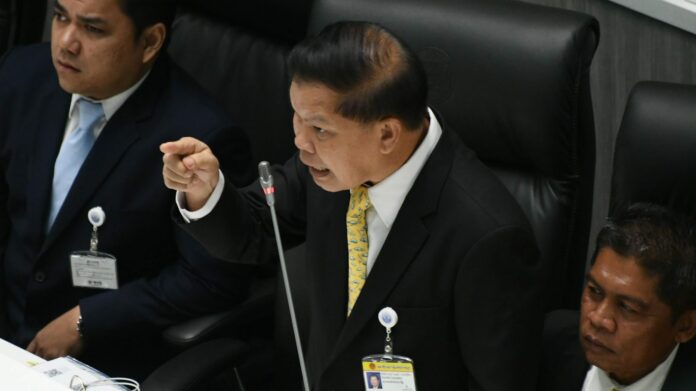
A file photo of Waipoj Apornrat.

BANGKOK An appeal court on Tuesday issued an arrest warrant for a coalition politician who was convicted for leading a riot that disrupted the ASEAN Summit in Pattaya nearly a decade ago.

The court dismissed the parliamentary immunity of Phalang Pracharat MP Waipoj Apornrat and issued an arrest warrant against him after he refused to attend today’s hearing.

Tuesday’s ruling affirmed the previous verdict in September, where 12 Redshirt leaders including Waipoj were found guilty of sedition, illegal assembly, property damage, and trespassing for leading protesters to storm the hotel hosting the ASEAN Summit on April 11, 2009.

Under the current constitution, MPs and senators cannot be arrested or prosecuted while Parliament is in session. However, judges ruled that Waipoj’s conviction was already made before the session convened.

The defendants received four-year jail terms each.

Waipoj had initially denied the charges, but then confessed after the September’s hearing. The court Tuesday dismissed his reversed testimony since it was made post-hearing.

The court also affirmed the jail sentence for two other defendants, Samrerng Prachamrua and Worachai Hema, who had also reversed their testimonies.

Samrerng and Worachai were taken back to the prison after the hearing, while Waipoj said he would carry on his MP duties until the court will make the final verdict on Jan. 15, 2020, adding that his immunity is still in effect.

However, parliament secretary Sorasak Pienvej disputed his claim, saying that the police can immediately arrest Waipoj because the court has already ruled out the case.

Still, the MP can still attend parliamentary sessions, Sorasak said.

Waipoj was an MP for Thai Rak Thai Party and People’s Power Party, which were parts of a faction loyal to former leader Thaksin Shinawatra, before moving to Phalang Pracharat in 2018.

Advertisement

Hot News

LATEST NEWS

Bangkok
overcast clouds
27.7 ° C
27.7 °
27.7 °
80 %
2.4kmh
98 %
Thu
28 °
Fri
37 °
Sat
35 °
Sun
37 °
Mon
37 °