

































36.1 C
Bangkok
Sunday, June 21, 2026
Home Blog Page 1468

Traversing Sri Lanka’s Mountains Made Smoother by Chinese Trains

People travel by a Chinese-made train in Sri Lanka, Nov. 2, 2019. (Xinhua/Tang Lu)

COLOMBO (Xinhua) — Sri Lanka has always been regarded by travel enthusiasts as “a country with the most beautiful railway network in the world.”

If you are travelling in Sri Lanka and have not taken the “mountain train” that runs through the lush green tea gardens in the Alpine Central Highlands, you have missed something deliriously enchanting.

While the view from the train is breathtakingly beautiful, the ride itself can be quite bumpy and shaky. As the train winds its way round mountains and the turns are often very sharp, the passengers often find it difficult to keep their balance. This is because both the train and the railway tracks are decades old.

Given the difficult terrain in the mountains, high standards are required in the construction of the mountain line, and these standards are now being met fully in the new trains designed and manufactured by China.

23154771 1960858364126632 5988382590d5751 o 1
Photo taken on Nov. 1, 2019 shows that on the high quality Chinese-made trains, passengers enjoy a comfortable and smooth ride while enjoying the beauty of the tea gardens and the lush mountains. (Xinhua/Tang Lu)

On Nov. 1, the latest version of the luxury train named Denuwara Menike manufactured by CRRC Qingdao Sifang Co., Ltd. was put into operation for the first time.

On the high quality Chinese trains, passengers can now enjoy a comfortable and smooth ride while enjoying the beauty of the tea gardens and the lush mountains.

The train, an S14 Diesel Multiple Unit, consists of two power locomotives, two air-conditioned cars, two second-class cars, three third-class cars and a car with a canteen.

The Denuwara Menike, which runs between Colombo and Badulla, in the central hills, will complete the journey in 8 hours and 43 minutes.

CnybnyE005033 20180115 NYMFN0A001 11n 2
People travel by a Chinese-made train in Sri Lanka, Nov. 2, 2019. (Xinhua/Tang Lu)

The train can carry a total of 400 commuters including 88 in AC compartments, 96 in second class compartments and 216 in third class compartments, the Railway Department said.

The first-class is air-conditioned and equipped with TVs. The conditions in the second and third-class cars are also much better than the old trains.

Entering the mountainous area, the train goes past jungle canyons, culverts and tea gardens. Thrilled by the beauty outside, young passengers hang out of the train, clutching door handles and taking selfies and pictures of each other in happy and even daring poses.

Su Xiaofeng, a designer in CRRC Qingdao Sifang Co., Ltd., said that there is a screen in each car showing useful information about the journey and the facilities available.

Sri Lankans are keenly interested in the newly-launched mountain train. Many of the passengers who took the ride put their thumbs up when they saw the Xinhua reporter.

“Thanks to China for making this for Sri Lanka. It is a comfortable train,” they said with a broad smile on their faces.

Hewa, a Sri Lankan business manager, took the train on Nov. 2 that returned to capital Colombo from the central highlands of Kandy. Hewa travels between Badulla in Central Sri Lanka and Colombo on the west coast almost every month to see his mother. He spoke glowingly to Xinhua about the new deluxe train after recalling the hardships he had to face in the past.

1573043141402 2
Photo taken on Nov. 2, 2019 shows the first-class car of a Chinese-made train, which is air-conditioned and equipped with TVs, in Sri Lanka. (Xinhua/Tang Lu)

“The mountain line was beautiful, but the bumps used to make me uncomfortable every time I took a ride,” Hewa said. “But this is no longer the case with the introduction of the modern Chinese-made train,” he said.

“I learnt from a friend who works at the railway station that a Chinese-made luxury train is about to be put into use. So I decided to go to Badulla by this train. Luckily, my trip happened to take place on the day the train was inaugurated,” he said.

“My decision was very wise. The newly-launched train is not only comfortable but also very safe. The other aspect that I like is the information put out on the train. This is very educative.”

“I also appreciate the creation of space for dumping garbage in the compartment itself which makes the compartment spick and span. At present, most of the trains in Sri Lanka do not have garbage bins and passengers throw trash out of the train, spoiling the environment,” Hewa said.

The Sri Lankan Railway currently operates about 150 diesel locomotives, many of which are more than 30 years old.

In an effort to modernize the railways and attract more foreign tourists, the Sri Lankan government has purchased nine trains of the same type from China. The first luxury train was officially put into commercial operation on Nov. 1 and the remaining eight will arrive later this year and early next year.

Story by Tang Lu, Jamila Najmuddin

Advertisement

Diplomats Accuse Trump as Impeachment Hits Americans’ TVs

Top U.S. diplomat in Ukraine William Taylor arrives to testify before the House Intelligence Committee on Capitol Hill in Washington, Wednesday, Nov. 13, 2019, during the first public impeachment hearing of President Donald Trump's efforts to tie U.S. aid for Ukraine to investigations of his political opponents. (Saul Loeb/Pool Photo via AP)

WASHINGTON (AP) — On Day One of extraordinary public impeachment hearings, the top American diplomat in Ukraine revealed new evidence that President Donald Trump was overheard asking about political “investigations” that he later demanded from Ukraine in exchange for military aid.

The revelation came as House Democrats pressed their case for Trump’s impeachment before the American people after weeks of closed-door interviews.

Wednesday’s account from a pair of career diplomats was a striking though complicated one that Democrats say reveals a president abusing his office, and the power of American foreign policy, for personal political gain.

“The matter is as simple and as terrible as that,” said Rep. Adam Schiff, the Democratic chairman of the Intelligence Committee, as he opened the daylong hearing. “Our answer to these questions will affect not only the future of this presidency but the future of the presidency itself.”

Career diplomat William Taylor, the charge d’affaires in Kyiv, offered new testimony that Trump was overheard asking on the phone about “the investigations” of Democrats that he wanted Ukraine to pursue that are central to the impeachment inquiry.

Trump said he was too busy to watch Wednesday and denied having the phone call. “First I’ve heard of it,” he said when asked.

All day, the diplomats testified about how an ambassador was fired, the new Ukraine government was confused and they discovered an “irregular channel” — a shadow U.S. foreign policy orchestrated by the president’s personal lawyer, Rudy Giuliani, that raised alarms in diplomatic and national security circles.

The hearing, playing out on live television and in the partisan silos of social media, provided the nation and the world a close-up look at the investigation.

At its core, the inquiry stems from Trump’s July 25 phone call when he asked Ukraine’s newly elected president, Volodymyr Zelenskiy, for “a favor.”

Trump wanted the Ukraine government to investigate Democrats’ activities in the 2016 election and his potential 2020 rival, Joe Biden — all while the administration was withholding military aid for the Eastern European ally that is confronting an aggressive neighbor, Russia.

Both sides tried to distill it into soundbites.

Democrats said Trump was engaged in “bribery” and “extortion.” Republicans said nothing really happened — the military aid was ultimately released after Congress complained.

Trump restated his aggressive defense with rapid-fire tweets, a video from the Rose Garden and a dismissive retort from the Oval Office as he met with another foreign leader.

“It’s a witch hunt. It’s a hoax,” he said as he appeared with visiting Turkish President Recep Tayyip Erdogan by his side.

Across the country, millions of Americans were tuning in — or, in some cases, deliberately tuning out.

Viewers on the right and left thought the day underscored their feelings. Anthony Harris, cutting hair in Savannah, Georgia, had the hearing on in his shop, but he said, “It’s gotten to the point now where people are even tired of listening.”

The hours of partisan back-and-forth did not appear to leave a singular moment etched in the public consciousness the way the Watergate proceedings or Bill Clinton’s impeachment did generations ago.

“No real surprises, no bombshells,” said committee member Rep. Chris Stewart, R-Utah.

Still, the session unspooled at least partly the way Democrats wanted with the somber tones of career foreign service officers telling what they knew. They sounded credible.

The witnesses, the graying Taylor and Deputy Assistant Secretary of State George Kent in his bow tie, defied White House instructions not to appear. Both received subpoenas.

They are among a dozen current and former officials who already testified behind closed doors. Wednesday was the start of days of public hearings that will stretch into next week.

Taylor, who was asked by Secretary of State Mike Pompeo to return to Ukraine as Trump was firing Ambassador Marie Yovanovitch, introduced new information Wednesday.

He testified that a staff member recently told him of overhearing Trump when they were meeting with another diplomat, Ambassador Gordon Sondland, at a restaurant the day after Trump’s July 25 phone call to the Ukraine president that sparked the impeachment investigation.

The staff member explained that Sondland had called the president and they could hear Trump on the phone asking about “the investigations.” The ambassador told the president the Ukrainians were ready to move forward, Taylor testified.

In the face of Trump’s denial, Schiff expects the person to appear before investigators for a closed-door deposition. He is David Holmes, the political counselor at the embassy in Kyiv, according to an official unauthorized to discuss the matter and granted anonymity.

Republicans argued that even with the diplomats at the witness table the Democrats have only second- or third-hand knowledge of Trump’s alleged transgressions.

A Trump ally on the panel, Rep. Jim Jordan of Ohio, mockingly called Taylor the Democrats’ “star witness” and said he’d “seen church prayer chains that are easier to understand than this.”

Taylor, a West Point graduate and former Army infantry officer in Vietnam, responded: “I don’t consider myself a star witness for anything.”

The top Republican on the panel, Rep. Devin Nunes of California, said Trump had a “perfectly good reason” for wanting to investigate the role of Democrats in 2016 election interference, giving airtime to a theory that runs counter to mainstream U.S. intelligence which found that Russia intervened and favored Trump.

Nunes accused the Democratic majority of conducting a “scorched earth” effort to take down the president after the special counsel’s Russia investigation into the 2016 election failed to spark impeachment proceedings.

The veteran foreign service officers delivered heartfelt history lessons about Ukraine, a young and hopeful democracy, situated next to Russia but reaching out to the West.

Asked about Trump’s withholding military aid from such an ally, Taylor said, “It was illogical. It could not be explained. It was crazy.”

Both men defended Yovanovitch, a career officer who Kent has said was subject to Giuliani’s “campaign of lies.” She is to testify publicly Friday.

Kent, in his opening remarks, directly contradicted a core complaint against Joe Biden being raised by allies of the White House. While he said he himself raised concerns in 2015 about the vice president’s son, Hunter Biden, being on the board of Burisma, a Ukraine gas company, he “did not witness any efforts by any U.S. official to shield Burisma from scrutiny.”

Republicans sought to hear from the anonymous whistleblower by subpoenaing him for a closed-session. The panel voted down the request and Schiff and repeatedly denied the GOP claim that he knows the person.

“We will do everything necessary to protect the whistleblower’s identity,” Schiff declared.

The Constitution sets a dramatic but vague bar for impeachment, There’s no consensus yet that Trump’s actions at the heart of the inquiry meet the threshold of “high crimes and misdemeanors.”

The anonymous whistleblower first alerted officials to concerns about the Trump phone call with Zelenskiy. The White House released a rough transcript of the telephone conversation, with portions deleted.

House Speaker Nancy Pelosi was initially reluctant to launch a formal impeachment inquiry. But she pressed ahead after the whistleblower’s complaint. She said Wednesday it was sad that the country has to undergo the inquiry with Trump, but “he will be held accountable.”

___

Associated Press writers Colleen Long, Mike Balsamo, Eric Tucker, Laurie Kellman, Alan Fram, Zeke J. Miller and Matthew Daly in Washington contributed to this report.

Advertisement

HK Gov’t Condemns Rioters Who Struck Elderly Man With Bricks

Image: Ting-HKP / Weibo

HONG KONG (Xinhua) — A spokesman for the government of Hong Kong Special Administrative Region (HKSAR) expressed outrage on Thursday at the violence of rioters that left a senior worker critically injured.

According to a statement from the HKSAR government, “an outsourced worker of the Food and Environment Hygiene Department, who is a senior, was suspected to be hit in his head by hard objects hurled by masked rioters during his lunch break yesterday (Nov. 13).”

The worker was described as suffering “serious injury and is in critical condition.”

A spokesman for the HKSAR government said that he was “saddened by the incident” and said the government “is in contact with family members of the worker through the service contractor and will provide all appropriate assistance to them.”

Meanwhile, he expressed “outrage over the malicious acts of the rioters and emphasises that police will follow up the case thoroughly to bring offenders to justice.”

“Masked rioters conducted extremely dangerous and violent acts in various districts three days in a row, where they wantonly assaulted other members of the public,” he said. “The acts are outrageous. Police will resolutely take law enforcement actions to restore public order. The HKSAR government appeals to members of the public to stay calm and rational as well as to stay away from violence to safeguard personal safety.”

Video footage circulating online showed that the man, in a checked shirt and a dark coat, was standing facing some black-clad rioters who were hurling what seemed to be bricks, before he was hit and fell down.

This is not the first time ordinary residents in Hong Kong being assaulted in the unrest.

On Monday, a 57-year-old man was beaten up by rioters on a footbridge in the Ma On Shan area because of different political view, and he was poured with suspected flammable liquid and set on fire by a rioter.

The man was still in critical condition at hospital with second-degree burns on 40 percent of his body, the Hong Kong police said on Wednesday.

Advertisement

More Transit Disruptions, More Violence Break Out in Hong Kong

HONG KONG (AP) — Hong Kong residents endured a fourth day of traffic snarls and mass transit disruptions Thursday as protesters closed some major arteries and rail networks while police skirmished with militant students at major universities.

Life in this city of 7.5 million has been strained as thousands of commuters were unable to make it to work.

The government appealed for employers to show flexibility. “For staff who cannot report for duty on time on account of conditions in road traffic or public transport services, employers should give due consideration to the circumstances,” the statement said.

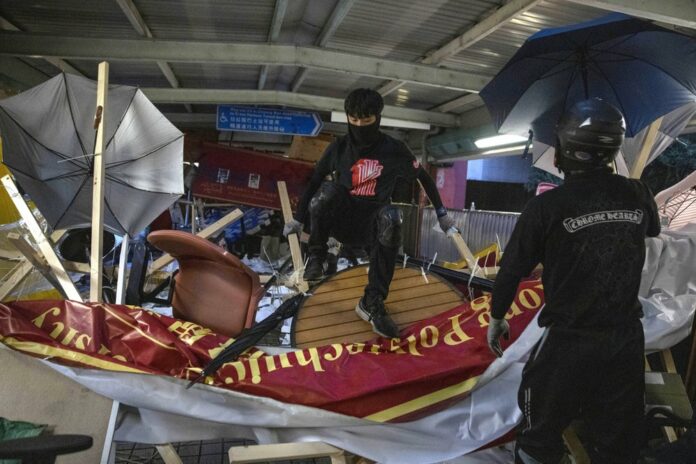
Riot police fired tear gas during a standoff with students at Hong Kong Polytechnic University. Protesters have hurled gasoline bombs and thrown objects off bridges during clashes at campuses this week. The Chinese University of Hong Kong suspended classes for the rest of the year, and others asked students to switch to online learning.

1000 9
A pro-democracy protester makes nail roadblocks inside the campus of the University of Hong Kong, early Thursday, Nov. 14, 2019. (AP Photo/Kin Cheung)

Students at Chinese University, site of some of the fiercest clashes where students hurled more than 400 Molotov cocktails at police on Tuesday, have barricaded themselves in the suburban campus.

Early Thursday they used chain saws to drop trees onto streets around the campus and prepared for a possible confrontation with police, which were not intervening.

Anti-government protests have riven Hong Kong, and divided its people, for more than five months.

A major rail line connecting Kowloon to mainland China was closed for a second day and five major underground stations were shut along with seven light rail routes, the Transport Department announced.

“Road-based transport services have been seriously affected this morning due to continued road blockages and damage to road facilities. In view of safety concerns and uncertain road conditions, buses can only provide limited services,” the department said.

Traffic was also disrupted because protesters have destroyed at least 240 traffic lights around the city.

The movement began in June over a now-withdrawn extradition bill. Activists saw it as another sign of an erosion in Hong Kong’s autonomy and freedoms, which China promised would be maintained for 50 years under a “one nation, two systems” principle when the former British colony returned to Chinese control in 1997.

Advertisement

12,000+ Russians Heading Straight to Southern Party Islands

Photo: Extraguide.Ru

SURAT THANI — At least 12,000 of our Russian friends will be partying and vacationing on Thailand’s party islands from before the New Year through Songkran.

Russian tourists on 32 direct flights carrying 12, 760 people will head straight to Surat Thani from Dec. 27 until April 22, carrying our comrades from the cold of winter to the tropical parties on Koh Samui, Koh Phang Ngan, and Koh Tao.

Surat Thani governor Witchawut Jinto said Wednesday that these flights, which are on Nordwind Airlines, are fully-booked, and the province will prepare to welcome the influx of Russians.

Surat Thani Tourism Authority of Thailand director Nongyao Jirandon said that the flights will come from Moscow, Novosibirsk, and Krasnoyarnsk, and tourists have an average stay of 11 to 12 days.

Nongyao estimated they would generate 700 million in tourism revenue.

“This group are interested in nature tourism, such as going to Koh Samui’s beaches and diving at Koh Tao, as well as going to the Full Moon Party, shopping, and community tourism,” Nongyao said.

On Tuesday, Nong Nooch Tropical Garden in Pattaya said that as many as 4,000 Russians flew in for Loy Krathong via planes with tour groups, with 1,300 people attending each day from Monday through Wednesday.

In 2018, 1.5 million Russians visited Thailand, a 15 percent jump from the year before, with holidayers ferried in by about a 100 weekly flights between Russian and Thai cities. In contrast, Thai tourism to the Motherland is a trickle – averaging about 20,000 tourists a year, though 2018 saw a sharp uptick to 100,000, possibly due to the World Cup.

Tourists at a Loy Krathong event on Nov. 11, 2019 at Nong Nooch Tropical Garden in Pattaya.

Related stories:

Russian Ambassador Denounces Sanctions, Urges Thais to Buy More Weapons

From Bangkok With Love: Russian Startups Digitize Thai E-Commerce

Advertisement

800 Students and 1 Naga to Dance for Pope in Bangkok (Photos, Video)

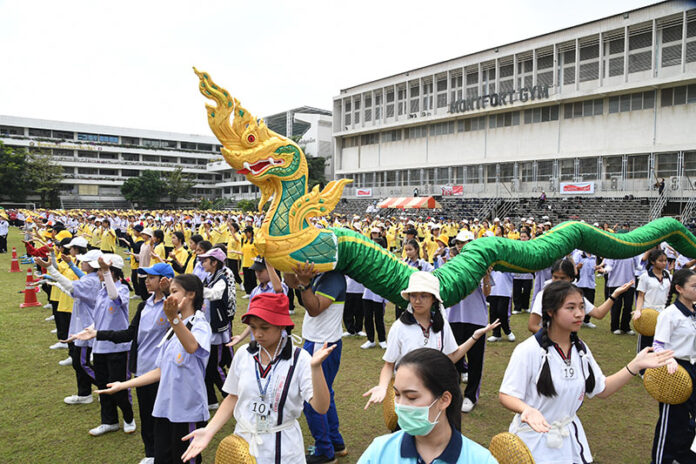
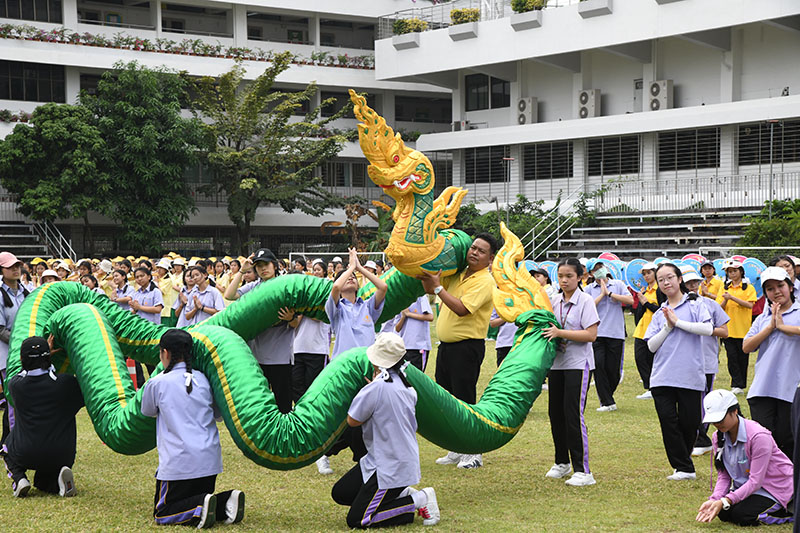
BANGKOK — Pope Francis will be greeted by a mass dance involving 800 local students and a giant mythical serpent, or Naga, after he finished blessing the crowd at an open-air mass in Bangkok later this month.

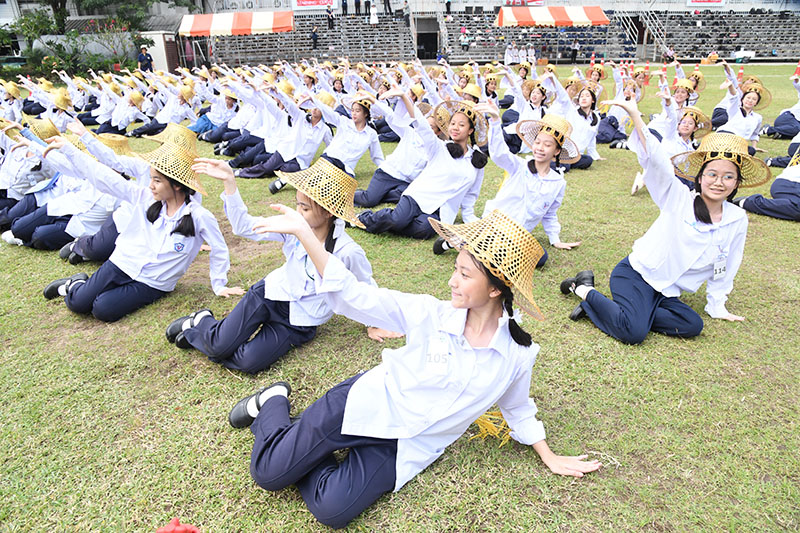
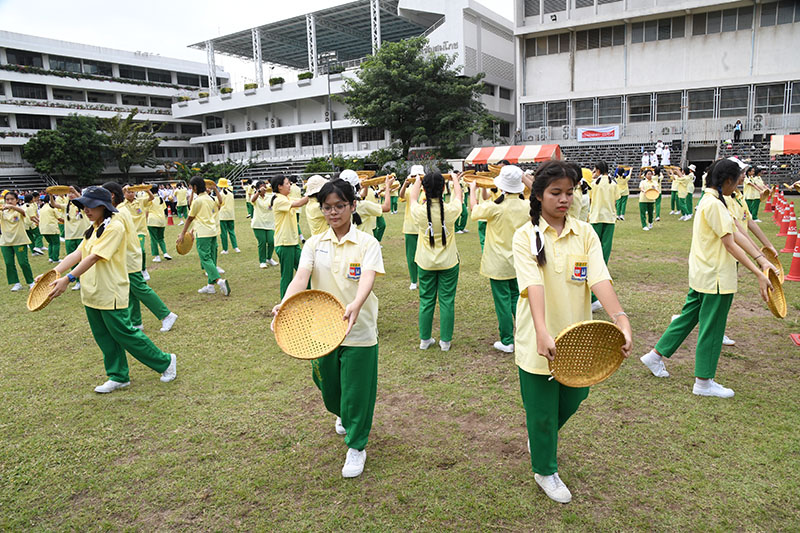
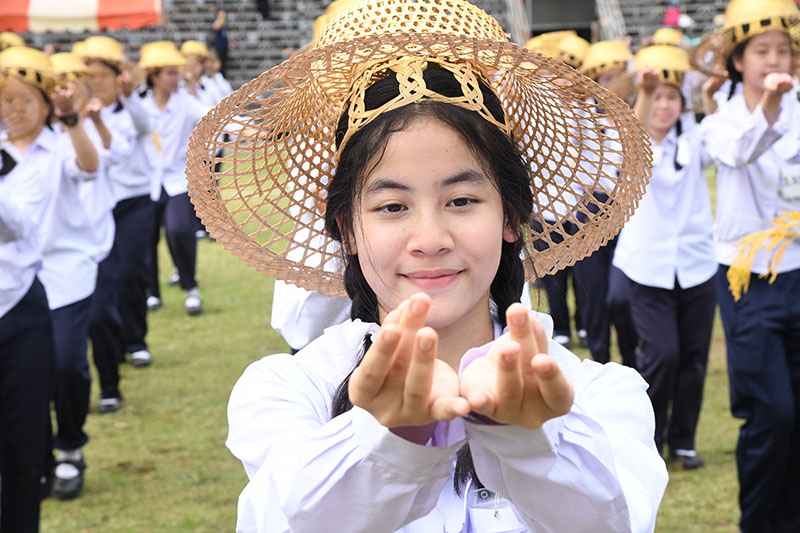
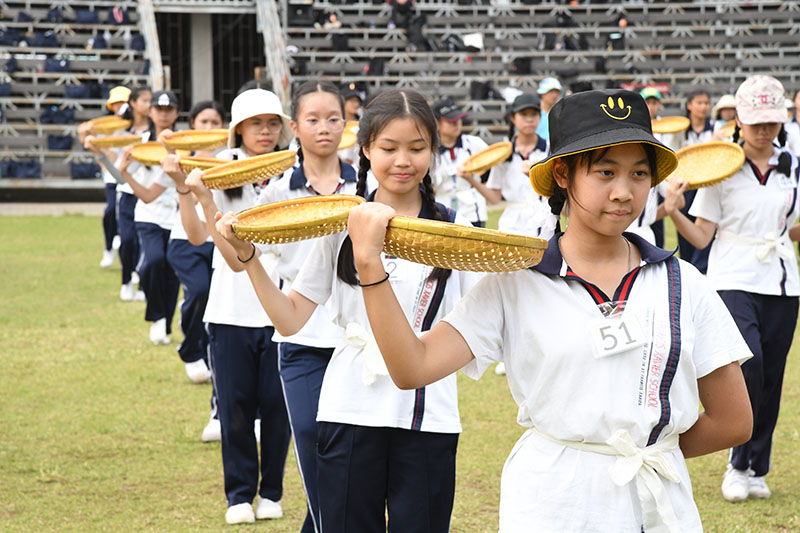
Eight hundred students from seven all-female Catholic schools in Bangkok were rehearsing their performance on Wednesday at Assumption Commercial College. The dance aims to represent Thailand’s four regions and its Buddhist-based mythology. An organizer believes the Pope wouldn’t mind the sight of the 10-meter-long serpent made of cloth and foam.

“A naga is a symbol of the northeastern region and it’s about faith as well as fertility,” Anchalee Poonkasem, a dance teacher from St. Joseph Convent School, said in an interview.

The segment representing Thailand’s northern region, for example, will feature Chiang Mai’s famous painted umbrellas, and a part about rice farmers will see the students dancing with farming hats and rice baskets.

The Pope is set to conduct an open-air mass at the National Stadium on Nov. 21.

As much as one million baht was spent to tailor dresses for the 800 dancers, with 92 teachers overseeing the performance. Asked if the cost is a little too extravagant for a Pope known to be associated with the poor and marginalized, Papavadee Incharoenphon, a 15-year-old student at the prestigious Assumption Convent Silom School, said no.

“This is a once in a lifetime thing,” Papavadee said on Wednesday during a break from the rehearsal.

DSC 9309 copy

Teachers estimated that no more than 20 percent of the students aged between 10 to 17 are Roman Catholics themselves – hardly a surprise for a country where only 0.58 percent of the population follow Rome’s faith.

Papavadee, who is Buddhist, said she was completely willing to and didn’t find it strange that she was doing a dance for the Pope, since she and her peers, also mostly Buddhists, go to Catholic schools.

Out of Thailand’s 69-million population, Catholics number about 388,000, according to the Church’s official count.

Related stories:

Popemobile for Thailand’s Papal Visit Unveiled (Photos)

DSC 9494 copy

DSC 9355 copy

DSC 9518 copy

DSC 9424 copy

Advertisement

Police Arrest Gunslinging Clerk for Bringing Down Court Shooter

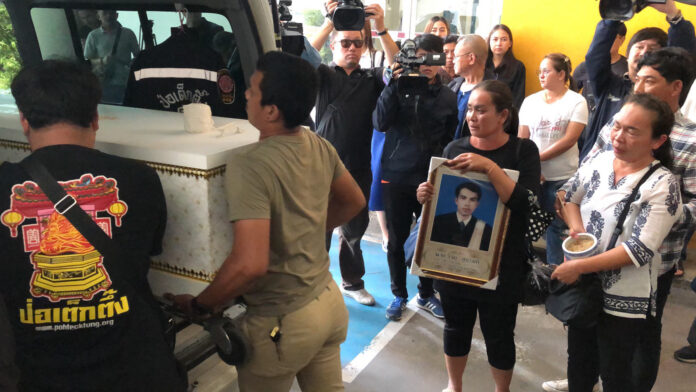
Relatives of the plaintiff's lawyer Wijai Sukharom collecting his body from a hospital on Nov. 13, 2019.

CHANTHABURI — Police on Wednesday arrested a legal clerk for shooting a defendant who opened fire in the courtroom, killing the plaintiff and his lawyer Tuesday.

National police spokesman Krissana Pattanacharoen said Thanakorn Theerawaradom, 22, a clerk to the plaintiff’s lawyers, was apprehended Wednesday morning after he used the gun belonging to an on-duty police officer inside the Chanthaburi court to shoot and kill Thanin Chantratip.

The confirmation was made despite earlier media reports that Thanin was brought down by a policeman inside the courtroom.

Read: Defendant Opens Fire in the Courtroom, Killing Plaintiff and Lawyer

Thanakorn was charged with murder of Thanin, though the spokesman declined to comment whether it was an act of self-defense or how Thanakorn managed to remove the gun from a police officer.

“We have to wait for more details from the investigators,” Col. Krissana said. “Thanakorn will have to go through the legal process and we will call in the police officer who is the owner of the gun for inquiries as well.”

Details on how the defendant managed to smuggle his pistol into the court also emerged today. Court of Justice sec-gen Sarawut Benchakul said CCTV footage showed Thanin waiting for the security guard who manned security checkpoint to leave his post for the morning national flag raising ceremony, and then bringing the firearm into the building.

“We have deployed marshals to investigate the shooting and we will also review security measures at courthouse nationwide,” Sarawut said.

Thanin’s ex-wife Khemjira Bantoonnipit, who divorced him four years ago, said her ex-husband was waiting to surrender himself after the shooting but was shot by Thanakorn before the police arrived.

Thanin had been fighting in a legal dispute over a 3,800 rai (608 hectares) land plot in Tha Mai district of Chanthaburi for over eight years.

“He thought he was unfairly treated in the land ownership,” Khemjira told reporters. “He had even been pressured by a senior police officer to drop the case.”

According to spokesman for the Court of Justice Suriyan Hongwilai, the shooting happened before the court was in session, when Thanin and the plaintiff Bancha Porameesanaporn were arguing. Thanin drew his gun and shot Bancha, Bancha’s wife, and their lawyers.

Bancha and his lawyer Wijai Sukharom died at the hospital later that day, while Bancha’s wife Supaporn Porameesanaporn and another lawyer Wichai Udomthanapat were severely injured. Thanin also died at the hospital.

The doctor said Wednesday that Supaporn and Wichai are now in stable condition.

Advertisement

Thai Pride Rides High As Local Chefs Snag Michelin Stars

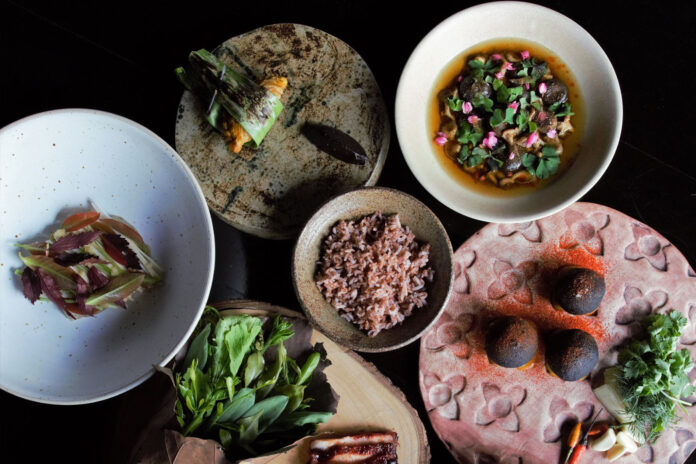
Dishes in an five-course menu at 80/20, includes a curry puff, pork jowl in red koji, burnt banana leaf ice cream. Photo: 80/20bkk / Facebook

By Pravit Rojanaphruk, Tappanai Boonbandit, and Asaree Thaitrakulpanich

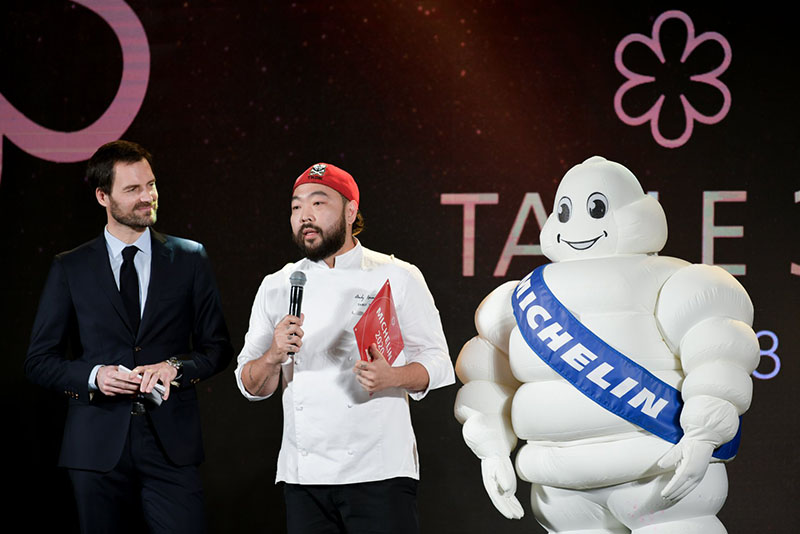
BANGKOK — While accepting one of the most prestigious food awards worldwide, Chef Supaksorn Jongsiri dedicated his win to the country’s most humble – rural farmers.

On stage, he said he had cried tears of joy for receiving the award – but farmers in the south of Thailand were crying in despair because they couldn’t sell any of their produce, while expensive imported ingredients were prized and coveted.

“Sea urchin from Japan sells for 20,000 baht per kilo, but mangosteen sells for 3 baht per kilo,” he said, visibly emotional on stage. “The farmers had to throw them away. And then they cried.”

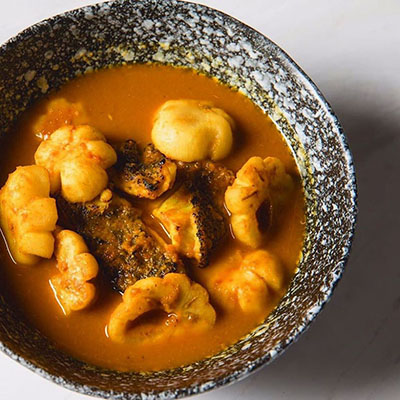
Sorn’s yellow curry with mangosteen and gu fish. Photo: Facebook / Sorn

Sorn was one of two restaurants, both serving Thai cuisine, that got an upgrade from one to two Michelin stars at the awards ceremony Tuesday.

The two-star distinction for Thai restaurants in Thailand were a first, as the other two-star awardees all served foreign cuisine. Supaksorn and other awarded chefs this year stressed the importance of cooks going locavore to support the country.

Read: First Thai Restaurants by Thais, in Thailand, Receive Two Michelin Stars

“What I said on stage was to encourage everyone to elevate Thai ingredients,” Nakhon Si Thammarat native Supaksorn said to Khaosod English after receiving the stars. “I’m just a messenger. The real burden is on the farmers who provided me with the ingredients. They gave me the chance to be here today.”

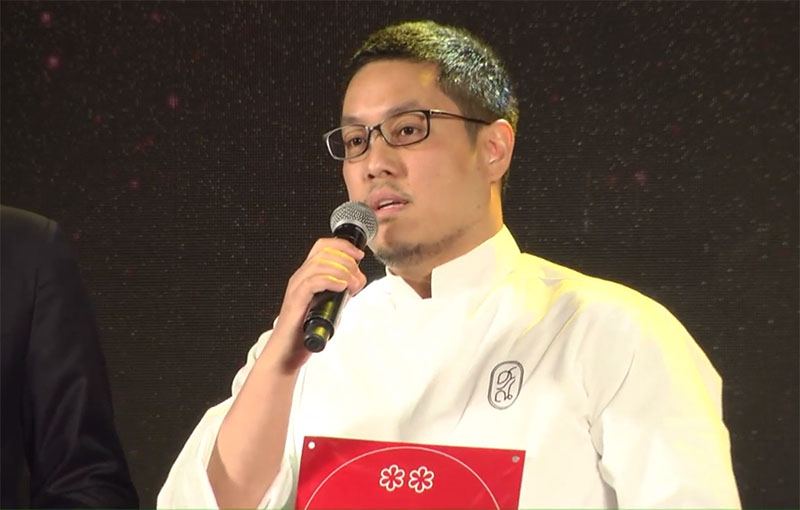
Supaksorn Jongsiri receives his two Michelin stars on Nov. 12, 2019. Photo: Michelin Guide / Facebook

Supaksorn said he was proud to present Thai southern cuisine to the world. Sorn is the only starred Southern Thai cuisine restaurant.

R-Haan’s celebrity chef Chumpol Jangprai, one of Thailand’s Iron Chefs, echoed a similar sentiment about elevating Thai cuisine to new heights.

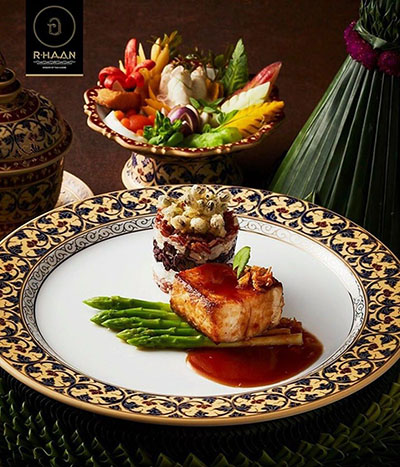
R-Haan dishes: Lhon poo, or simmered sweet crab served with vegetables, and grilled sea bass with tamarind sauce and various types of rice in the foreground. Photo: R-Haan / Facebook

“It’s the proudest day in my life as a Thai chef, to bring Thai food to this number one rank for the first time. I feel so fulfilled. I believed in the knowledge of our ancestors and their varied cooking skills that were passed down,” Chumpol said.

Read: Has Michelin Ruined ‘Modern’ Thai Food? Laureates Weigh In.

At a panel in May that brought together foreigners in Thailand’s food scene and innovative Thai chefs, including Michelin star winners, the former group said restaurant rankings diluted what they saw as “authentic” Thai cuisine, while the actual Thai chefs had similar sentiments as these newly-starred chefs – that the awards give visibility to Thai cuisine on the world stage and help revive forgotten ingredients and dying cooking methods.

Napol Jantraget of 80/20 receives his Michelin star on Nov. 12, 2019. Photo: Michelin Guide / Facebook

The attention for indigenous ingredients was also stressed by Chef Napol Jantraget of 80/20, a Michelin restaurant awarded a star. Napol said his restaurant was named so because he wanted to sourced 80 percent of the ingredients locally, but progressed to using all local ingredients.

“You can’t be hopeful about the future of Thai food if cooking schools teach Thai students to debone imported salmon, while the use of local freshwater fish like snakefish is overlooked,” Napol said.

The guide describes his fare as using “folksy ingredients such as caviar-sized aquatic flowering plants found in rural ponds, known as Asian watermeal, and black chicken from the Northeast” as well as koji-fermented fish sauce made in their own fermentation lab.

“We can compare our cuisine to the Italian and French that have unique ingredients,” Napol said.

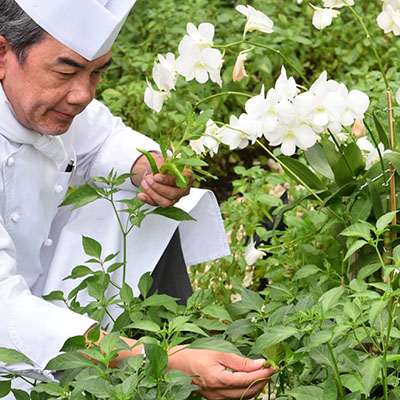
Chef Vichit Mukura picking herbs. Photo: Khao / Facebook

Chef Vichit Mukura of one-Michelin star Khao (“rice” in Thai) said Thai farmers should be supported to grow unique strains of the country’s staple food – rice, in order to enrich both stomachs and pockets.

“We should seek to find market for unique rice,” said the chef, adding that his red organic jasmine rice came from a village in Buriram where he buys the rice at 90 baht per kilogram instead of the usual 70 baht per kilogram. “We cannot compete with other countries by selling cheaper and cheaper rice in the future.”

He added that rice isn’t just for the main course but can be made into novel desserts like ice cream as well. “Rice itself should be appreciated as a rite of bringing people together over a meal,” Vichit said.

R-Haan dishes: Lhon poo, or simmered sweet crab served with vegetables, and grilled sea bass with tamarind sauce and various types of rice in the foreground. Photo: R-Haan / Facebook

Chefs who retained their one-star rankings from previous years said they were happy to retain their distinction and would continue to keep up the quality of the ingredients they sourced.

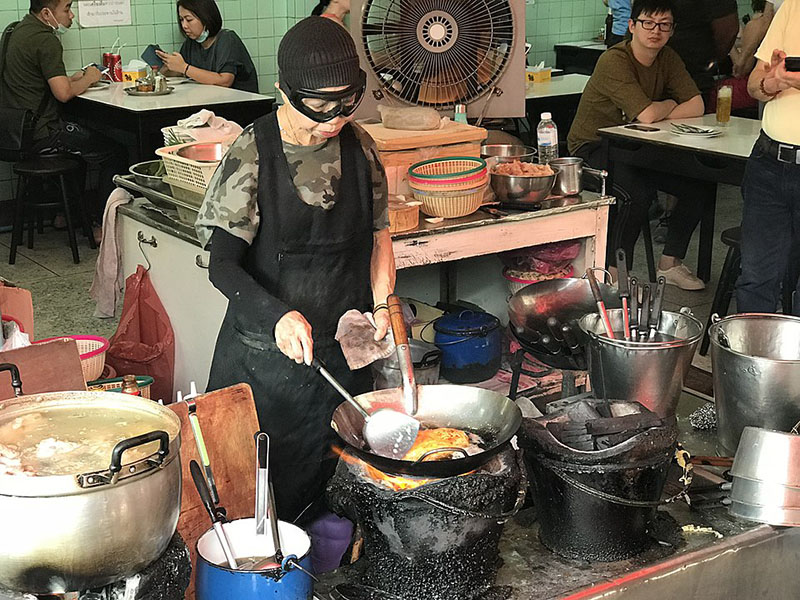
Street food legend Supinya Junsuta, better known as Jay Fai best known for her 800-baht crab omelette and 600-baht Tom Yum was able to retain one-Michelin star for the third year and is still the only starred street food entry.

She said quality ingredients, such as her crab from Mahachai area in Samut Sakhon, is indispensable so her dishes won’t come cheap.

Despite the two-month booking queue, she said she hasn’t raised the price of her dishes. Currently, she has 10 assistants in the kitchen and regardless of the long queue, she continues to be the only one who presides over the charcoal stove, cooking the dishes order-by-order.

“Food should not be cooked in large servings because one cannot control the cooking well,” Jay Fai said.

Jay Fai cooking in April 2018. Photo: Sais.isa / Wikimedia Commons

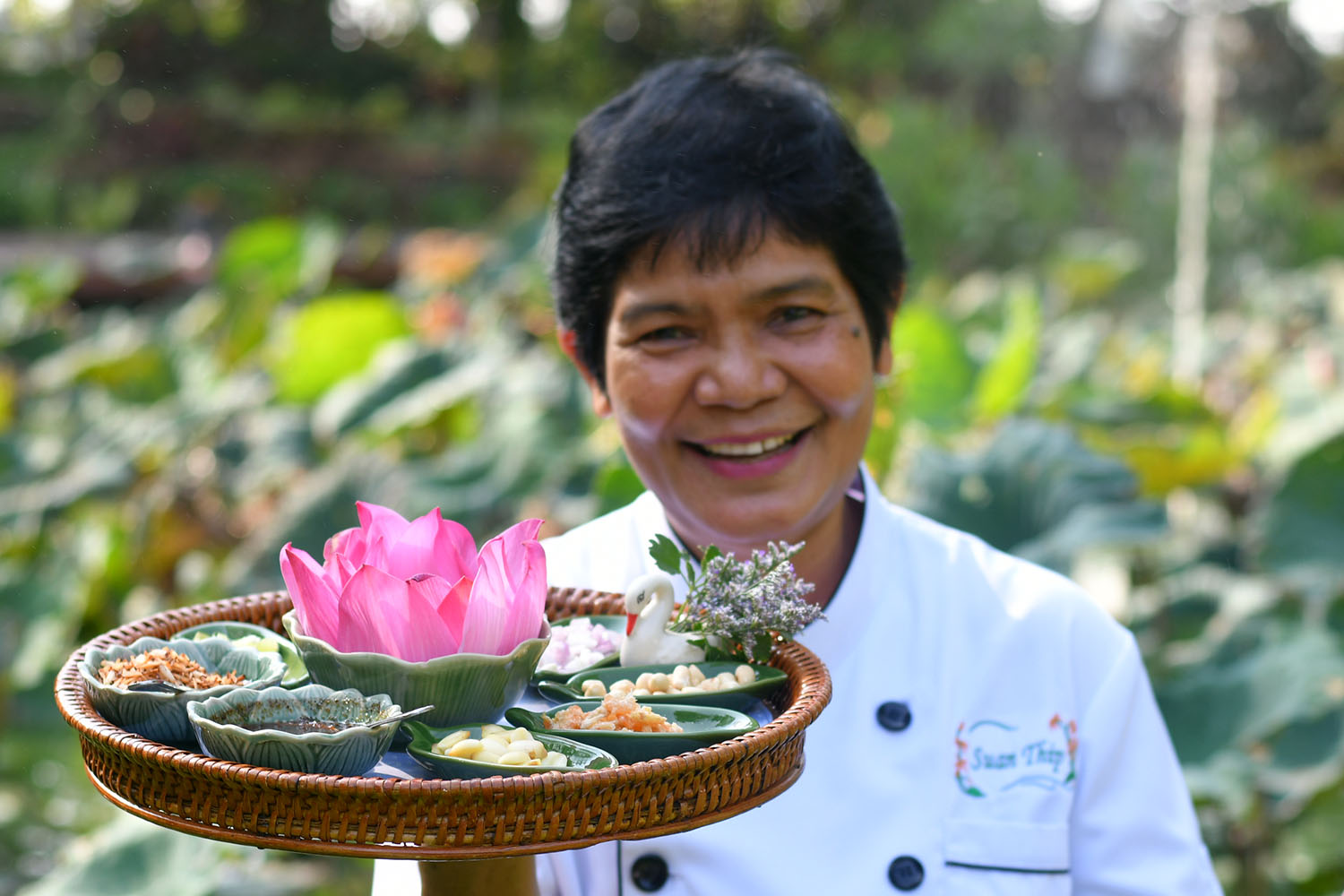
Sharing the same one-star designation, Banyen Ruangsantheia of Suan Thip – whose exquisite Lotus Trays are sourced from the restaurant’s pond – said she was proud of the award, which made her forget the cold she was having.

After being decorated with the star the past year, she saw a surge of customers and felt mounting pressure, but said she believed that her traditional fare will continue to impress diners and critics.

When asked about the chance of joining the two-star club, the 63-year-old chef replied that “that this is already enough to fulfill my pride.”

Banyen Ruangsantheia holds a tray of Lotus Wraps in November 2018, soon after she won her first Michelin star.

Besides Thai journalists, foreign food critics are also present on Tuesday. Takefumi Hamada, 45, who writes for the Japanese online food ranking site Tabelog, flew in from Tokyo just for the event.

Hamada said Bangkok is unique as a food scene because of a large expat population willing to support food experiments.

“Restaurants like Gaggan could not have existed in India,” Hamada said, referring to the former two-Michelin star experimental Indian restaurant which closed in August.

He added that there is no definitive food judgment and that an on-going conversation between local and foreign food critics are always good for the food scene.

Related stories:

First Thai Restaurants by Thais, in Thailand, Receive Two Michelin Stars

Thai Michelin Stars Break Out of Bangkok

Has Michelin Ruined ‘Modern’ Thai Food? Laureates Weigh In.

Auntie Banyen is Just Delighted With Her Michelin Star

She Was a Maid. Now She Has a Michelin Star.

‘Saawaan’ is Where Good Thai Street Food Goes to Heaven

‘Sra Bua by Kiin Kiin’ Serves Michelin-Starred Thai Food With a Danish Touch

Come Home to Southern Thai Food at ‘Klangsuan’

Advertisement

Suspects in Karen Activist Death Freed on Bail

Chaiwat Limlikhit-aksorn speaking to the media after his release on Nov. 12, 2019.

BANGKOK — All four suspects arrested under suspicion for murdering a Karen land rights activist were released on bail Tuesday.

Chaiwat Limlikhit-aksorn, former chief of Kaeng Krachan National Park, and three other suspects turned themselves in at the Department of Special Investigation (DSI) yesterday after the court approved their arrest warrants on Monday. Kaeng Krachan park is where the bones of Karen land rights activist Porlajee “Billy” Rakchongcharoen were found submerged in an oil drum September.

DSI deputy chief Pakorn Sucheewakul said the suspects denied all charges after they were interrogated for over three hours. They were previously charged with premeditated murder of Porlajee, comcealing his body, detaining, robbing, and threatening him with weapons.

Chaiwat, 55, and his aides Bunthaen Butsarakham, Thanaset Chaemthet, and Kritsanaphong Chitthet were then taken to the court where they were released on bail for 800,000 baht each.

Speaking to the media after posting bail, Chaiwat said he and his aides are innocent. He believed that he has been accused of murder because of high-profile arrests made during his tenure as the national park chief.

He said he will go to the suspension bridge inside Kaeng Krachan National Park – where bone fragments belonging to the Karen activist was found burnt and submerged in an oil drum – on Saturday to swear his innocence.

Chaiwat, who currently serves as the head of Protected Area Regional Office in Ubon Ratchathani, also questioned why the Central Criminal Court for Corruption and Misconduct Cases was handling his case, since they usually deal with cases related to graft and malfeasance.

“I don’t understand why they pursue criminal charges through the anti-graft court, rather than the criminal court,” Chaiwat said. “I ask the media to keep monitoring this case carefully.”

Billy’s widow Pinnapha Phrueksapan said on Tuesday that she was worried to hear that the suspects were freed on bail.

She told reporters that she has experienced intimidation by unidentified men in the past, but she respected the court’s decision as her evidence might not be concrete enough.

“I will pursue the case further as long as the final verdict has not been made,” Pinnapha said.

Activists had previously accused then-director Chaiwat of engineering the disappearance of the Karen activist.

Chaiwat and several park officials briefly detained the land rights activist on April 17, 2014 to reprimand him for “wild honey theft” but claim they later released him without charge.

Billy, a campaigner for community rights, has not seen ever since. His friends and family feared the 30-year-old activist was abducted and murdered for his opposition to the government’s eviction efforts.

Advertisement

Number of Captive Pandas Increases to 600 Globally

Three panda cubs including a pair of twins met the public for the first time since they were born in July and August this year at the Qinling Research Base of Giant Panda Breeding of Shaanxi Academy of Forestry in Xi'an, northwest China's Shaanxi Province, Nov. 11, 2019. Photo: Li Yibo / Xinhua

CHENGDU, China (Xinhua) — A total of 60 captive panda cubs were born, 57 of which survived this year, leading to a captive panda population of 600 worldwide, China’s National Forestry and Grassland Administration said Tuesday.

The administration made public the figure at a meeting featuring the giant panda breeding, technology and research, kicked off Tuesday in the city of Chengdu, capital of southwest China’s Sichuan Province.

The rising number of captive pandas showed that a healthy, dynamic and sustainable captive panda population has basically taken shape, according to the administration, adding research on wild giant pandas is also making progress.

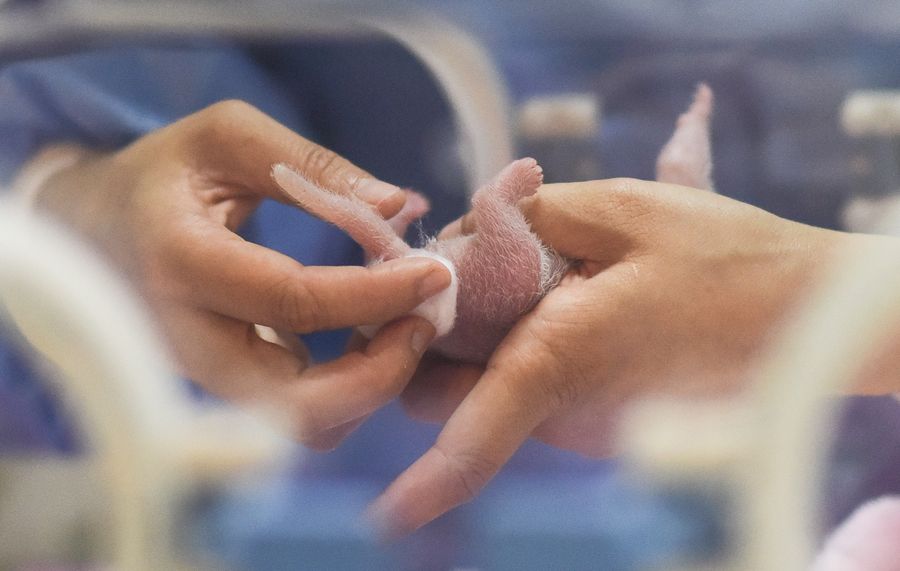
A staff member takes care of the newly-born panda cub at the Chengdu Research Base of Giant Panda Breeding in Chengdu, capital of southwest China's Sichuan Province, June 6, 2019. Photo: Xue Yubin / Xinhua
A staff member takes care of the newly-born panda cub at the Chengdu Research Base of Giant Panda Breeding in Chengdu, capital of southwest China’s Sichuan Province, June 6, 2019. Photo: Xue Yubin / Xinhua

Meanwhile, research and breeding institutions for giant pandas, including the Chengdu Research Base of Giant Panda Breeding, are further promoting technology and innovation of panda breeding, and building key laboratories for endangered wildlife conservation, as well as establishing research partnerships with international organizations.

Zhang Zhihe, director of the panda research base, said the base would be expanded and continue to focus on the improvement of scientific panda research and protection.

There are fewer than 2,000 pandas living in the wild, mostly in the provinces of Sichuan and Shaanxi.

Advertisement

Hot News

LATEST NEWS

Bangkok
broken clouds
36.1 ° C
36.6 °
35.5 °
57 %
3kmh
65 %
Sun
35 °
Mon
37 °
Tue
37 °
Wed
37 °
Thu
37 °