28.3 C
Bangkok
Tuesday, June 23, 2026
Home Blog Page 1479

Think Tank Economist Deunden Nikomborirak Dies at 54

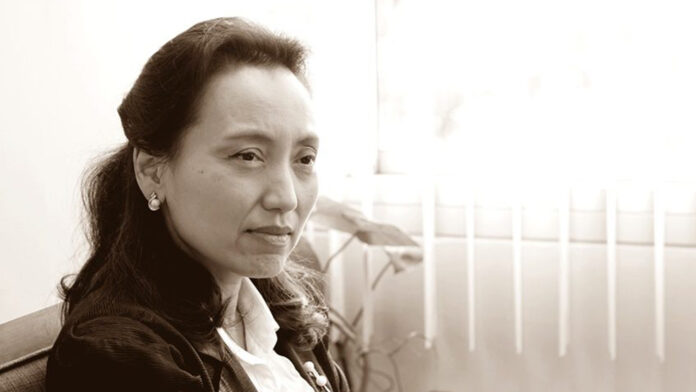
A file photo of Deunden Nikomborirak.

BANGKOK — A key economist at the country’s largest think tank died Thursday at 54.

Deunden Nikomborirak, a research director for economic governance at the Thailand Development Research Institute (TDRI), was killed by a falling tree Thursday morning while jogging in front of her house in Ekkamai.

She was severely injured before declared dead at a hospital. The police said no signs of foul play were found, and said that the palm tree was brittle before falling on Deunden.

“Her passing is a tremendous loss for the institute, but her works and spirit will be forever preserved as a foundation for future research on national development,” reads the TDRI statement announced Friday.

The Foreign Correspondents’ Club of Thailand also called off a panel discussion scheduled for Nov. 6 which Deunden is invited to talk about the economics of uncertainty.

Deunden published numerous academic papers on economic regulatory policies, corruption, and trade in Thailand. Her research is well-respected among the economist community and many are commissioned by international organizations such as the World Bank, the European Union, and the Asian Development Bank.

One of her most prominent works is a study on the political manipulation of Thai media, where she concluded that the Thai state can interfere with the press with legal means, using media concessions, and buying ads.

She expressed concerns in her research that the state was using too much money –  more than seven billion baht a year – for advertorials and suggested there should be a law to regulate government’s spending on public relations.

Deunden held a PhD in economics from McGill University and a master’s degree from Queen’s University in Canada.

She took up the position since 2008 after working at the TDRI for 30 years. Her funeral is scheduled for Nov. 2 at Wat That Thong.

Advertisement

Enjoy Blue Fin tuna and Japanese dish galore at “Japanese Cuisine Festival” at Goji Kitchen + Bar

Bangkok, Thailand, 17 September 2019 – Happy time for Japanese food lovers! The Japanese Cuisine Festival at Goji Kitchen + Bar promises fresh seafood jetted from Japan and series of succulent sashimi and sushi menus, plus various authentic dishes such as shabu shabu, kushikatsu, ramen, tempura and desserts, for dinner and Sunday brunch from November 1-10, 2019.

Goji Kitchen + Bar, international buffet restaurant in modern setting at Bangkok Marriott Marquis Queen’s Park, Bangkok’s largest luxury hotel, proudly presents 10 days of culinary marvels from Japan in the Japanese Cuisine Festival with series of authentic Japanese dishes to entice. The star of the festival is the 40kg Blue Fin Tuna from respected and renowned farm of 30 years. The succulent fish, which costs staggering THB 1,950 per kilogram, will be served as sashimi and sushi alongside other seafood such as salmon, Hamachi, engawa, Hokkaido scallop, botan ebi, anago and squid – a real treat for Japanese food lovers.

Fans of shabu shabu also get a rare treat of Japanese A4 Wagyu Beef with sensational marbling. Non-beef dishes are also available: grilled or teppanyaki premium kurobuta pork, kurobuta pork steak and salmon steak.

Other renowned dishes from Japan also include Tempura of prawn, seasonal vegetable and silver fish as well as grilled-then-deep fried skewers, Kushikatsu, that are sure to delight Thai palate and Tonkotsu Ramen, a noodle dish served in rich, white broth.

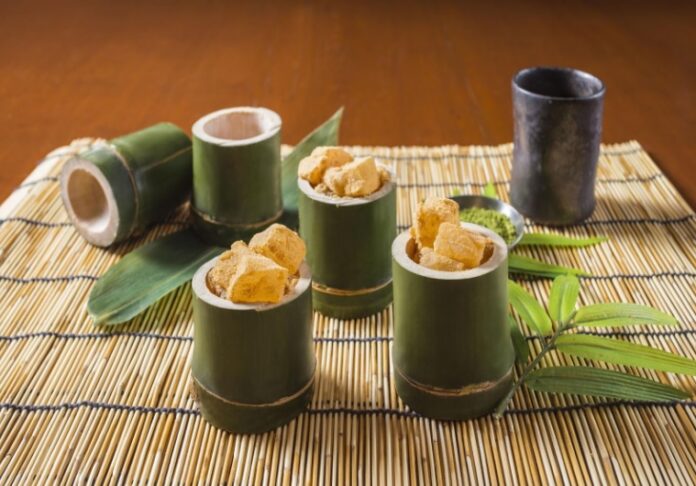
Complete the perfect meal with Japanese-style desserts that include fish-shaped pastry Taiyaki with red bean filling, Banana Chocolate, Assorts Fruit Lollypop, Warabi Mochi and Japanese cheesecake as well as green tea soft serve ice cream.

Japanese Cuisine Festival 2019 offers only 10 days of special Japanese dishes at THB 1,498++ person for buffet dinner on Sunday – Thursday and THB 2,328++ on Friday and Saturday. For Sunday Brunch, the price is THB 2,328++. Japanese Cuisine Festival is between November 1-10, 2019 at Goji Kitchen + Bar, Bangkok Marriott Marquis Queen’s Park. For more information and reservation, please contact +66 (0) 2 059 5999 or email [email protected].

Or connect with us via these channels:
Website: www.bangkokmarriottmarquisqueenspark.com
Facebook: https://www.facebook.com/GojiKitchenAndBar/
Line official account: @gojikitchenbar

Advertisement

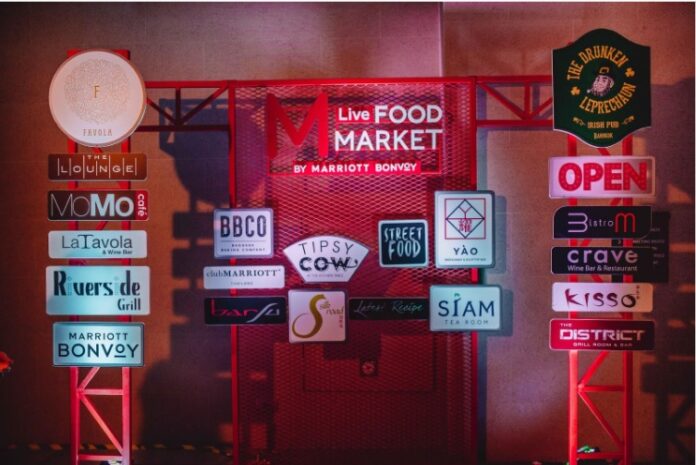
3rd Edition of M-Live Food Market Returns to Bangkok with 3-Days of Culinary Delights and Cultural Fun

Bangkok, Thailand, 1 October 2019: Bangkok Marriott Marquis Queen’s Park will play host to the third edition of M-Live Food Market, a highly anticipated 3-day culinary and cultural festival that showcases some of the finest food and global flavors available in Thailand’s capital city, from 25-27 October 2019.

M-Live Food Market will bring together top chefs from 19 Marriott International hotels and resorts in Bangkok, to deliver a series of freshy-made dishes with almost 80 options – including Thai favorites, Asian delicacies, fantastic international fare and delicious desserts that pay tribute to the city’s dynamic street food scene. For the first time, this year will also feature a dedicated children’s food cart, offering kids’ favorites such as Pork and Chicken cheese sausages (THB 50). In addition, a variety of kids’ activities will be available free of charge, like magic clown tricks, balloon twisting and face painting.

Taking place at the hotel’s poolside, the alfresco venue will be transformed into a vibrant street food festival with individually designed food carts, casual seating and picnic areas. Promising to be plenty of fun, there will be live music from local artists, creating an upbeat and chilled out vibe. Entry is free of charge and all guests will be able to swim in the hotel pool making it the perfect place for friends and families to unwind together over the course of the weekend.

The not-to-be missed 3-day event will demonstrate creative cuisine from 19 Marriott International hotels in Bangkok, all at affordable prices ranging from THB60 to THB190.
“We are thrilled to announce the third edition of M-Live Food Market following the huge success of our second edition last July, which attracted more than 1,000 participants,” said Jakob Helgen, Area Vice President – Thailand, Vietnam, Cambodia & Myanmar, Marriott International. “We are confident that our next event will be equally, if not even more popular. This 3-day festival is quickly gaining a reputation as a place where locals can eat, meet, and drink. With so many outstanding hotels, innovative restaurants and exceptional chefs on display, we look forward to showcasing some of the best street food Bangkok has to offer.”

Guests will be able to savor a wide range of dishes, covering a world of gastronomic styles. For example, JW Marriott Hotel Bangkok’s award-winning Chinese restaurant, Man Ho, will be crafting amazing delicacies such as Peking duck bao plus prawn and pork dumplings in Sichuan dressing (THB 160 each), while W Bangkok’s Kitchen Table restaurant will be slow-cooking succulent American pork ribs (THB 150 for three pieces).

Alternatively, the chefs at Royal Orchid Sheraton Hotel’s famous Thara Thong Thai restaurant will be preparing highly authentic recipes such as southern-fried seafood curry and lamb stew with grilled eggplant (THB 150 each), and The Westin Grande Sukhumvit Bangkok will be serving fresh nigiri sushi and maki rolls (THB 150 for six pieces) from Kisso, its popular Japanese restaurant.

Bangkok Marriott Marquis Queen’s Park will allow guests to sample some of its finest treats including eggplant miso skewers (THB 150) or Korean-style barbecued pork and beef (THB 160-190) from Akira Back, the innovative Asian restaurant. And guests with a sweet tooth can enjoy a choice of five unique cheesecakes from The Lounge at St. Regis Bangkok (Black Forest, passion fruit, apple crumble and banana flambé – THB 120 each).

An endless list of different Pop up bars, sponsored by Pernod Ricard, Chang, Mekhong and Dilmah, will give guests access to several unique cocktails and mocktails, soft drinks, local beers, spirits and finest tea – all priced from THB 80 to THB 200.

M-Live Food Market will return from 25 – 27 October 2019 from 5pm until 10pm, and admission is free! Guests can register online in advance at www.MLiveFoodMarket.com, with the chance to win one of 200 x THB250 lucky draw vouchers, which can be redeemed at the event. Registrations are now open, and winners will be randomly selected and notified via email on October 18, 2019.

For more information about the event, participating hotels and dishes, or to pre-register, please visit www.MLiveFoodMarket.com.

Advertisement

Blood Drive, Ghosts, Booze Busts Mark Thailand’s 2019 Halloween (Photos)

BANGKOK — Some farangs like to insist “Thais don’t celebrate Halloween,” but reports from around the country appear to contradict that claim.

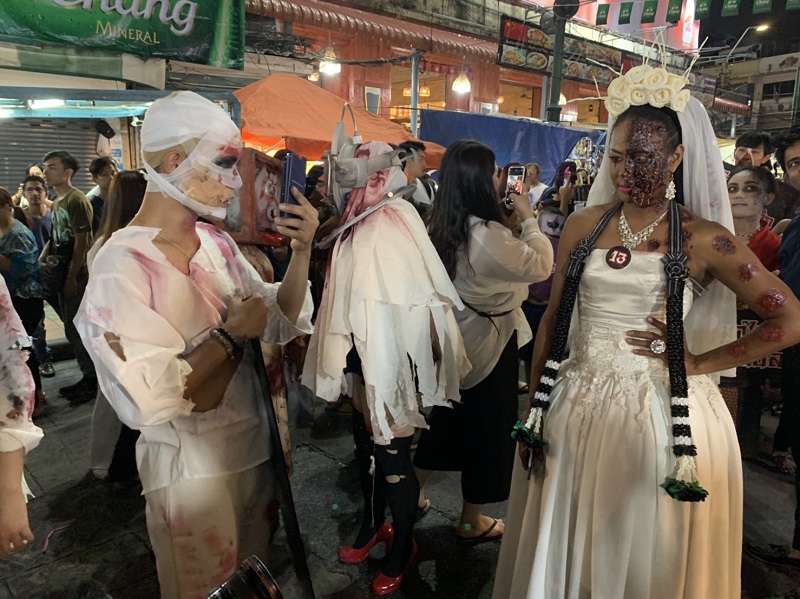
As in previous years, revelers, partygoers, cosplayers, and even blood donation staff around Thailand went all-out for 2019’s Halloween, or “Day of Unleashing the Ghosts (wan ploi phi)” as many Thais call it.

S 5472402
Foreigners and Thais alike had a wild night on Khaosan Road in Bangkok on Oct. 31, 2019.
Image2
Red Cross staff in Halloween costumes in Nakhon Ratchasima province on Oct. 31, 2019.
1000 3
A Halloween cosplayer in Chiang Mai province on Oct. 31, 2019.
1572492349193
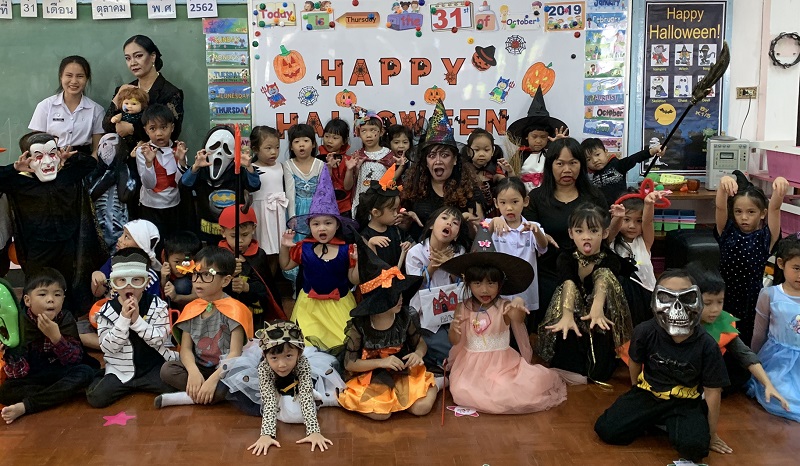
A Halloween event at a school in Khon Kaen province on Oct. 31, 2019.
74352572 2113903742044119 7080054270908694528 o
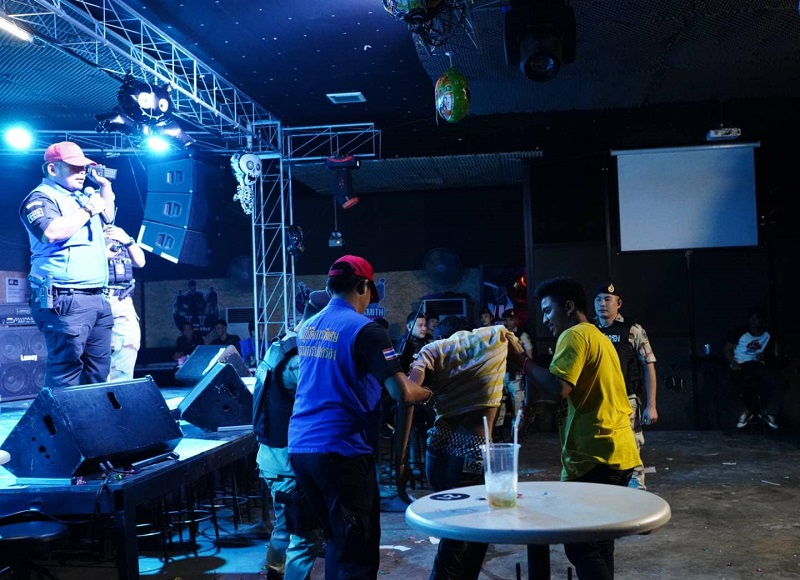
Security officers raid a bar in Chumphon province on Oct. 31, 2019, for allegedly selling alcohol to minors, and arrest a number of people. We did warn you this might happen.

75237550 2113904095377417 230874081505837056 o

209128
Schoolchildren don Thai and foreign ghost costumes in Nan province on Oct. 31, 2019.
11910 1
Several locals in Prachinburi province swear they saw krasue ghosts hanging around in this area earlier this week. An attempt by a crowd of 100 people to locate the krasue on Oct. 31, 2019, failed.

Related stories:

From Village to Airplane Cabin: How Thai Ghosts Evolve Alongside the Living

Halloween Surprise! Princess Ubolratana Posts Pic With ‘Trump Head’

Advertisement

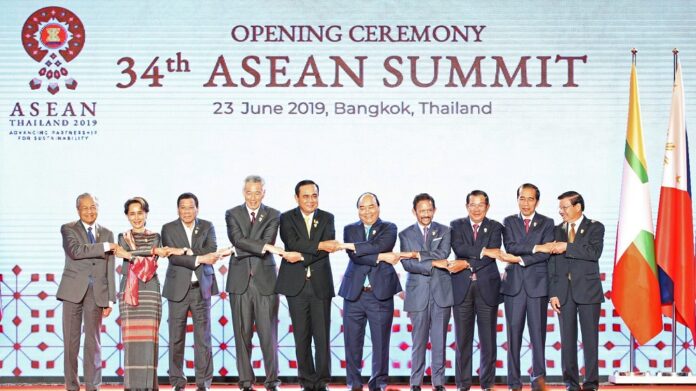
Opinion: Dreaming Beyond the Elite’s Dreams at ASEAN Summit

PM Prayuth Chan-ocha performs an "ASEAN handshake" with other ASEAN leaders during a summit in Bangkok on June 23, 2019.

Thai government’s latest ads reminding Thais to be a good host to the on-going ASEAN Summit in Bangkok says a lot about ASEAN identity.

By reminding Thais to act as a good host, not different to hosting a big international sports event, it is as if we are outside of it and not part of it.

How many Thais describe themselves as an Aseanite, an ASEAN citizen? Some Thais may also call themselves Asian when talking to Westerners but very few will identify themselves as Southeast Asians, not to mention Aseanite.

The word ‘Aseanite’ doesn’t really exist, and it exemplifies the challenge of carving a common and shared ASEAN or Southeast Asian identity among citizens of the 10 nation states.

ASEAN bureaucrats and those at the respective foreign ministries in the 10 member states are often inhabiting their own alternative universe of endless cocktails and conferences. The three-day ASEAN Summit lasting through Sunday reflects that.

Thai soldiers flaunted its anti-terrorism readiness in Nonthaburi province to show how ready they are to protect ASEAN leaders, and how the average person has absolutely nothing to do with the summit that could dictate some of their economic future.

Meanwhile ASEAN official Twitter account @ASEAN, which enjoys only a moderate followers of 107K after nearly 10 years of its existence despite ASEAN having a population of 664 millions, insists on the following motto: “One Vision, One Identity, One Community.”

It’s been 52 years since ASEAN was established. To be fair, one of the biggest accomplishments of ASEAN is that the specter of an all-out war among ASEAN member states is today no longer thinkable. Peace amongst our nations has lasted for at least the past two decades.

The fact that passport holders of ASEAN member states are no longer required to apply for visas to enter another ASEAN member country as a tourist was also a boon for regional tourism.

It was my ex-colleague at The Nation newspaper turned international relations expert Thitinan Pongsudhirak who rightly told me a few years back that nothing has ever connected ASEAN people like intra-region low-cost airlines.

Today, it’s affordable for an average Thai middle class to fly to Cebu in the Philippines and not just Manila; to Bali and not just Jakarta; to Nha Trang and not just Hanoi, and to Yangon, or Luang Prabang for a weekend stay.

Over the past decade or so, major and secondary destinations in ASEAN member states have become more accessible. Traveling also teaches Thai children about their neighbor countries in lessons that might be missing from nationalistic and often parochial textbooks in school.

By visiting our neighbors, Thais will hopefully learn more and have the chance to appreciate banh mi and not just pho in Vietnam, appreciate both Penang as well as Singaporean laksa, and be enticed by Adobo in Manila or Mohinga in Yangon.

Currently, it is rare for a Thai to be able to name a single dish from Myanmar despite hosting more than two million workers from Myanmar in the kingdom. Cuisines from the Philippines or Cambodia are equally unknown to average Thais.

It is also hoped that the new generation of Thais and fellow ASEAN youths will find lessons in the bitter and sometimes bloody past with their neighbors, so that we can move forward forging a common ASEAN or Southeast Asian identity, and be good friends to each other.

Last week, I was on a press tour with fellow ASEAN journalists in China. I mentioned to fellow journalist Dao Minh Tuan, executive editor of Hanoi Times, that I feel a sense of contrition that when I was too young, Thailand during the height of the Cold War allowed American war planes to take off from the northeast to bomb his country every few minutes to a devastating effects that still reverberate today.

I still feel guilty that the Thai state once supported the murderous Khmer Rouge simply because “the enemy of my enemy is my friend”.

Some may simply want to look ahead and forget about our past, but I think without that we would not appreciate how far we have come from the cruelty of four or five decades ago, or how important it is to deepen the people-to-people ties within the region, and not just Government-to-Government relations.

Hopefully, one day not too far from now, many young Thais and their neighbors would proudly say they are an Aseanite as well.

I have an ASEAN dream, but it is not confined to the overtly-secured venue of the ASEAN Summit. It is a dream of ties among people, and a dream of shared identities.

Advertisement

Norwegian Killed in Pattaya Condo Fire

Firefighters at the scene.

PATTAYA — Police said Friday morning a Norwegian national died in a fire at a condominium in Pattaya.

The 66-year-old male victim was found dead inside his room at Center Condotel in South Pattaya. Police the tourist resort town said they received calls about the fire at about 5am. Khaosod English is withholding the man’s identity until it is confirmed that his next of kin has been informed.

Police said the man died from inhaling smoke.

Investigators said they are still trying to establish the cause of the fire, which reportedly cost about 500,000 baht in damages.

Advertisement

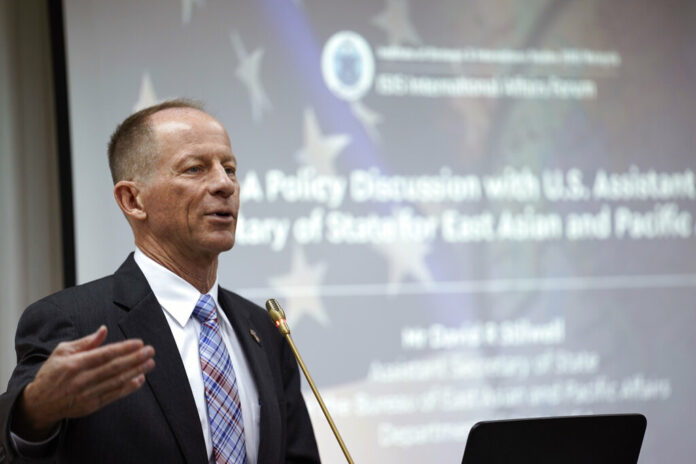
US Official Urges ASEAN to Stand up to China in Sea Row

David Stilwell, the U.S. State Department’s assistant secretary for East Asia and the Pacific, left, speaks during a forum in Kuala Lumpur, Thursday, Oct. 31, 2019. The senior U.S. official says a free and open Indo-Pacific concept is not a move to expand U.S. domination but reflects Washington’s “enduring engagement” to prosper the region. Photo: Vincent Thian / AP

KUALA LUMPUR (AP) — A senior U.S. official on Thursday urged Southeast Asian nations meeting this weekend in Bangkok to put up a stiffer resistance to China’s militarization of the disputed South China Sea.

At the same time, David Stilwell, the U.S. assistant secretary of state for East Asia and the Pacific, sought to downplay Chinese concerns over U.S. involvement in the region.

He told a forum in Malaysia that the concept of a free and open Indo-Pacific region was not a move to expand U.S. domination but reflected Washington’s “enduring engagement” to make the area prosperous.

China’s smaller neighbors including Vietnam, the Philippines and Malaysia contest Beijing’s claims of ownership of almost all of the strategically important South China Sea. Beijing has asserted its claim by building seven man-made islands and equipping them with military runways, missile defense systems and outposts.

Stilwell, who is en route to Bangkok for regional summits with the 10-member Association of Southeast Asian Nations, said the grouping should have resisted moves to militarize the South China Sea.

“This is your turf, this is your place. Vietnam has done a good job of pushing back. I would think that regarding ASEAN centrality … (the grouping) would join Vietnam to resist actions that are destabilizing and effecting security,” he said.

Stilwell acknowledged that the bloc doesn’t want to have to take sides between the two superpowers.

“I ask my ASEAN counterparts what their alternate plan was in this world where we like not to have to choose. I think the U.S. has done a great job in standing up at great political cost to ourselves,” he added.

The South China Sea territorial row is expected to again be a potential source of friction at the meetings in Bangkok this weekend. ASEAN has been unable to forge a strong stance on the issue due to objection from China’s allies such as Cambodia.

The White House announced earlier that U.S. national security adviser Robert C. O’Brien and Commerce Secretary Wilbur Ross will represent President Donald Trump at the two regional summits. Such a move is likely to be viewed in Southeast Asia as sign of a lack of engagement in the region at a time when China’s influence and investments are quickly growing.

Stilwell said a code of conduct being negotiated between China and ASEAN to govern the disputed seas should comply with the U.N. Convention on the Law of the Sea to protect countries’ economic interests and ensure “orderly movement in the use of the oceans.”

Even though the U.S. has not ratified the law, he said “we do comply and we enforce it.”

“The United States has a simple position on the South China Sea – the rights of all nations must be respected, regardless of size, power, or military capabilities,” he added.

Stilwell said that “without security, you can’t have trade” and prosperity is impossible. But he added that the U.S. “has never and never will seek domination in the Indo-Pacific, and we will oppose any country that does.”

“There has to be a security element. Nobody is better suited to it than the U.S. mostly because we include others in that security apparatus in terms of allies and partners. The fact that they are like-minded is reinforcing and tells us that we are doing something right,” he said.

Story: Eileen Ng.

Advertisement

Police Say Body of British Tourist Missing in Cambodia Found

Roy Bambridge uncle of missing British backpacker Amelia Bambridge talks on his mobile phone in Koh Rong island, southwestern Cambodia, Thursday, Oct. 31, 2019. Around 150 people are taking part in the search for Bambridge who has not been seen since last Wednesday night when she attended a beach party on the island joined by tourists of various nationalities. Photo: Heng Sinith / AP

PHNOM PENH (AP) — The body of a British backpacker missing for more than a week in Cambodia was found at sea Thursday about 60 miles (100 kilometers) from the island where she disappeared, officials said.

The police chief for Preah Sihanouk province, Maj. Gen. Chuon Narin, said the body of 21-year-old Amelia Bambridge was discovered in the Gulf of Thailand northwest of Koh Rong, where she disappeared after attending a beach party on the night of Oct. 23.

It was found near another island, Koh Chhlam, close to Cambodia’s maritime border with Thailand.

The Facebook page of Cambodia’s deputy navy chief also reported the discovery.

Authorities had launched an intensive land, air and sea search that was joined by members of the woman’s family who came after learning she was missing.

Bambridge’s family had speculated that she might have become lost in the heavy jungle in the island’s interior, but Cambodian officials had leaned toward the theory that she drowned because her bag with money and a cellphone was found on a rock near the edge of the ocean.

Her brother, Harry Bambridge, who took part in the search, posted a message on his Facebook page on Thursday night saying he had seen the body and could confirm it was Amelia.

“Im so sorry to all her friends and family there’s nothing more I wanted then to bring her back alive,” he wrote. “And I’m sorry to you Amelia Bambridge the round is on me when we meet again in heaven.”

Deputy Navy Commander Tea Sokha said the body had been spotted by a fisherman, who notified authorities. He said it was identified by the clothing and tattoos, which matched photos of the woman taken on the night she disappeared.

The body was taken to Sihanoukville Referral Hospital in Cambodia’s main coastal city, Sihanoukville. Tea Sokha said forensic experts would confirm the identification and examine the body for the cause of death.

Bambridge’s mother, father, sister and brother have been on Koh Rong and in Sihanoukville in recent days, but it was unclear if anyone other than her brother had viewed the body.

Story: Sopheng Cheang.

Advertisement

China’s E-Commerce Helps Thai Digital Economy Bloom

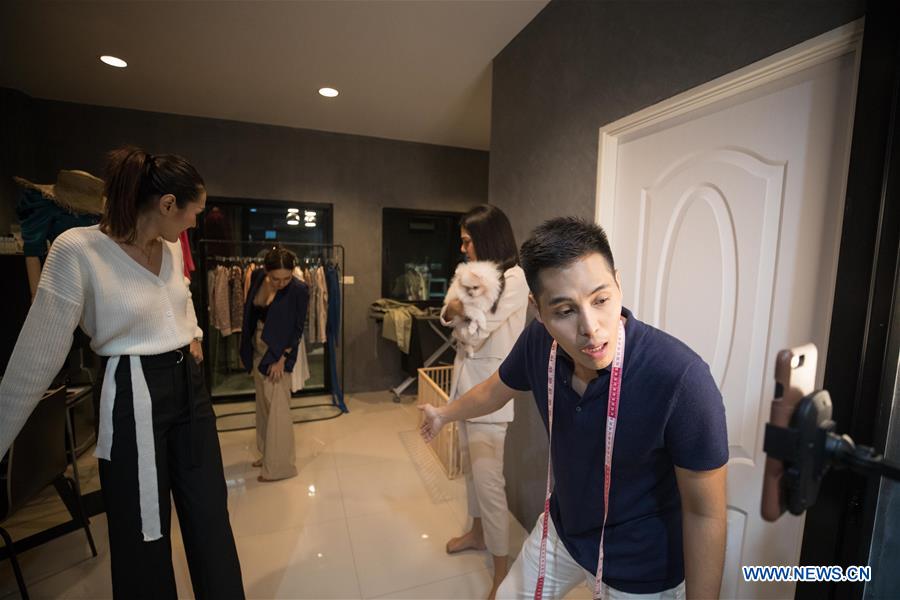
Manassawee Suangkaew (R) discusses the design with a staff member at her store in Bangkok, Thailand, Oct. 21, 2019. (Xinhua/Zhang Keren)

BANGKOK (Xinhua) — Young Thai clothing designers Nunthapong Boonnao and Manassawee Suangkaew used to run a store to sell clothes they create in the Thai capital. In 2018 they decided to close their store to set up an online clothing shop in Lazada, a major online shopping company in Southeast Asia.

“Lazada is one of the earliest e-commerce websites in Thailand, and we took advantage of that by setting up our own store on the website in early 2018,” Nunthapong said.

Thanks to the rise of online shopping in Thailand, the 18-month-old online clothes store named “LOONNY” is thriving. Nunthapong and Manassawee said the online clothing store has raked in income three times more than the physical store.

Founded in 2012, Lazada is now one of the regional leading e-commerce marketplaces. In 2016, China’s e-commerce giant Alibaba acquired the controlling stakes of Lazada, and started to export new business strategies and cutting-edge technologies to the Southeast Asian platform.

C8zfTZFUAAAybHB
Nunthapong Boonnao is on live-streaming promoting his store at Bangkok, Thailand, Oct. 21, 2019. (Xinhua/Zhang Keren)

Live-streaming feature, one of the business strategies and technical supports that Alibaba provides, became an instant hit in Thailand, luring especially young Thais to go online shopping.

In China, Taobao Live, the Alibaba live-streaming sales platform, reached a turnover of 100 billion yuan (about 14.93 billion U.S. dollars) in 2018, with an annual growth rate of 400 percent. More than 600,000 varieties of commodities are sold via the platform.

With the help of live-streaming sales, the Thai users of Lazada also continues to grow rapidly.

In March, “LOONNY” became the first Thai store to use live-streaming to sell their clothes on Lazada. Through live-streaming platforms, Nunthapong and Manassawee are engaging with interested buyers virtually face-to-face to buy their clothes immediately.

“The Lazada staff suggested that we try live-streaming sales. Before using the platform, we had a hard time breaking into the online store business because online shopping at the time was not yet popular in Thailand. There were also many competitors around the time. But things changed when we started live-streaming sales,” Nunthapong said.

eeb9a815 0fbb 46f5 90c4 1df614d62362
Staff memebers of Lazada discuss in a meeting room in Bangkok, Thailand, Oct. 21, 2019. (Xinhua/Zhang Keren)

After the initial broadcast, Nunthapong and Manassawee said they were amazed at the result of live-streaming to pitch the clothes they create.

“Live streaming made our work easier. It’s better than just showing pictures and videos of the products that you sell online,” Nunthapong said.

Before they discovered the magic of live streaming, the two Thai designers said it took them several days to display their clothes online because they need to hire photographers and models, and upload the pictures and videos on their online store.

“Nowadays, we can show our new clothing collection in an hour via live streaming,” Nunthapong said.

Nunthapong and Manassawee go on live-streaming once a month to promote their store and the clothes they create. With the help of live-streaming sales, the designers said their sales increase 10 percent to 20 percent every time.

EHoOTTnX0AAk9qV
Nunthapong Boonnao (Front) and Manassawee Suangkaew (1st, R) go on live-streaming to promote their store at Bangkok, Thailand, Oct. 21, 2019. (Xinhua/Zhang Keren)

Pierre Poignant, chief executive officer of Lazada, said the technology platform from Alibaba is a big boost to Lazada’s capacity to innovate and bring products to the local market, and ultimately serve customers and sellers.

Joyce Tsao, the senior manager of Lazada Thailand, told Xinhua that both Thai online sellers and customers love live-streaming sales because Thais love to see themselves and watch people through cameras and screens.

“There are store owners who do live-streaming sales every single day. Live-streaming sales now is really a new trend of e-commerce in Thailand,” she said.

Story by Yuan Mengchen, Wang Jin and Ren Qian

Advertisement

Failed Mission Raises Doubts About Mexican Security Strategy

This Oct. 17, 2019 frame grab from video provided by the Mexican government shows Ovidio Guzman Lopez at the moment of his detention, in Culiacan, Mexico. Mexican security forces had Ovidio Guzman Lopez, a son of Joaquin
This Oct. 17, 2019 frame grab from video provided by the Mexican government shows Ovidio Guzman Lopez at the moment of his detention, in Culiacan, Mexico. Mexican security forces had Ovidio Guzman Lopez, a son of Joaquin "El Chapo" Guzman, outside a house on his knees against a wall before they were forced to back off and let him go as his gunmen shot up the western city of Culiacan. Photo: CEPROPIE via AP

MEXICO CITY (AP) — A sloppy operation that failed to nab Joaquín “El Chapo” Guzmán’s son followed by days of changing explanations has revealed not so much that Mexico has a failing security strategy, but no real strategy at all, experts say.

President Andrés Manuel López Obrador and his security Cabinet have defined their strategy thus far by stating what it is not, according to experts, saying that Mexico is no longer waging a war on drugs or seeking to capture or kill cartel kingpins, like previous governments did.

But these words were apparently contradicted by the bungled Oct. 17 mission to capture Ovidio Guzmán in the western city of Culiacan, the Sinaloa Cartel’s backyard, which aimed to nab a cartel figure and unleashed violence that made the city look like a war zone.

When asked to define what his strategy is to tame Mexico’s sky-high murder rate and deadly drug cartels, López Obrador responds with philosophies more than strategies, often mentioning an assortment of social programs.

On Thursday, López Obrador said his government will not be forced into a drug war, adding that his strategy is something else.

“Nothing has hurt Mexico more than the dishonesty of the governing,” Mexico’s president said, implying corruption was to blame for the country’s insecurity, violence and drug trafficking.

He seemed to lay blame for the Culiacan operation with everyone except the drug traffickers, even lambasting the press for “yellow” journalism.

“This is pacifying the country by convincing, persuading without violence, offering well-being, alternative options, better living conditions, working conditions, strengthening values,” he said.

On the campaign trail he summed this up with the catchy phrase: “abrazos, no balazos,” or “hugs, not bullets.”

But now he’s president, Mexico is on track to record more than 32,000 murders this year and the public just watched 13 people die in the streets of Culiacan while a special army antidrug unit captured and then released a drug lord to avoid further bloodshed.

“He can’t continue with this strategy of peace and love with the criminals and say that there isn’t war,” said Raúl Benítez, a security expert and professor at the National Autonomous University of Mexico. “The criminals are declaring war on the government and the country, the citizens, the people.”

López Obrador also faced questions Thursday about uncharacteristically public grumbling from within the ranks of Mexico’s military. A Mexican newspaper this week published a speech by Gen. Carlos Gaytán to other military officers after the Culiacan debacle, which has followed a series of cartel attacks on Mexican security forces.

The retreat in the face of cartel gunmen reinforced the impression that the government has long ago relinquished effective control of whole towns, cities and regions to the drug cartels.

“We’re worried about today’s Mexico,” Gaytán said. “We feel aggrieved as Mexicans and offended as soldiers.”

López Obrador brushed aside any concerns of a schism within military ranks, who he has favored with increased responsibilities and resources.

“I don’t have the slightest distrust of the army,” López Obrador said. “On the contrary, I have the support, the loyalty of the army.”

Experts say the climbing homicide numbers and the administration’s inability to communicate a coherent security strategy do not paint an optimistic picture for the remaining five years of López Obrador’s term. So far, he has been able to blame his predecessors for inherited problems, but at some point voters won’t accept that anymore.

“How to marry this ‘humanist’ and ‘progressive’ vision of the president and his government with the undeniable reality and undeniable necessity of containing not just the drug trafficking groups but also the ordinary criminal violence” is the question faced by Mexico’s president, according to Erubiel Tirado, coordinator of the national security, democracy and human rights program at the Iberoamerican University in Mexico City.

The most visible element of a security strategy under López Obrador, though not a strategy in itself, was the creation of the National Guard. The new fighting force was supposed to fill the security void created by corrupt, disbanded or outmatched police forces around the country and to an extent lessen the country’s dependence on the use of the military for domestic policing.

A large portion of the guard, however, was immediately detoured to immigration enforcement duties under pressure from the United States.

“They’re not a police force that is professionalized, that is trained in conducting investigations, surveillance, intelligence and that have special teams to conduct arrest operations in a finer way, not through confrontations in the streets,” said Tony Payan, director of the Center for the United States and Mexico at Rice University’s Baker Institute for Public Policy in Houston.

It also remains unclear how the National Guard fits with the social programs that López Obrador says will attack the root causes of crime in Mexico.

“There doesn’t seem to be any kind of holistic or integrated thinking about how you link violence-prevention programs, which the government talks a lot about, with actually prosecuting organized crime,” said Duncan Wood, director of the Wilson Center’s Mexico Institute.

López Obrador also says little about strengthening Mexico’s justice system, which is a key component of reining in the country’s security problems.

The lack of a clear strategy worries not only Mexicans, but their neighbors to the north.

In October, Payan visited with personnel at the U.S. Embassy in Mexico City who expressed concern.

“They clearly said that they were waiting for the (López Obrador) administration to have a clear strategy and to communicate to them what the administration intends to do and how they intend to do it,” Payan said.

The U.S. has enjoyed varying levels of cooperation from recent Mexican administrations in prosecuting the drug war, but has been struggling to find the channels for that cooperation under López Obrador.

“The sense that I have from my conversations is that the López Obrador administration considers these American agencies as part of a war on drugs that he wants to put behind him,” Payan said.

In the case of Ovidio Guzmán, the U.S. has requested his arrest for extradition.

On Thursday, López Obrador, responding to speculation the U.S. government had pressured Mexico to act, said flatly: “We do not take orders from Washington.”

Wood, of the Wilson Center, doubted this would be the last time we see Mexico go after a drug lord under López Obrador, because the U.S. pressure is not going to go away.

“There was huge disappointment on the part of folks in Congress and in the State Department and intelligence services with the way that the Culiacan mission was mishandled,” Wood said.

“Now, the question is, next time that they capture a high-value target, what will they do if faced with the same kind of situation? Will they back down or will they double down?” Wood asked.

Story: Christopher Sherman.

Advertisement

Hot News

LATEST NEWS

Bangkok
scattered clouds
28.3 ° C
28.3 °
25 °
74 %
2.8kmh
46 %
Tue
38 °
Wed
37 °
Thu
36 °
Fri
37 °
Sat
37 °