25.5 C
Bangkok
Saturday, June 20, 2026
Home Blog Page 1500

QR Codes and Credit Cards Now Accepted on Some Bangkok Buses

A file photo of new BMTA buses.

BANGKOK — Commuters can now pluck out their smartphones or contactless credit cards to pay for fares on more than 3,000 state-owned buses, the city transportation authority announced on Tuesday.

Following the successful test runs on airport lines, the Bangkok Mass Transit Authority (BMTA) yesterday extended the system to all of its bus lines, which can be identified by the color schemes of cream-red for non-air conditioned buses, and cream-blue, orange, and light blue for air conditioned buses.

Simply use the smartphone application of your regular bank to pay for fares by scanning QR code on the conductor’s swipe machine. For contactless credit or debit card users, distinguished by Wi-Fi-like symbol, present the card to the conductor. Fares will be collected by the distance as usual.

Only Thai bank-issued applications can be used, but credit or debit cards issued by overseas banks are also compatible, a BMTA representative said over the phone.

The state-owned operator also rolled out its own stored value cards, which can only be used to pay for BMTA bus fares. They are sold for 50 baht each and would come with 50 baht value. Users can top up the card using their mobile applications or at the ATMs.

BMTA director Surachai Eamvachirasakul said the system will run for one year to get commuters familiarized with the cashless payment. The operator plans to phase out conductors in three years’ time.

“The cashless system is safe and efficient,” Surachai said. “Commuters are no longer needed to carry coins or feel frustrated when they find themselves having only large bills.”

Until now, there is no plan to extend the system to privately-owned buses. Surachai said it is possible if private operators express their desires to upgrade.

Advertisement

Here’s Pope Francis’ Schedule for His Thailand Visit

A file photo of Pope Francis by the Associated Press.

BANGKOK — Pope Francis will have an audience with His Majesty the King, meet PM Prayuth Chan-ocha, and holds two masses in Bangkok when he visits the capital next month, Vatican representatives said Wednesday. 

The Pope’s two-day itinerary was announced at the Catholic Bishops’ Conference of Thailand. According to officials, Pope Francis will meet King Vajiralongkorn, government officials, and the Buddhist Patriarch, on Nov. 21. He will also visit a hospital and hold a public mass at the National Stadium on the same day. 

Read: Pope Francis to Visit Thailand on Nov. 20 to 23

On the following day, Pope will hold discussions with Catholic priests and bishops in Thailand before meeting representatives from other Christian denominations. He will then hold another mass – this one for young people – at Assumption Cathedral. 

“He has a heart for the youth and is forward-looking, so there is a dedicated mass for the young people,” Monsignor Vissanu Thanya-anan, deputy secretary-general of the Catholic Bishops’ Conference of Thailand.

The pope is set to leave Bangkok for Tokyo in the morning of Nov. 23.

New Norm?

But despite the magnitude of the occasion, it appears that Pope Francis will not be entitled to the same level of diplomatic honor granted to the previous papal visit 35 years ago.

His Holiness’ scheduled audience with King Vajiralongkorn is marked as a “private visit” in the announcement rather than an official one as a state guest to His Majesty. Vissanu cited the Pope’s ecclesiastical status when asked why the visit is considered a private affair.

“He is the only one in the world with this special status. He is the head of both the Catholic Church and the head of the Vatican state. So there is an overlapping here,” Vissanu said. “His power is descended from St. Peter, Jesus’ representative. So we call it an apolistic visit.”

PRI 82750654 2
A file photo of Pope Francis by the Associated Press.

Yet when Pope John Paul II visited the kingdom in 1984, he did so as a state guest of Their Majesties King Bhumibol and Queen Sirikit.

Chainarong Montheinvicheinchai, a spokesman for the Holy See, said that they could only describe the Pope as a state guest if the Thai government uses such wording first; it appears that the Thai authorities have yet to grant him the honor since the visit was announced nearly a month ago.

In terms of the funding of the current pope’s upcoming visit, Vissanu said it is a “cooperation” between the Thai state and the Vatican.

“A father is visiting his children as a country’s guest,” Vissanu said.

350 Years of Relations

The masses will be held in Spanish, with Thai translation. The National Stadium mass is expected to fit at least 25,000 people, the youth mass a smaller 1,500.

With the exception of the audiences with key officials and the King, the Pope’s visits will be open to the public.

“Understand that the Pope is 83, and has problems walking due to his hip. So he can’t walk very far or go to more far-out places,” Vissanu said.

On Sept. 13, the Apolistic Nuncio of the Holy See announced that Pope Francis will be visiting Thailand from Nov. 20 to 23. 

Pope Francis’ visit will also be a chance for him to reunite with his second cousin, Sister Ana Rosa Sivori, a 77-year-old nun who has been working at schools and as a missionary in Thailand since 1966.

The visit coincides with the 350th anniversary of the founding of “Mission de Siam,” the assembly that oversees Roman Catholic missions in the Kingdom, which was established during the Ayutthaya period.

The last pontiff visit to Thailand was in 1984 by Pope John Paul II. After his Thailand visit, Pope Francis is set to go to Tokyo on Nov. 23 to 27.

Thailand is home to a minority population of Catholics numbering 0.58 percent of the population, or 388,468 people with 524 churches, the Catholic Social Communications of Thailand announced in a video at the press conference on Sept. 13.

News of the official papal visit will be distributed through the official “Pope Visit Thailand” website as well as the official Facebook, Twitter, YouTube, Instagram, and Line

Related stories:

Pope Francis to Visit Thailand on Nov. 20 to 23

Pope’s Visit to Thailand Will Also Be a Family Reunion

Advertisement

‘Love, Money, and Obligation’: Why (Some) Isaan Women Love Farangs

Patcharin speaking to the audience during the book launch event on Sept. 24.

Driving down a dirt road through a rustic Isaan village, one sees concrete houses with garages and satellite dishes strewn all over the vast paddy field. If they don’t belong to the village headman or lotto winner, they must be owned by a mia farang.

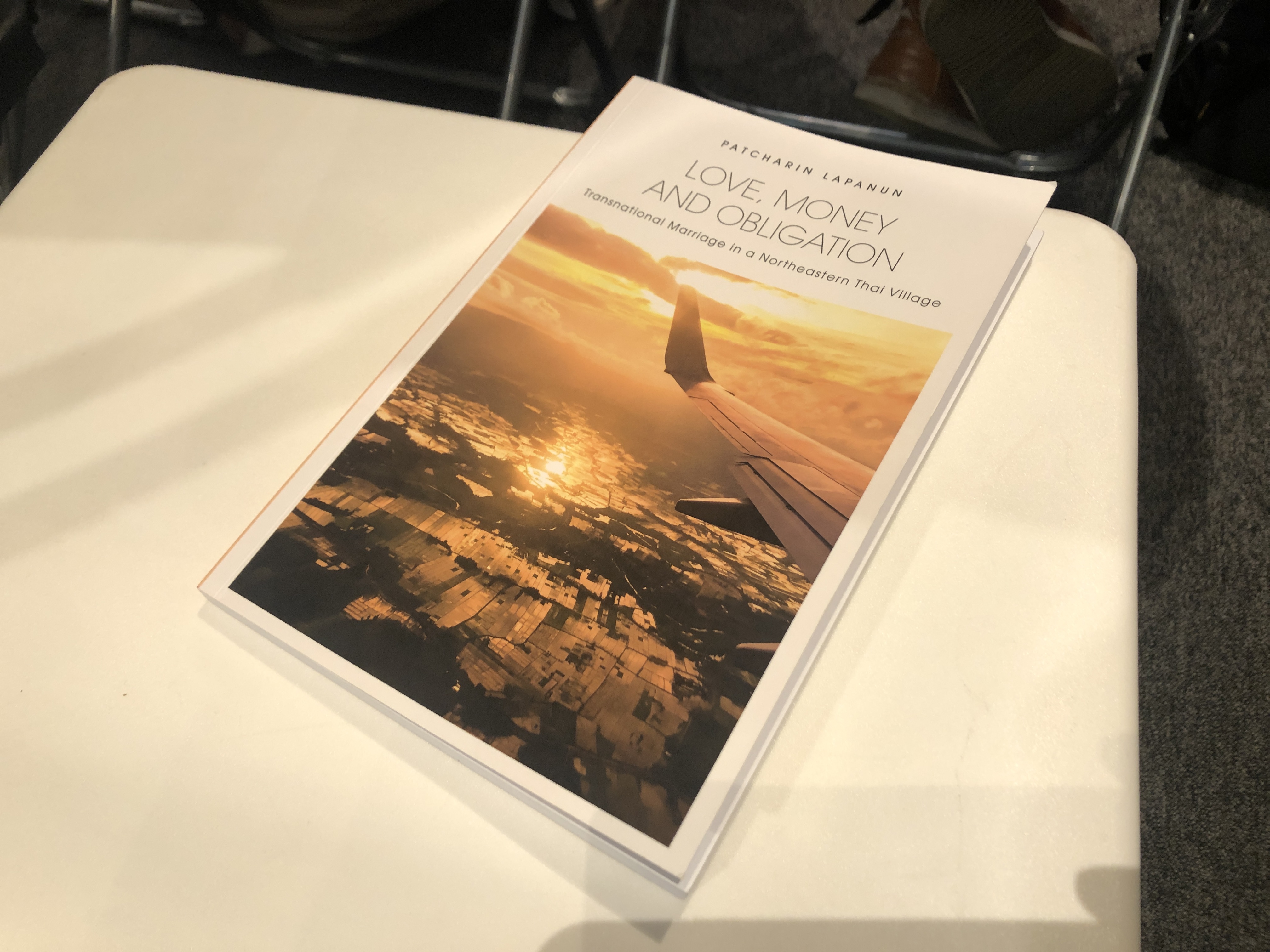
A recently-published book by anthropologist Patcharin Lapanun argues that the interracial relationships between a Northeastern Thai women and a Western men do not only create a new generation of luk khrueng mixed-race, but also a new wave of middle class in these villages.

“The social category of mia farang could be read as an emerging class, characterized by enhanced consumption patterns and social recognition,” Patcharin said during a recent launch event of “Love, Money, and Obligation” (2019). “This class also generates tensions with the existing class divisions in the village.”

Her conclusion is the culmination of two years of fieldwork in Na Dokmai village, Udon Thani, where she interviewed 26 women married to farangs, known colloquially as mia farang.

But don’t get this seemingly disparaging term wrong. Patcharin found that these women do not simply fall in love with a foreigner because of their wealth or intimacy.

“Marriage between a Thai woman and a Western man is more complex than money or love,” Patcharin said. “It’s a matter of complex motivations and logics of desire that play a big part behind their union.”

Of course, her findings are anecdotal and may not be true for all couples, but she said her work aims to shed new light on interracial marriages with emphasis on how they impact the hometown of these wives.

The Rise of ‘Mia Farang Bourgeoisie’

Patcharin found that mia farang have created a new social class that resembles the urban middle class within their largely agrarian societies.

“These new class is determined by the distinctive consumption and social recognition,” Patcharin said.

As they have more purchasing power than most of the locals, the mixed-couples have brought greater economic activities to the villages, with grocery shops, internet cafes, and even a visa service agency sprung up to cater to their demands.

Their rise might be a boon to local business owners and landlords, but they are not welcomed by everyone. 

Some Isaan men loathe women married to foreigners as they are being edged out competitively from the race for sons-in-law, but also does the established local elites.

Although this conflict usually lies low, it rears it heads during certain social events, such as the pha pa merit-making ceremony.

Patcharin observed several instances where villagers would gather at a temple and donate money by hanging banknotes on a “money tree,” and found that mia farangs were the top contributors.

Such praise, which previously belonged to the elites, not only enhance acceptance of these women, but also shake social recognition of local elites who had been seen as a contributing nobleman, the researcher said.

Love, Money, and Obligation

Another central argument that she made is that motivations for interracial love are diverse and complex, thus the title of her book.

“It is not simply a shortcut to wealth, but a channel for women, their natal families, and rural residents to be involved in global processes and opportunities,” Patcharin contended. “It is a combination of various issues that get them married.”

In Isaan culture, the village is organized by matrilocal kinship system whereby son-in-laws are expected to support their wives by remitting money from their wages to upbring the household without earning the mantle of leadership.

However, as Isaan men masculinity has been associated – whether fairly or unfairly – with undesirable habits like drinking away family funds and cheating on their spouses, they are sometimes seen as a bad option for Isaan women.

Read: Isaan Love Triangle: Thai Men Found Lacking by Farang-Loving Women

“He [the local ex-husband] did not take any responsibility for the family and our children,” Nisa, 33, a divorced mother with a daughter said to the researcher. “What I went through could neither be corrected nor was there anything that could make me feel better about Thai men.”

“Believe me, many women [mia farangs] have the same experience,” Nisa added.

In her studies, more than half of the women she interviewed had been previously married to Thai men. Now they have turned their back on Isaan men and lived overseas with their pua farangs, who are mostly Europeans.

These foreign husbands might earn much more than Isaan men, but still, money is not the only factor in the interracial love formula.

“Women imagined Western men as a good family men and reliable provider,” Patcharin said. “They tend to spend time doing things together with their wives and children more than local men.”

But perhaps the most important factor is the obligation these women have to their natal families, which land them into marriage in the first place.

“One of the most important norms in Thai culture is the notion of bun khun and katunyu,” Patcharin said, referring to filial piety concepts in Thai which literally translate to “debt of gratitude” and “repayment of gratitude.”

“Women are expected to take care of their parents when they become sick or old. As they earn more from marriage, they can support their families and fulfil their duties as daughters.”
IMG 6757

Related stories:

Book on Isaan Interracial Love Launches Tomorrow at BACC

Thai Men and the White Women Who Love Them

Isaan Love Triangle: Thai Men Found Lacking by Farang-Loving Women

Advertisement

Netizens Angered by Motorcade Traffic Woes

A traffic blockade for a royal motorcade on Sep. 27, 2019. Image: @luckynuchie / Twitter

BANGKOK — Commuters frustrated with police’s traffic blockade during Tuesday’s evening rush hours are taking to social media to air their complaints.

Social media platforms like Facebook and Twitter are seething with anger over the blockade, which shut down a number of key roads and intersections in downtown Bangkok for a royal motorcade to pass through.

Although roads are routinely cordoned off to make way for royal motorcades in Bangkok, eyewitnesses’ accounts on social media suggest congestion caused by Tuesday’s blockade were particularly serious even by Bangkok’s standard.

The hashtag “royal motorcade” was still trending on Thailand’s Twitter by Wednesday morning.

Most of the complaints vented their anger at being stranded in traffic for nearly an hour. Some also alleged that they saw police officers approaching an on-duty ambulance and telling the driver to turn off the siren.

It was unclear which Royal Family member was traveling in yesterday’s motorcade. Bangkok metropolitan police have yet to make any comment on the controversy.


Advertisement

Supanniga’s Charming Trat Cuisine Now Serving Up Granny’s Staples at Charoenkrung

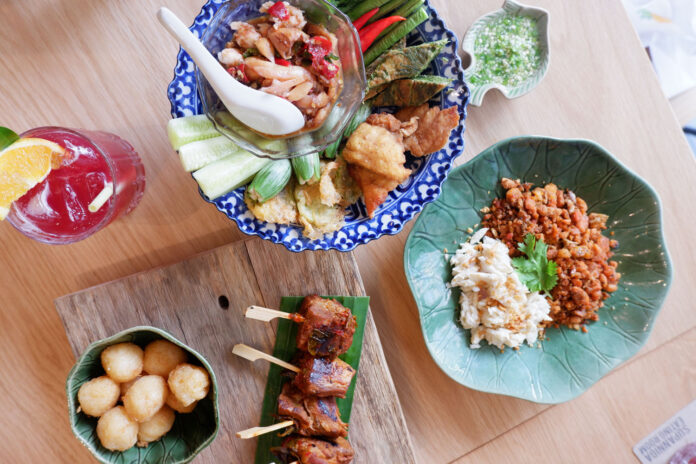
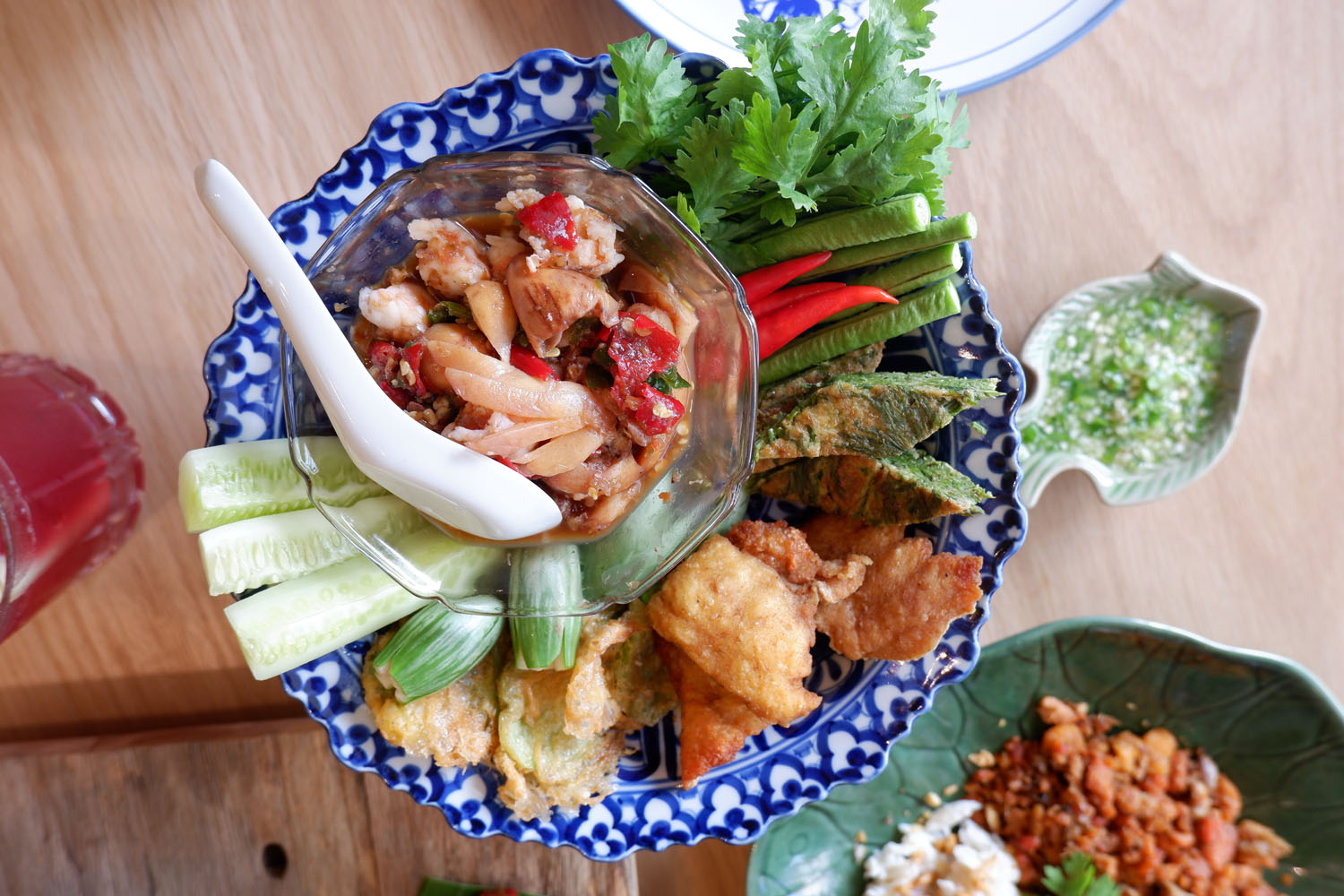
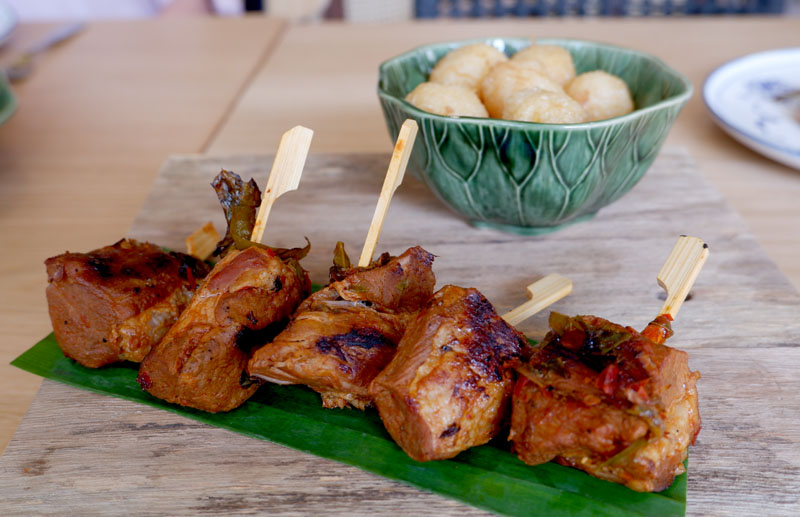
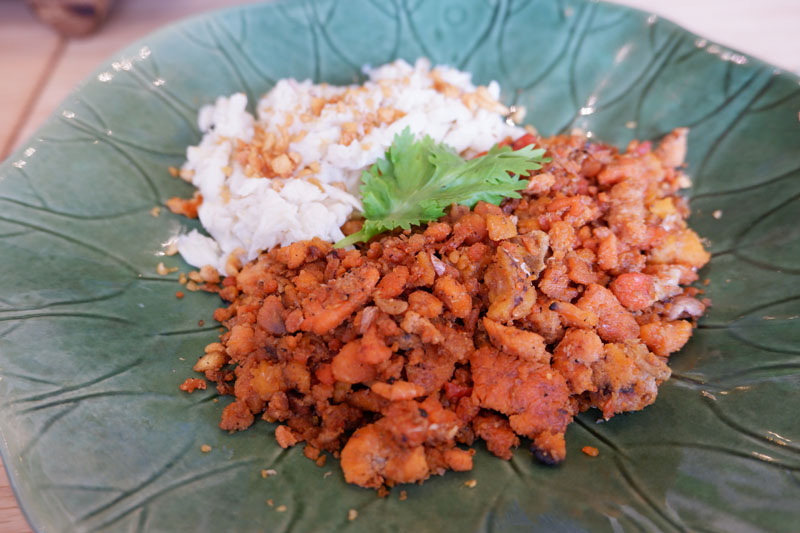
Supanniga Eating Room Charoen Krung 38 dishes from top, clockwise: the Salak and Shrimp Chili Dip with Deep Fried Nue-Aon Fish (340 baht), Stir Fried Crab Roe with Himalayan Salt and Chili Mix (590 baht), and Grilled Pork Collar with Chamuang Leaves and Seared Rice Cake (270 baht).

Photos by Siri Thaitrakulpanich

BANGKOK — In a city where one fad cafe opens as another closes, Supanniga Eating Room has just opened its fourth branch in late September, serving up both familiar and new Trat cuisine dishes with Isaan influence.

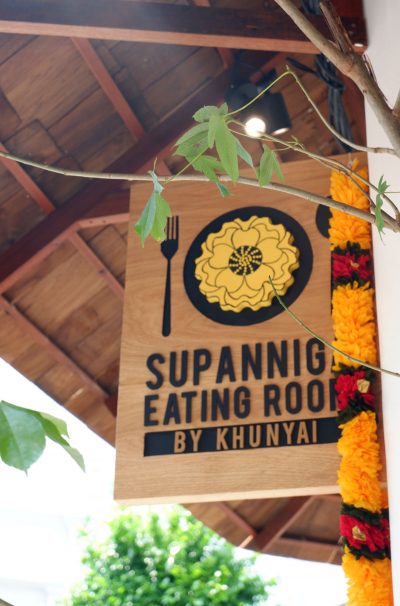
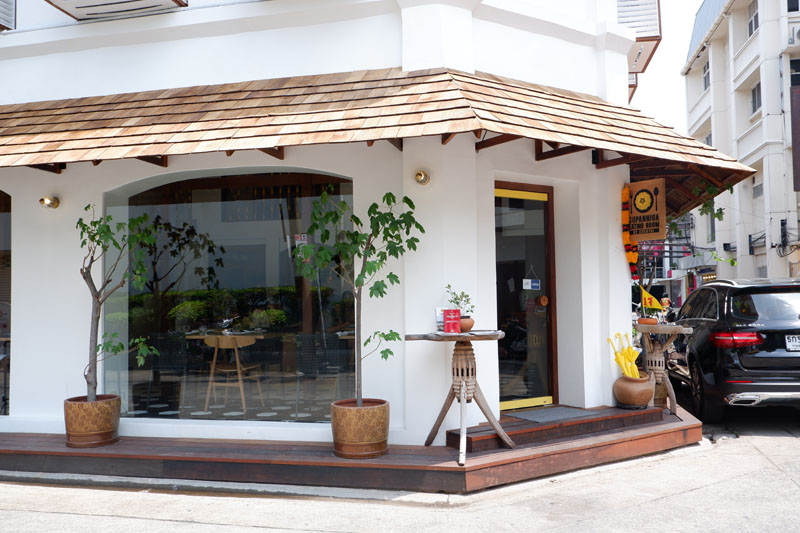
Supanniga Eating Room, a staple of Thai food in the city since 2012, has just opened its fourth branch at Charoen Krung Soi 38, introducing dishes that are at once new and familiar to Thais with its Trat-Isaan cuisine.

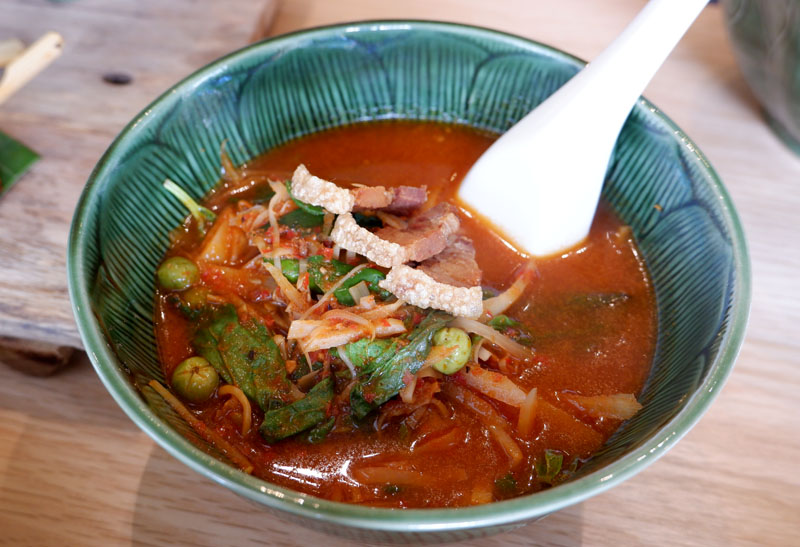
We tried dishes that were only available at the new branch, such as the Spicy Curry with Crispy Pork and Pineapple Offshoots (250 baht). Even most Thais will not have eaten this uncommon Trat dish before, and may be unfamiliar with eating pineapple offshoots – don’t expect them to taste like pineapples, though. They’re crunchy and savory, similar to bamboo shoots.

Spicy Curry with Crispy Pork and Pineapple Offshoots (250 baht).

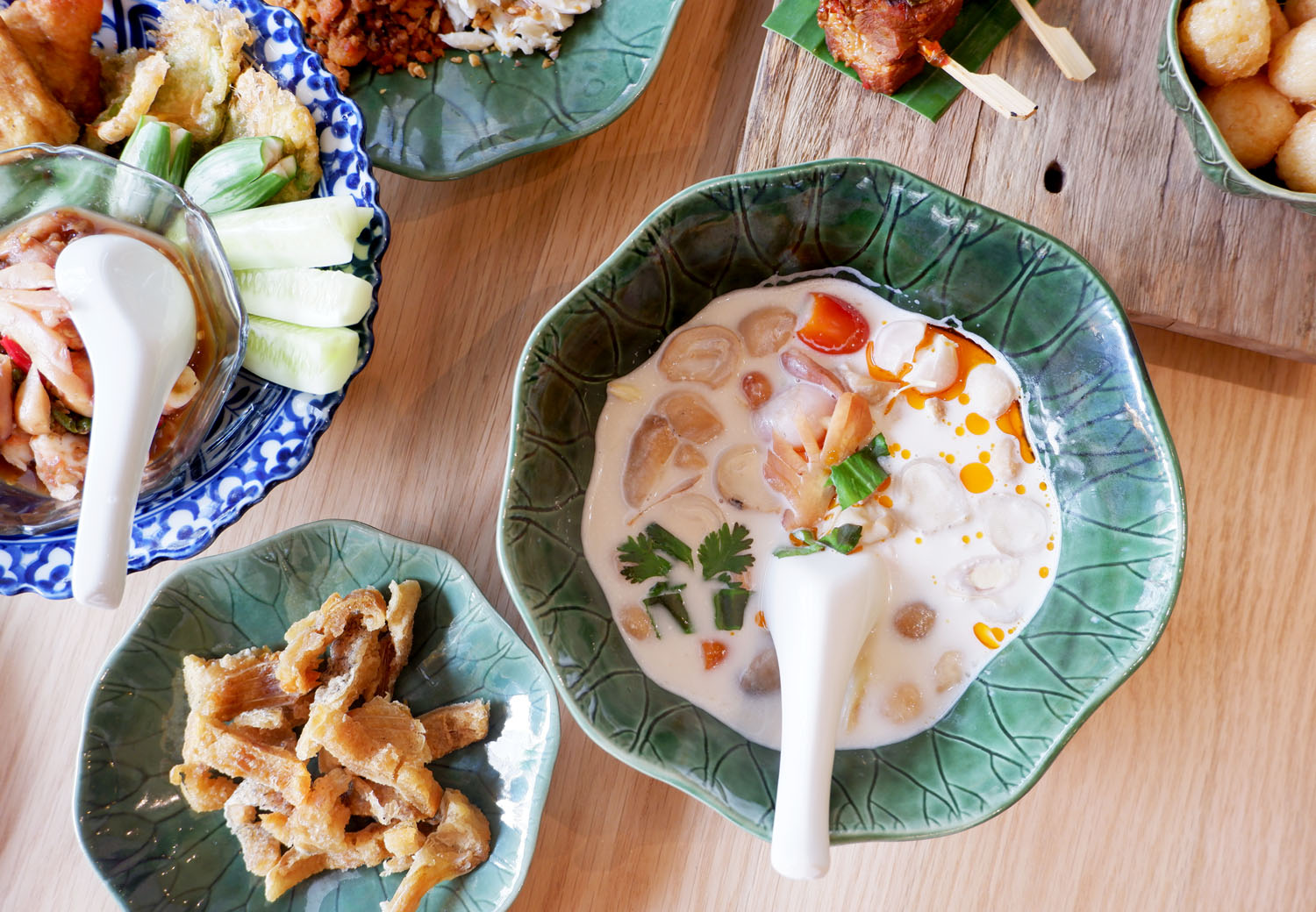
The salak fruit, normally seen in Thai desserts and is similar to a lychee with a more tangy taste, is also used in savory dishes like Tom Kaa with Salak and Crispy Sa-lid Fish (290 baht), where crispy gourami chunks are showered onto a coconut milk soup cooked with the fruit.

Tom Kaa with Salak and Crispy Sa-lid Fish (290 baht).

Salak is even used as part of a chili dip in the Salak and Shrimp Chili Dip with Deep Fried Nue-Aon Fish (340 baht), where shrimps and salak are mixed together with chili to make a dip to eat with fried sheatfish, green eggplants, and omelette with cha-om (acacia shoots).

Salak and Shrimp Chili Dip with Deep Fried Nue-Aon Fish (340 baht).

A must-order crowd pleaser is the Grilled Pork Collar with Chamuang Leaves and Seared Rice Cake (270 baht), where five large chunks of pork are grilled with the sour leaves, and eaten with kao jee, or grilled rice cake. Think of it as an ultra-authentic Trat version of sticky rice with moo ping.

Grilled Pork Collar with Chamuang Leaves and Seared Rice Cake (270 baht).

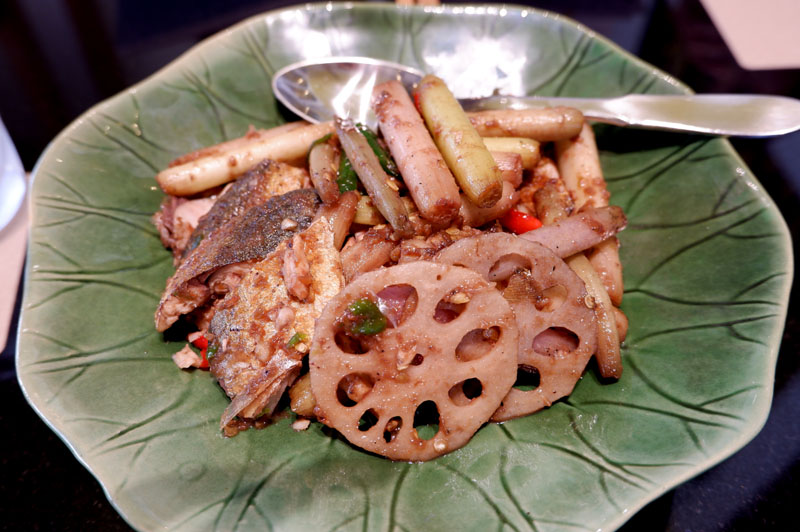
Want to try a new vegetable? Try the Stir Fried Lotus Stems with Shrimp Paste and Mackerel (240 baht), where the fibrous stems are refreshingly crunchy and flavored surprisingly mild.

Stir Fried Lotus Stems with Shrimp Paste and Mackerel (240 baht).

Finally, the Stir Fried Crab Roe with Himalayan Salt and Chili Mix is a whopping 590 baht, but it’s literally an entire plate of blue crab meat and roe, an indulgent amalgam of fishy sweetness.

Stir Fried Crab Roe with Himalayan Salt and Chili Mix (590 baht).

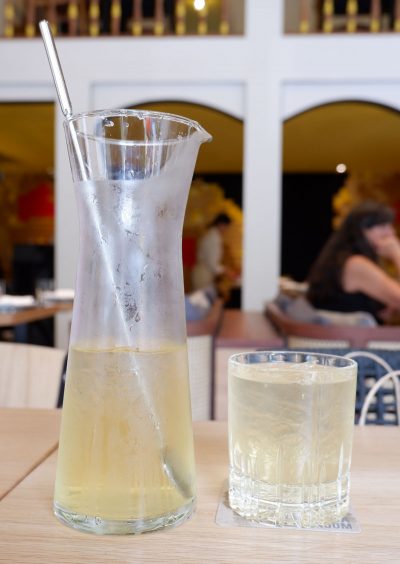
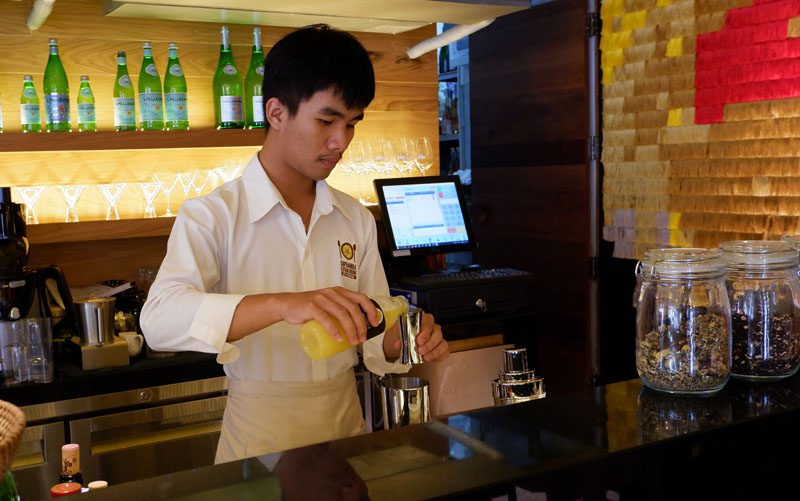
For dessert, we tried the Thai Tea Panna Cotta (120 baht), a firm yet wobbly blob of cha Thai sweetness, best paired with one of the tea blends such as the Supanniga Blend (180 baht for a large pitcher), which was a digestive Guan Yin tea with kaffir lime, ginger, and lemongrass.

Thai Tea Panna Cotta (120 baht).

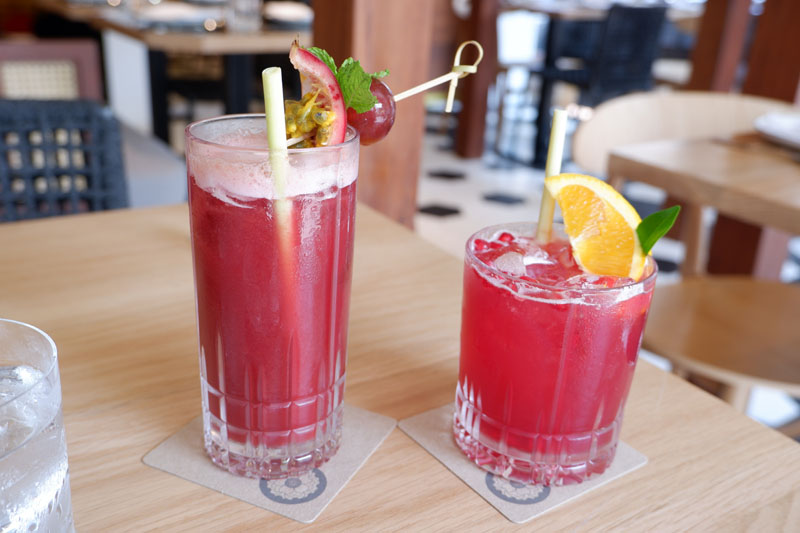
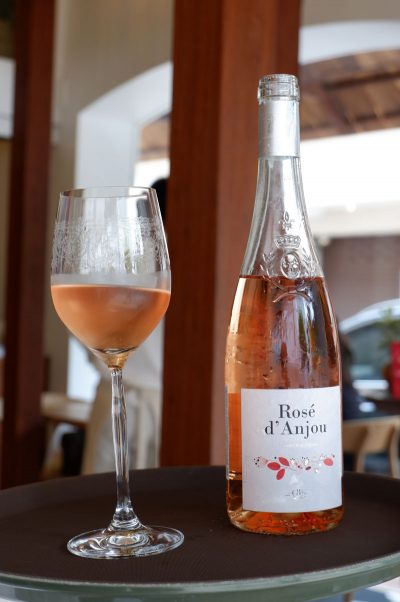
Although drink options may cost as much as a dish, such as the Supanniga Cold Pressed juice (175 baht), cocktails such as the Tubtim Siam (280 baht for a mix of Mekhong rum and pomegranates) can spice up a family dinner. We recommend the house rosé, a 2017 Rosé d’Anjou (165 baht per glass), a refreshing fruity wine that pairs well with spicy Thai food. Laying off the alcohol? Try the Passion from Khaoyai (220 baht), made from Shiraz grape juice by GranMonte vineyard in Nakhon Ratchasima.

Passion from Khaoyai (220 baht) and Tubtim Siam (280 baht).

Supanniga Eating Room is founded by Thanareuk Laoraowirodge, grandson of Somsri Chantra (1930 –2011), who cooked many of the dishes on the menu today. Supanniga Eating Room also has branches at Tha Tian, Sathorn Soi 10, and its first one in Thong Lor, which opened in 2012. The Tha Tian and Thong Lor branches are listed in the Michelin Guide 2019. The Supanniga Group also owns Isaan restaurant Somtum Der and Supanniga Cruise.

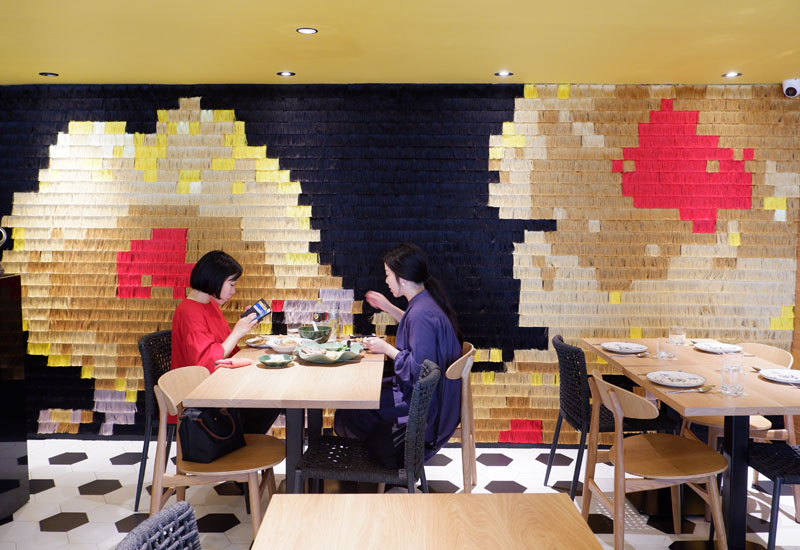
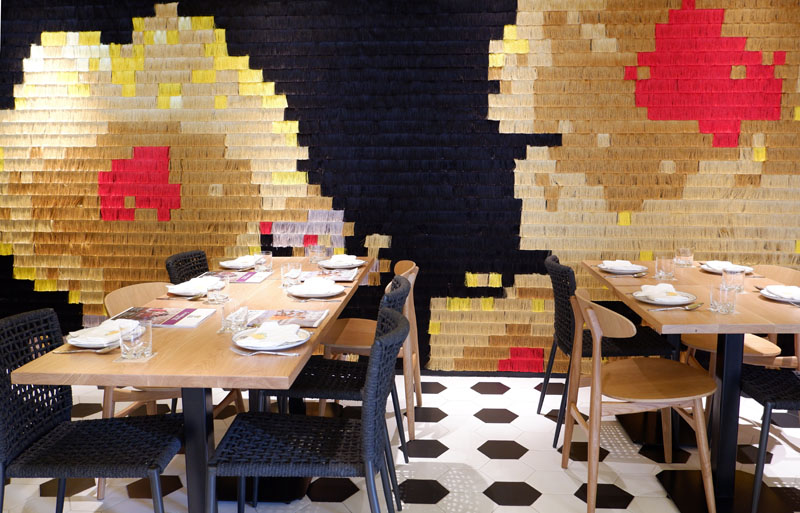
Unlike the multi-storied shophouses of the other branches, the Charoen Krung 38 branch is only two small floors which can seat about 50 people at 15 tables. The decor is dominated by yellows, blacks, and a large wall mural made of silk tassels to represent the supanniga, or yellow cotton tree, flower.

Supanniga Eating Room is open from 11:30am to 2:30am and 5:30pm to 10:30pm every day. Parking is limited, so take a taxi directly there or take a 10-minute walk from BTS Saphan Taksin. 

This review was based on a hosted visit.

DSCF8348

Rosé d’Anjou (165 baht per glass).
Supanniga Blend (180 baht).

DSCF8411 DSCF8420 DSCF8423 e1569989570977 DSCF8357 DSCF8356

Advertisement

Laotian Ex-Royalty Whips Up Croissant and Macaron with Passion in Bangkok

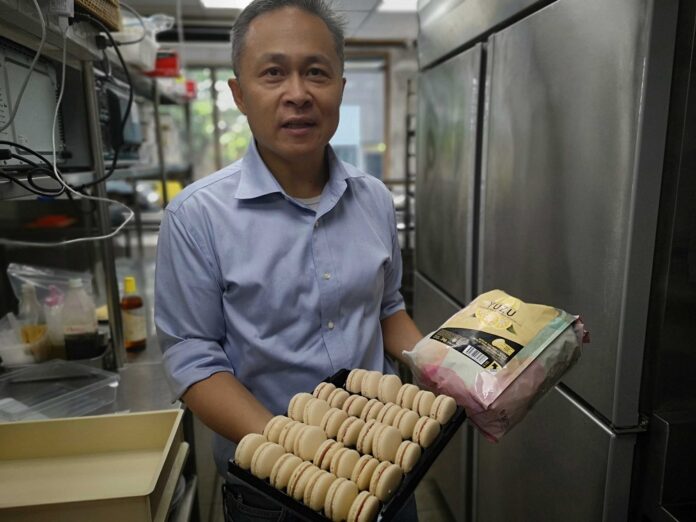
Marcel Chatenet speaks to Khaosod English

BANGKOK — Some of the best croissants and macarons in Bangkok are actually made in a small café run by a French of royal Laotian descent.

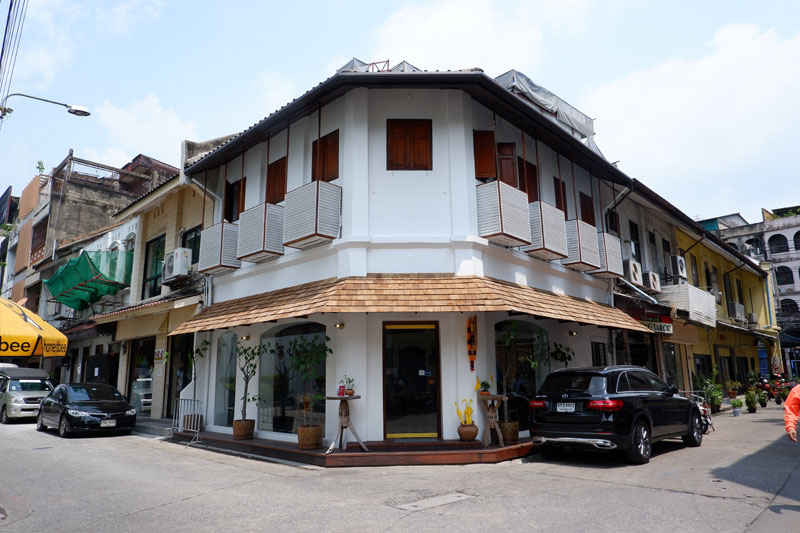
Marcel Chatenet, owner and chef at Maison Chatenet on Bush Lane, just off Charoenkrung 30 Road and a stone’s throw from the historic Portuguese Embassy, has been quietly preparing some of the best croissants and macarons in town for the past two years since it was founded.

Most days of the week at 2am, the 47-year-old Chatenet reports to the pastry room to prepare the flour and other chores so the café can be ready to serve them at 8am.

Given such demanding hours, Chatenet, whose family adopted the French family name due to political reasons and is descended from the Champasak royalty in Laos, closes the place on Mondays and Tuesdays. He aims to bring the best of France patisseries to Bangkok.

138389268 15683607511241n 1
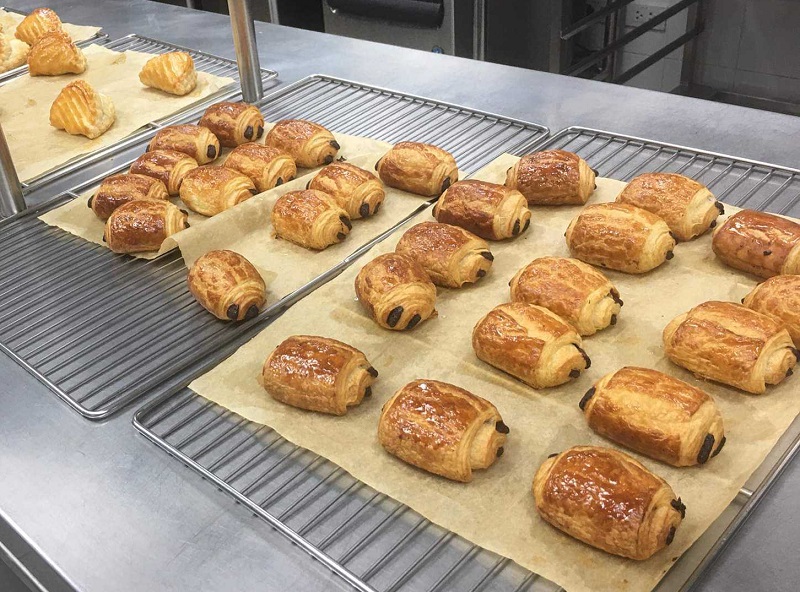
Croissants at Maison Chatenet

Both flour and butter are imported from France for small-batch croissants, made 30 pieces at a time for 70 baht apiece.

“We need to educate the people what’s the real thing. So we bring what is best from France to the Thai people,” said Chatenet, who might be mistaken for a French diplomat in the manner of his speaking.

Chatenet migrated to France at the age of eight. His father, an army colonel of Champasak royal blood, was detained in Laos after the communist revolution before being released 15 years later to join him in Montmagny, north of Paris, to lead a quiet life of exile.

Chatenet says many locally-made croissants are not even made with butter but margarine. Speaking with a passion for culinary excellence, Chatenet said he learned the trade from his younger brother, a professional chef and pastry maker. He went on to receive a diploma from Lycee Guillaume Tirel culinary academy in Paris.

นายกชมนิทรรศการ ๑๙๑๐๐๑ 0007

Besides macarons and croissants, Chatenet says he does a selection of pastries in rotation but there is no fixed menu. You simply have to call or drop by at the café which seats 48 people to find out the pastry du jour. The pastry chef, who is assisted by four Thai staff, insists what’s on offer is only a fraction of what’s available in France.

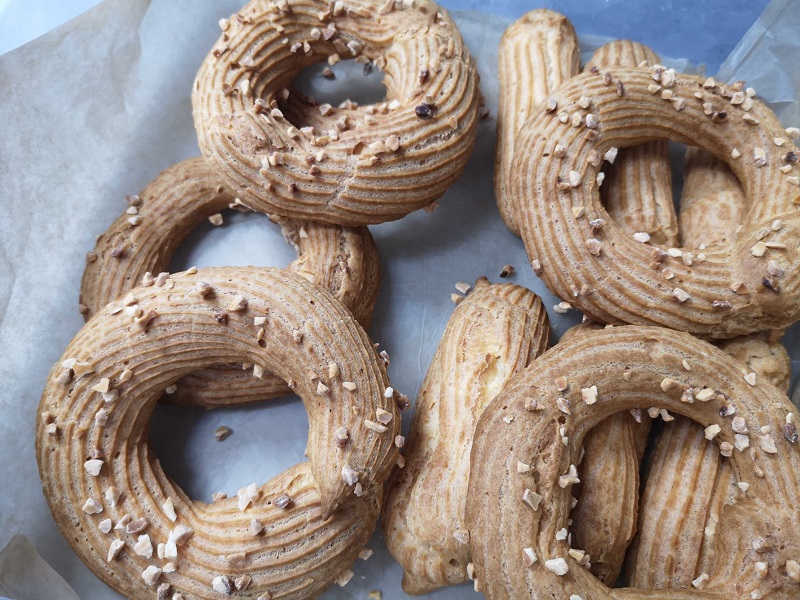
For October, which just started, you get apple tarts and Paris Brest, which is a French pastry made of choux pastry and a praline-flavored cream.

Chatenet says he is not competing with big bakery chains from France in Bangkok and his volume is really tiny compared to them.

“We have our own clients. Most of our clients they don’t go for Paul. Paul is volume. There is no competition at all,” Chatenet said. One of his regular Thai clients sends a Grab deliverer to fetch six croissants and teas to deliver once a week to his home in Rangsit, just north of Bangkok.

138285879 15650145589211n

“We give choice to people. This is real croissants,” he declared proudly in his French-accented English.

Chatenet is passionate about French pastries and laments how the turnover is high among his Thai staff. So when he returns home to visit France for 10 days, as he did last month, the café had to be closed.

“You need to have passion and be patience. Some don’t,” he says of working with some of his staff who are required to be at his patisserie at 6am, four hours after he arrived.

PRI 82750654 1
Image: Maison Chatenet / Courtesy

Some customers are now urging Chatenet to offer authentic French food as well, something he is seriously toying with. Perhaps a bistro, says the soft-spoken Chatenet.

One thing Chatenet immediately rules out is not pastry or food, however, but politics – Laotian politics to be exact. His family is still viewed with suspicion by the Laotian communist state because they may still enjoy some royalist support there.

“We don’t do politics,” Chatenet says as he excused himself to prepare the offerings for tomorrow. 

Maison Chatenet, located on Charoen Krung 30 Road, opens from Wednesday to Sunday from 8am to 4pm.

Advertisement

China Turns to Clean Coal as It Struggles to Curb Emissions

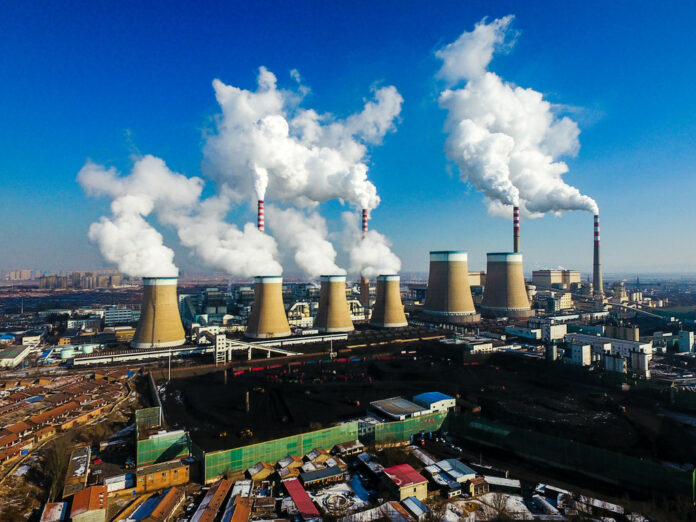
Smoke is discharged from chimneys at a coal-fired power plant of China Guodian Corporation in Datong city, north China's Shanxi province, March 17, 2018. Image: China Daily.

BEIJING (Xinhua) — Gao Xiang and his colleagues never picture coal as black cloud billowing from smokestacks or a sooty remnant of the Industrial Revolution.

“There are only unclean technologies; no unclean energy,” said Gao, a winner of China’s National Awards for Scientific and Technical Progress and professor at the State Environmental Protection Engineering Center for Coal-Fired Air Pollution Control at Zhejiang University.

For years, researchers have been seeking to reduce coal’s harsh environmental effects with multiple technologies, seeking a “burn cleanly” spell for China’s major energy source.

Coal accounts for over 90 percent of China’s proven reserves of fossil energy resources, said Gao.

China cannot eradicate coal-fired power from its energy mix overnight as natural gas supplies are more difficult to access and renewable energy expansion takes time.

Meanwhile, Chinese citizens demand cleaner air, and coal power plants are viewed as the major culprit of PM 2.5, small particles that may lodge in the lungs.

ADAPTING TO COAL

Reducing emissions from coal-fired power plants is a great part of China’s environmental drive and energy security as Beijing sets emissions and efficiency standards for coal-fired power plants higher than those in Western countries.

Coal is widely distributed in China but the overall quality is not high. The diversity of the country’s vast geographical coal distribution and the complex combustion features are among the hardest problems to tackle.

“A clean system must adapt to these ‘coal situations’,” Gao said.

At the State Key Laboratory of Clean Energy Utilization at Zhejiang University, Gao and his colleagues have been testing sample packets like coal, fly ash and calcium carbonate from coal-fired power plants across China, in order to find the best solution.

They often work round the clock. A pilot experiment, a preliminary study to evaluate the system, can run for 5,000 hours.

Climbing and a head for heights are required from everyone in the lab. From 40-meter-high equipment testing platforms to 70-meter smokestacks, they must collect data and test theories.

Gao’s mission has been constant since he began his master’s degree in 1990: to reduce the emissions of coal-fired plants.

After more than 20 years of research, Gao and his team developed an ultra-low-emissions system to filter multiple pollutants from coal-fired flue gas quickly and cheaply, which has been successfully applied in a 1000 MW unit in Jiaxing power plant as China’s first demonstration.

Gao’s work opened up new fields using multidisciplinary approaches. Through process intensification, each pollutant-control device can simultaneously remove multi-pollutants, hence increasing the total removal efficiency and reducing emissions from coal-fired utilities to a level even lower than the regulation set for natural gas combustion.

DELIVERING ON PLEDGES

Zhejiang Energy Group, which upgraded its power plants with the system, says emissions of sulfur dioxide are down 83 percent against national emissions standards, nitrogen oxides are down 50 percent and particulates 67 percent.

In January 2018, Gao and his team were awarded first prize in the National Technology Invention Award. The Ministry of Science and Technology said the system had drastically reduced the pollutants emitted by coal-fired power plants nationwide.

In the global drive against climate change, China has been consistently delivering on its environmental pledges.

From 2015 to 2017, China’s government has highlighted ultra low emissions of coal-powered generations continuously in the Report on the Work of the Government, striking out hard against air pollution.

The National Energy Administration (NEA) announced this February that China has established the world’s largest clean coal-power generation system, setting a new milestone in cutting emissions and saving energy.

The country has exceeded its target of ultra-low-emissions and energy conservation and transformation outlined in the 13th Five-Year Plan two years in advance.

By the end of 2018, the capacity of China’s coal-powered generators with ultra-low-emissions reached more than 810 million kilowatts, accounting for over 80 percent of the country’s total installed capacity of coal-power generating units, data from the NEA showed.

“The to-do list for energy and environmental protection never ends. We should always follow China’s development and solve problems,” said Gao.

Currently, they are promoting and extending the system for other industries.

Advertisement

North Korea Fires Missile Days Before Resuming US Talks

Image: Associated Press

SEOUL, South Korea (AP) — North Korea fired a ballistic missile toward the sea Wednesday, South Korea’s military said, in a display of its expanding military capabilities hours after saying it would resume nuclear diplomacy with the United States this weekend.

South Korean officials said the missile was fired from North Korea’s eastern waters, suggesting it may have been submarine-launched. But South Korean defense officials won’t officially disclose whether the missile was fired from a submarine, a barge or any other possible platform.

North Korea having the ability to launch missiles from submarines would be alarming because such weapons are harder to detect in advance.

According to Seoul’s Joint Chiefs of Staff, the missile flew about 450 kilometers (280 miles) at the maximum attitude of 910 kilometers (565 miles) before landing between the Korean Peninsula and Japan. The Joint Chiefs of Staff said South Korean and U.S. authorities were analyzing more details of the launch.

Japanese Chief Cabinet Secretary Yoshihide Suga earlier said the North fired two ballistic missiles from the country’s east coast, and one of them appeared to have landed inside Japan’s exclusive economic zone. There were no reports of damage to Japanese vessels or aircraft, he said. The North had not fired a weapon that reached inside Japan’s EEZ since November 2017 at the height of an unusually provocative run in nuclear and missile tests.

Japanese Prime Minister Shinzo Abe condemned the launches and said they violate U.N. resolutions against the North.

“We will continue to cooperate with the U.S. and the international community and do the utmost to maintain and protect the safety of the people as we stay on alert,” Abe said.

The launches, which were the North’s ninth round of weapons tests since late July, came hours after a senior North Korean diplomat said North Korea and the United States have agreed to resume working-level nuclear negotiations this weekend.

After supervising a testing firing of what the North described as a “newly developed super-large multiple rocket launcher” last month, North Korean leader Kim Jong Un was quoted by state media as saying that the system would require a “running fire test” to complete its development.

North Korea could also be demonstrating its displeasure over South Korea displaying for the first time some of its newly purchased U.S.-made F-35 stealth fighter jets at its Armed Forces Day ceremony on Tuesday. The North has called the F-35 purchases a grave provocation that violate recent inter-Korean agreements aimed at lowering military tensions.

Kim Dong-yub, an analyst from Seoul’s Institute for Far Eastern Studies and a former military official who participated in inter-Korean military talks, said the North’s launch was clearly aimed at increasing pressure on Washington ahead of planned weekend talks where it might demand concessions on U.S.-led sanctions against its crippled economy.

Nuclear negotiations halted following a February summit between Kim Jong Un and President Donald Trump in Vietnam that broke down after the U.S. rejected North Korean demands for broad sanctions relief in exchange for partially surrendering its nuclear capabilities.

North Korea’s subsequent belligerent rhetoric and recent short-range weapons tests have been seen as an attempt to gain leverage before resuming the negotiations.

In a statement released through state media, Choe Son Hui, North Korea’s first vice minister of foreign affairs, said the two nations will have preliminary contact on Friday before holding working-level talks on Saturday. She did not say where it would take place.

“It is my expectation that the working-level negotiations would accelerate the positive development of the DPRK-U.S. relations,” Choe said in the statement, using an abbreviation for North Korea’s formal name, the Democratic People’s Republic of Korea.

State Department spokeswoman Morgan Ortagus, who is traveling with Secretary of State Mike Pompeo in Rome, said later she did not have further details to share about the meeting.

Last month, North Korea praised Trump for suggesting Washington may pursue an unspecified “new method” in the negotiations. North Korea also has welcomed Trump’s decision to fire hawkish former National Security Adviser John Bolton, who advocated a “Libya model” of unilateral denuclearization as a template for North Korea.

The 2004 disarmament of Libya is seen by North Korea as a deeply provocative comparison because Libyan leader Moammar Gadhafi was killed following U.S.-supported military action in his country seven years after giving up a rudimentary nuclear program that was far less advanced than North Korea’s.

The office of South Korean President Moon Jae-in, who lobbied hard to set up the first summit between Kim and Trump last year in Singapore, welcomed Choe’s announcement and expressed hope the resumed talks would result in “substantial progress” in denuclearization and peace.

That could be a tall order. The diplomacy between Trump and Kim has been driven chiefly by their personalities rather than an established diplomatic process, and working-level meetings have fleshed out the logistics of summits without bringing the countries closer to any nuclear agreement.

The stalemate of recent months has revealed fundamental differences. North Korea says it will never unilaterally surrender its nuclear weapons and missiles and insists that U.S.-led sanctions against it should be lifted first before any progress in negotiations. The Trump administration has vowed to maintain robust economic pressure until North Korea takes real steps toward full, verifiable denuclearization.

Leif-Eric Easley, a professor at Ewha University in Seoul, said progress in working-level negotiations would depend on several factors, including whether Kim empowers his officials to negotiate concrete steps and whether the Trump administration embraces “a phased approach where summits and sanctions relief must be earned, but denuclearization is not decided all at once.”

But there are doubts about whether Kim would ever voluntarily deal away an arsenal that he may see as his strongest guarantee of survival.

After their Singapore summit in June 2018, Trump and Kim issued a vague statement calling for a nuclear-free Korean Peninsula without describing how or when it would occur.

The lack of substance and fruitless working-level talks set up the failure in Hanoi. Trump and Kim met for the third time at the inter-Korean border on June 30 and agreed that working-level talks between the countries should resume.

___

Associated Press writers Hyung-jin Kim in Seoul and Mari Yamaguchi contributed to this report from Tokyo.

Advertisement

Day of Rage: Hong Kong Protesters Throw Acid at Cops, Smash up Shops

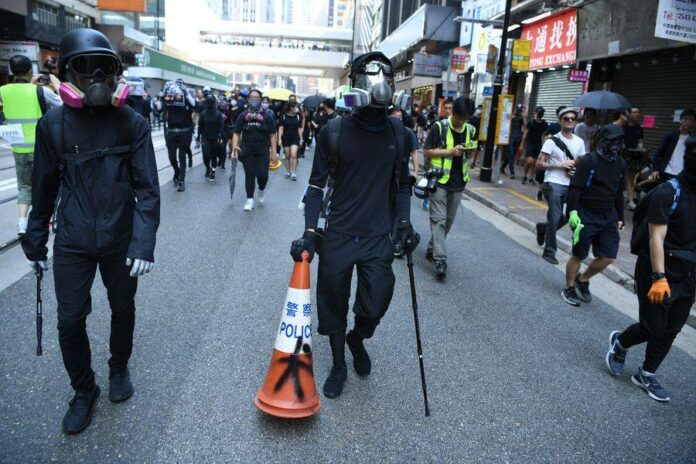
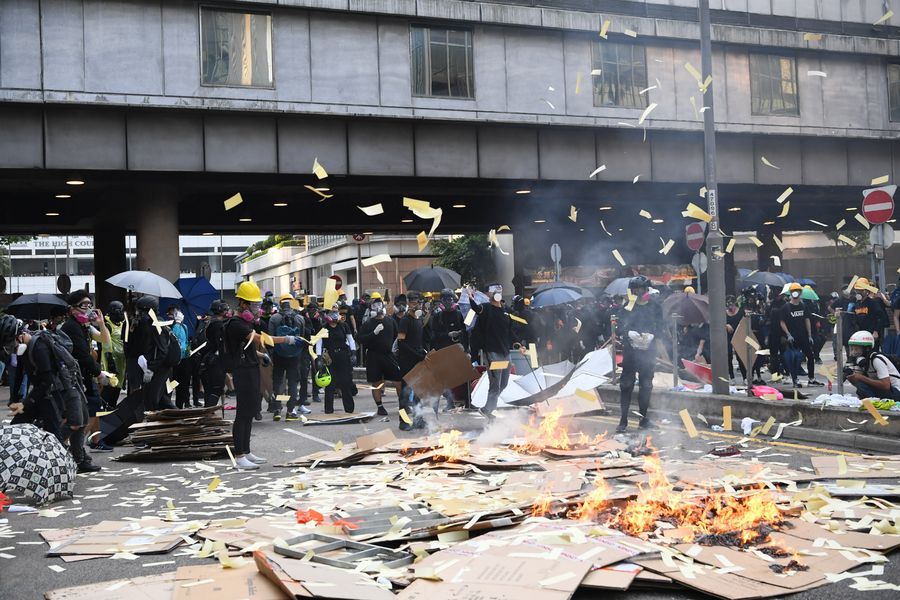
Protesters in Hong Kong on Oct. 1, 2019. (Xinhua)

HONG KONG (Xinhua) — The government of China’s Hong Kong Special Administrative Region on Wednesday strongly condemned rioters for their extreme violent acts in various districts across Hong Kong on Tuesday.

Such acts posed a serious threat to the safety of members of the public and seriously undermined social order, a spokesperson said in a statement, adding that the radicals warrant the society’s most severe condemnation.

Many people took part in the unauthorized meetings and processions which turned out to be very dangerous riots, setting fires inside MTR stations, throwing petrol bombs, vandalizing shops and public properties, blocking thoroughfares to cause serious obstruction to fire fighting and ambulance work, and damaging the premises of the Cheung Sha Wan and Tsuen Wan government offices, the spokesperson said.

137486763 15376259287441n
A police officers sustains extensive injuries from corrosive liquid in south China’s Hong Kong, Oct. 1, 2019. (Photo released on the official Facebook account of Hong Kong police force)

“The riots in various districts in Hong Kong on October 1 were planned and organized, leading Hong Kong to a chaotic and panic state. This reflects that the nature of the issue has already changed,” the spokesperson said.

The radicals challenged the national sovereignty by burning national flags in Central and Causeway Bay, the spokesperson said.

The spokesperson said it was necessary for the police to use appropriate force to take disperse and arrest actions resolutely for public safety and to restore social order.

So far over 180 persons were arrested for offenses of taking part in a riot, unlawful assembly, assaulting police officer and possession of offensive weapon. In the operations, at least 25 officers were injured under rampant attack by rioters.

At about 4 p.m. Tuesday, a large group of rioters attacked officers with iron poles, seriously threatening their lives. Having given warning but in vain, an officer fired a shot at a male attacker.

The 18-year-old attacker was injured and rushed to Princess Margaret Hospital in conscious state. The current condition of the man is stable.

EF2CAEhWkAEd0QT

Lo Wai-chung, Commissioner of Police, said that the life of the police officer was under serious threat in the open fire incident and appropriate force has to be deployed in accordance with the police guidelines if police warning does not work.

Radical protesters have been repeatedly organizing unlawful activities since June and violent acts are spreading and escalating drastically. The police reiterated that no violent behavior will be tolerated and resolute action will be taken to safeguard the city’s public safety and bring all lawbreakers to justice.

Remarking on students being stirred to break the law, the government spokesperson appealed to parents and teachers to advise young children and students not to participate in unauthorized public meetings and processions, and stay away from violence.

Advertisement

Hong Kong Students Decry Police Shooting of Teen Protester (Video)

An amateur video footage screencap of the shooting on Oct. 1, 2019.

HONG KONG (AP) — Hundreds of college students are striking to condemn the police shooting of their classmate during surging violence at Hong Kong pro-democracy protests that marred China’s National Day.

It was the first time a protester had been struck by gunfire since the protests began in June and is sure to inflame anger at police, who already were accused of using excessive force against the demonstrators.

Police have said the officer feared for his life and his shooting of the 18-year-old student in the chest at close range Tuesday was “reasonable and lawful.” News reports say he is in critical but stable condition.

Students at the Tsuen Wan Public Ho Chuen Yiu memorial college — which the teen attended — called police “murderer” on Wednesday. They chanted anti-police slogans and demanded accountability.

Advertisement

Hot News

LATEST NEWS

Bangkok
overcast clouds
25.5 ° C
25.5 °
25.5 °
93 %
3.2kmh
100 %
Fri
25 °
Sat
32 °
Sun
35 °
Mon
37 °
Tue
37 °