
























33.5 C
Bangkok
Monday, June 8, 2026
Home Blog Page 1550

India Aborts Moon Mission Launch, Citing Technical Glitch

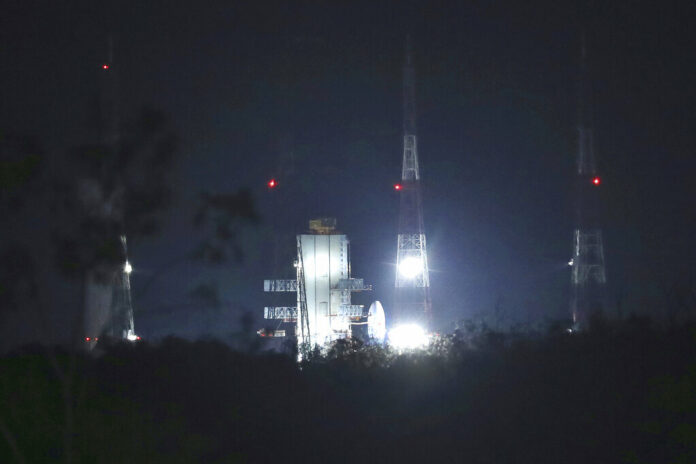
Indian Space Research Organization (ISRO)'s Geosynchronous Satellite launch Vehicle (GSLV) MkIII carrying Chandrayaan-2 stands at Satish Dhawan Space Center after the mission was aborted at Sriharikota in southern India, Monday, July 15, 2019. India has called off the launch of a moon mission to explore the lunar south pole. The Chandrayaan-2 mission was aborted less than an hour before takeoff on Monday. An Indian Space Research Organization spokesman says a
Indian Space Research Organization (ISRO)'s Geosynchronous Satellite launch Vehicle (GSLV) MkIII carrying Chandrayaan-2 stands at Satish Dhawan Space Center after the mission was aborted at Sriharikota in southern India, Monday, July 15, 2019. India has called off the launch of a moon mission to explore the lunar south pole. The Chandrayaan-2 mission was aborted less than an hour before takeoff on Monday. An Indian Space Research Organization spokesman says a "technical snag" was observed in the 640-ton launch-vehicle system. Photo: Manish Swarup / AP

SRIHARIKOTA — India aborted the launch on Monday of a spacecraft intended to land on the far side of the moon less than an hour before liftoff.

The Chandrayaan-2 mission was called off when a “technical snag” was observed in the 640-ton, 14-story rocket launcher, Indian Space Research Organization spokesman B.R. Guruprasad said.

The countdown abruptly stopped at T-56 minutes, 24 seconds, and Guruprasad said that the agency would announce a revised launch date soon.

Chandrayaan, the word for “moon craft” in Sanskrit, is designed for a soft landing on the lunar south pole and to send a rover to explore water deposits confirmed by a previous Indian space mission.

With nuclear-armed India poised to become the world’s fifth-largest economy, the ardently nationalist government of Prime Minister Narendra Modi is eager to show off the country’s prowess in security and technology. If India did manage the soft landing, it would be only the fourth to do so after the U.S., Russia and China.

Dr. K. Sivan, chairman of the Indian Space Research Organization, said at a news conference last week that the around $140-million Chandrayaan-2 mission was the nation’s most prestigious to date, in part because of the technical complexities of soft landing on the lunar surface — an event he described as “15 terrifying minutes.”

After countdown commenced on Sunday, Sivan visited two Hindu shrines to pray for the mission’s success.

Practically since its inception in 1962, India’s space program has been criticized as inappropriate for an overpopulated, developing nation.

But decades of space research have allowed India to develop satellite, communications and remote sensing technologies that are helping solve everyday problems at home, from forecasting fish migration to predicting storms and floods.

With the 50th anniversary of the Apollo 11 mission this month, the world’s biggest space agencies are returning their gaze to the moon, seen as ideal testing grounds for technologies required for deep space exploration, and, with the confirmed discovery of water, as a possible pit stop along the way.

“The moon is sort of our backyard for training to go to Mars,” said Adam Steltzner, NASA’s chief engineer responsible for its 2020 mission to Mars.

Because of repeated delays, India missed the chance to achieve the first soft landing near the lunar south pole. China’s Chang’e 4 mission landed a lander and rover there last January.

India’s Chandrayaan-1 mission orbited the moon in 2008 and helped confirm the presence of water. The Indian Space Research Organization wants its new mission’s rover to further probe the far side of the moon, where scientists believe a basin contains water-ice that could help humans do more than plant flags on future manned missions.

The U.S. is working to send a manned spacecraft to the moon’s south pole by 2024.

Modi has set a deadline of 2022 for India’s first manned spaceflight.

Story: Emily Schmall.
Advertisement

Congo Confirms 1st Ebola Case in City of Goma

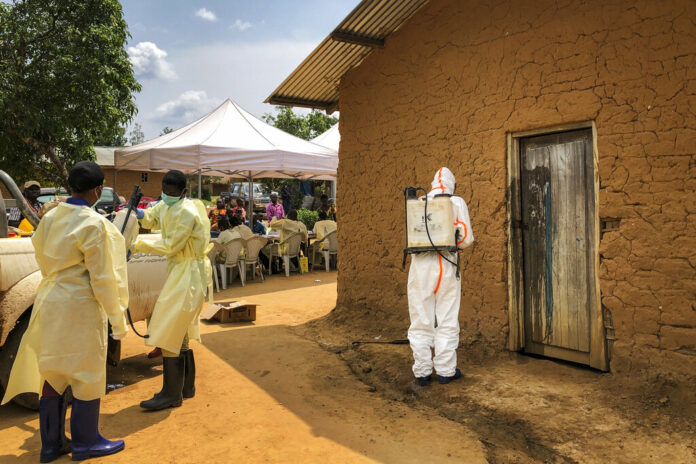
A worker from the World Health Organization (WHO) decontaminates the doorway of a house on a plot where two cases of Ebola were found, in the village of Mabalako, in eastern Congo Monday, June 17, 2019. Health officials in eastern Congo have begun offering vaccinations to all residents in the hotspot of Mabalako whereas previous efforts had only targeted known contacts or those considered to be at high risk. Photo: Al-hadji Kudra Maliro / AP

BENI — The Congolese health ministry confirmed an Ebola case in Goma late Sunday, marking the first time the virus has reached the city of more than 2 million people along the border with Rwanda since the epidemic began nearly a year ago.

The health ministry said the man who had arrived earlier Sunday in the regional capital had been quickly transported to an Ebola treatment center. Authorities said they had tracked down all the passengers on the bus the man took to Goma from Butembo, one of the towns hardest hit by the disease.

“Because of the speed with which the patient was identified and isolated, and the identification of all the other bus passengers coming from Butembo, the risk of it spreading in the rest of the city of Goma is small,” the health ministry said in a statement.

The virus has killed more than 1,600 people in Congo and two others who returned home across the border to neighboring Uganda. Health experts have long feared that it could make its way to Goma, which is located on the Rwandan border.

The health ministries in Congo’s neighbors have been preparing for months for the possibility of cases, and frontline health workers already have been vaccinated.

The confirmed case announced late Sunday in eastern Congo involves a pastor who became ill last Tuesday. He then left Butembo on a bus, and arrived at a health center Sunday showing symptoms of Ebola, the health ministry said.

Violent attacks against health workers and treatment facilities have greatly compromised efforts to combat the epidemic in Butembo.

Eastern Congo is home to a myriad of armed groups, and Mai Mai militia fighters are active near the hardest hit towns. Health teams have been unable to access violent areas to vaccinate people at risk of infection and to bring infected patients into isolation.

Other times the violence against health teams has come from residents who do not want their loved ones taken to treatment centers or buried in accordance with guidelines aimed at reducing Ebola transmission.

While the experimental vaccine is believed to have saved countless lives, not all Congolese people have accepted it. Some falsely believe that the vaccine is what is making people sick, in part because people can still develop the disease after getting the shot if they already had been infected.

Story: Krista Larson. Saleh Mwanamilongo in Kinshasa, Congo contributed to this report.

Advertisement

France Trumpets Shared European Defense on Bastille Day (Photos)

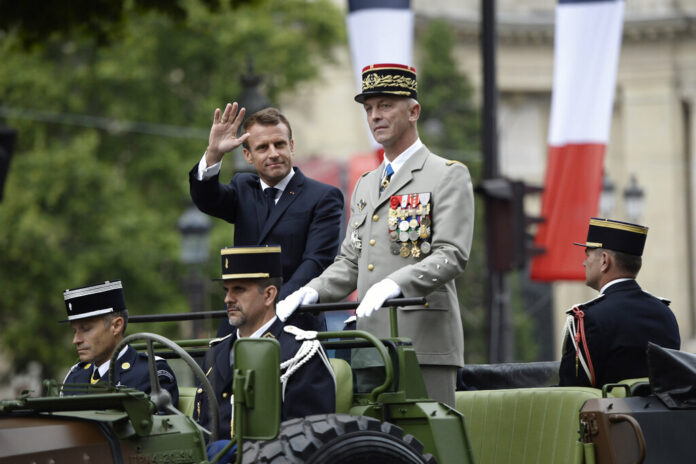
France's President Emmanuel Macron gestures in his command car next to French Armies Chief Staff General Francois Lecointre as they review troops before the start of the Bastille Day military parade down the Champs-Elysees avenue in Paris Sunday, July 14, 2019. French President Emmanuel Macron has overseen France's annual Bastille Day celebration, which this year showcased European defense cooperation. Photo: Eliot Blondet / POOL via AP

PARIS — France’s annual Bastille Day celebration became a showcase for European defense cooperation Sunday as other national leaders joined President Emmanuel Macron in Paris to inspect the troops marching in the country’s annual military parade.

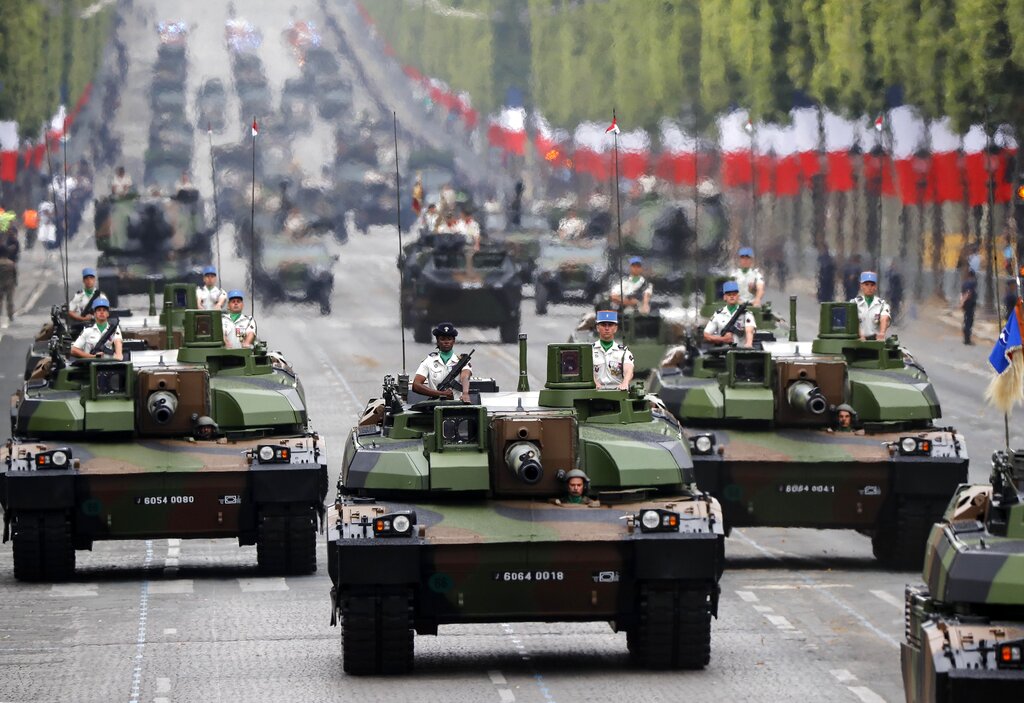
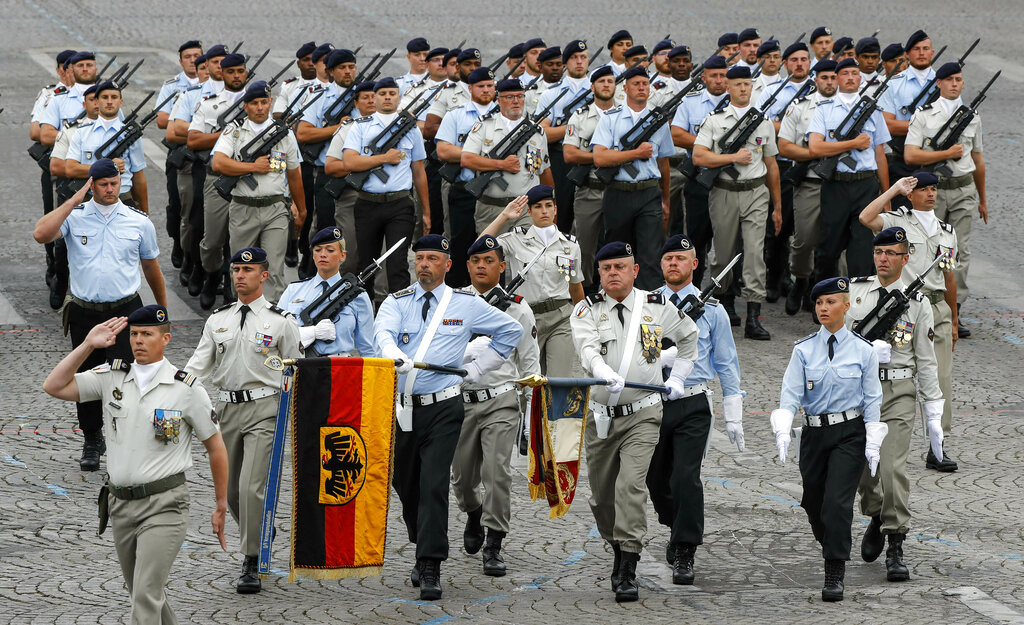
Flags of the 10 European countries that are in a joint military pact spearheaded by Macron last year led contingents of French and foreign armed forces from the Arc de Triomphe down the Champs-Elysees avenue.

France has had a Bastille Day parade since 1880, and it’s customary for a foreign leader to be the guest of honor. The guest of honor in 2017, U.S. President Donald Trump, came away so impressed by the spectacle he ordered a military parade in Washington for America’s independence day celebration.

In Paris, the focus this year was the European Defense Initiative, a coalition formed last year to prepare for possible military action outside of NATO.

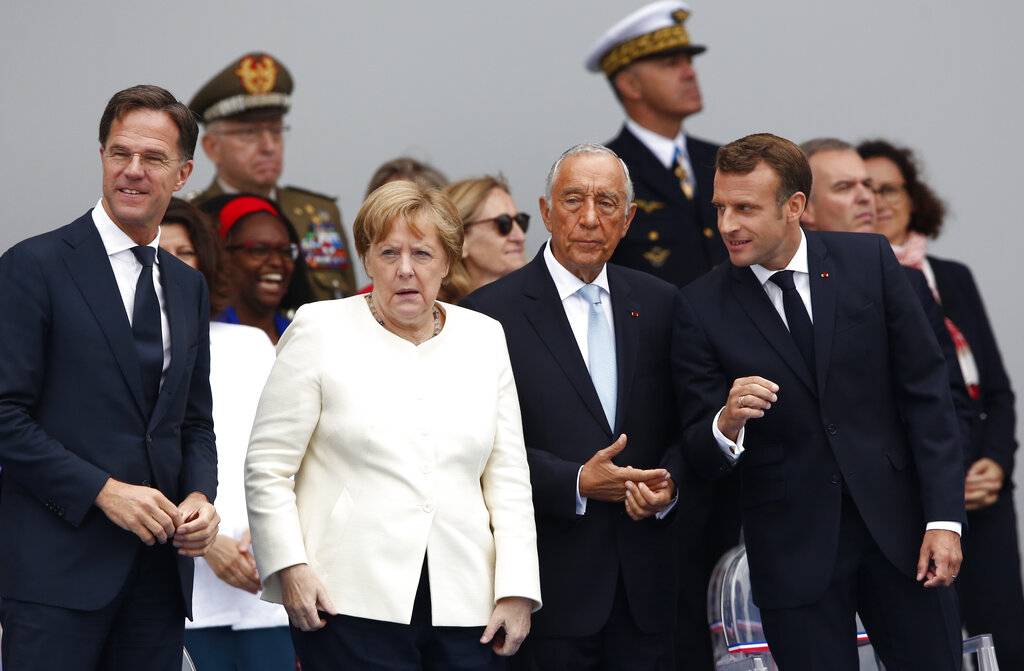
The heads of state of Germany, Portugal, the Netherlands and Finland watched from the ceremonial viewing stand as 4,000 military personnel, 69 military airplanes and 39 helicopters passed by or overhead.

German Chancellor Angela Merkel said the invitation to celebrate France’s national holiday “is a symbol for an intensified European cooperation” and “a big gesture toward European defense policy.”

From the left, Dutch Prime Minister Mark Rutte, German Chancellor Angela Merkel, Portugal's President Marcelo Rebelo de Sousa and French President Emmanuel Macron, attend Bastille Day parade Sunday, July 14, 2019 on the Champs Elysees avenue in Paris. Photo: Kamil Zihnioglu / AP
From the left, Dutch Prime Minister Mark Rutte, German Chancellor Angela Merkel, Portugal’s President Marcelo Rebelo de Sousa and French President Emmanuel Macron, attend Bastille Day parade Sunday, July 14, 2019 on the Champs Elysees avenue in Paris. Photo: Kamil Zihnioglu / AP

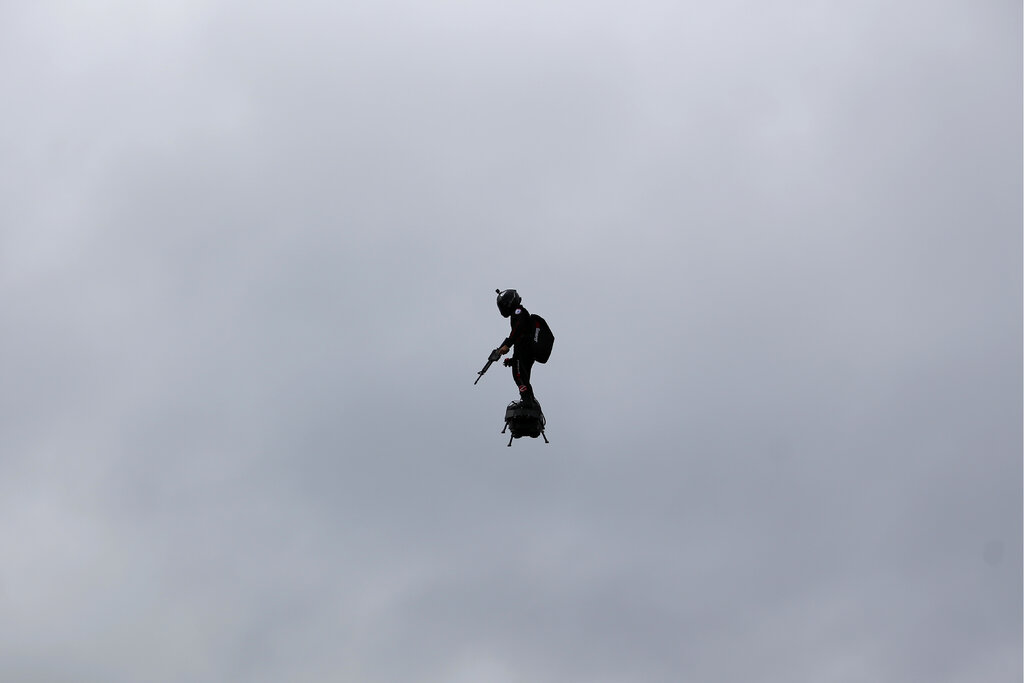
The biggest crowd-pleaser, though, was the man who rocketed through the air on a flying hoverboard. The inventor, former jet-skiing champion Franky Zapata, held a rifle as he zoomed over the parade route on a Flyboard.

Tensions were high on the streets of Paris following eight months of anti-Macron demonstrations by the so-called yellow vest movement seeking more financial help for French workers.

Several hundred yellow vest activists — without their trademark fluorescent emergency jackets — gathered on the margins of the parade.

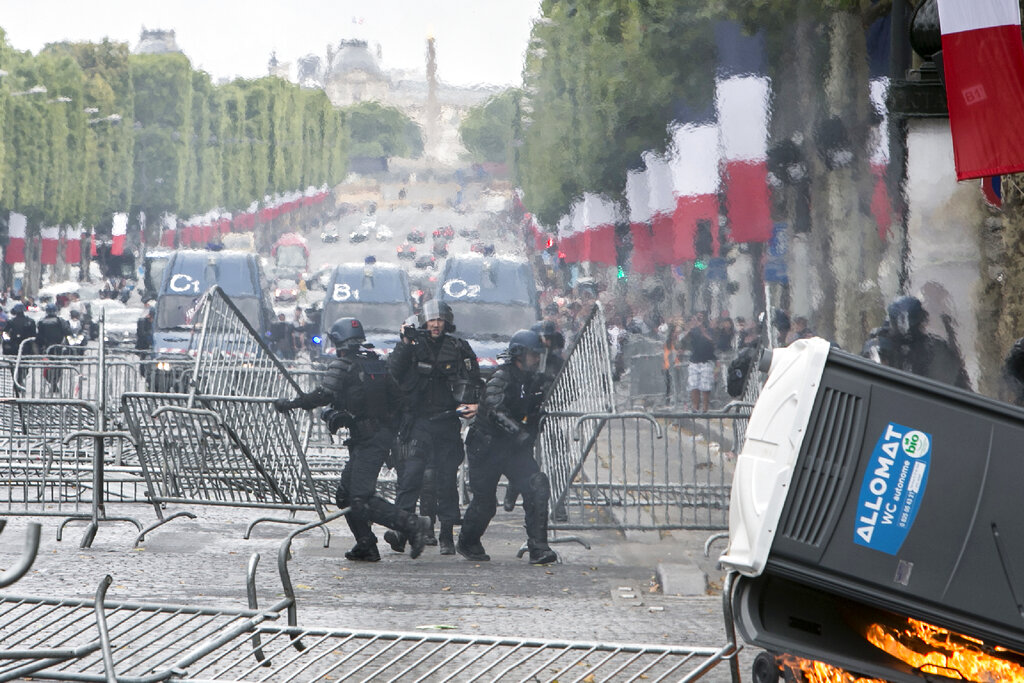
Riot police officers remove barricades that were uses as security barriers for Bastille Day parade on the Champs-Elysees avenue after scuffles with demonstrators, Sunday, July 14, 2019 in Paris. Photo: Rafael Yaghobzadeh / AP

Television images showed police grabbing one of the movement’s leaders, Eric Drouet, as he stood peacefully on the sidelines and escorting him away.

Later in the day, riot police squads and groups of young people scuffled amid security barricades along the parade route. Officers fired tear gas to clear the streets after some people set trash cans on fire.

Tanks rolling on the Champs-Elysees avenue during the Bastille Day parade in Paris, France, Sunday July 14, 2019. Photo: Michel Euler / AP
German soldiers march on the Champs-Elysees avenue during the Bastille Day parade in Paris, France, Sunday July 14, 2019. Photo: Michel Euler / AP
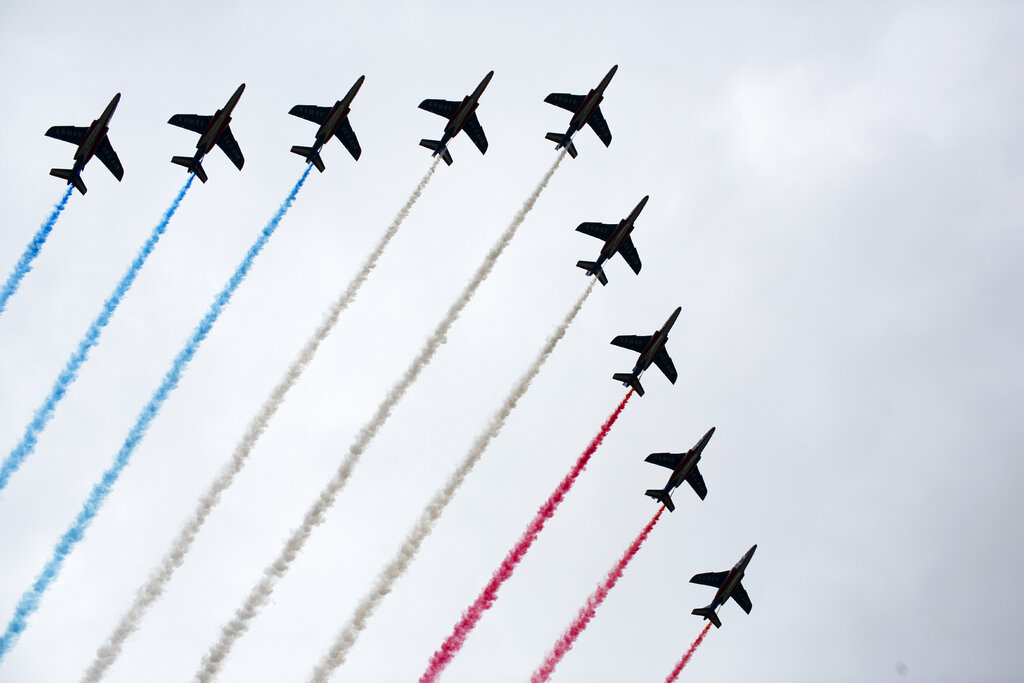
French Alpha jets of the Patrouille de France spray lines of smoke in the colors of the French flag over the Champs-Elysees during Bastille Day parade Sunday, July 14, 2019 near the Champs Elysees avenue in Paris. Photo: Rafael Yaghobzadeh / AP
A French soldier on a hoverboard is pictured during Bastille Day parade Sunday, July 14, 2019 on the Champs Elysees avenue in Paris. Photo: Kamil Zihnioglu / AP
Advertisement

Opinion: A Sartorial Challenge to Bangkok

Future Forward MPs dress in local outfits in an undated file photo.

There are different ways to look at the ongoing debate over whether MPs, particularly women, should be allowed to wear traditional local dress to Parliament.

Some may think there must be more urgent issues for MPs to deliberate. House Speaker Chuan Leekpai expressed such sentiments himself on Wednesday: “Are the dress-code regulations what is most important? … Let me end the issue of the dress code here, otherwise people will accuse us of not having anything else to talk about.”

Others may see the matter as about political jealousy, since the main target of criticism is the MP Pannika Wanich, the spokesperson of the anti-junta Future Forward Party. Meanwhile much of the criticism comes from pro-junta Phalang Pracharath Party’s MPs, particularly Parina Kraikup. Parina has publicly lambasted Pannika for weeks, after all.

But the matter has symbolic importance that should not be overlooked.

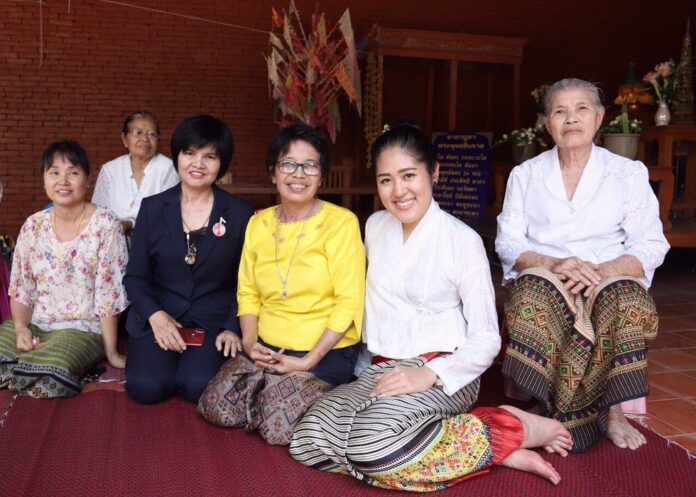
Last week in Parliament, Pannika and a few other women MPs did not wear the traditional Thai national costume that is popular among Bangkok elites during special occasions. Instead, they wore polite, local northern dress, composed of a sarong paired with a blouse. The attire can be interpreted as an attempt to value traditional local dress on par with traditional national dress.

There is no reason why MPs, of whatever gender, should have to stick with Western or Bangkok-style national attire when working in Parliament. It is only befitting that MPs, who are representatives of voters from all regions and classes, should be able to wear local dress. They represent neither just Bangkokians nor just elites, nor even just the middle class — but all classes of voters nationwide.

Still, some who cling to the dominance of Bangkok over the rest of the kingdom see local dress as a challenge to Bangkok’s rule. The Facebook page “Everything is Political” wrote in Thai on Saturday that Pannika’s act contained a symbolic challenge and can be read as an attempt to “divide the country into pieces”.

The Facebook user went on to make an ominous prediction: “In the future, Thais will increasingly speak local dialects and use local products. This will reduce the power of the capital. And you know whose power will be undermined.” The writer did not offer further details about who they were referring to.

Such is an example of the paranoia which sees any cultural diversity and devolution of power as a threat to the hegemonic power of Bangkok. The truth is that Thailand is more likely to implode if it doesn’t accommodate local identities and voices.

Pannika is not from the northern region but from Bangkok. But that shouldn’t stop her and other Bangkok-based MPs from honoring other regions by donning their beautiful traditional and semi-traditional dress.

It’s unclear whether House Speaker Chuan will revisit the issue any time soon. Future Forward Party is currently seeking to have the dress-code regulations amended.

In the meantime, it falls upon conscientious MPs to represent varying classes and regions around the kingdom sartorially – and beyond – in order to challenge Bangkok’s hegemony. After all, Thailand is not just Bangkok.

Advertisement

Claim the Iron Throne at Bangkok’s ‘Game of Thrones’ Trivia Night

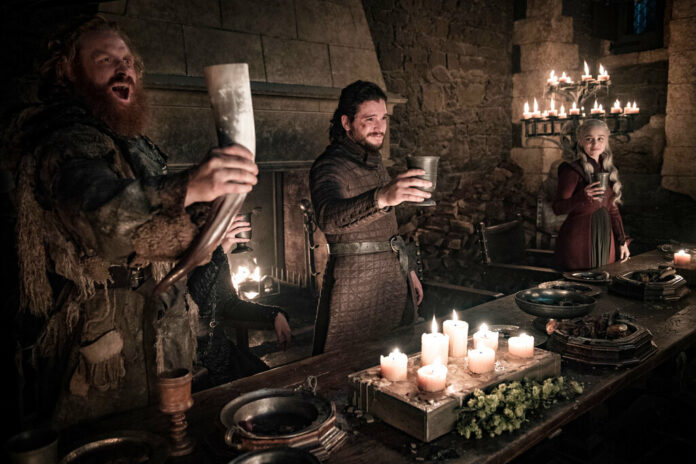
This image released by HBO shows Kristofer Hivju, from left, Kit Harington and Emilia Clarke in a scene from
This image released by HBO shows Kristofer Hivju, from left, Kit Harington and Emilia Clarke in a scene from "Game of Thrones." Photo: Helen Sloan / HBO via AP

BANGKOK — Trivia is coming.

Bangkok Hilarious Comedy Club is offering a chance to be crowned the biggest Thrones nerd this side of the Chao Phraya at the “Game of Thrones Comedy Game Show” on July 25 at Aesop’s Bangkok.

Trivia questions will mostly cover the TV series – but there will be some wild card questions from the A Song of Ice and Fire books, Delfin Solomon from the comedy club hinted. The night will also include some stand-up comedy from expat comedians, if that’s your thing.

Prizes include a 1,500 baht Chope voucher and tickets to Bangkok Hilarious Comedy Club shows.

Food is not included in the ticket price. A meal at Aesop’s will at least 500 baht apiece. Those under 18 must be accompanied by a guardian.

Earlier in June, the Comedy Club crowned Bangkok’s top Friends superfans.

Tickets for a two-person team cost 700 baht collectively, 1,200 baht for four people, and 1,500 baht for six people. The trivia night starts at 7:30pm on July 25 at Aesop’s Bangkok, which is reachable by foot or a short motorcycle ride from MRT Lumphini or BTS Sala Daeng.

Related stories:

Thailand’s Ultimate ‘Friends’ Superfans Crowned at Trivia Night

Test Your ‘Friends’ Knowledge at Trivia Night This Thursday

Advertisement

Beige or Nothing: Old Town Buildings Must Be Same Color, Gov’t Says

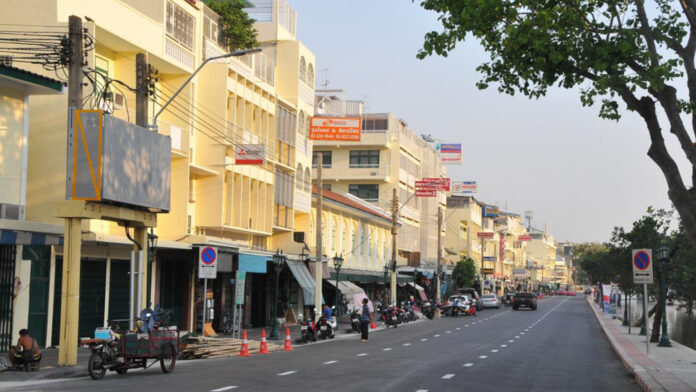
A row of shophouses on Atsagang Road on April 30. Photo: Metropolitan Electricity Authority

BANGKOK — New buildings around the historic area of Rattanakosin Island must be painted beige with tiled dark grey roofs, according to a new ministerial directive announced Friday.

The specifications are part of government plans to revitalize the old town area into something comparable to Champs-Elysees in Paris. The initiative is spearheaded by deputy junta chairman Prawit Wongsuwan, who has said the aim is to “keep the order and aesthetics of the capital, which will boost tourism to the nation’s historical and cultural attractions.”

The colors reflect the style of Rama V-era buildings like the Ministry of Defence and shophouses on Tanao Road. The directive also prohibits disturbances to building facades such as awnings, air conditioner compressors, and antennas.

Speaking to the media in 2018, Department of City Planning director Sakchai Boonma said the vision is to change Bangkok’s Old City into an area of cultural and historic buildings like the Champs-Elysees.

The directive covers all buildings within the limits of Phadung Krungkasem Canal – known locally as Rattanakosin Island – and certain areas across the Chao Phraya River from the historic quarter. Only some historical buildings, museums, and places of worship are exempt.

Only new buildings are affected by the directive, which is not retroactive. But existing buildings are not allowed to make modifications that violate the regulations, according to the announcement published in the Royal Gazette.

Government institutions affected by the refurbishment plans have already begun searching for new homes. On Monday, it was reported that the Ministry of Interior will be moved from Atsadang Road to a plot of land near Iconsiam shopping mall.

Advertisement

Media Experts Launch Anti-Fake News Handbook

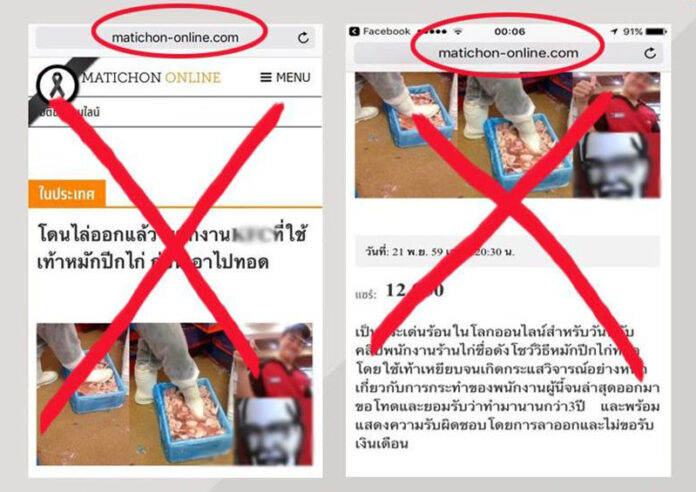
Matichon reports on a website with the URL Matichon-Online which posted fake news in May 2016. Image: Matichon

BANGKOK — Media experts have written a handbook to help Thai journalists avoid falling for fake news, in a world where readers can no longer take the truthfulness of news for granted.

The 44-page handbook, named “Fact-Check in Action” and funded by the US Embassy in Bangkok, is part of a broader project where over 200 media practitioners, students and academics have participated in workshops on news literacy.

Jessada Salathong, a communications lecturer at Chulalongkorn University and a co-author of the handbook, fears Thai media is no longer prepared for the challenges of distinguishing between trustworthy and false information, and maintaining trust from readers.

“Fake news is affecting reporting on politics. Fake news is affecting reporting on engineering. Fake news is affecting reporting on health. We need to get experts involved,” said Jessada, at the launch of the handbook at a conference on fake news at Chulalongkorn University’s Faculty of Communication Arts.

Since Thailand has no organization dedicated to independently fact-checking news, the handbook represents a concrete attempt at building cyber media literacy at the level of journalists and media practitioners.

Those interested in the handbook should contact Chulalongkorn’s Faculty of Communication Arts.

Media in Thailand appear increasingly alarmed over the crisis of disinformation in media, with at least three conferences on fake news held in Bangkok in the past two months alone.

Besides training media practitioners, Jessanda supports the idea of establishing an independent fact-checking not-for-profit, as has been proposed by some local experts and professionals.

“It would be good for the public to have an independent body that people can trust, which neither belongs to the government nor is controlled by capital,” he said.

But Jessada warned that fake news is not just a local phenomena, but can trickle into Thai media from foreign sources. The international nature of disinformation makes cross-border collaboration between fact-checking organizations necessary.

Meanwhile Zaharom Nain, a media scholar from the Malaysian campus of Nottingham University, called for “progressive” education of the public on the root causes behind fake news, such as state and corporate influences over media.

“It is difficult to address and correct all these things,” said Nain.

Related stories:

Thai Elderly Vulnerable to Fake News, Medicine Scams: Researcher

Advertisement

Most Bubble Tea in Thailand Exceeds Daily Sugar Intake: Consumer Foundation

BANGKOK — Milk, bubbles – and loads of sugar and preservatives.

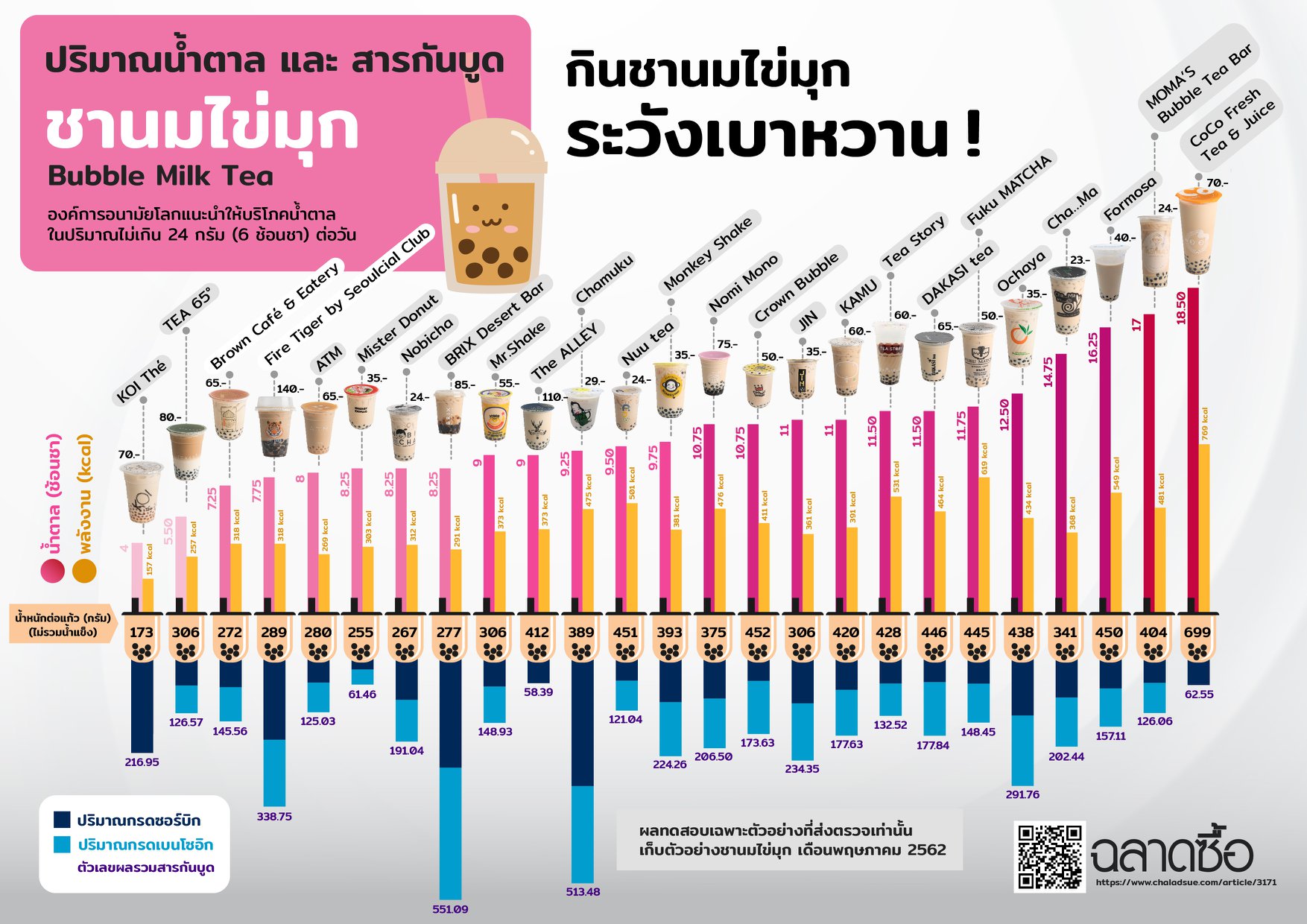
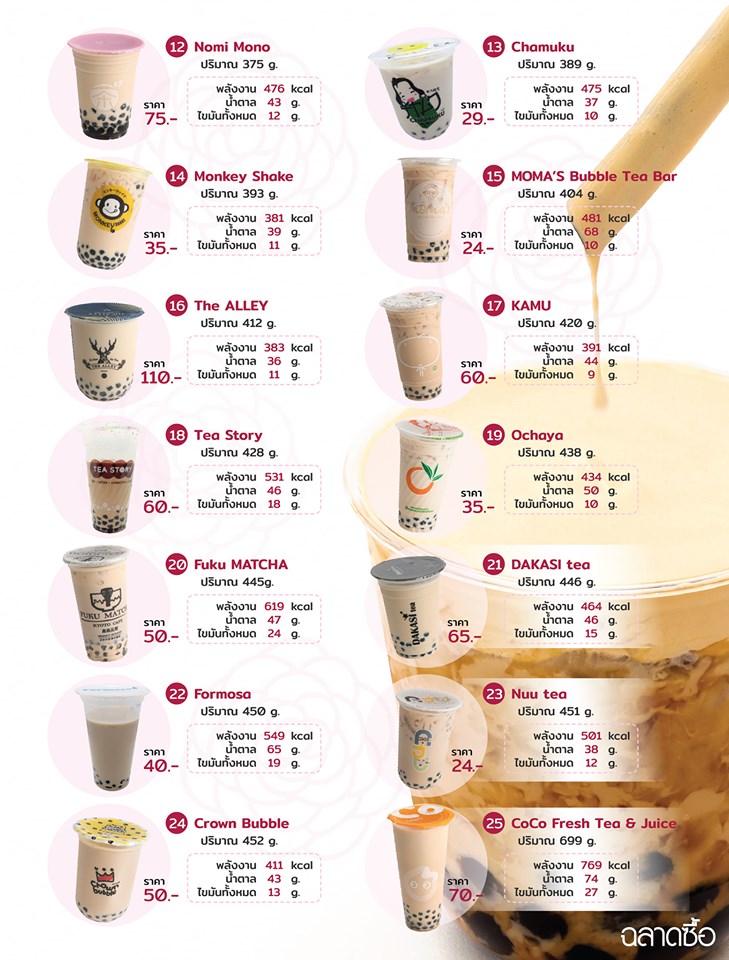
The Foundation for Consumers released research on Thursday on 25 brands of bubble milk tea in Thailand, finding that a cup from most brands contains more than the recommended daily sugar intake of 6 teaspoons.

“Even if you drink bubble tea with only four teaspoons of sugar, for the rest of the day you pretty much can’t eat anything else, especially with Thais’ habit of adding sugar to food,” said Mantana Chanwakul, the deputy director of a Health Min organization that discourages children from consuming sugar. “The sugar in one cup is more than enough for an entire day.”

Out of 25 tested brands, only two had less than 6 teaspoons of sugar, or 24 grams, which is the World Health Organization’s daily recommended sugar intake. All samples were bought in the “regular” size, with the “normal” amount of sugar, and without ice. Each glass cost from 23 to 140 baht.

The worst offender by far was CoCo Fresh Tea & Juice, which has a chilling 18.5 teaspoons or 74 grams of sugar per glass.

Only two brands were found to be within the recommended sugar range. Koi The contains 4 teaspoons (16 grams) of sugar per 70 baht glass while Tea 65 has 5.5 teaspoons (22 grams) of sugar per 80 baht glass.

Although preservatives were found in all tested brands, hip Taiwanese import The Alley had the least – 58.39 milligrams of sorbic acid. The most preserved pearls belonged to Brix Dessert Bar, which has a combined 551.59 milligrams of both benzoic and sorbic acid preservatives.

No lead was found in the boba pearls from any brand.

Sari Ong-somwang, editor of the Foundation for Consumers’ website, said that the Kasikorn Research Center Company estimates the bubble tea market in Thailand to be worth around 2 billion baht. The largest single market share belongs to Ochaya Tea, which is worth around 148 million baht and has around 360 branches nationwide.

Worldwide, the bubble tea industry is worth around 65 billion baht, according to 2017 statistics, which is set to rocket to 100 billion by 2023.

Thanyaphorn Rungreungthanja, founder of Cha Bar Bkk, whose brand was not included in the study, uses coconut sugar in her milk tea rather than the glucose syrup and corn syrup used in most brands.

“[Syrup] gives you the sense of a thicker, creamier milk tea,” Thanyaphorn said, when asked why many brands use syrups. Thanyaporn estimates that a regular size cup at Cha Bar contains 1 to 2 teaspoons of “homemade condensed milk made from coconut sugar.”

“I would say my bubble milk tea can be considered a healthier choice,” Thanyaporn said.

She also says that her boba, made from riceberry, doesn’t contain preservatives. Unlike normal tapioca boba, her boba has to be stored in the freezer.

“I think bubble milk tea brands should be more honest with customers. They should be concerned with consumers’ health, not just with how the tea tastes and looks,” Thanyaporn said.

Mantana also urges bubble tea proprietors to produce bubble tea with consumers’ health in mind.

“Hospitals are now packed with people with diabetes, heart disease, and clogged arteries,” Mantana.

In Thailand, health food labels have begun appearing on products with low sugar, while even junta leader Gen. Prayuth Chan-ocha has urged people to use stevia. But diabetes and obesity remain on a steady climb. One in 10 children are overweight, and waistlines, even among cops and monks, are steadily expanding.

The Foundation for Consumers is a public organization under the Ministry of Finance. Read the entire report on bubble tea in Thai here.

Related stories:

Prayuth Urges Thais to Use Stevia When Cooking

1 in 10 Thai Children Overweight: HealthMin

Obese Cops Sent to Fat Boot Camp for ‘Belly Destruction’

New Labels and Tax Take on Thailand’s Junk Food Problem


Advertisement

Not a Joke: Police Raid Khaosan For Laughing Gas

Balloons filled with nitrous oxide seized by the police on July 11.

BANGKOK — Nine vendors were arrested Thursday after police raided Khaosan Road for illegal sales of laughing gas.

Police Maj. Gen. Sukhun Phrommayon said the nine vendors selling nitrous oxide, popularly known as “laughing gas,” were charged for selling medicine without a license.

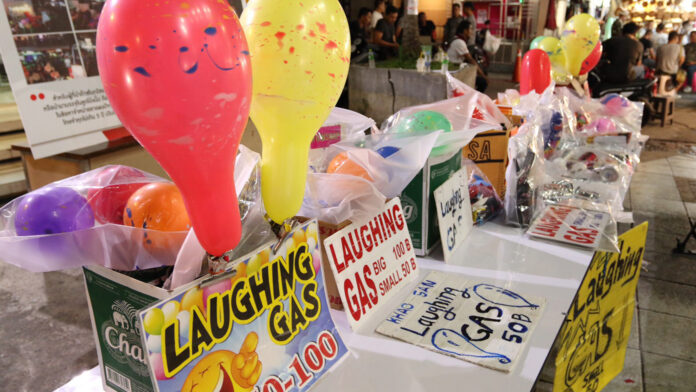
Sukhun said the raid was made after an informant informed authorities of the illicit gas being sold on Khaosan Road. Sales of the gas in the backpacker haven are popular known however, as shown across TripAdvisor reviews and videos of partygoers getting high on Youtube.

Health officials have warned against the recreational use of the gas, in which partygoers inhale the gas, sold in balloons, to bring on euphoria and hallucinations.

“An overdose can cause vomiting, disorientation, and even the loss of consciousness,” Food and Drugs Administration sec-gen Tares Krassanairawiwong said. “Prolonged use can lead to numbness of hands and feet, or even deaths as the gas can replace oxygen in the bloodstream.”

Under Thai law, nitrous oxide is a controlled medicine, which can only be administered for health purposes. The gas is used to induce anesthesia during operations, but is also used to fill air bags in the automobile industry.

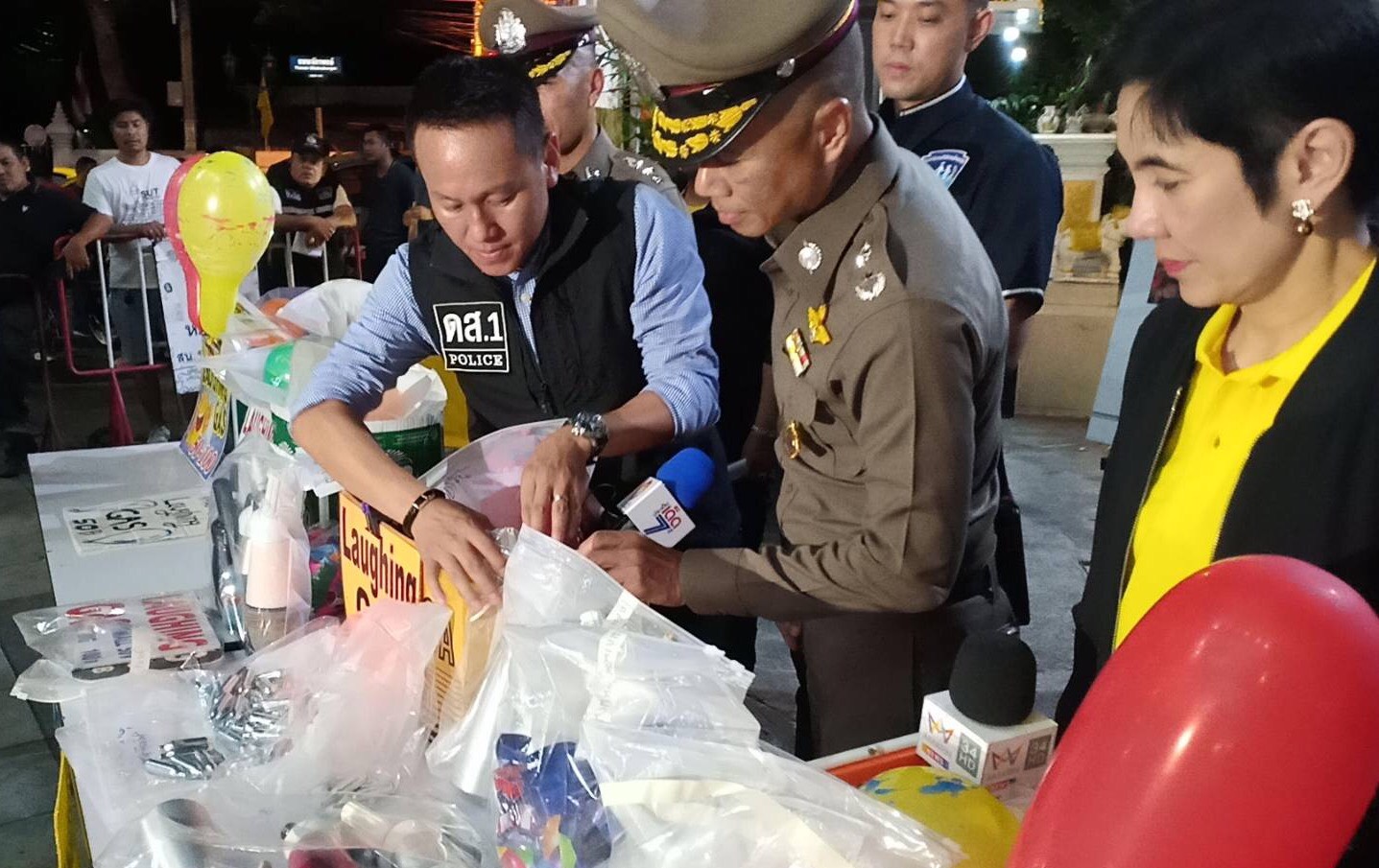
Officials examining the seized evidences on July 11.
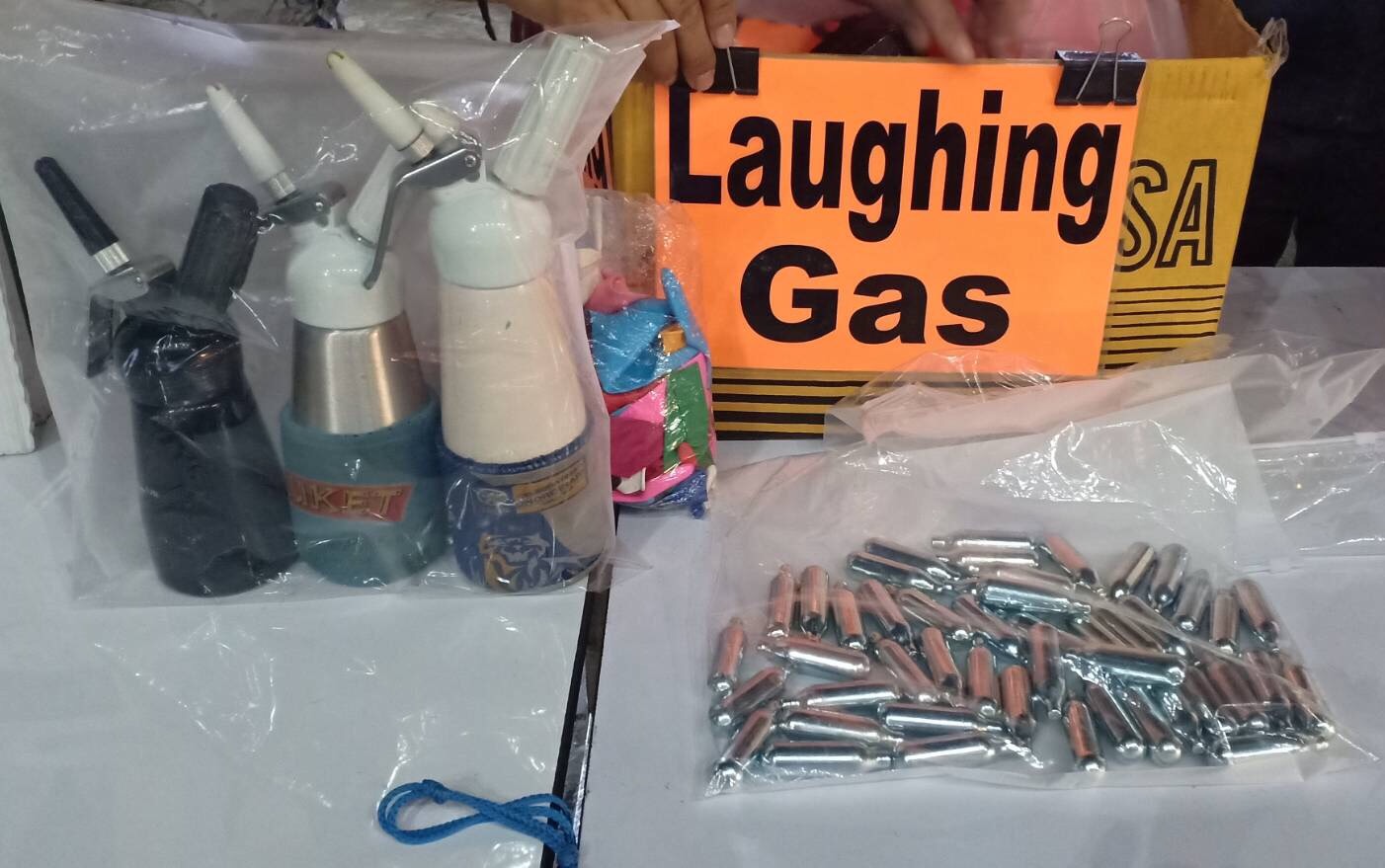
Whipped-cream chargers filled with nitrous oxide were found during the raid on July 11.
Advertisement

No Bones Found in Vatican Tombs Searched for Missing Girl

This picture taken on Wednesday, July 10, 2019 shows the view of the Teutonic Cemetery inside the Vatican. On Thursday, July 11, 2019 the Vatican opened a pair of tombs inside the cemetery after further investigation into the case of the 15-year-old daughter of a Vatican employee, Emanuela Orlandi, who disappeared in 1983 only to find that the tombs were empty. Photo: Gregorio Borgia / AP

VATICAN CITY — The tombs of two 19th-century German princesses were pried open at a tiny Holy See cemetery Thursday and turned out to be completely empty, dashing any expectations they held the remains of a teenager who vanished in 1983 after leaving her family’s Vatican City apartment.

Emanuela Orlandi’s disappearance is one of Italy’s most enduring mysteries, and the opening of the tombs at her family’s request was the latest search for possible leads to fail. Instead, the gravesite inspections raised only new questions: what happened to the remains of the two princesses who were buried in the side-by-side tombs in 1836 and 1840, respectively, in peaceful Teutonic Holy Field near St. Peter’s Basilica?

“The tombs are empty. We are all amazed,” Orlandi family lawyer Laura Sgro told reporters. It was Sgro who had received an anonymous letter suggesting the family check out the tomb in the cemetery where a stone angel holds a scroll reading in Latin “Rest in peace.”

Witnessing the tomb’s opening along with Sgro, and a technical expert for the Orlandi family was also Pietro Orlandi, whose 15-year-old sister disappeared after she went to her music lesson in Rome on June 22, 1983. The siblings’ father worked as a messenger for the Vatican, and the family lived in Vatican City State.

The Vatican said in a statement that the opening of the tombs “yielded a negative outcome. No human remains nor funereal urns were found.”

It said the inspection of Princess Sophie von Hohenlohe’s tomb turned up an underground chamber measuring roughly 4 by 3.7 meters (13 by 12 feet) that was “completely empty.” Then the stone lid of an adjacent sarcophagus of Princess Charlotte Federica di Mecklenburg was removed and inside “no human remains were found,” the Vatican said.

It added that relatives of the two princesses were informed that the tombs of their loved ones were empty.

A Holy See spokesman, Alessandro Gisotti, said the Vatican is combing through documentation about two structural projects that involved the cemetery area, one in the late 1800s, and the other between the 1960s and 1970s, in case that work might explain why the princesses’ remains weren’t there.

The Vatican had announced it had engaged a forensic anthropology expert, who is a professor of forensic medicine at a Rome university, to examine the remains and prepare them for DNA testing. But that arrangement proved premature when no remains were found.

Pietro Orlandi said that in a certain sense that no bones were found was “personally a relief,” since it would have been upsetting to view remains that might have been those of his sister.

Speculation has swirled around Orlandi’s fate for years. Conspiracy theories have abounded, including perhaps she was kidnapped as a part of a failed bid for the release of the Turkish gunman who shot and severely wounded Pope John Paul II in St. Peter’s Square in 1981.

Last year, two set of remains were found during renovations in the basement of a building on the grounds of the Vatican’s embassy in Rome. Scientific testing ruled out that the remains were Orlandi’s.

Story: Frances D’Emilio. Trisha Thomas contributed to this report.

Advertisement

Hot News

LATEST NEWS

Bangkok
overcast clouds
33.5 ° C
35 °
31.1 °
73 %
4kmh
100 %
Mon
34 °
Tue
34 °
Wed
35 °
Thu
31 °
Fri
30 °