31.6 C
Bangkok
Monday, June 15, 2026
Home Blog Page 161

Collapsed crane mostly cleaned up after six days

Collapsed crane mostly cleaned up after six days

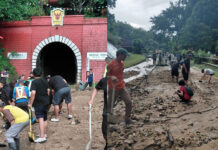
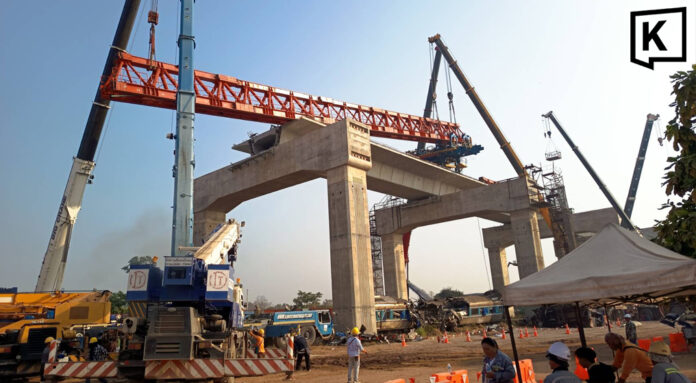
NAKHON RATCHASIMA — A contractor has removed most of a collapsed construction crane from a high-speed rail project site and expects rail repairs to begin later on Tuesday, officials said.

On 14 January 2026, the crane fell onto a passenger train, injuring and killing several people. At 17:00 on 19 January, workers from Italian-Thai Development began removing the damaged crane that was lodged above the construction area, cutting it into sections and lowering one piece. Crews then worked for nearly the entire night to bring down another section.

By about 06:30 on 20 January, workers had lowered a third damaged section, clearing all crane debris from one side of the site. Crews were racing to remove the remaining sections on the other side so engineers from the State Railway of Thailand can replace rails damaged in the incident.

Authorities expect the remaining crane parts to be removed later on Tuesday, allowing track repairs to proceed and normal train services to resume.

Advertisement

Cambodian immigrant dies after being held by ICE

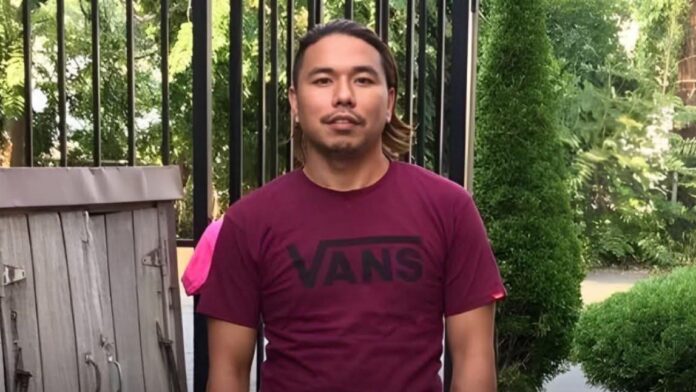
Parady La, a Cambodian immigrant raised in the United States, died after being found unresponsive while in ICE custody in Philadelphia.

PHILADELPHIA — The family of a Cambodian-born man raised in the United States is demanding answers after he died following a medical emergency while in custody of US Immigration and Customs Enforcement (ICE) at a federal detention centre in Philadelphia.

Parady La, 46, was taken into ICE custody on 6 January after leaving his home in Upper Darby, Pennsylvania, to buy groceries. His family said they were unaware of his detention and searched for him for hours before learning he had been held by immigration authorities.

ICE officials said La was found unresponsive in his cell the following day. Officers performed cardiopulmonary resuscitation and administered several doses of naloxone before he was taken to hospital in critical condition.

La died at around 03:22 on 9 January, after spending two days in hospital, officials said.

Relatives said La had struggled with drug addiction and believe he did not receive adequate care for withdrawal symptoms while in detention. His nephew, Michael La, said the family was told La had been vomiting and repeatedly asking for help and water while being held.

“He came here when he was two years old,” Michael La told NBC10. “People call him a Cambodian man, but he’s really an American man. He’s never even been to Cambodia.”

According to ICE, La arrived in the United States as a refugee in 1981 and became a permanent resident a year later. The agency said he later lost his legal status after committing several crimes between 1994 and 2022.

ICE said La was experiencing severe drug withdrawal and had been placed under medical observation at the detention facility. The agency said medical staff were aware of his condition and provided care in line with policy.

Medical findings cited by ICE included anoxic brain injury, shock and multi-organ failure. ICE said it has launched a review of the incident, which it said is standard procedure following a death in custody.

La’s family disputes ICE’s account and has questioned why naloxone — typically used for opioid overdoses — was administered if he was suffering from withdrawal.

“He was a real person. People loved him,” his daughter, Jazmine La, said, adding that the family would continue pressing for accountability.

While ICE has said it is committed to ensuring that all people in custody are held in safe, secure and humane conditions, the 32 who died in detention centres in 2025 are telling a different story.

Advertisement

Elderly monk attempts to stop donation box theft in Chonburi

Elderly monk attempts to stop donation box theft in Chonburi

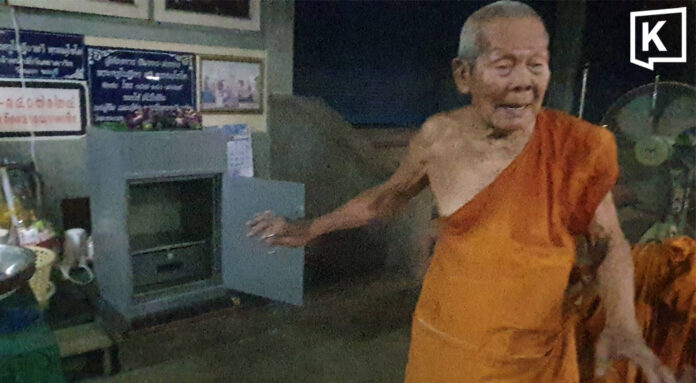
CHONBURI — An 87-year-old monk tried to raise the alarm after a thief broke into a donation box at a temple in Chonburi province early on Tuesday, but the suspect escaped with the cash, police said.

Police at Mueang Chonburi station were notified at 04:30 on 20 January 2026 of a break-in at Wat Nok in Mueang district. Officers who arrived at the scene found Phra Baidika Thawi Phromchoto, 87, along with villagers and monks, standing near a pavilion where a large steel donation box had been forced open. The box was damaged and all the money inside had been stolen.

Phra Thawi said the steel donation box had been completed and put into use just one day earlier. The box is used to collect donations from worshippers and for expenses related to temple activities and ceremonies.

He said the suspect used a metal tool to pry open the box and take all the cash inside. The elderly monk shouted for help and tried to make his way to nearby residents to ask them to help catch the thief, but the suspect fled before anyone could intervene.

He appealed to the perpetrator to stop targeting temples, saying donation money was given with sincere intent and stealing it was sinful.

Police said they would review CCTV footage from inside the temple and along nearby routes to identify and track down the suspect for legal action.

Advertisement

Rama II road again: Fire erupts at crane collapse site

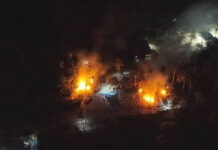
Fire erupts again at the Rama II Road construction site, sending thick black smoke into the air and triggering panic among workers and nearby residents.

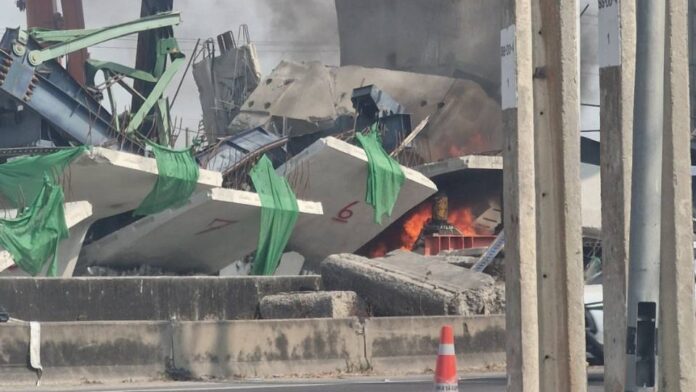
SAMUT SAKHON — A fire broke out again late on the morning of 20 January 2026 at a construction site on Rama II Road where a crane previously collapsed, causing panic among workers and nearby residents.

Reporters at the scene said flames erupted at two nearby points within the same area, sending thick black smoke into the air. Firefighters and rescue teams rushed in to contain the blaze and cordoned off the site for safety, barring public access.

Preliminary checks suggest the fire may have been triggered when materials fell and struck a hydraulic system below, causing hydraulic oil to leak. Officials believe the oil ignited after coming into contact with heat from surrounding steel structures and metal equipment, producing sparks, smoke and flames.

No injuries or deaths were reported.

Authorities said an investigation is under way to determine the exact cause and to assess the structural safety of the site to prevent further incidents.

Advertisement

What to know about the annual World Economic Forum meeting in Davos

The logo of the World Economy Forum is displayed on a window of the Congress Center where the Annual Meeting Forum take place in Davos, Switzerland, Monday, Jan. 19, 2026. (AP Photo/Markus Schreiber)

DAVOS, Switzerland (AP) — Nearly 3,000 high-level participants from business, government and beyond plus untold numbers of activists, journalists and outside observers are converging in the Swiss town of Davos for the World Economic Forum’s annual meeting.

Here’s a look at the latest edition of the elite affair in the Alpine snows:

The WEF and Davos

The forum is a think tank and event organizer based in Geneva whose main event — the annual meeting — debuted in 1971 in Davos, a ski-resort town of about 10,000 people at a height of about 1,500 meters (nearly 5,000 feet) in the Alps of eastern Switzerland.

The first edition, hosted by forum founder Klaus Schwab, featured a gathering of business executives.

Since then, the meeting has swelled into a catch-all conference on issues as diverse as economic disparity, climate change, technology, and global cooperation — as well as competition and conflict.

More than 200 sessions will tackle a wide array of issues.

Who’s going?

Organizers says a record of nearly 400 top political leaders, including more than 60 heads of state and government, and nearly 850 chairs and chief executives of many of the world’s leading companies.

Headlining the lineup is U.S. President Donald Trump, who’s set to deliver a speech on Wednesday, and several Cabinet ministers and top advisers including Secretary of State Marco Rubio, Treasury Secretary Scott Bessent and special envoy Steve Witkoff.

President Emmanuel Macron of France, European Commission President Ursula von der Leyen, President Ahmad al-Sharaa of Syria, Canadian Prime Minister Mark Carney, President Felix Tshisekedi of Congo, Vice Premier He Lifeng of China, and President Volodymyr Zelenskyy of Ukraine are among the who’s-who of top attendees.

Organizers say 55 ministers for economy and finance, 33 ministers for foreign affairs, 34 ministers for trade, commerce and industry, and 11 central bank governors are also expected.

Tech titans scheduled to be on hand include Jensen Huang of Nvidia. Microsoft’s Satya Nadella, Demis Hassabis of Google DeepMind, and Arthur Mensch of France’s Mistral AI.

NATO Secretary-General Mark Rutte and World Trade Organization Director-General Ngozi Okonjo-Iweala are among scores of top officials from international institutions.

What’s different this year?

The geopolitical context has become incredibly complex this year: Trump’s pronouncements and policies on subjects as diverse as Venezuela, Greenland and Iran — not to mention his aggressive tariff policies — have upended the world order and raised questions about America’s role in the world.

The advent of AI — its promise and perils — has also become a hot topic. Business executives will examine how to apply it to boost efficiency and profits; labor leaders and advocacy groups will warn of its threat to jobs and livelihoods, and policymakers will look to navigate the best way forward between regulation and right to innovate.

Davos conference organizers always trot out buzzwords for the meeting, and this year’s is “A Spirit of Dialogue” — around five themes of cooperation, growth, investment in people, innovation and building prosperity.

Critics say Davos is too much talk and not enough action to rectify gaping inequality in the world and address troubles like climate change.

Advertisement

Trump ties his stance on Greenland to not getting Nobel Peace Prize

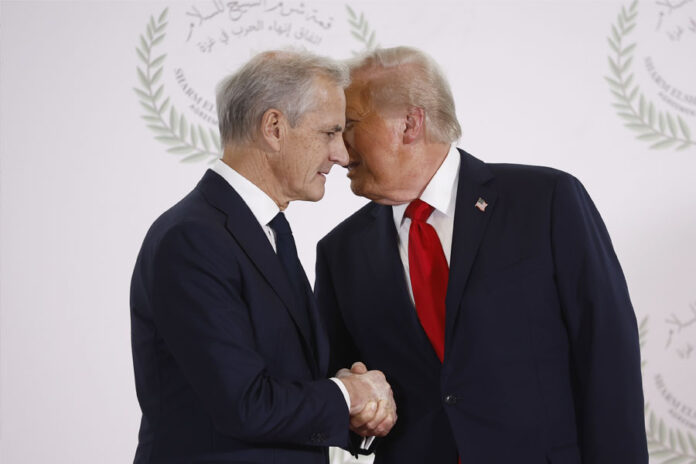
President Donald Trump and Norway's Prime Minister Jonas Gahr Store shake hands during the group photo at the Gaza International Peace Summit in Sharm el-Sheikh, Egypt, Oct.13 2025

NUUK, Greenland (AP) — U.S. President Donald Trump linked his aggressive stance on Greenland to last year’s decision not to award him the Nobel Peace Prize, telling Norway’s prime minister that he no longer felt “an obligation to think purely of Peace,” in a text message released Monday.

Trump’s message to Jonas Gahr Støre appears to ratchet up a standoff between Washington and its closest allies over his threats to take over Greenland, a self-governing territory of NATO member Denmark. On Saturday, Trump announced a 10% import tax starting in February on goods from eight nations that have rallied around Denmark and Greenland, including Norway.

Those countries issued a forceful rebuke.

Many longtime allies of the U.S. remained resolute that Greenland was not for sale but encouraged Washington to discuss solutions. In a statement on social media, the European Union’s foreign policy chief Kaja Kallas said the bloc had “no interest to pick a fight” but would “hold our ground.”

The White House has not ruled taking control of the strategic Arctic island by force. Asked whether Trump could invade Greenland, Danish Foreign Minister Lars Løkke Rasmussen said Monday that “you can’t leave anything out until the president himself has decided to leave anything out.”

British Prime Minister Keir Starmer also sought to de-escalate tensions Monday. “I think this can be resolved and should be resolved through calm discussion,” he said, adding that he did not believe military action would occur.

protest900x600
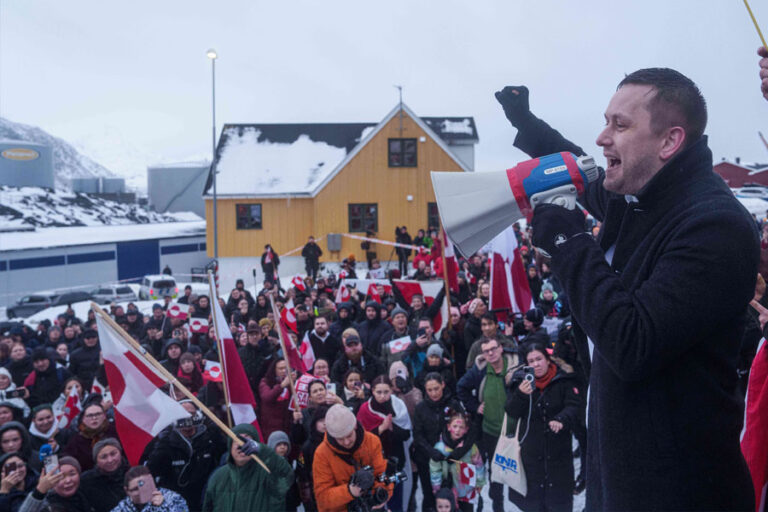
Greenlandic Prime Minister Jens-Frederik Nielsen speaks during a protest against Trump’s policy towards Greenland in front of the US consulate in Nuuk, Greenland, Saturday, Jan. 17, 2026.

Strong opposition in Greenland to U.S. threats

In a sign of how tensions have increased in recent days, thousands of Greenlanders marched over the weekend in protest of any effort to take over their island. Greenland Prime Minister Jens-Frederik Nielsen said in a Facebook post Monday that the tariff threats would not change their stance.

“We will not be pressured,” he wrote.

Meanwhile, Naaja Nathanielsen, Greenland’s minister for business, minerals, energy, justice and equality, told The Associated Press that she was moved by the quick response of allies to the tariff threat and said it showed that countries realize “this is about more than Greenland.”

“I think a lot of countries are afraid that if they let Greenland go, what would be next?”

Trump cites Nobel as escalation in text to Norwegian leader

Trump’s Sunday message to Gahr Støre, released by the Norwegian government, read in part, “Considering your Country decided not to give me the Nobel Peace Prize for having stopped 8 Wars PLUS, I no longer feel an obligation to think purely of Peace.”

It concluded, “The World is not secure unless we have Complete and Total Control of Greenland.”

The White House confirmed the authenticity of the message, with White House deputy press secretary Anna Kelly saying that Trump “is confident Greenlanders would be better served if protected by the United States from modern threats in the Arctic region.”

The Norwegian leader said Trump’s message was a reply to an earlier missive sent on behalf of himself and Finnish President Alexander Stubb, in which they conveyed their opposition to the tariff announcement, pointed to a need to de-escalate, and proposed a telephone conversation among the three leaders.

“Norway’s position on Greenland is clear. Greenland is a part of the Kingdom of Denmark, and Norway fully supports the Kingdom of Denmark on this matter,” the Norwegian leader said in a statement. “As regards the Nobel Peace Prize, I have clearly explained, including to President Trump what is well known, the prize is awarded by an independent Nobel Committee and not the Norwegian Government.”

The Norwegian Nobel Committee is an independent body whose five members are appointed by the Norwegian Parliament.

U.S. Treasury Secretary Scott Bessent defended the president’s approach in Greenland during a brief Q&A with reporters in Davos, Switzerland, which is hosting the World Economic Forum meeting this week.

“I think it’s a complete canard that the president would be doing this because of the Nobel,” Bessent said, immediately after saying he did not “know anything about the president’s letter to Norway.”

Trump has openly coveted the peace prize, which the committee awarded to Venezuelan opposition leader María Corina Machado last year. Last week, Machado presented her Nobel medal to Trump, who said he planned to keep it, though the committee said the prize can’t be revoked, transferred or shared with others.

Trump says he will use tariffs as a bargaining chip

In his latest threat of tariffs, Trump indicated the import taxes would be retaliation for last week’s deployment of symbolic numbers of troops from the European countries to Greenland — though he also suggested that he was using the tariffs as leverage to negotiate with Denmark.

European governments said that the troops traveled to the island to assess Arctic security, part of a response to Trump’s own concerns about interference from Russia and China.

The move by some European countries to deploy troops may have given the impression that an armada of ships was sailing to Greenland, when the reality was that European nations said they would send not more than a few dozen troops collectively, a senior European military official told The Associated Press speaking on condition of anonymity in order to talk publicly.

Trump threatened eight European countries with tariffs Sunday after they announced small numbers of troop deployments to the Arctic island – including Denmark, which Greenland is part of.

The European move was aimed at taking action on Trump’s concerns, the senior official told AP.

In a statement on social media, NATO Secretary General Mark Rutte said he had discussed how important the region was for the “collective security” of the security alliance in a Monday meeting with the foreign ministers of Denmark and Greenland.

Six of the eight countries targeted are part of the 27-member European Union, which operates as a single economic zone in terms of trade. European Council President António Costa said Sunday that the bloc’s leaders expressed “readiness to defend ourselves against any form of coercion.” He announced a summit for Thursday evening.

boat 900x600 1
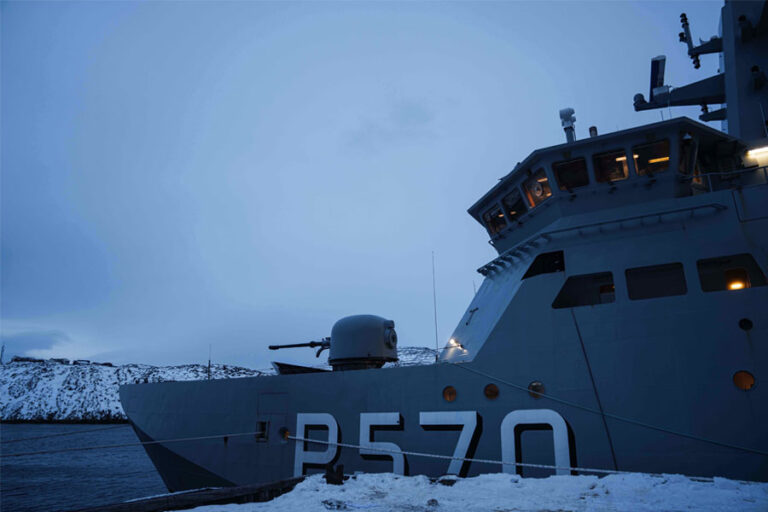
A military vessel HDMS Knud Rasmussen of the Royal Danish Navy docked in Nuuk, Greenland, on Saturday, Jan. 17, 2026.
Advertisement

22 migrants detained, then sing happy birthday to police

22 migrants detained, then sing happy birthday to police

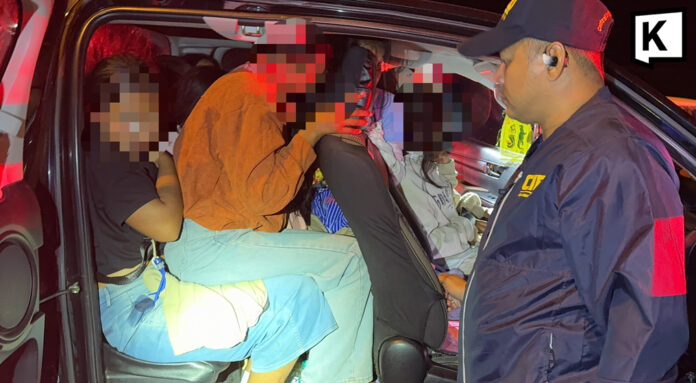
ANG THONG — Thai highway police and immigration officers have arrested 22 illegal migrant workers and three alleged smugglers after stopping two pickup trucks on an Asian Highway route in Ang Thong province late on 19 January 2026, authorities said.

The arrests were made at about 23:30 on Highway 32 inbound to Bangkok, at kilometre marker 58+100 in Chaiyarit subdistrict, Chaiyo district. Officers became suspicious after spotting two pickup trucks travelling together at high speed, making sudden lane changes, fitted with dark window tint and with tarp covering the rear.

Police stopped the vehicles and found a total of 22 migrants from Myanmar hidden in the cabins and cargo beds. None had passports or valid travel documents, officers said.

One vehicle, a black Toyota Revo pickup with Bangkok registration, was driven by Ms. Khamla Lungsoi, 21, from Chiang Mai province, with Mr. Archan, 29, from Mae Hong Son province, as a passenger. The second vehicle, also a black Toyota Revo with Chiang Mai registration, was driven by Mr. Chai Kham, 23, a Myanmar national.

The operation was led by Pol. Lt. Col. Suphakorn Tangkprasert, chief inspector of Highway Police Subdivision 1, Division 1, under the Highway Police Bureau, working with officers from several highway police units and the Ayutthaya immigration police.

During questioning, the three suspects allegedly admitted they had been hired via the Line messaging application by a broker known as “Korling” to transport undocumented migrant workers from Chiang Rai province to Khlong Luang district in Pathum Thani province. They said they were paid between 3,000 and 3,500 baht per person and had carried out similar trips four times before.

The migrants told police through an interpreter that they had crossed into Thailand by boat from Myanmar via Mae Sai district in Chiang Rai, paying brokers about 13,000 baht each in hopes of finding work.

Police charged the three suspects with harbouring and assisting illegal migrants to evade arrest. The migrants were charged with entering and staying in the kingdom without permission. All were taken, along with the seized vehicles, to Chaiyo police station for further legal proceedings.

In an unusual moment during processing, officers learned it was the birthday of Sgt. Maj. Wichai Tamsamai, a squad leader with the highway police unit. Colleagues surprised him with a cake, and the detainees joined in clapping and singing a birthday song, police said.

Advertisement

Hotel clerk beaten to death in Hua Hin robbery

Hotel clerk beaten to death in Hua Hin robbery

HUA HIN — A woman working at a hotel in the seaside town of Hua Hin was beaten to death at the reception counter during a robbery in the early hours of 19 January 2026, police said, as images of a suspect circulated widely on social media.

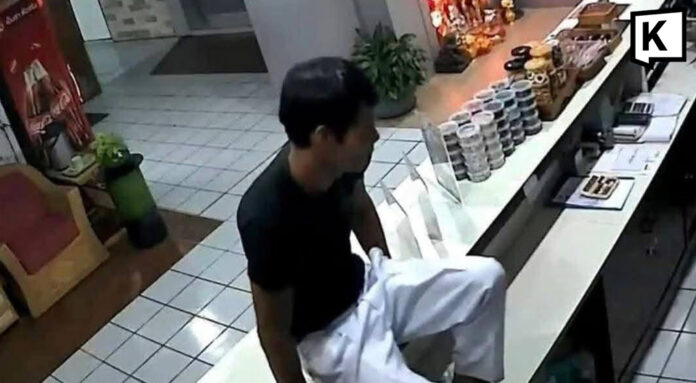
The attack occurred at about 03:07 at a hotel in Hua Hin district, Prachuap Khiri Khan province. Closed-circuit television footage shows a man believed to be aged between 35 and 40 entering the hotel, climbing over the reception counter and repeatedly striking the female clerk on the head with a metal weapon more than 10 times. The victim collapsed and died at the scene, police said. The suspect then stole property and fled.

Police said members of the public and news pages have been sharing CCTV images online in an effort to help track down the suspect.

Pol. Col. Kampanat Na Wichai, superintendent of Hua Hin police station, ordered investigators to secure the scene, trace the suspect’s escape route and gather evidence from witnesses. CCTV footage from the hotel is a key piece of evidence, police said.

Authorities said they have gathered sufficient evidence and obtained a warrant from the Hua Hin Provincial Court for the arrest of the suspect identified from the CCTV images. Police are continuing an urgent manhunt, citing the brutality of the crime and concerns for public safety.

Separately, police said Maj. Gen. Athon Chinthong, commander of Prachuap Khiri Khan Provincial Police, is expected to visit the area on 20 January 2026 to personally oversee the investigation and press for a swift resolution to restore public confidence.

Police urged anyone who recognises the suspect or has information to contact Hua Hin police station or call the emergency number 191 immediately.

Advertisement

Death toll in Spanish train collision rises to 39 and authorities fear more bodies could be found

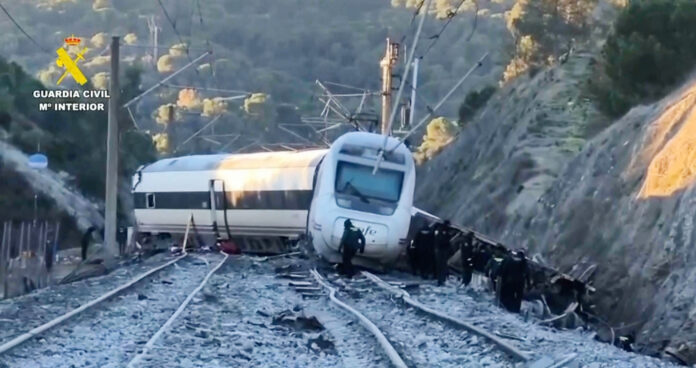
In this grab taken from video provided by Guardia Civil, rescue workers at the scene after a high speed train collision, in Adamuz, Spain, Monday, Jan. 19, 2026. (Guardia Civil via AP)

ADAMUZ, Spain (AP) — Spanish police said Monday that at least 39 people are confirmed dead in a high-speed rail collision the previous night in the south of the country when the tail end of a train jumped the track, causing another train speeding past in the opposite direction to derail.

The impact tossed the second train’s lead carriages off the track, sending them plummeting down a 4-meter (13-foot) slope. Some bodies were found hundreds of meters (feet) from the crash site, Andalusia regional president Juanma Moreno said, describing the wreckage a “mass of twisted metal” with bodies likely still to be found inside.

Efforts to recover the bodies continued Monday, and the death toll is likely to rise. Authorities are also focusing on attending hundreds of distraught family members and have asked for them to provide DNA samples to help in the identification of the victims.

The crash occurred Sunday at 7:45 p.m. when the tail end of a train carrying 289 passengers on the route from Malaga to the capital, Madrid, went off the rails at 7:45 p.m. It slammed into an incoming train traveling from Madrid to Huelva, another southern Spanish city, according to rail operator Adif.

The head of the second train, which was carrying nearly 200 passengers, took the brunt of the impact, Spanish Transport Minister Óscar Puente said. That collision knocked its first two carriages off the track. Puente said that it appeared the largest number of the deaths occurred in those carriages.

Authorities said all the survivors had been rescued in the early morning.

Moreno said Monday morning that emergency services were still searching for bodies.

“It is likely (that there will be more dead people found) when you look at the mass of metal that is there. The firefighters have done a great job, but unfortunately when they get the heavy machinery to lift the carriages it is probable we will find more victims.”

“Here at ground zero, when you look at this mass of twisted iron, you see the violence of the impact,” Moreno said.

Moreno said that authorities are also searching the area near the accident for possible bodies.

“The impact was so incredibly violent that we have found bodies hundreds of meters away,” Moreno said.

Identifying the victims

Various Spaniards who had loved ones traveling on the trains posted messages on social media saying they were unaccounted for and pleading for any information.

Spain’s Civil Guard opened an office in Cordoba, the nearest city to the crash, as well as Madrid, Malaga, Huelva and Seville for family members of the missing to seek help and leave DNA samples.

“Some of the dead are not easily identifiable and will need a DNA test,” Moreno said.

Video and photos showed twisted train cars lying on their sides under floodlights late on Sunday.

“The carriages were twisted. We had to work slowly, cutting through the wreckage,” Francisco Carmona, firefighter chief of Cordoba, told Onda Cero radio. “There were moments when we had to remove the dead to get to the living.”

Passengers reported climbing out of smashed windows, with some using emergency hammers to break the glass, according to Salvador Jiménez, a journalist for Spanish broadcaster RTVE, who was on board one of the derailed trains.

Jiménez did not suffer serious injuries, but saw bodies being pulled out of train cars, calling the image “harrowing.”

“A train can derail or have an accident,” Jiménez told the network by phone Monday, “but this magnitude of tragedy was unthinkable.”

Authorities said 159 people were injured. As of Monday, that included 11 adults and one child in critical condition.

‘Images that will stay in my mind’

The collision took place near Adamuz, a town in the province of Cordoba, about 370 kilometers (about 230 miles) south of Madrid.

A sports center in Adamuz was turned into a makeshift hospital, and the Spanish Red Cross set up a help center offering assistance to emergency services and people seeking information. Members of the Civil Guard and civil defense worked on site throughout the night.

“The scene was horrific. It was terrible,” Adamuz mayor Rafael Moreno told The Associated Press and other reporters. “People asking and begging for help. Those leaving the wreckage. Images that will always stay in my mind.”

Spanish King Felipe VI expressed his condolences Monday, adding that the royal house was looking into a visit to Adamuz in the coming days.

“I understand the desperation of the families and the number of injured people who have suffered this accident, and we are all really worried,” he said, speaking from Athens.

The Spanish flag was flown at half-mast in front of Parliament in Madrid for the victims on Monday.

Spanish Prime Minister Pedro Sánchez will visit the accident site on Monday, according to his office.

Officials call accident ‘strange’

Transport Minister Puente early Monday said the cause of the crash was unknown.

He called it “a truly strange” incident because it happened on a flat stretch of track that had been renovated in May. He also said the train that jumped the track was less than 4 years old. That train belonged to the Italian-owned company Iryo, while the second train, which took the brunt of the impact, was part of Spain’s public train company, Renfe.

According to Puente, the back part of the first train derailed and crashed into the head of the other train. When asked by reporters how long an inquiry into the crash’s cause could take, he said it could be a month.

Álvaro Fernández, the president of Renfe, told Spanish public radio RNE that both trains were well under the speed limit of 250 kph; he said one was going 205 kph, the other 210 kph. He also said that “human error could be ruled out.”

The incident “must be related to the moving equipment of Iryo or the infrastructure” the Renfe president said.

Iryo issued a statement on Monday saying that its train was manufactured in 2022 and passed its latest safety check on Jan. 15. It reiterated its condolences for the victims and said it would completely cooperate with the official investigation into the causes of the tragedy.

Train services Monday between Madrid and cities in Andalusia were canceled.

Spain leads Europe in high-speed trains

Spain has spent decades investing heavily in high-speed trains and currently has the largest rail network in Europe for trains moving over 250 kph (155 mph), with more than 3,100 kilometers (1,900 miles) of track, according to the European Union.

The network is a popular, competitively priced and safe mode of transport. Renfe said more than 25 million passengers took one of its high-speed trains in 2024.

Sunday’s accident was the first with deaths on a high-speed train since Spain’s high-speed rail network opened its first line in 1992.

Spain’s worst train accident this century occurred in 2013, when 80 people died after a train derailed in the country’s northwest. An investigation concluded the train was traveling 179 kph (111 mph) on a stretch with an 80 kph (50 mph) speed limit when it left the tracks. That stretch of track was not high speed.

___

Wilson reported from Barcelona, Spain, and Naishadham from Madrid. AP journalist Barry Hatton contributed from Lisbon, Portugal.


Advertisement

Chiang Mai Night Market opens with lights and mapping

Chiang Mai Night Market opens with lights and mapping

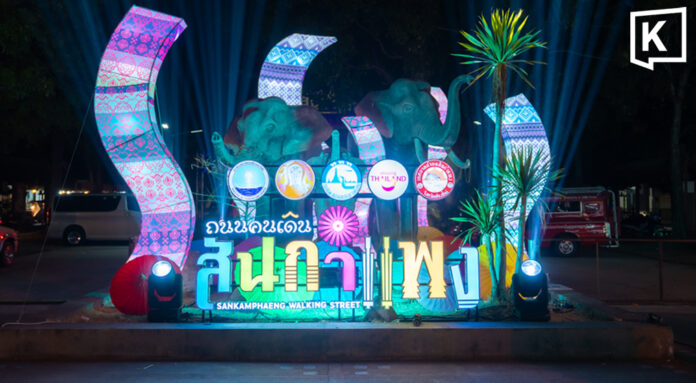
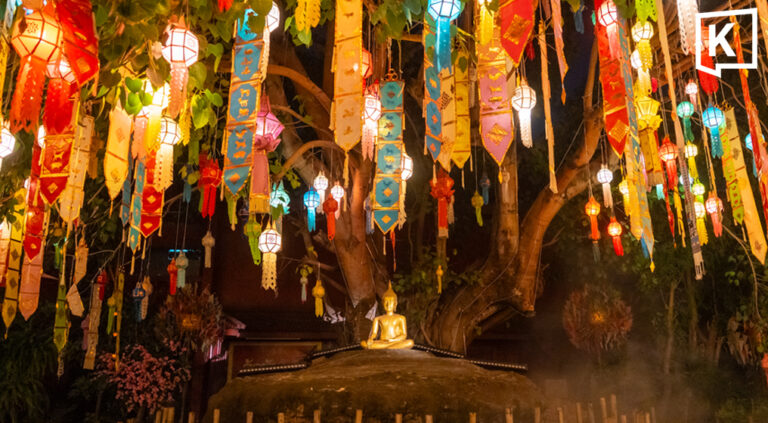
CHIANG MAI — 18 January 2026, Chiang Mai Municipality, in collaboration with the Tourism Authority of Thailand, officially opened the “Chiang Mai Night Market” on Sunday evening at Tha Phae Walking Street in the heart of the city.
The opening ceremony was presided over by Apichai Chatchalermkit, deputy governor for domestic marketing at the Tourism Authority of Thailand, and Pojjana Srisilpanan, deputy mayor of Chiang Mai, amid a lively atmosphere with large numbers of local residents and tourists in attendance.

The Chiang Mai Night Market aims to stimulate the local economy and tourism. The event is held under the theme “Tha Phae Remix: Chiang Mai Remake,” blending art, light, digital colour and contemporary performance techniques with the old city’s ambience, cultural heritage and modern lifestyle. It also encourages visitors to Chiang Mai to travel to nearby provinces, supporting domestic travel from major cities to emerging destinations and secondary areas, while creating momentum for continued tourism during the early months of 2026.

Chiang Mai Night Market opens with lights and mapping

The Chiang Mai Night Market is held every Sunday from 18 January to 1 March 2026, specifically on 18 and 25 January; 1, 15 and 22 February; and 1 March, from 16:00 to 22:00.

Highlights include landmark and art installations, interactive lighting, main and mini music stages, creative spaces, the Suep Sin courtyard, workshop zones and information installations.

Live performances by well-known artists are scheduled across six Sundays: Proxie on 18 January; No One Else on 25 January; Atom on 1 February; ATLAS and Sarah Salola on 15 February; Serious Bacon on 22 February; and Season Five on 1 March.

Free shuttle bus services are provided throughout the event on two routes: One Nimman–Chang Phueak Market–Three Kings Monument–Wat Phra Singh Woramahawihan; and Tha Phae Gate Square–Wat Sri Don Chai–Chiang Mai Gate Market–Wat Chedi Luang Woramahawihan.

Chiang Mai Night Market opens with lights and mapping

Visitors who spend 200 baht per receipt at the event will receive discount vouchers for tourism-related goods and services, such as accommodation, restaurants and spas, redeemable at the event’s public relations points. Attendees can also join a Passport Check-In activity by collecting stamps at all 11 landmark and installation points to receive souvenirs.

Free craft workshops are available daily, limited to eight sessions per day with 15 participants per session, lasting 40 minutes each, starting from 16:00 All activities and performances at Tha Phae Walking Street will be suspended on 8 February 2026.

Advertisement

Hot News

LATEST NEWS

Bangkok
broken clouds
31.6 ° C
32.8 °
30.5 °
79 %
4kmh
79 %
Mon
32 °
Tue
35 °
Wed
35 °
Thu
36 °
Fri
36 °