32.1 C
Bangkok
Saturday, June 13, 2026
Home Blog Page 162

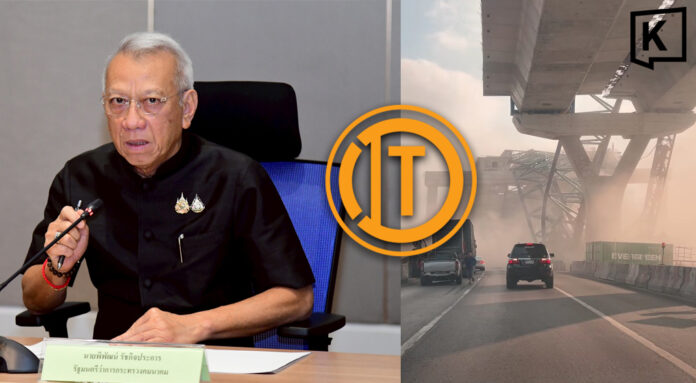
Thailand reviews cancelling ITD contracts after accidents

Thailand reviews cancelling ITD contracts after accidents

BANGKOK  — 16 January 2026, Thailand’s transport ministry is reviewing procedures to terminate construction contracts with Italian-Thai Development Plc (ITD) on two major projects following a series of accidents, Deputy Prime Minister and Transport Minister Phiphat Ratchakitprakarn said on Thursday.

Speaking after chairing a meeting with relevant agencies at the Ministry of Transport, Phiphat said a fact-finding committee had been tasked with examining whether the government could legally cancel contracts with ITD for two projects under the prime minister’s directive.

The contracts under review include civil works on the Thai–Chinese high-speed rail project, Contract 3-4 covering the Lam Takhong–Sikhio and Kut Chik–Khok Kruat sections, and the elevated highway project on the Ekachai–Ban Phaeo route, part of Motorway M82, Section 7. The committee has been given seven days to reach a conclusion, including consideration of international legal principles and administrative law.

Phiphat said compensation was already being provided to victims of a recent accident in Sikhio district. The State Railway of Thailand has paid initial assistance of 340,000 baht per person, while Dhipaya Insurance Plc will pay 1 million baht per fatality. The compensation will be formally presented by the prime minister next week. Measures to assist victims of a separate accident on Rama II Road are still under consideration.

Addressing concerns about potential legal action, Phiphat said cancelling the contracts would be difficult but necessary, citing public safety as the top priority. He noted that both projects were large-scale works that had seen frequent and closely spaced accidents.

He said the ministry had consulted the Council of State and the Comptroller General’s Department, which advised that the contracts could be terminated under administrative law, even if this led to lawsuits from the private contractor.

Phiphat said the ministry would proceed with cancelling the two contracts even though construction on the Thai–Chinese rail project was about 99% complete. He acknowledged that legal action from the contractor was likely but said the government would accept the risk to ensure the projects could move forward under safer conditions.

He also ordered an immediate halt to all ITD construction projects under the transport ministry’s supervision. Specialists from the Engineering Council of Thailand and the Engineering Institute of Thailand will inspect machinery, equipment and safety standards over the next 7–15 days. Projects found to be unrelated to the accidents and meeting safety requirements may be allowed to resume.

Jirapong Theppithak, deputy permanent secretary for transport and head of the highway infrastructure development cluster, said 14 ITD contracts would be suspended for 15 days to allow for detailed safety inspections. Findings will be reported to the ministry for further legal and administrative action.

He added that large construction projects operated by all companies under the ministry’s oversight would also be temporarily suspended for up to 15 days to undergo similar safety checks.

Advertisement

Oil tanker crash sparks blaze on Korat mountain road

Oil tanker crash sparks blaze on Korat mountain road

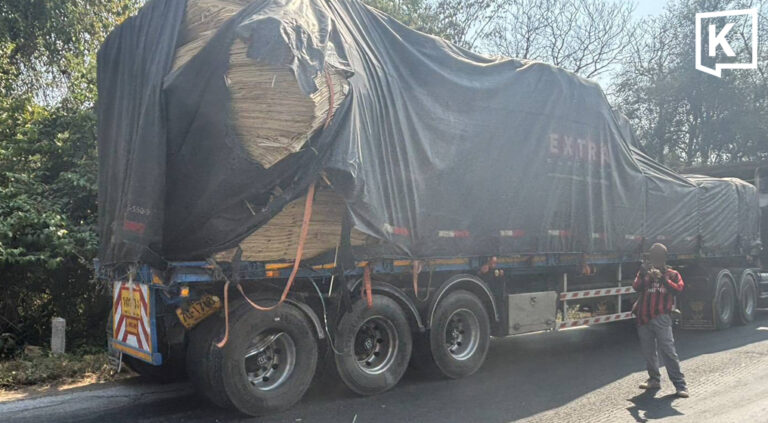
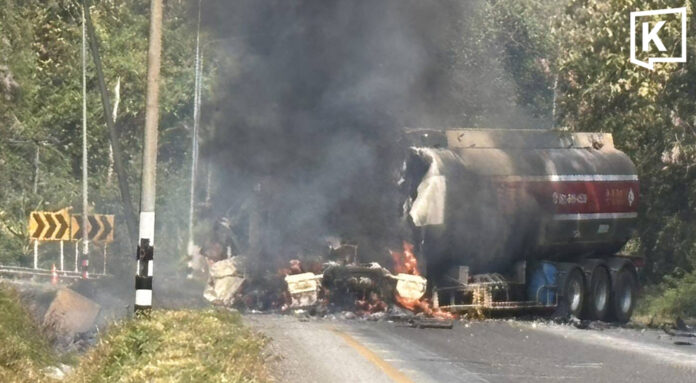
NAKHON RATCHASIMA — 16 January 2026, A trailer truck transporting oil slammed into the rear of a paper-laden trailer, sparking a fire on Highway 304 in Wang Nam Khiao district of Nakhon Ratchasima province on Thursday morning, authorities said.

The accident occurred at about 10:30 on the Ratchasima–Kabin Buri road at kilometre marker 243, on the first uphill curve in the Wang Nam Khiao area near Ban Huai Nam Khem, in front of Kasetsart University’s Faculty of Forestry research and training station.

oil truck burn 2
Officers used water and foam to contain the blaze for more than 30 minutes.

Rescue workers from the Hook 31 foundation in Udom Sap subdistrict said the oil tanker caught fire after rear-ending the paper truck. One person, the oil truck driver, was injured, suffering a head wound. Officials said the tanker was empty at the time, preventing a more serious disaster.

Fire engines from Udom Sap and Phu Luang subdistrict administrative organisations used water and foam to contain the blaze, which took more than 30 minutes to bring under control.

The crash caused traffic heading towards Kabin Buri to back up for several kilometres. Police from Udom Sap station worked to clear the scene and temporarily opened a special lane allowing vehicles to take turns using the opposite carriageway. Normal traffic flow was restored after more than one hour.

Oil tanker crash sparks blaze on Korat mountain road
The paper truck sustained minor damage to its rear section and wheels.

Police said the injured tanker driver told investigators he had returned from delivering fuel to a petrol station in Khon Kaen province and was driving an empty truck to collect more fuel from a depot in Rayong province. As he approached the uphill curve, he was unable to brake in time when a fully loaded paper trailer was travelling ahead, causing his vehicle to lose control and crash violently into the rear of the truck.

The paper truck sustained minor damage to its rear section and wheels, police said.

Advertisement

Engineers urge reforms after repeated crane collapses

Engineers urge reforms after repeated crane collapses

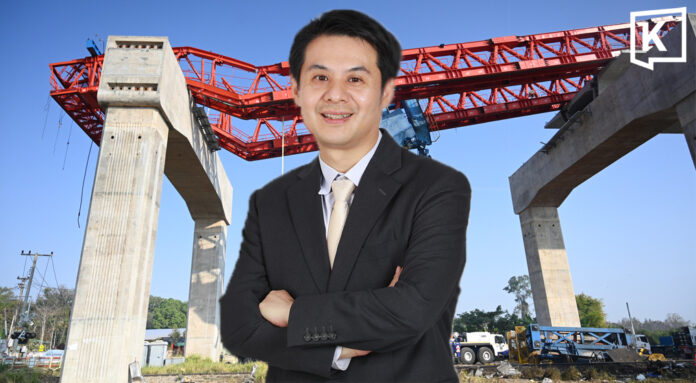
THAILAND — The Structural Engineers Association of Thailand has proposed six measures to halt a recurring cycle of construction crane collapses, citing a series of accidents that point to serious shortcomings in safety standards for public infrastructure projects.

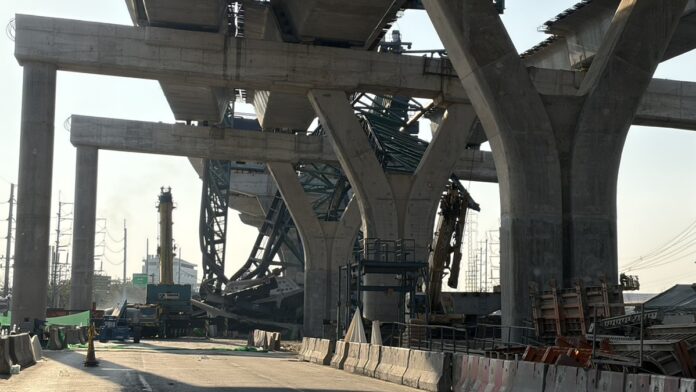
The call follows four launcher crane collapses since work began on the Lat Krabang–On Nut elevated road project in July 2023, construction on Rama II Road in November 2024, a high-speed rail project in Sikhiu, and most recently another collapse on Rama II Road on 14–15 January 2026. These incidents come in addition to a building collapse caused by an earthquake and sinkholes linked to underground rail construction in 2025.

Taken together, the repeated construction failures indicate that Thailand is facing a severe crisis in construction standards for structures in public areas.

Professor Dr. Amorn Pimanmas, president of the Structural Engineers Association of Thailand and a lecturer at the Faculty of Engineering, Kasetsart University, said all of the collapses occurred on government construction projects and require systematic solutions that address root causes. He outlined six proposals:

  1. Suspend all government construction projects using launcher cranes in public areas and comprehensively review construction standards.
  2. Establish an independent investigation committee, separate from project-owning agencies. Findings must be made public, and other professional bodies not represented on the committee should be allowed to provide input to prevent professional collusion or concealment of the true causes.
  3. Impose serious criminal and civil penalties on those found responsible, and blacklist offending contractors from future construction projects.
  4. Address subcontracting practices. Main contractors awarded government projects often subcontract work to lower-quality firms, with or without formal contracts, while taking commissions. Subcontractors frequently lack the engineers, personnel, materials, equipment or machinery specified in the main contract, undermining safety standards. The state must issue clear, standardised rules governing subcontracting.
  5. Tackle the use of nominee arrangements for foreign construction capital. Over the past three to four years, foreign firms unable to bid for government projects due to registration requirements have partnered with Thai contractors to submit bids at cut prices. Once awarded, the work is effectively carried out by the foreign firms, while Thai partners receive a percentage. Low bids make it difficult to maintain safety standards.
  6. Introduce registration rules for launcher cranes. Many low-cost, second-hand launcher cranes are imported and used in construction. Some are modified using substandard steel and lack certification by qualified engineers, yet are still deployed due to weak state oversight and registration.

Professor Dr. Amorn said the government must fully understand these six root causes and urgently introduce measures, or amend laws and regulations, to raise construction standards and eliminate the risk of future launcher crane collapses in Thailand.

Advertisement

Thai police arrest Taiwanese drug kingpin in Bangkok

Thai police arrest Taiwanese drug kingpin in Bangkok

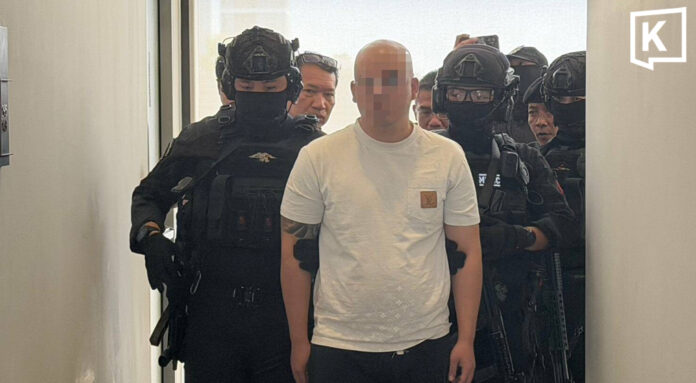
BANGKOK — 16 January 2026, Thai narcotics police have arrested a Taiwanese described as a key mastermind behind a transnational drug trafficking network, uncovering drugs concealed inside carpets and equipment allegedly prepared for export, authorities said.

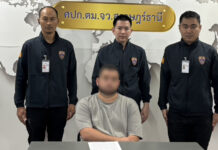
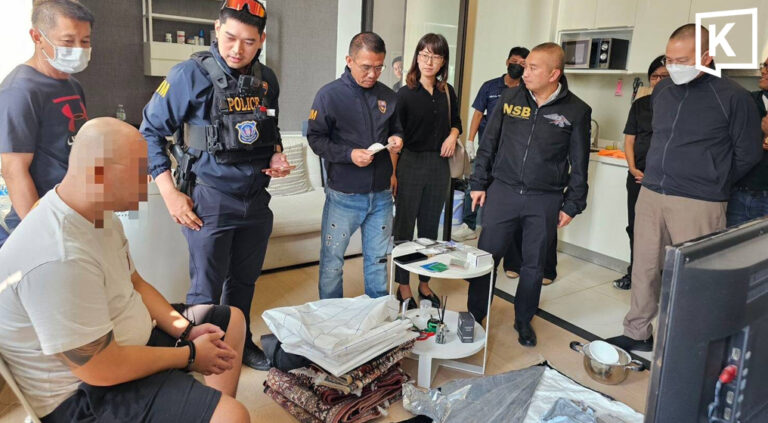
The suspect, Chiang Ming Feng, 27, was arrested on 15 January 2026 at a condominium in the Asok area of Bangkok during a joint operation by the Narcotics Suppression Bureau, the Immigration Bureau’s investigation division and the Metropolitan Police investigative unit.

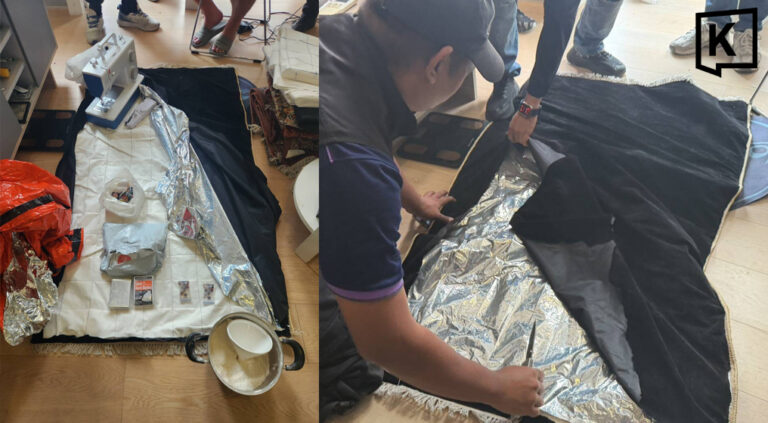
Police said Chiang was the principal coordinator of an international drug trafficking ring and had fled foreign arrest warrants before entering Thailand. A search of his room uncovered about 5 grammes of ketamine and numerous suspicious items, including several large carpets, a sewing machine and sewing tools.

taiwanese drug lord 2
The carpets stitched with multiple hidden compartments containing white powder resembling illicit drugs, for overseas shipment

Investigators said the carpets had been stitched with multiple hidden compartments containing white powder resembling illicit drugs, packed in a manner suggesting preparation for overseas shipment. The substances are undergoing detailed forensic examination.

A deeper investigation found that Chiang allegedly served as the “brain” of the network, planning and directing drug shipments abroad. Authorities said the group converted heroin, a category 1 narcotic, into a white liquid resembling lotion, which was then concealed in fake containers with realistic packaging to evade detection. The parcels were allegedly sent overseas through international postal services.

Police said intelligence indicated that about two crates of liquid heroin, weighing roughly 10 kilogrammes in total, had been smuggled from Laos to Taiwan, leading investigators to identify Chiang as the organiser behind the operation.

Background checks showed that Chiang is wanted by Taiwanese authorities under four serious criminal charges: attempted murder, participation in a criminal organisation, fraud and theft.

taiwanese drug lord 3
Chiang Ming Feng, 27, was arrested at a condominium in the Asok area of Bangkok.

Thai immigration officials have revoked his permission to stay in the country. He has been transferred to the Narcotics Suppression Bureau for prosecution under Thai law, while authorities coordinate with domestic and foreign agencies, including those in Taiwan, to expand the investigation and pursue other members of the network.

Lt. Gen. Archayon Kraithon, commissioner of the Narcotics Suppression Bureau, said the arrest marked a significant success in dismantling a sophisticated transnational drug network.

He said authorities would continue expanding the investigation to prevent Thailand from becoming a safe haven for international criminal groups and would work closely with Taiwanese officials to ensure legal proceedings are carried out to their full extent.

Advertisement

Italian-Thai Developer Wins Contracts Worth More Than 26 Billion Baht After Audit Office Building Collapse

Italian-Thai Wins Contracts Worth More Than 26 Billion Baht After Audit Office Building Collapse
Advertisement

Steel rod falls from luxury condo crane into Phuket home

Steel rod falls from luxury condo crane into Phuket home

PHUKET — 15 January 2026, A homeowner in Phuket has complained after a large steel reinforcing bar fell from a crane at a luxury condominium project and pierced her house, prompting safety concerns and an ongoing dispute over responsibility.

On 15 January 2026, the Phuket based Facebook page “โหดจัง จังหวัดภูเก็ต” shared a 1 minute 12 second video showing a woman filming the aftermath of the incident, in which a heavy steel rod dropped from a crane and crashed through her home. The incident occurred within a luxury condominium project near Surin Beach, known as The Petit Tycoon by The Chardonnay, located on Soi Surin 8/3 in Choeng Thale subdistrict, Thalang district, Phuket. The incident happened on the night of 14 January 2026 at about 20:00.

The page captioned the video: “Phuket is no exception!! A luxury condo project in the Surin Beach area dropped steel from a #crane through a house. Residents are terrified — there are small children and a bedridden patient. Fears it could happen again!!”

In the video, the homeowner, visibly shaken, describes the incident, saying she had already experienced problems linked to the same project, including water leaking previously that caused cracks throughout the house. She said rainwater had earlier poured from the roof onto several cars. Referring to the steel bar, she said it was extremely large and landed in an area where family members usually sit and work, adding that the impact appeared to have shaken the entire house.

After the clip circulated online, many users posted comments expressing concern that as urban development increases, so do dangers. Others questioned who would be responsible if the falling steel had struck a person and criticised the company for failing to ensure safety. Some advised the homeowner to hire an independent engineer or professional inspector to assess the damage rather than relying on personnel from the project, warning she could be at a disadvantage. Many also noted it was fortunate no one was injured or killed, amid wider public concern over a recent spate of crane-related accidents.

Police said the homeowner filed a complaint with investigators at Choeng Thale police station after the incident. Officers later inspected the scene and met with a representative of the condominium project.

However, following discussions, responsibility remained unclear, with parties within the project reportedly shifting blame among themselves. As a result, the steel rod that fell from the crane remains lodged in the damaged house, with no concrete repair or remedial action taken so far.

Advertisement

Thai-Korean newlyweds killed in train-crane tragedy, one day after marriage registration

Surattiyakorn Kanya, 35, and Kim Yongho, 37, a South Korean national, who died in the train accident one day after registering their marriage.

SISAKET — A Thai woman and her South Korean husband who had registered their marriage just one day earlier were among those killed when a construction crane collapsed onto a passenger train in Nakhon Ratchasima province.

The victims were identified as Surattiyakorn Kanya, 35, also known as “Kai,” and her husband Kim Yongho, 37, a South Korean national.

The couple had been travelling on Special Express Train No. 21, which runs from Bangkok’s Krung Thep Aphiwat Central Terminal to Ubon Ratchathani, when the crane fell onto the train in Nakhon Ratchasima, causing multiple deaths and injuries.

On 15 January, reporters visited the couple’s family home in Wang Hin district, Sisaket province, where relatives and local residents were preparing the site to receive the bodies for funeral rites. The atmosphere was sombre as family members gathered to mourn.

news103404 ChUAYCVYpy1768472353
Lam-yong Kanya, Surattiyakorn Kanya’s mother, at her home after learning of her daughter’s death in the train accident.

Surattiyakorn’s mother, Lam-yong Kanya, 60, said her daughter had been in a relationship with her husband for more than 10 years before the couple decided to return to Thailand to formally register their marriage.

They arrived in Thailand on 19 December 2025 and spent time with family before registering their marriage at the Department of Consular Affairs at the Ministry of Foreign Affairs on 13 January 2026, just one day before the fatal accident.

After registering their marriage, the couple boarded the train to return home to Wang Hin district, planning to register their marriage again at the local district office.

“I learned around 10:00 on 13 January that my daughter and son-in-law had been killed by the crane collapse. I was devastated. I don’t know how to go on,” Lam-yong said. “My two grandchildren have now lost their mother, and I will have to take care of them.”

A check of Surattiyakorn’s Facebook account showed her final post was a photo of herself and her husband in front of the Department of Consular Affairs, captioned simply: “Successfully completed.”

It became her last message before the couple’s newly begun life together ended in tragedy.

Advertisement

A single sound that changed everything: the Korat train crane tragedy and the lives it shattered

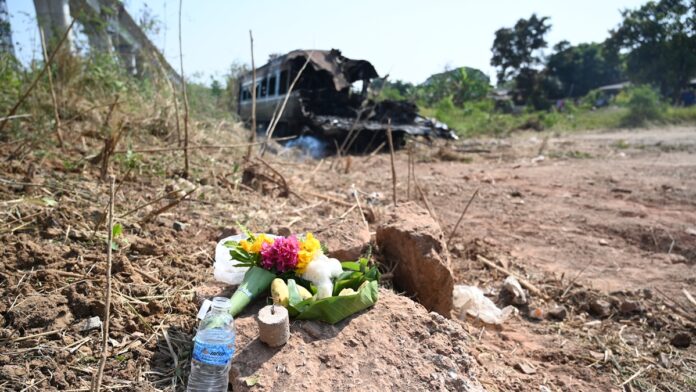
Flowers are placed at the scene of the Korat train crash, where a crane collapsed onto a passenger train, killing more than 30 people.

A single, dull sound marked the beginning of one of Thailand’s deadliest rail disasters.

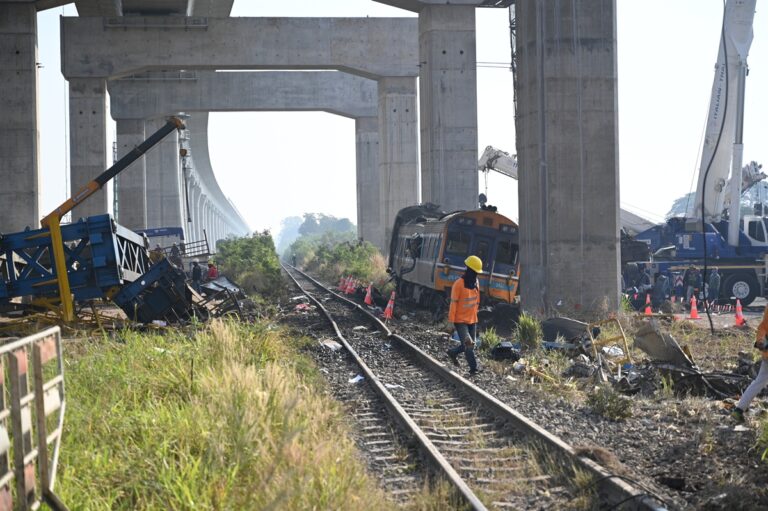
A construction crane for the high speed rail project collapsed onto a passenger train near Sikhio district in Nakhon Ratchasima province, killing more than 30 people. Metal debris, fire and smoke replaced what had been an ordinary journey home and left families facing sudden loss.

S 3981327 0
Rescue workers walk through the scene of the Korat train crash after a crane collapsed onto a passenger train.

Among the survivors is Teaw Eimer Tenbrink, 63, who was injured in the crash and later travelled to Sikhio Hospital to claim the body of her German husband, who was killed in the incident.

She said the couple had boarded Train No. 3 to return to their home in Surin, a journey they made regularly and believed to be safe.

“Everything happened very fast,” she said. “I heard a loud sound and then I saw metal come through the roof and hit my husband. I tried to help him.”

S 426483719 0
Taew Eimer Tenbrink, a survivor, speaks to a reporter after the incident.

“But someone shouted that we had to get out because fuel was leaking. I climbed out through the window and asked people to help my husband, but it was too late.”

After learning of his death, she contacted the embassy and called her daughter in Germany, who is now travelling to Thailand to collect her father’s body.

She said she remains in shock and has difficulty sleeping since the accident.

The couple had been married for 40 years. Her husband enjoyed spending time in Thailand and visited regularly. They had planned a trip to Koh Samui but decided to return home first.

At the crash site, another mother arrived to light incense for her 40 year old son, who was killed in the disaster.

She said her son was an engineer who preferred travelling by train because he believed it was safer than other forms of transport.

“He was coming home,” she said. “He never arrived.”

She called for those responsible to be held accountable, saying her son had been supporting the family and had planned to continue working for several more years.

Seventy one year old Boonyuen Jathong came to collect the body of his daughter, Aricha, 40, who was travelling from Bangkok to Sisaket for a funeral.

She had stayed in contact during the journey, sending photos and making phone calls until communication suddenly stopped.

“When I heard there was a crane collapse on the train, I thought it might be her,” he said.

Boonyuen, who has worked as a village undertaker for more than 60 years, said he never imagined he would one day collect the body of his own child.

Local resident Somjai, 55, was among the first to enter the damaged carriage to help.

S 3981347 0
Somjai, a local resident who arrived at the scene minutes after the accident, helped victims.

He broke a window and climbed inside carriage three, where he saw injured passengers and several bodies. He helped free a young boy who was trapped and then returned to help the boy’s mother before the fire spread further.

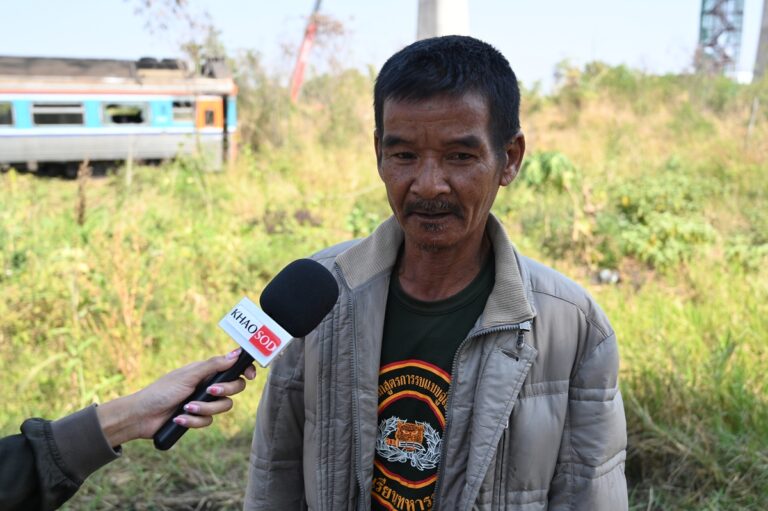
Another witness, Bee, who runs a food stall nearby, said she heard a loud crash and saw smoke coming from the train.

“People were climbing out to escape. There were children, elderly people and foreigners,” she said. “We tried to help as many as we could, but the fire became too strong.”

Authorities are continuing to investigate the cause of the collapse and the safety conditions at the construction site.

What remains are damaged carriages, an ongoing investigation and families whose lives have been permanently changed by the accident.

Advertisement

Foreign media question Thailand’s safety standards after two crane collapses

A crane collapse on Rama II Road comes just one day after the train-crane accident, raising fresh safety concerns.

BANGKOK A series of crane collapses in Thailand over two consecutive days has drawn intense international media attention and renewed scrutiny of the country’s construction safety standards.

The latest incident occurred on Rama II Road in Bangkok on the morning of 15 January, a day after a construction crane collapsed onto a passenger train in Nakhon Ratchasima province, killing and injuring dozens of people.

The BBC reported that the two incidents involved the same contractor, Italian-Thai Development Plc, one of Thailand’s largest construction companies. The broadcaster said the accidents highlighted how serious incidents at construction sites remain frequent in Thailand, partly due to weak enforcement of safety regulations.

The BBC added that over the past seven years, about 150 people have been killed in accidents on the highway from Bangkok to southern Thailand, much of which has been under construction. The road has been dubbed a “road of death” because of repeated accidents.

It also reported that the same contractor had been responsible for a high-rise building that collapsed after a strong earthquake in March last year, while other nearby buildings did not collapse.

The South China Morning Post reported that Thailand’s poor construction safety record had again come under heavy criticism after the two crane collapses, placing Italian-Thai Development under renewed scrutiny as the contractor at both sites.

The Associated Press reported that the crane collapse in Sikhio district, Nakhon Ratchasima, killed 32 people after a crane used for the Thai–Chinese high-speed rail project fell onto a passing train. It said the railway is intended to link China with Southeast Asia.

AP also noted that a tunnel on the same high-speed rail project collapsed in August last year, killing three workers.

The news agency said the latest accidents had fuelled public anger, as Italian-Thai Development was also the contractor for a State Audit Office building in Bangkok that collapsed after an earthquake in March last year, killing nearly 100 people. It was described as the deadliest earthquake-related building collapse in Thailand.

Advertisement

Is People’s Party a tamed and diluted version of Move Forward Party?

To avoid repeating past failures, key leaders of the main opposition People’s Party (PP) are urging voters not only to support them but to propel the party to a landslide victory on 8 February. They argue that only by winning more than half of the seats in the House of Representatives can the party be assured in forming the next government.

Many supporters were left heartbroken when then Move Forward Party leader Pita Limjaroenrat failed to become prime minister, later reflecting on the experience in a Thai-language book titled in English The Almost Prime Minister.

On 7 August 2024, more than a year after the 2023 general election, the Move Forward Party (MFP) was disbanded by the Constitutional Court in a ruling that banned Pita and other executives from politics for 10 years. The party is now known as the People’s Party and is led by a much less charismatic leader, Mr. Natthapong Ruengpanyawut.

With three weeks left before the election, both the People’s Party and Natthapong are leading in most polls, although winning half the parliamentary seats is no guarantee and there is fear that the deep state will sabotage the party’s bid to form the next government, regarding the party as too radical and anti-establishment.

Truth be told, the People’s Party is no longer campaigning for the amendment of the anachronistic and draconian royal defamation law since the dissolution of the MFP. The court deemed it an attempt to overthrow the political system. Thus, there is no longer an earth-shattering call to reform the monarchy institution this time by People’s Party leaders and candidates.

On the military issue, the People’s Party used to call for wide-ranging reforms of the Thai military, long regarded as a state within a state, addicted to staging coups and holding an unfair proportion of radio waves and TV stations. The People’s Party now proposes drafting a new constitution with greater public participation, overhauling independent agencies in a bid to permanently end the legacy of power succession by coup-makers.

The party also plans to abolish compulsory military conscription and replace it with a voluntary system, while increasing welfare benefits and fair compensation to build a professional military that is transparent and accountable.

The military is enjoying a renewed popularity, more popular than any other time over the past two decades, due to their ‘successful’ war waged against Cambodia which led Thailand to occupy a dozen of disputed spots along the Thai-Cambodian border. As a result, the People’s Party is no longer portraying the Thai military as a burden to democracy.

Last week Pita, who is still active as one of the so-called ‘spiritual leaders’ of the party, even issued a public apology for having questioned, two years ago, what the Thai military are good for.

Additionally, the People’s Party has elevated the crackdown on scammers to a national agenda through a three-tier strategy: sealing loopholes in the financial system, dismantling border strongholds in Cambodia, and linking global networks to resolve the problem comprehensively. It therefore came as no surprise when the party’s current leader and prime ministerial candidate recently told the press that he supported the use of Gripen fighter jets to bomb targets in Cambodia, as the military insists they were attacking scam centres, although no definitive proof has been provided.

Given these significant changes in their stance on the monarchy and the military, it is fair to ask whether the People’s Party is a tamed or even mutated version of Move Forward Party.

The party’s new focus is on bringing in senior professionals and former top bureaucrats into the fold as prospective Cabinet members. While I welcome some of the people on the revealed Cabinet member list such as former Thammasat University dean of Faculty of Science for Learning and Education and one-time head of the progressive Thammasat Secondary School Anuchart Puangsamlee who on 7 January was formally introduced as prospective education minister under a People’s Party-led government and whom I have known personally for decades and believe that he would be more than qualified, the same cannot be said of the party’s prospective foreign minister, Mr. Pisan Manawapat.

Pisan was appointed as Thai Ambassador to Washington D.C following the May 2014 military coup led by Gen Prayut Chan-o-cha, yet he is now denying that he had ever supported the 2014 military coup. Do you really think dictator Gen Prayut chose someone who doesn’t support him and the junta as Thai Ambassador to Washington D.C.?

An article by The Washington Diplomat back in 2016 suggests otherwise, however, as the article stated that the New York Times wrote that, “After seizing power last year, General Prayuth [Chan-ocha] promised elections and a return to civilian rule of law,” wrote the New York Times editorial board in April 2015. “Not only do those promises remain unfulfilled, but General Prayuth, in place of martial law, has now granted himself sweeping executive, legislative and judicial powers under Article 44 of Thailand’s interim Constitution.”

The article on The Washington Diplomat went on to say that Pisan then wrote a letter to NYT defending the military junta.

“The ambassador struck back on those accusations in a response to the New York Times in which he wrote that, “Since May 2014, Thailand’s leaders have lifted the country out of political paralysis and violence. Until then, Thailand’s version of democracy was plagued by rampant corruption, abuse of power and absence of rule of law.”

In case you wonder why Pisan was chosen by the People’s Party, despite such disturbing record, it is worth noting that Pisan, who later became a junta-appointed senator, was among the minority of the junta-appointed senate members who voted in the failed bid to support Pita as PM. Natthapong says the man has changed, and the past is not of importance.

This invites a more pointed question: how—and how much—has the party changed since it was the Move Forward Party? Even some from within the party are asking whether the party has changed and lost its identity.

On 6 January, former People’s Party MP Ms. Kanyapat Rachitaroj posted a message on the X platform stating that she had officially decided to resign from her membership of the People’s Party.

She wrote that she had drafted this message before the announcement of the party-list results, in order to avoid accusations that she was acting out of spite after failing to get through, or that if she did get through, she would once again be told to “sit on her hands.”

Kanyapat said she had been thinking about this decision for around six months in total—dating back to the time she was told by her own party to raise her hand in support of Anutin Charnvirakul, Bhumjai Thai Party leader. Kanyapat went on to say that, in her view, the party has now changed and that the party wants enough numbers to form a government that it has to “swallow blood” and compromise in order to obtain state power, otherwise it will forever be belittled as a party that has never governed.

She reminded readers that the party won mass support precisely because it was itself, adding that one senior party leader once said that the party would not accept outside ministers or an outsider prime minister—everyone should be an MP, because they were truly elected by the people.

Kanyapat stated: “You can bring in hundreds more technocrats, professors, PhDs, and elites, but they are not worth as much as a single person with ideals who has to leave. Hundreds of doctors cannot replace people like Luk-kade, TOTO, Kaewta, or P’Mart. For me, I want to clarify that I respect the senior academics and professionals who may come in as outside cabinet members. But I place greater importance on those who have spent sufficient time with the party, who carry the party’s DNA, and who understand its identity….

“How far back do we have to retreat? You might say the retreat is to gain more conservative votes or swing voters in order to obtain power. Obtaining power is good—anyone who runs to be an MP and does not want to be in government would be unusual. But if we keep making ‘great grand compromises’ like this, then what is the point of winning in the first place?

“I want to ask you: have you ever looked at yourselves in the mirror and seen how much you have changed? Have you forgotten why you entered politics in the first place? Most importantly, you have turned friends into enemies, continually losing allies, because one leader said that people would have to choose us anyway because they have no alternative. The people are not a given. I insist on this as an ordinary citizen today—the final decision lies with the people,” Kanyapat wrote.

I also noted many months ago that Natthapong once posted photos of himself volunteering to help with the celebration of the current King’s coronation celebrations. One wonders why Natthapong eventually joined a party known to be critical of the monarchy institution instead of many other parties which claim to be royalist. There was a missing part of his ‘origin story’ and he had never clarified the matter publicly beyond saying that he would resign if the party seeks to abolish the monarchy institution. While everyone has an origin story, I feel that something about Natthapong’s is amiss. After all, Bruce Wayne didn’t become batman without a crucial origin story where, when he was a boy, his parents were killed in front of him.

Thinking about how the People’s Party is different from MFP, and whether it is a diluted version of its former self reminds me of some well-known foreign restaurants in Bangkok.

Anyone who has tried a foreign restaurant chain in Thailand knows the pattern: opening day brilliance, followed by a slow but unmistakable decline. Once the foreign chef who designed the kitchen flies home, the recipes are adjusted, intentionally or not, shortcuts creep in, and the food gradually mutates—no longer quite what it was.

This makes me think of the People’s Party, which has changed its “head chef” many times within just a few short years. As for the Democrat Party, it kept changing until things fell apart—so much so that the old chef, Abhisit Vejjajiva, had to now return to take personal charge of the kitchen. But the story about Abhisit is for another column.

#Thailand #PeoplesParty #Natthapong #Election2026 #Abhisit #Democrat #retention

Advertisement

Hot News

LATEST NEWS

Bangkok
broken clouds
32.1 ° C
32.8 °
30 °
73 %
2.5kmh
71 %
Sat
36 °
Sun
36 °
Mon
35 °
Tue
34 °
Wed
34 °